How To (Legally) Get Away With Murder

By Sue Coletta

A few nights ago, my husband and I watched Population Zero, a documentary-style movie based on the alleged true account of a murderer who walked free after confessing to a triple homicide.

In the documentary, the killer even videotaped the murders and summoned this documentarian (our hero) to find the motive behind his killing spree. To entice him, he sent a photo of a bear chasing a horrifically burned buffalo — a symbolic message for the murders he committed in Yellowstone National Park.

The entire ninety-minutes shocked me, not only because a loophole in our constitution allowed a murderer to walk free but because of the explosive ending (no spoilers). It also made me suspicious. I thought, you mean to tell me an entire sheriff’s department couldn’t unravel the mystery but a film-maker cracked the case in a matter of days?

Don’t get me wrong, it’s a good movie. True story? Ah, not so much. The legal loophole, however, is real. Within the United States there’s a stretch of land where you could, in theory, get away with murder. Fact.

How Is This Possible?

Most of Yellowstone National Park is in Wyoming, but a portion of the federal land extends into Montana and Idaho. That’s where the problem begins. The 50 square miles of Idaho’s section of the national park is called The Zone of Death, and it’s because of a loophole in the U.S. Constitution. If, like in the documentary-style movie, someone committed a spontaneous murder on that 50 square mile strip, the U.S. Constitution may be their ticket to freedom.

Here’s why. Yellowstone National Park is federal land that was established in 1872, years before the three states. Montana joined the union in 1889, Idaho and Wyoming in 1890. Across the United States federal land is split-up and divided into its corresponding state and district courts. Yellowstone National Park is the only exception. 

In 2005, Brian C. Kalt, a law professor at Michigan State University of Law, published a paper entitled The Perfect Crime, where he pointed out that all of Yellowstone National Park was assigned to the District of Wyoming. But now, the District of Wyoming includes land in other states. So, Kalt asked the question, “What happens if you’re caught for a crime within that 50 square miles of the Idaho region of the park?” 

The first thing LEO’s would do is bring you to the District Court of Wyoming, because the crime happened within Wyoming’s jurisdiction. But Article III, Section 2 of the U.S. Constitution states: The trial of all crimes, except in cases of impeachment, shall be by jury; and such trial shall be held in the state where the said crimes shall have been committed; but when not committed within any state, the trial shall be a such place or places as the Congress may be law have directed.

A smart killer, like the one depicted in Population Zero, could assert his right to have his case heard in Idaho. No big deal, right? Well, not exactly. 

Amendment VI states: In all criminal prosecutions, the accused shall enjoy the right to a speedy and public trial, by an impartial jury of the state and district wherein the crime shall have been committed, which district shall have been previously ascertained by law, and to be informed of the nature and cause of the accusation; to be confronted with the witnesses against him; to have compulsory process for obtaining witnesses in his favor, and to have the assistance of counsel for his defense.

This is called the Vicinage Clause.

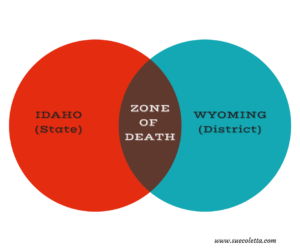
Picture two overlapping circles, with Wyoming (the District) on one side and Idaho (the State) on the other. Where these two circles intersect is that 50 square miles of Idaho land. The legal loophole exists because it has a population of zero. No humans live there, therefore, no jury can be called. Kalt argues, the court must let you walk free to avoid violating your Sixth Amendment rights.  

“The more I dug into it, the more interested I got,” Kalt told Vice. “People have this fascination with uncovering a loophole for the perfect crime. There are a lot of different approaches to it. But in terms of geography, there’s just this one spot.”

Kalt proposed numerous solutions to Congress, but they have yet to act. In Kalt’s words, “All they have to do is redraw the district lines so that the District of Wyoming is Wyoming, the District of Idaho is Idaho, and the District of Montana is Montana. And if they do that, this all goes away.”

In Population Zero, the hero set out to prove the killer had preplanned the murder. If so, he could be tried in the district court where the murder was planned. But in the confession, the killer stated that one of the victims started a fight, and he just snapped. In which case, there’s nothing within the law that let’s the court hold him accountable. All events happened within The Zone of Death. Therefore, he walks.

Crazy, right?

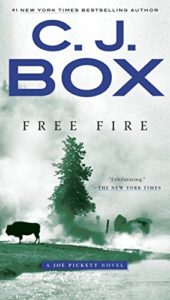
I know what you’re all thinking. What a fantastic plot for a novel! Sorry, folks. C.J. Box beat us to it with his 2007 thriller, Free Fire. I should also mention the author tried to fight Congress to close the loophole but no one wants to acknowledge its existence. The only way it’ll happen is if someone dies within The Zone of Death.

The loophole also inspired a 2016 horror film with the same title as the documentary-style movie, Population Zero. Although, I don’t recall the legalities being mentioned.

Has the Loophole Ever Been Tested?

In 2005, a hunter illegally shot an elk. When he fired he was standing in the Montana section of the park. Authorities indicted him in Wyoming. He successfully argued he had a right to be tried by jurors from Montana, and while people do live in that section, there are too few residents to call a legitimate jury. The court dismissed the argument out of hand, simply because it would imply that Yellowstone National Park contained a Zone of Death. 

I’ll leave you with this: the Buffalo Campground, a popular tourist destination with a gorgeous lake and some of the best fishing for miles, is located within The Zone of Death. If you feel lucky, why not add it to your summer vacation plans. Any takers? 🙂 

Have you seen Population Zero or read Free Fire? What do you think of this legal loophole? Let’s discuss.


Don’t Be Satisfied With Competence

by James Scott Bell
@jamesscottbell

In reviewing Uncommon Type, a short story collection by Tom Hanks, the critic concluded that, with one exception, Hanks’s stories “are forgettable, middle-of-the-road and touched by the special banality of mere competence.”

Ouch, man.

I like Tom Hanks. I’ve liked him ever since Bosom Buddies. I haven’t read his stories, so this is not a pile-on. And critics have been known to be wrong (ya think?)

But I was struck by that phrase, the special banality of mere competence. That’s because when I teach workshops, I usually lead off with this quote from a former acquisitions editor for a major house:

As my first boss used to warn us green editorial assistants two decades ago, the type of submission that’s the toughest to spot—and the most essential to avoid—is the one that is skillful, competent, literate, and ultimately forgettable.

Over my two decades of teaching the craft and reading manuscripts submitted at conferences, I’ve seen a rise in the tide of competent fiction. A big reason is, I think, the internet, with great teaching blogs like **blush** this one, and so many others. There are **blush** online courses and podcasts. And we still have the tried-and-true teaching avenues, like critique groups (in person and via email), books and Writer’s Digest, panels of writers at conferences, freelance editors, and so on.

All of which I love. I still get excited about diving into a good article on writing, or revisiting one of the many craft books in my collection.

So yeah, there is a lot of competent fiction out there.

But that’s not good enough.

Let me amend that. What’s “good enough” is highly subjective. But the ministers of content within the walls of the Forbidden City (that is, traditional publishing) are always looking for that “extra” thing. Much of the time they call it voice, and treat it the way Supreme Court Justice Potter Stewart famously approached obscenity. He couldn’t define it, he said, “But I know it when I see it.”

Of course, now it’s possible for writers outside the walls to publish whatever they like. And competent fiction may bring some return.

But for a long-lasting career, I say make it your goal to go higher.

How?

Create a self-study plan.

There are seven critical success factors of fiction: plot, structure, characters, scenes, dialogue, voice (or style) and meaning (or theme). You can, in conjunction with others (trusted beta readers, a good editor, a critique group) assess your strengths and weaknesses in each of these areas. Try giving yourself scores on a 1-10 scale.

Then start with your weakest factor and design a six-week self-study program. Get a couple of books on the subject. Write some practice scenes. Get feedback.

Then move on to the next factor.

Just think about it. If you were to improve each of these areas just by 10%, the overall effect on your writing will be enormous. And you can get there in less than a year.

Of course, as you’re studying the craft, keep writing your current project and developing your next, and the one after that.

Is this work? Um, yeah. Like any pursuit of excellence.

Is it also fun? Oh, yes. When you see and feel your improvement, there’s nothing quite like it.

It took me a good two years to get to competent. And no buyers. Then one day I had a literal epiphany reading a certain chapter in a certain book (it was Writing Novels That Sell by Jack Bickham). Sirens went off in my head. The next thing I wrote got me a Hollywood agent.

A few years later, I got a book contract (this was seven years after I began to seriously study the craft). When I got another contract with another house, I had the privilege of working with one of the best editors in the business. His feedback took me to another level. When I started working with my agent, Donald Maass, there was another hike.

Each of these stages was a beautiful thing.

I wish you that same beauty, writer friend. It’s worth all the effort.

I’ll leave you with a quote I’ve always liked, from an old-time ad man named Leo Burnett: “When you reach for the stars you may not quite get one, but you won’t come up with a handful of mud either.”

Are you reaching?

Cozies vs. Cutesies

By Elaine Viets

Eric, a TKZ regular, sent this note to our own James Scott Bell:
“It might be good for TKZ to address what defines a true cozy, as opposed to a ‘cutesie,’ and how to market true cozies. I’m having trouble figuring out the cozy genre.
“What I’m writing is neither thriller nor police procedural nor hard-boiled. But it sure ain’t what I call ‘cutesies’–novels that start with a silly pun in the title, usually having to do with food or animals or Amish, that have a cartoonish cover, and that go downhill from there into worse silliness.
“When I search ‘cozy mystery’ on Amazon, nearly all I see are cutesies.
“The paradigms for the cozy mystery seem to be Conan Doyle, Agatha Christie, Dorothy Sayers, Margery Allingham. So I think of Grafton, Giorello, and Greeley’s Bishop Blackie stories as cozies. The young Raleigh Harmon and Bishop Blackie are amateur detectives, like Holmes, Wimsey, Marple, and Campion. Poirot and Milhone are PIs. (Since the adult Raleigh Harmon works for the FBI, does that make those novels ‘police procedurals’?)
“My book is somewhat like James Scott Bell’s Glimpses of Paradise, with more crime and mystery and more realistic language. And it has similarities to the Giorello mysteries, with less detecting and, again, more realistic language. But the raw language would not seem enough to make it hard-boiled. Soft-boiled at most.
“You guys at TKZ are more into thrillers, but I’m sure some of you would have good insight into marketing true cozies as distinct from cutesies.
“Or has the true cozy genre been squeezed into extinction by the more specialized mystery genres, viz., cutesies, thrillers, police procedurals, legal dramas and medical mysteries?”
Whoa, there Eric. You’ve given us a lot to discuss here. Since I’m a former cozy writer who now writes forensic mysteries, Jim asked me to address your question.

First, what is a cozy?
A cozy is usually a mystery with no graphic sex, cuss words or violence. Generally, the murder takes place offstage. Dame Agatha is the queen of cozies, but Miss Marple is no pushover. “I am Nemesis,” the fluffy old lady announces, and relentlessly pursues killers.
Conan Doyle’s Sherlock Holmes mysteries are not cozies, though they have many of the same elements. Sherlock has a hard edge to him, and some of his stories, like “The Man With the Twisted Lip,” border on noir. Doyle, like Grafton and Sayers, writes traditional mysteries, but they aren’t considered cozies. You’ve lumped a lot of traditional novels together under the cozy umbrella. Traditional mysteries play fair – they give readers all the clues, though they may be cleverly disguised. You may be writing a traditional mystery.
The “cutesies” that you object to are simply one branch of the cozy sub-genre.
The so-called “cutesies” exist for one reason: They sell.
Amazon does not waste space on books that don’t move. Many readers love to read about knitters, cookie bakers, candy makers and florists who solve murders. In fact, the more arcane the sleuth’s profession, the better. There are cozies about pickle shops, jam shops, antique shops, plus tea, chocolate and coffee shops galore.
The readers for these cozies are primarily women.

And that leads us to another issue: Books by women cozy authors are often relegated to the pink ghetto. They are given a cute title, a cartoon cover featuring high heels, lipstick, or maybe a cat (and never underestimate the importance of cats in cozies) and sent out into the publishing world with little or no support – and I’m not talking about lingerie. Some of the cozy mysteries published by major houses don’t even rate their own press release. They get a “group release” with three or four other similar cozy authors.
This problem exists for many books written by women. The Boston Globe wrote about a Radcliffe alumni panel on women’s fiction. The article said: “Women of letters have been marginalized since the dawn of Western literature. It is nonetheless surprising that this predicament remains so entrenched. In a yearly study VIDA, an organization for women in the literary arts, reliably finds that major publications still carry more male bylines and cover more books authored by men.
“Although their impact is unquantifiable, book covers certainly have something to do with this disparity. Marketing affects the way readers of both genders perceive the artistic merits of a book. Stereotypically feminine signifiers— a lipstick tube, a woman’s naked back — can inadvertently disqualify a novel from the world of serious literature.”

Even literary classics like The Bell Jar aren’t safe, the article said. For the 50th anniversary reissue, the publisher “tarted up Sylvia Plath’s classic novel of existential despondency with an illustration of a woman wearing gobs of eyeliner sneering into a compact. . . . The public outcry was encouraging: In addition to an abundance of op-eds about the cover’s sickening deceptiveness, people designed their own parody reissues of classic novels and shared them on Twitter.”
The Boston Globe then asks: “So how does a publisher signal to a manly reader that a woman-authored book he has in his hands won’t offend him with talk of motherhood, makeup, and menstruation? How do they assure him this novel is worthy of his time, and possibly a literary prize?
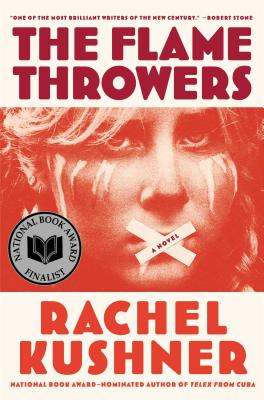
“Enter the ‘man trap,’ a phrase Grove Atlantic vice president and executive editor Elisabeth Schmitz coined for her Radcliffe talk. Schmitz defines the man-trap cover as ‘splashier, brighter, more iconic’ and ‘less gendered’ than its pink ghetto counterparts.

She proffered Rachel Kushner’s National Book Award-nominated The Flamethrowers as a case study. Although the novel concerns a female protagonist’s sexual and artistic awakening, it also dealt with modern art, revolution, and motorcycle racing. Its cover image — a decidedly arty, text-heavy affair with an orange-hued photograph of a blond woman’s face with tape over her mouth — lacked all vestiges of feminine frippery.”
You can read the rest of the article here: https://tinyurl.com/yaouzlws

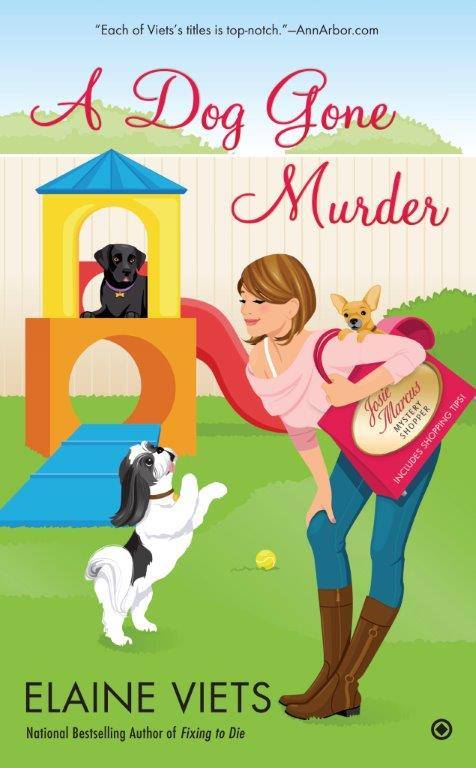
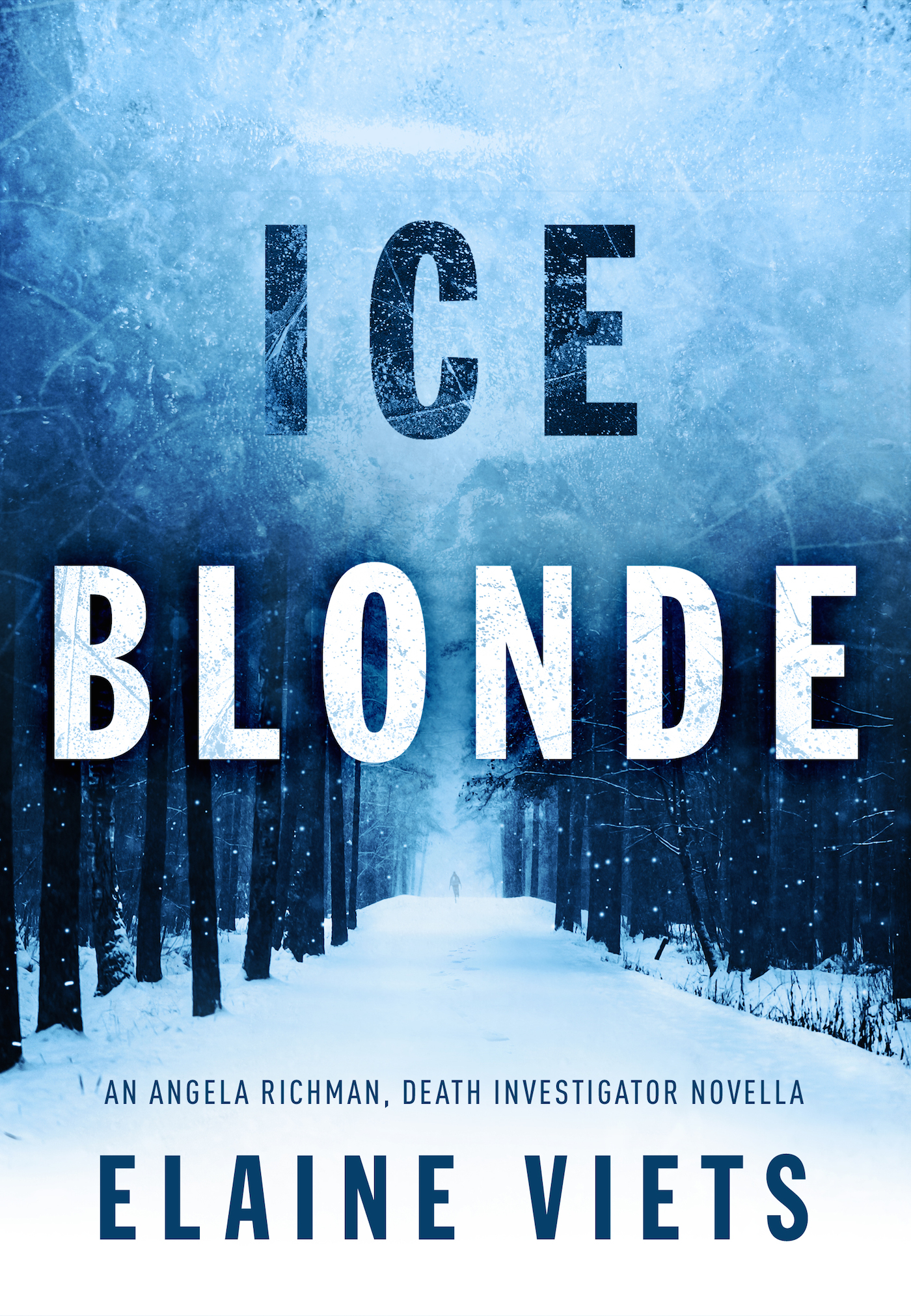
If you want to see the mystery genre difference, look at the cozy cover for my Josie Marcus, Mystery Shopper mystery, A Dog Gone Murder versus the cover for my new Angela Richman, Death Investigator mystery, Ice Blonde.  You can’t see it, but Josie’s red bag says the novel “includes shopping tips.” That was the publisher’s idea. I hated those suckers, and killed them in the re-release.


Obviously, the so-called “cutesies” are not your cup of tea, Eric. Some cozies are pure fluff. I don’t read them. But cozies are good ways to explore other occupations and hobbies – hence the knitting and tea shop mysteries – as well as relationships. Women seem to demand this dimension more in their reading than men.
We all have poorly written sub-genres that we don’t enjoy. I won’t discuss the boring thrillers with cardboard protagonists, or clichéd police procedurals with the drunken ex-cop who accidentally shot someone in the line of duty – though Lawrence Block’s Matthew Scudder series takes that tired cliché and turns it into art.
You don’t like what you call “cutesies” and you believe that cozy genre is infested with them. Because of the pink ghetto, you’re missing some fine cozy reading. Here are some cozies with real meat:

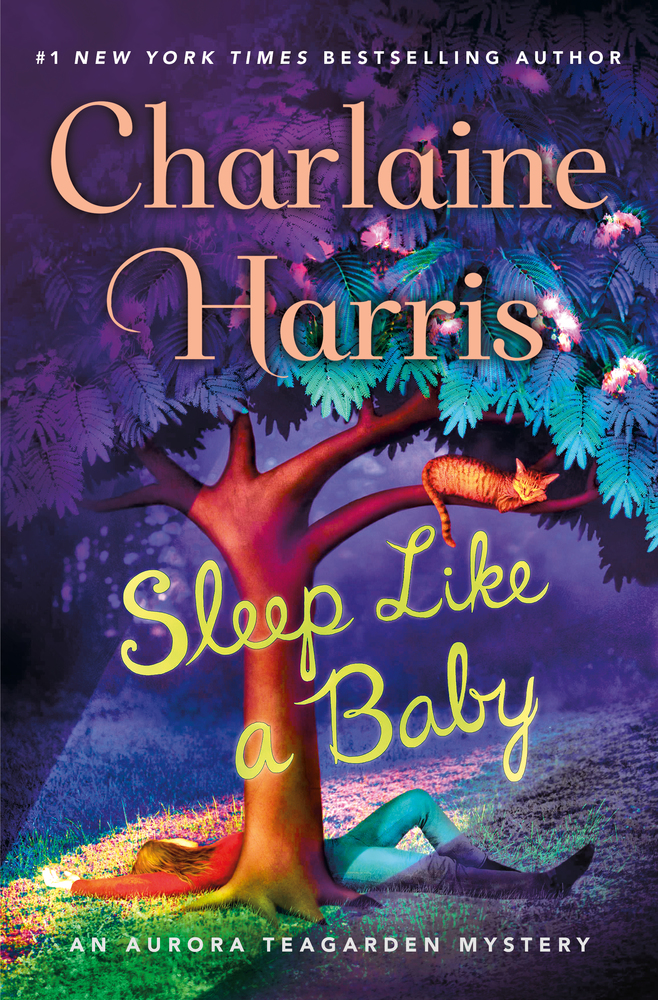
Read Charlaine Harris’s Aurora Teagarden series. Aurora is a small-town librarian, and Charlaine can build real menace into everyday life. Try her latest, Sleep Like a Baby. Or, if you prefer your cozies historical, read Victoria Thompson’s Gaslight series about a Victorian midwife. You’ll learn about social justice, poverty and religious prejudice. Cozies can also address justice and racial equality – for that, I recommend Margaret Maron’s Judge Deborah Knott series.

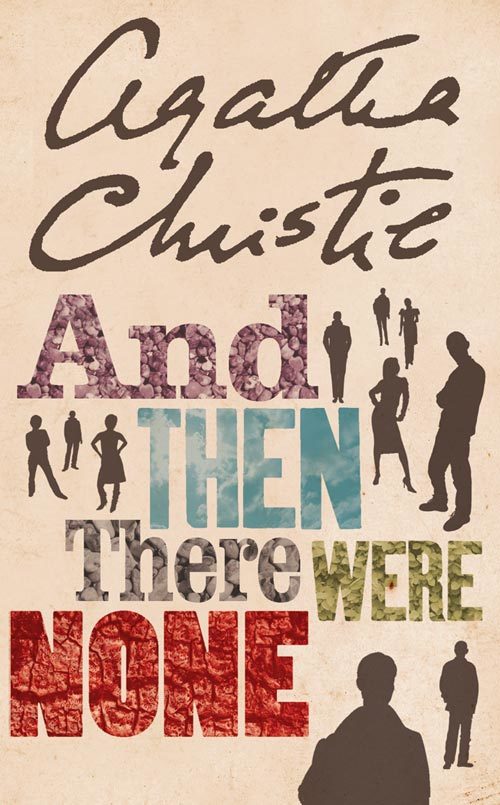
And if you want to see what’s possible in the cozy format, re-read Agatha Christie. I’m currently reading And Then There Were None, which was published under the now offensive title using the N-word. And Then There Were None has a masterful use of multiple characters and a can’t-put-down story. No wonder Christie outsells every author except Shakespeare.
NEXT MONTH: How to market your cozy.

The Truth About Silencers

By John Gilstrap

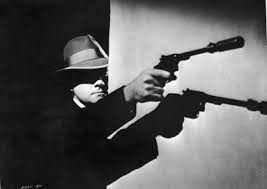
We’ve all seen how silencers work on firearms, right? Our assassin lies in wait as his victim approaches down the street. His silenced revolver is loaded and ready to fire. The shooter takes his time, waits for his shot. And then, from ten feet away (or 20 yards away), he makes his move. The revolver puffs twice. Phut, phut. The victim falls, and no one knows whats wrong. The killer makes his getaway.

And that, ladies and gentlemen, is yet another example of how movies and television get pretty much everything wrong when it comes to firearms and tactics. Where, oh where to begin?

First of all, they’re called suppressors, and that’s because they’re not all that quiet. Except sometimes.

A YouTuber who calls himself SmarterEveryDay posted a unique and very cool video on the function of suppressors. He hooked up with a guy from Soteria, a suppressor manufacturer from Munford, Alabama, and together, using a high speed camera and a see-through acrylic suppressor, they were able to demonstrate exactly how a suppressor does its thing.

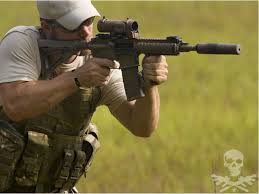
In case you can’t get the video to run, the suppressor (or the “can”) uses a series of internal baffles that contain the flash and expanding gases of a fired round, and then vent them slowly. The effect is a more muffled report. But there is still a substantial report. Such things are hard to quantify in a blog post, but to my ear, most suppressed rifle shots sound like unsuppressed small caliber pistol shots. Click here for a video of me shooting a suppressed Heckler & Koch MP7 at the Navy SEAL range in Virginia Beach. What you’re hearing is a wicked little 4.6mm round, which translates to around 19 caliber.

The real benefit of suppressors is muzzle flash control.

Imagine you’re a bad guy doing bad things, when in the middle of the night, you hear pop-pop-pop and your friends start falling down around you. There’s noise, but no muzzle flash–no visual reference for where the attack is coming from. It’s just from out there somewhere. Recognizing your situation for what it is, you pick up your own weapon to return fire, and every pull of the trigger releases a blinding flash at the tip of the barrel that not only destroys your night vision, but announces your location to anyone who maybe hadn’t noticed you yet. Your night is likely to get pretty unpleasant. For more information on night vision technology for firearms, you could read nightvision scope reviews from outdoorempire.com.

For military operators, SWAT folks, Border Patrol and all manner of other groups who do dangerous things under the cover of darkness, suppressors, combined with night vision technology, are tremendous force multipliers. Owning the night doesn’t mean much if every shot gives away your location.

You can’t suppress a revolver.

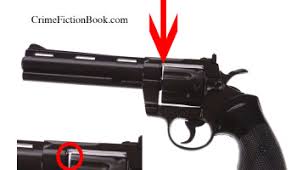
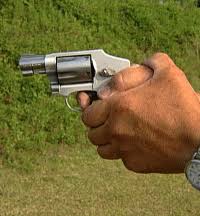
Before my gun buddies get too twitchy that I let that first picture stand too long without contradiction, I need to point out that every old movie that shows a suppressed revolver is demonstrating the impossible. The only way a suppressor is even a little effective is if the combustion gases are all contained long enough for the pressure to dissipate. As the picture shows, every revolver has a gap between the cylinder and the barrel, through which a significant amount of gas escapes. So significant is the pressure, in fact, that a revolver needs to be fired using a significantly different grip than that used with a semiautomatic pistol. if you rest the thumb of your support hand along the base as you would with a semi-auto, you’d stand a good chance of blowing your thumb off with the escaping cylinder gas. The technical term for that is “a bad thing.”

Guns need to be modified to accept a suppressor.

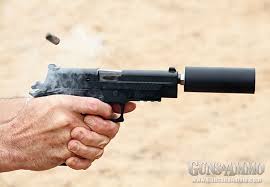
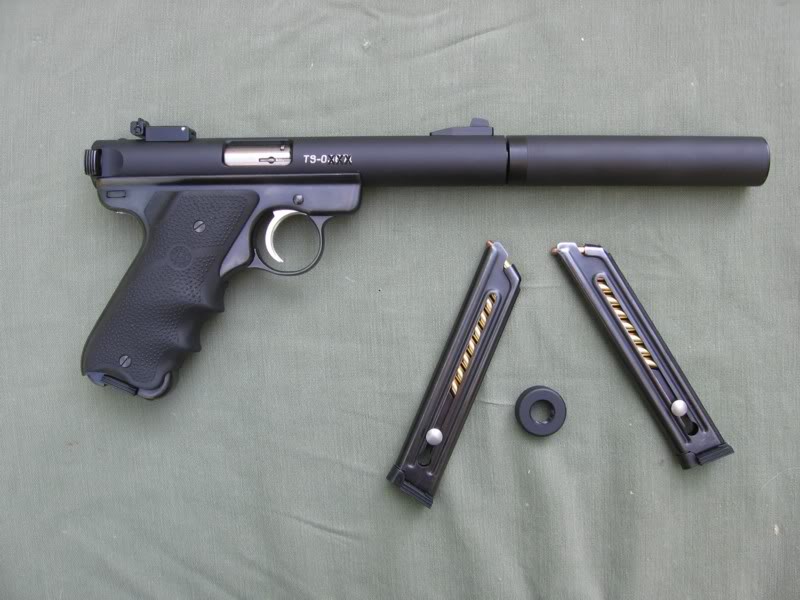
Because of the pressures involved, adding a can to the muzzle of a firearm requires a strong bond. For a suppressor, that means lots of pretty fine threads that extend beyond the frame of the firearm. The picture of the 1911 variant pistol shows the modified barrel that would be used to accept a can. As shown, the threads are protected with a threaded cap, and the can has not yet been attached. As shown, the gun will still shoot just fine. Also note that this pistol has taller sights than usual to accommodate diameter of the suppressor.

Bullet speed means more than bullet size when it comes to suppressor effectiveness.

The bang of a gunshot actually has several sources. First, there’s the obvious explosion of gunpowder in the breech. Depending on the load, that may or may not rise to the level of detonation, but in any case, there’s a lot of fast-burning gas. Second, in the case of high-powered pistols and rifles whose bullets travel at supersonic speed, there’s the sonic boom that is caused by the projectile in flight.

Shotguns, on the other hand, are almost always subsonic. (I can’t think of one that is not, but I’ll avoid the absolute anyway.) A full load of .00 buckshot will send nine to fifteen .32-caliber pellets downrange at around 1,100 feet per second, and because they are not rifled, they lose velocity more quickly than bullets. Thus, a suppressed shotgun is really very quiet, to the degree that no hearing protection is required.

If you really need the drama of more traditional “silencer” . . .

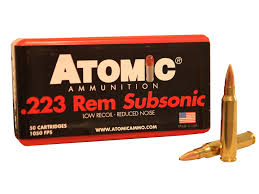
If your story desperately needs the visuals or drama of that phut, phut of old, you’re not totally out of luck. Most manufacturers make a line of subsonic ammo in most calibers. When used in conjunction with a suppressor, they can be fairly effective. You’re still going to get more of a bang than a phut, and it will still be audible within, say, 20 yards in the open, but you might not hear it in the basement if the shot is fired on the second floor. All else being equal, larger calibers create louder noise.

If your character really needs to shoot a bad guy at bad-breath distance and not be detected in the next room . . .

This picture of a suppressed .22LR pistol also shows the ring (now removed) that protected the threads before the can was attached.

I have it on good authority that the preferred bullet for wet work contractors engaged in close-in killing is the subsonic .22LR (long rifle) round. This is the little bitty round that most people think of as a plinker–the round you fired at summer camp when you were a kid–but in reality it is the most common caliber in the world, and is therefore the world’s deadliest round in terms of sheer numbers of people killed (including Bobby Kennedy). When fired through a good suppressor, a subsonic .22LR doesn’t even produce a phut. The only audible noise is the clack, clack of the action.

Those are the basics. I’ll be happy to answer any questions you might have. Okay, TKZers, it’s your turn.


First Page Critique: Clear Out Briars
So Style and Story Can Shine

By PJ Parrish

A broken pipe caused a flood in our house, ruining a third of our old pine floors and all of the kitchen.  Bad news — six weeks in a hotel. Good news — I get a new kitchen. So I’m feeling the vibe of the title of our First Page Critique this week.

Thank you, dear writer, for submitting.  Without you, we are nothing. Catch you on the back swing with comments and, as always, please weigh in TKZers, because my opinion is just one voice. It takes choir to do this right.

The Battle At Home

The weary van shuddered to a stop, yet Allie Newland’s body refused to move.

“Allie? Honey? We’re here.” Derek nudged her shoulder.

Allie raised one heavy eye. Derek’s chiseled face and dark, curly hair swirled. Nope,can’t do it. The lid snapped shut. She covered her swollen face with her sweaty palm. Her cheeks flushed. A sigh lifted off her mouth and hung stale like the pool of greasy French fries littering the floor of the ten-year-old minivan. A tear trickled down her cheek and dropped onto her clasped hands. It splattered against a ragged cuticle.

Time.

As much as she didn’t want it to be. As much as she’d never be ready. As much as her arms desired nothing more than to hug her Derek and trap him at her side forever.

It.

Was.

Time.

Allie lifted her eyes and plastered a smile onto her face. A delicious smattering of freckles crinkled across the bridge of her nose. She turned away. Clutched the sticky handle and rested her forehead against the cool pane.

“I guess we should get going.”

“Allie.” Derek cradled her chin and forced her gaze from the window to his eyes. She squirmed away from the chocolate brown pools. He grabbed her hands and kissed the top of her light-brown, shoulder length hair. “You’re strong, Al. The strongest woman I know.”

Allie choked on a grenade-sized lump. Swallowed. It exploded into the walls of her carefully patched together dam of emotion bursting it wide open and sending two salty streams cascading down her cheeks. The tears drenched her stretched-to-the-limit, faded black t-shirt and puddled on top of her post-baby bulge. She sniffed. Wiped. Added a new stain to the dozen or so toddler snot smears decorating her comfy cotton ensemble. She should tell him. Really, she should. But she didn’t. She couldn’t. So instead, she kept silent. She bottled her fears, feigned a tight-lipped smile, and nodded her head.

“I know. We’ll be fine. We’ll miss you like crazy, but we’ll be fine.” Allie squeezed his hand. Her finger wavered on top of the orange button. She pressed. Unbuckled. Opened the squeaky door. She wiped stowaway tears off her face and squinted her brown with little flecks of green eyes as she stepped onto the paved parking lot. She slid open the rear door.

“Hi, Jadey,” she said fake enthusiasm pumping up her sullen words, “time to say bye-bye to Daddy.”

____________________

We’re back. I have to say straight-off, I’m intrigued, and I like this submission. Here’s why: We’re entering at an emotional moment. (no throat-clearing). We have two interesting likeable characters (and only two, which serves to concentrate our attention.)  We get the putative protagonist (at least I hope it’s Allie) right away. We have drama. We have unanswered questions.

I like the subtlety here. Something obviously not-good is going on, but the writer is sly though to not tip his/her hand and hit us over the head with HOW bad it is. It could be something as simple as dad has to go away temporarily. It could be something really dire. Hard to say since we don’t know what kind of genre we’re dealing with here. Could be domestic suspense, could be dystopia. But no matter what the genre, a good opening is a promise. I want to read on here to find out what’s coming.

Second, notice how the writer slips in details that show us things about the characters rather than telling us about them. Yes, s/he could have written something like:

Her daughter Jadey wasn’t yet two, and they had no money and no where to live except a broken down van. How was she going to cope alone with a baby now that Derek was leaving?

Instead, the info is conveyed by describing a swollen belly,  “toddler snot” on her clothes. Emotions are conveyed through actions — tears, caresses, kisses on hair — rather than something like: Allie loved him with all her heart and was going to miss him. She knew Derek felt the same way.  We always talk here about showing instead of telling. Also, we aren’t told they are poor. We learn, again through selective descriptive details, of this couple’s financial situation — a broken down van, greasy take-out bags on the floor, stretched out clothes.

I also love the fact that Allie has something to tell Derek, the implication being she has kept something from this man who seems so good to her. I like that you didn’t tell us what it is, just dropped in that hint, that unanswered question: What is Allie hiding?

So, good job, writer. But there are times when you could do some self-editing to make your writing tighter, more efficient and, in the end, more evocative. The more emotional the scene, the less emotional the writing itself should be. If I can, let me offer a few tweaks for you to consider in line edits:

The weary van careful using anthropomorphic descriptions. Not sure you even need “weary” since you use the great verb-phrase “shuddered to a stop.”. Maybe something specific like the rusty VW van shuddered to a stop. Then break into a new sentence so our focus goes squarely on the charcacter. But Allie Newland’s body refused to move.

“Allie? Honey? We’re here.” Derek nudged her shoulder.

Allie raised one heavy eye. Derek’s chiseled face suggestion: This is a hackneyed description of bad romance novels. You can do better.and dark, curly hair swirled. this implies movement. Is a window open? Or do you mean that his image seemed to swirl in her eyes because she’s so tired? Clear this up.

Nope,can’t do it. Suggest setting this off by itself. Love that you’re using intimate POV!

The lid snapped shut. You have a tic (we all do!): a tendency to over-describe. She cries, she’s sweaty, she’s swollen, she sighs. It’s a couple tokes over the line. Simplify your emotional descriptions — less is often more — and trust your reader to get it. She closed her eyes and covered her swollen face with a sweaty palm. She covered her swollen face with her sweaty palm. Her cheeks flushed. A sigh lifted off her mouth and hung stale like the pool of greasy French fries littering the floor of the ten-year-old minivan. I like that you are using all the senses here but again, simplify this good description: She sighed, and her breath, smelling like the greasy McDonald’s bag on the floor, hung in the stale air of the old van. A tear trickled down her cheek and dropped onto her clasped hands. It splattered against a ragged cuticle. Suggest you save the tears for later. They are more effective below. And again, by layering in too many emotional descriptions (sigh, tears) you dilute the effect. Space them out a tad.

Time.

As much as she didn’t want it to be. As much as she’d never be ready. As much as her arms desired nothing more than to hug her Derek and trap him at her side forever.

It.

Was.

Time. I liked this disjointed structure. It mimics exhaustion. It makes me get the feeling this couple has come a long way and Allie is spent, physically and mentally.

Allie lifted her eyes and plastered a smile onto her face. Again, I think this might be too much here, since she feigns a smile later as well. I like it better below. A delicious smattering of freckles crinkled across the bridge of her nose. Cut this. It jerks us out of that intimate POV you’ve worked hard to establish — she cannot SEE her own face and “delicious” is jarringly out of mood here. Just go right to: She reached for the door handle but couldn’t bring herself to move it. She rested her forehead against the cool window. She turned away. Clutched the sticky handle and rested her forehead against the cool pane.   Here is where I would put in a few quick, well-drawn strokes of what she sees outside. See comment below about this.

“I guess we should get going,” she said or even whispered, given her mood.

“Allie.” Derek reached over and (I think you need to tell us where he is; I assume he’s in driver seat?) cradled her chin and turned her to face him. forced her gaze from the window to his eyes. She squirmed away from the chocolate brown pools. I think this feels romance-cy and it distracts from the mood. He grabbed her hands and kissed the top of her light-brown, shoulder length hair. Again, simplify the movements of your characters:  She tried to squirm away but he pulled her toward him and gently. kissed the top of her head. Delete the description of her hair because you are IN HER INTIMATE POV. Stay there! She would not be thinking about what her hair looks like.

“You’re strong, Al. The strongest woman I know.” Good dialogue so it deserves its own line. Don’t bury it in graph above.

Allie choked on a grenade-sized lump. Swallowed. It exploded into the walls of her carefully patched together dam of emotion bursting it wide open and sending two salty streams cascading down her cheeks. I like the grenade metaphor but it’s so writerly that you have to know when to stop. Again, simplify so the metaphor shines more: It exploded the walls of her carefully constructed emotional dam, bursting it open. She began to cry. The tears drenched her stretched-to-the-limit, faded black t-shirt and puddled on top of her post-baby bulge. Simplify: The tears fell on her faded black T-shirt, puddling on top of her post-baby bulge. She sniffed. Wiped. Added a new stain to the dozen or so toddler snot smears decorating her comfy cotton ensemble. She ran a hand under runny nose, thought about using one of the McDonald’s napkins wadded on the floor, but instead just wiped her hand on her T-shirt. One more stain wouldn’t matter among all the toddler snot smears. 

She needed to tell him. But she couldn’t. So instead, she kept silent. She bottled her fears, feigned a tight-lipped smile, and nodded her head.

“I know. Non sequitur response, I think. Derek said, “You’re strong.” Would she respond “I know (I am?)” She doesn’t feel strong now. What might be a better comeback from her? Or maybe you can even have her thinking something in response to Derek’s compliment, something that laces in a bit of backstory? She didn’t feel strong right now. Whatever strength she had felt when they had started out five weeks ago in WHEREVER we are, had been long lost. We’ll be fine. We’ll miss you like crazy, but we’ll be fine.”

Allie squeezed his hand. Derek should do something in return, I think. His woman is crying now. Her finger wavered on top of the orange button. She pressed. Unbuckled. Opened the squeaky door. She wiped stowaway tears off her face and squinted her brown with little flecks of green eyes as she stepped onto the paved parking lot. She slid open the rear door. This is what I call mundane physical movement. Enough with wiping tears. Just have her get out of the van. And again, she can’t see her own eyes, so don’t stop here to tell us about them. Also, where’s the baby? Have her reach in the back or wherever before you go with following dialogue:

“Hi, Jadey,” she said fake enthusiasm pumping up her sullen words, her words aren’t sullen. Her mood is. “time to say bye-bye to Daddy.

Again, nice start, writer. You’ve got our attention. A few more things to think about: We could use a little grounding in where we are. You can afford to slow down enough to have Allie take note of her surroundings. Readers want to know where the story is taking place. That doesn’t mean you give us a long descriptive narrative here — it would disrupt your mood and your style is, once you clear out the brush, nice and spare.  But find a way to use the surroundings to enhance the mood you’re establishing.  When Allie first opens her eyes and looks out the van window, what does she see? Show us! Is it winter and the heater broke miles ago? Is it hot and stifling in that old van? You’re in No Man’s Land here, one moment telling us she has sweaty hands (implying warm), the next leaning her forehead against cool glass (cold weather?) All we get is “a parking lot.” This opening feels like they have reached a destination, a metaphoric fork in their road since Derek is about to depart for some reason. Don’t neglect your setting — it can be a powerful tool in supporting your mood and increasing suspense.

Thanks for giving us the chance to read your work and learn.

First Page Critique: Gideon

Happy Monday! Today we have a first page critique from a dystopian novel – the extract we have is from a chapter entitled Gideon so I’m not sure if this is the first page to the novel itself or merely to a later chapter. The author who submitted this also provided an overview of the dystopian world he/she has created but I’m just going to focus on the page itself – as this is typically how a reader would first immerse themselves in the world  (and we at TKZ don’t typically go through a synopsis or overview for the pages we review). Suffice to say this novel takes place in the near future after a Third World War that has obliterated civilization in a nuclear strike. My comments follow after the extract but I do think this first page critique illustrates the need for clear, consistent world building for any novel that relies on a futuristic or alternative world that is unfamiliar to a reader.

Gideon

On his way to his scheduled fear desensitization treatment at the House of Pain, Gideon Guidry and his friend Paul Roseau had stopped at the Iron Byrd Tavern, where Gideon’s friend Paul, who had made several visits himself, felt sympathy for poor Gideon had purchased several large pink glasses of Le Grand Courage, a rare and expensive French wine for him, and began slurring his words, as the two shared the wine and sat discussing Gideon’s pending appointment and possible death sentence.
Gideon gulped the wine as if he had spent the day in the desert without liquids and as if wine would never be available again, to bolster up his courage for the day ahead.
Paul said, “You know they steal your memories and sell them to those rich citizens up on the Excelsior level of Sanitorium.”
  “No, you must be kidding. They wouldn’t dare.
  “They would, and they do. “Paul said.
  “And people go along with this? “asked Gideon.
  “Either the poor subversives don’t realize it is happening to them, or they just pretending it isn’t happening to them. No one has the courage to face the whip on Public Punishment Day. So, there really is no way, you can avoid the treatment. Why not fake an illness? ”Paul suggested, Gideon just shook his shoulders and said, “There is no point in putting it off. They will get me eventually and then I’ll be in the punishment square. Might as well get the dammed thing over. Right?”
  “No, OK, maybe. Well, let’s at least meet up tomorrow anyway and you can tell me how it went. My prayers are with you, my old friend.”
  Now Gideon was like a bull seeing red, as hate poured over Gideon’s soul like hot grease on a cook stove, imaginary smoke came out of his ears, as he stood there his hands shaking, his fist balled up tight, as he faced this indignity stoically and stood in front of the old converted psychiatric hospital. Surprisingly, near the front entrance, he saw a large pile of rotted timbers stacked neatly up against the sleek new part of the House of Pain and thought, I wonder what that stuff is for? Then, he thought, oh, I hope it is not what I think it is?
  Then, Gideon thought, Am I Drunk enough? Am I strong enough?  To hide the deep dark secret.

My Comments

As always, bravo to our brave submitter for providing us with an extract of his/her work to review. Even though I don’t typically write these sorts of novels, I’m a huge fan of works that fall in both the dystopian and science-fiction genre (which this clearly seems to do). When reading these genres, I look for the following: (1) novelty and clarity in world building; (2) an immersive experience that surprises or shocks me with details or events and; (3) something unique that sets apart the world from others I’ve read. Given how many novels have been set in a post-apocalyptic world it is very difficult to achieve all three.

Rather than providing an overview as I usually do followed by specific comments, this time I’m going to provide notes embedded in the extract itself – in bold and italics – as I think this is a more effective approach.

Extract with my notes:

On his way to his scheduled fear desensitization treatment at the House of Pain, Gideon Guidry and his friend Paul Roseau had stopped at the Iron Byrd Tavern, where Gideon’s friend Paul, who had made several visits himself, felt sympathy for poor Gideon had purchased several large pink glasses of Le Grand Courage, a rare and expensive French wine for him, and began slurring his words, as the two shared the wine and sat discussing Gideon’s pending appointment and possible death sentence.

This sentence is far too long and unweildy. The use of ‘had’ seems redundant in the use of the past tense. The ‘House of Pain’ and ‘fear desensitization treatment’ kind of make sense but when we learn that this appears to be a public whipping I’m not sure what the purpose of this treatment really is….or why this might be a death sentence. The world I’m expected to suspend disbelief and inhabit doesn’t seem entirely consistent. The description of a tavern in particular is hard to reconcile in a more sci-fi post apocalyptic world (sounds more fantasy/middle ages). I need to believe that this world has ‘taverns’ and pink French wine called ‘Le Grand Courage’ even if it also sounds pseudo science-fiction. 

Gideon gulped the wine as if he had spent the day in the desert without liquids and as if wine would never be available again, to bolster up his courage for the day ahead.

Gulping wine as if ‘he had spent a day in the desert without liquids’ and ‘as if wine would never be available again’ and ‘to bolster up his courage’ is too much – one of these reasons would have been fine and I’m also confused: In this post apocalyptic world, why is wine available? Are there still deserts even? 

Paul said, “You know they steal your memories and sell them to those rich citizens up on the Excelsior level of Sanitorium.”

More confusion – so do they steal the memories of pain/fear desensitization treatment? If so, why would rich citizens want them? If they are stealing other memories, how and why does this occur and how does this fit into the discussion of what is going to happen to Gideon at the House of Pain?

“No, you must be kidding. They wouldn’t dare.
  “They would, and they do. “Paul said.
  “And people go along with this? “asked Gideon.
  “Either the poor subversives don’t realize it is happening to them, or they just pretending it isn’t happening to them. No one has the courage to face the whip on Public Punishment Day. So, there really is no way, you can avoid the treatment.

This makes it sound like the memories are of the whipping – but how does Public Punishment Day relate to the House of Pain/Fear desensitization treatment? Again, I’m confused as to what this discussion is really about. Would Gideon really think people might go along with having their memories stolen? Why are we now talking about subversives when before it sounded like everyone went to the House of Pain for treatment (Paul, after all, had already made several visits). Also, why in a dystopian world wouldn’t ‘they dare’ steal memories (I mean they are happy to whip people in public…)

Why not fake an illness? ”Paul suggested, Gideon just shook his shoulders and said, “There is no point in putting it off. They will get me eventually and then I’ll be in the punishment square. Might as well get the dammed thing over. Right?”
  “No, OK, maybe. Well, let’s at least meet up tomorrow anyway and you can tell me how it went. My prayers are with you, my old friend.”

So you can avoid treatment by faking an illness? Seems incongruous for a society/government that inflicts treatment at the ‘House of Pain’ to allow people to delay just because they don’t feel well…again this goes to presenting a consistent and authentic feeling world for a reader. If a reader is confused or has to ask these questions, then the world building isn’t clear.

Also, it seems very strange that Paul which say ‘let’s meet up tomorrow and you can tell me how it went’ when he’s already endured ‘several visits’ to the House of Pain. Not only does this minimize what was described in the first paragraph as a ‘possible death sentence’ it also robs the scene of dramatic tension.

Finally, there is a missing quotation mark before Paul’s comment. As we always emphasize here at the TKZ, an author must go over his/her work to ensure it is error and typo free before sending it to an agent or editor.

Now Gideon was like a bull seeing red, as hate poured over Gideon’s soul like hot grease on a cook stove, imaginary smoke came out of his ears, as he stood there his hands shaking, his fist balled up tight, as he faced this indignity stoically and stood in front of the old converted psychiatric hospital.

Notes: Again, way too many descriptions/similes going on here – to the point where it almost seems humorous…and how did he get from the tavern to standing in front of an old converted psychiatric hospital (which I’m assuming is part of the House of Pain)?

Surprisingly, near the front entrance, he saw a large pile of rotted timbers stacked neatly up against the sleek new part of the House of Pain and thought, I wonder what that stuff is for? Then, he thought, oh, I hope it is not what I think it is?
  Then, Gideon thought, Am I Drunk enough? Am I strong enough?  To hide the deep dark secret.

I’m confused as to what the pile of rotting timbers were for – a hanging? A funeral pyre? Again, the punishments inflicted in this society sound more medieval that future/post apocalyptic so it is vital that this world is described in a way that the reader believes it has sunk back into medieval style punishments (which doesn’t seem to fit with having the technology available to steal people’s memories…). The final line also isn’t clear as we have been given no sense up to this point that Gideon is hiding any dark secret. 

Final Comments

Overall, my key concern here is world building consistency – especially in a genre that necessitates something different/unique to set it apart from all the other dystopian worlds out there. The writing could easily be tightened up but this dystopian world has to be clear to both the author and the reader. Believe me, I know how hard it is to create a world and to ensure all the elements are there on the page, rather than just in your head – but in this genre it is critical.

So TKZers, what comments do you have for our brave submitter?


Short Chapters and Lots of Dialogue

by James Scott Bell
@jamesscottbell

Last week commenter Alec asked: “JSB, I’m reading your Ty #1 book at the moment (I’ve read thru Chap. 36). I’m struck by two things – the amount of dialog and you seem to be using and chapter breaks to move time along … Do you recommend shorter chapters with the intent being that each chapter reflects a scene or a conversation? I looked and this book has 127 chapters.”

Several years ago I was having my teeth cleaned (stay with me, Alec, this will connect) and the hygienist asked what I did for a living. I told her I was a writer. (Such conversations invariably lead to the person asking something like, “Oh, have I heard of you?” Which leads, also invariably, to a furrowed brow and some sort of negative response.)

“Oh,” she said. “Have I heard of you?”

I gave her my name.

Her brow furrowed. She said, “Hm, I don’t think so.”

Shocking.

As she put the little bib on me, she asked, “Have you heard of James Patterson?”

“Sounds somewhat familiar,” I said.

She leaned over conspiratorially and said, “I know his secret.”

“Do tell,” I said.

“He uses really short chapters.”

So that’s it! So simple! Short chapters = millions of copies sold!

I’m only half kidding. For Patterson really did popularize the short chapter method for thrillers. Indeed, much of the time he takes what would be a traditional chapter of, say, 2k words or so, and breaks it down into three or four shorter units. The last line of a unit will have some sort of read-on prompt and there you have it—a page turner. It’s kind of worked for him.

In the early 2000s, as Patterson sold more and more, I began to notice the chapters of other thriller writers getting shorter, too.

Which was aces with me.

Writing in Scenes

I’m a movie guy. I grew up devouring movies on the tube. There was a regular program called The Million Dollar Movie on a local L.A. station (Channel 9, I think it was) and they’d show the same movie each night for a week, and twice on Sunday. I’d sometimes take in the same movie four or five times.

For my first official date I took the girl to a movie. It was a really romantic one, too. Willard, a horror movie about killer rats. (I should mention that this was also my last date with said girl.)

Still with me, Alec?

When I found out you could actually major in film studies at the University of California, Santa Barbara, I was all in.

I’m drenched in movies, and indeed it was a movie that reawakened in me a desire to try to write and sell stories.

Naturally, being from Tinseltown, I started with screenplays. I really learned about structure and dialogue and writing tight scenes via screenwriting.

Part of what got me a contract to write legal thrillers was the acquisitions editor telling me that I wrote “cinematically.”

Heck, I couldn’t help it.

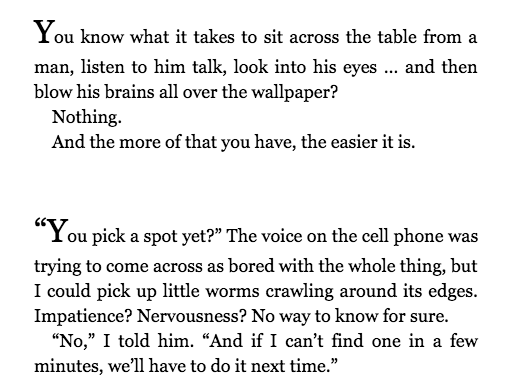
I began my fiction career writing in traditional chapters, of a certain minimum length. Then one day I picked up a book by the hardest of the hardboiled, Andrew Vachss. It was Dead and Gone, and I loved his approach. No chapters. No numbers. Just scenes, some long, some short, set off only by white space and a drop cap. Here’s a screenshot of the first page:

What I loved about this was how liberating it felt. This was permission to write in pure cinematic style.

So when I began writing Try Dying, the first in my Ty Buchanan legal thriller series, that’s how I did it. In deference to the publisher, I did number the scenes. But the point is that writing this way means a scene can be as long or as short as it wants to be. No padding required. It also lets me easily control pace. I can put in a short scene that is rapid-fire action, or quiet emotional reflection, depending on how I want the book to feel at that point.

There are lots of possibilities so long as the reader is never lost on POV.

And that’s why I write in scenes.

Lots of Dialogue

Alec also mentioned the amount of dialogue, implying that it seemed, well, like a lot.

That’s because it is. I write thrillers and noir, and dialogue plays a major role in both. But I also love writing dialogue. Again, the movie influence. (See all those “zingers” from Friday).

So assessing the quantity of dialogue is the wrong focus. The only question is, does it work? The Fletch books by Gregory Macdonald, for example, are almost entirely dialogue. And they work as both mysteries and entertainments.

In addition, dialogue helps pace because it creates white space for the readers.

And dialogue is the fastest way to improve your novel. When an agent or editor (or reader, for that matter) sees crisp, orchestrated dialogue, they immediately gain confidence in the writer. That’s because they see so much flabby, plain-vanilla dialogue in their submissions.

I recall another date I went on where—

“Wrap it up, Jim,” he said.

“But it’s a funny—”

“Now.”

That’s a wrap.

I’m Joe…

…and I’m an alcoholic. Last Sunday, April 1, marked the conclusion of my twenty-seventh year of sobriety. I’ve had six additional days of sobriety as I am typing this and I’m hoping for another one as you are reading this.

I’ve talked about alcoholism and sobriety before in this venue — most recently two years ago — and I’m going to do it again. If you are writing and working on your twelfth book or the first five pages of your first one you might think that four or five glasses of wine help to lubricate the creative glands either while you are writing or before you even start. Fair enough. All I ask is that you keep yourself open to the possibility that your intake — if it is regular and excessive — may be holding you back rather than helping you.

Addiction can find a home with anyone but especially with creative folks. Evict it, and it just hides in a tree in the backyard and waits patiently for an open door or window to creep right back in. It can take a while to recognize that you might have a problem if indeed you have a problem. Once you realize that you have a problem, don’t be afraid to look up “rehab center near me” online to see where you can get help. I met a man in 1988 who told me straight up, within ten minutes of our introduction, that he was an alcoholic. “I’ve been sober for nine years!” he said. I couldn’t believe it. I thought, Nine years! Without a drink?! I can’t even go for nine days. It’s a good thing I don’t have a problem! Yep. That’s what denial looks like, and I’m not talking about the river in Egypt. It took me three years after that and a near tragedy to get myself together.

Actually, make that several near tragedies. It is a miracle I’m sitting here. I’m glad that justice is a rare thing. If justice were in great supply I would be dead or in prison or on the street, rather than waking up in a nice home in a great neighborhood and having the privilege — and it is a privilege — of sitting here writing something for TKZ and having you read it.

It took me a while to figure something out. If you are going to write you have to treat it like you would a job, even if you’re not yet making any money from your endeavors or are making just enough to keep going. You wouldn’t show up at a regular job drunk or high — not with all those employee drug tests — because you would get fired. Don’t show up at your writing desk drunk, either. You’re on the road to firing yourself from the best job in the world.

If you think you have a problem — whether it’s with alcohol or drugs or gambling or whatever — you probably do. There is a test that you can take that might give you some guidance. The argument about whether alcoholism is a disease or a character disorder has vigorous and excellent proponents on both sides. It ultimately doesn’t make any difference. It’s a problem and it won’t go away on its own. You need to take a step. What is now hysterically funny to me is that a couple of times I almost stopped but didn’t because I didn’t know how. That’s funny, in a way. But it’s also pretty sad, in retrospect. You would be surprised at how many people needing to take that important first step down the road to sobriety feel the same way. If you feel comfortable going to your physician about it, please do so. If you reflexively shy away from doing that, please try an AA meeting. If you Google “AA” and your city you’ll find a schedule. I guarantee that you will find several. Some target specific groups. Others are quite the mixed bag. I attended a meeting several weeks ago in support of a friend attaining his first year of sobriety. There were doctors, attorneys, bikers, mechanics…but we were all siblings for an hour or so. If you don’t feel up to that just yet, then email me. I promise that I will get back to you immediately, do whatever I can to help, and take our conversation to my grave.

One last thing…if you do not have an addiction but have a family member who does then run — seriously, run — to an Al-Anon meeting. Again, just Google “Al-Anon” and your city. You are almost certainly one hour away from feeling less alone. You might attend one meeting and wonder who these strangers are who lead a life identical to yours.

That’s me today. Thank you for being here. You all are the best. And keep writing. Don’t let anything — like a bottle — or anyone, including yourself, get in your way.