First Page Critique: Death in London

Happy Monday! Today’s first page critique is for a historical novel entitled Death in London. My comments follow. Enjoy!

Death in London

The messenger arrived mid-morning. Sam had been at the office since dawn, trying to update and reconcile the Tangier accounts. When the young urchin coughed Sam was startled.

“God save me boy, I didn’t hear you.What do you want?”

“Beg your pardon Sir, Message from the Duke, Sir.”

Ever since the debacle with the Dutch fleet, the Duke of York had become obsessed with wanting regular updates about the provisioning of the fleet. As if Sam didn’t have enough on his plate, now he had to go to Whitehall immediately.  He knew the tide was coming in, so Sam decided to go by water. The walk from his office in Seething Lane to the wharf only took a few minutes. With the incoming tide came the smell of salt on the air, and the promise of the fine autumn days to come.

Sam was short but stocky, and had large inquisitive brown eyes.  His mouth, when it wasn’t smiling, looked as if it was going to. His full lips looked like they were made for kissing, and he used them somewhat more than he should. With autumn underway, these mornings were getting cooler, so Sam had put on his favourite cloak, he especially loved the plush lining in deepest red. His boots were shining with the silk ribbons shining in the sunlight, so he felt dressed well enough for the visit to the Royal Court.

As he sat in the back of the ferryman’s boat Sam had that feeling of sadness that still came over him on a regular basis. Not as often as it used to, but regular enough. Elizabeth’s death had been so sudden, and such a shock. He realized with a start that it had been just over a year ago. Work kept him so preoccupied that it was only these times on the river that he had time to think and mourn.

Sam had plenty of female company when he wanted to. Too much according to his closest friends Will, and Jane. But when you lose the person you married when she was only 14, and had had the tempestuous life they had shared for fourteen years, “getting over it” was easier said than done.

At the Duke of York’s chambers in Whitehall, Sam was able to put the Prince’s mind at rest. The spars coming from the Baltic would arrive in good time and be of high enough quality for His Majesty’s fleet. When it came to the detail, Sam was grateful he was able to talk numbers that befuddled the Duke. Some years before Sam has made sure he was schooled in some arithmetic, so was able to give the Prince more information about quantities than the he was able to absorb.

My Comments

Overall, I found this first page engaging and interesting. I wanted to know more about Sam and his life and would definitely have kept reading. There was good use of selective background details and a great sense of place – in fact I would have liked a little bit more about the sensory impact of traveling the river and the London streets as Sam made his way to Whitehall.

Even after just one page, Sam is an interesting protagonist which is why I think I would prefer the third paragraph not be focus on his outward appearance. The physical description didn’t really sound like one Sam would give of himself – and it took me out of the story – while the other paragraphs provide a good balance of Sam’s thoughts and feelings as well as his background, while keeping the momentum of the story going. I preferred the close POV with Sam and his inner thoughts.

Specific Comments

Historical era/period:  I wasn’t entirely sure when this story was taking place. References to the Duke of York as ‘Prince’ made me think we must be around the Georgian era (I am assuming the Duke of York is Prince Frederick, George III’s son-??)  but I wasn’t exactly sure. The costume description sounded Georgian-ish (cloak and ribbons on boots) but there weren’t enough obvious cues (wigs etc.) and the fact that Sam married a girl of 14 threw me off a bit. I’m no expert on Georgian or Regency era marriages but this seems pretty young – so then I wondered if this was set earlier than I thought. The fact that I was second guessing the time period as a reader signals to me that the writer should give some more clues to ground the reader right from the start in era/historical time period. Given how well the writer created a sense of place with the river and the trip to Whitehall, I think the writer will easily be able to do this.

Tension/Suspense: For a first page, I think I would have liked a little more ‘oomph’ and dramatic tension – perhaps something that can foreshadow the mystery to come (I’m assuming there’s a mystery given the title ‘Death in London). This foreshadowing could come anywhere in this first page (not necessarily the first paragraph as I like how it moves us straight into dialogue and acton – it provides good momentum). At the moment all the reader knows is that Sam is good at finagling the accounts for the Prince/Duke of York – which doesn’t necessarily provide a lot of dramatic tension.

Minor quibbles:  

1) A general reader may not know that the Duke of York is also a Prince so switching between these terms could be confusing.

2) Non-nautical types (like me!) might not know what ‘spars’ are:) A little more context for the fleet would be helpful.

3) I was unsure why Sam wanted to befuddle the Prince with the numbers – is he trying to swindle or cover something up?? That didn’t seem in keeping with his character (at least what we know so far)

All in all, I thought this was an engaging first page and most of my comments are pretty easy fixes. Bravo to our brave submitter!

TKZers what advice or comments would you provide?

 

No More Platform Anxiety, Please

by James Scott Bell
@jamesscottbell

A recent post by agent Janet Kobobel Grant offers some welcome relief on the dicey subject of “platform.” I’ve been slapping that particular bongo for years. How are new fiction writers supposed to create a following before they have any books out? I even pulled up a comment I made on TZK ten years ago (before I was a contributor!), to wit:

By far and away the best “platform” for us is OTHER people yakking it up about our books. Word of mouth has always been the most powerful marketing tool. You don’t get that by blogging, tweeting or shouting. You get it ONLY by writing books people talk about. That has to be job one.

The flip side is the best promoter in the world cannot overcome a book that fizzles with the reading public. It can get you a strong introduction, but from there the book takes over. If it does fizzle, the answer is not more promotion; the answer is a stronger book.

Yet many a publisher has pushed platform building, even for unpublished writers, leading to increased levels of scribal stress and sales of Pepto-Bismol.

A platform, as the book industry sees it, is whatever you do to engage and interact with a significant portion of the public. That includes social media, blogs, vlogs, podcasts, and even good old public speaking.

All of those things take effort and cut into a writer’s creativity and productivity time. So does it make sense to spend that capital trying to create a platform at the expense of writing good books?

There is no shortcut to platform success, either. Sure, you can farm 50,000 Twitter followers, but how many of them are truly interested in you? Or you in them (shown by actual engagement)? That’s the key to social media. Thus, I was glad to read Janet’s comments:

The second group of editors I met with started off our conversation by saying they have come to realize it’s unrealistic to expect a newer novelist to have a large platform. Upon what foundation can a fiction writer build that platform? Especially as a debut novelist, you can only engage potential book-buyers so much in your writing and research endeavors before your attempted connections take on a bland sameness.

However, Janet continues, these fiction editors do want to see that a writer is “willing” to engage in platform building. Which means at least one social media footprint. The big takeaway is something I’ve advised for years:

These editors believe that choosing to focus on one aspect of social media is the best route to go. Rather than dabbling in several mediums but not really figuring out what works for you, dig into one medium and gather all your friends or followers in that one spot.

So which social media outpost is best for you? Read and reflect on Sue Coletta’s excellent post on the topic. Be sure to follow the links and also read the comments. You’ll make wiser social media choices if you do.

Janet Grant concludes:

I hope you’re taking a deep breath as you consider that some of the pressure to collect names and online connections has let up just a bit. None of these editors would say platform isn’t important. But each of them would say she—and the whole publishing team—is taking a more nuanced look at the planks of each writer’s platform.

By the way, if you want to plow right through the nuance, write a book that blows them all away. Then you can talk about platform all you want.

As I was prepping this post, an article entitled “How to Reduce Marketing Anxiety and Confusion by industry expert Jane Friedman appeared on the PW site. Jane writes, in part:

In a great scene from Lost in Translation, Bill Murray’s character says, “The more you know who you are and what you want, the less you let things upset you.” If I could customize that for today’s authors, I’d say, “The more you know who you are as an author and what readership you seek, the less confused you’ll be about marketing.” And the less you’ll be influenced by the crowd.

It’s easy to feel anxious about your progress when you see your peers engaging in new forms of publishing or marketing and you feel pressured to join. But the more you’re focused on your own long-term outcomes and how to wisely use your time and resources, the better prepared you’ll be to consider or experiment with new tactics, adopting or discarding them as you see fit.

So how is your platform anxiety these days? Does it ever detract from your writing? What are you doing about it?

Where Inspiration Comes From

By John Gilstrap

Over the weekend, on the heels of the SHOT Show in Las Vegas, I participated in a small, 20-person writers’ retreat, and I was reminded at how inspirational it is simply to be in the presence of other writers.  No fans, no industry people, just other authors who are doing their best to carve a living out of a crazy business.

I’ve been doing this a long time, yet there’s always another tidbit or two to be learned from others, even if it’s a different squint on a common problem.

Sunrise at Monument Valley, Arizona

Fired up with creativity, Joy and I joined with another couple and headed off for a week in the Great Southwest.  Our final destination was Santa Fe, New Mexico, but our first stopping point was Monument Valley, Arizona.  We stayed at The View Hotel on the Navajo Reservation, and Mother Nature presented us with the very best she had to offer.

I don’t remember the last time I had an unobstructed view of a moonless, entirely dark night sky.  The sight of billions of stars, stretching from horizon to horizon brought tears to my eyes.  It centered me.

And when I awoke the next morning, I was greeted with a sight that turned out to be photo-friendly.  The sun rose slowly against the big sky, and every few minutes the light changed again.  After a couple of snapshots, I realized I was squandering my gift from God.  Moments like that are meant to be experienced. They are meant to be savored.  It sounds corny, but something changed in me.

I’m better because of the experience.

What fleeting moments in your life have had a profound impact on you?

Fair warning: I’ll be savoring Santa Fe when this is published, so I won’t be participating much in the responses.

Our Flawed But Fab Jury System
And a Few Other Favorite Things

By PJ Parrish

When you read this, I will be sitting on a hard plastic chair somewhere in the bowels of the Leon County Courthouse. Duty calls…

People go their entire lives without getting called to serve on a jury. Me, it’s like the common cold. It always finds me. And no matter what I say in voir dire, I have almost always gotten seated. Must be my honest face.

I’ve been called up nine times and been seated on seven juries. A couple cases were settled and the others were pretty ho-hum. A man we convicted of drunk driving, who luckily didn’t kill anyone. A city contractor caught driving a garbage truck without the proper permits who we convicted but knocked down his fine to $30 because he was a working guy. Then there was the woman who was suing a trucking company for hitting her car, claiming extreme emotional and physical distress. It was so bad, her tearful daughter vowed on the stand, that mom became a recluse who couldn’t walk or even reach down to pet her dog Charlie.  So sad…until the insurance company’s lawyer showed us a video of the woman coming out of a strip mall, holding her hands high, a gesture I immediately recognized as someone who had just gotten her nails done. A second video showed her bending down, grabbing the floor mat out of her car and banging the hell out of it against a curb to get the dirt out. I think we awarded her a couple hundred bucks toward medical bills. Or a new manicure..

I always thought these mundane cases had no real effect on people’s lives. Until the last jury I served on. It involved a cop and a black teenager. The cop was accusing the kid of assault after a routine traffic stop. To make a long story short, the cop’s case didn’t hold water and after about an hour of deliberation, we decided the kid didn’t do it. I will never forget the sight of that kid and his mom breaking down and sobbing after the verdict.

Life, when it really hits you in the face, is always stranger and more poignant than fiction.

So tomorrow, as I sip my cup of bad vending machine coffee and await my turn, I will be thinking again of our peer judicial system. Flawed as it may be, as it still has the power to humble me. If you’ve got any stories to tell about your own brushes with it, weigh in today while I am tied up. (I will try to reply as I can, if the wifi is working.)

Or you can have some fun and play the following game. It’s called These Are A Few of My Favorite Weird Things. Hit it, Maria!


(Aren’t you glad I spared you a video of Julie Andews?)

1. Favorite Movie Most People Have Never Seen

Mine is the Bagdad Cafe. It is a 1987 comedy-drama set in a desolate truck stop and motel in the Mojave Desert. I’m told it’s loosely based on Carson McCullers’ novella The Ballad of the Sad Café, but I’ll be danged if I see it. It’s about two women, a lonely German tourist and an irascible black mom, who chuck their husbands and form an unlikely friendship. Jack Palance is great as Rudy Cox, a strange Hollywood set designer who desperately wants to paint the zaftig Frau Münchgstettner.  At first, the movie feels just weird and angry. But it  weaves a magic about how one person can change another’s life. And the song I’m Calling You (nominated for Oscar) is haunting:

2. Favorite Book Nobody Else Has Read

Mine is Time And Again by Jack Finney. I don’t remember how I discovered this book. Probably in a used book store on one of my pre-Kindle travels because I always run out of things to read and have to scout out the nearest English-language bookstore. Actually, lots of folks know about this book. Stephen King calls it “a great time-travel novel” and I think our own James has mentioned it. In a nutshell:

When advertising artist Si Morley is recruited to join a covert government operation exploring the possibility of time travel, he jumps at the chance to leave his twentieth-century existence and step into New York City in January 1882. Aside from his thirst for experience, he has good reason to return to the past—his friend Kate has a curious, half-burned letter dated from that year, and he wants to trace the mystery. But when Si begins to fall in love with a woman he meets in the past, he will be forced to choose between two worlds—forever.

It was written in 1970 and supposedly Robert Redford tried to make a movie out of it. Lionsgate recently optioned it again. In 1980, the Christopher Reeve/Jane Seymour weeper Somewhere In Time used the exact same time-travel technique as Finney’s book. The book has lots of cool photos of old New York.

3. Favorite Disgusting Food

On my first trip to Paris with husband two, we were young and foolish. Our French was pretty bad back then and there was no such thing as iTranslate. We went to a restaurant called Le Petit Zinc and, feeling frisky, ordered something called ris de veau. It was delicious, tasty meaty morsels swimming in Madeira mushroom sauce. We finally asked the waiter what it was, and he had his fun with us, saying “C’est testicules.”  That we understood.  We didn’t care.

4. Favorite Thing To Do When No One Is Looking

Sing Bohemian Rhapsody in the car. Very loudly.

5. Favorite Opposite-Sex Guilty Pleasure Movie

Okay, guys have to tell their favorite girl flick. Ladies have to come up with a man-movie. I have a couple favorite guy movies, like The Guns of Navarone and all the Dirty Harry movies. But I never turn down a chance to watch The Dirty Dozen. I’ll stop channel-surfing and watch it. Can’t help it. It gets to me every time.

6. Favorite Book I Wish I Had Written

I like everything Joyce Carol Oates writes. Even when she’s off, she’s better than 99 percent of the writers out there. I discovered her with 1986’s Marya and followed her through her normal literary stuff, and her detours into crime fiction and erotica. But the book that always stayed with me is Because It Is Bitter And Because It Is My Heart. Set in the early 1950s, it tells the story of the friendship between a young white girl named Iris Courtney and black teenager Jinx Fairchild. They are united by a murder that they commit in self-defense. I wasn’t writing crime fiction when I read this, but I believe this book planted the seeds in my sub-conscious to want to explore the psychology of murder that colors my own work to this day. Here’s the opening.

“Little Red” Garlock, sixteen years old, skull smashed soft as a rotted pumpkin and body dumped into the Cassadaga River near the foot of Pitt Street, must not have sunk as he’d been intended to sink, or floated as far. As the morning mist begins to lift from the river a solitary fisherman sights him, or the body he has become, trapped and bobbing frantically in pilings about thirty feet offshore. It’s the buglelike cries of gulls that alert the fisherman—gulls with wide gunmetal-gray wings, dazzling snowy white heads and tail feathers, dangling pink legs like something incompletely hatched. The kind you think might be a beautiful bird until you get up close.

Every time I read it, it makes me want to be a better writer.

7. Favorite Weird TV Show

When I was a kid, my dad used to let me stay up late to watch One Step Beyond. It was an anthology about the paranormal and anything that defied logic. The phlegmatic John Newland (“Your guide to the supernatural”) would tee up every episode with the disclaimer that they were based on “the true human record” as this great creepy music played in the background (“Fear” composed by Harry Lubin and covered by the Ventures in 1964. Click here to listen.) This was unlike The Twilight Zone, which debuted nine months later and was fictional. This was REAL! Really cool stories with cool actors (one episode paired Warren Beatty and Joan Fontaine.) My dad loved this show. But then he also sat out in the yard with his binoculars looking for flying saucers.

8. Favorite Bucket List Thing I Probably Won’t Get Around To Doing

I really want to go to the moon. NASA estimates that a round-trip ticket to the ISS on the SpaceX Crew Dragon or the Boeing CST-100 Starliner would cost about $58 million. I don’t have enough Sky Miles for that.  So I will settle for parachuting out of a plane. If George H.W. Bush can do it at age 90, I still have hope. My husband tells me he will veto this, so I will just have to outlive him.


Could Alexa Solve Murders?

Debbie and I were surfing the same wavelength this week. If you didn’t get a chance to read her post, be sure to check it out.
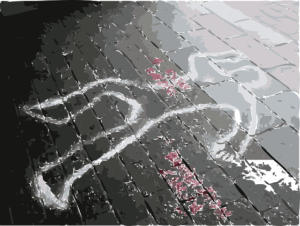
As technology has become more integral to daily life, authorities have increasingly sought evidence from mobile phones, laptops, social media, and even a video game.

Last summer, I heard about a murder case in Arkansas. The high-profile defense attorney, Kathleen Zellner — best known as Steven Avery’s attorney in season two of Making a Murderer — petitioned the court for Amazon Echo recordings.

The Amazon Echo entered the November 2015 murder case after Victor Collins (47), a former Georgia police officer, died in the suspect’s hot tub. An observer told police he’d heard music streaming through the device that evening.

Zellner’s client, James Bates, invited two friends to his Bentonville home to watch college football, drink beer and shots of vodka. After the game, the three men slipped into Bates’ hot tub. Around 1 a.m., Bates said he went to bed. When he woke in the morning, Collins was floating face-down in the hot tub.

The defense contended the death was a tragic accident, stemming from high levels of alcohol. At the time of death, Collins’ blood-alcohol content was at .32, four times the legal limit to drive in Arkansas.

Investigators believed Collins’ body showed evidence of strangulation prior to drowning. Signs of a struggle they’d seen in the house, including a broken shot glass, dried blood on the floor, injuries to both Collins and Bates, and indications that someone hosed down the patio and hot tub before police arrived. They further contended Bates’ water heater, another smart device, recorded an exorbitant amount of water used in the early morning hours, in what investigators believed was an attempt to conceal the crime. The defense argued the same amount of water had been used 12 hours prior to the night in question.

After Amazon released the recordings, the prosecution dropped all charges against Bates. Why? The DA stated, “They cannot meet the legal requirements to proceed.” No further mention of the Echo recordings, but writers don’t need the outcome to envision the story Alexa might tell.

See where I’m going with this? We could spin the recordings anyway we want. Keep that in mind while you read this next case.

Fast-forward to January 27, 2018, when Amazon Echo recordings could solve a brutal double homicide.

In my home state of New Hampshire — a 30-40 minute drive from where I live — two slayings rocked the quaint Farmington community. In the early morning hours of January 29th, Dean Smoronk returned home after a trip to Florida. When he arrived, his live-in girlfriend, Christine Sullivan, and a friend, Jenna Pellegrini, who was staying with the couple at the time, were both missing. He called 911 around 3 a.m., and said he thought there’d been a murder.

When officers arrived at the scene, Smoronk pointed out a large blood stain on the mattress in the upstairs bedroom and dried blood in the kitchen, with a blood smear on the refrigerator. Hours later, New Hampshire State Police found the two women cocooned in tarps, stuffed under the porch. Eight stab wounds littered Sullivan’s body, her skull fractured by a blunt object. Pellegrini’s head, face, and chest showed 48 stab wounds.

During the search, investigators also found several knives wrapped in a flannel shirt — the same flannel shirt worn by Timothy Verrill, caught on the home’s surveillance footage that night. Verrill was a known drug dealer in the area. At the time of the killings, he was friends with Sullivan and Smoronk. Some speculate he was also Pellegrini’s boyfriend, but there’s some conflicting evidence on whether that’s true. Allegedly, Verrill feared the two women were working with authorities on an undercover sting, of which he was the intended target.

State Police seized an Amazon Echo from the crime scene. Had Alexa recorded the murders and subsequent cover-up?

On Oct. 30th, Senior Assistant Attorney General Geoffrey Ward asked the judge to direct Amazon.com to produce any recordings made between Jan. 27 and Jan. 29, 2017, suggesting evidence of the murder and/or hindering prosecution could be found on the device.

In the motion, made in lieu of an application for a search warrant, Ward wrote, “As part of the normal functioning of an Echo electronic device, activated either intentionally or accidentally by ‘wake up words,’ audio recordings are made from the moment when the device is activated. Specifically, when the Echo detects a ‘wake up word(s),’ the device begins audio recording through its integrated microphones, including recording the fraction of a second of audio before the ‘wake up word(s).’”

Wake up words include Amazon and Alexa, but as Debbie pointed out, Alexa records even when those words aren’t mentioned.

Ward’s motion also asked for a wider scope in order to identify cellular devices that paired with the smart speaker within the same time period.

The judge ordered Amazon to hand over the recordings. No word yet on what Alexa overheard that night. The trial begins in May, 2019.

So, TKZers, if you were writing these stories, what would you reveal in the recordings? Get your creative juices pumping by including a jaw-dropping twist!

WINGS OF MAYHEM is on sale for 99c.

“The story spins ahead with escalating velocity and well-rendered literary layers, always leaving the reader pleading for more information while delivering just enough with exquisite timing, always nailing a clear and rationale dissection of what seemed in the moment like insanity or illogic. The craft of the writer is on display from page one, with intense pacing, deeply drawn characters and a matrix of plot elements that never lets you see the big picture as completely as you think you do, thus setting up an ending that demands you stick with it until the final, unexpected twist.” ~ USA Today Bestselling Author Larry Brooks


Jack Kerouac On Writing

by James Scott Bell
@jamesscottbell

Fasten your seatbelts.

We’ve written about Robert A. Heinlein’s rules and Elmore Leonard’s rules. Are you ready for Jack Kerouac’s?

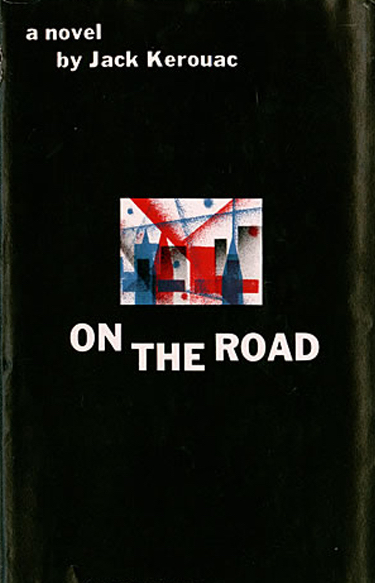
Like most college liberal arts guys in the 70s, I went through a big Kerouac phase. It started, of course, with On the Road, the slightly fictionalized account of Kerouac’s roamings in post-World War II America.

There’s a myth that Kerouac completed his most famous novel in three weeks, on a rolling scroll of butcher paper, so he wouldn’t have to stop to remove pages from the typewriter. Indeed, much of On the Road was written in first draft that way, but Kerouac re-worked the manuscript several times before it was published.

Kerouac’s reputation (and, some might argue, the beginning of his ruin) was made when the New York Times called On the Road “a major achievement.” Not all critics were so moved. Time magazine characterized it as a “barbaric yawp of a book.” And later, Truman Capote would snarkily remark (did he ever remark un-snarkily?) that On the Road is “not writing. It’s typing.”

In any event, at one point Kerouac was asked to memorialize his writing advice. Let’s ride:

  1. Scribbled secret notebooks, and wild typewritten pages, for yr own joy
  2. Submissive to everything, open, listening
  3. Try never get drunk outside yr own house
  4. Be in love with yr life
  5. Something that you feel will find its own form
  6. Be crazy dumbsaint of the mind
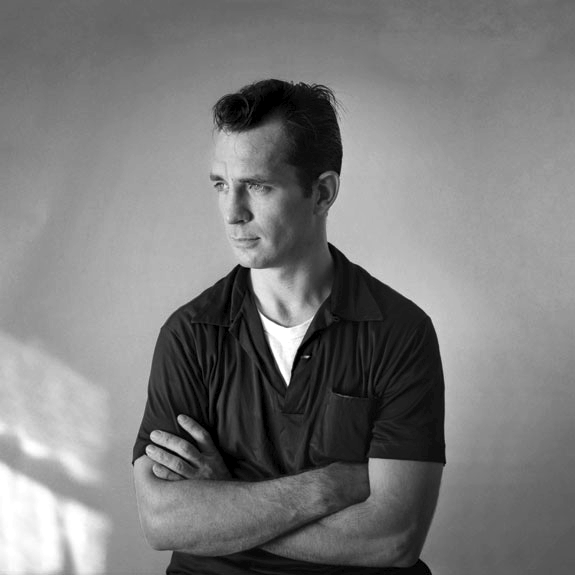
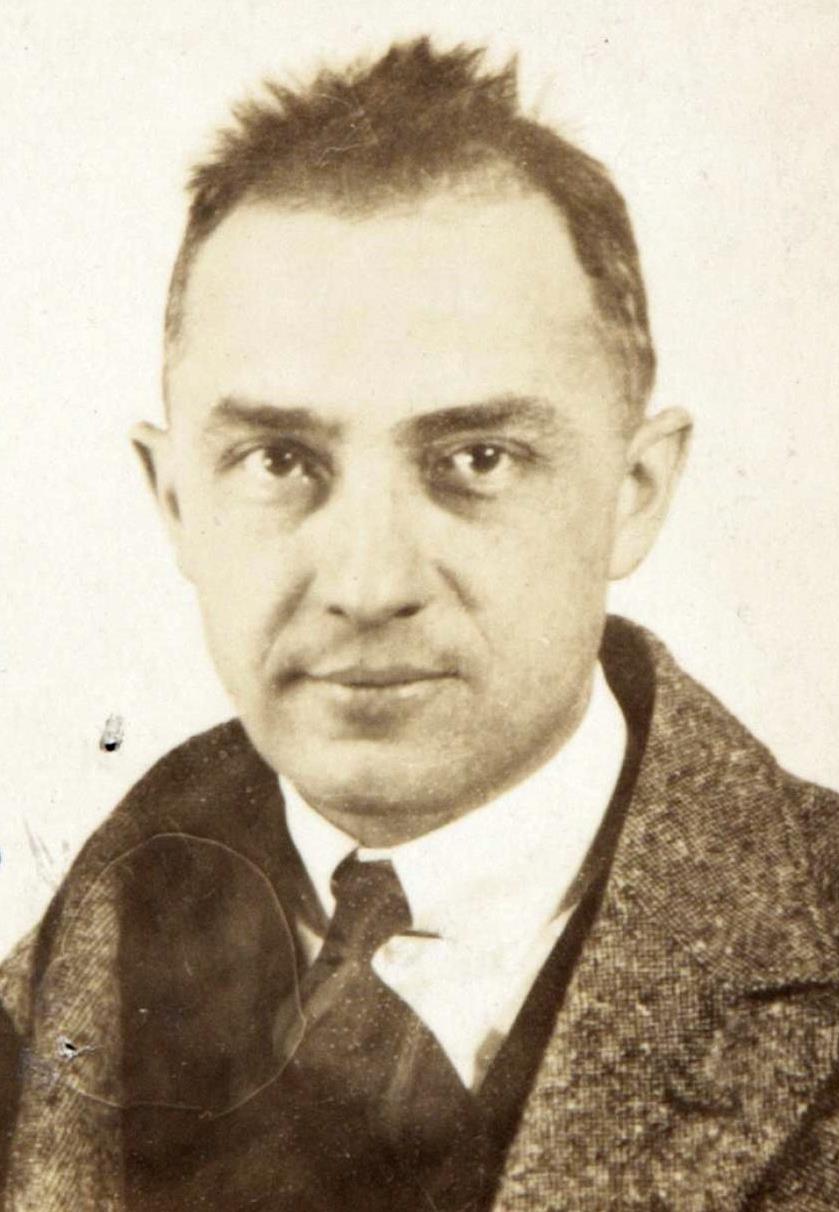
  7. Jack Kerouac. Photo by Tom Palumbo

    Blow as deep as you want to blow

  8. Write what you want bottomless from bottom of the mind
  9. The unspeakable visions of the individual
  10. No time for poetry but exactly what is
  11. Visionary tics shivering in the chest
  12. In tranced fixation dreaming upon object before you
  13. Remove literary, grammatical and syntactical inhibition
  14. Like Proust be an old teahead of time
  15. Telling the true story of the world in interior monolog
  16. The jewel center of interest is the eye within the eye
  17. Write in recollection and amazement for yourself
  18. Work from pithy middle eye out, swimming in language sea
  19. Accept loss forever
  20. Believe in the holy contour of life
  21. Struggle to sketch the flow that already exists intact in mind
  22. Don’t think of words when you stop but to see picture better
  23. Keep track of every day the date emblazoned in yr morning
  24. No fear or shame in the dignity of yr experience, language & knowledge
  25. Write for the world to read and see yr exact pictures of it
  26. Bookmovie is the movie in words, the visual American form
  27. In praise of Character in the Bleak inhuman Loneliness
  28. Composing wild, undisciplined, pure, coming in from under, crazier the better
  29. You’re a Genius all the time
  30. Writer-Director of Earthly movies Sponsored & Angeled in Heaven

This is not exactly the stuff of structure. Indeed, while On the Road is linear in form, Kerouac’s subsequent work became more and more experimental—with the attendant decline in sales. (I will not pause here to once again emphasize the correlation between structure and sales, even though I just did). He died of alcoholism in 1969 at the age of 47, twelve years after publication of On the Road.

What Kerouac and the Beat Generation writers were after was a new kind of prose, a sort of be-bop rhapsody that most truly captured an experience. In that regard, these wild ideas are good for getting out of the way of yourself, to become a “crazy dumbsaint of the mind.” The writing then becomes a kind of “tranced fixation dreaming” and makes writing “for yr own joy” possible.

This is all fine as far as it goes. Kerouac thought that was far enough. But it proved otherwise. For at some point “yr own joy” needs to translate to the readers. On the Road did that. So, too, did his next-most successful novel, The Dharma Bums. After that, things started to get sketchy.

I retain a warm place in my heart for Kerouac. He meant a lot to me in my early formation as a writer. At its best his prose is vibrant, emotional, ecstatic, as in this famous passage from On the Road:

The only people for me are the mad ones, the ones who are mad to live, mad to talk, mad to be saved, desirous of everything at the same time, the ones who never yawn or say a commonplace thing, but burn, burn, burn like fabulous yellow roman candles exploding like spiders across the stars and in the middle you see the blue centerlight pop and everybody goes “Awww!”

I am literally going to be on the road today, driving back to L.A. from Las Vegas (no, I didn’t put it all on red. Came for a meeting and research for my next novel). I’ll check in, but please talk amongst yourselves. Have you read Kerouac? What do you find of value in his advice?

Three Movies…and What We Can Learn from Them

(My apologies in advance…my internet service has been out to lunch for the last few days. I have been getting by with cell phone tethering but that has been spotty as well. It’s weather related and since we’re going to have more of the same for the next several days I may not be able to respond to comments, etc. I will do so as time and ability might allow. Thank you!)  

I am old enough to remember when Netflix was a DVD rental service. It actually still does that, though it has almost single-handedly transformed and popularized video-streaming. There is so much available that it is easy to acquire decision stress over what to watch. It is also quite easy to become addicted to the point where one lets other, more important things (such as writing) slide.

If you’re going to watch Netflix but you want to justify paying the time bandit instead of following your Muse you can actually learn quite a bit by judiciously choosing what you watch. I’m going to briefly discuss a couple of movies that you can find in Netflix’ nether regions that you either may not have heard of or which flitted across your attention due to not being your type of movie. I’ll also mention another that just hit theaters (remember theaters? Those big cavernous places that you stopped going to because half of the audience thinks they’re on Facebook, and can yell out everything they want?) yesterday. Without further ado:

Train to Busan: I quit watching Walking Dead when Rick’s son lost his eye and then pretty much gave up on the zombie horror sub-genre altogether. Someone recommended Train to Busan on Netflix as a zombie movie for people who were tired of zombies or hated the genre. My friend was right. Train to Busan, a South Korean horror film, hooks you in the first three minutes, giving you a hint of what is to come, stepping back and featuring a bit of human drama, and then putting you on the edge of your seat for an hour and a half or so. The set up is that an overworked hedge fund broker takes the morning off to accompany his young daughter (who is the cutest little kid who ever walked the face of the earth) on a high-speed train to visit her mother. The zombie apocalypse breaks out on the train and off we go. These zombies, by the way, aren’t the usual shambling dodos that can be taken out with a well-placed arrow. They are fleet of foot (they can somehow stumble and run like hell at the same time) and extremely aggressive. My favorite line of the film occurs when a passenger gets on the train intercom and says, “Conductor, we have a situation!” No kidding, Sherlock. The film itself features an excellent example of how to hint at a problem at the beginning of a work, let the problem percolate off-screen (or off the page), and then bring it back with a vengeance. It also is a reminder that light rail, buses, trains, boats, or planes are to be avoided at all costs. 

Hell or High Water: This contemporary western finally made it to Netflix and will cause you to trade in your bird box or whatever. A man gets out of prison to find that the family farm has gone into foreclosure during his absence. He and his brother embark on a scheme to rob the branches of the regional bank which holds the mortgage and then use the money to pay off the loan on the farm. It could have been a comedy — and yes, as an exercise you could rewrite it as a comedy — but it isn’t. Things don’t go exactly as planned and the brothers soon find that law enforcement is after them. Jeff Bridges, in what might be the performance of his life, plays a Texas Ranger who is just weeks away from retirement. His investigation into the robberies will certainly be his last case and he wants to retire on top by identifying the robbers and bringing them in dead or alive. There is plenty of moral ambiguity to be had all around, a few quirky characters, and an ending you won’t see coming. There’s a bit of action and plenty of drama, all of it perfectly placed and paced,  but you will want to take notes on the dialogue, which is first class from beginning to end and which is just as important for what is not said as for what is.

Serenity: I obtained days before its theatrical debut an advance copy of this new Matthew McConaughey vehicle without knowing anything about it. I assumed from the title that it was a film about sobriety, ala Clean and Sober, but contrare mon frere. It’s a noir tale with many of the elements of Body Heat but which, alas, goes adrift. McConaughey plays a charter boat skipper whose ex-wife shows up, telling tales of abuse, drunkenness, and cruelty at the hands of her extremely wealthy new husband. She wants McConaughey to kill the despicable cad, promising great rewards of the material and carnal kind. One can understand why McConaughey loses his wrestling match with temptation but that is the only element that truly works here. The story gets sidetracked needlessly and pointlessly, giving one the feeling that some of the scenes were inserted to make Serenity long enough for theatrical release. There is also a twist to the story that is ridiculous by any standard. The result is a textbook case of what occurs when 1) you try to grow a story with scenes that aren’t the equal of the existing product and 2) throw a shell game into the plot which makes the audience the patsy. The Coen Brothers (who have nothing to do with Serenity) do this occasionally with UFOs, for reasons best known only to themselves. It doesn’t work for them. The cleverness inserted into Serenity doesn’t work either, and the result is a work which robs you of two hours of your life which you will never get back. It’s a great example of a waste of elements and actors, a model of what not to do to your target audience.

My question for you: what film, television show/series, or whatever have you watched recently which provided one or more teachable moments — good or bad —for your writing? And how so?


Process, Schmocess


My trusty, late-night writing companion

I’m shy/not shy about discussing my writing “process.” I actually dislike the word “process” when it comes to writing because it makes writing sound both vaunted and ridiculously precious at the same time.

I’m often shy sharing mine here because the posts on TKZ are created by professional, grown-up writers. Most have regimented schedules, produce work, reward themselves, and move onto the next project. They support families and/or themselves. Writing is a job. They also have other jobs, whether they be at home, or working outside the home. They blow me away every day with their dedication, creativity, and professionalism.

Weirdly, I’m also a professional, grown up writer. Though I’m a professional writer who has resisted schedules all her life. The ADHD is an issue. My brain can truly hyper-focus, but when it’s not hyper-focusing, it’s constantly on fire. It can’t be still at all. It constantly searches for novelty and stimulation. ADHD meds clamp down my creativity like an empty yogurt carton trapping a spider in the front hallway. Oh, and the yogurt carton has the Complete Works of Shakespeare on top of it. No more web-spinning, fly-sucking, or terrorizing the kiddies for that spider! (Hmmm. That about describes my creativity, though I’ve never actually drained a fly. I found myself weirdly desirous of eating a dead one once–but that’s another blog.)

Every so often, I dive into schedules and calendars and self-help books and organization projects. They delight me! The future immediately looks so bright! I love the idea of not writing at two in the morning because I couldn’t settle down all day to the work. (I don’t enjoy overnight writing, but I often do it out of necessity.) Schedules discourage writing right up to deadline. What a brilliant concept.  I’ve actually done it a few times and it was AMAZING. Like Graeter’s Ice Cream amazing. First kiss amazing. (Actually, my first kiss was kind of awful. But that’s also another blog. Or not.) Finding six Hershey’s kisses from last Christmas at the back of the cabinet when you’ve been out of chocolate for an entire day amazing. Dang, that’s a great feeling, isn’t it?

I’ve been in next-book mode for months and have restarted it three times. We’re talking between 30 and 50 pages started. I just couldn’t figure out WHERE the book needed to start because it’s a story with a higher number than my usual amount of turning points. (Hey, I used one of those professional writer terms here. Woot.) This is a big book, a big story. It’s opened in different time periods and with different characters. Also different POVs. Many (more sensible) writers would’ve moved on to another idea by now. Another writer might have been at their desk daily at 8:30 a.m. and gone through the three restarts in a few weeks.

Did I mention I’m 56.5 years old? I’ve been writing for thirty years. Honestly, my meandering process has changed little. I’ve written ten novels (eight of which have been published, 2 will remain unseen), anthologies, short stories, essays, blogs, articles, book reviews. There were even several profitable copywriting gigs. Somehow I’ve produced a reasonably significant amount of work.

But I still hunger for the right schedule. The right way to work. The right amount of finished pieces. I still imagine there’s a Platonic Ideal of Laura’s Writing Career out there.

Perfectibility is the eternal illusion. A quest at least as old as the first cave artist who sketched an Ibex that came out looking like a prairie dog, scraped it off and tried again. And again. Funny how we look at so many of those cave paintings now and think them wondrous. Are they perfect? Who’s to say? By what standards can we judge ancient art? We can classify it. Trace developments over time by looking at similar work. Say one artist’s work is somehow better than another. But each effort stands alone. Human creations are imperfectible, just like humans. (My opinion, y’all. I’m not itching to argue religion or philosophy here…) Here’s the cool thing I’ve discovered about the desire for perfection, though: It keeps me striving. As long as I don’t constantly kick myself for not ever being perfect, I still get plenty of satisfaction.

I will probably die with the notion of the Platonic Ideal of Laura’s Writing Career in my head. Oh, well. It’s definitely far less difficult to live with than it used to be.

Every time I post on Facebook these days, I get some stupid message about how people really respond better to posts with pictures. “Posts with pictures are more popular than posts without pictures, Laura Benedict. Why don’t you include some pictures in this post? And, by the way, you can go ahead and add your photos to this post, and we will automatically remove any preview links you’ve already included in the post, thus completely destroying it. You may then add pictures to your new post.”

So I’m going to add some pictures here. This is what my life has been like over the past five days in which I was hyper-focusing on the third start on this novel. I’m pretty sure I got it almost right this time, in the tradition of horseshoes and hand grenades.

They’re not lovely pictures. But in my life, creation is messy, and occasionally people have to make their own dinner.

After the photos:  Tell us about your process. Or your quest for perfection. Or creativity/work habits that really work for you. We are always open to new ideas here!

Where I slept last night because it’s not fair to disturb a sleeping husband at 5:00 a.m. when he usually gets up at six.

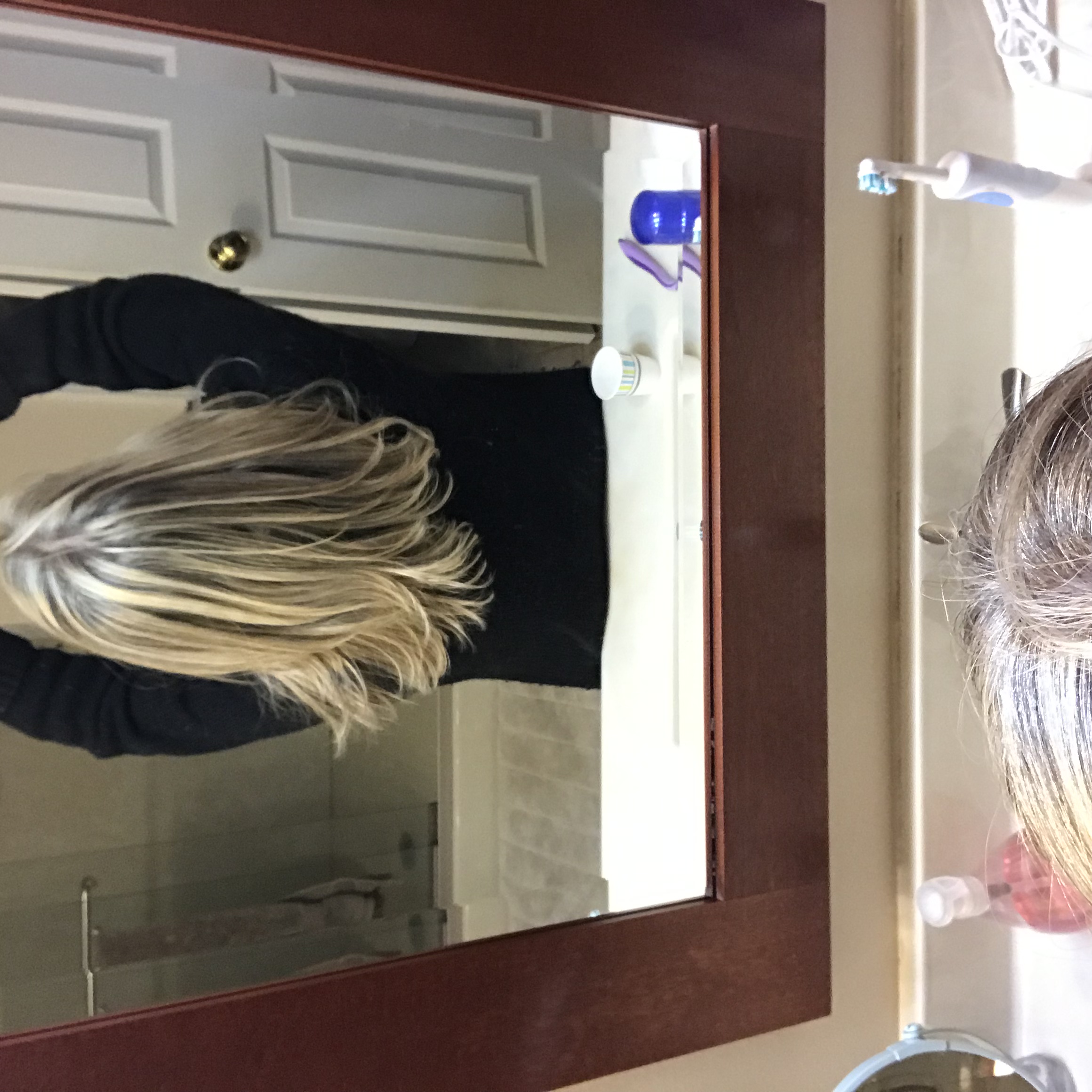
Trust me. You don’t want to see the front.

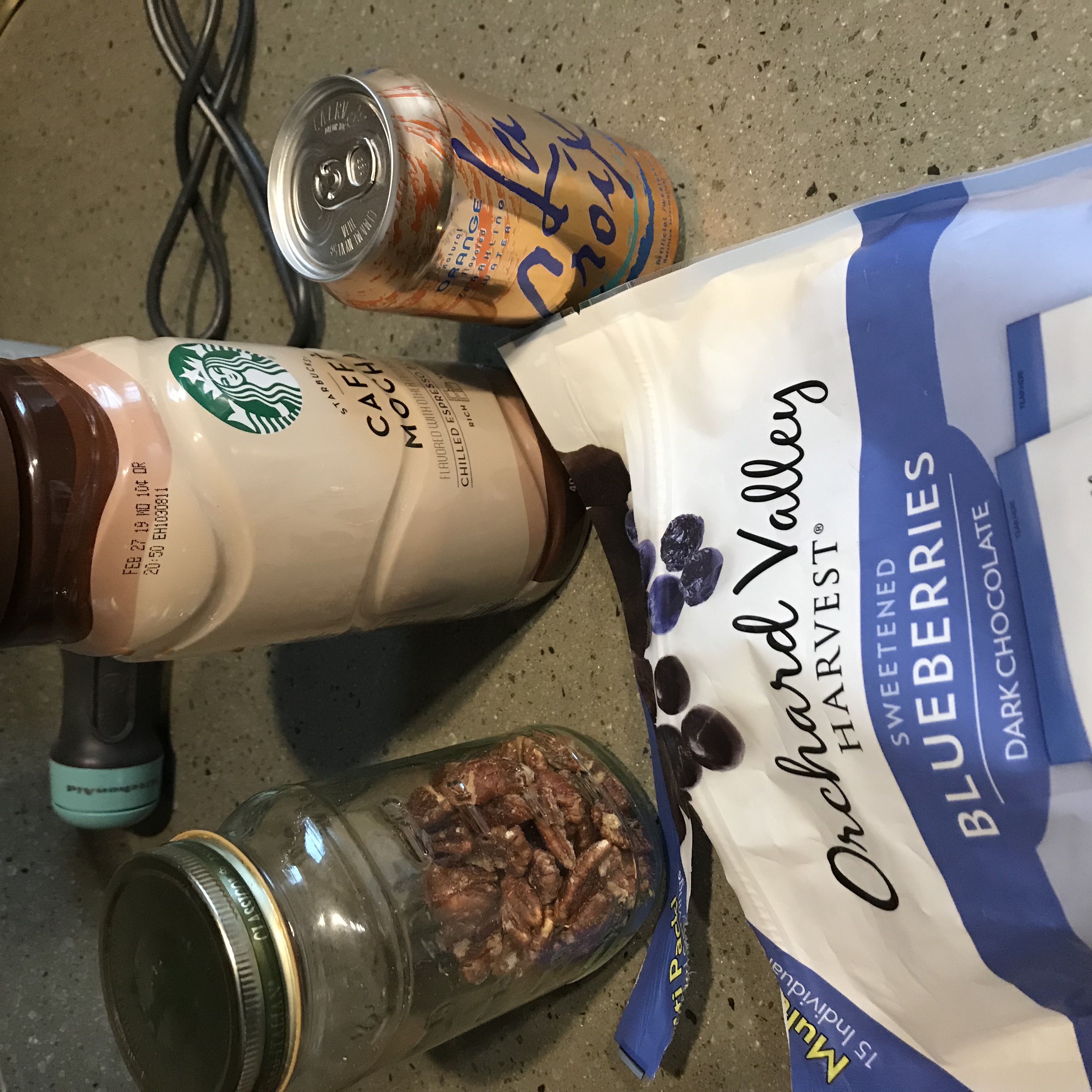
Sustenance. All the food groups. Plus, I roasted those pecans on Sunday. No one can say I didn’t cook.

I think a dozen clementines, two apples, and a 1/2 grapefruit count as nutrition, yes?

Uniform. Or as I like to call them, Second Jammies.

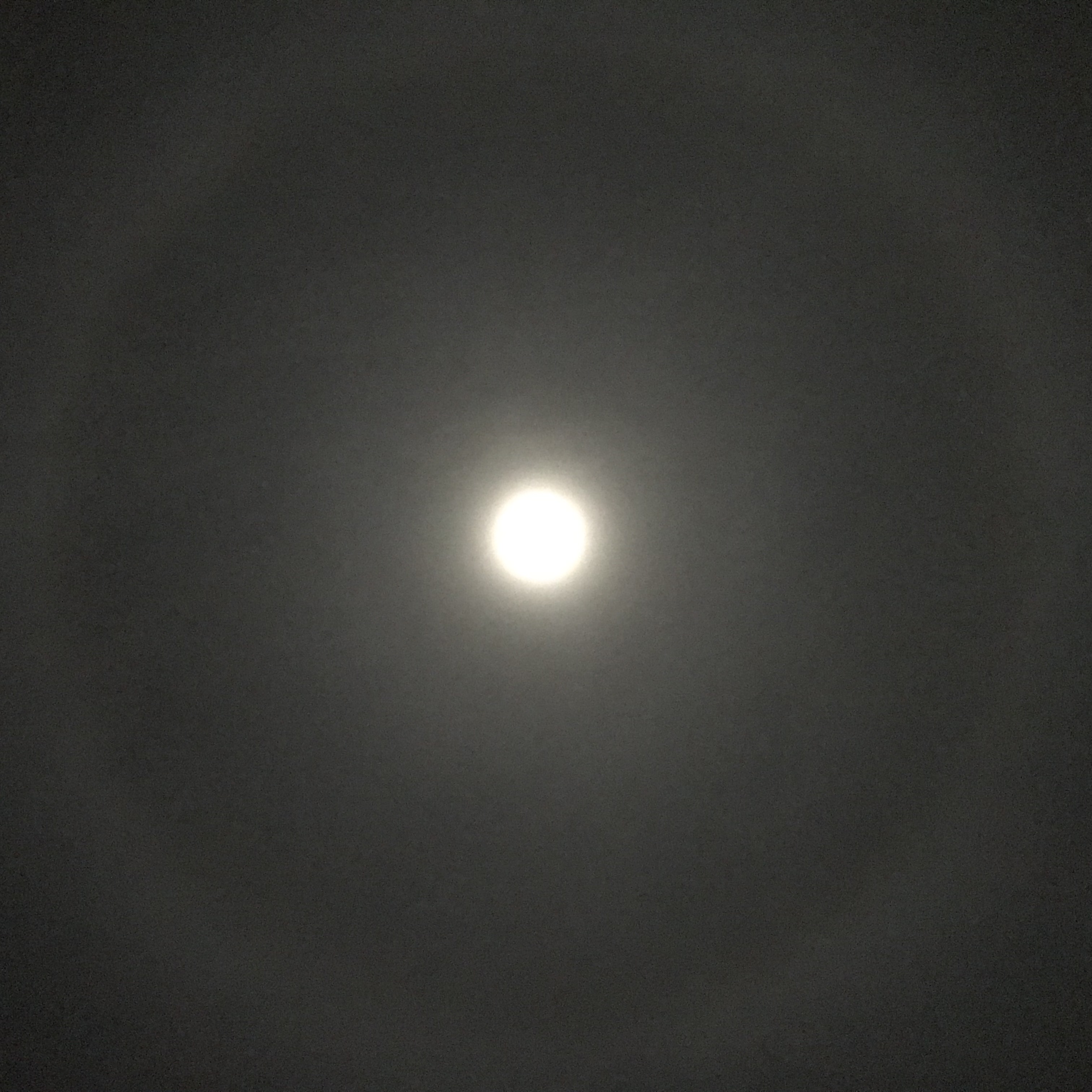
Bonus: Sometimes if you take the dog out to pee at 1:30 in the morning, there’s a ring around the moon.

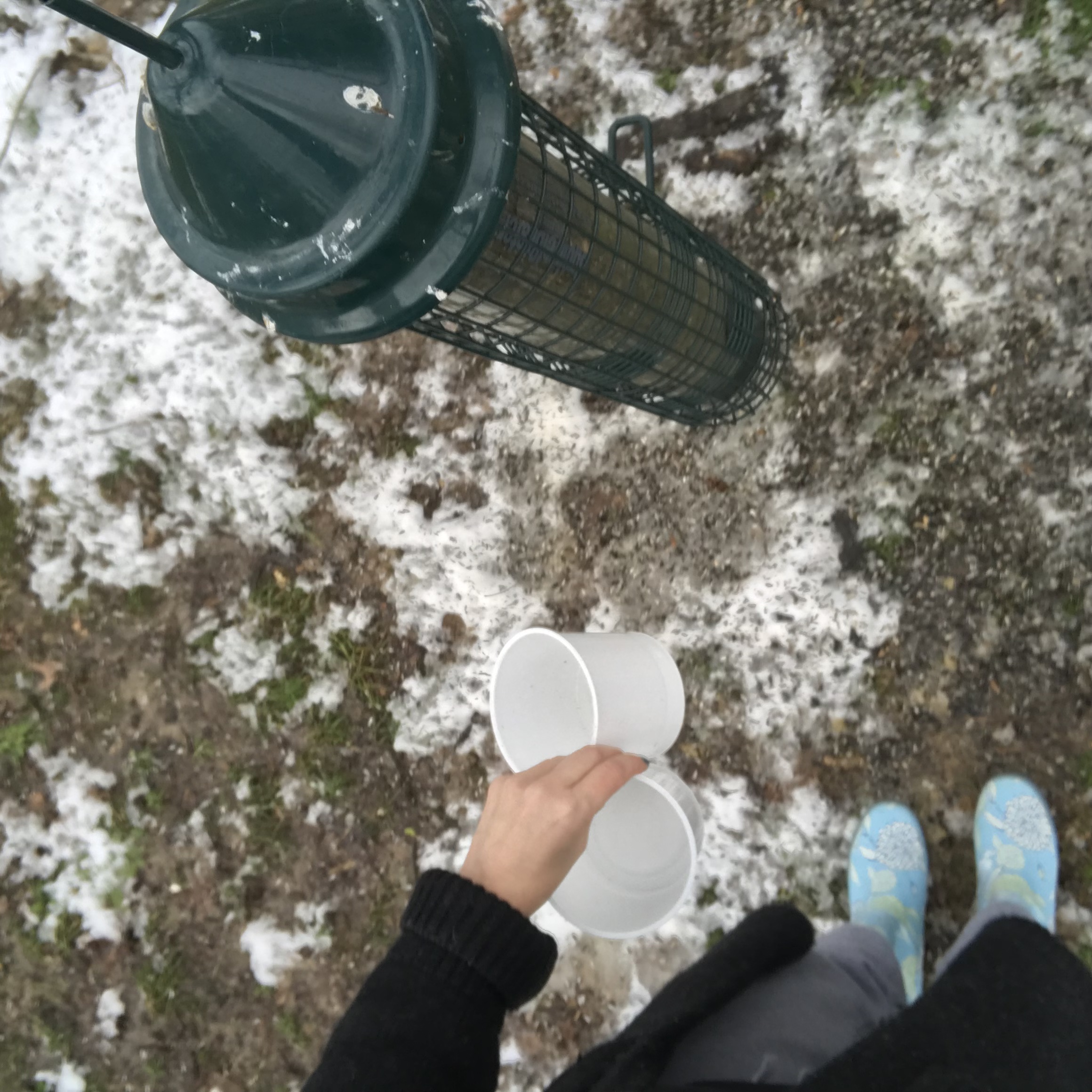
Husbands can feed themselves. Birds can too. But I can’t convince Husband to go out and hop around the pole to entertain me when I look out the window as I write.