Lisa Black On Writing

Today I welcome back to TKZ my friend and fellow ITW member, Lisa Black. I’ve asked Lisa to share her writing techniques with us. Enjoy! – Joe Moore

————————————–

L BlackI don’t know why we never get tired of hearing about another author’s writing habits, whether we’re looking for that one trick that will make our lives so much easier, or if it’s the voyeuristic thrill of seeing how someone else washes their dishes or packs their suitcase (“You do what? Seriously?”)

At any rate, here is mine:

I am a plotter, not a pantser, so before I start writing at all I have to know how the book begins, how it ends, and the major incidents which will take place. These points begin as amorphous thoughts rattling around in my skull for a day or a few years or a lifetime. I write a series, thus my character tends to be the same—a female forensic scientist in Cleveland, Ohio—so the rest of the book might stem from a new character, a puzzle, an incident or, in one case, simply a snarky comment I wanted my character to make. Most often I start with a building, something visual and brooding and a little intimidating—a skyscraper under construction, a wind-swept observation deck, the opulent and historic Federal Reserve building.

Then a theme: what am I going to be talking about? What new world is my character going to explore? I’ll research, looking for ideas, and come up with things I want to have happen. Then I have to think of links that tie those things together, what carries my character from one to the next.

Eventually I’ll have enough for an outline. It won’t look like an outline, more like a freestyle poem.

This happens
Then this happens
Then this happens and my heroine really doesn’t like it
Then this happens
Etc.

And penciled in between the second and third line will be scribbled addendums such as “oh wait, this happens too.”

Then I’m ready to start writing.

I have always been obsessed with word count, so I set a daily goal—whatever works for you, whether it’s 100 words or 3,000. You’ll feel a sense of accomplishment each day without overtaxing yourself. I’ve done 1,000 words/day, 2,000 words/day 5 days/week, lately I’ve been doing 1000 words/day on the days I work and 2,000 words/day on the days I don’t. I used to write the total down every day so I knew how far I had to write the next day, but for the past few books I’ve made it easy on myself and kept it at a round number. If I write extra on one day, that’s a few less words I have to write on the next. I don’t rewrite until I’m completely done, except for minor fixes or things that I’m afraid I won’t remember if I don’t do them right away. Then I keep going until I have a full length completed first draft, minus vacations and major holidays…I’m not a total slave driver.

(I never take writing on vacation with me. I won’t want to do it, won’t do it, and then feel guilty all week because I’m not doing it. If I don’t take it along, conflict resolved.)

A schedule may not work for you, but unless your system totally rebels, I strongly suggest it. The most important factor is that writing becomes, like death, taxes and aerobics class, not optional. There are authors who write when inspiration strikes, who will then hole themselves up in their room and write for 16 hour days, but they seem to be the minority.

Since I started out writing at (she whispered) work, I’m not fussy about where or when I write. I prefer to write at home when my husband is at work and the house is quiet, but the disadvantage to writing at home is that there are so many opportunities for procrastination—laundry, bill paying, the newspaper, chocolate…. Sometimes it’s better to have laptop and will travel. I have written in restaurants, witness waiting rooms at the courthouse, next to a sleeping hospice patient while the caregiver gets a few hours off, and, of course (she whispered) at work.

When I finish the first draft, I take myself out to lunch and take a few days off before starting the second draft. According to industry wisdom I should put it in a drawer for six months and then rewrite, but who has that kind of time? When that is done I’ll send it to my sisters to read, and then do a third draft before sending it to my agent and biting my nails lest she say “This stinks. Throw it out and write something else.” Which has happened.

revisionsBy this point I’m sick to death of the thing and never want to see it again, but have to deal with whatever changes my agent suggests, and then, when I’m really sick of it and provided she doesn’t say ‘throw it out’, I go through the same kind of round with my editor.

When I’m not writing a book, I don’t write—other than personal letters, which I send out constantly and obsessively (my friends and relatives know much more about the minutia of my life than they care to). I don’t write short stories or blog posts or novellas. I wish I did, but my brain just doesn’t work like that. At this moment I haven’t written a thing in nine months and it’s starting to freak me out.

That’s my system. It seems to work for me. If it sounds great to you feel free to adopt it. If it sounds bizarre than keep doing whatever you’re doing. There are as many different writing styles as there are writers.

And that’s a good thing.

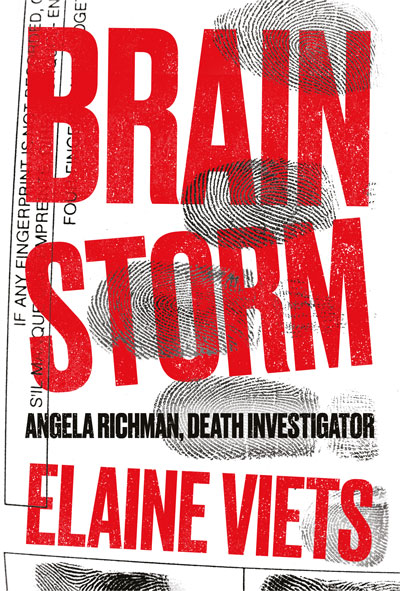
that darkness coverPlease share your writing method with us.

Lisa Black has spent over 20 years in forensic science, first at the coroner’s office in Cleveland Ohio and now as a certified latent print examiner and CSI at a Florida police dept. Her books have been translated into 6 languages, one reached the NYT Bestseller’s List and one has been optioned for film and a possible TV series.

Give your manuscript a running start

By Joe Moore
@JoeMoore_writer

Whenever I disclose to someone that I’m an author, the response is pretty much the same: “I’ve always wanted to write a book.” Or “I’ve got a great idea for a novel.” Despite all the would-be authors out there, not every potential novelist actually gets to the writing stage. And even fewer produce a finished product. But for the ones who not only have an idea but are burning up with a desire to put pen to paper, I’ve put together a basic outlining technique that might help get things started—a simple list of questions to kick start a book. Answering them can give writers direction and focus, and help keep them going when the wheels sometimes come off the cart along the way. To continue my Writing 101 series, here goes:

  • What distinguishes your protagonist from everyone else?
  • Does she have an essential strength or ability?
  • How could her strength cause her to get into trouble?
  • Most stories start with the protagonist about to do something? What is that “something” in your story, and what does it mean to her?
  • Is that “something” interrupted? By what?
  • Is there an external event or force that she must deal with throughout the length of the story?
  • How is it different from the original event?
  • How will the two events contrast and create tension?
  • Does she have a goal that she is trying to achieve during the course of the story?
  • Is it tied into the external event?
  • Why does she want or need to obtain the goal?
  • What obstacle does the external event place in her path?
  • What must she do to overcome the obstacle?
  • Does she have external AND internal obstacles and conflicts to overcome?
  • How will she grow by overcoming the obstacles?
  • What do you want to happen at the end of your story?
  • How do you want the reader to feel at the end?
  • What actions or events must take place to make the ending occur the way you envision?

This outline technique has less to do with plot and more to do with character development. Building strong characters around a unique plot idea is the secret to a great book. Once you’ve answered the questions about your protagonist, use the same technique on your antagonist and other central characters. It works for everyone in the story.

These are general questions that could apply to any genre from an action-adventure thriller to a romance to a tale of horror. Answering them up front can help to get you started and keep you on track. Armed with just the basic knowledge supplied by the answers, you will never be at a loss for words because you will always know what your protagonist (and others) must do next.

Can you think of any other questions that should be asked before taking that great idea and turning it into a novel?

Good Metaphors Are Like Lemmings In Suicide Vests

Suicide-Bomber-Lemmings-55505

“Do you know why teachers use me? Because I speak in tongues. I write metaphors. Every one of my stories is a metaphor you can remember. People remember these metaphors because they are so vivid you can’t get free of them .”– Ray Bradbury

By PJ Parrish

I was watching one of my favorite movies recently, Sideways. I watch it over and over, not only because I enjoy it but also because of what it teaches me about writing great dialogue. There are a handful of these movies I return to again and again – Moonstruck, Casablanca, Bull Durham, The Godfather, Chinatown, Lawrence of Arabia, The Apartment — just to try to see how the magic is done.

So I get to the scene in Sideways where erstwhile novelist Miles has just learned his latest 800-page doorstop has been rejected yet again. Miles descends into a funk fog and laments to his friend Jack:

“Half my life is over, and I have nothing to show for it. I’m a thumbprint on the window of a skyscraper. I’m a smudge of excrement on a tissue surging out to sea with a million tons of raw sewage.”

Which brings us, quite vividly, to our topic of the day – the metaphor. One of our regulars, Jim Porter, has asked us to devote a post to the subject: “I quote Bobcat, when he was Bobcat. At some point, would y’all please write about metaphors–particularly the danger of mixing metaphors. I guess one question is, when is a metaphor finished so you can use another one? We covered this in college, of course, but I would appreciate a review.”

Normally, I don’t give metaphors much thought. I’m of the mind that the metaphor (and its sister the simile) is a lot like sex. If you think about it too hard you’re not doing it right. But then I sat through a day of cable TV political news wherein I discovered that…

The goalposts had been moved…
And we need to level the playing field…
But that might lead us down a slippery slope…
Because all we’re doing is rearranging the deck chairs on the Titanic…
And the solution is just a Trojan horse…

Makes me long for the good old days of top-rate political metaphor, like when Rep. Devin Nunes called the guys trying to shut down the government “lemmings in suicide vests.”

Metaphors and similes permeate our lives. I don’t think we even realize how much because they are so ingrained in our language, a sort of shared currency of comparison that we all use. We use metaphors to make sense of the world around us, to make the abstract concrete. We eat our hearts out and are starved for affection. We shoot down arguments and bottle up our anger. We open cans of worms and close the books on things. And while all of us have gotten to the fork in the road, more than a few of us lament the road not taken.

In simplest terms, a metaphor is a figure of speech that makes a comparison between two seemingly unlike objects or concepts. By portraying a person, place, thing, or action as being something else, a metaphor gives us a more vivid description or helps us understand something better.  When done well, a metaphor also ignites some special spark of recognition in your reader, where they say to themselves, “Yes! I see that! I know exactly what he is trying to tell me.”

Pause for definition: What’s the difference between metaphor and simile? (I sometimes get this wrong, but then I can’t get the lay-lie thing right either.)

Simile: Richard is as brave as a lion. Richard has a heart like a lion. My ex-husband is like a snake in the grass. Metaphor: Richard is a lion. My ex-husband is a real snake.

So how do we take these humble parts of speech and use them to enrich our novels? How do we turn the mundane into the sublime without resorting to clichés?

Aye, there’s the rub.*

*Metaphor, archaic. Origin: in ancient game of lawn bowling, a rub is a fault in the surface of the green that stops a bowl or diverts it from its intended direction.

I’m finding this topic hard to deal with. Good metaphors are like modern art or pornography. I know it when I see it but don’t ask me to define it. Maybe I’m just not the sharpest bulb in the drawer. I think it’s time for some examples:

Good Metaphors/Similes

“The water made a sound like kittens lapping.” — The Yearling by Marjorie Kinnan Rawlings.

“Let us go then, you and I, when the evening is spread out against the sky like a patient etherized upon a table.” — TS Eliot, The Love Song of J. Alfred Prufrock.

“Life’s but a walking shadow, a poor player that struts and frets his hour upon the stage and then is heard no more. It is a tale told by an idiot, full of sound and fury, signifying nothing.” – Macbeth, Shakespeare.

“The sky above the port was the color of television, turned to a dead channel.” – Neuromancer, William Gibson.

“Her voice is full of money.” – F. Scott Fitzgerald, The Great Gatsby.

And one of my faves: “Honey, you are a regular nuclear meltdown. You’d better cool off.” ― Susan Sarandon in Bull Durham.

Here are two of Stephen King’s favorites, straight out of the great pulp tradition:
“I lit a cigarette that tasted like a plumber’s handkerchief.” – Raymond Chandler.
“It was darker than a carload of assholes.” — George V. Higgins.

Bad Metaphors/Similes

There are a couple reasons why things can go bad.

Cliches: Usually, metaphors fail because they aren’t fresh. Metaphors are at their most powerful when they are original, inciting new ways of looking at things. These are old and tired and should never appear in your novels: the elephant in the room, deader than a doornail, her hair was spun gold, his eyes were like emeralds and he had movie star teeth. No, don’t even use “Chiclet teeth” because it isn’t yours; someone got there before you.

150923083253-restricted-02-berra-quote-super-169

Non sequiturs. Sometimes, the metaphor just doesn’t make sense. I always think of Yogi Berra here, though he was technically the master of the malapropism. (“Texas has a lot of electrical votes.”). Lawrence Harrison, an op-ed writer for the Washington Post, came up with a  great word malaphor, which is a mash up of malapropisms and metaphors. Click here to see his hilarious blog devoted to it. The best example I found of this is from Stephen King’s On Writing, from a novel he refused to name:

“He sat stolidly beside the corpse, waiting for the medical examiner as patiently as a man waiting for a turkey sandwich.”

Why does this fail? Because what does waiting for a turkey sandwich have to do with patience? As Scooby-doo said, “huh?”

Here’s one of my favorite malaphors — and once again, it comes from politics. If you don’t get this, that’s okay. My wish for you, regardless, is that you live long and prosper:

“I’m presenting a fair deal, the fact that they don’t take it means that I should somehow do a Jedi mind-meld with these folks and convince them to do what’s right.” — President Obama

Mixed metaphors. I promised I’d get to this, Jim, so here we go. There’s a fancy name for mixed metaphors – catachresis. Who knew? This is where the writer gets his creative wires crossed and juxtaposes two unrelated comparisons in a single part of speech. Examples: She grabbed the bull by the horns of the dilemma . We have to get all our ducks on the same page. Let’s burn that bridge when we come to it. Here is a memorable one from Dan Rather: “They counted the votes until the cows had literally gone to sleep.”  And Al Gore once reminded us that “a leopard can’t change his stripes.” A couple more:

“All at once he was alone in this noisy hive with no place to roost.” -Tom Wolfe, The Bonfire of the Vanities.

“Anyone who gets in the way of this cunning steamroller will find himself on a card-index file and then in hot–very hot–water.” — Len Deighton, Winter: A Novel of a Berlin Family.

“He had that reputation. Some people thought he was over it, but old dogs rarely change their spots.” — David Baldacci, Hour Game.

And here’s a doozy from a Pentagon staffer quoted in the Wall Street Journal complaining about efforts to reform the military: “It’s just ham-fisted salami-slicing by the bean counters.”  Actually, there is something rather satisfying about this one, sort of like a Golden Corral all-you-can-eat word buffet .

Now here’s a caveat about mixed metaphors: Sometimes they can work. But you really have to know what you’re doing to pull this off. In the Len Deighton example above, I suspect he was purposely making his speaker sound obtuse. And then there are the rule-breakers, those writers who can juggle with chain-saws (don’t try this at home, kids). They mix and match metaphors to create an avalanche of style or an emotional effect:

“The moon was full. The moon was so bloated it was about to tip over. Imagine awakening to find the moon flat on its face on the bathroom floor, like the late Elvis Presley, poisoned by banana splits. It was a moon that could stir wild passions in a moo cow. A moon that could bring out the devil in a bunny rabbit. A moon that could turn lug nuts into moonstones, turn little Red Riding Hood into the big bad wolf.” — Tom Robbins, Still Life with Woodpecker.

And two lines I wish I had written:

“The voice of your eyes is deeper than all roses. Nobody, not even the rain, has such small hands.” — ee cummings.

Okay, time for some rules. Well, not rules really, because I don’t believe in rules when it comes to writing. But here are some guidelines about how to use metaphors and similes.

Keep It Simple, Stupid. Similes and metaphors should be useful, concise, and at best even memorable. If you work too hard at it, your exertions will show on the page. Like I said, it’s like sex. Bring your best technique, be creative, but relax, or it ain’t gonna happen.

Make Me Stand Up and Salute. An effective metaphor has the power to stir because it triggers a deep sense of recognition in the reader, relating to something in his experience and eliciting an emotional reaction. Often, the metaphoric connection is simplicity itself. This is a simile but it is one of my all time favorites from the late-great sportscaster Stuart Scott:

He’s cooler than the other side of the pillow.

Pure geometry!

Pure geometry!

Be Original: If a simile or metaphor doesn’t rise above the merely mundane, it won’t work. This is hard work, coming up with something that is uniquely your own. But this is where the book is made, where your voice emerges. Don’t go with what is facile, dull, easily digested.  Don’t be content to be literal and tell us someone is as “beautiful as a young Elizabeth Taylor.”  Find a new way to spark the reader’s imagination and let them fill in the gaps.  When I was struggling to describe my female protag (who I envisioned as looking like a young Charlotte Rampling), I didn’t say she had high cheekbones and hooded eyes.  I gave her a childhood memory about watching cheerleaders and what her father told her about beauty:

They’re plain arithmetic, Joey. You’re geometry. Not everyone gets it.

Here is one of my favorite bloggers Chuck Wendig on the subject. Click here for complete blog:

“Metaphors represent an authorial stamp. They’re yours alone, offering us a peek inside your mind. When a reader says, “I would have never thought to compare a sea squirt to the economic revolution of Iceland,” that’s a golden moment. The metaphor is a signature, a stunt, a trick, a bit of your DNA spattered on the page.”

Bend Me, Shape Me. Good metaphors are entertaining. They sneak up on the reader, tickling them, making them smile. Bend your images like Beckham and watch them soar and swerve. Don’t you love this one from Matt Groening:

“Love is a snowmobile racing across the tundra and then suddenly it flips over, pinning you underneath. At night, the ice weasels come.”

If you are struggling with metaphors, read some good poetry. Emily Dickinson is a great place to start. (“Hope is a thing with feathers…”) Langston Hughes is another (if dreams die, life is a broken-winged bird that cannot fly…”) But maybe this is the best metaphor ever?

The fog comes
on little cat feet.
It sits looking
over harbor and city
on silent haunches
and then moves on.

Stay in Your POV:  We hear a  lot these days about writing from an “intimate” point of view. Basically, all that means is being so firmly in your characters sensibilities that every word, gesture, thought and description is filtered through their personal prisms. So that must include whatever metaphors/similes you assign to them.  A metaphor must arise organically from the character’s experience, age, background and even geography. A woman who grows up on an Iowa farm isn’t going to produce the same metaphoric connections that a Manhattan socialite might.

In my latest book, SHE’S NOT THERE, my protag is a skip tracer but also an avid birder. That gave me many chances to extend the metaphor through the lens of bird-watching.

Whenever he was in a place like this, or any place where humans gathered, he saw himself as a big bird of prey — a peregrine falcon maybe — soaring high above and looking down at the world from all angles. He could see things that others, so intent on their little ground lives, could not. He could see the big picture.

Later, this man compares a person he is chasing to a crow because crows are the smartest animals on earth. He remembers watching a crow deposit acorns in the middle of a busy street so cars would crack them open. The crow even learned how to time the red lights to go out and safely retreat the nuts.

Pay special attention to where your character is from and look for ways to use that in metaphors. When my skip tracer notices the color of a man’s eyes, he doesn’t compare them to jade. He says they are the color of the Cumberland River on a cloudy day. Now, I bet you haven’t seen the Cumberland but I am trusting you can imagine a muddy rural river and supply the missing metaphor.

Know When to Quit

This was part of Jim’s original question to us here at TKZ and I think it is an important one: “When is a metaphor finished so you can go on to the next one?” I had a friend who did stand-up comedy and he used to talk about “layering” — taking a basic bit and milking it for a extra laughs. But he said you had to know when to stop. So it should be with metaphors. Usually, the simpler the better and you don’t want it to go on too long or it begins to feels forced, like it’s just you the writer showing off.  I had to delete a couple bird metaphors from my book because it was losing its impact. Metaphors and similes are special; they are the jewels you add for extra sparkle, something to delight.  Maybe it’s helpful to think of them as accessories and remember what Coco Chanel advised about that:

“Before you leave the house, look in the mirror and take one thing off.”

But how many per book or chapter? That’s something you just have to develop an ear for. Because writing is music, after all. And if the note feels false to you, you better believe it will be a clanger for the reader — and you don’t want a Metallica concert going on in your book. I resist the urge to insert too many metaphors — the birds! — which isn’t difficult because they come hard for me anyway.

Speaking of quitting…as my Tupelo-born friend Phillip says, I’m wiped cleaner than a blackboard. So, it you’ll excuse me, I’m off like a herd of turtles. I know we’ve barely scratched the tip of the iceberg, but it’s time to get writing. So let’s roll up our elbows, put our shoulders to the grindstone and get back to rapsodizing and metaphorizing. Now go nail one out of the park!


Write It On Spec — Guest Post by David Levien

:The-Boyz0004.jpgDavid Levien on set of Showtime’s “Billions.” Photo credit: Jeff Neumann

Today we offer a heartfelt tip of the fedora to our guest blogger David Levien. David, in addition to writing one of my favorite detective series  — the Frank Behr books — is also the creative genius behind BILLIONS, the brilliant and addicting Showtime series which has just wrapped up its first season and has been renewed for a second. David graciously took time out of an impossibly busy schedule to offer some important suggestions and advice to writers new and seasoned, and will be intermittently available to answer questions and comments throughout the day. David, thank you! — Joe Hartlaub

You sit bolt upright in the middle of the night and scrabble around the bedside table for pen and paper before the spark of a brand new idea forming in your mind blows away on the wind. Or you’re jogging, driving, taking a shower when it comes. You scratch out the initial thoughts in a desperate rush before they vanish—maybe it’s the beginning or maybe the end that has come to you first. You probably don’t even tell anyone about it for a while, because you don’t want to chase away this fragile dragonfly of a thought that’s landed on your desk, and when you do talk, it’s likely only to a trusted friend, colleague, editor or agent. Then you set about writing it, for yourself, on spec. You build it out because you have to, it’s what you do, with no guaranteed reward.

Only when it’s done, standing sturdy and complete, bearing all that you could bring to it, do you share the piece, be it novel or screenplay or teleplay or whatever the métier, with the marketplace, with the world. That’s the way it’s supposed to go anyway. But sometimes, if you’ve been fortunate enough to build a career, a name, daresay a brand, opportunities come along. A money offer is made for you to write someone else’s idea, or a project based on other source material. Sometimes you take that fledgling idea of your own out, as a proposal or a pitch, and the meetings go well and a buyer comes aboard early. What a glorious state of affairs! They’ve bought in before you’ve even done the bulk of the work. There won’t be any sweat equity on this one, there won’t be any risk that you’ve wasted your time. No, you’re on their dime, they have a vested interest…but.

But along with that money, with that deal, with that contract comes outside input. Hey, they’re your partners, they’re invested, so why shouldn’t they have some say? They dug it enough to buy in the first place. You’re reasonable. You’re collaborative. You’re living for a time on their largesse. You listen. A few of those ideas may creep in. But your piece is still weak, vulnerable, its structure and tone yet to be fully formed. The doctors advise not to take a baby outside into the world for at least the first month, until the immune system gets up and running, because the risk of contamination is too great. The same goes for your project.

Sometimes, when the work doesn’t turn out as well as it was supposed to, you go back and do a post-mortem, and with dismay you see that it was one of those seemingly benign outside creative suggestions that turned virulent and blighted the whole enterprise. You try to find your way back to the original intention, but the helix of creation is too complex to reverse engineer. Your idea was a gift in the first place and because you wanted to or had to, you sold it to the highest bidder, and it’s not pure anymore. And neither are you. For that moment you’ve been bought and paid for. You tell yourself: that’s not going to happen next time.

If you’ve managed to build a career of any length you may look back and realize the ones that really work, the ones that made you, were the ones you wrote on spec, just for yourself, the way they were meant to be. I can certainly look back and see it that way. There have been some successes that were commissioned. “Runaway Jury” and “Ocean’s 13,” were work-for-hires and turned out well. But the ones that live closest to my heart, my private investigator character Frank Behr—he was created and the first book written on spec although later books in the series were written under multi-book deals, including my latest, Signature Kill, out now in paperback—my first movie “Rounders,” and even my television show “Billions,” (both written with filmmaking partner Brian Koppelman) were created with no outside interference. The eventual buyers who came to the table wanted them as they were. Writing it on spec is the most elemental way for a writer to work, and even though it can sometimes become a luxury or a hardship to work for free, the reward outweighs the risk by plenty. You know best, so be unreasonable, and treat yourself, force yourself, trick yourself, spoil yourself but do yourself the favor and write it on spec.

Checklist to Publication

By Joe Moore
@JoeMoore_writer

I started writing in one form or another over 30 years ago. It included book reviews, magazine articles covering professional audio and video and operational and tech manuals. As marketing director for an international manufacturer, I was required to generate corporate reports and business plans. Some have said that my first venture into fiction were my business plans.

In addition, I reviewed fiction for 3 newspapers in Florida. I constantly read action-adventure novels (Cussler, Clancy, Fleming) and fantasy (Peake, Tolkien, Brooks). The reason I eventually tried my hand at fiction was because I got tired of waiting for the next Clancy or Brooks novel to come out so I attempted to write stories that would fill in the gaps between their books. If you read any of my novels you’ll see elements of all these authors peek out from between the words.

One of my motivations in blogging at TKZ is to share what I’ve learned with other writers, especially those that are just starting out. I try to cover the stuff no one told me way back when. If I can reveal the answer to a point of confusion or suggest a tip to a writer that’s just starting out, maybe I can save him or her valuable time and even possible rejection.

So my writing 101 series continues today with a checklist to publication.checklist_cleaned

Your manuscript is finished. You’re ready to find an agent/publisher or to indie publish.

First, you need to define your audience. It’s important that you know what type of person or group will go out of their way to find and pay to read your book. What are the characteristics of your target reader such as their age, gender, education, ethnic, etc? Is there a common theme, topic or category that ties them together? And even more important, what is the size of your target audience?

For instance, if your book is a paranormal romance set in the future in which the main characters are all teenagers, is there a group that buys lots of your type of book? If not, you might need to adjust the content to appeal to a broader audience. Change the age of the characters or shift the story to present day or another time period. If your research proves that a large number of readers buy books that fall into that category, making the adjustment now could save you a great deal of frustration later.

Next, you need to define your competition. Who are you going up against? If your book falls into a specialized sub-genre dominated by a few other writers, you might have a hard time convincing a publisher that the world needs one more writer in that niche.

The opposite problem may occur if your genre is a really broad one such as cozy mysteries or romance. You’re going to have to put a unique, special spin on your book to break it out of the pack. Or accept the fact that the genre and your competition is a wide river of writers, and you only hope to jump in and go with the current. Either way, make the decision now, not later.

The next issue to consider is what makes your book different from all the others in your genre. Do your homework to determine what the characteristics are of books that your potential audience loves. This can be done online in the dozens of Internet writer and reader forums. And you can also do the research by discussing the question with librarians and books sellers. Once you know the answers, improve on what your target audience loves and avoid what they don’t. In the early stages of your writing career, don’t be shy in seeking advice. There’s no such thing as a dumb question.

Just keep in mind that you can’t time the market, meaning that what’s really hot right now might have cooled off by the time your book hits the shelves. The moment you sign a publishing contract, you’re still as much as 12-18 months behind what’s on the new release table right now. Indie publishing can help, but there’s a motto in the business that applies to publishing: First to market wins.

Another detail to consider in advance is deciding how you’ll market and promote your book. Sadly, this burden has fallen almost totally on the shoulders of the author and has virtually disappeared from the responsibilities of the publisher. Obviously with indie publishing, it’s all on the author’s shoulders. Start forming an action plan including setting up a presence on the Internet in the form of a website and/or blog, Facebook, Twitter, Goodreads, etc. Also, is there a way to tie in your theme to a particular industry? How can you promote directly to your audience? For instance, if your romance novel revolves around a sleuth who solves crimes while on tour as a golf pro, would it be advantageous to have a book promotion booth at golf industry tradeshows? If your protagonist is a computer nerd, should you be doing signings at electronics shows? How about setting up a signing at a Best Buy or CompUSA? Follow the obvious tie-ins to find your target audience.

Writing is hard work. So is determining your target audience and then promoting and marketing to them. Like a manufacturing company, you are manufacturing a product. Doing your homework first will help avoid needless detours on the way to publication.

Any other “I wish I’d know that” advice?

Letting Go of Bad Ideas

https://www.youtube.com/watch?v=s0sbTLCLpgY

By PJ Parrish

As you know, I have trouble sleeping. Usually, it is because I can’t slow down the hamster wheel in my head. It is whirring around, filled with junk, to-do lists, misconjugated French verbs, woes real and imagined and regrets (I’ve had a few, too few to mention).

And then there are those story ideas floating around in my brain just as I’m trying to drift off. Those tantalizing fragments of fiction, those half-seen shadows of characters-to-be, those little loose pieces of plots just waiting to be sculpted into…

Books?

Here is the question I was pondering last night just before I finally drifted off: Is every idea worthy of a book? Does every story really need to be told? And then, in the cold light of morning, the answer came to me: NO, YOU FOOL!

You all know what I am talking about. Whether you are published yet or not, you undoubtedly have some of the following around your writing area:

1. A manila folder swollen with newspaper clippings, scribblings on cocktail napkins, pages torn from dentist office magazines, notebooks of dialogue overheard on the subway, stuff you’ve printed off obscure websites. At some point, you were convinced all these snippets had the makings of great books. (I call my own such folder BRAIN LINT.)

2. A folder icon in your laptop called PLOT IDEAS or some variation thereof. These are the will-o-wisps that came to you in the wee small hours of the morning, whispering “tell my story and I will make you a star!” So you, poor sot, jumped out of bed, fired up the Dell and tried to capture these tiny teases.

IMG_0487Here’s a picture of my PLOT file. Here are some of the WIP titles: Stud, Panther Book, Silver Foxes, Winter Season, The Immortals, Card Shark. Feel free to steal any of these.
Or maybe you’re one of those bedeviled souls who keeps a notepad by the bed — just in case. (Mine is right under my New York Times Crossword Puzzle Book and paperback of John D. MacDonald’s Ballroom of the Skies.

3. Manuscripts moldering in your hard-drive. Ah yes…the stunted stories, the pinched-out plots, the atrophied attempts, the truncated tries. (Sorry, when alliterative urge strikes, you have to let it out or it shows up in your books). These are the books you had so much hope for and they let you down. These are the books you went thirty chapters with but couldn’t wrestle to the mat for the final pin. These are the books you grimly finished even as they finished you. Maybe you even sent these out to either agent or editor and they were rejected. At last count, I have six of these still breathing in my hard-drive. And at least four others finally died when my Sony laptop did, lost to mankind forever.

So what do you do with all these ideas? You expose them to sunlight and watch them burn to little cinders and then you move on. Because — hold onto your fedora, Freddy — not every idea is a good one. Not every idea makes for a publishable book. And sometimes, you just gotta let go.

Let me give you a metaphor. I think you women out there will get this more readily than the guys. You have a closet full of clothes. Most of the clothes you never wear. But they were really good ideas at one time. Like that hot pink Pucci shift you found at the consignment store but makes your boobs disappear. Like those Calvins you haven’t been able to shoehorn into since 1985. Like that yellow blouse you got at Off Fifth that makes you look like a jaundice patient but you keep it because it is Dolce & Gabanna and you paid $59.99 for it.

I read a good blog entry a while back about “Shelf Books.” I am kicking myself for not writing down who coined this great term; I’m thinking John Connolly? Someone please help me if you know. The idea is that you sometimes have to finish a book just so you can get it out of your system and move on. Doesn’t that make sense? Sort of like cleaning out your closet of clothes that make you frustrated and sad, so you can create space for good new stuff?

We all have Shelf Books. Some are meant to be only training exercises. They teach you valuable lessons that you must learn in order to be a professional writer. I will never forget listening to Michael Connelly talk at a Mystery Writers of America meeting when I was just starting out. He said that he completed three novels before he wrote his Edgar-winning debut The Black Echo, because he knew none of the first three were ready to go out into the world. Fast forward fifteen years to last month when I moderated a panel at SleuthFest with our guest of honor C.J. Box, who told the audience that he wrote four books before he finally hit it right with Open Season (which, like Connelly’s debut, also won the Edgar for Best First Novel.) And I clearly remember reading Tess Gerritsen on her blog where she confessed she wrote three books before she got her first break with Harlequin. She also said how dumbfounded she was that some writers expect to get published on their first attempt.

I think I understand that last thing. I had the hubris to think the same thing myself when I was starting out. But it took me a couple tangos with bad ideas before I found a story that worked. I have also seen some of my published friends lose valuable time not wanting to give up on an idea because they got so emotionally invested in it. And I have seen many unpublished writers lock their jaws onto one idea like a rabid Jack Russell and chew it to death. We all can become paralyzed, unable to give up on our unworkable stories, unable to open our imaginations to anything else. I think it is because we fear this one bone of an idea is the only one we will ever have.  Don’t let anyone kid you — even veteran writers get into this mindset, frozen with fear that they have dried up, that they will never again have another good idea.

For unpublished writers, two things happen when they reach this point:

They self-publish — badly. Meaning without getting editing help or good feedback.
Or they get smart, take to heart whatever lessons that first manuscript taught them, put that book on the shelf, and move on to a new idea.

Here is my favorite quote about writing. I have it over my computer:

The way to have a good idea is to have many ideas.

— Jonas Salk

You have to know when to let go. And you have to trust that yes, you will have another idea. Maybe a good one. Maybe even a great one.

I think I will now go clean out my closet. There is a gold lame thrift store jacket in there I need to get rid of. Here it is. It’s yours if you want it. Check out my ad on LetGo. I will even throw in my un-used book title STUDS.

FullSizeRender

You Wouldn’t Believe What’s Out There…

DetectivewithMagnifyingGlass-300pxcomputer

It has been stated  repeatedly that information is the new currency. Mystery and thriller authors and readers have known that for decades. What is a clue, if not a piece of information? What is new is the ability of anyone — and I mean anyone — with internet access and a bit of deductive reasoning to discover quite a bit about someone else, without paying a private investigator to do so or getting down and dirty themselves and going through someone’s garbage the night before the scheduled pickup. I’m not talking about one of those pricey subscription services, either. I’m talking about what you can get from the comfort of your home with a smartphone or a tablet. Those of us of a certain age are familiar with the gumshoe — Mike Hammer comes to mind —who had a contact at the courthouse, or the phone company, who is an inside source of inside knowledge. These days it just takes a few keystrokes.

If you are writing contemporary detective fiction your protagonist can use these sources quite easily. So can you, for that matter, for your own benevolent reasons. The following are the most widely and readily available:

Google Search: This may seem obvious, but it’s just a starting point. It doesn’t contain everything, by any means, and may also give you too much information. If I can’t find precisely what I am looking within the first two or three pages of search results I look elsewhere, such as

Facebook: It may seem trite but Facebook can be a wealth of information. I have seen couples who I know play out their domestic problems in Facebook posts. Ouch. On another occasion, I was considering an extended period service contract with a gentleman — payment up front — until I read some of his wife’s posts, in which she repeatedly described the financial problems her husband’s business was experiencing. It did not instill confidence, nor did her demonstration of her inability to operate the governor between her thoughts and her fingers. I went elsewhere.

While we are talking about Facebook: it’s a criminal’s dream (so is Twitter), particularly with respect to those folks who can’t travel more than five miles from home, eat anywhere besides McDonald’s, or use the commode without telling the Universe where they are, like, RIGHT NOW, and what they are doing. Some unsolicited advice: wait until you get home to spread the news about how interesting you are. Otherwise, you are advertising that your home is empty and waiting to be burglarized while you are busily telling the world that you are engaging in conspicuous consumption.  Ask your local police department (or better yet, your insurance agent) if you think that I am kidding. Much of what is available online is put there by government agencies, and you can’t opt out. It’s there. Keep in mind that what you voluntarily put on Facebook can be viewed by anyone, be it your spouse or significant other (or both!), and a prospective or current employer, customer, or client.

County auditor/assessor office websites: this would be the office that collects your real property tax. While I have come across a couple who charge a fee for access — particularly in California — the overwhelming majority of the ones that I have accessed are free. It is a great way to get an up-to-date address for someone. If someone owns several pieces of property in a county, check to see where the tax bill is sent. That is almost certainly where they actually live.

City, county, and probate clerk of courts websites: Do a name search on these sites to see if your person of interest is sued or being sued, has had criminal charges brought against them, has a lead foot when driving, has a history of divorce, has taken out a marriage license, or has warrants or civil judgements outstanding against them. You don’t need to be an attorney to search most of these sites, and most are free. Some jurisdictions do charge a fee and/or limit access to attorneys — again, California — and some don’t have online access at all but that number is dwindling.

Cell phone records: Not everyone is aware of it, but you can access your own cell phone records — or the records of family members who are on your family plan — online once you setup your account. This ability is not without benefits. Several years ago my younger son had his cell phone stolen by a customer from the restaurant where he was working (long story). He called and told me fifteen minutes after it happened. I logged on and discovered that the perp was already calling people. I started calling the same numbers, telling them to call their friend back and tell him that he had thirty minutes to return the phone or I would hunt him down like a dog (yes, I could have called the thief directly but doing it this way seemed more sinister). The phone was returned within a few minutes. Now, of course, one had an app for such things but not everyone loads it or knows how to do so.

As for what is NOT out there: I have yet to find a good online directory for cell phone numbers in general or reverse directories. I recently attempted to find a friend that I had been out of touch with for over forty years. He didn’t have much of an internet presence so I wound up checking the real property tax records in the county where he had lived when I knew him. He was still there. I tried to get phone numbers for him online and got four — four — all of which were outdated or no longer valid. I wound up mailing him a letter and heard back from him. Sometimes, I combination of old and new works best, as Loren Estleman demonstrates on an annual basis in his immortal Amos Walker series.

Does anyone else have other websites they know of, that detectives, fictional or otherwise, can use? And, better yet, does anyone have interesting stories resulting from their use of such websites?

Action vs. Suspense

By Joe Moore
@JoeMoore_writer

BREAKING NEWS: On the 15th of March, 44 B.C., a group of Roman Senators approached Julius Caesar while he sat on his golden throne, produced daggers and assassinated the emperor by stabbing him 23 times. His death paved the way for the Roman Empire and made his name a household word. Even now, Beware the Ides of March still carries a dark warning. Hopefully, everyone made it through the Ides of March unscathed.

A similar event occurred on the Ides of March, 2016. Yesterday, Barnes & Noble put the final kibosh on the future of the NOOK by giving customers a week to salvage their purchase content. NOOK sales decreased 33% for the quarter. Digital content sales were down 23%. Device and accessory sales down 44%. Online sales declined 12.5%. Kindle is now and always was the undisputed Lord Of The E-readers. And one Amazon to rule them all.

And now this.

I’ve found that one of the mistakes beginning writers often make is confusing action with suspense; they assume a thriller must be filled with it to create suspense. They load up their stories with endless gun battles, car chases, and daredevil stunts as the heroes are being chased across continents with a relentless batch of baddies hot in pursuit. The result can begin to look like the Perils of Pauline; jumping from one fire to another. What many beginning thriller writers don’t realize is that heavy-handed action usually produces boredom, not thrills.

When there’s too much action, you can wind up with a story that lacks tension and suspense. The reader becomes bored and never really cares about who lives or who wins. If they actually finish the book, it’s probably because they’re trapped on a coast-to-coast flight or inside a vacation hotel room while it’s pouring down rain outside.

Too much action becomes even more apparent in the movies. The James Bond film “Quantum Of Solace” is an example. The story was so buried in action that by the end, I simply didn’t care. All I wanted to happen was for it to be over. Don’t get me wrong, the action sequences were visually amazing, but special effects and outlandish stunts can only thrill for a short time. They can’t take the place of strong character development, crisp dialogue and clever plotting.

As far as thrillers are concerned, I’ve found that most action scenes just get in the way of the story. What I enjoy is the anticipation of action and danger, and the threat of something that has not happened yet. When it does happen, the action scene becomes the release valve.

I believe that writing an action scene can be fairly easy. What’s difficult is writing a suspenseful story without having to rely on tons of action. Doing so takes skill. Anyone can write a chase sequence or describe a shoot-out. The trick is not to confuse action with suspense. Guns, fast cars and rollercoaster-like chase scenes are fun, but do they really get the reader’s heart pumping. Or is it the lead-up to the chase, the anticipation of the kill, the breathless suspense of knowing that danger is waiting just around the corner?

Do you like the anticipation of action more than the action itself?

Plot Elements Matter

By Joe Moore
@JoeMoore_writer

When you write a story, whether it’s short fiction or a novel-length manuscript, there are always two major components to deal with: characters and plot. Combined, they make up the “body” of the story. And of the two, the plot can be thought of as the skeleton, the structure on which the story is built. Plot can be defined as the series of events that move the story forward; the network of highways the characters follow to reach their goals.

When it comes to building your plot, nothing should be random or by accident. It may appear random to the reader but every turn of the plot should be significant and move the story to its final conclusion. Every plot element, whether it deals with a character’s inner or outer being should contribute to furthering the story.

In order to determine the significance of each plot element, always ask why. Why does he look or dress that way? Why did she say or react in that manner? Why does the action take place in this particular location as opposed to another? If you ask why, and don’t get a convincing answer, delete or change the plot element. Every word, every sentence, every detail must matter. If they don’t, and there’s a chance they could confuse the reader or get in the way of the story, change or delete.

Your plot should grow out of the obstructions placed in the character’s path. What is causing the protagonist to stand up for his beliefs? What is motivating her to fight for survival? That’s what makes up the critical points of the plot—those obstacles placed in the path of your characters.

Be careful of overreaction; a character acting or reacting beyond the belief model you’ve built in your reader’s mind. There’s nothing wrong with placing an ordinary person in an extraordinary situation—that’s what great stories are made from. But you must build your character in such a manner that his actions and reactions to each plot element are plausible. Push the character, but keep them in the realm of reality. A man who has never been in an airplane cannot be expected to fly a passenger plane. But a private pilot who has flown small planes could be able to fly a large passenger plane and possibly land it. The actions and the obstacles can be thrilling, but they must be believable.

Avoid melodrama in your plot—the actions of a character without believable motivation. Action for the sake of action is empty and two-dimensional. Each character should have a pressing agenda from which the plot unfolds. That agenda is what motivates their actions. The reader should care about the individual’s agenda, but what’s more important is that the reader believes the characters care about their own agendas. And as each character pursues his or her agenda, they should periodically face roadblocks and never quite get everything they want. The protagonist should always stand in the way of the antagonist, and vice versa.

Another plot tripwire to avoid is deus ex machina (god from the machine) whereby a previously unsolvable problem is suddenly overcome by a contrived element: the sudden introduction of a new character or device. Doing so is cheap writing and you run the risk of losing your reader. Instead, use foreshadowing to place elements into the plot that, if added up, will present a believable solution to the problem. The character may have to work hard at it, but in the end, the reader will accept it as plausible.

Always consider your plot as a series of opportunities for your character to reveal his or her true self. The plot should offer the character a chance to be better (or worse in the case of the antagonist) than they were in the beginning. The opportunities manifest themselves in the form of obstacles, roadblocks and detours. If the path were straight and level with smooth sailing, the plot would be dull and boring. Give your characters a chance to shine. Let them grow and develop by building a strong skeleton on which to flesh out their true selves.

When you begin working on a new story, do you develop your plot or characters first? Do you believe that a book can be primarily “plot driven” or “character driven”?

First Page Critique – Renegades

Jordan Dane

@JordanDane

My first critique for 2016. For your reading pleasure, we have RENEGADES, submitted anonymously for feedback. My comments will be on the flip side. Please provide your constructive criticism in your comments. Our brave author appreciates the help.

I'm dating myself with this pic of Lorenzo Lamas as RENEGADE

I’m dating myself with this pic of Lorenzo Lamas as RENEGADE

RENEGADES

Silvana
Miami, Florida
Friday, March 30, 2012
3:25 PM

Silvana Machado’s cell phone went off while she was pistol-whipping a street punk. He’d gotten up in her face when she and Vargas confronted him after they spotted two hookers slipping cash into his palm. He wasn’t particularly well turned out, wearing fairly ordinary clothing, utterly lacking the gaudy flash popular in pimpdom. She made him as a newbie, just getting his enterprise off the ground. He’d gotten out of a black Dodge Charger, not a bad car, but a far cry from your typical pimp’s tricked-out ride. She eyed the caller ID on the bleating phone. Headquarters.

She holstered her weapon and opened the call. “Machado.” Bobby Vargas held on to the the punk.

“Sergeant Machado, Lieutenant Santos here. What’s your location?”

Silvana stepped away from her partner and the punk, just out of earshot. “Northwest 26th Avenue, just off 50th Street, sir.”

“What are you doing?”

“Questioning a suspect, sir. Possible involvement in last week’s drug murder in this neighborhood.”

“Forget it. Get over to 75th and Biscayne, the Sea & Sand Motel. On the double. The manager found a body in one of the rooms.”

“Yes, sir.” She swiped the call off and turned back to the punk, now sniveling. His lip was slashed open. A mouse was forming over his swollen left eye. She pushed a heavy lock of mousey-brown hair back from her face and held out her palm. “Give.” Two snaps of her thick fingers.

“Gi-give what?” the punk said.

Vargas landed a hard knee into his skinny back. He buckled.

“The money, dipshit,” Silvana said. He resisted no more. She reached into his pockets and pulled out a wad of cash, maybe twelve or thirteen hundred. “Now, I understand they call you G-Man.” His head went up and down fast a couple of times. “Okay, G-Man, get this straight.” She held up the cash, close to his bleeding face. “This is your initiation fee.
From now on, it’ll cost you one grand a week to run your whores in this neighborhood. You understand?”

He said, “A grand? Man, that’s a ”

Another whack of her semiauto across his face. Blood flew from his mouth, nearly hitting Vargas’s sleeve. She was well-muscled and that one had to hurt.

“One thousand. Every Friday. Four PM, right here at this corner. You miss a payment or if we don’t find you on Friday, we’ll find you on Saturday and you won’t see Sunday. You hearing me?”

He nodded.

“Say it!” she said.

“One th-thousand. Every Friday. Four  four o’clock. I-I hear you.”

FEEDBACK

OVERVIEW – I think I met this woman at my last high school reunion. Interesting voice for this character. I’m not sure if she is an anti-hero or a baddee, but I’m willing to find out. I love a well-drawn anti-hero. I’d keep reading. Below are some suggestions:

STICK WITH THE ACTION – In the first paragraph, the first sentence sets up the action that is taking place, but then the author immediately takes us out of the action by setting up what led to the pistol-whipping and what the pimp is wearing and what he drives. I’d suggest taking care of some of this set up (ie like why the hookers were slipping him cash) with dialogue but stick with the action to keep the reader in the moment and totally buying into the danger of the scene. I can see her making taunting fun of him to her “look the other way” partner. The longer explanation diffuses the moment. But I laughed out loud when I heard her say, “Questioning a suspect” to her LT. Slam dunk on timing of a great line. I almost don’t want to read the next line – “Possible involvement in last week’s drug murder in this neighborhood.” Author might consider dropping it to sharpen the dark humor to this scene.

GUN USE – I have a thing about a cop using his/her weapon to beat someone with. She then puts the bloody weapon into her holster to spread the DNA. I know this is done a lot in TV and movies, but does anyone else take issue with this? My police officer friend gave me his input and I can’t post what he said here. This is a family blog.

TAG LINE/DATE USE – In the tag line at the top, the author uses the year 2012, which dates this story. I can see if a particular date is important for a period piece, but if the intention is simply to set the stage for something that occurred 3 years ago, then it might be better to use something like: March – Three years ago. I can see this set up to flash forward to present time when we encounter Silvana again.

EMBEDDED DIALOGUE – In the paragraph that begins, “The money, dipshit,” Silvana said, this weightier paragraph has a number of dialogue exchanges in it. Personally I like pulling out as much dialogue, for readers to follow easily. In a wordy paragraph that looks like a narrative, a reader might skim over or lose some lines. I prefer seeing dialogue more clearly and with more white space on the page as a respite for the eye.

SPELL CHECK – Words like “mousey” and “dipshit” show as misspelled and “”semiauto” should be hyphenated. Also, the time “Four PM” does not have to have the caps.

For Discussion: Any other comments of feedback for this courageous author, TKZers? Would you keep reading?

HotTarget (3)

HOT TARGET – $1.99 ebook (Coming Feb 18)

Rafael Madero stands in the crosshairs of a vicious drug cartel—powerless to stop his fate—and his secret could put Athena and the Omega Team in the middle of a drug war. 

The Omega Team series will launch Feb 18 with Amazon Kindle Worlds. Come join the facebook launch party at this LINK on Feb 18 for giveaways and chats with the authors in this romantic action adventure series.