First Page Critique – Miss Bryson Loses Her Hat

Jordan Dane

@JordanDane

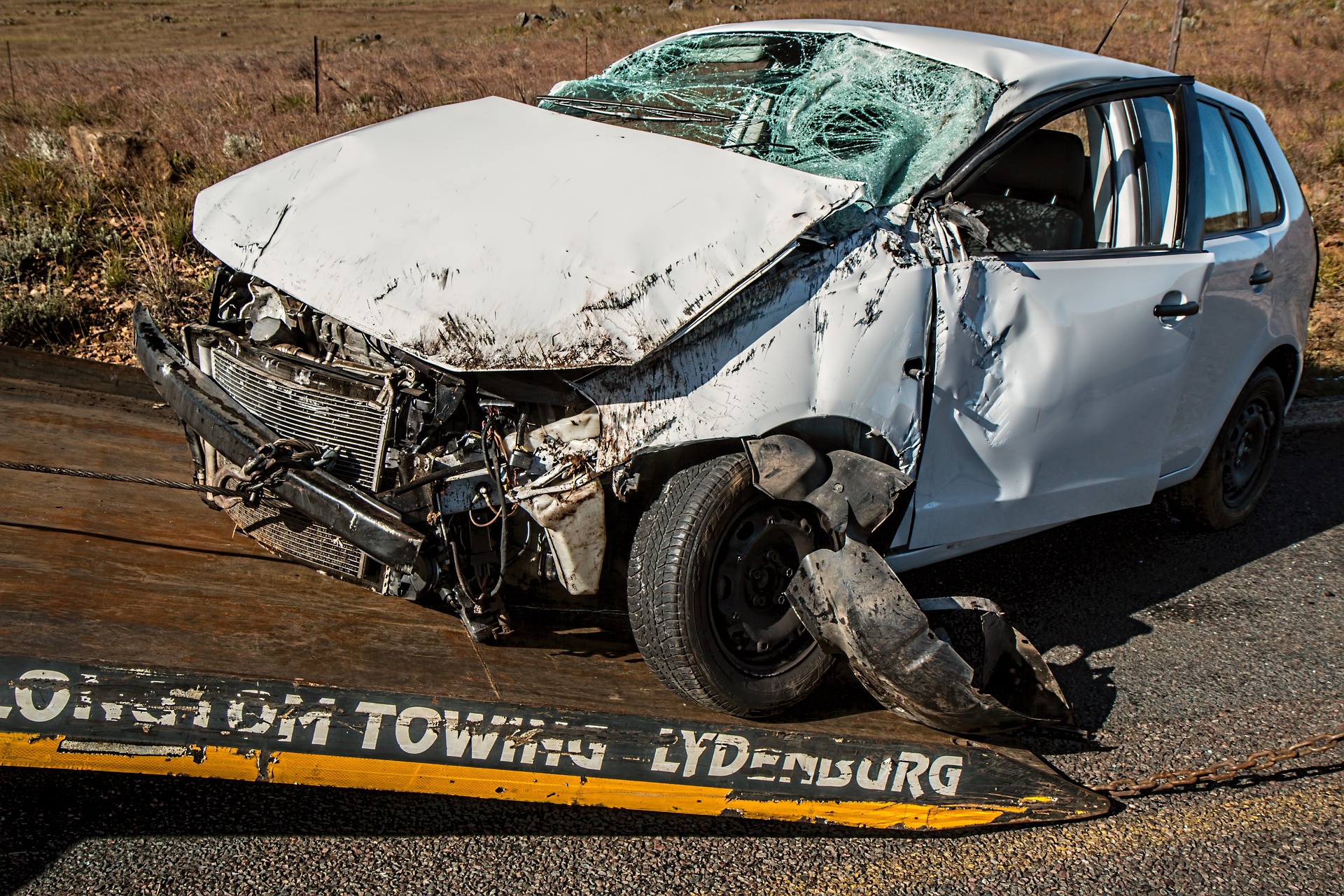
Image By Frode Inge Helland - Wikipedia Commons

Image By Frode Inge Helland – Wikipedia Commons

An anonymous author has submitted the first 400 words of a work-in-progress. Please enjoy Miss Bryson Loses Her Hat and I’ll have my two cents on the flip side. Share your constructive comments to assist the author in making this intro shine.

Scene one
Once a girl crashed to the floor with a bone-shaking thud before a thousand people, it gave her a clarity of mind she lacked prior to the event. In Lara Bryson’s case, it elucidated too late the hazards of satin slippers on a freshly polished floor, and illuminated, in a flash of searing insight, the vagaries of a God who, in blessing her with an angelic voice, tempered it with the less benevolent bestowal of two left feet.

Yes, He seemed to say, in a voice Lara imagined as a rolling thunderous crack rending the heavens, she could sing as gloriously as the seraphim, just never in company, and never anywhere requiring the use of her legs.

If only He’d bothered to tell her this before she sold every possession, expended every shilling, and endured sixteen perilous hours battened to the top of a London Mail Coach.

Even a hint five minutes earlier would’ve sufficed.

Instead, Lara lay crumpled and mortified. The roar of adulation that had provoked a warm tingling sensation to cascade like a waterfall through her limbs moments before replaced with the frenzied gasps of a mob titillated by the unexpected sight of a lady splayed out like a ragdoll.

Even more lowering, the dismal conviction that her promise to her dying mother to sing for the Queen would remain forever unfulfilled settled like a rock in Lara’s heart.

The clip, clip, clip of boots dashing across a wooden floor interrupted Lara’s fit of the blue devils. She guessed she had about thirty seconds to find a dignified way out of the Ballroom before the crowd reached her.

Or she could crawl.

The odds poor she’d get upright in a graceful manner, and stay there, slinking away on all fours seemed not only the best option, but a fitting end to her wretched evening. Her decision made, Lara clamped her eyes shut, and prayed silently; God, if you wish to keep alive what little trust I still have in You right now, then at least clear a path for me to slink out of here.

“Clear a path everyone, and give the lady some air.”

Lara gasped; never before had she received such a direct answer from above. The request for air an inspired touch. An exotic woody scent drifted over her. Sandalwood. Interesting; she’d thought myrrh.

The voice spoke again, “Are you hurt?”

Feedback:

The intro is reminiscent of the beginning to a fairy tale as it starts with, “Once a girl…” The tag line Scene One reminded me of a script. I’m not sure why it’s there. But overall, I enjoyed the proper British tone of the author voice and the way the girl’s plight was detailed–it’s like Downton Abbey meets Bridget Jones–with an undertone of controlled humor. I sense a Cinderella story coming, although I can’t be sure in this short intro.

Here are a few things for the author to think about:

1.) Add More Mystery – Who are the 1,000 people? In the first sentence, we hear of the girl’s fall. The audience is not emphasized much until we get a hint at the promise she made to her dying mother, to sing for the Queen. If this is indeed a performance for the Queen, why not play that up more? Or at the very least, hint at the once in a lifetime opportunity, the titillation of the crowd, the tension as she builds to the moment where she walks out. The fall is put into the first sentence, very anti-climactic, because the author chose to focus on her mortification in great detail.

2.) Flip the Scene – Imagine this scene starting another way. As the girl’s mind prepares for her big moment (a moment the author holds back but only hints at), she’s haunted by the promise she made her mother on her deathbed. Tension builds. Her palms sweat. Every movement in her routine replays in her head as she waits in the wings of the stage or outside the ballroom, but the crowd noise and her mother’s face haunt her. She is introduced and the music starts. When she walks out under a glaring spotlight, she sees the silhouette of the Queen in the shadows. Everything is the way she visualized it and her mother’s voice fades in her mind. The stage is set for perfection, but that doesn’t happen. The end of the intro comes when she falls. Every reader will want to know – what comes next?

3.) Use of Humor – There is definitely charming humor written into this piece. It appeals to me, very much. But keep in mind that humor can diminish intrigue or lessen the danger in a scene or shift the focus if it’s used too much. (As an example, a smart mouthed detective can appear too confident and invincible if he doesn’t act afraid when a gun is pointed at him. Over time and as the pages turn, the reader becomes insulated to any danger and never fears for the protag’s life.) In this case, we are drawn into Lara’s cynical, self-deprecating humor about the wreck of her life and her big fall when she may resonate more with the reader if there’s a focus on the action, rather than her internal monologue. A sparing use of her humor could be used after the fall, but let the reader feel her anticipation of a promise fulfilled before we know what happens. I get the feeling this author is quite funny, but less can be more to make Lara endearing. Let her think big before reality sets in. It will make the punch line better.

4.) Who is her Prince? – I know this is only 400 words, but I am really intrigued by who this person is at the end. Her savior. This is a tribute to the author’s writing and the set up. There is a lot of internal monologue as the scene progresses, when what I really wanted to know is mentioned above and who this person is at the end.

5.) Scenes are Mini-Stories – I think of each scene in a book like a mini-story. There’s a beginning, middle and end. Each scene should progress the story forward with at least 1-3 plot points. If an author does this, the writing will be tight and each scene serves a purpose. There’s also a character journey within the scene where the protagonist will grow, learn something to advance the plot, or raise more questions to foreshadow what might be coming. With this in mind, I like the intro to a scene to have a strong opener, a tight middle with mystery elements to intrigue the reader, and a foreshadowing of things to come that will keep the reader turning the page. In Miss Bryson Loses Her Hat, this mini-story can be accomplished by sticking with the action building to her fall, with only a hint of how important this is to her and who she is dancing for. The big conclusion of the fall and who comes to her aid can be the foreshadowing and make a great page turner. (Another trick to make a page turner is to split a scene and carry it over into the next chapter. It’ll keep readers up late and you may get an email in the early hours saying, “I can’t stop reading.”)

Conclusion:

I really want to turn the page and read on. Kudos to the author. Overall, I love this author’s voice, but even with that talent, there is still a need for how to create and build on an introduction. Elements of mystery are very important, no matter what the genre. I like to tease the reader with questions as they read on, then build on the suspense to answer those questions as the reader finishes each paragraph. Add more mystery elements as the scene progresses and you’ll hook them deeper and in multiple ways.

Discussion:

1.) What feedback would you give this brave author, TKZers?

2.) Would you keep reading?

3.) Can you imagine this premise starting differently?

What Is Your Bad Guy Doing?

by James Scott Bell
@jamesscottbell

stephen-j-cannell

Stephen J. Cannell

Some years ago I had the chance to meet and listen to the late Stephen J. Cannell. Cannell was, of course, the television wunderkind who created such shows as The Rockford Files, Baretta, The A-Team, 21 Jump Street, and others. He wrote at least 450 filmed television scripts. The guy had a Midas typewriter.

In the 90s he started writing crime fiction, then a series of books featuring LAPD detective Shane Scully.

So Cannell was on this panel with Robert Crais and T. Jefferson Parker. Someone asked him a writing question, and Cannell said something to the effect that he always asks, “What’s the bad guy doing?”

Even when the bad guy wasn’t “onstage,” Cannell would be pondering: “What’s the bad guy doing?”

It’s a great question! We writers seldom give the offstage players any mind. I’ve written before of the power of the “shadow story.” What’s the bad guy doing? is one of the key questions to ask in that regard.

Note: you don’t have to be writing about a true “bad guy” to ask this question. It applies to any antagonist.

Let’s say you were writing the novel that became the movie The Fugitive, starring Harrison Ford and Tommy Lee Jones (in reality the movie was based on the hit 1960s TV series starring David Janssen, created by Roy Huggins). In the movie Jones plays U.S. Marshal Sam Gerard. He’s not a bad guy. He is in fact a good guy who happens to be tasked with nabbing Dr. Richard Kimble and sending him back to Death Row.

Let us further suppose that you were writing the novel in First Person or Limited Third Person POV (where you stay with one character’s perspective throughout). You would be in Kimble’s head as he comes home to confront the one-armed man who murdered his wife. Then would come the trial and Kimble’s wrongful conviction.

Next, the prison bus mishap, the train crash, the escape! Then Kimble struggles through the night with his wound and his prison uniform. And you’d come to the next morning when he sneaks into the rural hospital to dress his wound, get some civvies, shave, and get out of there without being noticed.

All very tense. Good job, novelist!

Finally Kimble gets out of the hospital, but not before he is recognized by a wounded prison guard from the bus. To keep the guy quiet Kimble pushes an oxygen mask on his face. And as the paramedics rush the guard inside, Kimble tells them to let the attending doctor know the guy has a puncture in his upper gastric area.

Which causes one of them to ask, “How the hell does he know by looking at him?”

Kimble then hops in the ambulance and takes off.

Nice scene, there, writer! The opening act has been awesome!

But then you come to your project the next day and can’t figure out what to write next. If you’re a pure pantser, of course, you can write about anything. So you do a scene where Kimble falls into a giant hole that spits takes him back in time to the Battle of Little Big Horn. There he tries to save as many wounded as possible until…

Oh bollix, you think. I wish I’d done some outlining! And I wish I knew why I keep using the word bollix!

Now what?

Ask the Cannell question! “Hmm, what’s my antagonist doing while Kimble is at the hospital?”

the-fugitive-1993-film-images-5649b3f8-00a7-4539-b02d-08b1370110bThe nice thing about the movie is we get to see it. We cut back to Gerard at his command post, making plans. We see what kind of team and resources he has assembled.

So back to the hospital. You’re thinking about what Sam Gerard is doing. You imagine him at the crash site, with his team gathered around him. Then one of his people runs up and says, “Hey, we just got a report. Kimble stole an ambulance!” What would Gerard do next?

Order a chopper! Let’s move!

Which gives you the idea for the next scene in your novel. Kimble looks up and sees he’s being chased from the air!

Way back when I was first trying to learn this craft of ours, and writing copious notes on what I learned, I jotted this down: Most of the craft of fiction is knowing what questions to ask at what time.

 I still think that’s a pretty good insight. And What’s the bad guy doing? is a darn good question.

Do you know what yours is doing?

Embrace Growth – Guest USA Today Bestseller Colleen Coble

Jordan Dane
@JordanDane

twilight-cover

I’m delighted to have USA Today bestseller Colleen Coble as my guest on TKZ. Colleen is an award-winning author with over 2 million books in print and she writes heartfelt and suspenseful romantic mysteries. I’m enjoying her latest Twilight at Blueberry Barrens and I’m a big fan. NYT bestseller Brenda Novak has given it high praise and Publishers Weekly gave Colleen a prized starred reviewPlease help me welcome her to TKZ.

***

You know the best thing about writing? You never arrive. There is always something you can improve on. Writing isn’t static, and it’s thrilling to know a better, bigger book can be yours to create. So how do we embrace the process of change in our books? Here’s what works for me.

1. Determine what drives your writing:
I think we all figure out fairly soon where we belong in the landscape of the writing world, and what type of story grabs us and doesn’t let go. Part of the evolution of my brand of romantic mystery involved embracing who I was as a writer and letting that strengthen each new book. Readers often tell me I’m way too friendly and outgoing to write about murder. I think they believe only brooding, unsmiling people can write about something so dark. They miss what drives me to write what I write—justice. I look around the world and see no justice, but I can make sure justice prevails in my novels.

Why do you write? The biggest, strongest stories involve something very personal to you. Depending on your personality, it can be cathartic or daunting to let your characters deal with an issue that’s been challenging to you, but it’s always worth it. Put down your guard and let the reader in. Writing should never just be your job. That’s a trap that career novelists can fall into, but the next novel should always be because you have something to say not because you have a deadline!

2. Figure out your strengths:
Don’t assume your strengths are as strong as they can get. An expert at pacing? Flex your fingers and keep the reader up all night. Good at integrating setting into the plot? You can immerse the reader even better with the next book. Great at characterization? You can build an even more compelling character in the next book. The status quo is never enough for the next book. Strive for something bigger and more compelling.

3. Pinpoint your weaknesses:
We all have areas where we are weak. My timelines can get fuzzy, and because I’m a seat of the pants writer, the train can get derailed. But even a pantser like me can get better at thinking through key turning points that lead to a stronger book. There are great writing resources out there to help you with your weaknesses.

This blog and others like it are great resources. There are tons of helpful writing books out there to help shore up where you’re weak. Jim Bell is a long time friend, and his book, Write Your Novel From the Middle, literally transformed my writing even though I’d written well over 50 novels by the time I read it. Never stop learning how to write better. Study up on how other authors do it well. When I wanted to write more suspenseful books, I read excellent suspense like my friend, Jordan Dane’s. I literally devour every book by an author I think I can learn from.

4. Don’t be afraid to experiment.
I remember when chick lit was all the rage. My buddy, Kristen Billerbeck, wrote a chapter to show a friend what it looked like. When I read that first chapter, I knew she’d found her real voice in first person/present tense, even though she’d written over 20 novels by that time. Let your voice evolve and strengthen as you gain more confidence in your ability.

I decided to do more points of view in Twilight at Blueberry Barrens, and I think it worked to build the suspense. After trying something, you can always go back to the way it was if it didn’t work for you.

Discussion:
How has your writing evolved from book to book?

colleen-2012-black

Best-selling author Colleen Coble’s novels have won or finaled in awards ranging from the Best Books of Indiana, the ACFW Carol Award, the Romance Writers of America RITA, the Holt Medallion, the Daphne du Maurier, National Readers’ Choice, and the Booksellers Best. She has over 2 million books in print and writes romantic mysteries because she loves to see justice prevail. Colleen is CEO of American Christian Fiction Writers. She lives with her husband Dave in Indiana.

http://colleencoble.com
https://www.facebook.com/colleencoblebooks/
https://twitter.com/colleencoble

It’s All in the Verbs

Jodie Renner, editor & author  image

Okay, maybe not ALL, but your choice of verbs can make or break a scene. Have a look at a recent chapter or short story you’ve written. Check the verbs in particular. Maybe even highlight them. Are some or a lot of them bland, vanilla verbs like came, went, arrived, approached, walked, ran, or looked?

Do you have a heavy, tired, or angry character simply walking when he could be trudging or clomping or stomping or plodding? Or an old or ill or exhausted character walking who should be limping or shuffling along? Make the conceited or over-confident guy swagger or strut and the lawyer stride into the courtroom. And be sure your drunk, stoned, or injured suspect is staggering, lurching, wobbling, meandering, or shambling, not just walking. Or perhaps someone is running when sprinting or racing or darting or dashing or fleeing would better capture the situation and her mood.

Of course, sometimes an ordinary character on a regular day is just walking or jogging. But when you need to bring the character and scene to life and add tension (which is most of the time), use all the tools in your toolbox to create sensory impressions for the readers and engage their emotions — make them worry.

If you’ve got a character looking at something or someone, consider whether they really are just looking. Or are they actually peering at something? Or observing or studying or examining or inspecting or scrutinizing it? Or perhaps they’re covertly spying at a group around a campfire. Or maybe they’re glancing around them or catching a glimpse of someone. Or glaring at another person in anger. Or squinting into the distance under the glaring sun.

Be sure your words, especially the verbs, capture the mood you’re after.

And don’t prop up a weak, overused verb with an adverb. Instead of “She walked quietly,” say she crept or she tiptoed or she sneaked or she slinked along the wall.

Fire up Your FictionFor a whole chapter on finding just the right verb for every scenario, check out my award-winning writing guide, Fire up Your Fiction, chapter 21, “Choose Words That Nail It.” Subtopics include People in Motion, Words for “Walked,” Replacements for “Run,” and Different Ways of Looking. (Lots of other great stuff for writers in there, too!)

Let’s add a bit of urgency to the sentence below by changing up the verbs:

The NCIS agents drove to the scene, then went to the back of the vehicle and pulled out their equipment.

Here’s one possibility:

The NCIS agents raced to the scene, then hurried to the back of the vehicle and grabbed their equipment.

Note how changing just three verbs can amp up the scene. You could probably charge it up even more.

Are you accidentally sabotaging your scene by choosing a verb that gives entirely the wrong impression?

Make sure none of your verbs are actually working against the scene, undermining the effect you’re after. Do you inadvertently have characters strolling or ambling or slouching at tense times? Or leaning back during an argument? Be sure not to use shuffling for the walking of someone who isn’t old, sick, weak, or very tired.

Remember that tension and conflict are what drive fiction forward, so unless you’ve got two lovers taking a romantic walk, don’t have your characters strolling along when they should be hurrying or hustling or darting in and out, glancing around and behind them. Relaxed, easygoing verbs aren’t going to get your reader’s pulse quickening and make her want to turn the page to read more.

Also, think about the difference between a smile and a smirk and a sneer. Don’t have a character sneering when they’re just smirking. Sneer means “to smile or laugh with facial contortions that express scorn or contempt.” So if you have buddies disagreeing or teasing each other, you might use smirked, but don’t use sneered. Save that for someone nasty.

There are a lot of nuances for showing a character looking at someone or something. The verbs glare, glance, scan, peer, study, and gaze have quite different meanings, for example.

Do you have characters glaring when you mean gazing or staring or studying or scrutinizing? For example,

Brock glared at the intruder with the gun, eyes wide with fear. He shifted his stare to Gord, mouthing, “Help.”

“Glared” doesn’t go with “eyes wide with fear.” Glared is for anger. Maybe “stared” here? And “shifted his gaze”? Or maybe:

Brock’s eyes widened with fear at the intruder with the gun. He shifted his gaze to Gord, mouthing, “Help.”

How about eyes squinting when there’s no bright light?

At the funeral, the widow caught Adam’s glance and squinted her eyes in accusation. She no doubt held him responsible for her husband’s death.

I’d say “narrowed her eyes” or “glared at him.”

Watch for “happy” verbs that have sneaked into your story at tense times.

Have any happy, carefree words or dreamy imagery somehow slipped into any of your scenes at tense moments? If your two young protagonists are running for their lives in the woods, don’t mention the birds chirping or the brook babbling or the leaves dancing in the breeze. Keep all your imagery scary and ominous – darkness, nasty weather, treacherous terrain, a howling wolf, or whatever.

Find the “happy” or “comfy” verbs that are subtly dissipating the tension in the scene below in a crime novel:

They pursued the getaway car on a dark, lonely country road. Lights from farmhouses twinkled in the distance. Up ahead, they saw the car spin out and crash into a tree. They pulled up behind it and got out. Tony shone his flashlight into the car. The windshield was fractured. Bits of glass sparkled throughout the inside, and steam rose from the damaged engine.

Yes, “twinkled” and “sparkled” normally have positive connotations, so they counteract the tension you’re trying to build in a scene like this.

Similarly, don’t use casual, relaxed language in a stressful situation:

Johnson and Fernandez parked their cruiser at a distance, then jogged at a comfortable pace to the scene of the crime.

Best to not use words like “comfortable” or even “jogging” at a time of stress. Choose words that fit the anxious mood and tone of the moment better.

Or if someone is about to face a harsh boss, be reamed out about his behavior, and likely fired, avoid detracting from the tension like this:

“You can go in now,” the secretary said, holding the door open for him. He found himself in a comfortable outer room with a stunning view, several armchairs, a bookcase, and a sofa against a wall. A large oak door stood closed on the far wall.

At such a tense time, it’s best not to add anything comfortable or any obviously positive words like “stunning.” That dissipates the tension at a time when you need to keep building it. Besides, the guy isn’t thinking about the view or the comfy furniture at this moment!

Here’s an example from a different book, describing the actions of a nasty villain about to shoot someone:

Before: He smiled. (doesn’t sound very nasty)

After, revised by the author: His mouth was twisted in a cruel smile.

So what’s the takeaway from all this? Don’t overdo the bland, boring verbs, or your scenes will be bland and boring. But if you’re looking for a unique synonym and you’re not 100% sure of the nuances, look each one up in the dictionary so you don’t have your character sneering when you mean smirking, or squinting when you mean peering or glaring.

Your turn. Share some possibilities in the comments below if you feel like playing.

How would a bunch of SWAT team members move after a few miles when training on rough terrain in bad weather?

How would two carefree little girls move around the playground?

How about two top contestants on Dancing with the Stars? How are they moving across the ballroom floor?

How about a more vivid way to say “took” or “carried” something?

* * *

Jodie Renner is a freelance fiction editor and the award-winning author of three craft-of-writing guides in her series An Editor’s Guide to Writing Compelling Fiction: Captivate Your Readers, Fire up Your Fiction, and Writing a Killer Thriller, as well as twoCaptivate w Silver decal2 clickable time-saving e-resources, Quick Clicks: Spelling List and Quick Clicks: Word Usage. She has also organized two anthologies for charity, incl. Childhood Regained – Stories of Hope for Asian Child Workers, including a middle school edition. You can find Jodie at www.JodieRenner.com, www.JodieRennerEditing.com, her blog, http://jodierennerediting.blogspot.com/, and on Facebook and Twitter.

Memorable Military Research Book – Redeployment by Phil Klay

Jordan Dane

@JordanDane

redeployment-673x1024

I heard Phil Klay on MSNBC talking about his fiction book entitled – Redeployment – and I was intrigued. The first thing that grabbed me was the fact that the book is fiction, a group of short stories. Klay is former military (see more about him below) and from what I’ve seen, many war books written by young men of his experience/background, they tend to write non-fiction, so he had me hooked. I also noticed his book was a 2014 National Book Award Winner. Very impressive.

I wanted to read Klay’s book for research. I’m currently writing a few Amazon Kindle World series books involving the military. Reading pure romance books on the subject of military lifestyle wasn’t satisfying my need for authenticity, especially when I’m in the head of my male characters.

I’ve been watching online videos on snipers and reading books written by Navy SEALS. Klay’s anthology is my latest attempt to get a feel for an authentic voice for the character I will be writing shortly. Since my market is generally women readers, I have to temper any research with how I would write a story for women, but I do love discovering male voices that connect with my own life experiences, similar to the guys I worked with in the oil fields. (Yeah, I have stories.)

I feel I must warn readers interested in this amazing book. It’s taken me awhile to read through it. The first person voices in these stories are intimate, poignant, and gripping. They are presented without judgment. It’s a stark reality without any solutions or answers, but I found an honesty to it. These stories have gotten me down and I find I have to pace myself in reading them. I read at night and there are some days I can’t pick up this book, but I love the rich distinctive style of the voices in this anthology. I highly recommend this book. No question. This book would make an interesting read for anyone looking for a good character study.

5 TIPS ON RESEARCH:

1.) GET IT RIGHT – Research is important for authenticity, to insure your book doesn’t get thrown against a wall. There are women readers serving in the military, so I would have to “get it right” for them, yet still appeal to a woman’s desire for romance.

2.) NEVER OVERDO – Too much jargon or acronyms can bore a reader. In my crime fiction books, I will use police procedural language in dialogue, but find a quick way to explain what things mean after I first mention it. It can be tricky, but reviewers have liked the subtle way I do this, without overkill that can slow the pace. It’s all about balance.

Example:

“You have TOD, doc?”

Chambers knew the medical examiner would be challenged to estimate time of death, given the conditions of the body.

3.) CAPTURE THE ESSENCE – Read research related books or watch videos to get a general feel for an attitude, lifestyle, or the types of characters and their backstories you want to portray, but NEVER copy another author’s work. To prevent the temptation, when I read books like Klay’s, I jot down notes of ideas for my own book, then set the research book down for days/weeks before I start on my story and I never read books like this WHILE I am writing. In fact, I don’t read books in the genre I’m writing while I am in the midst of a project. Your mind can put words onto the page subconsciously. Your story MUST be your own, to retain your own voice.

4.) NEED VISUALS – For action scenes or locations, search online for your own visuals. Practice describing what you see, to get your own interpretation as seen through the eyes of your character. If you have video, use your ears too. What sounds do you hear on location? What other senses can you pry from your own experiences? Using all the senses can be a rush, especially if they spring from your own life.

5.) FILL IN THE GAPS – Once you get your character’s voice in your head, add other things that fill in around him. How does he or she dress? How do they live? Who are his/her friends? Who does he/she trust? What baggage does he or she carry? What’s the last thing he or she would do, then make them do it in your story – to face their demons. This gets into character – another topic – but my natural next step after I get a distinctive voice in my head, is to fill in a visual of my character’s life. Then I’m ready to write.

DISCUSSION

1.) What research books have stayed with you long after you’re written the book?

2,) Do you have any recommended reading for me on authentic military action, jargon, and dialogue?

ABOUT THE BOOK

Phil Klay’s Redeployment takes readers to the front lines of the wars in Iraq and Afghanistan, asking us to understand what happened there and what happened to the soldiers who returned. Interwoven with themes of brutality and faith, guilt and fear, helplessness and survival, the characters in these stories struggle to make meaning out of chaos.

ABOUT THE AUTHOR

Phil Klay - Author

Phil Klay – Author

Phil Klay – Author Phil Klay is a veteran of the U.S. Marine Corps and served in Iraq’s Anbar Province from January 2007 to February 2008 as a Public Affairs Officer. His writing has appeared in Granta, The New York Times,Newsweek, The Daily Beast, New York Daily News, Tin House, and The Best American Nonrequired Reading 2012. Klay is a 2014 National Book Foundation’s 5 Under 35 Honoree.

“In Klay’s hands, Iraq comes across not merely as a theater of war but as a laboratory of the human condition in extremis. Redeployment is hilarious, biting, whipsawing and sad. It’s the best thing written so far on what the war did to people’s souls.”
–Dexter Filkins, The New York Times Book Review

How and When to Use HYPHENS, DASHES, & ELLIPSES

by Jodie Renner, editor and author    Captivate w Silver decal2

Ellipses vs. Dashes; Hyphen, Em Dash and En Dash

In my editing of fiction manuscripts, I often find writers using ellipses (…) where they should use dashes, or hyphens instead of dashes, etc. Here’s a brief run-down on the use of these punctuation marks.

A. Ellipsis (…) or Dash (—)?

In fiction,

An ellipsis (…) is used to show hesitation:

“What I meant is… I don’t know how to begin…”

or a trailing off:

“She came with you? But I thought…” She paused.

“You thought what? Come on, spit it out.”

(Also, usually in nonfiction, indicates the omission of words in a quoted text.)

A dash (—), also called em dash, is used to show an interruption in speech:

“But I—”

“But nothing! I don’t want to hear your excuses!”

or a sudden break in thought or sentence structure:

“Will he—can he—find out the truth?”

The dash is also used for amplifying or explaining, for setting off information within a sentence, kind of like parentheses or commas can do:

“My friends—I mean, my former friends—ganged up on me.”

Note: To  use dashes this way, make sure that if the information between the dashes is taken out, the rest of the sentence still makes sense and flows properly. Also, avoid three dashes in a sentence. Rewrite the sentence to avoid that.

B. Hyphen vs. En Dash vs. Em Dash:

The en dash is longer than a hyphen but shorter than an em dash (the normal dash).

A hyphen (-) is used within a word. It separates the parts of a compound word: bare-handed, close-up, die-hard, half-baked, jet-lagged, low-key, never-ending, no-brainer, pitch-dark, self-control, single-handed, sweet-talk, user-friendly, up-to-date, watered-down, work-in-progress, etc.

Dashes are used between words.

An en dash (–) connects numbers (and sometimes words), usually in a range, meaning “to”: 1989–2007; Chapters 16–18; the score was 31–24 for Green Bay; the London–Paris train; 10:00 a.m.–2:00 p.m.

An em dash (—) is used to mark an interruption, as mentioned above (“What the—”), or material set off parenthetically from the main point—like this. Don’t confuse it with a hyphen (-). In fiction, the em dash almost always appears with no spaces around it. Some authors, publishers, and companies prefer an en dash with spaces on each side of it for this: ( – ). This is more common in nonfiction.

C. How to Create Em Dashes and En Dashes:

Em dash (—): Ctrl+Alt+minus (far top right, on the number pad). CMS uses no spaces around em dashes; AP puts spaces on each side of em-dashes.

En dash (–): Ctrl+minus (far top right, on the number pad)

D. Advanced Uses of the Dash (Em Dash):

According to the Chicago Manual of Style (6.87), “To avoid confusion, no sentence should contain more than two em dashes; if more than two elements need to be set off, use parentheses.”

Also, per CMS, “if an em dash is used at the end of quoted material to indicate an interruption, a comma should be used before the words that identify the speaker:

“I assure you, we shall never—,” Sylvia began, but Mark cut her short.

But: “I didn’t—”

No comma after it here, as that’s the end of the sentence, and no tagline.

The Chicago Manual of Style also says (6.90) that if the break belongs to the surrounding sentence rather than to the quoted material, the em dashes must appear outside the quotation marks: “Someday he’s going to hit one of those long shots and”—his voice turned huffy—“I won’t be there to see it.”

Using an em dash in combination with other punctuation:

CMS 6.92: “A question mark or an exclamation point—but never a comma, a colon, or a semicolon, and rarely a period—may precede an em dash.

All at once Jeremy—was he out of his mind?—shook his fist in the officer’s face.

Only if—heaven forbid!—you lose your passport should you call home.

Do you have any questions or comments about the use of ellipses, dashes, and hyphens that I can help you with? Please mention them in the comments below.

Jodie Renner is a freelance fiction editor and the award-winning author of three craft-of-Fire up Your Fictionwriting guides in her series An Editor’s Guide to Writing Compelling Fiction: Captivate Your Readers, Fire up Your Fiction, and Writing a Killer Thriller. She has also published two clickable time-saving e-resources: Quick Clicks: Spelling List and Quick Clicks: Word Usage. Jodie recently organized and edited two anthologies for charity: Voices from the Valleys and Childhood Regained – Stories of Hope for Asian Child Workers, created to help reduce child labor in Asia. You can find Jodie on Facebook and Twitter, at www.JodieRenner.com or www.JodieRennerEditing.com, and on her blog Resources for Writers.

First Page Critique – Inside Moves

Jordan Dane
@JordanDane

Wikimedia Commons Image

Wikimedia Commons Image

Today we have an anonymous submission from a gutsy author, titled Inside Moves. Read and enjoy. I’ll be on the flip side with my feedback. Join in the discussion with constructive criticism for the author.

Chapter One

The ambulance screeched around the corner—its light bar flashing and siren screaming—toward Santa Barbara General Hospital’s emergency-room entrance.

An older couple sitting on the bus-shelter bench at the corner was startled by the sounds of the vehicle, along with the knowledge of what that meant.

The man looked to be in his midseventies. He took the woman’s hand in his; she had been startled more severely than he was. “Sweetheart, since we’ve lived in Santa Barbara nearly all our lives, I’d say there’s a very good chance we might know whoever’s in that ambulance.”

But they didn’t.

Desperate to keep the man alive, EMT David Ortega kept his eye on the heart-rate monitor for any changes to Bobby Wainwright’s vital signs.

“We’re losing him!” he yelled to his partner, Tom, who pushed the accelerator of the ambulance.

David felt the ambulance lunge forward. Tom liked to drive fast when the siren and flashers cleared his path. Regaining his balance, David prepared to do CPR while speaking to Dr. Richard Kiersten through his headset. The doctor was standing by in the OR, awaiting their arrival at SBGH.

“Give him Narcan IC,” he instructed David.

David hated giving intracardiac injections because they could produce complications. Besides that, just the idea of stabbing someone in the heart with a long needle was ugly. But he did it anyway. With nothing to do but watch the monitor and the patient, David read the notes Tom had taken at the accident site.

Bobby Wainwright. Just a few years older than me. Huh? Owner of Wainwright Erectors. Not from around here. Bet he makes a ton more than me. Accident on the job…Man, something really big fell on this dude. Goose bumps jumped out on his arms. No matter how much he makes, I sure don’t want to be him right now.

At the emergency entrance, David and Tom prepared Bobby for the operating room and Dr. Kiersten. As David jumped out of the ambulance, he saw an elderly couple at a bus shelter watching him. The old lady looked scared to death. Dear God, don’t let her suffer a heart attack before I get this guy into the OR.

The first responders had brought Bobby to the hospital closest to the construction site where he had been injured. Right now, it didn’t appear that this hospital was close enough.

FEEDBACK

There is nothing like a speedy ambulance ride to start an exciting action scene and get the blood pumping for a reader. This author’s instincts to begin the story there has merit, but the omniscient point of view (or author intrusion/head hopping) had me distracted.

A.) POINT OF VIEW – From the first line, I’m wondering who is watching this ambulance as it screeches around a corner. The older couple waiting for a bus seem almost caught off guard and startled by its sudden appearance. From their reaction, more author intrusion follows when an unknown narrator estimates the older man’s age. After his dialogue line, this unknown narrator answers his remark of “…we might know whoever’s in that ambulance” with the line – But they didn’t. The action and pace of this intro is diminished by the insertion of this couple too. They add nothing to the scene.

From the point where the older couple are left behind, the author tried to stay in the POV of David but veered out big time when David, the EMT riding in the ambulance, can somehow “see” the doctor he’s listening to on his headset with this next line – The doctor was standing by in the OR, awaiting their arrival at SBGH. I suspect that rather than this author deliberately using Omniscient Point of View, there is more “head hopping” going on here.

Recommended reading on POV – Here is an excellent prior post from TKZ’s Joe Moore on Narrative Voice that explains more about Point of View and the author’s voice.

B.) WHERE TO START – I would recommend this intro start with David the EMT and stay within his head, whether he’s a main character or not, at least until we get through the action and settle into the story. Begin with the line, “We’re losing him!” he yelled to his partner, Tom, who pushed the accelerator of the ambulance. Get the reader to feel the jostling ride as David is on his headset talking to a doctor at the hospital, as his patient is dying.

C.) RESEARCH – There is no short cut for research. If the scene calls for medical knowledge, any reader knows some jargon and can discern what is believable. Leaving out the details only highlights that the author has not done the research.

1.) Get the medical right – I would advise giving more medical detail on what David sees. Are there broken bones, collapsed lung, patient in shock, etc? David is an EMT and would know more than is shown. His objective should be to stabilize the victim enough for the ride to the hospital. There appears to be an accident but a medical person would look at the injuries and not be focusing on the accident so vaguely. This is obviously an attempt to introduce backstory in a “telling” fashion. If these details are necessary, it would be best to include them in dialogue, maybe as the EMT speaks to the doctor. But focus on the resulting injuries. I’m no medical person, but I can’t imagine that CPR is how an EMT would describe resuscitation. They have drug remedies (medical therapy), airway management, or equipment to use, like defibrillators.

2.) Mystery elements draw readers in – I’d suggest revealing the patient’s condition through dialogue, with David being the POV character. (One POV per scene is highly recommended, otherwise it reads like head hopping and would be a red flag to editors and agents.) Is there conflict between the EMT and the doctor? Is David resentful of the man? Does David see ambiguity between the patient’s condition and “the accident” explanation? Readers can be drawn into a story by elements of mystery. Have patience with laying these out. Raising the mystery is enough and it will foreshadow things to come.

3.) Drama builds on the risky stakes and tension – Where is the drama when the heart stopped and flat lined? Too much is missing and it is apparent that the author has avoided the details needed for this scene to be believable.

4.) Suggestion – I would do the research and include some details in David’s dialogue to make this work, but if the author didn’t have a desire to do this, I would suggest having the POV be in the head of someone who is brought on the ambulance who is an unreliable narrator and doesn’t have a medical background. This could be a loved one or a co-worker, but if David is a main character, I wouldn’t make the first scene about a secondary character that won’t be important to the story.

D.) RESEARCH RESOURCES – Below are a couple of good resources sites for medical and crime scene research.

1.) Medical – Whenever I think of medical research, one name pops into my head and I have his books in my research library. Doug P. Lyle, author. He has written many non-fiction books on forensics and medical research for writers and he’s gracious with his replies on his website. Look for his books and contact info HERE.

2.) Crime Scenes – Another good resource link is Crime Scene Writer on Yahoo Groups. It is a group of professional crime scene people of various experiences – ie crime scene techs, law enforcement, FBI, EMTs, firemen, etc. HERE is the site for the group and this is the email to contact them and request to be subscribed as a member. Send an email to: crimescenewriter-subscribe@yahoogroups.com (Be sure to read their rules of etiquette for members.)


E.) WAINWRIGHT NOTES – With imminent resuscitation or a medical crisis happening, how would David have time to read any notes on the patient? Supposedly the patient is dying, yet David is reading over notes and casually thinking about the patient’s age, job, money status, as it relates to him, etc. Very unprofessional and inappropriate timing. given the action and urgency of the scene. (Side Note – EMTs have ice water running through their veins. They have ways of dealing with extreme injuries and distancing themselves to allow them to do their jobs.)

Bobby Wainwright. Just a few years older than me. Huh? Owner of Wainwright Erectors. Not from around here. Bet he makes a ton more than me. Accident on the job…Man, something really big fell on this dude. Goose bumps jumped out on his arms. No matter how much he makes, I sure don’t want to be him right now.

F.) FORCED UNREALISTIC DETAILS – Below is a sentence that ripped me from the reading. With the scene starting at the bus stop and the elderly couple, the end of the scene with a racing ambulance somehow comes back full circle, as if they spun their wheels in place? I don’t see the point in this, but more importantly, an EMT would be focused on his patient and not looking around and down the street to get a bead on a couple at a bus stop. The urgency of the medical situation is completely deflated. Here is the sentence:

As David jumped out of the ambulance, he saw an elderly couple at a bus shelter watching him. The old lady looked scared to death. Dear God, don’t let her suffer a heart attack before I get this guy into the OR.

The next and last line has the same feel to it – that the ambulance had spun its wheels in place. It drags the reader into backstory that is out of place to the present action. Plus the POV isn’t David anymore and the reader gets another dose of author intrusion. Here is the sentence:

The first responders had brought Bobby to the hospital closest to the construction site where he had been injured. Right now, it didn’t appear that this hospital was close enough.

OVERVIEW – The fixes on POV and proper medical research can be done. That’s the good news. There are no shortcuts for solid research when the scene is a medical one. The author could find a non-medical character to insert one POV for the scene, but a better scenario would be to make the scene believable with the proper research. If the focus is on the emotion of an EMT about to lose a patient, the medical could be woven into the scene without going overboard. (Note: Less is more – a regurgitation of all your research can be tedious and boring to a reader. Moderation is key.) But get the lingo right and the sequence of events in proper order so the scene is believable. Show how the stakes are high and focus on the humanity of the EMT in a life or death situation and this author will have the reader turning the pages.

DISCUSSION:

Anything to add, TKZers? What had the author done right? What would you recommend for improvements?

Emotional Resonance

Following on from Jim’s great post yesterday on describing characters, I was prompted to think about characters with emotional resonance while reading the great children’s book Wonder by R.J. Palacio. My kids had been urging me to read this book for a while now and as soon as I started reading it I could see why. Absolutely every character (even the mean ones!) in this book resonated with me on a deep emotional level. I think this is the reason many adults enjoy children and YA books – because, when they succeed, they provide a huge emotional wallop that stays with a reader long after they have finished reading.

Few adult books have had the same impact on me in recent years, but I think, as a writer, the issue of emotional resonance when it comes to character development, is a critical one. Almost every book I’ve failed to finish or which has left me disappointed, has failed because I haven’t been able to care enough about the characters. Even in books where the plot has become thin or events have stretched credulity, emotionally deep and resonant characters have kept me reading.

In some ways, the process of providing emotional resonance mirrors the way a writer describes a character because it focuses on the feelings the character inspires in a reader. Those feelings don’t have to always be warm and fluffy, but they do need to strike a chord with a reader. The most powerful characters stay with a reader long after the book is finished.

All too often at writing classes or conferences the pieces that I’ve read or critiqued have had one major failing – the characters themselves. They are often flat on the page, cliched or simply do not ring true. So how do you create emotionally complex, relatable and ultimately resonant characters? Maybe the best starting point is to identify what not to do and work up from there.

Many new writers may feel the urge to create a quirky, one-of-a-kind character or perhaps they hope to create characters similar to those that have proven most popular in their genre (here’s where the recovering alcoholic, down at heel PI often comes into play). In either case, a writer should beware of using standard character tropes and cliches as well as going too far the other way by creating the most ‘out there’ character who sounds nothing like anyone a reader would ever meet in real life. if a character is nothing more that a series of quirks or tics then a reader is going to be just as dissatisfied as if the character is little more than a carbon copy of the stock-standard genre character. The key is (I think) to get into the head and emotions of a character in a way that displays the writer’s own unique perspective. In some ways, perhaps you have to place a little of yourself in each character (maybe not in a literal sense but certainly in an emotional sense).

Striking a chord in readers can be tricky as each reader also brings their own perspective, background, and emotions to the books they are reading. One character’s actions may pack an emotional punch for some readers and yet leave others cold. I find, for example, that parents in books often pack a huge emotional whallop for me, especially in books like Wonder or The Fault in our Stars. If I’d read these books when I was younger, I suspect different characters would have evoked a very different kind of emotional reaction. Yet there are some universal truths out there and characters that evoke strong emotions will go on to have wider resonance.

It’s hard to provide any kind of definitive ‘tip list’ for creating this kind of emotional resonance, simply because it is an illusive target (we only know it when we feel in the gut) but I think some of the elements include:

  • Going deep within a character’s psyche to understand their motivations;
  • Drawing upon your own past experiences and interactions to add depth;
  • Using action as well as interaction to draw out a character rather than description alone (this helps readers experience a character rather than just reading about them in a static sense);
  • Finding the humanity within all the characters (even your villains);
  • Exploring the inhumanity within all your characters (we all have weaknesses and foibles, prejudices and flaws that make us who we are – even if we’re not proud of them);
  • Looking for the universality of experience that strikes a chord in you the writer as you describe your characters and take them on their unique journey through your book;
  • Avoiding thinking or describing characters in terms of what they should be but rather what they are – try to step back from relying on conventions or mimicking other writer’s characters and remember no one is superhuman or a psychopath in their own mind.

These are just a few ways I think writers can start to inhabit their characters to provide a level of feeling that will hopefully resonate in readers. What tips do you have?


Empathy is the Key to Emotion

By Joe Moore
@JoeMoore_writer

If I asked you to name your all-time favorite fictional character, chances are it would be someone that you related to on a strong emotional level. It was a character you fell in love with or one that gave you night sweats, one that you cheered for or one that you cried with. It was the character’s emotions that grabbed you. You empathized with them. Why? Because you’ve felt the same real-life emotions they felt.

The dictionary defines empathy as the “ability to identify with another’s feelings.” I believe empathy is the key to creating memorable fictional characters. It’s not because they’re beautiful or handsome, fashionable or rugged, brave or risky. It’s that they have believable human emotions. Emotions that you have felt at some point in your life.

So if empathy is the key to your reader becoming attached to your characters, what is a proven method for creating emotions?

parking_cleanedLet’s say you want your character to be afraid—to experience fear. You could always just tell the reader that he or she is scared. That would mean little or nothing because not only is it telling, it paints an unclear picture in the mind of the reader. Scared could mean a 100 different things to a 100 different people. Now ask yourself what it felt like when you’ve experienced fear. Perhaps you were in a parking garage late at night. The sound of your high heels seemed as loud as hammer strikes. The shadows were darker than you remembered. You could see your car but it appeared miles away. Then you hear someone cough. But there’s no one around. You pick up the pace. Your heels become gunshots. You shift your gaze like a gazelle that sensed a stalking big cat as you hug your purse to your chest. Your pulse quickens. Breathing becomes shallow and frantic. Palms sweat cold. Legs shake. You press your key fob and your car’s lights flash but your vision blurs. You hear a strange cry escape your throat—a sound you’ve never made before. Your car is only yards away but you don’t feel like you’re getting closer. Were those your footfalls echoing off concrete walls or were they coming from the shadows? You reach for the door handle, your hand shaking, fear gripping you like a cloak of ice.

Here’s my point. It may not have been in a dark parking garage late at night but we’ve all felt it. Paralyzing, heart-stopping fear. In your story, you need to have your character feel the same. Describe it so that your reader will empathize. So that their hands will shake and their chest will tighten. Make them sweat, even if it’s only in their imagination. Approach every emotion your characters feel in the same manner. Use your life experience. How did you feel the first time you felt love, hate, jealousy, rejection. If you are honest in expressing true emotions through your characters, your reader will have empathy for them, and very possibly come to list them as their all-time favorite.

OK, Zoners. What technique do you use to impart believable emotions into your characters? How do you get your readers to feel empathy?

When in doubt, bury someone alive.

By Joe Moore
@JoeMoore_writer

“When in doubt, bury someone alive.” Edgar Allan Poe was purported to have said this as one of his five essentials for the betterment of a story. Although it’s never been confirmed, poe_cleanedeven if he didn’t really say it, he should have. So let’s figure out what Mr. Poe might have been suggesting. My interpretation is that there is always a solution to a writing issue. And one of the biggest issues new writers (and old) have is getting stuck without an idea what to do next. Poe suggests doing something drastic.

I don’t like to use the term writer’s block because I don’t believe it exists. But like most writers, now and then I wind up in a dark room with no doors. Usually this occurs in the infamous Sagging Middle as Clare so expertly discussed on Monday. Whether the idea you thought would work doesn’t or you hope the answer will emerge from the ether, you need a way to solve the problem.

So when you get stuck, what can you do? Here are some suggestions that I’ve used. Perhaps they’ll help you, too.

  • Change your writing environment. I have a home office with a desktop PC. I also have a laptop. Sometimes I need different surroundings so I grab my laptop and move to another room or outside. Just the act of breathing fresh air can fire up your brain.
  • Listen to music. Often I write to background music, usually a movie score (no distracting lyrics). But sometimes setting down in front of my stereo and rocking out to my favorite group can clear my head and refresh my thoughts.
  • Get rid of distractions. TV, email, instant and text messages, phone calls, pets, and the biggest offender of them all: the Internet. Get rid of them during your writing time.
  • Stop writing and start reading. Take a break from your writing and read one of your favorite authors. Or better yet, pick something totally out of your wheelhouse.
  • Don’t decide to stop until you’re “inspired”. I’ve tried this. It won’t work.
  • Open a blank document and write ANYTHING. It’s called “stream of consciousness”. It worked for James Joyce, Virginia Woolf and Marcel Proust. It can work for you.
  • Write through it. Beginners sit around and hope for a solution to come to them in their dreams. Professionals keep writing. The solution will come.
  • Finally, do something drastic. Bury someone alive. Works every time.

Fellow Zoners, how do you get yourself out of a writer’s corner? What drastic measures have you taken to keep the story moving?