Captain Kirk was always demanding more out of his Chief Engineer on Star Trek by saying, “Scotty, we need more power.” And his response was always, “But Captain, I’m doing the best I can.” Predictable and fun. But what if you’ve finished your manuscript and submitted it to your agent or publisher, and were told you needed more words. You’re under contract to deliver a certain amount of words, and you’ve come up short. What do you do? Do you “pad” the writing—go in and add a lot of stuff just for the sake of word count. Padding usually involves “staging” or additional extraneous actions by your characters as they move around the “stage”. But doing it too much will call attention to the padding and wind up getting sliced out by your editor. Intentional padding is not the answer. But there are some legitimate ways to increase word count without bloating your story.
One suggestion is to build up your story’s “world” by conducting additional research and adding a few bits and pieces of atmosphere throughout. Let’s say your scene takes place in Miami Beach. Your character is having breakfast on the balcony of her hotel room overlooking the Atlantic. Without slowing down the story, add a few lines about the history of the hotel. Since most of the hotels on Miami Beach have been around for decades, certainly something might have happened years ago at the same local that could reflect on or be pertinent to the story’s plot or situation.
Another method is to utilize your character’s five senses. Are you making good use of them? Sitting on that balcony, your MC must be able to smell the fresh sea breeze and hear the gulls calling from overhead. Or she notices the ever-present container ships slipping along the horizon in the Gulf Stream. Could be that she can feel the film of salt coating the arms of her chair. How does her freshly squeezed OJ taste? You don’t want to use all 5 in every scene, but engaging the senses is a great way to expand the prose and take advantage of an opportunity to further develop your character.
The skill in expanding a manuscript is to do so without appearing to pad the writing. And you want to avoid going down a new rabbit hole and suddenly winding up with too many words such as introducing a new subplot. Always consider the two basic criteria for any additional words: they must either advance the plot or further develop the character. Otherwise, they don’t belong.
What about you? Have you ever come up short on contractual word count or just felt your story was too short? How did you expand the story without it becoming blotted or obviously padded?
As you sit there, struggling to turn the great white blank in front of you into a short story, novel, or screenplay, take heart from these three words: people love stories. Yes, I know, writers are competing for entertainment dollars and time like never before, what with video games, televised sports, news, music, concerts…but nothing beats a good story. Good stories endure, whether true or otherwise.
Some of the best and longest enduring stories are urban legends. You’ve heard them, everything from the one involving the choking doberman to the women on the elevator at a Vegas hotel with the big guy and his big dogs. They are stories which are not true, but which endure. We often know not from where they come but come they do, repeatedly. This was true well before the internet became so prevalent. One of my favorites involves the little hamlet which I live near which the natives call “Columbus.” It happened in June 1993. The internet was there, but it was hard though not impossible to find. AOL was a big deal; an online bookseller called “Amazon” wouldn’t start up for another year. Many people didn’t have cell phones (they were often called “car phones”). That didn’t stop the following story from spreading throughout the city, sans benefit of news media coverage.
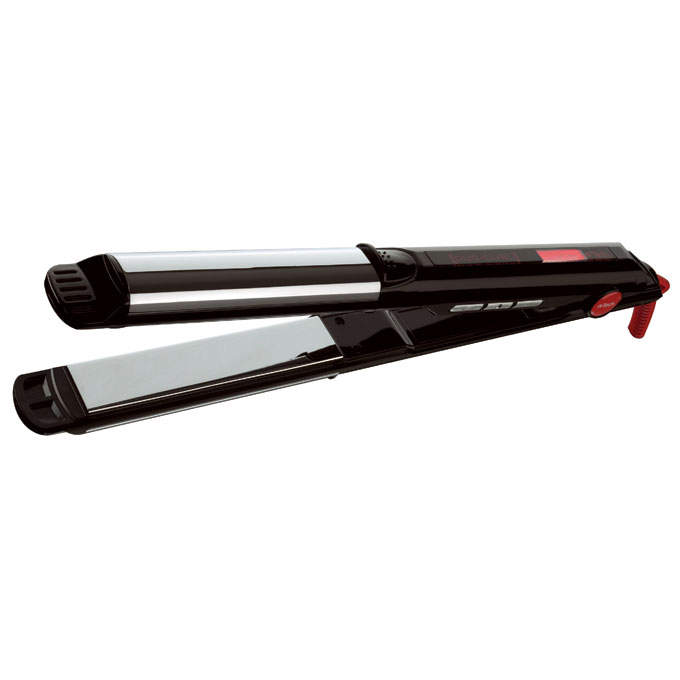
The story involved a local celebrity. He was — is — a merchant who sold his wares via a series of television commercials which featured a two word catchphrase which found itself being heard in conversation all over town. Indeed, he even used it at the wedding of at least one of his children. A story began to spread near the end of June that said entrepreneur had been jumping the marital fence and that his wife, when she found out about it, had applied a hot curling iron to his smaller brain, if you will. People who spread this story swore that they had learned it from a friend who who was a nurse’s aide at a local hospital where the now-repentant victim was recovering in a private room. The story was put to pasture, however, when the celebrity — not manifesting any damage — accompanied by his very attractive wife, were seen smiling and grinning, hand in hand, at the local July Fourth festivities. The local newspaper, which had never reported the rumor, debunked it after the fact. The commercials continued and all was well, with the businessman’s wife taking a role in the selling as well. I happen to know quite well a relative of the people involved in this story, and have been told that the first question people always ask is, “That curling iron story…is that true?” The answer is always “No.”
Here is the rub, however. This same story with different principals cropped up across the country at about the same time from Pennsylvania to Oregon. In one city it involved a politician; in another, a well known doctor; here an attorney; there a restaurateur. The common elements were infidelity, commercials, and fame. These stories did not occur simultaneously, but rather over the course of a few weeks during that particular summer. And no, I never saw it mentioned in an AOL chat room, either. Someone playing telegraph, perhaps? How? It would be fascinating to try to trace its relatively modern incarnation, though well nigh impossible.
One more thing. The story did not originate in 1993, interestingly enough. As with most urban legends, it goes way back. Chaucer writes of a similar though not identical occurrence in “The Miller’s Tale,” and that story in turn may have been based in part on a persistent rumor involving a politician. As Douglas Adams has been credited with stating: “If you can think of it, it has already happened.”
So…for today’s exercise…tell us your favorite urban legend. Give us your own spin, if you wish. All that we ask is that you don’t use political stories. We all want to stay friends here. Thank you.
If I asked you to name your all-time favorite fictional character, chances are it would be someone that you related to on a strong emotional level. It was a character you fell in love with or one that gave you night sweats, one that you cheered for or one that you cried with. It was the character’s emotions that grabbed you. You empathized with them. Why? Because you’ve felt the same real-life emotions they felt.
The dictionary defines empathy as the “ability to identify with another’s feelings.” I believe empathy is the key to creating memorable fictional characters. It’s not because they’re beautiful or handsome, fashionable or rugged, brave or risky. It’s that they have believable human emotions. Emotions that you have felt at some point in your life.
So if empathy is the key to your reader becoming attached to your characters, what is a proven method for creating emotions?
Let’s say you want your character to be afraid—to experience fear. You could always just tell the reader that he or she is scared. That would mean little or nothing because not only is it telling, it paints an unclear picture in the mind of the reader. Scared could mean a 100 different things to a 100 different people. Now ask yourself what it felt like when you’ve experienced fear. Perhaps you were in a parking garage late at night. The sound of your high heels seemed as loud as hammer strikes. The shadows were darker than you remembered. You could see your car but it appeared miles away. Then you hear someone cough. But there’s no one around. You pick up the pace. Your heels become gunshots. You shift your gaze like a gazelle that sensed a stalking big cat as you hug your purse to your chest. Your pulse quickens. Breathing becomes shallow and frantic. Palms sweat cold. Legs shake. You press your key fob and your car’s lights flash but your vision blurs. You hear a strange cry escape your throat—a sound you’ve never made before. Your car is only yards away but you don’t feel like you’re getting closer. Were those your footfalls echoing off concrete walls or were they coming from the shadows? You reach for the door handle, your hand shaking, fear gripping you like a cloak of ice.
Here’s my point. It may not have been in a dark parking garage late at night but we’ve all felt it. Paralyzing, heart-stopping fear. In your story, you need to have your character feel the same. Describe it so that your reader will empathize. So that their hands will shake and their chest will tighten. Make them sweat, even if it’s only in their imagination. Approach every emotion your characters feel in the same manner. Use your life experience. How did you feel the first time you felt love, hate, jealousy, rejection. If you are honest in expressing true emotions through your characters, your reader will have empathy for them, and very possibly come to list them as their all-time favorite.
OK, Zoners. What technique do you use to impart believable emotions into your characters? How do you get your readers to feel empathy?
Life imitates art, which imitates life, which then imitates art in what seems to be a never-ending cycle. Orwell’s 1984 came around, late, but it came around. Contemporary (as opposed to historical) thriller novels were transformed by the terror attacks of September 11, 2001. Arthur Bremer’s diary was the inspiration for the film Taxi Driver which in turn inspired the actions of John Hinckley, Jr. which to this day has launched variations of jokes about Jodie Foster. And so it goes.
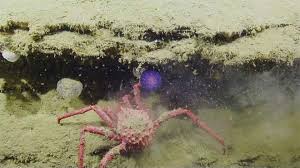
Accordingly…submitted for your perusal, here is an article with an embedded video regarding a discovery made off of the California coast. Please take a moment to read the article and particularly to watch the video, which looks like a mashup of The Blair Witch Project and Alien. We’re going to base our exercise of the day around this, but you will be mightily entertained by the article and video, regardless.
The video spooked me badly for a couple of reasons. The first is the resemblance of that orb to a spider egg. Contrary to the assertion made by one of the scientists, “most” spiders don’t carry around the eggs on their stomachs. Many, though not the majority, wrap the evil little demon spawns in silk and hang them in webs, though if they are smart they don’t do it at my house. So…where did that thing come from? The second is the reaction of Little Sebastian to the egg. Sebastian at first appears to be curious, then frightened of the orb, more frightened than he was of the duct taped suction on the end of the ten-foot pole that the team used to, probably unwisely, suck that thing up. Put it in a biobox? You bet! And who gets to open it? I won’t suggest anyone, other than to note that John Hinckley, Jr. appears to have been released from custody just in time to do the job. The thing just looks…wrong: the color, the location… that video looks like the beginning of any one of a hundred science fiction films where after a half-hour of buildup things go badl, where the folks who are happily chatting and giddy-up giddy with the joy of their discovery are suddenly gouging their own and each other’s’ eyes out and getting ready to release God knows what upon a world that should be expecting it but which remains totally clueless and unprepared.
And that is where today’s exercise comes in, my friends. Tell us what happens after the team sucks the orb up, like one of those vacuum things they sell in the catalogs showing the smiling woman vacuuming the giant spider off of the curtain from a discreet, Hartlaub-approved distance. Be scary, funny, happy, or sad. Here are a few of mine:
— It is discovered that the orb is a lost extraterrestrial artifact. The ETs, not being European, have never heard of the principle of abandonment and they want the orb back. Now.
— The vacuum sucks the orb up, revealing a drain. The ocean level starts dropping.
— The act of jarring the orb sets off a signal which is transmitted to an extra-orbital missile launching station, which slowly begins to turn toward earth..
—Suddenly, the sound of trumpets is heard simultaneously at all points on Earth. Then the clouds part and a bright light appears.
— At least three different groups blame the project for contributing to global warming and demand research money to counteract the effects. Facebook goes crazy.
— The crab scuttles back to its lair, where a female voice is heard asking, “What’s wrong, Sebastian?”
— The crab, after a series of events and mishaps, finds itself in the mustache of a biker on a Harley doing 80 mph on I-10 E out of Houston. The crab tells the biker what is happening and convinces him to turn around and save the day, but…what? Oh, sorry. Wrong crab. Forget that one.
You get the idea. Be serious. Be playful. Be whimsical. But please be creative. And share. We have the nine year old antichrist with us today so I may be awhile getting back to you but I shall do so eventually. Thank you.
Heard from a writer the other day who is frustrated that his two novels are sitting somewhere near the bottom of the Sea of Amazon, with nary a fish swimming by. He wondered if he should even bother writing another.
You know what I told him? Be thankful you’re not trying to break through back in 1934!
Yes, the Great Depression and the era of the pulps. You think you’ve got it hard? How about all those writers wearing out their fingers on manual typewriters, hoping to sell a story for a penny a word? How about the ones who pulled their life savings so they could move to New York for as long as the money lasted and make the rounds of the publishing offices?
Let me introduce you to one of them. His name was Frank Gruber. He was a successful pulp writer, then came out to Hollywood to write for the studios. In the 1950s he hit it big as a TV writer for Westerns. In1967 Gruber published The Pulp Jungle, a memoir of his time trying to break into that market. He moved to New York in July of 1934 with a plan to get published within six months.
My physical assets consisted of one portable Remington typewriter and my wardrobe which, aside from what I was wearing, fit very comfortably into one medium size suitcase. I had sixty dollars in cash, but paid out ten dollars and fifty cents of it for a week’s rent in advance at the Forty-fourth Street Hotel. I squandered another ten dollars over the long weekend, so that on Tuesday morning, when I went out to size up the pulp jungle I had approximately forty dollars.
I had one thing else … the will to succeed.
Because money was tight, Gruber ate a lot of “tomato soup” at the Automat (these were popular in the city, like cafeterias, where you put money in a slot to open a window that held a sandwich or whatever). Hot water for tea was free. So what a lot of people did back then was get a bowl for soup, fill it with hot water, pick up some cracker packs (free), sit down at a table and pour half a bottle of ketchup into the water. Voila! Tomato soup. There were days when this is all Gruber ate.
During his first five months Gruber completed forty stories.
All were rejected.
It was desperation time. Then Gruber got a call from an editor who liked him, but hadn’t bought his detective fiction. He asked Gruber to try a Western. So he wrote two stories and submitted them. Then he got a call from an editor he’d pestered, who knew Gruber was a fast writer. The editor said they needed an adventure story the next day to fill out the magazine. Could he do 5500 words overnight? Of course, Gruber said, without any idea of character or plot.
Twelve hours later, at eight in the morning on a Saturday (when the story was due) he had the 5500 words, but no time for corrections. He took the pages to the offices himself.
Then didn’t hear anything.
He went back on Tuesday to see if they had rejected it. The editor said, “Oh, sorry, we forgot to call you. We pay on Friday. Can you give me another story for next month?”
Then the two Westerns he’d submitted earlier sold for a grand total of $34.
He was in!
But this was just the beginning. Even a successful pulp writer (who was writing for a living) was usually just a step or two ahead of the landlord. They had to keep producing, keep selling.
I poured it on in 1940, producing more than eight hundred thousand words. The more I wrote, the more I had to write. I was making commitments all over town and I had to deliver.
This was a common theme among the pulpsters. Gruber tells about a writer named George Bruce who used to throw parties in his small Brooklyn apartment. One night the place was jammed with thirty-plus people. At ten o’clock Bruce announced he had a 12,000 word story due the following morning. He went to a corner where his typewriter was and pounded it for four hours, ignoring the party swirling around him. At two o’clock in the morning he announced he was finished and poured himself a glass of gin.
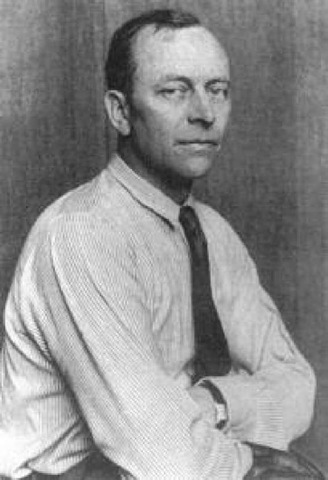
Gruber also got to know perhaps the most prolific author of all time. His name was Frederick Faust, but you know him by his most famous pen name, Max Brand. When Gruber met him they were in Hollywood working at Warner Bros. Studios. Faust had, by that time, written and published approximately forty-five million words.
Frederick Faust, aka Max Brand
When Gruber asked him how on earth he did it, Faust asked Gruber if he could write fourteen pages in one day. Gruber said he’d certainly done so (fourteen pages is about 4,000 words), but had also gone two or three weeks without writing a line.
That was the secret, Faust said. He wrote fourteen pages a day, every day, “come rain or shine, come mood or no.”
That works out to one and a half million words a year.
The really remarkable thing about Fred Faust’s output was that he was the “biggest drinker” Gruber ever met. Faust would put away a thermos of whiskey during his morning writing hours. His lunch would be washed down by several more drinks. “When he went home at five-thirty,” Gruber writes, “he had a light supper and then settled down to his serious drinking.”
Faust was one of those extremely rare individuals who could drink like that every night and still operate in the morning. I do not recommend this method.
I do, however, recommend Faust’s seriousness about a quota. I’m a piker compared to guys like Faust and Erle Stanley Gardner. I aim for 6,000 words a week! But I can tell you my yearly output for the last 15 years. I keep track on a spreadsheet. This is the most important writing advice I know. [My best year, by the way, was 2010 – 347,768 words.]
So here’s my message for you if you’re tempted to pull a woe-is-me:
Your pulp forbears would shake their heads at how good you’ve got it. You can publish yourself and to a virtually unlimited market! Without cost! They would have thought that possibility was science fiction back in ’34.
If you don’t write to a quota, they’d have no sympathy for you.
If you don’t pay at least some attention to the market, they’d think you were daft.
If you don’t try to get better at your craft, they’d tell you you’d be better off as a plumber, and the sooner the better.
If you want to make it, they’d tell you to keep working, because the work never stops.
I wrote a little book some time ago called Self-Publishing Attack! In it are my five “absolutely unbreakable laws” for self-publishing success. While some of the technical items have changed since I published it four years ago, the laws that make up my system remain unalterable.
And the last law is: Repeat over and over the rest of your life.
Are you prepared to do that?
If you are, then somewhere Frank Gruber is smiling.
[NOTE: Gruber would be pleased as pulp to know that his signature series character from the 1930s is still around, in both digital and print. I refer to Oliver Quade, the Human Encyclopedia.]
So what do you think of Frank Gruber’s Depression-era work ethic? Still valid today?
I vaguely remember my older daughter becoming briefly infatuated with something called “Pokemon” in the mid-1990s. I bought packs of cards at toy and drug and grocery stores, and I think many of them are still around the house, languishing in in a box mislabeled “silverware” or something under a bed or in a closet underneath some books. The internet wasn’t quite as pervasive back then as it is now; cell phones were the next generation of car phones, and an “app” was what you filled out when you heard about a job opening somewhere. Much has changed, and I thought that Pokemon had gone the way of eight track tapes, replaced by games that you played on your computer or phone called “Warcraft” or “Minecraft” (no, I don’t know what the difference is either).
Two weeks ago my nine-year old granddaughter mentioned Pokemon to me. I let it pass because she then started talking about reading BLACK BEAUTY and I wanted to encourage that over some role playing game. A few days later, however, I started hearing about something called “Pokemon Go.” It’s a smart phone application game that intersects with the real world and it seems to have taken over the minds of a segment of the population. People are breaking into buildings, jumping across rooftops, falling off of cliffs (Darwinism in action, perhaps?) and running through graveyards chasing the Pokemon. The news about it is all-pervasive. And that bothers the hell out of me.
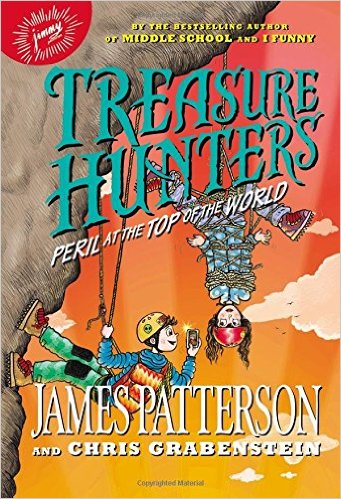
Here is why. Did you know that James Patterson has launched two new book imprints? One is called “Jimmy,” and is aimed at getting younger people to read. The motto of this imprint is, “We want every kid who finishes a Jimmy Book to say: ‘PLEASE GIVE ME ANOTHER BOOK.’” Nice, huh? Patterson could have gone for the plug (notice how nicely “PLEASE GIVE ME ANOTHER JIMMY BOOK” would work) but he didn’t. Please give me another book. Like BLACK BEAUTY. Or The Hardy Boys, or Warriors. Or a Shell Scott… well, wait a few years on that. But give me anything but chasing some cyberworld construct around the city. Jimmy Books. Patterson launched this imprint about a year ago, and has been aided collaboratively by Chris Grabenstein, a fine and talented guy in his own right who has been fighting the fight for children’s literacy for awhile as well. Did you know about this? No? Are there headlines all over about young folks reading these books? No? I know that a new book imprint for kids is not as exciting as falling into the ocean chasing some monster that doesn’t exist, but please. Patterson is tackling incipient illiteracy here. Isn’t that important too? And he’s pouring his share of the lucre back into reading programs. That sounds like dedication to me.
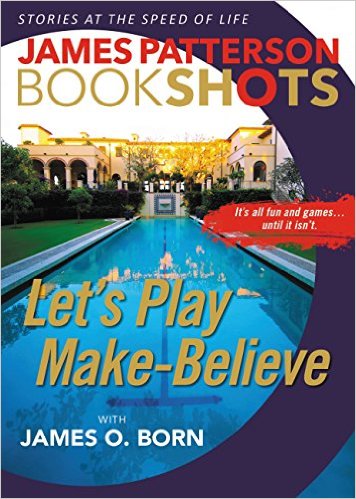
I said two imprints. The second was just launched a month or two ago and it’s aimed at adults who don’t read. It’s called Bookshots; each book features Patterson with collaborators such as Maxine Paetro or James O. Born (as well as a host of others) working across a number of genres. The books are around one hundred sixty pages apiece and and are priced at about four bucks. I know a lot of folks who have four bucks in Starbucks drive-through window change rolling around on the floor of their cars. They are designed to only require a few hours to read. And these books are entertaining. They’re not in the league of Cormac McCarthy or James Lee Burke, but your average adult who doesn’t read much anymore isn’t going to reflexively reach for a classic when the mood strikes them. Did you know about this? I just heard about it around a week ago. Where are the headlines? Patterson is launching this for the same reason he launched the Jimmy books: as he has indicated elsewhere, he wants people to exercise their brain muscle. God bless him. What he is doing may not be as glamorous or newsworthy as the fallout from a new phone app, but it’s certainly more important.
So, my fellow readers and authors: how do we get the word out? It obviously takes more than Facebook and Twitter. What can publishers do? What can we do? I’m not interested in what the book industry has been doing wrong recently…I want to know what you think could be done right, to help make reading a valued activity again. Any takers? Or is it a lost cause?
Frasier: I’ve had an epiphany. Niles: Oh, wonderful. We could use a second sentence.
By PJ Parrish
The following is a true story, I swear. A couple years back, my sister and co-author Kelly and I were sitting at the old card table behind a stack of our books just inside the entrance of Barnes and Noble. It was raining and business was slow. (One advantage to having a co-author: You have someone to talk to during book signings when the screaming hordes of fans aren’t exactly beating down the door.)
A lady came up to our table, picked up our book, read the blurb and asked, “Are there two of you?” (We get that question a lot, even when both of us are sitting there). We explained that yes, we were co-authors and that was our pen name there on the cover.
The lady said, “My sister and I are thinking of writing a book together. Do you have any advice?”
I said, “Do you get along well with your sister?”
“No, we hate each other,” she said.
The first rule about co-authoring: It helps a lot if you like each other.
Yesterday, Joe Moore gave us an excellent overview of what it takes to write with a co-author. Today, I’m going into the weeds with some of the more prosaic stuff you need to consider before you partner-up. And yeah, I apologize ahead of time, but it does involve lawyers.
Personalities matter
First consideration when thinking about collaboration: You have to like each other.
If you don’t, it will never work. Think about what happens the first time one of you says, “You know, I don’t think that scene you wrote really works. Maybe we should scrap it.” Do you have roughly the same sense of humor? Do you like the same kind of books? Could you share a hotel room if you had to?
As Joe said, personalities matter. You don’t have to be bosom buddies, but you do have to respect each other and get along. Because writing even just one book is a long process and if you can’t stand to be in each other’s company for an hour, how are you going to make it eight months and 100,000 words?
Geography doesn’t
Over the course of thirteen books and fifteen years, Kelly and I have never lived closer than 1,000 miles. I’ve been rooted in Fort Lauderdale while she has wandered the earth like Caine in Kung Fu. In the early days, we relied on long distance phone calls (expensive), then emails, and now – hallelujah! — Skype. This has made collaboration easy because with Skype, one of you can have a chapter open on the screen and work on it while the other sees exactly what you are doing. But we also try to get together once a year in the same place because nothing subs for actual face-time. Plus we like to drink wine together.
Commitment matters
The second biggest consideration is this: Do you have the same level of commitment? Writing novel is a long tedious process and if one of the partners lacks the energy, time or drive, one person ends up shouldering the load and hard feelings develop fast. I have a good friend who partnered up with a guy to write a thriller. He had the original concept and a rich research background; she had a track record in mysteries and the work ethic. Three guesses who ended up doing most the work. For half the money.
Tone matters a lot
What kind of book are you writing? I know a lot of solo writers who can’t answer this, but you must agree on this with a co-author. What is your sub-genre, if any? What style are you aiming for? And what will the tone be? You must agree on this before you write one word or the book will never be seamless. I just started reading Joe and Lynn’s book The Blade, and I have to admit admit I went in looking for the seams. But I am finding none. This is very important because if the book feels like it has two voices at work, the reader won’t buy it. It’s very jarring.
Okay, now let’s deal with the nuts and bolts. You have to get this boring stuff down right from the start with a potential partner. Please don’t — in the beautiful bloom of first love, when you are dreaming about movie deals and royalties — neglect the details. Don’t try to wing it or figure it out later. This kind of thinking makes for doomed collaborations. And many bad marriages.
INCOME If you are self-publishing: Be aware that with most outlets, only one name can be on the account. If you want to post your book on Amazon, for example, you can’t list both your names on the account. Which means that one of you must manage the account, pay out income, and at the end of the year issue the other person a 1099 tax form. If your name is on the account, your writing partner is, in essence, a contractor. You can both access the Amazon dashboard account, which solves the problem of cheating. But someone has to be the main person for the income stream. Also, if you consign to bookstores, they will likely want to deal with one name for accounting.
If you go traditional: Your publisher will want both your names on any contract. They will likely split all income and issue you each royalty statements and tax documents. Ditto for any good agent, who will also deduct expenses individually.
EXPENSES: If you are the kind of person who shows up on April 12 at H&R Block with a liquor box filled with receipts, don’t try co-authoring. You must keep impeccable records. Because some expenses will be shared; some will be individual. Shared might include: editing, formatting, cover design fees, Createspace costs, website (yes, you need one), postage, and any expenses relating to the book in general. Individual might include: travel you do separately, workshop and conferences, publications, organization fees, office expenses. Someone in the partnership has to be the caretaker of the shared expenses, keep good records, and issue the other an accounting for tax purposes. Believe me, this can get hinky. It doesn’t hurt to involve a good CPA in this.
WILL: You do have one, right? Shame on you. Well, you need one if you have a writing partner. It needs to cover what happens if one of you dies: Who takes over the business and how are past and future income distributed? Do you want your ex-spouse or rotten kids to retain your part of royalties or a possible movie deal? Who owns the pen name, if you use one? Get a lawyer.
PARTNERSHIP AGREEMENT: If you have an agent or traditional publisher, they will probably demand this. Even if you self publish, it’s a good idea to have one anyway. Our former agent demanded it, and my lawyer asked me for it when I went to get my will done. This spells out things like: How income and expenses are divided (50%/50% or some other variation?) Who owns the copyright? How is the pen name to be used? (ours stipulates only for “works created together and for no projects either of us might undertake individually.” This prevents your co-author, if you split, from using the team name). A “failure to perform” clause, which details what happens if one of you dies or is disabled, that you have the right to terminate the partnership. It includes a clause called “Warranties” which is a bunch of legal-ese that protects you both. And you need to get this notarized. I know…pain in the butt. Too bad.
Whew…still want to team up? Let’s move on.
ORGANIZATION OF BOOK STUFF Main File: Do you ever lose material or delete chapters by accident? Do you forget and work on the wrong version of something? Welcome to my world. Now, consider how far south this can go if there are two of you. So, figure out before you start who is better organized and let that person be – {{cue Godlike voice}} — THE KEEPER OF THE FILE. Someone has to be in charge of the latest working version. If you don’t do this, you might each be working on different versions of the same chapter. The Keeper has to also have an excellent back-up program like iBox. They must be vigilant about making sure the other person has the right material. This is not what you want to hear when you turn on Skype in the morning: “I finished chapter 9 last night but I think I was working on an old version from two months ago.” This has happened to us. We call our working version ONE BIG FILE. At times, when things are going badly, we have inserted a colorful profane adjective between “big” and “file.”
Chronology: Someone should keep a running chronology of the book as you progress. I don’t know how anyone writes a complex plot without keeping a running chronology of what happens in each chapter, but that’s just me. With a co-author, keeping a chronology really helps to keep you on the same page in your time-line and saves time when you go into rewrite mode. You don’t want to have this conversation:
“We need to go back and beef up the clues in that Paris morgue scene so Jacques Reacher can figure out he is chasing a one-armed man.”
“What chapter was that in?”
“You wrote it. Don’t you remember?”
“That was five months ago.”
“Well, let me do a search for it. What was the ME’s name?”
“We didn’t give him one.”
“Well, search for all the French stuff!”
“Can’t we just let this slide? No one will notice.”
“Yes, they will. I think we said the guy was missing his RIGHT arm but now the slash marks from the knife would tell Reacher that he’s left-handed.”
LONG PAUSE. “Okay…I’ll find it. Go do a run on your treadmill. You’re getting crabby.”
This is why you keep a running chronology. To save time and tsouris. Here is a part of our chronology for our current WIP:
CHAPTER TWO – day 1 Saturday April 6, 1991
Louis arrives at church and talks briefly with new boss Steele. Est. setting.
CHAPTER THREE – day 2: April 7
Louis finds his apartment and unpacks his mementos. Thinks about Joe. Brief reference to what happened in DOW with Steele.
CHAPTER FOUR – day 3 Monday morning April 8
Back at remodeled church. Team members show up. Steele gives brief intros and they take their cases.
CHAPTER FIVE – day 3 Monday late night
Emily comes and they go to dinner at bar and talk. Louis calls Joe.
CHAPTER SIX – day 4 Tuesday April 9
The meeting in the choir loft. As Louis is packing up file and getting ready to leave, he can’t resist asking Steele why? Backstory on what exactly happened in Loon Lake 5 year ago (in L’s thoughts) and what changed Steele’s mind about Louis.
CHAPTER SEVEN – day 4 Tuesday
Louis drives to Keweenaw. Meets Sheriff Nurmi and Monica. First reference to Sisu clue on Monica’s sweatshirt. Ends with L seeing the box in evidence.
In each chapter, we record the salient plot details, the first appearance of any character. We also record the calendar date as it happens in the book and what DAY we are in time-wise, so we can tell how much time passes between events. This latter DAY thing is important because you can see, at a glance, that you’ve let five days go by in your plot and nothing has happened. I update this with each completed chapter and send it to Kelly.
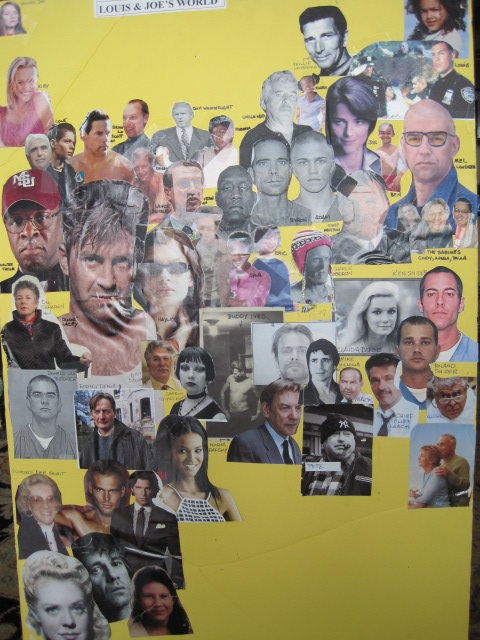
Character board. Now this is strictly optional, but Kelly and I have found it useful. You and your partner need to be on the same page when describing characters. We’ve found a trick: We agree on a famous person — like Mike Ditka was our sheriff and the actor Michael Rennie is Louis’s foster father — and sort of use him or her as a template. Over the years, we’ve even pasted them in a montage. This is fun and goes over big at workshops and signings.
Yikes…you’re still here? Boy, you must want this partnership thing bad. Okay, here’s the rest of the stuff you have to consider before you get hitched.
MISCELLANEOUS What’s your name? Are you going to use a pen name like Kelly and I do? Or do you use two names, like Joe Moore and Lynn Sholes? And whose name goes first?
Are you at about the same level in your craft? They say you should always play tennis with someone better than you. I don’t advise that for writing. Aim for someone on your own level. As Joe pointed out, you will each bring different strengths and weaknesses to the team, but your basic craftsmanship level should be the same. Now, if you are entering a partnership where one is charged with all writing and the other say research and editing, make sure you are clear going in that those are indeed the parameters.
Go to a writers conference together. You can learn a lot about another writer in a writer’s conference bar. Pick each others brains. As Joe said, talk, talk, talk…and talk some more. Consider it speed dating before you make the plunge.
Commit to a routine. Joe said this but I need to second it because it’s vital. Set a daily “meeting” where you get on Skype or phone and touch base. Maybe it’s for hours as you thrash out plot. Maybe it’s for 10 minutes. But you must maintain contact. And emails aren’t enough. Did I mention that you need to talk?
Support each other. Again, this is like a marriage in every way. You go into a writing collaboration because you want to believe that you can achieve something together that you can’t achieve alone. So tell each other the truth, but do so constructively and with kindness. Be honest. Don’t be afraid to send your less than best. You can send something that needs work; that’s why there are two of you. Yes, you want to do a good job but it is not important to impress your partner. And last but not least…
Bury your ego. You each bring different skills and talents to this and if one is far stronger at plot, let that person take the lead. Maybe you are better at character development. As the partnership goes on, you might find, as we did, that we learn from each other.
People ask us all the time if we argue or disagree about the book. Of course. We’re sisters. We’re writers. We have massive egos and decades of history together. But we understand that, in the end, there are really three of us in this partnership. So yes, we argue. But that third entity — the story — always wins.
Sue Coletta, a good friend of TKZ, recently responded to our call for blog topics by requesting some discussion on co-writing fiction. Since there are two of us here that collaborate with others—myself with co-author Lynn Sholes, and Kris Montee with her sister Kelly Nichols (PJ Parrish), Kris and I decided to take up the task. I have switched with Kris to start the discussion today, and she will take my slot tomorrow to deliver part 2.
Between Sholes & Moore, and PJ Parrish, we have produced 24 co-written works of fiction. We hope that today’s post and tomorrow’s will shed some light on what is considered by most of our fellow authors as an impossible task.
Collaborating on fiction was started in the mainstream a number of years ago by the great Clive Cussler, and soon followed by James Patterson. Their co-writers alone could fill a fancy cocktail party. Nowadays it seems to be growing in popularity. This week’s New York Times bestselling top 20 includes THE PURSUIT by Janet Evanovich and Lee Goldberg, THE HOUSE OF SECRETS by Brad Meltzer and Tod Goldberg and THE EMPEROR’S REVENGE by Clive Cussler and Boyd Morrison. I’ve spoken to a couple of Cussler’s co-writers about their technique which I won’t reveal here. But I can assure you, it is NOT the panster approach. I also have my theory why co-writing fiction is really catching on—increased product means increased sales. But that’s just me.
The reason co-writing fiction is looked upon as impossible is because it’s hard. In the beginning nothing exists but an idea in an individual’s imagination. It might be inspired by facts or events, but only the individual has a specific vision of those events in his or her head. So how can two people have a similar enough vision to be able to write a novel?
Lynn Sholes and I have written nine thrillers together because of the following reasons. First, we love the same kind of books—the ones we read are like the ones we write. Second, we have an unquestioning respect for each other’s writing skills and a deep belief that whatever one of us writes, the other can improve. Third, we believe that there’s always a better way to write something. Fourth, we never let our egos get in the way of a good story. This comes from spending over ten years in a weekly writers’ critique group. Fifth, we know each other’s strengths and weaknesses, and are willing to admit them. Sixth, we agree on the same message in each book. Seventh, we believe that we are on the same level of expertise. And last, we believe that the whole is greater than the sum of the parts.
Those points cover the mental portion. Now, how do we handle the mechanics of the job? We talk, and talk, and talk. Once a day we conference call, brainstorming and telling and retelling each other the story. Our two favorite words are: What if? Whether it’s global plot points or an individual scene or character motivation, we keep telling each other the story until that little imaginary movie in our minds becomes as in sync as possible. Then one of us will declare to have a “handle” on the scene or character or chapter, and create the first draft.
We write slowly because each chapter must go back and forth many times for revision. Years ago, when we first started, everyone could tell who wrote what as we tried to finish our first book. It took three years of hard work before we fused our voices. Now, because the process goes through so many revisions, most of the time neither of us can remember who wrote what. We rely on each other so much that we both wonder how it is possible for anyone to write a book on his own.
There are several advantages and disadvantages to collaborating. A disadvantage is that you split the money you make. So you’ll always make half of what you would as a single author. And like any relationship, there is always a chance of a falling out. And something could happen where an ego can become inflated and affect the process.
A giant plus is that we never experience writer’s block. One of us will always have an idea on how to get out of a jam or move the story forward. And unlike our family, friends, trusted beta readers, and everyone else, a co-writer has an intimate, vested interest in the success of the story that no one else could have.
We are approaching the mid-point of our tenth thriller together. We believe that the whole thing boils down to trust. Trust in each other and in the goals we both want to achieve with the story and with our careers. For us, two heads are better than one.
Here’s a list of points to consider when entering into collaboration.
Understand why you think collaboration would be beneficial and share that with your co-author. There are many reasons to collaborate on a story, and only the participants can say what these are. The ideal collaboration is one free of hidden agendas. If you desire something specific from the relationship, it’s best to state it straight out. This can avoid conflict and frustration on the part of one or both writers.
Know the co-writer and his or her work before entering into a collaborative arrangement. If you don’t get along with a writer or the two writing styles conflict, then collaboration may not be the best idea.
Come to the relationship with an open mind and flexible ideas. If you enter the project with set images and plot ideas, then you limit the other writer’s involvement. This can also lead to conflict. If your collaboration begins with something previously written, then there will be constraints, but still be flexible.
Respect your collaborator’s ideas and opinions. Leave your ego at the door. A partnership works because of input from both sides and a healthy respect for each other. There are no stupid ideas. If possible, state your biases up front so that each writer is aware of differences of opinion. For example, one of you might be opposed to first-person stories or present tense. Knowing this up front can help avoid conflicts.
Explore each writer’s strengths. If your specialty is plot and your partner’s specialty is description, then use those strengths to the story’s advantage. The ideal collaboration results in a story that neither writer could generate on his or her own.
Divide the workload and agree on it at the beginning. Perhaps one of you will write the first draft and the other will edit/revise the draft. Perhaps one will write the skeleton and the other will fill in the descriptions. There is no single method of collaboration. It is as unique as the two writers who come together to collaborate. But each writer wants to feel involved in the process.
Discuss differences of opinion and employ the art of compromise. Don’t make differences into impasses. Pose solutions with compromise as the goal. Don’t let the differences escalate into dissolution of the partnership.
Allow for an easy, clean way out. In case things don’t work out, and to avoid hard feelings, each writer should have a painless way out of the partnership. Make sure you have agreed on how to divide up the intellectual property before beginning collaboration. The escape clause should be agreed upon ahead of time.
Most important, have fun. Collaborations can and should be fun. If it is not, try something else.
Check back tomorrow for part 2 of co-writing fiction with PJ Parrish.
One more story, offered with the hope of sparking inspriration. There is nothing odd or supernatural about this one. It’s ironic and tragic, but there’s some justice, too. Bear with me.
The annual New Orleans Jazz & Heritage Festival takes place over the last weekend in April and the first weekend in May, just as spring is beginning to heat up the city. The event is held at the New Orleans Fairgrounds — known as “The Derby” by the city’s residents due to the horse races which occur there — which is in the middle of the Gentilly neighborhood, a relative stable working class area, at least by New Orleans standards. The track during Jazzfest is given over to several stages at various points, each of which feature live music being performed over the course of several hours. There are also merchandise and food vendors — come for the music, stay for the eats — and various places to take a break from the energy of the event, including a set of bleachers off to one side the track.
I attended my first Jazzfest in 2000. I got there early on opening day and after seeing a few acts that I had waited all of my life to see (Clarence “Frogman” Henry, The Dixie Cups, and my now-deceased pal Frankie Ford) I took a mid-afternoon break. I got a shrimp po’boy and, dislike of heights notwithstanding, got a seat near the top of one of the sets of bleachers, where I proceeded to, as it’s said, fang down on lunch and watch the party swirl below and in front of me.
I was about halfway finished with my meal when a man and woman ascended the bleacher steps near me. The woman wore one of the distinctive vest-apron combinations that the Jazzfest employees customarily wear. It was a hot day, and the woman, somewhat slight in body type, appeared tired and weary, no doubt from working in the sun and humidity that day. The man, for his part, manifested the kinetic energy usually seen in the nervous or those who are “hyped” for one reason or another. His arms were corded with thick veins and ended in large hands that he bounced off his knees in an odd rhythm as he walked, sticking his elbows in and out to the side. He hummed and nodded and looked all around without appearing to see anything. The woman was carrying a styrofoam go-box similar to the one that my lunch had been in, and I assumed that she had earned it under the policy that provides a free meal for each Festival employee while on shift.
As they passed the aisle where I was seated the man grabbed the box from the woman before turning down the row of seats behind me. The woman emitted a tired but still audible “hey” in protest, one which the man ignored as he sat down behind me. I heard him proceed to eat whatever was in the box, gulping, lips smacking, and grunting all the while. The woman, after about a minute, asked him softly, “Ain’t you gonna give none of that to me?” The man stopped eating just long enough to spit out a “no” before continuing his repast. The woman waited a minute, and then said, “But they gave that to me for workin’ here.” The man made a statement to the effect that she could eat when she got off work, and that she needed to lose some weight anyhow.
I am an interventionist. I make neither excuses nor apologies for being so. If someone yells “help” or looks like they need help my impulse is to respond. My impulse to intervene in a bad situation, however, is tempered by situational awareness. I won’t get involved if I don’t see a positive outcome, short or long term, in my actions. Some things are in the end irremediable, and intervention by a stranger can make things worse. I considered this to be one of those situations. I could have 1) give the woman money for lunch; 2) given her the rest of my lunch; or 3) told the guy that he was a miserable waste of skin for treating someone with whom he was apparently in a relationship (more on that in a moment or two) in such a manner and fashion. I also concluded, however, that any of those actions would have rebounded back on the woman sooner or later, and thus I wouldn’t be helping her. The third action would also have probably gotten me my ass kicked (not that such has ever stopped me in the past) and not just once. I have learned, via payment in dear and bitter coin, that everyone in New Orleans seems to be connected or related to someone else, so that creating a beef with one person multiplies the participants in said dispute quickly and exponentially. Additionally, I was concerned that the woman would get a beatdown in the bargain as the price of attracting the attention of a stranger. I didn’t feel good about it but I quickly finished my lunch and walked away without doing anything. And in case you are wondering…I of course never for a moment considered turning around and suddenly shoving the guy off of the bleacher seat in the hope that he would fall fifteen or so feet to the ground. That would have been wrong. I think.
Flash forward two days. I was reading the Sunday edition of the New Orleans newspaper in the lobby of my hotel when I saw a small news item buried in the nether regions of the back pages. The story concerned a man who had been killed in a domestic incident. As the story went, he and his significant other had been arguing throughout the day, starting at Jazzfest where she worked. Their argument reportedly continued after she arrived home in the evening and was apparently fueled by the man spending the afternoon fortifying himself with alcohol. The article stated that he had been upset that she was “late” and as a result beat her twice over the course of the following few hours. Having exhausted himself during his busy day, the man went into the bedroom and fell asleep. The woman used the opportunity creating by his unconsciousness to pour gasoline over him and, in her words, “I lit him up.” Indeed. The article noted that there had been a history of domestic disturbance calls to the household going back for over a year prior. The woman, however, had declined to either press or pursue charges in each incident. The article was accompanied by a mugshot of the woman who had been seated behind me.
How did things turn out? The woman was initially charged with second degree murder. I got on the phone and started calling around to the prosecutor, public defender, and an attorney I know in New Orleans who enjoys arising each day to joust at windmills on behalf of the downtrodden. I won’t bore you with the details but the upshot was that I offered to testify at trial as to what I had witnessed on that particular day, hoping that my version of what I saw, and my reaction, would be received as evidence of mitigating circumstances. I didn’t need to, as it turned out. The woman, who did not have so much as a traffic ticket against her, pled guilty to a lesser charge and was sentenced to time served and probation. The judge, with the prosecution’s blessing, took into account her history with the deceased and the fresh evidence of his violence that night (don’t ask). That the deceased was a multiple offender with several violent crime notches on his belt — enough that he had been awarded the title of “career criminal” by the time he reached his nineteenth birthday — was not considered, of course (wink wink).
I don’t know what happened to the woman, and I never really met her. But I think of her frequently, particularly when I am woolgathering instead of sleeping. I wish her the best, wherever she is, and would tell her that I’m sorry that I couldn’t do more. But I think things turned out okay for her. God, I hope so.
What would you have done in such a situation? Have you ever been in a situation where it was better to walk away than step in and defend someone? What did you do? What was the aftermath? And as far as a starter for a novel goes…it’s a great one. Colin Harrison uses it in BODIES ELECTRIC to frightening effect and, of course there’s a series involving a guy named Jack, an ex-MP, who wanders around the country getting involved in things. What do you think?
We have another intrepid author who has submitted their first 400 words for critique. Enjoy the read. My feedback will be on the flip side. Join in the discussion with your constructive comments.
“Dr. Germano! I need you!”
Ray bolted to his feet, throwing the blood work report he was reading onto his desk. As he came out of his office, he nearly collided with one of his staff hurrying down the hall, carrying a box lid with a small bundle of fur huddled inside.
“Bring it into the common room, Mary Jo. Matt! You here?”
“On my way, Boss!” The answer came from the reception area.
Ray could hear the creature’s raspy breathing as he followed the woman to an exam table and winced when he saw the contents of the lid. A malnourished calico cat lay on its side, struggling for breath, eyes wide. A feathered shaft stuck out of its chest.
“My God, is that an arrow? Smart of you to carry it flat,” Ray said, with a nod to the tearful woman. “If that thing shifts, it could do some damage. Is it one of your neighbor’s cats?”
“I don’t think so, Doctor. I’ve haven’t seen this one around before and I know most of the outdoor cats around my apartment. I found it in the alley when I was taking the trash out this morning.”
He hesitated for a moment, weighing his options. The practice policy was clear on drop offs and found animals. No heroic efforts unless the animal was a pet, with a collar or microchip. He could almost hear Phil. We’re running a business, damn it, Ray, not a charity! He had heard that speech many times over the years.
This cat was obviously a stray, as scruffy and skinny as it was. It couldn’t weigh eight pounds soaking wet. No one was going to step forward and claim it. Still, it seemed young and strong. It was still breathing with an arrow in its chest after all. He hated not to give it a chance. Her, give her a chance. Calicos were usually female. Well, Phil was retired now and he’d make his own decisions on who to treat.
He reached out and stroked her head gently. To his surprise, she tried to butt his hand and even mustered a faint purr. Then his eyes widened and he barely resisted the urge to jerk his hand back.
FEEDBACK:
Well, I don’t know about you, but I sure want to know why the good doctor wanted to jerk his hand back. Shades of Pet Sematary. (I hope Catfriend weighs in on this. Expurrrrrt) The intro starts with a “call to attention” dialogue line. For the most part, the writer sticks with the action, except where the intro “strays” (pun intended) into the former practice policy.
FIRST PARAGRAPH – Since the first paragraph establishes the scene, I would suggest stronger wording to set the stage and focus on the action. I’d also suggest clarification on where the action takes place.
Suggestion – Ray bolted to his feet and threw a blood work report onto his desk. He rushed from his office and nearly collided into Mary Jo, one of his staff. She raced by him carrying a box lid with a small bundle of fur huddled inside.
It’s not clear to me what this business is. Dr. Germano has a desk and there is a practice policy. I’m assuming it’s a veterinary hospital or practice, but that’s never stated. This can be fixed by using a tag line at the beginning, before the first dialogue line, or it can be inserted into the first paragraph – He rushed from his office at Pavlov’s Veterinary Hospital…
STICK WITH THE ACTION – In the paragraph starting with the sentence, “He hesitated for a moment, weighing his options.” Unless this is important, I would shorten to minimize it or delete this paragraph.
Tightening Suggestion – He hesitated and weighed his options. Drop off animals, with no owners, would cost the practice. Unless the animal had a collar or a microchip, the practice policy stated no heroic efforts were to be made.
Then focusing on the cat and what he sees (perhaps foreshadowing a hint of peculiar behavior) would ramp up the creep factor.
Tightening Suggestion – Scruffy and skinny, the stray couldn’t weigh eight pounds soaking wet. No one would claim it, but it still breathed with an arrow in its chest. He hated not to give such a young and strong animal a chance. Her, give her a chance. Calicos were usually female.
PASSIVE VOICE – There are several uses of passive voice in this short intro. Easy to clean up in 400 words, but the author should learn how to catch it as the words are streaming. Here are a few:
Before – Ray could hear the creature’s raspy…
After – Ray heard the creature’s raspy…
Before – I found it in the alley when I was taking the trash out…
After – I found it in the alley when I took the trash out…
Before – No one was going to step forward and claim it.
After – No one would step forward and claim it.
Before – It was still breathing…
After – It still breathed…
NITPICKERS – There are always nit picky stuff that one person might notice, while other’s don’t. A good copy editor night catch these or reading your story aloud can help a great deal.
Boss – I would use lower case.
Around – used twice in same sentence, starting with line, “I don’t think so, Doctor.”
Who – The word “who” refers to people, not cats. See line, “…he’d make his own decisions on who to treat.”
Gently – use of adverb. “LY’ words raise a flag for me. Try to minimize or eliminate for stronger writing. In the line, “He reached out and stroked her head gently,” it’s strong enough and describes tenderness, that the word “gently” is not needed and is redundant. I might also focus on this action more, between the doctor and the cat. For example:
Suggestion – He reached out and stroked her head with an affection stray cats shunned from mistrust, but to his surprise, the tiny calico returned the tenderness with a head butt and a faint purr.
SUMMARY – I would definitely keep reading. I’m a pet lover and have had cats before. What cat owner hasn’t looked over their shoulder thinking someone is creeping up on them because their cat is staring at SOMETHING BEHIND YOU. This author, with a little clean up, would have me hooked.
DISCUSSION:
Weight in, TKZers! Would you read on? What constructive comments would you make to help this author?

 submitted it to your agent or publisher, and were told you needed more words. You’re under contract to deliver a certain amount of words, and you’ve come up short. What do you do? Do you “pad” the writing—go in and add a lot of stuff just for the sake of word count. Padding usually involves “staging” or additional extraneous actions by your characters as they move around the “stage”. But doing it too much will call attention to the padding and wind up getting sliced out by your editor. Intentional padding is not the answer. But there are some legitimate ways to increase word count without bloating your story.