Finding The Beginning

By John Gilstrap

It’s rare that the Chapter One I start with when writing a new book lives on as Chapter One in the final version. Usually, it’s a structural thing. I’ll realize after I’m a couple of dozen (or a couple of hundred) pages that I set the story up the wrong way. Sometimes, this leads me to move existing chapters around, and sometimes it leads me to write whole new sections. It’s all part of the process.

The lure of the prologue.

We all know that in the suspense genres, readers expect something big, plot-wise, in the opening pages of a book, yet as authors we have twenty pages of setup and backstory in our heads that we want to reveal so that the Big Moment will make more sense when it arrives.

“I know!” the writer says to himself. “I’ll start with a really exciting moment from Act 2 that will pique the readers’ interest, and I’ll call it a prologue. After that, they’ll endure those twenty boring pages because they know something exciting is coming.”

Sounds silly, doesn’t it? It’s the same silliness that explains why prologues are largely reviled and spell real danger coming from a rookie writer.

Action wins the day every time.

Here’s the opening (for now) of my current Jonathan Grave WIP (with apologies up front for the formatting glitch that I don’t know how to fix:

            JoeDog growled.

Jonathan Grave snapped awake and snatched his cocked and locked Colt 1911 .45 from the edge of his nightstand. As his right thumb touched the safety, his left thumb depressed the button for the muzzle light, launching an 800-lumen disk that revealed the entirety of his bedroom. If there’d been an intruder, the bad guy would be dead now.

But the room was empty, save for Jonathan and the ever-flatulent 65-pound Labrador retriever that shared his bed tonight.

I write every series book with the assumption that it is the first time a reader has encountered Jonathan’s world. At this stage, the action of the scene is everything. Readers don’t need any of the backstory. They know that there’s a guy who’s cautious enough to sleep with a loaded pistol on the nightstand, likable enough to share his bed with a big dog, and that the dog senses danger. If the first paragraphs drive readers to read the succeeding paragraphs, they have done their job.

Lessons from Harry Potter.

An exercise I love to lead when I do seminars is to ask students to tell me when Harry Potter’s story begins. (Spoilers ahead for the 5 people on the planet who’ve neither read the books nor watched the movies.) Hands shoot up and invariably, someone says the story begins when Baby Harry is delivered by Hagrid to the doorstep of the Dursley home.

Nope.

Okay, then it begins when Dumbledore sucks the light out the street lamps with his magical Zippo.

Nope.

Those events do, indeed, mark the beginning of the book and movie, but not the beginning of the story. The story begins 10 years before Harry was born, when James and Lilly Potter–Harry’s parents–were mean to a teenage Severus Snape. The backstory that emerges from those bygone years ultimately have a massive impact on the overall plot, but Rowling had the good sense not to start with that backstory.

In Medias Res

A quick peek into Encyclopedia Britannica, in medias res translates from Latin as “in the midst of things.” It’s a phrase used by every writing instructor as the place to begin a story for maximum impact on the reader. It’s worth considering. If you hook the reader at the beginning, and you keep the journey interesting, readers will follow to wherever you want to take them.

What say you, TKZ family? Does the proper beginning elude you at times? How do you find it?

How To Tell Someone
That Their Baby Is Ugly

“I love criticism just so long as it’s unqualified praise.” — Noel Coward

By PJ Parrish

So your friend whips out the phone and before you can slither away, out come the pictures of the new baby.

“Look at that face! Have you ever seen a prettier little girl?” new dad beams.

She looks like Karl Malden. What do you say?

  1. “What a beautiful child!”
  2. “Yup, that’s some baby you’ve got there.”
  3. “Are you still within the return period?”

I ask this today because a good friend of mine has an ugly baby problem. The son of her best friend has just published his first book, a sci-fi thriller about the world maybe sorta coming to an end. She read the book while here and says it is terrible. Like terrible in cardboard characters and incomprehensible plot. And now she has to go back and face her friend. Avoiding the writer’s mom is no-go because they play pickleball every week. She asked me what to say because she knows I’ve done a ton of manuscript evaluations and I once made my living as a dance critic.

What did I tell her? I suggested that she say that the genre was not her cup of chai, and thus she isn’t the best person to judge. Which was a true lie. She never reads crime fiction, and the idea of the world ending in ether gives her the creeps. Just to be safe, I read the first couple chapters, and yeah, the book is awful. So I think I told her the right thing. I dunno. I hope so.

I have been in her position. Over the decades, many friends and co-workers have asked me to read their mystery manuscripts, and while none were butt-ugly, not a one was publishable. I gently told them their work needed work before it could be seen in the harsh light of day. (This was mainly in pre-self-pubbing era). Most took it well. Some kept trying, a few quit, one guy never spoke to me again. A good friend, who was trying to write a mystery about retired NFL players, switched to non-fiction and got published by a good small press to great blurbs and national reviews .

Ugly Dog winner Phoebe with proud parents

Brief digression. I don’t have any ugly kids. I have an ugly dog. So ugly she won the Ugly Dog Contest in Williamston, Michigan. First prize was three bags of golf-ball sized kibble, which I donated to the police canine unit. I also won a gift certificate to J&B Boots, which got me a nice pair of Italian kicks. They wrote a story about my dog in The Williamston Enterprise, which hangs framed in my office.

Giving criticism is a fine art. Our own John Gilstrap wrote about his adventures in critique groupland recently. Click here. It’s a little easier when the person you’re critiquing is a stranger and there’s no face-to-face time. But the basic rule still applies: You need to fair and you can’t crush someone’s spirit. I think about this every time I do a First Page critique here at The Kill Zone. I have a process I always go through:

  1. First, I read the whole 400 or so words quickly, without any eye toward editing. I try very hard to read it as only a reader would who has just bought the book. Does the opening pique my interest?
  2. Second, I ask myself: Do I have any prejudices against this TYPE of book that would make me unduly negative or even ignorant? For instance, I’m not a big sci-fi fan, and I’m clueless about what works in YA these days. So I read such submissions with that caveat.
  3. Next, I ask myself if the submission has something to teach all our readers. It’s not enough to just red-ink grammar mistakes or such. I look for a larger issue in each submission that can help all our writers learn.
  4. Sometimes, you get a submission that just isn’t up to snuff enough to critique. The writer hasn’t yet gotten the basics of the craft down. I decline to do these.
  5. Finally, I do a submission only if I can find something good to say about it.

That last one is important. Because I remember how hard it was to get any feedback when I was trying to publish my first mystery back in the late 1990s. Even though I had had four romances published by a big house, I was clueless about mysteries. When I showed my agent my freshman attempt, she told me I didn’t understand the unique structure of a mystery. “Go home and read,” she said. “Start with P.D. James and Michael Connelly.”

Today, when I do a critique, I use the Hamburger Method:

  • Start out by staying something nice.
  • Insert a big juicy slab of criticism.
  • End with saying something encouraging.

A few other things I’ve learned about giving criticism:

Resist the urge to fix the problem. Unless you really have the solution, it’s not a good idea to offer up the answer to another writer’s problem. You don’t know their book; you’re not inside their head. They have to find their way.
Watch your tone. Being snarky is, unfortunately, encouraged in our culture today. Be firm but kind.
Don’t take out your frustrations on someone else. Your own WIP is falling apart. Your plot has more holes than a cheese grater. Your Acer died and your geek can’t do a data retrieval. Don’t take it out on someone else’s baby.
Don’t boost your own ego. Don’t go all alpha dog, using criticism to show how sharp you are. Nobody likes a bully.
Be empathetic. You’ve probably had the same problems the other guy is having. So tell him how you fixed your book’s issues.

Okay, so you’re done reading a friend’s manuscript. Or you’ve been doing your part in the weekly critique group. You’ve been kind, you’ve been constructive, you’re offering up suggestions that you think might cause a light bulb to go off over the other writer’s head. And then…

They turn on you. You don’t understand their genre. You’ve missed their plot points. You’re supposed to hate their protagonist. You’re just biased against second-person omniscient. I call these folks the Yeah Buts. “Yeah, but if you keep reading, things will get clearer.” “Yeah but if you read more dystopian Victorian zombie fiction, you’d understand what I’m going for.”

You can’t help a Yeah But. They don’t want to hear anything except how great their stuff is. Don’t get angry. You did what you could. Smile and walk away. Sometime, an ugly baby is nothing but an ugly baby with an ugly parent.


The Big (or Little) Screen

Based on my experience, when a collection of writers gather around drinks or the figurative campfire talking about books, current projects, and other authors, the conversation eventually gets around to movies.

Last August, I briefly touched on movie deals in my discussion titled, Those Little (and Big) Disappointments. When I was a green as grass author, my first novel attracted enough attention for a producer to reach out and offer a movie deal. The production company wrapped up filming Winter’s Bone liked The Rock Hole, and called me direct to offer a movie deal. However, my starter agent (which I fired not long after that offer) started playing games with the company and they quickly threw up their hands and backed away from the project.

At that time, I didn’t realize how lucky I was for movie people to consider my work, and for that, I’m honored. Other writer friends have movie deals, have seen their works turned into movies, and even have television series. Like books, film is another form of entertainment and all of us who write would like to see our projects on the big, or little, screen. Some are lucky and occasionally, lightning strikes twice and they get both.

Good for them!

Other friends receive option money each year, and it’s significant in most cases. These books are in the chrylaslis process of evolving into screenplays, or are under discussion. As I watch these colleagues twist on the hook I’ve come to understand this part is tedious and frustrating to most of those involved.

As my old man said a thousand times, “Almost, but not quite.” He also said, “Well, dog my cats,” when he was perplexed or frustration, which I’ve used on occasion to my daughters’ consternation.

A few years ago I wrote the screenplay for The Rock Hole, and that was one of the hardest things I’ve ever done. Distilling 90,000 to 100,000 words down into 120 formatted pages that are mostly dialogue almost made my head explode as I worked to preserve the tension, character arcs, sense of place, and relevant dialogue that made the book successful.

I read William Goldman’s Adventures in the Screen Trade and it was fascinating. Full of advice and anecdotes, it helped me get over the hump of finishing my own project because it has the complete screenplay of Butch Cassidy and the Sundance Kid. In addition, a friend gave me a copy of the Lonesome Dove script back in 1990, and I spent a considerable amount of time comparing what was included, and excluded, from the novel.

With those guides in place, I hammered out the screenplay, and finished with the understanding that if it ever reaches filming, it’ll likely have someone else’s name on it, but at least I can see the characters I created moving and talking (hopefully) as I see in my mind.

At this writing, The Rock Hole is under consideration of an indie producer and we’ve spent quite a bit of time talking about the mechanics and funding for this future project. Am I excited. Nope. I don’t waste time on what if, but I continue to hope something will happen. Will it ever happen? I’m not holding my breath.

I ‘magine all authors would love to see their books on the screen. It would expand their exposure a thousand-fold and sell more books. But we can’t spend too much time on that possibility. We need to write instead and dream at night. It’s today’s project that requires the majority of our attention, not those finished titles on the shelf.

But good lord, be proud of them!

But back to writers’ conversations, we always express frustration that so many good books out there that could make excellent movies, yet Hollywood (an all inclusive term for movies filmed everywhere) continues to concentrate for the most part on superheroes.

Maybe it’s my bias against movies in which these characters just fight all the time, destroying cities and buildings, but not harming each other in any appreciable way. I’d like to see a bloody nose from time to time, at least, but I am of a certain age and grew up loving movies full of well-developed characters and believable plots. I doubt in my lifetime I’ll ever meet someone impervious to bullets, or can fly, or swing from spider webs, or ride on surfboards…

I don’t get it, but don’t get me wrong. I cut my teeth on comics and superheroes, and a few movies in that vein, but I’d dearly love to see original ideas.

I want great characters, interesting plots, and sweeping camerawork with inspiring music written specifically for the movie. Maybe like Last of the Mohicans, A River Runs Through It, Legends of the Fall, all based on books or novellas. Good lord, even thrillers like the original Indiana Jones movie, Alien (Aliens), Star Wars, or any others too numerous to list make me want to watch them over and over again.

But others pull me in again and again. Grosse Point Blank, because I just love that one. Tombstone, which might be an all-time favorite because it was one of the first movies the Bride and I ever saw on a postage-stamp-size screen in Arkansas, or Junior Bonner, which changed my life. They have something that hooks me every time, and this is the crux of our discussion over drinks. What is it that strikes a chord with us.

On the opposite side of the coin, Hollywood Reporter has an article I’ve pasted below that outlines the dangers of original content. Am I missing something here? When you’re hitching onto the train, maybe trying to recreate a series like Lord of the Rings (which of course was a novel) with another title including Rings, then you’re simply not getting it. Maybe if we had executives and producers who aren’t twelve-years-old, we might find adventurous souls who would like to branch out and produce movies with finite beginnings and endings, we might find something new.

Like 30 Days of Night. A vampire movie with an excellent twist.

https://www.hollywoodreporter.com/business/business-news/inside-amazon-studios-jen-salke-vision-shows-1235364913/amp/

What about you?

Why do you think authors are so interested in discussions as these when we get together?

Is it for the love of entertainment, or something else?

Or maybe we simply like quality movies and that’s all. Let’s talk about it at Bouchercon in San Diego. You’ll find me in the bar…


An Interview with Narrator Steve Marvel

An Interview with Narrator Steve Marvel
Terry Odell

Actor Narrator Steve Marvel head shotI’m pleased to have Steve “Captain” Marvel, the narrator of my Mapleton Mystery series, as my guest at The Kill Zone today. We’ve been working together for eight novels and a three-novella bundle and since I’m virtually clueless about how someone works with voice rather than fingers, I asked if he’d share a bit about himself and his process. He said he’d check in from time to time, so if you have any questions for him, ask away.

A little bit about your background qualifications as a narrator.
I studied Acting at a renowned university Theatre program and have had a four-decade stage career since. That time in the theatre has taught me how to create distinguishable characters, which lends itself very well to audiobook narration. Shortly after I started narrating, I won Audible’s Audiobook Narration contest. I’m only one of four narrators to have done so. I suppose you could say I’ve developed a skill in storytelling over the years which is serving me well in audiobooks.

How long have you been narrating audio books?
I started narrating audiobooks in 2013, although I had a regular job narrating a weekly financial newsletter for four years before that. So that’s about fourteen years, all told.

What other projects do you undertake?
For audiobooks, I go for titles that seem well-written by authors who like to collaborate. I tend to work mostly in detective fiction, thrillers, and sci-fi/fantasy, although I’ve done some fascinating non-fiction work, including a chronicle of the 1918 Spanish Flu pandemic, which is surprisingly popular, and a history of Star Trek, in which I voiced the words of William Shatner and Leonard Nimoy. That was a hoot.

Where other voiceover is concerned, I do a fair number of video games, mostly of the lighter-hearted, more tongue-in-cheek variety. I’ve voiced a lot of silly characters, including a series of fish and one fully non-verbal game in which I played five different monkeys. Those are fascinating challenges.

What made you decide to become a narrator?
Demand rarely exceeds supply within the acting business, but I discovered audiobook narration at a time when their popularity was exploding and publishers were actively seeking voices with acting ability behind them that could effectively portray characters and not just read copy. Audiobook narration also presents the actor with the opportunity to be not only the lead of the story, but every subordinate character, as well. He often functions as director, too, so the opportunity to exercise one’s creativity is greater than in just about any other area of the business.

How do you decide what projects to pursue?
Besides the qualities I look for in both book and author that I mentioned earlier, economics play a role. I take projects that either pay an attractive rate (as a member of SAG-AFTRA, there’s an established minimum I’m allowed to accept), or which show prospects for royalty-share income adequate to compensate me for my time as a professional. Choosing the right book is part art and part science.

For audiobooks, how do you determine the voices for each character?
I look for clues within the book’s text. Obviously, gender and nationality (accent) factor prominently. Age and attitude can also come into play, as can physical characteristics—is the character described as rotund or slight, healthy or wan, etc.? The body affects how a person’s voice is produced fundamentally, so I use all clues to feel out the character’s spine, both literally and figuratively. I often adopt that physical posture as I voice the character, which changes the voice without my having to rely strictly on auditory memory.

How do you keep all the voices straight?
I typically concoct and record all the major character voices for a book after I’ve read it through and before I begin the narration. I keep a file of those audio clippings open on my computer as I record the narration and refer to it as needed to remind me of my choices for each.

How closely do you work with the author?
That tends to vary by author and publisher. For major publishers, one doesn’t always have access to the author (especially, as was the case in a narration last year, when the author had been dead for a decade!). With independent titles where author and publisher are typically one and the same, some authors are very “hands off” and only have something to say about the narration at the beginning and end of the project, and then usually about logistics. Other authors give feedback as chapters get recorded, generally about characters and specific line readings. I’ve been very fortunate to work only with authors who mostly give me creative freedom and intercede only when something really jumps out at them.

I always try to keep in close touch with the authors I work with and keep them in the loop as to my progress and any questions I might have.

What are your biggest challenges?
The sorrow of seeing worthy audiobooks go unnoticed. Many authors struggle to market their work effectively, and I feel for anyone who’s poured so much creativity into a project only to see it languish in the marketplace. Digital items can live a long time online, though, so hope springs eternal.

Steve Marvel, audiobook narratorWhat’s the favorite part of the job (not counting getting paid!)

Connecting with the characters and the story and performing an interpretation that comes out of my own creativity. Reading alone in the booth, in the dark, can have a decidedly meditative quality to it. As someone who enjoys spending his vacations on silent retreat, I find that aspect of the process very appealing.

What’s the least favorite part of the job?
Like many narrators, I find editing the audio tedious. I don’t mind voicing the edits, replacing a word or phrase here and there. What I do mind is the process of cutting out the “bad” sections to replace them with the “good.” I’m actually quite good at it, but it’s extremely time-consuming. I’d rather be narrating!

How long does it take you to record a “typical” novel?
My average audiobook runs about 10 hours in finished length. Figuring about four hours of recording/editing time per finished hour, a book takes about 40 hours of work to produce. It probably takes me another 10 hours to read the thing through initially and make notes.

As an author, I compose my manuscripts at the computer, using Word. I’m always moving things around, finding better words, and fixing mistakes. With a word processor, it’s a very simple task. I have copy, cut, and paste commands at my disposal. I can highlight a sentence or phrase and drag it somewhere else in the manuscript, or delete it altogether.
What do you do with the first narration of the manuscript before you return it to the author? Do you hire out to have someone clean up the sound quality? (And could you describe what kinds of things have to be cleaned?)
Because my recording environment is particularly quiet (I have my own “isolation” booth at home), I generally don’t have to do much to the audio before I send it off to the author. I edit out mistakes and misreads as I go along, using a technique known as “punch and roll” to erase the unwanted audio and replace it with the proper reading as I continue on with the narration. When I finish each chapter, I run the audio file through what we call an “effects chain”, which is just the software taking out any low-level hiss and normalizing all the volume levels in the file.

What about matching the narration to the manuscript? Do you have someone else take a pass through the manuscript to avoid as many missed bits as possible, or do you rely on the author for that step?
I tend to work with a proofer to check my audio after I’ve recorded it against the manuscript. That person specializes in proofing audio, so she picks up the vast majority of glitches and misreads. I’ve tried to do it myself, listening to each file after I’ve recorded it. I can say without qualification that I’m now happy to pay someone to do that for me.

Then, the bigger questions. If there’s a notation that you read a word/sentence wrong, what’s your process for fixing it? Can you drop in or replace a single word? Do you go back and re-read the sentence? The paragraph? Would you be willing to walk us through your process?
As I mentioned before, if I catch a mistake as I’m narrating, I immediately correct it and move on. For mistakes the proofer catches, it can be time-consuming to match newly-recorded audio to the old—distance between mouth and microphone and the condition of the voice can vary between recording sessions—so I prefer to re-record as little as possible to replace misreads or bad sound in a file. That means I typically re-read just the phrase containing the wrong word—that is, that part that falls between breaths, as those are natural pauses. So I tend to replace phrases and rarely whole paragraphs. Occasionally, I’ve re-recorded a single word, though mostly when the word stands alone for some reason. More common than replacing a single word is removing an extraneous one without having to re-record the whole phrase.

Also, rather than re-record a correction multiple times, I’ll sometimes “tweak” the correction I’ve read with a software tool—raising or lowering the volume or pitch slightly, for example. Over the years, I’ve developed a number of tricks I can use to reduce my editing time. One still has to listen to each edit itself, of course, to make sure it’s acceptable.

Audible doesn’t require a 100% match of audio with the ebook. Do you grumble when an author asks you to fix minor glitches, like “a” for “the”, etc.? Or do you discuss whether it’s worth changing with the author?
If the sense of the writing doesn’t change due to an omitted, added, or altered small word, I tend to leave it alone and try to prevail on the author to let it be. There is a cost, in time, to editing. Editing audio takes a surprisingly long time, due largely to the need to match old and new sound, as I mentioned previously. If I’ve requested the author to leave an “alternate read” as is and she pushes back, I go back and make the edit. Perhaps I’m lucky, but I’ve never yet worked with an author whose requests I’ve found to be unreasonable. Perhaps I’m also easy to get along with!

What about the less obvious parts of the narration? I know you and I talked about some of the characters and what they should sound like before you began the narration. But what if there’s a difference of opinion about things like inflection, or emphasis on a word when the author listens—things that aren’t obvious when you read a manuscript. Does it bother you to have to go back to fix those types of narration?
It’s funny—there’s a great deal of talk about “micromanaging” in the online narrator forums. Possibly due to luck, or possibly because I do so much preparation with the authors I work with beforehand, I’ve never had such a difference of opinion with an author that there were very many things to change. It’s rare that authors I work with request very much, so with what few requests for such changes I get, I’m usually happy to comply. You and I have had a discussion or two about pronunciations of certain words, which I believe we split about 50-50 to change or to not.

(An aside from Terry: An example from my work. “either” (and “neither”). I prefer “EEther, but Steve had recorded “EYEther” and I didn’t make him go back and change them.)

I think things also come down to a matter of confidence. I’ve narrated enough books to feel very confident in what I’m doing—and I’ve had a decades-long acting career to bolster the performance aspect—so I assume that confidence suffuses my dealings with the author. Having confidence tends to make one more accommodating, because he isn’t threatened by disagreement, and it also makes him sensitive to others’ wishes, because he’s not caught up in defending his own. Confidence tends to be contagious, so I suppose because of that, again, I just don’t encounter very many differences of opinion with the authors I work with.

Steve recently completed the narration of Deadly Relations, my newest Mapleton Mystery. You can listen to a sample on my website (upper left), and find buying options here.

For more about Steve, visit his website.


Cover image of Deadly Relations by Terry OdellAvailable Now in digital, paperback, and audio formats

Deadly Relations.

Nothing Ever Happens in Mapleton … Until it Does

Gordon Hepler, Mapleton, Colorado’s Police Chief, is called away from a quiet Sunday with his wife to an emergency situation at the home he’s planning to sell. A man has chained himself to the front porch, threatening to set off an explosive.


Terry Odell is an award-winning author of Mystery and Romantic Suspense, although she prefers to think of them all as “Mysteries with Relationships.”

First Page Critique – Special Agent Jonas Stone

Photo credit: Wikimedia Commons


By Debbie Burke

@burke_writer

Welcome to another Brave Author who’s submitted a first page for critique. The story is untitled so I used the name of the likely main character.

Please read and enjoy then we’ll discuss.

~~~

2 years ago, Port of Chicago

“All positions report in,” Special Agent Jonas Stone released the transmission button on the communicator attached to his wrist.

“Sierra 6, good to go,” the team leader of the Special Weapons and Tactics Team sounded off from their tactical vehicle.

“Sierra 3, on station and sighted in,” the sniper team responded.

“Sierra 5, off the shore and set up in case they try to break out of the port,” the Marine Unit called in.

The rest of the perimeter posts completed their check in.

“That’s all of them,” Jonas looked over at his partner in the passenger seat of their SUV.  Special Agent Michael Lock had been with Jonas since the beginning of their time together with the Secret Service.  These last twelve years Mike had become like a brother, something Jonas missed from his time in the military.

“Let’s just hope everything is going as planned for Eddie,” Mike said, the worry etched on his face.  “I don’t want to face the wrath of Linda if something happens to him.”

Jonas shook his head thinking about the firecracker that was Eddie’s wife.  The old adage of Murphy’s Law, “Anything that can go wrong will go wrong,” reared its ugly head right from the beginning of the operation.  The transmission wire set up on their snitch, or confidential informant as Mike liked to correct Jonas when talking about Eddie, completely malfunctioned.  Mike had a soft spot for Eddie, more so than even Jonas.

“What time is it?” Jonas asked.

“2200 hours.”

Eddie has always been reliable.  When it came to snitching, he was the best Jonas’ had ever worked with, the gold standard.  Some of the biggest cases in the Chicago Field Office, dealing with everything from counterfeit U.S. currency to child pornography cases, were thanks to Eddie.  Jonas and Mike looked out for him and made sure he got paid handsomely for his contributions over the years.

“It’s been over an hour, and we haven’t heard any word from him,” Jonas pressed, knowing the success of the operation will come down to the signal from Eddie.

This wasn’t just another case for Jonas.  This was personal.

“It’ll work out, Jonas,” Mike seemed to pick up on his anxiety.  “Eddie will come through, he always does.  Today, we will take down the bastards that killed Jade.”

Jonas’ eyes misted over, and he couldn’t speak.  He had investigated this human smuggling ring for the last six months.  They had been responsible for his daughter’s disappearance and heinous death, but the evidence was lacking.  The case finally got a shot in the arm thanks to Eddie.  He had provided information that there was a vessel in one of the harbors of the Port of Chicago that was going to be loaded with two CONEX boxes containing local kidnapped girls bound for New York City.

~~~

Okay, let’s get started.

2 years ago, Port of Chicago – This is evidently a chapter heading for what appears to be a prologue. It suggests within a few pages the story will jump forward to present day.

Some readers love prologues, some hate ’em. I don’t care either way. But consider deleting “2 years ago” and just use “Port of Chicago.” Then, if the story does jump forward, the heading of the next section could be, “Two years later.”

This story is about human trafficking and features a Secret Service team poised to arrest perpetrators in the Port of Chicago. The subject is timely and compelling, making it a good choice for what sounds like a thriller or police procedural.

Featuring the Secret Service as the lead agency is another good choice because it hasn’t been used as frequently as the FBI and other police agencies. That makes it stand out among other books in the genre, especially if the Brave Author adds fresh insights to the Secret Service’s particular duties, like counterfeiting and child pornography, that are also mentioned.

The Port of Chicago is a dramatic setting because it offers plenty of dangerous backdrops for action to unfold.

I had to look up CONEX boxes but that’s okay because the use of a specific type of shipping container lends authenticity.

When balancing between too much description vs. not enough, I believe it’s better to err on the side of not enough, especially at the beginning of the story, to not slow the action. However, BA might consider adding more setting details a bit later to bring the locale to noisy, colorful, smelly, vivid life.

BA selected an effective point to begin the story. The agents are in the middle of a tense operation, in media res, and they have a problem—their most reliable snitch hasn’t been heard from. The success of the mission rests on him and his wire isn’t working. The stakes are upped even higher because the villains are responsible for the death of the daughter of the POV character, Special Agent Jonas Stone.

Good job setting up the story problem and stakes!

A small aside: names that end with “s” can be inconvenient. You have to decide if the possessive is Jonas’s or Jonas’ (either is correct) then remain consistent. Also, it can lead to unneeded apostrophes such as the best Jonas’ had ever…

One last consideration: this might eventually become an audiobook. Jonas Stone is a mouthful for the narrator.

This doesn’t mean BA shouldn’t use the name, simply to consider it can add small problems.

Let’s look at characterization. Jonas Stone has been partnered for 12 years with Mike Lock and they are like brothers. Jonas was formerly in the military. Jonas cares about his “snitch” Eddie but not as much as Mike does. Jonas lost his daughter Jade to the traffickers they are now targeting.

This is all good background information, but it is TOLD to the reader, rather than SHOWN. Showing engages the reader more with Jonas.

Use the first eight lines then try reworking their conversation. Here’s a sample of SHOWING (in blue) more than TELLING.

“Everyone’s checked in.” Jonas glanced at Mike Lock, his partner of twelve years, sitting in the passenger seat of their unmarked Secret Service SUV. Jonas gnashed his chewing gum. “Still, this operation has Murphy’s Law written all over it.

“Tell me about it,” Mike answered. “If something goes wrong, I don’t want to be the one to explain to Eddie’s wife that his wire didn’t work.”

“Yeah, he’s helped us close a lot of cases. Best snitch I ever worked with.”

Mike looked down his nose. “That’s confidential informant.”

“All right, all right, I get it,” Jonas snapped then regretted his sharpness.

Mike was right—some of the biggest cases in the Chicago Field Office, everything from counterfeit U.S. currency to child pornography cases, were thanks to Eddie. Jonas and Mike made sure he was paid well, and he always delivered.

After a few seconds of silence, Mike’s elbow nudged Jonas’s shoulder. “You OK, buddy?”

“Yeah.” No, Jonas wasn’t OK. This case was personal. These same traffickers had murdered his daughter, Jade.

“Eddie will come through for us. He always does.” Mike cuffed Jonas’s arm. “Today we’re gonna get the evidence to take the bastards down. For Jade.”

Same info but it’s SHOWN with dialogue, tone of voice, facial expressions, gestures, and internal monologue.

To ramp up an already-tense situation, consider adding a ticking clock. For instance:

Jonas asked, “What time is it?” 

“Twenty-two hundred hours.” 

“Wonder how long those kidnapped girls can survive in CONEX containers. Aren’t they air-tight?” 

A few typos and minor nits:

“2200 hours.” – Spell out numbers in dialogue: “Twenty-two hundred hours.”

Eddie has always been reliable. – Change of tense. Eddie had always been reliable.

…the best Jonashad ever worked with – delete apostrophe.

…word from him,” Jonas pressed, – pressed isn’t a normal verb to describe speech. Maybe stick with said but add a physical gesture like: Jonas clutched the steering wheel. 

…the operation will come down to the signal from Eddie. – change to the operation would come down.

Brave Author, you chose a timely crime with high stakes. The story starts with action, tension, and suspense. Putting your characters in the Secret Service offers a chance to explore their special duties that aren’t widely known to the public—a value-added bonus for the reader.

The main character has an urgent, driving need to put his daughter’s killers behind bars. If BA moves a little deeper into Jonas’s head and heart, the reader feels his loss more intensely and roots harder for his success.

This is a strong start that can be improved with minor tweaking. Good work and good luck with this, Brave Author!

~~~

TKZers: What suggestions do you have for the Brave Author? Would you turn the page?

~~~


Deep Fakes are illusion but death is real.

Debbie Burke’s new thriller Deep Fake Double Down launches on April 25, 2023. Available for pre-order now at Amazon.

Landing the Novel – The Story of the Gimli Glider

If you can walk away from a landing, it’s a good landing. If you use the airplane the next day, it’s an outstanding landing.” – Chuck Yeager

* * *

In July 1983, Air Canada Flight 143, a Boeing 767 airliner, took off from Montreal to fly to Edmonton with an intermediate stop in Ottawa. The trip ended somewhat prematurely.

Now, when you get ready to take a road trip, how do you handle the fuel? I’m guessing you go to the gas station and fill your car up, even if it’s a short trip, right? But airlines don’t do that. It’s common practice to load enough fuel into the plane to get it to its destination, and then on for another 45 minutes or so, to take care of any unforeseen circumstances. The reasoning is that filling the fuel tanks all the way adds a lot of weight to the plane, thereby making it more expensive to fly. There are tools to determine the amount of fuel to add to the plane before take-off.

That’s where the problem for Flight 143 began.

The fuel quantity indicator on the Canadian airplane was found to be defective, but there was no replacement available, so the crew manually determined the amount of fuel needed to fly all the way to Edmonton. This involved measuring the amount of fuel with a floatstick and doing some mathematical calculations and conversions. Mistakes were made. The plane took off on its journey and made the intermediate stop in Ottawa. As it departed Ottawa, no one knew that it didn’t have enough fuel onboard to make it to Edmonton.

The Boeing 767 is a two-engine aircraft. Flying toward Edmonton, it was at an altitude of about 41,000 feet when the left engine fuel pressure alarm sounded. The cockpit crew assumed it was a fuel pump problem and silenced the alarm, knowing the system was gravity-fed in flight. A few seconds later, the right engine fuel pressure alarm sounded. The crew decided to divert the flight to Winnipeg, but still had no idea about the real problem they were facing.

As they began their descent, the left engine stopped functioning. The crew began procedures for a single engine landing, but almost immediately, the right engine also failed. Air Canada Flight 143 was now a glider with a crew that had never been trained on a total engine-out emergency. The 767 emergency manual had no information on an unpowered landing.

Giving out of fuel in an aircraft at 35,000 feet is a problem. You can’t just pull over onto the nearest cloud and think things through. You have to land the plane. Whatever it takes, wherever you are, you have to put the plane on the ground, preferably in one piece.

Fortunately, an aircraft that has lost all power will not just fall out of the sky like a rock.  Even in a heavy airliner, the wings will provide enough lift for the plane to glide, however clumsily. Fortunately, the pilot of Flight 143 was also an experienced glider pilot, and he calculated what he thought was the best glide speed at 220 knots. That would give the plane a glide ratio of around 12:1, meaning the plane would fly forward about twelve miles for each mile it lost in altitude. Flying at 35,000 feet, they had a radius of around 80 miles to find a place to land.

The pilot instructed the first officer to locate the nearest airport.  They decided on the Royal Canadian Air Force base at Gimli. The base was closed, and the runway had been decommissioned, but the runway still existed. What the crew didn’t know was that the runway was used by car enthusiasts for racing, and there was an event in progress.

As the plane approached Gimli, the pilot realized they were coming in too high and too fast. One way to handle that in a normal airplane is to go around the field and approach at a lower altitude, but without power in the aircraft, the pilot didn’t think he had enough altitude to execute a complete turn, so he opted to perform a forward slip to land. This maneuver requires the pilot to cross-control by turning the rudder in one direction while the ailerons are turned the other way. The result is the aircraft continues its forward trajectory, but the nose is pointed at an angle to the side. The air hitting the fuselage will slow the plane and cause it to descend rapidly. The pilot will undo the cross control just before landing so the plane will be back in its correct configuration. It’s a maneuver that’s well-known to pilots of gliders or light aircraft, but is rarely to never performed in a passenger jet.

Fortunately, the people on the ground saw the 132-ton silent behemoth bearing down on them and were able to scramble clear of the runway in time.

Although the crew managed to get the landing gear down, the nose wheel did not lock in place. That turned out to be a bit of luck because, when the plane touched down, the nose wheel collapsed, and the friction helped slow the plane to a halt. It did not run off the end of the runway, and there were no serious injuries.

The aircraft was repaired and put back into service where it flew until its retirement in 2008. That airplane would forever be known as the Gimli Glider.

That was one awesome bit of flying by Captain Bob Pearson and First Officer Maurice Quintal. They deserved a medal for their piloting skill and calm in the face of imminent disaster, and they got one. In 1985, they received the Fédération Aéronautique Internationale Diploma for Outstanding Airmanship.

* * *

There are similarities between flying an airplane and writing a novel. In order to fly an airplane, there are two things you have to do:

#1 – You must take off

#2 – You must land

According to Heinlein’s Business Rules (and I hope Harvey Stanbrough is reading this) there are certain things you must do when writing a novel. The first two are:

#1 – You must write

#2 – You must finish what you write

But whether you’re flying or writing, there can be some turbulence and maybe even a few surprises in between those two steps.

The writing journey will certainly include a months-long effort of plotting, drafting, outlining (or not), editing, revising, and getting feedback. But eventually, the writer has to bring the novel in for a landing.

The checklist for putting it down safely may be long. There are final edits, cover design, formatting, endorsements, copyright, ISBN, Library of Congress, and so on. It may be stressful, but at some point, you just have to let go and land the thing.

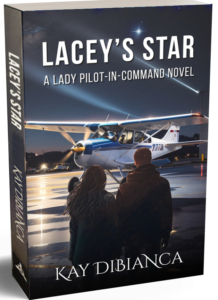
Several of us are on final approach or have recently landed our novels. Terry Odell just published Deadly Relations and Debbie Burke’s Deep Fake Double Down is available on pre-order now. My novel Lady Pilot-in-Command is in the hands of the copy editor, and beta readers are sending me feedback. Other TKZ authors have recently touched down or are approaching the runway.

Whatever the status of your work, I wish you a good journey and a happy landing.

* * *

So TKZers: Have you ever run into problems with a novel in mid-flight? How did you solve them in order to land the book? Are you on final approach or have you landed a novel recently? Tell us about it.

Into The Breech

By John Gilstrap

During a book signing event a couple of weeks ago, a gentleman named Don handed me his card and introduced himself as an official with the West Virginia Writers Association, representing the Eastern Panhandle–the slice of heaven where I now live. I have since joined that group, and plan to attend their annual meeting in June.

As a recent emigree to the Mountain State, I’m working hard to establish as many connections as I can as quickly as I can. Don told me that there’s a writing group in Charles Town (nearby city) that meets regularly and he suggested that I give it a try. I reached out to the nice lady who runs the group, and I was invited into the fold.

Not sure what to expect or what I was getting into, I went to the designated spot at the designated time and we were off and running. It’s a small group, and it’s dedicated to workshopping WIPs. (WsIP?) Among the members, the levels of enthusiasm are high but the command of the craft varies widely. About ten minutes in, I realized that I’d entered a potential minefield.

It’s not my group.

The lady who runs the meetings–we’ll call her Dorothy–has worked hard to wrangle participants from disparate backgrounds and abilities into what seems to be a cohesive group–of which I want merely to be a part. The last thing I want to do is steal anyone’s thunder. That said, I have the answers to many of the questions bandied about the members, especially with regard to the book business–stuff like copyright law. As the new guy to any group, my inclination is to sit quietly and get a feel for the room, but when people are guessing at answers, I feel an obligation to set things straight. I realize now that that’s a lot like stealing thunder.

Critique group etiquette is alien to me.

For a quarter of a century now, I have taught writing sessions and seminars in which I am the presumed authority. When those seminars have included workshop sessions, I save my input until everyone else has had their say, and then I express my agreement or disagreement with those opinions and then offer my own. I’m something of a blunt object when it comes to offering critique–never cruel but always direct. I point out what I like and dislike, and I give my reasons why.

The new group brings a different structure. First point out the good, and then lay out the critique smoothly and with light brush strokes. Listen as the writer explains what they meant to say, often couched in the tone of, “It’s all there, how could you not see it?” Apologize if the honest assessment has offended.

The phrase, “In my opinion”, must be stated aloud before a critique can be given.

“It’s only a first draft.”

When the criticism comes, an oft sought safe harbor lies in the act of pointing out that the sample people have dedicated time and effort to read and critique is only a first draft–the implication being that the writer could have done better if they’d cared to make the effort. I want to point out (but haven’t yet) that no, your submission is not a first draft. It is the final draft of the version that you chose to submit for input.

“I don’t care about ever getting published.”

Those were the words of one of the members of the group. She went on to explain that she expresses herself exactly as she likes, and is not all that concerned if it makes sense to others or if they like it. It hurts her feelings when she hears negative feedback, but has no intention of internalizing that feedback or making any changes. Being a writer is who she is, she says. It’s her entire purpose in life. I’m not getting in the middle of that one.

Soon it will be my turn.

If I have seemed a bit snarky in the above paragraphs, please find none in this one. I really do want to sink roots into the local writing community, and while I feel a bit like a fish on the shore with this new group, I enjoy the interaction. I will do my best to live by the rules. And among the rules: you’ve got to pay to play. If I’m going to critique others, then I must submit to critique myself. That’s one hundred percent fair. And it will feel really, really weird.

I will submit my best work on my work-in-progress, and I will receive blunt input from real readers–a live audience to what is usually a recorded performance. I will sit quietly and I will absorb what they have to say. I will learn some things, and maybe they will, too. Or maybe not.

What do you all think about critique groups? What works? What doesn’t? Is it helpful or harmful in a group to have a wide range of writing experience?

Mystery Cover Trends:
The Bold And The Beautiful

By PJ Parrish

Maybe it’s my art background — or more likely because I write books that I hope get noticed — but I really pay attention to book covers. I’ve been known to pass by a good book with a what-the-hell? cover (Chuck Palahniuk’s Haunted) or get seduced by a meh book with a sexy cover (Stephanie Meyer’s Twilight)

Cover design is also on my mind because I’m working on my Edgar banquet stuff this week. This is my 15th year as banquet chair, and one of my duties is to put together the PowerPoint presentation of all the nominees’ book covers. I’ve seen a lot of trends come and go over that time. Some have become classic. Others, well, they belong down there with Juicy tracksuits and Nik Nik shirts. (Score yourself 5 pts if you wore a Nik Nik, 10 if you went out in public.)

Most authors are at the not-so-tender mercies of their publishers when it comes to cover design. But a lot of us also do our own covers or hire someone. A bad cover can really torpedo a book. I’ve seen some butt-ugly covers among the Edgar nominees. This year there doesn’t seem to be a dog in the bunch. So, I figure this is a good time for a quick survey course of what’s hot. (I’m covering only fiction here).

I’m thinking that fiction cover trends have stabilized in the last couple years, maybe because the industry seems to have figured out what a marketable cover should look like. Why reinvent the wheel? But then again, that kind of thinking gave us years of black covers. (Après Amy Dunne, le déluge). Those of you who publish your own stuff know the drill: Make sure your cover looks professional, reflects your book’s tone and meets genre standards. Those of you traditionally published — pray.

For a couple years now, we’ve been seeing minimalism in crime fiction covers — nothing fussy, maybe a plot-symbolic graphic, and strong typefaces with author name and title. This is baked in now, but there are some interesting break-aways as well. Here’s my rundown featuring this year’s nominees from the Edgars and the specials (Mary Higgins Clark, Lilian Jackson Braun and Sue Grafton awards):

San Serif Type. This has become the default design. Note that this approach translates well when reduced to a thumbnail on Amazon. Although I’m not sure about the white type against that pale background.

Written Type Faces. This trend emerged a couple years ago, and is still with us.

Note: All three are from the young adult category. Looking pretty scary, there.

One Strong Graphic. Another evergreen trend that has become a hallmark of crime fiction. It is seen as being symbolic of the plot usually. Many strong examples in this year’s mix. (Click any image to see larger)

Sense of Place. Conveying the story’s geographic place also continues to be popular. Some authors revel in setting (William Kent Krueger brands all of his book covers in this way). We used to do this with our Louis Kincaid series, but it started to feel dated, so we repackaged around the symbolism idea. But setting remains a favorite this year.

A Building Block. A similar device — tried and true for decades now — is to use a house or cabin as the central graphic. I’m not really crazy about this, as it always feels sort of vague to me, like the designer couldn’t quite grasp what the writer was doing. Our worst cover had a house graphic so maybe I’m just prejudiced.

But what if your setting isn’t all dark and creepy? Well, beneath that Don Johnson pink Armani lies a black heart, wouldn’t you know. I love both these covers. I’d rent a VRBO in these towns, even if there was a serial killer a-lurk.

There are also some eye-popping pure graphic design going on this year:

And some successful attempts to capture a book’s tone. Notice the nice marriages of color, typeface and graphics that convey a mood. You know immediately what kind of books these are.

One of my favorite categories, as far as cover art goes, is juvenile. One trend that remains classic in this genre is use of protagonists’ images. Maybe because kids like to identify with them so closely? Hey, I was dark, chubby and had to babysit the Heller brats, but in my dreams I was that blonde in the blue roadster.

Which leaves us with some splendid covers that defy categorization. There’s a retro vibe this year, redolent of Gorky Park, shivering spies, dicks with gats and those fun-loving Corleone boys.

To see all the nominees on Mystery Writers of America’s website, click here. And that, crime dogs, is a wrap.


Marketing

Nobody ever told me when I got into this writing business that I’d have to peel off time for social media. Honestly, back in 2011, I barely knew what that was.

Buy my book.

I recall one conversation with the guys I work with not long before my first novel came out. I made one of those declarations that came back to bite me. “I’ll never have one of those MyFace pages. I don’t intend to waste my time on it. And I don’t understand this tweeting thing. It makes no sense.”

Lesson learned. Never say never.

Social media still doesn’t make sense in many ways. It’s a time-suck that takes that wastes hours, and pulls us away from real life and what we should be doing. Like writing.

Buy my book.

But when I got my first contract, there was a paragraph insisting on a social media presence. So I got myself a Facebook personal page (I soon learned that My Space and Face  book were two different things) and an author page, and a Twitter profile.

I knew nothing about those platforms, and didn’t want to do it in the first place. (Buy my book) I’m still not sure what to do with social media, but I’m working on it. Years ago John Gilstrap and I attended a panel on using Twitter at some conference and picked up a few things. We downloaded an app and soon had about 20,000 “followers” each.

I’ve since learned about half were bots (which I still don’t understand), and suddenly found myself following people I didn’t know or care about.

The problem is that I’m an old guy playing with new technology. Young people are natives in this world of electronic relationships and I’m an immigrant lost in a mysterious world I don’t understand. It’s a wonder I haven’t triggered some nuclear device and melted down the entire internet, if not the world.

I wrote a book. Buy it.

Then one day I noticed that when I posted on Facebook with an accompanying photo, more people were interested. Hummm…so I made it a point to include some kind of image or art. That gained a few more followers, but nothing to write home about.

I still needed interaction. I talked to a few successful authors with substantial herds of “fans” hanging on their every posted idea and asked what they did to interest people.

Most shrugged. “I don’t know. I was interviewed on this blog and people started finding my page.”

“I post pictures of my dog (puppies, kittens, cat, fish, squirrel, monkey) and people got interested.”

“I tell people I wrote a book and to buy it, but I’m not getting far with it.”

“A writer friend suggested on their page that people should take a look at my page.”

“Beats me. Stephen King mentioned one of my books and now I have about a bazillion followers. You think that’s a coincidence?”

All this is as mind numbing as the first suggestion I ever heard from an editor on a panel at my first writers conference in 2011. “We’re through with vampires and the living dead. Those books as passe. Don’t send us anything else like that.”

I’m not sure any of us know what works in this writing world, only what works for us. It’s the same in utilizing social media.

In my case, it was my youngest daughter who helped me gain Facebook followers. I told her one day in the truck that the Bride nearly had a rigor when she saw a snake in the back yard, and young Meg frowned. “What does that mean?”

I had to explain that old-timey saying. “It’s a running fit.”

“What’s that?”

We disappeared down a rabbit hole, and I had to explain how the “old folks” talked when I was growing up. The old folks who were then younger than my current age.

I talked while my then-thirteen year old daughter pretended not to listen. “For example, when we say someone let the gate down, it means that traffic is heavy and it’s hard to get on the road. That comes from the old days when let the gate down on a pasture or a corral, and the cows ran out. It referred to those old floppy wire gates we had to drag out of the way and lay on the ground.”

She looked out the truck’s window as if I was driving Miss Daisy. Used to such adolescent behavior from my years as a teacher and dad, I continued to inform and annoy. “Or if someone had a “falling out,” it was a disagreement that usually resulted in the silent treatment at the worst, or little or no communication for a long period of time.

“Then there are words few people use these days. Like ‘hob’ which is a flat metal circle on top of an old wood burning stove. It’s where people would put the pans to cook and eventually became burners on gas and electric stoves. Then there’s the word ‘tote’ to carry something, or ‘dykes’ for wire cutters…”

She finally looked at me from the corners of her eyes to see if I was telling the truth, then went back to her examination of the passing landscape, or maybe silently asking the Lord why she was saddled with a daddy who droned on and on about nothing.

“Or ‘sashay’ or ‘mosey’ or phrases, like ‘well, dog my cats’ or ‘tuckered out.’”

“You’re still talking, aren’t you. And you’re breathing my air to do it.”

“Just explaining what I grew up with.”

“Why don’t you put those on your Facebook pages? I bet older people might be interested. It’s better than talking about your books all the time and asking people to buy them.”

With that backhanded slap and suggestion, I started posting Old Timey Words and Old Timey Phrases, which are likely the most popular posts I make.

As I said, I am no expert at this, but I can tell you one thing, if authors using any social platform post nothing but reviews and information about their books…

…Buy my books! Buy my book! I have a new book coming out. It’s a doozy. Buy my book! Here’s a link where you can buy my book…

…they’ll drive followers away in droves. Folks today want to be entertained (hence the photos that accompany my posts), and require fairly short posts so they can read them quickly and move on to the next and the next and the next.

Followers love to hear about your writing life, what you’re doing, or how you’re doing it. They seek advice on how to get published, but don’t want pages of info. Think sound bites. But they don’t want you to post every day about buying your books.

I also get a lot of comments on photos and discussions about my grand-critters. Followers love it when I share my oldest daughters’ life with her seven and nine-year-olds in Conversations on the Couch.

Daugther, addressing seven-year-old Parker: Did I hear you say you want to go to Ohio? Why?

Parker: Reasons

Or Conversations in the Car.

Daughter: What was Captain Hook’s name before Hook?

Nine-year-old Riley: Captain Hand.

Readers want to know about how you write, what makes you tick, your favorite movie/book/television program/author/actor or Life its ownself. You can mention your writing space, what you’re working on, what you’re reading, and on occasion, announce the release of your upcoming book, or reviews, or blurbs for said novel. Fans like to see covers, and read flap copy.

I heard a speaker estimate posts about life vs. books at 20 to 1. Personally, I think over 90% of my posts are things other than selling books.

Being on social platforms is like making soup. Throw in all the ingredients that personalize your own delicious creation, but don’t add too much of any one spice or ingredient. And don’t tell folks about it every time you boil up a pot (buy my book), because they’ll soon tire of it and drift on to other pages and platforms.

Post away!


Reader Friday – Side Hustles for Writers

Marketing Strategy or Writing Distraction

The number of new books published each year has been estimated to be about 4 million (estimate for 2022). In 2010 Google Books calculated that the total number of published books in the world, since the invention of the Gutenberg press, was 129,864,880 books. And that didn’t include self-published books. So, based on the number of new books in 2022, we could safely add another 40 million to our 129,864,880 number.

That’s a lot of books. We’re metaphorically swimming in an ocean of books and authors, and it’s hard to get noticed. So, what do we do to be noticed? How do we keep from drowning in the ocean of obscurity?

The parallel data to the numbers above have to do with the percentage of writers who can support themselves with their writing.

The Guardian estimated that just over 77% of self-published writers make $1000 or less a year.

Another survey revealed that 54% of “traditionally-published” authors (and nearly 80% of self-published authors) earn less than $1,000 a year.

Bottom line – a small minority of us will be able to earn a living publishing books, and will therefore require a partner who is working, retirement funds to survive, or a second job for living expenses.

So, let’s discuss a side hustle for writers – “work performed for income supplementary to one’s primary job.” (Merriam and Webster) And let’s look at ways to address both problems – the need for money, and the need to be discovered.

 What are some of the best jobs for writers to get noticed? What side hustle could complement our marketing efforts? And what hobbies and interests could we turn into a profitable part of our writing-business model for marketing and supplemental income?

I recently resurrected a hobby – pen making – as a way to rev up my marketing and supplement income. Over the years I have collected a selection of lumber that is historical – white oak that was growing in 1776, black walnut that dates back to 1815, and white pine that had originally been used in 1870 for the construction of our local county courthouse. I use that lumber to hand craft “legacy pens” as part of my Legacy Words and Wood business model. I get a much better response to newsletter sign-up requests when readers learn that there will be a drawing for one of the pens. The model also allows for customers to provide their own “legacy wood” for a custom-made legacy pen. You can see my pens at – https://stevehooleywriter.com/legacy-pens/ – Enough advertising.

Time for Questions and Discussion:

  • What interests/hobbies do you actively engage in that could be called upon to benefit your marketing? Tell us about it.
  • What hobbies have you been interested in but not yet had time to pursue? Could they be used as a side hustle? Explain.
  • What other ideas for a side hustle can you think of? Help with suggestions for those who haven’t explored this idea.