First Page Critique – What’s At Stake?


image

Kathryn Lilley, TKZ

Today we’re reviewing the first page of a story called THE CASE OF THE MISSING YACHT, submitted anonymously for critique. As usual, my comments follow the submission. Please add  your feedback and constructive criticism in the comments. Thanks!

THE CASE OF THE MISSING YACHT

The sign on the door of my Georgetown office said “Vic Jones, Finder of Lost Items.” You might say I’m the St Anthony of DC. I was logging the details of my last case and anticipating an early start on a liquid-refreshed weekend when Mr. Double-Breasted-with-Cravat flounced in blathering about his lost yacht. Gee, I was mildly impressed; until now I didn’t know anyone who owned a yacht.

He was an odd little man, heavy around the bottom, narrow shoulders, thinning hair, and a Groucho Marx-style mustache. He talked non-stop seemingly without taking a breath.

“You’re looking for a big boat, right?” I cut off his monologue; I couldn’t stand it another second. “Who has time to play with boats? A grown man like you ought to be working the mean streets making a decent living.”

“I do make a decent living, young lady,” he went all indignant. “How do you think I can afford a yacht?”

I reached over the desk and laid a stinger across that fat face of his. I don’t care much for back-talk.

His eyes went moist as uncertainty registered followed by a flash of terror. His hand covered the enforced blush spreading over his cheek. What do you think, too forward on our first encounter? He backed way and mumbled, “Perhaps another time.”

“Take a seat.” I said, and noted his hesitancy. “What’s the matter; did I muss your hair? You were saying something about a lost yak?”

“Yacht,” he corrected me. He settled into my wide leather chair, the one that gets clients to relax and unwind. I want folks to feel at home, you know?

“It’s not big as far as yachts go,” he continued, and produced a picture of a sixty-five foot Sea Ray. He stared longingly at his newly departed love while putting up a brave front for me.

“Whatever.” I got down to business with my usual services-and-expenses spiel. He didn’t blink for a full ten seconds as he weighed my fee against the loss of his new toy. Finally he swallowed and gave me a brief nod. I smiled demurely at my new client.

“Do I call you Ms. Jones?”

“Mizz? Only if you’re tired of chewing with teeth. Vic will do nicely.”

“Mitch Goldberg. Pleased to meet you, I’m sure.” We shook hands. I could tell he was warming to me.

My Comments: 

First Things First: the Title

I’m assuming that the title, THE CASE OF THE MISSING YACHT, is simply a working title that will be changed down the road. It rings a tad old-school cozy. But kudos to our brave author for using a placeholder that is more original than UNTITLED.

Pacing and Characterization

I immediately liked the bright, breezy voice of the narrator. The scene flowed along at a lively pace. One nit: The character’s name, “Vic,” made me visualize a male narrator at the beginning of this page. I had to revise my mental image of the main character at the end, when I read the reference to “Miss.” I would suggest reworking the first few paragraphs to avoid creating potential confusion in the reader’s mind.

Avoid Throwing Readers into Full Stop

When a reader has to slow down in order to understand something, he may stop reading. Minor example: some people might not have the background to understand the reference to Saint Anthony as written here. The writer might want to consider adding a clarifying phrase to avoid leaving those readers in the dark. (Even if most of your readers know full well who Saint Anthony was, there’s always someone who doesn’t and has to figure it out from context. Like me).

Another area of potential confusion: I came to a Full Stop when I read the following sentence:

I reached over the desk and laid a stinger across that fat face of his.

I wasn’t sure what “stinger” meant (although I assume it meant a face-slap). In any case, having the character slap the visitor’s face struck me as reaching and a bit over the top.

A Note About the Dialogue 

I had a couple of issues with the flow of dialogue between the two characters in this scene. I had to backtrack when I hit the following lines, to figure out which character was speaking.

He spoke nonstop without taking a breath.

“You’re looking for a big boat, right?”

Because the dialogue is interjected after a reference to the yacht owner being a motormouth, I first assumed it was the guy who was speaking. Every time a reader has to pause to sort out confusion or wrong assumptions, there’s a risk of losing the reader’s interest in continuing reading.

For great tips about handling dialogue and other gnarly, craft-related issues, I recommend that the writer read DON’T MURDER YOUR MYSTERY by Chris Roerden.

A Bland Setup Causes Readers to Jump Ship

Overall, I wasn’t drawn in by the scenario presented on this first page, primarily because the setup wasn’t sufficiently intriguing or compelling. When Vic said “Whatever” in response to hearing about the yacht-owner’s plight, I found myself nodding in agreement. A rich bozo’s smallish yacht has disappeared: why should I care? There needs to be something more intriguing at stake to engage the reader’s interest; this first page needs to give a hint of what’s to come. Otherwise the reader, like Vic, will simply jump ship with a shrug and a “Whatever.”

Thank you to our brave writer for submitting this page. What comments can you add for the writer of THE CASE OF THE MISSING YACHT?

Is Writer’s Block Real?

As you read this, I am on the road to Left Coast Crime. I’m tagging along with my buddy Brett Battles and am not officially attending, so you’ll find me wandering around the hotel bar or lobby, probably looking a bit lost. If you’re attending and you see me, please either hand me a dollar or buy me a donut. I may even have time to chat.

So, with that said, I won’t be around to respond to today’s post, but I invite you to fill the comments with some lively conversation in my absence.

Today’s topic is writer’s block, which I’m sure has been discussed many times here at the Kill Zone. But a couple weeks ago, I offered my take on the subject on everybody’s favorite time-suck, Facebook, and this is what I said:

If you haven’t noticed, I’m extremely opinionated. Some might call it a fault. I think it simply means I have convictions. But I’m perfectly willing to change my opinion if someone can present me with compelling evidence to the contrary.

So sometimes my opinions piss people off. Today I expressed this opinion and it ruffled some feathers:

There’s no such thing as writer’s block. It’s an invention. It’s not a reason, it’s an excuse.

When challenged, I responded thusly:

“So do we have lawyer’s block or doctor’s block or mechanic’s block or accountant’s block? People in all of these professions experience bad days, they all get burned out, they all get stuck at times, but do they take the unprofessional route and stop what they’re doing? No. Unless they’ve had a complete breakdown (which is something else entirely), they keep doing their jobs.

There’s nothing special about being a writer. It’s a job. One I, and many of my friends, have been doing for more than a couple dozen years. None of us can AFFORD to get “blocked.” We write every day, seven days a week, no matter what.

Writer’s block is not a mental condition.

Stress, anxiety, etc.—real conditions that cause real problems—are good reasons for a writer, or any of the above professions, to stop working. But that’s not writer’s block, so let’s not pretend it is.

Nor is getting stuck.

Getting stuck is a natural part of the process, not a “block.” We get stuck simply because we haven’t thought our story—or our characters—through. Once we do, we get unstuck. It happens with nearly every story.

Sorry if I’m unsympathetic. But to my mind, you either do the job or you quit.

As for inspiration, if you need to wait for it in order to work, you might as well give it up.”

Now, you can imagine the response I got. Some positive, but one from a writer friend, who also happens to be a doctor, said I didn’t know what I was talking about. That writer’s block is a very real condition.

I respect this man’s opinion and value him as a friend, so I didn’t want to get too far into it with him. But my response to him was that there are certainly conditions that people suffer from—depression, anxiety, etc.—that can lead to writer’s block, but the block itself is merely a symptom of underlying problems. Unless you’re suffering from a mentally or physically debilitating disease, if you’re a writer, you should be writing. No excuses. So maybe the problem is defining what “writer’s block” is. How ever you define your writer’s block, if you truly do suffer from a lack of creative ideas and your “normal flow” seems to be ebbing you could have a look into consuming CBD products from sites such as cbdoilsuk.com as CBD in some users has been reported to increase their creativity and could help you get that “flow” back.

Since I don’t believe in it, however, I have a hard time defining it, but I can tell you what it isn’t.

If you are having problems with a story, if you’re stalled, if you’re staring at a blank page and nothing is coming that day, that’s not being blocked. That’s merely a setback. We all have them. We hit walls, we write ourselves into corners, we figure out solutions, and if we’re professionals, we press on.

And that’s true of anyone in any profession. If you want to get paid, you get to work.

Hell, I’m working right now and I’m NOT getting paid for it. And I had absolutely no idea what I’d be writing about today, but I sat down and did it anyway. As I’ve said, I can’t afford to be “blocked.”

Anyway, those are my rather inelegant and somewhat gruff—and yes, insensitive—views on the subject. Now, please, discuss amongst yourselves.

It’s quite possible it’s true what they say about me and I am crazy.

Now, does anyone have a donut?

5 Mistakes That Will Kill Your Query Letter

RejectionBy Kathryn Lilley, TKZ

Before there is an Agent and a Publishing Deal, there is every writer’s dreaded obstacle and Final Wall: the Query Letter. Here is  a list of the top five reasons a query letter is rejected by an agent.

1. Perilous Protocol

Manners and professionalism count. Your query letter will be met with an instant “No” if it doesn’t meet the minimum requirements of query letter protocol.

What is “protocol”?

It almost goes without saying, protocol requires you to pay close attention to an agent’s posted Submission Guidelines. Here are some links to excellent discussions about some other how-to basics of crafting a query letter.

The Complete Guide to Query Letters That  Get Manuscript Requests, by agent Jane Friedman.

How to Write a Query Letter by agent Rachelle Gardner.

Query Shark (a site where where you can post your query letter for review, discussion, and critique)

2. Misses and Misdirection

This point sounds obvious, but you must send your query letter to an agent who represents your manuscript’s genre. Do your homework. Research which agents are actively seeking new manuscripts in your chosen genre. (Genre-blending works are frequently problematic here–if you can’t pinpoint which genre your story belongs in, it makes it that much harder to attract an agent).image

3. “Good”, But Not Good Enough

The Truth: Agents aren’t looking for good writing. They’re looking for great writing. They’re looking for compelling, fresh writing that sizzles. “Good” (AKA amateur) writing simply won’t cut it in the current marketplace. So before you submit your query letter, make sure your writing meets that mark. You have to be brutally honest when judging the merits of your own writing. Compare your first chapter to some best sellers in your genre, and then ask yourself: am I there yet?

4 First Line Fails

No matter how well crafted your query letter is, you can lose an agent’s interest with a clunker first line in your story sample. For great discussions about crafting an effective first line, see the following links:

Finding The Right Door To Enter Your Story by PJ (Kris) Parrish

But First…. By Joe Moore

5 Spelling, Grammar, and Punctuation, Oh My!

It hurts me to say this, but many query letters fail due to the sender’s lack of paying attention to the basics of spelling, grammar, punctuation, and paragraph formatting.

image

How about you? Can you share your do’s and dont’s about writing an effective query letter?

A Kinder, Gentler Perspective on Story Structure

by Larry Brooks

When teachers teach, even within the realm of art, the essence of the learning is based on some form of undeniable, unassailable truth. Otherwise, it’s just some guy’s notion of how things are done.

Even finger-painting requires fingers, which are limited in what they can and can’t do. Which creates context for the processes and products of finger-painting.

We teach skydiving and dancing using techniques and proven principles. And even if it’s never mentioned, it is the undeniable and unassailable force of gravity that creates context for the entire proposition.

We teach cooking using techniques and principles and proven recipes. And even if it’s never mentioned, it is an undeniable and unassailable truth – that people don’t like to eat their meat raw unless the words sushi or tartare are within visual range – that creates context for the entire proposition.

I could go on.  If you’ve read my writing books you know I’m fond of analogies (and of going on), often to the extent I receive nasty personal notes from readers who, well, don’t appreciate them, or worse, aren’t capable of understanding what they mean.

Not everyone is cut out for being a writer.

With all the prevailing kumbaya in the online writing and workshop conversations, it is easy to lose sight of this single and simple truth: writing a good novel is hard. Freaking hard. A command of the principles of the craft – including how a good story is structured – is an essential arrow in the writer’s quiver.

Don’t be the writer who squares off with this beast unarmed. Or kids themselves that, within the wide breadth of what the writer gets to make up for themselves, structure is one of those things.

Here’s where things go south in the writing conversation:

When a teacher begins to talk about limits and lanes and proportions and optimal placement of certain essential elements within a story, some writers shut down. This is supposed to be fun, it’s supposed to be art, not architecture and certainly not math.

Others twist what they think they hear into what they fear they are hearing.

And thus the meaning is lost. And with it, the writer’s realistic hope of getting there.

Know this: any conversation about story structure is NOT a conversation about process. 

The presence of, the nature of, and the benefits of story structure are exactly equal and unequivocally unbiased when it comes to any writing process, whether it that of the most passionate free-form organic pantser or the most anal outlining mega-consumer of 3-by-5 cards in the history of office supplies.

The goals of both, and the criteria for the success of both, are without compromise or exception identical.

Here are a few of the outcomes of this disconnect between teachers who talk about story structure and writers who don’t like what they hear:

Writer says: there’s no such thing as story structure, I’ll write my story any damn way I please.  (And when she does, there will eventually be her very own version of story structure in place, thus disproving that initial assertion. Bad story structure is still structure, and it will probably tank your story… so it’s best to understand the difference between good and bad.)

Writer says: I don’t want to create my story within the confines of someone else’s story structure, I want it to flow organically from my head into my fingers and onto my pages.  (And when he does that, it may or may not work. When it does work, it will in no small part be because it landed on the page with some close proximity to the existing and universally-accepted – among professionals – principles of story structure, and if it doesn’t work, feedback will move the story in precisely that direction. Or, in the absence of a revision, it’ll simply fade away, unread.)

Writer says: Sounds like a pile of “rules” to me, and I hate rules. There are no rules in writing.  (Right. No rules. Check. Just like there are no rules in music, athletics, love, relationships, health, medicine, the legal system and generally staying alive. When such a belief system prevails, the writer is saying she depends on her own personal set of story sensibilities (just like those guys in Oregon holed up in a National Wildlife office are relying on their own legal sensibilities to… well, nobody is quite sure, other than they’re woefully out of touch and destined to fail, thus making this a killer analogy for today’s message) to determine what happens and when it happens within her story… and again, if it works, it will be in no small part because the structure resembles principles she did not invent, but rather, she simply aligned with.)

Writer says: There are infinite ways to structure a story. Another writer says: I’ve heard about 3-act models, 4-part models, 6-part paradigms… they all can’t be valid.  (Actually, they can all be right, because you could argue that a novel with 71 chapters has 71 facets of structure to it… which is like a political argument that spins something to serve one’s one beliefs. Doesn’t change the fact that, when the story works, even with 71 chapters, it likely has the functioning acts, which can also be described in 4-parts overlaying those 3-acts, and/or as many other takes on the model as you care to attempt to break down and defend.

None of that matters.

What does matter is the author getting the flow of the story right.

What you call it when it happens doesn’t matter. The bestseller lists are crowded with authors who have never heard of a First Plot Point (yet they execute one elegantly in every novel they write), and believe that the flow of their story is one of their own invention, when in fact, they are simply writing what has proven to work for the collective whole of fiction, thus validating their story sensibility, if not their ability to describe it.

In other words, what a writer says they believe about story structure doesn’t matter relative to the truth about story structure. Because story structure is very much like gravity in this regard… it simply IS.  It exists. It doesn’t care what you call it, or how many ways you slice and dice it… it simply IS.

And it’ll hurt you or kill you if you proceed without an awareness of it.

In today’s commercial, genre-defined fiction market, that universal (yet liberatingly flexible) structure ends up being very much the same in pretty much every novel and movie that works. Because if it doesn’t align, it probably doesn’t work, and thus it won’t find a publisher or readers beyond the family holiday card list.

It is flexible in the same way that an athlete is free to improvise and respond spontaneously, provided they don’t break the rules of their game or step outside of the lines within which they play. When they do that, a penalty ensues.

Of course, writers don’t want to hear this about their game.

And yet, they remain free and without restraint within those same contextual expectations (limits, boundaries, and a proven relationship between decisions and consequences; i.e, a story that violates the tenets of structure simply don’t work as well as those that honor them) for what, win or lose, they are attempting to accomplish.

Already some writers reading this will notice the hair on the back of their neck standing straight, because damn it, there can’t possibly be a single structural paradigm out there telling me how I need to organize my story. And/or, it shouldn’t be this complicated.

It’s an unwinnable argument, either way. Until you have the courage and wherewithal to actually break down a story that works (not yours, but one that is out there) and see the glowing infrastructure of it for yourself. If you are a reader as well as a writer – and you sure as hell better be – and you still deny this after seeing it… I recommend a career in politics instead.

Of course, in doing this you need to know what you’re looking for before you can see it. And there, to quote our friend Bill S., is the rub. To many writer’s don’t.

So let’s simplify that universal structural model…

… the one you’ll find in pretty much every piece of successful fiction, once you do know what you’re looking for. Let’s clear the air and end the debate.

Because there is a kinder, gentler way to introduce, define and embrace the core principles of story structure without resorting to percentages and math and specific target milestones (which remain available for those who want to master this essential storytelling skill), and it defies challenge from any writer high enough up the learning curve to be reading this with the expectation of actually writing publishable, readable fiction.

Consider this: you absolutely cannot argue that every story – that isn’t a short story – does not have a beginning, a middle and an end.

Guess what… that’s 3-act story for you, in a nutshell.  It simply IS.

When you look closer at those three acts, though, you’ll find there are actually four contextual essences (parts) to a story within them (to be more accurate, across them), that flow smoothly over that core 3-act model, thus becoming a more precise and usable 4-part model that is orders of magnitude more useful to writers than its 3-act better known twin brother.

Because it gives you a mission for all the scenes, contextually, within each of those four parts. It’s like having a map, telling you where the land ends and the sea begins, and where the mountains are. Carve your own path through the wilderness as you will, but this information will keep you alive.

So if you are a non-believer where structure is concerned, or a resister, a late adopter or a literary Luddite – or simply someone who hasn’t yet been exposed to these essential truths – let’s look at story structure in a completely new way, with a completely different and non-restrictive or polarizing vocabulary. One as accessible and uncontroversial as the beginning-middle-end model that you are hard pressed to deny.

By the way, beginning-middle-end is way too simplistic to be useful to a professional author. It’s like describing college as freshman, sophomore, junior and senior, when your goal is to get into med school.  You better understand what needs to happen, and when, far beyond that simplistic breakdown.

You need to know what happens, and when.

Think of your novel as a flow.

Now we’re talkin’. Because you know – you don’t resist – that your story is not, it is never, about one moment in time, that is doesn’t take a snapshot of something and describe it to death, that your story needs to move forward (and even backward if you like) in time, it needs to change, to evolve, that new information needs to come in to play, stuff happens, stuff changes… and eventually, things get resolved.

You don’t resist that.

When you realize you don’t resist that, you are also signing up to implementing some form of story structure.

Think of structure as the flow of your story… and understand that the flow of your story follows a natural, organic contextual essence, one that has arisen from any and all other possible flows because this is how human beings experience life (which also has a beginning, middle and end) and stories themselves.

This is how readers engage with our stories. We are writing, first and foremost, for them. If that’s not true for you, you have another issue besides structure that you will eventually need to confront.

Now think of that flow having four definable sub-sequences, each with its own unique narrative purpose. Just like life has infancy, youth, middle age and old age (a list you can expand as you wish, but these four always remain in place)… the context of those experiences is by definition different – everything about them is different – when we live through it.

So it is with your story.

A functioning story has four segments to it that are unique relative to each other, and to how the reader experiences your story. Here they are:

Setup… you need to introduce your hero, present a story world (time, place, culture, natural law), inject stakes and set up the mechanics of an impending launch of – or twist to – your core dramatic arc (the plot), which is what your hero will spend the rest of the story investigating and pursuing and wrestling, all in context to the pursuit of a goal that leads to resolution).

Response… after things have been setup, the story needs to settle into a lane that shows your hero responding to a new path – the core story path, also known as your plot – with stakes in play and some form of obstacle (antagonism) causing the hero to react to something they may not understand (pursue more knowledge) or, if they do, a need to deal with it in a way that keeps their ultimate goal on their horizon.

Attack… because if the hero is too heroic too soon there isn’t much drama for the reader to engage with (there needs to be), so we wait until this quartile to show your hero evolving from a seeker/wanderer/responder to become a more proactive attacker of their problem or goal, both relative to the goal itself and the presence of an equally-evolving obstacle (a villain or a storm or a disease or an approaching deadly meteor, whatever is the source of tension and drama in the story)… moving closer to a showdown and some form of…

Resolution… wherein all the moving parts of your story converge to put your hero face to face with their goal and whatever blocks their path toward getting what they need to get.

This is, by the way, the nature and essence of the most common form of story model, the 3-act structure embraced by screenwriters and a huge percentage of professional novelists… this is the very same flow, because those two middle segments comprise “Act 2” of that model, thus creating a 3-act whole.

The degree to which you depart from this accepted – and expected – story flow is the degree to which you are putting your story at risk. Either by not knowing this, or worse, by defying it.

Because the context of the scenes and chapters with each of these four eras of flow differ, each with its own contextual mission for the scenes and chapters within it, you are then empowered to create a different contextual experience for your hero from part to part.

For example, your hero’s true story-arc-challenge doesn’t fully launch in the first-part (roughly a quartile) setup, and once it does, everything else in the hero’s life is trumped by whatever it is you have placed before your hero as a problem or a need or a goal, with stakes and opposition in play.

There will be those who resist, even to this kinder, gentler flow of a story. There will be those who say, “but wait, my story does kick off on page two, not on page 62,” which is a statement of fact or intention rather than a valid defense. This is why stories get rejected, and why the author may not ever be clear about why it happened.

If that’s you, then I urge to you see a movie tonight, and notice how it flows over these four contextual essences.

Read a bestseller, notice how it sets up the core story before fully launching it, (even when something highly dramatic opens the story, trust me, things will change for the hero, and soon, all within the setup quartile).

Notice how the story shifts (at what is called The First Plot Point) to thrust the hero down a new or altered path, causing her/him to react, to respond, all in the face of stakes (motivation) and the presence an emerging threat (both of which were, in a properly structured story, introduced and/or foreshadowed in the Part 1 setup quartile) of an antagonist (a person or force or situation) that seeks to prevent the hero from reaching their goal (in a romance, for example that would be whatever – person or thing or situation – that keeps the two lovers apart)…

… and then, how the story again shifts in the middle and points your hero toward a more proactive attack on their problem…

… and then, after another twist at roughly the three-quarter mark (new information), where all paths and motives and strategies begin to converge, resulting in a confrontation or a catalytic series of decisions and actions by your hero (who cannot passively sit on the sidelines while someone else steps up to solve the problem), creating some form of resolution.

If you want to see seven or eight parts in that, you can. They may indeed be present, but almost always as subsets and supporting dynamics within these four parts of the flow.

Here’s something that’s true, even if you are the most ardent resister to anything that smacks of story structure: your novel is not a snapshot. Not a dissection of a singular moment in time. A story needs to move forward. Things need to change.

Your hero needs something to do.

Every time.  In every story that works.

If you think of that change over the arc of your story, then you are embracing the context of flow.

Don’t call it structure if that offends or frightens you. But that’s precisely what it is, and that’s all it intends to do: make your story flow.

Call it what you will, but once you get this and begin to either pants or plan your story with this in mind – because it is like gravity itself, if you deny or ignore it, it can kill you – you’ll find the story not only works better, but your experience in creating it will be orders of magnitude more blissful.

Sort of like soaring on the wind.

You always need some form of wings to stay aloft, and alive.

The flow, fueled by your character’s journey, becomes your story’s wings. You are the pilot in command, trained and skilled at what works and what will result in a fiery crash, fully mindful of how far you will fall if you don’t honor the physics of story, forces that will either elevate you or send you spiraling to the ground.

We all get to choose. For professional authors of stories that work – no matter what their writing process – there really is no choice at all.

They go with the flow, every time.

First Page Critique – Renegades

Jordan Dane

@JordanDane

My first critique for 2016. For your reading pleasure, we have RENEGADES, submitted anonymously for feedback. My comments will be on the flip side. Please provide your constructive criticism in your comments. Our brave author appreciates the help.

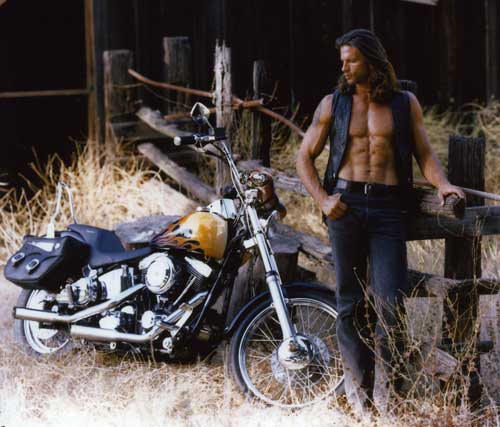
I'm dating myself with this pic of Lorenzo Lamas as RENEGADE

I’m dating myself with this pic of Lorenzo Lamas as RENEGADE

RENEGADES

Silvana
Miami, Florida
Friday, March 30, 2012
3:25 PM

Silvana Machado’s cell phone went off while she was pistol-whipping a street punk. He’d gotten up in her face when she and Vargas confronted him after they spotted two hookers slipping cash into his palm. He wasn’t particularly well turned out, wearing fairly ordinary clothing, utterly lacking the gaudy flash popular in pimpdom. She made him as a newbie, just getting his enterprise off the ground. He’d gotten out of a black Dodge Charger, not a bad car, but a far cry from your typical pimp’s tricked-out ride. She eyed the caller ID on the bleating phone. Headquarters.

She holstered her weapon and opened the call. “Machado.” Bobby Vargas held on to the the punk.

“Sergeant Machado, Lieutenant Santos here. What’s your location?”

Silvana stepped away from her partner and the punk, just out of earshot. “Northwest 26th Avenue, just off 50th Street, sir.”

“What are you doing?”

“Questioning a suspect, sir. Possible involvement in last week’s drug murder in this neighborhood.”

“Forget it. Get over to 75th and Biscayne, the Sea & Sand Motel. On the double. The manager found a body in one of the rooms.”

“Yes, sir.” She swiped the call off and turned back to the punk, now sniveling. His lip was slashed open. A mouse was forming over his swollen left eye. She pushed a heavy lock of mousey-brown hair back from her face and held out her palm. “Give.” Two snaps of her thick fingers.

“Gi-give what?” the punk said.

Vargas landed a hard knee into his skinny back. He buckled.

“The money, dipshit,” Silvana said. He resisted no more. She reached into his pockets and pulled out a wad of cash, maybe twelve or thirteen hundred. “Now, I understand they call you G-Man.” His head went up and down fast a couple of times. “Okay, G-Man, get this straight.” She held up the cash, close to his bleeding face. “This is your initiation fee.
From now on, it’ll cost you one grand a week to run your whores in this neighborhood. You understand?”

He said, “A grand? Man, that’s a ”

Another whack of her semiauto across his face. Blood flew from his mouth, nearly hitting Vargas’s sleeve. She was well-muscled and that one had to hurt.

“One thousand. Every Friday. Four PM, right here at this corner. You miss a payment or if we don’t find you on Friday, we’ll find you on Saturday and you won’t see Sunday. You hearing me?”

He nodded.

“Say it!” she said.

“One th-thousand. Every Friday. Four  four o’clock. I-I hear you.”

FEEDBACK

OVERVIEW – I think I met this woman at my last high school reunion. Interesting voice for this character. I’m not sure if she is an anti-hero or a baddee, but I’m willing to find out. I love a well-drawn anti-hero. I’d keep reading. Below are some suggestions:

STICK WITH THE ACTION – In the first paragraph, the first sentence sets up the action that is taking place, but then the author immediately takes us out of the action by setting up what led to the pistol-whipping and what the pimp is wearing and what he drives. I’d suggest taking care of some of this set up (ie like why the hookers were slipping him cash) with dialogue but stick with the action to keep the reader in the moment and totally buying into the danger of the scene. I can see her making taunting fun of him to her “look the other way” partner. The longer explanation diffuses the moment. But I laughed out loud when I heard her say, “Questioning a suspect” to her LT. Slam dunk on timing of a great line. I almost don’t want to read the next line – “Possible involvement in last week’s drug murder in this neighborhood.” Author might consider dropping it to sharpen the dark humor to this scene.

GUN USE – I have a thing about a cop using his/her weapon to beat someone with. She then puts the bloody weapon into her holster to spread the DNA. I know this is done a lot in TV and movies, but does anyone else take issue with this? My police officer friend gave me his input and I can’t post what he said here. This is a family blog.

TAG LINE/DATE USE – In the tag line at the top, the author uses the year 2012, which dates this story. I can see if a particular date is important for a period piece, but if the intention is simply to set the stage for something that occurred 3 years ago, then it might be better to use something like: March – Three years ago. I can see this set up to flash forward to present time when we encounter Silvana again.

EMBEDDED DIALOGUE – In the paragraph that begins, “The money, dipshit,” Silvana said, this weightier paragraph has a number of dialogue exchanges in it. Personally I like pulling out as much dialogue, for readers to follow easily. In a wordy paragraph that looks like a narrative, a reader might skim over or lose some lines. I prefer seeing dialogue more clearly and with more white space on the page as a respite for the eye.

SPELL CHECK – Words like “mousey” and “dipshit” show as misspelled and “”semiauto” should be hyphenated. Also, the time “Four PM” does not have to have the caps.

For Discussion: Any other comments of feedback for this courageous author, TKZers? Would you keep reading?

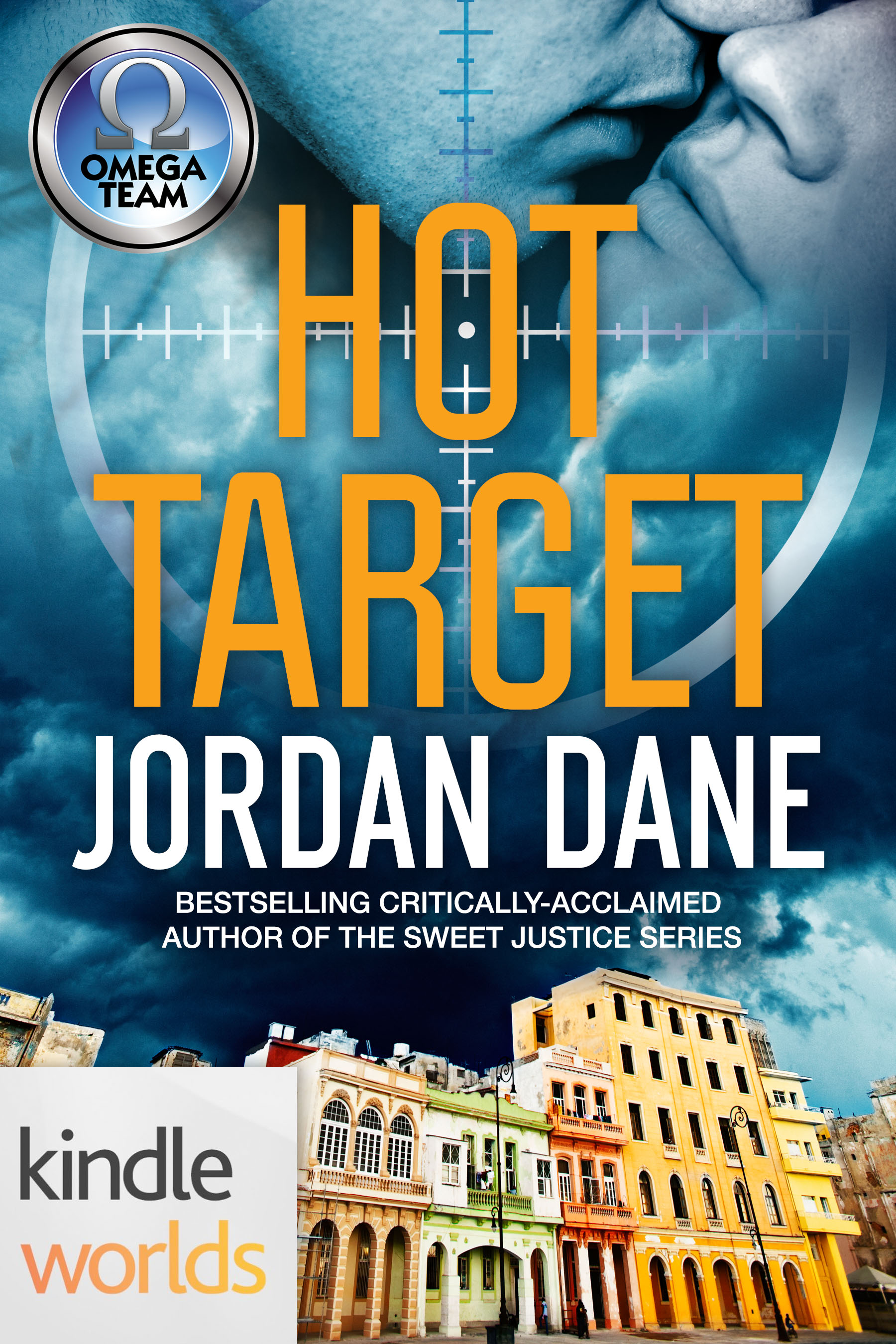
HotTarget (3)

HOT TARGET – $1.99 ebook (Coming Feb 18)

Rafael Madero stands in the crosshairs of a vicious drug cartel—powerless to stop his fate—and his secret could put Athena and the Omega Team in the middle of a drug war. 

The Omega Team series will launch Feb 18 with Amazon Kindle Worlds. Come join the facebook launch party at this LINK on Feb 18 for giveaways and chats with the authors in this romantic action adventure series.

Dumb Mistakes That
Will Doom Your Book

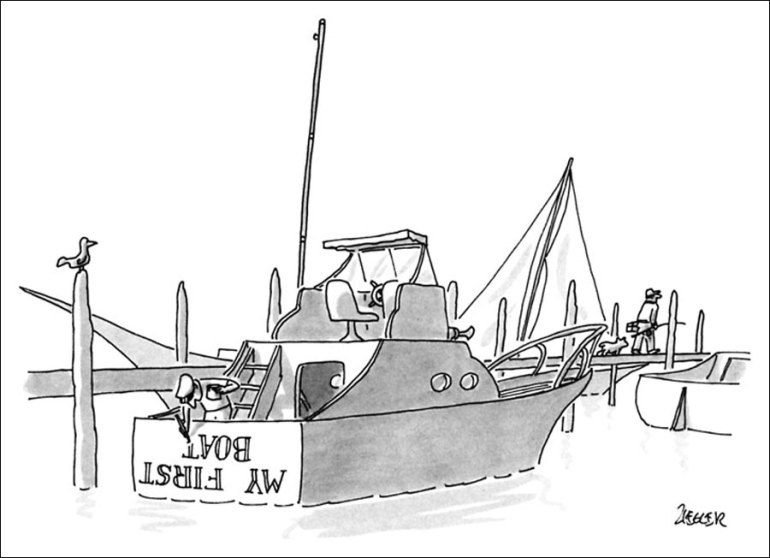
my-first-boat1

Don’t get whistled out of the game on fouls before you have a chance to show off your best moves. – Miss Snark

By PJ Parrish

So I’m watching Hassan Whiteside play in the Heat game the other night and it got me thinking about writing books. Or maybe it was Marco Rubio in his last debate. I dunno. Not sure who inspired me more. But what I want to talk about today is dumb moves.

Shooting yourself in the foot. Stepping in it. Dropping the ball. Screwing the pooch. Whatever you want to call it, this is not something you want to do in your career. Ask Whiteside. He threw an elbow into the face of his Spurs opponent and got ejected (his third this season). Or ask Rubio. He became Chris Christie’s chew toy after he robo-repeated a talking point three times in thirty seconds. (and paid for it by dropping to fifth in the New Hampshire primary.)

Hey, we’re all human. We all make mistakes. Believe me, I have. Some that adversely affected my writing career. So let’s take a look today at some of the wrong moves that can, as the great agent Miss Snark said, get you knocked out of the game before you’ve even had a chance. Your contributions to our guide to dumbness are welcome!

When writing the book…

extinct

Don’t chase the trend: We can go way back to Jaws for examples here. In the wake of Benchley’s novel, we quickly got such memorable chum as Megalodon (oil rig explosion unleashes giant shark), Carcharodan (prehistoric shark freed when iceberg melts), Extinct (killer shark preys on boys in Mississippi River) and Meg (really big pregnant shark bubbles up from Marianas Trench and eats dumb tourists.) After Anne Rice, Charlaine Harris and Stephanie Meyers dug up Bram Stoker, we got a full decade of un-deads. And après Dan Brown came le deluge of conspiracies (Templars! Cathars! Christian Inquisitors! Oh my!) Here’s my point: By the time you decide you want to follow a trend in publishing, it has begun to wane (and surely will be over in the 18 months it will take you to write it and get it to market). T.S. Eliot might have said, “Mediocre writers borrow, great writers steal.” But if you’re trying to break into the bestseller bank, chances are the money’s already gone. So think twice before you use that unreliable narrator or try to wedge “girl” in your title.  You are a snowflake. You are unique. Let your book reflect that.

Don’t be content with dull titles: Your title is your book’s billboard, meant to be glimpsed and grasped as a reader speeds by in the bookstore or on Amazon. It is ADVERTISING and it must convey in just a few words the essence, heart, and all the wonderful promise of your story. Work hard on this. Yes, slap anything on the file name as you work, but always, as you work through the writing, search for that pithy phrase that capsulizes what you are trying to say. Try Shakespeare (The Fault Is in Our Stars, Infinite Jest) or poetry (No Country For All Men — Yeats).  Go for weird juxtapositions (Zen and the Art of Motorcycle Maintenance) or intrigue (Midnight in the Garden of Good and Evil  or Then There Were None) or humor (Hello, Vodka, It’s Me, Chelsea!). Twist an old phrase (Dr. Suess’s You’re Only Old Once.). So many times, I read manuscripts (or published books) where the title feels like an after-thought, almost as if the writer used up all his juice just getting 300 pages down, breathed out whew! and then went back to page 1 and typed The Templar Conspiracy Book I. Click here for some good tips on titles.  Click here if you want to read the worst titles of maybe all time — and see some butt-ugly covers. Which leads me to…

Don’t use ugly covers: Now, if you’re traditionally published you have little control over this. (although some enlightened publishers are getting better about seeking author input.) But if you are self-pubbing, don’t let your nephew who flunked out of Pittsburgh AI design your cover. Don’t go find free lousy images and try to do this yourself. Nothing screams amateur louder than an ugly cover.  It tells potential readers that you think so poorly of your story that you’re willing to send it out in the world in dirty sweatpants and a Led Zeppelin World Tour 1971 T-shirt. Pay someone to do this. It’s worth every schekel. If you cheap out, don’t be surprised to see your ugly cover end up HERE.

After the Book is Done…

Don’t forget to copy edit it:  This is tedious. This is awful. This is grunt work that comes after even the hell of rewrites. Well, tough. After you finish your filet mignon, you have to floss. You might be really tired of looking at the thing and all you want to do is get it out there in the world, wait for someone to love it, and throw shekels your way.  Resist the urge to do this. Instead, PRINT IT OUT and read it for typos, misspellings, stupid mistakes, grammar lapses, brain farts. After you’re done, go back and do it again — maybe with a ruler held under each line so you go reeeeeal slow. I know authors who copy edit their stuff backwards so the mistakes jump out better.  You won’t get all the bad stuff. But the goal is to make it as clean and professional as you humanly can.  If you don’t know the difference between lay and lie, find someone who does. Agents and editors all say if they see dumb errors in manuscripts, they won’t read on. No one will take your words seriously until you do.

Write a great query letter:  This isn’t easy but it’s really important.  Agents want to fall in love with new talent and every affair begins with a magic moment.  A great query is simple, direct but has a terrific hook. Which is not the same as a plot summary. In Hollywood-speak, it is a “log line” that capsulizes the essence of your plot with a strong emotional pull. (ie from Aliens: “In space, no one can hear you scream.”)  This is hard writing. Even if you self-publish, learning how to write a great tease for your book will serve you well when you go to write that Amazon copy. Click here to see a simple and very serviceable query template.

Have some cajones: There is nothing worse than a falsely humble author. If you are doing a book signing, would you tell someone who walks up to your table, “Oh, I know you’re busy…you don’t really want to know about my book.” So, in your query letter, don’t spend precious words apologizing for “wasting” an agent’s time by sending them your letter. If you don’t have faith in your book, how do you expect anyone else to?  Even if you aren’t a pro yet, act like one.  Be like that wide receiver who doesn’t spike the football in the end zone — act like you belong there. (I got this one from a great blog by agent Jenny Bent.  Click here to read the rest of her advice on submitting.)


Follow the rules when submitting your novel:  Reputable agents are good people; they truly want to find the next best thing because they love good books. So be a pro and follow their rules. Research what types of novels they are looking for. Find out their names and how to spell them. (DEAR AGENT is sorta off-putting, you know?) Format your manuscript in the way they want it — ie, double-spaced, courier or roman, etc.) And finally: Don’t forget to number your pages. Don’t use colored paper or add weird stuff like glitter. And for God’s sake, don’t call your book “a fiction novel.”  You laugh? I saw the actual query letter that had that gem.

I don’t think that guy ever made it off the bench.


Print, Audio and Ebook Experience

I thought this blog post would never eventuate after our aborted President’s Day weekend in Telluride that coincided with a huge boulder falling on a transmission line resulting in zero power to the whole town. We actually ended up driving back to Denver early after a night of picnicking in the semi darkness of our (rather chilly) hotel room. My husband and I called it our family Valentine’s Day adventure but after 12 hours of driving in 2 days it was more of an exhausting Valentine’s Day than anything…although, at least now I have no excuses and the blog post could be completed:)

On the way to Telluride and back we listened to two audio books in the car – one (which shall remain nameless) highlighted the very worst aspects of the audio book experience (wooden narration revealing a badly written novel in all its horror…) and we gave that one up after three discs; the second (thankfully) displayed all the wonderful elements associated with listening to a great book on CD. This (and I’m more than happy to identify it as The Graveyard Book by Neil Gaiman) was narrated by the wonderful Derek Jacobi (and a cast of other great British actors) and so was perhaps an unfair comparison – but, at least for part of our trip, the audio book experience was pleasantly memorable.

Both my twin boys love listening to books narrated well and still enjoy having me read aloud to them each night (which I still managed to do in our Telluride hotel room by flashlight!). What is interesting to me is that, although they love a great audio book, they are still ambivalent to ebooks – far preferring to read the print version. I often end up buying or getting from the library the print version of ebooks I own for them, as both boys want to read the hard copy rather than the electronic version. Since they both love spending on their computers and iPads, I have to wonder why neither of them have embraced ebooks. Is it because, like a bad audio book experience, it feels awkward and unenjoyable? Or is there something magical about turning the pages of a printed book that cannot be captured in an ebook (something that, as children, they feel strongly about perhaps?).

With recent reports of Amazon potentially opening physical bookstores, I also wonder whether we are finding an increasing resistance to ebooks (?). Now, I’m equally comfortable reading on my Kindle as I am reading the print version of a book – and yet my boys, who have grown up in the age of the iPad and Kindle, are not. They turn their noses up at any offer I may have to purchase the ebook version of a book they want. They’d much rather hold a book in their hands.

What about you? As a reader, do you have a preference for print, audio or ebooks? As a writer are you more wary of ebook only publication sites or publishers? Have you had a great book ruined by the audio version? What do you think – are we perhaps seeing generational differences that might result in a resurgence of print (if my boys are any indication)?

Reader Friday: Which Novel Best Describes Your One True Love?

1loveshutterstock_243324172By Kathryn Lilley TKZ Founder

Yes, Ladies and Gentlemen, it’s that time of year again.

VALENTINE’S DAY

is on SUNDAY. (In case you forgot, there are probably still a few good cards left at your local Hallmark Store.)

1woofshutterstock_172989605

But let’s forget for a moment the shallow realm of cute puppies with flowers, kissy-face couples, hearts drawn in the sand, soft-porn  sexual innuendo cards, all that corny blah blah blah. Let’s get to the root of this over-commercialized holiday we call Valentine’s Day.

Valentine’s Day is about Love.

Romantic Love.

Real Love.

True Love.

True, Real, Romantic, Intense, Even-when-its Prospects are Gone or Gone Hopelessly Missing, L-O-V-E.

We have all (or, almost all) experienced that particular life-upending emotion called True Love, at some point in time. Even when it has somehow been lost or  overwritten by life’s vicissitudes, True Love remains forever in one’s heart. You can never rid yourself of your One True Love. Even if He or She is no longer nestled in a loving embrace next to you at the Midnight Hour, your One True Love is still there. Well hidden, perhaps, but He/She is there, lurking. Ready to pounce on your emotional status quo.

Perhaps you’ve tried to dismiss your One True Love; you may even assume that you’ve forgotten all about that Love. It happened so long ago, after all. Something went wrong, and by now you’ve long since written off the whole experience as a regrettable “When Love Goes Wrong”-ish duet, one best left in the past.

But then, many years later, there pops up a reminder. You’ll be driving down a rainy highway late one night, semi-blinded by the zigzag streaks of oncoming headlights, and a particular song comes over the radio. And then something seizes your heart: a memory. That memory twists your innards, all over again. The pain of your loss returns, like it happened yesterday. Love, lost. You change channels to silence that pesky reminder. The source of that reminder? That source was your One True Love.

Or maybe you are one of the Lucky Ones. Maybe you are presently happily, intensely living in blissful harmony with your One True Love. If so, count your blessings. And if you are so blessed to be living in union with your One True Love, on Valentine’s Day this year (it’s on Sunday. Remember that) please do that person a favor. Send Him (or Her) a decent card this year, okay? No puppies, sexual jokes, or sand hearts allowed. A personal message, written by you, not by Hallmark, would be appropriate. True Love is an important thing. It’s not a cheapie card and a teddy bear accompanied by chocolates and/or hottie-babe pajamas, no matter what the TV hucksters tell you.

So here’s my question for You regarding the topic of “Valentine’s Day”:

If you were to ask your Heart the following question: “Which novel best describes the way I feel (or felt) about the One True Love of my life,” which title would your Heart suggest? Or, (if you’re feeling truly brave), which song title would your Heart recognize?

And…Happy Valentine’s Day, Y’all.


1heartshutterstock_16662139

The Most Important Moment in Your Story

I make a lot of bold declarative statements about writing. In my writing books, on my website, and in front of wide-eyed audiences at workshops and conferences who in some cases are thinking, “who the hell does this guy think he is?”

All of us who write about writing do it to some degree. Sometimes it’s intentionally delivered inside out (because writers don’t like other writers telling them what-is-what, unless they are famous novelists who aren’t in the business of teaching craft, in which case they eat it up), such as saying there are no rules and then proceeding to describe things you can and cannot do (the latter disguised as “should not do, but hey, there are no rules, so ago ahead and shoot yourself in the foot if you want to”), or saying that story isn’t driven by structure and then proceeding to describe the very same structural paradigm the rest of us – those who understand story IS structure – are saying.

No wonder this craft is so hard to learn.

I try to avoid the inside out approach. I prefer to go straight at it, thus causing all manner of outrage and confusion, often by writers who are still laboring under the false creed that you can write fiction any ol’ way you want… because there are no rules.

Yes, you can write “any ol’ way you want.”  Sit naked in a tree and scribble on a used shingle, whatever gets you there. Process isn’t the point, even though an informed process is always better than spit-balling blindly (it is the nature and clarity of “informed” that is what we are seeking here).

What is the point is the form and function of a properly told story… and THAT is something you absolutely can’t render “any ol’ way you want.”  In other words, if you want to sell your story to others, you can’t reinvent the form of the novel in today’s market. And if you’re not completely clear on what that “form” is, then too often your efforts might indeed seem to be an intention to reinvent it entirely.

Reader’s, especially in genre fiction, don’t want a reinvented wheel. Our readers have expectations where form and format is concerned, and inside those lines we have infinite freedom to do our thing.

It is the understanding of those lines where our fortune is made or compromised.

My favorite principle, perhaps the most liberating and useful truism of all relative to story structure, is that of the “most important moment in a story.” That’s my opinion of course, and I hold that opinion because absolutely everything else – concept, premise, dramatic arc, pacing, character arc, conflict and tension, even the ending – depends on getting this one right.

Do I have your attention?  I hope so.  Because this can change your entire writing career, right here.  

Some writers spend decades never quite getting this. And because there are myriad ways to present it, clarity can be elusive. Yet every writer posting here, and every writer who has their name on a successful novel, understands this principle – the principle of the Most Important Moment in a story –  to a practicable degree, even if they call “it” (the Most Important Moment in a story) by another name.

This us as true for organic and vocal pantsers as it is avid story planners and outliners. Because this principle cares absolutely nothing about your process.

All processes, no matter how different, end up seeking the very same outcome relative to all those issues of craft I just listed above. And thus, the Most Important Moment in a story applies to and serves stories born of any and every conceivable writing process out there.

The tee up for this… too long, I’ll grant you. So here it is.

“The Most Important Moment” in a story is known by different names, depending on who is talking about it. That said, it doesn’t change a thing about what is true and liberating about it, or how it is best implemented within a story.

“The Most Important Moment” in a story is the inevitable story twist or turn or milestone (pick your terminology) when everything changes, and does so in a way that launches the core dramatic thread of the story. This usually occurs after a strategic stretch of set-up pages (which, to complicate the issue, may actually include lesser twists that, when viewed in retrospect, are actually contributing more to the setup in which they appear than to the moment – the Most Important Moment – in which the hero’s story journey truly launches) that includes the introduction of the story world and our first glimpses of the hero, as well as the stakes and the contextual presence of impending antagonism.

All of that setup is called, in story structure parlance, Act One… or if you view the entire story arc as a four part proposition (as I do, also quite defensible), Part One (of four). These are exactly the same structural models, by the way, with identical milestones and optimal targets for them.

The Most Important Moment in a story occurs at the transition point between Act 1 and Act 2 (in three-act structure), or between Part 1 and Part 2 (in four-part structure).

Now that we know where it goes, allow me to describe what it is, and what it does.

It is the moment when your hero’s near-term story journey actually begins (launches) in earnest. When the hero’s problem or journey or quest or goal for the story (which often puts the hero’s other plans on hold or in jeopardy) is fully put into play in a way that said hero must do something about it… even if that simply means running for their lives, or just as often seeking information that keeps them safe and/or moves them forward.

The hero responds to the sky falling, for better or worse. Or in most subtle cases, when the first rumble of something isn’t what it seems confronts the hero’s awareness… or if not then, then at least the reader’s suspicions.

This moment – I call it The First Plot Point – is self-defining in terms of where it occurs within the sequence of the story. Not because it is a “rule” or even a principle, per se, but rather, as the collective sum of evolved story sensibility among writers who know how a story best works, as evidenced by the fact that virtually every successful novel and film places this “Most Important” Moment within a very thin window of variance, almost every time.

Because a setup can only last so long.

Or, if you don’t honor the setup completely, you leave the reader without a situation to empathize with or stakes to understand. It takes time to get those reader emotions into play, just as it takes time to foreshadow and install the mechanics of plot into the narrative before hitting the “on” switch.

(As a side note, every movie preview, without exception, shows you the First Plot Point of that story after a quick glance at the setup itself… go online and watch a bunch of them and you’ll notice this clear, now that you know what it is.)

Someone once said – and if you know who, let us know, because I’m not sure who said it first – that “it isn’t a story until something goes wrong.”

Wrapping your head around this is a career-changing truism – because there is so much that it demands of your understanding of your story, both before and after you tell us (within your narrative) what is it that will go wrong, or has gone wrong.  Believing this, and implementing it properly and powerfully, is the key to writing a great thriller, or more broadly, writing a novel at all.

Here’s the math of bestsellers: The degree to which the sum of your hero’s compelling nature (for better or worse) and the fear or anticipation or vicarious titillation that strikes you reader when they learn what might go wrong, is the degree to which your story has the potential to work.

The setup act/part (roughly the first quarter of the story or slightly less) is often character-centric. But when the First Plot Point turn hits the page (when something goes wrong, or shows itself and about to wrong), suddenly the character has something to do. Or, the reader has something to fear for them.  A problem or a need or a quest is thus launched at this point.

In other words, this is where the plot fully kicks in, after all that initial setup characterization (truly the best and often only place you should play with backstory), world building and foreshadowing has made it meaningful, both for your reader and for your hero.

Here’s why the principle of the Most Important Moment in a story works:

Fiction is driven by conflict.

Character is revealed by how your hero responds to and overcomes conflict (rather than, as too many new writers believe, by a backstory or quirks or simply a fully documented inventory of who they are in their life).

Conflict, then, becomes the fuel of the story, the centerpiece of dramatic arc itself.

And conflict, while hinted at or even partially ignited, is usually fully and best inserted into the story at The First Plot Point… which is The Most Important Moment in a story.

Why?  Because if you screw this up – if you delay too long, or rush it, or the worst-case sin of omitting it altogether in favor of further characterization and world building – the story simply won’t work as well as it will when you get this right.

That’s just a fact. Read a novel or watch a movie and see where it happens (see the previous side-not about movie previews).  Of course, you need to have an eye for recognizing this critical moment in a story – not always easy is a story riddled with twists and meaningful shifts – which is where nay-sayers find encouragement and thin basis to trash this principle altogether.

The First Plot Point isn’t a fixed insertion point. It is presented as a target general range of optimal insertion. In the hands of experienced, successful writers it almost always ends up in that range (sometimes after revision moves it there)… because this is how it works best: after a setup that lasts from about 20 to 25 percent of the story’s length.

That’s not formula, that’s story physics. It’s the natural law, the gravity, of genre fiction. Mess with gravity at your peril… because doing so (in storytelling, and in life) can get you injured or killed.

Again, the First Plot Point is where the core dramatic story – the collision of present or impending conflict and your hero’s intentions and needs – comes front and center into the narrative, thrusting your hero down a new and unexpected path than whatever occupies their intentions prior to that moment.

Want an example or two?

In Titanic, it’s when the ship hits an iceberg. Nobody ever misses that, though many don’t understand that they are witnessing the Most Important Moment in the story (duh, we don’t have a story without it, which not ironically is the case in almost every story).  Everything prior to that moment was pure setup for that moment. Everything after that moment occurs in the presence of – in context to – fresh or more fully drawn dramatic tension, creating a path in context to a need or goal that wasn’t present before that moment hit.

In The Help, Skeeter (one of three narrators and two equal protagonists) realizes she needs the assistance of the town’s largely oppressed black maids to write the book she hopes will change her life (that being Skeeter’s stakes; her intentions didn’t begin as the need to right wrongs)… and they refuse her, thus putting her on a new and unexpected path to win their trust. Everything prior to that moment was there to show the reader/viewer the stakes of the story on all fronts while introducing us – while earning our empathy – to the main players and their pre-First Plot Point lives.

In both examples, the First Plot Point changes everything.  In both examples – indeed, in pretty much any successful story you can find these days – the First Plot Point occurs between the 20th and 25th percentile of the story.

It’s not formula (the only people who say this are voice in writing forums who don’t know better; experienced writers know it is anything but formula, it is natural literary law, one of the most important facets of the storytelling craft).

It is story sensibility, based on what history has proved to be the way readers engage with and react to a well-rendered story. The trick then – and this has always been true – to succeeding in the writing journey is to evolve one’s story sense to a point where this awareness, and many others, become second nature, unquestioned regardless of one’s process.

And so, we get to choose.

Now so much how we write our stories as a process, but how we choose to render those stories  once we are done wrestling them to the page.

Because when informed pantsers pants (this being an informal verb in this context), this awareness is what they are pantsing in context to; and when informed planners plan, this is what they plan in context to.  

Uninformed writers in either case are left to rely on their current state of story sensibility, and if that exists without an awareness of this principle, the odds of getting it right are… well, this explains why 990 out of every 1000 novels submitted by “first-time” novelists to traditional publishers are rejected.

Think about what you didn’t know when you started. Chances are this principle was on that list. If that’s you… now you know. Or at least you have a new awareness… you’ll know soon enough.

This is 101 stuff for experienced writers, though the terminology used here may be unfamiliar (hey, in Finland the word for gravity is painovoima, but it’ll still get you killed if you jump of a building not knowing better). But for newer writers, this is a key truth they seek to cull from books and workshops and blogs and coaching and their own reading, because this is absolutely essential to making their writing work.

Or not… they just believe that loud guy in the writing forum who says all you need to know about structure if beginning-middle-and-end. We get to choose.

Once you know what goes wrong in your story, and how this sucks your hero into the narrative in a way that puts her or him on a collision course with consequences (stakes), you will have isolated your core story, also known as the dramatic arc.

And once you know that, your next step is to put it into play within your story: at the First Plot Point, after a solid amount of setup that makes the reader care about the hero for whom this new quest is about to begin.

(If you’re interested in an upcoming workshop that dives deep into this realm of craft, click HERE.)


Ten Penalties All Writers Must Avoid

by James Scott Bell
@jamesscottbell

Screen Shot 2016-02-04 at 10.56.26 AM

Forgive my second sports-related post in a row, but come on! It’s Super Bowl Sunday! Across America––and indeed the world––fans will gather around big screens in homes and bars to watch the most exciting spectacle of the viewing year: funny commercials!

Oh yes, and a football game.

This one has drama. On the one side we have the Denver Broncos and their quarterback Peyton Manning. Manning is without question one of the greatest QBs of all time, a lock first-ballot Hall of Famer. But injuries and Father Time have taken their toll. Thus, this will likely be Manning’s final game and his last chance to win one more Super Bowl ring.

On the other side is the new kid, the immensely talented Cam Newton. This guy is huge––6’5”, 260, with a cannon of an arm and legs that can go. He led his Carolina Panthers to an amazing 17-1 season. And now he makes his Super Bowl debut.

I will be with friends noshing sausages, pulled pork, chili, and items from the other essential food groups–the salted nut group, the nacho group, and of course the chocolate-covered anything group.

I hope the game is a good one. I’d love to see it go down to the final minutes. I’ll also be very happy if a kicker does not miss a last-second field goal and thus suffer from nightmares the rest of his life.

And let us hope the game is not marred by a lot of penalties! Hate to see those yellow flags all over the field.

It occurred to me there are some penalty flags that are thrown on writers. So in the interest of helping you write your best, here are some violations you must avoid lest you lose yardage (which, for writers, is measured in pages) and, much more important, readers.

  1. False start

Are you warming up your engines at the beginning of your novel? Do you spend too much time with exposition and backstory? Do you go several pages without a disturbance? Are you giving us “Happy People in Happy Land”? That’s a false start. Penalty: five pages.

  1. Illegal use of the adverbs

Are you using too many adverbs to prop up weak verbs? Worse, are you using adverbs to prop up dialogue? Are you writing things like:

“Get out of here, you louse!” Sheila yelled angrily.

Or

“I’m gonna cut your heart out and feed it to the family dog,” he said threateningly.

If you do, you’ll be penalized, and it’s a big one: fifteen pages.

  1. Passage interference

Also known as the illegal flashback. This is where you stop a narrative in its tracks to give us a long look backward at some scene from the past. Unless there is a dang good reason for this, you will get a yellow flag and docked ten pages.

  1. Encroachment

Also known as author intrusion, this is when you try to sneak in some exposition that does not sound natural to the voice of the character (this penalty is explained more fully in the book VOICE: The Secret Power of Great Writing).

The skilled referee usually finds this in dialogue. The author wants to slip information to the reader through the characters’ words, but they are words the character would never use. Such as:

“Listen, Martha, you’re my lovely wife of twenty-eight years, and I wouldn’t be the head of surgery at Johns Hopkins without you. Especially after suffering that head injury in college when I foolishly went out for the rugby team. But dammit, you can’t dwell on your past as a stripper in a Nevada roadhouse when you were known as Cling Peaches. Please try to relax, like your sister Mary, who is two years younger than you, so we can go enjoy dinner in our hometown of Denver, Colorado.”

Encroachment is an automatic five pages, and loss of down.

  1. Delay of plot

Have you pushed your protagonist through the Doorway of No Return by the 20% mark of your novel? No? Then here’s a hard truth: it’s starting to drag. It doesn’t matter how quirky your characters. They have overstayed their welcome if they are not, by this time, into the struggle of Act II. Penalty: ten pages.

  1. Ineligible character downfield

Do you introduce a major character after the midpoint? Near the end, do you have a minor character show up out of nowhere to solve a plot problem? If you do, you need to go back to the first half and plant these characters. Five pages.

  1. Roughing the villain

League rules are protecting the antagonist more than ever. What do I mean by that? Simply this: if you have an antagonist who is evil, you must give him his due. You can’t just make him pure evil or insane. Boring! Every villain feels justified, and you the author must “make his case” in the book. Far from excusing his evil, this deepens the emotional currents in the reader and, ironically, makes the evil all the more scary. Fifteen page penalty for this one, plus the league may order you go to some rehab, like right here.

  1. Intentional sounding

Have you fallen in love with your sentences? There’s a reason the axiom “kill your darlings” exists. I should explain that this doesn’t mean cut every sentence you like. You’re allowed to delight in your own good writing. But you have to make sure it works for your story, and is true to character and context. Ten pages if, in the judgment of the officials, your pretty prose is more showing off than storytelling.

  1. Illegal motion

Does your story feel unfocused during that long struggle through Act II? Are there scenes that meander? Have you lost narrative vitality? While this penalty is only five pages, enough of these violations will keep you backed up on your own goal line. One place to look for help is the “mirror moment.” This tells you what your novel is really all about so you can write scenes with organic unity and powerful forward drive.

  1. Unauthorlike conduct

Do you head out to social media without a plan and a brand? Do you fly off the handle when you tweet? Do you slip into unethical sockpuppetry in order to slam your perceived competition? This penalty is severe: you might get thrown out of the game. Worse, the league office may suspend you indefinitely.

A good football team knows how to move the ball. A great football team knows how to correct weaknesses. A championship football team does all that, and avoids the penalties that kill scoring drives.

May you write like a champion.

And enjoy the game! I know I will, even though I am completely impartial.

***(COUGH)GoPeyton(COUGH)***

Has your writing been penalty free lately?