Strippers, Suicide, Kidnapping and Murder

Nany_stil_

By Elaine Viets

Were the nearly 150 tweets from a stripper nicknamed Zola, a wild tale about strippers, suicide, kidnapping and murder, true?

Is Zola a real stripper who spent a wild weekend in Florida “trapping” – ie, hooking – with Jessica, a woman she met at Hooters?

Or was this a hoax?

These questions have set the blogosphere a-Twitter ever since Frazier Tharpe wrote a blog called “Zola’s Twitter Tale of Strippers in Florida Is Easily the Wildest Thing You’ll Read All Week.”

All week?

Zola’s story wins for the year, fact or fiction.

Warning: This story is X-rated. So be careful reading it at the office.

XTharpe writes, “It starts when Zola, a loquacious Hooters waitress, strikes up a friendship with a ‘white bitch’ customer (Zola’s words, not mine) who several tweets later is revealed to be named Jessica. The two ‘girls’ (Tharpe’s words, not mine) get to vibing over their shared ‘hoeism,’ forming such a bond that the next day said White Bitch Jessica invites Zola to travel to Florida with her. Zola, despite reservations over having just met ‘this here bitch,’ agrees to go because apparently Florida is ripe for dancing and ‘hoeism,’ and one can rake in as much as $15k.”

Tharpe’s blog was only the start. Rolling Stone wrote: “Zola Tells All: The Real Story Behind the Greatest Stripper Saga Ever Tweeted.” There were thoughtful commentaries, serious stories about sex trafficking, moralizing, grandstanding and movie deal rumors. Bloggers denounced Zola as a hoax – possibly a hoax to promote Beyonce. Although that hoax story may be a hoax, too.

Whether this “insane, epic story” Tharpe wrote about is a hoax or not, here’s what’s real:

It’s damn good story telling.

I’ll give you the first few tweets from @_zolarmoon, aka Azaih King. You can read the rest here. ZOLA

Http://www.complex.com/pop-culture/2015/10/zola-twitter-insane-epic-story

(1) AZIAH KING: Okay listen up. This story is long. So I met this white bitch at hooters. I was her waitress! She came in with this old ass big ass black dude

(2) So you know as a hooters girl we have to talk to our customers. So I sit wit them & we get to talkin & she tells me she dances! So I’m like

(3) Oh yes bitch me too! Then she tells me this hulking black man is her sugar daddy. & I’m like oh yes bitch me SD at home. I feel it I feel it

(4) So we vibing over our hoeism or whatever. & we exchange numbers!! & we like “next time u dance hum ima come dance wit you1” & they leave

(5) So THE NEXT DAY I get a text like “BITCH LETS GO TO FLORIDA!” & I’m like huh??? She’s like “I’m going to dance in Florida, let’s go!!”

(6) Now I’m skeptical like DAMN bitch we just met and we already taking hoe trips together???? BUT I had went to FL 2 months prior & made 15K

(7) So lowkey I was down. So I was like “okay I’ll go. Who’s all going & when we leaving.” All this bitch says is “be ready by 8”

And they’re off to Florida for mayhem and murder.

What can we learn?

I love Zola’s direct style. She told a quick, clean story.

I’ve read too many mysteries with philosophical drug dealers and killers rationalizing their brutal crimes. “Philosopher crooks” are mystery writing staples, popular in crime fiction, TV shows and movies.

But how real are these characters?

I’ve lived in iffy neighborhoods on Capitol Hill and in St. Louis. I’ve been stopped by enterprising locals, who said, “Give me your money, bitch.”

Direct and to the point.

They did not lament their poor education, lack of economic opportunity, sick mothers (as in parents) or hungry children. They did it – and paid for it later.

Maybe.

Members of the demimonde, like Zola, have poor impulse control. They’re never sorry, unless they’re caught.

Too often, we clutter our mysteries with low-rent crooks who agonize, apologize and justify their crimes because that’s what WE would do.

But what would THEY do?

Is Zola’s Twitter saga real? I can’t say.

But it sounds real.

And that’s what’s important.

+++++++++++++++++++++++++++++++++++++++++++++++++++++++++

Want something sweet for Christmas? I’m giving away Murder With All the Trimmings, my fourth Josie Marcus Mystery Shopper mystery. To win, click Contests at www.elaineviets.com


It’s Going DOWN The Volcano That Gets You

1Maui-IslandPardon my posting a tad late this morning. I’ve been on quite the journey the past couple of weeks. We were scheduled to go to Maui last month, and we did go–but not before 1) I developed a major flu-like illness,; 2) I developed a severe eye infection that kept me from seeing well, which caused me to 3) fall down a significant flight of stairs, which rendered me black and blue on the left side from head to toe.

It was the head part of the bruising which caused the most consternation, travel-wise. I was forced to wear a low-brimmed hat and sunglasses, otherwise I looked like a domestic abuse victim, and people would be shooting my husband suspicious glances. The facial bruising did come in handy a couple of times, however. When we checked into the Westin 1incognitshutterstock_192787424and were told all the ocean front rooms were booked, I removed my glasses, assumed maximum pathetic expression, and told them I was there to recover and I needed to spend the week looking out at the ocean. We were instantly upgraded to an ocean front suite. (Yes, I’m not above using whatever I can use to get what I want). We spent Thanksgiving seeing an awesome Elvis impersonator performance (he had an excellent voice and physical resemblance to Elvis, right down to the aging King’s paunch).

1brocken-eber-1

Brocken’s Ghost optical effect atop Maui’s volcano

1elvis20140605210535_1967757812_10611_9It turns out that Maui has some very posh urgent care facilities specifically for tourists, called Doctors on Call. I got to know the fine medical professionals there on a first name basis, especially after I made the insane decision to go up (and more importantly, down) the hair-raising ride to Maui’s volcano. The top of the that volcano is one of only three places on earth where you can see an optical effect known as the “Specter of the Brocken,”–which means, you can see your shadow cast on the clouds below, surrounded by a rainbow. (You can also occasionally catch a glimpse of the same effect from an airplane, when the plane casts its shadow on the clouds below. Look for it sometime.)  Seeing that view and surreal, moon-surface landscape was worth the trip, even if I had to pay for the trip by tossing my cookies nonstop for the next eight hours, until Doctors on Call reopened.

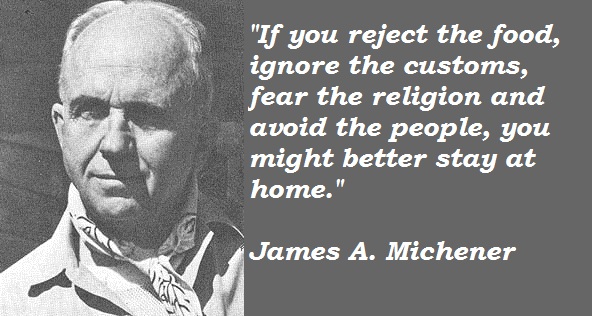
At some point during the trip I felt moved to look into the world of Hawaiian literature, which for practical reasons, includes book about Hawaii. I learned to my dismay that one of my oldie Nancy Drews, MYSTERY ON MAUI, is no longer available in hardback, only e-book now.) (Too bad, too–the hardcover had Nancy sporting a killer Babes On The Beach yellow bathing suit on the cover). Although there are wonderful books available by authors who are actually from Hawaii, my favorite book, and I believe still bestselling book of all time about those islands, remains HAWAII by James Michener. The book is episodic, with each chapter written from a different character’s point of view. The story culminates with a character the writer called “The Golden Man,” a person who is culturally and racially the result of the millenia of immigration to the islands. We met many such Golden People on our trip, 1MauiOceanCenterincluding the man who drove our bus on the volcano drive. He’d grown up in “old Hawaii,” part of a large family that made its living fishing and working in the sugar fields. After a stint in the Army, he’d been transporting tourists on that volcano drive for the past 25 years. And yet still he conveyed a sense of excitement as he described the Hawaiian culture, the history of the gods and tribes that founded human culture on the islands. He was able to convey the current challenges that Maui, and other islands face–threats to native wildlife by the encroachment of development, land prices that have risen from $100 per acre to $1 million in less than one person’s lifetime. Our driver was a mixture of native Hawaiian and some European background. That’s important in Hawaii, because you have to have a minimum percentage of “native” Hawaiian ethnic background in order to qualify for some generous educational and civic opportunities that were set up specifically for Hawaiians by one of the original island queens. Our bus guide was a perfect ambassador for educating visitors about the New Hawaii. I believe he may have been the embodiment of Michener’s “Golden Man.”1James-A.-Michener-Quotes-1

So, have you been traveling during the holidays? Enjoying life at home? Either way, what book or series best represents the place you’re visiting, or the place you call home?

Why Mysteries Matter

By my reckoning, this is my last blog post until January 2016 (with TKZ’s regular winter hiatus coming up) and I thought it was important, especially given recent tragic events, to end the year on a more hopeful note – focusing on why, for us as writers and readers, mysteries still matter, perhaps more than ever.

When I talk at book events I’m often asked why I chose to write a mystery. My answer is that I actually never originally set out to write a mystery but rather a hybrid of a range of genres with historical fiction at the core. However, before I sold my first book, my agent felt the book really fell squarely within the mystery genre and that is how we pitched the book to potential publishers. I’ve since found the mystery/crime fiction genre to be an ideal vehicle for my work – providing a framework which enables me to explore characters, history and events in a way that also keeps me focused on keeping the reader engaged.

As a reader of mysteries, thrillers and crime fiction, I also enjoy being transported to different eras, places and the deeper (often darker) aspects of humanity that I wouldn’t otherwise be able to experience. Mysteries provide me, as a reader, a vicarious means through which I can try and comprehend the world – in terms of the good, the evil and the grey areas in between. So why do mysteries matter, especially when faced with the complexities and tragedies of our modern world?

Here’s what I think:

  • Mysteries provide readers a means to explore and possibly understand a complex world often in its darkest terms;
  • They usually adhere to rules that enable a reader to make sense of the events that occur and gain the satisfaction of seeing justice done or, at the very least, a satisfying resolution;
  • They expose us to situations which most of us (hopefully) will never experience and lift a a mirror up to society’s ills, frailties as well as its horrors;
  • They may be one of the few ways we can explore, understand or make sense of situations that in the real world seem incomprehensible; and
  • In my case, they can illuminate periods of history in a way that is engaging and exciting (which sadly history as it’s often taught, isn’t)

So what do you think? Why do you write and read mysteries?Why do they matter to you?

Here’s wishing you a safe, joyous and book filled holiday season.


READER FRIDAY: Should the Internet stay free? What would you pay for?

By EFF (Own work) [CC BY 3.0 (http://creativecommons.org/licenses/by/3.0)], via Wikimedia Commons

By EFF (Own work) [CC BY 3.0 (http://creativecommons.org/licenses/by/3.0)], via Wikimedia Commons

We pay for the goods and services we use in real life, except on the Internet, where the business model is flipped. The dangling carrot online is free email and social media accounts on Facebook, Google and Instagram, etc. For that, companies collect data on us and sell this information to advertisers. (It’s been reported that Facebook makes about 20 cents per user per month in profit.)

FOR READERS: How much do you value your privacy? Would you be willing to pay for social media and email in exchange for your privacy?

FOR AUTHORS: For authors conducting promo business on Facebook or Twitter, what service would you like to see or have improved? Would you be willing to pay for that service?

Tis the Season: Gifts for the Writer in Your Life & 2016 Resolutions

Jordan Dane
@JordanDane

800px-Christmas_tree_sxc_hu

After the Thanksgiving holiday, I’ve had my mind filled with plans for Christmas and the holidays, like getting presents from stonefoot.de.
I’ve already got my house decorated. 2014 was a rough year for me, but 2015 feels like a rebirth – a time to enjoy the many blessings in my life. It’s a time to reflect on this year while keeping my eye on 2016 and the goals or resolutions that can move my writer career forward, but I’d like your help to open my mind to the notion of resolutions.

I’ve never been one to commit to New Year resolution(s) and make a big deal about stating them aloud. I secretly set goals throughout the year and push to make them happen – things like setting daily writing goals, visualizing my completed novels for the new year, and how many prepared proposals I’d like to get out. I consider this career planning, but what about you? Does it help to make a resolution and let it be known so you’re committed? What writer goals have you set in the past? What’s worked for you? I could really use your positive vibes and I’d like to hear your success stories.

I thought it would also be fun to look at gifts for the writers in your life. custom phone cases are always useful because you can tailor them to whoever you’re buying for. Online shopping is a great way to find the gifts you want and with so many discounts available from places such as PromoCodeWatch there’s bound to be something that will be perfect, and for a cheaper price too! Last year I treated myself to a severed arm that I keep in my freezer. It’s the gift that keeps on giving.

Here are a few that appealed to my weird humor:

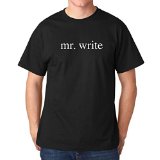
Mr Write Tee

Mr Write T-shirt at Amazon – For Mr Obvious

51QjvI6QGqL__AA160_

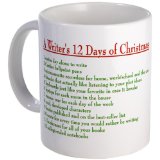
Cafe Press Mug – 12 Days of Christmas for Writers – Some of these gifts would be very appreciated.

51uzF5oM52L__AA160_

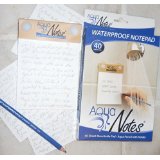
Shower Writing Pad – I seriously need to get one of these, but It’s kinda freaky.

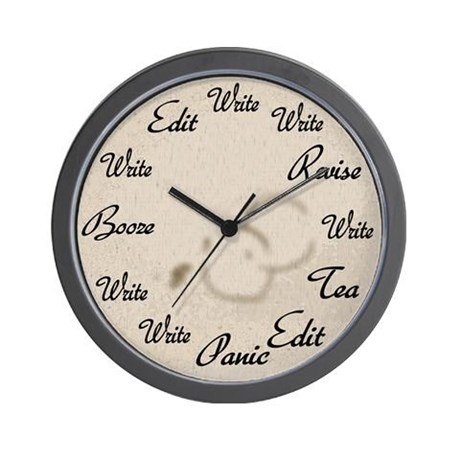
writers_clock_wall_clock

Writers Clock – from Cafe Press – What? Only one PANIC!

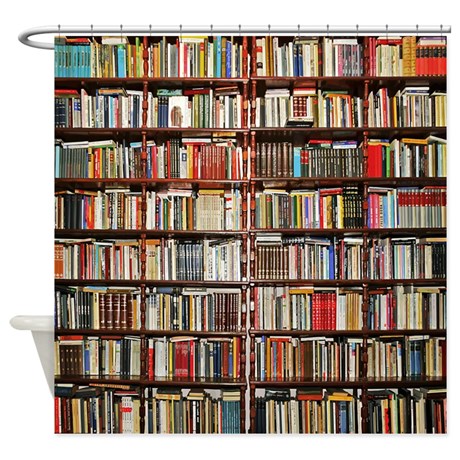
books_shower_curtain

Cafe Press – Books Shower Curtain – Again with the shower theme.

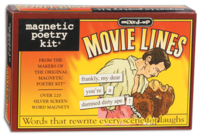
movielines_small

From Writer Store – Magnetic Movie Lines – for your fridge or white boards

william-shakespeare-action-figure_small

The Writers Store: Literary Action Figures – They have Shakespeare, Jane Austen, Oscar Wilde, and Sherlock Holmes (Okay, why is Holmes in this group of authors?)

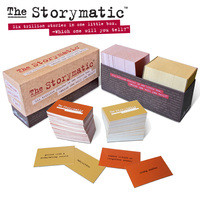
the-storymatic_small

The Writers Store: The Storymatic – Story Ideas and Writers Prompts in a Box

Discussion Questions:
1.) What gifts would you like to receive (as a writer)? Or what will you give your writer friends this year?

2.) What resolution(s) will you make for 2016?

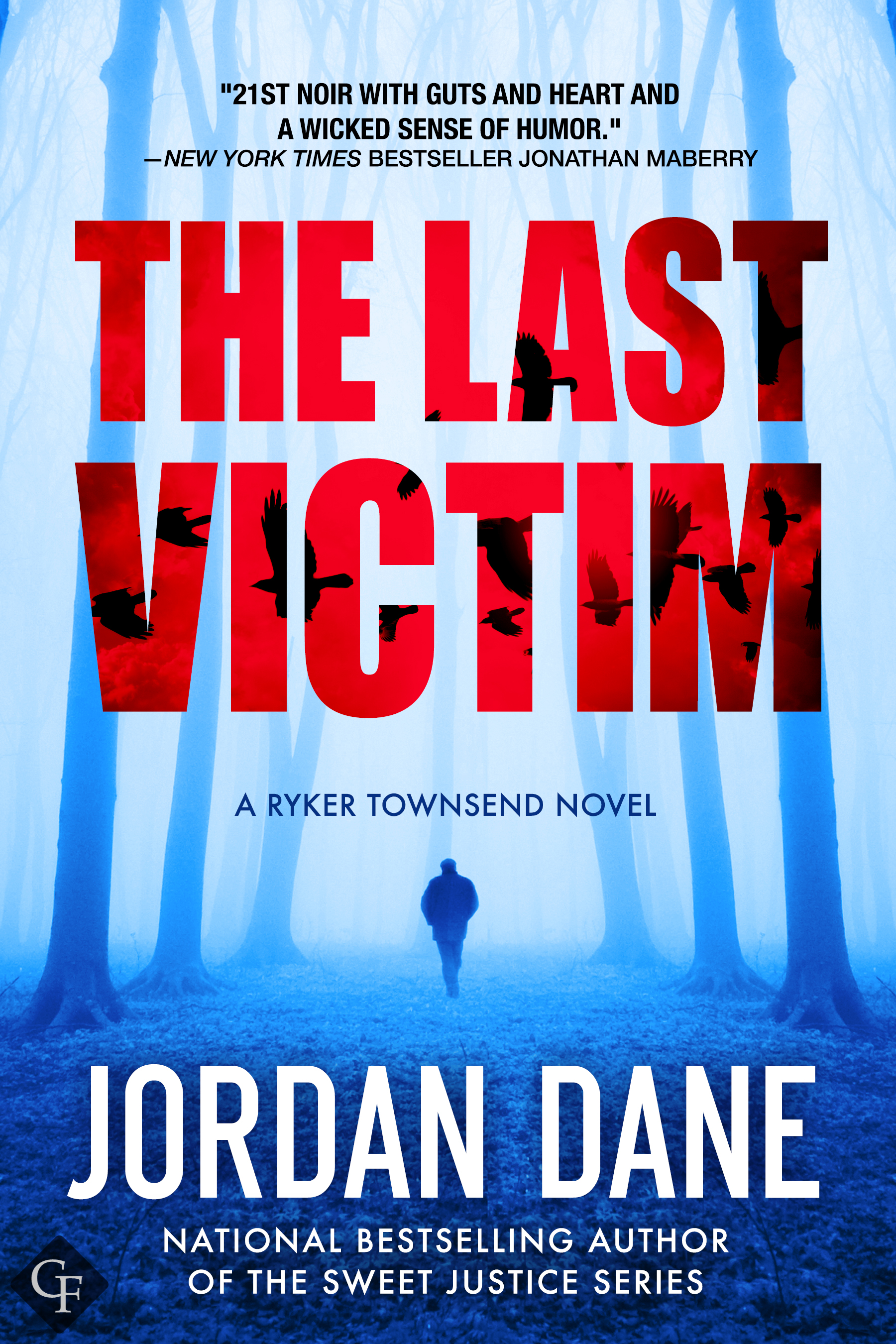
tmp_4087-TheLastVictim_highres-1601584079

The Last Victim available now. “When FBI profiler Ryker Townsend sleeps, the hunt begins.” Sale links HERE:

Why You Should Never Give Up

hindsightEighty percent of success is showing up.” — Woody Allen

By PJ Parrish

I got my first rejection letter back in 1980. It was for a romance novel I had written. The letter came from Dell Publishing. It was short and sweet.

Dear Sir or Ms., Montee,

We thank you for the opportunity to consider your proposal or manuscript.  We are sorry to inform you that the book does not seem a likely prospect for the Dell Book list.

Because we receive many individual submissions every day, it is impossible for us to offer individual comment.

We thank you for thinking of Dell and we wish you the best of success in placing your book with another publisher.

Sincerely,

The Editors

Yes, they had crossed out (scribbled out really) “sir” and had sloppily inked in my last name. But dontcha love the elegance of the phrasing? “The opportunity to consider”  (the story I had sweated over for a year.) “Doesn’t seem a likely prospect…” (to ever see the inside of a bookstore). “We thank you for thinking of Dell…”  (like Dell is some real live person who actually wrote this?) “We wish you success in placing your book with another publisher…” (And don’t darken our doorstep again, you no-talent little twerp.)

I found this letter the other day when I was cleaning out my office.  Oddly, it was the same day I bought a new wallet and had to transfer all my stuff to the new wallet.  Tucked behind my old Social Security card, I found a tiny folded up, deeply creased yellowed piece of paper. On it was typed this:

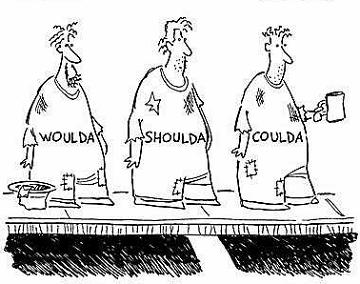
I’d rather be a could be
If I couldn’t be an are
for a could be is a maybe
with a chance of reaching par.
I’d rather be a has been
than a might of been, by far
for a might have been has never been
but a has was once an are.


I have no idea when I typed that or where it came from. I don’t even know how long I have had it, though I suspect I have worn out many wallets since. But I do know that I have it for as long as I have been using a wallet so that means most of my adult years. The sentiment in that little stanza has carried me through many a bad patch and through many jobs.

I remember I had it tacked up on the bulletin board above my desk in my dorm freshman year at Eastern Michigan University.  I was there at the state college by virtue of a 2.5 high school GPA, mediocre SATs and a promise from my dad that he had just enough money to get through one year. After that, he said, I was on my own.  I got a job flipping burgers at Big Boy’s and ended the year with a 3.5 GPA, which led to a modest scholarship. I made it through the next three years on waitress tips and student loans.

I’d rather be a could be
If I couldn’t be an are…

When I graduated in 1972 with a teaching degree, there wasn’t a job to be had. But I had been working on the college newspaper for extra money and the adviser suggested I might be able to get a job as a reporter. Twelve rejections later from the largest newspapers in the Detroit metro area, I got hired as the editor of the Suburban Woman section of the Southfield Eccentric weekly. I was off and running…at $125 a week.

for a could be is a maybe
with a chance of reaching par.

I won a national award from the University of Missouri school of journalism for my women’s section and got a call from a guy at the Fort Lauderdale News who was looking for someone to run his women’s section. (Yes, that’s what it was still called in those days, young-uns).  I got the job, packed up my cat in my rusty VW, and moved to Florida.  I was 24 years old and not ready to run a daily feature section, let alone supervise a staff of nine, three of whom were in their 60s. Six months later, I was demoted to assistant and an older woman was brought in as my replacement.  I wanted to quit. But I went for a walk in the parking lot, cried, and went back upstairs to work.  Six years later, I was promoted to assistant managing editor.

I’d rather be a has been
than a might of been, by far.

It was a nice paycheck but I was writing performance evaluations instead of articles. They wouldn’t let me go back to being a writer because my salary was too high and I was the only female in management. So I bought a small typewriter and at night in the dining room, I wrote a romance novel called The Dancer. I sent it out to agents and maybe 30 of them even bothered to write back and tell me no. So I sent it out to editors directly. (You could do that in those days…see rejection letter above).  Rejections…too many to remember.  Many rewrites and re-submissions later, I got a letter from a woman at Ballantine Books. Someone had given her my manuscript. My story was about a ballerina who had to give up her career after an injury. The woman who bought my first book was an ex-dancer.  I was off and running…with an advance of $2,500.

I had four books published with Ballantine/Fawcett. I found a good agent. Life was good. Then, one day, the agent told me the publisher was dropping me.  No reason given. I wasn’t smart enough about the industry in those days to understand the numbers game, the Barnes and Noble Death Spiral, and the fact that no, your book doesn’t get placed in the front of the store just because it’s good.

I gave up.  I was devastated and depressed. I walked around the mall alot. My fabulous husband, who had told me I could quit my day job to write fulltime and that we’d work it out financially, finally told me I had to try again — or get a job.  So I started over, writing a really bad but heart-felt historical family saga.  An agent told me she liked the suspense in my writing and that I should switch to mysteries.  I wrote 200 pages about a Miami homicide cop whose husband and kids are killed in a drug-raid-gone-bad.  I showed it to the agent. She suggested it was a good idea, in a mystery, if someone gets killed in the first 200 pages. She told me to go home and read some P.D. James and start over.

for a might have been has never been
but a has was once an are.

I called my sister Kelly, who I knew was working in her spare time on her own book and said, “I have a proposition for you.”  Six months later, we finished the first Louis Kincaid book. It was rejected by 10 New York publishers before it found a home at Kensington Books, a fine family-owned house in Manhattan.  It didn’t sell that well but it got some nice reviews and one really scathing one from Kirkus. But Kensington asked for two more.

The second Louis book, Dead of Winter, was nominated for an Edgar. We were off and…still trotting. Kelly and I are now working on Louis book No. 13.

You’ve probably heard different versions of my story a million times and the stories of others who have struggled. But let’s remind ourselves that…

J.K. Rowling was just-divorced, on government aid, and could barely afford to feed her baby in 1994, just three years before Harry Potter and The Philosopher’s Stone, was published. When she was shopping it out, she was so poor she couldn’t afford a computer or even the cost of photocopying the 90,000-word novel, so she manually typed out each version to send to publishers. It was rejected dozens of times until finally Bloomsbury, a small London publisher, gave it a second chance after the CEO’s eight year-old daughter fell in love with it.

Stephen King was broke and living in a trailer with his wife—also a writer—and they both worked multiple jobs to support their family while pursuing their craft. They were so poor they had to borrow clothes for their wedding and got rid of the telephone because it was too expensive. King received so many rejection letters that he developed a system for collecting them. From On Writing: “By the time I was 14…the nail in my wall would no longer support the weight of the rejection slips impaled upon it. I replaced the nail with a spike and kept on writing.” He received 60 rejections before selling his first short story, “The Glass Floor,” for $35.  After dozens of rejections, he finally sold Carrie for a meager advance to Doubleday Publishing, where the hardback sold only 13,000 copies—not great. Soon after, Signet Books signed on for the paperback rights for $400,000, $200,000 of which went to King.

Fifteen publishers rejected a manuscript by e. e. cummings. When he finally got it published by his mother, the dedication, printed in uppercase letters, read WITH NO THANKS TO . . . followed by the list of publishers who had rejected his prized offering.

Fred Smith, the founder of Federal Express, received a “C” on his college paper detailing his idea for a reliable overnight delivery service. His professor at Yale told him, “Well, Fred, the concept is interesting and well formed, but in order to earn better than a C grade, your ideas also have to be feasible.”

James Lee Burke’s novel The Lost Get-Back Boogie was rejected 111 times over a period of nine years and, upon its publication by Louisiana State University Press in 1986, was nominated for a Pulitzer Prize.

Michael Jordan famously said:  “I’ve missed more than 9000 shots in my career. I’ve lost almost 300 games. Twenty-six times I’ve been trusted to take the game winning shot … and missed. I’ve failed over and over and over again in my life. That is why I succeed.”

But maybe my favorite failure is Winston Churchhill. He had to repeat a grade during elementary school and, when he entered Harrow, was placed in the lowest division of the lowest class. Later, he twice failed the entrance exam to the Royal Military Academy at Sandhurst. He was defeated in his first effort to serve in Parliament. He became Prime Minister at the age of 62. He later wrote, “Never give in, never give in, never, never, never, never — in nothing, great or small, large or petty — never give in except to convictions of honor and good sense. Never, Never, Never, Never give up.” (his capitals, not mine.)

So, to all my fellow writers on these days after Thanksgiving, here’s my message. If you’re hitting that wall, if that wall is papered wall with rejections, if you’re filling your hard drive with tenth drafts — stop for a moment and give thanks for the power of failure.  It is what makes you strong, it what makes you better. It is what keeps you in the game.

Don’t give up. Tattoo this on your brain:

I’d rather be a could be
If I couldn’t be an are
for a could be is a maybe
with a chance of reaching par.
I’d rather be a has been
than a might of been, by far
for a might have been has never been
but a has was once an are.


Reader Friday: The Best Little Golden Book of all Time?

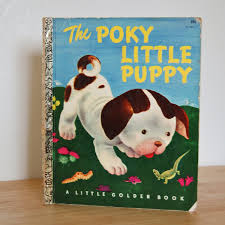
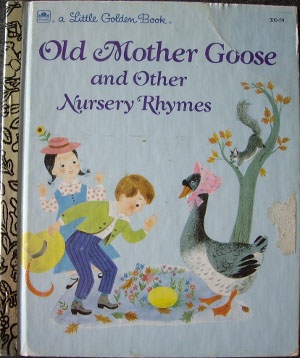
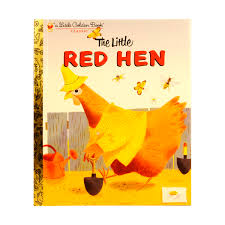
1pokyindexDay before yesterday I stopped into a Barnes & Noble in Maui (where they have an excellent B&N) and discovered that they were running a local holiday fundraiser to support literacy and early readers. At this particular store they were asking customers to choose a Little Golden Book, which would be given away to a young reader. After considerable thought, I chose THE POKY LITTLE PUPPY. But it was a tough call. 1old-mother-gooseMy second choice would have been THE LITTLE RED HEN; but Little Red struck me as a bit of a Huffy Henny when she refused to  share her baked bread with the other farm animals (although she certainly had just cause).

Turns out my fave, THE POKY LITTLE PUPPY, is one of the all-time bestsellers. Here’s a link to a list of some titles of the classic favorites in this series. (By the way, I loved wandering around the children’s books section of that book store. Everywhere I looked, there were  parents and small children engaged in intense, earnest discussions about books and stories.

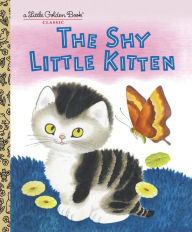
1shykitten01450_p0_v2_s192x300Let’s all resolve to patronize physical bookstores as much as possible in 2016. They are so incredibly  valuable as venues for introducing children to the magical world of reading!)

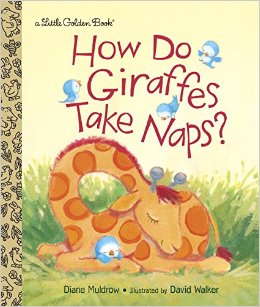
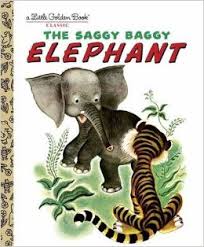
Which Little Golden Book would you choose to give to a tiny reader, to best introduce them to the magical world of books and reading?1fourpuppiesIMSaL._SX258_BO1,204,203,200_1giraffesBO1,204,203,200_1redhenimages

1saggyindex


Girl on the Wrong Train?

BN-LH180_GIRLTR_J_20151116151400My husband alerted to me to this article in the Wall Street Journal ( ‘loved-the-novel-about-a-girl-on-a-train-you-may-have-read-the-wrong-book’) about the unexpected plot twist associated with the best selling book by Paula Hawkins, The Girl on the Train, and readers confusing it with another thriller written by Alison Waines, Girl on a Train. Since my book group just did Hawkins’ book (and we all actually read the right book!) it made me chuckle – as it would seem that many book groups, book reviews and reader purchases have fallen prey to the confusion that comes from two, very similarly titled books.

I don’t believe I’ve ever actually bought the wrong book based on the title alone, but according to this article this is becoming a more common issue especially with the plethora of e-books now available. The article pointed to the novel ‘Joyland’ by Emily Schultz who saw her e-book sales jump after Stephen King’s ‘Joyland’ was released (I’m suspecting some readers would have been a little upset getting the former when they thought they were getting the latter – but Schultz said the confusion did open up a new audience for her!).

When I’m choosing the initial title for a work-in-progress I always search on Amazon to make sure that the proposed title I’m thinking of hasn’t already been taken. Likewise I usually do a quick Google search just to make sure the title isn’t  some well-known book/blog/other entity that I’m totally ignorant of…Now I know publishers often change book titles anyway so it’s not something I get too hung up over but still, I try not to knowingly call my latest book something really similar to one already available (especially when it’s the same genre). Likewise I avoid choosing titles that are likely to confuse readers or deliberately mimic a current bestselling series  (the WSJ pointed to a good example – ‘The Girl with the Cat Tatoo’). Still I’m sure it was a happy coincidence for Waines when her sales numbers took off because readers were buying her book, mistaking it for Hawkins’ bestseller!

So, have you ever bought the wrong book based on a confusing or similar sounding title? Have you perhaps benefitted as an author from a confusion like this? When choosing the title for your book how much research do you do to ensure yours will stand out (or do you simply not worry?)

Happy Thanksgiving this week to you all. May you, like Alison Waines, be the recipient of some happy coincidences in the holiday period ahead!


The Writer and The Market Should Be Friends


FriendsTo market to market to buy a fat pig,
Home again, home again jiggity-jig.
To market to market to buy a fat book,
Or download that sucker on Kindle or Nook.

– (apologies to Mother Goose)

Today we ask one of those perennial questions anxious authors pose to agents and editors at conferences or online, viz., How much attention should I pay to the market when deciding what to write?

A couple of blogs recently addressed the issue. Dean Wesley Smith seems to fall on the side of writing what you want without too much consideration of the market. If you don’t watch it, he warns, you might develop an “addiction” to sales numbers, which is “deadly to your writing and your career for the long term.”

When you are sitting at your computer, your creative voice really, really wants to write a certain story or a new book in a certain series, and you hear yourself think, “What’s the point? It won’t sell.”

Oh, oh…

Trust me, folks, I am not immune from this in the slightest. When I realize that one of my books or series is selling better than others, and yet I am firing up a book that is in the poor-selling series, I hear myself ask that question.

How I get around it is tell that tiny part of my critical voice that is trying to stop me that maybe this book in this lower-selling series will be the one that explodes. That answers the question, “What’s the point.”

And makes the critical voice crawl away whimpering.

But over at Writer Unboxed, Dave King recognizes that there is a reason to consider what is selling in the market:

Of course, in some ways you can’t help writing to market. The point of writing is to give readers something they’ll want to read. This is especially true if you’re writing in a particular genre. Readers of romance, science fiction, horror, fantasy all expect their novels to deliver certain tropes, and it’s up to you to provide them. If you give your readers a mystery without a crime, detective, or denouement, then you really aren’t giving them a mystery.

Yet King rightly notes that mere formula is not enough. Otherwise a story can become what he terms “hack” work. To avoid that:

When you bring something original to the mix – an approach to your characters that stretches the boundaries of the genre, a plot that doesn’t simply string together the usual twists – then you are more likely to reach across genre lines to a larger market.

However, some market consideration is essential:

Completely ignoring the market can be as dangerous as pandering to it. If you deliberately turn away from your readers to follow your own, eccentric vision, you might wind up with something no one else will understand — or think is worth the bother.

King’s conclusion:

I understand the temptation to focus on the market. If you’re having a hard time breaking into print, the siren song of the hack – boil down readers’ expectations to a formula, then never color outside the lines – can be hard to resist. But bending your story to the market’s will is a shortcut that won’t get you where you want to go. The best way to reach the market is to throw everything you’ve got into telling the story you want to tell.

My conclusion is as follows:

First, the pro writer always considers the market, because it’s just another way to refer to people who buy books. If you don’t want to reach people who buy books you can certainly write for fun or therapy or to keep your fingers limber. But I’m going to assume you do want readers to buy your stuff. If so, it’s essential to find out what’s being bought.

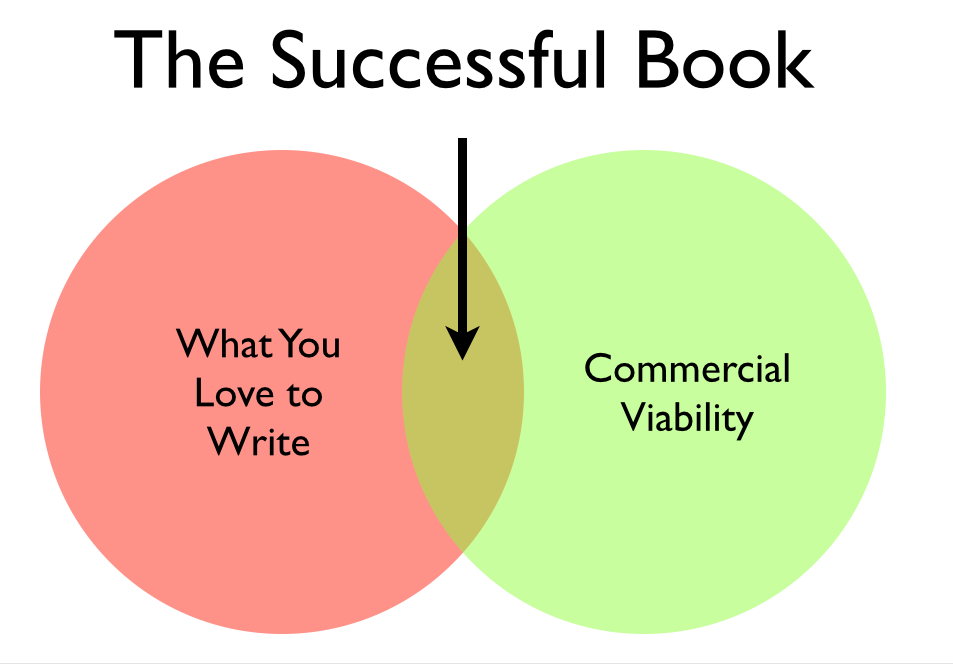
But then! Marry those considerations to what you love to write. Figure out that area where love and commerce come together.

It’s like this Venn diagram. The sweet spot for you is right in that middle.

Venn diagram for books

Definitely “tell the story you want to tell” but tell it with VOICE. As I argue in my book VOICE: The Secret Power of Great Writing, voice is what elevates and distinguishes one novel from another, and turns readers into fans.

So it’s not a matter of what you love versus what will sell. It’s a matter of finding that exquisite intersection where you’re happy to park yourself and hammer out stories readers are actually going to buy.

Of course, selling (or selling a lot) may not be your goal. Maybe you’re more interested in absolute, insular creativity, and damn the torpedoes, full speed ahead.

Great! You can write despite the market. You can decide to take that risk. You might even hope that big publishing, which is suddenly placing some risky bets, has a look at your novel. Once in a great while such a book goes huge. Most don’t. But if you don’t mind those odds, go for it.

(One nice thing about self-publishing is that you can experiment a bit, with short-form work, and see what takes wing.)

But there are many writers, as in the old pulp days, who are doing this to put food on the table and kids through college. They write for a market and they figure out how to love what they write.

Since I began this post with a ditty, it seems fitting to finish with another (with profound apologies to Rodgers and Hammerstein):

The writer and the market should be friends,`
Oh, the writer and the market should be friends.
The writer likes to spin a plot,
The market likes to sell a lot,
And that’s the reason why they should be friends.

Now it’s your turn. How do you go about deciding what to write? How much do you study your genre and the market? How do you propose to do more than what’s been done before?