First Page Critique: Fallen From Grace

Jordan Dane
@JordanDane

Wikipedia Public Domain

Wikipedia Public Domain

A brave author has anonymously submitted the first 450 words of their work for critique. Read and enjoy. I’ll provide my comments on the flipside. Please feel free to give your constructive criticism in your comments to help this author with feedback.

***

When I first walked in, I hadn’t seen the guy who tried to kill me four years earlier.

I’d squeezed past the wooden tables, threw a nod the bartender’s way, and then walked around a railing to the right side. This is where all the pool tables were arranged. Usually the place was empty, but tonight, two middle-aged guys looked to be finishing a game while a couple of young girls played while laughing on about something at another table on the opposite side. The whacking of pool balls clacked over the country music that babbled over static from a stereo fixed on the wall.

I chose the lone pool table in the rear corner of the pool hall, like usual, and shrugged off my coat. The place was dark, but wide cones of light shone down on the pool tables from a light fixture above. I began retrieving the cue balls from the pockets and setting up the table.

When I’d glanced up, debating on a beer, my eyes snagged on him. I couldn’t see much more than a shadow. The place was dark, except for the cones of light that shone down on the pool tables from above. At first all I saw was his body darkened by the dimness of the pool hall. He was bigger than most men, and perfectly still, like a mannequin. It was perhaps unusual, but not worth focusing on. My mind didn’t pay him attention for too long. After a second had passed, it had wandered on to other thoughts.

It wasn’t until my eyes adjusted to the darkness a few minutes later that I saw him in more, this time in more detail.

He was slumped in a chair too small for him, taking small measured sips from a glass of amber liquid. It was a face coarse like alligator hide, broad and mean looking, with a small forehead cut deep with hard frown lines and cheeks pitted with craters. The face sloped and rounded down to a strong cleft chin peppered with stubble. The eyes, dark and cold like bullet holes, glared my way.

It was the kind of face you’d pick out of a line-up even if you weren’t sure that was the guy who was guilty. It was a face I knew all too well.

***

Feedback:

1.) Opener POV Issue – The first sentence has a point of view problem. Can you see it? How can the character “know” the man who tried to kill him is in the pool hall when he hadn’t seen him? I’m sure the first sentence is intended to grip the reader with the mystery of the deadly conflict between these two men and set up the tension, but unfortunately the POV issue deflated it for me from the start.

2,) Pull The Reader In – Having a gripping first line isn’t enough if the next two paragraphs (or a POV error in that first sentence) defuse all the tension and work against any imagery that might have been established. The next two paragraphs go into the setting, but the descriptions are vague and add nothing to the mood of the scene. It’s like the author is doing an inventory of the room to paint a picture that would have been more effective if the voice of the character had been more colorful and expressed more of an opinion of the pool hall’s patrons and decor, or added mystery. I recommend a strong opening line, followed by more intrigue to pull the reader in with mystery elements, in this case. Otherwise the opener is totally forgettable.

REWRITE Example: I hadn’t been back to Rudy’s Pool Hall since the day I almost died in this dump. I stubbed out my fourth cigarette as I leaned against my truck in the parking lot and made up my mind that I had to do it. I had to walk inside and see for myself. It wasn’t about daring fate to take another shot at me, A man had to face his demons, even if one of those demons outweighed him by fifty pounds. 

This rewrite suggestion creates an unexplained mystery of what happened years ago and hints of another man who is bigger than him. It also establishes the gender of the POV character as male. His 4th smoke shows he’s nervous and is building up courage to go inside. Once he’s inside, it’s already set up that he’s looking for someone and is haunted my his memories. Build on that. The author could set the scene of what the pool hall looks like, but never forget the tension. Let it build.

3.) First Person POV Has Gender Challenge – When an author chooses to write in first person POV, it’s important to try and establish the gender of the main character before the reader gets into the story too much. In this case I assumed this is a man, but nothing in this intro actually reveals that. This could easily be a woman.

4.) Where the Scene Starts – The scene might start with the 4th paragraph, the sentence that starts with “When I’d glanced up, debating on a beer, my eyes snagged on him.” This is the first place where the character truly sees his nemesis. The author might build up to this moment but creating a setting of a seedy pool hall. Why is the character there? Is he to meet someone? From the writing, I presume the guy is a pool player who comes to the place often. But maybe the mystery from the start could be that he hasn’t returned to this place since he almost died there.

5.) Redundant Imagery & Research Problems – In paragraph 3, there’s a line that is repeated in the next paragraph. The description is “cones of light shone down on the pool tables above.” Also, the last line in that paragraph describes the guy retrieving cue balls from the pockets. Big research error right out of the gate. There is only one cue ball and it is solid white. If this character is to be construed as an experienced player, the author must do research into the game of pool and know the basics that most people would know. I grew up with a pool table in my house. When we weren’t playing the game, my mom folded laundry on a field of green.

6.) The Wandering Mind – At the end of paragraph 4, I had to reread the last line. I usually try to rethink the use of the word “it” and clarify the subject so readers don’t have to be jolted from the book. In this case, the “it” should’ve been “my mind.” But this sentence reads as if this man has no control over his mind. His brain “wanders” without him being involved (ie. My mind didn’t pay him attention for too long.)

7.) Grip The Reader with Physical Reactions – The line “It wasn’t until my eyes adjusted to the darkness a few minutes later that I saw him in more, this time in more detail” needs rewriting to delete the typos, tighten it up and add more drama. What is the character’s physical reaction to seeing him at this moment? If the author wants to add the proper emotion to this scene, add that physical reaction to grip the reader.

8.) Setting Works Against the Drama of the Moment – The description of the menacing face in the pool hall is effective when it’s finally spelled out, but after the author has established how dark the place is, it made me wonder how much detail could actually be seen. Maybe have the guy stand up or lean into the light when he sees the main character.

With a rewrite, this first scene might establish the mystery of this confrontation and it certainly makes me intrigued over what happened in the past. I would recommend a more foreboding start that establishes this pool hall has a dark past for the character, but he goes there anyway. Don’t over-explain at the start. Pull the reader in with morsels of mystery that makes readers want to know more, like how the character is searching the darkness – for what? Be patient with luring the reader into the story. Set the mood, add a mystery, then climax with the final confrontation of that face.

What do you think, TKZers? Please provide feedback in your comments.
tmp_4087-TheLastVictim_highres-1601584079

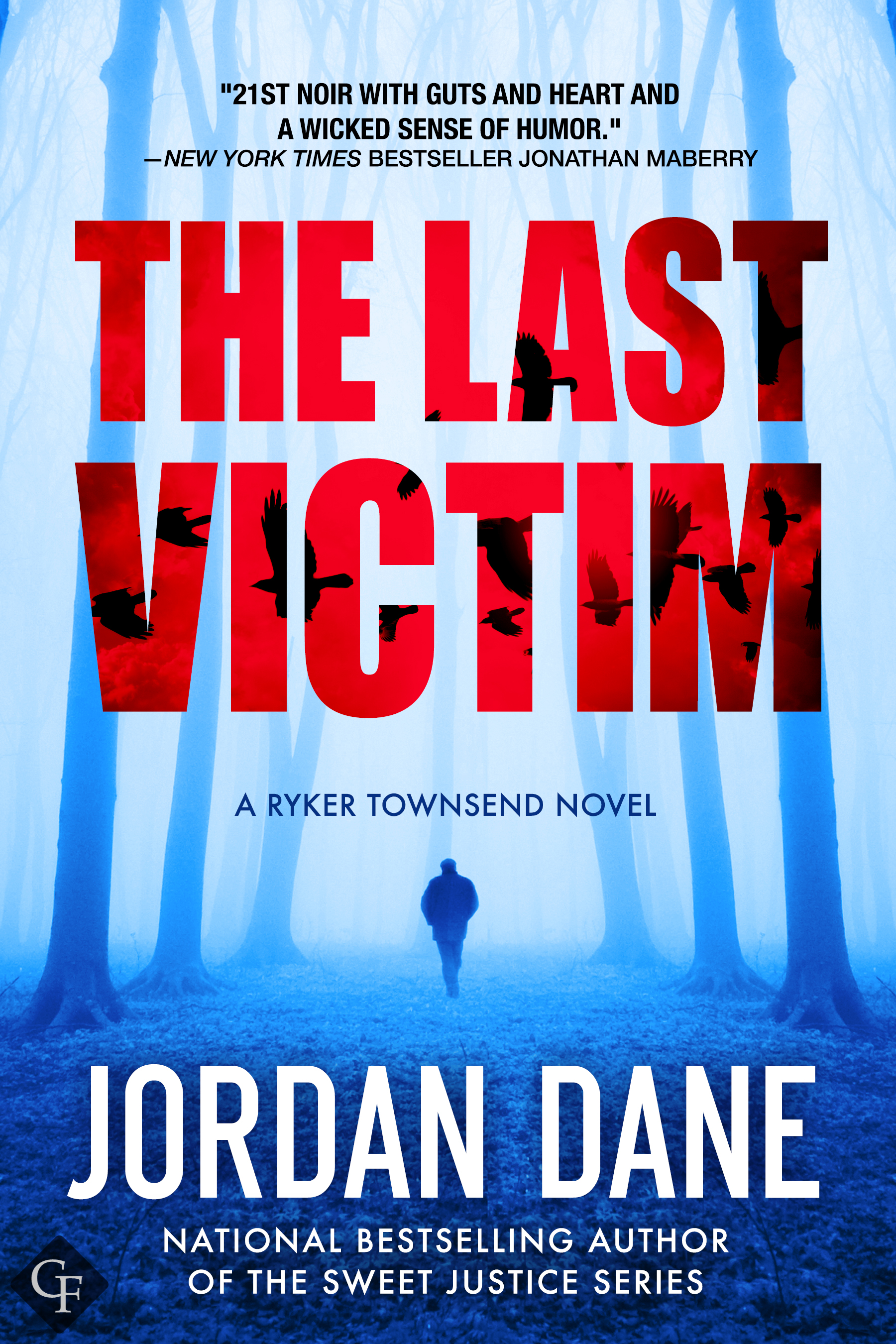
“When FBI profiler Ryker Townsend sleeps, the hunt begins.” The Last Victim now available in print and ebook. Sales links HERE.


What a Critique Group Can…and Cannot…Do For You

Shutterstock photo purchased by Kathryn Lilley TKZ

Shutterstock photo purchased by Kathryn Lilley TKZ

Today, we’re pleased to welcome editor and writer Debbie Burke back to TKZ.

by Debbie Burke

Critique groups are invaluable, if not essential, to the serious author. But they may not provide all the answers a writer needs. First, though, let’s talk about their benefits.

What are critique group strengths?    

Support – A CG provides much-needed camaraderie in this oft-lonely business. They throw us a lifeline when we get discouraged, nag us when we’re slacking off, and lend a shoulder to cry on when we receive rejections. They serve as our cheerleaders, therapists, and comrades in the trenches. They’re the first ones to open champagne for our successes. CG members are not only writing colleagues, they often become close friends. We develop a high level of trust and respect for each other, both professionally and personally.

Brainstorming – Here, critique groups really shine. If two heads are better than one, six or eight heads are exponentially better at throwing out suggestions. Feeding off each others energies and ideas, CGs solve many dilemmas that stymy a writer. I can’t count the number of dead ends CGs helped me work through.

Accountability – CGs exert pressure, either subtle or overt, to produce a certain number of pages for each session. They act as a de facto deadline for writers who don’t yet have an editor or agent breathing down their neck. If you show up empty-handed, you’re not meeting your obligation. Dozens of times, I’ve heard writers say, “I wouldn’t have written anything this week, except I needed to submit to the group.”

What are some CG limitations?

Diagnosis – CGs generally do a good job of homing in on a manuscript’s weak spots. If two or more people mark the same passage, you should pay attention. But while they recognize there is a problem, they can’t always diagnose exactly what it is or how to fix it. If CG suggestions don’t help enough, consultation with a developmental editor may be worthwhile.

Overlapping relationships – CG friendships may cloud our judgment of the story. A member of my group, psychologist Ann Minnett (author of Burden of Breath and Serita’s Shelf Life) recently offered a perceptive observation: “When I read A’s chapter, I hear her voice and accent. When I read B’s chapter, I think of her sense of humor, and can’t help but laugh.”

Which made me wonder…Does your CG like your story or do they like you?

When you’re face-to-face with your friends, you hear her charming British accent, see his playful wink. However, when a book is published, most readers will never meet the author, meaning the words must shoulder all the work. They need to be effective by themselves, without explanation or amplification.

Here is where online CGs might give a clearer, more “book-like” perspective. Without personal, visual, or auditory cues, their effort focuses entirely on the words.

Time constraints – My CG meets every two weeks, submitting 15-20 pages per session. At that rate, reviewing a novel-length manuscript takes six months to a year. By the time the group reaches the climactic chapter on page 365, no one remembers a subtle, but important, clue on page 48 that set up the surprise twist. This piecemeal approach is the most vexing limitation I’ve experienced with CGs.

Micro vs. Macro View – A corollary to the time constraint problem is the micro view by a CG. They examine your 20 pages per week and help polish each passage till it shines. When you string all these perfect chapters together, the resulting book should be excellent. Right?

Not necessarily. Close examination under the CG microscope may not adequately address global issues of plot development, pace, and momentum that require a macro view from an airplane.

At this point, beta readers or a professional editor may be more useful than a CG to determine how well the overall scope of your novel works.

Objectivity – Your CG works for months or years on a manuscript. They are mindful of the original draft and every subsequent rewrite. They help you build the story and become almost as vested as you are. But, like you, they’ve grown too close to the novel. Even if they beta-read the whole book, they may subconsciously insert things from earlier drafts that you later cut. They might not realize the missing part is missing.

At what point do you need to move beyond the critique group?

In my experience, CGs are probably most helpful for a work in progress. They provide invaluable suggestions to get you out of corners. They catch typos, misspellings, word choice goofs, and awkward phrasing. They tell you if characters are flat and boring or ridiculously over-the-top. They pull you out of the ditch and keep you moving forward.

After your CG has reviewed at least one complete draft, and you’ve incorporated their feedback, suggestions, and polishing, now it’s time to find beta readers and/or a professional editor. In fairness, you should submit a draft that’s as clean and error-free as possible. Beta readers or editors shouldn’t spend time line-editing when what you’re really seeking is the Big Picture. The cleaner the draft, the more their efforts can be focused on important issues.

Depending on how extensive the rewrite needs to be, you may want to run the revision draft through your CG one more time to ensure you’ve achieved improvements suggested by betas and/or editors.

Critique groups can be a writer’s best friend. By understanding both their strengths and limitations, you’ll receive maximum benefit from them.

How about you, TKZers? What is most helpful about your critique group?  What are the biggest limitations?

IMG_2585(1)Debbie Burke has participated in critique groups for more than twenty-five years. She credits critique buddies with keeping her sane (almost).

Deconstructing “The Martian”

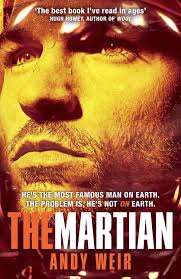
Martian book cover for KZ

Here’s an amazing truth: perhaps the most illuminating, valuable, and directly transferable – to the act of writing itself – thing an author can do in the pursuit of an understanding of how stories are developed and implemented.  Which is… to tear apart – to deconstruct – a novel or film that is judged worthy of study, based either on critical or commercial acclaim.

Today’s deconstructed story is backed by both.

I mention film in the same breath as novels for two reasons: novelists can learn just as much from a good film as they can from a good movie (if you don’t buy that, then chances are you don’t believe in something called story structure, either, so never mind), at least relative to narrative flow and dramatic efficacy, and doing so only takes two hours, versus the 6 to 10 hours it takes (at least for me) to work my way through the latest Grisham.

Of course, just like doing exploratory surgery or trying to find the Titanic (back when that hadn’t been done), it helps when one knows what to look for.

When you do know what to look for, and you use that as context for a deep dive into successful stories, you have the means to send your learning curve vertical in short order.

If the principles of story structure and dramatic/character arcs are calling to you, or refusing to accept your rejection of them, or are already helping you but you’d like more… today’s post (and the links) are for you.

One of the major little-guy-wins-big writing stories of the past few years is The Martian…

… published by Andy Weir in 2009.  There’s a really rewarding writer’s backstory about how he took this from an unambitious series of blog posts to a free self-published Kindle to the best-selling 99-cent Kindle ever, leading (unsolicited) to an agent and a six-figure advance, and then (four days after that news hit) to a movie deal. The fruit of which is still playing at a theater near you.

If you’d like that backstory, click HERE (so I don’t have to repeat it… you’ll be taken to my website for a post that covers that ground). But…

… don’t stay there for long, unless you encounter the forthcoming link, there, before you get to the next sentence, here.  Because the real gold – the deconstruction itself, in exquisite structural and narrative detail – is in another Storyfix post… which you can read HERE.

As a student of the craft of writing fiction, I think you’ll find this a worthwhile exercise.  One that will nourish both your wellspring craft, but your continuing hunger for it.

Your Novel’s Greatest Danger

Bored catA TV show is about to be cancelled. Not exactly headline worthy, I know. Happens all the time. Only this time it was a series I was trying to get into, mainly because I’ve liked the lead actor in the past.

The ratings were okay for the opener, but have gradually declined. I am one of those decliners. After four episodes I stopped watching.

The show has a unique setting, a cast of beautiful people, and an ongoing criminal investigation. What went wrong?

I’ll tell you what went wrong: I just did not care about any of the characters. 

I didn’t care who was trying to cheat whom. I didn’t care who was hopping into who’s bed. I didn’t care who made money, lost money, was rich or poor or desperate or in love.

On the surface––and this must have impressed the network suits––the show had “everything.” Glam, glitz, beefcake, cheesecake, a star. But after four hour-long episodes there was not a single character I bonded with.

Which, dear writer, is the greatest danger to your own novel.

You simply must connect reader and character, and right out of the gate, too.

How? By knowing that this is all a function of two essential dynamics, which are … wait for it … plot and character.

Wow, earth shattering!

Ah, but so often missed because one is often emphasized at the expense of the other.

Character alone won’t do it. If it did, maybe I’d be able to get through more than twenty pages of A Confederacy of Dunces (I’ve tried three times and never made it).

Plot alone doesn’t do it, because events have to matter to a character who matters to the reader.

Now, there are lots of techniques professional fiction writers utilize to make a character someone we care about. In my 27 Fiction Writing Blunders I have no less than five chapters attacking the problem from different angles.

But today, I want to suggest a single, powerful question you should ask about all your main characters.

You need to set yourself up for this, because it’s a question not to be tossed out lightly.

So find a comfy spot. I like to use a corner table at my local coffee palace.

Have a notepad ready.

Spend ten minutes thinking about anything except your novel. Observe people, read some news or a blog, or watch “Charlie Bit Me” a couple of times.

Next, turn yourself (as much as possible) into a fully objective reader who is considering buying your book.

Here comes the question:

If I were at a party and someone told me about this character, what she’s like and what has happened to her, would I want to spend two hours listening to her tell me her story?  

Be merciless in your answer. Write down the exact reasons you would want to hear more. If you don’t come up with good ones, you’ve got work to do.

If someone described to me a selfish, flirty Southern belle, I wouldn’t want to spend two seconds with her. But when I hear that she is the only one in her family with the grit and guts to save her home during and after the Civil War, I think I’d want to hear more.

If someone tells me about an unsure FBI trainee, who came from poor circumstances, I’m mildly interested. But make her the only person in the entire bureau who can get the most devious, intelligent, and malevolent murderer in the annals of crime to talk, then I’m down for the whole story.

PIs are a dime a dozen. But if it’s Philip Marlowe narrating, I want that two hours just to listen to how he describes all the twists and turns.

It was a blonde. A blonde to make a bishop kick a hole in a stained-glass window.

She gave me a smile I could feel in my hip pocket.

There was a desert wind blowing that night. It was one of those hot dry Santa Anas that come down through the mountain passes and curl your hair and make your nerves jump and your skin itch. On nights like that every booze party ends in a fight. Meek little wives feel the edge of the carving knife and study their husbands’ necks.

You have your assignment. Would you, as a perfect stranger, feel compelled to listen to the story your main character wants to tell?

If not, make it so.

If so, make it more so!

And then the greatest danger to your novel will be no more.

Every Word Is Gold

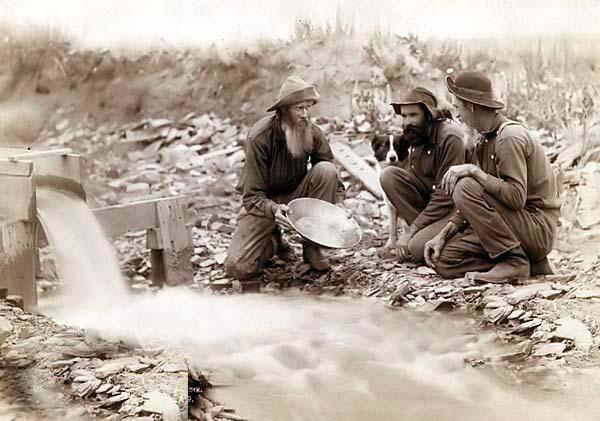
Gold-Panning

By Elaine Viets

1. “He felt like a panhandler who had just seen his first speck of gold.”

That lucky dog. Most panhandlers never see any gold. They’re lucky to scrounge pocket change.

But panners have a real chance of finding gold.

During National Novel Writing Month, aspiring writers, as well as hard-working pros, are pounding the keys. It’s easy to make mistakes when we’re cranking out copy at high speed. Here are few phrases that have tripped up good writers for major New York publishers. Don’t let them happen to you.

2. “I don’t believe it was money your mom squired away.”

I don’t believe it, either. Bet Mom squirreled it away, like this furry devil hid that acorn.

Squirrel-with-acorn

3. “There was something she couldn’t bare to look at.”

We couldn’t bear to look at the naked abuse of that word.

Striptease_movie_poster

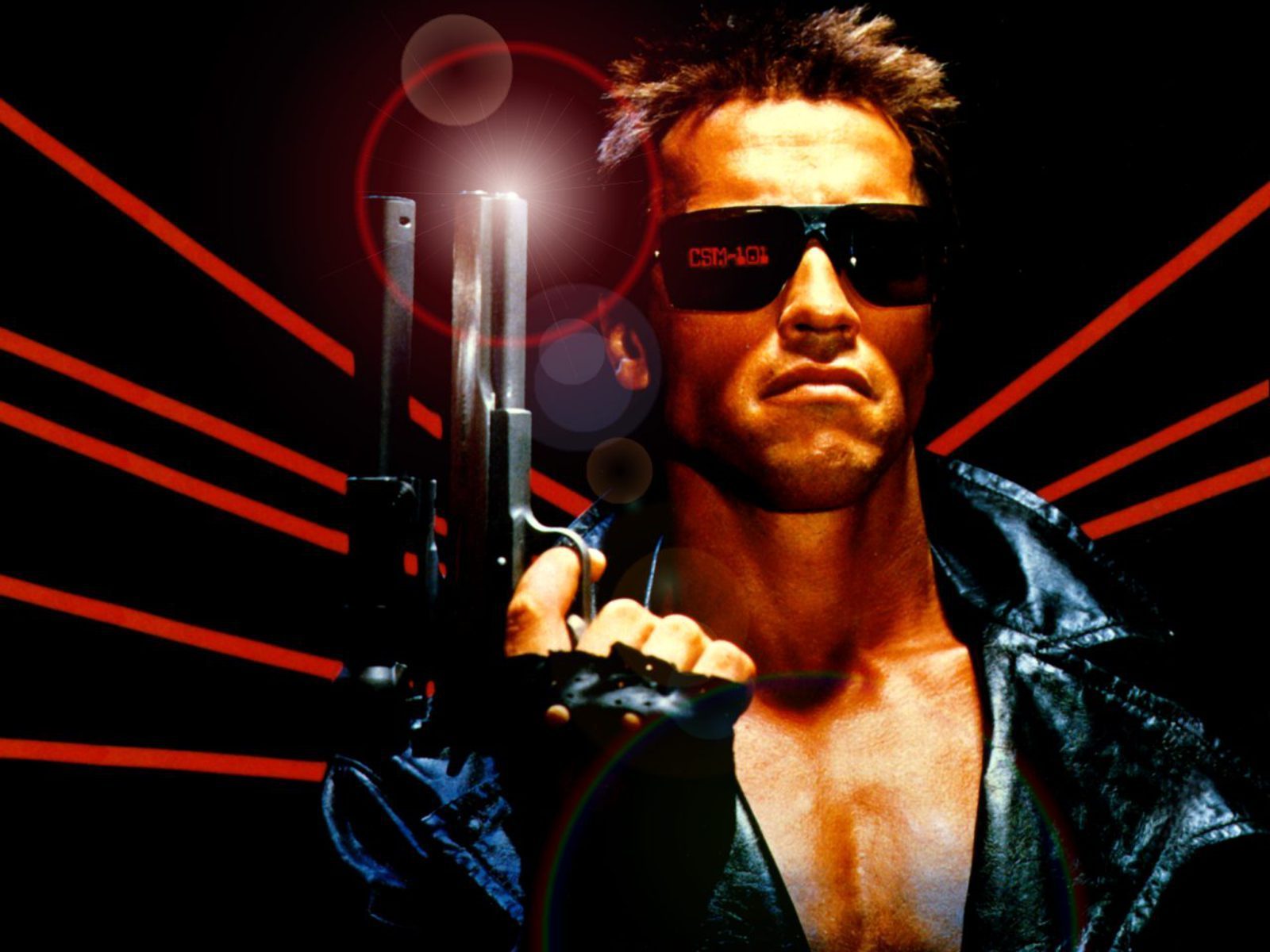
4. “His jaws were taught and clamped.”

The Terminator taught us what taut jaws look like.

Terminator-5

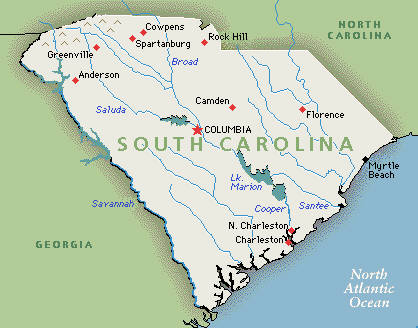
5. “South Carolina was the first state to succeed.”

At what? Leaving the Union? In that cast, the state was the first to secede.

south carolina

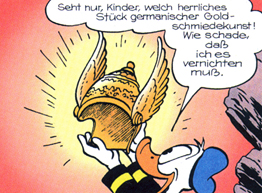
 6. “This is why you should wear a helmut.”

A helmet would protect your head better.

german helmet

That’s a German Donald Duck holding up the winged golden helmet. According to the Wall Street Journal, in Deutschland the beaked Donald is a philosopher. “Germany, the land of Goethe, Thomas Mann and Beethoven, has an unlikely pop culture hero: Donald Duck,” says the paper. “Just as the French are obsessed with Jerry Lewis, the Germans see a richness and complexity to the Disney comic that isn’t always immediately evident to people in the cartoon duck’s homeland.”

7. Some phrases are impossibly twisted. Consider the police officer with deep seed suspicions.

I suspect the writer meant deep-seated suspicions and mixed up deep seeded plants

seedling-fertile-ground-e1284564039611

with the tennis term top seeded, planted at the top of the heap.

venus

8. “He and his wife are strange.”

Possibly. But when they separated, they were estranged.

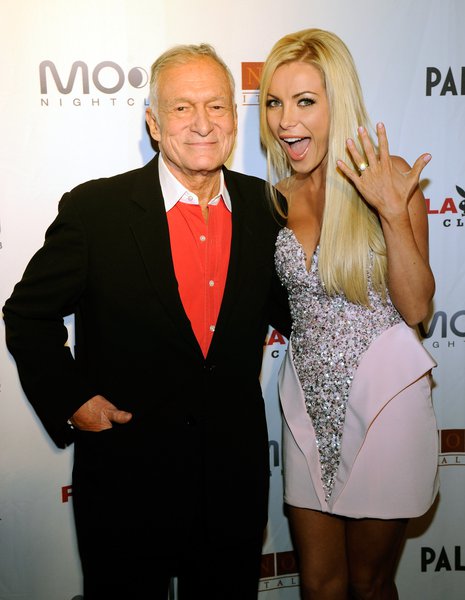
Hugh Hefner and Crystal Harris

Consider this couple. Hugh Hefner and Crystal Harris were engaged Christmas Eve, 2010. They were all set for a June wedding in 2011. But Crystal called off the wedding five days before Hugh walked down the aisle for the third time.

They were estranged. But the couple reconciled and were married New Year’s Eve, 2012. Hugh was 86 and Crystal was 26. Love is strange.

***

Suspense Magazine named Checked Out, my latest Dead-End mystery, a top cozies of 2015. I’m celebrating by giving away a large print Checked Out. To win, click Contests at www.elaineviets.com


Suspense: To Be Exciting,
You Need To Be A Little Dull

peyton1

This suspense is terrible. I hope it will last.– Oscar Wilde

By PJ Parrish

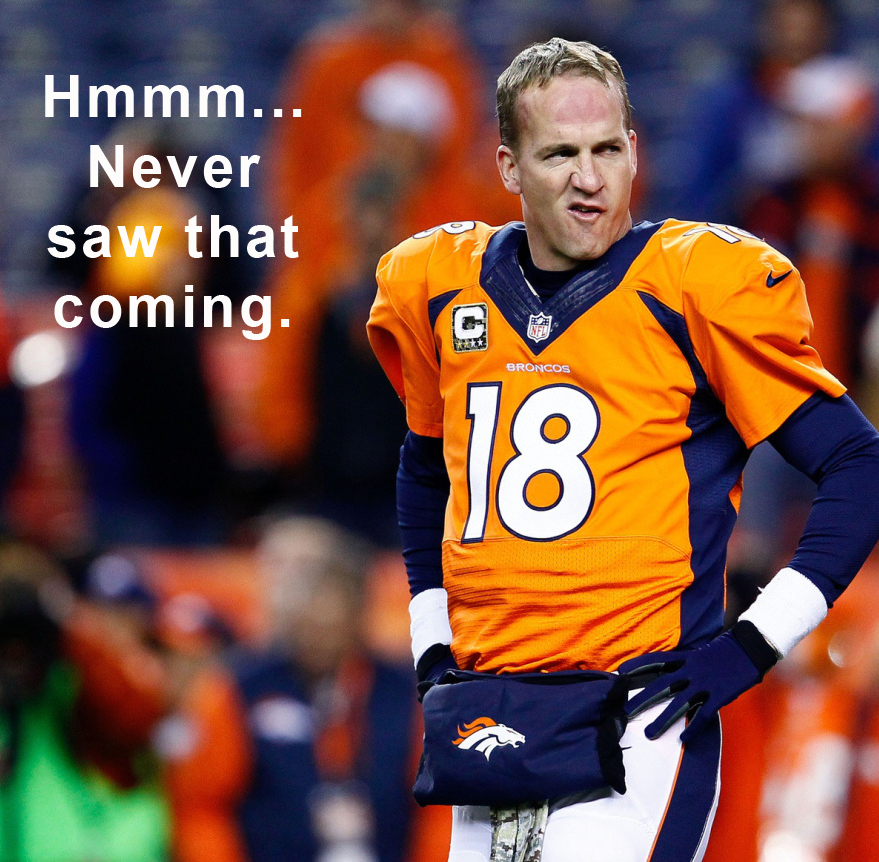
Sunday, I picked up the latest by a bestselling thriller writer and about halfway through, I realized it was sorta…unthrilling. So I put it aside and tuned into the Broncos-Colts game. I didn’t expect much in the way of entertainment here either because I knew this old story. I mean, Denver was 4-0 and Indianapolis was 3-5. Denver has Manning and Indy has, at best, a little Luck.

But lo and behold! The Colts were winning 17-0. Well, I thought, this is kinda interesting. So I stuck around. And then, Denver returned a punt 83 yards for TD.

Hmmm.

Then Peyton Manning hit for a TD, Denver got a field goal and suddenly, we were all knotted up at 17-all. Early in the fourth quarter, Andrew Luck threw a TD but Manning answered with one of his own and we were tied again! Until Adam Vinatieri, who is 95-years-old and never misses despite having only seven toes, kicked a field goal putting the Colts ahead by three!

Six minutes left. But I was definitely not turning this one off now because Denver was driving. And how’s this for a twist? Peyton was only 30 yards away from becoming the leading passer of all time, surpassing Brett Favre!

Tick…tick…tick.

OH MY GOD! Peyton is picked off!

Can the Colts hang on? There’s four minutes left and Frank Gore is running the ball but he’s 105-years-old and has a habit of putting the rock on the ground. Denver uses its last time out. But here is the back story that I already know about this drama: Peyton leads the league with 43 fourth-quarter comebacks.

Can he do it again? Will he break the passing record? Will the Broncos stay perfect? Will Frank cough up another hairball like he did last week?

The suspense was killing me.

Frank is tackled on third down. Ninety seconds left! Peyton’s going to get the ball back! Wait! Is that a flag? Some guy named Aqib Talib poked a Colt in the eye and Denver gets flagged for unsportsmanlike conduct!

It’s over. Colts win.

{{{Whew}}}

Now that was suspense. After that, I had no desire to go back to my book. Because despite the book’s stellar blurbs and the reputation of the author as the Master of the Twist, it wasn’t near as good as that football game.

The game was classic David and Goliath with a little Joseph Campbell The Hero’s Journey thrown in, yet it still went against my expectations. It had a good mix of pacing, with zip-fast passing attacks and slow grind-it-out running. It had setbacks and surprises. It had heroes and eye-gouging villains. And just enough twists to keep me guessing.

Think there’s a lesson here?

A good sports game has a lot in common with a good book or movie. Sitting on your barstool watching Daniel Murphy commit that error in game four and wondering if the Mets are doomed. Sitting in the triplex watching The Fugitive and wondering if Harrison Ford is going to jump off the dam. Or turning just one more page to find out if Amy is alive or is the girl gone for good. They are all related.

There’s the old Hitchcock formula: 1. A couple is sitting at a table talking. 2. The audience is shown a time bomb beneath the table and the amount of time left before it explodes. 3. The couple continues talking, unaware of the danger. 4. The audience eyes a clock in the background.

The surprise, Hitchcock said, didn’t come from the bomb itself; it came from the tension of not seeing it.

Speaking of formulas, there actually is one for suspense:

Suspense: t = (E t [(µ¿ t+1 – µ t)²])½

I didn’t make this up, believe me. It was created by Emir Kamenica and Alexander Frankel of the University of Chicago Booth School of Business. It is basically an equation about time and expectations: “t” represents the period of time a moment of suspense is occurring, “E” is the expectations at that time, the Greek mu indicates your belief in the next thing to happen, the +1 is your belief in the future, the tilde represents uncertainty, and the subtracted mu is the belief you might have tomorrow.

That made your brain hurt, right? Mine, too. But hey, you sat through my football metaphor, so stay with me a little longer. The Chicago guys also developed a formula for surprise, which is easier to stomach for us math-challenged types. It boils down to this: what your beliefs are now minus what your beliefs were yesterday.

Their paper “Suspense and Surprise” (co-written with Northwestern University economics professor Jeffrey Ely) was published in the “Journal of Political Economy.” It was inspired by their observation that in various types of entertainment – gambling, watching sports, reading mysteries – people don’t really WANT to know the outcome.

What they DO want is a “slow reveal of information.” As one of them put it in an article in the Chicago Tribune: “To be exciting, we found that things need to get dull.”

Information revealed over time generates drama in two ways: suspense and surprise. Suspense is all about BEFORE, ie something is going to happen. (the ticking bomb under the chair). Surprise is about AFTER, ie you’re surprised that something unexpected happened. (the bomb didn’t go off!) If you are led to believe one thing is going to happen (Broncos will win!) but then are surprised by the unexpected (Colts prevail!) that can be pretty powerful.

So how do you translate this to your own writing?

I’ll let Kamenica explain. He goes back to the Hitchcock formula: “Let’s take that idea and ask a mathematical question: How much suspense can you possibly generate?’ Putting that bomb there generates suspense, but how long can you leave it there? Can you leave it the duration of the movie? Or is that boring? Once you put it there, when do you decide for it to go off? One-third of the way through? One-half? If I am invested, as a viewer, how frequently should uncertainty be resolved? You have a threat, information that (a bomb) will explode, then it gets resolved, the movie continues. But will these people survive the next danger? How often can you do that — change an audience view?”

He has the answer, of course: Three times.

“Say you are writing a mystery,” Kamenica goes on in the Chicago Tribune article, “Zero twists is bad. And one thousand twists is also bad — again, for something to be exciting, it must occasionally become boring. So, three. The math delivers surprisingly concrete prescriptions. That number is constrained to a stylized view, characteristic mystery novel: Is it the maid or butler who did it? Does the protagonist live or die? A novelist must lead you in one direction then …”

Added his colleague Frankel: “The thing is, we also found that you can’t really have a definite number of twists. Three is average. Yet if you know there are three twists, those twists are not actually twists — you are now waiting for the twist.”

And that, to me, is the major lesson here. Not that your book must conform to a three-twist formula. Because if your readers know you have three twists, you’ve lost the suspense. The lesson, to me, is less might just be more.

That’s why I gave up on that book I was reading. Its pacing was overly frenetic, with no slow moments for me to catch my breath. And the writer — excuse me, Master of the Twist — was so intent on forcing me through one more complication, one more bend in the road, one more plot gymnastic, that I began to anticipate his next move. I put the book down because the enjoyment was gone. The fun was leached away. The thrill was gone.

If your readers know you will have a dramatic unexpected twist at the end, then your book will no longer have a dramatic unexpected twist at the end.

So maybe it comes down to this: If you want to be thrilling, you also have to be willing to be boring very so often.


Writing Down: Cultural Appropriation and the Fiction Writer’s Dilemma

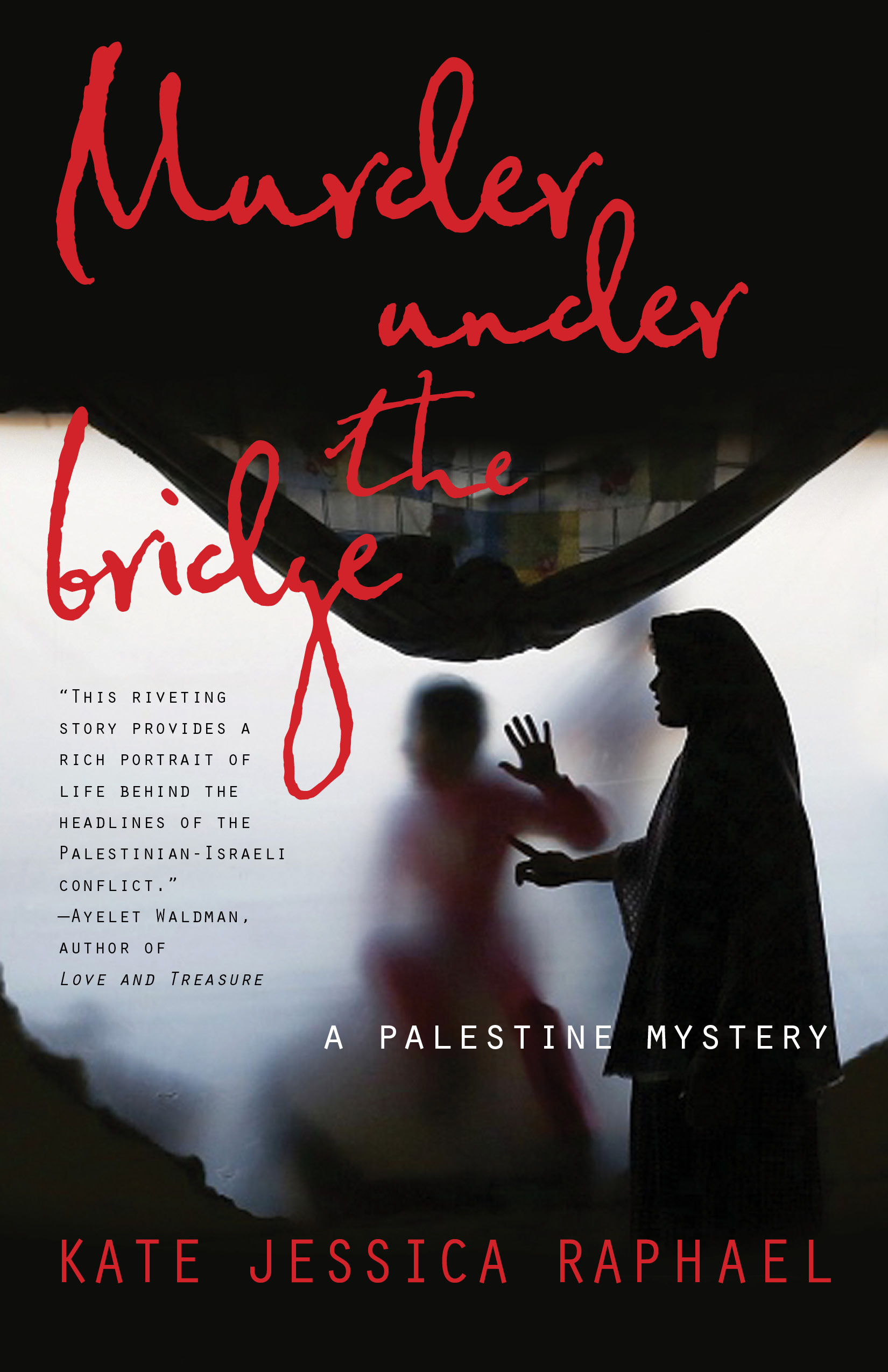
9781631529603_fcPlease welcome Kate Raphael to TKZ as my guest today, continuing the discussion we started on diversity and cultural appropriation in fiction….

Where is the line between imagination and cultural appropriation?

Actors and musicians have faced that question for decades, but until recently, fiction writers seemed to have license to become, behind our pens, whoever we could convince readers we were. In the 1930s and 40s, Pearl Buck and James Michener won Pulitzer Prizes for their portrayals of Asian countries and the people who inhabited them. Tony Hillerman not only won several Edgars and a Nero, he received the Navajo Tribe’s Special Friends of the Dineh Award for his series starring Navajo policemen Jim Chee and Joe Leaphorn.

In the last few years, however, cultural activists and writers of color have begun to raise the issue of who has a right to tell their stories. This conversation is a natural outgrowth of the public feuds between Miley Cyrus and Nicki Minaj, or Iggy Azalea and Azalea Banks, but it has certainly been helped along by episodes like Kathryn Stockett’s alleged misuse of stories told to her by her brother’s maid, and Michael Derrik Hudson’s admission that he put the name “Yi-Fen Chou” on his poem because it was more likely to be accepted that way. (Pearl Buck, incidentally, was sometimes known by her Chinese name, Sai Zhenzhu.)

The realization that all fiction is appropriation was the breakthrough that let me start writing fiction in the first place. Until my mid-thirties, I thought I couldn’t write fiction because I had no imagination. Then one day something crazy happened to a friend of mine and I thought, “That would make a great movie,” so I started a screenplay. The script was awful, but I had popped the cork on my storytelling juice. One of my friends had been a draft resister and gone underground. Others survived illegal abortions or helped sandbag Black Panther offices. A friend of a friend was killed during the contra war in Nicaragua. Steal! My own lackluster life fell away and I had a plethora of exciting stories to tell.

But stealing from friends, people basically “like me” is a different animal than telling stories of people with less social power than I have, people who have often been denied the right to tell their own stories.

As I honed my debut mystery novel, Murder Under the Bridge, and its sequel, Murder Under the Fig Tree, set in the Occupied Palestinian Territories, I thought long and hard about whether it was fair for me, as a Jewish American, to write from the perspective of a Palestinian. The Palestinian people have fought long and hard for the right to control their narrative, a narrative which has been virtually eclipsed in mainstream U.S. media. Palestinian writer Susan Abulhawa, author of the novel Mornings In Jenin, suggests that efforts to speak in the voice of people whose oppression we do not share “colonise our wounds and bring our pain under their purview.” I think it’s a valid position, and I didn’t want to do that.

At the same time, to write about Palestine and NOT put Palestinians at the center of the story seems worse. If I could not write from a Palestinian perspective, I couldn’t write these books. I needed to write about Palestine because I am a writer who lived in Palestine for several years, and my life was changed by that experience. So I had no choice but to try to inhabit the persona of a Palestinian protagonist, and hope that I could do it justice. I took some comfort from remembering that almost every Palestinian who gave me food, shelter, Arabic lessons or a badly needed ride around the checkpoints asked only one thing in return: “Go home and tell people our stories.” I took this as tacit permission to create characters who could live those stories.

I also took heart from my memory of reading Laurie King’s first Kate Martinelli novel, A Grave Talent. Kate Martinelli is a lesbian, as am I. I could tell immediately that King is not. Martinelli’s partner asks if she’s a lesbian and she answers, “We don’t know each other well enough for me to answer that.” A lesbian would never say that; she might as well say yes, because no straight woman would say it – especially in 1993, when that book came out. There were other things that also didn’t ring true. Nonetheless, I liked the book pretty well, and I was confident that the character’s voice would get better in future books, which it did. I could tell that though King was stretching, her intentions were good, so I was willing to give her a chance.

My friend Steve Masover, author of the recently released novel Consequence, says that writing about anyone other than oneself requires “an act of radical empathy.” I nurture the hope that radical empathy will shine through the mistakes I have no doubt made in portraying my Palestinian protagonist, Rania. And if it doesn’t, I’m sure people will let me know.

vivtoria secret my 07

Kate Raphael is the author of Murder Under The Bridge: A Palestine Mystery, and host of Women’s Magazine on KPFA Radio in Berkeley. Between 2002 and 2005, she spent eighteen months in Palestine as a member of the International Women’s Peace Service.

Key Layers to Writing a Solid Characterization

Jordan Dane
@JordanDane

Image purchased from iStock by Jordan Dane

Image purchased from iStock by Jordan Dane

Characterization is the way an author conveys the important (and hopefully memorable traits) of their main character. An author should have a vision for how their character looks, speaks, thinks, and interacts in their world. A writer can directly state what their character is all about by saying, “George is a rigid man, both in posture and judgmental temperament.” Or an author can convey key elements and paint a picture of their character by more subtle means, such as in their actions or manner of speech or even body language.

A first person narrative provides an intimate voice for a character, as if the reader has found a personal diary of private thoughts. A third person (Deep Point of View) can be compelling if the voice of the character gives insight into who they are and allows for a colorful and distinct dialogue and internal monologue.

Excerpt from The Last Victim (First Person POV):

My mind acted like a hard drive of stored random facts, especially at stress times. Sometimes they hit me hard and I blurted them aloud. That made dating a challenge. I’d always been drawn to intelligent women, but once I let them into my world, crossing that line usually ended any relationship. I simply had no interest in hiding who I was.

In this excerpt, I envisioned FBI profiler Ryker Townsend as socially awkward yet highly effective at his job. He’s a man with secrets, even from his own team. To be good at his job, he removes any filter he has over the way he speaks so he can access key elements stored in his brain. He trusts his instincts and his team to be himself, and in his personal life he is unapologetic for his peculiar mental leaps. His work is everything to him.

In The Last Victim, I portray Ryker’s life at home where he’s still living in boxes after a recent move, yet his work life is well-ordered. He’s charmingly clueless about his affect on women and very serious minded. He’s a case solver and a high achiever because of how his mind works, yet his mental gymnastics become a challenge in a social setting, where he’s out of his element most of the time. His highly focused approach to his work (and his secretive personal life) becomes the very weakness that could get him killed when he chooses to follow a lead alone. The clues force him to cross paths with the ruthless serial killer he’s hunting, a psychopath who knows how to hide in plain sight.

It’s important for an author to have a picture of the character in their mind’s eye. I often create a storyboard of images to reinforce my ideas. Or I imagine how the character will speak (perhaps by picturing an actor I see for the character). I also give the character baggage that will challenge them with conflict. Often their weakness can get them killed or become a major crutch. Above all, a main character needs to seem real and believable to the reader with a full life on paper.

Here are questions an author might ask about their main character(s) in order to flesh them out:

1.) Who are their friends?
2.) How do they dress? What do they look like?
3.) How do they live at home? Is their work life different?
4.) Do they have hobbies or interests outside of work? What do they care about? Their passions?
5.) How do they interact with others? How do others react to them?
6.) What makes them angry?
7.) What would they die for?
8.) What are their weaknesses?
9.) What do they fear?
10.) Which adjectives would the author use to describe the character’s personality?
11.) What does the character think inside their head? What do they share?
12.) How has their past shaped their life? Is there a traumatic incident that changed everything? How is this manifested in their present?

Once an author has a solid image and characterization in their mind, a writer can set up conflicts to give that character a starring role. Can they overcome their weaknesses? Give them a journey throughout the book that will exploit their deepest insecurities or force them to deal with their worst fears. A compelling characterization is like the foundation to a building. The more solid and well-thought out it is from the start, the stronger the story will be when you build onto it.

For discussion: Please share any tips you have to creating your characters. Do you storyboard images? What resources have helped you?

tmp_4087-TheLastVictim_highres-1601584079
The Last Victim now available in print and ebook. Sales links HERE: “When FBI profiler Ryker Townsend sleeps, the hunt begins.” Townsend has a secret he won’t share with anyone–not even his own team–that sets him on the trail of a ruthless psychopath alone. 

The Evolution of Your Hero

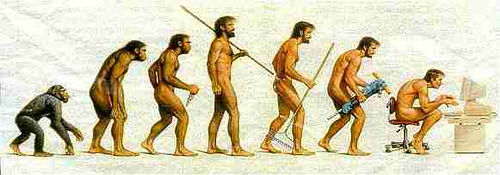
Evolution

Two weeks ago James Scott Bell wrote a terrific post on hero passivity, and how to handle it (carefully) in a novel. Which in a nutshell is this: in general you should avoid it, because it’s absolutely a radioactive story killer if handled wrong.

The mistake, and the temptation that leads to it, is to get too caught up in the intention to write a character-driven story (a noble goal, but like trying to run a marathon, you need to understand the role of pace), and a facet of that character is passivity in the form of lack of motivation, lack of courage, lack of direction or simply lack of interest.

Sooner or later, you need to give your hero something to do.

This issue is an example of how story structure touches and drives everything. 

This includes character arc, the beginning of which can indeed be a viable context for your protagonist’s passivity (which may be the very thing that gets them into trouble).  Nay-sayers on structure handle this differently, and yet end up – at least when the story finally works – aligning with where structure seeks to take a story in the first place.

Which is why mastery of story structure is perhaps the most critical phase of an author’s development. Because everything in the story connects to and is informed by structure.

When someone tries to tell you that’s not true… run.

Showing your hero in a passive context can actually be a good thing…

… provided you understand when and where to allow passivity to show itself.

Some stories begin with the hero simply not yet having fully collided with a forthcoming problem or situation (which absolutely needs to happen, and at a specific place in the story sequence), while others show the hero actually contributing to that problem by virtue of being passive (like, for example, someone in a relationship being cold toward their partner, resulting in… well, you know, all kinds of issues).

But be careful with this.  Because passivity can get you – the author – in a real pickle, too.  Stories are nothing if not a vicarious experience of a central hero-centric problem/situation (plot) for the reader.  Just don’t suck on that pickle for too long… because it’s toxic if you do.

And that’s where structure will guide you.

In her book “The Hero Within: Six Archetypes We Live By”, Carol S. Pearson is credited with bringing us life’s hero archetypes, four of which align exactly with the sequential/structural “parts” of a story.  (For those who live by the 3-Act model, know that the 2nd Act is by definition contextually divided into two equal parts at the midpoint, with separate hero contexts for each quartile on either side of that midpoint, thus creating what is actually a four–part story model; this perspective is nothing other than a more specific – and thus, more useful – model than the 3-Act format from which it emerges.)

Those four parts align exactly with these four character contexts:

Orphan (Pearson’s term)/innocent – as the story opens your hero is living life in a way that is not yet connected to (or in anticipation of) the core story, at least in terms of what goes wrong. 

And something absolutely has to go wrong, and at a specific spot in the narrative.

The author’s mission in this first story part/quartile, prior to that happening, is twofold: make us care about the character, while setting up the mechanics of the dramatic arc (as well as the character arc) to come.  There are many ways to play this – which is why this isn’t in any way formulaic – since within these opening chapters the hero, passive or not, can actually sense or even contribute to the forthcoming storm, or it can drop on their head like a crashing chandelier.  Either way, something happens (at a specific place in the narrative sequence) that demands a response from your hero.

Now your hero has something to do, something that wasn’t fully in play prior to that moment (called The First Plot Point, which divides the Part 1 quartile from the Part 2 quartile).  In this context, and if your chandelier falls at the proper place (in classic story structure that First Plot Point can arrive anywhere from the 20th to 25th percentile; variances on either end of that range puts the story at risk for very specific reasons), you can now think of your hero as a…

Wanderer – the hero’s initial reactions to the First Plot Point (chandelier impact), which comprise the first half of Act 2 (or the second of the four “parts” of a story).  The First Plot Point is the moment the story clicks in for real (everything prior to it was essentially part of a set-up for it), because the source of the story’s conflict, until now foreshadowed or only partially in play, has now summoned the hero to react.  That reaction can be described as “wandering” through options along a new path, such as running, hiding, striking back, seeking information, surrendering, writing their congressman, encountering a fuller awareness of what they’re up against, or just plain getting into deeper water from a position of cluelessness and/or some level of helplessness.

But sooner or later, if nothing else than to escalate the pace of the story (because your hero can’t remain either passive or in victim-mode for too long), your hero must evolve from a Wanderer into a…

Warrior – using information and awareness and a learning curve (i.e, when the next chandelier drops, duck), as delivered via the Midpoint turn of the story.  The Midpoint (that’s a literal term, by the way) changes the context of the story for both the reader and the hero (from wanderer into warrior-mode), because here is where a curtain has been drawn back to give us new/more specific information – machinations, reveals, explanations, true identities, deeper motives, etc. – that alter the nature of the hero’s decisions and actions from that point forward, turning them from passive or clueless toward becoming more empowered, resulting in a more proactive attack on whatever blocks their path or threatens.  Which is often, but not always, a villain.

But be careful here.  While your hero is getting deeper into the fight here in Part 3, take care to not show much success at this point (the villain is ramping things up, as well, in response to your hero’s new boldness).  The escalated action and tension and confrontation of the Part 3 quartile (where, indeed, the tension is thicker than ever before) is there to create new story dynamics that will set up a final showdown just around the corner.

That’s where, in the fourth and final quartile, the protagonist becomes, in essence, a…

Martyr (Pearson’s term)/hero – launching a final quest or heading down a path that will ultimately lead to the climactic resolution of the story.  This should be a product of the hero’s catalytic decisions and actions (in other words, heroes shouldn’t be saved, rather, they should be the primary architect of the resolution), usually necessitating machinations and new dynamics (remember Minny’s “chocolate” pie in The Help?), which ramp up to facilitate that climactic moment.

This is where character arc becomes a money shot.  Because by now everything you’ve put the hero through has contributed to a deep well of empathy and emotion on the reader’s part.  This is where the crowd cheers or hearts break or history is altered, where villains are vanquished and a new day dawns.

Instinct, Intention or Accident?

Too many writers aren’t in command of the difference.  You can be, and you should be.

In this context these three options don’t refer to your hero, they refer to you, the author of the story.  All three modes may play a role in how a story comes together, but the good news is that you don’t have to rely on any single one of them.  Armed with a deeper knowledge of craft, you get to choose which to harness, and when.

Truly, successful storytelling exceeds the sum of these three states, so listen to all the voices in your head that contribute to the way you build the arc of your character: yours, those of your characters (that’s a metaphor, by the way, because when a character “speaks to you” that’s just your story sensibility weighing in), and the sum of the learning you have accumulated from venues like this one, and the books the authors here have written to show it to you.

(image by Esther Dyson)

First-Page Critique: The Art of Stage Setting

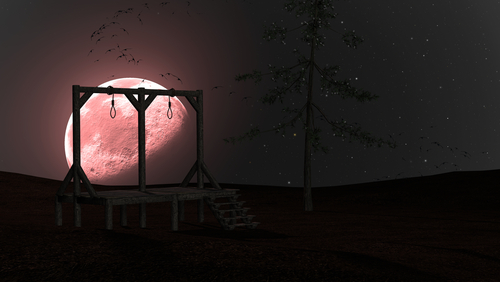
1gallows_shutterstock_239830486

Today we’ll be critiquing the first page of a story called THE GHOST AT BEAVERHEAD ROCK. I’ll add my comments at the end. Please add your notes and suggestions in the Comments.

THE GHOST AT BEAVERHEAD ROCK

Darkness still hid the night’s work when Daniel Stark and Timothy McDowell stepped out of the restaurant. It would not be hidden for long, Dan said to himself. A faint glow separated the outline of the easterly mountain ranges from the star-filled sky. The boy must not see it. They must be gone before anyone saw it.

The coach from Bannack to Virginia City stood in front of the Overland stage office. Restless, wanting to move and get warm, the horses stamped their feet, rocked the coach forward, then back. Their breath steamed in the lamplight spilling from the windows.

“It’s ready to leave. Hurry.” Dan slung his rifle across his back.

“Sun ain’t up yet.” Timothy yawned. “Sure is a nice morning. Crisp.”

The boy’s deep voice still could startle Dan, who thought of him as the boy he had left in the spring. “Let’s get our bags.” He set a fast pace toward the rooming house.

Boy-like, Timothy scuffed his toe at clods of frozen horse manure. “We’ll be in that dratted box all day. I want to enjoy the air.”

“You can enjoy the air in Virginia City.”

“Not if the smoke settles there. Gets so bad sometimes you can hardly breathe.” He took a deep breath, let it out. ”Nothing like mountain air.”

Dan looked over his shoulder. Timothy grinned at him, teasing, but took longer steps. Dan cuffed the boy’s shoulder, not much below his own. “That’s better.”

As he spoke, the stars lost brilliance, and the mountains around Bannack stood out from the sky.

The stage driver came out of the office, holding a coiled blacksnake whip in one hand. He arched his back, circled his arms, rolled his shoulders. Two passengers, a man and a stout woman walked out of the stage office.

Timothy lagged behind again. Dan called over his shoulder, “Hurry. They’re loading.”

“What in hell—?” Breaking into a run, Timothy veered off the boardwalk, broke into a run uphill.

Damn! He had seen it. Pivoting, Dan sprinted after him. He leaped the sluice ditch, dashed between the one-man cabins on Bachelor’s Row. His boots crushed frozen bunch grass. His breath rasped in his throat. The rifle bounced against his back.

He caught Timothy amid the sagebrush several yards from the gallows and tackled him around the waist. They tumbled together onto the ground. “No, Tim, don’t look – ” What he meant to say was lost as the corpse turned on its rope; its frozen eyeballs stared into his soul.

My comments: I think this first page shows that the writer has a nice ear for dialogue. The conversation between the man and boy flowed easily. There are some other craft-related issues that need to addressed, in order to make this scene stronger.

Get important information across early

I sense that this writer has a strong vision of the story’s characters and setting, but the first paragraph needs to provide more information to convey that vision to the reader. In the absence of clues, readers start making their own assumptions. It’s easy for them to wander off track. For example, I didn’t realize until the second paragraph that the story is set in the western past. By then, I had already formed a vision of a much more modern setting. It’s jarring to the reader to have to backtrack after making a wrong assumption.

Don’t over-withhold information in an effort to build suspense

The first paragraph in this story makes a reference to “the night’s work,” followed up by several more deliberately vague references to “it”. We don’t learn what “it” is until the very end of the page, however. Too much information is withheld for too long, potentially frustrating the reader or causing him to lose interest. The first paragraph might be stronger if it contained a hint or reference to the gallows. For example, instead of repeating the use of a vague pronoun in the following sentence:

“It would not be hidden for long…”

It might be more dramatic if Dan spotted the silhouette of the dark, swinging mass (the corpse) emerging against the night sky. Just a hint, enough to give the reader some sense of the terrible sight that he’s trying to keep the boy from seeing.

Avoid confusing transitions between dialogue and action

By the time I encountered the following paragraph:

“What in hell—?” Breaking into a run, Timothy veered off the boardwalk, broke into a run uphill.

I still didn’t know what it was that Timothy had seen and was reacting to. By the time I got to the payoff at the very end of the scene–the sight of the gallows and hanging corpse–I was feeling confused and somewhat frustrated as a reader. This confusion can be avoided by providing the reader with enough information earlier in the scene, to keep him oriented and engaged in the story.

Your thoughts?

Please add your notes and suggestions in the Comments. And thanks to our brave writer for submitting this first page!