2016 Publishing Trends

Jordan Dane
@JordanDane

stack-of-books

I recently received an email from a reader fan who complained about not having access to my Amazon Kindle Worlds (KW) digital books in Australia. I’ve heard this complaint before regarding the difficulty of obtaining US books in other countries. You’d think that in this digital world, it would be easier to satisfy markets all over the globe (especially with digital books), but not so. In the case of Kindle Worlds, the division is separate from Amazon and has to build upon its infrastructure and distribution resources. KW will be in Australia eventually—things are changing—but online retailers restrict certain markets because of their selling platform limitations. Yet the world is becoming borderless and more universal, so it got me thinking about trends in the publishing industry that have changed how books are created, marketed, and distributed.

1.) Publishers Optimizing Licensing Prospects – Publishers over the globe are recognizing the value of licensing and holding tightly to the rights they have under contract. Licensing, traditionally a subsidiary rights value, could become a larger contributor to a publisher’s cash flow if the house can expand its reach into the global marketplace. International borders would become less important (not an obstacle) and publishers could expand their reach in creative ways by enhancing the book experience for the reader. Plus, larger houses could continue to acquire struggling mid-sized houses to acquire these rights that they could exploit across the globe.

How can indie authors exploit their sub-rights (ie foreign language translations, audio, film rights, serial rights, and merchandising)? They can either sell those rights themselves, or have an agent do it for them, or exploit these rights on their own, such as audio rights for independent artists and authors through ACX, Spoken Word Inc, and Open Book Audio. If the author controls the artwork for their covers or develops a series logo as a brand, they can control merchandising through service providers like Café Press, Zazzle, and DeviantArt. For foreign language rights, some independent authors have worked directly with translators, offering them nothing up front but with 20% of proceeds on the back end. If you’re not daring enough to go directly to the translators, there are ways for author right holders to be matched with publishers willing to acquire such rights through a site called PubMatch. (Pubmatch is free to join but when I input my profile, they asked for money to be paid annually since I was submitting books for consideration. I paid a nominal fee of 19.99 for a year and will see how things go.) The author would create a profile and either wait to be contacted on their offerings or be more proactive by searching the profiles of publishers listed on the site, similar to the way ACX (for audio) is set up.

2.) The Importance of Local POD Providers – There have been some out-of-the-box thinkers who see the value in “local” print on demand (POD) options as a means to get around the international obstacles of limited selling platforms. My reader in Australia could wait for Amazon KW to expand its reach into the country, or some entrepreneurial company (like a more nimble micro-publisher) could simply place an order at any local POD service providers in various countries to create a bigger marketplace. Could this lead to niche POD companies springing up to support a strengthening print sales demand across the world? Only time will tell.

3.) Print Book Resurgence – It wasn’t long ago that people were predicting the death of the print book, but quite the opposite has happened with stronger print sales being reported in 2015. Perhaps this is because publishers now have more control over pricing after the reintroduction of agency pricing through online retailers like Amazon. And with demand strong and the boutique model dominating digitals, larger publishers are optimizing their marketing strategies by attempting to manipulate their print prices up.

How? By offering fewer books for predominantly well-known authors with large readerships—books that are in demand—publishing houses can control how books are launched, pricing-wise. With ebooks priced nearly on parallel with print sales, publishers can create a value-related decision point for readers to evaluate whether they would rather own a print book versus a digital copy. At certain prices, readers will make the choice to own a print copy, even if they are paying slightly more. Would you pay an extra $2.00 to own a hard copy print book?

But it’s not all rosy for large houses, even with the glimmer of print sales being up. Overall, traditional publishers are offering fewer books to the reading public—focusing on big name authors—so they must squeeze profitability out where they can. They won the right to control their pricing through online retail giant Amazon, but Amazon is quietly expanding their reach as a service provider and/or a publisher, working with indie authors and micro-publishers with revenue from all sources. We live in interesting times.

4.) The Rise of Alternatives to Traditional Publishers – AuthorEarnings.Com reports that in 2015, nearly half of all ebooks sold on Amazon (the most influential digital retailer) are either self-published, published by micro-publishers, or are generated through an Amazon Imprint. Here’s their ebook breakdown by publisher type:

• Big Five Published 33%
• Indie Published 34%
• Micro-Publishers 19%
• Amazon Imprint 10%
• Misc 4%

So this is what I mean about Amazon making money off the competition of traditional houses. As a service provider, and an imprint, Amazon doesn’t have to be in direct competition with traditional houses as their only source of revenue.

5.) The Retail Gorilla – According to AuthorEarnings.Com – the overall market share of US ebook unit sales is dominated by Amazon at 74% with the balance held by other online retailers: GooglePlay, Kobo, Nook, Apple, and miscellaneous others. So if you’re an indie author with a limited budget, where would you spend your ad dollars?

For Discussion:

1.) Have you noticed any interesting trends in the publishing industry that has affected how you do business as an author?

2.) Whether you’re a traditionally published author, independent author, or a hybrid author with feet in both camps, have you been rethinking the value of sub-rights?
Indie vs. Trad (Yes, I’m Going There)

Anyone who reads my Facebook posts knows I have very strong feelings about the way the traditional publishing industry treats authors when it comes to the reversion of rights and the distribution of wealth. But the decision to publish on your own or submit your work through an agent to the Big 5 is an individual one.

If you want to know the good and the bad of either world, there are plenty of resources on the web, but remember, opinions vary based on experience, and no one else’s experience will be the same as yours.

For the record, my time in traditional publishing was great. I liked the people I worked with and they treated me with a lot of respect.

When I sold my first four books, traditional publishing was considered the only legitimate path toward publication. Then the Kindle was invented and Amazon opened its doors to authors, and indie pioneers like Joe Konrath and Amanda Hocking started making money hand over fist. And suddenly the idea of self-publishing had great appeal to many authors. Especially those who had been unceremoniously dumped by their publisher when their sales didn’t meet some corporate number cruncher’s expectations.

When my friend Brett Battles left his publishing house and decided to go indie, I thought he was a little crazy. I was in the middle of finishing up a big, bold, traditionally published “blockbuster” for Dutton that was supposed to set the world on fire.

But then something amazing happened.

Over the course of the next year, Brett started selling a ton of books on Amazon. And as I watched this phenomenon, I couldn’t quite believe what I was seeing.

When my Dutton book failed to fly—even after rave national reviews—I wondered if maybe the trad pubs didn’t know as much about selling books as they thought they did, and indie was the way to go. The book in question (The Paradise Prophecy) was one I would not have chosen to write on my own, but the publisher had come to me, and the advance money had been good, and I’m always a sucker for good advances…

But after its failure to make much of a splash, I wanted to write something for myself. Not for an editor or publisher, but for me. Just me. No restrictions, no dictates from on high, no agent interference, nothing. So I sat down and wrote a book I’d been itching to write for some time. A book that nobody in the industry seemed much interested in. But I wrote it anyway, thinking that I might self-publish it, while still holding onto the idea that maybe I could get a traditional deal instead.

When it was done, however, I looked at all the successful indie authors I knew, saw how well they were doing—and more importantly, how much control over their work they enjoyed—and decided that I definitely needed to give it a shot.

So Trial Junkies was published as an indie in May of 2012, and by the middle of June, I was selling nearly a thousand books a day.

I haven’t looked back since.

In the years that followed, Trial Junkies, has gone on to sell more copies than I ever would have imagined, and the book has received a lot of terrific reviews. It was also picked up by Amazon Crossing for translations to German and French.

So, you see, if you ask me about indie vs. traditional, the answer I’ll give you is obvious.

But, as I said, my experience may not be yours.

My experience may, in fact, be an anomaly.

So I urge you to do your research and figure out what path is best for you and only you.

And I also urge you to tell me I’m crazy in the comments. That’s what blogs like these are for. 🙂

The Uncomfortable American (Updated)

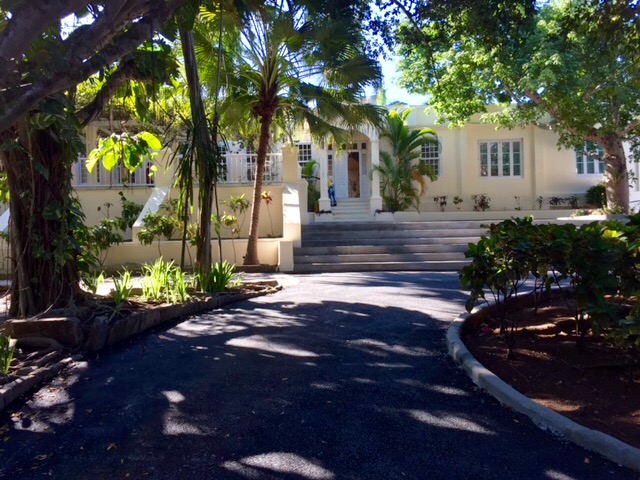
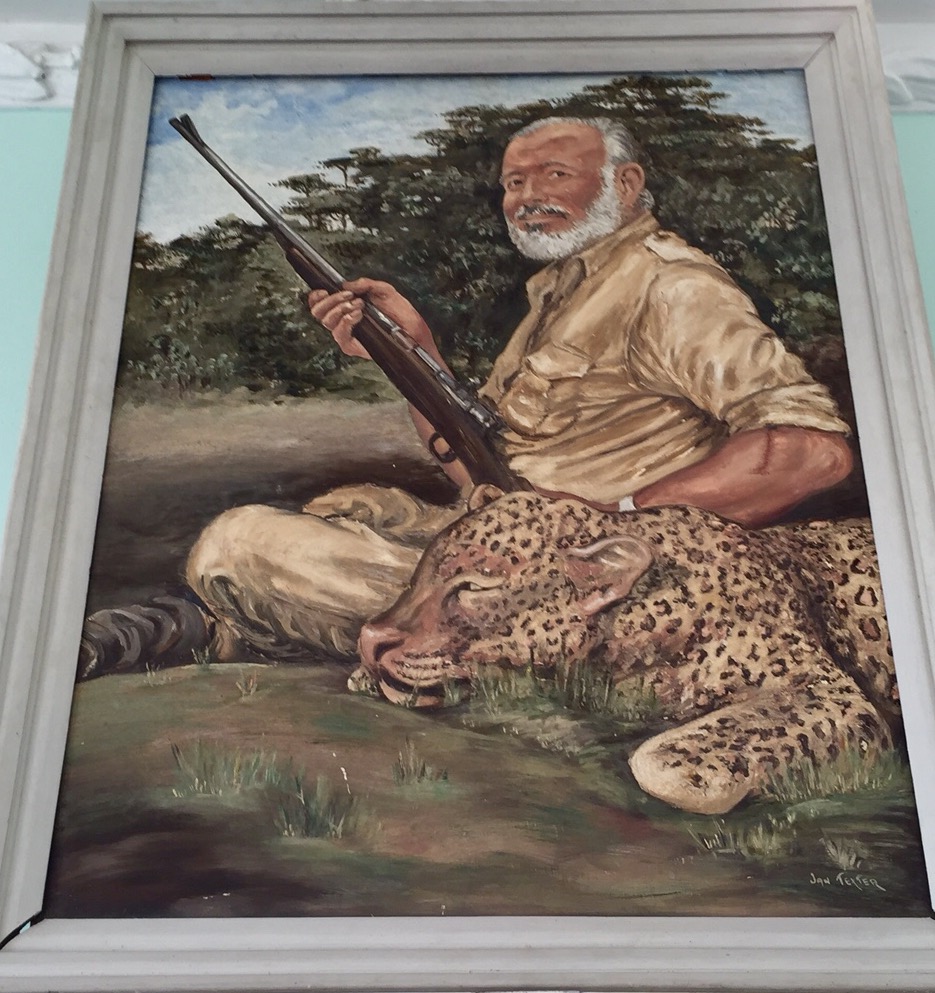
imageUpdate: Now that I’m back home  from Cuba with better Internet access, I’ve added  pix of Hemingway’s house.

  ***

I’m writing today’s post from the Hotel Nacional in Havana, Cuba, fervently hoping that the revolutionary Internet watch dogs (perros de la seguridad) will allow my words to be successfully uploaded to WordPress and displayed beyond there to you, Dear Reader, on Tuesday. We’re on the third day of an eight-day excursion to this island nation. (In terms of encountering Internet censoring, so far I haven’t in fact  encountered too many problems. The only sites that have been completely blocked so far are the Huffington Post and Gawker. Amazon did seem a tad confused when I tried to order a Kindle book online from my Cuban hotel room–first it displayed a message saying that Kindle books aren’t available in the United States; then it asked whether I’d recently changed my country of residence. I ultimately gave up my quest to purchase the e-book).

It’s interesting visiting Cuba immediately in the wake of the lifting of the decades-long trade embargo and Obama’s recent presidential visit.

I think many Americans are assuming, as I did, that once the embargo is finally lifted in practice, Cuba will be quickly transformed into a more-or-less Westernized economy. I no longer think that’s the case. Cuba is…well, it’s different. As one of my fellow American travelers said with a sigh, over a highly restricted menu at a government-owned restaurant, “Cuba has a long way to go.” First, there’s the abysmal infrastructure (Example: all human waste is dumped directly into the harbor because there are no treatment plants).  Then, there’s the highly centralized economy. (This morning we learned from a speaker that there’s no such thing as a wholesale business in Cuba. Everyone pays the same exact price  everywhere. Try to make a profit running a business that way).

On the plus side, the country of Cuba is charming in many ways. Being here is literally like stepping into a time warp. Taxis are mostly 50-era Chevys (we even saw one Edsel taxi); many streets are cobblestone; architectural styles are similarly retro. The adult literacy rate is nearly 100%.

Overall as an American, though, I feel slightly uncomfortable in Cuba. It started in the airport when our group waited two hours for our baggage to be offloaded from our American Airlines charter flight. (It was Saturday night; it turns out that people don’t like working on Saturday nights). Being in Cuba makes me aware that Americans are impatient. Pushy, even. We tend to look at something and try to figure out a way to make it work faster, better.  I think that once Cuba is overrun with Americans telling them how to make things work faster and better, they may want to pack us all off on the next one-way barco to Miami. And I wouldn’t blame them a bit.

See you back in the States–and viva Cuba Libre!

image

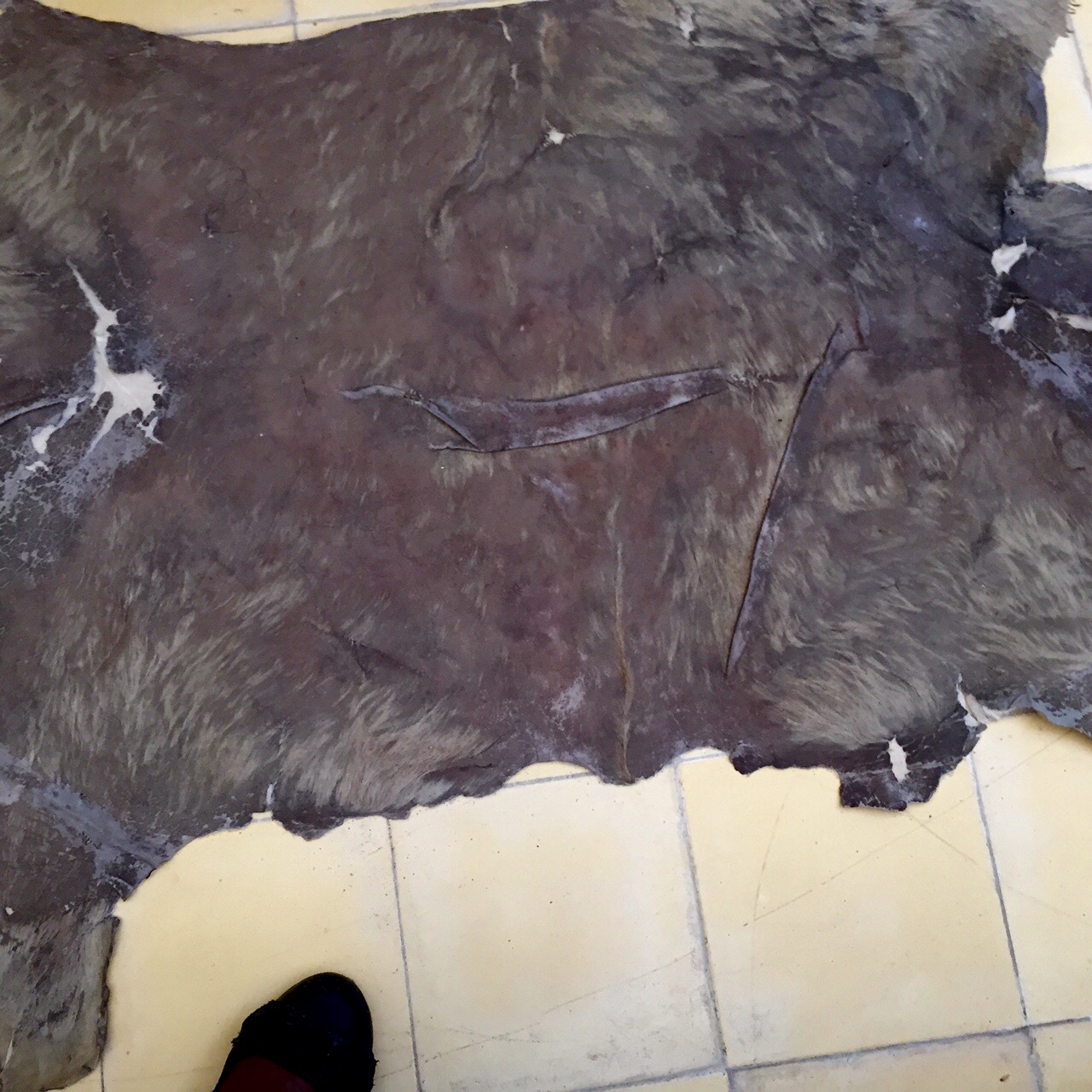
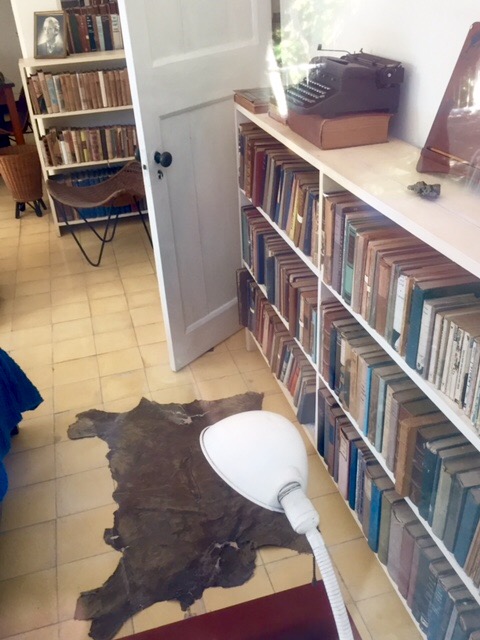
Lesser Kudu skin and typewriter

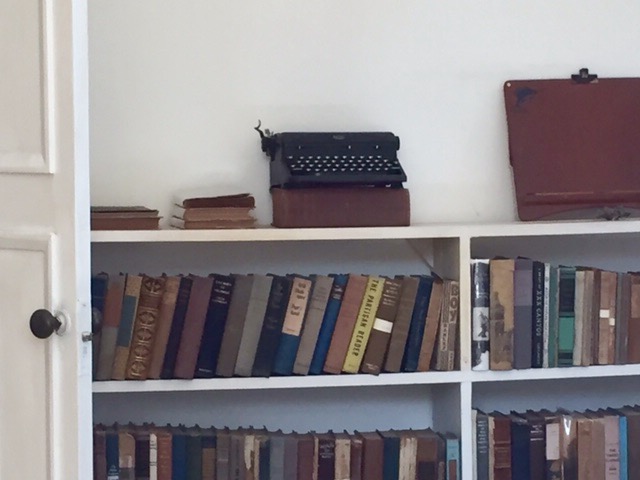
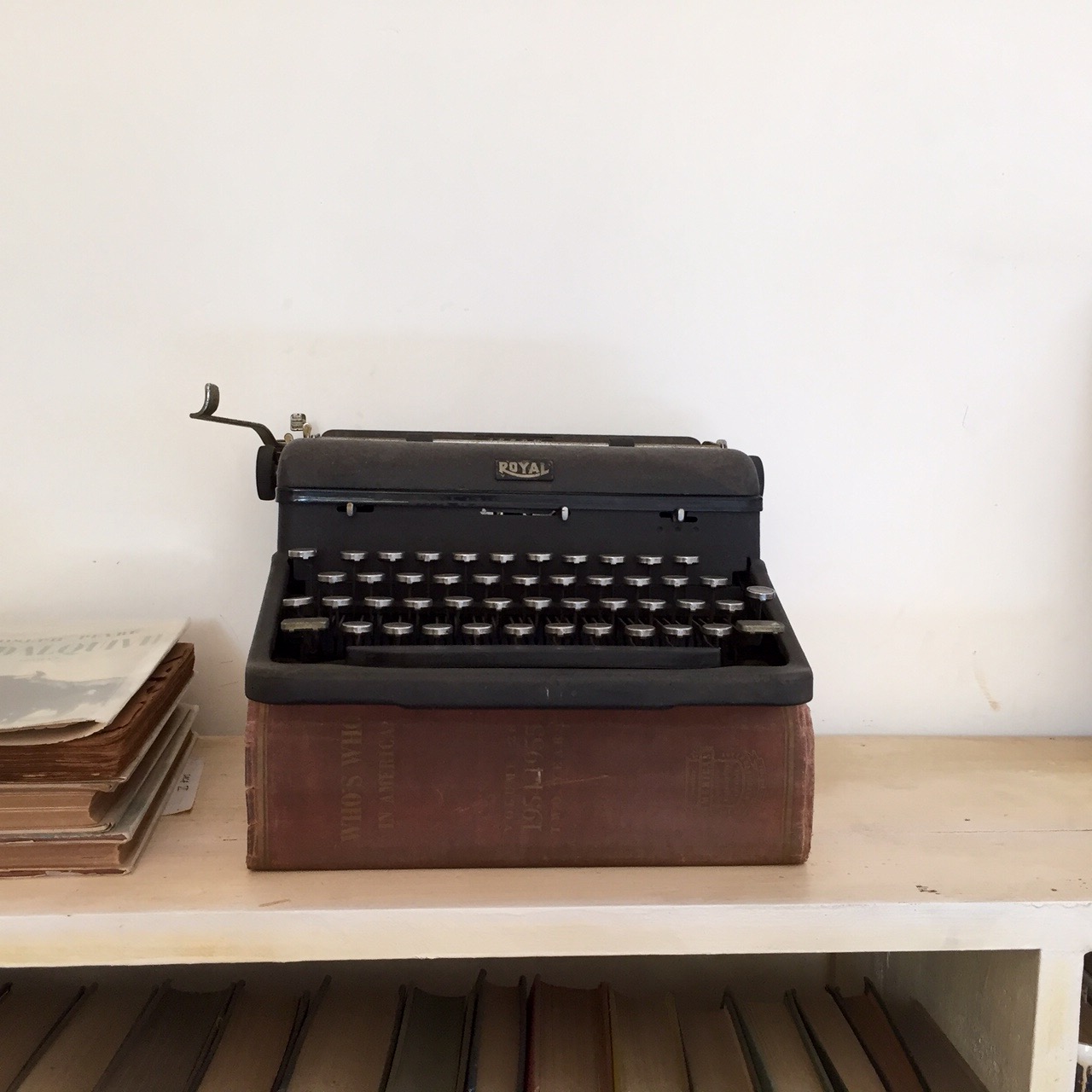
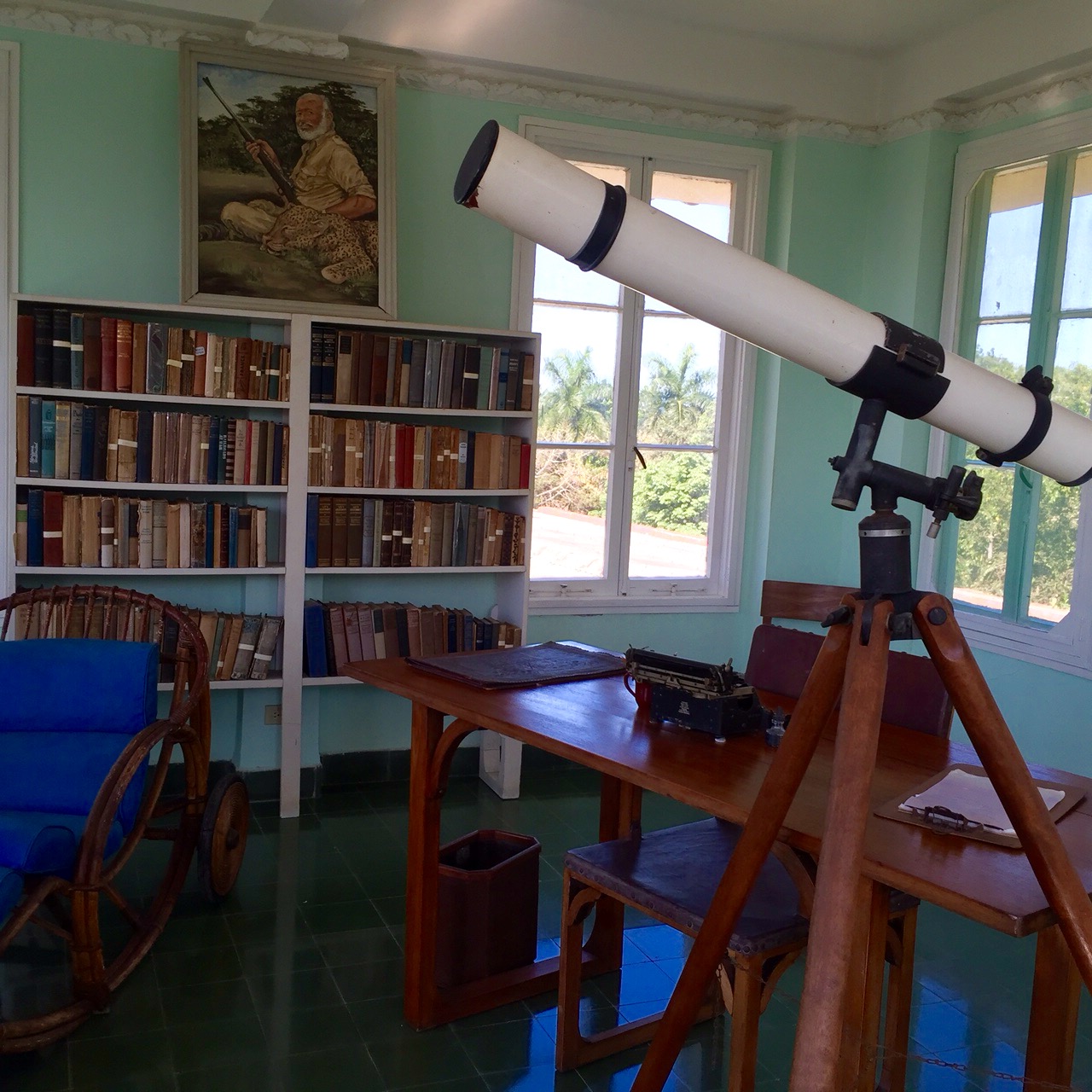
Update: Now that I’m back home with better Internet access, I’ll post pix of Hemingway’s house in Cuba. I was happy to be able to see the famous typewriter where, standing on top of a Lesser Kudu gazelle skin, he every morning. I had to shoot through a window because visitors aren’t allowed inside, but I successfully bribed a docent to take the closeups of the typewriter and the gazelle hide. (There’s an upstairs office that one of Hemingway’s wives commissioned as a writing office, but our guide said Hemingway used it mostly for rendezvous with one of his lovers. He did his actual writing at the typewriter by his bed).image


image image imageimageimage

Part 2: 10 Myths That Sabotage Unsuspecting Novelists

Two weeks ago I posted the first part of this 2-parter, exploring five of the myths promised in the title. Feel free to check them out first, or last, doesn’t really matter because these aren’t presented as a hierarchy of potential disaster.

Any one of them can sink you.

Here, then, are the other five.  

Fair warning, some of these will challenge your belief systems about how stories are developed and what makes them work… which is the point.  Not everyone likes to be challenged, and not every writer will make a shift when called out on something that isn’t working, defending with this: “This is my process, I can’t do it any other way,” or, “Well, that’s not what Stephen King says.”

Fair enough. Very little about the writing process is precise. And not everything we hear from famous writers is valid for you, or for most, for that matter. That said, the criteria and benchmarks of what makes a story work are usually very precise.

That, too, is the point.

*****

Coincidentally (because this was written before I saw what I am about to point out), and happily, PJ Parrish posted on this next myth last Tuesday (March 29). We aren’t conspiring, but we are retrospectively agreeing. That dream that awakened you a few nights ago, leaving you certain the universe had just rewarded you with the Next Big Novel idea… we recommend you park it for a while and see how it survives the shelf time, not to mention, in the meantime, boning up on the criteria for what makes an idea viable, or not.

Myth #6: You can make a good novel out of just about any idea.

Too often the most important element of a story gets the least airtime within the writing conversation.  And that is our Big Idea for a story. The seed from which your story must spring forth.

The Big Idea can arrive in several forms. It can be a character, suddenly so vivid in your mind you can smell their morning coffee. But that’s not enough. Because if a character is all you have, it’s not a story yet.

It can arrive as a speculative notion, a compelling what if? proposition. What if the Devil came to you in the form of your divorce attorney after your wife cheated on you? But that’s not enough, either. It’s not a story yet.

It can be a theme that you believe to be important. A novel about making love last. A novel about prejudice in the justice system or racial bias in a certain Southern town in the sixties. A historical novel with revisionist intentions. But that, again, is not enough. It’s not a story yet.

A storyline can unfold in an instant in your mind’s eye. You know how it opens, what happens, and how it ends. But that’s may not be enough, either. Because a story is more than beginning-middle-and-end, so it may not be a viable story… yet.

So what is a story?

Answer: A story is the narrative fulfillment of a complete and compelling premise. Which is the sum of all these things. Which means, to get it right, you need to understand what a premise actually is, and what it isn’t, the latter often in one of the forms just mentioned.

Incomplete, less-than-compelling premises trump great writing every time (unless you are a famous author already, then the bar actually lowers when it comes to premise; which is not to say famous authors actually reach lower, most don’t… but some do). If the idea is tame, vanilla, less than compelling and/or too familiar, you’re toast before the agent or editor reads a word of it.

Of course, who is to say what is and isn’t compelling where your premise is concerned? Great question. The answer depends on who is talking, and how familiar they are with the criteria for a functioning premise in the first place.

A compelling premise is not just about something, it is about something happening.

Emphasis on the italics there.

It all boils down to the degree of compelling energy, and if/how the premise hits all of the requisite component parts. Those parts are what cause a story to work, because they are all conjoined with the context of an unfolding narrative.

Ultimately, after the agent and the editor have had their say – which makes this myth critical for self-published authors – it is the marketplace that decides what is compelling. But at first it is only you. The whole ballgame hinges on how aligned your idea aligns with what the market feels is compelling.

Nobody will tell you to not write your novel because your idea isn’t good enough. That’s just not done out there. But perhaps it should be. Meanwhile, you are alone with this judgment. Is your idea worth a year of your life writing the initial drafts of your novel, after which someone else likely will tell you if the Big Idea was good enough, or not, after all?

We all roll that dice. But don’t kid yourself… not all ideas are worthy of a novel, because the very nature of it may minimize the things that make a novel work: dramatic tension leading to reader empathy in the form of emotional involvement.

That’s the formula, if you will, right there. And you get to decide.

There’s a reason the story of what you did on your summer vacation may not be the raw grist of the great American novel.

Unless you got kidnapped or were seduced by a mysterious billionaire prince. Then you might just have a shot.

Myth #7: Concept and Premise are the same thing.

So, after all that, what does constitute a good idea? There is an answer to that. An answer that builds on the supposition – the truth – that concept and premise are not the same thing.

All novels that work end up building upon a premise (see #6 above). But it is entirely possible to serve up a premise that is flat as the paper it will be printed on, and yet still checks off all the elemental boxes.

That’s because at the end of the day is a crap shoot, a matter of personal preference.

Concept is the central framework for the elements of the story. It is what causes someone to say, “Wow, now that sounds intriguing…” even before they actually read the novel itself.

Or better, even before you actually write it. If your concept has people begging to the see the story, pre-premise, then you’re on to something.

A love story set on the loading dock of a grocery store… hmmm. Chances are you need more.

But a love story set on the loading dock of a nuclear storage facility – a place we’ve never been, a place with inherent curiosity and potential for drama – that’s conceptual.

That’s all concept is: something that is conceptual about your premise. A target of intrigue or curiosity or rewarding vicarious experience. A notion or a setting or something specific about a character that is fresh and compelling and rich with dramatic appeal (think Superman or James Bond or even Stephanie Plum), even before you actually turn it into an unfolding, dramatically-vibrant story thread.

Myth #8: A first draft will always suck.

Everybody says this. They scream it out. To an extent that nobody challenges it.

But what if it’s not completely or always true?

If you’re someone who seeks to discover and flesh out their story using a series of drafts, then sure, your first draft will likely need a lot of work. Which is fine, that’s how you work. Those drafts are no different than the story planner who goes through a crate of three-by-five cards, it’s all just a means of searching for the story.

But if you’re someone that can visualize a story fully without needing to write a draft – and if you’re thinking “that can’t be done,” you need to amend that thought; it can’t be done by you, perhaps, but there are plenty of writers who absolutely can envision the bones of a story, front to back, totally in their head), and with some pondering and a pile of yellow sticky notes can construct a narrative front to back, then your first draft will live or die by the depth and sensibility of that vision.

Get that right, and your first draft can materialize as something that is a polish away from submittable. It happens all the time.

A first draft will always require further work. True enough. To fix typos, if nothing else. But the depth and nature of that work is a function of two things: your process, and your story sensibilities.

Here’s a non-myth you can count on: a draft won’t work until you have an ending in mind for it. Which, when you do have an ending in mind, is not to say you won’t or should alter that ending mid-stream. That works, too.

But if your draft starts with no ending in mind… then yes, your first draft won’t work.

Because you can’t foreshadow and optimize pace and build toward an ending that isn’t on your radar. And a novel won’t work until and unless those things happen on the page.

Myth #9: Your writing process is better than those of other writers.

This is just flat-out wrong. It may be better or worse for you, but there are infinite variations and gradations of the writing process, and rarely are any two exactly alike.

Here is where famous writers like to take a stand. In interviews and in keynotes they talk about what works for them, with the assumptive implication that this is the best process. Or perhaps more toxic, the only process.

Or you’ll hear writers with no more claim to effectiveness than you making statements like this: I can’t outline, it robs the process of joy and creativity… I can’t make up my story as I go along, that never works… when I outline I fall out of love with my story… and other variations on this theme.

The veracity of such comments, no matter who says them, begins and ends with them.

Once again, this is a case of writers stating what works in their own experience. When they position it as anything other than their truth, as if it is the truth about process… run.

The best process is what works for you.

Not based on what you’ve heard, but based on what you know. Not just about your story, but about the craft-defining elements and essences that go into any and all stories that work.

Sometimes your process actually doesn’t work, which seems to render the above sub-head inaccurate. But if it brings you closer to the truth about stories, if not storytelling, then for better or worse it’s actually working.

The key will be to recognize what you’ve learned, not only relative to your story, but to why something works, or not.

Myth #10: The bar is lower for self-published novels than it is for traditionally-published novels.

If getting your novel out there is the primary and even solitary goal, then this may be true. If for no other reason than no initial vetting process stands in your way.

But if earning a readership and building a career is the goal, then this is a destructive myth that will sabotage your dream. Certainly some worthy novels are rejected by traditional publishers, and just as certainly some worthy writers skip traditional publishing altogether in quest of shorter to-market timelines, rights issues and larger royalty percentages.

So what’s the harm of lowering the bar?

Because it will prioritize getting it out there over getting it right. It will seduce you into believing that craft is less important that completion, and that completion isn’t driven by how your novel stacks up to a very powerful and proven roster of criteria and benchmarks.

Too often self-publishing is settling. Trouble is, there is no way to be certain… was I rejected because it’s not good enough, or because of timing or other factors? Will the marketplace respond to my story in a way that agents and editors didn’t?

Therein resides the crazy-making paradox of self-publishing. There’s no way to know, until you try. The risk is that your very worth self-published novel may only sell 200 copies, regardless of how well you followed the script for making Amazon love you.

Either way, when you choose, you’ll always have the nagging question of what could have been. Either way, though, the highest possible rendering of craft will serve you, every time.

And that’s a choice, too.

READER FRIDAY: In the News


I was stunned this morning by the news that YouTube, Twitter and Facebook are going to merge. They will all conglomerate onto one massive site called YouTwitFace.

Yes, this is April 1, and also Reader Friday. So when have you been fooled big time? Or, on the other hand, what tomfoolery have you unleashed on others?

Things You Can Learn at a Female Impersonator Contest

Jordan Dane

@JordanDane

Tootsie_imp

Now that I have your attention, I attended an unusual writers’ conference located in my hometown of San Antonio on Feb 25-27, 2016. The Wild Wicked Weekend did not disappoint. The name says it all. This was my first time attending this crazy event, although I heard a lot about it over the years. It’s organized by a group of authors called Belle Femme and the venue was the Menger Hotel, an historic hotel reputed to be haunted. (No, I did not see any ghosts, that I know of.) I almost didn’t attend because the events planned for this conference actually scared me more than the ghosts that frequent the old hotel.

Here a link and you can see what I mean:
http://wildwickedweekend.com/

What never ceases to amaze me is the generosity of fellow authors who met with me to exchange ideas on better ways to promote books. One author in particular – Elle James – taught me a lot about her highly successful career being a hybrid author, working with traditional houses as well as being a driven indy author with a great track record. I learned that I had to bend my way of thinking from traditional publisher strategies to a more independent author approach. These two ways are different in how advance promo time is used and the importance of pre-orders and advance reviews and ways to boost awareness of your books.

Here are some specific things I wanted to share. None of these are very detailed because I need to learn more, but there might be enough for you to get started too.

1.) I learned about Drive.Google,Com where you can develop a GOOGLE FORM for obtaining Advance Reviews. Once you create the form, you can embed the code into your facebook page, for example, and begin to build on a database of reviewers for your current and future releases.

2.) You can set up a Street Team page for your author name on Facebook and generate buzz with exclusive content, giveaways, and insights into your books to build enthusiasm for your work.

3.) I heard about targeting Facebook ads to specific markets that could be interested in your book, based on certain keywords – and the use of Facebook Power Editor on a Chrome Browser. As I said at the start of this list, I am still learning about these marketing techniques, so I’m not able to give detailed advice. If that is what you are looking for and you would like to learn more, then you can click on the link.

4.) I heard about the benefits of getting set up under Amazon Associates in the Affiliates program.

5.) I learned about tracking indy sales through an app called BookTrakr. The details are much better than I’ve seen on other sales tracking tools.

From networking with generous authors, I was pitched to write for another new series to be launched in July. I can’t share the news yet, but I’ll be linking my latest novel (THE LAST VICTIM) into a crossover to jumpstart my character Ryker Townsend into a new series of his own.

I’ve never written for Amazon Kindle Worlds (KW) before, but I’ve found that if I crossover any of my series books or create a new series that will tie-in to the two KWs I will be writing for, I can take advantage of the readership of all the authors writing for the series. In the back of our books, we add links to the other books in the series and once a reader finds the KW series and loves the book, they may keep buying them. We sustain each other’s momentum by doing this.

This is nothing new. Traditional houses have been placing ads in the back pages of printed books if an author’s contract allows for it. But in this digitized world, an online link can mean a sale and perhaps sustain a rise in sales rank.

My strategy for the rest of the year will be to write my Amazon Kindle World novellas (word count sweet spot ranging 25,000-30,000 words) – I have 4 so far with releases in Feb, May, July, Nov – then link in one to two of my Ryker Townsend (FBI Profiler Series) with word counts at 50,000-60,000 words each.

So I am in the precarious position of having contracts to fill, but I will also need to establish a better advance and post promo strategy to take advantage of pre-orders, advance reviews, street teams, and Facebook parties. That’s what I learned at this crazy conference from some very prolific authors who took me under their wings.

The moral of this story – Never pass up a Wild Wicked Weekend.

FOR DISCUSSION:
1.) What advance promo works best for you?
2.) Have you used Street Teams to generate buzz for your books? Strengths? Pitfalls?
3.) What synergies are there in cross promoting your books with other authors in a series or who write similar books to yours?
4.) How do you obtain your advance reviews?

HotTarget (3)

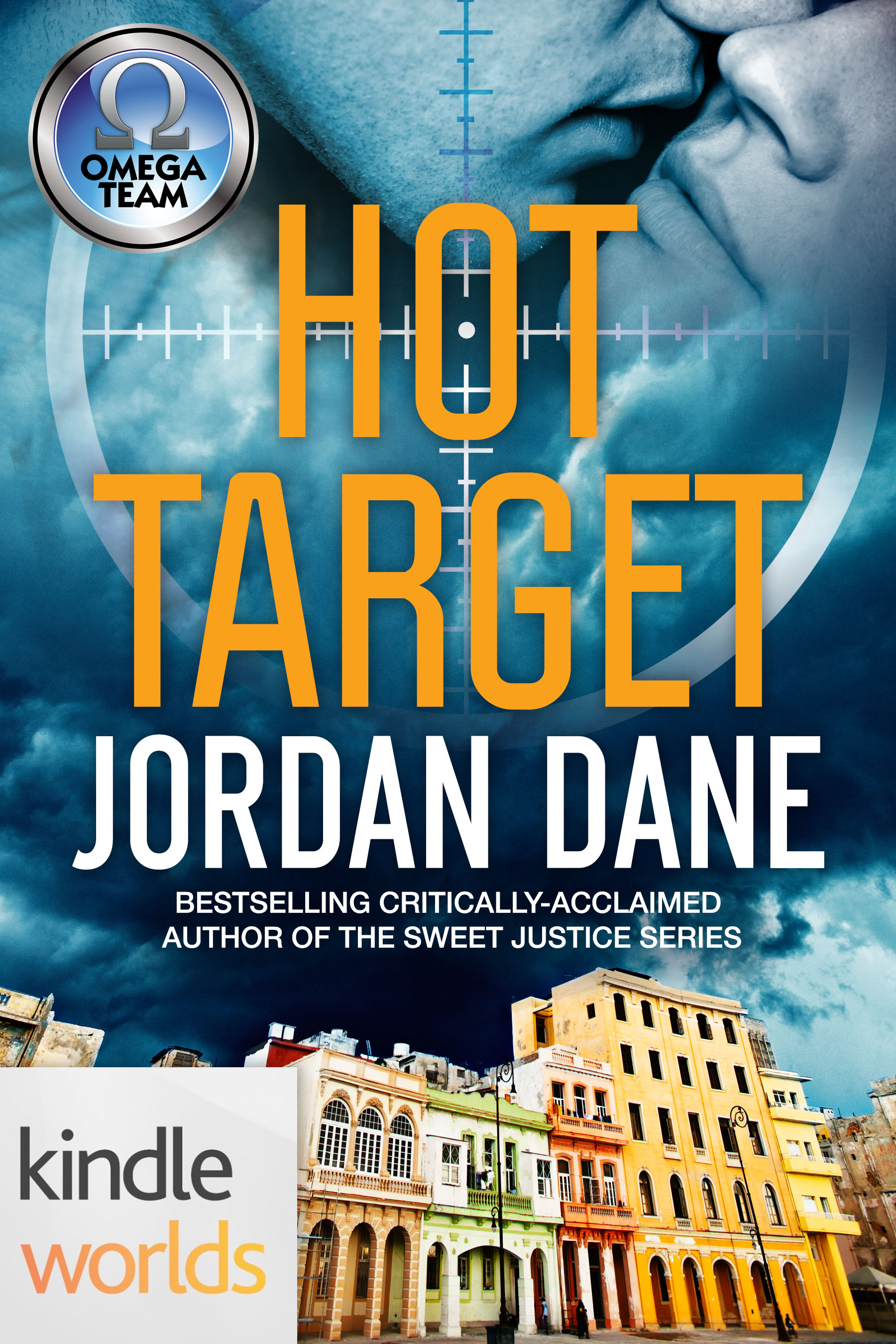
HOT TARGET – Omega Team series – ebook priced at $1.99.

Rafael Madero stands in the crosshairs of a vicious Cuban drug cartel—powerless to stop his fate—and his secret could put his sister Athena and her Omega Team in the middle of a drug war.

Tracking How You Read

Two recent articles –  a Wall Street Journal article Your E-Book is Reading You and a New York Times Article Moneyball for Publishers – discuss the ways in which publishers and book retailers are using digital data to understand how readers react and engage with e-books. New data analysis techniques can look at how quickly readers finish a book, how far readers get in a particular book before giving up on it, and can even assess differences between readers (based on gender, age and other factors) in terms of their reading behavior. Sounds intriguing, doesn’t it? Especially given many publishers would admit they don’t really know a lot about their readers or their reading behavior when it comes to specific books.

Jellybooks, a so-called ‘reader analytics company’, offers publishers the ability to track reading behavior by giving a group of readers free e-books and digitally recording their reading behavior. In this way they are hoping to demonstrate to publishers how often the books are opened, how quickly they are read and (if a reader fails to complete the book) at what point a reader’s interest began to wane. According to Jellybook’s data fewer than half the books tested are finished by the majority of readers (ugh!) and that most readers give up on a book in the early chapters (which is hardly unexpected). Again, intriguing…

So what could publishers potentially do with these data? Well, given the plan is to track reading behavior prior to a book’s publication, these data could be used by publishers to formulate their marketing plans (spending less, I assume on the books that ‘failed’ in the test group, and spending more on those the test group completed quickly). Publishers could also use the data to identify the type of readers that respond well to a book and produce a more targeted marketing plan. I assume another option, in the future, could also be the possible ‘casting adrift’ of authors and books that failed to catch fire with test readers.

Both the WSJ and NYT article point out the potential pitfalls for these kind of ‘deep’ digital reader analytics programs. The test group might not represent, for example, the kind of readers a particular book would appeal to, or the group might not be a large enough (or diverse enough) to adequately represent the general book buying audience. There are also privacy concerns if this kind of analytics became widespread – although almost e-book publishers like Amazon, Apple and Google can already can track though their apps how many times readers open the app and spend their time reading. No doubt they already analyze their own data to glean a great deal of information about reader behavior.

Authors may also be cautious – while it would be pretty cool to see how readers respond to your books – what if they didn’t react as favorably as the publisher would like?? Is an author more likely to get dropped if the test audience doesn’t respond the way an author or publisher was hoping? Does a lukewarm reception in the test group mean that an author is likely to receive minimal marketing success (could failure become a self-fulfilling prophecy depending on the reaction if the test group?) I wonder too if reliance on digital data analytics could have a freezing effect on acquisitions of more quirky, eccentric or less mainstream books.

So TKZers, what do you think of the move towards deeper ‘reader analytics’. As a reader and as a writer, what benefits or risks do you see?

By the way, I am traveling to Nicaragua so, depending on access to the internet, I may or may not be able to join in, what I hope is a stimulating discussion on this topic!

First Page Critique: THE PEACEMAKER

by Joe Hartlaub

I am honored to have been asked to critique the first page of a work-in-progress titled THE PEACEMAKER by an anonymous author. My comments follow. Fellow TKZers, please feel free to offer additional constructive comments, particularly if you see something that I have missed. Thank you in advance. And thank you, Anonymous Author, for getting the job done and showing us your work.

THE PEACEMAKER  

The young woman was rounding the corner of the jogging path in Central Park. The man watched as she pulled out her cell phone. .He had been following her for years, watching, and waiting for the perfect moment to step out of the shadows and make her his own.

There had many other women, but none matched the qualities he saw in her, so when he tired of them, they simply disappeared. He and the jogger had a history and a destiny of which she was not yet aware.

The man watched as she dialed a number, not knowing she was calling her godfather, telling him she thought someone was following her and, was certain someone had been in her home when she was away.

Dan Alston told his goddaughter to go home and remain until she heard back from him; then he called his old friend, Seth Barkley.

Over fourteen hundred miles away Marshals Seth Barkley and Steve Daugherty were having problems of their own. They were at the front door of the home of wealthy day trader Jackson Callan to arrest him when three gunshots rang out.

Now, they were inside the house, swiftly and cautiously moving toward the staircase. The marshals were aware that Callan’s wife and three children might be upstairs

Looking up the stairway Barkley’s heart began to race. At the top stood a small woman crippled with fear. Behind her holding a 9mm Glock to her head was her husband.

Barkley’s first thought was, how did a mere white collar arrest go so wrong? His second, three gunshots, where are the children?

Barkley cautiously moved to the front of the stairs where he had a clear view of Callan. Daugherty moved behind Barkley to the right where he had a clear shot if Callan decided to end it all right there, taking Barkley with him.

“Is anyone else in the house?” Barkley asked

“My three children,” Callan replied eerily calm.

Barkley suddenly got a sick feeling in the pit of his stomach remembering the three gunshots that had led to this moment.

“Let your wife and kids go,” he said to the man. “They don’t play a part…”

Before Barkley could finish his sentence, a shot rang out causing Callan’s wife to fall to the floor. A split second later a shot from Steve Daugherty’s gun landed Jackson Callan next to his wife.

Feedback:

Generally, Anonymous Author needs to get ahold of the story’s reins and slow it down a bit. We’ve got one page and a few paragraphs, in which the perspective changes four  different times, from a stalker to a jogger to her godfather to a policeman. I like fast-paced stories as much as anyone but the author needs to give the reader a bit more in each scene, particularly in the opening paragraphs, before moving on to the next. Certainly the opening scene is interesting: a stalker, and a dangerous one, watching a woman who has apparently just become aware of his attention. Let’s start with that, focusing primarily on The Stalker, and proceed. I give a couple of examples of how to slow things down a bit while giving the reader more information, but certainly they are not all-inclusive.

Names: Before we go any further let’s give the stalker and the jogger a names, or a nicknames, so that we can personalize them and identify them when they come back around in the story. For our purposes, I’m going to call the stalker The Stalker (as you may have noticed) and the young woman The Jogger. Tell us a little bit about each character as they are introduced, or as soon as practicable thereafter. Let’s start with The Stalker. And give him a distinctive piece of clothing or jewelry — a keyfob that he likes to play with, something that he always wears —that the reader can use later to identify him. It’s better to do that — or to start doing that — when you first introduce a character, rather than going back and trying to back and fill later.

Show, Don’t Tell: The Stalker is a dangerous guy. We learn this in a sentence or two. Draw this out a bit. Grow the story with specific details. Rather than saying that The Stalker has been watching the woman for years indicate that he has been watching her long enough that he knows things about her that he probably shouldn’t, such as her schedule, where she works, where she shops, where she lives, and her cat’s name and what she feeds it. Little details such as this indicate that he has been snooping around the corners of her life, and maybe even going so far as getting into her apartment. As far as The Stalker’s previous women go, be vague but menacing. Talk about The Jogger’s predecessors, the ones he left behind, such as a reference to leaving women  in -x- number of states, some of whom have been found, others who have not (to use but one example).

Put the reader in the moment: The Stalker is watching the woman in Central Park as she jogs. Give us some detail. You don’t need to go overboard, but tell us what he finds to be attractive about her as he watches her run, using language such as “her tall, slender figure” or “ her long hair was secured in a ponytail that swung back and forth like a metronome as she passed him,” or what she is wearing as she jogs. You can also use a brief description of her clothing to hint at the weather conditions. Also, do a little research into the Central Park jogging trails. Just mentioning that the jogger is on the Reservoir Path, the Great Lawn, or Outer Park Drive Loop — and indicating that she lives nearby, say, on Ninth Avenue — will put the reader more into in the scene.

Slow the transition of perspective from one character to another: THE PEACEMAKER is told in the third person omniscient, where the narrator is outside of the story and telling the experiences and thoughts of each character. An author will have have a happier reader if the reader can follow the transition of the perspective from one character to another smoothly (unless, of course, you are William Faulkner or Cormac McCarthy). I felt that it was a bit choppy here. The Stalker sees The Jogger using her phone (did she stop to make the call or keep running? We don’t know) to call her godfather who then calls his friend in law enforcement who is in the middle of an offal storm. That’s all in a few paragraphs. Let’s slow things down and relay the transitions rather than throwing them. The Stalker is watching The Jogger and thinking his dark thoughts, indirectly describing her to the reader while revealing something of himself as well. The Jogger  suddenly stops jogging and pulls her phone out. Boom. A disturbance in the Force, Luke. She hasn’t done this before.  New paragraph, double-spaced. Let’s change perspective.  We’re now observing the jogger. Let’s learn a little about her, what she was thinking about when she started running on this particular day (work, a friend, joy/regrets about moving to New York, etc.), and especially how she came to notice that guy who seems to be watching her whenever she’s jogging (and at other places, too), and what made her decide to call her godfather. By now, we’re a couple of  pages into the book. If you want to introduce Dan Alston at this point, fine. Again, transition by introducing Dan Alston and describing him in his environment, placing him a couple of minutes before he receives the phone call from his goddaughter. Describe him sitting behind his desk or in his den, sipping a scotch or whatever, and getting a call from that goddaughter of his who disregarded his advice and moved to New York and who only calls when she needs something or who calls him faithfully once a week just to see how he is. And so it goes. Doug calling his friend Seth Barkley makes for a good transition point. I like how Seth is introduced here.  Seth can call Doug back a few hours after Barkley clears up that domestic situation which has totally gone FUBAR , and we can learn more about Doug, as well as Dan and The Jogger, based upon what they discuss. Then we can go back to New York and Central Park and The Stalker and The Jogger and see how things are playing out.

Proofread: I am the world’s worst proofreader so I consider this particularly important. There are a number of glaring punctuation errors here. The punctuation errors include two periods after the second sentence in the first paragraph; a comma after “watching” in the second sentence and after “and” in the third sentence of the first paragraph; and no period at all at the end of the last sentence of the sixth paragraph. These are extremely distracting for the reader, and chop up what flow you have in the narrative. After you have completed your first draft, go over your work slowly and carefully for typos and then have at least three other people do so. My own experience for what it is worth is that women are much better at this than men. Your results may differ, but have a set of eyes other than your own read your manuscript over. And be careful using Word, which occasionally causes letters and words to mysteriously drop out when cut and pasted into other formats.

Keep working on THE PEACEMAKER: By sending your first page to us — or anyone — you have gotten further than something like ninety percent of potential authors. Now is not the time to stop. Drop back and tell us how you’ve done. THE PEACEMAKER needs work, but like many houses that need rehabbing, it has good bones. As our blogger emeritus John Gilstrap says, when failure is not an option, success is guaranteed.

Thank you again, Anonymous Author, for the privilege of critiquing your work. And if you have a question, or just want to disagree with me, feel free to email me.


Customer Service

My wife is currently in Hawaii with family and I recently decided to send her some flowers for her birthday. I picked out a beautiful rose and lily bouquet from an online floral delivery service, paid my money and set the date of delivery. On her birthday she called and said they were beautiful flowers and texted me a photo of the arrangement.

One problem. The arrangement didn’t have a rose or a lily in it. In fact, it didn’t even remotely resemble the arrangement I paid for (at no small price). So I emailed customer service and complained and they apologized profusely and promised to send out the proper arrangement the following day at no cost.

My wife never got the re-delivery as promised, so I asked for a refund. Fortunately, they gave it to me. So I’d call it a bit of a wash as far a customer service goes. They failed to correct their mistake, but at least they gave me the refund.

Why do I bring this up?

We’re often told that when we’re writing we should write for ourselves and hope that the readers will follow. I’ve said this myself a number of times and believe it to be true. That if you write a story that you love, their will surely be others out that who love it just as much or even more.

Nothing wrong with that.

But I think, as professional storytellers, we do owe our readers good customer service. And by customer service I mean that we deliver what we promise. If we’re painting pictures with our first few paragraphs—the paragraphs that make readers decide to buy the book—then we had damn well make sure that the rest of the book holds up and takes the reader on an emotional thrill ride.

I’ve personally read far too many books that started out promising, then began to peter out about halfway through as if the writer either lost his or her way or simply lost interest. Then they slapped a pretty cover on their work and threw it up on Amazon, hoping they’d done enough to get some sales.

And that’s poor customer service.

Good customer service starts long before you push that button on KDP. You should never publish (or, if you’re traditionally oriented, send out) a book until you have a solid working knowledge of characterization, dialogue, narrative, voice and, maybe most important, structure.

When we first decide to write a book, many of us sit down and just start writing without understanding any of the above. And that’s fine. The best way to learn these things is to start putting words on paper and use the lessons you’ve learned from reading other authors’ work to guide you.

But just because you’ve managed to finish that first book does not mean it’s ready to be published or sent out to an agent or publishing house. Good customer service demands that you proceed carefully, thinking not just about what makes you happy, but about the reader on the other side who will not be happy if you fail to deliver on the promise that every new book offers them.

Good customer service isn’t easy. It takes time to learn what works and what doesn’t. Even in this day and age, some people still don’t understand the concept of good customer service, but at least we have companies like Custom Water who get where we are coming from. To grow any business, the customers should be your top priority. Whatever industry you are in, you’ll start to understand how important customer service experience is. So it comes as no surprise to find that some companies are deciding to implement the use of software such as PieSync, to assist with data intergration, as well as improving customer service. To learn what your customers want and give it to them.

This is why companies have invested in other ways to help improve their customer service skills and the efficiency of their business. There is always room for any business to improve, especially in the field of retail. Sites like https://toppossystem.com/grocery-store-pos-system/ will get you up to date on how businesses are making their customers their top priority. It requires patience and practice.

And, yes, you are your first customer, so it is incumbent upon you not to be easily satisfied with your work. Make sure that before you send it out to the public, they’ll have very little reason to complain.

Destination Cuba

image

By Kathryn Lilley

The summer after I graduated from college many years ago, I traveled across Europe with a friend.  It was the height of the Cold War, and I was eager to visit West Germany–in particular, I wanted to see the Berlin Wall. That was where World War III was likely to start, my thinking went, so I wanted to see the place for myself. Unfortunately, my traveling companion did not share my morbid obsession with geopolitical hot zones. So instead of making an excursion to eyeball East German guards patrolling The Wall, we spent a few extra days lounging in Parisian cafes, drinking coffee and gorging ourselves on pan au chocolat. The only foreign crisis I encountered on that trip was during a lame attempt to look cool while smoking unfiltered French cigarettes.

When The Wall was finally torn down decades later, I felt a pang of regret for having missed seeing it. So perhaps you’ll understand why I’m so excited to be headed to Cuba next month.

This is what we were upset about...

This is what we were upset about…

I have only a hazy recollection of the Cuban Missile Crisis, which took place in the early 1960’s–I seem to remember people going around collecting sand bags, and adults at the dinner table poring over bomb shelter blueprints. (For our house, the “shelter” was going to amount to little more than a lean-to reinforced with a little dirt, which’ll give you a general idea of how well we’d have survived an afternoon of Mutual Assured Destruction).

Your Correspondent in Havana

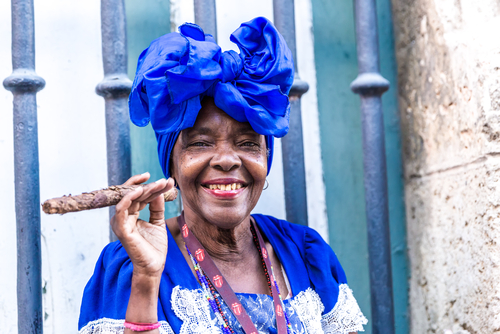
Now that the United States has finally gotten over its hissy fit about, yanno, that whole nuclear crisis thing, I’m eager to visit Cuba. In my mind, that island nation represents the last vestige of the Cold War.image I want to see it before a tsunami of American tourists  descends en masse. (Hopefully the people of Cuba won’t allow US corporations to transform their island into yet another overpriced vacation destination. But I’m not optimistic).

Meanwhile, I’m hoping to glean a few travel tips for my upcoming trip to Cuba Libre. Have you had a chance to visit Cuba? Let me know if you have any tips or suggestions for the road. (According to Duolingo, my language-learning app, I’m still only 14 per cent fluent in Spanish, despite having diligently practiced for the last four weeks. So I’ll need all the help I can get.)

Hasta luego, comrades!image