First Page Critique of MOONSTONE

Jordan Dane
@JordanDane

Cry baby Truss ZF-9327-85193-1-001


Another courageous author has submitted the first 400 words of a work-in-progress anonymously for critique. Read and enjoy. See you on the flip side with my comments, then join me with yours.

PROLOGUE

Waterford, MN
June 4, 1994

By the light of the moon you can catch fireflies, or sit by a campfire watching the embers drift upward toward the stars. By the light of the moon you can stroll down a dirt road, or just sit on a back porch with a tall glass of iced tea. By the light of the moon you can propose marriage, or just leave your lover.

And by the light of the moon, if you have a shovel, you can try to bury your past.

That’s exactly what Jack Cicero had in mind, on this night in early June. The sun had already dipped below the horizon, and the full moon was threatening to make an early appearance. As he ducked under the oak trees, darkness shrouded him, causing him to have to use his flashlight which lit up the area like a beacon. All of his senses went into high alert. He pushed his thick eye glasses tighter on his nose. He strained his ears to listen for the sounds of approaching cars. The night was silent except for sounds of the Snake River choking itself on the rocks in its path; and the pounding of his own blood in his head.

He pushed on not willing to test his luck. He spied a large rock under the trees, and set the flashlight down in such a way as to shield its light from the road. If he heard anything, he could grab it in an instant and kill it.

He picked up his shovel, and cursed and groaned as he stabbed the soft earth at the base of the rock. He had to hurry, because this moon was a reluctant, silent witness rising higher in the sky, threatening to expose him. Although she tried, the full moon failed to penetrate the thick oaks overhead. But that didn’t make Jack feel any better. Despite the cool night air, he was breaking a sweat. He swore and picked up the pace. He was in a race to put everything behind him, closing one chapter so that he could open another.

With a groan, he hefted one final shovelful. Then he patted the dirt down and scraped some of last fall’s dead leaves over his handiwork. For a moment he thought that he might actually vomit. He dropped to his knees, leaning against the large rock and bent his head. A single tear rolled down his cheek, soaking into the sandy soil below. A final act of contrition. He wiped his face with his sleeve, pushed off of the rock and stood up. It was done. But Jack knew that no matter how much he could try to hide the past, it could come back to haunt him. He’d always be looking over his shoulder for someone to figure out his secret and expose him. Considering he knew just about everyone in Waterford, the list of possibilities was longer than the river itself.

FEEDBACK

OVERVIEW: At first reading, I liked this introduction because it stuck to the action (for the most part) and did not slow the pace with back story or explanation. That takes discipline for an author to do this. The narrative is simple and pulls the reader into the story with its mystery. Well done. But as I got into this on a 2nd and 3rd read, I found things I would edit if this were mine. This author shows promise and if the following items are addressed, I would keep reading.

THE START: I understand what the author intended with the first paragraph – to set the stage with a light and breezy beginning of harmless imagery before the reader is shocked once they realize the story will take a dark turn. Who’s POV is this? No one’s. It’s omniscient before the POV becomes that of Jack. This tactic–and the use of YOU–pulled me out. If the story is set up properly, where we see Jack in the dark with a shovel, he could be doing ANYTHING until we learn what’s happening and the mystery begins. The shock factor would be presented in another way, without the need for the faux lead-in.

THE ACTION: What is Jack doing? He’s got a shovel and a flashlight, but it doesn’t appear as if he’s burying a body because he’s not carrying anything else. Is he digging something up? He starts by digging into the ground with his shovel but ends by patting down a mound of dirt and pushing leaves over the pile to hide what he did. The transition from start to finish didn’t describe enough for me to understand what he’s actually doing. With the vagueness, the reader might make an assumption that would prove false later on, and the author takes a chance of alienating the reader if this is not made clearer. I also wondered why Jack would pick a spot by a road where he can be seen with his flashlight. If he’s got a choice and wants to be secretive, why risk a location where he can potentially be seen? I know the risk of getting caught adds to the tension, but maybe there would be a way for the author to explain why Jack picked the spot (even if it meant risk of discovery) and still leave an element of mystery.

WORD CHOICES: In 3rd paragraph, “The night was silent, except for the sounds of….” If there are sounds, the night can’t be silent. The night might be “still” or “quiet,” but not silent if noise is heard.

In 5th paragraph, calling the moon “she” pulled me out and made me wonder if another character had stepped into the scene.

In 5th paragraph, the moon can’t be a “reluctant” witness to anything, but in one line the moon is shining on him, threatening to expose him, then in the next sentence, that description is contradicted by this – “the moon failed to penetrate the thick oaks overhead.” (Oaks are usually ‘overhead’ too. Directional words like up, down, overhead should be scrutinized during the edit process. They can usually be deleted.)

I’m not a fan of the word THAT. It’s often unnecessary and can be eliminated.

DESCRIPTIONS: This might be nit picky, but this phrase pulled me out of the narrative and made me wonder if there would be a better way of describing what is happening. This comes across as TELLING to me and could be more effective.

As he ducked under the oak trees, darkness shrouded him, causing him to have to use his flashlight which lit up the area like a beacon. 

“The area” is actually the ground but what’s on the ground? How does the light play across it? it might be a more effective line if the author could get the reader to actually see the effect of the light, rather than merely saying it “lit the area.” Do the shadows of spindly grasses elongate and move as the light passes over it? The effect could add a creep factor. What sound do they make in the wind…for a guy who is already nervous?

PASSIVE VOICE: One of my favorite TKZ posts of all time came from Joe Moore in Jan 2012 – Writing is Rewriting. A great overview of the draft and edit process. Below are some examples of passive writing. My first pass at editing is to delete and tighten my sentences into succinct and clearer writing. Many readers might not pick up on the passive voice, but authors should strive to hone their craft and challenge themselves with each new project.

3rd paragraph: “was threatening” should be ‘threatened.’

5th paragraph: “was breaking” should be ‘broke.’

Last paragraph: “could try” should be ‘tried.’

PARAGRAPH LENGTH: I prefer to give the reader some white space so the paragraphs don’t appear laden and heavy as they look ahead. A heavy paragraph could encourage a reader to skim. As Elmore Leonard (RIP) once said – “Try to leave out the part readers tend to skip.” I often break up longer paragraphs into 3-4 sentences and change the length of those sentences to create a natural cadence if the words were spoken aloud.

FOR DISCUSSION:

What about you TKZers? What constructive criticism would you give this author?
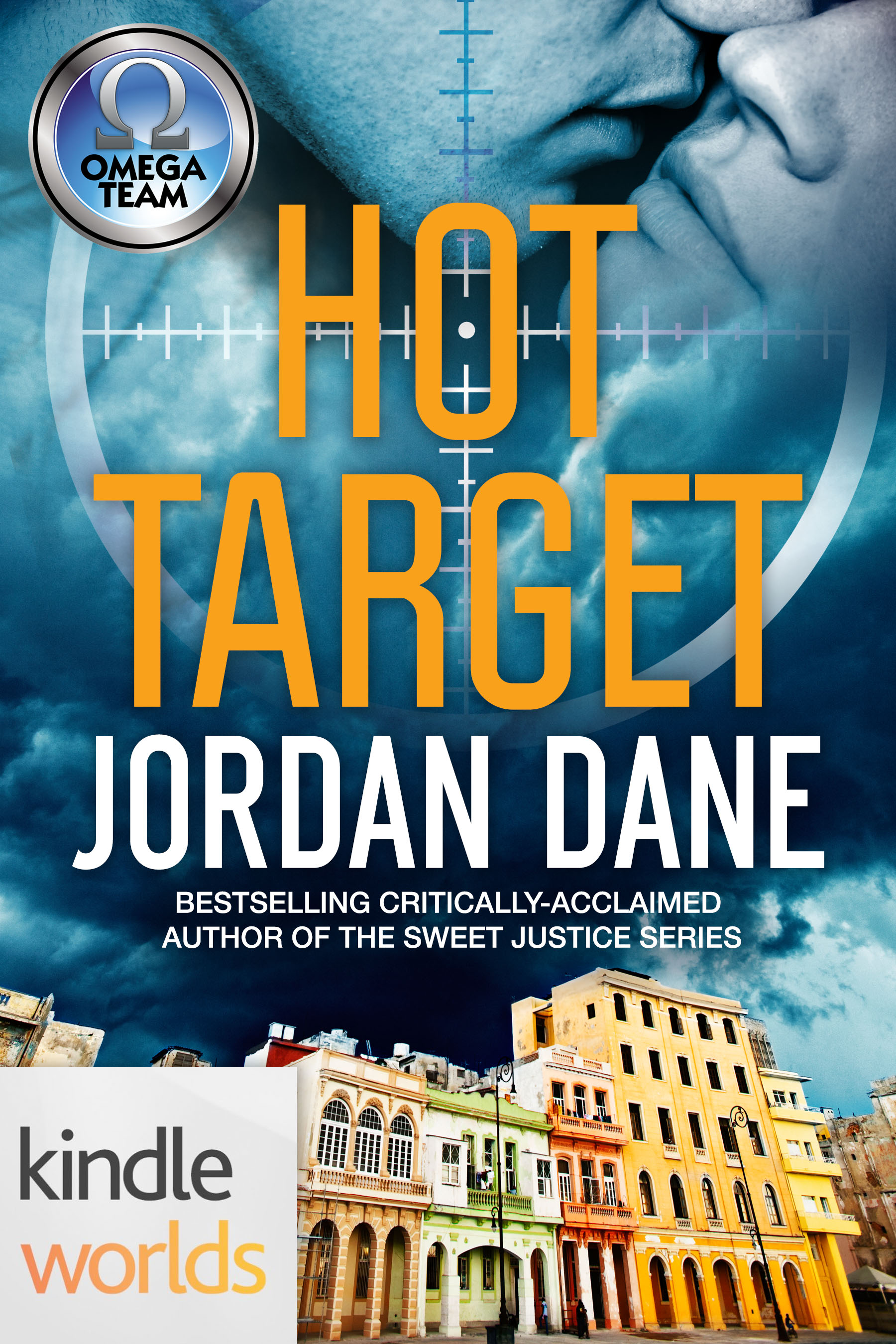
 

HotTarget (3)

HOT TARGET – AMAZON Kindle World $0.99 – DISCOUNTED (Book 1 of 2)

Rafael Matero stands in the crosshairs of a vicious Cuban drug cartel—powerless to stop his fate—and his secret could put his sister Athena and her Omega Team in the middle of a drug war.
Croco Designs

Croco Designs

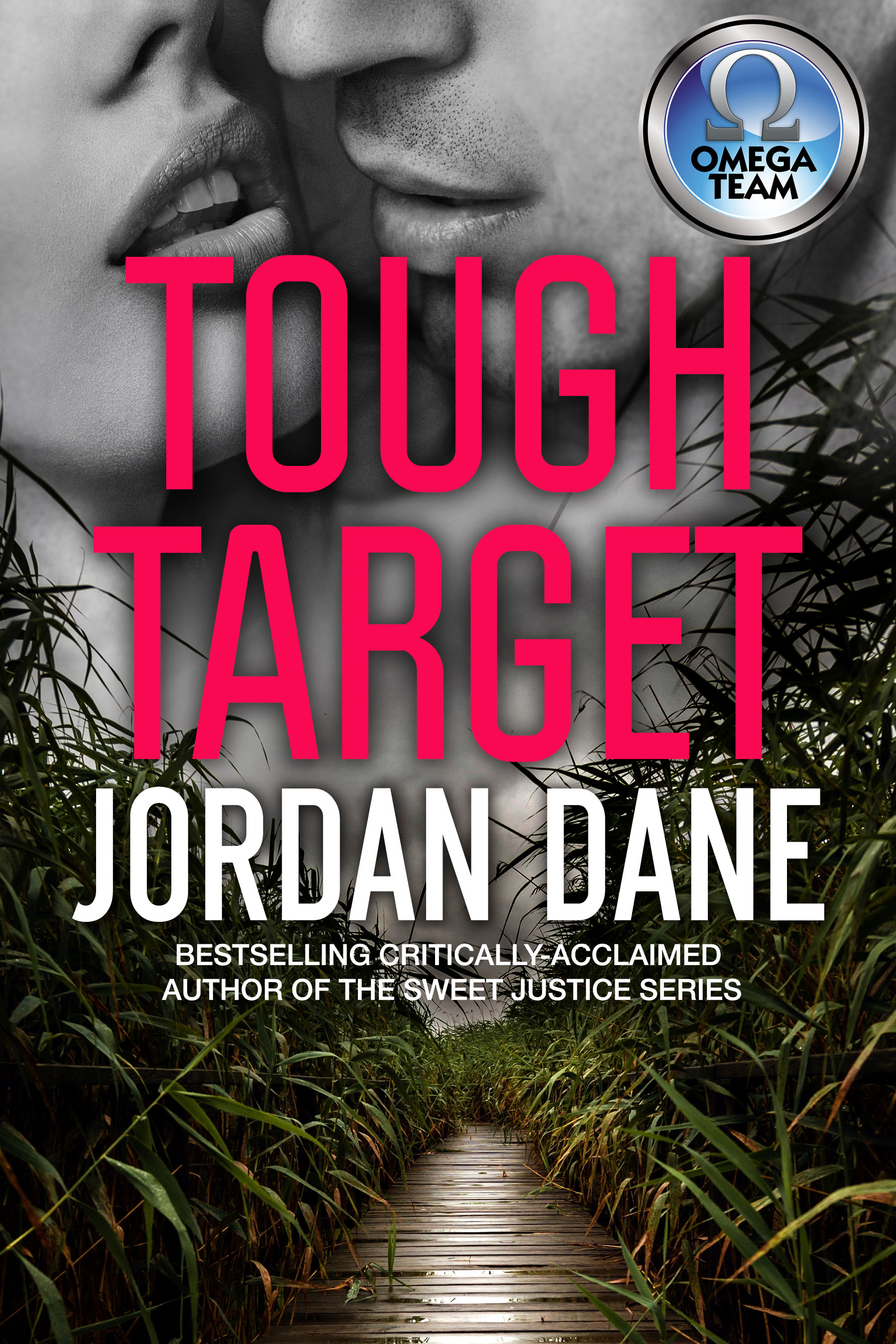
TOUGH TARGET – AMAZON Kindle World $1.99 – (Sequel Book 2 of 2)

When a massive hurricane hits land, SEAL Sam Rafferty is trapped in the everglades with a cartel hit squad in hot pursuit—forcing him to take a terrible risk that could jeopardize the lives of his wounded mother and Kate, a woman who branded him with her love.


Le ving O t the P rts Pe ple Sk p

Elmore Leonard, one of our best American writers, famously said that he tried to “leave out the parts people skip” when he was writing. Anyone who has read a Leonard novel knows that they are lean, move quickly, and certainly don’t require any skimming.

But what exactly does that mean?

People start skimming when they lose interest. When they want you to get on with things. When they’re not as engaged by the story as they should be.

So how do you keep them engaged?

What follows are a few ideas.

KEEP YOUR PROSE STYLE
SIMPLE, ECONOMIC, AND CLEAR

You can certainly be clever and artistic, but never sacrifice economy and clarity for the sake of “art.” Much of that art, in fact, is writing sentences and paragraphs and pages that flow from one to the next, giving the reader no choice but to hang onto every word.

And clarity is always important. If a reader is confused about what is going on, she may well give up on you.

Don’t bog your story down with too much description.

Descriptive passages can be quite beautiful, but your job is to weigh whether or not they’re necessary. Poetic writing is often wonderful, but those who can pull it off are rare.

Gregory MacDonald, the author of the Fletch books, among others, once said that because we live in a “post-television” world, it is no longer necessary to use the amount of description needed in the past. We all know what the Statue of Liberty looks like because we’ve seen it on TV. We’ve seen just about everything on TV, and probably even more on the Internet.

So, I think it’s best to limit your descriptions to only what is absolutely necessary to make the story work. Meaning: enough to set the scene, set up a character, or to clarify an action.

Let’s face it. Saying something as simple as, The place was a dump. Several used syringes lay on the floor next to a ratty mattress with half its stuffing gone is often more than enough to get the message across.

If you can, describe a setting through the eyes of whatever character controls the scene (meaning point of view). If you include the description as part of that character’s thought process, colored by his or her mood or personality, the description then becomes much more dynamic and also reveals a lot about that character.

One man’s dump, after all, may be another man’s paradise. And showing how a character reacts to a place is much more interesting than a static description.

TEASE YOUR READERS

One of the biggest mistakes I see aspiring writers make is that they try to reveal too much about character motivation and story too soon. Your job—as crass as it might sound—is to manipulate your reader. To keep her reading. Turning those pages.

Imagine meeting someone for the first time and they tell you everything there is to know about them. Where they were born, where they went to school, how many affairs they’ve had, how many brothers and sisters, their favorite color, their favorite food—you get the point.

What makes people interesting to us is that all of these things are revealed over a long period of time. We get to know them gradually, rather than all at once. They are a mystery that we have to unravel.

The same holds true with storytelling. You manipulate your readers by constantly creating questions in their minds. Why is she doing that? Where is she going? What happened to her in the past that makes her afraid of confronting him?

If we know it all up front, we’ll lose interest fast.

Actor and comedian Keegan Michael Key recently described improvisation as walking backwards. I think the same applies to writing fiction. You start with a character and as you walk the reader backwards, more and more gets revealed. The chair he’s sitting in, part of the room surrounding him—there’s a bed over there, a sofa to his right—then you keep walking backwards and you discover that one of the walls has crumbled and you begin to hear the sounds of traffic and you realize the man is sitting in a chair in a house with only two walls and no roof that has been partially destroyed by a tornado ,and he’s more or less sitting outside…

You start close and pull back and reveal, reveal, reveal.

GIVE YOUR CHARACTERS
A SERIES OF GOALS

Most stories will involve a central character who wants something. In a thriller, for instance, that may be something very big. The hero wants to stop the bad guy from, say, blowing up the federal building.

But if that’s all the story is about, then I’m yawning already.

If you give the hero a series of goals, smaller points he or she must reach—both internally and externally—before finally reaching that ultimate goal, then your reader will never lose interest.

A great example is the third Die Hard movie, Die Hard with a Vengeance.

The bad guy has something nefarious up his sleeve. But in order to distract the police from that ultimate goal, he sends them on a series of wild goose chases involving high explosives. And because our heroes are moving from one goal to the next, we’re never bored. In fact, we spend much of our time on the edge of our seat.

In the meantime, the main hero suspects that something is up, and as he tries to puzzle it out, we’re right there with him. We have only as much information as he has, so we’re not about to abandon ship until he (and we) knows the truth.

But more importantly, we also have a dynamic relationship playing out on screen between two characters played by Bruce Willis and Samuel L. Jackson. These two men must work together reluctantly, and because we find them engaging, our stake in the outcome of the story is even higher.

Which brings me to my final point:

CREATE COMPELLING CHARACTERS

If you don’t create characters who are interesting in themselves, who have internal struggles we can relate to, who have fears we understand, who have a goal that makes sense to us on a personal level, then it doesn’t matter how cleverly you plot your novel. We won’t care.

Hopefully all of the above will help you “leave out the parts people skip.” And if you want to find out how the master himself does it, go pick up an Elmore Leonard novel today.

But be warned. He does it so well, it’s seamless. So you’ll have to pay close attention…

First Page Critique: The Challenge Of Telepathy

imageToday we’re reviewing a first page submission titled CHECKS AND BALANCES. I’ll add my comments at the end. Then, I invite you to add your constructive feedback in the Comments.

CHECKS AND BALANCES

The Peak District, Year Eight of the First Lord and Eternal Blessed First Lady’s Glorious Regime. June.

I pushed through the ranks of stern-faced men and women dressed in combat trousers and canvas jackets until I reached David.

“Good of you to finally join us, Melanie.” Without another word, he set out hacked CCTV feed to show Somerset House from the Strand.

The elegant arches and columns of the Regime’s headquarters formed a stark contrast to this utilitarian network of abandoned mines. I dutifully studied the armed soldiers guarding the archway and the helicopters hovering above the courtyard, but the larger-than-life portraits that dominated the façade demanded my attention.

Honour the First Lord demanded the painting on the left, above an image of a striking man in replica nineteenth-century military uniform. Remember the Eternal Blessed First Lady mourned its companion on the right-hand side. Its subject appeared as fragile and innocent as a rococo shepherdess, but my co-conspirators considered her a she-devil in life and their most high-profile victim in death.

“There’ve been too many deaths, too many prisoners. We need to stop the Regime once and for all,” David intoned. Years of outdoor living had given him the muscles and hearty glow he could only have dreamt of in his old life as an academic. When he spoke, people listened.

I ignored him.

My eyes lingered on the second portrait until its features blurred. Until I was content that the so-called Eternal Bless First Lady’s curves, red lips and Dior gown bore no resemblance to my soldier’s body and weather-beaten face. The Treaty camp didn’t possess a mirror, but I could well imagine the changes wrought by five years of camping in the peaks and hiding in mines, wracked by cold, hunger, and the constant fear of discovery. Besides, Marianne Helmsley’s defining feature had always been her Rapunzel curls, and I’d cropped my hair to the skull the night I fled to the Treaty.

No one had recognized me before. No one would recognize me now. If there was one thing both sides agreed on, it was that the dictator’s wife was dead.

My Comments

No doubt the writer has a strong mental image of everything that’s happening in this first page, but that image wasn’t conveyed cLeary enough for me as a reader to get oriented within the scene. I needed more of a sense of the physical context in which the scene is taking place. For example, the early reference to “hacked CCTV feed” made me assume that the characters are viewing everything else that is being described that described on a monitor or screen of some sort, but I wasn’t certain.

Grounding and Context

The second paragraph refers to “Somerset House On The Strand,” followed immediately by a reference to “the Regime’s headquarters.” By those places are contrasted with “this utilitarian network of abandoned mines,” I was floundering at sea.

Eccentric Language Creates Confusion

I kept stumbling over some unusual language and word choices.

For example, in the following line

Honour the First Lord demanded the painting on the left

I wasn’t sure if the writer intended to use the verb “demanded” as written here, or simply made a mistake. The next line only exacerbated my confusion by injecting a convoluted character name (“Remember the Eternal Blessed First Lady”), along with another eccentric verb choice.

Remember the Eternal Blessed First Lady mourned its companion on the right-hand side.

As a general rule, it’s best to avoid the over-use of confusing, idiosyncratic language. For example, the following introductory framing line struck me as unintentionally humorous:

Eternal Blessed First Lady’s Glorious Regime. June.image

It reminded me of the mockumentary film “Borat: Cultural Learnings of America for Make Benefit Glorious Nation of Kazakhstan”. (Which is probably not the tone that the writer had in mind!)

A Part Well Done: A Snappy KIck-off

I did like the deft way the author kicked out of the scene at the end of the page.

If there was one thing both sides agreed on, it was that the dictator’s wife was dead.

That line gave me the first strong clue about the situation being presented in this story: a military dictator’s wife forced to go incognito within a hostile environment. That’s an intriguing setup for a story. (Update: See Sheryl’s suggestion in the Comments to use this line as the first line of the story–it’s a great idea!)

Writing as Telepathy 

Writing is telepathy, Stephen King once said. The writer of CHECKS AND BALANCES needs to make sure that the reader can “see” the images  that are playing inside the story creator’s mind. It’s not an easy task, to be sure–but that’s the challenge of writing effectively.

A big thank you to today’s brave writer for submitting this first page! Please add your feedback in the Comments.

The Higher the Bar, the Sweeter the Leap

by Larry Brooks

We’ve all read a novel that changes our lives.  That makes us either want to become a writer, or glad we are already chasing the dream.

And a little sad, because in our heart we know we will never be quite that good.

Most of us have several of those, stories that are personal to us because it feels like we discovered them.  We remember them like love affairs that have left us different, enriched, even a little broken-hearted, if nothing else than because there can never be another first time.

And yet, every time we come back, it just gets better and better.

When such a novel resurfaces as a movie  — in this case 20 years later — we approach with caution.  And yet, with itchy excitement, because we get to immerse in that world again, live it through the eyes of a director with the same response to the novel that we had… this is a story that deserves to live on.

Just maybe it will live up to the book.

Last week I caught a trailer for a new film release that got my attention.  

Not because I recognized it as an adaptation of a novel that blew me away, but because the story being teased touched those old nerves in the same way.

And then it hit me.

The film is called Manhattan Night. Manhattan Night Poster

The novel that blew my mind in 1996, written by Colin Harrison, was/is entitled Manhattan Nocturne.

Perfect.  Hollywood dumbs down the title, taking the je ne sais quoi right out of it, but keeps the tonality and plot intrigue of its core… this could not be a coincidence.

Some dreams do come true.

That novel, the one that set the bar high, is about to be released as a movie that promises to do the same thing.

What you need to know about that novel, and the movie they’ve finally made from it, is delivered in two short blurbs… one about the story, the other about the author:

When a seductive stranger asks tabloid writer Porter Wren to dig into the unsolved murder of her filmmaker husband, he is drawn into a very nasty case of sexual obsession and blackmail – one that threatens his job, his marriage, and his life.

Sexy old school noir thriller with brains, anyone?

Colin Harrison was the emerging pulp literati superstar of new millennium.  He Image result for manhattan nocturnewas referred to by a reviewer as the poet laureate of American thriller authors, and has a resume that reads as if it were the wet dream of a newly minted MFA graduate with commercial sensibilities (which he was, in 1986, from the University of Iowa Writer’s Workshop).

Manhattan Nocturne was his second novel.  His third novel, Afterburn, became a highly touted New York Times Bestseller, and the second best book of 2000, right after Zadie Smith’s White Teeth.

Even his wife was/is a bestselling novelist (Kathryn Harrison, with an intimidating Wiki of her own).

What could go wrong?  Well, a 20-year wait to get the film made, that’s what.

The guy’s prose is… stunning.

Not in a lit prof you’ll-never-see-me-holding-a-paperback-on-the-train sort of way, but in a Dashiel Hammett meets Mickey Spillane channeling Raymond Chandler sort of way, but with the swagger of a White House speechwriter.  Often in workshops, when I get to the part where we talk about — and try to understand how to craft — stellar writing voice, I simply read the first page of Harrison’s Manhattan Nocturne aloud, which contains all of three adjectives yet reads like the breathless musing of a mad genius reporter teetering on the abyss of The Best Scoop Ever, searching for killer lead.

Universally, the writing audience silently mouths a chorus of “oh my…”

He writes our kind of prose.  The poetry of thrillers and mysteries set on fire with passion and tension and the promise of shocking betrayals.  Narrative that kills.

So there you go.  A great read and a movie ticket for you, to light your writer’s brain on fire.

Read the Wikipedia on the novel HERE.

Then click on the movie poster above (not the book cover) to see the trailer.

That bar… it just keeps getting higher and higher.


TKZ First Page: THE CASE OF THE MISSING PAINTING

By Elaine Viets

art-1248813_960_720

THE CASE OF THE MISSING PAINTING is TKZ’s monthly First Page critique, submitted by an Anonymous Author. Congratulations, AA. You need courage to submit your work for evaluation, but it’s a major step toward publication. Here’s AA’s first page. My comments follow.

The Case of the Missing Painting

My cellphone startled me from a pleasant although dreamless sleep. The phone fell to the floor when I groped for it in the dark. Awake now, I grabbed the offending object. “Hello,” I said, sure someone had died.

“Jenna, it’s Toni,” my cousin’s voice rang out. “Someone stole Granddad’s painting,”

Granddad’s painting? Could she mean the Impressionistic landscape he’d painted long before I was born? I switched on the lamp and sat up in bed to the utmost annoyance of Stalin, who loved to sleep nestled against my back. The cat growled in protest.

“Did you hear me? Granddad’s painting’s been stolen.” More hysteria.

“I heard you,” I choked out. “But…” clearing my throat. “I’m not sure if I’m awake or dreaming. Why the devil are you calling me at…” I glanced at my phone. “At two-thirteen in the morning? Besides, I thought Aunt Lucy had that painting, safely tucked in her Florida condo.”

“Mom gave it to my brother, Joey. He says it’s disappeared, and let me tell you he’s frantic. Mom’s going to kill him.”

“Why would anyone want it? It’s a copy, an artist’s impression of a master. Priceless to us but worthless to anyone else.” My mind cleared and my voice sounded almost awake. That painting symbolized everything I loved about my dad and his Italian roots.

“That’s what I thought. But, apparently there’s more to it than that. I really don’t want to go into it on the phone and anyway…Neal, quit that.”

“What’s going on?”

“Neal keeps trying to cut off the AC.  I’m calling from the car. We’re on our way to see you after we stop in Columbus to pick up Joey—”

“At this hour?”

“Joey can tell you all about it. We should roll in sometime this afternoon. Get the extra bed ready. I told Joey we could count on you. Cousins sticking together and all.” She clicked off.

Roll in to see me? This afternoon? Extra bed? What extra bed? This had to be a dream. Or a nightmare.

I switched off the light and closed my eyes. Visions of my granddad’s painting floated across my consciousness—the muted colors reflecting on the surface of the water. The building sitting on the bank as if submerged. A cherished painting I hadn’t thought about in years. But why had Toni called me in the middle of the night? What couldn’t she tell me over the phone? I tossed, repositioned my pillow, tossed again and finally drifted off to sleep.

pencils-157972_960_720

Elaine’s Critique: Your novel has an intriguing start, AA, but too much information is crammed into your first page. You can deliver that information throughout the chapter, even later in the book. Your work is clean and free of typos, which is important. Here are a few other points to consider.

There’s an overlooked opportunity for a more dramatic opening. We all fear late-night calls. They usually mean someone’s dead, as you mentioned in an aside. Make that your beginning and ratchet up the tension. You can still have the cell phone wrestling scene, but I’d pare it down.

Where is your novel set? Cousin Toni tells Jenna, “I’m calling from the car. We’re on our way to see you after we stop in Columbus to pick up Joey . . . We should roll in sometime this afternoon.”

That’s an easy fix. Toni can say, “We left MY CITY AN HOUR AGO. We should roll into YOUR CITY sometime this afternoon.”

Hysteria? You do a good job of moving the action forward with dialogue, AA, but the first time you mention Toni you write, “my cousin’s voice rang out.” Then Jenna thinks in italics, “more hysteria.” “Rang out” does not indicate “more hysteria.” If she’s hysterical, show us. Have Toni talking extra fast, sounding frantic, tripping over her words, using a high-pitched voice, or other indicators of hysteria.

Give a clearer description of Granddad’s painting. It’s the key to the novel. AA writes, “Could she mean the Impressionistic landscape he’d painted long before I was born?” And “Visions of my granddad’s painting floated across my consciousness—the muted colors reflecting on the surface of the water. The building sitting on the bank as if submerged.”

Do you mean “Impressionist,” a school of painting? Or “impressionistic,” with a lower case I? What is the “building sitting on the bank”? A church? A mansion? Granddad’s home? Something else? And the bank of what? A river? A stream? Where is the painting set? The US, Italy, Britain? More specifics will give your novel a vivid start. Also, the painting is “an artist’s impression of a master.” Which master? Tell us.

Too many people in the first page. This is a common reviewers’ complaint. Jenna, Toni, Joey and Neal are crammed into one page. It’s over-crowded. Neal is never identified. Is he Toni’s husband? Son? Another cousin?

What’s the season? Is it in the chilly winter? A sticky summer night? A phrase can settle that question.

Tell us a little more about Toni and Jenna.  How old are they? What kind of person is Toni? Right now, she sounds more impulsive than hysterical. Is she Jenna’s “crazy” cousin? Is she normally level-headed, so Jenna has more reason to pay attention to her alarm? A phrase or two can help us out. Somewhere in the first chapter, let us know what both these women do. Are they employed? Students? What are their last names? Are they married or single?

That darn cat. AA writes, “I switched on the lamp and sat up in bed to the utmost annoyance of Stalin, who loved to sleep nestled against my back. The cat growled in protest.” Don’t let your readers guess who Jenna’s sleeping with. Try this: “I switched on the lamp and sat up in bed to the utmost annoyance of my cat, Stalin, who loved to sleep nestled against my back.”

And do you really want to name your cat after a mass-murdering dictator? That’s like calling the cat Hitler. Not funny, and painful for some readers.

Do you need that last line? AA writes, “What couldn’t she tell me over the phone? I tossed, repositioned my pillow, tossed again and finally drifted off to sleep.”

Would Jenna really be able to go back to sleep if she got a worrisome phone call at two a.m.? I wouldn’t. Your first page will have stronger impact if you cut that final sentence.

Consider changing:

  • “a pleasant although dreamless sleep” to “a pleasant, dreamless sleep.”
  • “to the utmost annoyance of Stalin.” Take out “utmost.”
  • “I choked out.” Consider “I said.” “I choked out” doesn’t add drama. It’s a distraction.
  • “My mind cleared and my voice sounded almost awake.” How does Jenna know what she sounds like? This can be cut.
  • “This had to be a dream. Or a nightmare.” Make it, “This had to be a nightmare.” Or consider cutting it.

Don’t be put off by these comments, Anonymous Author. This is a good story. Go forth and write.

Any comments, TKZ readers?


The Art of Murder
, Elaine Viets’s new Dead-End Job mystery, opens at Bonnet elaine headshotHouse, a whimsical Fort Lauderdale museum with rollicking art, exotic orchids, carousel figures, and three squirrel monkeys who escaped from a bar. Elaine worked as a museum volunteer while she researched her fifteenth Dead-End Job mystery. The Art of Murder has been on the Pub Alley Mystery Bestseller list for nearly three weeks. www.elaineviets.com


The 5th Grade You

This week is my sons’ 5th grade continuation ceremony – an event that didn’t (at least when I was in 5th grade) have an equivalent in Australia – we simply said goodbye to primary school without much in the way of fanfare! Although, I didn’t grow up with this ceremony, I do appreciate the American way of recognizing milestones such as this, as it provides a  welcome opportunity for reflection as well as a celebration of all that has been accomplished (so far, at least…).

Marking the end of elementary school education is obviously a rite of passage and one that got me thinking about my own ‘5th grade’ self. What would I tell that girl if I had a chance to go back in time? I seem to remember that during my elementary years (primary school, as we call in in Australia) I was obsessed with becoming a scientist of some kind. I had chemistry kits, a microscope, telescope and various collections of minerals, stamps and coins. I adored animals, dinosaurs and couldn’t wait to learn about the stars…then came middle school and real science classes…which I loathed. So I guess the end of 5th grade was the end of that career dream! Although all through primary school I wrote stories and plays and poems, being a writer didn’t seem much like a career goal – more like a fun activity to while away the hours. Now elementary school is much more serious, with standardized tests, homework and far greater expectations than I ever had to deal with (we certainly had no formal state-mandated tests or homework!).

In some ways I mourn the loss of the elementary education I received – more because it seemed so unimportant at the time (I  never worried about report cards or grades).  If I could go back and talk to my 5th grade old self I would tell her to continue to enjoy the fact that school was something fun and (relatively) stress free – I would remind her how lucky she was to have the freedom to fail. I was fortunate I didn’t really need to concern myself with grades until much later in high school. I’m hoping to try to instill the same sense of perspective in my own boys but, sadly,  it’s a much more demanding world out there now.

As part of their 5th grade continuation ceremony, I was supposed to chose an appropriate dedication but, rather than embarrass my boys with typical ‘mum’ mush, I asked them to chose a quotation they thought was appropriate. Funnily enough they both chose a quote from Douglas Adams (author of a Hitchhikers Guide to the Galaxy). Jasper chose “The knack of flying is learning how to throw yourself at the ground and miss.” While Sam opted for: “I may not have gone where I intended to go but I think I have ended up where I needed to be.”

I think my 5th grade self would have been pretty happy with either of these quotations!

What about you? What would you say to your 5th grade old self if you had the chance to go back in time? What quotation would you chose for your 5th grade continuation ceremony?


Playing to Your Strengths

Owl-In-Flight

My wife Lisa’s greatest joy — after her husband, of course, and our ungrateful, unappreciative daughter — is her enjoyment of wild birds. We (well, she) has a couple of large, impervious-to-squirrels feeders set up outside of our kitchen window, and Lisa will spend hours photographing the birds that come to take advantage of the seemingly endless supply of seed that is there for the taking. One characteristic of birds, however, is that they are slobs. They drop seed, they leave husks, and…well, you know the rest. We as a result get a nightly show in the form of nocturnal creatures gathering at night beneath the feeders in a heartwarming tableau. The opossums are first to arrive. They get there early to begin eating the seed that has been left on the ground. They eventually, however, are rudely shoved aside by the raccoons, the neighborhood bully boys who push aside the opossums as if they aren’t even there. The collective attitude of the masked bandits changes quickly, however, when the skunks arrive. Their “outta my way, kid” demeanor quickly changes to, “Oh, my, hello, Mr. Skunk! How nice to see you! We’ve been saving this pile of seed just for you.” Skunks are just so gentle and shy and cute as they walk up and begin eating. They don’t take any mess, however. I did see a young raccoon, one who apparently didn’t get the memo, try to nudge a skunk out of its way. The skunk engaged in some non-violent resistance, turning around and putting his tail up, resulting in three raccoons setting new distance and reaction records for standing side jumps. I didn’t know raccoons could jump sideways. They apparently can, if properly motivated.

What do those cute vignettes have to do with writing? Quite a bit, actually. After you’ve been writing for a while, you’re going to get the sense of what works and what doesn’t for you. Write what works for you. If you are good at writing action scenes but poor at writing dialogue, go with the explosions and karate and make you characters strong and silent. If you’re not able to write a convincing love scene without embarrassing yourself, don’t entangle your character in anything other than barb wire. If you can write great sex scenes but drop the thread on complex mysteries, keep the mystery simple and secondary to the amorous scenes in the bedroom or elsewhere. Our friend the opossum’s main strengths are to convincingly play dead (we’ve all run into folks like that, haven’t we, heh heh) and get places early. If you are good at writing action scenes, start with a strong one and jump from one to another. Your story may be best served by letting the plot drive it. As far as the skunk goes, we’re talking cute but dangerous. “Dangerous” isn’t too strong a word; making that midnight run out to a Sam’s Club for several five-gallon cans of tomato juice to erase the scent of skunk spray will make a believer out of you. So…the character is going to drive your story. Cute but dangerous? Think of Jack Reacher as played by, uh, Tom Cruise. If you are blessed with the ability to let plot and characters drive your novel, you’re like a raccoon. You can sense your story’s weaknesses and strengths, and sense when something can play out a bit or, alternatively, when it’s time to wrap it up.
Which animal are you when you write? One of the above? Or another? And why?…oh, and the animal at the top of my humble offering today? To paraphrase Raymond Chandler…”What. The owl? Oh. I forgot about him.” Not really. Owls are skunks’ natural predators. The reason? Owls don’t have olfactory glands.

Infusing Emotion into Every Scene and Chapter

Jordan Dane
@JordanDane

is

Creating a book is inventing a believable world the reader can step into and escape. Your characters must seem real, as if the reader can hear them and see them. The conflict and what’s at stake must be strike a chord with readers. Readers are voyeurs who want to be taken on a journey. Since emotion is a key way to pull readers into your book and keep them there, I thought that should be the topic for today.

10 Key Ways to Infusing Emotion into Each Scene

1,) Put the reader into the scene using the senses – If you expect your reader to “feel” the world you’ve created, put them into every scene. If your protagonist is walking down a dark alley with gun drawn, you have to be there alongside him, author. What sounds can he hear? What does he smell? What are his physical reactions to his surroundings and how does that play on his fear that’s building? Anticipation is a key element in creating suspense and building on tension. Have patience to let the tension mount.

2.) SHOW don’t TELL – If you truly write the scene as if the reader is looking through the eyes and body of your relatable character, that will put them into the scene. If you only “report” what the character is thinking, it distances the reader from your character. ‘Telling’ takes all the unexpected discoveries from the reading experience and it stifles what the reader can imagine. The reader doesn’t have to think. They’re ‘told’ what to think and imagine. Focus on the action of your character and give them a physical reaction. Rather than ‘telling’ the reader that your character is afraid, show how that fear manifests itself in trembling fingers, trickling sweat, and a punishing heart beat.

“Don’t tell me the moon is shining. Show me the glint of light on broken glass.” Anton Chekhov

“Good writing is supposed to evoke sensation in the reader—not the fact that it is raining, but the feeling of being rained upon.” E. L. Doctorow

3.) Make your characters relatable and sympathetic – Dare to give your villain an odd sense of humor or have her fight for a cause she cares deeply about, so her wicked obsession feels real. Your mercenary could be a loner, but give him a dog to take care of. Load up the emotional baggage in your character’s past and force him or her into a conflict where they have to face their worst fear. Dare to make your perfect hero vulnerable. All these human frailties create relatable and sympathetic characters and will have readers rooting for them.

4.) Reach for the emotion/Make it over the top – Milk the scene for every drop of emotion. It’s not just about choosing the right words. It’s about creating effective imagery triggers that will connect with readers. If you think you’re done with a scene, go back over and layer in MORE of what that scene is about. Ratchet up the emotion beyond where you might normally go. The added touch pays off when you’re using words to put the reader into the scene.

5.) Foreshadow the danger or the obstacles ahead – If anticipation ramps up the suspense, foreshadowing helps the page turning pace of your novel and keeps the reader invested. It creates ‘flow’ between scenes and chapters. Don’t waste a scene ending or a chapter ending. Make it work for you. If a scene or chapter ending fizzles to a close, that gives the reader a chance to put the book down. Tease them with a hint of things to come and they won’t want to let go of the story.

6.) Pepper each scene with descriptive words and choose wisely – Word choices have always mattered to me. I take great pains to squeeze every ounce of emotion or sensation from the words I choose. I particularly like words that enhance the scene by the sound or imagery of the word: slither, sizzle, skitter, hiss, bam, punch, clang, klunk, snap, splat, etc. You can almost ‘see’ the action with the ‘sounds’ of these words. I didn’t realize this was one of my things until readers started to point it out as a good thing.

7.) Make the stakes high enough and make them real – Give your character something meaty to fight for. What would he or she die for? It’s not enough to ‘battle evil or fight for the good.’ Make their reason come from a personal place or sprout from their worst vulnerability. Force your protagonist to give up something he or she values most in the world in order to earn the status of hero in your book. Give your character a journey through your book so there is real change in him or her.

8.) Make your reader fear for your character as time slips away – If you’ve set the foundation for a reader to care about your protagonist and the world you’re creating, now introduce a short fuse burning—and suddenly pull the rug out and make that time table shorter. It will make for a breathless plot but will force the reader to care even more about what will happen.

9.) Savor the Twist – Do the unexpected. If the story appears to be going a certain way, surprise the reader with a well-planned twist that will force the protagonist to rise to the occasion with added conflict or will showcase his or her brilliance. Readers love to be surprised by a plot they didn’t see coming. I enjoy setting the reader up in different ways, especially when the clues were always there. Again, word choice or well-positioned elements of mystery, like red herrings, can enhance the effect of a good twist. Readers get excited when they are fooled and often will go back to reread passages. This is another way to trigger many levels of emotion in your reader.

10.) Wrap it all up and make the ending satisfying – A well-written ending, where the characters have been through hell and have come out of a very dark tunnel, can force the reader into that same feeling of having survived along with them. If there needs to be closure at a grave site, where someone didn’t make it, squeeze out every tear and make the ending a satisfying experience. Don’t squander the opportunity to leave your reader with a fulfilling ending to the

For Discussion:
1.) Did your writing tips (on layering emotion into your scenes) make the list? If not, share what works for you.

2.) What books have stuck in your mind as unforgettable emotional journeys?

Croco Designs

Croco Designs

Tough Target – The Omega Team series (Book 2 of 2) launches May 24th as part of Amazon Kindle Worlds. Read book 1 – Hot Target – and catch up. Both ebooks are priced at a bargain of $1.99. (The book page for Tough Target won’t be posted by Amazon until May 24.)

When a massive hurricane hits land, SEAL Sam Rafferty is trapped in the everglades with a cartel hit squad in hot pursuit—forcing him to take a terrible risk that could jeopardize the lives of his wounded mother and Kate, a woman who branded him with her love.

Omega Team Launch – Facebook Party with GIVEAWAYS on May 24 at this LINK.- I’ll be online at 5pm CST. Join the other Omega Team authors most of the day.