READER FRIDAY – Five Most Inspirational Places for Authors to Write

Purchased from iStock by Jordan Dane

Purchased from iStock by Jordan Dane

An author can write anywhere with the help of a tablet or laptop or even a low-tech pad of paper and pen. But there are some places that can be more inspirational if you’ve hit a dry spell.

In no particular order, here are my five favorite places to write:

1.) Graveyard at Dusk – People watching would be interesting AFTER dusk but reading headstones or taking in the quiet at a cemetery during the dying light of the day can stir the storyteller in anyone.

2.) Hotel Lobby Bar – If you’re ever at a writers’ conference, the place to be is the hotel bar. Everyone turns up there, but there are stories in the many travelers’ faces, not to mention the fun of eavesdropping on dialogue inspirations.

3.) Coffee House – The faces and the dialogue might be different in a coffee house, but the caffeine keeps the creative juices flowing.

4.) Scenic Forest – Getting closer to nature can stir the imagination and get the blood moving. Try it.

5.) Swamp – I have to admit that I’ve never done this, but I really want to. The sounds and the potential for danger in a swamp could be titillating. Let the vastness swallow you whole.

FOR DISCUSSION:
What are YOUR five favorite inspirational places to write? When your creative juices run low, where do you go or what do you do?

Evocative Suspense Author Sue Coletta on VOICE

Jordan Dane
@JordanDane

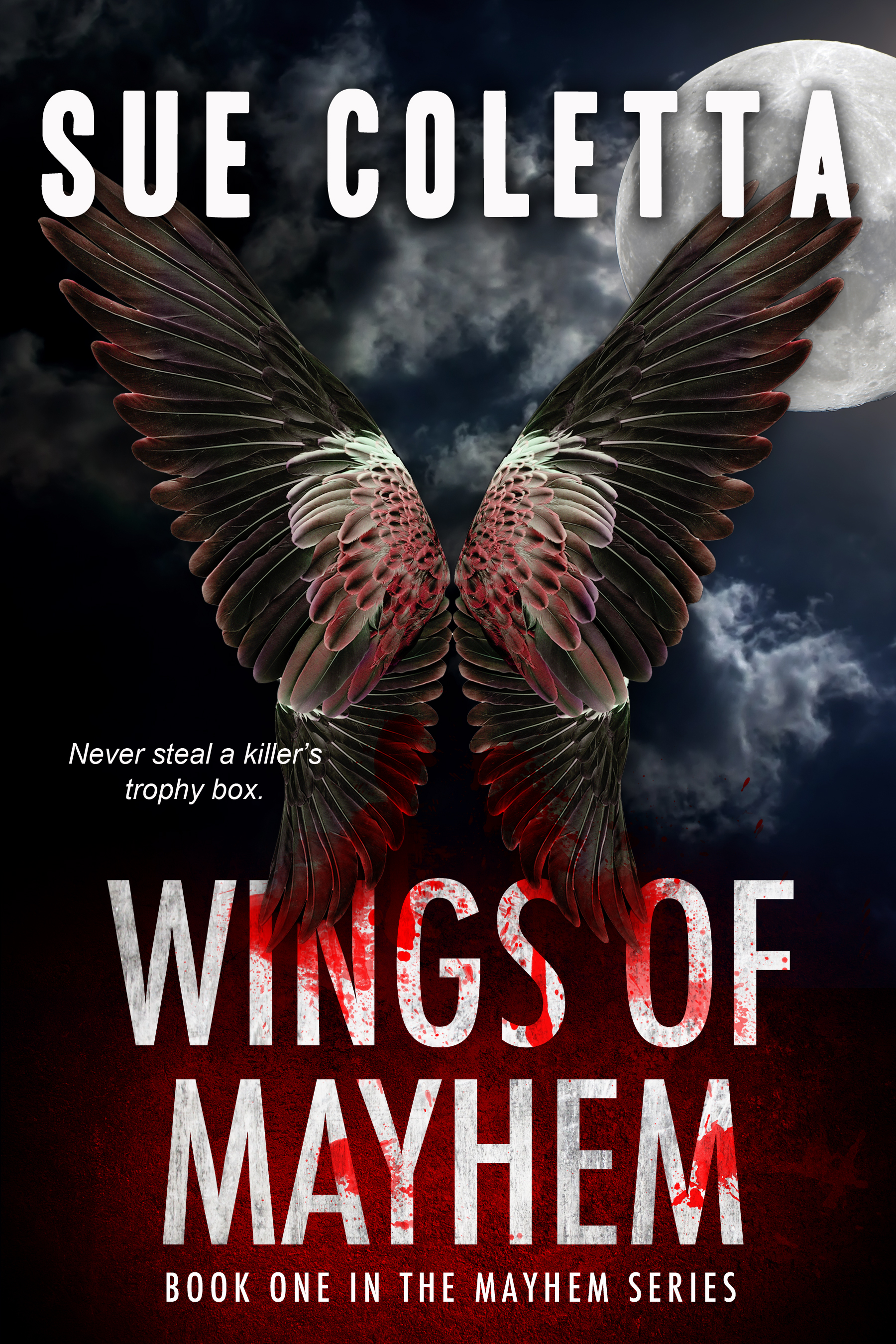
WingsOfMayhem

I’m proud to have longstanding TKZ member, Sue Coletta as my guest today. This is her first time here as a featured author. Not only is she usually one of the first to comment on each post, but I’ve seen her grow as a writer. I enjoyed her first book MARRED, with its strong voice and dark eerie tone, and I’m currently reading WINGS OF MAYHEM and thoroughly enjoying the voice of her protagonist, Shawnee Daniels. Take it away, Sue, and welcome!

Sue Coletta on VOICE

When we first begin our writing journey voice is one of things that’s nearly impossible to define, never mind discover. For years I kept hoping to find my writer’s voice, but I had no idea where to look. Deep within myself? Through hours and hours of practice would it suddenly appear? What was this mysterious “voice” everyone spoke about? And why didn’t I have one?

Perhaps what agents and editors were referring to was that perfect blend of style, rhythm, and cadence that make up the mysterious writer’s voice. Maybe it’s like trying to define the difference between graffiti and street art. I may not be able to put it into words, but I’ll know it when I see it.

When I look back on those days I wish someone would’ve told me, with a clear definition, how to develop my voice. And then one day something magical happened. I was reading the most amazing craft book I’d ever encountered, the book that transformed my writing life in an instant. I’m referring to Story Engineering by TKZ’s own Larry Brooks.

When I learned about the three dimensions of character I found my writer’s voice. I couldn’t believe it. Why didn’t anyone tell me this before?

Today, I would describe voice as the combination of syntax, diction, punctuation, dialogue, sentence rhythm, and character development within one story or across many novels. It’s unique to you. Just as a flute doesn’t sound like a clarinet, neither does one writer from another.

How awesome is that?

We all use the same 26 letters, and yet, no two authors will write the same scene the same way. One writer might use run-on sentences that go on for miles. Whereas another loads the story with short, punchy fragments. Neither is wrong; it’s a matter of personal style.

But style isn’t the only thing that makes up the writer’s voice.

By knowing our characters intimately, by understanding their hopes, their dreams, their backgrounds, scars, flaws, nervous ticks, religious beliefs, world views, what they fear, what they strive for, what they want more than anything else…we can slip into their skin and write using their voice. Not only in dialogue, but in the narrative as well—also known as narrative voice.

Take, for instance, my protagonist in Wings of Mayhem. Shawnee Daniels is a wise-cracking, snarky chic who was raised on the city streets. The way she views the world is much different than her librarian best friend, Nadine. Shawnee is overly cautious. She swears, has huge trust issues, and in a lot of ways, she’s her own worst enemy. Where Shawnee might see danger, Nadine, who was raised in a loving and often sheltered environment, would see an opportunity. Nadine never swears. Instead, she uses words like “ship” and “fleakin’”. She’s a glass-half-full type of girl. Shawnee’s glass barely has a drop in it.

Nadine’s dialogue is filled with words like “Woot!” She waves jazz hands and bounces on her toes when she’s excited. Shawnee is her polar opposite. She would never be caught dead waving a jazz hand in the air and she certainly would never use the word “Woot.” Because she’d never do these things in the dialogue, I can’t let her do it in the narrative, either, or the story would lose its narrative voice.

In Wings of Mayhem I alternated chapters between Shawnee, Detective Levaughn Samuels, and Jack Delsin, my antagonist. Each have their own way of viewing the world around them and, more importantly, the situation they’re in. I couldn’t write the narrative in the same way or it wouldn’t be unique to each character.

Where Shawnee believes everyone is after her, Detective Levaughn Samuels is more level-headed. In his narrative I used contractions like I did with Shawnee, but the tone is different. He views the world with a calm, rational, detective’s perspective. When he looks at a crime scene his stomach doesn’t scream in protest. But Shawnee’s does.

While examining a murder victim, Levaughn would narrate the facts, the wounds/injuries, his theory of the case, etc. Shawnee would be too distracted by the blowflies. She might gape at the victim’s smeared mascara, or narrow in on the thick, bluish film veiling the victim’s eyes. But Levaughn wouldn’t mention that because all corpses develop corneal clouding. It’s a natural occurrence that develops 2-3 days after death, depending on the environment in which the body is found.

By remaining true to our characters in dialogue as well as narrative we breathe life into the story. Thus, filling it with voice.

For Discussion:
Over to you, TKZers. What tips have helped you develop your writer’s voice?

Sue Coletta

Suspense Author Sue Coletta

BIO – Member of Mystery Writers of America, Sisters in Crime, and International Thriller Writers, Sue Coletta is always searching for new ways to commit murder…on the page. She’s the author of Wings of Mayhem, Marred, Crime Writer’s Research, and 60 Ways to Murder Your Characters. She’s published in OOTG Flash Fiction Offensive, Murder, USA anthology, InSinC Quarterly, and in the upcoming dark fiction anthology, RUN. The founder of #ACrimeChat, which takes place every Wed. on Twitter, Sue also runs a popular crime resource blog, where she shares her love of research…forensics, police procedures, serial killers, and true crime stories. You can learn more about Sue and her books at: www.suecoletta.com

Buy links:
Amazon Barnes & Noble  Apple iTunes  Smashwords  Google Play
Print and audio coming soon from Crossroad Press!

Social Media links:
Website/blog   Goodreads   Twitter   Facebook

Against the Wind

Imagine this scene from a story:

It’s 1983. A woman sits behind a typewriter, finishing up a page. When she’s done, she types THE END, pulls the page out and adds it to a large stack next to her on the desk.

She smiles, then goes to a liquor cabinet, pulls out a bottle, and pours a drink to toast a job well done.

All is good in her world.

Now imagine this one instead:

It’s 1983. A woman sits behind a typewriter, crying her eyes out as she finishes up a page and types THE END. She pulls the page out, adds it to the stack on her desk, but she’s crying so hard that she has to blow her nose. She reaches for a tissue, but the box is empty. So she gets up, still sobbing, and goes to the bathroom, looking for some toilet paper. The roll is empty.

Moving about the house, she steps into the kitchen and grabs a post-it note off the refrigerator—one that says BUY TOILET PAPER—and uses it to blow her nose.

Then, moving back into her living room, she opens a cabinet, pulls out a tiny bottle of “airplane” liquor, intending to use it for a toast to celebrate finishing her book, but when she tries to get the cap off, it won’t budge. It takes all of her strength to get the cap loose and she finally makes her toast.

And despite this celebration, it’s quite obvious that this woman is a complete and utter mess.

Okay.

Now, tell me, which of these scenes would you rather watch?

Me, I’ll go with the second one. In fact I have, in a wonderful movie from the eighties called Romancing the Stone. And I think most people would be much less inclined to fall asleep during version two than they would if subjected to version one.

Version one just sits there. Lays there, in fact.

Why?

Because it has no conflict.

Conflict is the cornerstone of good storytelling. Conflict is what grabs our interest, makes us want to continue reading. And this isn’t just limited to movies and novels.

How many of us would watch the news if all we saw were happy, feel-good stories? People thrive on conflict, and anyone who thinks a story doesn’t need it, is completely out of touch with what good, solid storytelling is all about.

Your basic plot line—no matter what kind of book you’re writing—always centers around characters in conflict. There’s usually both an internal conflict and an external one. And the external conflict should challenge or contribute to the character’s internal conflict (and probably vice versa).

If you give me a story about two people sailing through life without a care in the world, then I might as well watch paint dry. I need something in that story to grab me by the heart or the throat. To give rise to my emotions. To make me laugh and cry and root for the hero. And if all the hero is doing is contemplating his or her navel, then, please, get me the hell out of there.

Your characters must have a goal—no matter how trivial it might seem—and they must have strong opposition to that goal.

Even the simple act of searching for a way to blow her nose makes the second scenario above the more compelling one.

I can’t say this enough. Conflict is one of the most essential elements of telling a good story. And sharing that moment when a character overcomes conflict is what lifts us. What thrills us. What sends us soaring.

As Hamilton Mabie once said, “A kite rises against, not with, the wind.”

First-page Critique: UNTITLED

road in the mist

By Kathryn Lilley

Another brave author has submitted the first page of a work-in-progress anonymously for critique. Read and enjoy. See you on the far side with my comments. Then, please join us with your feedback.


UNTITLED

March, seventeen years earlier.

The car ahead of Noah Webb vanished.

He eased to a stop on the shoulder and stared into the soup beyond his headlights. He had followed the car for twenty minutes, two lone drivers trying to negotiate the fog. This road lulled a driver to sleep for eleven miles of straight blacktop. Then it snaked through a series of wooded curves and deep ravines. Under a full moon, this road was a challenge. Tonight, it was deadly.

The other driver never saw the curve coming. Noah shut his eyes. Memories from another distant fog shrouded night, on another lonely road, washed over him. A tear oozed from the corner of his eye and crawled down his cheek. Why was I the one following him?

Webb exhaled, flicked at the tear and mustered the strength to move. He released his grip on the wheel and shook blood back into his fingers. He fished a flashlight from under the seat. As he opened the door, cold, damp air slithered in and licked his face. He pulled himself from the car and stood still, staring where the headlights dissolved into the fog. He dug his nails into his palms and called, “Anybody out there?”

No answer. As he crept around the car, gravel and frosted grass crunched under his feet. He turned and looked back into the glare of his headlights. He checked his watch. Almost midnight. His breath froze and shimmered in the light. He shivered, pulled up his collar and then faced the darkness before him and approached the curve.

He followed the gravel to where the ground spilled over an embankment into the woods. He searched the darkness then stopped. From the bottom of the ravine, two red lights glowed in the fog like squinting eyes. He aimed his light at the car, but the mist swallowed it. “Hang on, I’m coming.”

Webb dug his heels into the slope and sidestepped down. Halfway, his foot slipped. Groping for balance, he fumbled the flashlight and it clattered away. He crashed on his hip then slid over rock and wet grass until he thudded against the bumper of the car.

My Notes: 

I am impressed by the way the writer of this page quickly incorporates several important story components:

  1. An inciting incident takes place (the car in front of Webb’s vehicle careens off a fog-shrouded curve)
  2. Tension is introduced (Webb must decide to act in order to rescue the other driver)
  3. The tension level is raised  (Webb has to overcome a reluctance to act  due to a previous accident experience)

It’s hard to check off all those story points in just 400 words, and I think it was done quite deftly here. I was drawn in by the setup on this first page–kudos to the writer!

I have a few suggestions for edits.

Keep the focus on the fog

The fog in the second paragraph is such a strong element, and the offset  rhythm of the last two sentences is great.

Under a full moon, this road was a challenge. Tonight, it was deadly.

But before I reached the end of that paragraph, the focus had shifted from the fog to the road itself (lulling the driver to sleep, snaking around curves). I would suggest revising the paragraph slightly to maintain a constant sense of the menacing fog.

How do we know? 

When did Webb first become aware of the crash, exactly? In the first sentence?

The car ahead of Noah Webb vanished.


During my initial reading, I didn’t get a clear sense of the crash as it was supposed to be taking place. The first sentence is too nonspecific (The car vanishes–where? Into the fog? Over the side of the road?) I first assumed that the car had simply vanished into the fog. I later deduced that it had crashed from the narration and flashback. As the standard advice goes, it’s better to “show” the crash clearly as it takes place, rather than “tell” it after the fact.

Flashback note

I like the information about Webb’s previous crash because it raises his tension level, but the flashback device itself is a bit clunky. It slowed down the story, especially when we got to the part about the tears rolling down Webb’s face. I’d suggest trying to weave in the  information about the previous crash without bringing the present-day action to a full stop. Perhaps Webb could struggle with his memory and tears as he’s stumbling down the ravine toward the victim’s car. (At least he’d be moving.)

Speaking of flashbacks, the chapter frame puzzles me (in retrospect).

March, seventeen years earlier.

Is the entire scene supposed to be taking place in the past? In that case, it suggests something of a flashback within a flashback, doesn’t it?

Repeated words, format

As I was reading I felt like there were a few too many instances of the word “he”. Try to vary the sentence structures to pare down the repetition.

Also, at one point the name used to refer to the character changes from Noah to Webb. Once you settle on the name you want to use, keep using the same same name for consistency.

Overall

You can file all of my comments today under the “easy to fix” category. Overall, I think the page is a great start. Thanks to our writer today for submitting this first page!

TKZers, can you add more feedback for the writer in the Comments? And don’t be shy if you disagree with any of my notes. The more, the merrier!

The Secret Key to Breaking Big

by Larry Brooks

First off… it’s not a secret at all.

It’s just something that isn’t often talked about. It is rarely hit head-on in the vast oeuvre of fiction craft, where there exists a tacit assumption that anything you choose to write about is okay… that it’s how you write a story, rather than what your story might be in a conceptual, dramatic context.

This gets tricky, perhaps confusing, because that is half true.

Nobody will suggest your story idea isn’t strong enough. Even when they should. At least, not before you write it. No, they’ll wait until you’ve spent a year gushing 100,000 bloody words onto the page from the open wound of your best intentions…

… and then they’ll tell you: meh, I’ve read this before… or… well, it’s okay, good even, but we have enough good out there, give us something great, something that stops my heart.

The true half: how you write your story absolutely matters.

Because a killer idea, poorly written, will tank every bit as fast as a mediocre idea written really well.

There exists a list of qualitative criteria (what I call the six realms of story physics), applied to another list of six story elements and skills (what I refer to as the six core competencies) that you must do well. As in, really well.

As in, you need to go six-for-six.

That’s always been true. It’s truer than ever today, in a market that is orders of magnitude more crowded with titles vying for the same finite readership, and glutted with stories and authors that are good, but not quite great.

Great is reachable. But you have to find a special story, told in an especially competent way. The sum of those two high bars is… rare.  I can tell you, as a story coach who has read many hundreds of story summaries over the past few years, “rare” is the softest word I can come with here.  Unremarkable – even when it’s just fine — is everywhere.

That other half… determined by your choice of concept and premise (which are different things) is less emphasized in the writing conversation. Frankly, it is where the writing community has lost its balls. More polite conversation and acceptable workshop narrative steps right over the need for premises that are conceptually compelling and dramatically rich, rich enough to allow a well-drawn character to shine.

So let’s all wake up to this truth.

Often, perhaps as much as half the time, stories are either rejected or perform poorly, in spite of the author really writing the heck of out it, because the story isn’t amazing at its core conceit level. Writing the heck out of a vanilla, too-familiar idea will get you precisely… nowhere.

Or at least, wherever it takes you, it will be slow going.

Take a closer look at the stories that break-out.  At the bestsellers.

A huge percentage of them are from the same familiar names, the ones you’ve been seeing there for years. I just checked: of the current top-20 New York Times best sellers, thirteen come from writers you’ve heard of, who have been there before (one of whom created the TV hit Fargo, which disqualifies him from being a newbie). One is from an author you’ve heard of because her current title is the runaway breakout hit of the last two years (Paula Hawkins slid into that spot when Gone Girl faded a bit)…

… and the others are less known.

So how did they get there?  It’s not just because they can really write.  It’s because the premises they’ve written from are on fire with upside.

I promise you, as well, that it wasn’t because they tweeted and Facebooked and pimped themselves onto the list. It’s because of word-of-mouth, which is more often the outcome of reviews than it is from social media. It’s because of quality storytelling, sure, but it’s more because of… wait for it…

… amazing, fresh, conceptual rich story premises.

Among that list, from those seven new names, consider these concepts:

– A woman defies her controlling husband’s retirement plans for the both of them. (What woman doesn’t want to defy a controlling husband?)

– A spectacularly wealthy and dysfunctional family implodes, murder ensues. (A train wreck we cannot look away from.)

– Viruses bent on wiping out humanity are vanquished… and then they return. (Some concepts never go away, they simply recycle.)

– Young girl comes to New York to make her way in the big bad city, and meets a “devastatingly handsome” bad-boy bartender. (Those two words – devastatingly handsome – will sell a million copies by themselves, in the right hands.)

Notice these aren’t end-of-the-world Hollywood blockbuster type concepts.  “High concepts” as they are know.  Rather — and this is a subtlety that will serve you, once you get it — it is because these concepts, and those like them, play into the dramatic evocation of emotional resonance from readers.

These concepts intrigue. They are vicarious, they suck us in, they push our buttons. They pose frightening, intriguing questions. They work before you know about the author or the characters, because they are conceptual.

If you need the premise itself to get someone excited, chances are you haven’t tapped into the full potential of something conceptual yet. Wife fakes her own death to avenge her crappy marriage to a man she loathes… that’s not a premise yet (no hero, no plot, no villain, no stakes… no premise), but it is a concept that will make an agent, editor or a reader sit up and take notice.

All of these books are on the list because, primarily, at least as much because the writer is really good, because they are well conceived.

The opportunity is right there: in the conceptual.  

Narrative skill is actually more an ante-in than it is a deal-maker these days. It is a commodity. Truth be told, there are people sitting in every writing conference you attend who can give those A-list brand name authors a run for their significant money.

We can take a page from Hollywood in this regard. Most of the movies we pay to see that aren’t based on novels come from the minds of producers, directors, and even actors. Those are the people with the story ideas — some of which they get from writers they quickly pay off to go away — at least the ones the industry will pay attention to.  After which they hire-out the writing itself, where anonymous craft brings those story ideas to life.

That’s not the business we are in as novelists. But don’t miss the gold in that model.

As authors, we need to function as producer, director, actor and writer of our stories. ANd we need to realize that we are selling an idea as much as we are selling our narrative skill, via a manuscript. Unless you are writing in literary fiction, the conceptual idea itself needs to glow in the dark, to show up in a dark sky chock-full of exquisitely well written mediocrity.

And then, of course, you need to write the hell out of it.

An example to show how obvious this is, once you look for it.

Let’s look at the romance/women’s fiction genre. One of those names on the NY Times list is Jo Jo Moyes, whose title After You is (at this writing) #5 on that list.

Now look closer. After You is the sequel to her bestseller, Me Before You, which in addition to selling five million copies, is currently a front-line motion picture tear-jerker, receiving good if not great reviews. This explains the sequel’s presence on the bestseller list: because a quality sequel to a legitimate bestseller — film or no film — will always be, at least for fifteen minutes, another bestseller.

Because a sequel to a bestseller IS the concept being sold.

Now let’s look deeper. Let’s look at the earlier novel (which came after ten previous Moyes titles, all successful, but none to this degree), Me Before You.
15507958

And therein we find the proof of the concept/premise pudding.

At a glance, Me Before You is a commodity tear-jerker. A doomed love story. A life-is-unfair, let’s-make-the-most-of-the-time-we-have vicarious ride through glorious, courageous heartbreak and the triumph of love itself.

Always a good bet. There have been, quite literally, thousands of such novels written.

So what made this one work?  Other than the quality of Jo Jo’s writing and storytelling?

It’s because something that resides at the core of the story idea itself. Something that is highly conceptual. Not earth-shakingly original, per se… no, that’s not always required (though it certainly can help). What made this particular love story work is the fact that the novel, in the words of Miami Herald reviewer Connie Ogle, has some bite to it. A “juicy, ripe red apple of a romance with a razor blade embedded under its skin.”

That razor blade is the concept.  The love story that covers it is the premise.

The bite of that novel is something conceptual that separates it from the crowd.

Here it is: What if the hero/protagonist, whom we love (because she’s from a working class family, and she deserves to be happy, damn it!) falls in love with a handsome, wealthy, yet bitter young man…

… so far, this is as familiar as a bagel for breakfast…

… a young man who is… wait for it… a quadriplegic.

Damn.  Didn’t see that coming, did you.

But here’s where Moyes demonstrates her conceptual chops. Instead of a trite HEA ending to an otherwise production line premise, she flips that on its dramatic ear and gives us… wait for it…

… a stunning, heart-wrenching didn’t-see-that-coming, take out her heart and stomp on it ending. A razor blade of a concept, hiding there under the skin, all along.

Concept is a framework for a story, within which premise is explored.  That framework, in Me Before You, is how it is all destined to end.

All of this, by the way, was solidly in her head before she sat down to actually write the manuscript (this I know, because Moyes is an avid if not completely confident outliner, she doesn’t move to the draft stage until she has the story nailed… a lesson there for us all). This is a highly conceptual story idea, because it grabs us even before we encounter the story.  Even before we meet these characters.

But that Jo Jo… she’s a clever one, indeed. In giving us that ending, she doubles down on the conceptual appeal of the story. Ever since Erich Segal broke our hearts in Love Story, readers have lined up to pay good money to have their emotions put through a wringer and then driven over by a funeral motorcade. Moyes actually one-ups Segal in that regard, never flinching at the ending she knew would work…

… and not backing down when Hollywood suggested she lighten up the ending of the film version. Moyes actually wrote the script for that, too, and in sticking to her original ending, the movie is doing big business precisely because of the Machiavellian manner in which it toys with our emotions before destroying them.

And now, she has the sequel on the Times bestseller list. All because of concept colliding with narrative talent. Separate those two parts of the craft puzzle, and these two home run novels don’t happen.

Dan Brown did it in The Davinci Code, and again in Inferno (the film of that novel hits theaters this summer). Gillian Flynn did it in Gone Girl. Paula Hawkins did it in The Girl On The Train. The list goes on and on in this regard.

Big ideas, delivered with big concepts, fueling big premises.

And then, written with stellar craft.

The latter, standing alone as your sole strategy, is a long and crowded road that rarely takes us where, in the quiet of our dreams, we truly want to be.

Look closely at what what’s in the literary news.  

Chances are, if there isn’t a famous author name on the cover, there’s an astoundingly conceptual idea at the heart of the story. If nothing else, than by virtue of the emotional buttons it pushes.

All that stuff… the learning, the principles, the examples of great technical execution across six realms of story physics and six realms of writing core competencies… they’re all as valuable and necessary as they’ve ever been.

But despite what you don’t often read or hear out here in craft-land all that much, they aren’t all that is needed to blast your career to another level, via a story that makes your bones in a graveyard full of well-crafted skeletons.

Don’t rush your story into being.  Nurse it at the conceptual level, ask more of it. Go deep into the dark and swirling well of human emotion and empathy to give us something that grabs us and won’t let go… even before we’ve read a word of it.

What is conceptual about your premise?  What will make someone say, “Wow, now THAT is a story I want to read,” even before you hit them with the premise itself.

Answer that one, and answer it well… and you may find you’ve dealt yourself a hand worth doubling down on, as well.


 

READER FRIDAY – Share Your Favorite Character Driven Novel

The Fault in Our Stars by John Green

The Fault in Our Stars by John Green


“I think the best stories always end up being about the people rather than the event, which is to say character-driven.” Stephen King – On Writing: A Memoir of the Craft

Some of the recent character-driven novels I’ve read lately are:
The Girl on the Train by Paula Hawkins
The Fault in Our Stars by John Green
Gone Girl by Gillian Flynn

Give an example of a book you’ve read with a memorable character-driven story – Author & Title – and tease us with why the character story was special.

Keeping Your Story Real…
Even When You Are Lying

download (1)

“Fiction is the truth inside the lie.” — Stephen King

By PJ Parrish

We all tell lies. Some of us, like politicians, make it into an art form. But most of us just bump along through life moving along the lie spectrum from the little-white variety (“Of course you’re not too old to wear leopard leggings!”) to the whopper (“I’m a natural athlete.” – Lance Armstrong.)

We all lie. To prove it, I’ll start with a little Truth or Dare. Here are five statements about me. Which ones are lies? (Answers in a little bit.)

  1. When I was 47, I was in the Miami City Ballet’s production of “The Nutcracker” directed by the acclaimed dancer Edward Villella.
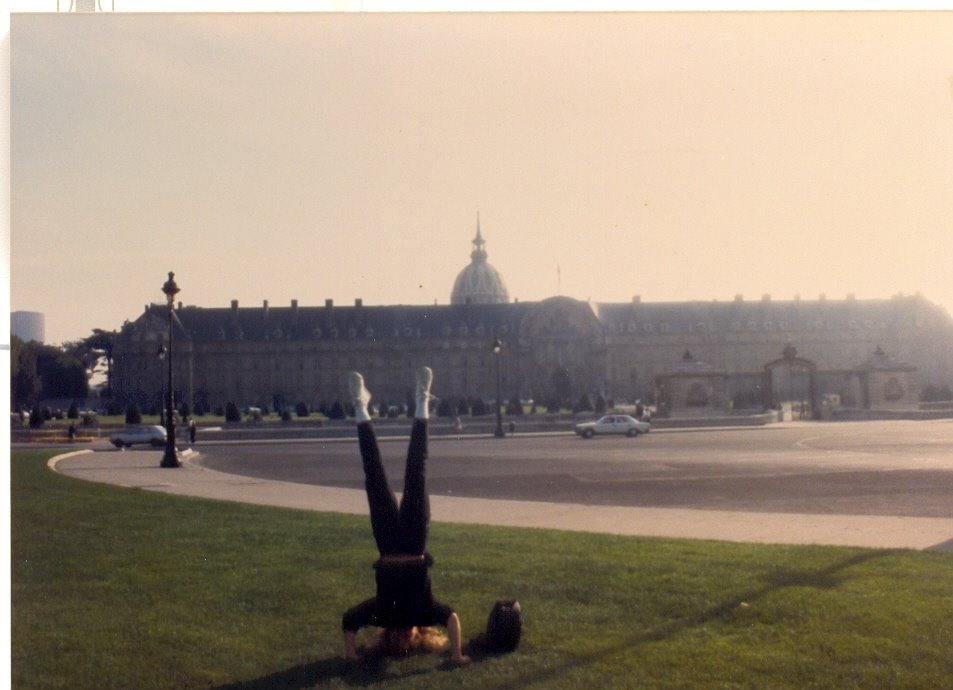
  2. I once stood on my head at Les Invalides, the place in Paris where Napoleon is entombed.
  3. I interviewed Michael Jordan in the Bulls locker room for a story about “hang time.”
  4. I was invited to a party on the royal yacht Britannia where Queen Elizabeth asked me what I did for a living.
  5. Telly Savalas let me lick his lollipop.

Now, we writers are born liars. We have to be to create fiction. And the better we are at lying, the better our books tend to be. Okay, let’s elevate the conversation and call it “suspension of disbelief” instead of lying. We hear that phrase all the time, here at The Kill Zone, in reviews, and on panels at writers conferences. But what does “suspension of disbelief” really mean?

All fiction requires some suspension of disbelief, right from the get-go. We crack open a novel knowing what we are about to read is not really true. We strike a bargain of sorts with the author — we are willing to believe his story’s premise before we read even the first word. But that is a mere promise. The hard part for us, the writers, comes in maintaining that suspension of disbelief over the course of an entire story.

If you’re writing fantasy, horror, or science fiction, “suspension of disbelief” is a basic ingredient of the craft stew. In these unreal worlds, vampires fall in love, Harry Potter breaks the laws of physics and Virgin Air has daily flights through wormholes to Vega. That’s cool because these worlds are meant to be very different from our own.  But what about the “real worlds” of crime fiction? What lies can we get away with in our quest for dramatic impact?

Time out for the answers to my true lies:

invalides

  1. True, I was in The Nutcracker at age 47. I was only in Act I but when it was over, I wanted to do it all over again. The experience gave me a taste of the narcotic all performers feel.
  2. True. Here’s the picture at left to prove it.
  3. True, I interviewed Michael Jordan. It was on the occasion of Jordan’s comeback (first or second one, I can’t recall). Most the Bulls were nekkid or almost so. Mike was resplendent in a white suit. He was holding court surrounded by sycophantic sportswriters who all tried to elbow me aside. I was the ballet critic and talked to Jordan about the similarities between hang time and ballone (how dancers seem to float in the air). Jordan was fascinated by this but wasn’t happy when I told him Spud Webb was recorded by a physics professor as having the longest hang time in the NBA.
  4. True. I was sent by my newspaper to cover the opening of the Bahamian parliament in 1977 and got to meet Her Majesty on the yacht. Liz did, indeed, ask me what I did for a living. I don’t remember what I said because I was absolutely impaled by her icy blue eyes. For the record, Liz is even shorter than I am. But her husband Phil was very tall, very gregarious, and had a little too much to drink.
  5. Not true. I did get to interview Savalas. He gave me a big hug but did not let me lick his lolly.

Back to the issue at hand. Now, I can’t talk too authoritatively about fantasy, sci-fi or horror because I am not well-read in those genres. But I’ve read hundreds of crime books (and written a few), and I think some writers of crime fiction think “suspension of disbelief” gives them license to write whatever they want — damn reality or fact.

Which is a lie.

Crime fiction, in its way, is harder to write than sci-fi or fantasy when it comes to how much we can lie. That’s because while we crime writers are tethered to the realities of police protocol, forensics, legal procedures, we have to bend these truths in service of good plotting and dramatic tension.

I once heard a famous crime writer guy on a panel say that all crime fiction had to have verisimilitude. I used to think that was just a ten-dollar word for truth. But then I realized what he was talking about was not truth, but a conjured version of it.

Definition: Verisimilitude /ˌvɛrɪsɪˈmɪlɪtjuːd/ is the “life-likeness” or believability of a work of fiction. The word comes from Latin: verum meaning truth and similis meaning similar.

Verisimilitude is not truth. Verisimilitude is the “similar” to “truth.”  So the our goal as crime writers should be creating a credibility that reflects the realism of human life. It’s as if, when we create our fictional crime worlds, we are asking our readers to view them through a mirror…not directly on, but by a reflection, slightly altered for dramatic effect.

So why do some crime books feel so wrong? Why do some characters feel so false? When does good suspension of disbelief slide into the muck of lazy writing? Here are some ways I think this happens. (You guys please add your own!)

Characters do outrageous things. Yes, a character can go rogue or surprise. But their actions must arise from the realities of their nature as you have laid them out. Have you ever read a scene and you find yourself shaking your head and saying, “I just don’t believe the hero would do this.” That’s the writer not laying down the psychological foundation for the character to act a certain way.

Characters do stupid things. Yes, it’s good to have your hero go mano-a-mano with the bad guy in the climax, but you have to set it up. I read a thriller a while back where the female detective, fresh off a hot date, goes up into a creepy old house after a serial killer — in her heels and without a gun. This is a variation of the dumb-blonde-goes-into-the basement thing.

But…but…Clarice Starling went down into the basement after Jame Gumm! Yeah, but Thomas Harris set it up brilliantly by having her show up at the wrong house and then, when she realizes the killer is there, she goes into the basement after him because she knows Kathryn is still alive and the clock is ticking. (Harris establishes this by telling us Buffalo Bill keeps his victims alive so he can starve them and loosen their skin).

Don’t put your protag in peril by making them stupid or inept. Do it by creating a crafty set-up. Shape the action leading up to your end-game situations so your confrontation is believable enough for reader to buy into.

Dumb police procedure, legal things, and forensics. You have to be in the ballpark with this stuff. In real life, cases drag on forever, test results take weeks to come back from the lab, court cases drone on without Perry Mason moments. But that is boring in books. So we writers have to condense time, inflate authority, cross boundaries, and yes, even make some stuff up — yet still make it feel true. This is not easy. It helps if you have some experts to fall back on.  I’ve called on attorney friends for legal questions, on Dr. Doug Lyle to help me fudge forensics, and I have a retired state police captain on speed dial who keeps me honest but appreciates the fact I have to bend the truth for drama.

One of my favorite crime novelists, Val McDermid, has written two terrific non-fiction books on forensics. She has this to say on the subject: “By and large, I try to be pretty accurate in how I write about the science. But sometimes you do need to make changes for dramatic necessity – for instance, squeezing a test that would take three weeks into two days. That’s the area where we mostly fall down – compressing time frames.”  Click here to read more.

Getting the police stuff right is really important to me. My favorite crime movie is Zodiac, the fictionalized story of the real Zodiac killer who terrorized northern California for a decade. The movie shows the drudgery, time-dragging reality, and soul-destroying futility of police work, yet remains dramatically riveting. And the case never got solved.

I can get anal about cop details. I’m writing a chapter this week where Louis is tracing the steps of a suspect that leads him to an apartment where he sees — surprise! — a crime scene premises seal on the door. Louis learns from the owner that a woman was murdered inside a week ago. The local cops have cleared the scene. Can Louis go inside? Can he seize evidence that he thinks is relevant to the OTHER case he is pursuing?  I emailed my police captain, laying out this scenario. He wrote back (in part!):

“The Fourth Amendment only protects the “person’s” right from governmental action – the illegal search and seizure. Louis is “government” but the person whose rights might be violated is no longer a person — she is dead — so Louis could go in and seize her property and because she is not around to be prosecuted for the “evidence” he may seize then it is not a Fourth Amendment issue.  Second, the owner has permission and the right to enter the apartment so if Louis asks and the owner gives permission for Louis to enter with him then he has the right to be there. Once there anything that he sees in plain sight that he thinks is evidence he could seize.” 

Problem solved. Louis gets in, finds what he needs, plot moves forward. In reality, things would play out differently, my police captain said. But with this, I am in the ballpark of suspended disbelief.

Lost and Befuddled Amateurs. So what if your protagonist is not a cop or detective? What if they have no logical reason to get involved with the crime? This is a tough one, and one reason we get so many protags who are lawyers and journalists, as these jobs can dovetail with the crime world.  Now, if you wrote cozies, your readers allow for a suspension of disbelief by default, buying into the idea of the civilian-savior. But you still have to set things up so the protag isn’t just an idle observer (yawn) but an active participant (Yay!).

I have been working with a writer through Mystery Writers of America’s mentoring program. Her book features an engaging protag who works in a florist shop. While delivering flowers to a rich matron, the protag finds her dead body in the foyer. Cops are called, of course, but the writer had a problem: She couldn’t justify a flower shop employee having access to the case — or even a reason to solve it. The scenes weren’t believable because the cops would never let a civilian on scene let alone into the case. But through tough rewriting and hard rethinking of her protag’s motivations, the writer solved the problem by making the protag a disgraced journalist who is desperate to clear her reputation.

She’s learned the lesson. Yes, you can lie. But it better ring true.


Reading Aloud

by Clare Langley-Hawthorne

imagesThere’s something very therapeutic about reading aloud and, as it’s still part of my boys’ bedtime routine (sadly I’m not allowed to sing Twinkle Twinkle Little Star anymore…), there’s something very nurturing about it too. I love hearing the cadence and flow of another author’s writing and it’s great fun to practice character voices and hear your own voice speaking some of the most familiar lines from your favorite books from childhood. Now that my boys are voracious readers themselves it’s getting increasingly difficult to choose the right books to read aloud (versus ones they’d prefer to read on their own). Each night we only have limited time for me to read aloud (otherwise we’d all end up asleep at midnight!) and it can be a hard slog to tackle a huge tome of a novel (we gave up on Lord of the Rings after the second book simply because it took so long to plow through it reading aloud).
I’m close to finishing our current book (one of Jonathan Stroud’s great Bartimaeus series) and have to decide on what to read next. Given it’s summer I’m thinking of something a little shorter and more concise, but at the same time, something that my boys are unlikely to tackle reading on their own right now. I’m tossing up classics like George Orwell’s 1984 or William Golding’s Lord of the Flies and even considering something a little different like Paulo Coelho’s The Alchemist or a classic crime novel (Jasper’s already devoured a few Agatha Christie novels)…but I need  more suggestions to add to the list (and to give the boys some choice).

So I’m turning to you, TKZers for some recommendations for ‘summer’ read aloud options. Preferably not too long and something that’s appropriate for 11 year old boys to hear (although, hey, we survived dealing with To Kill A Mockingbird!). I’d love to have a nice long list for them to choose from – and they might even opt to read some for themselves too!

All and any recommendations greatly appreciated!


Going Deep With a Series Character

by James Scott Bell
@jamesscottbell

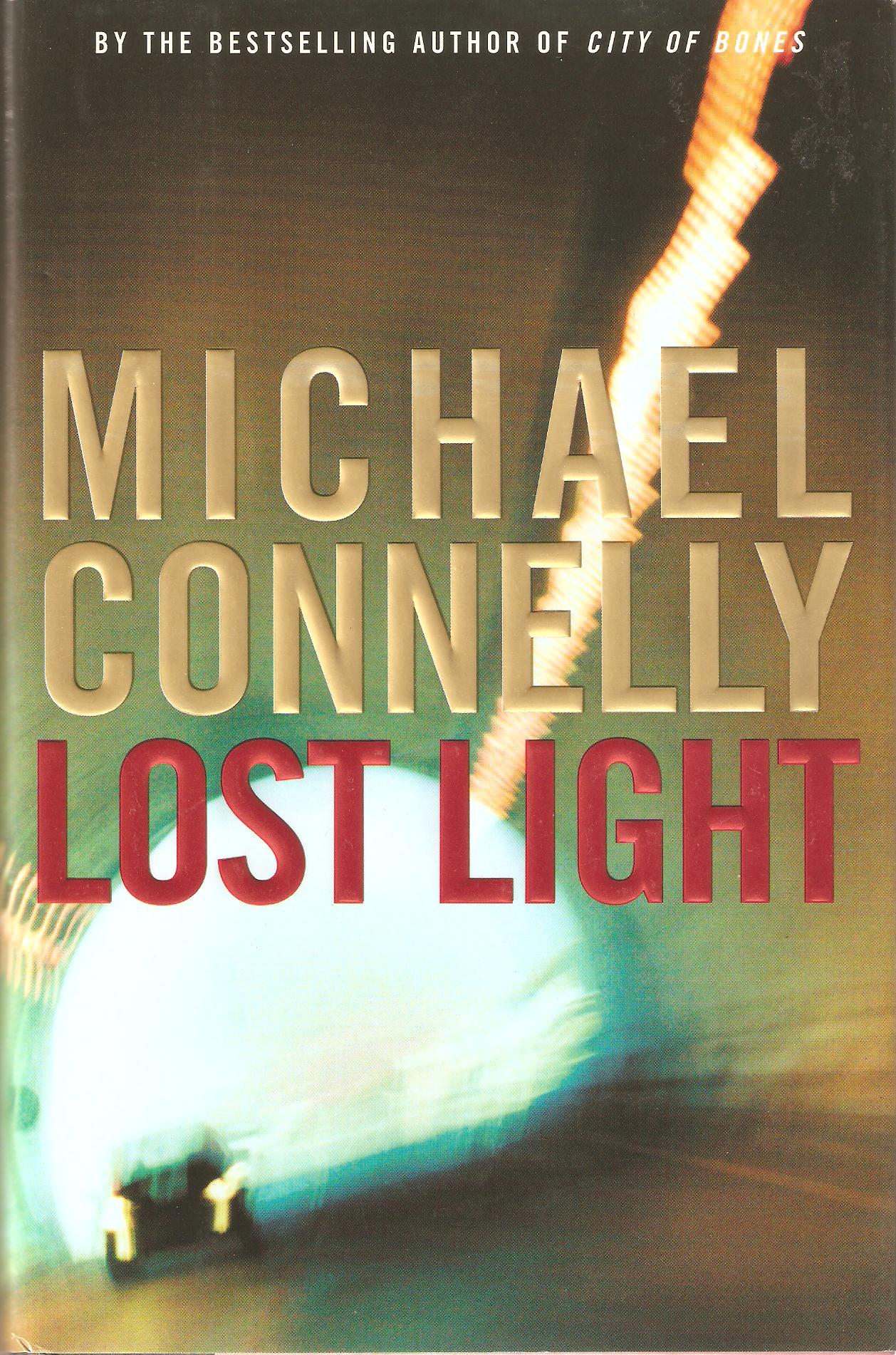
A post and an announcement today. First the post.lost-light

A few years ago I was at the Men of Mystery conference in SoCal, a one-day gathering of mystery writers and readers. The keynoter was Michael Connelly, and something he said hit home.

He was talking about advice he got early on from Joseph Wambaugh. Wambaugh, the L.A. cop turned bestselling author, told Connelly that the really interesting thing is not how the cop works on the case; it’s how the case works on the cop.

Connelly took that to heart as he began his Harry Bosch series, and the development of Bosch over the last nearly quarter century is nothing short of astonishing. We are seeing, right before our eyes, the production of greatest detective series ever written. I love me some Raymond Chandler and Dashiell Hammett. William Goldman once opined in the New York Times that the books by Ross Macdonald were “the finest series of detective novels ever written by an American.”

But in my view Michael Connelly has taken over that distinction.

First off, his plots are always gripping. The complex mysteries come together slowly, piece by piece, as Harry does his detective work. The procedural aspects are highly detailed yet never dull.

But it’s how the cases work on Harry that takes us deeper. In each book there is something that gets to Harry Bosch and grips his soul. For example, in Lost Light, Harry (retired and working privately) sets out to solve a cold case he worked years earlier. He recalls the position of the victim’s body:

But it was her hands that I would remember the most. Somehow when her lifeless body was dropped to the tile, her hands fell together. Off to the left side of her body, they were directed upward from her head, as if she were reaching out to someone, almost beseechingly, begging for something. They look like hands from a Renaissance painting, like the hands of the damned reaching heavenward for forgiveness. In my life I have worked almost a thousand homicides and no positioning of a fallen body ever gave me such pause.

Perhaps I saw too much in the vagaries of how she had fallen. But every case is a battle in a war that never ends. Believe me, you need something to carry with you every time you go into the fight. Something to hold on to, an edge that drives you or pulls you. And it was her hands that did it for me. I could not forget her hands. I believe they were reaching to me. I still do.

So the lesson for today is this: Don’t make your novel just about how a lead character works on the plot, but how the plot works on the lead character. For where does originality come from? Not just in the twists and turns of plot. It also comes from the twists and turns inside a human being navigating a life-and-death struggle.

If you want to see how a master does it, I commend to you the novels of Michael Connelly.

And now my announcement. I have just released my second Mike Romeo thriller, Romeo’s Way. It begins this way:

IT WAS THE first Tuesday in March, the sun taking its sweet time fighting off the cloud cover and recent rains, when I saw the kid who wanted to die.

RomeosWay_med

It can be ordered here:

AMAZON

KOBO

NOOK.

It’s also available in a PRINT VERSION.

To sum up: There are popular series where the character stays basically the same. Some of these are highly entertaining. I enjoy reading them. But when they’re done, I pretty much forget them.

Harry Bosch is unforgettable.

That’s a high bar indeed. But as Brother Brooks put it recently, “The higher the bar, the sweeter the leap.”

So what about you? For those of you who are working on a series, do you give equal thought to the inner journey as well as the outer plot line?

Sometimes, the Story Is You…

Text message received on a mobile phone

I have this very handy app on my phone called MightyText. You put it on your phone, link it to your computer, and you can answer texts directly from your laptop without having to pick up your phone which of course also displays the messages. Texts people send you show up on your computer screen and you can read scan them while you are doing what are (usually) more important tasks or answer them right away. I can also use the keyboard instead of  swype typing. I am not good at Swyping, which on occasion has caused me to text “why don’t you stick it where the sun doesn’t shine” instead of “sure! I would be happy to help you with that.” Or something like that. We’ve all done it. Anyway…

…what follows is still unfolding, since it just started this morning. I got my first cup of coffee, went into my home office, and brought the screen up on my laptop. While I was waiting for my emails to load I looked at the text messages I had received overnight, including the following, which nestled among the others like a brown recluse spider hiding in a closet full of Christmas sweaters:


                                     Stop playing with my grandchild.


Now…I am what might generally be described as a hermit. I avoid talking to anyone if I am able and can stay comfortably in my house and yard for days at a time without leaving the premises. I don’t do things like coach the local grade school wrestling team, play a clown at parties, offer to take the neighborhood kids up to Dairy Queen, or hang around the city parks offering to push children on swings. So…my initial thought was…“Why me?” I waited a minute to see if a SWAT team would come busting in through the front door, confiscate my computer (all of the above notwithstanding, I really don’t want my computer confiscated) and frog march me into a van where I would be driven downtown and thrown into the bowels of what has been mislabeled as the “Franklin County Hall of Justice.” Which is my I am writing this from my ce…just kidding. Nothing happened. After a minute or two I calmed down. Usually when I hear hoofbeats I don’t think that it’s herd of zebras; the thinking part of my brain kicked in and I came to the conclusions that 1) the message was sent to me in error and 2) the person who sent it was in any event concerned about a potentially devastating situation involving a child. I decided to contact them. I did not recognize the originating text number; I have learned that people who initially contact you are more comfortable if you respond via the same medium, so I replied by texting the following:


                         Either 1) you texted your message to the wrong number (mine) or 2) there is a grievous misunderstanding here, but I have absolutely no idea who you are or what you are talking about. In any event, your text has been misdirected. If you have texted to the wrong number, you might want to send it to the intended party. If you think I have anything to do with your grandchild, you are wrong. Contact me directly and out in the open. I am more than willing to assuage any concerns you might have. I am a grandparent myself and can sympathize. Kind regards.


As I write this (Friday evening, EDT) I have not received a response. While waiting, however, I got to thinking…what would have happened if my door had gotten knocked in by the local gendarme, and I had been arrested, and the police found all sorts of reprehensible crap on my computer that I had not downloaded to it, but, by gum it was there, and the complaining person was someone who, as it turned out, I knew very well indeed? From the “who” and the ‘what” I got to the “why” and the “how” in fairly short order (the “when” is kind of irrelevant at this point). I started streaming a first page, then a second, and then a third, then realized that I had better start an outline, given that there are so many different ways to go with this (which is why I don’t mind sharing this little gem of an idea with you). I don’t know where this story will go, whether it will wind up with its feet propped up on a railed balcony in New Orleans’ French Quarter or end up with a broken axle by the side of road in Cut Off, Louisiana, but it’s going somewhere.

What I would like from you is five dollars to crowdsource this effort. Not really. I would like for you to share the oddest text you have ever received, either in error or by design. Please. And thank you.