Ten Myths That Sabotage Unsuspecting Novelists

Part 1 of 2 (because this ended being a lengthy analysis; when I post Part 2 on April 4th, I will include a link to this Part 1 post for your catch-up/review).

Writing a novel is complex work. On this point the most successful among us and the most consistently frustrated among us will agree.

No other artful avocation I can think of is complicated by so many processes, theories and debated conventional wisdom as the seemingly simple intention to write a novel.

It’s just a story, how hard can it be? Professionals make it look so easy… isn’t it?

And while it’s true there are many viable ways to go about writing a novel, some more efficient than others that in the end prove to be just as effective, there are also infinite ways to screw it up.

Some of those pitfalls have less to do with how and what you write than with what one believes to be true about writing and the writing conversation in which we are all taking part.

I recently read that about 80 million folks cling to the intention of writing a novel.

Which means, to whatever extent that is even close to being true, there are 80 million prospective authors who intend to turn pro. In a world loaded with ways to occupy our spare hours – golf, bowling, macramé, even reading – nobody seems to be doing this as a hobby.

They intend to get paid. To become famous. To contribute to the collective library of human experience, and thus, live forever.

And yet, very sadly so, a significant percentage of those writers are buying into myths that will hold them back or sabotage their writing dream entirely. Some will fail because they’ve never heard otherwise, they’ve never had their limiting beliefs challenged.

It seems that 80 million of us believe we have the raw chops to write a novel at the highest level of the game, and to command a fee for it. This alone is likely to be a limiting belief. It is a myth in its own right, because it’s just not gonna happen for all 80 million of us.

Not even close.

Not because the truth isn’t available to all.

It actually is available to us all.

But rather, because the truth will be lost on many. Sometimes because of the very writing conversation to which they look for guidance. Contradiction, confusion and outright toxic untruth is out there. Everywhere, in magazines and books and at writing conferences and in keynote addresses, even from the mouths of those who would have you believe they know from whereof they speak.

Confusing the matter is the fact that shreds of truth are marbled within all the noise, just as there are voices of wisdom wandering among the crowd. Like trimming the fat from a delicious rib eye of writing energy – because really, it’s just so fun and energizing to listen to or read about what others more famous than ourselves are saying about writing – we are left to digest as best we can before our arteries clog from the sheer preponderance of partial truths.

We all have access to the truth in all its varied forms, but we are challenged to weed them out from the abundant noise. Not just the truth – because indeed, there are many that apply – but to find our own highest and best truth.

Where process is concerned, what is true for one may not be true for another.  

But where craft is concerned, the truth about what works in a novel, and by omission or weakness what doesn’t, stands unchallenged and largely non-negotiable. If you doubt this, try writing a novel without dramatic tension or stakes, for example. Those are only two of about a dozen incontrovertible essentials.

There are voices calling to you in this regard, and as you read and listen and learn you must seek to separate veracity from hubris, knowledge from ignorance, the overly-simplistic from the perfectly complex.

It is precisely because there are so many pathways to success that you must discount anything that smacks of “this is how I do it” from the mouths of the famous. Because you may not yet know what they know.

Notice how the so-called gurus – Robert McKee, Donald Maass, Randy Ingermanson, James Scott Bell, and others writing here and elsewhere, including myself – rarely if ever say “this is how how I do it, so you should do it this way, too.” Some gurus apply different vocabulary and modeling to their versions of the truth, but when you look closely you’ll see that we’re all basically singing the same tune.

The one you’ll be singing, too, once you get it right.

Rather, we write about what we believe to be true about process without suggesting what your process should be, provided it leads you to certain outcomes, and then, what is unmistakably true about stories that work regardless of that process.

The former is fluid and negotiable.  The latter is as firm and solid as the gravity holding you in your chair.

And thus the beautiful, harrowing, worthwhile dance with our fiction plays on.

If you are reading this and thinking, “well, I hear you, this is hard, but nonetheless I’m going to be one of the few who actually make it,” there is good news and intimidating news.

The good news is that this is precisely the attitude you need, and if you go about it properly – both in terms of process and reaching the qualitative bar required of making it – you must might.

The intimidating news — it’s more good news, actually — is that you might just have to give up, to completely walk away from, some of the things you believe about how it all happens, and what it looks like when it does. Some of which might have been why you came to the writing party in the first place.

A few of these might not ring fully true for you… yet.  But the longer you are at this, the more clarity you’ll find in the following list of myths about writing novels.

Myth #1: “Just write.”

These two words, when strung together in this context, can be among the most misleading and toxic pieces of writing advice you will ever hear. Especially if they aren’t paired with some notion of what and how to just write.

There awaits a place along the writing road where this becomes solid advice. But until you just write in context to a robust awareness of certain principles – requisite storytelling competencies and story forces, all of which will serve you when done well and sink you if omitted or fumbled – you will for the most part be treading water if you simply just write.

For many writers – just for grins, let’s say that this is the case for 79 out of those 80 million aspirants – suggesting that they “just write” is like telling a prospective doctor who has not yet gone to medical school to “just cut.”

The outcome of that can be fatal.

Myth #2: Listen closely and you’ll hear what you need to know.

Maybe. That’s far from a certainty. The better bet is to hear what you suspect may be truth and then seek to prove or disprove it by looking for it within the stories you read.

We have been brought up to listen to those who have gone before us and succeeded mightily. We read about them in magazines, we take notes as they deliver their acquired wisdom in a keynote address. When they tell us that their characters are speaking to them – sometimes as if they want this to be taken literally – we believe.

Because we so want what they are saying to be completely true.

And so often it isn’t.

Here’s the dangerous part, the siren melody of their message: what they say won’t be completely wrong. Because it will be real and right – spot on perfectly accurate – for them. And yet it may actually be the worst thing you can do relative to your own writing process and your understanding of what makes a novel work.

Famous Writer A says she has no clue about her story when she begins, including the ending. She just writes and writes, year after year, draft after draft, until the story coalesces and her characters take on a life of their own. It’s as if she has very little to do with it – which in the moment sounds so humble and heroic – she’s only driving the bus, which is on autopilot to a destination that always surprises her.

Famous Writer B says he won’t start writing a project until the premise haunts his every waking moment, until he knows every last twist and turn, including the ending. Especially the ending. Then he writes a 50-page single-spaced outline and lets it stew for a few weeks while trusted advisers weigh in. Only then will he embark upon an actual first draft, and when he finishes that draft it is pretty close, only a tweak and a polish away from what he submits.

They are both famous bestselling authors. So who is right?

In that moment, the one that scares you the least, and inspires you the most, the one that aligns with what you already think you know and have chosen to believe is true for whatever reasons apply… that’s the writer you believe.

None of those are the best criteria for your choice. Better criteria awaits within the vast oeuvre of craft, solidified by your own reading and witnessing within novels that inspire you. Because reading in context to what you know about craft – using the experience to test and solidify your knowledge – is the most empowering form of learning available.

Learn the craft, witness the craft, practice the craft. That’s the ticket, and it applies to any and all processes, pantser and planner and everyone in between.

Myth #3: There are no rules.

Writers hate rules. Rules are for traffic court and raising children. Rules advocate a crowd mentality, they exist for sheep to keep the sheep alive, while writing is a creative, individual pursuit that seeks to break new ground.

Until, that is, you sign up to sell your fiction as a professional. The moment your raise your hand for that, certain expectations that smell a lot like rules begin to define your path to success. The more you understand the more you’ll realize what you though were rules are actually principles, and they are there to empower you, not hold you back.

There are lines on this playing field, and if you step over them you put your game at risk.

The proposition that “there are no rules” is a misinformed hope, while the fundamental presence of a suite of powerful writing principles is an incontrovertible truth.

Empowerment comes from understanding the difference. And, once you do, to understand that to break form with the principles is advised only for those who know precisely what they are doing.

Versus, say, someone who violates a principle because they don’t recognize or understand it for what it is. Or does so in the name of art, expectations and lines be damned.

Don’t be that writer. It can cost you years of spinning your wheels on the writing road if you are.

Myth #4: Story Trumps Structure

All this means, when taken literally, is that structure is useless without a worthy story to tell. Like using a CAD program to create the blueprint for how to light a candle.  It’s a book title, not a truth or even a principle.

Good stories always have certain things in common. Like a compelling premise. A hero with something to do – the pursuit of a goal, the seeking of a solution to a problem, the avoidance of something that threatens. A plot, in other words. And where this is a plot there is structure. Always. There are stakes involved. Something stands in the way of what the hero wants or needs or seeks, threatening or blocking or otherwise causing trouble.

It isn’t a story until something goes wrong. And it won’t work if the structure is off.

That’s called dramatic tension, stemming from conflict. This is the life-blood of every genre, every time. Structure is like math – it’s not something we make up, it’s something that adds up once we understand the principles involved.

Which leads us to…

Myth #5: It’s all about your characters.

Authors love to talk about their characters. Backstory and inner landscape and how an abusive father messed up their lives. But until the writer tosses in what goes wrong, creating an unfolding path of response by the hero followed by proactive intention, all in the presence of an antagonistic force or villain, motivated by stakes… they aren’t telling you the whole story.

Plot exists to give your characters something to do.

Characters exist to engage with the plot.

It is through their decisions and actions along that path that character is best revealed. saying storytelling is all about the characters is no different than saying it is all about the plot. Rather, the sum of the two exceed the parts standing alone.

*****

Part 2 of this article will post here on April 4th.
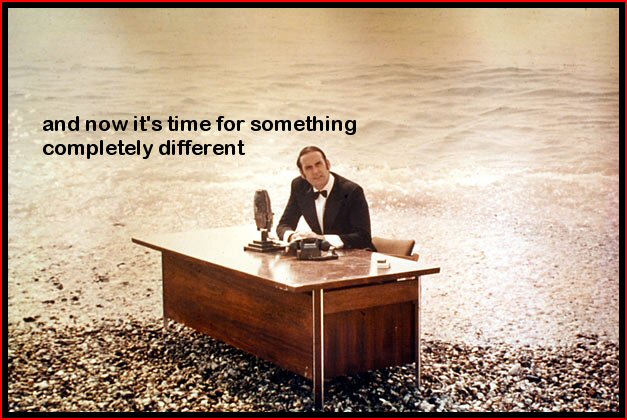
On Writing Something Completely Different

by James Scott Bell
@jamesscottbell

now

There are some writers who do very well writing one thing, and one thing only. An author named Lee Child has written only thrillers about a character named Reacher. He’s done pretty well with that, and may break into big sales soon.

There are writers who concentrate on one genre, though they may create different series characters or stand alones. Michael Connelly is like that, and so was Robert B. Parker.

Then there are writers known for one type of book who get restless and take a flyer on another kind. John Grisham wrote A Painted House (literary) after a string of hugely successful legal thrillers. Dennis Lehane, known for gritty contemporary crime, came out a few years ago with a sweeping historical, The Given Day.

Some fiction writers cross over into non-fiction. Ray Bradbury was a writer whose fertile imagination and curious mind could not be contained in fictional worlds only. He wrote numerous essays and opinion pieces, many of which have been collected into volumes, like Bradbury Speaks.

William_Saroyan

Saroyan

And then there is one of my favorite writers, William Saroyan. His name is not as widely known today as some of his contemporaries (Hemingway, Steinbeck), but in the 30s and 40s he was considered a literary lion, winner of the Pulitzer Prize (which he famously turned down), and author of short stories (e.g., My Name is Aram), novels (e.g., The Human Comedy), and plays (e.g., The Time of Your Life).

When his fiction sales tailed off in the early 50s, Saroyan turned to the quirky memoir, writing several volumes of remembrance, observation, and opinion. Examples include The Bicycle Rider in Beverly Hills and Places Where I’ve Done Time.

For Saroyan, writing was life and life was writing. And, indeed, death was the only thing that stopped him. His final words were: “Everybody has got to die, but I have always believed an exception would be made in my case. Now what?”

A few years before his death Saroyan came out with a book unlike anything I’d ever read before. Obituaries was a large collection of short pieces, each one a riff on a name from the list of movie industry people who had died in 1976 and listed in a special edition of Variety.

What’s so nuts about the book is that it contains no paragraph breaks and no indentations. Each entry is just one solid block of text that goes on until Saroyan is finished with what he has to say.

And what he says varies with where his mind takes him. He starts with the name of the deceased, whether he knew the person or not, and off he goes. Then he’ll switch mid-stream-of-consciousness and go in a completely different direction.

This crazy book was nominated for the American Book Award and named one of the best books of the year by the New York Times. I own a first edition.

Anyway, early last year I was thinking about ways to increase my writing production, and found myself reading the obituary of Anita Ekberg, the Swedish actress. Something in me clicked, like a switch, and a sluice gate opened in my brain, and all these words starting pouring out on a page. It was different and it was fun. What was coming out was part essay, a little bit of memoir, and “parts unknown.”

So I decided to keep going, and spent a goodly portion of 2015 reflecting on obituaries. Many of them are of famous people, but I also looked at local obits from small town papers, and found myself using those, too. Every life has a story if we’re willing to listen.

When I looked up on January 1, 2016, I had a full-length collection. And here it is. If you want to get a flavor of it, just click on the PREVIEW button below. You can scroll through the preview and you’ll stay right here on TKZ.

It’s a book you don’t have to read in one sitting. In fact it’s set up for when you’re waiting in line for coffee, or at the doctor’s, even in the checkout lane at the grocery store. I do, however, advise against reading it in commuter traffic.

Have you felt the pull to write something completely different? Well, what’s stopping you? Here are three tips:

  1. Write wildly

Pick a subject you love, or a topic you’re mad, sad or glad about. Write like a wildfire about that subject. Shut off your inner editor completely. Even if you never publish the entries you are at the very least stretching your writer’s mind beyond self-contained borders. That will help you in all your writing.

  1. Edit soberly

If you do decide to publish something new, go at it objectively. Make sure you edit your words so they mean what you want them to mean, and what you want other people to see. Get feedback from beta readers. Not everything that flies off your fingers is ready for prime time. Write hot, but revise cool.

  1. Publish enthusiastically

Digital self-publishing is the greatest boon to writers since Gutenberg. It’s even better than old Johannes’s regime, because there you had to own a printing press, and get paper, and ink, and binding, and distribution. Only a few big companies could do that in the modern era, and thus many more books were rejected than published.

Not anymore. While some decry the “tsunami of content” in digital, for writers who write, who love to write, who—dare I say—live to write, there is a free marketplace. If you’ve got something to say, say it. Work it, polish it and then put it out there. Let the readers decide what to do with it.

So what about you? Do you have a secret pet project you’d like to write someday? What’s holding you back?

Who is Maewyn Succat & Why Should We Care?

Jordan Dane
@JordanDane

Shamrocks

Shamrocks

Happy St. Maewyn’s Day, everybody!

DID YOU KNOW that according to Irish legend, St. Patrick’s birth name was really Maewyn Succat? Catchy, huh? Saint Patrick changed his name to Patricius after becoming a priest. If he were alive today, how many handles would he have on Twitter?

DID YOU KNOW that we should really wear BLUE on St. Patrick’s Day? His color of choice was a light shade of blue. Green didn’t become linked to the holiday until the Irish Independence day movement in the late 18th century.

DID YOU KNOW that St Patrick was British? His claim to fame came from introducing Christianity to Ireland in the year 432, but he wasn’t Irish. He was the son of Roman parents from Scotland or Wales.

WHO CELEBRATES ST PATRICK”S DAY MORE SERIOUSLY? This is harder to quantify. Of course the Irish celebrate in a huge way by making it a national holiday. New Yorkers have a HUGE parade, one of the largest parades ever since the mid 1700s, but this parade to this day does not allow floats, cars, or other modern conveyances. But Chicago won’t be denied. They dump vivid green dye into the Chicago River, since 1962, and it takes 40 tons of dye.

DID YOU KNOW St. Patty’s was strictly a religious holiday in Ireland for most of the 20th century and the nation’s pubs were closed to celebrate? The one exception for alcohol was the national dog show held on the same day. In 1970, the day was made a national holiday and the beer flowed. Yes, that day, the holiday went to the dogs.

WHAT”S UP WITH THE SHAMROCKS? According to legend, the saint used the 3-leafed clover to describe the Holy Trinity. There’s nothing like a visual.

DID YOU KNOW St. Patrick was the Pied Piper of Snakes? The Irish might be full of blarney on this one. St. Patrick gets credit for driving all snakes out of Ireland, but scientists and fossil records claim Ireland has never been a refuge for snakes. It’s too damned cold and the surrounding seas make a natural barrier. Unless snakes come in on a plane, those slithering varmints are banished.

DID YOU KNOW THERE ARE NO FEMALE LEPRECHAUNS? Whaddup with that? In traditional Irish folk tales, there are no lady wee people, or snappy dressed little guys for that matter.

DID YOU KNOW that the phrase “Erin go Bragh” is NOT the correct pronunciation? It should be “Éirinn go Brách” which means “Ireland Forever.” So get it right, people.

Up for discussion:

How do YOU celebrate St. Patty’s Day? Whether you hoist green brew these days or have a colorful story from your younger years, please share your memories of St. Patty’s Day with your TKZ family.

HotTarget (3)

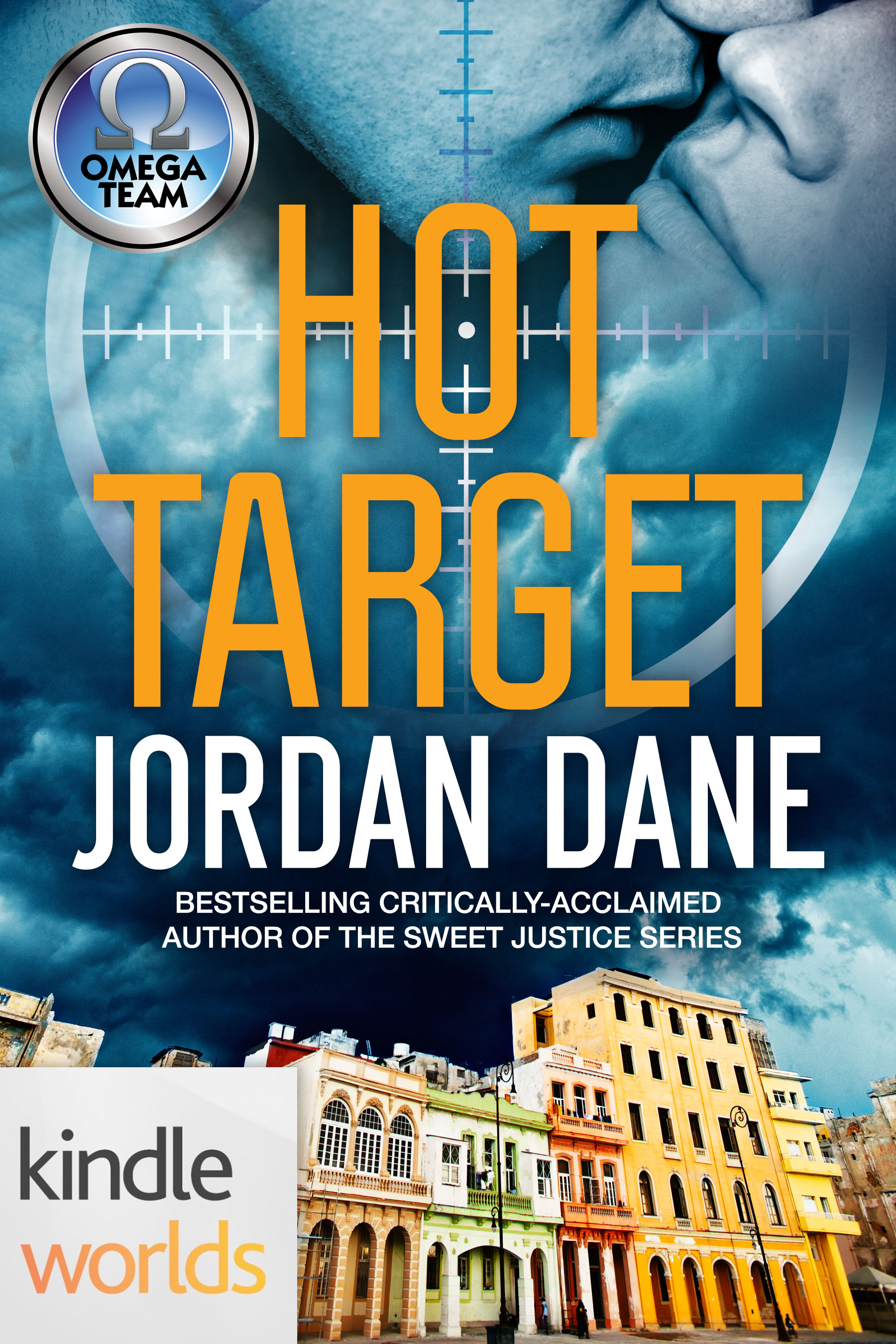
Rafael Madero stands in the crosshairs of a vicious Cuban drug cartel—powerless to stop his fate—and his secret could put Athena and the Omega Team in the middle of a drug war.

An Amazon Kindle Worlds series – Ebook bargained priced at $1.99 at this LINK.

The Dreaded P Word

Apologies for having a rather truncated blog post this week – owing to a kitchen knife injury to a finger requiring stitches I’m a little less ‘keyboard able’ than usual….Although there’s always the craziness of the dreaded ‘P’ word to keep me distracted…and by that, of course, I mean politics.

As a general rule I can’t avoid at least some politics in my writing – history tends to be enmeshed in the politics of the day, but as another general rule I tend to leave out (overtly at least) my own political ideals and opinions in my books (I figure readers don’t want to hear them but would rather immerse themselves in a historical period). But politics shapes indirectly (and sometimes very directly) all the characters in my work – which can be a challenge when many of the political ideas espoused in early 20th century England are an anathema to modern sensibilities. However, I believe that well-crafted characters, placed in an appropriately explained historical situation, help illuminate the politics of an era far more so that a non-fiction history book  ever could.

That being said, I’m sure many  writers try to avoid injecting obvious ‘politics’ in their novels. No one wants to alienate a sizable portion of their readership after all, and usually a book’s  characters can display a range of values and attitudes to encompass contemporary (as well as historical) political thought. It’s hard at the moment, however, to avoid the dreaded ‘P’ word as the current election cycle is on our news 24/7 (or so it seems!).

So I thought I’d check in with the TKZ community to see how you tackle politics in your writing – do you avoid injecting your own political views and opinions in your books? Do you consider a character’s politics during their developmental stage?  I  find it  both interesting and challenging to explore a range of opinions and political/social beliefs when creating my characters, but obviously, as a historical writer, I also have to reflect the times I’m writing about. There are many social issues that were viewed quite differently in Edwardian and WW1 England for instance and I try to respect the era by making sure I encapsulate (as best I can) the mood, politics and social conditions of the time. What about you? what’s your view and experience of the dreaded ‘P’ word in your mysteries (both as a reader and a writer)?


The Wonderful World of Subplots

Robert Gregory Browne

It was bound to happen. I have been sick for the first time in years, and of course, I completely forgot that I have obligations, one of them being this blog. Those two weeks went fast!

So, because I’m still recovering, I’m going to take the easy way out and post an excerpt from my book, CASTING THE BONES. Next time you’ll get something brand-spanking new. I promise. No, really.

THE WONDERFUL WORLD OF SUBPLOTS

While you can certainly get away with a short story having only one plot, novels will almost always have a number of plots going at once. One of those plots is dominant, of course, but what about those smaller, all important subplots?

In The Godfather, we watch as a violent power play is made against Don Corleone by a rival Mafia family. His young, clean-cut son, Michael Corleone, volunteers to take revenge, and the movie follows Michael’s descent into the dark world of the Mafia and his eventual emergence as the new Godfather.

There are a number of subplots in the movie, but the one that most strikes a chord is Michael’s relationship with two women. The first is Kay, who is not Italian, not part of the “family” and is Michael’s lifeline to the outside world. His connection to “reality.”

But as he’s drawn deeper into the violence, Michael’s ties to her become more and more tenuous, until he finds himself completely cut off from her—and the outside world—as he hides out in Sicily.

In Sicily, Michael meets a young local woman who steals his heart. She’s his soul mate, his true love, whom he marries. Then, in another act of revenge, a car carrying his new bride is blown to bits, plunging Michael into an emotional darkness he’s never known.
He goes back to the U.S. a considerably different man, but rekindles his relationship with Kay and eventually marries her—a marriage that is obviously doomed.

This particular subplot would probably have a tough time standing on its own. Its reliance on the main storyline is obvious enough, but what really makes it great is that it parallels and impacts Michael’s descent. Kay represents Michael’s relationship to the “civilian” world, while his marriage to the Sicilian woman illustrates his rediscovery of his roots.

The tragic twist in this subplot is one of the major causes of Michael’s emotional retreat and his rise to power. He becomes a man so cold and ruthless that he’s able (in Part II) to put a hit out on his own brother…

And that’s what all great movie and novel subplots do. They rise organically from the main storyline, attaching themselves to your hero and impacting his ability to reach his goal. Great subplots are so closely woven into the fabric of the story that we often have a hard time discerning them.

Even so-called “lesser” movies than The Godfather recognize the need for a solid subplot.
A favorite of mine is a dark thriller called Resurrection, which was written by Brad Mirman, the writer of several good thrillers. To some, Resurrection plays like a poor man’s rip-off of Seven, but I much prefer Mirman’s take on the hunt for a serial killer because of its inventiveness.

Resurrection is essentially about a couple of cops hunting for a serial killer who is taking the body parts of his victims and building them into a representation of Christ. Each of the victims is named after an apostle and the killer’s timeline runs him straight toward Easter, the day of resurrection.

The subplot is a minor one, but it certainly deepens the lead character. He’s a cop who, after the tragic death of his son, has discarded his faith in God and is quickly losing his emotional connection to his wife.

During the course of the movie, his wife attempts to repair their marriage and his faith by inviting the local priest over for a pep talk, but our hero soundly rejects the man and any notion of accepting help from him.

Then, while looking for a clue to the killer’s plan that seems deeply rooted in Biblical lore, our hero must finally seek the help of the priest. But as he enters the church, he hesitates, as if the mere act of stepping foot in the place is a betrayal of his son’s memory.

Again, this subplot is powerful because it is so securely attached to the main storyline that it can’t exist on its own. The two plots feed off of each other and both are stronger because of it.

A lot of books today treat subplots as an afterthought. Stories are often built based on a “hot” idea, the characters created to fill out a plot that’s stretched so thin that the slightest jolt could snap it apart.

Subplots are haphazardly tacked on in a weak attempt to keep the whole mess together, and their paint-by-numbers obviousness is one of the greatest contributors to the collective snore rising from the readers.

Many storytellers today have it backwards. Yes, start with a great idea, but rather than try to force characters and subplot into that story, try creating the characters first, then let the story and subplot grow from them.

Characters are story. And any great plot or subplot is driven by the characters’ wants and desires.

Remember this as you sit down to write and, with time and patience, you too can give us writing the caliber of The Godfather and Resurrection.

Not a bad place to be.

Were “Rules” Meant To Be Broken?

image

By Kathryn Lilley, TKZ

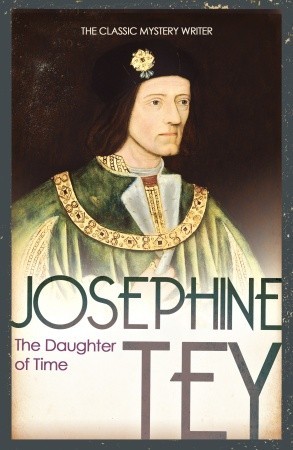
Right now I’m reading AN EXPERT IN MURDER, a bang-up mystery written by Josephine Tey (a pseudonym for Scottish author Elizabeth MacIntosh, 1896-1952). Tey was a writer who delighted in breaking the formulaic mystery writing rules of her era. Those rules, as proclaimed by a group of London-based mystery writers, had been set forth in a manifesto called “The 10 Commandments of the Detection Club”. (Agatha Christie and Dorothy Sayers were founding members of the club.)

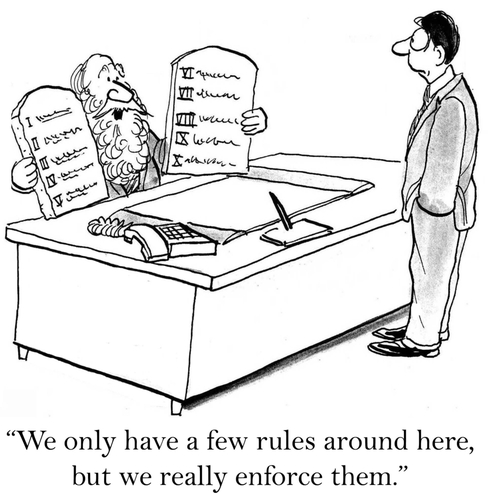
TEN COMMANDMENTS OF THE DETECTION CLUB

1. The criminal must be someone mentioned in the early part of the story, but must not be anyone whose thoughts the reader has been allowed to follow.

2. All supernatural or preternatural agencies are ruled out as a matter of course.

3. Not more than one secret room or passage is allowable.

4. No hitherto undiscovered poisons may be used, nor any appliance which will need a long scientific explanation at the end.

5. No (archaic ethnic term) must figure in the story. (Editor’s note: At the time, popular mysteries frequently included a character of Chinese descent. The writers used an archaic ethnic term that I don’t care to repeat here).

6. No accident must ever help the detective, nor must he ever have an unaccountable intuition which proves to be right.

7. The detective must not himself commit the crime.

8. The detective must not light on any clues which are not instantly produced for the inspection of the reader.

9. The stupid friend of the detective, the Watson, must not conceal any thoughts which pass through his mind; his intelligence must be slightly, but very slightly, below that of the average reader.

10. Twin brothers, and doubles generally, must not appear unless we have been duly prepared for them.

***

Josephine Tey gleefully broke most of these rules in her mysteries. Twin imageimposters? Check. A sleuth playing a hunch? Check. In some of her books, Josephine Tey herself featured as a sleuth. (The Detective Club probably never dreamed of creating a rule against doing that).

Because she was a gifted, excellent writer, Tey got away with jettisoning the standard writing tropes of her era.

Nowadays, genre writers still like to talk about the “rules” of writing. (“Never open with a dream or the weather,” for example).  Have you ever intentionally broken a writing rule in your work? Did your “infraction” succeed or fail? Or, have you ever read a story that broke the rules, but was successful nonetheless?

The Fickle, Frustrating, Beautiful Arc of your Writing Career

Being a guy – sometimes known as the guy – who can take too long to get to a salient point (because I believe in the power of contextual setup… see, I’m doing it right now), allow me to begin today’s post what just that.

A salient, career-making point of awareness.

Here it is. It may not knock you off your chair.  But look closer.  Because this might just tell you everything you need to know about where you are, and why.

Some truths are like that. They are insidious in their subtlety.

Your success isn’t solely about what you write.

Over time, your success is largely driven by what you know.

A few posts ago I mentioned a wildly successful author who, in her interview with Writers Digest Magazine, seemed not to be all that confident that she knows anything at all about how she writes what she writers. I’m pretty sure that’s not true (she built her readership over 10 novels and then her eleventh sold 5 million copies; as luck goes, that’s a whopper of a lottery ticket).

Whether this can be explained as an over-wrought sense of humility or she truly can’t tell us why her stories work… who knows.

Doesn’t matter.  Because when it comes to the craft of writing compelling fiction, I guarantee you that she does know what she is doing.  (Her name is JoJo Moyes, by the way, and I have nothing but the highest admiration for her and her work.)

Don’t take this one for granted. Nailing a novel is a little like self-diagnosing your own health issues. You can guess right. You can stumble across the right solution without ever really understanding how you got there, or the criteria for what you’ve just backed into. You can become famous from that good guess — or if not a guess, then a keen sense of story that, for you, doesn’t yet have names for the parts — and then, going forward, never really be able to articulate why your story works.

That one sounds like this: “I dunno, I just sit down and listen to my characters, I just follow them, I really don’t know where I’m going with it all…”

Unspoken translation for such a writer’s take on what happened: aren’t I a genius?

Or perhaps: I really don’t have a clue what I’m doing.

Thinly veiled hubris? Even thinner self-awareness? Not so thinly-veiled cluelessness?

Doesn’t matter. Don’t be that writer. The road is longer and steeper when you lean into that perspective.

Rather, seek to know.

What we know breaks down into two categories.

Both of which become context for the writing of a novel that hits all the bases and polishes them to a glowing sheen (or perhaps, a raw serrated edge, depending on genre).

First, there is the deep and wide ocean of craft.

In my teaching work I’ve attempted to categorize them (six realms of story forces – what I call story physics – that tell us why our stories work, and thus become a checklist to assess the efficacy of what we’ve written…

… and then, six core competencies that tell us the things we must do with those six realms of story forces. In the context of today’s title, do them consistently and with a growing sense of mastery.

Don’t like lists? I get that. But these lists are like gravity.

They’re simply there. Bundle them any way you like, but they are waiting to make (when you get them right) or break (when missing or done poorly) your story.  Here they are:

       The Six Realms of Story Forces/Physics              

  1. A concept-rich premise.
  2. A powerful dramatic proposition/arc.
  3. Properly modulated pacing.
  4. Reader empathy for your hero.
  5. Delivering a rich vicarious experience.
  6. An optimized narrative strategy

 The Six Core Competencies

1. The sense of what is conceptual                                                                                    2. The ability to write rich characters on both sides of the hero/villain scale.                  3. A sense of thematic relevance.                                                                                    4. A solid grasp of story structure                                                                               5. Knowing what makes a scene work.                                                                            6. A clean, compelling writing voice.

If you’re thinking this is a lot to know, you’re certain right about that. But, in my view, pretty much anything and everything we need to know and do falls into one or more of these twelve buckets.

Each of these is a matter of degree and precision, as well.

One writer may believe that a story about a CPA who can’t quite get her Schedule C to make sense is dramatically compelling to the rest of us… while another might not understand that they are simply writing about an arena (time or place or some avocational, occupations or societal niche), rather than writing about something dramatic that happens within that arena.

I hope you’ll read that last sentence again. This one tanks more stories – and over time, careers – than any of form of misunderstanding or rejection.

It all boils down to your own personal story sensibility. That’s the entire ballgame, right there. A rich and thorough story sensibility is informed by all twelve buckets (each of which is a deep well of specific issues, elements and essences) on those two lists. It is the very thing that explains consistent A-list success.

Because to a large extent those writers get it better than the rest of us. If you’re searching for the “it” in your career, these two lists are where the answers await.

Or not. And that’s the frustrating part. Because…

Secondly, we must know how to navigate today’s “publishing” landscape.

Today more than ever, and stated quite simply, if you’re not the game and using the right tools to compete, it may not matter how well you understand those twelve buckets of craft.

Because it absolutely is a competition, not so much with other writers, but with agents and editors who have already made up their mind about your story before you sit down in front of them at a workshop, and readers who are fickle and largely driven by an ADD-type of awareness span.

This market landscape is shifting like the rim of an active volcano. It’s a function of knowing and doing.  While knowing and doing also applies to craft, in this context is applies to getting our work out there, And it’s not what it was a few years ago, nor is it anything like what it was 10 or 15 years ago when we still hoped to see our book in the window at Barnes & Noble.

You’re competing on that front, too, by the way, with the likes of Nora Roberts and David Baldacci and Stephen King. So as they say on the Lotto billboards, adjust your dreams accordingly.

There are also things we can’t know.

And in not knowing we can lay some sort of calming, rationalized claim to sanity.

Because luck remains part of the math of getting a novel out there. A right-place-right-time flavor of luck. This luck is certainly driven by persistence – that much hasn’t changed – but the sad truth is that you can write a novel that blows some of those A-listers off the page, that is worthy of a Big Fat Award of some kind, and yet you may not ever see it in print, or your readers might just fit into a couple of booths at Denny’s.

I have to be careful with this one. The Kumbaya of writing conferences is sometimes antithetical to the truth… and this is the truth.

Which leaves us with this: we do the best we can do, we seek to grow our knowledge on both of those fronts, and we keep on truckin’.

Which brings us full circle to why we starting doing this in the first place: we love to tell stories.

That remains the most accessible outcome of all. Leading to the best possible paradox of all – the more you know, the better your stories will be, and the more likely you’ll be to get lucky.

First Page Critique – Untitled Fantasy

Jordan Dane

@JordanDane

Another brave author has sent in their anonymous submission of their first 400 words. My critique follows. Please provide your constructive criticism, TKZers.

from wikipedia commons

from wikipedia commons

***EXCERPT***

“Strike faster,” Northbyr commanded, but Arthryn’s limbs felt like lead, as if he were swinging a blacksmith’s hammer rather than a sword. He grunted with the effort to keep his blade up, and struggled to land a sequence of slashes and strokes across the wooden training post. “Again,” his father ordered. Arthryn complied, forcing his arms to keep moving. He could feel the pressure of his father’s eyes, inspecting his every movement.

Not my father, Arthryn reminded himself. Not today. Today, he is my Commander, and I am his cadet.

Northbyr certainly fit his role. His tall frame shadowed Arthryn’s short, but fit, seventeen year old body. The Commander had gray eyes, and his face bore the marks of his years in combat. All that was behind him now, and he no longer fought in battles. Instead, he commanded the city guard of Brink, and served as protector to the city’s master, Vangres. Arthryn knew he was lucky to have his father’s experience to learn from, but that also meant twice as much work.

“Step left, strike three,” the commander said. Arthryn followed through. “Step right, strike one.” The cadet stepped and struck hard. “Step round, backward slash!” Arthryn stepped past the training post and twisted his hips to strike the hardwood with a powerful, back handed undercut, but his feet got twisted up and he fell to the ground.

“Snap to, son.”

Arthryn recovered and rose to his feet, readying his sword for the next move.

“Overhead strike.”

The young warrior wielded weapon over his head and aimed to bring it crashing down upon the wooden pole. The blade made his arms tremble, and his muscles protested. He gritted his teeth, and prepared to drop the sword into the target. He never got the chance.

Northbyr snatched the weapon from his hands. Arthryn stumbled to regain his balance. Without the weight of his sword in hand, he felt like a mouse without a tail. He spun towards his father.

“I had it!”

Northbyr glowered at him. “If this was battle, you’d be dead.”

Arthryn’s cheeks flared red. Especially when you take my sword! He wanted to blurt out, but kept his peace. Northbyr never accepted excuses.

Feedback:

Embedded dialogue – In paragraph 1 & 4, there is embedded dialogue that could be pulled out to accentuate it more. A reader’s eye looks for dialogue lines, especially those skimmers who speed read. Highlighting the dialogue as much as possible can focus a reader’s attention on key lines.

Backstory – In paragraph 3, the author resorts to character description and backstory in between the action of the intro scene. Although this paragraph is short, it can still slow pace and draw the reader elsewhere.

Name Confusion – The two characters in this scene have “Y” and “R” towards the end of the names. Since these names aren’t typical of present day/present world handles, readers could get confused and forget which is the father and which is the son. I found myself re-reading to remind myself of the two characters. Perhaps if the son were to call the father by his title, it might help make a better distinction.

More Setting & World Building Layering in Fantasy Genre – The Fantasy genre is known for its world building and other worldly setting descriptions. Even in the midst of a sword training scene, the author should layer in setting that will enhance this world and make it come alive for the reader. As a consequence, the writing comes across as sparse. Many readers wouldn’t notice this and might get into the story, but to make this intro come alive, the author should set their work apart with a deeper scene setting that immediately captures the senses of the reader. The use of all the senses can be effective when creating a new world.

Are there foul smelling blood flowers that emit a pungent coppery stench, flowers that only bloom when war is on the horizon? Does this world have two suns? Is water a precious commodity worth killing over? Do these people live in trees or in castles made of thatch?

How can you infuse these elements into an action sequence like this one? Add tension by the son stepping on one of the flowers and the stench makes him puke. Have him take a sip of community water, only if the father allows him to. The idea is to set up mystery elements to this world that can be explained later as the story progresses and the setting can be brought into the story without slowing the pace. Layer in world building elements that make the reader wonder more about the world they are about to embark into.

An author who writes fantasy must envision the world they want the reader to see in their mind’s eye and bring it to life. Sparse writing allows the reader to stay in their present world and not stray from it. Fantasy is all about the fantasy of escaping into someplace new.

Overview:

I liked the voice in this intro and found it an easy read. I’d keep reading. I sensed the friction between the father and son and felt the tension in the son striking the blows. More effective layering and world building could really enhance this intro and make it stand out more.

HotTarget (3)

Hot Target now available – new Omega Team series launch at Amazon Kindle Worlds. Priced at a bargain $1.99 for this 30,000 word novella. #18 Bestseller in Kindle Worlds Romance.

Rafael Madero stands in the crosshairs of a vicious drug cartel—powerless to stop his fate—and his secret could put his sister Athena and the Omega Tteam in the middle of a drug war.