Liar, Liar! Pants on Fire!
Writing the Unreliable Narrator

handout1

“It’s the truth, even if it didn’t happen.” – Chief Bromden, One Flew Over the Cuckoo’s Nest.

By PJ Parrish

Liars are all the rage in publishing right now.

Whether it is that fun couple Amy and Nick Dunne in Gone Girl or that poor sot Rachel on the train, the character whose believability is compromised seems to be enjoying her day in the shadows. There seems, in fact, to be a whole sub-genre of Un-relies in YA fiction alone. (CLICK HERE).

I am just back from SleuthFest, the fabulous writers craft-con presented by the Mystery Writers of America Florida chapter, and one of my panels was on this topic. I shared the panel with my co-author sister Kelly, Debra Goldstein (Should Have Played Poker, pubbing in April) and critique group buddy Sharon Potts, whose unreliable narrator book Someone Must Die comes out this year. I have to admit, I had to do some boning up on the subject.  Unreliable narrators are, for me at least, like post-modern literary fiction — I sorta kinda almost recognize it when I see it but don’t ask me to define it.

But define it we did. Or tried. The Un-Rely is a slippery fish.

Gone Girl aside, these characters have been with us for a long time now. The unreliable narrator goes back at least as far as the murderer in Poe’s The Tell Tale Heart who tries to convince us that he’s not crazy –- he’s just an excitable boy! — even though he hears his victim’s heart beating under the floorboards.

True! Nervous — very, very nervous I had been and am! But why will you say that I am mad? The disease had sharpened my senses — not destroyed them. Above all was the sense of hearing. I heard all things in the heaven and in the earth. I heard many things in the underworld. How, then, am I mad? Observe how healthily — how calmly I can tell you the whole story.

The rogues gallery of unreliable narrators is long and illustrious. Poe begat Agatha Christie’s Dr. James Sheppard (The Murder of Roger Ackroyd) who begat Kurt Vonnegut’s Billy Pilgrim (Slaughterhouse Five) who begat Ian McEwan’s Briony Tallis (Atonement) who begat Dennis Lehane’s Teddy Daniels (Shutter Island).

So are unreliable narrators all liars or nut-balls? And is this someone you want running around ranting in your head for the next year as you write your novel?

I didn’t expect a big turnout for our panel, but we packed the room. Apparently, many writers want to explore this technique, but I got the feeling most don’t really understand what it entails. So before I throw out the PROCEED WITH CAUTION signs, maybe we first need to lay down a definition.

The term “unreliable narrator” was coined by Wayne C. Booth, a literary critic and professor who in 1961 wrote a book about narrative technique called The Rhetoric of Fiction. He wrote: “I have called a narrator reliable when he speaks for or acts in accordance with the norms of the work (which is to say the implied author’s norms), unreliable when he does not.”

Well, that really clears things up, right? Try this one:

An unreliable narrator is a character whose account of the story and his commentary on it is supposed to be taken as authoritative, but for whatever reason the telling of the story and or commentary is suspect.

What are the “reasons” for the duplicity? Ah, there are many kinds of demons in the human heart and head. Here are the types of unreliable narrators I could glean from my research:
16129297

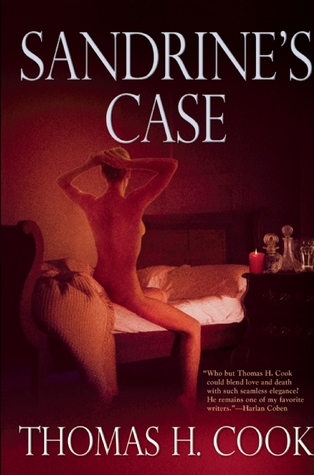
Bald-faced liars. These bad-boys take pride in playing mind games. As Holden Caulfield says, “I’m the most terrific liar you ever saw in your life. It’s awful. If I’m on my way to the store to buy a magazine, even, and somebody asks me where I’m going, I’m liable to say I’m going to the opera. It’s terrible.” Amy and Nick Dunne in Gone Girl are classic liars. One of the best liars might be Verbel Kent in the brilliant screenplay for The Usual Suspects. One of my favorite novels, Sandrine’s Case, by Thomas Cook features a really well rendered unreliable, Samuel Madison. His wife is Sandrine, who suffered from Lou Gehrig’s disease, shutting down in stages, and finally is found dead by her own hand – or was she? The novel opens with Sam’s trial for murder but is one big juicy flashback that explores his marriage and the days leading up to the trial. Cook skillfully builds suspense with Sam’s narrative, dropping “clues” that can be read in more than one way. Sam isn’t very likeable and we don’t believe him. But then the ending is turns everything on its head.

The mentally ill: In Shutter Island Teddy Daniels is a bipolar mental patient who hallucinates that he is a U.S. marshal. In the film, A Beautiful Mind, we believe John Forbes Nash is a brilliant mathematician working undercover for the government, until about halfway through we find out he is a delusional schizophrenic. In Henry James’s Turn of the Screw, it is impossible to tell if what we are reading is a ghost story or the tragic tale of a young woman undergoing a breakdown. In Ken Kesey’s One Flew Over the Cuckoo’s Nest, the first-person narrator is Chief Bromden, a schizophrenic. In the first chapter, he says, “God; you think this is too horrible to have really happened, this is too awful to be the truth! But, please. It’s hard for me to have a clear mind thinking on it. But it’s the truth even if it didn’t happen.”

The mentally altered or different: In Chuck Palahniuk’s Fight Club, the narrator has debilitating insomnia that makes his grasp of reality suspect. Amnesia figures into the veracity of narrators in SJ Watson’s thriller Before I Go to Sleep, in the cult film Memento, and in my own book She’s Not There. Post-trauma Stress Syndrome colors the reality of the Vietnam vet in the film Jacob’s Ladder and in Slaughterhouse Five, Billy Pilgrim, after the Dresden bombing, comes to believe he was abducted by a bunch of aliens. Vonnegut warns us about Billy with the book’s first line: “All this happened, more or less.”

The Naif: This narrator has limited knowledge due to a mental state or narrow world view. In Forrest Gump (Winston Groom’s novel, not the sentimentalized movie), Forrest’s 70 IQ gives him cognitive limits. We might also include here Christian, the 15-year-old autistic in Mark Haddon’s The Curious Incident of the Dog in the Night-Time. And even Huck Finn, who is only 14 after all tells us, “Everybody lies.”

Children: By virtue of their innocence, limited experience and gullibility, kids can’t really be trusted. In Extremely Loud and Incredibly Close, the narrator is a 9 year old boy looking for his dead father after 911. In Emma Donoghue’s bestseller Room, the narrator is a 5-year-old who is trapped in a small room with his mother and talks to the furniture. He doesn’t lie, but he does say, “When I was a little kid I thought like a little kid, but now I’m five I know everything.”

Dead People: Can we really trust Susie Salmon to tell us the truth about what happened to her in The Lovely Bones? Is Nicole Kidman’s seeing dead people walking around in her manor house in The Others, or is she dead herself? And has there ever been a bigger case of denial than Dr. Malcom Crowe in The Sixth Sense?

Now here’s something to chew on:  All characters we create are in a way unreliable. Unless you are using a true omniscent point of view (wherein you the writer knows all, sees all and tells all), our stories are filtered through at least one consciousness and sometimes multiple prisms. One one person can know the “truth.”

This is sometimes refers to as the Rashômon Effect. It comes from the 1950 Akira Kurosawa film Rashômon. It is a crime drama that uses multiple narrators to tell the story of the death of a samurai. Each of the witnesses describe the same basic events but differ wildly in the details, alternately claiming that the samurai died by accident, suicide, or murder. The point is that different witnesses produce contradictory accounts of the same event, though each version is equally sincerity and plausible — or suspect. I often recommend a viewing of this movie for writers struggling with multiple POVs.

So why are unreliable narrators so appealing?  I think it has something to do with our readers’ expectations within the “norms” of fiction coupled with the power of the twist. think of it this way: When a character starts to tell you a story, your natural instinct is to believe him and what he is describing, feeling or thinking. If the narrator tells you the sky is blue, you believe because he gives you no reason not to. Fans of crime fiction, in particular, tend to believe the narrator because often he or she is a person of authority (cop, investigator) who acts as a sort of guide along the way to us discovering the truth.

But sometimes, the person isn’t telling you the truth or the truth is being altered through artful lying or filtered through something like a mental illness. Or we find out that our guide is actually the murderer.  That’s the brilliant conceit in Agatha Christie’s seminal The Murder of Roger Ackroyd.  Nothing Dr. Sheppard says is technically untrue; he just hides the truth with his phrasing and omissions so we believe that he is innocent and loyal.

That’s what makes unreliables so fascinating. When the twist is revealed and we finally realize we have been lied to, the story can spin the story off into a totally new direction. But unreliable narrators are tough to pull off well. When badly handled, they can just made readers feel manipulated or confused.

So let’s talk now about some things you the writer have to keep in mind if you’re going to play this game. Here are some of take-aways from our SleuthFest panel and discussion.

Questions to Ask Yourself Before You Use Unreliable Narrators

Confess or conceal? Often, the narrator’s unreliability is made clear from the start – like Holden Caulfield telling us he’s a liar. But for more drama, some writers chose to delay the revelation until near the story’s end, thus delivering that great twist. This is common in thrillers. But here’s the problem with that – it can made readers angry. That happened with Shutter Island, I think. People either love or hate that book. Dennis Lehane is on record saying he wanted the ending to be purposely ambiguous. But a scan of Good Reads shows frustration and a lot of WTFs?

One of my favorite URs in all fiction, who tells us up front he is unreliable, is Odd Thomas in Dean Koontz’s novel of the same name. Here is the opening of Chapter One:

My name is Odd Thomas, though in this age when fame is the altar at which most people worship, I am not sure why you should care who I am or that I exist… I lead an unusual life. By this I do not mean that my life is better than yours. I’m sure that your life is filled with as much happiness, charm, wonder, and abiding fear as anyone could wish. Like me, you are human, after all, and we know what a joy and terror that is. I mean only that my life is not typical. Peculiar things happen to me that don’t happen to other people with regularity, if ever.


For example, I would never have written this memoir if I had not been commanded to do so by a four-hundred-pound man with six fingers on his left hand…When at first I proved unable to keep the tone light, Ozzie suggested that I be an unreliable narrator. “It worked for Agatha Christie in The Murder of Roger Ackroyd,” he said. In that first-person mystery novel, the nice-guy narrator turns out to be the murderer of Roger Ackroyd, a fact he conceals from the reader until the end.


Understand, I am not a murderer. I have done nothing evil that I am concealing from you. My unreliability as a narrator has to do largely with the tense of certain verbs.


Don’t worry about it. You’ll know the truth soon enough.

Can you write well in first person? All first person narrators are unreliable in their own ways because they are filtering all events through ONE CHARACTER’S biases, experiences, and beliefs. But with unreliables, that filered is complicated by extraneous influences like illness, so it’s doubly hard to pull off. Also, to pull off a satisfying unreliable narrator, you must be fully within that character’s psyche. You must know them inside and out. If you have trouble plumbing the depths of “normal” narrators, then this is not for you.

Why doesn’t it work as well in third person? Sure, there are examples of successful third-person un-relys, but I think it’s hard to writer because it can make you, the writer, seem unreliable. Readers will accept a liar telling the story. But not if that liar is you. The writer needs to be able to “hide” behind his narrator.

Can you pull off a possibly unlikeable character? Now, most of us sort of sense it when we’re being deceived, and that creates an element of mistrust. So your trick in writing an reliable narrator is to create a character who has enough empathetic characteristics that we still relate to him even though he isn’t trustworthy. You also have to create a plot that is so juicy that that readers will turn the pages even though they may not like your protagonist. I think this accounts partly for the success of Gone Girl. As gruesome as Amy and Nick Dunne were, we couldn’t look away.

Think twice about using children. Now maybe this is my personal bias showing here, but I really don’t like books narrated by little kids. Teens, yes…but anything below about 10, and I get weary. Here’s why: If you are writing an unreliable narrator, you must be in an intimate point of view. If you are in an intimate POV, your words, phrases, syntax, description – everything – must be filtered through the sensibility of a child. I gave up on The Curious Incident because I found the stream of consciousness wearing. I couldn’t get past chapter three of Room because…well, all you parents out there, tell the truth: How long can you really listen to a 6 year old? Try 352 pages then go have two stiff drinks.
Which leads me to the next question you have to ask yourself before you consider using an unreliable narrator:

Are you going for gimmick? Be honest with yourself about this. If you are writing from a child’s POV or letting a mentally unbalanced person tell your story, ask yourself: Am I doing this because of a personal feeling or am I creating a gimmick in the hopes of standing out from the crowd?

And finally…

How much stamina do you have? Being in the head of an unreliable narrator can be exhausting for you the writer. Not just because of the demands of being in an intimate POV. But because you have to constantly reassess how much – or little – information you are dribbling out to the reader. You have to be in total control of a character who often is not in control of himself. It is hard for a rational person (you the writer) to “become” an irrational person. Which is also why so many serial killer characters feel wooden.

In my case, my character Amelia Tobias, is an essentially good person. But when a head injury gives her amnesia, she loses her grasp on reality. I did a lot of research on amnesiacs and tried to understand the fragility of their reality. But to be honest, I found it easier to slip into the skin of Louis Kincaid, a biracial man, than a woman who can’t remember her past and whose grasp of her reality is constantly changing.

So did I scare you off? Does letting one of these types into your imagination sound like too much trouble? Well, it’s high risk but also high reward.  When done well, like in Thomas Cook’s Sandrine’s Case or Koontz’s Odd Thomas, you get a terrific twist that also delivers a poignant pay-off.  Or with a story like The Sixth Sense or The Murder of Roger Ackroyd, you’ll have readers rewinding or going back over your book muttering in amazement, “how did she do that?”

Unreliable narrators can create intrigue. They can be huge sources of tension. Readers can take great delight in discovering the reasons why behind it all.  If you really want to try this, just be aware of the possible pitfalls.  I got through my encounter with an unreliable and though it was a challenge, it made me stretch in new directions as a writer.

So go ahead. Give it a try. You can do this.

Would I lie to you?

 

What Does Bestseller Really Mean?

imagesA recent article (see link here) about the ease with which a reporter for the Observer uploaded a ‘book’ (which comprised, basically, a photograph of his foot) onto Amazon and became an instant ‘#1 bestseller’ – despite only selling three copies – got me thinking. It got me thinking, not just about the idea of scamming your way to bestsellerdom, but about the whole concept of being a ‘bestselling’ author and the kudos this  provides and implies.

Like any author, I would love to be able to claim such a title – although (perhaps not like every author) I only want to earn the title as a result of stellar book sales.  It seems, however, that through various manipulations (most often in how a book is categorized on Amazon) that the notion of being a ‘bestseller’ has become, well, let’s just say a little fuzzy. Now, this article does point out that they have always existed inherent biases within bestseller book lists and they have probably always been authors desperate enough to game the system (such as by buying their own books in bulk) in order to have the title ‘bestselling author’ bestowed upon them. However, the advent of Amazon and the plethora of ways an author can upload, market and sell their own ebooks seems to have increased the opportunities for gaming the system exponentially.

I don’t intend (in this blog post at least) to rake over all the ways and means authors manage to legitimately (or not) claim the ‘bestseller’ title but rather to consider what the word ‘bestselling’ means today (if, indeed, it means anything). As a reader, I can’t say I pay much attention to claims made to bestseller status on Amazon (especially now I now how easy it can be to claim such a title) – my eyes simply glaze over – and my decision whether to buy the book or not is far more dependent on reviews and recommendations than any ‘top selling’ status I might see on a website, book cover or author page. I do, however, take note of the bestseller lists in the NYT Book Review – to my mind this seems a better reflection of the popularity of any given book (even though I know the list probably has its own limitations). As a writer, becoming a NYT bestseller is also an obvious and much treasured goal…but, although I’d love to plop the word ‘bestselling author’ next to my name I wonder, given how many authors claim this (beyond the NYT list), how much meaning this term really has anymore.

So what about you – do you think the term ‘bestseller’ has lost a lot of its value through being bandied about so much? Do you pay any attention to Amazon’s designation of a book or author as a ‘bestseller’? As a writer, how do you view the issue? Do you think working the system is simply fair game (why not get the crown of bestseller any way you can?..) – or do you view the system as a broken one which holds little intrinsic value any more?  Which bestseller lists do you pay attention to as a writer, reader and book buyer?

The Exception That Proves the Rule About Opening With a Scene

by James Scott Bell
@jamesscottbell

school-1019989_1280

Writers and other artists are a touchy lot. We love our independence. We should all go around humming that song from Woody Allen’s Bananas, the one the guerilla leader sings:

Rebels are we!
Born to be free!
Just like the fish in the sea!

In short, we don’t like to hear the word rules. Don’t fence me in! Give me land, lots of land! Rules? We don’t need no stinking rules!

And yet, and yet … there are some things that are fundamental to storytelling and the fiction craft, so called because, guess what, THEY WORK! They help a writer weave a story that readers can actually relate to and get lost in. Imagine that!

Yeah, but So-and-so breaks the rules and writes bestsellers!

Sure, and how many So-and-sos are there? And maybe, just maybe, So-and-so compensates for the “rule breaking” by doing something absolutely astonishing somewhere else. Maybe So-and-so knows exactly what he’s doing when he breaks a rule.

In fact, I’d say good old So-and-so is actually the exception that proves the rule!

Let me show you what I mean.

I have a rule—or, if your hackles are starting to gather for a protest––a guideline or axiom: Act first, explain later. By this I mean it is much more engaging and compelling to begin your book with an actual scene in progress, with a character in motion, than it is to lard backstory and description and exposition all over the first couple of pages.

Is there an exception to this rule? Yes, one that proves it. The exception is this: a style that can enrapture you with the power of the writing alone. Almost always this is found in so-called literary fiction.

Example: here is the opening of Ken Kesey’s Sometimes a Great Notion. (Note: The ellipses are Kesey’s):

Along the western slopes of the Oregon Coastal Range … come look: the hysterical crashing of tributaries as they merge into the Wakonda Auga River …

The first little washes flashing like thick rushing winds through sheep sorrel and clover, ghost fern and nettle, sheering, cutting … forming branches. Then, through bearberry and salmonberry, blueberry and blackberry, the branches crashing into creeks, into streams. Finally, in the foothills, through tamarack and sugar pine, shittim bark and silver spruce––and the green and blue mosaic of Douglas fir––the actual river falls five hundred feet … and look: opens out upon the fields.

Metallic and first, seen from the highway down through the trees, like an aluminum rainbow, like a slice of alloy moon. Closer, becoming organic, a vast smile of water with broken and rotting pilings jagged along both gums, foam clinging to the lips. Closer still, it flattens into a river, flat as a street, cement-gray with a texture of rain. Flat as a rain-textured street even during flood season because of a channel so deep and a bed so smooth: no shallows to set up buckwater rapids, no rocks to rile the surface … nothing to indicate movement except the swirling clots of yellow foam skimming seaward with the wind, and the thrusting groves of flooded bam, bend taut and trembling by the pull of silent, dark momentum.

A river smooth and seeming calm, hiding the cruel file-edge of its current beneath a smooth and calm-seeming surface.

Kesey reaches out with his wrestler’s arms and lifts you off the mat. It works for me. It may not for others, but that’s the point. Kesey knows exactly what he’s doing here, eschewing act first, explain later. The exception that proves the rule is a dazzling literary style.

What happens when a writer doesn’t dazzle, but ignores the rule anyway? You end up with something like this:

The trip by jeep from the small village near Luena to Malanje in Angola, in southwest Africa, followed by a train ride to Luanda, the capital, had taken seven hours. The drive from Luena was long and arduous due to unexploded land mines in the area, which required extreme diligence and caution to avoid as they drove. After forty years of conflict and civil war, the country was still ravaged and in desperate need of all the help outside sources could provide, which was why Ginny Carter had been there, sent by SOS Human Rights. SOS/ HR was a private foundation based in New York that sent human rights workers around the globe. Her assignments were usually two or three months long in any given location, occasionally longer. She was sent in as part of a support team, to address whatever human rights issues were being violated or in question, typically to assist women and children, or even to address the most pressing physical needs in a trouble spot somewhere, like lack of food, water, medicine, or shelter. She frequently got involved in legal issues, visiting women in prisons, interfacing with attorneys, and trying to get the women fair trials. SOS took good care of their workers and was a responsible organization, but the work was dangerous at times. She had taken an in-depth training course before they sent her into the field initially, and had been taught about everything from digging ditches and purifying water, to extensive first aid, but nothing had prepared her for what she had seen since. She had learned a great deal about man’s cruelty to man and the plight of people in undeveloped countries and emerging nations since she’d started working for SOS/HR.

So help me, that is the first page and a half of a published novel. If it had not been written by an A-lister who could sell her parking tickets, no agent or editor would have let this through. (For the identity of the author and feedback about this passage, go here.)

I will note there are superb writers in familiar genres who sometimes begin with a literary style. Michael Connelly comes to mind (e.g., the opening of The Narrows). 

The point, gentle writer, is that no matter what you call them––rules, guidelines, fundamentals, axioms––they survive because they work every single time. That’s what I said. There is never a time when act first, explain later doesn’t work as an opening move.

But if you want to try something different, go for it. I’m all for spreading your writing wings. Just be aware of what you’re doing and why. Because if it doesn’t work out, guess what? You can always go back to the rules!

First Page Critique – What’s At Stake?


image

Kathryn Lilley, TKZ

Today we’re reviewing the first page of a story called THE CASE OF THE MISSING YACHT, submitted anonymously for critique. As usual, my comments follow the submission. Please add  your feedback and constructive criticism in the comments. Thanks!

THE CASE OF THE MISSING YACHT

The sign on the door of my Georgetown office said “Vic Jones, Finder of Lost Items.” You might say I’m the St Anthony of DC. I was logging the details of my last case and anticipating an early start on a liquid-refreshed weekend when Mr. Double-Breasted-with-Cravat flounced in blathering about his lost yacht. Gee, I was mildly impressed; until now I didn’t know anyone who owned a yacht.

He was an odd little man, heavy around the bottom, narrow shoulders, thinning hair, and a Groucho Marx-style mustache. He talked non-stop seemingly without taking a breath.

“You’re looking for a big boat, right?” I cut off his monologue; I couldn’t stand it another second. “Who has time to play with boats? A grown man like you ought to be working the mean streets making a decent living.”

“I do make a decent living, young lady,” he went all indignant. “How do you think I can afford a yacht?”

I reached over the desk and laid a stinger across that fat face of his. I don’t care much for back-talk.

His eyes went moist as uncertainty registered followed by a flash of terror. His hand covered the enforced blush spreading over his cheek. What do you think, too forward on our first encounter? He backed way and mumbled, “Perhaps another time.”

“Take a seat.” I said, and noted his hesitancy. “What’s the matter; did I muss your hair? You were saying something about a lost yak?”

“Yacht,” he corrected me. He settled into my wide leather chair, the one that gets clients to relax and unwind. I want folks to feel at home, you know?

“It’s not big as far as yachts go,” he continued, and produced a picture of a sixty-five foot Sea Ray. He stared longingly at his newly departed love while putting up a brave front for me.

“Whatever.” I got down to business with my usual services-and-expenses spiel. He didn’t blink for a full ten seconds as he weighed my fee against the loss of his new toy. Finally he swallowed and gave me a brief nod. I smiled demurely at my new client.

“Do I call you Ms. Jones?”

“Mizz? Only if you’re tired of chewing with teeth. Vic will do nicely.”

“Mitch Goldberg. Pleased to meet you, I’m sure.” We shook hands. I could tell he was warming to me.

My Comments: 

First Things First: the Title

I’m assuming that the title, THE CASE OF THE MISSING YACHT, is simply a working title that will be changed down the road. It rings a tad old-school cozy. But kudos to our brave author for using a placeholder that is more original than UNTITLED.

Pacing and Characterization

I immediately liked the bright, breezy voice of the narrator. The scene flowed along at a lively pace. One nit: The character’s name, “Vic,” made me visualize a male narrator at the beginning of this page. I had to revise my mental image of the main character at the end, when I read the reference to “Miss.” I would suggest reworking the first few paragraphs to avoid creating potential confusion in the reader’s mind.

Avoid Throwing Readers into Full Stop

When a reader has to slow down in order to understand something, he may stop reading. Minor example: some people might not have the background to understand the reference to Saint Anthony as written here. The writer might want to consider adding a clarifying phrase to avoid leaving those readers in the dark. (Even if most of your readers know full well who Saint Anthony was, there’s always someone who doesn’t and has to figure it out from context. Like me).

Another area of potential confusion: I came to a Full Stop when I read the following sentence:

I reached over the desk and laid a stinger across that fat face of his.

I wasn’t sure what “stinger” meant (although I assume it meant a face-slap). In any case, having the character slap the visitor’s face struck me as reaching and a bit over the top.

A Note About the Dialogue 

I had a couple of issues with the flow of dialogue between the two characters in this scene. I had to backtrack when I hit the following lines, to figure out which character was speaking.

He spoke nonstop without taking a breath.

“You’re looking for a big boat, right?”

Because the dialogue is interjected after a reference to the yacht owner being a motormouth, I first assumed it was the guy who was speaking. Every time a reader has to pause to sort out confusion or wrong assumptions, there’s a risk of losing the reader’s interest in continuing reading.

For great tips about handling dialogue and other gnarly, craft-related issues, I recommend that the writer read DON’T MURDER YOUR MYSTERY by Chris Roerden.

A Bland Setup Causes Readers to Jump Ship

Overall, I wasn’t drawn in by the scenario presented on this first page, primarily because the setup wasn’t sufficiently intriguing or compelling. When Vic said “Whatever” in response to hearing about the yacht-owner’s plight, I found myself nodding in agreement. A rich bozo’s smallish yacht has disappeared: why should I care? There needs to be something more intriguing at stake to engage the reader’s interest; this first page needs to give a hint of what’s to come. Otherwise the reader, like Vic, will simply jump ship with a shrug and a “Whatever.”

Thank you to our brave writer for submitting this page. What comments can you add for the writer of THE CASE OF THE MISSING YACHT?

Is Writer’s Block Real?

As you read this, I am on the road to Left Coast Crime. I’m tagging along with my buddy Brett Battles and am not officially attending, so you’ll find me wandering around the hotel bar or lobby, probably looking a bit lost. If you’re attending and you see me, please either hand me a dollar or buy me a donut. I may even have time to chat.

So, with that said, I won’t be around to respond to today’s post, but I invite you to fill the comments with some lively conversation in my absence.

Today’s topic is writer’s block, which I’m sure has been discussed many times here at the Kill Zone. But a couple weeks ago, I offered my take on the subject on everybody’s favorite time-suck, Facebook, and this is what I said:

If you haven’t noticed, I’m extremely opinionated. Some might call it a fault. I think it simply means I have convictions. But I’m perfectly willing to change my opinion if someone can present me with compelling evidence to the contrary.

So sometimes my opinions piss people off. Today I expressed this opinion and it ruffled some feathers:

There’s no such thing as writer’s block. It’s an invention. It’s not a reason, it’s an excuse.

When challenged, I responded thusly:

“So do we have lawyer’s block or doctor’s block or mechanic’s block or accountant’s block? People in all of these professions experience bad days, they all get burned out, they all get stuck at times, but do they take the unprofessional route and stop what they’re doing? No. Unless they’ve had a complete breakdown (which is something else entirely), they keep doing their jobs.

There’s nothing special about being a writer. It’s a job. One I, and many of my friends, have been doing for more than a couple dozen years. None of us can AFFORD to get “blocked.” We write every day, seven days a week, no matter what.

Writer’s block is not a mental condition.

Stress, anxiety, etc.—real conditions that cause real problems—are good reasons for a writer, or any of the above professions, to stop working. But that’s not writer’s block, so let’s not pretend it is.

Nor is getting stuck.

Getting stuck is a natural part of the process, not a “block.” We get stuck simply because we haven’t thought our story—or our characters—through. Once we do, we get unstuck. It happens with nearly every story.

Sorry if I’m unsympathetic. But to my mind, you either do the job or you quit.

As for inspiration, if you need to wait for it in order to work, you might as well give it up.”

Now, you can imagine the response I got. Some positive, but one from a writer friend, who also happens to be a doctor, said I didn’t know what I was talking about. That writer’s block is a very real condition.

I respect this man’s opinion and value him as a friend, so I didn’t want to get too far into it with him. But my response to him was that there are certainly conditions that people suffer from—depression, anxiety, etc.—that can lead to writer’s block, but the block itself is merely a symptom of underlying problems. Unless you’re suffering from a mentally or physically debilitating disease, if you’re a writer, you should be writing. No excuses. So maybe the problem is defining what “writer’s block” is. How ever you define your writer’s block, if you truly do suffer from a lack of creative ideas and your “normal flow” seems to be ebbing you could have a look into consuming CBD products from sites such as cbdoilsuk.com as CBD in some users has been reported to increase their creativity and could help you get that “flow” back.

Since I don’t believe in it, however, I have a hard time defining it, but I can tell you what it isn’t.

If you are having problems with a story, if you’re stalled, if you’re staring at a blank page and nothing is coming that day, that’s not being blocked. That’s merely a setback. We all have them. We hit walls, we write ourselves into corners, we figure out solutions, and if we’re professionals, we press on.

And that’s true of anyone in any profession. If you want to get paid, you get to work.

Hell, I’m working right now and I’m NOT getting paid for it. And I had absolutely no idea what I’d be writing about today, but I sat down and did it anyway. As I’ve said, I can’t afford to be “blocked.”

Anyway, those are my rather inelegant and somewhat gruff—and yes, insensitive—views on the subject. Now, please, discuss amongst yourselves.

It’s quite possible it’s true what they say about me and I am crazy.

Now, does anyone have a donut?

5 Mistakes That Will Kill Your Query Letter

RejectionBy Kathryn Lilley, TKZ

Before there is an Agent and a Publishing Deal, there is every writer’s dreaded obstacle and Final Wall: the Query Letter. Here is  a list of the top five reasons a query letter is rejected by an agent.

1. Perilous Protocol

Manners and professionalism count. Your query letter will be met with an instant “No” if it doesn’t meet the minimum requirements of query letter protocol.

What is “protocol”?

It almost goes without saying, protocol requires you to pay close attention to an agent’s posted Submission Guidelines. Here are some links to excellent discussions about some other how-to basics of crafting a query letter.

The Complete Guide to Query Letters That  Get Manuscript Requests, by agent Jane Friedman.

How to Write a Query Letter by agent Rachelle Gardner.

Query Shark (a site where where you can post your query letter for review, discussion, and critique)

2. Misses and Misdirection

This point sounds obvious, but you must send your query letter to an agent who represents your manuscript’s genre. Do your homework. Research which agents are actively seeking new manuscripts in your chosen genre. (Genre-blending works are frequently problematic here–if you can’t pinpoint which genre your story belongs in, it makes it that much harder to attract an agent).image

3. “Good”, But Not Good Enough

The Truth: Agents aren’t looking for good writing. They’re looking for great writing. They’re looking for compelling, fresh writing that sizzles. “Good” (AKA amateur) writing simply won’t cut it in the current marketplace. So before you submit your query letter, make sure your writing meets that mark. You have to be brutally honest when judging the merits of your own writing. Compare your first chapter to some best sellers in your genre, and then ask yourself: am I there yet?

4 First Line Fails

No matter how well crafted your query letter is, you can lose an agent’s interest with a clunker first line in your story sample. For great discussions about crafting an effective first line, see the following links:

Finding The Right Door To Enter Your Story by PJ (Kris) Parrish

But First…. By Joe Moore

5 Spelling, Grammar, and Punctuation, Oh My!

It hurts me to say this, but many query letters fail due to the sender’s lack of paying attention to the basics of spelling, grammar, punctuation, and paragraph formatting.

image

How about you? Can you share your do’s and dont’s about writing an effective query letter?

A Kinder, Gentler Perspective on Story Structure

by Larry Brooks

When teachers teach, even within the realm of art, the essence of the learning is based on some form of undeniable, unassailable truth. Otherwise, it’s just some guy’s notion of how things are done.

Even finger-painting requires fingers, which are limited in what they can and can’t do. Which creates context for the processes and products of finger-painting.

We teach skydiving and dancing using techniques and proven principles. And even if it’s never mentioned, it is the undeniable and unassailable force of gravity that creates context for the entire proposition.

We teach cooking using techniques and principles and proven recipes. And even if it’s never mentioned, it is an undeniable and unassailable truth – that people don’t like to eat their meat raw unless the words sushi or tartare are within visual range – that creates context for the entire proposition.

I could go on.  If you’ve read my writing books you know I’m fond of analogies (and of going on), often to the extent I receive nasty personal notes from readers who, well, don’t appreciate them, or worse, aren’t capable of understanding what they mean.

Not everyone is cut out for being a writer.

With all the prevailing kumbaya in the online writing and workshop conversations, it is easy to lose sight of this single and simple truth: writing a good novel is hard. Freaking hard. A command of the principles of the craft – including how a good story is structured – is an essential arrow in the writer’s quiver.

Don’t be the writer who squares off with this beast unarmed. Or kids themselves that, within the wide breadth of what the writer gets to make up for themselves, structure is one of those things.

Here’s where things go south in the writing conversation:

When a teacher begins to talk about limits and lanes and proportions and optimal placement of certain essential elements within a story, some writers shut down. This is supposed to be fun, it’s supposed to be art, not architecture and certainly not math.

Others twist what they think they hear into what they fear they are hearing.

And thus the meaning is lost. And with it, the writer’s realistic hope of getting there.

Know this: any conversation about story structure is NOT a conversation about process. 

The presence of, the nature of, and the benefits of story structure are exactly equal and unequivocally unbiased when it comes to any writing process, whether it that of the most passionate free-form organic pantser or the most anal outlining mega-consumer of 3-by-5 cards in the history of office supplies.

The goals of both, and the criteria for the success of both, are without compromise or exception identical.

Here are a few of the outcomes of this disconnect between teachers who talk about story structure and writers who don’t like what they hear:

Writer says: there’s no such thing as story structure, I’ll write my story any damn way I please.  (And when she does, there will eventually be her very own version of story structure in place, thus disproving that initial assertion. Bad story structure is still structure, and it will probably tank your story… so it’s best to understand the difference between good and bad.)

Writer says: I don’t want to create my story within the confines of someone else’s story structure, I want it to flow organically from my head into my fingers and onto my pages.  (And when he does that, it may or may not work. When it does work, it will in no small part be because it landed on the page with some close proximity to the existing and universally-accepted – among professionals – principles of story structure, and if it doesn’t work, feedback will move the story in precisely that direction. Or, in the absence of a revision, it’ll simply fade away, unread.)

Writer says: Sounds like a pile of “rules” to me, and I hate rules. There are no rules in writing.  (Right. No rules. Check. Just like there are no rules in music, athletics, love, relationships, health, medicine, the legal system and generally staying alive. When such a belief system prevails, the writer is saying she depends on her own personal set of story sensibilities (just like those guys in Oregon holed up in a National Wildlife office are relying on their own legal sensibilities to… well, nobody is quite sure, other than they’re woefully out of touch and destined to fail, thus making this a killer analogy for today’s message) to determine what happens and when it happens within her story… and again, if it works, it will be in no small part because the structure resembles principles she did not invent, but rather, she simply aligned with.)

Writer says: There are infinite ways to structure a story. Another writer says: I’ve heard about 3-act models, 4-part models, 6-part paradigms… they all can’t be valid.  (Actually, they can all be right, because you could argue that a novel with 71 chapters has 71 facets of structure to it… which is like a political argument that spins something to serve one’s one beliefs. Doesn’t change the fact that, when the story works, even with 71 chapters, it likely has the functioning acts, which can also be described in 4-parts overlaying those 3-acts, and/or as many other takes on the model as you care to attempt to break down and defend.

None of that matters.

What does matter is the author getting the flow of the story right.

What you call it when it happens doesn’t matter. The bestseller lists are crowded with authors who have never heard of a First Plot Point (yet they execute one elegantly in every novel they write), and believe that the flow of their story is one of their own invention, when in fact, they are simply writing what has proven to work for the collective whole of fiction, thus validating their story sensibility, if not their ability to describe it.

In other words, what a writer says they believe about story structure doesn’t matter relative to the truth about story structure. Because story structure is very much like gravity in this regard… it simply IS.  It exists. It doesn’t care what you call it, or how many ways you slice and dice it… it simply IS.

And it’ll hurt you or kill you if you proceed without an awareness of it.

In today’s commercial, genre-defined fiction market, that universal (yet liberatingly flexible) structure ends up being very much the same in pretty much every novel and movie that works. Because if it doesn’t align, it probably doesn’t work, and thus it won’t find a publisher or readers beyond the family holiday card list.

It is flexible in the same way that an athlete is free to improvise and respond spontaneously, provided they don’t break the rules of their game or step outside of the lines within which they play. When they do that, a penalty ensues.

Of course, writers don’t want to hear this about their game.

And yet, they remain free and without restraint within those same contextual expectations (limits, boundaries, and a proven relationship between decisions and consequences; i.e, a story that violates the tenets of structure simply don’t work as well as those that honor them) for what, win or lose, they are attempting to accomplish.

Already some writers reading this will notice the hair on the back of their neck standing straight, because damn it, there can’t possibly be a single structural paradigm out there telling me how I need to organize my story. And/or, it shouldn’t be this complicated.

It’s an unwinnable argument, either way. Until you have the courage and wherewithal to actually break down a story that works (not yours, but one that is out there) and see the glowing infrastructure of it for yourself. If you are a reader as well as a writer – and you sure as hell better be – and you still deny this after seeing it… I recommend a career in politics instead.

Of course, in doing this you need to know what you’re looking for before you can see it. And there, to quote our friend Bill S., is the rub. To many writer’s don’t.

So let’s simplify that universal structural model…

… the one you’ll find in pretty much every piece of successful fiction, once you do know what you’re looking for. Let’s clear the air and end the debate.

Because there is a kinder, gentler way to introduce, define and embrace the core principles of story structure without resorting to percentages and math and specific target milestones (which remain available for those who want to master this essential storytelling skill), and it defies challenge from any writer high enough up the learning curve to be reading this with the expectation of actually writing publishable, readable fiction.

Consider this: you absolutely cannot argue that every story – that isn’t a short story – does not have a beginning, a middle and an end.

Guess what… that’s 3-act story for you, in a nutshell.  It simply IS.

When you look closer at those three acts, though, you’ll find there are actually four contextual essences (parts) to a story within them (to be more accurate, across them), that flow smoothly over that core 3-act model, thus becoming a more precise and usable 4-part model that is orders of magnitude more useful to writers than its 3-act better known twin brother.

Because it gives you a mission for all the scenes, contextually, within each of those four parts. It’s like having a map, telling you where the land ends and the sea begins, and where the mountains are. Carve your own path through the wilderness as you will, but this information will keep you alive.

So if you are a non-believer where structure is concerned, or a resister, a late adopter or a literary Luddite – or simply someone who hasn’t yet been exposed to these essential truths – let’s look at story structure in a completely new way, with a completely different and non-restrictive or polarizing vocabulary. One as accessible and uncontroversial as the beginning-middle-end model that you are hard pressed to deny.

By the way, beginning-middle-end is way too simplistic to be useful to a professional author. It’s like describing college as freshman, sophomore, junior and senior, when your goal is to get into med school.  You better understand what needs to happen, and when, far beyond that simplistic breakdown.

You need to know what happens, and when.

Think of your novel as a flow.

Now we’re talkin’. Because you know – you don’t resist – that your story is not, it is never, about one moment in time, that is doesn’t take a snapshot of something and describe it to death, that your story needs to move forward (and even backward if you like) in time, it needs to change, to evolve, that new information needs to come in to play, stuff happens, stuff changes… and eventually, things get resolved.

You don’t resist that.

When you realize you don’t resist that, you are also signing up to implementing some form of story structure.

Think of structure as the flow of your story… and understand that the flow of your story follows a natural, organic contextual essence, one that has arisen from any and all other possible flows because this is how human beings experience life (which also has a beginning, middle and end) and stories themselves.

This is how readers engage with our stories. We are writing, first and foremost, for them. If that’s not true for you, you have another issue besides structure that you will eventually need to confront.

Now think of that flow having four definable sub-sequences, each with its own unique narrative purpose. Just like life has infancy, youth, middle age and old age (a list you can expand as you wish, but these four always remain in place)… the context of those experiences is by definition different – everything about them is different – when we live through it.

So it is with your story.

A functioning story has four segments to it that are unique relative to each other, and to how the reader experiences your story. Here they are:

Setup… you need to introduce your hero, present a story world (time, place, culture, natural law), inject stakes and set up the mechanics of an impending launch of – or twist to – your core dramatic arc (the plot), which is what your hero will spend the rest of the story investigating and pursuing and wrestling, all in context to the pursuit of a goal that leads to resolution).

Response… after things have been setup, the story needs to settle into a lane that shows your hero responding to a new path – the core story path, also known as your plot – with stakes in play and some form of obstacle (antagonism) causing the hero to react to something they may not understand (pursue more knowledge) or, if they do, a need to deal with it in a way that keeps their ultimate goal on their horizon.

Attack… because if the hero is too heroic too soon there isn’t much drama for the reader to engage with (there needs to be), so we wait until this quartile to show your hero evolving from a seeker/wanderer/responder to become a more proactive attacker of their problem or goal, both relative to the goal itself and the presence of an equally-evolving obstacle (a villain or a storm or a disease or an approaching deadly meteor, whatever is the source of tension and drama in the story)… moving closer to a showdown and some form of…

Resolution… wherein all the moving parts of your story converge to put your hero face to face with their goal and whatever blocks their path toward getting what they need to get.

This is, by the way, the nature and essence of the most common form of story model, the 3-act structure embraced by screenwriters and a huge percentage of professional novelists… this is the very same flow, because those two middle segments comprise “Act 2” of that model, thus creating a 3-act whole.

The degree to which you depart from this accepted – and expected – story flow is the degree to which you are putting your story at risk. Either by not knowing this, or worse, by defying it.

Because the context of the scenes and chapters with each of these four eras of flow differ, each with its own contextual mission for the scenes and chapters within it, you are then empowered to create a different contextual experience for your hero from part to part.

For example, your hero’s true story-arc-challenge doesn’t fully launch in the first-part (roughly a quartile) setup, and once it does, everything else in the hero’s life is trumped by whatever it is you have placed before your hero as a problem or a need or a goal, with stakes and opposition in play.

There will be those who resist, even to this kinder, gentler flow of a story. There will be those who say, “but wait, my story does kick off on page two, not on page 62,” which is a statement of fact or intention rather than a valid defense. This is why stories get rejected, and why the author may not ever be clear about why it happened.

If that’s you, then I urge to you see a movie tonight, and notice how it flows over these four contextual essences.

Read a bestseller, notice how it sets up the core story before fully launching it, (even when something highly dramatic opens the story, trust me, things will change for the hero, and soon, all within the setup quartile).

Notice how the story shifts (at what is called The First Plot Point) to thrust the hero down a new or altered path, causing her/him to react, to respond, all in the face of stakes (motivation) and the presence an emerging threat (both of which were, in a properly structured story, introduced and/or foreshadowed in the Part 1 setup quartile) of an antagonist (a person or force or situation) that seeks to prevent the hero from reaching their goal (in a romance, for example that would be whatever – person or thing or situation – that keeps the two lovers apart)…

… and then, how the story again shifts in the middle and points your hero toward a more proactive attack on their problem…

… and then, after another twist at roughly the three-quarter mark (new information), where all paths and motives and strategies begin to converge, resulting in a confrontation or a catalytic series of decisions and actions by your hero (who cannot passively sit on the sidelines while someone else steps up to solve the problem), creating some form of resolution.

If you want to see seven or eight parts in that, you can. They may indeed be present, but almost always as subsets and supporting dynamics within these four parts of the flow.

Here’s something that’s true, even if you are the most ardent resister to anything that smacks of story structure: your novel is not a snapshot. Not a dissection of a singular moment in time. A story needs to move forward. Things need to change.

Your hero needs something to do.

Every time.  In every story that works.

If you think of that change over the arc of your story, then you are embracing the context of flow.

Don’t call it structure if that offends or frightens you. But that’s precisely what it is, and that’s all it intends to do: make your story flow.

Call it what you will, but once you get this and begin to either pants or plan your story with this in mind – because it is like gravity itself, if you deny or ignore it, it can kill you – you’ll find the story not only works better, but your experience in creating it will be orders of magnitude more blissful.

Sort of like soaring on the wind.

You always need some form of wings to stay aloft, and alive.

The flow, fueled by your character’s journey, becomes your story’s wings. You are the pilot in command, trained and skilled at what works and what will result in a fiery crash, fully mindful of how far you will fall if you don’t honor the physics of story, forces that will either elevate you or send you spiraling to the ground.

We all get to choose. For professional authors of stories that work – no matter what their writing process – there really is no choice at all.

They go with the flow, every time.

First Page Critique – Renegades

Jordan Dane

@JordanDane

My first critique for 2016. For your reading pleasure, we have RENEGADES, submitted anonymously for feedback. My comments will be on the flip side. Please provide your constructive criticism in your comments. Our brave author appreciates the help.

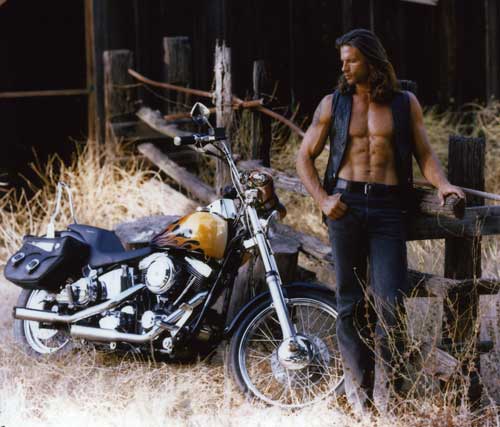
I'm dating myself with this pic of Lorenzo Lamas as RENEGADE

I’m dating myself with this pic of Lorenzo Lamas as RENEGADE

RENEGADES

Silvana
Miami, Florida
Friday, March 30, 2012
3:25 PM

Silvana Machado’s cell phone went off while she was pistol-whipping a street punk. He’d gotten up in her face when she and Vargas confronted him after they spotted two hookers slipping cash into his palm. He wasn’t particularly well turned out, wearing fairly ordinary clothing, utterly lacking the gaudy flash popular in pimpdom. She made him as a newbie, just getting his enterprise off the ground. He’d gotten out of a black Dodge Charger, not a bad car, but a far cry from your typical pimp’s tricked-out ride. She eyed the caller ID on the bleating phone. Headquarters.

She holstered her weapon and opened the call. “Machado.” Bobby Vargas held on to the the punk.

“Sergeant Machado, Lieutenant Santos here. What’s your location?”

Silvana stepped away from her partner and the punk, just out of earshot. “Northwest 26th Avenue, just off 50th Street, sir.”

“What are you doing?”

“Questioning a suspect, sir. Possible involvement in last week’s drug murder in this neighborhood.”

“Forget it. Get over to 75th and Biscayne, the Sea & Sand Motel. On the double. The manager found a body in one of the rooms.”

“Yes, sir.” She swiped the call off and turned back to the punk, now sniveling. His lip was slashed open. A mouse was forming over his swollen left eye. She pushed a heavy lock of mousey-brown hair back from her face and held out her palm. “Give.” Two snaps of her thick fingers.

“Gi-give what?” the punk said.

Vargas landed a hard knee into his skinny back. He buckled.

“The money, dipshit,” Silvana said. He resisted no more. She reached into his pockets and pulled out a wad of cash, maybe twelve or thirteen hundred. “Now, I understand they call you G-Man.” His head went up and down fast a couple of times. “Okay, G-Man, get this straight.” She held up the cash, close to his bleeding face. “This is your initiation fee.
From now on, it’ll cost you one grand a week to run your whores in this neighborhood. You understand?”

He said, “A grand? Man, that’s a ”

Another whack of her semiauto across his face. Blood flew from his mouth, nearly hitting Vargas’s sleeve. She was well-muscled and that one had to hurt.

“One thousand. Every Friday. Four PM, right here at this corner. You miss a payment or if we don’t find you on Friday, we’ll find you on Saturday and you won’t see Sunday. You hearing me?”

He nodded.

“Say it!” she said.

“One th-thousand. Every Friday. Four  four o’clock. I-I hear you.”

FEEDBACK

OVERVIEW – I think I met this woman at my last high school reunion. Interesting voice for this character. I’m not sure if she is an anti-hero or a baddee, but I’m willing to find out. I love a well-drawn anti-hero. I’d keep reading. Below are some suggestions:

STICK WITH THE ACTION – In the first paragraph, the first sentence sets up the action that is taking place, but then the author immediately takes us out of the action by setting up what led to the pistol-whipping and what the pimp is wearing and what he drives. I’d suggest taking care of some of this set up (ie like why the hookers were slipping him cash) with dialogue but stick with the action to keep the reader in the moment and totally buying into the danger of the scene. I can see her making taunting fun of him to her “look the other way” partner. The longer explanation diffuses the moment. But I laughed out loud when I heard her say, “Questioning a suspect” to her LT. Slam dunk on timing of a great line. I almost don’t want to read the next line – “Possible involvement in last week’s drug murder in this neighborhood.” Author might consider dropping it to sharpen the dark humor to this scene.

GUN USE – I have a thing about a cop using his/her weapon to beat someone with. She then puts the bloody weapon into her holster to spread the DNA. I know this is done a lot in TV and movies, but does anyone else take issue with this? My police officer friend gave me his input and I can’t post what he said here. This is a family blog.

TAG LINE/DATE USE – In the tag line at the top, the author uses the year 2012, which dates this story. I can see if a particular date is important for a period piece, but if the intention is simply to set the stage for something that occurred 3 years ago, then it might be better to use something like: March – Three years ago. I can see this set up to flash forward to present time when we encounter Silvana again.

EMBEDDED DIALOGUE – In the paragraph that begins, “The money, dipshit,” Silvana said, this weightier paragraph has a number of dialogue exchanges in it. Personally I like pulling out as much dialogue, for readers to follow easily. In a wordy paragraph that looks like a narrative, a reader might skim over or lose some lines. I prefer seeing dialogue more clearly and with more white space on the page as a respite for the eye.

SPELL CHECK – Words like “mousey” and “dipshit” show as misspelled and “”semiauto” should be hyphenated. Also, the time “Four PM” does not have to have the caps.

For Discussion: Any other comments of feedback for this courageous author, TKZers? Would you keep reading?

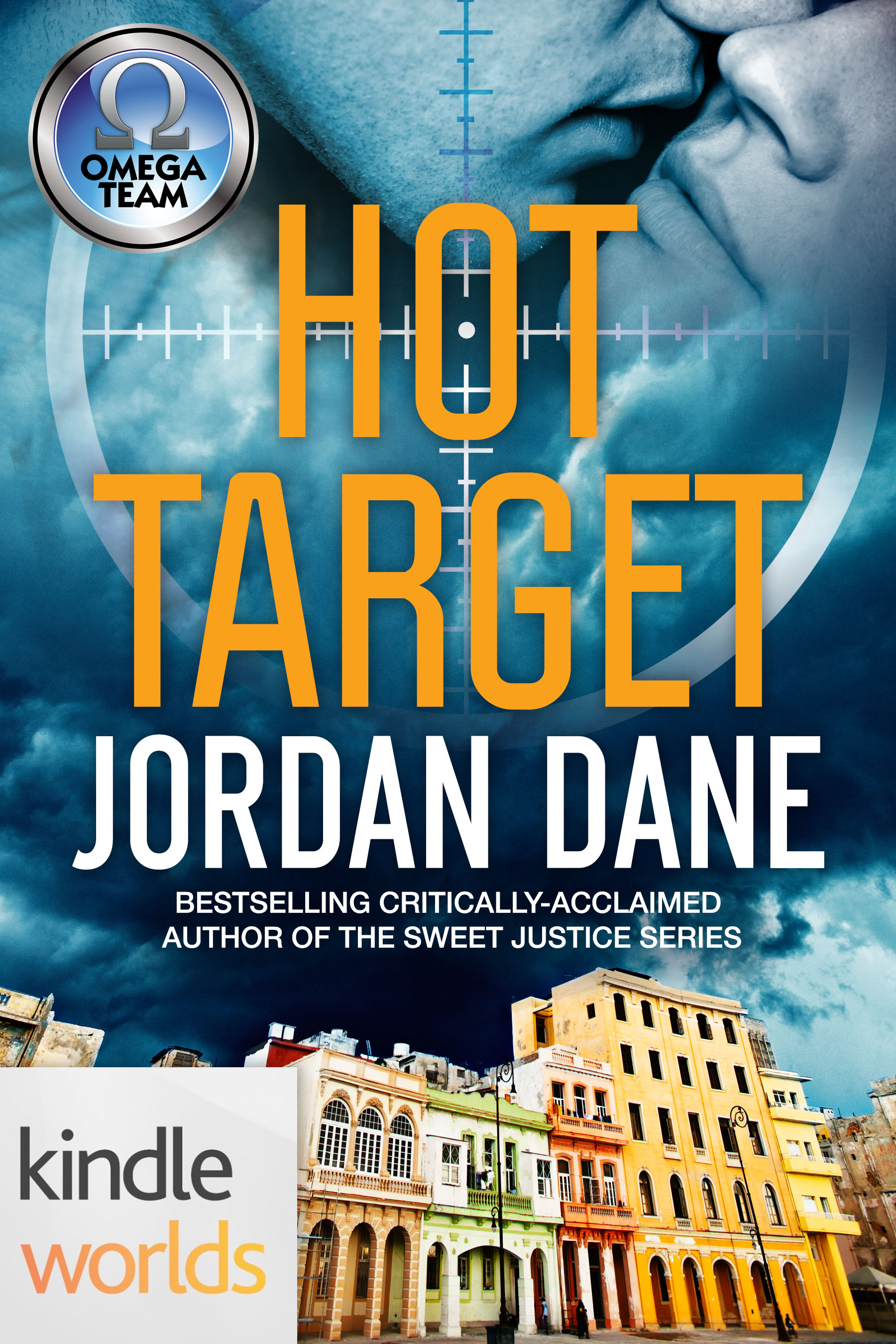
HotTarget (3)

HOT TARGET – $1.99 ebook (Coming Feb 18)

Rafael Madero stands in the crosshairs of a vicious drug cartel—powerless to stop his fate—and his secret could put Athena and the Omega Team in the middle of a drug war. 

The Omega Team series will launch Feb 18 with Amazon Kindle Worlds. Come join the facebook launch party at this LINK on Feb 18 for giveaways and chats with the authors in this romantic action adventure series.

Dumb Mistakes That
Will Doom Your Book

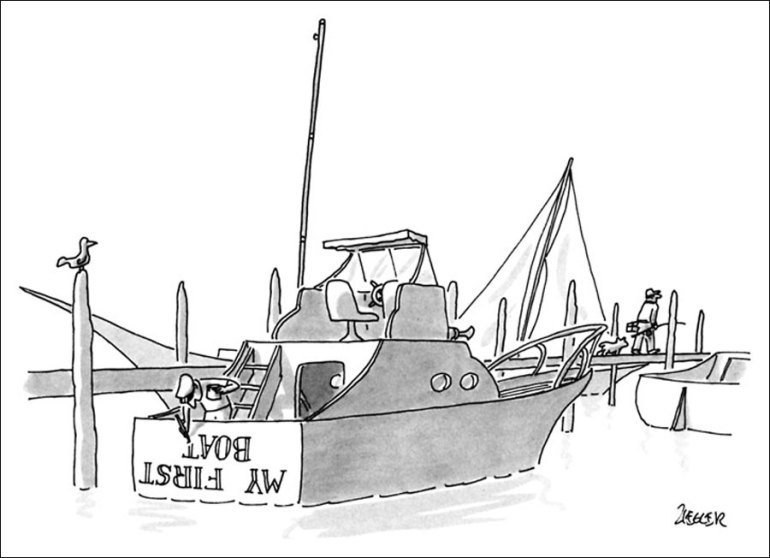
my-first-boat1

Don’t get whistled out of the game on fouls before you have a chance to show off your best moves. – Miss Snark

By PJ Parrish

So I’m watching Hassan Whiteside play in the Heat game the other night and it got me thinking about writing books. Or maybe it was Marco Rubio in his last debate. I dunno. Not sure who inspired me more. But what I want to talk about today is dumb moves.

Shooting yourself in the foot. Stepping in it. Dropping the ball. Screwing the pooch. Whatever you want to call it, this is not something you want to do in your career. Ask Whiteside. He threw an elbow into the face of his Spurs opponent and got ejected (his third this season). Or ask Rubio. He became Chris Christie’s chew toy after he robo-repeated a talking point three times in thirty seconds. (and paid for it by dropping to fifth in the New Hampshire primary.)

Hey, we’re all human. We all make mistakes. Believe me, I have. Some that adversely affected my writing career. So let’s take a look today at some of the wrong moves that can, as the great agent Miss Snark said, get you knocked out of the game before you’ve even had a chance. Your contributions to our guide to dumbness are welcome!

When writing the book…

extinct

Don’t chase the trend: We can go way back to Jaws for examples here. In the wake of Benchley’s novel, we quickly got such memorable chum as Megalodon (oil rig explosion unleashes giant shark), Carcharodan (prehistoric shark freed when iceberg melts), Extinct (killer shark preys on boys in Mississippi River) and Meg (really big pregnant shark bubbles up from Marianas Trench and eats dumb tourists.) After Anne Rice, Charlaine Harris and Stephanie Meyers dug up Bram Stoker, we got a full decade of un-deads. And après Dan Brown came le deluge of conspiracies (Templars! Cathars! Christian Inquisitors! Oh my!) Here’s my point: By the time you decide you want to follow a trend in publishing, it has begun to wane (and surely will be over in the 18 months it will take you to write it and get it to market). T.S. Eliot might have said, “Mediocre writers borrow, great writers steal.” But if you’re trying to break into the bestseller bank, chances are the money’s already gone. So think twice before you use that unreliable narrator or try to wedge “girl” in your title.  You are a snowflake. You are unique. Let your book reflect that.

Don’t be content with dull titles: Your title is your book’s billboard, meant to be glimpsed and grasped as a reader speeds by in the bookstore or on Amazon. It is ADVERTISING and it must convey in just a few words the essence, heart, and all the wonderful promise of your story. Work hard on this. Yes, slap anything on the file name as you work, but always, as you work through the writing, search for that pithy phrase that capsulizes what you are trying to say. Try Shakespeare (The Fault Is in Our Stars, Infinite Jest) or poetry (No Country For All Men — Yeats).  Go for weird juxtapositions (Zen and the Art of Motorcycle Maintenance) or intrigue (Midnight in the Garden of Good and Evil  or Then There Were None) or humor (Hello, Vodka, It’s Me, Chelsea!). Twist an old phrase (Dr. Suess’s You’re Only Old Once.). So many times, I read manuscripts (or published books) where the title feels like an after-thought, almost as if the writer used up all his juice just getting 300 pages down, breathed out whew! and then went back to page 1 and typed The Templar Conspiracy Book I. Click here for some good tips on titles.  Click here if you want to read the worst titles of maybe all time — and see some butt-ugly covers. Which leads me to…

Don’t use ugly covers: Now, if you’re traditionally published you have little control over this. (although some enlightened publishers are getting better about seeking author input.) But if you are self-pubbing, don’t let your nephew who flunked out of Pittsburgh AI design your cover. Don’t go find free lousy images and try to do this yourself. Nothing screams amateur louder than an ugly cover.  It tells potential readers that you think so poorly of your story that you’re willing to send it out in the world in dirty sweatpants and a Led Zeppelin World Tour 1971 T-shirt. Pay someone to do this. It’s worth every schekel. If you cheap out, don’t be surprised to see your ugly cover end up HERE.

After the Book is Done…

Don’t forget to copy edit it:  This is tedious. This is awful. This is grunt work that comes after even the hell of rewrites. Well, tough. After you finish your filet mignon, you have to floss. You might be really tired of looking at the thing and all you want to do is get it out there in the world, wait for someone to love it, and throw shekels your way.  Resist the urge to do this. Instead, PRINT IT OUT and read it for typos, misspellings, stupid mistakes, grammar lapses, brain farts. After you’re done, go back and do it again — maybe with a ruler held under each line so you go reeeeeal slow. I know authors who copy edit their stuff backwards so the mistakes jump out better.  You won’t get all the bad stuff. But the goal is to make it as clean and professional as you humanly can.  If you don’t know the difference between lay and lie, find someone who does. Agents and editors all say if they see dumb errors in manuscripts, they won’t read on. No one will take your words seriously until you do.

Write a great query letter:  This isn’t easy but it’s really important.  Agents want to fall in love with new talent and every affair begins with a magic moment.  A great query is simple, direct but has a terrific hook. Which is not the same as a plot summary. In Hollywood-speak, it is a “log line” that capsulizes the essence of your plot with a strong emotional pull. (ie from Aliens: “In space, no one can hear you scream.”)  This is hard writing. Even if you self-publish, learning how to write a great tease for your book will serve you well when you go to write that Amazon copy. Click here to see a simple and very serviceable query template.

Have some cajones: There is nothing worse than a falsely humble author. If you are doing a book signing, would you tell someone who walks up to your table, “Oh, I know you’re busy…you don’t really want to know about my book.” So, in your query letter, don’t spend precious words apologizing for “wasting” an agent’s time by sending them your letter. If you don’t have faith in your book, how do you expect anyone else to?  Even if you aren’t a pro yet, act like one.  Be like that wide receiver who doesn’t spike the football in the end zone — act like you belong there. (I got this one from a great blog by agent Jenny Bent.  Click here to read the rest of her advice on submitting.)


Follow the rules when submitting your novel:  Reputable agents are good people; they truly want to find the next best thing because they love good books. So be a pro and follow their rules. Research what types of novels they are looking for. Find out their names and how to spell them. (DEAR AGENT is sorta off-putting, you know?) Format your manuscript in the way they want it — ie, double-spaced, courier or roman, etc.) And finally: Don’t forget to number your pages. Don’t use colored paper or add weird stuff like glitter. And for God’s sake, don’t call your book “a fiction novel.”  You laugh? I saw the actual query letter that had that gem.

I don’t think that guy ever made it off the bench.