
 How are your writing projects coming along so far in 2019? Please share your projects, progress, and links in the Comments !
Category Archives: Writing
Where Inspiration Comes From
Over the weekend, on the heels of the SHOT Show in Las Vegas, I participated in a small, 20-person writers’ retreat, and I was reminded at how inspirational it is simply to be in the presence of other writers. No fans, no industry people, just other authors who are doing their best to carve a living out of a crazy business.
I’ve been doing this a long time, yet there’s always another tidbit or two to be learned from others, even if it’s a different squint on a common problem.

Sunrise at Monument Valley, Arizona
Fired up with creativity, Joy and I joined with another couple and headed off for a week in the Great Southwest. Our final destination was Santa Fe, New Mexico, but our first stopping point was Monument Valley, Arizona. We stayed at The View Hotel on the Navajo Reservation, and Mother Nature presented us with the very best she had to offer.
I don’t remember the last time I had an unobstructed view of a moonless, entirely dark night sky. The sight of billions of stars, stretching from horizon to horizon brought tears to my eyes. It centered me.
And when I awoke the next morning, I was greeted with a sight that turned out to be photo-friendly. The sun rose slowly against the big sky, and every few minutes the light changed again. After a couple of snapshots, I realized I was squandering my gift from God. Moments like that are meant to be experienced. They are meant to be savored. It sounds corny, but something changed in me.
I’m better because of the experience.
What fleeting moments in your life have had a profound impact on you?
Fair warning: I’ll be savoring Santa Fe when this is published, so I won’t be participating much in the responses.
Our Flawed But Fab Jury System
And a Few Other Favorite Things
By PJ Parrish
When you read this, I will be sitting on a hard plastic chair somewhere in the bowels of the Leon County Courthouse. Duty calls…
People go their entire lives without getting called to serve on a jury. Me, it’s like the common cold. It always finds me. And no matter what I say in voir dire, I have almost always gotten seated. Must be my honest face.
I’ve been called up nine times and been seated on seven juries. A couple cases were settled and the others were pretty ho-hum. A man we convicted of drunk driving, who luckily didn’t kill anyone. A city contractor caught driving a garbage truck without the proper permits who we convicted but knocked down his fine to $30 because he was a working guy. Then there was the woman who was suing a trucking company for hitting her car, claiming extreme emotional and physical distress. It was so bad, her tearful daughter vowed on the stand, that mom became a recluse who couldn’t walk or even reach down to pet her dog Charlie. So sad…until the insurance company’s lawyer showed us a video of the woman coming out of a strip mall, holding her hands high, a gesture I immediately recognized as someone who had just gotten her nails done. A second video showed her bending down, grabbing the floor mat out of her car and banging the hell out of it against a curb to get the dirt out. I think we awarded her a couple hundred bucks toward medical bills. Or a new manicure..
I always thought these mundane cases had no real effect on people’s lives. Until the last jury I served on. It involved a cop and a black teenager. The cop was accusing the kid of assault after a routine traffic stop. To make a long story short, the cop’s case didn’t hold water and after about an hour of deliberation, we decided the kid didn’t do it. I will never forget the sight of that kid and his mom breaking down and sobbing after the verdict.
Life, when it really hits you in the face, is always stranger and more poignant than fiction.
So tomorrow, as I sip my cup of bad vending machine coffee and await my turn, I will be thinking again of our peer judicial system. Flawed as it may be, as it still has the power to humble me. If you’ve got any stories to tell about your own brushes with it, weigh in today while I am tied up. (I will try to reply as I can, if the wifi is working.)
Or you can have some fun and play the following game. It’s called These Are A Few of My Favorite Weird Things. Hit it, Maria!



(Aren’t you glad I spared you a video of Julie Andews?)
1. Favorite Movie Most People Have Never Seen
Mine is the Bagdad Cafe. It is a 1987 comedy-drama set in a desolate truck stop and motel in the Mojave Desert. I’m told it’s loosely based on Carson McCullers’ novella The Ballad of the Sad Café, but I’ll be danged if I see it. It’s about two women, a lonely German tourist and an irascible black mom, who chuck their husbands and form an unlikely friendship. Jack Palance is great as Rudy Cox, a strange Hollywood set designer who desperately wants to paint the zaftig Frau Münchgstettner. At first, the movie feels just weird and angry. But it weaves a magic about how one person can change another’s life. And the song I’m Calling You (nominated for Oscar) is haunting:
2. Favorite Book Nobody Else Has Read

Mine is Time And Again by Jack Finney. I don’t remember how I discovered this book. Probably in a used book store on one of my pre-Kindle travels because I always run out of things to read and have to scout out the nearest English-language bookstore. Actually, lots of folks know about this book. Stephen King calls it “a great time-travel novel” and I think our own James has mentioned it. In a nutshell:
When advertising artist Si Morley is recruited to join a covert government operation exploring the possibility of time travel, he jumps at the chance to leave his twentieth-century existence and step into New York City in January 1882. Aside from his thirst for experience, he has good reason to return to the past—his friend Kate has a curious, half-burned letter dated from that year, and he wants to trace the mystery. But when Si begins to fall in love with a woman he meets in the past, he will be forced to choose between two worlds—forever.
It was written in 1970 and supposedly Robert Redford tried to make a movie out of it. Lionsgate recently optioned it again. In 1980, the Christopher Reeve/Jane Seymour weeper Somewhere In Time used the exact same time-travel technique as Finney’s book. The book has lots of cool photos of old New York.
3. Favorite Disgusting Food

On my first trip to Paris with husband two, we were young and foolish. Our French was pretty bad back then and there was no such thing as iTranslate. We went to a restaurant called Le Petit Zinc and, feeling frisky, ordered something called ris de veau. It was delicious, tasty meaty morsels swimming in Madeira mushroom sauce. We finally asked the waiter what it was, and he had his fun with us, saying “C’est testicules.” That we understood. We didn’t care.
4. Favorite Thing To Do When No One Is Looking
Sing Bohemian Rhapsody in the car. Very loudly.
5. Favorite Opposite-Sex Guilty Pleasure Movie
Okay, guys have to tell their favorite girl flick. Ladies have to come up with a man-movie. I have a couple favorite guy movies, like The Guns of Navarone and all the Dirty Harry movies. But I never turn down a chance to watch The Dirty Dozen. I’ll stop channel-surfing and watch it. Can’t help it. It gets to me every time.
6. Favorite Book I Wish I Had Written
I like everything Joyce Carol Oates writes. Even when she’s off, she’s better than 99 percent of the writers out there. I discovered her with 1986’s Marya and followed her through her normal literary stuff, and her detours into crime fiction and erotica. But the book that always stayed with me is Because It Is Bitter And Because It Is My Heart. Set in the early 1950s, it tells the story of the friendship between a young white girl named Iris Courtney and black teenager Jinx Fairchild. They are united by a murder that they commit in self-defense. I wasn’t writing crime fiction when I read this, but I believe this book planted the seeds in my sub-conscious to want to explore the psychology of murder that colors my own work to this day. Here’s the opening.
“Little Red” Garlock, sixteen years old, skull smashed soft as a rotted pumpkin and body dumped into the Cassadaga River near the foot of Pitt Street, must not have sunk as he’d been intended to sink, or floated as far. As the morning mist begins to lift from the river a solitary fisherman sights him, or the body he has become, trapped and bobbing frantically in pilings about thirty feet offshore. It’s the buglelike cries of gulls that alert the fisherman—gulls with wide gunmetal-gray wings, dazzling snowy white heads and tail feathers, dangling pink legs like something incompletely hatched. The kind you think might be a beautiful bird until you get up close.
Every time I read it, it makes me want to be a better writer.
7. Favorite Weird TV Show
When I was a kid, my dad used to let me stay up late to watch One Step Beyond. It was an anthology about the paranormal and anything that defied logic. The phlegmatic John Newland (“Your guide to the supernatural”) would tee up every episode with the disclaimer that they were based on “the true human record” as this great creepy music played in the background (“Fear” composed by Harry Lubin and covered by the Ventures in 1964. Click here to listen.) This was unlike The Twilight Zone, which debuted nine months later and was fictional. This was REAL! Really cool stories with cool actors (one episode paired Warren Beatty and Joan Fontaine.) My dad loved this show. But then he also sat out in the yard with his binoculars looking for flying saucers.
8. Favorite Bucket List Thing I Probably Won’t Get Around To Doing
I really want to go to the moon. NASA estimates that a round-trip ticket to the ISS on the SpaceX Crew Dragon or the Boeing CST-100 Starliner would cost about $58 million. I don’t have enough Sky Miles for that. So I will settle for parachuting out of a plane. If George H.W. Bush can do it at age 90, I still have hope. My husband tells me he will veto this, so I will just have to outlive him.
Three Movies…and What We Can Learn from Them
(My apologies in advance…my internet service has been out to lunch for the last few days. I have been getting by with cell phone tethering but that has been spotty as well. It’s weather related and since we’re going to have more of the same for the next several days I may not be able to respond to comments, etc. I will do so as time and ability might allow. Thank you!)
I am old enough to remember when Netflix was a DVD rental service. It actually still does that, though it has almost single-handedly transformed and popularized video-streaming. There is so much available that it is easy to acquire decision stress over what to watch. It is also quite easy to become addicted to the point where one lets other, more important things (such as writing) slide.
If you’re going to watch Netflix but you want to justify paying the time bandit instead of following your Muse you can actually learn quite a bit by judiciously choosing what you watch. I’m going to briefly discuss a couple of movies that you can find in Netflix’ nether regions that you either may not have heard of or which flitted across your attention due to not being your type of movie. I’ll also mention another that just hit theaters (remember theaters? Those big cavernous places that you stopped going to because half of the audience thinks they’re on Facebook, and can yell out everything they want?) yesterday. Without further ado:
— Train to Busan: I quit watching Walking Dead when Rick’s son lost his eye and then pretty much gave up on the zombie horror sub-genre altogether. Someone recommended Train to Busan on Netflix as a zombie movie for people who were tired of zombies or hated the genre. My friend was right. Train to Busan, a South Korean horror film, hooks you in the first three minutes, giving you a hint of what is to come, stepping back and featuring a bit of human drama, and then putting you on the edge of your seat for an hour and a half or so. The set up is that an overworked hedge fund broker takes the morning off to accompany his young daughter (who is the cutest little kid who ever walked the face of the earth) on a high-speed train to visit her mother. The zombie apocalypse breaks out on the train and off we go. These zombies, by the way, aren’t the usual shambling dodos that can be taken out with a well-placed arrow. They are fleet of foot (they can somehow stumble and run like hell at the same time) and extremely aggressive. My favorite line of the film occurs when a passenger gets on the train intercom and says, “Conductor, we have a situation!” No kidding, Sherlock. The film itself features an excellent example of how to hint at a problem at the beginning of a work, let the problem percolate off-screen (or off the page), and then bring it back with a vengeance. It also is a reminder that light rail, buses, trains, boats, or planes are to be avoided at all costs.
Hell or High Water: This contemporary western finally made it to Netflix and will cause you to trade in your bird box or whatever. A man gets out of prison to find that the family farm has gone into foreclosure during his absence. He and his brother embark on a scheme to rob the branches of the regional bank which holds the mortgage and then use the money to pay off the loan on the farm. It could have been a comedy — and yes, as an exercise you could rewrite it as a comedy — but it isn’t. Things don’t go exactly as planned and the brothers soon find that law enforcement is after them. Jeff Bridges, in what might be the performance of his life, plays a Texas Ranger who is just weeks away from retirement. His investigation into the robberies will certainly be his last case and he wants to retire on top by identifying the robbers and bringing them in dead or alive. There is plenty of moral ambiguity to be had all around, a few quirky characters, and an ending you won’t see coming. There’s a bit of action and plenty of drama, all of it perfectly placed and paced, but you will want to take notes on the dialogue, which is first class from beginning to end and which is just as important for what is not said as for what is.
Serenity: I obtained days before its theatrical debut an advance copy of this new Matthew McConaughey vehicle without knowing anything about it. I assumed from the title that it was a film about sobriety, ala Clean and Sober, but contrare mon frere. It’s a noir tale with many of the elements of Body Heat but which, alas, goes adrift. McConaughey plays a charter boat skipper whose ex-wife shows up, telling tales of abuse, drunkenness, and cruelty at the hands of her extremely wealthy new husband. She wants McConaughey to kill the despicable cad, promising great rewards of the material and carnal kind. One can understand why McConaughey loses his wrestling match with temptation but that is the only element that truly works here. The story gets sidetracked needlessly and pointlessly, giving one the feeling that some of the scenes were inserted to make Serenity long enough for theatrical release. There is also a twist to the story that is ridiculous by any standard. The result is a textbook case of what occurs when 1) you try to grow a story with scenes that aren’t the equal of the existing product and 2) throw a shell game into the plot which makes the audience the patsy. The Coen Brothers (who have nothing to do with Serenity) do this occasionally with UFOs, for reasons best known only to themselves. It doesn’t work for them. The cleverness inserted into Serenity doesn’t work either, and the result is a work which robs you of two hours of your life which you will never get back. It’s a great example of a waste of elements and actors, a model of what not to do to your target audience.
My question for you: what film, television show/series, or whatever have you watched recently which provided one or more teachable moments — good or bad —for your writing? And how so?
Surveillance by Keystrokes – Giving Permission to Snoop
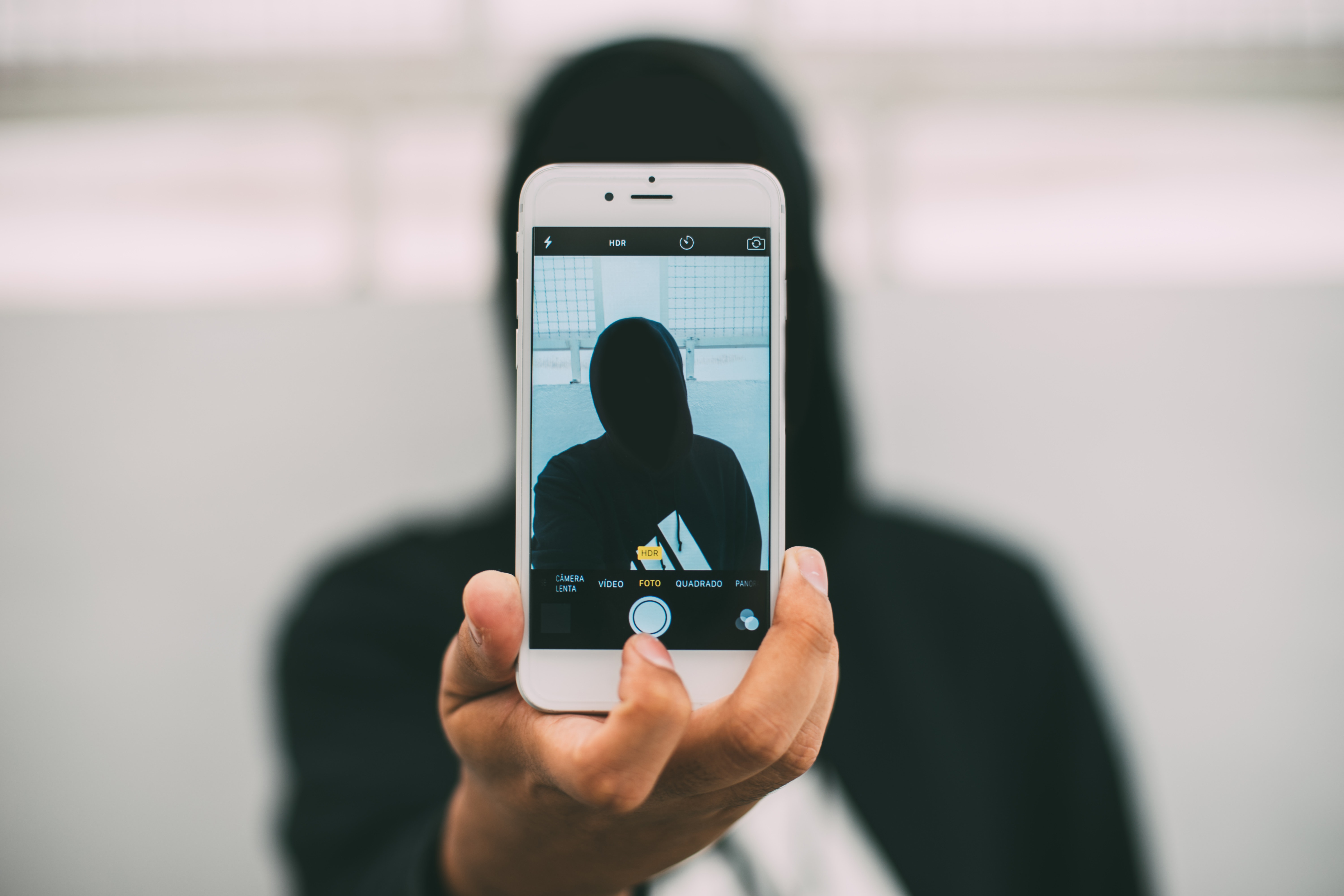
By now, we’re all pretty used to doing a Google or Amazon search, then having ads pop up about the item you searched for.
Take that a step further: Have you walked into a business but didn’t buy anything? Then next time you check Facebook, an ad for that business appears on your feed?
Happened to me for the first time about a year ago. I went into an independent bookstore in Whitefish, Montana to make sure they still had copies of my book in stock. I left without purchasing anything.
When I got home, I happened to check Facebook. An ad popped up for that same bookstore. How did FB know I’d been there? I hadn’t Googled it. No credit card transaction had been processed to connect me to that store.
However, the smartphone in my pocket knew I’d been there.
The amount of data recorded by that device creeps me out…especially when I didn’t knowingly put the information into it.
Recently I made airline reservations on my laptop. When I opened the calendar on my smartphone to enter the flight times and numbers, they were already there. What the…? I purposely haven’t synced the laptop and smartphone to talk to each other.
Yes, it was convenient but it bothered me. What uncomfortable magic suddenly connected the two devices? It hadn’t occurred several months earlier when I last bought tickets from Delta, nor with American Airlines where I’d booked flights a week before. What had changed?
Somewhere hidden in terms and conditions, apparently a new provision allowed access to my phone. By whom? Google? Delta? The phone manufacturer?
If anyone more techie than I am (which means 99% of the population) can explain this, I’m all ears.
Stealth “permissions” sneak past us whenever we check that box: “I agree to the terms and conditions.” When you download a game, an app, or make a purchase, do you read all 47 pages of underlying legalese? Probably not. Additionally, since terms are often subject to unilateral change by the company without notice, what good does it do to read them?
We have traded privacy for convenience, one app at a time.
Smart devices invade our homes. Alexa eavesdrops 24/7 on conversations. In some instances, she has been known to broadcast private conversations to third parties, as happened to this Portland, OR family who learned their discussion about hardwood flooring had been shared with a person on their contact list.

Nicolaes Maes
So…in the privacy of your bedroom, what if you complain to your spouse about your rotten boss? Suppose the oh-so-helpful Alexa sees fit to send that conversation to that boss because s/he happens to be on your contact list. Ouch.
Never mind what else Alexa might overhear in your bedroom!
Lately my husband and I have been listening to a Michigan attorney named Steve Lehto on You Tube. He delivers short, entertaining podcasts about legal issues, specializing in vehicle warranties and lemon laws. Sometimes he goes off on an unrelated topic that catches his interest. This video addresses stealth permissions on smartphone apps.
Steve reveals that when you buy or lease an Android smartphone, it comes preloaded with certain apps including one that keeps track of keystrokes on the phone’s keyboard. Sounds innocuous, right?
Until you realize every text message, every bank PIN, and every credit card number you type is recorded. A record of those keystrokes may be available to whoever pays for that information.
Steve didn’t mention iPhones but it’s not a great leap to imagine they share similar apps.
Older devices like Blackberries have mechanical keyboards rather than electronic. You tap a key and a contact switch causes the letter to appear on the screen.
But smartphone keyboards are different. They record keystrokes electronically (known as “keylogging”) with no mechanical switch. Somewhere in cyberspace, someone is keeping track and storing every keystroke.
I don’t bank or pay bills online because hackers gallop miles ahead of safeguards. Security patches close the breach only after the horse is long gone out the barn door.
http://Embed from Getty Images
However, I do text. And that’s how the keystroke app slapped me in the face.
Last summer, an old friend visited us in Montana and left behind his small, well-worn Bible. A few weeks ago, he died in San Diego. At the time of his death we were away from our Montana home, on vacation in Florida, meaning we had to fly from Tampa to San Diego for the funeral.
We wanted to take his Bible to the memorial so I texted our neighbor in Montana and asked him to look for it among the books stacked on our coffee table. I described it as a small, turquoise Bible. The neighbor found it and mailed it to us. All good.
Shortly afterward, an ad popped up on my Facebook feed…
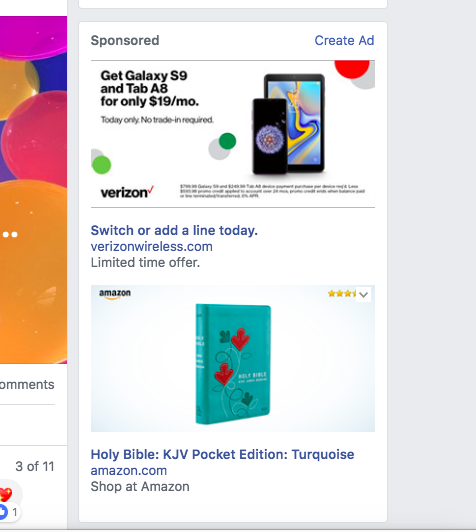
Amazon ad on my Facebook feed
…for a pocket Bible in turquoise.
Hmmm.
That unusual combination of keywords could only have come from the text I typed on my smartphone. Android recorded my private text message and passed it on to Facebook who passed it on to Amazon. Now I’m angry.
If you’re arrested on suspicion of a crime, the Fourth Amendment to the Constitution requires law enforcement to obtain a search warrant to dump the contents of your phone. The same rules obviously don’t apply to Facebook, Android, Apple, Google, Amazon, etc. because we give up those rights simply by using these convenient devices.
Keylogging apps are sold for legitimate purposes, like checking your minor children’s exploration of internet sites, or to see if they’re texting pals to sneak off to a forbidden kegger.
However, such apps are a hacker’s dream because passwords, bank PINs, credit card numbers, and other sensitive private information can become available to cybercriminals.
It’s like installing a deadbolt on your door then handing out keys to random people on the street.
Crime writers can imagine endless plots arising out of technology scenarios.
My thriller, Instrument of the Devil, was set in 2011 as smartphones first exploded in popularity. In the story, a terrorist hacks into the protagonist’s smartphone. He employs what was then secret technology to eavesdrop on her every word and track her physical location while he sets her up to take the fall for his crime—a cyberattack on the electric grid.
In 2019, those formerly covert apps are widely in use by anyone. They are everyday tools that allow tech giants to mine ever more intimate information about us.
As an author, I’m normally delighted when someone reads what I’ve written. However, as a human being, I resent this invasion into my personal communications.
A wise lawyer once told me, “Don’t put in writing anything you wouldn’t want to be read in open court.” I remember his advice now when I text because…
…Someone is always watching and listening.
Your turn, TKZers. Have you experienced creep-out moments due to technology? What nefarious plots can you imagine where smart devices play a role?
Instrument of the Devil is on sale for only 99 cents during January.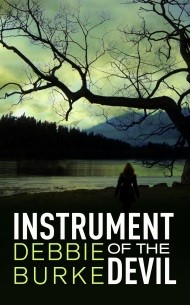
What Books Bring You Joy?
I’m sure by now you’ve all seen the social media flap over Marie Kondo (The Life Changing Magic of Tidying up) and her (much maligned) advice on decluttering books – including the outrage over her supposed instruction to ‘keep only the books that still spark joy’ (ideally less than thirty). The furor was such that I decided to watch the episode on her Netflix show just to see what all the fuss was about (even though I was sure, no matter her advice, I wasn’t about to part with any of my book collection!) While I, for one, would never presume to advise anyone on the art of tidying up (even though my husband was super excited by the prospect!), I think the debate over whether you should only keep books that still ‘spark joy’ is a wonderful one…because it reaffirms why so many of us love to live surrounded by our books.
Even though on Facebook, Twitter, and Instagram there was a lot of anger and outrage, at the heart of Kondo’s advice there seemed to be some valuable observations about the joy books can continue to spark in people years after they were first read, the benefits of feeling connected to the books you own, as well as the practicalities that every book lover has to face (limited bookshelf space!!!).
I come from a line of book hoarders. Up until recently, almost every available shelf in my parents’ home contained piles of books until they realized the necessity of downsizing meant facing the dreaded task of sorting through their books. I felt their horror. After all, they had decades of book collecting behind them (including amassing a lovely antiquarian collection of English Civil War books which is hopefully going to a museum somewhere). My initial instinct was (of course!) to offer a home to any and all of their ‘orphaned’ books until my husband pointed out that we have no room for our own books let alone anyone else’s…which may be why the concept of books ‘sparking joy’ seems poignantly relevant to me now (not that I’m giving up any of my books yet!!).
In the infamous ‘book’ episode, Marie Kondo asks one of her clients to name the book he will ‘never let go?’ (his answer: To Kill a Mockingbird) and the starkness of this question made me think long and hard (I still have no answer – I have far more than just one book that I’ll ever let go!). Certain books, however, do stand out – like my Chalet School book collection that I obsessively collected into my early 20’s (these school stories were published sporadically and often very hard to find). Although I don’t re-read them anymore, I couldn’t bear to part with them – which must mean they continue to spark joy:)
I’m still resistant to the notion that I could ever declutter that many books (too many bring me joy) or select just ‘one’ to keep – but Kondo’s questions have made me think about why I keep the books I keep – after all, I don’t keep every book – I’ve donated many paperbacks, potboilers, gifts, and duds in the past. I am also an avid library goer (lest you think I’m a complete book materialist!) as well as an e-book buyer (clearly, far less bookshelf space is required for those:)).
According to Kondo, the books I keep on my shelf should (in theory) be those I’ve deliberately chosen as ones that continue to ‘spark joy’…but in practice, this is far more complicated. I keep books that have infuriated and challenged me, classics I was forced to read at school and never really enjoyed but (begrudgingly) learned from, reference books from my past careers (you know, just in case…), books that hold weird sentimental value I don’t quite understand, history books for periods I’ve not written about yet…and the list goes on (not to mention the vast TBR pile!). Sparking joy seems too simplistic a criteria when it comes breadth of emotions literature provides.
What about you TKZers? What do you think about Kondo’s decluttering advice when it comes to books? If she asked you, what is the book you’d never let go?
Mystery Elements and Sass Are the New Black – First Page Critique-The Dangerous Dame
Don your fedora and breathe in the smoky air of a shadowy life when you read this anonymous submission of 400 words for THE DANGEROUS DAME. My feedback will be on the flip side. Please share your thoughts in the comments.
CHAPTER ONE
Ida Lucas was Hamilton’s answer to Mata Hari – a blonde bombshell who mesmerized the upper-crust gents in the Circus Roof at the Royal Connaught Hotel. Some folks said that her scandalous strip-tease rivaled that of Gypsy Rose Lee. One night with Ida was rumoured to cost you a King’s ransom and that, in the Hamilton of 1948, translated into a cool 100 simoleons. For the working man – two weeks pay. But the working man was the last guy Ida wanted to see.
She came to my attention while I was doing some leg-work for a local law office. And I didn’t find out until much later that there was a helluva lot more going on in this shady lady’s busy life than I’d ever suspected.
It was a fine spring morning when I entered the White Spot Grill on King Street downtown. Spiro shot me a dark look from behind the counter as he grunted a tray-load of dirty cups into an industrial dishwasher with a loud clank. The sharp tang of burnt toast hung in the air and I guessed that Madge was late for her early shift this morning.
The food here was nothing special and the coffee was so-so but it was close to my office. And don’t get me started about its owner.
“Don’t often see you in here, Max. Now that you’re a big-shot private dick with a fancy assistant and a secretary and all,” he said.
I’d met Spiro last summer when I opened my private detective agency on King Street, across from the Connaught, and right off the bat we’d developed a spikey kind of relationship. But with the ladies, of course, he was always the perfect gent – “Yes, Ma’am, right away, Ma’am. My, you’re looking swell today.”
I ignored his ‘big shot’ remark and slid onto the end stool at the counter. “A large carafe to go. If it ain’t too much trouble.”
He bounced his hard look off me but I didn’t react. Then he motioned with his head toward the rear of the café. “Bob said he wanted to see you if you came in. I told him –”
“Okay. I’ll be back in a minute.”
At the end of the row of booths, Spiro had rigged up a small table that looked like a cut-down student’s desk. It was low enough that my veteran friend, Bob, could use it while seated aboard his wheeled dolly. A brave soldier overseas, he’d lost both his legs on that godforsaken, stony beach in Dieppe on August 19, 1942 – a date forever seared into the memory of every Hamiltonian.
Bob was puzzling over a Daily Racing Form and scribbled something in the margin as I approached. He looked up, then parked his pencil behind his right ear. “Hi-de-ho, Max. How goes it?”
“Everything’s copacetic,” I said as I pointed to the paper. “Trying to pick me a winner at the Woodbine track?”
FEEDBACK
There is plenty to like with this submission and the ease of a voice that reminds me of old black and white detective movies. The attention to detail of the White Spot Grill and the guy filling in his race track form with a pencil is Bob, a WWII war veteran–the sights and sounds and smells are vivid and drew me in.
Time Frame & Setting – I would like to know what time frame this is written for. A simple tag description at the start would be a simple fix – What year and city?
Where to Start – Given the Noir voice of this submission, I liked the intro and got into the description of Ida Lucas, but that intro is coming from a character I’m not properly introduced to. The first two paragraphs are about Ida Lucas and I don’t know why because there is no link made to her and Max, the narrator. There doesn’t appear to be a connection that explains why the woman PI begins the story with her–plus there isn’t action to jump start this passive beginning.
My suggestion would be to start with the action of the woman PI walking into the White Spot Grill (3rd paragraph). I would rework the new introduction to be meatier with a mystery centered on the woman entering the grill alone, hinting at why she had come.
A simple fix:
BEFORE: It was a fine spring morning when I entered the White Spot Grill on King Street downtown. Spiro shot me a dark look from behind the counter…
AFTER: When I entered the White Spot Grill on King Street downtown, my high heels clacked on the black and white checkered linoleum and Spiro shot me a dark look from behind the counter. He grunted a tray-load of dirty cups into an industrial dishwasher with a loud clank. I felt like a porterhouse in a world of ground round.
Max obviously knows all the names of the people who work at the diner. Why not take the opportunity to introduce the narrator when she walks into the restaurant? All we know is her first name is Max.
If the author saved the first two paragraphs, those could be used later, once the reader understands why Ida Lucas is important to this rendezvous. As it stands now, the first two paragraphs are isolated (as to purpose).
First Person POV Gender – From the start, I pictured the voice to be that of a man, but it’s not until dishwasher busboy Spiro says “Yes, ma’am” that I realized the narrator is a woman PI. Even the nickname of Max doesn’t shed light on gender. If the author takes my suggestion of starting with the action of the woman PI making a mystery clandestine meeting at a low rent grill, adding words like “my high heels clacked on the sidewalk” or have Max put on lipstick outside. Or have Spiro be the only one who calls her Maxine and she rolls her eyes and has a snappy comeback.
SUGGESTION: “No one calls me Maxine, Spiro. Not even my mother. How many times do I have to say it?” Working as a single woman in a man’s world, I preferred the nickname, Max.
I stumbled over this – When Spiro is trying to get Max to check in with his boss, Bob, she acknowledges his request but says, “Okay, I’ll be back in a minute.” I didn’t get this line. It made me think Max had to get her coffee order back to her office and that she would return to visit with Bob when she could stay longer. I had to reread it a few times. Maybe the author meant that Max would come to the “back” of the restaurant after she gets her order. I would recommend the author clean this up and make the transition clearer.
Mystery Elements/Where to go from here – Does Bob get Max into a case involving Ida? I don’t know what to suggest since I don’t know where the story is going. To tie this in better and make the story start with a mystery, Max could be holding a note clutched in her hand, a cryptic message asking her to meet at the diner. She could recognize the handwriting, but the note isn’t signed. Or for added interest, the note could end with a compelling mystery line – something like “I’m sorry, Max, but I need to know this time.”
Bob could have tried a few times to trace the whereabouts of Ida for personal reasons. Max sees the cryptic note and she knows who wrote it. Her mind could flash on Ida and her reputation (where the author brings back the first two paragraphs without spilling the beans on why she makes the connection).
I would recommend adding mystery elements to draw the reader into this intro. The exchange between Max and Bob is too casual and chatty, with no tension or mystery to their interaction. Why not add something? Have the reader walk into Max’s life with a mystery she’s been working on with Bob. It would give more purpose to this introduction and the reason Ida Lucas will play a part.
More Sass – I think there is potential for Max to have sass throughout this novel. We’re only seeing the first 400 words, but I would like to see more of a hint of it in this brief opener. That’s why I added the line, “I felt like a porterhouse in a world of ground round.” This reads like a period piece and to have a woman working in a traditionally male career, Max would have to be over the top aggressive in order to get work as a private detective. She’d have to have guts and think out of the box just to compete.
I once researched women bounty hunters and the stories I found online and in newspapers on how they outsmarted the male fugitives (for higher bounty) are hilarious. I see Max street savvy and smart mouthed, able to talk her way through anything. Adding color to Max’s voice and her life could make the difference in setting this story apart from other novels.
Overview – There is a lot to like about this submission. I would definitely read on since I love police or PI procedurals. I love the author’s attention to the detail of sights, sounds and the reader’s senses. I’m also intrigued by the voice of the woman detective. Well done.
DISCUSSION:
What would you add, TKZers?
First Page Critique – The Halcyon Vengeance
Another brave anonymous writer has submitted a first page for review and comment. Y’all know the drill by now: First the piece, and then comments on the other side. NOTE: The italics are all mine, a way to differentiate whose writing is which.
THE HALCYON VENGEANCE
Adrian Steele stared out the 10th floor window in the direction of Sheremetyevo. Snow drifted lightly down. His jaw clenched. He was in Moscow. In winter. Again. He glanced over to Natalya who recited the final brief for his assignment in Cuba. Steele kept his expression neutral, his impatience hidden. He traced a finger through the condensation of his breath on the cold window. His hand remained steady. Good. He wasn’t nervy.
“Steele,” Natalya said softly after a pause, “please remember why you’re here.”
“You’re sounding like Pierce. Doesn’t suit you.”
Natalya grimaced, stepping to the knapsack she’d left on the chair. She handed him an unmarked envelope.
“That’s all there is. It could be my job for helping you. Especially with this.”
“Clothes?”
She tossed him the knapsack. “No trackers, I checked them myself.”
Steele thought about the trackers that she’d doubtlessly put in.
Natalya turned her head to the dark window as he changed his clothes. She’d watched him before. Now she wouldn’t. He’d need to lose the clothes, then.
After he pulled on a thick parka she handed him a battered ushanka.
“Remember, flaps up. Or you’ll look like a pussy,” she muttered.
Steele nodded. He knew.
“And don’t die. Or get wounded. You need to be back by 0300 for your flight to Havana.”
He put his hand out. Natalya bit her lip as she passed him a Makarov PM and two magazines.
“Don’t fret, I won’t leave a mess.”
“You’re lucky, going to a tropical place,” she muttered wistfully.
“I wouldn’t exactly call it lucky.”
“But the weather’s better.”
“Yes, it is. Spasiba do svidaniya myshonok,” he muttered as he opened the door, checked the hallway, and slipped away.
Natalya pulled the mobile from the inside pocket of her jacket. “Did you get all of that?” she asked Pierce.
“Yes. But he lied, our Adrian did.”
“You mean –?”
“Oh, he won’t miss his flight, he knows what’s on the line.”
“But he’s off the leash…”
“I let him do this, or he won’t do the job in Cuba. He’s the only one who can and he knows it. I’m not sure what he’s got planned, but it’s going to leave a hell of a mess.”
“Will he kill Voschenko?”
“He wants to. Thank you for your help Natalya. You should go to ground.”
“But…”
“Leave myshonok. Disappear. Now.”
It’s Gilstrap again. First, by way of full disclosure, I had some real formatting issues transferring the original email onto the blogging platform. So, Anon, if I screwed up any of the paragraph breaks, I apologize.
First, the positives. I like the tone of this story. It has a very Cold War Ludlum feel to it. No one trusts anyone. I like that stuff. I also like the flow of the dialogue for the most part. It feels like a real scene, populated with believable characters.
On the downside, I have some quibbles with the prose, which I’ll discuss below, but the most urgent issue here is the fact that it’s confusing. So, let’s get to all of that.
First things first: I hate the title. It doesn’t mean anything. Titles are supposed to draw a reader in. It’s among your most important marketing tools.
Now let’s go section by section:
Adrian Steele stared out the 10th floor window in the direction of Sheremetyevo. Snow drifted lightly down. His jaw clenched. He was in Moscow. In winter. Again. He glanced over to Natalya who recited the final brief for his assignment in Cuba. Steele kept his expression neutral, his impatience hidden. He traced a finger through the condensation of his breath on the cold window. His hand remained steady. Good. He wasn’t nervy.
I get that it’s not my place to rewrite Anon’s work, but I think the opening line should be “Adrian Steele was in Moscow. In winter. Again. He stared out the 10th floor . . .” More people have heard of Moscow than have heard of Sheremetyevo, so the quicker you anchor the reader’s head to the setting, the better off you’ll be.
Anon, I urge you to cleanse your work of -ly adverbs. “Snow drifted lightly down” implies that snow can “drift” through the air heavily. In this case, the word, drift, is strong enough to carry the entire image you’re looking for.
The image of Steele tracing his finger through the condensation implies to me that he is very close to the window, yet he’s receiving a mission brief. This confuses me. Is there something outside that he must watch? Is there a reason for him not to be fully engaged in what Natalya is telling him?
This is the paragraph where the confusion starts. An assignment in Cuba could be a job as a missionary as well as an assassin. I think you should plant something more specific as to the nature of what he’s going to do, just so the reader can get his head in the right place.
“Steele,” Natalya said softly after a pause, “please remember why you’re here.”
More confusion for me. Natalya’s admonition seems unearned. To me, there’s no indication that he’s not remembering why he’s there. It doesn’t help that we the reader don’t know, either.
“You’re sounding like Pierce. Doesn’t suit you.”
A one-sentence explanation could clarify who Pierce is. Alternatively, Natalya could respond with a pithy remark like, “Impossible. His voice is much higher than mine.” Anything that would give us a hint of character.
Natalya grimaced, stepping to the knapsack she’d left on the chair. She handed him an unmarked envelope.
Here again, the grimace feels unearned. Is she in pain? As she steps to the knapsack, where is she stepping off from? In my mind, they were sitting, so she would have to rise before she steps. We need more description of the setting.
If she’s briefing him, why is the knapsack someplace other than where she is?
“That’s all there is. It could be my job for helping you. Especially with this.”
Until this line, I thought Natalya was the boss. Also, shouldn’t there be some reaction from Steele? A few lines later, we learn that he’s confident that she’s a liar, so it makes sense that he wold have some kind of cynical reaction to her fear that she might lose her job. Given that Steele is risking his life, wouldn’t he be a little bit snarky, if only in his head?
“Clothes?”
She tossed him the knapsack. “No trackers, I checked them myself.”
Here we have back-to-back non-sequiturs (sp?). Steele asks a one-word question and Natalya gives a non-responsive response. Is Steele naked? What does he need the clothes for? Is he asking if clothes are in the knapsack?
Steele thought about the trackers that she’d doubtlessly put in.
Yes! I like this bit. I’m not fond of the word, doubtlessly, but the sentiment works.
Natalya turned her head to the dark window as he changed his clothes. She’d watched him before. Now she wouldn’t. He’d need to lose the clothes, then.
More confusion. Changing clothes from what to what? Why? That she’d seen him without clothes implies that they are (or were) lovers, so why turn away? Again, this seems unearned.
After he pulled on a thick parka she handed him a battered ushanka.
I have no idea what a ushanka is, so therefore I have no image. Without an image, the next line makes no sense.
“Remember, flaps up. Or you’ll look like a pussy,” she muttered.
Steele nodded. He knew.
He knew what? That he’d look like a pussy?
“And don’t die. Or get wounded. You need to be back by 0300 for your flight to Havana.”
This is the best line of the entire piece. I would break it into two parts, though:
“And don’t die. Or get wounded.”
“I can’t,” he said. “I’ve got an 0300 flight to Havana.” He put . . .
He put his hand out. Natalya bit her lip as she passed him a Makarov PM and two magazines.
“Don’t fret, I won’t leave a mess.”
Okay, the Makarov PM is a clue. Unless the assassin is using old surplus equipment, the story must be set sometime between the late ’40s and early ’90s. Now that he’s got his pistol, what does he do with it? Is there a holster? Does he slip it in his pocket? Surely he must load it (unless the two magazines Natalya hands him are extras). My point here is that once you introduce an object, yhou can’t just let it disappear from the page.
“You’re lucky, going to a tropical place,” she muttered wistfully.
“I wouldn’t exactly call it lucky.”
“But the weather’s better.”
“Yes, it is. Spasiba do svidaniya myshonok,” he muttered as he opened the door, checked the hallway, and slipped away.
Jim Bell blogged last Sunday on using dialect and foreign words in manuscripts. “Spasiba do . . .” translates in my head as blah, blah, blah. Also, where’s the emotion? They talk about the weather, and then Steele just walks away.
This section highlights a lack of point of view. Whose scene is this? I’d like to be in someone’s head, but instead, I’m just watching the players move around on the set. I’d like to feel something from someone.
Natalya pulled the mobile from the inside pocket of her jacket. “Did you get all of that?” she asked Pierce.
“Yes. But he lied, our Adrian did.”
What is the lie?
“You mean –?”
I’m lost. I don’t know what they’re talking about.
“Oh, he won’t miss his flight, he knows what’s on the line.”
“But he’s off the leash…”
“I let him do this, or he won’t do the job in Cuba. He’s the only one who can and he knows it. I’m not sure what he’s got planned, but it’s going to leave a hell of a mess.”
“Will he kill Voschenko?”
“He wants to. Thank you for your help Natalya. You should go to ground.”
“But…”
“Leave myshonok. Disappear. Now.”
I sense that here at the end, I’m supposed to be fearful, but I’m not. Dialogue can carry a scene only so far. As a reader, I don’t want to feel like I’m merely eavesdropping on someone’s conversation. I want to understand what’s going on. I want to understand the stakes.
What say you, TKZers? It’s your turn.
Cracking The Big Mystery
Behind The Bestseller Lists
The bestseller list is the tip of the iceberg. — Michael Korda
By PJ Parrish
William Peter Blatty was hot off the blockbuster success of his book The Exorcist when he met the devil he couldn’t defeat — the New York Times best seller list.
Angered that his novel Legion, the sequel to The Exorcist, didn’t make the list, he sued the Times for $6 million, claiming the Times ignored actual sales figures from his publisher and that Legion was kept off the list because of “either negligence or intentional falsehood.”
It gets better. Or worse, depending on your point of view.
The Times, which had always claimed that the list was compiled from computer sales, countered in court that its list “was not mathematically objective but was editorial content and thus protected under the Constitution as free speech.” Blatty appealed to the Supreme Court, which declined to hear the case. Thus the ruling stood that the New York Times bestseller list was “editorial content, not objective factual content” and that they had the right to exclude whatever book they wanted.
And that, crime dogs, is pretty much where we still stand today. How any book cracks the New York Times bestseller list remains, to paraphrase Churchill’s famous quote about Russia, “a riddle wrapped in a mystery wrapped in an enigma wrapped in fish wrap.”
I used to dream about being a bestseller. Because this is what happens: Your publisher takes you to dinner at Le Bernardin. You get a new seven-figure contract with cover approval and world tour. Spielberg buys the rights. Your agent starts to return your calls. And you make so much dough your long-lost brother from Bullhead hits you up for a car loan.
Like I said…it’s just dream. We actually did make the Times list, with our third book Paint It Black. It was only what they call the “extended list” which means we didn’t crack the top 15 but hey, we hung on our toenails for a while. We made the extended list two other times but have not repeated the feat recently. But that’s okay, because it’s sort of like making Eagle Scout. Once you get your badge, no one can take it away and you can wear that badge until your teeth fall out.
So I am not here to tell you that making a bestseller list is a fool’s goal. It doesn’t open doors so much as widen the crack, and it gives you credibility with readers, booksellers, critics and such. But I am here today to ask you not to think about it much. Because the bestseller list game is sort of rigged.
This is not news to many of you. But whenever I am asked about this subject by readers or some newbie writers, I am always shocked at their naïveté. What, you’re telling me it’s not based on real book sales? they gasp.
I don’t think much about bestseller lists anymore. I don’t even look at them when I read my New York Times book review section. But yesterday I did stop and read the paper’s “Inside the Times” article. It was titled “We Don’t Have to Like ‘Best Sellers’.” In it, once again, the Times felt compelled to explain to the world how it compiles its lists.
This controversy is not new. A book industry report in the 1940s found that best-seller lists were a poor indicator of sales, since they were based on “misleading data.” Fast-forward to a 2004 report that quoted a senior book marketing executive who said the rankings were “smoke and mirrors,” and a report in Book History found that many professionals in the book industry “scoffed at the notion that the lists are accurate.”
And writers have been trying to game the Times system since before the quill pen. Jacquelyn Susann and Wayne Dwyer, among others, bulk-bought their own books to get on the list. And until recently, you could hire a company called ResultSource that would contract with you to manipulate lists through “bestseller campaigns.” (I tried to find their website but apparently ResultSource has since gone dark).
Last summer, an unknown book by an unknown author from an unknown publisher rocketed its way to first place on the Times’s young adult hardcover best-seller list. But the YA Twitter community discovered it wasn’t because a lot of people were reading Handbook for Mortals by Lani Sarem. The author and her publisher bought the book’s way onto the list by strategically ordering large numbers of the book from stores that report their sales to the New York Times. The Times quickly removed the book from its list.
So it’s no surprise the Times is still playing defense. Here’s a sample from their Q&A yesterday:
How do authors get on The New York Times best-seller lists? Do their books have to be sold at certain stores?
The New York Times best-seller lists are very competitive, which is what gives them the cachet they have within the book industry and with the public. Our lists reflect the reporting from our confidential panel of tens of thousands of retailers. We do not reveal those sources, in order to circumvent potential pressure on the booksellers and to prevent people from trying to game their way onto the lists.
Translation: The Times has a network of “reporting stores” which include selected independent bookstores and some but not all big-store outlets. The last figure I found was 4,000 stores and “undisclosed wholesalers.” The exact methodology is considered a trade secret. I have been told by store owners that the reporting figures are not even based on actual sales to customers but on the number of books ordered to stock.
How do authors get on The New York Times best-seller lists? Do their books have to be sold at certain stores?
The New York Times best-seller lists are very competitive, which is what gives them the cachet they have within the book industry and with the public. Our lists reflect the reporting from our confidential panel of tens of thousands of retailers. We do not reveal those sources, in order to circumvent potential pressure on the booksellers and to prevent people from trying to game their way onto the lists. A number of variables go into whether a book will rank on a given week. Weeks where there are blockbuster debuts in multiple categories will be different from quieter weeks. Rankings reflect unit sales reported on a confidential basis by vendors offering.
Do the books have to have been reviewed in The New York Times?
Books that get ranked may or may not get reviewed by the Book Review and vice versa. Our best-seller lists and the editorial decisions of The Times’s book editors and critics are entirely independent. This means our lists are not a judgment of literary merit made by the editors of the best-seller lists, who remain impartial to the results. These are best-seller lists, not best-reviewed lists.
Translation: But if you happen to work at the Times, some critics have charged, your book will not only get reviewed but it has a pretty good chance of being “considered” by the panel of folks who watch over the list. Which leads us to…
How do The Times’s ranking methods ensure objectivity?
The best-sellers desk is staffed by three full-time editors who work independently from our news, opinion and culture desks; from the Book Review and the books desk; and from our advertising department. Our nonfiction lists feature books from authors across ideological and political spectrums. In the last year, politicians and commentators who identify as conservative have performed as well as, if not better than, liberal ones on our lists. Trends depend on publishing schedules and what is happening in the cultural zeitgeist.
One question they don’t address, but one I am asked often is: How many books does it take to crack a list? It depends…
On who else you’re competing against that week. On what time of year it is. On whether someone has a similar book already out there. And on what list you’re aiming for. The general figure these days (way down from the olden days when I started out) is you need to sell at least 5,000 in one week. But that means from Monday to Sunday if you want to be a Publishers Weekly best-seller, and from Sunday to Saturday if you want to be a New York Times best-seller.
It’s a jungle out there, Martha. Even if you want to aim a little lower, say for USAToday, The Wall Street Journal, a regional list like the Chicago Tribune or maybe Indiebound, you have a whole different set of hoops to jump through for each. Every bestseller list out there is compiled differently. Here’s a breakdown I found at Vox.com:
Publishers Weekly: Compiles data from the Nielsen service BookScan, which is what most publishers use to track their competitors’ sales. BookScan claims it tracks 80-85 percent of the sales of printed books in the U.S. (Amazon, Barnes & Noble, Target, and Walmart, as well as a number of independent bookstores.) But it does not track books sold at independent bookstores that use older systems incompatible with BookScan’s tracking, or books sold outside of the general bookstore ecosystem, ie, at conferences or gift shops or toy stores, or even sales to libraries. It also doesn’t track the sales of e-books.
USA Today: Gets its data from both a handful of independent bookstores and many of the usual-suspect big sellers: Amazon, Barnes & Noble, Target, etc. It doesn’t make any claims about what share of books sales it tracks, so it’s a broad sampling of books sold every week from different types of stores. Again, like BookScan, it does not track books being sold outside the bookstore ecosystem. It doesn’t divide its list into any specific categories, but instead reports the top 150 titles sold across all genres and in all formats except for audio. So your crime novel will compete against Michelle Obama’s Becoming. I know, I know…insane.
Indiebound: This is compiled by the American Booksellers Association. The ABA uses sales data drawn from about 550 independent bookstores to create its list, but it doesn’t rank titles by overall sales volume. Instead, it weights the books on its list according to the sales rank each one reaches at each individual store. I don’t understand that either but there it is…
Amazon: It has two different best-seller lists: Amazon Charts and Amazon Best Sellers. Charts comes out once a week, tracking the books that have sold the most copies in any format (on Amazon, and in its Kindle store, Audible store, and brick-and-mortar storefronts), and the most read or listened-to books on Kindle and Audible. It’s not broken down by category or format, and it only reflects what’s happening on Amazon and its subsidiaries. (Since Amazon has a 65 percent market share, that’s actually a pretty decent sampling.) Amazon Best Sellers, in contrast, is updated once an hour, and it is broken down by categories. This latter one is what we crime dogs fixate on.
Okay, you’re saying, what about us self-published guys? Do we have a chance at getting on any kind of list? Yes, you can crack the Amazon list. We got to no. 1 briefly in the thriller category when we self-published our back-list title Dead of Winter. And it used to be alot easier before Amazon started messing with their algorhithms. There was a story every week about some self-pubbed phenom. But for reason behind my ken, that has tapered off. (Maybe some of you can explain in comment?) I did see a figure this week that was astonding — that you need to sell between 3,500 to 5,000 copies in a 24-hour period to hit no. 1 on Amazon. But then I also read recently that Lee Child sells a book every eight seconds…
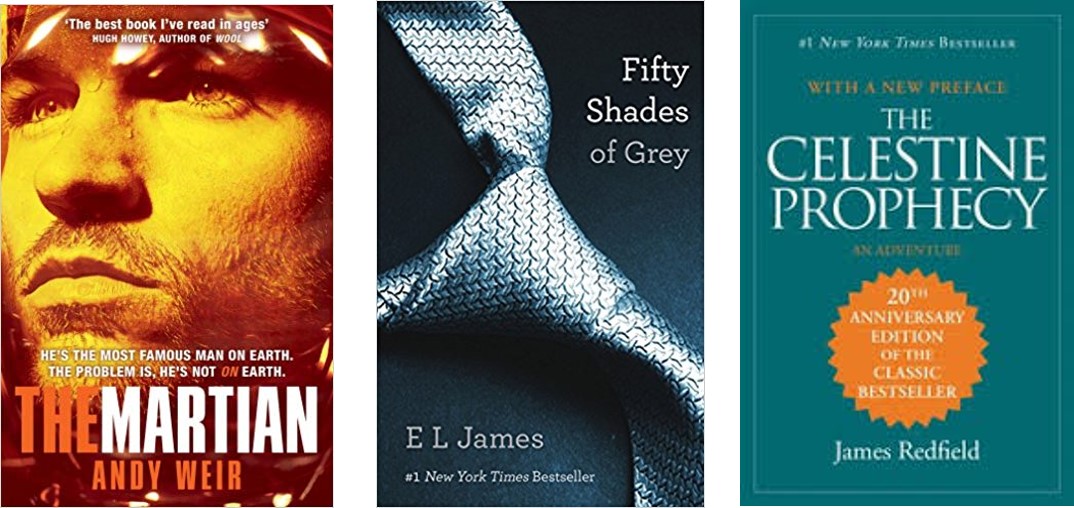
By the way…those three books at the top of this blog today? You might recognize them. You might not know that they were all self-published before they were massive bestsellers.
But what about the Gray Lady? Well, according to their Q&A yesterday, here are the books they don’t track: “perennial sellers, shopping guides, comics, reference and test preparation guides, required classroom reading, textbooks, journals, workbooks, calorie counters, puzzle books and self-published books.” If if makes you feel any better, this means the Bible doesn’t qualify. Neither does The New York Times Monday Through Friday Crossword Book, even though it is currently #3 on Amazon’s bestseller list.
So, does this matter? Is this something you should you worry about this?
Well, it’s a gold star on your homework, but it isn’t a true gauge of success. And here’s something weird I found: Hitting the Times list works better for unknown authors than the Lee Childs of the world.
According to an economics professor Alan Sorensen, who has studied the effect of bestseller lists on sales of hardcover fiction, relatively unknown writers get the biggest benefit, as much as a 57% increase in sales. But for perennial best-selling authors such as John Grisham, being on the list makes virtually no difference in sales. Most sales occur soon after a book hits the shelves and gradually peter out. “If anything, what appearing on the [bestseller] list does is not so much cause your sales to increase from one week to the next, but rather to decrease at a slower rate,” Sorensen said.
Why can’t the bestseller system be fixed?
With the sophistication of software now, you’d think there would be a better way to keep track of real book sales. The model, some say, is the music industry, with its bestseller list in Billboard. The magazine tracks every single album sold at every single music store in the United States. SoundScan, the company that began tracking CD and tape sales with a bar code system, was the force behind the creation of Bookscan. But BookScan is too expensive for many bookstore owners.
And here’s the bigger rub: The publishing industry really doesn’t want a single list of what’s really selling. They want lots of different lists that they can manipulate to benefit their own bailiwicks.
So…write your book and kept your heads down, crime dogs. The rest will come.
Which brings us back to William Blatty. Despite great reviews, The Exorcist laid such a giant sales egg at first that Harper and Row reported getting returns by “the carload.” But then sales took off and the book made the New York Times bestseller list for 57 straight weeks and at the No 1 spot for 17 of them.
And years later, not long after Blatty filed his lawsuit against the New York Times, Legion made it all the way to no. 15 the Times list for one week.
Comic Relief
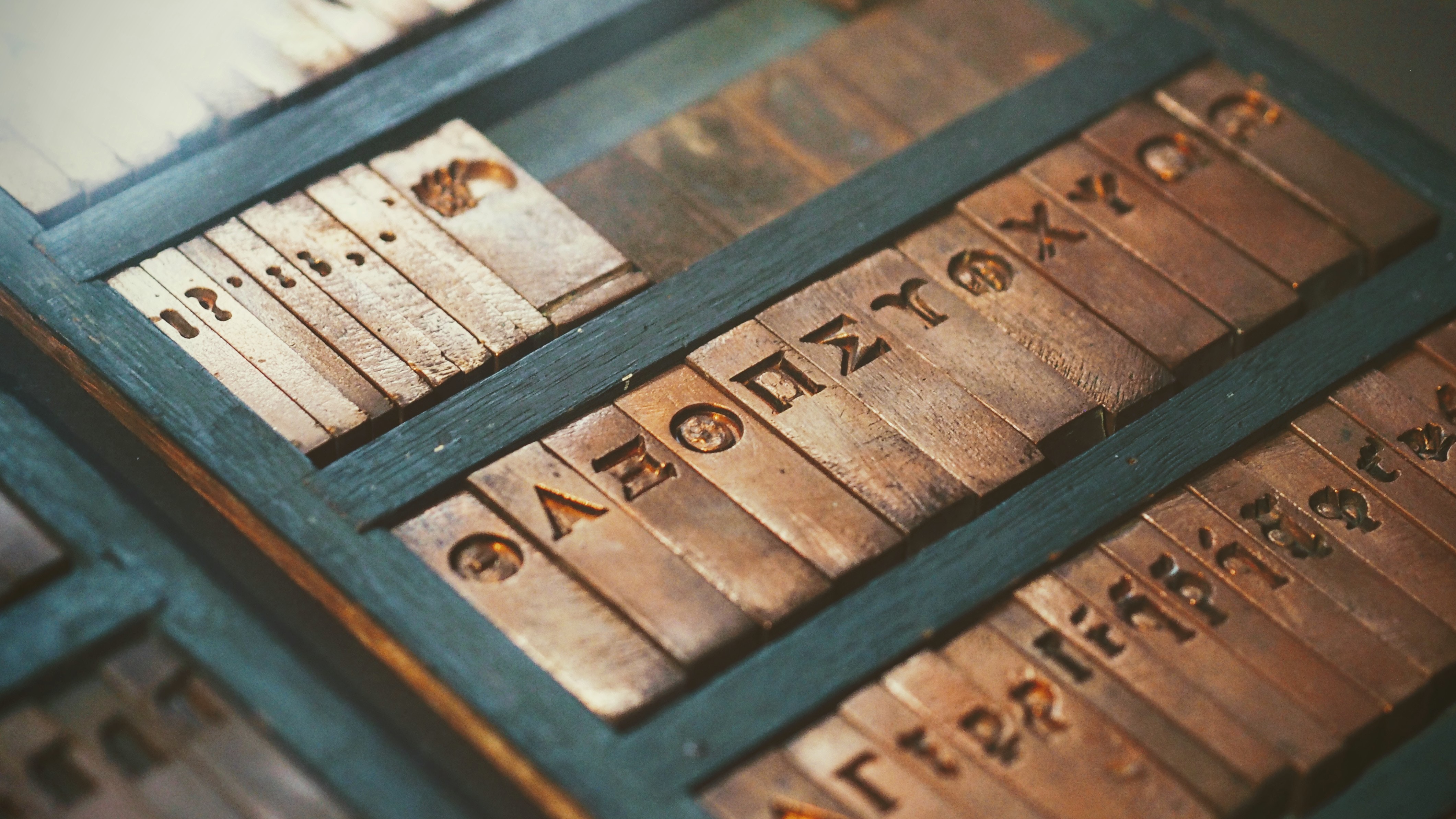
Photo courtesy Natalia Y on unsplash.com
Happy New Year! I hope that your holiday was as good as mine. I learned something which may have some major repercussions for me going forward.
I am not sure how what follows originally came up for discussion. The source, however, was my twelve-year-old granddaughter. She talks quite a bit about some things and not at all about others, with the border between the two constantly shifting and changing. Sometimes it is hard for me to keep up, which is okay. It gives her the freedom to chatter away and me the impetus to keep trying to figure it out. So it is that during one day of her Christmas vacation she was at one moment talking about a manga character and the next was talking about something she called “comic sans.” I assumed at first that she was referring to comic book character that she particularly revered. As she continued for a bit longer, however, I realized that she was referring to a type font.
We each and all have a favorite font. Actually, that’s wrong. We each and all have a font that we use by default. Mine, since Jesus was in short pants, has been the boring and predictable but nonetheless popular Times New Roman. Many prefer Arial. It’s not something we usually even think about, particularly when reading. A great number of books make a point of referencing, usually on a page at the back, the font in which the book is printed and providing a three or four sentence summary of its history. To wit:
This book was printed using the Beelzebub font designed by a group of renegade Tantric monks in the early 18th Century. It was once popular but fell out of favor due to the spread of a superstition that the Universe would end upon the setting of the one-billionth charact
I in any event never really paid much attention to the topic other than to occasionally check out the pull-down menu on whatever word processing software I am using and to marvel for a moment at all of the choices. I realize that my choice of Times New Roman is similar to walking into Baskin-Robbins, checking out the thirty-one flavors of the month, and choosing vanilla. Most editors and the like prefer Ariel or Times New Roman, however, so it’s a safe bet. Only…only…there seems to be a bit of discussion among the younger set regarding “Comic Sans MS.” or “Comic Sans” for short. It was originally developed as a typeface for comic book narration and word balloons in 1994. A short, light-hearted video about it with a sample can be found here: https://www.youtube.com/watch?v=34fOZgy4TqI One doesn’t use it for formal documents such as a will, a contract, or an all-important postgraduate thesis. But. But. The discussion taking place among the young ones concerns the use of Comic Sans as a creative tool. Proponents say that there is something about it that aides the creative process, one that seems to cause words to flow almost unbidden from brain to fingers and beyond. Opponents (my younger daughter, among them) say it doesn’t do any such thing and looks like crap besides.
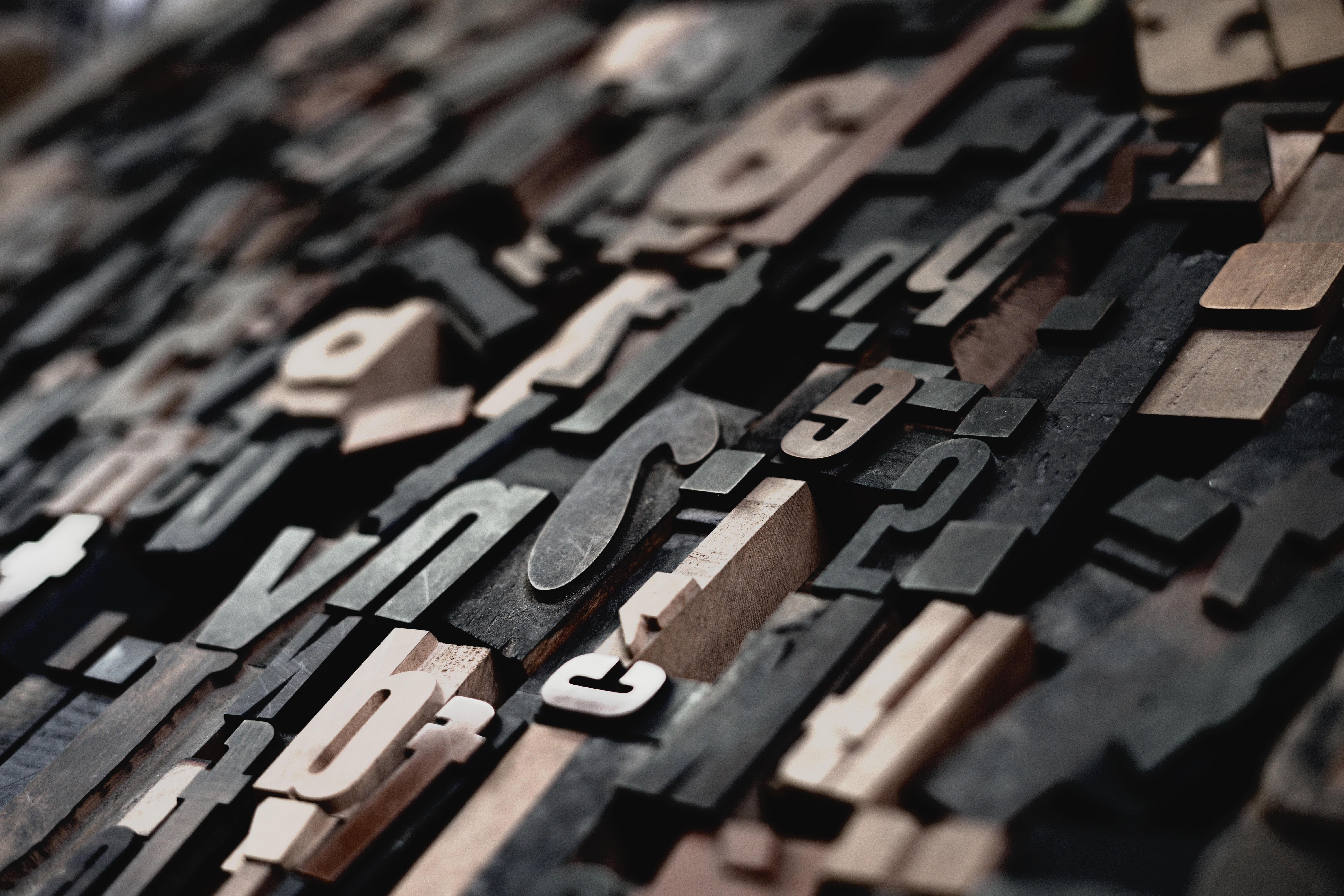
Photo courtesy Raphael Schaller on unsplash.com
I checked Google Drive to see if I had Comic Sans as a choice and sure enough, there it was, theretofore unnoticed in the menu. It looked godawful though somehow familiar. The familiarity should not have been a surprise, given that it mimics the text that was popular in comic books, which I read by the boxfuls for decades. I opened up a new document and started writing with it. Two hours later I was still writing, stopping only after being entreated to make a pizza run. I was, as they say, in the zone. I found that for the first time in my life I actually preferred writing to reading. The words simply seem to flow, just like the kiddies say with Comic Sans than with Times New Roman or anything else I have used. God forbid that I would submit anything in Comic Sans unless it was specifically called for, but it is certainly easy enough to convert into another format for a submission or final copy.
Check it out, particularly if you are having problems, as we all sometimes do, with getting things going in the grammar mine. I can’t really explain why it works for me and apparently for others, but work it does. I find that writing with purpose is often a struggle — as with many things (but not all) it’s a lot more fun to want to do it than have to do it — but the line has been blurred. I’ve been writing and writing quite a bit, each and every day, since I have made the change. If you would, please check out the typeface — I’m having a PICNIC (Problem In Chair Not In Computer) problem so I can’t duplicate Comic Sans here — and please tell us what you think.
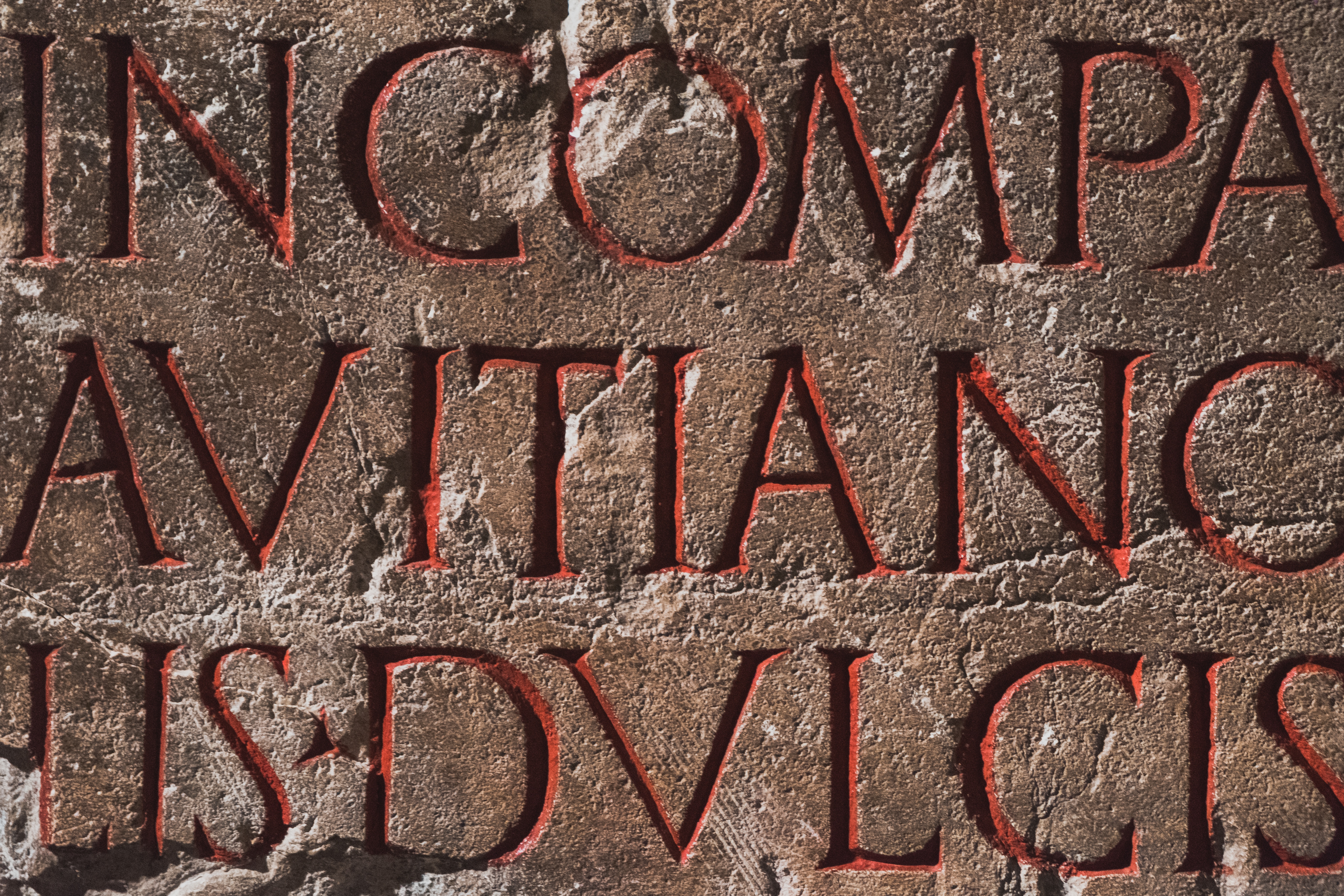
Photo courtesy Ilnur Kalimullin on unsplash.com
I have to mention something else. I think it is terrific that young people, or at least a segment of them, even give a flying fig about a font, what helps them write, and what makes them better writers. My generation at that age really didn’t care or even think about fonts. We only thought about the print being large or small. We knew there was a difference in fonts among newspapers, books, comics, and instructions but we didn’t remark on it or give a flying fig. Younger folks do and they’re talking about it and other elements on their way to writing the best stories that they can. They are not just writing. They are reading, which is encouraging, or should be, for all of us.