Making Do With Dollar Tree

All photos by Al Thumz Photography

Happy New Year! Thank you for being here. I will apologize in advance for the length of what follows. 

Between the economic impact resulting from restrictions imposed on businesses in reaction to COVID-19 as well as other factors — the term “starving writer” wasn’t pulled out of thin air — those of us who labor in the grammar mine might be having some problems making ends meet. What follows is a shopping hack called “Dollar Tree.”

I had never been in a Dollar Tree until early October 2020, having until that time succumbed to what was and is a certain negative cache attached to dollar stores in general.  To my surprise I learned last year that one was going to occupy the last remaining storefront in a retail center a few blocks from my home. My invitation to the grand opening in April 2020 was apparently lost in the mail and as a result I didn’t learn until a few weeks before Halloween that it had been open for months, yet another reminder that behavior resulting in getting fitted with an ankle monitor can really cramp one’s style.  

Dollar Tree has apparently been upping their game with new and larger stores located in (somewhat) better neighborhoods. The one near me has everything one could want or need, or a variation thereof. It has cleaning products,toys, school supplies,  canned and paper goods, health and beauty aids, and automotive and tool products. The newer stores have a card section, a “Snack Zone,”  and a refrigerated/frozen food case. The best part of Dollar Tree is that, unlike many stores with the word “dollar” in the name,  Dollar Tree means what it says. Everything in the store can be had for a dollar. Period. Actually, that’s not quite accurate. Greeting cards are two for a dollar. There is also a shopping cart at the front of the store full of reduced-price — fifty cents — items that have been closed out. Everything else? One buck. This includes the Snack Zone where, in addition to chips, candy, and Little Debbie cakes, one can purchase fruits and vegetables (just kidding) (unless pork rinds count). The frozen food case features microwaveable breakfast, lunch, and dinner items as well as ice cream novelties (which of course can be eaten for breakfast, lunch, and dinner). 

Not everything in Dollar Tree is a terrific deal. A box of baking soda is a dollar, but one can buy that in a supermarket for almost half the price. Boxes of theater candy are pretty much a dollar everywhere (except, interestingly enough, at a theater, even before they all closed), as are Arizona teas. There are, however some interesting finds in a Dollar Tree. The stores also now seem to be just about everywhere so if you want to read this as you walk through the aisles of one near you, please do so. What follows is a random sampling and review of what you can find, and what you should get or avoid, at a newer Dollar Tree.

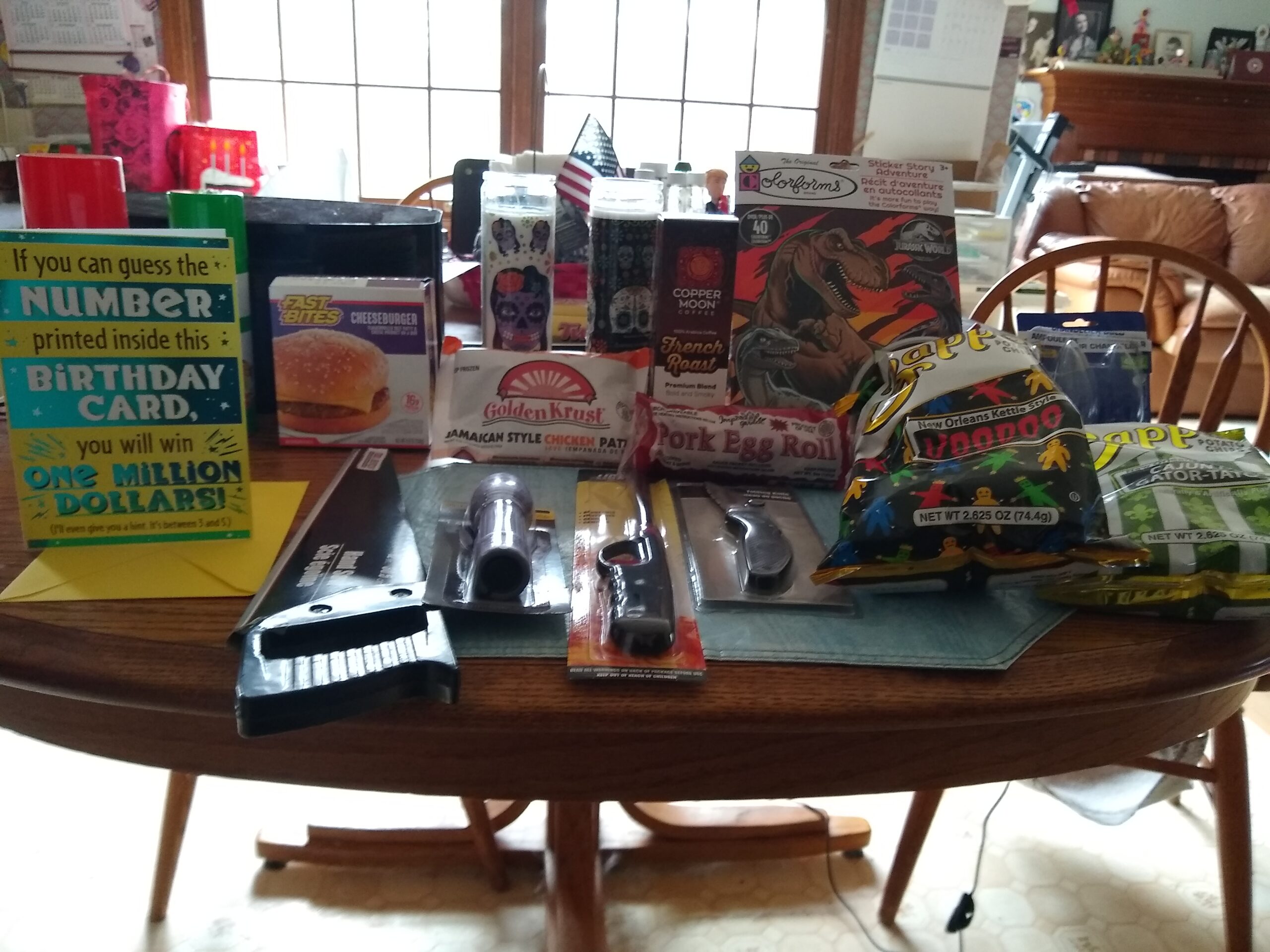
— Golden Crust Jamaican Style Puffshell sandwiches:

      The good: Everything. I’ve never seen these in a store outside of corner markets in New York until now.

       The bad: Absolutely nothing at all.

       Bottom line: Dollar Tree sells a few different varieties of these which, like Imperial Garden Egg Rolls (see below) all taste somewhat similar. That said, the Jerk Chicken is my favorite. Microwave it for two minutes and you can call it lunch or dinner, or both. Caveat: I don’t recommend eating one within twelve hours of a first date, second date, assignation, job interview. wedding, or any anniversary celebration before the tenth one. 


— Motor oil:

      The good: If your ex- asks you to top off their oil when they come over to pick up their stuff, this is what you want to use. 

       The bad: You don’t want to use motor oil that costs a dollar in your own auto unless you have a car like Fred Flintstone’s. 

        Bottom line: No.

— Zapp’s Potato Chips(!): 

      The good: My favorite potato chips! Voodoo Style! For a dollar! And I didn’t have to drive to Louisiana to get them!

       The bad: None!

       Bottom line: Life is good!

— Power steering fluid:

     See Motor oil, above.

— Colorform playsets(!!!):

      The good: COLORFORMS! For a buck! I didn’t even know Colorforms sets were still made. If Dollar Tree had a security guard, he would have been called to Aisle 3 when I initially found them. The discovery caused me to break out into my James Brown “goodfoot” dance. “YOWWW! HUNH! GOOD GAWD!”

       The bad: Colorforms doesn’t make a Bettie Page set, but that isn’t the fault of Dollar Tree. 

        Bottom line: Colorforms! What more can I say

— Folding Knife: 

      The good: It is very sharp and surprisingly smooth when opening and closing. 

       The bad: The blade is short.

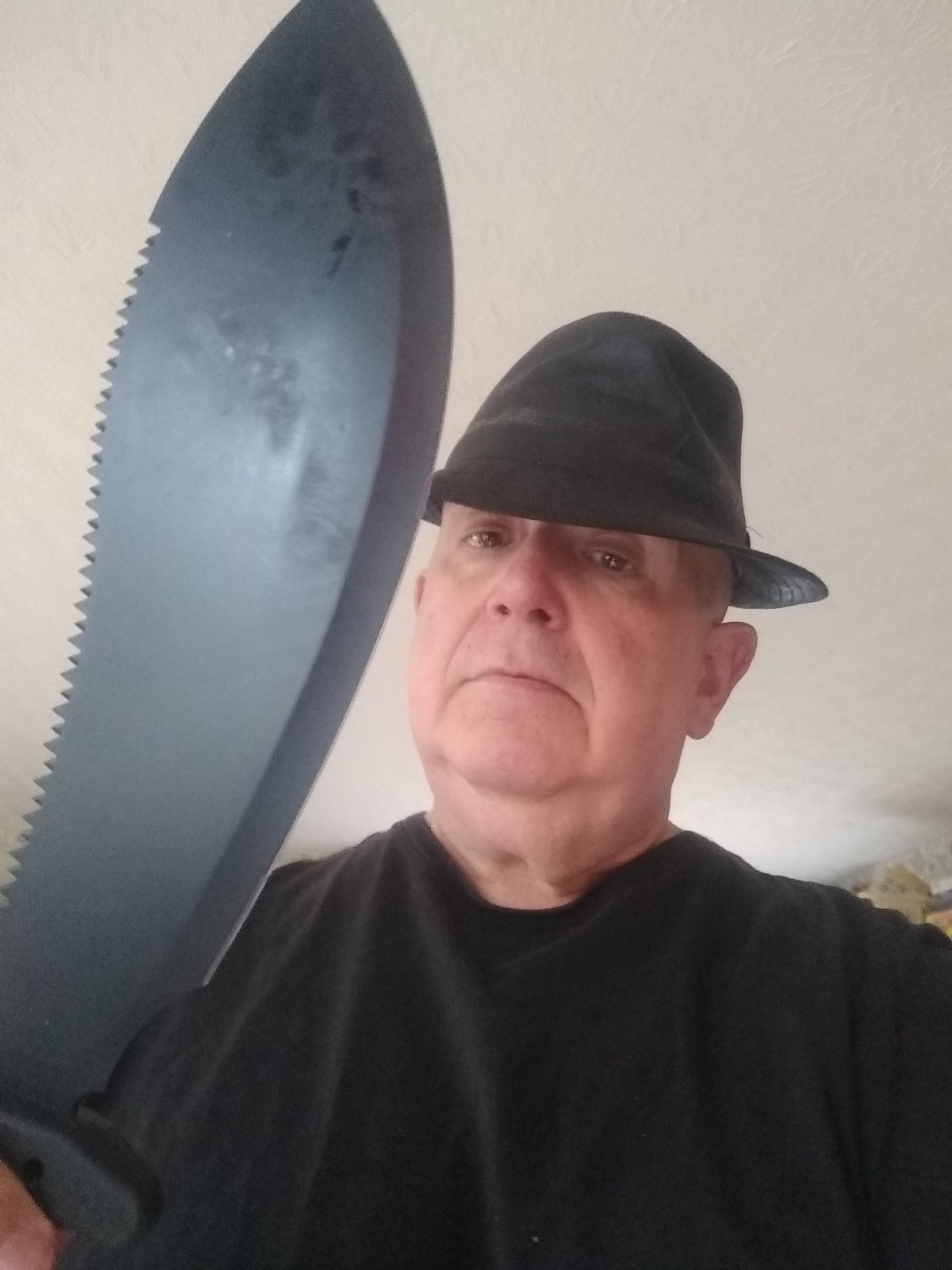
        Bottom line: That isn’t a knife!

Now…THAT’S a knife!
— Copper Moon French Roast Coffee (Four K-cups):

      The good: Everything. 

       The bad: Nothing. 

       Bottom line: I’m kind of a coffee snob. I usually only drink the Cafe du Monde, Community Coffee, or Bustelos brands. This, however, was surprisingly good. It has a rich, smooth flavor and, if you melt a Hershey’s kiss in it, a deep chocolate profile.

— Healthy Chef Canola No-Stick Cooking Spray:

      The good: I wasted only one dollar on it.

       The bad: I wasted a whole dollar on it.

       Bottom line: It didn’t work at all. I actually thought about taking it back and getting a refund, but I would have looked like a cheap***. 

— Assured Men’s Shave Cream Regular:

      The good: It didn’t make my face fall off.

      The bad:  It didn’t make my face fall off.

       Bottom line: I intended to buy a five-ounce can of Barbesol but the 12 ounce can of Dollar Tree’s house brand for the same price was too good to resist. It has a nice scent to it but the lather is a little thin. It’s good enough, however, that I might buy it again. 

—”Tactical” flashlight:

     The good: It is actually bright enough to use for ordinary purposes.

      The bad:  It is not a tactical flashlight.      

 Bottom line: It fails to meet the definition of a tactical flashlight in durability, size, ability to be dual-purposed as a self-defense instrument, and luminosity.Throw it in the glove box of your car as a substitute for one that should already be in there. Batteries — 3 “AAA” — are not included. The batteries actually cost more than the flashlight, unless you buy the batteries at Dollar Tree.

— Imperial Garden Egg Rolls:

The good: They are big and they are very tasty. Get a jar of Chinese hot mustard (not sold at Dollar Tree) and you’ll be all set to bypass Uber Eats for the night. 

The bad: all of the flavors — chicken, pork, shrimp, and lobster — kind of taste the same.

Bottom line: These are not foodie quality but they get the job done. Dollar Tree could probably open stores near college campuses and turn a profit just on the sale of the egg rolls to drunken students on weekend nights or during exam week.

— Croc’s Refillable Butane Candle Lighters:

The good: The price.

The bad: None. 

Bottom line: I learned recently that it is perfectly legal to buy and possess a flamethrower in forty-nine states (Maryland is the only poody-pants). While I am waiting for mine I can practice with this lighter which is as good if not better than the ones that cost two dollars and up at other stores. It eschews the two-step operation that most use, utilizing instead the equivalent of a double-action trigger pull that you’ll find on your better .38 Special revolvers. I thought about buying a bunch of them (the lighters) as Christmas stocking stuffers for the neighborhood children but tamped down the urge.

— Handsaw:

The good: It’s great if you need one just to trim a couple of tree branches and don’t own a chainsaw.

The bad: At the price of one dollar it should not be considered as a long-term tool for you. It can, however, be replaced rather easily and inexpensively.

Bottom line: This is part of “Tool Bench,” Dollar Tree’s in-house tool line.  The irony is that the Dollar Tree where I purchased the saw is located in the former storefront of a Sears Hardware store. 

— Greeting cards:

The good: Hallmark actually makes a line of greeting cards branded “Heartline” (I wonder if I could collect a quick settlement for trademark infringement using a “confusion in the marketplace” argument?) that 1) are two for a dollar and 2) don’t have the price on the back. They’re nice, too. None of my children could tell the difference this Christmas.

The bad: Your in-laws might buy you the same card you bought them and thus will know how much you paid for it. 

Bottom line(s): 1) It actually costs more to mail the card than to buy it. 

2) Sending your ex- a birthday card from Dollar Tree is like saying “God bless you!” in Nashville or “Have a magical day!” at Disney World. 

DVDs:

The good: Cardboard boxes of obscure horror and thriller movies on DVD.

The bad: Cardboard boxes of obscure horror and thriller movies on DVD. 

Bottom line: I had not heard of most of the movies or of the actors in them. If you are a fan of schlock horror I would recommend going to Dollar Tree for no other reason than to pour over what they have for sale. The boxes are usually in the school supply and toy aisles.

I invite you to visit and walk around Dollar Tree to see what else they have. Heck, if you find yourself at the one at Sunbury Road in Westerville, email me. I’ll drive over and give you a personal tour. I am willing to wager that you cannot walk out without spending at least ten dollars while delighting in doing so.  A number of major brands, including Colorforms and Hallmark, seem to be offering products of a size that can be sold at the Dollar Tree price point. A Pepsi salesman was in the store during one of my (daily) visits and advised that the chain is one of their major clients.  I also read somewhere that the folks who run Dollar Tree want their customers to be surprised by what they find every time they walk in the store. Mission accomplished. I found within their book section a couple of mass market paperback collections of Elmore Leonard western short stories. They were priced at a dollar each. They were not marked down or remaindered or anything. They are part of a small but growing line of HarperCollins paperbacks targeted for Dollar Tree customers.

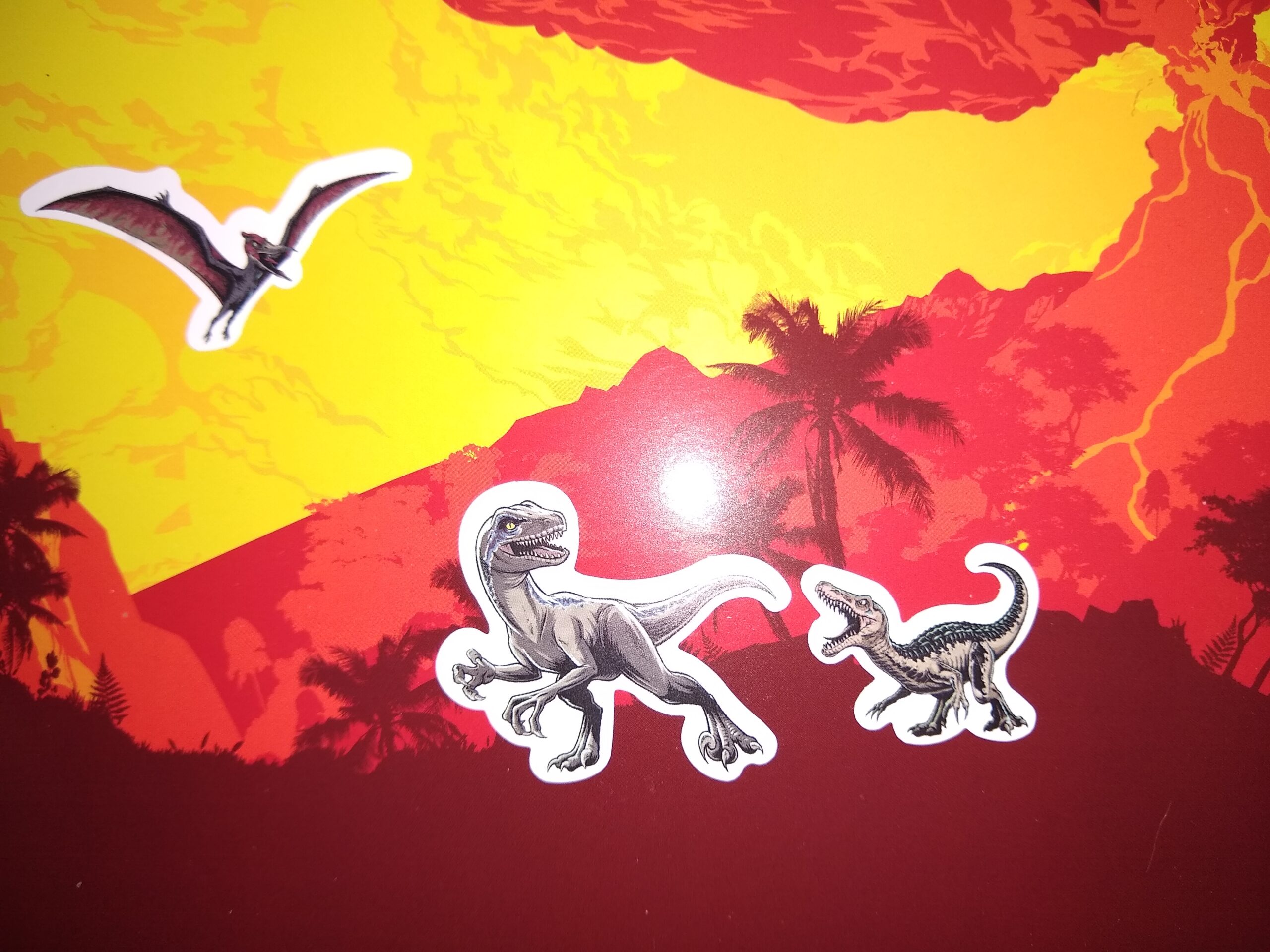
Oh. I also have to compliment the store associates. They actually seem glad to see customers walk in and are familiar with the inventory and where it is located. One of them was interested when I told her that I was going to post a blog about Dollar Tree. She has asked me a couple of weeks why she hasn’t seen it yet. Here it is (Hi, Holly!). Another laughs at my jokes on a regular basis and on cue (Hi, Maribeth!). They treat me so well that I may go there for my birthday this year. After all, party supplies such as tablecloths, hats, those packs of ever-important “thank you” notes, and Dolly Madison Zingers are just a dollar. I even put a visit to Dollar Tree into my WIP, once I was able to tear myself away from playing with my Jurassic World Colorform set long enough to get some writing done. The best part of all is that, even after you get that huge publishing advance and license your work for a Netflix project, you will still want to shop at Dollar Tree.
If so inclined, please tell us your favorite store(s), why they are your favorite, and whether you plan to insert them into your stories. Thanks again for being here. Be well.
 

Book Reviews:  Are They Useful to Writers?

“Don’t read your reviews.” “Don’t read your reviews.” I had the same advice given to me twice by two different writer acquaintances. Both are million-plus sellers, and both are people I highly respect. Despite their experience and financial success, I don’t necessarily know if they’re right about this. That leads me to this rant post about book reviews and the question of ‘are they useful to writers’.

At their core, book reviews are sales tools. Publishers have long promoted good reviews as social proof of a book’s value. They want to positively influence readers to buy a copy. That leads to the issue of why expose negative reviews when they probably hurt sales, but that’s for a different philosophical discussion.

The problem with book reviews, as I see it, is subjectivity. Reviews are based on the reviewer’s opinion. Reviewers are readers, and readers have an enormous variety of takes, tastes, and tolerances. What is a good read to one may be bad to another.

I suppose an objective review would be thoughtful and helpful. It does no good for a writer to be lavishly praised or mercilessly trashed without the reviewer stating why they liked or disliked the work. We, as writers, learn from our work, and constructive criticism or accurate feedback is a wonderful learning tool.

I have to say I’m a bad reviewer. I don’t mean I leave bad reviews. (I won’t write a review if I can’t say something positive—that’s my nice guy nature). I mean, I rarely leave even a good review after I finish a book, and that makes me a hypocrite when I ask readers to leave a review on my publications.

Back to subjectively. We writers are readers, too, with personal likes and dislikes. When it comes to reading genre fiction, I’m on Team King, not Team Patterson. In my subjective opinion, Stephen King blows James Patterson out of the water when it comes to talented storytelling. However, I understand Patterson makes more money selling books than King, so who’s the better writer?

Not everybody likes J.K. Rowling and the Harry Potter series. I read there are nearly 200,000 one-star Harry Potter reviews on GoodReads. Twilight  apparently got eviscerated over there. So did Fifty Shades. Even Garry Rodgers takes the odd dart in the eye on the GR site.

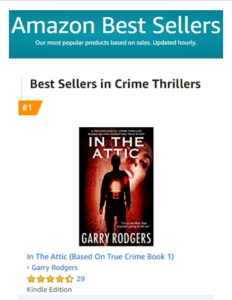
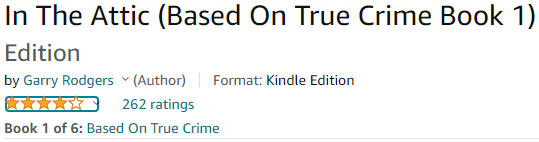
Speaking of me, let’s see how I’ve fared on Amazon. I’ve worn everything from the crown of honor to the cone of shame. Here’s a review snapshot of my book In The Attic which has 262 Amazon reviews (ratings) that average 4.2 on the 5-Star scale. 51% are 5, 29% are 4, 15% are 3, 1% are 2, and 4% of my reviewers (raters or haters) think I suck and awarded me a 1-Star.

But what do these Amazon stars actually mean? GoodReads uses a 5-Star rating system, too. I haven’t looked under that bridge in over two years, but out of curiosity for this post, I checked the Amazon-affiliate site. GoodReads has 184 hits on In The Attic, and they give it an average of 3.77 out of a possible 5.0.

I Googled around and found a subjective article titled How Are Product Star Ratings Calculated? The author tells me that Amazon is more generous than GoodReads when it comes to the stars aligning. Here’s how the writer says Amazon and GoodReads interpret ratings:

5 Stars — On AZ “I love it.” On GR “It was amazing.”
4 Stars — On AZ “I like it.” On GR “Really like it.”
3 Stars — On AZ “It’s okay.” On GR “Liked it.”
2 Stars — On AZ “I don’t like it.” On GR “It was okay.”
1 Star   — On AZ “I hate it.” On GR “Did not like it.”

I found another piece where the contributor equated star rating to a school report:

5 Stars — B+ to A
4 Stars — C+ to B
3 Stars — C to C-
2 Stars — D or D-
1 Star   — F for Fail

Fair enough. The star rating is obviously subjective. What about written reviews? Is this where the rubber meets the road and we writers can find useful criticism? Let’s look at In The Attic again and take the ice cream with the ugly sweaters. At least the way Amazon sees it.

Reviewed in the United Kingdom on November 25, 2020
***** Brilliant story.

Reviewed in the United States on January 5, 2020
* Horrible. The worst book I have ever read, I tried to like it but could not get past the first few chapters. This is the only book (in my life) I could not finish.

Reviewed in the United States on May 13, 2020
***** Caveat: This is not for the faint of heart. And that it is a true story just blows my mind. The author does not lie about the content being graphic. If you are prone to nightmares, this is a warning. I literally prayed last night that I would not have a nightmare (thankfully, I did not).

Reviewed in the United Kingdom on June 26, 2020
* All I can say is thank goodness I didn’t pay for this book. Author wasted many chapters on absolute rubbish. At least I know not to read any more from him. A true story but he so missed the mark and could have had a winner if told only from his perspective. Sorry but true.

Reviewed in the United States on September 10, 2020
*** Mr. Rodgers, are you are (sp) of your subject matter? And that it’s based on TRUE events? Sir, only true psychopaths would get decent entertainment value from this book. (I just needed to point this out while I remembered!).

One tool every writer needs is a hide thickener. We can’t always get ego-praising, “If I could give it 10 stars, I would” reviews as one reader left for me. We have to endure comments such as, “Never have I given a bad report on a book because it really is a huge undertaking and hard work for the author… but THIS book… OMGosh…talk about sensational drivel. I’m speechless. Most of it was hard core fluff to fill out a book that should have been 30 pages instead of 155, with sexual content jabber, sensationalism, and …well…let’s just say Do yourself a favor and pass this one by. Or…go ahead and read it and then hit yourself in the forehead for not paying attention to an honest one star rating. Sorry, author…. “I wish I hadn’t….” I’m sure your other books are better.”

The problem with reviews like these, good-neutral-bad, is they’re not particularly useful to improve my craft. I want to know why my writing is brilliant on one hand and horrible on the other. Why do I appeal to psychopaths and blow people’s minds? How is it my senseless drivel leaves a reader speechless? A little elaboration would be handy.

I know the trolls are out there. I also recognize a butt-kisser, and that goes with travelling in writing country. As an online crime writer, I’ve had everything from marriage proposals to death threats (not joking). By the way, In The Attic is 167 pages and contains no hardcore sexual stuff. The reviewer must have read a different In The Attic.

I’m still early in my writing travels. I might be a “C or D” on the popularity list, and I have no problem with honest criticism that’s meant to be helpful instead of hurtful. It’s somewhat comforting to know that A-listers who’ve gone before me have worn sweaters uglier than my driver’s license photo. Here are some slams I found on the net:

On Herman Melville and Moby Dick — Sheer moonstruck lunacy.

On J.D. Salinger and Catcher In The Rye — The greatest mind ever to stay in prep school.

On George Moore’s work — He leads his readers to the latrine and locks them in.

By Samuel Johnson to an aspiring writer — Your book is both good and original. Unfortunately, the parts that are original are not good, and the parts that are good are not original.

On James A, Michener and Chesapeake — Two recommendations. First, don’t buy the book. Second, if you do buy the book, don’t drop it on your foot.

By Randall James on a poetry book — This reads like it was written on a typewriter—by a typewriter.

By Mark Twain on Henry James — Once you’ve put down one of his books, you simply can’t pick it up again.

By Oscar Wilde on George Meredith — As a writer he has mastered everything except language; as novelist he can do everything except tell a story; as an artist he is everything except articulate.

How about you folks on the Kill Zone? Do you read your book reviews, and are book reviews useful to writers?

——

Garry Rodgers is a retired homicide detective with a second career as a coroner responsible for investigating unnatural and unexplained deaths. Now, Garry is a crime writer and indie publisher working on a based-on-true-crime series. His seventh book in the collection, Beyond The Limits, is coming out this month on Amazon, Kobo, and Nook.

Garry Rodgers lives on Vancouver Island at Canada’s left coast. When not writing, Garry putts around the Pacific Ocean and drinks boxed wine—not necessarily at the same time. Check out DyingWords.net (Garry’s blog & website) and follow him on Twitter.

Playing Tricks With Editing.

Playing Tricks With Editing.
Terry Odell

Playing Tricks With EditingFirst–Happy New Year, everyone, and welcome back to TKZ.

Over the break, I finished my personal edits on the manuscript of my next Mapleton Mystery, and I thought I’d share some of the tips I’ve discovered over the years for that final pass before turning the manuscript in.

We want to submit the cleanest possible manuscript to our editors, agents, or wherever you’re submitting. By the time most of us hit “The End”, we’ve been staring at the manuscript on a computer screen for months. We probably know passages by heart, we know what it’s supposed to say, and it’s very easy to miss things.

What we need to do if fool our brain into thinking it’s never seen these words before.

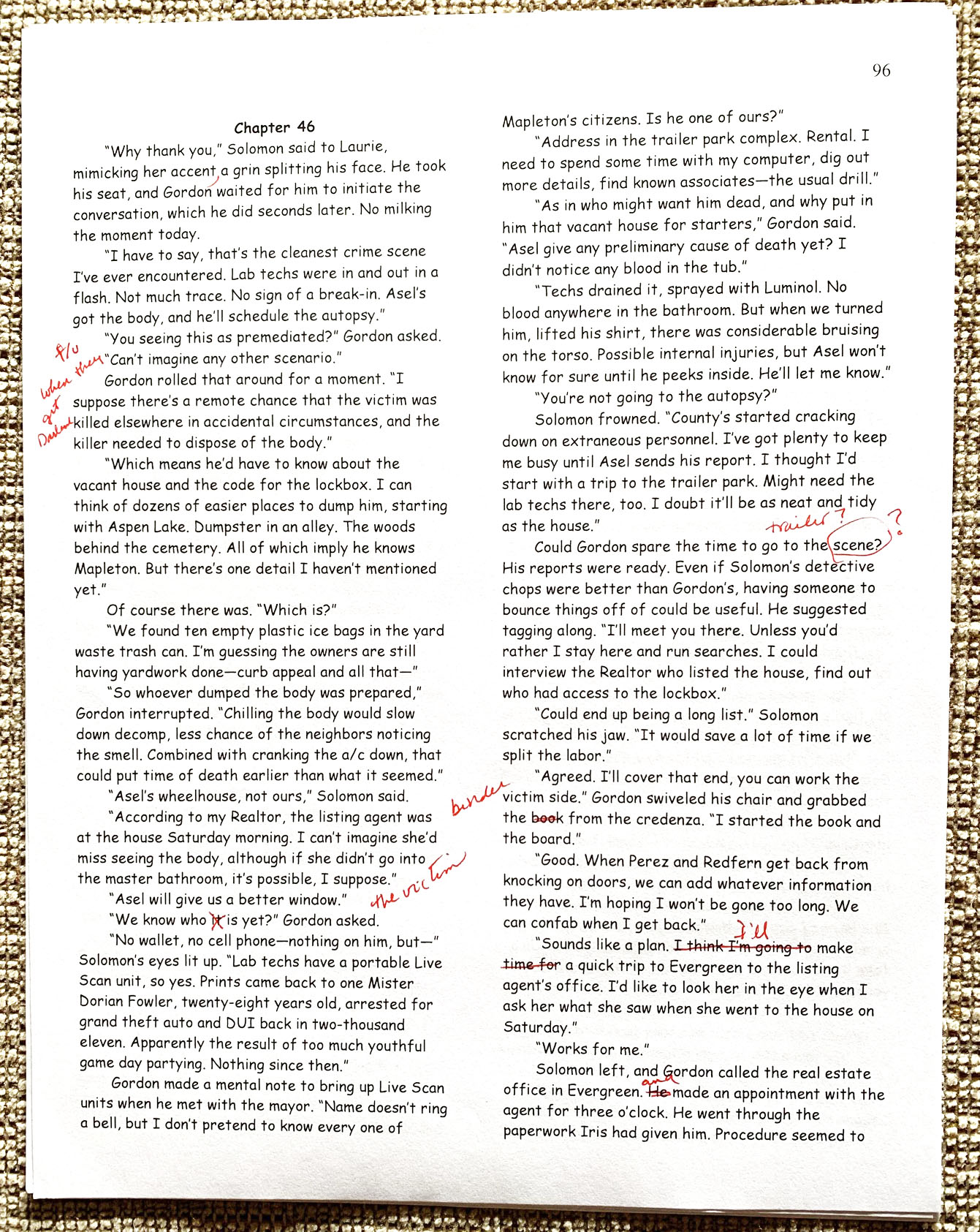
Editing TipsTip #1 – Print the manuscript. It’s amazing how much different it will look on paper.

Tip #2 – Use a different font. If you’ve been staring at TNR, choose a sans-serif font. In fact, this is a good time to use the much-maligned Comic Sans.

Tip #3 – Change the format. You want the lines to break in different places. I recommend printing it in 2 columns, or at least changing the margins. That will totally change the line scan, and it’s amazing how many repeated words show up when the words line up differently.

Tip #4 – Read away from your computer. Another room, or at least the other side of the room.

The above are all “Fool the Brain” tricks. Moving on to my basic process.

Tip #5 – Read from start to finish.

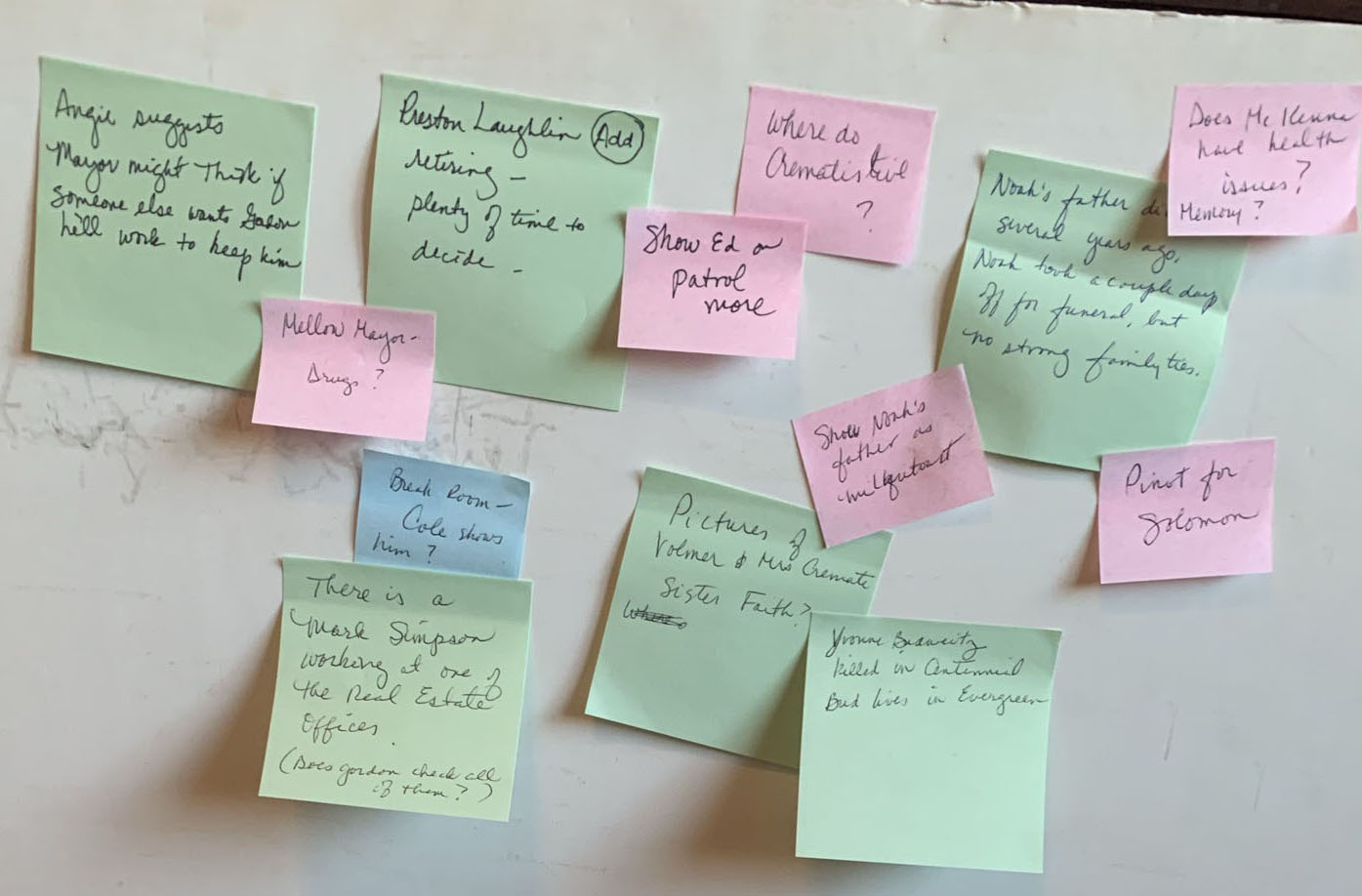
As I read, I have a notepad, highlighters, red pen, and a pad of sticky notes. This pass isn’t where I fix things; it’s where I make notes of things to fix. I don’t want to disrupt the flow of the read by stopping to check out if the character drove a red Toyota or a green Chevy. I have a foam core board by my chair, where I’ll post my sticky notes. Also, because it’s a hard copy, there’s not simple “Find” function.

When repeated words or phrases jump out, I note them on a sticky for a future search-and-destroy mission. I’ll circle or highlight words that could be stronger, or places where I might be able to come up with a metaphor that doesn’t sound writerly.

I’m also critical of “does this move the story?” as I’m reading. The beautiful prose might not be all that beautiful when reading it in the context of the entire novel. Don’t be afraid to use that red pen. On the flip side, you can also note where a scene needs more depth, or something needs foreshadowing. Are characters behaving consistently? Or do their personalities change because the author needs them to do something for the plot.

Another thing I look for is named characters. Naming a character tells the reader “this is an important person.” Do they play enough of a role in the story to earn a name? Can they be deleted, or referred to generically?

Once I’ve reached the end, I’ll go back to the computer and deal with the notes I’ve made.

The last pre-submission editing chore for me—and it’s a tedious one—is to let the computer point out all the clunkers I’ve missed. Because, despite all the ‘trickery,’ the story is still familiar enough that I don’t catch everything.

For this, I use a program called “Smart Edit.” (I might do a full post on this software another time.) I use the version that’s a Word add-on, and run its checks. I know I have my standard crutch words, but it seems that every manuscript brings a few new ones that I lean on too heavily.

Once I’m finished with the Smart Edit purges, the manuscript goes off to my editor. My work up front means she should be able to spend more time looking at the story, and less time dealing with clunky prose.

The last step for me, which comes right before I’m ready to publish, is to let Word read the manuscript to me. I’ve talked about that before, and using ears instead of eyes is another way to trick the brain into thinking the story is new. And yes, I still find things to fix.

What about you? How do you deal with whipping your manuscript into shape before submitting it?


Heather's ChaseMy new Mystery Romance, Heather’s Chase, is available at most e-book channels and in print from Amazon.

Terry Odell is an award-winning author of Mystery and Romantic Suspense, although she prefers to think of them all as “Mysteries with Relationships.” Follow her on Facebook and Twitter.

What 2020 Taught Us

Happy New Year – and, as many may feel, good riddance to 2020!

Given the past year I thought it important to start off on a positive note – though as I am tiptoeing into the new year, I’m not quite ready to commit to any new year’s resolutions…you know, just in case… I have, however, been reflecting on what the challenges of 2020 has taught me – both personally and professionally. The TKZ community I think weathered the storm pretty well and I hope we continued to be a place where you felt encouraged and supported as writers. For me 2020 revealed both my strengths and weaknesses as a writer. I was discombobulated as well as distracted most of the year but nonetheless I did manage to finish major revisions to a novel (so there was one balloon still aloft at the end of the year:)) and I learned to be more proactive and assertive when it comes to my career (with mixed results given the year we had).

I’ve definitely spent the last few weeks wrestling with goals and plans for the coming year, but it’s been focusing on what 2020 taught me that’s helped me keep these in perspective…so in the spirit of sharing, here’s my short list of takeaways from the dumpster fire that was 2020:

  1. I need more mental space than I realized to be creative – having a houseful of people all trying to learn and work remotely taught me that I should have prioritized this more
  2. Manuscripts in drawers don’t sell themselves:)
  3. I need to be braver, more assertive, and proactive as a writer (see item #2)
  4. I shouldn’t spend all my time obsessing over the big goals, but be satisfied with achieving the smaller, more attainable ones on a daily/weekly basis (again…see item #2)
  5. I don’t need to make lunch for everyone!!! (seriously, lunch became the most loathed meal of the day as I foolishly operated the ‘all day mum cafe’ for most of 2020)

What about you TKZers? As we look forward to 2021, what did the challenges of 2020 teach you as a writer?


…Reflection…Giving…Planning

Past, Present, and Future

Leave a Legacy

By Steve Hooley

It is the time of year when we reflect on the past, give gifts during the holidays, and plan for the future. So, how does that relate to writing? Can we learn from the history of writing to plan for the future of our writing? It has been said, “Those who fail to learn from history are doomed to repeat it.” (Winston Churchill, 1948, a paraphrase from George Santayana, 1905). And from geometry we learn that it takes two points to define the trajectory of a line. Could those two points be the past and the present? And does the trajectory of that line give us any clues about the future?


The Past – Reflection

For the past, we turn to British and American literature. Now, I am out of my element on this topic. I studied math and science in college. So, those of you English and literature experts, please help me out here.

For a listing of the periods or eras in British and American literature, I turned to Wikipedia. Here is what I found:


British Literature – periods and eras

Old English lit. – 658-1100

Late Medieval – 1066-1485

Renaissance

  • Elizabethan era – 1588-1603
  • Jacobean period – 1603-1625
  • Late Renaissance – 1625-1660

The Restoration – 1660-1700

18th Century

  • Augustan age – 1701-1798
  • Roots of Romanticism – 1750-1798

Romanticism – 1798-1837

Victorian lit. – 1832-1900

Twentieth Century

  • Modernism and cultural revival – 1901-1945
  • Late modernism – 1946-2000

21st Century lit.


American Literature

Colonial lit.

  • Early prose
  • Revolutionary period

Post-independence

  • First American Novel

19th Century – Unique American style

Late 19th Century – Realist fiction

20th Century prose

  • 1920s
  • 1930s – Depression era

Post WWII fiction

  • Novel
  • Short story

Contemporary fiction


I have gone back and reread “classics” from the 1800s in my attempt to educate myself. I have been surprised repeatedly by how much styles have changed from then until now. Many of those books contain techniques which we are now encouraged to avoid: omniscient POV, head-hopping, author intrusion, slow pace and entry into the story, lengthy description, tell don’t show, etc.

There were many cultural, societal, and economic reasons why those styles worked then, but wouldn’t work now. What can we learn from them?

Before we move from past to present, here is a link to John Gilstrap’s post from three days ago. John’s post It is a fantastic history of the publishing industry over the past quarter century.


The Present – Giving

We give gifts in the present. Do you consider your books and stories a gift to the future? If a gift is handed down to descendants and it is considered to be of value, it is a “legacy.” Are your books a legacy? Do you want them to be a legacy?

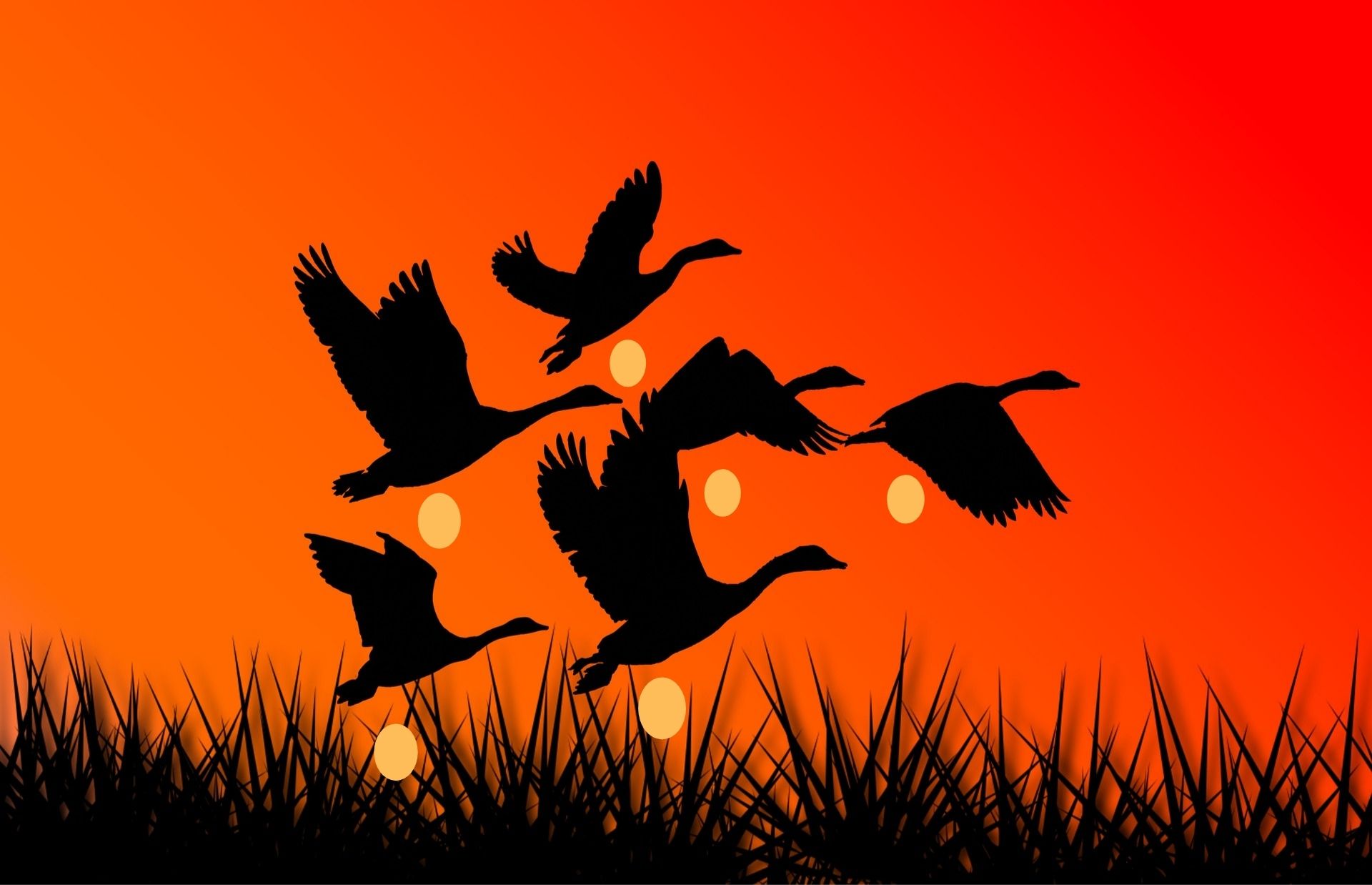
On a side note, but still about giving, today is “Goose Day.” If you investigate the secular tradition of “The Twelve Days of Christmas” and gift giving, you discover that we start with the 12th gift on December 13th and work our way down to the 1st gift on December 24th. This is December 19th, so if you are looking for a gift for your “true love,” it’s six geese a layin’ today. And hopefully, some of those geese will be layin’ gold eggs. Now, that’s a legacy.


The Future – Planning

If we wish our books/stories/wisdom to be a legacy, of value for the future, and maybe for us if we’re still around, how do we plan for that? Does our writing, or the way we publish, need to change? Can we predict trends for the future based on what has happened in the past and what is happening now? How will writing, publishing, and reading change? And how do we best position our writing to be ready for those developments?


  1. What era/period from the past would you choose to write in, if you could choose?
  2. Why did you pick that era/period?
  3. What new developments for writing/publishing/marketing/reading do you see coming in the future?
  4. Do you plan to position yourself for coming trends? How?
  5. Publishers Weekly says it’s about “what’s new and what’s next.” If you subscribe, what can you share about expected coming trends?

What’s on Your Nightstand?

There’s a saying that goes, “Where you’ll be five years from now depends on the people you meet, the conversations you have, and the books you read”. I don’t know who said it, but I say it holds truth. Especially books you read… like the ones on your nightstand.

I’ve always been a reader. Not sure if the right adjective is voracious, avid, or anal, but I love to read. It’s in my blood, and the blood I begat, and the blood I married. My family members are all readers. So are most of my friends and colleagues.

My dad got lost for hours reading everything from newspapers to classics. My sister, who’s a lioness of a reader, said if my dad were alive when the internet arrived, we’d never have gotten him off it. My mum held a Masters in English Lit, and she wrote her thesis on Thomas Hardy. To no surprise, mum was a teacher who loved to teach kids to love to read.

Our kids were very young when they were born, so it was easy for my wife and I to mould them into our reading cult. I turned Aesop’s Fables into “stupid stories” to get bedtime bladder-relieving belly laughs from Emily and Alan. Rita, my wife, sensibly read Harry Potter to them so convincingly that they hated the movies because they didn’t sound like their mom’s character versions.

Now our kids are all growed up. Thankfully, they turned out all right because they’d rather read than work, and that’s proven because both took leave from their jobs and went back to university. At least this time, mom and dad aren’t paying.

Now mom and dad are empty nesters who love nothing better than hang around and read. Rita and I read a lot. We have so many books that our insurance provider required a structural engineer to approve our book cases for fear of someone being killed in a catastrophic collapse.

Seriously, though, we have serious stuff on our nightstands. But as close as Rita and I have been during our 37 married years, we have significantly different reading interests. Same with our kids—Emily, 32 and Alan, 30—and that’s a good thing because we all keep on reading.

My wife and kids stepped up for this Kill Zone piece. I polled them on their nightstands. I asked them to list five books they recently read, were currently reading, or had purchased and intended to read next (the TBR list). Here’s five reads on each of the Rodgers family nightstands.

Garry Rodgers

  1. Podcasting For Dummies — Tee Morris / Chuck Tomasi (Take note, Sue Coletta) 🙂
  2. Profiles in Folly – History’s Worst Decisions & Why They Went Wrong — Alan Axelrod
  3. Sapiens – A Brief History of Humankind — Yuval Noah Harari
  4. Fortunate Son — John Fogerty
  5. The Cobra — Frederick Forsyth (re-read)

Rita Rodgers

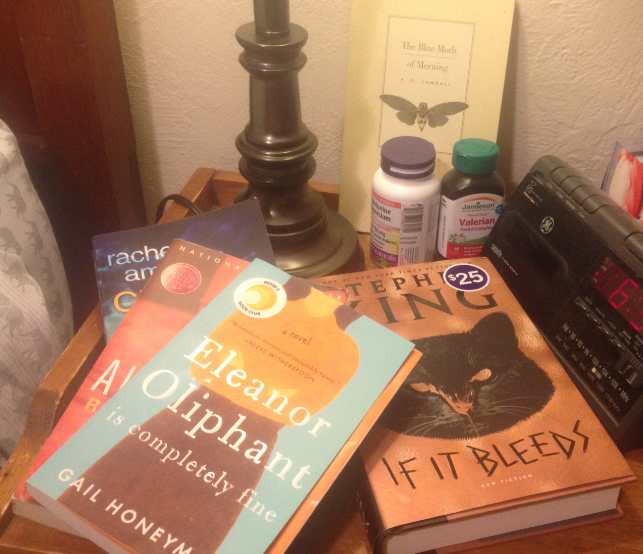
  1. The Blue Moth of Morning — Poems by P.C. Vandall (Rita’s friend)
  2. If It Bleeds — Stephen King
  3. The Goldfinch — Donna Tartt
  4. Eleanor Oliphant is Completely Fine — Gail Honeyman
  5. The Alice Network — Kate Quinn

Emily Rodgers

  1. The Flames — Leonard Cohen
  2. The Story of the Human Body — Daniel E. Lieberman
  3. Saints for All Seasons — John J. Delaney
  4. Ten Poems for Difficult Times — Roger Housden
  5. The Bible

Alan Rodgers

  1. The 7 Habits of Highly Effective People — Stephen R. Covey
  2. How to Win Friends and Influence People — Dale Carnegie
  3. The Daily Stoic — Ryan Holiday
  4. Rogue Trader — Andy Hoare
  5. Johnathan Strange & Mr. Norrell — Susanna Clarke

That’s the Rodgers reads. What about you Kill Zoners? Let’s read what TKZ contributors and followers have on the nightstands. Go ahead and list five books you’ve recently read, are now reading, or have on the TBR list. That includes paper, digital, or however you like to read.

———

Garry Rodgers is a retired murder cop with a second career as a guy no one wanted an appointment with — Dr. Death, the coroner. Now Garry passes himself off as an indie crime writer who checks his Amazon sales stats every half hour.

Speaking of crime writing, Garry Rodgers has six books out in a twelve part Based-On-True-Crime series. Garry’s first one, In The Attic, is available for FREE on Amazon, Kobo, and Nook. Help yourself to one for the holidays!

What A Difference A Quarter Century Makes

By John Gilstrap

My first novel, Nathan’s Run, first hit the shelves in 1996–two millennia ago in book-time. To put it in perspective, Bantam, Doubleday and Dell were all different publishers back then. Simon & Schuster and HarperCollins were independent companies. Back then, the big money came to authors via mass market paperback deals because jobbers filled book racks in every pharmacy and grocery store, and everybody read paperbacks. Mass market rights often were sold to different publishers than the hard cover houses, and for much more money.

Borders Books and Barnes and Noble were just beginning to spread their wings, targeting local bookstores with extreme prejudice. In the mid-nineties, independent bookstores were the backbone of book sales. Every strip mall, it seemed, had its own bookstore. Some were generalists, selling all kinds of books, but others were specialty stores, targeting specific genres. Mystery bookstores grew like weeds.

When the superstore booksellers entered the scene, they were able to negotiate terms with publishers that allowed them to price books at retail for less than what the independents had to pay for wholesale. When really big books hit the scene, it seemed to me (though I could never prove it) that the superstores waded into predatory pricing, selling the books for less than what they paid as loss leaders that would force the mom and pop shops out of business.

Meanwhile, a guy named Bezos was a laughing stock throughout the publishing world because he had this crazy idea that people would buy books from their computers–no, really, their computers! Have you ever heard something so silly? As if book lovers would give up glorious trips to the local bookstore in favor of shopping on one of those squealy dial-up modem desk toys. At the same time, a kid named Steve Case was toiling like mad to create a platform that would give everyday people access to a thing called the internet.

In the mid-nineties, the competition among publishers to acquire the Next Big Book was cutthroat. Authors and their agents had so many big houses to choose from! And the result often ended in bidding wars or pre-emptive bids that routinely netted six- and seven-figure deals for first-time authors.

Money flowed in torrents. Big producers at major film studios paid real money to interns and assistants in the major publishing houses to steal manuscripts from the copy room to give the studios a leg-up on the inevitable bidding war for film rights. During the Christmas season back in the day, every publishing house threw lavish holiday bashes for their staffs, authors, agents and media.

Hands down, the most jaw-droppingly over-the-top book affair I’ve ever attended was a Christmas party thrown by Readers Digest Condensed Books at the New York Palace Hotel in New York (formerly the Helmsley Palace). Limitless beef, salmon, shrimp, caviar, Champaign, booze and desserts served to every author, editor and agent in the world, it seemed. There had to be a thousand people there, including every author who’d ever had a book included in a collection by RD. As a kid from Virginia whose first book was about to be released, this was heady stuff.

(Teaser: The most opulent party ever was the three-day celebration of Dino DeLaurentiis’s birthday on the Island of Capri. That was beyond amazing, and a very funny story. Maybe in a future post.)

Within a few years, everything changed. I don’t remember the order in which they fell, but over the course of what felt like a few months, overseas corporations consumed dozens of imprints and the number of “Big Houses” started to contract. The contraction never stopped. The recent news of Penguin Random’s purchase of Simon & Schuster saddens me. All I see are diminishing opportunities for writers earn big advances for their books. Think about it. Penguin Random (a part of the Bertelsmann empire) has assimilated once-grand independent publisher names such as Penguin, Random House (duh), Bantam, Doubleday, Dell, Viking, Knopf, and others. And it doesn’t stop with the the Bertelsmann empire. Hachette is another, and there are still more.

Meanwhile, Karma being a be-otch, Borders Books is dead, and B&N is moribund at best. (In a happy bit of irony, B&N’s new CEO, James Daunt, is designing the company’s phoenix-like rise from its ashes on the direct involvement of on-the-ground booksellers in the decisions on what books individual stores should stock. You know, the way booksellers used to do it before the superstores ran them out of business.)

Independent bookstores are making a comeback (albeit very slowly and cautiously), and new publishing houses are being born every day.

While the bookracks in drug stores are gone, more books are published every year nowadays than have ever been published before. Ebooks, audio, graphic novels, and Lord only knows how many other new avenues for storytelling are exploding. While all these options bring limitless opportunity, they also bring limitless problems, not the least of which is discovering the new metrics and strategies for letting readers know that a new author has arrived on the scene. Those full-page ads in major dailies that used to grease the skids to bestsellerdom, are all but irrelevant now. Word of mouth has morphed into tweet-to-tweet (or something like that).

These are exciting times to be an author. But they’re also scary times. Million-dollar advances have gone the way of the dodo (or of Borders Books) and that’s probably a good thing in the long run. It makes a lot of sense to align advances with anticipated sales. Hollywood is an evolving train wreck, but it will straighten itself out, too. I’d hate to own a theater chain right now, but man oh man would I like to invest in big screen televisions for the home market.

As I write this post, it occurs to me that as the business fluctuates and expands and contracts, the one constant to all of it, through all of time, is the public’s insatiable desire for good stories, well told. And that, TKZ family, is where we come in. If we don’t think this stuff up and put it on paper, the whole of the entertainment business breaks down.

I’d love to hear any thoughts you might have.

Finally, this is it for me here in The Killzone for a few weeks as we take our winter hiatus. Thank you all for making this blog what it has become. Contributors, you force the rest of us to keep the bar high. Readers, you’re the reason we do it, and your numbers speak for themselves. Thank you. I wish you all a wonderful holiday season, and a prosperous, healthy and happy new year.

God bless us, every one.

The “Last” First Page Critique:
It’s A Jungle Out There

By PJ Parrish

This is my last post of the year before we take our annual holiday break. That means I have an excuse to post a picture of my dogs. Merry Christmas from Phoebe and Archie! Woof.

It also means I have the pleasure of reading my final First Page Critique of 2020, and offering it up to the TKZ hive for comments. It’s a medical thriller, and we’re off to the jungles of Jakarta. The plane is on the runway. Catch you on the return trip, crime dogs.

The Lazarus Outbreak

Republic of Nanga Selak, 650km Northwest of Jakarta

The scientists were late for their pickup.

Danni Lachlan swore and checked her watch again. She paced back and forth while staying in the shadow cast by her Cessna. The nose of the twin-engine plane pointed resolutely down the ribbon of dirt that barely qualified as a takeoff and landing strip.

Palm-leafed trees and vines dotted with colorful orchids still clung to the edges of the recently cleared space. Smells of rotting vegetation and jungle flowers hung in the air. The odd mix of scents reminded Lachlan of a perfumed burial shroud.

A shiver ran down her spine at the thought.

“Never should’ve taken this damn job,” she muttered under her breath.

She dug into a pocket before coming up with a cigarette and a lighter. She took a moment to light up before drawing breath and exhaling a cloud of smoke. The nicotine habit and the bush pilot company were all her ex-husband had left her. She’d made the best of both to keep sane and put food on the table.

Lachlan’s head jerked up as she heard a cry.

It could’ve been a human cry, but the jungle had a hundred ways of distorting sound. Her pulse started to pound as something made a loud rustle.

Suddenly, three people in silvery protective clothing tore free of the underbrush. The name CLARK had been stenciled in black across the chest of one, WIJAYA on another. The silver-suited one in the middle hung limply in the arms of the other two. The name HAYES was barely visible as the other two dragged their companion along.

A demented howl erupted from the tree line. Then a flicker of movement came from the bushes nearby. Clark and Wijaya traded a glance.

They dropped Hayes in the dirt and ran towards the plane.

“What is it?” Lachlan shouted. “What’s going on?”

The two scientists tore off their respirator masks and tossed them away as they ran. Wijaya’s coppery face stared blankly in fear. Clark’s was a mirror image in pale white.

“Start the plane!” Clark cried. “Get us out of here!”

Lachlan stared a moment longer.

Hayes’ body lay face down. It began to quiver. Arms and legs drummed mindlessly against the moist earth.

More flickers of moment in the underbrush. The sounds of something tearing its way through the underbrush. That finally broke Lachlan’s horrified stare and got her moving.

_________________

Let’s start with what works. We’re at a good dramatic moment, which is often a great entry point for a story. (Caveat: You needn’t always start with something this “action” oriented. A dramatic movement can be more subtle). The writer chose a good moment, just before the proverbial $%&^ hits the propellers.

I like how we get just the barest snippet of backstory — that she’s got a bad marriage behind her that makes her a bit bitter. I don’t mind that at all…it intrigues me, character-wise. Notice that the writer did not feel compelled to belabor Danni’s past or state of mind. Get the plot moving first! You can always layer in her past in “quiet” moments later.

A note: The writer could have opened right with the sound of the men breaking through the brush dragging their comrade toward the plane. That’s certainly more action-y. But I like the fact we get to “meet” the heroine first, as she waits for the rendezvous.

I like the location. Never been to Jakarta (closest I got to a jungle was my backyard in South Florida). The atmosphere and sense of isolation is nicely rendered. Good uses of senses beyond sight. Smell is oft-neglected in description. Wondering how the air feels, though. Like standing in a sauna, I would guess. Maybe she’s feel the press of her sweat-damp shirt? Brush away a wet strand of hair? The writer makes a point of saying Danni is pacing in the “shadow of her Cessna.” Good detail but it can be sharper by making the point that it’s the only shade from the searing sun?

Description is important, especially if you’re using a foreign locale. Don’t let any chance slip by to make us feel we are there. Description, used well, can enhance the sense of peril, fear, anticipation (whatever mood you’re going for).  But keep it razor-sharp, never over-wrought or too long in the early pages.

The writer is in firm grasp of basic craft, like dialogue, action choreography. We can tell pretty much what is happening here, so kudos there.

Something that confuses me. Danni is waiting for a team of scientists, as stated in the first sentence. Is she part of the team? Is she merely a pilot and thus doesn’t know them? Might want to drop in a clarifying hint. (See comments below about increasing tension)

About that first sentence. The writer sets it off all by itself in its own graph. When you do that, you’re telling the reader it is extra important. Yet the sentence itself is sort of flat and matter-of-fact. Like: “Well, damn, they’re late, so here I am again just cooling my heels.”  It lacks enough drama to set up what happens next. Especially since you make a big point of Danni’s impatience. Why is she pacing? Does she know there is danger in getting this team out? The word “pick up” is just sort of blah as well. Because we don’t know Danni’s exact role here, we can’t get the full effect of the urgency you’re trying to create with this scene.

I don’t know what might work better (ideas welcome!), but I think, given the excitement of this opening scene, you can come up with a better first line.

Let’s do a quick line edit so I can bring up some other points. My comments in red.

The Lazarus Outbreak The title works fine for a medical thriller. Even if you don’t know your Bible, that Lazarus rose from the dead, it’s interesting. I just hope the use of the biblical reference ties into the plot. Like, if you’re infected, you die then are reborn ie zombies? 

Republic of Nanga Selak, 650km Northwest of Jakarta I’m not a big fan of location tags but this one is okay because the action comes on so quickly, the writer doesn’t have an easy way to tell us where we are. 

The scientists were late for their pickup. As I said in comments, this is too blah for this good of a scene. You’d be better off just cutting it and opening with the second graph and finding a way to slip in the “scientists” info. Maybe something like:

Danni Lachlan swore and checked her watch again. She paced back and forth, careful to stay in the shadow of her Cessna, the only relief from the blazing sun. She looked down the ribbon of dirt in front of the plane, wondering again if there was enough room to take off. The landing had been hard enough. 

She came out of the shade and brought up a hand to shield her eyes as she peered into the dense jungle just ten yards away.

Where the hell were they? They knew they had only a half-hour window to get out of here.

A sharp crack made her spin to the other side of the brush.

Two men in silver hazmat suits stumbled into the open, dragging a man between them. 


Danni Lachlan swore and checked her watch again. She paced, back and forth while staying in the shadow cast by of her Cessna. The nose of the twin-engine plane pointed resolutely means admirably purposeful; too human for a machine and clutters things up. down the ribbon of dirt that barely qualified as a takeoff and landing strip. Do more with this image; ie she had barely made the landing…

Palm-leafed trees and vines dotted with colorful orchids still clung to the edges of the recently cleared space. This implies knowledge on her part, so she has been here before? Or is she a team member? Clarify if you use it. ALSO: how far away is the brush from the plane? We need to know to understand the action when the scientists come running out. Smells of rotting vegetation and jungle flowers hung in the air. The odd mix of scents reminded Lachlan of a burial shroud. Again, I love that you use smells here, but can you make this sing more, be specific? The still heavy air smelled of rotting vegetation and jasmine. (I checked; it’s common in Jakarta). The mixture reminded Lachlan of a burial shroud.  I don’t think this works. It sounds like YOU the WRITER describing something, not your character. Would this woman think in those images? Not unless it is in her specific sensory bank of memories. ALWAYS KEEP COMPARISONS, METAPHORS, SIMILES specific to your character’s experience. It feels more real and it helps you establish character traits. I can’t say what smell in her memory comes to her; that is for you to decide, but it has to connect to HER. 

A shiver ran down her spine a cliche at the thought. BUT…if that awful smell you describe above made her shiver then that means it RESONATES with something in her past. What in her memory made her shiver at that smell? It wasn’t a burial shroud, as they aren’t common anymore. 

“Never should’ve taken this damn job,” she muttered under her breath. I like this line here. 

She dug into a pocket for before coming up with a cigarette and a lighter. She lit up and pulled in a quick deep breath. took a moment to light up before drawing breath and exhaling a cloud of smoke.  Don’t waste words on routine actions. The nicotine habit and the bush pilot company were all her ex-husband had left her. Good! She’d made the best of both to keep sane and put food on the table.

Lachlan’s head jerked up as she heard a cry. The cry comes first, then her reaction. 

It could’ve been a human cry, but the jungle had a hundred ways of distorting sound. Her pulse started to pound as something made a loud rustle. Again, action causes her reaction. Also gives you a way to get rid of the clumsy “as.” You overuse the “as” construction. 

Suddenly, three people in silvery protective clothing I think she’d recognize hazmat suits and you have to put the fact they are wearing masks HERE not later because that is what she would notice first. And a note about breathing masks: They are in a jungle, it’s as hot as hell and these guys are in MASKS? What might she think? Use this moment to increase tension. SOMETHING ISN’T RIGHT HERE. EXPLOIT THAT. tore free of the underbrush. The name CLARK had been stenciled in black across the chest of one, WIJAYA on another. The silver-suited one in the middle hung limply in the arms of the other two. The name HAYES was barely visible as the other two dragged their companion along. This is important: When choreographing action, you must keep the order of the character’s recognition logical. What would Danni notice first? Names? Nope. She’d notice the men struggling to drag the third guy. If they are dragging a man, who’s apparently dying, they’d be crouched over; impossible to see their names. Plus, is it important to name them right now? Does she know them? If not, why bother? 

A demented howl Not sure demented works here. It means angry or crazyerupted from the tree line. Then a flicker of movement came from the bushes nearby. Refract this through her POV somehow. Danni saw the fronds on the low palms behind the three men moving.

Clark and Wijaya traded a glance. Too casual sounding. Stay in action phrasing.

The two men heard it, too. They looked back at the jungle then at each other. They dropped the third man and ran toward the plane. 

They dropped Hayes in the dirt and ran towards the plane.

“What is it?” Lachlan shouted. “What’s going on?”

This stretch of action implies they have a lot space to cover, yet you said the “runway” was a narrow ribbon carved from the jungle. Clarify this. The two scientists men tore off their respirator masks and tossed them away as they ran. Wijaya’s coppery face stared blankly in fear. Clark’s was a mirror image in pale white. This could use some work. Coppery face? Is he foreign? And he’s running for his life so I don’t think he’d have a blank stare. At this point the name CLARK on his suit might register in her consciousness but ONLY at this late point. Which might be where you to drop in the plot point that she’s ferrying out scientists. Waiting to tell the reader until now that they are scientists is a way to increase intrigue…dole out your plot one bread crumb at a time. Sometimes you want to hold facts back to make more impact later. It all about layering…

His dark face was contorted with fear. She saw the name CLARK stenciled across the front of his suit. Clark…Duane Clark, one of the three scientists she had been hired to fly out here.

“Start the plane!” Clark cried. “Get us out of here!”

Lachlan stared a moment longer. At what? Where is the second man? Again, keep her impressions of the action in a logical order. They dropped the third guy so she can’t possibly see his name. Something simple like:

The second man stumbled to the Cessna, but Lachlan’s eyes were locked on the man they had abandoned. He lay twenty feet away, face down in the dirt. His body was quivering, arms and legs drumming in the red dirt. 

Hayes’ body lay face down. It began to quiver. Arms and legs drummed mindlessly against the moist earth.

More flickers of moment in the underbrush. The sounds of something tearing its way through the underbrush. That finally broke Lachlan’s horrified stare and got her moving. I think we’ve got too many “flickers” in the brush. Maybe save the howl for here so you get a fresh punch. And make it really awful. Then don’t TELL me she gets moving. SHOW me her moving. 

Danni jerked open the door of the Cessna. Clark half-carried the second men the final yard to the plane and together they pushed him inside. Jumping into the pilot seat, she pushed the throttle in and hit the master switch. The Cessna roared to life, drowning out the sound of…WHATEVER THAT AWFUL HOWL WAS.  

So, this is what I would call a good first draft. Nice action, an exotic location, an interesting protag. (assuming Danni is such) and lots of juicy unanswered questions. Don’t be discouraged by my bleeding red all over your pages, dear writer. As I said, this is good stuff and we all find ways to improve as we go through various rewrites. Mine is just one opinion.

Thank you, anon writer, for letting us share your work. I know how hard this is, to put your baby out there for scrutiny. I’ve had some tough editors over the years, and it took me a while to realize they were tough because they wanted me to succeed. We’re here for you.

Merry Christmas, Happy Hanukkah, all, and may the next year be…well, let’s just say brighter, healthier and a helluva lot more huggable.


On Using Humor in Fiction

by James Scott Bell
@jamesscottbell

I received the following email the other day, and present it here with the sender’s permission.

Dear Mr. Bell,
Your Great Courses lectures on writing best-selling fiction are packed with helpful information, and because of them I’m now making progress with my fiction-writing. But I struggle with humor, since I am not naturally funny. I rarely come out with anything that makes people laugh, and when I do, it’s usually accidental.
I’ve begun reading Try Fear, and am impressed by how masterfully you inject humor into your fiction. Would you recommend a resource for learning to write humor?
I’m a children’s writer, with a couple of non-fiction articles and one book for the educational market to my credit, but I’ve caught the fiction bug and am attempting the leap from nonfiction to fiction. I’d be grateful for any suggestions you have on learning to write humor.

Great question, and one I don’t remember addressing before.

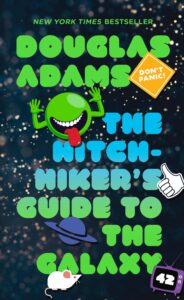
Let’s first distinguish between two types of book-length fiction: the humorous novel and the novel with humor. In the former case, the whole enterprise is based on getting laughs. Douglas Adams’ The Hitchhiker’s Guide to the Galaxy is a prime example. In the latter type of novel, humor is used for what the dramatists call “comic relief.” Shakespeare employed this device frequently, most famously with the gravediggers in Hamlet.

As to the first type, I don’t have anything to offer, except: proceed with caution. It takes a rare talent—like a Douglas Adams or a Carl Hiaasen—to succeed with this kind of novel. Also note that comic novels don’t sell much as compared to their more serious cousins. Early in his career Dean Koontz tried his hand at a humorous novel, a la Catch-22, and determined this was not a genre that paid. Since going serious, with humor sprinkled it, Mr. Koontz has made a few bucks.

So let’s talk about humor used on occasion in an otherwise serious novel. Why have it at all? Comic relief, as the name implies, is a spot within the suspense where the audience can catch its breath. It delivers a slight respite before resuming the tension. It’s sort of like the pause at the top of a roller-coaster. You take in a breath, look at the nice view and then…BOOM! Off you go again. It adds a pleasing, emotional crosscurrent to the fictive dream, which is what readers are paying for, after all.

I see three main ways to weave humor into a novel: situational, descriptive, and conversational.

Situational

You can insert a scene, or a long beat within a scene, that takes its comic effect from the situation the character finds himself in. For an example I turn to the great Alfred Hitchcock, who almost always has comic relief in his masterpieces of suspense.

Like the auction scene in North by Northwest. Roger Thornhill (Cary Grant) has been mistakenly tagged as a U.S. secret agent by a group of bad guys. At one point, Thornhill walks into a fancy art auction to confront the chief bad guy (James Mason). But now he’s stuck there with three deadly henchmen waiting in the wings to send him to the eternal dirt nap.

So Thornhill hatches a plan. Act like a nut and cause a commotion so the cops will come in and arrest him, saving him from the assassins. This is how it goes down:

How do you find situational humor? You look at a scene and the circumstances and push beyond what is expected. Most humor is based upon the unexpected. That’s what makes for the punch line in a joke, for example. So make a list of possible unexpected actions your character might take or encounter, and surely one of them will be the seed of comic relief.

Descriptive

When you are writing in First Person POV, the voice of the narrator can drop in a bit of humor when describing a setting or another character. The master of colorful description was, of course, Raymond Chandler, through the voice of his detective, Philip Marlowe:

It must have been Friday because the fish smell from the Mansion House coffee-shop next door was strong enough to build a garage on. (“Bay City Blues)

From thirty feet away she looked like a lot of class. From ten feet away she looked like something made up to be seen from thirty feet away. (The High Window)

It was a blonde. A blonde to make a bishop kick a hole in a stained-glass window. (Farewell, My Lovely)

The girl gave him a look which ought to have stuck at least four inches out of his back. (The Long Goodbye)

For descriptive humor, listen to your character. Use a voice journal to let the character riff for awhile. You’ll unearth a nugget or two of descriptive gold.

Conversational

Dialogue presents many possibilities for humor. First, you can create characters who have the potential for funny talk. Second, you can take create conversational situations where such talk is possible. I had two great aunts who lived together in their later years. They had a way of subtly sniping at each other over minor matters, which was always a source of amusement to me. So I put them in my thriller, Long Lost, as two volunteers at a small hospital:

Just inside the front doors, two elderly women sat at a reception desk. They were dressed in blue smocks with yellow tags identifying them as volunteers. One of them had slate-colored hair done up in curls. The other had dyed hers a shade of red that did not exist in nature.

They looked surprised and delighted when Steve came in, as if he were the Pony Express riding into the fort.

They fought for the first word. Curls said, “May I help—” at the same time Red said, “Who are you here to—”

They stopped and looked at each other, half-annoyed, half-amused, then back at Steve.

And spoke over each other again.

“Let me help you out,” Steve said. “I’m looking for a doctor, a certain—”

“Are you hurt?” Curls said.

“Our emergency entrance is around to the side,” Red said.

“No, I—”

“Oh, but we just had a shooting,” Curls said.

“A stinking old man,” Red added.

“Not stinking,” Curls said. “Stinko. He was drunk.”

“When you’re drunk you can stink, too,” Red said.

“That’s hardly the point,” Curls said.

And it goes on like that.

I think you can develop an ear for this kind of humor by soaking in the masters of verbal comedy. Start with Marx Brothers, especially their five best movies: The Coconuts, Animal Crackers, Monkey Business, Horse Feathers, Duck Soup.

Listen to the classic conversational routines of Bob Newhart (available on YouTube). My favorite is “The Driving Instructor.”

Also on YouTube: Bob & Ray. The great thing about their skits is how they play them with dead seriousness. That’s where the humor comes from, which is a lesson for writers. This isn’t about jokes. It’s about natural humor found in a fully developed dramatic situation.

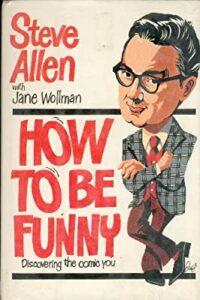
If you want to do some reading on the subject, you might pick up a copy of Steve Allen’s How to Be Funny. Allen was one of the great verbal wits.

There’s also a little gem of a book on writing comedy. It’s the nearly-lost wisdom of Danny Simon, Neil’s older brother (whom Neil and Woody Allen both credit with teaching them how to write narrative comedy). Danny Simon never wrote a book on the subject. He did teach a famous comedy writing class in Los Angeles. Thankfully, one of his students took copious notes and organized them for posterity. That student was me, and the little book is here.

The floor is now open for discussion on these matters. Meanwhile, I can’t resist leaving you with my all-time favorite Bob & Ray routine. Enjoy!