Sure, you can do your own thing, but not if you want to sell books

2kathyC06972C3-4F0F-4F17-B688-BD0EB2681583By Kathryn Lilley, TKZ Founder

Pardon the lateness of today’s post–your trusty admin got flummoxed by one too many date line and time zone  changes. We were in Australia for the Tennis Open, then New Zealand. Not being a tennis enthusiast, I spent most of my time chatting away with members of our group. I met one lovely woman, a writer, who’d written a book following the death of her husband. She traveled across multiple continents and countries, collecting stories of hope from people whose spouses had died. I haven’t read the book yet, but I understand it includes many “signs” that the surviving spouses interpreted as communications from their loved ones. It sounds like a lovely story, like THE YEAR OF MAGICAL THINKING meets Eat, Pray, Love.

But what struck me most about her story was her description of the editing process. Without being prompted, I launched into a discussion of any number of ways one could set up a framework for a book dealing with death, travel, and personal/spiritual discovery. My new author friend waved her hand, as if to dismiss the whole topic of structure.

“I hired an editor, a very well known person,” she said, “but I wanted to write my book in my own way. Structure, organization–that kind of stuff, I felt,  interfered with the way I wanted to tell my story”

Me: “And was your book…published?”

“Eventually,” she replied. “I hired a (well-known predatory company that makes money off inexperienced writers, emphasis mine) that made it into an ebook and uploaded it to Amazon, to all the biggies.

“I just wanted to structure it my own way,” she concluded.

“And that’s fine,” I replied. “But if you actually want to, you know, sell books, you may want to consider revisiting your editor’s suggestions.”

This brings up something I’ll never understand: Why do people insist on “doing their own thing”, rejecting sound, time-tested, professional advice? It’s highly unlikely that a first-time writer’s notion of “doing her own thing” will result in a better book than if she had simply followed some tried-and-true craft guidelines.

Me? I’m like a sponge. I’m always looking for new ways to soak up valuable input from seasoned authors and professionals. That’s why, a few years ago,  I gathered a few hardy, fellow writers. Together, we started this blog. This blog is the place we can all come, let down our writer’s facade, and talk about the nuts and bolts of the writing craft.

“Do you own thing”? Good for diary writing. Not so good for selling books. What do you think?

Update: I just realized that instead of posting my stupid selfie at the top of this post, I should have linked to a video of the absolutely most adorable thing in New Zealand, the annual Running of the Wools. They run the sheep down the Main Street of Queenstown (or at least, try to make them run). It’s hilarious. Watch it if Ewe dare.


Reader Friday: Best-Ever Film Made from a Book?

BY Kathryn Lilley, TKZ FOUNDER

So many films have been inspired by novels–most of them, unfortunately, were Not So Good. Can you name ONE film that was as good as the novel it was based upon (or even better?)

Following are listed some of my personal favorite novel-to-film creations.

JURASSIC PARK


THE GODFATHER

https://youtu.be/idP5-vtkhBE?list=PLPZ7ctz_fKQI1buLLNJz_P_1cW4o69wdl

BLADE RUNNER

THE THING

THE GREAT GATSBY

THE HUNGER GAMES

TO KILL A MOCKINGBIRD

GONE WITH THE WIND

SILENCE OF THE LAMBS

50 SHADES OF GRAY

https://youtu.be/2ddv2PWJo2Y

JAWS

drunkirishdogshutterstock_178849166

In honor of our leprechaun fans.

My Top 12 Most Common Writing Obstacles a Writer Faces

Jordan Dane 
@JordanDane 

squirrel

Every author has their own personal list of obstacles they have faced or are still confronting. Obstacles do not go away, no matter on what success level you are. These are mine, but I would like your input. Share your thoughts on my list or add to my list with experiences of your own.

1.) Perfectionism – Every one wants their work to be perfect. Perfection simply does not exist. Give yourself permission to write poorly. That’s the only way you will see improvement. Don’t judge your success by others or be envious of another writer’s success.That’s a waste of energy and can add stress. Find the internal motivation to improve and strive to be the best writer YOU can be.

2.) Lack of Productivity – Life gets in the way. Spouses, work commitments, children’s needs, etc. If writing is important, an aspiring author will squeeze out time for it. Motivational speaker Zig Ziglar (RIP) motivated me when he said he wrote his non-fiction book doing it a page a day. If you keep to a schedule like that, you will make progress and theoretically get to the end. Make it happen.

3.) Lack of Confidence – It’s hard to be driven with passion to write and yet not know if you can actually do it. It can feel impossible to write something and expose yourself to criticism by showing your work to someone else or to a fellow writers’ group, but the more you do it, and the more you study your craft, you will see improvement. Any confidence you have must come from within. Nurture it. It’s there. Make it grow.

4.) Listening to Naysayers – Everyone has advice on a topic they have no experience with. It’s rare that people who say “I’ve always wanted to write a novel” have actually even started one, much less finished one. Yet that doesn’t stop them from shelling our advice. Some advice I got was: write what you know, write a shorter story because it’s easier, write for a house that lists what they’re looking for in great detail (ie category romance) so you don’t have to think too hard. Surround yourself with positive people and those who support your writing endeavors.

5.) Putting Too Much Into Writing Contest Feedback – Generally I found contests to be a good experience. They got me noticed and looked good on my writer resume, but you have to take them with a grain of salt.

As I studied the craft of writing, I entered various national writing competitions to see how my work stacked up. These were mainly through the Romance Writers of America (RWA) and their many opportunities to compete. There was a rush when I received word that my entries were named a finalist. Even my first entry had some success and the first time I entered the Golden Heart contest for aspiring authors in the RWA, I was a finalist. These things can go to your head and you have to stay focused on your objectives. Good feedback and negative feedback can have an effect on you, just as good or negative reviews can. Keep things in perspective.

In contests you get lots of judges’ comments and editor/agent comments when you final, but you have to take whatever works for you and disregard the rest. You must develop a sense of your voice as a writer and not chase every suggestion, otherwise you will lose your instincts by constantly needing reassurance you’re on the right track.

6.) Taking Advice from Other Authors – We offer our views on TKZ, basically our opinions and what has worked for us about craft, for example. Some authors overly stress the importance of their opinion, especially at the local writer chapter level. I’ve attended local writer groups where someone who has never published, or even submitted a proposal, is giving out strict advice and members listen as if it’s gospel. Every author’s journey to publication is different. Success may not be totally involve skill, it might also be about LUCK. Be wary of people who give hard and fast advice, without being open-minded to alternatives.

7.) The “Rules of Writing” – This tags onto #6. Usually the authors who are biggest on hard and fast advice, they typically use words like “always” and “never” and speak in absolutes. The creative process is fluid and ever changing. Be daring and take risks with your writing. That’s how an author will stand out in the slush pile. You could have the idea for the next big thing. Go for it and believe and nurture your instincts.

8.) Agents & Editors – Rejection can sting

Editors – I’ve been blessed to have worked with some wonderful editors, those in the big publishing houses and those who work with indy authors to self-publish. But keep in mind, they are people who have no better crystal ball than you do about where this crazy publishing industry is going. They rely on authors to bring them ideas. If an editor sends you a rejection, it’s for the book you submitted and not a rejection of YOU as a person. Don’t take their rejection feedback personally, but keep an open mind about their criticism. When an industry professional gives you free advice, if you’re lucky enough to get a “good rejection letter” with feedback, respect their experience and consider it. In the end it is your decision to heed the advice or not.

Agents – Literary reps dole out similar advice, but they generally are looking for authors they feel will have a career and not just one project sold. They might be more critical for this reason. I submitted to my first agent 3-4 times and got rejected each time. When she finally saw something in my writing, it was because another of her clients recommended me. Don’t get discouraged. Again, rejection isn’t personal. It’s business.

9.) Chasing Writing Trends Can Be Distracting – In the course of my career, I’ve seen many authors who never finish a book because they are constantly entering contests for the first 25 pages or they are chasing trends to see what someone might like. Some of these authors had 40-50 started manuscripts. Crazy. FINISH THE BOOK. Believe in your project and see it through to the end. You’ll be like that dog in the animated movie, UP, that gets distracted with “Squirrel!” If you are an avid reader and a buyer of books, YOU are the market. Write what you want to read and believe in it. You could be the next big trend. As I said before, no one has a crystal ball on where this industry is headed. Push the envelope.

10.) Writing Different Genres Can Spread an Author Too Thin – I’ve tried writing different genres and I love doing this. The first step is to read a lot of books in the genre you want to tackle, but people will tell you, “Don’t write that. Why don’t you stick with romance, it’s what I read.” Whatever. I write cross genre stories or I attempt completely new genres to keep myself challenged. I don’t regret any of my decisions and thoroughly enjoy the challenge. One thing I will say, that I’ve learned from hard experiences, is that if you branch out from adult books into YA (Young Adult) books, you may struggle with branding and promo in a new arena with different readers. Joe Moore had an excellent post on Thurs for “What’s Your Brand?”

11.) Self-Publishing – Should I or Shouldn’t I? – This can be an obstacle for authors on whether they want to step out with either their back list books or their first novel. It takes work to self-publish – from developing the story, formatting the book for digital and print, developing a cover, writing your own book jacket synopsis, generating a marketing strategy and implementing it, etc. But I will say that the industry today is wide open with possibility because of self-publishing. I straddle the line between submitting to traditional houses and self-publishing so I do both, but the fact that we have options is a good thing.

12.) The Time Sucks of Promotion & Social Media – I love writing, but the business end of our industry is not my favorite thing. I struggle with doing it and am happiest when I’m writing, period. Promo and social media is a necessary evil and something every author must do, even if said author is pubbed by a big house. But I find it an ongoing obstacle. Plus all the online time, working on social media is a distraction from writing – a time suck. TKZ’s Clare Langley-Hawthorne had an excellent post on this topic called “Have You got Focus?”  Everything in moderation, people.

For Discussion:
This is my list of the top obstacles I have experienced. What about you? Care to comment on my list or add your own challenges? Fire away!

HotTarget (3)

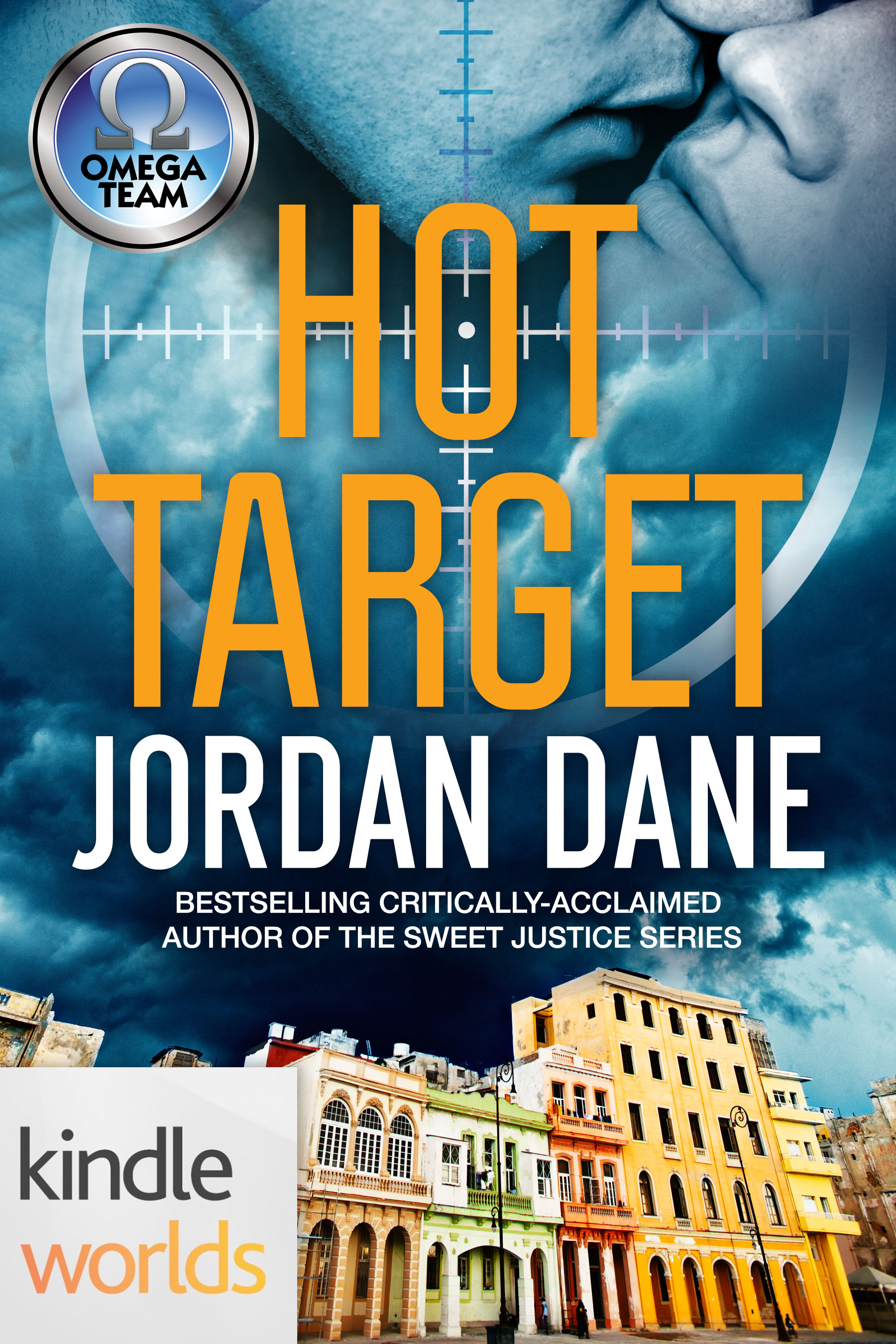
My upcoming release is launching this month on Feb 18Hot Target – the first of three novellas in the new Omega Team series with Amazon Kindle Worlds and priced at a bargain of $1.99 ebook.

When Rafael reaches out to his sister for a job, Athena Matero—a founding member of the private security agency, the Omega Team—can’t help but be protective of her younger half brother. After a tragic hostage rescue and its aftermath, Rafael Matero turned into a solitary loner, only surfacing to fulfill his duties as team leader for an elite SWAT sniper unit with the Chicago Police. Athena decides to fast track his application by vetting him on the job—a mission to Havana Cuba to investigate a cold case murder.

But when the old murder is linked to the shadowy death of a powerful drug cartel leader, Rafael is burdened by a terrible secret from his past—and an unrelenting death wish—that puts him at dangerous odds with Athena and her team. He believes he’s beyond saving, but that doesn’t stop Jacquie Lyles from trying.

Jacquie sees something in Athena’s mysterious brother that touches her heart. Chivalrous and brave, Rafael is as rare as a unicorn in her life as techno computer geek and white hat hacker for the Omega Team. After she joins the team on its mission to Cuba, she uncovers Rafael’s shocking burden and it breaks her heart.

Rafael stands in the crosshairs of a vicious drug cartel—powerless to stop his fate—and his secret could put Athena and her team in the middle of a drug war.

What’s your brand?

By Joe Moore
@JoeMoore_writer

Why is a reader motivated to purchase one book over another? Is it the author? How about the cover art? The cover blurbs from other writers? The title? The synopsis on the back or inside liner?

All of the above are important, no doubt. But I believe one of the biggest factors in motivating the purchase of a book is “brand”, or lack of it in the case of not making the purchase.

Why brand? Readers want consistency. Think of food. Everyone knows exactly what a Burger King Whopper tastes like. The Burger King brand is known worldwide because they produce something that people like and they keep making it. I can walk into a Burger King anywhere on the planet and I know what to expect. The same goes for McDonalds, Pizza Hut, Starbucks, KFC, Taco Bell, and hundreds of other well-established brands. If I crave a Big Mac, there’s only one place to get it. If you’re looking to put your brand over some products and items to help market your company a little better, look into this company that design branded merchandise.

I think that the same holds true for books. I can pick up the latest James Paterson, Nora Roberts or Clive Cussler novel and I know what to expect. They have established a consistency in their product that has become their brand. As a matter of fact, their names ARE their brands. All you have to do is mention Patterson, Roberts or Cussler, and anyone who has experienced those brands knows what you’re talking about. Just like the Whopper. You don’t have to explain it to someone who’s already had one.

What is brand? For starters, I think of it as a consistent level of expectancy. By that I mean that the customer/reader expects something to happen each time they make a purchase based upon the brand, and it does—every time. If there ever comes a time when it doesn’t, the customer/reader will abandon the product for a replacement—maybe not the first time, but eventually they will move on.

Now I know what you’re thinking. What if I’m a debut author? I have no brand. Or I only have a couple of books out. Not enough time to establish a brand yet. Ask yourself this: how strong was James Patterson’s brand when he published Along Came A Spider in 1993? Probably not as strong as it is today. He started with a good story, quality writing and a compelling package, and built it into the James Patterson brand combining it with other vital branding items. Branding goes way beyond story content, style, voice, and other writing elements. It involves your book covers, your website, your blog, your marketing collateral, how you dress in public at signings and conferences, how your email signature is worded—in other words, your brand is your message working in tandem with your personal “packaging”. The good news is that today we have even more avenues for building our brand than Mr. Patterson did years ago.

So, how do you create a brand from your message and personal packaging?

Your message is primarily the words that are contained in your books and the words used to describe your books. The packaging is the “framing” of those words. If the message and the packaging are not synchronized, you will create confusion in the marketplace. You control your message by the content of your stories. And it’s important that you work closely with the publicist and marketing department at your publisher to make sure your message matches the message they produce for promoting your books. If it doesn’t, keep working with them until everyone feels that it does.

What about the packaging decisions you can do yourself?

Start with your website. It’s one of the most important parts of your personal packaging. You’re in control of all aspects of its content and construction. Make sure it looks like your books. I know that sounds pretty basic, but you’d be surprised that the only similarity between some author’s websites and their books is that they show a picture of the book cover. For best packaging results, the entire site should have the same visual feel as your cover(s). If you can’t create or capture that yourself, find a professional to do it. Remember, it’s the TOTAL packaging that helps establish your brand.

Now think about the rest of your collateral material such as business cards, post cards, posters, bookmarks, newsletters, e-mail blasts, bulletins, etc. Do they project your brand? Are they an extension of your book covers and website? Again, if you can’t achieve a totally consistent personal package, find a professional designer that understands branding and packaging. The investment of using a design agency will pay for itself in the long run.

Make sure you know and understand what you want your brand to be. Understand who you are in relation to your brand. What kind of image do you want to portray? I’m not suggesting you come up with some fake persona and act like someone you’re not. But guess what? Being an author is acting. It’s acting out your brand. It’s your personal packaging.

In building your brand, you must consider all of these items working together. The consumer will come to expect it and it’s to your advantage to deliver.

As a writer, do you feel like you have a brand? If you do, is it the one you want? Are you aware of it? Can you think of some other examples of writers who have a consistent, strong brand?

Have you got Focus?

Hot on the heels of James Scott Bell’s great post yesterday on the top ten events of the highly successful writer, I want to add to this by highlighting the downside of the digital age – its impact on both writers’ and readers’ ability to stay focused.

For writers, digital distractions are everywhere. At the moment my personal bugbear is my inability to wean myself off mindlessly checking the internet whenever I lose steam in my writing – the result? At least ten minutes of Daily Mail, Facebook and Gmail distraction resulting in – you guessed it, a complete loss of focus. Over the last week I’ve been paying greater attention to my writing habits (or lack thereof) and have realized that checking the internet has become a sort of ‘default’ setting whenever I’m stuck on a sentence or unsure of a passage of dialogue. I worry that my brain has lost the ability to focus for more than an hour at a time without craving some sort of distraction when the going gets tough. The answer to my problem is clearly weaning myself off the distraction itself but I’m surprised at how difficult this has become. I know I’m going to have to retrain my brain somehow as well as impose much stricter limits on succumbing to these distractions. My fear is that my ability to focus for long periods of time is already slipping away from me (can you hear the screams?…)

As readers, digital distractions allow ourselves to fulfill our craving for something new and more interesting whenever our focus wavers. Recently, I’ve found it is much harder to keep my focus on a book when my interest starts to wane. Whereas in the past I would plough on for a bit, hoping that a book would regain my interest, I now find myself turning to digital distractions much quicker than I ever would have put a book down before. It would be amazing to be able to create a safe room, look into options such as Soundproofexpert, and have that room as a digital hideaway, away from what ever distractions you may find on a day to day basis, or unfortunately even an hour to hour basis now.

I’m sure lack of focus has always been an issue for writers and readers, but I do feel that the increasing levels of digital ‘noise’ that surrounds us is making it much harder (at least for me) to keep the level of sharp focus I need on my writing. It certainly makes me less efficient and productive – although, thankfully, I still manage to pull off bursts of fear-induced focus which means I am completing my writing projects on time. I just feel that I need to develop techniques to sharpen my focus, increase my attention span, and spurn the digital ‘siren’ call that is all too easy to heed.

So what about you – do you find the digital world is making you lose focus? Have you developed strategies to overcome this while writing (or reading). Although disconnection is always an option for periods of time, it’s hard for this to be a permanent ‘default’ setting when so much of our world revolves around digital communications. So…any and all ideas on the best way to retrain my brain to maintain focus will be gratefully accepted…

Editing Tips for the Indie Author

By Joe Moore
@JoeMoore_writer

Back in the days of legacy publishers ruling the world, getting a contract meant that your book would be edited by staff editors. First by the acquisition editor, then the copy/line editors and maybe additional content editors. It was mostly out of your hands. A lot has changed with the wave of indie publishing. Writers that can afford it can hire a freelance editor—there are many available. A simple Google search will reveal numerous sources. Most indie writers with a limited budget take on the task themselves. The last thing you want is to self-publish your masterpiece if it’s filled with mistakes. To make it as good as it can be, I’ve listed a collection of DIY tips on editing your own manuscript.

There are a number of stages in the editing process. Starting with the completion of your final draft, they involve reading and re-reading the entire manuscript many times over and making numerous changes during the process. It’s in this phase that you need to make sure your plot is seamless, your story is on track, your character development is consistent, and you didn’t leave out some major point of importance that could confuse the reader. At this stage, you’re taking the job of the content editor, so you must pay close attention to content. Does the story have a beginning, middle and end? Does it make sense? Is the flow of the story smooth and liquid? Do your scene and chapter transitions work? Is everything resolved at the end?

Next, check for clarity. Legacy publishers employ professional proofreaders. In your case, this is where beta readers come in handy. If it’s not clear to them, it won’t be clear to others. Don’t assume that everyone knows what you know or understands what you understand. Make it clear what’s going on in your story. Suspense cannot be created by confusing the reader.

Once you’ve finished this first pass searching for global plotting problems, it’s time to move on to the nuts and bolts of editing. Here you must tighten up your work by deleting all the extra words that don’t add to the reading experience or contribute to the story. Remember that every word counts. If a word doesn’t move the plot forward or help develop the characters, it should be deleted.

Some of the words that can be edited out are superfluous qualifiers such as “very” and “really.” This is always an area where less is more. For instance, you might describe a woman as being beautiful or being very beautiful. But when you think about it, what’s the difference? If she’s already beautiful, a word that is considered a definitive description, how can she exceed beautiful to become very beautiful? She can’t. So I suggest you search for and delete instances of “very” or “really”. They add nothing to your writing.

Next, scrutinize any word that ends in “ly”. Chances are, most adverbs can be deleted without changing the meaning of the sentence or your thoughts. In most cases, cutting them clarifies and makes your writing crisper.

After that, go hunting for clichés and overused phrases. There’s an old saying that if it comes easy, it’s probably a cliché. Avoiding clichés makes for fresher writing. There’s another saying that the only person allowed to use a cliché is the first one to use it.

Overused phrases are often found at the beginning of a sentence with words like “suddenly,” “so” and “now”. I find myself guilty of doing this, but they don’t add anything of value to my writing or yours. Get rid of them.

The next type of editing is called line editing. Line editing covers grammar and punctuation. Watch for incorrect use of the apostrophe, hyphen, dash and semicolon. Did you end all your character’s dialogs with a closed quote? Did you forget to use a question mark at the end of a question?

This also covers making sure you used the right word. Relying on your word processor’s spell checker can be dangerous since it won’t alert you to wrong words when they are spelled correctly. It takes a sharp eye to catch these types of mistakes. Once you’ve gone through your manuscript and performed a line edit, have someone else check it behind you. A fresh set of eyes never hurts.

On-the-fly cut and paste editing while you were working on your first draft can get you into trouble if you weren’t paying attention. Leftover words and phrases from a previous edit or version can still be lurking around, and because all the words might be spelled correctly or the punctuation might be correct, you’ll only catch the mistake by paying close attention during the line edit phase.

The many stages of editing are a vital part of the writing process. Editing your manuscript should not be rushed or taken for granted. Familiarity breeds mistakes—you’ve read that page or chapter so many times that your eyes skim over it. And yet, there could be a mistake that you’ve missed every time because you’re bored with the old stuff and anxious to review the new.

Read your manuscript out loud, or better yet, have someone else read it to you. Mistakes and poor writing will become obvious.

Spend the time needed to tighten and clarify your writing until there is not one ounce of fat or bloat. And once you’ve finished the entire editing process, put the manuscript away for a period of time. Let it rest for a week or even a month if your schedule permits while you work on something else. Remember that indie publishing means that you set the deadline and pub date. Then bring it back out into the light of day and make one more pass. You’ll be surprised at what you missed.

One more piece of advice. Edit on hardcopy, not on your monitor. There’s something about dots of ink on the printed page that is much less forgiving than the glow of pixels. Remember, less is always more.

Any other editing tips?

Writing Note #1: Avoid Creating “Zombie” Characters

Zombie characters

In honor of the new writing year, I’m assembling a personal checklist of “Do’s and Don’ts” to follow. I’ll kick off my list with an issue that always makes me cranky as a reader: the sudden appearance of a “zombie” character.

What is a zombie character?

Zombies are characters that are initially introduced into a story, but then vanish for long stretches. By the time a zombie is abruptly resurrected by the writer (usually without any context or reminder), the reader has forgotten who the zombie character is. The sudden reappearance of a zombie can make a reader feel lost and confused (and probably irritated with the writer).

I encounter zombies frequently in my critique group. I’ll be reading a scene from someone’s draft, for example, and suddenly a minor-sounding character named Bill pops up to contribute a bit of dialogue. There’s no description to remind me who Bill is, nor anybody indication of where he’s been lurking all this time. When I ask the writer who “Bill” is, this is usually how the conversation goes.

Writer: Oh, don’t you remember Bill? I mentioned him six chapters ago. (Writer’s tone implies that her reader has a faulty memory).

Kathryn: No, I’ve long since forgotten your underwritten, generic, and ineptly re-introduced character named “Bill”.

(Okay, I don’t actually say that, because then I would sound cranky).

How to re-introduce a missing character

There are a couple of ways to reintroduce a character who has gone missing, like Bill.

1) If Bill has been “off-camera” briefly within a scene, you can re-focus the reader’s attention on him by using a single sentence. For example, let’s say you have a scene with three characters, and two of them have been having a heated argument. Now you need to re-introduce Bill, who hasn’t said anything so far. This is one way you might do it:

Bill, who’d been listening to us from his unsteady perch on the broken stool, cut in to deliver a verdict. “You’re both wrong,” he said.

2. If Bill has been missing in action for a longer period of time (for several scenes or chapters, for example), you can re-introduce him by reusing a specific attribute or detail that was important to his original characterization. If Bill had messy hair in his first appearance, for example, you can recall that characteristic when he reappears later (i.e., by showing him running his hand through his mane in a failed attempt to pull himself together).

image
Important: For this method to work, a writer must establish vivid, ‘reusable’ characteristics when a character is first introduced into the story. Those details will be reused later, in order to re-establish the character in the reader’s head.

Best Practice: Make your character details specific, vivid, and memorable. Discard trivial, generic details that won’t be reused later.

Question for you: How do you re-introduce MIA characters in your work? As a reader, have you ever had to go back a few pages to remind yourself who a character is?,

Everything I Needed to Learn About Writing, I Learned from my Fam-Damily

Jordan Dane
@JordanDane

Attribution: User: (WT-shared) Jtesla16 at wts wikivoyage

Attribution: User: (WT-shared) Jtesla16 at wts wikivoyage

The holidays are nostalgic for me. Family gatherings bring back memories, some good and others questionable. In 2016, I thought I would start the year off with my family memories and share how they shaped my writing. I’m calling this series – Everything I Needed to Know About Writing, I Learned from my Fam-Damily. Maybe I should consider having some of my family photos mounted to celebrate some of the better memories in my current home. My friend told me it helped him when he was writing similar reflective work he said to have your photos mounted here for high-quality prints which apparently helped with his creative process. But I digress.

Do you remember the classic Christmas movie – A Christmas Story – with Darren McGavin? It’s become iconic and a movie my family watches every year. Well, thanks to my older brother Ed, we had our own version of the Red Ryker BB Gun Rifle with the compass in the stock.

christmas-story

My brother Ed pleaded with my parents all year that he’d be responsible enough to own a BB gun pistol. After all, everyone who was anyone had one and he wouldn’t be denied. He swore he would be careful. He wouldn’t hurt anyone or kill a defenseless animal. With my brother’s deep voice and sincere demeanor, he could charm anyone. My mom finally caved and took him to the hobby store to pick out the best BB pistol anyone could ever own. I went along for the ride and was a firsthand witness to the questionable moment in my family’s history that would follow.

Ed rode back home with my mom, holding his prized possession in his hands, getting the feel and weight of it. He stroked the barrel and loaded it with its first BBs. He was ready to go.

Mom pulled up to our house and Ed got out. He turned to see my younger brother Ignacio coming up from the mailbox. I don’t know what went through Ed’s mind at that moment, but he took aim and fired a shot—at my little brother. He said he didn’t think it would shoot that far. Yeah, right. My mother grabbed the pistol and Ed never fired another round. The BB hit my other brother center mass. Great shot, Ed.

For the rest of the year, Ed worked on my mom again. He swore he had learned his lesson and would never take aim at his brother—or anyone—again. (I hoped his assurances would cover me and my sisters, but was never quite sure.) Forget about defenseless animals, Ed had leaped over that line and went straight for spilling human blood. Way to go, big brother. Ed knew he had a lot to make up for and he saved his best material for mom. She eventually caved…AGAIN.

She took Ed to the sacred place she had hid his BB gun pistol—a secret location no one had known about or would ever find—in her closet. (I did not inherit my imagination from Mom.) She pulled out the box that held Ed’s prized possession and they opened it together. Inside the box was his BB gun pistol—shattered in a million pieces and painstakingly put back together. If anyone tried to lift it, to would shred apart like confetti. (I wished I had inherited my little brother’s imagination…and patience.)

Little bro had found a way to never be a target again.

What did this teach me about writing?

1.) AIM HIGH – If the dream is yours, you’re the only one who should dictate the goals you set or how high you aim. People told me to shoot for a certain publisher or line because they perceived it would be easier. I didn’t want easy. I wanted to earn my place and wanted to sell single-title. I had my day job. I could afford to aim higher. I never regretted my decision and far exceeded my goals. You never know until you try.

2.) EXPECT BLOOD – Writing is hard. There will be blood. If it were easy, everyone would do it. Constantly strive for the best you can be, even if that means it hurts. You will be happy you did. It will mean more. This goes for project to project too. Dare to risk something you haven’t tried to push yourself. I like to write where I’m slightly off balance and not entirely sure I can do it. When I surprise myself, it means more and I can shoot higher next time.

3.) MOTHERS DON’T ALWAYS KNOW WHAT’S BEST – They say, “Write like your parents are dead.” That means to write with abandon. Don’t let anyone else’s opinion resound in your head as you write, fearing what they will think of you after they read your work. You’ll be defeated before you even start.

4.) IF YOUR GOALS GET SHATTERED, PUT THE PIECES BACK TOGETHER AND TRY AGAIN – You writing goals can change as the market changes. Be prepared to rethink your idea of success. Be flexible when things get tougher and hang in there. If your dream to write is important to you, you will find a way to make it work, even if you’re doing it only for your own personal satisfaction. Find the joy in your writing and hang on to it. It’s the gift that keeps on giving.

5.) BE NIMBLE WHEN PEOPLE TAKE POTSHOTS AT YOU – There will always be naysayers and critics who will not understand what you’re doing. It comes with the territory of being an artist and creating something from nothing. But I like to challenge those who tear apart a book to write one themselves and put it up for public opinion. Perhaps they would understand the guts it takes to write. Be fearless.

For Discussion:
1.) Which of the 5 goals resonated with you the most?
2.) What keeps you going?

tmp_4087-TheLastVictim_highres-1601584079

The Last Victim now available! “Chillingly delicious!” The U. K. Crime Warp

Every Professional Was First An Amateur

By Joe Moore
@JoeMoore_writer

Welcome back to TKZ after our winder break. I hope all of you had a wonderful time off with your families and friends. So, now it’s time to get back to work.

When I graduated from college, I was making a living doing two jobs: a night gig playing in a rock band (that’s me on the right), and a day job working in a music store. On the marquee in front of the store, was the message: Every Professional Was First An FatCatAmateur. Since I was making decent dollars rocking out eight days a week, I considered myself and my band mates professionals. But that statement out on the store marquee stuck with me. Many decades later, when I took to writing fiction, that saying haunted me. Especially as I piled up an impressive stack of rejection letters. I used to brag that I had been rejected by some of the biggest names in the business. When I finally got an agent and had a novel published, I looked back at the trail of dead manuscripts left in my wake and realizes how true it was.

I believed that my first manuscript was so great, it was supposed to make me into the next Clive Cussler. As you can guess, things didn’t turn out as planned. The closest I ever got to Cussler’s success was having dinner with him while I served as ITW co-president.

I’ve had the opportunity to mentor new writers through the MWA mentoring program and held countless writing workshops. What I’ve noticed is that all beginning writers commit the same sins. And what I wind up telling them is that there’s good news and bad. The good news is, they’ve accomplished something that only a small percentage of the population ever will. Most just dream about it. Few really sit down and write a book.

Now for the bad news: Their first book is not publishable. The response usually goes like this.

What? Joe, are you crazy? Everyone says my book is great. My mom loves it. My neighbors and the girl that cuts my hair said it was a potential bestseller—as good as King and Patterson. I’ve even been told by my uncle who watches lots of movies that it would make a blockbuster feature film. JJ Abrams would snap it up in a heartbeat. So how can you say that about a book when you’ve only read a few pages?

The reason I can say it with confidence is that I’ve found first novels to all be the same—not in subject matter of course, but in common, predictable flaws. And if by some miraculous stroke of luck the literary gods smiled down and their first book is publishable as written, then I would suggest they run to the nearest convenience store and buy a lottery ticket. There’s a good chance they’re on a roll.

I’ve made a list of the most common flaws of first novels. Keep in mind that having one or even a couple of these present in your book will not render the manuscript DOA. But I guarantee you’ll find just about all of them in the typical first attempt at writing a novel. Here they are in no particular order of importance.

You often use adverbs at the end of dialog tags to “tell” the reader what emotion the character feels. Example: “I’m mad as hell,” he said angrily. “I love you,” she said adoringly.

You rarely utilize any of the 5 senses to draw the reader into the scene.

You resolve conflict with coincidence or luck.

Your manuscript is filled with back-stories that don’t relate to the plot or develop the characters.

You head-hop within a scene between multiple POVs.

You tell the story rather than show it.

You have a “unique” approach to the use of the English language, and the mechanics and structure of writing in English. Note: I mean this in a bad way.

Each page is filled with an abundance of adjectives that if deleted would not change anything other than make the writing cleaner.

You recently discovered the exclamation point and want your readers to share in your excitement.

You love ellipsis . . .

You have a pet word or phrase that you feel compelled to repeat often in hopes that it will become a favorite of your reader.

You beat your readers over the head with repeated facts just in case they didn’t get it the first dozen times.

You often rely on the lazy technique of imparting information to the reader by having a character tell another something they already know.

Your text is riddled with more clichés than you could shake a stick at.

You use profanity for no other reason than shock.

Your dialog sounds as natural as a first grade primer.

Your characters continually use the name of the person to whom they’re speaking.

You overuse flashbacks and/or start the story with one.

Act II sags like a piece of pulled taffy.

Your story wanders.

Your story starts in the wrong place.

You’re not sure how to create suspense, so you commit “author intrusion” even though you have no idea what the term means.

You confuse the reader.

Your facts are incorrect. Example: The assassin attached the silencer to the revolver so no one would hear the shots.

You slip from past tense to present in narration.

You describe every movement, every second, every detail and every breath of your characters actions for no apparent reason.

You don’t know when to end a scene.

Your plot is a rehash of The Perils of Pauline—your protagonist jumps from one terrible situation to the next equally terrible situation with no dynamics or variation in terribleness.

You either have no subplots or enough for 10 books.

All your characters sound the same when they speak.

Your characters have no flaws.

You rely on stereotypes. The men are all handsome with chiseled faces and athletic bodies. The women are beautiful fashion models. And the bad guys are ugly, disgusting monsters. Note: This is OK if your antagonist is actually an ugly, disgusting monster.

Your story is melodramatic.

Your target audience doesn’t exist.

You manuscript is infested with misspellings, the wrong use of words, grammatical errors, and missing or incorrect punctuation.

You believe that placing the word “very” or “really” in front of an adjective increases the descriptive value of the adjective.

And the one that I see most often: You find it impossible to tell someone what your book is about without rambling on for 10 minutes.

Everyone’s first book contains just about all of the above. Mine did, and I’ll bet yours did, too. But that’s OK. That’s part of the learning process on the road to becoming a published novelist. Every professional was first an amateur. Every bestselling author wrote a first novel that should never see the light of day. Chances are it was just as full of these flaws as yours and mine.

The secret to this whole novel-writing thing is to keep writing. Few first novels are accepted by an agent much less bought by a publisher. Published first novels are the exception to the rule. For everyone else, you’ve got to write that second book. And the third. And the fourth. That’s how you refine the craft. And with each manuscript, you learn to use less clichés, eliminate “very” from your vocabulary, delete needless “ly” words, make your characters more human, find your writer’s voice, and all the other thousands of parts to crafting a well-written story.

So, Zoners, did I miss any beginner failings?

Happy 2016 from TKZ

Happy New Year and welcome back to The Kill Zone blog for 2016!

Each year many of start of with resolutions and many of us end the year having not quite managed to fulfill any or all of them. For me, I managed to achieve about a third of what I planned for 2015 so this year I’ve decided that, at least in terms of my writing, I’m going to focus on just a few key aspects (okay…make those tics) that drive me and my beta readers to distraction. Thus, my three main ‘writing’ new year’s resolutions are:

  1. Not to have another character with a surname that ends in ‘s’. How many times have I told myself this – thousands upon thousands – and what did I just do with my latest WIP?  I had a character whose last name was…Brooks…argh!
  2. To start introducing nicer weather. My poor characters are constantly beset by fog, rain and damp. I know my family are English and that is pretty much typical weather but still, would it kill me to let a character enjoy some sunshine now and again??
  3. To (finally) kick the critic off my shoulder and stop her from plaguing me with self doubt when I’ve not even finished the first draft. Time to finally relax, have some fun in 2016 and wait at least until the first draft is complete to let that editor/critic/angst- ridden voice into my head…

So what are your ‘writing resolutions’ for 2016? What are you going to focus on this year?