By Debbie Burke
For Halloween, would you rather portray a hero or a villain? Why?
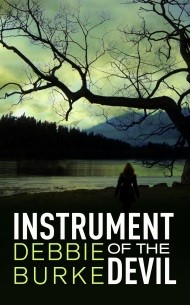
Last day to download Debbie Burke’s Instrument of the Devil at the sale price of $1.99. Here’s the Amazon link.
By Debbie Burke
For Halloween, would you rather portray a hero or a villain? Why?
Last day to download Debbie Burke’s Instrument of the Devil at the sale price of $1.99. Here’s the Amazon link.
A few weeks ago I purchased the latest Tana French novel, The Witch Elm, even though my TBR pile is almost to the ceiling. The reason? I buy every novel of hers as soon as it comes out. Why? Because of what I call ‘compulsive readability’ – closely aligned to the ‘trustability’ that Jim blogged about yesterday – meaning I automatically, faithfully, buy every book of hers that’s published. There aren’t many authors I’ll do that with – even J.K. Rowling missed the mark with me. I adored all the HP books and pre-ordered each installment, but then came her foray into adult books. I was uninterested in purchasing The Casual Vacancy and then with the Cormoran Strike mysteries, while I liked them, I didn’t love them (which means I got them out from the library but didn’t purchase them). In this instance, an adored author, didn’t necessarily become the compulsively readable one across all genres.
So what makes an author compulsively readable? What makes a reader buy every single book no matter the blurb or description? I think this aligns with what Jim was speaking about yesterday when it comes to ‘trustability’. I trust Tana French’s books implicitly and because of that level of trust, I won’t hesitate when it comes to buying her books. This, in essence, is what we are writers all strive for – to develop that degree of trust amongst our readers (this is what publishers are clearly looking for too!).
So what makes Tana French so ‘trustable’ to me? I thought I’d try and break down the reasons, as it helps highlight the key factors all of us should keep in mind as we build our writing careers.
First, and foremost, all her books are written to a consistently high standard – and by that I mean every single on of them is well-written, well-conceived, and (even when there may be plot holes) beautifully crafted. As a reader I have no hesitation ordering her books because I know I’m not going to be disappointed, even when they don’t appear to directly fit with the series she’s written to date (which is the case with The Witch Elm). Her writing is what has always stood out for me, not the premise of her books or the plots she spins, and this for me is critical. She never loses focus on what matters the most – the beauty of the words on the page.
Secondly, she consistently builds and maintains a world that I want to enter. Her Dublin murder squad series comprises different narrators/voices/characters but the world remains the same – which creates both an expectation and an anticipation in her readers. Whenever a new book comes out, I can’t wait to see what new spin or perspective she brings to this world (and the way she treats overlapping characters is cleverly executed – further enhancing the world).
Finally, her books never feel rushed. She doesn’t just pop out a book as if it’s merchandise. I’ve never got the feeling that she produces to a schedule (even though she almost certainly has to!) – so I don’t ever get the sense of being cheated that, now she’s successful, she’s resting on her laurels or producing ‘more’ at the expense of ‘quality’.
All these elements are worth bearing in mind as we, as writers, continue to try and establish or maintain our own careers. The difficulty is that there’s also an ineffable element – one I can’t pin down – that probably attracts me to these books over and above another (equally talented) author’s work. Nonetheless, what makes an author compulsively readable is worth analyzing. Af all, if it was easy, we’d all be best sellers:)
So TKZers, who is your ‘compulsively readable’ go-to author? Which author are you committed to buying and why? What factors do you think go into ‘trustability’ as well as ‘compulsive readability’?
By SUE COLETTA
Forensic Psychology is a fascinating field, especially as it relates to eyewitness testimony. Can we always trust our memory? Let’s test your observation skills. In this short video, count the number of times the ball is tossed from one white-shirt player to another. Sounds easy enough, right? Give it a try.
Well, how’d you do?
This phenomenon is called inattentional blindness. Your mind perceives what’s happening, but you do not attend to it. In other words, there’s nothing wrong with your eyes. But for some reason this information is more subconscious than conscious. The best known demonstration of inattentional blindness is a study performed by Simons and Chabris (1999) known as Gorilla in the Midst. It’s highly copyrighted so I couldn’t embed it here, but if you’d like to check it out, click the title.
Imagine the implications inattentional blindness has on eyewitness testimony? Often times victims of violent crime are so focused on the gun they see little else.
Change blindness is another phenomenon that effects key elements of our surroundings, including the identity of the person right in front of us, even if that person has changed places with someone else. If you’d like to use change blindness in your WIP, check out The Door Study.
The implications of change blindness on eyewitness testimony could delay solving the crime. Always a good thing in thrillers. A detective could be led down numerous dead-ends, and so could the reader.
In a violent crime, “weapon focus” muddies the waters. Participants in another study watched a film of a kidnapping attempt. Would it surprise you to learn that actions were better remembered than details?
When we witness a crime, we absorb the information by the actions that happened during the commission of the crime. For example, a man pointed a gun at a woman, pushed her into his van, and sped away. The central information — what an eyewitness focuses on — and the peripheral information — what’s happening around said eyewitness — often becomes skewed with the surge of adrenaline.
Such findings suggest that when we witness a traumatic event, our attention is drawn to the central action at the expense of descriptive details. Yet, in other circumstances, such as non-violent events, our attention may be spread more evenly between the two.
Which brings us back to inattentional blindness. This phenomenon occurs when attention is drawn toward only one aspect of an eyewitness’ surroundings, resulting in lack of information. Which writers can use to our advantage.
The use of weapons complicate matters even more. When a gunman brandishes his firearm, an eyewitness tends to focus on the pistol rather than other details, such as the suspect’s hair and eye color, build and dress. Researchers have tested this theory, as well.
In the study, they showed participants videos of robberies — robbery involves a weapon and a victim; burglary does not— where one group witnessed the robber with a concealed pistol and other group witnessed the robber with the gun in plain sight. When researchers asked the concealed weapon group to identify the robber in a line-up, only 46% of participants could identify the suspect. From those who watched the video where the robber brandished the weapon, only 26% could identify him.
In order for an eyewitness to be able to answer a question, they must be willing to respond. And it’s this willingness that can impair their memory of the events. Not everything we “see” or “experience” is stored in our minds. Our brains don’t work like computers where each bit is encoded. Rather, we make connections to other things in order to process information. If you’re interested in learning more, I’ve written about Subliminal Messages on my blog.
Episodic memories — memories involving an event — are organized in our minds as “event schemas.” This allows us to store knowledge, events, and activities by connecting to what we classify as “normal.” In other words, rather than remembering every time we dined at our favorite seafood joint, we tend to build a general impression of seafood restaurants … the smell, the atmosphere, and so on.
However, the use of schemas can distort memories. The perfect example of this is when someone asks me about my childhood, then asks my brother. From our answers one might think we grew up in different households. Many factors contribute to how we remember times and events. Such as, influence. When gaps exist in our memory we tend to incorporate new information in an attempt to fill in the blanks. Although useful in everyday life, this poses real problems for investigators, because this new information is often constructed after the crime took place, and leads to false testimony.
I hope you’ve enjoyed this peek into Forensic Psychology. We’ve barely scratched the surface. Next time, I’ll share how an investigator should pose questions to an eyewitness. Perhaps you could use the techniques in your WIP. Would that interest you?
So, TKZers, how many of you saw the gorilla? Are you tempted to use false eyewitness testimony in your WIP?
My adopted mother adored pretty shoes. She used to say if she won the lottery, she’d spend the money on shoes. A great pleasure in her life was dressing up for church on Sunday morning in a beautiful outfit with a fancy hat and matching shoes.
However, her feet were size 10 ½, limiting her choice of stylish footwear, always geared for women who wear size 6AA.
For her birthday, I often took her shopping for new shoes. The salesperson would use a shoehorn to jam, pummel, and squash her poor feet into lovely pumps that were at least two sizes too small.
Her pain made me cringe. I wondered how she could even walk. The ordeal brought to mind Lisa See’s brilliant book, Snowflower and the Secret Fan, about Chinese foot-binding.
By now, you’re wondering what shoes have to do with writing. Glad you asked…
A critique partner is rewriting her first novel. Her subject—a teenager struggling with a compulsive disorder that badly affects her appearance—is fresh and compelling. Her voice is wry and funny. For a relatively new writer, she has a strong grasp of how to write good scenes, from heart-rending to laugh-out-loud hysterical.
But, as good as they are, many of them don’t move the story forward.
No matter how hard we critiquers try to shoehorn these wonderful (but unnecessary) scenes into her plot, they don’t fit.
How do you determine if a scene is needed?
Novelist and writing instructor Dennis Foley identifies four major functions of a scene:
To test if a scene is needed, figure out what functions it performs. Today’s fast-paced fiction generally requires scenes that multitask, accomplishing two, three, or all four functions.
Revelations about a character can occur on the fly, while the character is taking action that moves the plot forward.
A scene may foreshadow lurking disaster, which increases tension for the reader at the same time it drives the story closer to that disaster.
Dennis offers another tip to determine if a scene is needed: remove the scene. Does the story still make sense? Can the scene easily be plunked down somewhere else in the story?
If so, it’s not part of the causal linkage that moves the story forward.
Causal linkage means something happens in A that leads to B where something else happens that leads to C, and so on. Each scene builds on the ones that precede it.
This tip is easy when stories are told in chronological order with limited characters.
However, what if you’re writing a Ken Follett-style saga or an epic fantasy with multiple plotlines and a large cast of characters? Such stories may jump around to different locations and time periods. That makes it tougher to determine whether or not a scene is necessary.
Even in “big” books, causal linkage can still be determined. Separate each plotline and string its scenes together. You can do this with color-coded index cards, plotting on a spreadsheet, or using Scrivener. After you’ve put all scenes from one plotline together, read them.
Does each scene link causally with the scene before and after it? If a scene could fit anywhere, it may not be needed.
“But,” the writer protests, “if I cut those scenes, my book will be too short.”
That leads to the question: how long should a book be? Lee Masterson at Writing-World.com offers guidelines for various genres but his main point is: a book needs to be as long as it takes to tell the story.
Better to write a concise, effective story than one that’s bloated and boring because of unnecessary verbiage added to reach an arbitrary number of pages.
If the story is “too short” as a novel, consider recasting it as a novella, a short story, or a screenplay. In a screenplay, one page equals approximately one minute of screen time. One-hundred-twenty pages is a two-hour movie.
The problem of excess scenes is not limited to newer writers. I just went through it with my current work in progress. About two-thirds of the way into the first draft, I hit a wall. A critique buddy suggested an abrupt, unexpected turn in the plot that punched a hole right through that pesky wall. Her idea was brilliant!
However, that change meant going back to the beginning and rewriting 200+ pages.
I’d worked diligently to hone certain scenes to the height of emotional resonance. As proud as I was of my darlings, they were now dead ends, irrelevant to the new plot direction.
So I used a trick TKZ authors taught me: cut those parts and stick them in an “outtakes” file.
You’re not killing your beloved children but instead sending them to a time-out.
A funny thing happened. Those scenes waited patiently, out of sight and out of mind. When critiquers and beta readers went through the revised draft, they didn’t notice their absence.
Those deleted scenes almost never get put back into the story. As wonderful as I thought they were at the time, those size 10 ½ scenes just plain didn’t fit the size 6AA plot. To shove them back in would require serious shoehorning.
And that just makes my feet hurt!
TKZers, how do you decide if a scene is needed? Do you have hints to chop the excess?
Debbie Burke’s thriller Instrument of the Devil is on sale in October for $1.99 or FREE on Amazon Prime. Here’s the link.
Happy Monday! Today’s First Page Critique is entitled ‘A Plan of Change’. I think this page provides a good illustration of some common challenges when it comes to foreshadowing. My comments follow.
A Plan of Change
Jenny Holland never intended to go through with her plan. Plotting revenge against them was just something to ease her anger and pain. Then she opened the newspaper, and a mini-headline on page two ignited a whole new round of hate:
“Dean Decker Honored at Banquet.”
She laid the paper on her work table.
Dean and a group of VIPs smiled in a photograph below the bold type. All the men wore tuxedos, except Dean. He had on a gray suit and striped tie. He was the center of attention and yet he found a way to make himself stand out even more. In another photo, Carolyn stood beside him, her head tilted demurely toward his. Her coyness made Jenny want to stab her in the throat.
Jenny read the article. Each line of praise tightened the muscles in her neck a little more. The last accolade was too much:
“Without him, our charity wouldn’t be able to help as many clients as we do. Dean is so giving.”
Giving?
Her heart pounded double-time.
“He doesn’t give! He steals!”
Remember, Jenny. Dean’s only power is the one you grant him.
She sat back in her chair. “I know.”
She looked out the window of her home office as she tried to calm herself.
Under the maple tree a thrasher foraged for food. It tossed dead leaves aside, again and again. Usually bird-watching made her smile. Not today. Dean killed any chance of that.
Soon the thrasher began hammering the ground with its bill. She envied the way it jabbed and punched. The only punching she ever did was in her imagination. It flew away when Mrs. Moon jogged up the sidewalk. Sarah waved, like most mornings. Mrs. Moon did the same.
Once their neighborly routine was over, Sarah dropped her hand on top of Dean and Carolyn’s photo. Dean’s face peeked between her fingers.
It wasn’t right that Dean and Carolyn enjoyed life while Bobby couldn’t. If she went ahead with her plan, neither would smile ever again.
Dean’s eyes said “I dare you, Jenny.”
It was like the words were whispered in her ear.
Comments:
Overall
Although I enjoyed reading this first page, I think one of the major issues is one of foreshadowing – namely too much is disclosed up front about Jenny’s plan when it comes to Dean and Carolyn. It’s a good example of how a little can go a long way, especially in the first paragraph where we are already told that she is plotting revenge. There is also a great deal of extraneous information in this first page which really doesn’t pull the reader in – like the observations about the thrasher (a little too heavy-handed) and the exchange of waves with Mrs. Moon (unless it provides a sharp contrast to Jenny’s current thoughts, do we really need to know the neighborly routine right here?).
There is also the question of who exactly is in the room on this first page. We start and end with Jenny Holland, yet about three quarters of the way into this first page we are suddenly introduced to Sarah ( “Sarah waved”, “Sarah dropped her hand”). I’m proceeding on the assumption that there aren’t actually two female characters in the scene, but rather the author changed the name of the protagonist from ‘Sarah’ to ‘Jenny’ at some point and that ‘Sarah’ is now a typographical error. Here at TKZ we’ve emphasized the importance of proof reading your first page to the nth degree – an error like this would turn off an editor immediately.
When it comes to the issue of foreshadowing, my recommendation would be to cut most of the explanatory sentences and leave the reader intrigued as to what Jenny is planning. This first page should set up the key questions the novel will address (why is Jenny so angry? What did Dean do? Who is Bobby and what happened to him?) and provide intrigue and tension (what exactly is Jenny planning – can she go through with it?). Telling the reader in the first paragraph that: “Plotting revenge against them was just something to ease her anger and pain” robs this first page of dramatic tension. Similarly, sentences like “If she went ahead with her plan, neither would smile ever again” seem unnecessary as well as cliched. Far better, I think to keep the reader in suspense about Jenny’s plan (as well as her mental state).
To this end I would also urge the author to reconsider the inner monologue/dialogue as it sounds confusing and a little childish at the moment (especially “He doesn’t give! He steals!”). While I don’t mind the idea of Jenny having an exchange that sounds like she’s speaking to a therapist that isn’t there – this would have to be executed with more finesse (and possibly raising the question of an unreliable narrator, which is tricky to pull off).
I suggest a rewrite that reduces the exposition/foreshadowing and removes the extraneous information that drains the page of dramatic tension. Here’s my initial suggestion (apologies for the presumption, but I think it illustrates the points I’m trying to make):
Jenny Holland never intended to go through with her plan, then she opened the newspaper, and the headline on page two ignited a whole new round of hate.
“Dean Decker Honored at Banquet.”
Dean and a group of VIPs smiled in a photograph below the bold type. Carolyn stood beside him, her head tilted demurely toward his. Her coyness made Jenny want to stab her in the throat.
Each line of praise tightened the muscles in Jenny’s neck a little more. The last accolade was too much: “Without him, our charity wouldn’t be able to help as many clients as we do. Dean is so giving.”
Giving?
Her heart pounded double-time.
It wasn’t right that Dean and Carolyn enjoyed life while Bobby couldn’t. But could she really go ahead with her plan?
Dean’s eyes said “I dare you, Jenny.”
It was like the words were whispered in her ear.
This is by no means a great rewrite but I’m hoping it illustrates my point. Overall, I think this page could work well with some heavy revision. TKZers, what advice would you offer our brave submitter?
By SUE COLETTA
After my book signing on Saturday, October 6th, I was mulling over what to write for my TKZ post today, and this little treasure popped into my inbox. The video is so inspirational, I had to share it with you. It’s about four minutes long. If you’re short on time, not to worry. I’ve explained the video below.
Ray Edward’s thought experiment goes like this. Imagine you’ve been given a treasure. This treasure, like all magical treasures, comes with conditions. Here’s the catch. While this treasure is unlimited, each day you can only take one coin. Just one. And every day you suffer from amnesia. You forget you have this treasure and you lose a day of unlimited value.
What would you do to remind yourself? Would you leave notes for yourself? Would you phone a friend and ask them to remind that you have this treasure? How would you remember not to waste a single day?
Here’s a new flash. You already have this treasure. Consider this your reminder. The treasure you’ve been given is your life. Everyday offers endless possibilities, in life as well as writing. Yet we squander so many days with “Someday, I’ll travel. Someday, I’ll finish the manuscript.” Unfortunately, “someday” is often code for “never.”
Life is a mystery. We didn’t know when we’d enter the world and we don’t know exactly when we’ll depart, but we do know someday our life will end. Each day between now and then is a treasure-trove of limitless value.
What will you do with your treasure? Will you spend your time wisely? Will you use the day to hone your craft to achieve your goals? Will you strive to make your dreams a reality? Or will you use excuses for putting off writing till tomorrow?
Hey, we’re all guilty of procrastination from time to time. The trick is, making our writing a priority. Even though writers spend hours alone with a blinking cursor, the stories we write have the ability to entertain, to bring a smile to the lonely widow or widower’s face, to let the exhausted parent escape for a while, to inspire the aspiring writer to dream without limits, to brighten someone’s day, or even, just keep someone company for a while.
Writers hold great power. So, the next time you don’t feel like writing, remember this. Every day you don’t sit in front of that computer with your hands on the keyboard is a day you’ve let down your readers.
Bold statement, I know, but this truth hit home at my book signing.
A woman stood in front of my table, rambling on and on about the characters in my Grafton County Series. She told me she was never what you’d call an avid reader. A friend recommended my books, and she bought MARRED for the heck of it. Three books later, she’s embarrassed to admit that she considers Sage and Niko Quintano her closest friends. So much so, she desperately misses them in between books. The tears in her eyes as she spoke about how much my characters meant to her touched me on such a deep emotional level, it caught me off-guard.
How could I ever let this woman down?
By the time I got my game face on again, I glanced up to see another woman rushing toward my table. Unbeknownst to me, she’s a long-time fan who brought her three-year-old grandson to meet “her favorite author.” I have no idea what his grandmother told him, but this young boy gawked at me as if I were a superhero. The look in his eyes about shattered my cool façade. All I could think was, I’ll never live up to his view of me. << There’s the ol’ familiar self-doubt again. If only there were a way to silence that voice forever. Sadly, as Laura so eloquently wrote recently, self-doubt and writers go hand-in-hand. Sigh.
When this sweet woman asked for a group photo, I couldn’t form the words to tell her how much it meant to me. It’s a day I’ll never forget. It’s also the driving force (writer crack 🙂 ) that’ll keep me tied to my desk, hour after hour, paragraph after paragraph, scene after scene, till I type The End one more time.

So, my beloved TKZ family, let’s share inspiration today. Tell me about an encounter with a reader that renewed your love of writing.
A few weeks ago my granddaughter was at my house and started doing what I call “the ask dance.” This consists of 1) silently wandering into and out of whatever room I’m in, 2) twirling around, and 3) coming up to the table and drumming on it until I say, “What’s your ask?” She told me — Donatos Pizza — to which I readily acquiesced. I decided, given that she is a pre-teen, that it was time for “the talk.” The topic was “don’t be afraid of the ‘no.’” I explained that in most cases she would hear (and has heard) “yes” when she’s asked for something of me. After all, grandparents and grandchildren have a special relationship given that they have a common enemy. I went on to tell her that if she encountered a “no” from me it would most likely be a result of the impossibility of performance and that we would find a way to get to “yes” or a reasonable facsimile thereof. The only time a problem would occur is if she was so afraid of “no” that she didn’t ask at all. At that point, what she fears — “no” — becomes the de facto answer.
We all hate “no.” We hear it constantly when we are little and helpless as we reach toward candles that are lit and the tails of sleeping dogs, when we are old and confused and reach for car keys and checkbooks, and occasionally at all points in between. It stands between us and what we want (other than when it’s used in the context of emptying the dishwasher or mowing the lawn). “Yes” is the key that opens doors, moves mountains, and makes dreams come true. “No” disappoints, derails, and detours. “Yes” is always possible. “No” is occasionally unavoidable.
It’s important to understand as writers or as anything else, that “no,” as destructive as it is, is much less powerful than “yes.” You can get turned down a hundred times by agents and publishers and have your dreams crushed and strewn across the landscape. Get out that broom, dustpan, and epoxy, put everything back together, and try again. And again. One “yes” will outweigh each “no” and will blow them away. Keep chasing that “yes,” but remember that you’ll go through a lot of negativity to get there. Don’t be afraid of it. Embrace it for a moment as you move it out of your path. It’s in the way of your “yes,” which is waiting for you and your dream just down the road. That is true whether it’s a Donatos pizza, your manuscript, or anything else. Just don’t be afraid of the “no.”

By Gnashes30 – Own work, CC BY-SA 3.0, https://commons.wikimedia.org/w/index.php?curid=15715649
The title of this anonymous submission is ISKOLA. I’m not sure if Sasq’ets is Sasquatch, but that’s how we dubbed it. It conjures an image of the “Skunk Ape.” If this isn’t the author’s intention, a character name change might be in order. Please enjoy this submission and I’ll have my feedback after.
*****
Sasq’ets can’t help staring at the swarm of people standing on the side of the road. There are so many of them, and they look so small from where he stands. He scans each person quickly, moving his eyes from body to body, face to face, until he comes to a woman with a black hood around her head. Then he stops, lifts his nose high in the air, and tries to catch her scent. He strains his ears to hear the faint echo of her voice. It’s difficult from so far away.
As Sasq’ets watches the woman, he notices her pointing at a man who appears to be climbing down the side of the road. It looks like he is headed towards the woods – towards him – but Sasq’ets can’t be sure, so he squints his eyes to try to get a better look. It doesn’t matter. He shouldn’t be so close to people anyway, especially not in the light of day and after what has happened. He needs to start moving, so he turns around and walks the other way, maneuvering his massive frame carefully through the trees, dangling his arms loosely by his thighs.
He walks deep into the woods and doesn’t look back until he reaches the creek that marks the beginning of the path towards home. He needs to turn right to follow the burbling water until it winds into the river, but before he changes direction he stands behind a cedar, his body shielded by its 5-foot trunk, and puts his hands on his hips, bending at his waist to relieve some of the pressure from the wound in his stomach. The bleeding has stopped – when he puts a cedar bough up to the cut and pulls it away, it comes out dry – but the injury is still painful, and it aches if he thinks about it too much.
Sasq’ets focuses his mind on taking long sips of air – in through his nose, out through his mouth, and starts to calculate how long it will take to get back to the cove. At least a day, he figures, if he goes the long way. Which he should, to be safe.
He moves slowly to his left and peers around the tree to make sure no one has tracked him into the woods. Sasq’ets is pretty sure he would have smelled them if they had, or heard their heavy footsteps through the brush. But still, he needs to be careful.
Nope. No one. They’re probably all still back on the side of the road, hovering over the girl’s body.
FEEDBACK
In full disclosure, when I was a kid, we had a neighbor boy we nicknamed Skunk Ape. He lumbered like a walking grizzly, had big feet and he smelled. He remained my brother’s friend and we still run into him (although he’s married and he doesn’t stink anymore), but I’m not a stranger to Sasquatch. There, I said it.
TITLE: A title like Iskola needs work. This might only be a working title, but this word would not mean something to most people.
CREATURE POV: I’m making an assumption Iskola is a creature, Sasquatch to be exact. He appears to be an outsider and a loner, hiding from people. Whether he’s a creature or not, the Point of View should reflect his cagey, wiry nature.
The narrative is too wordy for a cautious creature, afraid of getting noticed. He also knows words like “road” and “people” which seems odd to me. It would be a challenge to create a believable POV inside the head of a creature. The author would have to invent a world as seen through the eyes of a beast that has evaded mankind enough that it wouldn’t know what to call things in a man’s world.
Personally, I would tell this story through the eyes of another character who tries to reach out to the creature in an adventure plot. I would recommend more of an element of mystery on what is disrupting the town and leave clues that are ambiguous. Is it Sasquatch or someone living in town who wants people to think it’s a creature.
I’m not sure why the author chose to put the reader in the head of a creature from page 1. It would be a hard sell to an editor or agent. Even if this is not Big Foot and is maybe a loner who lives in the woods, I’m not sure I understand the point of hinting at Sasquatch with the name Sasq’ets either.
PICK A POV: In this scene, I want to know why these people are gathered and what’s happened? The author can’t provide this information if the POV is seen through Sasq’ets. In order for the reader to care about this creature/Sasq’ets and his world, the author might need to ground the reader into the town and the people first. What happened that threatens both their worlds? (A girl is hurt or dead.)
CREATE the CREATURE: Let’s start with POV. 3rd person narration for a creature would allow the reader to see the character’s movements and actions, without delving too much into the head of the creature like 1st person would. The way this intro is written, it’s in 3rd POV, but the author has put the reader very deep into the head of Sasq’ets. Some distance might make it more believable. The creature’s actions would SHOW the emotion without having to TELL the reader too much.
How intelligent is the creature? What senses would he use? It might help to do research on animals and how they react or operate when threatened. Service dogs are interesting to study – how they use their senses and their reactions to certain situations. I would recommend using real animals even if the author is creating a mythical creature. Put the reader into the senses of an animal the author thinks is closest to Sasq’ets.
How does a wild creature, that is part human maybe, survive in the woods? I like how the author brought in cedar boughs to stop the bleeding. Maybe survivalist research would be in order.
Even if the creature is a human being living on the fringes of society, it might still be interesting to keep the reader in suspense whether Sasq’ets is human or something else. Instincts and senses and animal reactions would help build on that suspense.
The author might consider how Sasq’ets lives when he is safe and home versus when he is threatened like a wild animal. What would he do? His wild nature, when confronted, should be explored. Can he ever live with humans? What would happen if he is forced into captivity?
ANOTHER START SCENE: If the author started with danger and a situation readers might be intrigued by, the creature’s POV might be brought in later, if that’s what the author wants. To make it read authentic, the creature must have his own world and manner of thinking and moving in obscurity. Below is a brief start suggestion – first from a Sheriff and a brief one in Sasq’ets POV. I didn’t spend a great deal of time doing this, but I only wanted to show a quick difference.
Another beginning with townspeople to start the action:
“There’s blood. I got him.”
With his chest heaving, Sheriff Jason Tate knelt near the base of a tree and stared at the tip of his finger, smeared with blood.
“It’s still warm.”
“I don’t like this.”
His deputy, Gloria Mendez, had her service weapon drawn as she stared into the deepening shadows of the dense woods.
“We need to get these people out of here. What if it comes back?”
Creature POV:
Sasq’ets ran into the darkness of the forest and kept to the deepening shadows. He followed a scent he knew well. Water. He needed water…and water would take him home if he followed the river.
His belly hurt and the bleeding hadn’t stopped. He didn’t mean to hurt the small female, but she had been scared of him and fell. He hadn’t touched her, but that wouldn’t matter. They would hunt him.
SUMMARY: I didn’t spend time working with what the author submitted, because I don’t see this as commercial unless changes are made. Normally I like to work with what the author submits and try to capture their vision, but I had too many other points to explore.
When I talked about service dogs, I had done research on them for another book and found it fascinating. The images of how dogs smell scent in layers and in a conical fashion influenced how I described the dog “working a scene.”
I think the author can still work with the challenges of creating a world for Sasq’ets, but maybe start with human beings that readers can relate to more.
DISCUSSION:
What comments would you have for this courageous author, TKZers?
Time for a pop quiz to test your knowledge of sneaky word traps writers can fall into.
Today let’s talk about homonyms, homographs, and homophones.
Homonyms are words that sound the same but have different meanings.
Example: “write” and “right.”
Homophones are words that sound alike but have different meanings and spellings.
Examples: rein, reign; aisle, isle; suite, sweet.
Homographs are words that are spelled the same but have different meanings and different pronunciation.
Example: desert (a hot dry place, pronounced with an accent on the first syllable) or desert (to leave, accent on the second syllable).
Don’t worry—the above definitions won’t be on the test. Only hardcore grammar Nazis care.
Some words are just plain confusing. They may sound similar but are spelled differently and have different meanings.
But…professional writers should know how to choose the right word in a particular sentence.
We’ve all typed “there” when we mean “their” or “to” when we mean “too.” Those fall more into the category of typos.
I’m talking about out-and-out goofs because of incorrect word choices. When your book is published, some readers are quite happy to point out those errors that you missed. Embarrassing.
Standards of proofreading and copyediting are on a steep decline. The below examples are boo-boos I’ve collected lately from recently published books, news articles, and blog posts.
See if you can make the right choices.
How many of you looked up the test answers on Google? Come on, tell the truth.
That’s OK. It’s not cheating–it’s research. The lesson here is it’s always better to double-check before you submit to an agent or editor who might turn you down because of improper use. Or before you hit the “publish” button on your indie book.
Self-published books carry a stigma because many are full of such errors. If you’re an indie author, don’t contribute to the bad reputation with sloppy word choices.
Now that I’ve reached a certain age, I may think I’m sure about proper usage but sometimes find I’m mistaken. When it’s so easy to check on sites like Grammar Girl or Writing Forward there really is no excuse not to.
Answers:
Not only that, affect is a homograph (spelled the same but pronounced differently). When used as a verb, the accent is on the second syllable. When used as a noun, the accent is on the first syllable.
No wonder writers get confused. Glad I was born in the USA because I’d never master the vagaries of English if I had to learn it as a second language!
TKZers, how did you do on the quiz?
Which homonyms, homophones, and homographs do you find confusing?
What words do you tend to mix up?
Do you have favorite tricks or tips that remind you of correct usage?
During October, here are two ways to get a cheap thrill:
Debbie Burke’s bestselling thriller Instrument of the Devil is on sale for $1.99; or if you’re a member of Amazon Prime, you can read it for free. Click here.
Yesterday Philip Pullman (author of His Dark Materials series) tweeted an observation that, when a ‘children’s book goes wrong, it’s often because the author is thinking of the readers and not the story. That might be true of other books too.’ While I would agree this can happen, I would also argue that sometimes a book ‘goes wrong’ when the author fails to pay sufficient attention to his or her readers – particularly in genre fiction. I’m talking about reader expectations. Stories can run aground (particularly during the publishing process) when authors fail to consider (or live up to) reader expectations.
When we critique first pages here, we often (consciously or not) consider the conventions of the genre we are considering. A couple of weeks ago we critiqued the first page of a fantasy novel that was a prologue – a device that is both familiar and welcome in the fantasy genre but which, in many other genres like mystery and thrillers, is less enthusiastically embraced. Mysteries and thrillers have a number of so-called conventions which are really more about reader expectations than story structure. Similar conventions abound in other genre fiction like fantasy and romance. When I wrote my first novel, I didn’t consider genre or reader expectations (except my own) but once the book was sold as a mystery, I needed to make revisions to make sure that it conformed to what readers would expect from the start of a historical mystery series with a female amateur detective. Now, I’m more likely to subconsciously take into account reader expectations while I’m writing an initial draft – but that doesn’t mean I artificially try to change the story to suit what I think some hypothetical reader will want. Nonetheless, reader expectations still play an important role in the revision process.
Failure to live up to reader expectations could be the reason a novel doesn’t get published or doesn’t sell as well as it could once released. Similarly, especially in the children/MG/YA space, even though a writer should never underestimate their readership (after all, nobody wants to read a book that talks down to them), failure to take into account the age of the target audience can make a book hard to position in the marketplace.
I think Philip Pullman was probably trying to highlight circumstances in which a writer focuses too much on what they think a reader will want from the story, rather than letting the story unfold. I have heard of some cozy mystery writers who have tried to tailor their stories to what they think publishers (and, by default, readers) want, in an effort to make their story more marketable/publisher friendly. This rarely succeeds unless the writer is authentic in their story choices – you can’t manufacture a story to suit what you think are the publishing trends or reader likes/dislikes.
So TKZers what do you think of Philip Pullman’s assessment? How often do you think stories ‘go wrong’ because writers are thinking of readers rather than the story?