Does Writing Have An Age Limit?

If there is an age limit, I’m glad no one told Herman Wouk, who wrote his last book at age 100. That said, I attended a conference this weekend where the median age looked to be well past 60. Many participants wondered if they were too old to get published. I don’t know the answer, other than I was past sixty when I got serious about getting a book published.

I worked on the same book for five years before I submitted it to an agent, who took me on. By the last of October, when I was sixty-seven, I had signed a contract with a major publisher in the Christian market, and five days past my 69th birthday, my first book was released. The last time I checked, it had 8,600 4+ starred reviews (out of 5 stars), and I’m working on the edits of book #20. I’m the first to say, “Go for it!”

However…understand that if you want a successful career, there will be sacrifices. Some years I wrote 2 books a year, which is a lot for a slow writer–I can’t turn a 100,000-word book out in six weeks. Some writers can, so I don’t knock it, I’m just not one of them. For me that meant writing 6-8 hours a day, five days a week, sometimes 7 days a week. I’m no spring chicken, so it was hard work.

All writing is hard work. Own it. Know what you’re getting in when you sign that contract, or decide to publish Indy, which is a whole different ballgame from traditional publishing. If you publish Indy, you will be responsible for your deadlines, covers, marketing, and everything in between. It is not for the faint of heart. In reality, writing is not for the faint of heart, either. Like I said, it is hard; otherwise, everyone would be completing a book–a lot of people start writing but never finish.

I can’t tell you if you have what it takes to start a book and finish it–only you know that, but if that’s what you want to do, my advice is to go for it. You won’t know until you try, just make sure you count the cost. The hours sitting in front of a computer, pounding out the scenes in your head, the rejections that are sure to come if you’re submitting to agents or editors, the missed lunches with friends….but the joy of seeing the movie playing in your head appear on the page is amazing.

So, my advice, and this is what I told the attendees of the conference — if you want to write that book, there is nothing stopping you but yourself. TKZers, any additional advice?


Blurbs and Pets Revisited

Book Blurbs and Pets Revisited

Terry Odell

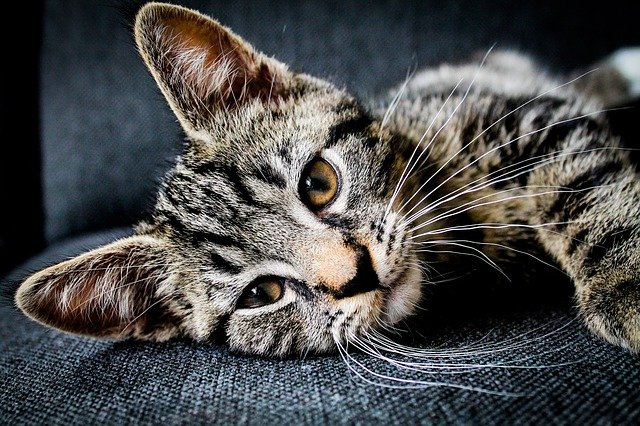
head shot of black, white, and gray cat lying on its side

Image by Pexels from Pixabay

The cruise portion of our vacation ends today. I’ll be homeward bound soon, but we’re spending a few days in Barcelona first. I mean, we’re here, and not likely to come back.

Since I couldn’t know what kind of access to cyberspace I’d have on the trip, (not to mention my decision that this trip is a vacation), I opted to revisit another post for today. This one from August of 2021.


My previous editor asked if I would read one of her debut author’s upcoming releases and provide a one-or-two-sentence “blurb.” She said it was a romantic suspense, which is a genre I’m familiar with.

Now, I don’t put much stock in author recommendations. I had to grovel for them for that first Blackthorne book, and dreaded doing it. I was an unknown with a couple of books out from a digital-first publisher. (No Amazon yet.) One author acquaintance said, “Sure. Send me three quotes and I’ll cobble something together.” Never even asked to read the book. Another said she read just enough to see that I knew what I was doing.

Nevertheless, I agreed to give the book a try.

I was reading along, my internal editor refusing to shut up, but overall, the writing was clean and easy to read. It was a little slow-moving for my taste, as the suspense element wasn’t brought in until later than I would have expected, but then … about ¾ of the way through the book …

The protagonist, who by now had received threatening emails and phone calls, came home to find a box on her doorstep. Upon opening it, she discovered the mutilated body of a cat. Not just any cat, but a stray she’d semi-adopted.

Mind you, this was not a serial killer, dark mystery/thriller type book. This was, overall, a romance with some suspense elements. And a mutilated cat.

Very early in my writing career (2004 according to my files), I attended my first writer’s conference. At a workshop given by the late Barbara Parker, she said she’d made the unforgivable mistake of having a mutilated cat show up in a box on the doorstep at the protagonist’s house. And, even worse, the protagonist had a young daughter. Parker said readers sent hate mail, and warned that killing a pet was an absolute no-no. Her book was a legal mystery, so her audience wasn’t romance-oriented, yet they still screamed.

I told her my manuscript included a character with 2 cats, and I had poisoned them (you’ll never know the delight you can light up in someone’s eyes until you holler between your office and the Hubster’s and say, “I need a way to kill a cat,” which is an entirely different story that I won’t go into here.)

My plan was to have one survive. The incident would 1) force my character to deal with emotions he’d denied; and 2) provide a critical clue for solving the overall mystery.

She gave me an emphatic “NO.” So, in the final version, both cats survived.

I passed this information on to my editor, who said she was warned against harming children or dogs, but nobody’d ever mentioned cats, and that she would bring it up with the author.

At this point, I asked a couple of my best-selling authors of romance and romantic suspense friends what they thought. I’d been slow in my read, and I knew my editor wanted my quote to appear in the soon-to-be-published book, but I was very uncomfortable putting my name on a book that would likely anger readers.

One said she refuses to blurb books anymore, saying there’s nothing to gain. (She also suggested I have my assistant be the one to tell my editor, but my dog can’t type.) The other author said “never recommend a book that you don’t love madly.” Until the cat incident, the book was good, but I wasn’t madly in love with it.

Ultimately, I told my editor I wasn’t comfortable putting my name on the book, and she said she understood, and another author she’d asked to read it said something similar. In the end, the author deleted that thread.

All right, TKZers. Floor is open for discussion, either on the harming pets topic or book blurbs in general. I know of numerous authors, who when asked, “What do you read?” will say, “About all I get to read these days are books my publisher sends for blurbs.” Are their recommendations enough to sway you to buy books? Or do you think they’re writing what their publishers want to hear? If you were asked to blurb a book, where would you draw the line?


Find me at Substack with Writings and Wanderings

Available Now

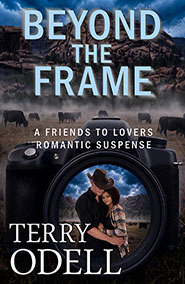
Beyond the Frame
Beyond the Frame by Terry OdellWhen the camera lies, who do you trust?

When deepfake photos threaten their careers, dog-park friends Evvie and Colton become each other’s only allies. Evvie, who vanished behind her camera years ago to escape a painful past, uncovers humiliating fake images of herself.

Colton, an insurance adjuster with ranch roots, trusts her eye on a suspicious claim. A family emergency pulls them to Wyoming—where Evvie’s own dangerous secret waits.


Terry Odell is an award-winning author of Mystery and Romantic Suspense, although she prefers to think of them all as “Mysteries with Relationships.”

Colorful Author Johnny Worthen

by Debbie Burke


Johnny Worthen author photo

Multi-genre author Johnny Worthen is a colorful character, both literally and figuratively. For his talk at the October Colorado Gold conference, he appeared barefoot, wearing a bright tie-dyed t-shirt reminiscent of the psychedelic ’60s. The tie-dye theme repeats on his business card and website, complete with photos and video of him goofing around.

It’s not a stretch to imagine Johnny in school as the class smartass. I’m guessing he drove his teachers crazy yet also earned their grudging respect because of his obvious intelligence and insatiable hunger to learn.

He graduated magna cum laude from the University of Utah and recalls: “Armed with two humanities degrees, I naturally gravitated to the food service industry.”

Similar ironic humor comes through his entire presentation along with his social media posts.

His website logline states: “I write what I like to read. That guarantees me at least one fan.”

At a later-in-life crossroads, he chucked his previous careers and experience to take up writing professionally. His work spans multiple genres: sci-fi, YA, humor, horror, mystery, and upmarket fiction. His appetite for continuous learning also led him back to his alma mater where he now teaches creative writing, sparking similar desires in his students.

Johnny’s opinions are as vivid as his tie-dyed wardrobe yet also down to earth and well-grounded in classical literature.

To open his talk, he immediately punctured glamorous illusions about writing: “Writing is not a profession. It’s a trade.” A trade, he says, that one learns by doing, not studying.

The topic of his presentation was subtext, exploring the meaning that lies beneath the surface of what’s being said on the page.

He cites surprising statistics: only seven percent of communication is verbal; 38% is tone of voice; 55% is body language, adding up to 93%. The overwhelming weight of communication is non-verbal.

His teaching style demonstrates those statistics. He asks a question. Next, he darts to and fro around the room, scanning for people who raise their hands. Then he stops in front of a person, pins them with an intense gaze, and gestures for them to answer. When they respond, he rewards them with a fist-bump or other non-verbal encouragement.

He likens subtext to Hemingway’s “iceberg theory” about dialogue. It’s the “theory of omission,” where implied elements and negative space convey the meaning of a story more effectively than words on the page.

The example he cited was the short story, “Hills Like White Elephants,” where a couple talks about a number of subjects while avoiding the most critical topic: the abortion they’re considering. The words pregnancy and abortion are never spoken out loud, but they permeate every sentence.

Johnny believes reading has never been a passive endeavor. A book requires interaction: writers create scenes that readers in turn visualize. Those scenes come to life in the reader’s own imagination.

He contrasts that experience with videos that require no interaction. A movie or TV show can play in the background whether or not anyone is watching.

Subtext can be direct or indirect, shown with irony and contrast. He refers to The Godfather as a classic example. During the baptism ceremony, while Michael Corleone vows to renounce Satan and all his works, at the same moment, jump cuts show Michael’s henchmen carrying out his orders to exterminate his gang rivals.

In the mystery genre, subtext contains clues and pieces that will ultimately solve the crime. Part of the reader’s enjoyment of mysteries is trying to fit the disparate pieces of the puzzle together. When they figure out the puzzle, they feel smart. When they don’t figure out the solution, they admire the author’s skill at misdirecting them. Either way, they’re satisfied.

Johnny laments that today’s readers often want to be spoon-fed. He’s annoyed that they don’t want to do any work to understand the meaning of a story. They want to be TOLD what’s going on, rather than figure it out for themselves based on what the author SHOWS.

He attributes much of that lack of attention to “second screen viewing.” People are often watching a film or TV show at the same time they’re scrolling on their phones. Because they’re distracted by the second screen, they need to be constantly reminded what’s going on in the film.

Johnny believes humans are “meaning-making machines.” Asking the question why is uniquely human. Animals simply accept circumstances and find ways to survive them. In contrast, humans are driven to ask why circumstances happened. Why did someone behave that way? What is the meaning behind actions and events? Why does one exist in this universe? What is the meaning and purpose of one’s life?

Early in his life, Johnny recognized words not only led him to answers but also more questions in a never-ending chain reaction. Curiosity leads to learning that leads to answers that lead to new questions.

Today, he asks those questions of others, guiding them to find their own answers in their own words.

At the bottom of Johnny’s website, he poses one last burning question:

“Why Tie-Dye? I was told at my first Grateful Dead show that you wear tie-dye not for yourself but for your friends. You’re welcome.”

Thanks, Johnny, for asking questions that caused me to ask more questions!

***

Learn more about Johnny Worthen, his books, appearances, teaching, and his tie-dyed wardrobe at his website.

***

TKZers, do you include subtext in your stories? How do you handle the deeper meaning behind the written word?

***

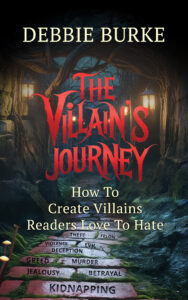
Learn how to master subtext for villains and antagonists in Debbie Burke’s award-winning book:

The Villain’s Journey-How to Create Villain’s Readers Love to Hate.


Can Giving Books Away Pay Off?

“No one has ever become poor by giving.” —Anne Frank

* * *

I occasionally give books to friends or acquaintances or as a prize for some contest or other, but I had always said I wouldn’t set my books to free on any of the retail sites. After all, I work hard to create a compelling story. I thought setting a book’s price to zero would lower its esteem in the eyes of readers.

But I hadn’t done any promotions for a while, and sales of my books had been slow, so I began rethinking the strategy of selling a book for nothing.

Understanding the Strategy

I found a post by Jane Friedman entitled “The Strategic Use of Book Giveaways and How They Can Increase Earnings Potential.” Even though the article was originally posted in 2015, it had been updated in 2025, so I took a look.

Jane references the A-I-D-A classic sales strategy when considering a give-away:

“First, get people’s attention—whether through an ad, a freebie, traditional media coverage, whatever. That creates interest. And if all goes well, you have desire and action to make a purchase later.”

She goes on to look at how you get that attention.

“The giveaway is one of the more powerful tools in the new author’s arsenal because it’s a way to get attention when you may not have anything else going for you.”

And even established authors may want to consider a freebie:

“But should established authors do giveaways? The “permafree” strategy is well-documented as an effective marketing tool—which means you make the first book in a series permanently available for free, as a gateway drug to the rest of your work.”

Making the Decision

I’m not yet convinced about setting one of my books to permafree, but the idea of attracting more readers by setting the price of the first book in my Watch Mystery series to zero was getting more appealing.

To add to my decision-making, I discovered that BookBub recently began a new type of promotion called “Free Reads,” and those promos are priced lower than their “Featured Deals” promos. That got me thinking maybe it was time to give it a try, so I submitted The Watch on the Fencepost, the first book in my Watch Mystery series, for a Free Reads deal, and BookBub selected it.

Preparing for the Promo

My books are available “wide”, on a range of retailers including Barnes & Noble, Kobo, Apple Books, Google Play as well as Amazon. The first step was to set the price to zero on all platforms, but that presented a problem. Amazon’s KDP doesn’t allow you to list a book for 0.00, so how was I supposed to change it to be free? The solution is to set the price on all the other sites to 0.00, then contact KDP and request a price match for the Kindle book on Amazon. Amazon will comply, but it may take several days.

The Results

The Free Reads promo for The Watch on the Fencepost went out on October 12, and it resulted in close to 5,000 downloads on that day on Amazon alone. And I sold a few of my other titles at full price.

As the week went on, I glanced at the Amazon book detail page and found The Watch on the Fencepost ranked #1 in Christian Suspense, #2 in Cozy Mysteries, and #10 in all free books on Amazon. And the other book sales were mounting up.

I had intended to end the freebie after a week, but I was still getting a lot of downloads, so I decided to let it go for a while longer. Although I don’t have all the data from the other sites, it appears as of today a total of more than 10,000 downloads of the book will have been completed over all five book retailers. Since I’m still getting a lot of downloads and selling other books in the process, I’m going to wait a while longer before changing the price back.

* * *

Was it worth it?

Yes. For my goals and the price I paid for the promotion, it was well worth it. Several things stand out to me:

  • Discoverability: A lot more readers know my work and my name.
  • Ratings and reviews: The Watch on the Fencepost has received more than one hundred additional ratings and reviews on Amazon since the Free Deals ad. Clearly, people are not just downloading, but many are reading and rating the book. Positive ratings and reviews plus sales volume impact Amazon’s recommendation and search algorithms
  • The sale of the other books in the series implies folks like the first one. Although I haven’t added up all the royalties yet, it appears that the income from book sales may pay for the promo.

Is this strategy for everyone?

With all the positives I mentioned above, here’s a word of caution from Jane Friedman:

“Where I think indie authors run into trouble is when they only have 1 or 2 books to sell, and they have nothing else to offer readers …  So there is no funnel or path for readers to follow. It is a dead-end road. The potential fan finishes the book, and then … you lose them. Maybe they’ll find your next book, if and when it comes, maybe not.”

Like everything else in life, making this decision depends on multiple criteria. Each of us has to weigh our writing goals against the cost and anticipated rewards from offering a freebie.

* * *

So TKZers: Have you ever offered one of your books for free? What was your experience? Do you have plans for doing a freebie in the future?

* * *


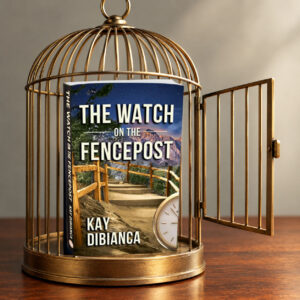
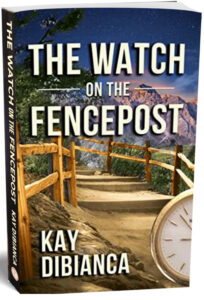
Why would someone leave an expensive watch on a fencepost? Grab your FREE copy of The Watch on the Fencepost and find out. Click the image to go to the Amazon book detail page.

Enjoy!

Act First, Explain Later

by James Scott Bell

Greetings, thrill seekers. We have another first page for critique. Give it a read and join me on the other side.

Title: PROTECTED PERSONS. Genre: Thriller.

PART ONE — NATURAL CAUSES

Prologue

Davos, Switzerland. 11:40. Pulse 61.

The Prime Minister of Canada has nine minutes to live, and he is going to spend one of them on a joke.

His name is Marc Delorme. I watch him on a television with the sound off, in a cheap hotel room across town from the World Economic Forum. It is late January. The clock in the corner of the screen says twenty to twelve.

I know when he will die because I chose the minute: eleven forty-nine, in the main hall, four minutes before the end of his speech.

The voice in my head does not choose the names, or the minute. I do. It came to me in a hospital, in a white room, after a bomb, when I could not move my hands or remember my own name. It still comes with a hum behind my left ear, low and steady, like a fridge in an empty flat. It never tells me who. Mostly it says the same few sentences it has always said, in the even voice of someone reading out a rule.

Those who stand in the way must be removed.

It must look like nature.

What they meant to say must not be heard.

The rest is my work. The newspapers tell me who stands in the way, and they are very helpful about it. They print it every week, with photographs: a face at a lectern, announcing that his country will build a network of its own and need nobody else’s. In the way of what, the voice has never said. I was a soldier for a long time, and a soldier with clear orders sleeps well.

***

JSB: We have here a promising opening salvo for an international thriller. It has a Day of the Jackal type feel. The First Person Present POV, if it holds for the entire book (I’m guessing it does not) presents some challenges (which are beyond the scope of this post). For one thing, it prevents cross-cutting to other POVs for suspense purposes. Well, not always. You can certainly mix POVs, using First Person for one character, and Third Person for others. James Patterson has done this, and he’s sold a few books.

But today we’re looking at this first page and our question is: would I want to read on?

With some tweaks, my answer is yes. So let’s tweak.

We’ve talked about prologues several times here at TKZ. See here, here, and here.

Critique group chatter often holds that editors and agents don’t like prologues, so never use them. Tush. A prologue can make a great hook if it is a scene that works well on its own.

In the past I’ve counseled writers not to use the label Prologue. Just give us the scene with no heading, then do Chapter 1 next (as in Harlan Coben’s Tell No One). I read a thriller that started with 0 (a prologue scene), then came 1, 2, 3 etc.

Your book has Parts, so that’s necessary to label. My advice is to ditch the word Prologue.

That leaves you with the place/time stamp. That’s fine. I was thrown by Pulse 61 at first, then figured it’s the narrator describing his own. This seems needlessly confusing. If the guy is tracking his own pulse, let him tell us in the narrative. Maybe this is to be a recurring stamp. If so, I’d get tired of it.

The Prime Minister of Canada has nine minutes to live, and he is going to spend one of them on a joke.

I’d cut the last part. The Prime Minister of Canada has nine minutes to live. Boom. Let it stand alone. The part about the joke dilutes the impact.

His name is Marc Delorme. I watch him on a television with the sound off, in a cheap hotel room across town from the World Economic Forum. It is late January. The clock in the corner of the screen says twenty to twelve.

Good. You’ve given us the essential setting for the narrator, and main event, the World Economic Forum.

I know when he will die because I chose the minute: eleven forty-nine, in the main hall, four minutes before the end of his speech.

I’m interested. How has the narrator chosen the time, and how will he pull it off?

The voice in my head does not choose the names, or the minute. I do. It came to me in a hospital, in a white room, after a bomb, when I could not move my hands or remember my own name.

Good, marbled-in backstory. Some teachers say “No backstory in the opening!” I don’t subscribe to that. But I do counsel using it sparingly in the first few pages so it does not slow down the action. Here we have a guy who survived a bomb and gets a voice in his head. Voice? What’s that about? At this point it is a mystery, and that’s how I’d leave it for the moment. Unanswered questions are a great way to make a reader turn the page. You can reveal more about the voice later.

Give us some action now. You can save the rest of this page for later. But let’s have a look anyway:

It still comes with a hum behind my left ear, low and steady, like a fridge in an empty flat. It never tells me who. Mostly it says the same few sentences it has always said, in the even voice of someone reading out a rule.

Those who stand in the way must be removed.

It must look like nature.

What they meant to say must not be heard.

I like a fridge in an empty flat. That’s a great way to describe this mysterious voice.

For the three lines of the voice, I’d go ahead and use italics. Italics can be helpful, IMO, unless they come in big blocks. Yours do not. Italics would help readers “hear” the voice.

The rest is my work. The newspapers tell me who stands in the way, and they are very helpful about it. They print it every week, with photographs: a face at a lectern, announcing that his country will build a network of its own and need nobody else’s. In the way of what, the voice has never said. I was a soldier for a long time, and a soldier with clear orders sleeps well.

This paragraph is all exposition, and we don’t need it yet. My axiom is: Act first, explain later. What this first page needs is a character in motion, not in explanation.

All that said, I am intrigued. We have an impending assassination on a world stage, and a guy who hears a voice, and who is somehow going to make this happen. I would turn this page.

How about you, TKZers?

That Time I Worked At A Haunted Library

Happy Halloween! Tonight is the culmination of the “Spooky Season,” when the eerie, the suspenseful, and the down right horrific hold court in many imaginations. There’s a chill in the air here now, does it portend something more? Halloween and ghosts go together, which reminds me of the time I once worked at a supposedly haunted library.

Back in the early 2000s I worked at the North Portland branch library, while my “home” branch was getting a brand-new building. North Portland was a lovely old Carnegie endowment building built in 1913, in the Jacobethan style with a peaked roof, lots of dark walnut, especially the arched and planked wooden ceiling.

I arrived at the beginning of December 2001, to help staff the reference desk, and also teach computer classes and give “pop-up” story times for kids in the main room. It was lively library, with a high school next door, and a diverse community that needed and loved their branch. “Never a dull moment” described North Portland library to a tee.

I had no idea that the branch was supposedly haunted.

The upstairs level, where the manager and youth librarian offices and the meeting room were, seemed to be the places mostly likely to have spectral apparitions, especially at night when the lights were out in the offices and after the computer lab in the meeting room had closed. Usually the apparitions were “just” noises, but sometimes people claimed they felt the touch of something invisible, or had a sensation of someone close by, only to discover there was no one else there.

The weirdest part was where the ghostly epicenter of the haunting was located: in of all places, the upstairs restroom. A wall-mounted hot air hand dryer would suddenly turn on when no one was in the restroom. The sound of the dryer’s blower echoing down the dark walnut staircase and into the main room of the library sent a chill up my spine the first time or two I heard it, but the veteran staff were used to it and just shrugged at the noise.

The unit was serviced numerous times, but it still activated when no one was in the rest room. A couple of times it was dismounted and sent to the repair shop. Each time it was tested and then returned and remounted.

It continued to turn on at odd times, often at night. Chances are it was just hard-to-fix faulty wiring, or a perhaps the dryer’s push button simply received too much wear and tear too fast and triggered on its own. Perhaps it was simply air pressure from the door being closed after someone had left the room.

Or was it the Little Chapel of the Chimes funeral home just across the street from the branch? Some people claimed it was a restless spirit or two coming over for some spectral shenanigans.

The funeral home has since closed and is now a pub. Last I’d heard, it wasn’t haunted. I haven’t heard anything recently about apparitions at the library either.

Perhaps a festive public house, with good cheer did the trick. Or perhaps there never were ghosts or a haunting. Either way, it’s a fun story and a fun place to have worked at.

Have you ever encountered a location said to be haunted? If so, please tell us in comments.

(A slightly different version of this story appeared previously in my author newsletter.)

Dumb Criminals On Halloween

Since Saturday is Halloween, I thought I’d post a few crimes involving dumb criminals celebrating the holiday, whether it’s Halloween or not. Here’s the first one:

One clown shy of a full load.

AI generated

On July 20, 2019, motorists in Westminster, California, a black BMW drove north along the fast lane of the 405 freeway at a mere 2 to 3 miles per hour. On the roof of the car was a clown. More specifically, a man in a clown mask and a green wig, sat on top of the car. Police soon came to pull the luxury clown car over, but that’s when the clown decided to speed up. He fled up 405 at around 70 miles per hour, pursued by California Highway Patrol officers. The clown drove onto the 90 freeway before deciding to make for Venice Beach. At one point during this part of the chase, he climbed back onto the roof of the BMW and “began gesturing” at the police officers chasing him. Finally, the car stopped on the Ocean Front Walk, and the clown fled the vehicle, heading onto the beach. There, he interacted with unaware beachgoers, even stopping to help bury someone in the sand. After that, he took off his shirt and headed into the water. It was at this point that the police caught up with the clown and arrested him.  A woman who was also in the BMW was questioned but ultimately released, and the chainsaw turned out to be a toy. The man’s motive for the bizarre incident was unclear. His bail was set at $75,000 while he awaited a court date.

What is it with clowns dressing like it was Halloween?

On the evening of February 6, 2016, a Jefferson County, Alabama, deputy was flagged down by a passing motorist. The concerned citizen had just witnessed a red Ford SUV lurching and weaving all over the road. The deputy soon caught up with the loopy Ford and pulled it over. At the wheel, he found a tipsy clown.

The driver was clearly quite drunk. He claimed that he’d only had a few drinks at a nearby restaurant. It remains uncertain what his definition of “a few” was. The drunk driver provided no explanation for why he was dressed as a clown.

He was arrested, and it turned out that he also had an outstanding felony warrant for theft. Despite his troubles, when he was photographed for his mugshot, he smiled for the camera. The chief deputy just shook his head and said, “I thought I had everything, but obviously I haven’t seen it all.

No clown here, just a unicorn

created with AI

March 16, 2019, a young man set out to rob a convenience store in Baldwin, Maryland, a small community not far from Baltimore. He presumably knew surveillance cameras would capture the incident, so he needed a disguise. He chose a pink and white unicorn costume.

At 5:00 AM, he walked into High’s Dairy Store, dressed in costume and brandishing a crowbar. He used the crowbar to smash a register before leaving with cash and cigarettes. After obtaining the loot, Rogge ditched the unicorn costume and got into a silver Hyundai Elantra driven by his accomplice. The car fled the area.

This daring escape was not to last, however. The two men hadn’t gone far before the driver crossed into oncoming traffic at an intersection. As a result, the car managed to make contact with mailboxes, a Baltimore Gas and Electric pole, shrubs, and a boulder before finally hitting a tree.

The two men were taken to nearby hospitals and upon release, both men were charged with theft, robbery, and armed robbery, destruction of property and first- and second-degree assault. Baltimore County police were able to recover the unicorn suit.

So there you have it, TKZer…dumb criminals, dumb crimes, and they don’t wait until Halloween to show out. Readers, what’s a dumb crime you’ve read about? Or, dare I ask — what was the craziest thing you did on Halloween?

Quotable

“There is no finer form of fiction than the mystery. It has structure, a story line and a sense of place and pace. It is the one genre where the reader and the writer are pitted against each other. Readers don’t want to guess the ending, but they don’t want to be so baffled that it annoys them. … The research you do is crucial. In mystery fiction, you have to tell the truth. You can’t fool the reader and expect to get away with it.” – Sue Grafton

Change One Word And
The Whole World Opens Up

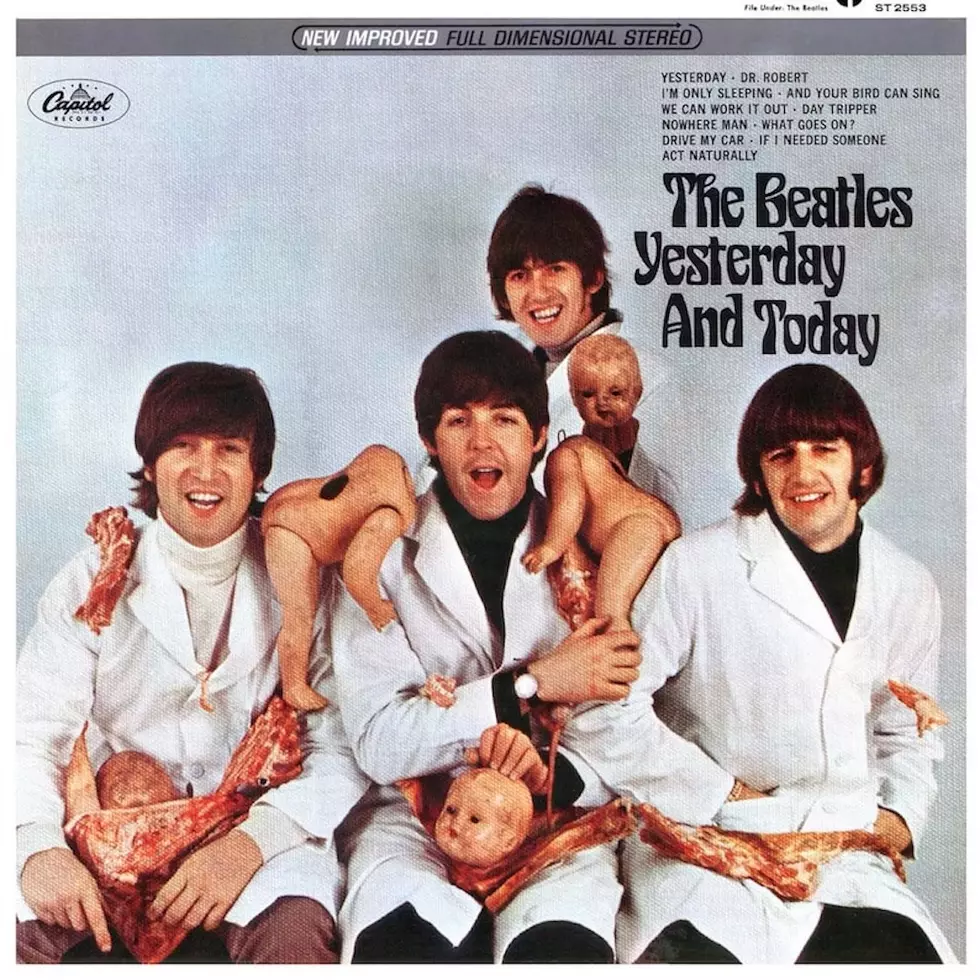
Original The Beatles <I>Yesterday and Today</I> Album Cover

“Scrambled eggs, oh, my baby, how I love your legs” — original lyrics for opening of Yesterday, as written by Paul McCartney.

PJ Parrish

My husband is a Tom Petty freak. So in the interest of marital bliss, I have come to know alot about Tom Petty and The Heartbreakers. Alas, never saw him in person but I have been dragged to more Petty cover groups than I can remember — including a really fabulous tribute band called The Traveling Milburys.

I’ve come to really like Petty’s music. And I now recognize that he is one of rock’s greatest lyricists.  As his biographer Warren Zanes wrote, Petty was not “the intellectual gymnast that Elvis Costello was, never as grandly romantic as Springsteen. Petty nonetheless got in there a little deeper than the others.”

I’ve come to envy Petty’s way with words. He had an emotional economy, packing more punch with fewer lines than even Dylan. As Zanes says, he was the kind of writer who “could set up a story in a couple of words.”

She was an American girls, raised on promises…

And this one’s dear to my wrtier’s heart: He had a true love of ambiguity, never hitting you over the head, never telling you what to feel. He gives the listener (or reader) more space to breathe and imagine. I always liked Petty’s song “A Room At The Top,” When I first listened to it, I felt uplifted. Until I really listened.

I got a room at the top of the world tonight
I can see everything tonight
I got a room where everyone
Can have a drink and forget those things
That went wrong in their life

Petty called it the most depressing song he’d ever writtten. But you know, it depends on your mood when you hear it.

Petty also had a gift for channeling his own life and North Florida background. This came to fruition in the Southern Accents album, where he felt free to leave behind “good rock and roll songs…and push beyond.”

There’s a Southern accent where I come from/ The young-uns call it country, the Yankees call it dumb/ I got my own way of talking but everything is done/ with a Southern accent where I come from.

Don’t we all need to push beyond? Don’t we all need to write with our own accents? And if you’ll allow me, one more note about the song “Southern Accents.” In it, the bridge is a visitation in which his dead mother arrives to her grieving son:

For just a moment, I was dreaming/ For just a moment it was oh so real/ For just a moment she was standing there, with me.

That was the power of Petty’s poetry — its emotional universality. I relate to that song not because I am Southern. But because I once had a transcedent visitation from my mother not long after her death. And I used that feeling to write a scene in one of my books when my protagonist is trying desperately to come to terms with his mother’s passing.

Petty also had an uncanny habit of finding the right word. And I know we all struggle with that. We might slip in a “holding” word or phrase until we can get unblocked. We’ve all slipped some scrambled eggs into our books. But Petty didn’t like to settle,

The other night, my husband and I drove through a pouring rain to Elk Rapids to see yet another Petty cover band. They played a song I didn’t know called “You Wreck Me.” It’s an exuberant rocker that ends the show. Petty originally wrote it as “You Rock Me.”  He realized what a pathetic cliche that was and changed ONE WORD.

It completely shifted the emotional weight and meaning of the song into a raw ode to a turbulent, high-energy romance. He did something similar with his iconic song “Mary Jane’s Last Dance”

His original lyrics were: “Hey, Indiana girl, go out and find the world.” After coming to the conclusion that “Indiana girl” was too clunky and awkward, Petty changed the lyrics to “last dance with Mary Jane, one more time to kill the pain.” Is Mary Jane a forgotten love or something else that kills the pain?

Well, shoot, Enough about Tom Petty. Because, as you can see, I have become an acolyte. And there is nothing more boring than the newly converted.

Let’s have some fun. Here are other examples of songs that were saved from the scrapheap — and from themselves.

Little Richard was no stranger to potential censorship. He changed the original, hypersexual lyrics of his signature hit, “Tutti Frutti”, to be more modest and radio-friendly. The original lyrics were “If it don’t fit, don’t force it / You can grease it, make it easy” became “Tutti Frutti, aw rooty / Tutti Frutti / aw rooty.”

While working on the Let It Be album, Paul McCartney was disgusted by the racist rantings of a British politician Enoch Powell. He wrote his frustations into the song “Get Back”

“Meanwhile back at home too many Pakistanis/ Living in a council flat/ Candidate Macmillan, tell us what your plan is/ Won’t you tell us where you’re at?”. 

He wrote it as an attempt at satire, but the verse was cut and the song defanged into a vague track about a guy named Jojo. The episode illustrates how tough it was (still is?) for artists to navigate social commentary.

On a lighter note, McCartney and Lennon often clashed as collaborators. Paul could be cloyingly pop and John stubbornly obtuse. But John did, early in their partnership, save Paul some cringy embarrassment. Here’s Paul’s original opening from “I Saw Her Standing There:”

“She was just seventeen, she’d never been a beauty queen.”

John changed it to: “She was just seventeen. You know what I mean.”

Which is great, because we DON’T know what he means. Or do we? Again, ambiguity can be your friend.

I’ll give the last word to Petty’s biographer Zanes: “That’s a writer’s genius. Just change one word [or phrase] and the whole song opens up.”

Keep that in mind, crime dogs, as you go rewrite chapter 15.

__________________

Postscript: The photo opening the post, as many of you will recognize, is the infamous “butcher” cover for The Beatles album Yesterday and Today. It was considered too grotesque at the time (Lennon wanted it as a statement against the Vietnam War). So they scraped it. If you happen to have a pristine sealed copy, it’s now worth $100,000.