
By Jordan Dane
@JordanDane
Sorry for the delay in posting. I just got back from the trip from traveler’s hell. I had a speaking gig in the beautiful Madison, Wisconsin, but the weather on departure day resulted in our flight being cancelled. It took us two days to get back. I felt like I was in a John Candy & Steve Martin movie, without the trains.
For this post, I wanted to share my recent experiences with creating an audio book for my YA debut, In the Arms of Stone Angels. My publisher omitted audio rights from my contract, which gave me an opportunity to try Audiobook Creation Exchange (ACX), a site from Audible that I learned about through the International Thriller Writers (ITW). Others using ACX are: Neil Gaiman, M. J. Rose, award winning voice talent Tavia Gilbert, Tantor Audio, and Random House (a key ACX launch partner). ANY narrator with a home studio (or access to a studio) can be listed as a voice actor and audition for work.
ACX provides a central location where authors, publishers, agents, narrators, studio producers, and other rights holders can match up projects to create an audiobook for distribution through Audible (and elsewhere) under two different royalty models.
Parties can create a profile of the project for others to see. Narrators can audition, audiobook publishers can express interest, producers can make offers, and rights holders don’t have to let their rights languish. Setting up a profile is easy. I started the project in July and listed my book. Within a short while I had narrators auditioning, but I waited to see if I could get an audiobook publisher or producer interested, since I had no experience with this.
Narrators can be their own producers. I could have been more aggressive about seeking narrators and sending them a message through ACX, but I waited to see what would happen. In October, Audible added a stipend incentive to my project, meaning they offered to subsidize a producer to create my book by giving them $150/finished hour (up to $2500) for a 10-hour completed project. This stipend flag brought more auditions and producers to my project. The stipend had a deadline so Audible could get my book by year end for the holidays.
Once I decided to be more proactive in pushing my project, I decided on a narrator who had experience, awards, and a solid producer to go along with her voice actor talent. The steps from there are all online. I extended the offer, based on a royalty sharing model with my narrator, so I wouldn’t have to shell out money. The Audible stipend helped entice the narrator and producer I chose. Royalty rates will vary depending upon whether you give Audible exclusive or no-exclusive distribution rights. You decide how this can work and set it up. For more details on how ACX works, click HERE. For FAQ, click HERE.
Once I extended the offer and the deadlines ACX wanted for the stipend, I got a standard agreement printed through ACX between the parties, and my narrator had her deadline for acceptance (up to 72 hours). I talked with my narrator on the phone to share my thoughts on my central character, to help her create the voice of my teen girl, sent my book in PDF for her to read, and a 15-minute narration came within 5 days for my approval. In 60 days, I will have a finished audiobook to approve, but Audible will also act as a quality control checkpoint. If you opt for Audible to be your distributor, your book will be set up for distribution through Audible, Amazon, and iTunes. If you don’t give Audible exclusivity, you can distribute your audiobook anywhere you want to go.
I’m very excited to “hear” the voice of Brenna Nash, my character, through my award-winning narrator, Michelle Ann Dunphy. ACX has been very easy to use and I like the control aspects I keep with this project. I’m working with my German cover designer to develop the audiobook cover now. ACX is self-publishing for audio.
If you’re an author, do you retain your audio rights? How many of you like to listen to audiobooks? I love them for long road trips and for camping, listening to a story over a blazing fire.
Keeping a Dirt File
For mystery writers, having a dirt file is akin to keeping a gold mine in your house. What is it? I’m referring to a folder full of clippings you’ve taken from the newspaper or magazines that may be relevant to your work someday. I get out a pair of scissors whenever I read a paper copy of the Sunday newspaper. A recent issue’s headline caught my eye: Bomb Case Awash in Mystery. 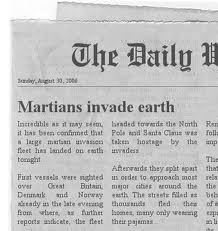
As soon as I saw mention of a pipe bomb found under an SUV in a suburban neighborhood, I knew I’d hit gold. Suspect A noticed something strange under his car. It turned out to be a homemade bomb. He accused his wife’s lover of planting the device. This man, suspect B, said that he was framed by Suspect A and the wife. But it didn’t help his claim of innocence when the wife was found to have a $500,000 life insurance policy on her husband. Then the lover’s DNA was found on the bomb. But was it rigged to go off, or was it set as a false trail? To complicate the issue, police discovered videos of Suspect B and his stepdaughter having sex. Oh, man. I couldn’t have made this up! You know how truth is stranger than fiction? Here’s a perfect example.
When might I use this information? When I’m determining the suspects in my next mystery. I’m always looking for motives and secrets people may hide. Or an article like this might kick off a new plot. Think about the puzzles here. It seems an open-and-shut case about the wife and her lover trying to do away with the husband. But what if it’s really the husband and wife trying to frame the lover? Why would they do that? What if…? And here we go. Our imagination is off and running.
Stockpiling clippings doesn’t only apply to the mystery genre. For my science fiction romances, I obtain articles on futuristic technology, whether it’s on flying cars or electromagnetic weapons. Even the power of invisibility has a basis in reality. I have articles to show for these topics. I also cut out stories of true adventure travel. You never know when my hero might have to explore a volcanic crater or traipse through a jungle. Even off the beat pieces that tickle my fancy go into a general research file. You might need inspiration and one of these printouts could fire your imagination.
So are you a crazy clipper like me? I make sure my husband reads the newspaper first before I put holes in it. What kind of dirt do you look for?
Ugly Babies
By PJ Parrish
If you could go back and change things, would you?
Not your life. Your first book. That thing that burst from your heart and took flight and lifted you up there with it, making you feel on top of the world.
Until, maybe, you went back and read it again.
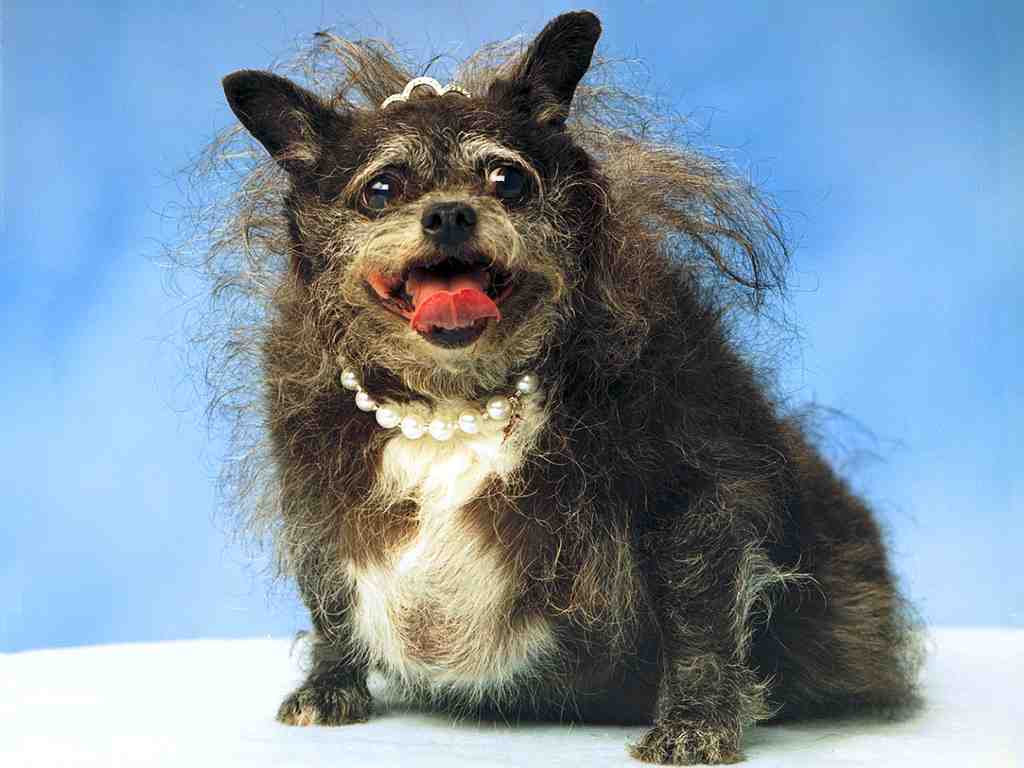
Did you still love it? Or did you see its little warts and uneven gait? Did it seem to maybe need a little grooming or a good flea-dip? If you had the chance, would you try to clean it up so it would be more…adoptable?
Our first book was DARK OF THE MOON. It’s a good story that we’re proud of. It got some great blurbs and reviews. But it got one bad review from Kirkus, which is the Life cereal of the publishing world. (“Give it to Mikey, he hates everything!”). Here is part of what Kirkus said:
“Clumsy prose, stereotyped people and a first novelist who has to learn that in plotting the twist is better than the wrench.”
I’ve submitted this review every year to Thrillerfest’s worst review contest but I keep losing to folks like John Gilstrap. The prize is fossilized poop. I really want that damn award.
Here’s the thing: We own the eBook rights to DARK OF THE MOON so my sister Kelly and I started formatting it for Kindle et al. As we were going along, we realized we could tweak things here and there if we wanted. So we started tweaking.
Then we realized it needed more than a tweak. It needed a full-bore heavy-muscle pipe refitting with one of those giant wrenches you see hairy men with butt cracks carrying out of Home Depot.
Here’s the second thing: As good as our freshman book is, it contains transgressions that now, twelve books later, we teach would-be writers in our workshops not to do.
It has heart but no head. That means we wrote with great passion, especially for our hero Louis, but we didn’t have complete control over our craft. What were our sins exactly?
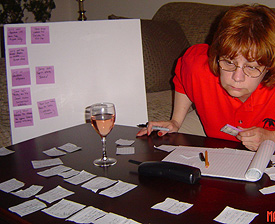
STRUCTURE: We switched point of view in mid scenes. Our transitions between chapters had continuity lapses. We had too many unnecessary scenes “on camera” often showing things we had already covered. And our timeline was confusing. We now keep detailed chronologies and use big story boards to keep track of each “day” in our plot. See picture above of Kelly employing our two vital writing tools –- Post-Its and wine.
CHARACTER: We veered into stereotypes, an easy thing to do when writing about the Deep South, and we used clunky dialect. Our fictitious Blackpool was also a one-dimensional character. Even the rattiest place on earth has something redeeming about it. We chose not to see it.
THEME: This might have been our biggest sin. We now believe that every good book has a theme, an underground railroad on which your plot progresses. Without a theme, you have nothing to say. Although we were writing about the effect of a 30-year-old lynching on a small southern town, we didn’t really connect this plot to the larger question of what this meant for our hero.
We didn’t ask ourselves the most important question we now ask of every character we create: What does Louis want? It wasn’t that he wanted to identify the lynching victim. It wasn’t even that he wanted to bring the murderers to justice. We didn’t realize that what Louis really wanted was to find his sense of home (and “home” meant his identity as a biracial man). Now this theme colors everything Louis does and every book we write.
So if this book is so awful, why are we putting it out in eBook?
It’s still a good book and readers like it. They forgive us our sins. But for now, we have put it aside and are readying our second book DEAD OF WINTER for eBook. See, we learned a lot by the time we started that one, just as parents learn a lot about babies by the time their second one comes along. DEAD OF WINTER must have been okay. It was an Edgar finalist.
But our first born? I remain undecided, reluctant to send this homely thing out into the world a second time. But my sister, who holds the book much closer to her heart than her writing brain, is not so sure about permanently closing the DOM yellow folder. It is, after all, the story that started a series and career, but also changed our relationship as sisters.
And when something is that special, as writers it’s had to let it just lay unloved and unread by our loyal readers. So, I am sure, one day when we are between books and novellas and conferences, Kelly will convince me to reopen DARK OF THE MOON and together, we will begin the necessary surgery. Maybe with a scalpel instead of a wrench.
Blue Pencil Sessions
Just a few short years ago, I began attending writers’ conferences as an unpublished newbie—tentative, worried that I wasn’t a “real” writer, afraid of taking up the valuable time of published authors with my utterly basic questions about the business and craft of writing. I’ve since come to realize that the attendees are friendly and open to meeting new people, everyone who writes is a real writer—whether they’re published or not—and published authors are there because they want to share their hard-earned knowledge with those learning the ropes.
Now I’ve just returned from the Surrey International Writers’ Conference, attending a conference for the first time as an invited speaker. This time I went with a whole new set of worries—would I have anything useful to say, would I be able to speak for ninety minutes about topics that I feel I’m still learning, would the organizers think they’d made a big mistake by allotting a precious speaking slot to me? (I should have realized from the beginning that all this worry meant I was a real writer).
My new worries turned out to be as unfounded as my old ones. Many of the attendees who came to my workshops told me afterward how much they got out of them. I had so much to say in both of my workshops that I had to race to finish at the end (ironic, since one of the workshops was on pacing in novels). When I get the written evaluations, I’ll have a better idea of whether I’ll be invited to return (which I’d love to do, if any of the conference organizers are reading this).
But the one part of the conference I was really dreading was the set of three blue pencil sessions I had been scheduled for. SiWC is unique among the conferences I’ve attended in that they ask all the presenters to set aside time for attendees who would like an assessment of a few pages of their work. I didn’t ask, but I imagine they’re called blue pencil sessions instead of red pencil sessions because they’re intended to provide constructive critiques in an encouraging way.
I wasn’t dreading the sessions because I thought they would be dull or tedious. I was dreading them because I didn’t know if I was qualified to give feedback on other people’s work, and I didn’t want to dash anyone’s dreams when I saw something that needed to be edited. I know how hard it is to show a stranger the story you’ve spent hours crafting, hoping that you’ll hear how wonderful and skillful your story and voice are, but prepared for the eye-rolling and tsking over poor writing that you fear will be the first thing out of the reader’s mouth.
I’ve been that newbie writer, so I know how much courage it takes to approach me now sitting on the opposite side of the table, me with the presumed authority of just over two years as a published author. A very short two years from my end.
So I did my best to read the samples carefully and dig into what was and wasn’t working for me. I did my best to provide encouragement no matter how raw the writing was. I did my best to make those fifteen minutes count for both of us.
It ended up being one of my favorite parts of the conference. I enjoyed the one-on-one discussions with authors. I could see it in their eyes that what I was saying was meaningful to them, that they felt I was helping them to improve their work in whatever small way I could. And I learned as much as they did about what it takes to become a better writer.
That exchange was what was so great about the conference. The attendees might have thought that they were the ones there to learn, and I’m sure they left with an education and memories that will resonate for many years. But as a first-time instructor, I might have gotten even more out of the experience than they did.
Baloney Advice Writers Should Ignore
Some time ago I cheekily posted the three rules for writing a novel. It produced a spirited discussion on what is a “rule” and what is a “principle,” but by and large there was agreement that these three factors are essential to novels that sell.
Today I’d like to discuss some writing advice writers would do well to ignore.
Where does such advice come from? I have a theory that there is a mad scientist in Schenectady, New York, who cooks up writing advice memes and converts them to an invisible and odorless gas. He then secretly arranges for this gas to seep into critique groups across the land, infecting the members, who then begin to dispense the pernicious doctrine as if it were holy writ.
I now offer the antidote to the gas.
1. Don’t start with the weather
Verdict: Baloney
This meme may have started with Elmore Leonard, who once dashed off a list of “rules” that have become like sacred script for writers. If his advice were, “Don’t open a book with static, flat descriptions” I would absolutely agree.
But here is why the rule, as stated, is baloney: weather can add dimension and tone to the opening disturbance. If you use it in that fashion, weaving it into action, it’s a fine way to begin.
Look at the opening of Bleak House by Dickens, or the short story “All That You Love Will Be Carried Away” by Stephen King. Or the quieter beginning of Ann Lamott’s Blue Shoe. All of them use weather to great effect. Here’s a Western, Hangman’s Territory, from a great writing teacher, Jack Bickham:
The late spring storm was breaking. To the east, boiling blue-gray clouds moved on, raging toward Fort Gibson. To the west, the sun peered cautiously through a last veil of rain, slanting under the shelf of clouds and making the air a strange, silent bright yellow. The intense, muggy heat of the day had been broken, and now the early evening was cool and damp, and frogs had magically appeared everywhere in the red gumbo of the Indian Nations.
Eck Jackson threw back the heavy canvas under which he had been waiting. His boots sank into the red mud as he clambered out of his shelter between two rocks and peered at the sky.
If you think of weather as interacting with the character’s mood and emotions, you’re just fine to start with it.
2. Don’t start with dialogue
Verdict: Baloney
Starting with dialogue creates instant conflict, which is what most unpublished manuscripts lack on the first pages. Sometimes this rule is stated as “Don’t start with unattributed dialogue.” Double baloney on rye with mustard. Here’s why: readers have imaginations which are patient and malleable. If they are hooked by dialogue, they will wait several lines before they find who’s talking and lose absolutely nothing in the process.
Examples:
“TOM!”
No answer.
“TOM!”
No answer.
“What’s gone with that boy, I wonder? You TOM!”
No answer.
The old lady pulled her spectacles down and looked over them about the room . . .
– (Mark Twain, The Adventures of Tom Sawyer)
“Any thoughts that you’d like to start with?”
“Thoughts on what?”
“Well, on anything. On the incident.”
“On the incident? Yes, I have some thoughts.”
She waited but he did not continue. He had decided before he even got to Chinatown that this would be the way he would be.
– (Michael Connelly, The Last Coyote)
“Name?”
“Robert Travis.”
“Occupation?”
“Mining engineer.”
“Place of residence?”
“Seventh Base, Jovian Development Unit, Ganymede.”
“Reason for visiting Luna?”
“I’m checking on performance of the new Dahlmeyer units in the Mare Nublum fields. We’re thinking of adapting them for use in our Trendart field on Ganymede.”
“I see . . .” The port inspector fumbled through my papers. “Where’s your celemental analysis sheet?”
– (Dwight V. Swain, The Transposed Man)
3. No backstory in the first fifty pages
Verdict: Spam (a step up from baloney)
If backstory is defined as a flashback segment, then this advice has merit. Readers will wait a long time for backstory information if something compelling is happening in front of them. But if you stop the forward momentum of your opening with a longish flashback, you’ve dropped the narrative ball.
However, when backstory refers to bits of a character’s history, then this advice is unsound. Backstory Bits (I call them BBs) are actually essential for bonding us with a character. If we don’t know anything about the characters in conflict, we are less involved in their trouble. (Read Koontz and King, who weave backstory masterfully into their opening pages).
I’ve given writing students a simple guideline: three sentences of backstory in the first ten pages. You may use them together, or space them apart. Then three paragraphsof backstory in the next ten pages, together or apart.
I’ve seen this work wonders for beginning manuscripts.
4. Write what you know
Verdict: Baloney
Sounder advice is this:
Write who you are.
Write what you love.
Write what you NEED to know.
5. Don’t ever follow any writing advice
Verdict: Stinky baloney
There may be a few literary savants out there who can do this thing naturally, without thinking about technique or craft. And those three people can form their own group and meet for Martinis.
Every other writer can benefit from putting in some time studying their craft. I’ve heard some writers say they don’t want to do that for fear of “stifling” the purity of their work. Some of them get a contract and their books comes out in a nice edition that sell 500 copies. And then they get bitter and start appearing at writer’s conferences raging how there is no such thing as structure and you’ve all wasted your money coming here, and you should just go home and write. (This has actually happened on several occasions that I know of).
So here is my final bit of advice for today: don’t be that kind of writer.
My Hemingway Connection
by Mark Alpert
As I mentioned in my last post, I take my family to northern Michigan every summer to visit my in-laws, who have a place on Little Traverse Bay. A few years ago my father-in-law casually asked me, “Would you be interested in meeting Ernest Hemingway’s nephew? He’s a heck of a nice guy.” Well, of course I was interested! Hemingway is a touchstone for all writers of fiction, but his influence is particularly strong for thriller writers. His short story “The Killers” is often cited as one of the first examples of “hard-boiled” fiction (although some academics argue that it was Dashiell Hammett who influenced Hemingway and not vice-versa). What’s more, after all our time in northern Michigan I felt a bit of geographical kinship with Hemingway, who spent the summers of his youth at his family’s cottage on Walloon Lake, just a few miles from Little Traverse Bay. The area became the setting for most of the Nick Adams stories as well as The Torrents of Spring, Hemingway’s early novel set in Petoskey, Michigan.
Hemingway’s favorite sibling was his sister Madelaine, nicknamed Sunny, who was five years younger than Ernest. She was the model for Littless, Nick Adams’s devoted younger sister in the unfinished story “The Last Good Country.” When she had a son in 1938. she named him after her famous brother. Ernest Hemingway Mainland, though, didn’t become a writer; instead he went into the insurance business in Petoskey. My father-in-law got to know him because they were both members of the Petoskey Rotary Club.
We set up a lunch to meet Ernie Mainland and his wife Judy. I’m happy to report that they’re wonderful people. Ernie has a face like his uncle’s, squarish and ruddy. The resemblance is especially striking if he’s growing a beard. He’s also a terrific storyteller. Although he hasn’t written any famous novels, he’s passionate about his family’s history, and he’s invested lots of time and energy in the restoration of Windemere, the Hemingway summer cottage, which Ernie inherited. Over lunch he told us the story of how he rebuilt the cottage’s porch, taking great care to match the way it looked during Hemingway’s boyhood. I asked Ernie what he remembered about his uncle, but he didn’t have much to say about that; he met Hemingway only once, during a visit to Cuba when Ernie was nine years old. Still, it was a great lunch, and at the end Ernie promised to invite us to Windemere the following summer.
This was a rare opportunity. Windemere isn’t open to the public. So when the next summer rolled around, my wife and I happily accepted Ernie’s invitation. The best moment, as I remember it, was taking that first step into the cottage and seeing the fireplace in the center of the room. I really felt like I’d just stepped into a Nick Adams story. Specifically, “The Three-Day Blow,” the story in which Nick and his best friend Bill get drunk on whiskey while talking about Nick’s breakup with his girlfriend Marjorie. On the cottage’s walls are all sorts of amazing things: oil paintings done by Hemingway’s mother, pencil lines showing Ernest’s height at various ages, a battered medal worn by Hemingway when he was wounded in Italy. There are also shelves holding century-old books and pamphlets, the eclectic collection of reading materials that young Ernest probably perused during rainy summer afternoons when he wasn’t hunting or fishing or carousing. As I gazed in wonder at the shelves, an idea occurred to me. I’d brought along copies of my own novels as gifts, so I asked Ernie to shelve them next to Hemingway’s. That was deeply satisfying.
Last year Ernie told me that the Hemingway Society was going to hold its 2012 conference in Petoskey to celebrate the author’s ties to northern Michigan. It was an academic conference, with most of the talks given by professors and grad students, but I really wanted to participate. As it turned out, it wasn’t that difficult to get invited; I just proposed a topic — “Hemingway and the Modern Thriller” — and they put me on the schedule. (They identified me as an “independent scholar,” which was very generous.) I was planning to speak extemporaneously, which is what I do when I talk about my novels, but my professor friends were aghast. “You can’t just wing it!” they said. “You have to deliver a paper!” So I wrote a ten-page paper analyzing Hemingway’s influence on Lee Child. Although I don’t know Hemingway nearly as well as the academics do, I figured I was better versed on bestselling thrillers, so I could pretend to be an expert.
The paper was a big hit. I got lots of laughs, and not all of them were at my expense. But the real highlight of the summer came a couple of months later when Ernie and Judy invited us to Windemere again. This time we brought along our kids, and Ernie entertained them by letting us fire his signal cannon. It’s the kind of cannon typically used to start a sailing race; you load it with blank shells and fire it by pulling on a string. (And don’t forget to cover your ears!) While we played with the miniature artillery piece, Ernie told us a story about how it had proved useful. Not so long ago, he said, a pontoon boat full of partying vacationers was looking for an anchorage spot along the shores of Walloon Lake. Now, it’s not so pleasant when one of those party boats is anchored near your property. The noise kind of spoils the idyllic atmosphere. So when Ernie saw the boat approach his shoreline, he brought out the signal cannon and fired it from his porch. The boat’s captain wisely chose another location.
The story reminded me of Hemingway. Ernie had inherited his uncle’s cheerful pugnacity. It was a delight to see.
Reader Friday: Which literary character would you be for Halloween?
It’s mid-October, and we’re getting in the mood for Halloween….
So, which literary or thriller character would you choose to be for Halloween? Jack Reacher? Jack the Ripper? Jacqueline de Bellefort from Death on the Nile?
To get your inspiration engines started, here’s a link to some literary character costumes squidoo.com
And some more female characters…
http://sweet-green-tangerine.blogspot.com/2012/10/thebookchat-literary-costume-ideas.html?showComment=1350347463066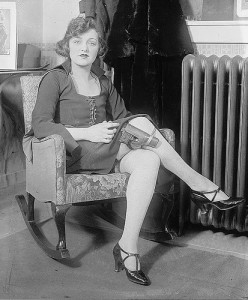
http://sweet-green-tangerine.blogspot.com/2012/10/thebookchat-literary-costume-ideas.html?showComment=1350347463066
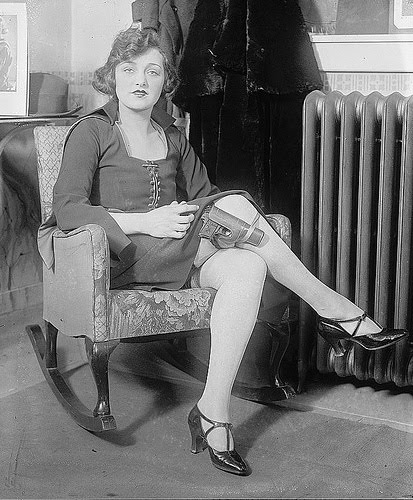
Here’s a challenge–let us know which literary character you choose for Halloween! And of course, you’ll need to send us pictures! You can send your photos to Killzoneblog at gmail dot com.
Et Tu, Amazon?

So I just emerged from my editing cave (my second draft of book 2 for the PERSEF0NE trilogy is done- whew) to some disturbing news. Digging through a backlog of emails, I came across a few from fans that were extremely troubling. Apparently these fans tried to submit reviews of my book on Amazon, and their reviews either a) never appeared, or b) were abruptly taken down.
Two of the fans send transcripts of the reviews, and they were standard (and positive, thankfully): nothing offensive at all in terms of content.
One of the fans took the time and trouble to write to Amazon, asking why his review was removed. He received this form letter reply:
I’m sorry for any previous concerns regarding your reviews on our site. We do not allow reviews on behalf of a person or company with a financial interest in the product or a directly competing product. This includes authors, artists, publishers, manufacturers, or third-party merchants selling the product.
We have removed your reviews as they are in violation of our guidelines. We will not be able to go into further detail about our research.
I understand that you are upset, and I regret that we have not been able to address your concerns to your satisfaction. However, we will not be able to offer any additional insight or action on this matter.
Now, I’ve known this fan for years–he’s read (and reviewed!) all of my other books. And he has no financial stake in my work. He also doesn’t sell anything on Amazon, ever–never mind competing products (which would be what, exactly? Other books? Does this mean that I’m no longer allowed to review thrillers by my contemporaries?)
From there, it became even more disturbing. When the fan wrote back and pointed out that he’s never sold anything on Amazon, and doesn’t have any financial interest in my books, they sent another letter–and in this one, the powers that be declared that if he tried to contact them again about reposting, they would REMOVE MY BOOK FROM THE SITE.
That’s right, remove my book. Even though, had he not written, I wouldn’t have a clue that any of this was transpiring.
Hello, Big Brother.
Needless to say, I found this very disturbing, particularly since it doesn’t appear to be an isolated case. After all, two other fans sent similar messages; and I can only wonder how many others had the same experience, but didn’t write to let me know.
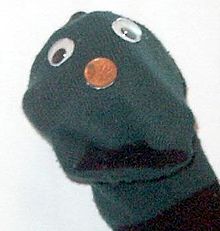
All I can think is that this is some sort of misguided attempt by Amazon to try and remedy some of the abuses that came to light in the recent sock puppet debacle (and if you missed all that drama, here’s a link to catch you up). But if so, it’s overkill. These days, with fewer review outlets available to writers, those Amazon reviews can be worth their weight in gold. And on what basis is Amazon is deciding that some posts should be barred? It’s very disturbing.
Thoughts?
Et Tu, Amazon?
So I just emerged from my editing cave (my second draft of book 2 for the PERSEF0NE trilogy is done- whew) to some disturbing news. Digging through a backlog of emails, I came across a few from fans that were extremely troubling. Apparently these fans tried to submit reviews of my book on Amazon, and their reviews either a) never appeared, or b) were abruptly taken down.
Two of the fans send transcripts of the reviews, and they were standard (and positive, thankfully): nothing offensive at all in terms of content.
One of the fans took the time and trouble to write to Amazon, asking why his review was removed. He received this form letter reply:
I’m sorry for any previous concerns regarding your reviews on our site. We do not allow reviews on behalf of a person or company with a financial interest in the product or a directly competing product. This includes authors, artists, publishers, manufacturers, or third-party merchants selling the product.
We have removed your reviews as they are in violation of our guidelines. We will not be able to go into further detail about our research.
I understand that you are upset, and I regret that we have not been able to address your concerns to your satisfaction. However, we will not be able to offer any additional insight or action on this matter.
Now, I’ve known this fan for years–he’s read (and reviewed!) all of my other books. And he has no financial stake in my work. He also doesn’t sell anything on Amazon, ever–never mind competing products (which would be what, exactly? Other books? Does this mean that I’m no longer allowed to review thrillers by my contemporaries?)
From there, it became even more disturbing. When the fan wrote back and pointed out that he’s never sold anything on Amazon, and doesn’t have any financial interest in my books, they sent another letter–and in this one, the powers that be declared that if he tried to contact them again about reposting, they would REMOVE MY BOOK FROM THE SITE.
That’s right, remove my book. Even though, had he not written, I wouldn’t have a clue that any of this was transpiring.
Hello, Big Brother.
Needless to say, I found this very disturbing, particularly since it doesn’t appear to be an isolated case. After all, two other fans sent similar messages; and I can only wonder how many others had the same experience, but didn’t write to let me know.
All I can think is that this is some sort of misguided attempt by Amazon to try and remedy some of the abuses that came to light in the recent sock puppet debacle (and if you missed all that drama, here’s a link to catch you up). But if so, it’s overkill. These days, with fewer review outlets available to writers, those Amazon reviews can be worth their weight in gold. And on what basis is Amazon is deciding that some posts should be barred? It’s very disturbing.
Thoughts?
The role of the publicist
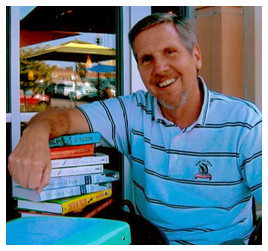
Today, my guest is Tom Robinson, an independent publicist (as opposed to an in-house publicist at a publisher) based out of Nashville, TN and representing such great authors as Tasha Alexander, CJ Lyons, Laura Caldwell, and JT Ellison. Tom and I not only share a great love of writers and the art of writing, but we share the same hometown: Pensacola, FL. When we’re not chatting about the state of the publishing industry, we’re comparing lists of favorite places to eat along the Gulf Coast. I asked Tom to cover the basic question of the role of a publicist, a question that continually comes up in the discussion of writing and publishing.
———————-
By Tom Robinson
Independent Publicist
 So what does the independent publicist do for an author?
It’s a question which gets asked up front when I talk with an author for the first time. It should always be the first question.
The objective is to promote the book (assuming I’m approached when the author has a new release on the horizon) and the author’s branding so that the name has recognition beyond the new book. Those are the important goals. I said “assuming” the author has a new release. I’m also seeing authors who want to continue publicity efforts while they are between books to stay in front of readers.
But let me get back to authors with a new book.
In a nutshell: from meeting with the author the publicist develops a plan to work from that will outline the use of press material, the engagement of blogs, interviews, reviews, social media, online advertising all geared to the author’s targeted audience. Social media has opened up the publicity avenues by leaps and bounds. It is an extremely successful messenger when used correctly.
The independent publicist is often extending the efforts of the publishing house. In-house publicists are usually juggling several titles. They are often understaffed and burning up long work weeks.
Beyond the plan implementation, it’s essential for the publicist to make follow up contact with targeted media outlets. That’s where so much effort is spent.
When the project is completed there should be a cross section of media coverage.
My job has seen incredible change since I first worked exclusively with authors seven years ago. I think it will continue to change, just as the publishing industry changes. But the goals will remain the same—promote the new book and the author brand.
Tom Robinson is an independent publicist for authors. Located in Nashville, TN. Robinson, a media veteran of more than three decades, works with authors of mysteries, suspense, and thrillers as well as authors of non-fiction and children’s books. He now also has his first cookbook author which is resulting in an expansion of his culinary attempts. You can find him at www.authorandbookmedia.com