Reader Friday: Bad Opening Line Contest
As you probably know, the Bulwer-Lytton Fiction Contest is an annual event to see who can write the worst opening line for a novel. Let’s do our own here at TKZ. Write a bad opening line in 50 words or less. The winner (as judged by the TKZ bloggers) will receive a signed copy of The Art of War for Writers. Entries must be posted before 12:00 a.m. Eastern Time. UPDATE: We have a winner. The voting was extremely close, but the victory belongs to Jeannie Leighton. Congrats! Please email me at JSB [at] jamesscottbell [dot] com for details on the book. We were going to do second place and honorable mention, but frankly it was too difficult to choose after all the judges weighed in. You were all so good…I mean, bad. Thanks to everyone who played!
What Makes a Critique Group Work?
Yesterday I attended the first meeting of my new critique group, the first group I’ve been in since 2004. I’ve never had much luck with such groups, probably because I was so new to writing that I didn’t know what to even want from a group. I had even started one and had to drop out, but this time should be different.
There are four of us. Very experienced authors. We have a mix of genres, which could make things interesting. I wasn’t sure how well I would fit in. I’m the only crime fiction and YA writer, but after our meeting and the fun we had brainstorming plots, it became apparent very quickly that genres won’t matter. Storytellers know how to kick start a plot.
![]() |
| Texas Hill Country Bluebonnets |
We met in the beautiful hill country of Texas, outside Boerne. Gorgeous drive up to a member’s beautiful home. The scenic drive is enough to start the creative juices flowing. Our hostess had lunch prepared, something easy and way too yummy. She knew the other two authors and had gotten us together after I whined about not finding what I needed in a few of my local (larger) writers’ groups.
We chatted via email on what we’d like to get from our group. At first I wasn’t sure my goals would match up. Initially we had planned on meeting once a month to talk about the business of writing and maybe brainstorm on plot or scene issues, but after the meeting yesterday, we are getting together once a week and it will be much more on craft and pushing each other to be the best we can be.
Yes, we talked promotion and I learned some new things there and we shared contact info for promo things that worked for each of us. We chatted about plotting methods and storyboarding, but when we got to brainstorming a plot, that’s where my mind was blown.
One of our members had purchased three covers from a designer, images that spoke to her. None of us realized what her intentions were until we got into it, but she bought the covers BEFORE even knowing what any of the books would be about. Basically our session turned into a major Flash Fiction exercise of brainstorming what a new series would be about using the cover designs for books that didn’t exist. HA! When you get the right people together, the ideas flow and we had a blast doing it. We set the stage for a world she’d be building from those three covers that would be bigger than three books, something she could grow into. I’d never done that before and I can’t say I would recommend it as a method of plotting, but with the right people, you never know where things will go.
So we set up our basic crit group intentions as follows:
1.) We will endeavor to get together weekly and bring new material from our current projects. The author will read (& hand out copies of the material), but advance copies will be made available to the other members prior to our meeting for “track changes” feedback. This will allow us to focus on the reading.
2.) None of us are very interested in line edits (unless something is glaring), but we want to get feedback on character, plot, scene choice, motivations, etc. (Craft issues)
3.) We will help each other through plot glitches and even do a “getaway retreat” for serious plotting sessions on future books.
4.) We chatted about limiting our reads to a number of pages and/or a time limit per member, but none of us liked the rigidity. So as we get into this, we will be considerate of not overstepping each other’s time and bring what we need to read to keep us on any publisher’s deadline. We will stay until everyone gets what they need.
5.) We’ll rotate the meetings between member’s houses, as long as the commute isn’t too much on any one person. (Two authors are located more conveniently for all of us.)
6.) We are at four members and like that headcount. Whatever we say in the group will be confidential.
So that is a summary of my new crit group. I’m sure we will define things as we go, to suit the needs of the group, but I’d love to hear from you, TKZers.
For discussion purposes, my questions to all of you (who have way more experience than I do with critique groups) are:
1.) What works in your groups? What do you look for in a crit group?
2.) What doesn’t work?
3.) What do you wish you could add to your groups?
Jordan Dane’s Crystal Fire (The Hunted Series with HarlequinTeen) now available for pre-order. Release November 26, 2013.
“The Hunted – Strong characters and a wild and intense story.”
4.5 Stars – Romantic Times Magazine
Getting Back on Track
How do you get back on track after being away from home? When I go on vacation, attend a conference, or even do a one-day speaking engagement, I lose about two days of work for every day gone. It’s hard to jump back into your Work in Progress when you have bills to pay, receipts to file, emails that need response, phone calls to return, and household chores like laundry and food shopping to complete. With that being said, the idea of being able to use a shift swapping app when people are away could make getting back into work a lot easier. Plus, people can switch shifts if certain people can’t make it.
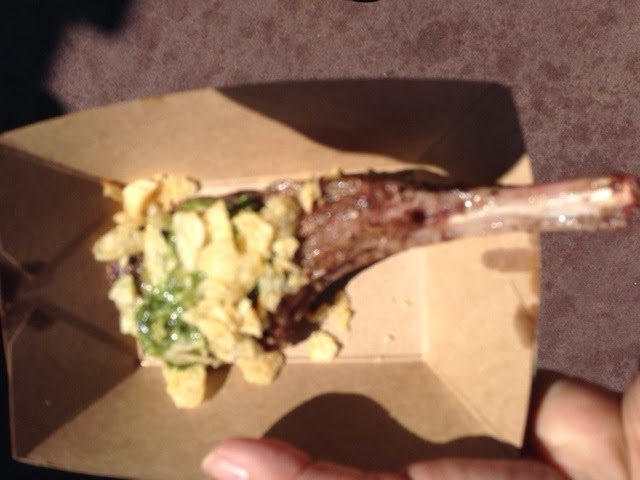
Photos from our visit to Epcot’s Food & Wine Festival:
Easing into a work schedule is impossible for me when all these things are on my mind. Thus I allow a few days to get caught up, maybe not in everything but at least in the essentials, before turning to the work left waiting for me.
There’s no easy way to get back to the grind. You can reread your material and do some edits to put the story into your head again. Or you can set a writing/editing schedule beginning with a certain date.
I’m expecting line edits on Warrior Lord, #3 in my Drift Lords paranormal series. Before these arrive, I want to move ahead with Peril by Ponytail, my next Bad Hair Day mystery. This story is based on my recent Arizona trip, and I’d like to write it while those details are still fresh in my mind. And yet I have travel arrangements to make for a New York trip in January, bank statements to reconcile, a wedding invitation that needs a response, family visits to plan, and more. Plus the laundry and food shopping must be done today, not to mention paying the property tax bill, etc.
In a week or so, I’ll be caught up. And this is only from going away for four days. So how do you ease into your work schedule after a vacation? Do you jump right into it, or do you allow yourself time to get caught up?
<><><>
Fall into Reading Contest, Oct. 28 – Nov. 15 Enter to win an ebook copy of Dead Roots, my haunted hotel mystery, and a $10 Starbucks gift card or one of three runner-up prizes: http://nancyjcohen.com/fun-stuff/contest/
Booklover’s Bench Contest Nov. 4 – Nov. 18 Enter to win a $25 Amazon or BN gift card or one of six runner-up ebook prizes: http://bookloversbench.com/contest/
Got Theme?
Recently in my role as TKZ admin and self-appointed den mother, I noticed that we were getting a lot of traffic related to the topic of “developing a theme in fiction writing.” Since searches for that topic take people to an article I wrote back in 2009, I think it makes sense to revisit the subject of theme.
A story’s theme is the fundamental and universal idea behind its plot. If a plot could be compared to the body of a race car, the theme would be the engine turning its wheels. In King Lear, for example, one of its main themes is authority versus chaos.
Theme vs. Subject
We should not confuse a story’s subject with its theme. The subject of a story would be a one-word descriptor of its main idea. “War”, for example, would be the subject of many stories. A theme would be an opinion related to that subject, such as “In War, everyone loses.” Joe Moore wrote an excellent post a while back about how to distinguish between a story’s subject and its theme.
Some writers approach theme almost as an afterthought. But having a well-crafted theme adds dimension and depth to our stories.
Using a character-driven approach to develop a theme
I like to use minor characters to explore a story’s underlying theme. I call this method the “360-degree” approach to developing theme. In this approach, the secondary characters represent various aspects of the main theme, and they act as foils to the main character’s experiences. For example, the theme of A KILLER WORKOUT was “Mean Girls Suffer Last”. That theme was explored through the story arcs of several characters. One woman had been victimized by bullies in her youth; another was a bully. Another character was a protector of abused women. Each of these characters explored different facets of the subject of bullying and emotional abuse.
What’s your theme?
How do you explore theme? What’s the theme of your WIP? How are you working that theme into your narrative?
Indie Authors – Should You Revise & Republish Some of Your Earlier Books?
By Jodie Renner, editor & author @JodieRennerEd
I often get contacted for editing by authors who have previously published a few novels, either on their own or through a small publisher with limited resources for editing. Their earlier works, while promising, were prematurely released and sales are slow, with few or mostly negative reviews.
These authors were often unaware at the time of any weaknesses in their books and just wanted to get them out there, perhaps on time for Christmas sales or for some other self-imposed time deadline. Many of these early works really needed an edit on some level: a major developmental edit for help with premise, plot, & structure; a content edit to address plot holes, inconsistencies, character motivations, point of view, etc.; a stylistic edit to address slow pacing, convoluted phrasing, too many author intrusions (backstory, info dumps, too much neutral description, telling instead of showing); or just a good clean-up of grammar and flow.
If those authors are serious about building a career as a respected novelist, leaving those books out there in the shape they’re in will only harm their reputation. And if they’re just out as eBooks on Amazon, it’s pretty easy to take them down and upload a revised, more polished version. I’ve done it several times with both of my books – quick and painless, really. Amazon doesn’t seem to care how many times I revise and re-upload the same title – I love the freedom! If you know basic formatting (here’s a how-to article on formatting your manuscript), you can make the changes pretty quickly and get the e-book back up.
Here’s an example of an email, typical of many I’ve received:
“Jodie, I have now read both of your books and your articles on point of view. Fantastic material. All of your comments and recommendations now make sense. With that foundation, I realize what an amateur job my first novel was. Maybe someday we can revisit and do major surgery or a lobotomy on [title of book].”
James Scott Bell has spoken here on TKZ about the need for “a long tail” – a backlist of other attractive titles by you that readers can choose from if they happen on one of your books for the first time and enjoy it. That’s the way to keep the royalties rolling in over the long term.
But of course this means all your titles need to be strong, of high quality. What if your earlier books are nowhere near the quality of recent ones? What if your worst, most amateurish production is the first one of your books someone reads? Do you think they’ll look for any more by you? Worse, they could write a nasty review saying they won’t waste their time with any more of your books. So you could also think of the “long tail” as a chain connecting readers to you. You don’t want any weak links to break that chain!
I’ve confidentially advised some authors, either my clients or not, to get one or more of their backlist titles cleaned up. Some agree and are grateful for the feedback, and others don’t seem to care, or even respond negatively. I don’t get that. If they’re getting bad reviews on Amazon for an early work and a professional editor suggests it would be a good idea to get it edited, why would they leave it up as it is? (And I’m not soliciting editing work here – I get way more requests for editing than I can handle.)
Some indie authors tell me they can’t afford to get their early books edited. I say you can’t afford not to, as those books are or could start dragging your reputation down and significantly reduce potential income. At the very least, If you’ve already (or since then) honed your fiction-writing skills by reading some great craft-of-writing books and/or attending writers’ workshops, here are three resources I recommend specifically for tips on revising fiction: James Scott Bell’s excellent Revision & Self-Editing, Elizabeth Lyon’s Manuscript Makeover, Jessica Page Morrell’s Thanks, But This Isn’t For Us, and my Style That Sizzles & Pacing for Power. All have very useful, concrete tips, with examples, for taking your fiction up a level or two and making your story more compelling. And if you’re struggling with making your first page zing, check out some of the great first-page critiques here on TKZ (links on side column). Then, after you’ve used the advice to revise your early book(s) yourself, be sure to follow it up with a low-cost or free final proofread for typos, grammar, and punctuation.
If the process of going back and revising a whole book feels overwhelming, here’s a great step-by-step plan of action for revision and self-editing. If you don’t have the time or inclination to do that right now, consider pulling any prematurely published early books out of circulation and resubmitting them later when you’ve had time to get them cleaned up or do it yourself. Don’t leave amateurish books out there where they can start collecting critical reviews and tarnish your name as a talented author. Or, if your muse just took a vacation on your WIP, take a break and use the time to revise an earlier novel.
Here’s what A.D. Starrling said in a recent comment (Oct. 22) here on TKZ:
“I have done a revised edition of Book 1 while simultaneously writing Book 3 (I know, one should really STOP rewriting once the darn thing is published, but the feedback for Book 2 was so good, I just had to bring Book 1 up to that level!).”
So my advice, as a freelance professional in the business of helping authors turn good stories into stellar ones that garner great reviews, is to take the time to make sure that at least the weakest links in the chain of your backlist are brought up to your current standards. Of course, I’m mainly talking about eBooks and self-published books here, which are so much easier to revise and republish.
Writers – what do you think? What if one of your early titles received a bunch of negative reviews on Amazon? Would you consider taking it down and revising it, then getting it edited by a professional, then republishing? Then you could always consider changing the title so you can lose the old, negative reviews.
What do the rest of you think of this?
See James Scott Bell’s excellent related post here on TKZ yesterday: Facing Down the Harsh Realities of Publishing.
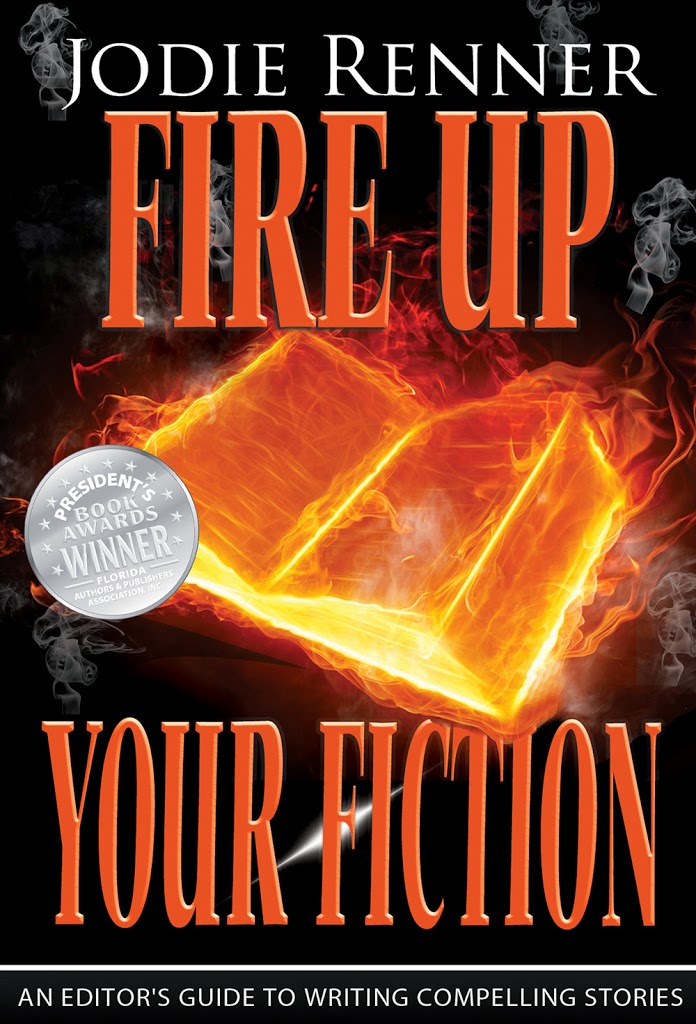
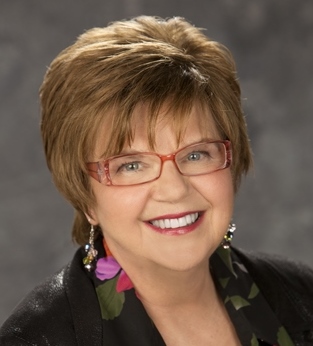
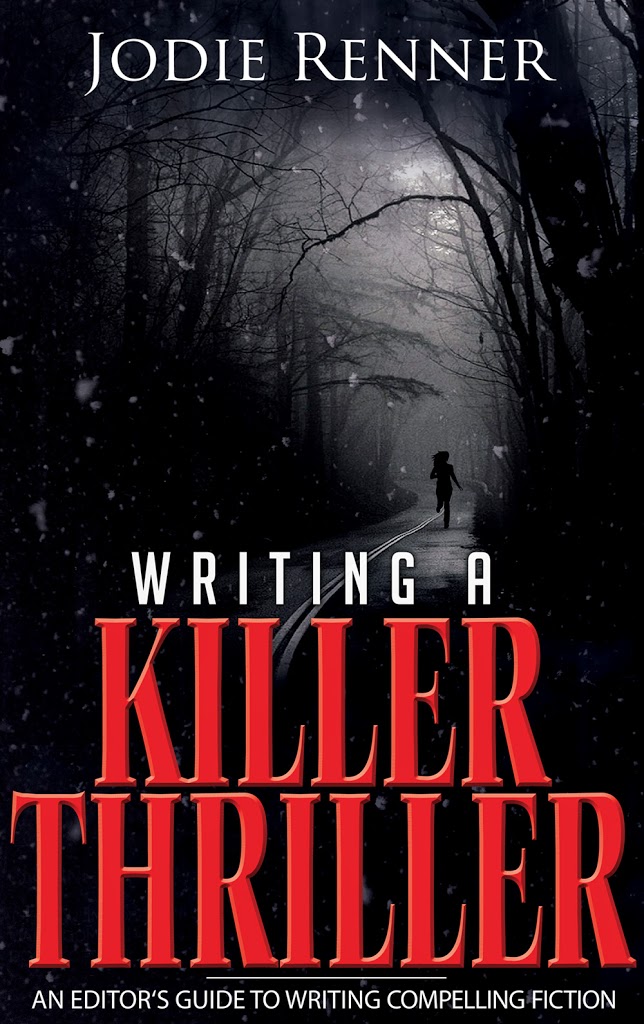
Jodie Renner is a freelance fiction editor and the award-winning author of three craft-of-writing guides in her series An Editor’s Guide to Writing Compelling Fiction: Captivate Your Readers, Fire up Your Fiction, and Writing a Killer Thriller. She has also published two clickable time-saving e-resources to date: Quick Clicks: Spelling List and Quick Clicks: Word Usage. You can find Jodie at www.JodieRenner.com, www.JodieRennerEditing.com, her blog, http://jodierennerediting.blogspot.com/, and on Facebook, Twitter, and Google+.
Facing Down the Harsh Realities of Publishing
Good Advice from Lou Reed
By Mark Alpert
Lou Reed’s death this week really bummed me out. I loved his songs, especially the ones about New York. Here are some amusing lyrics from “Dirty Boulevard”:
This room cost two thousand dollars a month
You can believe it, man, it’s true
Somewhere a landlord’s laughing till he wets his pants
And this song came out in 1989, which means the same room is probably renting for five grand now.
One of my favorite Lou Reed albums is “Songs for Drella,” the biographical collection of songs he wrote with his Velvet Underground bandmate John Cale. The album is dedicated to Andy Warhol (whose nickname was Drella, a mash-up of Dracula and Cinderella), and the songs tell the story of Warhol’s life. The Velvet Underground was the house band for Warhol’s Factory, and it’s fascinating to listen to Reed and Cale recall those years in song. I’ve been playing the album every day since I saw Reed’s obituary.
An irrelevant aside: I met Warhol once, in the spring of 1979. He was signing copies of his book Pop-ism at the university bookstore at Princeton. I knew nothing about art — I was an astrophysics major, a real geek — but I bought one of the books anyway, just so I could meet the guy. Warhol looked terrible: haggard face, bad skin, hopelessly wrinkled clothes. But he scribbled “To Mark, Love Andy” on my book, and now I have a collector’s item that my kids can auction off.
Okay, but how does any of this relate to writing fiction? I’m getting to that. One of the tunes on “Songs for Drella” is called “Work.” Lou Reed is singing about Warhol’s ferocious work ethic. Warhol produced a phenomenal amount of art and made Reed feel guilty for not being equally prolific as a songwriter:
No matter what I did it never seemed enough.
He said I was lazy, I said I was young.
He said, “How many songs did you write?”
I’d written zero, I’d lied and said, “Ten.”
“You won’t be young forever,
You should have written fifteen.”
It’s work, the most important thing is work.
I think of this song when I’m finished writing for the day. How many words did I write? Five hundred? A thousand? Maybe I’ll even feel good about myself, satisfied with my daily output. And then I’ll hear Lou Reed’s voice in my head, channeling Warhol: You won’t be young forever. It’s work.
Reader Friday: Give Me Some Backstory
Key Essentials for An Authentic YA (Or Adult) Voice
![]() |
| Purchased from Fotolia by Jordan Dane |
On Oct 17th at the KILL ZONE blog, I critiqued the first page of an anonymous author’s work –A Game of Days. Some interesting comments on the YA voice came from this post and I wanted to share more on what I’ve learned from writing for the teen market. My personal epiphanies.
Writing for the Young Adult (YA) market and capturing the voice of YA is less about word choices (and getting the teen speak down) than it is about getting the age appropriate decisions and attitude right. Urban fantasy or post apocalyptic plots can build on a world that is unique and unfamiliar. Books like the Hunger Games by Suzanne Collins or the Divergent series by Veronica Roth can have its own voice, so teens are familiar with reading books like this.
When I went looking for solid examples of teen dialogue or introspection to share at a workshop, I searched some top selling YA books, only to find the voice I expected wasn’t there. Sure there are YA books where authors can sound authentically teen, but to keep up the realism for a whole book can be a challenge and an overabundance of “teen speak” can date the banter or be too much for adult readers to catch. (Yes, adults are HUGE readers of YA.)
As you read through this list, think about how each of these tips might also apply to writing ANY voice, even book intended for adults. Many of these tips work for cross-genre writing.
Key Essentials for An Authentic YA Voice:
1.) Use First Person or Deep Point of View (POV)—This technique of “deep” POV, or “close third” person, is used in fiction writing as a glimpse into the head of your character. In YA, I think of deep POV or close third as conversational thoughts deep inside your teen. First person POV is like reading someone’s diary.
2.) Don’t be afraid to mix POVs—You can mix POVs (for example, first person for your storyteller and third person for other characters), but since it’s your story, only you can decide how you want it to be told. Many YA stories are in first person, but more authors are exploring a mix. By adding in the element of third person for other characters, you can let the reader in on what is happening outside your character’s head and add twists to your plot more effectively. Plus if you have secondary characters or villains who may threaten your protagonist, letting the reader in on what’s in their head can make the reader more fearful for your hero/heroine. (Most adult books are not in first POV, but first POV is very intimate and fun to write. My current adult book project has first POV for the main character, but third for everyone else. Very liberating.)
3.) Don’t worry about your vocabulary. Today’s teen reader can handle it. There’s no need to simplify your choice of words or sentence structure if the character warrants it. Just be mindful of the experience level and education of the teen in your story. A homeless kid without much education won’t have an extensive vocabulary unless there’s a good reason for it. If you’re writing a futuristic dystopian book, you’ll be world building and perhaps coming up with your own vocabulary or teen life choices or social customs that would be different from a contemporary YA.
4.) Character first or story first? In my adult fiction thrillers, characters usually come at me first, but in YA I think it’s important to conceive a plot then fit the best characters to the premise. This may help you conjure the most fitting character and voice for the story, without creating a cookie-cutter teen that follows you from book to book.
5.) Don’t force it. As many kinds of teens there are, that’s how many varied “voices” you can create. As long as the story is compelling and the characters draw in the reader, the voice of YA only needs to match the tone, age, and character of that story. Don’t force voice or language that doesn’t seem real to you. Your protagonist’s voice should come naturally from the story premise and the conflict, filtered through your head as the author. If you force it, it will show.
6.) How does the story and character motivation affect your storyteller’s voice? One of the biggest mistakes writers make in YA usually has to do with the sarcastic voice. Biting sarcasm alone does not make a YA story. Without a reason for this behavior, the author runs the risk of making their character unbearable, unlikeable and a real turnoff for the reader. The manuscript must have a cohesive story with solid character motivation to go along with the attitude. Even if the voice is great, what happens? Something needs to happen. And if your character starts off with a good reason to be snarky, give them a journey that will change them by the end of the book.
7.) Know your character’s motivation. Sarcasm, voice, and maturity of your character must be driven by a reason in your story to add depth. Provide a foundation for the “attitude” your character has and don’t forget a liberal dose of poignancy. A reader can tolerate a sarcastic teen if a scene ends with brutal honesty or catches the reader off guard with something gripping to make the whole thing come to a real point.
8.) Beware of stereotypes—Avoid the cliché character (the geeky nerd, the pretty cheerleader, the dumb jock). This doesn’t only apply to YA.
9.) Can you relate to your storyteller? Peer pressure, dating, zits, kissing, sex, being an outsider, not fitting in—these are teen concerns that, as adults, we have to remind ourselves about. With each of these words, what pops into your head? Does it trigger a memory, good or bad? Sometimes the best scenes can come from these universal concerns that haven’t changed for decades. Filtered through your own experiences, a scene can carry more weight if it’s still relevant and relatable.
10.) What is your storyteller like emotionally? What effect can raging hormones do for your character? Is everything a drama? Not all teens are like this. Some are withdrawn in front of adults or in social situations. It’s important to ask yourself: What are they like around their friends and who are their friends? I would resist the urge to create a character based on a teen you know if it’s at the expense of your plot. Certain aspects or perceptions of “your teen” can influence your character, but your book is fiction. That’s why I recommend devising your plot first before you place the right teen in it.
11.) Who or what has influenced your storyteller most? Like in the movie, JUNO, the teen girl had a dry wit that sometimes referenced an older person’s humor. Not everything was “teen speak.” She was influenced by the adults in her life, using references she heard from her dad and step-mom. Her pop culture references were peppered into the humor of another generation. She still sounded young, but her dialogue appeal was more universal. Don’t be afraid to make up a word or phrase to suit your character’s world.
12.) What journey will your storyteller take in your book? Getting the voice right is only half the challenge. Your YA book must be about something—a plot, believable world building, and the reaction and journey of a real teen amidst it all.
13.) Don’t forget the imagery. Teen readers have great imaginations and can picture things in their heads like a movie. Give them something that triggers and engages their imaginations. Picture your book scenes on the big screen and write them that way, but don’t go overboard and slow your pace. Teens get it. Give them a glimpse and move on. They’ll roll with the imagery.
14.) Turn off your parent switch—If you’re an adult and a parent writing YA, you may find it difficult to turn off your mother or father switch, but you should consider it. Kids can read between the lines if you’re trying too hard to send them a “universal parental” message about conduct and behavior. Simply focus on your story and tap into what your teen experiences were—without censorship—and without the undertone of sending kids a special message. Your story will read as more honest, without an ulterior motive.
HERE is a link on a video about one teenager’s story from The Onion News (DISCLAIMER: I had nothing to do with making this video):
For Discussion:
1.) Any other writing tips to make your YA voice read as authentic?
2.) What books have you read where the teen voice seemed very real and please share why you thought so?