First-page Critique: LAND SHARKS

1sharknado-attackHappy Thursday, gang! Today we have a first page submission for discussion. I love the title, LAND SHARKS, mainly because I get to post a picture of Sharknado. After my comments about this page, please add yours!


 

LAND SHARKS

Beverly Hills – the home of beautiful clothes, beautiful cars, and beautiful people. Where the perfumed smell of money floats in the air. And like blood in the water, it attracts sharks.

Not the ones with fins, but those that walk on two legs and camouflage themselves in human clothing.

I’ve been lucky. I’ve never run into a real two-legged, great white face-to-face. I hope I never will.

At the moment, I’m eating at a trendy Asian Fusion restaurant a block away from Rodeo Drive. My spicy shrimp dumplings and miso soup are excellent. I like the soup so much, I’m even wearing it dribbled down the front of my best white blouse. Not an unusual occurrence for me. It would be nice if bibs were fashionable for women to wear at meals other than lobster. I’d save a lot on my dry cleaning bill if it were.

Sadly, even in this nice restaurant there’s a nasty fish, and I don’t mean on the menu. I’d classify him as a piranha. A piranha is a shark wanna-be, and I do run into a lot of those.

***

My notes:

After that fun title, I was ready to like this first page. I love snarky, self-deprecating humor in  a narrator’s voice, and this page the has potential to be sharp and funny. But snarky humor is hard to pull off effectively, as this page demonstrates.

First line

I think the opening line could be a bit fresher. Using “beautiful” three times in a row has a quality of sameness to it. I think “beautiful people” could be replaced with something something more unexpected, something that conveys something humorous about the story we’re about to encounter. Keep the alliteration, but play around with the images you’re conveying. I would keep the first instance of “beautiful,” perhaps, but then go for something stronger and sharper from there.

Second and third paragraphs

“Not the ones with fins, but those that walk on two legs and camouflage themselves in human clothing.”

I think this paragraph, and the one that follows it, begin to strain the shark metaphor. Why don’t you just replace them both by adding “The two-legged kind” or something similarly brief at the end of the first paragraph? Then move on.

Fourth paragraph

We learn a lot about this woman’s messy eating habits, probably more than we want to know at this point. By now, we should be getting a sense of the character’s situation, not simply what she’s eating.

Fifth paragraph

This paragraph does a bit of wheel spinning, and again, it strains the shark/piranha image. Rather than saying a nasty fish exists in the restaurant, let us see your character encountering the fish. Something like, “I looked up from my noodles just in time to catch a flash of teeth. It was “(name). Of all the sharks prowling the waters of Beverly Hills, (name) was the nastiest fish.”

Tense

I used past tense, because I think present tense is very difficult to pull off in an adult story.

Overall

This could be a really fun story. Who doesn’t love to mock rich people in Beverly Hills? I like its potential, but t have a feeling that this page is simply a warm-up to the next page, As it stands, the story probably really begins on page two. I would condense most of this page and get right into the story.

Thank you to the writer for submitting this first page!

What do you think of LAND SHARKS, TKZ’ers?

Submission Protocol

Nancy J. Cohen

Last week, I sent a submission via snail mail. “What’s that?” you ask. It’s almost a forgotten art. I hadn’t sent out a physical manuscript in so long that I’d forgotten the specifics. I think it’s been at least five years, likely longer, since I last had to send anything from the post office. This submission went to a niche market and was another of my father’s travel journals.

So what was involved? After reading the online submission guidelines, I reviewed my manuscript. Oops, I’d forgotten all about headers and footers with the book title, author name, and page number. Having formatted for ebook requirements, I added those back in.

writing

Since this book is nonfiction, I had to include a Table of Contents. No problem. I know how to do this in Word. Oh, wait. I forgot to write a Foreword like I did with my father’s other journal, Thumbs Up, that I’d indie published. So I added the TOC. Then I deleted some of the book buy hyperlinks in the back. I shouldn’t include those for this type of submission.

A query letter topped it all off. I polished mine once more before adding it to the pile of papers. It’s also been ages since I’d had to write one of these things. It’s never easy, is it?

Now what? I printed out the whole work, since it is short and about equivalent to a normal book proposal in page count. Next came the SASE. How do you do this again? If you want the manuscript back, you have to put actual postage stamps on a suitably sized manila envelope. This means you have to weigh the envelope for return postage with the manuscript inside, affix the stamps, remove the pages and stuff them into the outer envelope along with the folded SASE. A complicated business, isn’t it? Or you can just include a stamped and self-addressed #10 business envelope for the form rejection letter you’re sure to get.

envelopes

And then comes the great sigh of relief when you send your baby off at the post office. This generates a more visceral response than sending a book into cyberspace. Somehow the physical manuscript seems more a part of you.

Weeks pass and then months. You watch the mail for the return envelope. Once you see it, gloom sets in. You’ve been rejected. And you start the process all over again.

At least that’s how it used to be done in the old days. Do you remember those times? Do you miss them?

What does your character want?

download

By PJ Parrish

Many moons ago, when I was just starting out in this crime writing business, I wandered into a workshop at SleuthFest. That day, all I was looking for was a reason to not lurk alone in the lobby of the Deerfield Beach Hilton. Besides, I had two books under my belt that got some nice blurbs and some good reviews. So I thought that I had all the answers.

Man, was I wrong. And thank God I went into that workshop because it forever changed the way I wrote.

LesStandifordHeadShot

The workshop was conducted by Les Standiford and he was talking about creating memorable characters. Now, every writing conference has panels on this. Yada yada yada…don’t rely on stereotypes…blah blah blah…give them interesting backstories and dossiers…humanize your villain…make your hero fallible but likeable…same old same old.  And despite the fact Les Standiford had his own successful mystery series and was a celebrated fiction teacher, I didn’t think I was going to get anything new from his session. But then, as I sat in the back of room, half-dozing off the effects of last night’s cocktail party, Les said something that made the hairs on my neck stand up:

“Ask yourself one question of every character you create: What does he want?”

He had hit a nerve in my writer’s subconsciousness. Because although I had been writing about my cop hero Louis Kincaid for a while, I had never really thought hard about what Les was talking about. So as I sat there in that hot crowded room, I asked myself:

What did Louis want?

Well, he wanted to solve the case! He wanted to find the men in the small Mississippi town who, thirty years ago, had lynched a black man and left his bones in a shallow grave in a swamp.

{{{{Loud sound of buzzer going off}}}}}

Okay then, Louis was a rookie who really needed a job and wanted to impress his new boss, the sheriff.

{{{{Buzzer}}}}

Well, dammit, Louis felt compelled to find the identity of the lynching victim and bring him peace.

{{{Close but no cigar}}}}

Okay, okay. Let me think hard about this. Wait…Louis is biracial. He was born in Mississippi but was fostered out to a white family in Michigan. He walks, uneasily, in two worlds. Could this be about him finding his “black” past, forgiving his mother for abandoning him and coming to terms with the white father who deserted him?

{{{You’re the writer. What do you think?}}}

I think that what Louis wants is to find himself. Twelve books later, both he and I are still looking. But way back when, I thought I had all the answers. That day I walked into Les Standiford’s class, I didn’t even have the right questions.

What does your character want?

It sounds like an easy question. But if you’re doing this novel writing this right, the answer isn’t so easy. Kurt  Vonnegut famously said, “Every­one wants some­thing on every page, even if it’s only a glass of water.“  That is true even of minor characters, but when you’re talking about your lead role players, I think you have get to the very bottom of that water glass.

Dead Poets

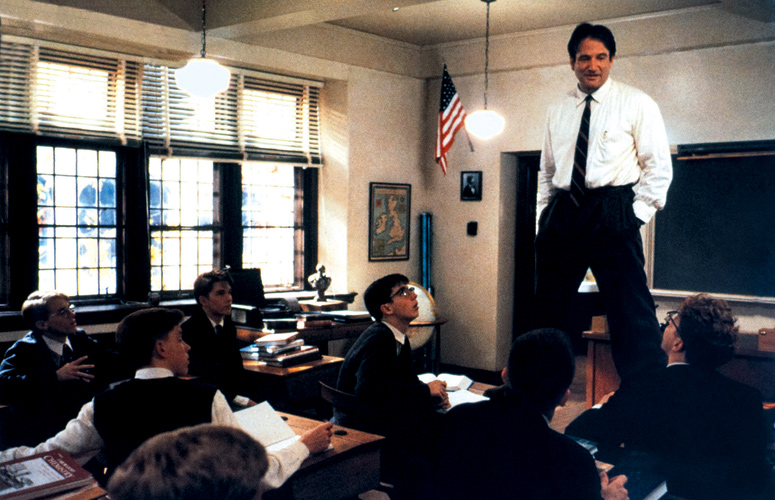
Are we talking about character motivation here? Well, yes, I suppose so. Les Standiford, Vonnegut and all great writers and teachers tells us we must plumb the depths of our character’s hearts and heads to find out what makes them tick. But it’s more than that. I think why Les’s question made an impact on me was because it forced me to come at the old question from a different angle. It’s sort of like when Robin William’s character John Keating in Dead Poets Society climbs atop his desk and tells his students, “I stand upon my desk to remind myself that we must constantly look at things in a different way.”

The first step of character development is figuring out what passions, fears, regrets, or desires consume your character. Then, all you have to do is show him interacting with his setting and other characters in a manner consistent with those possible “motives.”

What Les was asking us to do was to go beyond the surface, to dig deep and deeper to find out what was the one essential consuming need of each character. Think of character motivation as having levels. Yes, you can get published by going no deeper than defcon 1 or 2 in character development. But what happens if you push yourself to take just a couple more steps down into the darkness?

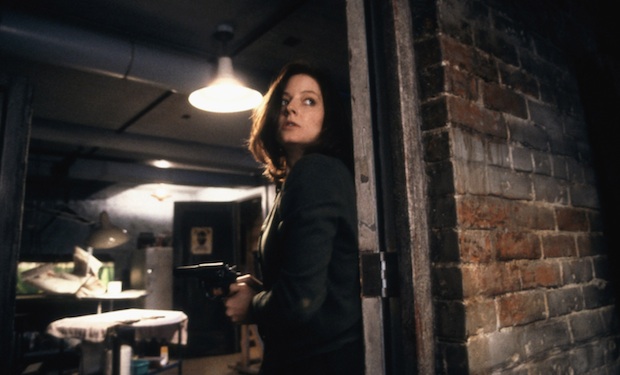
Speaking of going into creepy basements, let’s go to a simple example: Silence of the Lambs. If you’ve read Thomas Harris’s book, you know how effective the author was at descending into the lowest rungs of every character’s motivations. But even the movie did a pretty good job at this. Let’s dissect our heroine:

What does Clarise Starling want?

Level 1: She wants to solve the case. She wants to find Buffalo Bill. (basic thriller plot)

Level 2: She wants to prove she can hang with the big boys of the FBI. (basic thriller with feminist theme)

Level 3: She wants to escape her suffocating southern small-town roots and the FBI was a ticket out of hicksville. Remember how impressed one of the victim’s girlfriends was with Clarise’s job? (Basic thriller with feminist theme and rich backstory.)

Level 4: She wants to impress her boss-mentor Jack Crawford. (basic thriller with feminist theme, good backstory and father-figure character interplay.)

Level 5: She wants to validate herself as being worthy of her father’s legacy because he was a cop killed in action. She gets approval by proxy via Crawford, who tells her at the end that her father would have been proud of her.  (Now this is getting interesting!)

Level 6: She wants to make the lambs stop screaming. Cool…But what does this mean psychologically? Clarise is haunted by a childhood memory of hearing lambs being slaughtered. I have always read this as her attempt to exorcise her demons of abandonment, her human need to deal with existential loneliness, her way of pushing back against the black void. “I thought if I could only save just one,” she tells Lector. She’s talking about saving Buffalo Bill’s victims, but isn’t she really talking about herself?

(While we are at it, has anyone else noticed how eerily similar Silence of the Lambs and Jodie Foster’s other movie Contact are in character themes? Both are smart, emotionally fragile women raised by fathers then orphaned, both manipulated by brilliant outcast men. And both women are staring into the vast blackness and hoping they are not alone.)

Let’s go to another example. What does Captain Ahab want in Moby-Dick?

Level 1: He wants to catch the whale that maimed him. (Simple story of revenge).

Level 2: He wants to prove to his crew and himself that even though he’s got one leg, he is still a man. (He even smuggles his own crew onboard just in case.)

Level 2: He wants to strike out against the pacificism of his Quaker religion. Not so simple theme that’s right here in this passage:

The White Whale swam before him as the monomaniac incarnation of all those malicious agencies which some deep men feel eating in them, till they are left living on with half a heart and half a lung. That intangible malignity which has been from the beginning; to whose dominion even the modern Christians ascribe one-half of the worlds; which the ancient Ophites of the east reverenced in their statue devil;—Ahab did not fall down and worship it like them; but deliriously transferring its idea to the abhorred white whale, he pitted himself, all mutilated, against it. All that most maddens and torments; all that stirs up the lees of things; all truth with malice in it; all that cracks the sinews and cakes the brain; all the subtle demonisms of life and thought; all evil, to crazy Ahab, were visibly personified, and made practically assailable in Moby Dick.

Level 3: He wants to vanquish evil, what he calls “the inscrutable thing.” And he’s not sure God is on his side or even exists. He’s like Hamlet, looking for some metaphysical truth in all the madness. And I am sure Peter Benchley had Ahab in mind when he created Quint the shark hunter in Jaws.  Both men are nuts but sort of magnificent. Which is why they had to die.

So here’s what I’d like to leave you with. The next time you think about your characters’s motivations, go deeper. Think hard and long, applying great gobs of elbow-grease of the mind. Don’t be content with staying on the top levels. Don’t skim the surfaces.

MSDSIOF EC076

Don’t be afraid to descend to the very bottom rung and enter that dank dark basement of the human soul. That’s where you find the good stuff.


How are short stories evaluated for publication or awards?

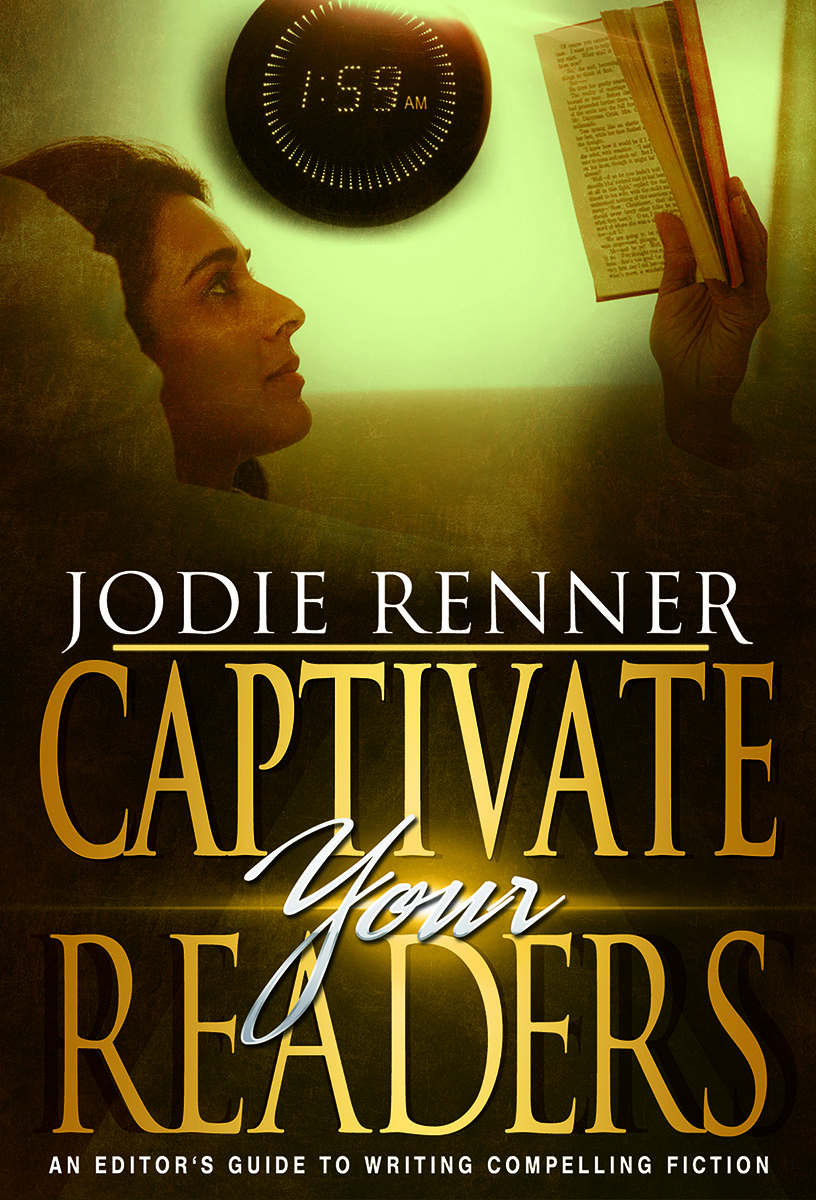
Captivate Your Readers_med– A glimpse into the minds of acquiring editors and judges for short (or any) fiction

Jodie Renner, editor & author  @JodieRennerEd

Have you tried your hand at writing short stories yet? If not, what’s holding you back? As award-winning blogger Anne R. Allen said in an excellent article in Writer’s Digest magazine, “Bite-sized fiction has moved mainstream, and today’s readers are more eager than ever to ‘read short.’” To check out Anne’s “nine factors working in favor of a short story renaissance,” see “9 Ways Writing Short Stories Can Pay off For Writers“, and there’s more in her post, Why You Should be Writing Short Fiction.

Here’s another Argument for Writing Short Stories, by Emily Harstone.  She says, “Writers who are serious about improving and developing their craft should write short stories and get editorial feedback on them, even if they are never planning on publishing these short stories. Short stories are one of the best ways to hone your craft as a writer.”

Okay, you’ve decided to take the plunge and craft a few short stories. Good for you! Next step: Consider submitting some of them to anthologies, magazines, or contests. But wait! Before you click “send,” be sure to check out my 31 Tips for Writing a Prize-Worthy Short Story, then go through your story with these tips in mind and give it a good edit and polish – possibly even a major rewrite – before submitting it.

What are some of the common criteria used by publications and contests when evaluating short story submissions?

I recently served as judge for genre short stories for Writer’s Digest Popular Fiction Contest, where I had to whittle down 139 entries to 10 finalists, but I wasn’t provided with a checklist or any specific criteria. However, a friend who regularly submits short stories to anthologies, magazines, and contests recently received a polite rejection letter from the editor of a literary magazine, along with a checklist of possible reasons, with two of them checked off specifically relating to her story.

While useful, the list of possible weaknesses is very “bare bones” and cries out for more detail and specific pointers. Editors, publishers, and judges are swamped with submissions and understandably don’t have time to give detailed advice for improvement to all the authors whose stories they turn down. Perhaps you could help me interpret and flesh out some of these fairly cryptic, generic comments/criticisms, and add any additional points that occur to you, or checklists you may have received.

Can you think of other indicators of story weaknesses that could be deal-breakers for aspiring authors submitting short stories for publication? Or do you have links to online publishers’ checklists for fiction submissions? Please share them in the comments below.

Here’s the list my friend received, with my comments below each point. Do you have comments/interpretations to add?

Checklist from a Publisher/Editor/Publication in Response to Short Story Submissions

“Thank you for submitting your short story to …. We’ve given your work careful consideration and are unable to offer you publication. We do not offer in-depth reviews of rejected submissions, due to time constraints. Briefly, we feel your submission suffered from one/several of the following common problems:”

– “Tone or content inappropriate for… (publisher / publication / anthology / magazine)

Check their submission guidelines and read other stories they’ve accepted to get an idea of the genre, style, tone, and content they seem to prefer.

– “Stylistic and grammatical errors; too many typos

Be sure to use spell-check and get someone with strong skills in spelling, grammar, punctuation, and sentence structure to check it over carefully for you. Read it out loud, and where you pause briefly, put in a comma. Where you pause a little longer, put in a period. You could also try using editing software or submit it to a professional freelance editor. This last choice has the most likelihood of helping you hone your fiction-writing skills.

– “Structure problems

For a novel, this could mean some chapters could be rearranged, shortened, or taken out. What do you think it could mean for a short story? Too many characters? Too many plot lines?

– “Formatting problems made reading frustrating

Be sure your story is in a common font, like Times New Roman, 12-point, and double-spaced, with only one space after periods and one-inch margins on all four sides. Don’t boldface anything or use all caps. For more white space and ease of reading, divide long blocks of text into paragraphs. Start a new paragraph for each new speaker. Indent paragraphs. Don’t use an extra line space between paragraphs. Use italics sparingly for emphasis. For more specifics on formatting, see “Basic Formatting of Your Manuscript (Formatting 101)”.

– “Characters were problematic/unbelievable/unlikeable

Your characters’ decisions, actions and motivations need to fit their personality, background, and character. And make sure your protagonist is likeable, someone readers will want to root for.

– “Content and/or style too well-worn or obvious

This likely refers to a plot that’s been done a million times, with cookie-cutter characters and a predictable ending.

– “Word choice needs refinement

This one could cover the gamut from overused, tired words like nice, good, bad, old, big, small, tall, short to overly formal, technical, or esoteric words where a concrete, vivid, immediately understandable one would be more effective.

– “Overbearing or heavy-handed

This probably refers to a story where the author’s agenda is too obvious, too hard-hitting, maybe even a bit “preachy,” rather than subtle, allowing the reader to draw their own conclusions.

– “Nothing seems to have happened

To me, this probably indicates no major problem or dilemma for the protagonist, not enough meaningful action and change, and insufficient conflict and tension.

– “Strong beginning, then peters out

This is an indicator that your plot needs amping up and you need to add rising tension, suspense, and intrigue to keep readers avidly turning the pages. Also, flesh out your characters to make them more complex. Give your protagonist secrets, regrets, inner conflict, and a strong desire that is being thwarted.

– “Needs overall development and polish.

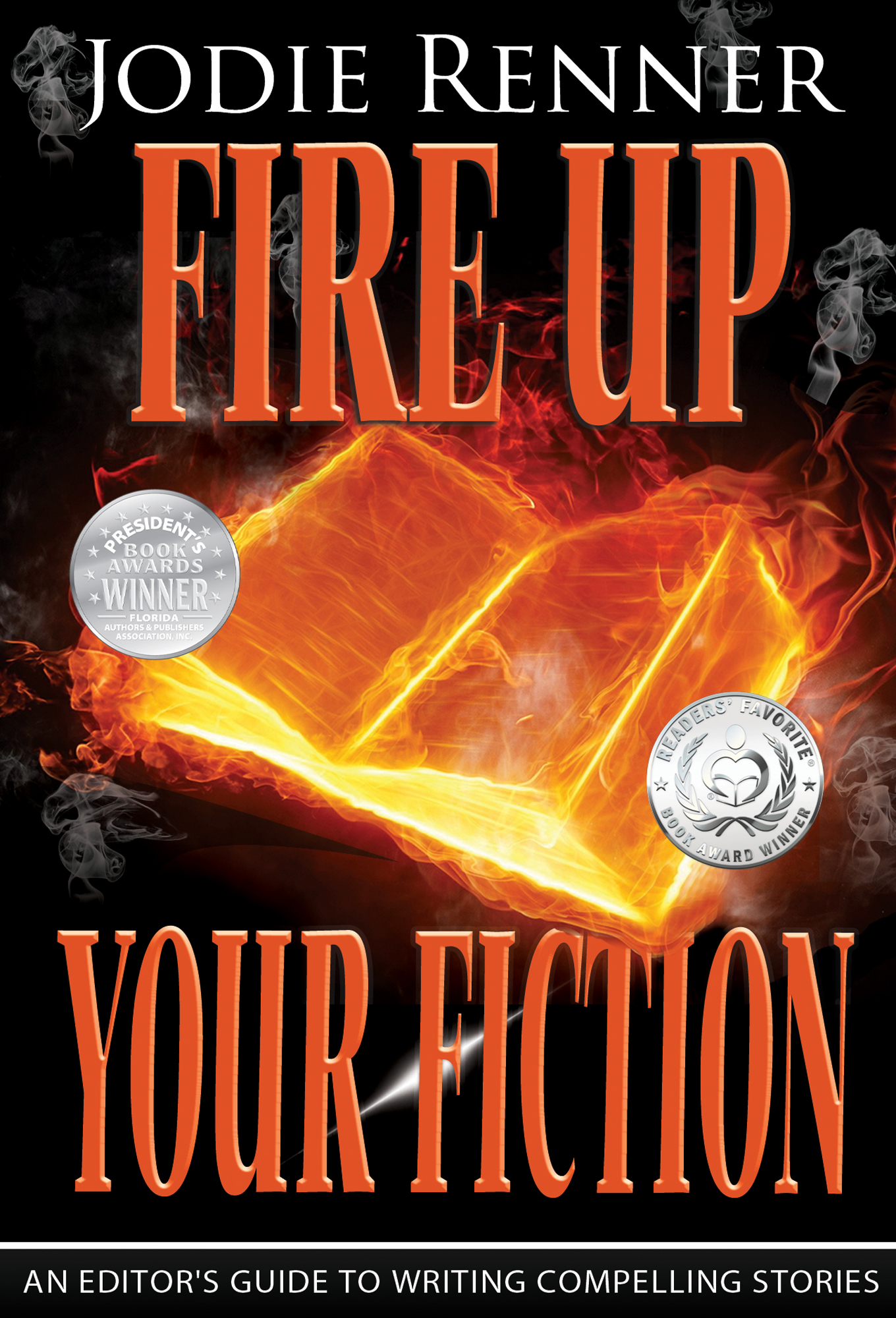
This indicates you likely need to roll up your sleeves and hone your writing skills. Read some writing guides (like those by James Scott Bell or my Captivate Your Readers, Fire up Your Fiction, or Writing a Killer Thriller). Also, read lots of highly rated published short stories, paying close attention to the writers’ techniques. Here’s where a critique group of experienced fiction writers or some savvy beta readers or a professional edit could help.

We didn’t get it.

This is likely a catch-all category that means the story didn’t work for a number of reasons. This could be an indicator to put this story aside and hone your craft, critically read other highly rated stories in your genre, then, using your new skills, craft a fresh story.

“While all of these criticisms open doors to further questions, we regret that we cannot be more constructive….”

That’s understandable. They just don’t have time to critique or mentor every writer who contacts them. But I hope my comments above help aspiring fiction writers hone your craft and get your stories published – or even win awards for them. Good luck! For tips on how to actually submit, check out “Writing Short Stories? Don’t Make These 4 Submission Mistakes“.

Fire up Your Fiction_ebook_2 silversJodie Renner is a freelance fiction editor and the award-winning author of three craft-of-writing guides in her series An Editor’s Guide to Writing Compelling Fiction: Captivate Your Readers, Fire up Your Fiction, and Writing a Killer Thriller. She has also published two clickable time-saving e-resources to date: Quick Clicks: Spelling List and Quick Clicks: Word Usage. You can find Jodie at www.JodieRenner.com, www.JodieRennerEditing.com, her blog, http://jodierennerediting.blogspot.com/, and on Facebook, Twitter, and Google+.

How to Write Act II

american-act-ii-microwave-popcorn-tub-9866-pA couple of months ago I released Super Structure: The Key to Unleashing the Power of Story. I’ve received many nice emails and comments about it, but recently two people asked me the same question. And it’s a good one, so I thought it worthy of a full post. Here’s a clip from an email (used by permission):

I’ve often noticed that writing books get a bit too abstract at times about theme, as if it’s something impossible to hold onto or grasp. But you are so clear by making it come across so smoothly in the super structure points. There is something very smooth about your approach. I felt very grounded as I read.

This is a small point that I’ve wanted to ask a teacher for some time because I’ve noticed this situation in other structure layouts: Why is it that Act II, which constitutes at least half of the entire story (actually > 55% if Act I is 20% and Act II is 25%), have relatively fewer super structure points (i.e., Kick in the Shins, The Mirror Moment, Pet the Dog, Doorway of No Return #2). There are 4 in Act II to guide the writer for 55% of the story but 10 to guide the writer for the other 45% (Act I and III combined). And yet we’re often told that the hardest part of writing a novel or screenplay IS Act II. Is it the hardest partly because it’s harder to teach in terms of structure, etc.?

That’s an excellent and insightful question. It does seem counter-intuitive to suggest in a book about structural signposts that the least number of them occur in longest section of the novel.

But, in point of fact, this is exactly how it must be.

First of all, what is Act II all about? It’s about the Lead’s confrontation with Death. Death can come in three guises: physical, professional, or psychological. That’s what makes the stakes high enough for the reader to care about what’s going on.

Act I prepares us for this death struggle. To get readers to care about what happens, we have to bond them with a Lead character, show something of the ordinary world, have hints of trouble to come … and then we have to find a way to force the Lead through that Doorway of No Return. Why force? Because no one wants to confront Death unless they have to! (Or unless their name is Evel Knievel.)

That’s why there are several important structural beats in Act I.

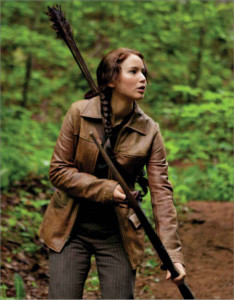
Okay, now the Lead is in the dark forest. To survive and get back to the castle, she’ll havekinopoisk.ru to defeat the forces arrayed against her. If you want a perfect illustration of this, think of The Hunger Games. Katniss Everdeen is taken from her ordinary world and thrust into a contest to the death, in an arena filled with obstacles and opponents.

Now, keep these two points in mind:

1. There are innumerable actions the Lead can take to gain her objective, to survive, and to ultimately defeat the opponent.

Standing at the edge of that dark forest, the Lead might: go left, go right, go straight ahead, follow a sound, run from a sound, climb a tree, make a weapon, start a fire, form an alliance, fight off a monster—whatever it is, you, the author, get to choose.

2. Each subsequent action will, in some way, be a reaction to what’s just happened.

If the Lead breaks her leg, she won’t be running in the next scene. If her love interest decides to walk out on her, she won’t be singing a happy tune.

You may also find that a character refuses to do what you want. In one novel I tried to get a wife to go away to her sister’s house, but she would not do it. I’d planned for her to go, I tried to push her out the door, but no soap. So I had to readjust, and in this case the character was right!

In short, a more “open” Act II enables us to respond to the story as it takes shape.

This is true, by the way, whether you like to outline or whether you prefer to wing it.

Further, you don’t need as many signposts because your scenes should have an organic logic to them. Act II is largely made up of the Lead’s battle plans. We know what the objective is: defeat death! In The Hunger Games it’s physical death; in The Catcher in the Rye, it’s psychological death; in The Verdict, it’s professional death.

So the Lead, in Act II, takes an action to gain a foothold in this battle. And suffers a setback.  Now what?

She forms a new plan, takes a new step, reacting to and learning from the last one.

In this way you have a natural, logical, clear and compelling “plot generator.” You don’t need as many signposts to do that.

If you ever feel “lost” in Act II, just go back and check a few things:

• Are the stakes death?

• Is the Opponent stronger than the Lead?

• Is your Lead using strength of will to push forward?

• Is there an easier way for your Lead to solve the problem? (If so, figure out how to eliminate that possibility)

Then brainstorm a few questions:

• How can things get worse for the Lead?

• What’s the worst thing that could happen to the Lead?

• Can a new character come in to complicate matters even more?

• What are the enemies of the Lead doing “off screen”? That is, what actions are they taking while the reader is reading the current scene? (This is a great way to come up with plot complications.)

Soon enough, you’ll be back on track with plenty of ideas for organic scenes, rising and falling action, throughout Act II.

Then, at some point, you have to get the Lead through another doorway, into Act III, where the final battle takes place. There are more signposts in Act III to guide you through this section. That’s because you can’t dilly dally. You’ve got the Lead going over a waterfall. You’ve got to get him to safety, fast.  The Act III signposts have a shorter space between them, which is exactly what you need.

Make sense?

I think it was Isaac Asimov who said that he knows the beginning and the ending of his novels, but then has the “fun” of finding out how to get from the one to the other.

So go go have some fun.

And tell us how you approach Act II in your own novel writing. What challenges do you find? How do you address them?

How Story Arcs Can Add Depth to Your Plot

JordanDane
@JordanDane

Close-up of kissing lips

Yesterday, Joe Moore had an excellent post “Tips for Pacing Your Novel.” It made me think of subplots and story arcs that are other tools to punch up a story line with pace while the main plot enjoys a much needed rest for character development.

In a story arc, whether it is the arc of a romantic relationship or the personal journey of your main character, it might help you think of the arc using these key points:

5 Key Movements in a Story Arc:
1. Present State
2. Something Happens
3. Stakes Escalate
4. Moment of Truth
5. Resolve

Present State –  Set the stage with the character or the relationship at the start of the story. This can also include a teaser of the conflict ahead or the characters’ problems that will be tested. If this is a thriller with a faster pace, you can start with a scene that I call a Defining Scene, where you show the reader who your character is in one defining moment of introduction. The reader can see who this character is by what he or she does in that enticing opener. Don’t tell the reader by the character’s introspection (internal monologue). Set the stage by his or her actions. These scenes take thought to pull together but they are worth it. Imagine how Capt. Jack Sparrow of Pirates of the Caribbean first steps onto the big screen. He wouldn’t simply walk on and deliver a line. He’d make a splash that would give insight into who he is and will be.

Something Happens – An instigating incident forces a change in direction and a point of no return. Your character and/or relationship often will move into uncharted territory that will test their resolve. Sometimes you can set up a series of nudges for the character to reject, but in the end, something must happen to shove him or her over the edge and into the main plot.

Stakes Escalate – in a series of events, test the characters’ problem or the relationship in a way that forces a conflict where a tough choice must be made. Make your character/couple earn the right to play a starring role in your novel. Don’t forget that this is not simply the main action of the plot or a conflict with the bad guys. This can also mean escalating the stakes of the relationship by forcing them into uncomfortable territory.

Moment of Truth – When push comes to shove, give your character or couple a moment of truth. Do they choose redemption or stay the course of their lives? When the stakes are the highest, what will your character do? I often think of this moment as a type of “death.” The character must decide whether to let the past die or a part of their nature die in order to move on. Do they do what’s safe or do they take a leap into something new?

Resolve – Conclude the journey or foreshadow what the future holds to bring the story full circle. I love it when there is a sense of a character coming through a long dark tunnel where they step into the light. A character or couple don’t have to be the same or restored in the end. Make the journey realistic. If a character survives, they are more than likely changed forever. What would than mean for your character? How will they be changed?

Apply this arc structure to individual characters or to a romantic love interest between two characters. These arcs are woven into the tapestry of your overall plot. The plot can be full of action and have its own arc, but don’t forget to add depth and layering to your story by making the characters have their own personal journeys.

Characters have external plot involvements (ie the action of the story), but they can also have their internal conflicts that often make the story more memorable. As an example of this, in the Die Hard movies, we may forget the similar plots to the individual movies, but what make the films more memorable is the personal stories of John McClain and his family. These personal arcs are important and need a structured journey through the story line. They can ebb and flow to affect pace. Escalate a personal relationship during a time when the main plot is slowing down. Make readers turn the pages because they care what happens to your characters.

For Discussion:
Share your current WIP, TKZers. How do you integrate your main character’s personal journey into the overall plot? Share a bit of your character and how his or her “issues” play into your story line.

Tips on Pacing your Novel

By Joe Moore
@JoeMoore_writer

The story in most novels takes place over a period of time. Some are condensed to a few hours while many epic tales span generations and perhaps hundreds of years. But no matter what the timeframe is in your story, you control the pacing. You can construct a scene that contains a great amount of detail with time broken down into each minute or pacecareven second. The next scene might be used to move the story forward days, weeks or months in a single pass. If you choose to change-up your pacing for a particular scene, make sure you’re doing it for a solid reason such as to slow the story down or speed it up. Remember that as the author, you’re in charge of the pacing. And the way to do it is in a transparent fashion that maintains the reader’s interest. Here are a couple of methods and reasons for changing the pace of your story.

Slow things down when you want to place emphasis on a particular event. In doing so, the reader naturally senses that the slower pace means there’s a great deal of importance in the information being imparted. And in many respects, the character(s) should sense it, too.

Another reason to slow the pacing is to give your readers a chance to catch their breath after an action or dramatic chapter or scene. Even on a real rollercoaster ride, there are moments when the car must climb to a higher level in order to take the thrill seeker back down the next exciting portion of the attraction. You may want to slow the pacing after a dramatic event so the reader has a break and the plot can start the process of building to the next peak of excitement or emotion. After all, an amusement ride that only goes up or down, or worse, stays level, would be either boring or frantic. The same goes for your story.

Another reason to slow the pace is to deal with emotions. Perhaps it’s a romantic love scene or one of deep internal reflection. Neither one would be appropriate if written with the same rapid-fire pacing of a car chase or shootout.

You might also want to slow the pacing during scenes of extreme drama. In real life, we often hear of a witness or victim of an accident describing it as if time slowed to a crawl and everything seemed to move in slow motion. The same technique can be used to describe a dramatic event in your book. Slow down and concentrate on each detail to enhance the drama.

What you want to avoid is to slow the scene beyond reason. One mistake new writers make is to slow the pacing of a dramatic scene, then somewhere in the middle throw in a flashback or a recalling of a previous event in the character’s life. In the middle of a head-on collision, no one stops to ponder a memory from childhood. Slow things down for a reason. The best reason is to enhance the drama.

A big element in controlling pacing is narration. Narrative always slows things down. It can be used quite effectively to do so or it can become boring and cumbersome. The former is always the choice.

When you intentionally slow the pace of your story, it doesn’t mean that you want to stretch out every action in every scene. It means that you want to take the time to embrace each detail and make it move the story forward. This involves skill, instinct and craft. Leave in the important stuff and delete the rest.

There will always be stretches of long, desolate road in every story. By that I figuratively mean mundane stretches of time or distance where nothing really happens. Control your pacing by transitioning past these quickly. If there’s nothing there to build character or forward the plot, get past it with some sort of transition. Never bore the reader or cause them to skip over portions of the story. Remember that every word must mean something to the tale. The reader assumes that every word in your book must be important or you wouldn’t have written it.

We’ve talked about slowing the pacing. How about when to speed it up?

Unlike narration, dialog can be used to speed things up. It gives the feeling that the pace is moving quickly. And the leaner the dialog is written, the quicker the pacing appears.

Action scenes usually call for a quicker pace. Short sentences and paragraphs with crisp clean prose will make the reader’s eyes fly across the page. That equates to fast pacing in the reader’s mind. Action verbs that have a hard edge help move the pace along. Also using sentence fragments will accelerate pacing.

Short chapters give the feeling of fast pacing whereas chapters filled with lengthy blocks of prose will slow the eye and the pace. Make sure you write it that way for a reason.

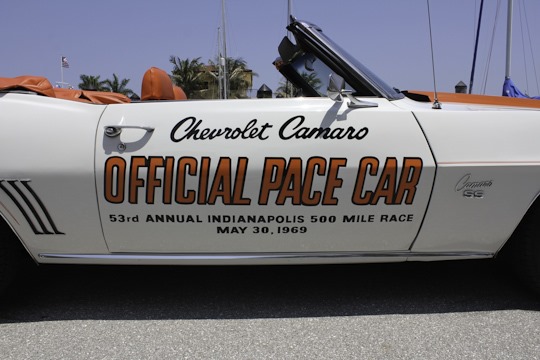
Just like the pace car at the Indianapolis 500 sets the pace for the start of the race and dramatic changes during the event such as yellow and red flags, you control the pace of your story. Tools such as dialog versus narration, short staccato sentences versus thick, wordy paragraphs, and the treatment of action versus emotion puts you in control of how fast or slow the reader moves through your story. And just like the colors on a painter’s pallet, you should make use of all your pacing pallet tools to transparently control how fast or slow the reader moves through your story.

How about you Zoners? Got any hot tips on pacing?                                           

Reimagining the Past

photo 4I returned from an amazing trip to India all the more excited about possible future projects not just because my ‘on the ground’ research was more fruitful than I expected, but because I’d been able to experience that critical connection to history that will (I hope) provide the window I need to reimagine the past. I’d felt this connection once before, in Venezuela, and it provided me the impetus for writing my first Ursula Marlow mystery, Consequences of Sin.

For a historical mystery writer, I need to feel a connection to the history I’m writing about. I want to convey the sensory experience of what it would have been like to live in another era and for that I need some means of accessing the past on a personal level to enable the true ‘reimagining’ process to begin. This is easy for me in a place like England where  family ties already establish that connection, but much harder when I consider other places and eras to which I have little in the way of understanding or connection.

I wasn’t sure what I’d find on my trip to India (apart from obviously some very beautiful places – see the photo of the Taj Mahal above – which is awe-inspiring – and the sharp contrast between poverty and luxury – also evident in Agra just streets away from the Taj Mahal). I certainly wasn’t sure what my reaction would be to the place or its history.

As it turned out, I was surprised how easily I felt an affinity to those Europeans who arrived in India during the late 18th and early 19th centuries (the period that I had, not surprisingly, been researching with a future novel in mind). Although many historical places were difficult to isolate against the noise, traffic and bustle of modern life in India, I had no trouble reimagining what it must have once  been like. I also found that I was beginning to inhabit the mind and imagination of some of the characters I had begun to sketch out in my head before my trip, and so much of what I saw, smelled, and heard could be accessed through the prism of their thoughts and background, not just my own.

photo5One of the most surprisingly things to come out of my research was that the place I had originally believed would be the initial setting for my story (Hyderabad) was totally displaced by my experiences in another city (Udaipur – photo to the right) and I saw quite clearly my characters inhabiting this landscape and not the one I had previously envisaged (only downside, a whole new set of history books to read!).

One of the best things about travel is that it rarely provides the experience you expect – and it’s in the unexpected that I find the greatest inspiration.

So now I’m back, I just need to get down to the business of actually writing. In the meantime, I’d love to hear some TKZers’ unexpected travel and research experiences – how have they inspired your writing?

Top Ten Things You Need to Know About Characters

Scarlett210. Characters are how  readers connect to story

I’ve read books about the history of eras, and while interesting, they are nothing compared to a good biography (I’m currently reading H. W. Brands’ biography of Andrew Jackson). Why? Because we are more fascinated with people than epochs. (I once heard history described as “biography on a timeline.”)

We all love twisty turny plots, chases, love, hate, fights, freefalls––all of that. But unless readers connect to character first, none of that matters.

9. On the other hand, character without plot is a blob of glup

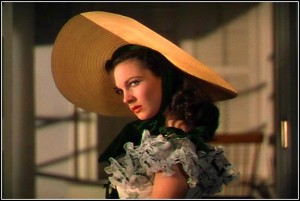
Contrary to what some believe, a novel is not “all about character.” To prove the point, let’s think about Scarlett O’Hara. Do you want 400 pages of Scarlett sitting on her front porch, flirting? Going to parties and throwing hissy fits? I didn’t think so. What is it that makes us keep watching Scarlett? A little thing called the Civil War.

A novel is not a story until a character is forced to show strength of will against the complications of plot. Plot brings out true character, rips off the mask, and that’s what readers really want to see.

“Blob of glup,” by the way, is a term I remember from my mom reading me The Thirteen Clocks by James Thurber. I always thought it quite descriptive.

8. Lead characters don’t have to be morally good, just good at something

Two of the most popular books in our language are about negative characters. I define a negative character as one who is doing things that the community (theirs, and ours) do not approve of, that harm other people. A Christmas Carol has Scrooge, and Gone With the Wind has Scarlett. Why would a reader want to follow them?

Two reasons: They want to see them redeemed, or they want to see them get their “just desserts.”

The trick to rendering a negative Lead is to show, early, a capacity for change. When Scrooge is taken back to his boyhood, we see in him, for the first time, some compassionate emotion. Maybe he’s not a lost cause after all!

Or show that the negative character has strength, which could be an asset if put to good use. Scarlett has grit and determination (fueled by her selfishness) and just dang well gets things done. We admire that, and hope by the end of the book she’ll turn it to something that actually helps those in her world. She does, but by then it’s too late. Rhett just doesn’t give a damn.

7. Characters need backstory before readers do

Yes, you have to know your character’s biography, at least the high points. One question I like to ask is what happened to the character at sixteen? That’s a pivotal, shaping year (unless your character actually is sixteen, in which case I’d go to age eight).

But you don’t have to reveal all the key information to readers up front. In fact, it’s good to withhold it, especially a secret or a wound. Show the character behaving in a way that hints at something from the past, currents below the surface. Why does Rick in Casablanca stick his neck out for nobody? Why does he play chess alone? Why doesn’t he protect Ugarte? Why doesn’t he love Paris? We see him act in accord with these mysteries, and don’t get answers until well into the film.

6. But readers want to know a little something about the character they’re following

Against the advice that you should have absolutely zero backstory in the first fifty pages, I say do what Stephen King, Dean Koontz, Michael Connelly and most every bestselling novelist does: sprinkle in bits of backstory in the opening pages. But only what is necessary to help readers bond to character.

A rule of thumb I give in my workshops is this: In the first ten pages, you can have three sentences of backstory, used all together or spread out. In the next ten pages, you can have three paragraphs of backstory, used all together or spaced out. This will force you to examine closely what you include, saving the rest for later, and letting the story get cracking.

5. Memorable characters create cross-currents of emotion in the reader

We all know about inner conflict. A character is unsure about what he’s about to do, and there’s an argument in his heart and soul, giving him reasons both for and against the action. That’s good stuff, and one way to get there is to identify the fear a character feels in each scene.

But to create even greater cross-currents of emotion in the reader, consider having the character do something the absolute reverse of what the reader expects. Brainstorm ideas for this, and you’ll often find a great one down the list, beyond your predictability meter. Put that action in. Write it. Have other characters react to it.   

Only then find a way to justify the behavior, and work that into your material.

It was E. M. Forster, in Aspects of the Novel, who defined “round” (as opposed to “flat”) characters as those who are “capable of surprising us in a convincing way.”

4. Great villains are justified, at least to themselves

The antagonist (or as I like to put it, the Opponent) is someone who is dedicated to stopping the Lead. It does not have to be a villain, or “bad guy.” It just has to be someone on the other side of one definition of plot: two dogs and one bone.

When you do have a bad guy opponent, don’t fall into the trap of painting him with only one color. The pure-evil villain is boring and manipulative, and readers won’t fall for it. You’re also robbing them of a deeper reading experience (for which they’ll thank you by looking for your next book).

One exercise I give in workshops is the opponent’s closing argument. Pretend they have to address a jury and justify their actions. They are not going to argue, “Because I’m just a bad guy. I’m a psycho. I was born this way!” No bad guy thinks he’s bad. He thinks he’s right.

Make that argument. Weave the results into your book.

3. Don’t waste your minor characters

One of the biggest mistakes I see new writers make is putting stock characters into minor roles: The burly bartender, wiping glasses behind the bar; the boot-wearing, cowboy-hat-sporting, redneck truck driver; the saucy, wise-cracking waitress.

Instead, give each minor character something to set him or her apart from the stereotype. Think of:

• Going against type (a female truck driver, for example)

• An odd tick or quirk

• A distinct speaking style

Use minor characters as allies or irritants. Even those who have only one scene. A doorman, for example. Instead of his opening the door for your Lead, have him give the Lead a hard time. Or have your Lead in a hurry but the cab driver is lethargic and chatty.

A little time spent on spicing up minor characters will add mounds of reading pleasure to your readers.

2. Great characters delight us

When I ask people to name their favorite books or movies, and then ask why, it’s invariably because of one great character. As good as Harrison Ford is in The Fugitive, people always mention Tommy Lee Jones, and even his famous line, “I don’t care!”

The Silence of the Lambs? Two great characters. The absolutely unforgettable Hannibal Lecter, and the insecure but dogged trainee, Clarice Starling. Lecter delights us (because we are all a little twisted) with his wit, deviousness, and dietary habits. Clarice delights us because she’s the classic underdog who fights both professional and personal demons.

1. Great characters elevate us

Truly enduring characters end up teaching us something about humanity and, therefore, about ourselves. They elevate us. And that is true even if the character is tragic. As Aristotle pointed out long ago, the tragic character creates catharsis, a purging of the tragic flaw, thus making us better by subtraction.

On the positive side, I think of Harry Bosch and Atticus Finch, both on a seemingly impossible quest for justice. I’m the better for reading about them, and those are the kinds of books I always read more than once.

On the negative side, I think of the aforementioned Scarlett O’Hara. We are pulling for her to do the right thing, to get with it, to join the community of the good. Then she goes off an marries some other guy she doesn’t love and uses him mercilessly. When she finally suffers the consequences of her actions we, too, are duly warned.

So, TKZers, when you think of an unforgettable character, who comes to mind? What is it about this character that moves you? Elevates you? Makes you want more of the same?