Critical Scenes Need Nail-Biting Details

Captivate Your Readers_medJodie Renner, editor & author  @JodieRennerEd

For mundane scenes, it’s best to spare readers the details. We don’t need to know that your character got up, showered, dressed and had toast and eggs before heading off to work. Yawn.

On the other hand, when it comes to significant scenes where your character is trying to escape confinement or otherwise fight for his life, be sure you don’t skip over the details. If it’s a life-or-death moment, show every tiny movement, thought, and action. To increase tension, suspense, and intrigue, milk those crucial scenes for all they’re worth.

Below are some “before” examples, inspired by passages I’ve edited. In each example, including additional detail, such as emotions, physical sensations, and reactions, would be much more effective in bringing the scene to life and keeping readers on the edge of their seats.

I’ve quickly created a possible “after” example for each one to illustrate what I mean, but I’m sure you can do even better.

Setup: Escaping from an insane asylum.

Before:

Harley whispered, “I managed to lift the keys. Four in the morning. Get through the woods. I’ll be waiting in a car on the other side.”

Jennifer didn’t sleep at all that night. Four a.m. couldn’t come soon enough. Harley had chosen that time because it was the morning shift change, when the attendants met to discuss what patient problems to look for. After they had settled into the cafeteria, Jennifer ran to the supply room that had an exit door at the other end. The keys worked perfectly, and she was out behind the hospital in less than a minute.

That was way too easy for suspense fiction. Nothing went wrong! Yawn. Let’s try that again:

After:

Harley whispered, “I managed to lift the keys to the supply room. Inside the room, there’s an exit door that leads to the backyard. Do it at four in the morning. It’s shift change, and they’ll all be meeting to discuss the patients. Get through the woods. I’ll be waiting in a car on the other side.”

Jennifer didn’t sleep at all that night. At four a.m., she threw on a robe and crept toward the supply room, flattening herself against the walls and ducking into doorways. She peeked around the last corner. Damn. An orderly was coming out of the supply room carrying towels. Jennifer ducked her head back and hid in a dark recessed doorway, clutching the keys so they wouldn’t jiggle.

She heard footsteps approaching. She held her breath. The orderly passed, engrossed in his cell phone, so he didn’t notice her. She raced to the storage room, glad she was wearing sneakers. Looking around, she tried one key after another, before finally hitting one that opened the door. Yes. She crept in and quietly closed the door behind her, then fumbled for the light switch so she could find the back exit. Just as she saw the exit straight ahead, she heard footsteps approaching. Damn. The orderly must be back. She snapped off the light and tiptoed toward the Exit sign in the dark. She fumbled for the doorknob and found it just as she heard a key in the other door. She yanked out the door and slipped out.

So far so good! But she still has to make it across the back field to the cover of the woods. And did the orderly hear her close the exit door?

Another “before” to continue the same story:

Jennifer looked around. It was pitch black and raining like crazy. With every step, she would sink a few inches into the muck, more walking than running. When she got to the edge of the yard, she searched for a hole in the hedge, then crawled through. She hopped a barbed wire fence and saw a blue Toyota idling on the side of the road. She took off on a run.

My advice to the author of the original version was:

For nail-biting scenes like this, it’s best to have more “showing” than “telling.” Stretch it out a bit here for more trouble and tension and suspense. Also, amp up the tension by adding more danger and threats.

After:

It was pitch black and raining like crazy. And she was in her hospital gown. She started to run across the field, sinking into the muck with every step, more walking than running. Behind her, the door opened, and a male voice yelled “Hey, you! Stop!”

Crap! She picked up her pace, glad she was away from the lights and there was no full moon. As she raced through the soggy field, the mud sucked off one shoe, then another. The alarm started blaring behind her. She limped along, bare feet sinking into the mud with each step.

When she finally reached the woods, she discovered that what from her window had looked like a thin hedge was instead a thorny knot of blackberry bushes. She ran along the edge looking for an opening. At last, she found an opening and crawled through. She ran along the deer path for a while, then stopped. A barbed wire fence. Damn! She carefully grabbed the wires and pulled them up and down, then crawled through with difficulty. She could hear yelling and running behind her. She ran to the road and saw a blue Toyota idling there. She took off on a run.

Here’s another example of adding details, emotions, and reactions to create a more riveting scene.
Writing a Killer Thriller_May '13Before:

Linda opened the door of the tiny apartment.

Terry was gone, his clothes were gone, and so was the money. What! She ran down the concrete steps and into the parking lot. The Jeep was gone.

After:

Linda opened the door of the tiny apartment.

Where was Terry? She called his name. No answer. She surveyed the small room, then checked the bathroom and tiny bedroom. No sign of him. His clothes were gone too. What the–? Did he take the money, too?

Starting to panic, she searched under the bed and in the closet for the bag of cash. She yanked open all the dresser drawers and pulled out the contents, then ran and ransacked the small kitchen and living area. Nothing. Shit! The rat.

She ran down the concrete steps and into the parking lot. The Jeep was gone. Christ. Now what? She stomped her foot and ran a hand through her hair in frustration.

And one last example:

Before:

Ken ran down the back stairs. The wind was whistling between the buildings, and it felt like it was twenty below. He finally saw an old beater in the back of the parking lot that wasn’t locked, so he jumped in, hotwired it, and got the hell out of there.

It would be much more effective to show the details of his struggle so the reader can picture what he’s going through and get caught up in it, rather than skimming over and summarizing like this.

After:

Ken ran down the back stairs. The wind was whistling between the buildings, and it felt like it was twenty below. Hoodie up over his head, he darted through the parking lot, trying one car door after another. All locked. Damn! He looked around. A dented beater sat in the back of the parking lot. He dashed over and tried the door. It opened. Yes! He jumped in, hotwired it, and got the hell out of there.

But don’t show details the character wouldn’t notice.

On the other hand, skip any extraneous or distracting details, things the character wouldn’t notice or care about at that critical moment.

Say your two characters, a young male and female, are on the run from bad guys in a large museum or art gallery. They’ll be desperately looking for places to duck into or exits, concentrating on escaping alive. This is not the time to go into detail about the interesting artwork or ancient artifacts around them. Perhaps mention a few in passing as they consider ducking behind them, or for some other reason relevant to their life-or-death situation. Describing their surroundings in detail is not only unrealistic; it dissipates the tension and slows down the pace at a time when they should be charging through at a break-neck speed.

So be careful not to bog down your fast-paced scenes with a lot of detail the characters wouldn’t have time to notice.
Fire up Your Fiction_ebook_2 silversFor more tips on pacing your scenes, including how to write effective action scenes, check out my three editor’s guides to writing compelling fiction: Captivate Your Readers, Fire up Your Fiction, and Writing a Killer Thriller.


Once More With Feeling: Revisiting The Art v. Commerce Debate

Crumbling Wall

Last Christmas I watched the 1938 Henry Fonda movie called I Met My Love Again. The plot: A woman returns to her Vermont sweetheart ten years after running off to Paris with a writer. Those dang writers! Love ‘em and leave ‘em!

Joan Bennett plays the woman. She meets the writer during a snow storm. Her sleigh overturns and the horse runs off. She finds a cabin and knocks on the door. An Errol Flynn lookalike answers. He has a roaring fire going and a page in a typewriter.

Joan comes in and warms herself. They talk a bit, and he tells her he’s renting this cabin to get some writing done. This dialogue follows:

“You’re a writer?”
“Yes.”
“Do people really publish what you write?”
“Yes, the wrong people. You see, I’ve got to make a living, so I write trash to keep alive.”

She looks down at the page in the typewriter and reads:

Then I picked up the knife and sank the sharp steel blade into his chest. He sighed gently, and turned his great eyes – those eyes I once loved so – to mine. That was my first man.

CHAPTER TWO

I Go Straight

The writer admits:

“That’s the trash, a confession story, slated for the March issue of I Tell All. It’s the true story of a gal named Lyla Rigby. I am Lyla Rigby.”

I snorted. What a great example of the old bias against “writing for a living.” Such a “trashy” thing to do! A real writer wrote novels, labored over them, and did it mainly for art’s sake. Those who slummed in the world of pulp fiction were to be scorned, which is why many of them hid behind pseudonyms.

That kind of thinking was certainly widespread back in the day. But its tentacles still exist, as evidenced by the hissy fit Harold Bloom threw several years ago when Stephen King was given a major literary award. There is also a steady vibration of snark in articles such as The Death of the Artist—and the Birth of the Creative Entrepreneur. Here’s a clip:

Yet the notion of the artist as a solitary genius—so potent a cultural force, so determinative, still, of the way we think of creativity in general—is decades out of date. So out of date, in fact, that the model that replaced it is itself already out of date. A new paradigm is emerging, and has been since about the turn of the millennium, one that’s in the process of reshaping what artists are: how they work, train, trade, collaborate, think of themselves and are thought of—even what art is—just as the solitary-genius model did two centuries ago. The new paradigm may finally destroy the very notion of “art” as such—that sacred spiritual substance—which the older one created.

The article posits that the concept of the artist changed drastically in the 20th century. “As art was institutionalized, so, inevitably, was the artist. The genius became the professional.” This awful turn of events has led to the crumbling of “mediating structures” like publishing companies, who were once the gatekeepers.

[W]e have entered, unmistakably, a new transition, and it is marked by the final triumph of the market and its values, the removal of the last vestiges of protection and mediation. In the arts, as throughout the middle class, the professional is giving way to the entrepreneur, or, more precisely, the “entrepreneur”: the “self-employed” (that sneaky oxymoron), the entrepreneurial self.

Which, the article concludes, leads inexorably to the death of art itself:

It’s hard to believe that the new arrangement will not favor work that’s safer: more familiar, formulaic, user-friendly, eager to please—more like entertainment, less like art. Artists will inevitably spend a lot more time looking over their shoulder, trying to figure out what the customer wants rather than what they themselves are seeking to say.

There it is, the old “art v. commerce” angle, complete with hidden assumption that something popular cannot be art, and something artistic should not be popular.

Yet Dickens, Dumas, Dostoevsky—The D Boys—all wrote great artistic works for a popular audience. Fitzgerald and Thomas Wolfe certainly desired a wide readership. In the pulps, Chandler and Hammett and Dorothy Hughes had the readers, but also said meaningful things about the mean streets and the human condition.

None of these authors wrote without the desire for financial return. As Dr. Johnson so eloquently put it, “No man but a blockhead ever wrote, except for money.”

Out on the edges, sure, you have the solo artist who doesn’t give a rip what others think. And so creates experimental pieces that don’t sell, except on rare lightning-strikes occasions.

On the other side of this divide are those who “write” monster porn (yes, it really exists) and somehow find people willing to pay for it.

But in the great in-between are those who want to entertain an audience. For some that is enough. Others want to add a little more heft to their style or theme, and that’s a good thing. Still others want to transcend genre conventions and reach for the stars. I especially like that.

So isn’t it about time to put the “art v. commerce” debate to bed? It was okay for cocktail parties in 1965—“Honestly, are you comparing Mailer to Hemingway? How droll.”—but was it ever really a substantive discussion?

How many artists are there, truly, who don’t care a fig about income? (By the way, if you do want to “suffer” for your art, it’s very easy not to make money, so have at it.)

Is the disdain for “popular art” productive or even valid?

And here’s the big one: how concerned should we be about the “crumbling” of the mediators—publishing companies, critics, agents?

The discussion may now begin.


Shorter is Better

By Joe Moore
@JoeMoore_writer

Recently, Science Fiction publisher TOR published an article on why novellas are the future of publishing. They based their theory on one important element: time. For the modern electronic reader, time is a precious commodity. If the reader can sit down with a Kindle or Nook and read a novella on a cross country plane ride or over a rainy Sunday afternoon, they can become just as satisfied as trudging through a 120k word novel. The enthusiasm of publishing novella e-books is spreading throughout the traditional publishing industry. Lower costs, quicker turnaround, more product in the pipeline.

A novella can fall anywhere between 17,500 and 60,000 words. There’s a lot of latitude in that gap and publishers are going to give some wiggle room with word count. No agent or publisher is going to reject your book if you missed the count by 1k or 5k or even 10k, especially if the story blows them away.

Have you ever written a novella? Thought about it? Have you read one? Did you get as much fulfillment out of it as a full-length novel? Is your reading time becoming more precious to you than ever? Chime in and let us know.

For those who wonder about word count, here’s a general rule of thumb guideline to counting words:

  • Epic: A work of 200,000 words or more.
  • Novel: A work of 60,000 words or more.
  • Novella: A work of at least 17,500 words but under 60,000 words.
  • Short story: A work of at least 2,000 words but under 7,500 words.
  • Flash fiction: A work of less than 2,000 words, usually under 1,000.

Creating Tangible Connections in an Online World

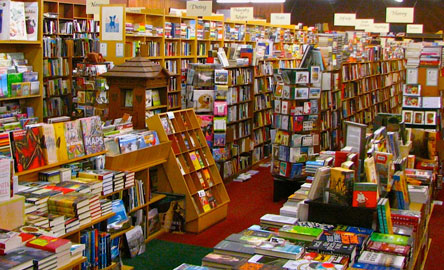
Chaucers-2Later today I’ll be driving north up the coast to attend a book signing in Santa Barbara. The event will be held at Chaucer’s, which the LA Times has called “the little bookstore that could“. Chaucer’s has flourished and grown during a time when other local retailers, including mega-bookstores such as Borders and Barnes and Noble, have faltered and closed their doors in the wake of Amazon and the advance of online marketing.

I’m enthusiastic about the prospect of enjoying some tangible, human interaction that is centered around reading and books.  I should seek out this experience more often, I  suddenly realize. In years gone by, I used to make regular pilgrimages to bookstores, if only for a fly-by and to grab a cup of java. Nowadays, most of those bookstores have disappeared. Seldom did a month go by in the past when I didn’t find some reason for dropping by our local library. Today, I always seem to be hunched behind my laptop or iPad.

When did the reading experience become so solitary? (Let’s not even mention writing–the craft of writing has always been a lonely road.)shutterstock_62915473

So here’s my epiphany for the day (you’re probably already aware of it): when we replaced our physical reading venues with virtual ones, we also lost a quality of personal connection. Those connections may have seemed fleeting and minor in real time, but they added real value, I think. I miss them.

So tonight, I’m planning to set things back to rights. I’m going to honor and celebrate the human connection of reading, by driving two hours to attend a book reading at Chaucer’s. (Tonight’s author, by the way, will be Robin Winter. She will be signing and reading from her latest science fiction novel, WATCH THE SHADOWS. If you’re in the Santa Barbara area, I hope to see you there!)

Am I alone in feeling that something important has been lost during the gradual transition to an online reading world? Please share your experience about what has changed for you as a reader in recent years.

What do you read while writing?


images-1Inspired in part by this week’s New York Times ‘Bookends’ article (What do you read while you write?) I thought I’d venture to assess my own reading habits (both good and bad) while in the midst of writing my current WIP. As both Zoe Heller and Anna Holmes acknowledge, the act of ‘reading’ while supposedly engaged in the writing process  encompasses a range of motivations – from seeking inspiration to procrastination to sheer ‘writing avoidance’.
Many writers I know avoid reading anything in the genre they are currently writing for fear that their own voice or plot might be unduly influenced, but as Zoe points out this might involve forswearing off a vast array of fiction for years (given how long it can take to finish a WIP). When I was writing my first book, I borrowed countless historical mysteries from the library, all of which I read, examined and dissected in the name of understanding the genre I was attempting. When in the thick of actually writing the final manuscript though I admit I hesitated continuing to read too many of these same books lest my own work feel derivative or a horribly cheap imitation. Sometimes the worse thing you can do is read an amazing book when you’re feeling particularly vulnerable about your own writing standards!

We can’t forget the important adage, however, that in order to be a good writer you need to read and read widely. I am ever thankful for my book group for ensuring that at least guilt alone will drive me to read outside the research I usually have to do for my novels. That research is, unfortunately, also a great excuse to do ‘writing avoidance’ reading and many an extra hour (or four!) has been spent on obscure historical research that ended up as one line (if I’m lucky) in one of my novels.

I was comforted at least to read that both Zoe Heller and Anna Holmes suffered the same weakness for ‘reading’ online when they really should be writing. Facebook status updates, trashy headlines on the The Daily Mail or ‘TV scoop’ on E-online are all traps I easily fall into when I think I’ll just ‘take a break’ and before I know it 5 minutes has turned into 20 and my brain has turned to mush.

So what about you TKZers, what do you ‘read while you write’?

  • Do you have books you turn to for inspiration?
  • Do you read or avoid books in the same genre as your current WIP?
  • How much of your ‘reading’ ends up as procrastination or writing avoidance?


How Should Characters Change?

Riggs

Got an email from a writer which asked the following (used by permission):

Dear Mr. Bell,

Ok, so I’m big on stupid questions. I just had a thought as I was musing about my latest book. I know the main character has to change. That’s a big deal. But what about secondary characters? What about the bad guy? Do the secondary characters change, but less? or something… And I want the bad guy to go from neutral to really bad… Does that make sense? Not something I can google…

First off, that’s not a stupid question at all. In fact, it’s a great question with good instincts about the craft. Here are my thoughts on the matter.

The Main Character Can Change in Two Ways

In my book, Write Your Novel From the Middle, I explain that not all MCs have to change from one state of being to another. That kind of arc is, of course, common in fiction.

For example, Ebenezer Scrooge. He starts out as a misanthrope and ends up a generous, compassionate member of the community. Martin Riggs, the suicidal cop in Lethal Weapon, changes from self-destructive loner to close friend of his partner, Roger Murtaugh, and Murtaugh’s whole family.

This type of change comes only through the fire of Act II. A life lesson is learned. Now the MC is a new person with something of value for the community. As my friend Chris Vogler puts it, the hero returns home with an elixir: he has new wisdom and insight to share with his ordinary world.

Of course, as I also note, the MC can change in the opposite direction. Michael Corleone goes from a loyal American soldier to the soul-deadened Godfather of the Corleone family. That’s because in Act II his father is nearly killed by members of another crime family. At the crucial “mirror moment,” Michael realizes he’s the only one of the three brothers who actually knows how to exact revenge. Thus begins his negative slide.

In this type of large-scale change, the MC goes from pole to pole.

But that’s not always how a character changes. There’s another way. That’s when the MC retains the same basic nature, but grows stronger because of the life-and-death challenges of Act II.

An example is Dr. Richard Kimble in The Fugitive. He’s the same decent man at the end as he was at the beginning. But he has had to learn survival skills. He is forced to grow stronger because he was wrongly convicted of murdering his wife. When he escapes from a prison bus, he has to stay alive and out of the law’s reach so he can find the real killer.Marge

Marge Gunderson, of Fargo, is the same decent, small town police woman at the end as at the start. But she has to ramp up her skills to bring a vile murderer and a devious scam artist to justice. This is not like the misdemeanors she’s used to!

So consider what kind of change your MC is going through: change of nature, or growing stronger?

Also consider this: A character can resist change. He can be “offered grace” (Flannery O’Connor’s term) but turn it down. That’s what makes for tragedy.

In Act IV of Othello, Emilia, Desdemona’s attendant (and, unfortunately, the wife of Iago) pleads Desdemona’s innocence to Othello in no uncertain terms. But when she exits, Othello mutters that she is a “subtle whore” and refuses to believe her. He kills his wife instead.

Finally, change can come too late, which is also tragic. Think Scarlett O’Hara in Gone With the Wind.

Secondary Character Change

A powerful trope is the change of secondary characters, brought about by the courage and example of the MC.

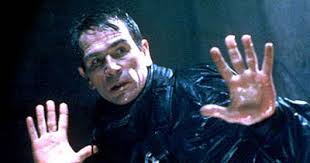
JonesHere is where The Fugitive elevates above most action films. The opposition to Richard Kimble is Sam Gerard, the lawman played by Tommy Lee Jones. He makes it clear early on he has only one job: catch Kimble. When Kimble has a gun on him and insists he’s innocent, Gerard says, “I don’t care!” Because it’s not his job to care. At that point Kimble thinks, “Oh, crap” (my interpretation of Harrison Ford’s facial expression) and so he dives off that spillway and goes kersplash in the waters below.

But observing this, and other behaviors of Kimble––as well as seeing what a lousy job the Chicago cops did on the original investigation––Gerard does begin to care. Until, at the end, he helps Kimble get the real bad guy.

Another example is Louis, the corrupt French police captain in Casablanca. Watching how Rick gradually begins to take sides against the Nazis, Louis finally finds his conscience at the end, letting Rick off the hook for murdering Major Strasser. To the arriving police force Louis says, “Round up the usual suspects.” Not only that, Louis walks off with Rick to join the war effort. It is “the beginning of a beautiful friendship.”

This kind of change enhances the theme of a story. We like to see things like justice and honor prevail. When they do, it ought to be powerful enough to inspire secondary characters, too.

Bad Guy Going From Neutral to Worse

There is no reason at all you can’t show a villain growing more villainous as the story moves along. You can show this via parallel plotline from the villain’s POV, or you can utilize it as the “shadow story,” which I wrote about here. What happens off screen with the villain? How is he altering his plans, ignoring his conscience, falling further and further from his humanity? Give it some thought and weave that material into the narrative as you see fit.

A plot is about a character who uses strength of will against the forces of death––be they physical, professional, or psychological. No one goes through such a crucible without changing or becoming stronger.

It’s your job to show us the change and make us glad we stuck around for a whole book to see it.

What are some of your favorite examples of character change?


Where There’s a Will…

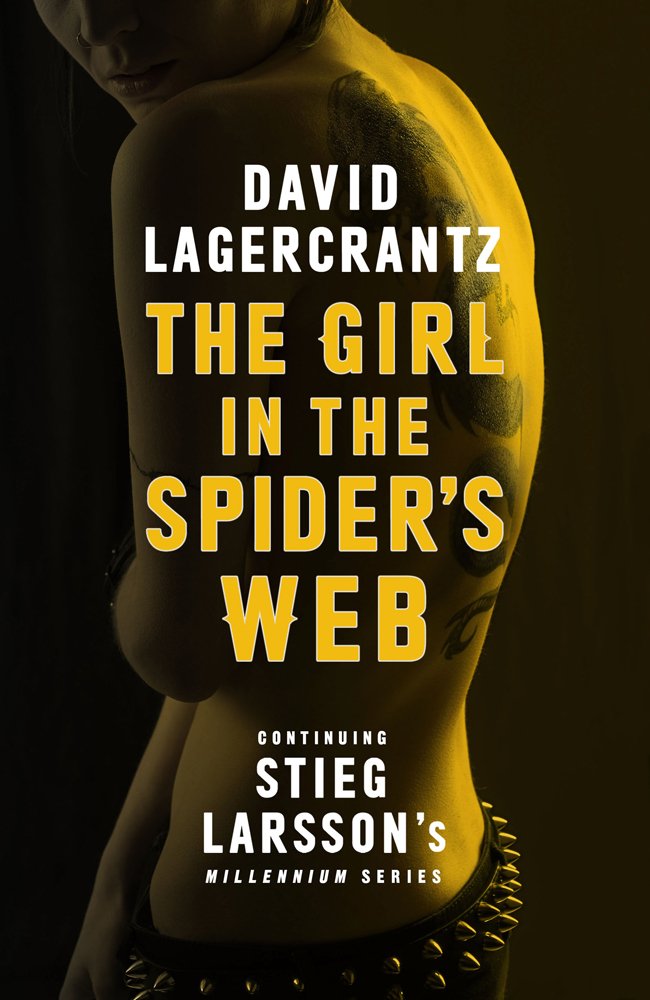
The Girl in the Spider's WebI regret to inform you that I am eternally behind the curve. My seventeen year old daughter would happily reveal that state of affairs, and does so at every opportunity (notwithstanding that it was I who first told her about Leon Bridges). So it is that it was only yesterday when I learned that this coming September 1 we’ll be seeing The Girl in the Spider’s Web, a fourth installment in the Lisbeth Salander canon (also known as The Millennium Trilogy) which began with the now world-famous The Girl with the Dragon Tattoo by Stieg Larsson.  The new volume will be written by David Lagercrantz, who has been retained to write it by Larsson’s estate, which consists of Larsson’s father and brother. And therein lays the rub.

The lead up to the publication of the Salander books has been covered exhaustively elsewhere and can be had with Google search. For our purposes today we’ll touch only on the high (or low) points. Larsson conceived the Salander canon as consisting of ten books. He wrote three, substantially completed a fourth, and outlined volumes five through ten. Larsson died of a heart attack in 2004, however, before any of the books were published.  A will which Larsson drafted in 1977 was discovered after his death, but his signature had been unwitnessed. The will was thus declared invalid under Swedish law. Worse, Larsson’s longtime companion, Eva Gabrielsson, could not inherit from him under intestate succession, which is the order in which relatives can inherit from someone who dies without a will. Larsson’s intellectual property — the Salander books — thus passed to his father and brother, who were his nearest living relatives but from whom, by most accounts, he had been estranged for many years.

last-will-and-testamentMany of us — me included — believe that we are going to live forever, or at least at a point far enough in the future where it won’t make any difference, and don’t have a will as a result. While Larsson went through the motions, he didn’t go through enough of them. It is doubtful that Larsson contemplated the possibility that he would be toasting marshmallows with Karl Marx and Leon Trotsky about the time that The Girl with the Dragon Tattoo was hitting the top of the bestseller charts all over the world. The result is that Larsson’s closest blood relatives  received his entire kit and caboodle.  Ms. Gabrielsson, with whom Larsson shared home and hearth, and who may well have contributed substantially to the creation and expression of Larsson’s work, will never receive so much as a krona of royalties, or have any say as to how her partner’s property is handled going forward. That is now up to Dad and Bro. If you were hoping that one day your child might go to school with a Lisbeth Salander lunchbox, or you were planning to obtain a removable dragon tattoo to spice things up on some weekend, don’t lose hope. It still could happen.

Don’t let this happen to you. If you have created a piece — or several pieces — of intellectual property, be they published, recorded, or otherwise, have a will drafted in which a specific bequest of that property — and everything else you have — is made. Spend the money and go to an attorney who specializes in such matters; your attorney will/should make sure that your will is executed properly and in accordance with the laws of your state. Please believe me: this is much better than writing it out on a cocktail napkin on the third night of Bouchercon. Insist that your will explicitly states 1) to whom you are giving, or bequeathing, the specific intellectual property and 2) that you are granting to your beneficiary full administrative rights over the property. Should there be something that you do not want done with the property (such as action figures or computer game licensing) this would be the time to mention as well: put your restrictions in writing. If while bestowing your property you exclude someone who would otherwise be the natural object of your bounty, state why you are making the choices you are making. Yes, you might hurt someone’s feelings. If, however, you state that you are leaving your intellectual property to your brother because you feel that your brother is better able to deal with business matters, contesting your will successfully will be problematic for your sister.

You laugh. But you never know. There are any number of authors who didn’t live to see, and thus enjoy, their success. Do you really want someone you don’t even like deciding how your work will be treated, or — even worse — a government official choosing who will control things? The answer of course is “no.” Don’t let your loved one, whoever they may be, end up like Eva Gabrielsson.

Reader Friday: A Room With a View?

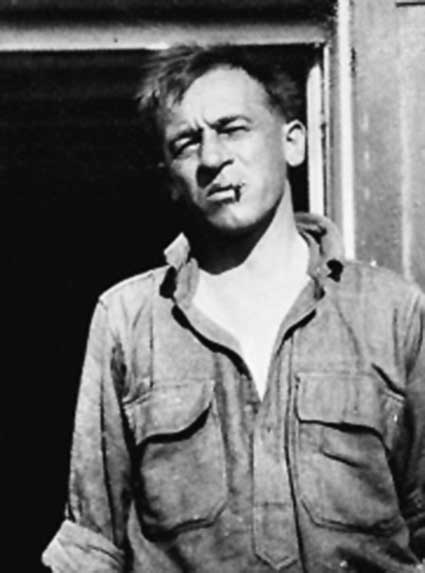
AVT_Blaise-Cendrars_5947A writer should never install himself before a panorama, however grandiose it may be … Like Saint Jerome, a writer should work in his cell. Turn the back.

– Blaise Cendrars 

Can you work with a view? Do you need silence or do you like a little noise? Where is your preferred place to write?

First-page Critique: THINGS NOT FORGOTTEN

Today we’re critiquing the first page of a story called THINGS NOT FORGOTTEN. I’ll add my comments at the end, and then I invite you all to add your thoughts in the Comments.

THINGS NOT FORGOTTEN

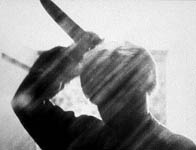
normanbates_thumb2Wednesday, 10:30 p.m.

But the tongue can no man tame; it is an unruly evil, full of deadly poison.

James 3:8

Keep running. Don’t stop until you know the madman is gone. But he was still alive.

Jason smelled his own sweat…pungent and sour. And vomit. He’d thrown up, splattering the front of his plaid flannel shirt, the taste still in his mouth. Urine soaked the front of his jeans. He couldn’t believe he’d pissed himself.

How could he run away and leave his best friend?

Eric’s screams still echoed inside his head.

His feet pounded the earth. He glimpsed over his shoulder to see if the maniac chased after him. His heart pulsed in his ears.

When he turned back, his forehead slammed into a branch. Jason staggered but stayed on his feet. Eyes watered from the pain.

Got to keep running. Don’t look back.      

His feet obeyed despite the dizziness swimming in his head. Moonlight flickered patches of light through the trees. Instead of providing a path, it only contributed to the vertigo. It had been two years since he and Eric came to the cabin to hunt. If only he somehow had grabbed his rifle when he escaped, but there was no going back.

As he ran, he used his hands as battering rams to clear a path. Knock down any low hanging branches. Twigs and brush slashed at him but he refused to stop. Blood trickled down his face and arms. It mixed with sweat and stung his eyes. He swallowed. His stomach lurched, threatening to spew whatever contents remained.

His mind replayed the events in short, choppy segments. Eric and he had been drinking beer, swapping sea stories in the navy when someone knocked on the front door. If only they had never opened it.

Now his best friend was dead, or soon would be. He didn’t know for certain. As the psychopath tortured Eric, Jason worked his hands and feet out of the rope binding him to a chair.

The nearest neighbor was five miles away, but he didn’t know in what direction. In his haste, he rushed into the thicket of trees and brush, running as fast as he could. Nothing else mattered.

But he must be far away from the cabin by now. Rare streaks of moonlight revealed glimpses of the ground. He tripped over a fallen tree. He tried to catch himself, arms flailing to catch anything his hands could grasp. He went down hard, his body spiraling across leaves like a helicopter until it crashed into a tree.

Pain shot through his ankle.

Get up!

His leaden legs wouldn’t obey. A twig snapped, then a rustle, soft and subtle. Then the crunch of leaves and footsteps like someone closing in on him.

It’s not possible. How could he have found me?

My comments:

I have to say my stomach tightened as I read this page, which is good news for the writer. The use of short sentences and strong verbs (pounded, slammed, staggered, flickered) are appropriate for an action scene. The punchy verbs and short sentences used in this example help underscore the sense of urgency and panic that is being experienced by the character. (An aside: this scene reminded me of a newspaper story I once read about a mass shooting that took place in Australia. The story included an unforgettable description of a mother and her two young girls fleeing into the brush, trying to escape from the shooter.)

I did get distracted by a couple of things in the writing. As I first read the third sentence, “But he was still alive,” I wasn’t sure if “he” referred to to the victim or killer. That unclear pronoun reference should be fixed to avoid causing potential confusion.

I found the references to the actual encounter with the killer to be generic, and therefore a bit of a let-down. Imagine that a maniacal killer has suddenly appeared at the door of your remote cabin in the woods, tied you up, and tortured your best friend. Wouldn’t you have a vivid impression of the experience as you attempt to flee? Each moment spent with such a  monster would be burned into into your brain cells. I think the writer could improve the scene by finding a stronger way to convey that experience to the reader.

The sentence, “It had been two years since Eric and he came to the cabin to hunt” was confusing. Had they been living in the woods for two years? The writer needs to rework that section, or simply edit out that line.

The phrase “dizziness swimming in his head” struck me as a bit off the mark. Same comment applies for the image of the body spiraling like a helicopter. That sentence  comes off as a bit of overreach. (Also, I think one tends to think of a person’s arms flailing in space in a circular pattern like a helicopter, not the entire body.)

This comment is a really tiny nit: I stumbled on “rare streaks of moonlight”, probably because I initially misread it as “rare steaks.” (Silly, I know, but you don’t want to lose any reader for a reason that can easily be avoided.)

Overall, I think this page is in promising first-draft condition. The writer just needs to sharpen the language here and there, and do some polishing with an edit.

Now I’d like to hear from the rest of you. How do you like this first page? Please add your comments and suggestions. And thank you to the brave writer who submitted this work!