Just One More Chapter

By Joe Moore

Welcome to 2015. All of us at TKZ wish all of you the best of New Years. From a writing perspective, I hope you produce your best work yet. And from a reader’s perspective, may you discover a new author that thrills you beyond expectations.

As some of you know, I write supernatural thrillers with co-author, Lynn Sholes. We are at the midway point of THE TOMB, book 3 of a series. It is the eighth novel we’ve written together. We’re often asked how two people can write fiction. It’s pretty much a mystery, but I’ve pulled back the curtain in a previous blog post to answer the question.

What I want to reveal today are some of the secrets and tricks we use to keep our readers turning the pages to our thrillers. It’s important to remember that these are the techniques we use; they may not be right for you. They might even make you feel uncomfortable, but our job is to write the best, most exciting story we can. Here’s how we do it.

Probably the number one technique is short chapters. And when I say short, I mean SHORT. With few exceptions, we try to max out each chapter at around 1000 words. Many chapters are only 500-700. Now you’re probably thinking: What can you do with 500 to 1000 words? Answer: Only tell what’s important. Leave out the rest. What moves the story forward or develops the characters? That’s the questions we ask. Then we write it in 1000 words or less.

Number two technique is to end every chapter with a cliffhanger. Leave the reader hanging. Give them a taste of what’s to come, then stop. Here’s an example—the last paragraph from the opening chapter of THE TOMB.

I grabbed the binoculars and searched in the direction of La Pampa for Marquez and his driver. They were standing in front of the restaurant with their backs to me; the colonel talking on his phone. If I called him, he would see my caller ID and no doubt ignore me. For all I knew he was giving the command to start the assault. I thought of blowing the car horn to attract his attention, but that would also attract the attention of the two targets in the restaurant. The same problem if I got out and started yelling for the colonel’s attention. My last option was the one I chose. I pulled up the right leg of my jeans and removed the Walther PPK strapped to my calf. Slipping out of the SUV, I moved at a quick pace to the door on the side of the building. I reached for the knob, determined to follow the most wanted man on the planet.

Technique number three is to keep them hanging. The next chapter should take them someplace else, probably the continuation of the cliffhanger from two chapters ago. The reader finishes the chapter, knows it’s late and she should be in bed, but takes a peek at the next chapter and sees it’s the answer to a previous cliffhanger. And it’s only two or three pages. What does she do? She reads just one more chapter.

The fourth trick we use is to ask ourselves what the reader thinks will happen next. Then we do something different.

Writing in this fashion creates fast pacing, dynamics, and the unexpected. I love to read books like that. And I like to write them. I want to be placed in a position where I have to read just one more chapter. And I love doing the same thing to my readers.

How about you guys? Any secrets and tricks you want to share?

Gag Orders, And Other Rules To Get The Most From Critique Groups

As many here know, a good critique group can be a writer’s best friend. They give us feedback, moral support, and camaraderie. I’ve belonged to several critique groups over the years. Some groups have been extremely helpful, others less so. Over time I’ve developed a few rules, which I apply only to myself. These self-imposed rules help me extract the most benefit from any type of critique group:

1. Gag Order Rule Number One. When hearing feedback during a critique, I may not interrupt the critique with long-winded explanations of why I wrote something the way I did.

It doesn’t matter why I wrote it that way. Someone is telling me it doesn’t work. I must accept it and move on.

2. The two-thirds validity rule. 

If two-thirds of the group gives the same feedback, it’s probably a valid criticism. I must pay attention to it.

3. Apply feedback, improve. Rinse, repeat.  

We all know people who get the same feedback from the critique group, month after month. And yet their writing samples consistently reflect the same issues, month after month. I don’t fret about these people. I just don’t want to become one of them.

4. Expect to hear about problems, not solutions.

Critique groups are going to tell me what’s not working on my  pages. They usually won’t be able to explain how to to fix a writing problem, because very few people actually know how to fix problems. Fixing things is my job, not theirs. 

5. Gag Order Rule Number Two. When I disagree with the feedback, I nod solemnly, pretend to make a note, and say nothing. 

So these are just my rules that I use to keep me sane and productive in any type of critique group. Do you have any you can share?

New Year, New Goals, New Look?

by Clare Langley-Hawthorne


Welcome to 2015! 

I greeted the new year in with a literal ‘bang’ as we had heating problems in our newly renovated basement and three water pipes froze and burst – so as far as I’m concerned this year can only get better:) 

Here at the TKZ, we are looking forward to a wonderful, productive, challenging year ahead for all our writing. We are also constantly looking forward to ways we can improve our blog to meet our growing readership. There have been many changes in the publishing industry since our blog’s inception in 2008 and we have been thrilled to see our readership continue to climb over the years. 

Given these changes, however, it is important for us to take a moment to reflect on our blog’s mission and the direction TKZ should take in the years ahead. 

So we thought we would take this opportunity to ask you for feedback on our blog’s direction in 2015. We know that to keep current, relevant and useful, we need to continually assess and refine both our mission as well as our content. So we’d love your thoughts and feedback on:

  • Our mission, focus and posts: We’ve noticed a shift in the blog’s direction towards focusing on the craft of writing and the issues facing aspiring as well as professional writers. Typically our blog posts focus on practical advice on writing craft as well as providing personal accounts and experiences that touch upon our writing.  Would you like to see us delve more deeply into other areas or industry trends? Would you like to see more on promotion, marketing, editorial advice or ‘indie’ publishing? 


  • Further blog contributions/guest posts: Since we now have a professional editor (thanks Jodie!) in our midst as well as professional writers spanning many genres, we were thinking about adding other professionals into the mix. Would you be interested in hearing from other perspectives (a literary agent perhaps?) on a more regular basis? Are there any other people you’d like to see providing guest posts? 


  • Other TKZ offerings: It would be great to also receive feedback on the value of critiques and other participation offerings we could potentially provide. Are our first page critiques helpful? Would you like to see more or less of these kind of offerings on our blog?


  • The ‘look and feel’ of the TKZ: We are tossing up alternative templates to give the blog a better ‘look and feel’ and any feedback on this would be greatly appreciated. We are definitely hoping to create a new look and feel for 2015, so keep a look out for the changes ahead!
Thank-you TKZers for all your comments, feedback and support over the last six years. Here’s to many more!

Seasons Greetings

AWREATH3It’s Winter break here at the Kill Zone. During our 2-week hiatus, we’ll be spending time with our families and friends, and celebrating all the traditions that make this time of year so wonderful. We sincerely thank you for visiting our blog and commenting on our rants and raves. We wish you a truly blessed Holiday Season and a prosperous 2015. From Clare, Jodie, Kathryn, Kris, Joe M., Nancy, Jordan, Elaine, Joe H., Mark, and James to all our friends and visitors, Seasons Greeting from the Kill Zone. See you back here on Monday, January 5. Until then, check out our TKZ Resource Library partway down the sidebar, for listings of posts on The Kill Zone, categorized by topics.

Make Next Year the Best of Your Writing Life

James Scott Bell
@jamesscottbell

Well, here it is, friends. The last TKZ post of the year. For the next two weeks of blogging silence let’s make it all about hearth and home, friends and family, Christmas and Hanukkah, food and football––and getting ready to make 2015 the best year of your writing life.
1. Take a Vision Day
What kind of writer do you want to be? What kind of career do you want to have? Dream. Every accomplishment begins with a vision of what it will look like and feel like to you.
Every year I go to a park for a few hours with a notebook and some music, and take stock of this life I’ve been given. I go over the big spheres of my existence: spiritual, family, community, writing. I assess and think about what I’d like to do better.
I look again at books that have spoken me over the years, like A. W. Tozer’s The Pursuit of God and Ray Bradbury’s Zen and the Art of Writing. I also like to bring along a favorite novel or two, which fires up fresh inspiration in me. Novels that remind me how sublime writing can be in any genre. Books like John D. MacDonald’s Cancel All Our Vows and Raymond Chandler’s The Long Goodbye.
What books would you choose for a day like this?
2. Set Goals
I believe in goals. I’ve set goals for myself every year, and it’s the only way I can look back and explain whatever it is I’ve managed to accomplish. If you are not satisfied with where you are, the best way to remedy that is to plan to get to where you want to be.
Goals give your dreams walking shoes.
The way to set goals is, first, decide exactly what you want to achieve. This has to be something you can control and measure. If you want to be a New York Times bestselling author, that’s not a goal because you can’t control it. What you can control is your writing schedule, your training, your word count, your study of markets and so on.
Write your goals on paper. There’s something about pen and paper that cements a goal in your mind. Every now and then write your goals again on a fresh piece of paper. That pours fresh cement.
Write your goals in present tense, as in I will…
…write 3,000 words a week.
…complete my novel by March 1.
…query three agents on April 20.
…self-publish my novel on June 1.
I would advise setting five writing goals for yourself each year.
One of your goals should be growth as a writer. We don’t tell our brain surgeons to stop studying the medical journals. Why should we tell our writers to stop studying their craft? (At least when a writer makes a mistake, nobody dies.)
Take the plunge and go to a good writers conference next year, like Story Masters. Come spend four solid days immersed in the craft of fiction with me, Christopher Vogler (Hollywood’s mythic structure guru) and super-agent Donald Maass. Story Masters 2015, runs Feb. 5-8 in beautiful Charleston, SC.
By the way, if you use this code SMFLYER when you register, you’ll get $50 off. 

This is important: Take some action toward at least one of your goals every day. If you miss writing one day, at least read an article in Writer’s Digest. Reward yourself when you reach a major benchmark. Do this, and you will begin to feel unstoppable. That’s a good way for a writer to feel.  
And decide, right now, that you will never quit. You are a writer, not someone who wants to write a novel or five. Not someone who hopes to make some scratch. A writer.For the rest of your life.  
3. Simplify Your Life
The past few generations have each had their simplicity movements. From the hippies of the 60s to Richard Carlson’s Don’t Sweat the Small Stuff in the 90s, right down to today with what some are calling the “minimalist movement.” (On this, see a post over at Writer Unboxed by Jan O’Hara).
Uncluttering your life is always a good thing. I’m reminded of the great soliloquy delivered by the hobo (played by Walter Brennan) in Meet John Doe (1941, dir. Frank Capra). He warns people not to become “heelots.”
You’re walkin’ along, not a nickel in your jeans, you’re free as the wind. Nobody bothers you. Hundreds of people pass you by in every line of business. Shoes, hats, automobiles, radios, furniture, everything, and they’re all nice loveable people. They let you alone…Then you get ahold of some dough and what happens? All those nice, sweet, lovable people become heelots. A lotta heels!
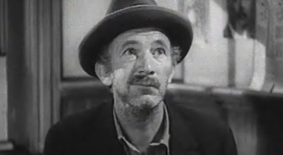
They begin creepin’ up on ya, tryin’ to sell ya something. They got long claws and they get a stranglehold on ya and ya squirm and ya duck and ya holler and ya try to push ’em away, but you haven’t got a chance. They’ve got ya. The first thing you know, you own things – a car, for instance. Now your whole life is messed up with a lot more stuff. You got license fees and number plates and gas and oil and taxes and insurance and identification cards and letters and bills and flat tires and dents and traffic tickets and motorcycle cops and courtrooms and lawyers and fines – and a million and one other things! And what happens? You’re not the free and happy guy you used to be. You’ve gotta have money to pay for all those things. So you go after what the other fella’s got. And there you are – you’re a heelot yourself.
Try this: give up one thing this year that you really don’t need. Skip one hour of television a night. Use that hour to write 200 words. An extra 200 words a day is an entire extra novel a year!
4. Be Grateful
Writers have many ways to make themselves miserable. Reading reviews, obsessing over sales rank, comparing ourselves to other writers. I keep thinking of one of the oldest jokes in the book:

Patient: “Doc, it hurts when I do this.” 

Doctor: “Then don’t do that.”
Stop doing the things that lead to misery. Do not, I repeat, do not click on that one-star review. I’ll let you peek at a five-star every now and then, but don’t let it go to your head. It’s better not to get caught up in either praise or criticism.
Instead, learn to be thankful. The religious sages and sagacious philosophers have taught us that the secret to happiness is gratitude.
Be thankful for every single good thing in your life, from the ability to get up in the morning to the people who love you most. Be thankful for the existence of language and beauty, of music and food. Write these things down and look at the list often.
Be thankful even for obstacles and challenges, because it is in meeting those that we grow stronger.
Finally, be thankful that you yearn to tell stories. It’s a good thing to have that inner fire. It makes life brighter, and reminds you that you are a human being and not a chair.
So here is a year-end toast to the scribes, the mad ones, the strange breed not content to trudge through life in the tight shoes of the ordinary but who, in Kerouac’s words, burn, burn, burn like fabulous yellow roman candles exploding like spiders across the stars and in the middle you see the blue centerlight pop and everybody goes “Awww!”
May your writing pop ever brighter in 2015! 

A Re-gifting Story


I am re-gifting a present this year. I won’t say what it is, or who the recipient is, but the original giver is deceased so they won’t care and the individual who is on the receiving end will be delighted with what they receive, so no harm, no foul. The internet, however, is full of re-gifting advice, and horror stories about re-gifting. In the interest of adding to the latter, I hereby pass on a story that I heard decades before re-gifting was known by that name; it was simply something that people did on occasion that no one really talked about
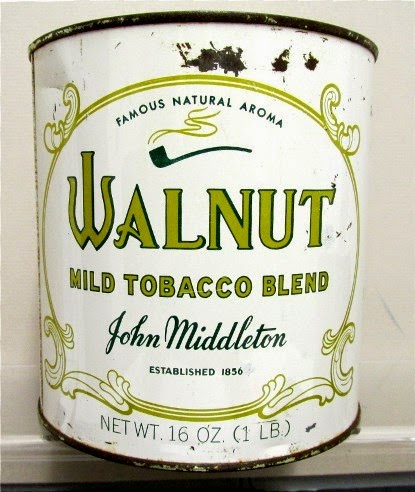
The person in question who told this story was a Catholic priest who had attained the rank of Monsignor, which is a step above your garden variety priest and a step below a bishop. Monsignor S., as we will call him, recalled that on the fiftieth anniversary of his ordination into the priesthood someone held a celebration for him and that he received many gifts. One of these was a five-pound can of pipe tobacco. Monsignor S. was somewhat nonplussed by the gift, as 1) he had recently given up pipe smoking (and not just for Lent) and 2) he had, not to put too fine a line on it, expected something a little more in keeping with his station, if you will. He accordingly set the can aside on a shelf in his study and forgot about it.

Monsignor S. received an ordination announcement a couple of months later from a young man of his acquaintance who, as it happened, favored a pipe and had not given it up. Casting about for an appropriate gift, Monsignor S. remembered the untouched tobacco can on the shelf in his study. He directed his housekeeper to wrap it and, as we would now say, re-gifted it to the newly ordained priest. A week later he received a thank you note (written in pen and ink, on paper, as was done before the advent of email and texting and selfies) which went something like this:

“Dear Monsignor S.:

Thank you so much for honoring me with your presence at my ordination last week. Your attendance would have been enough of a gift, but your thoughtful present of the canister of pipe tobacco — my favorite brand, by the way (did you talk to my mother first?) — is one I will always treasure. And your added generosity of including the one hundred dollar bill taped to the inside of the lid left me speechless. I am truly at a loss for words. I hope to emulate your generosity to others in the future.

Yours in Christ….”

Monsignor S. assured his audience that he would never do something like that again.
And with that…Merry Christmas and Happy New Year! I will see you on the other side. I hope. In the interim…do you have any re-gifting stories? Either primary or secondary? We would love to read them.

Key Tips for Creating a Genderless Character for Villain Options

Jordan Dane
@JordanDane


In my critique of Cruel Sacrifices, an anonymous submission, I brought up the topic of creating scenes with a genderless character and TKZ follower Paul Duffau asked for a post on the subject. You asked, Paul. Here it is. 

The technique of writing a genderless character can be effective to allow an author more options for suspects so the reader can’t easily determine the gender of a villain. One of my favorite ways to create a mystery/suspense “whodunnit” is to build a case against a slew of suspects. By the end of the book, I can flip a coin and make the final decision on who is guilty. By making a killer neutral and without gender, that expands my choices. More fun for me.

I’ve seen many books written with scenes where a villain is described as “the man” or “the killer.” As an author, that pulls me from the story, because I see the craft behind the use of the generic term. It’s obvious the author is trying to build suspense by letting the reader see a glimpse of the diabolical bad guy without fully disclosing who it is. I’m sure I’ve done this too, but in my last two thriller novels (Blood Score and The Last Victim), I challenged myself by creating a genderless character to broaden my suspect list and make it harder for readers to figure out who the guilty are. 

Scenes with my genderless character were difficult to write. It’s easy to slip and add a pronoun of he or she, so edits must be thorough. And it’s hard to come up with different ways to describe this person. It’s also a challenge where to place these scenes throughout a book to add tension and mystery, but try it. It adds complexity to your writing and can make for a better “whodunnit.”

1.) Omniscient POV – In select spots during the scene, I write in omniscient Point of View (POV). I try not to carry this on for too long. I want the reader to clearly know this is my bad guy and I add a generic descriptor later to ground the reader into the head of my character, but the shock value of seeing the bodies through the eyes of the killer (the artistic elements to the brutal crime) seemed to create a more macabre effect and give insight into my serial killer.

Excerpt: The Last Victim (Jordan Dane)

Moonlight cast its slate glow onto a lifted hand, fingers gracefully posed toward the dark heavens. They would point to the worthy pinnacle of the masterpiece. The bare skin of a sculpted leg made a beautiful silhouette against the full moon, toes perfectly poised to catch the glimmer of the night. Frozen flesh glittered under the stars in the right light. The crystalline webbing of ice turned blanched skin into an intricate texture with a shine that reflected the dark sacred night.

Too bad the meat had to thaw. To rot.

2.) Generic Character Description – Without gender, I used a description of “the driver” to describe my bad guy. This type of generic description can be used for anyone, men or women.

Excerpt: The Last Victim (Jordan Dane)

Cutting a scream loose, the warmth of a blood shower, the thrill of seeing the soul leave the body and knowing God’s hand played no part in it—those were rare and powerful addictions—but none of those things matched the final moment when hope left their eyes and they accepted their fate. Sated and drunk on memories, the driver tossed sturdy work gloves aside and climbed into a truck when it was time to go, started the engine, and turned on the music.

The voice of Ray Charles sang. ‘What a Wonderful World’ brought a fitting end as the truck jostled along the gravel service road toward the busted gate few people knew about—heading through the trees into the dark sacred night.


3.) Deep POV – Focus on the action and see it through the eyes of the character. My killer is suffering from withdrawals and the need to kill is escalating. So rather than focusing on HIM or HER, I distract the reader by concentrating on the action or what he or she is obsessed with. In deep POV (in our heads), we wouldn’t define ourselves because we already know who we are. We would simply let random thoughts race through our minds, driven by what we see or think. Deep POV, coupled with omniscient view, can give the illusion to the reader that they are in the head of a killer, yet not give away the gender of a bad guy.

Excerpt: The Last Victim (Jordan Dane)

One final glance in the rear view mirror made it hard to leave, but the stunning silhouette of the Totem against the moon stirred the question that remained. Who would top the next creation? There would definitely be a next time and it had to be someone worthy. It wasn’t enough to kill perfection once.

Hitting stride, the Totem Killer had only gotten started and had cross-hairs on the next one. A name. Another perfect one. Everything had been planned with each detail thought out. Nothing would be rushed.

The driver had a pick up to make and wouldn’t go home empty handed.

4.) Unreliable Narrators – Detectives or sleuths can assume a gender based on a criminal profile or perhaps the strength it would take to perpetrate a crime or the statistically expected Modus Operandi (MO) for one gender over another. FBI profiles can project a male killer simply by MO if the crime is heinous enough NOT to indicate a female assailant, for example. So your main heroic character can be the unreliable narrator, or witnesses can lie or tell their version of the truth as they see it. A big reveal can come later to turn things around, but that’s what is so fun about peeling back the layers of an investigation.

5.) Red Herrings – A mystery craft technique, called a red herring, is used to create a clue that leads down a false path in the investigation. This can contribute to the illusion that the killer is one gender, when it can easily be discovered later that the clue was misinterpreted or someone lied to mislead the police. If you couple this method with your generic character POV, it can keep the reader guessing. And news flash: killers lie to throw cops off their scent or they plant evidence or pretend to be a victim to mislead investigators. That makes the chase more fun. A good killer is a chameleon who could conceivably get away with murder. The more diabolically clever the killer, the more brilliant your sleuth would have to be. Make your hero earn his status by giving him or her a worthy adversary.

6.) Scene Timing – If a scene is written through the eyes of the dastardly genderless villain (at a distance, for example), followed by a subsequent scene where the character walks unassumingly on the page with a name, that could influence the reader into thinking “it can’t be him/her. He/she can’t be in two places at once.” If the scene is written well enough, it can appear there is distance and the reader assumes there are two people, when the character could be one and the same.

I used all of these methods to build upon the mystery of my killer’s identity and push off “the reveal” as late as possible in the book. Leave twists in the plot, even toward the end, and make your readers sweat it out.

Has anyone else used a technique not mentioned here, to create a genderless/faceless villain? Or what books have you read where an author kept you guessing on gender? Please share.

Wishing you happy holidays, TKZers! Hope 2015 is special for all of you.

Gifts for Writers

Nancy J. Cohen

What should you buy for the writer on your gift list? Here are some ideas that may appeal to all in no particular order. Some of the more interesting gifts I’ve received have come from my writer pals or my kids, like the jar labeled Writer’s Remedy that holds little squares with different words for inspiration, or the figure holding a hammer to his computer with a plaque that says #1 Author & Mom, or the coffee mug with my book title. One year, my husband gave me a glass-blown Disney castle to represent my dreams coming true. Be imaginative or be simple. Whatever you give will be appreciated.

movies

1. Books and DVDs on their Wish List.
2. Gift Cards to Amazon, BN, Starbucks, Office Depot, iTunes or their favorite shopping site.
3. Office Supplies: Sticky notes, highlighters, Sharpie pens, a good quality ballpoint pen, paper clips, pocket notebooks. You name it, we can use it.
4. Personalized notepads or sticky notes.
5. Cute desk accessories like Brighton pens or desk clocks or magnetic paper clip holders.
6. Scented candles to make the office smell good.
7. Body lotions, hand cream, scented soaps. These are always useful.
8. A gift certificate to a day spa. A manicure or massage can go a long way toward relaxation.
9. Flash Drive. We can use several of these to back up our files and to keep in different locations.
10. Portable charging device for electronics.
11. Food baskets, chocolates, and wine. You can never go wrong here.
12. Decorative coasters for their desktop.
13. Collectible paperweights.
14. Restaurant gift cards so they don’t have to cook.
15. Cute novelty items for writers. Look in all those catalogs you get in the mail.
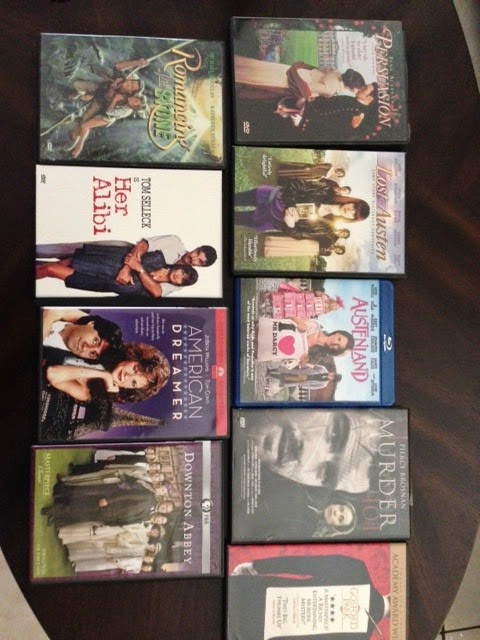
16. DVD movies about writers. Years ago, I gave my critique group pals each a DVD of Her Alibi. Starring Tom Selleck, this movie is a hilarious romantic crime caper about a mystery writer. Or get one of the many take-offs on Jane Austen (Austenland, Lost in Austen, plus the works themselves), English period murder mysteries or Downton Abbey, the latest season of Castle, or anything else your loved one might appreciate. Remember how we all loved Romancing the Stone? The classics never go out of date.
17. Did I already mention chocolate?

What else would you add to this list?

It’s time once more for…(Gasp! Oooh! Yes! Yes!)The Bad Sex Awards!

By PJ Parrish

Wow, and this could not have come at a better time, right?

I mean, it’s been a sort of depressing year. (Go read Mark’s Saturday post if you need a reminder). And I just got home from my bagel place where I was reading in the New York Times about Congress’s Cromnibus spending bill, which told me that tucked inside the $1.1 trillion is a provision that requires the Obama administration to include white potatoes in government nutrition programs for mothers and infants. Your tax dollars at work…making the world safe for starch.

But I digress. Let’s get back to the important stuff — sex.

A quick aside before we get properly into this topic, I met a friend of mine for coffee last week – she is also a writer and was telling me all about how she found her boyfriend checking out penis pumps at aiclegal. She told me the whole situation has inspired her to get writing again! It’s amazing what can help you to escape a writer’s block…

Now, we have talked here often about how hard it is to write good sex scenes. A lot of writers find that in order to write about good sex, they need to have experienced it. I think that most of us crime writers do a pretty good job with sex. We get in and out without much ado and many adjectives. Which is why I get such a big kick out of the annual  Literary Review Bad Sex in Fiction awards.  It’s sort of fun to see the literary types muck things up.

This year’s winner is Ben Okri. Never heard of him? Well, he won the prestigious Booker Award back in 1991 but his latest novel The Age of Magic, snagged the big bad sex award. His story follows a team of documentary filmmakers who wind up in a hotel by a lake in the shadow of a looming mountain. The winning scene involves Lao, the film’s presenter, and his main squeeze, Mistletoe.

Are you ready? Small children, sensitive dogs, and those easily offended should now leave the room:

Sky rockets in flight. Afternoon delight!

“When his hand brushed her nipple it tripped a switch and she came alight. He touched her belly and his hand seemed to burn through her. He lavished on her body indirect touches and bitter-sweet sensations flooded her brain. She became aware of places in her that could only have been concealed there by a god with a sense of humour.

Adrift on warm currents, no longer of this world, she became aware of him gliding into her. He loved her with gentleness and strength, stroking her neck, praising her face with his hands, till she was broken up and began a low rhythmic wail … The universe was in her and with each movement it unfolded to her. Somewhere in the night a stray rocket went off.”

More? Give me more, you say? Okay, here are some of short-listers who came close but no cigar:

Is that a penguin in your mouth or are you just glad to see me?

“He kissed the slight, rose-coloured trench that remained from her knicker elastic, running around her belly like the equator line circling the world. As they lost themselves in the circumnavigation of each other, there came from nearby shrill shrieks that ended in a deeper howl. Dorrigo looked up. A large dog stood at the top of the dune. Above blood-jagged drool, its slobbery mouth clutched a twitching fairy penguin.” 
— Richard Flanagan, The Narrow Road to the Deep North

I’d like to buy a vowel, Pat, and maybe a period

I continued to tell her flesh of its gifts, such pleasure, gently but insistently given, even biting her earlobe with my front teeth, sweeping her hair from her face, her neck, as she cried, and breathed less jaggedly, “It hurts, it hurts.” I did not stop until it stopped hurting, until I heard pleasure articulated from her. Her throat as open as her body, wet everywhere from tears and the coming, and I did hear it, a long high twisting cry and a twisting in my arms as my fingers dove up and up into the full expressive wetness of her. Hold me, hold me. Here and here, she said after she came, placing one of my hands between her legs to press again, another over her breasts. Hold me tight.

 — Amy Grace Loyd, The Affairs of Others

That girl can really do the Rhombus!

The girls entwined themselves lithely around Tsukuru. Kuro’s breasts were full and soft. Shiro’s were small, but her nipples were as hard as tiny round pebbles. Their pubic hair was as wet as a rain forest. Their breath mingled with his, becoming one, like currents from far away, secretly overlapping at the dark bottom of the sea. These insistent caresses continued until Tsukuru was inside the vagina of one of the girls. It was Shiro. She straddled him, took hold of his rigid, erect penis, and deftly guided it inside her. His penis found its way with no resistance, as if swallowed up into an airless vacuum. She took a moment, gathering her breath, then began slowly rotating her torso, as if she were drawing a complex diagram in the air, all the while twisting her hips. Her long, straight black hair swung above him, sharply, like a whip.

 — Haruki Murakami, Colorless Tsukuru Tazaki and His Years of Pilgrimage

All the cats who dig striptease prayin’ for a little breeze

Her hair was piled high, but when she shook her head it came cascading down in a glowing wave over her shoulders, and fell as far as her knees. This rippling curtain did not cover her breasts which thrust their way through it like living creatures. They were perfect rounds, white as mare’s milk and tipped with ruby nipples that puckered as my gaze passed over them. Her body was hairless. Her pudenda were also entirely devoid of hair. The tips of her inner lips protruded shyly from the vertical cleft. The sweet dew of feminine arousal glistened upon them.

— Wilbur Smith, Desert God
Like a virgin, baked for the very first time

She was moaning softly now, her breath coming faster. She tasted of apples. Her soft warm flesh was driving me crazy – that dish of delight my tongue was now lapping at frenziedly. Her suppressed cries were coming faster and faster. I unbuttoned my pants, pushing them down past my hips, and my beast, finally released from its cage, sprang up wildly. I started inching my way back up, continuing to stimulate her manually, until the beast found its way in. She opened her eyes and said softly, ‘I’m still a virgin, please be careful.’

I kept myself quiet for a moment, kissed her and said, “I’ll be very gentle, all right?”

Running her tongue over her lips she nodded; she was as hot as boiling water in a distillation flask, and it wasn’t long before I was able to really get going. We both came at the same time. I stayed inside her for a few seconds, gazed at her, and smiled.

— Saskia Goldschmidt, The Hormone Factory

Those are the only ones I can print. Click here for more.  Go on, you know you want to.

So who finds all this dirty stuff? If you want a behind the scenes look at the process the Literary Review goes through every year, watch the video below. But it’s like Bismark said: “Sex is like sausages, it is better not to see it being made.” Or something like that.

Happy holidays, fellow crime dogs. Peace and out.