JordanDane
@JordanDane
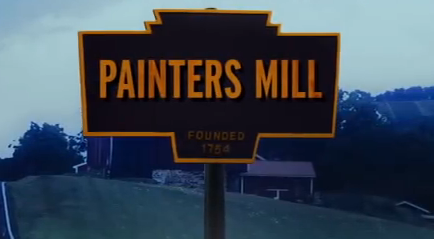
I’m excited to have my friend, New York Times & USA Today bestseller Linda Castillo, as a guest today at The Kill Zone. I’m a huge fan of Linda’s Kate Burkholder series set in Amish country. Highly recommended. Her debut thriller in this series (one of my favorite books), SWORN TO SILENCE, earned starred reviews from Library Journal, Publisher’s Weekly, and Booklist—and spent four weeks on the New York Times bestseller list. The book was also adapted into a two hour original movie re-titled AN AMISH MURDER, starring Neve Campbell as Kate Burkholder. I really liked the film adaptation. Linda is here today to talk about the special research she does on this series. Welcome, Linda!
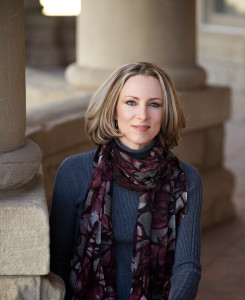
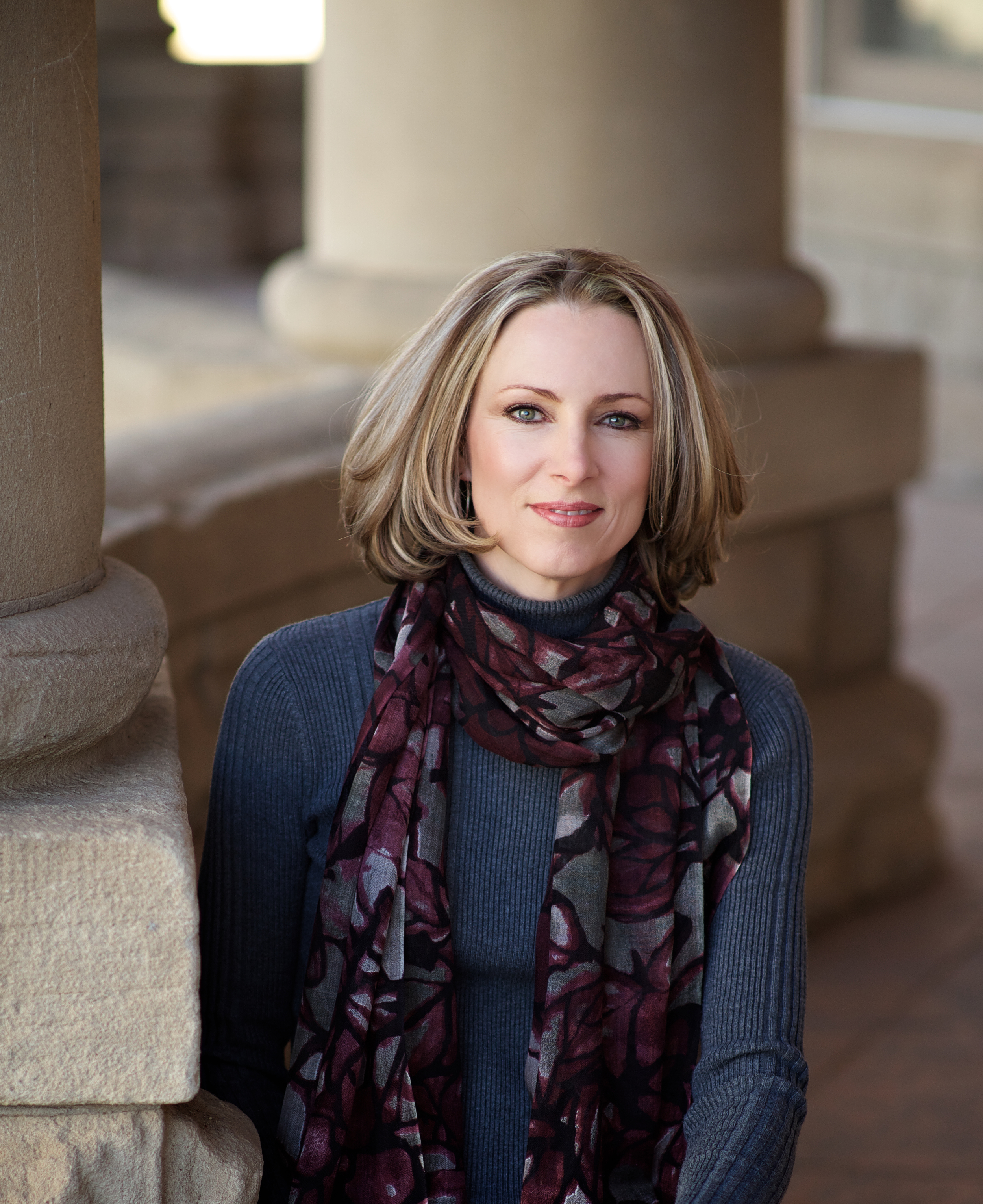
NYT & International Bestseller Linda Castillo
Linda Castillo: Website & Twitter
Nothing gets a writer’s creative juices flowing like research. Okay, that’s not exactly true for everyone, but the importance of solid research should never be underestimated.
There are three camps when it comes to that aspect of writing. First, there are the writers who love it. The obsessive-compulsive types who spend days or weeks or even months completely and happily immersed in whatever subject matter they’re about to embark upon.
Then there are writers like me, who walk a center line (not necessarily a straight line.) I research the central external theme of my book. For example, if the story involves a cold case and there’s a dead body in the mix, I’ll read everything I can get my hands on about decomp, forensics, and police procedure regarding old cases. For the smaller details, I research as I write.
And, finally, there are those writers who detest research. Writers who would rather . . . well . . . write than bury their noses in tomes of seemingly extraneous information for weeks on end. They want to get to the story already, and who can blame them if said story is burning—or a tight deadline beckons? Well, slow down, Mr. Type A, because in the end, solid research can save you hours of re-writing—and maybe even save the book.
One thing is certain: A writer can never know too much about his or her subject matter. That is an indisputable fact. Do your research and take the time to do it right. Thorough research will help you write the book. It can help you find that brilliant twist your story is begging for. It adds confidence to your voice. It adds power and credibility to your writing. In the long run, it can save you time. Knowledge and/or expertise cannot be faked, no matter how good a liar you are. If a writer tries to write about a subject he or she doesn’t know squat about, it will show. Readers will know.
A couple of quick caveats:
While it’s true that a writer can never do too much research, keep these two points in mind. Your research should never show. And you shouldn’t hide behind your research because you’re afraid to write the book. Writers, you know what I mean.
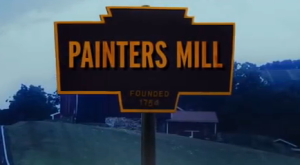
Image provided by Linda Castilo
I write an Amish-set thriller series. My protagonist, Kate Burkholder, is the police chief of a small farming community in Ohio’s Amish Country. Kate left the plain life when she was eighteen and eventually found her way into law enforcement. Years later, when her mother passed away, Kate returned to her hometown to bury her. While she was there, the mayor and town council approached her, informing her that the police chief had retired and asking her to fill the position. The Amish are a large part of the local economy and they believed Kate could help bridge the gap between the “English” and Amish communities. Not only did she have big city law enforcement experience, but she knows the Amish traditions, the religion, and she’s fluent in Pennsylvania Dutch.
Does anyone see a few research challenges lurking in there? Believe me, there were many challenges, especially early on. As a writer, it was extremely important to me to depict the Amish correctly and honestly. I wanted to write a protagonist who could immerse us not only in the world of a small-town chief, but in the Amish culture as well. I wanted my police procedure to be spot on. I wanted to paint a vivid picture of this bucolic small town. I wanted readers to see it and hear it and smell it. I wanted them to feel as if they’d walked the streets and seen the endless cornfields, heard the rustle of the stalks and clip clop of shod horse hooves on pavement.
Here are some of the things I did to get it right:
I’ve always enjoyed writing cops. Early in my career, while I was still writing romantic suspense, I enrolled in and graduated from two citizens police academies. The experiences were incredibly fun and a tremendous learning experience. The classes and field trips were exciting and in many ways, real eye openers. The things I learned and the contacts I made have served me well in my writing life. If you’re writing a character who’s in law enforcement or a police procedural, I highly recommend you grab a buddy and enroll in (and graduate from) a citizens police academy (or two!)
On the forensic side:
I’ve had the opportunity to tour two morgues. The Charity Hospital morgue in New Orleans and the Collin County Medical Examiner’s office and morgue near Dallas. I was invited into the “cold” room of the Collin County Morgue. Luckily, there was only one “customer” there that day. One of the more unforgettable aspects of the tour was the smell. I was surprised that even with a separate, state-of-the-art HVAC system, the smell of death was unmistakable and strong. It was a fascinating, disturbing and enlightening experience that has been a tremendous help with my writing.
I also scored an in-depth tour of the Criminal Investigation Laboratory at the Institute of Forensic Sciences in Dallas, which was utterly fascinating. This is a bit of an inside joke, but I’ll never look at a lunch-size brown paper bag the same way again. Who knew the storage of forensic evidence could look so benign?
Writing a different culture:
As you can imagine, writing an Amish-set series required a huge amount of research. The Amish culture is complex with a long history. They’re also somewhat of a “closed” society. Many Amish prefer to stay separate from the rest of the world. While that made them infinitely more interesting to my writer’s mind, it made making contact with them and learning about their culture more difficult. I took advantage of several in-depth and well-researched books. But I needed more . . .
A librarian from Ohio to the rescue . . .
Don’t ever underestimate the ability of a librarian to help you find exactly what you need in terms of information. During my first book tour in Ohio, I met a wonderful librarian and we’ve become fast friends. Denise lives in the heart of Amish Country and has generously shared her infinite wisdom of the Amish culture. She has gone above and beyond, planning research trips, sending me books and articles (and apple butter!) She’s friends with many of the local Amish families and has introduced me to them, included me in social events with them. (Yes, I even got to drive a buggy!) She is a dynamo, fun to hang out with—and a good friend. She’s been indispensible in terms of research and I’m so lucky (in so many ways) to have made contact with her. Writers, get to know your librarians. They are a wealth of information, and they love to help.
That brings me to my next research topic: Know your locale. Familiarize yourself with the area in which your book is set. That’s especially true if your locale is unique, such as Ohio’s Amish Country. While it’s true you can learn quite a bit about a place by reading about it and by looking at pictures, nothing beats boots on the ground. When you’re there, all five senses are engaged. When you talk to someone, you not only hear their voice, but their inflections. You see their mannerisms. You notice so many things all around you that can add richness and depth to the world you’re building. Of course, there are times when you can’t visit your locale. Travel is expensive and time consuming. But if you get the chance—go and experience your locale.
I’m a firm believer in that this kind of hands-on research is a vital part of writing a more powerful, credible and vivid novel. Research becomes part of the creative well from which we delve when we set our pens to page. It becomes part of our muse, and that’s a precious thing. Keep your muse happy and refill the well often.
BIO:
Linda Castillo knew from an early age that she wanted to be a writer—and penned her first novel at the age of thirteen. She’s published thirty books for three New York publishing houses and won numerous industry awards, including a nomination by the International Thriller Writers for Best Hardcover, the Golden Heart, the Daphne du Maurier Award of Excellence, and a nomination for the prestigious Rita.
Her debut thriller, SWORN TO SILENCE, garnered starred reviews from Library Journal, Publisher’s Weekly, and Booklist—and spent four weeks on the New York Times bestseller list. The following books in the series also hit the NYT and USA Today lists and became international bestsellers. Last year SWORN TO SILENCE was adapted into a two hour original movie re-titled AN AMISH MURDER and starring Neve Campbell as Kate Burkholder.
In her spare time, Linda enjoys trail riding, and dabbles in barrel racing. She resides in Texas with her husband, two rescued Blue Heelers, and two Appaloosa horses. She’s currently at work on her next novel, a thriller set in Amish Country and featuring Chief of Police Kate Burkholder.