Don’t Drive Your Readers to the Dictionary

by James Scott Bell
@jamesscottbell

Wolfe

Thomas Wolfe

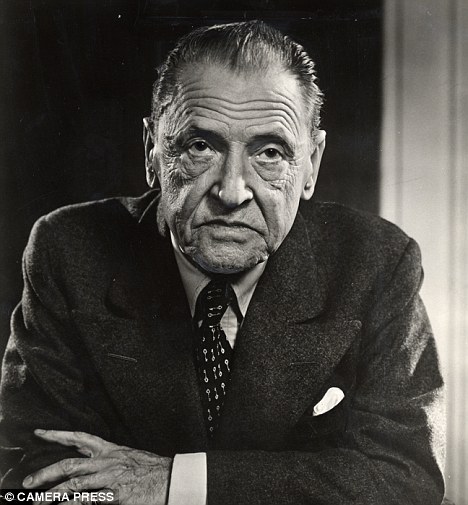
I have a good friend who’s a college English prof. He’s an expert in American Lit, with a specialization in Thomas Wolfe. I made some attempts to read Wolfe back in college, but quickly got over it in favor of his contemporary, Ernest Hemingway, and one of his heirs, Jack Kerouac.

But I’ve long had it in my mind to give Wolfe another try. What stopped me was the steep decline in his literary reputation over the past fifty years or so. No less a literary light than Harold Bloom considers Wolfe a “mediocre” talent who has no (as in zero, zilch) “literary merit.”

Now there is a major motion picture out about Wolfe and his editor, the legendary Maxwell Perkins. The movie (which I have not seen yet) is called Genius, based on A. Scott Berg’s award-winning book about Perkins.

So it seemed like a good time to break out my old copy of Look Homeward, Angel and try again. Almost immediately I got frustrated. There is a lot of prose (Wolfe once admitted that his great fault was “too-muchness.”) that is mostly narrative summary. I knew this was supposed to be a novel about a boy named Eugene Gant. But I was not picking up any reason to care about Eugene, the Gants, or the town of Altamont where everything takes place.

After about 150 pages I sent an email to my friend, asking him what I was missing. He sent me a paper he’d done for a conference on how we should approach Wolfe. Wolfe was not interested in writing a traditional novel with an identifiable plotline, my friend explained. Wolfe was, rather, writing to immerse us in a world. He wants us to live there, experience moments and settings. He wants us to feel life deeply even through mundane details.

Okay, that helped. I’m fine with experimental fiction. But in the nitty-gritty of Wolfe’s words I often stumble and grab the dictionary for support. Here, for example, is a clip from a section where Eugene Gant wakes up in the morning and gets dressed:

With sharp whetted hunger he thought of breakfast. He threw the sheet back cleanly, swung in an orbit to a sitting position and put his white somewhat phthisic feet on the floor. Standing up tenderly, he walked over to his leather rocker and put on a pair of clean white-footed socks. Then he pulled his nightgown over his head, looking for a moment in the dresser mirror at his great boned structure, the long stringy muscles of his arms, and his flat-meated hairy chest. His stomach sagged paunchily. He thrust his white flaccid calves quickly through the shrunken legs of a union suit, stretched it out elasticly with a comfortable widening of his shoulders and buttoned it. Then he stepped into his roomy sculpturally heavy trousers and drew on his soft-leathered laceless shoes….

I found myself talking to Wolfe. “C’mon, Tom, really? Phthisic feet? WHAT DOES THAT EVEN MEAN?”

I looked up phthisic. It means a “wasting disease” like tuberculosis.
“Tom! Are you telling me Eugene’s feet had a lung disease? Can feet even look tubercular? Why are you making me stop to think about all this?”

A few pages later Wolfe writes about nacreous pearl light. Back to the dictionary! And guess what? Nacreous means pearly. So it’s not just a ten-dollar word, but I think Wolfe used it redundantly.

And then there are times when Wolfe pops in with author intrusion. To be fair, that’s part of his experiment. But we have things like this: The seed of our destruction will blossom in the desert, the alexin of our cure grows by a mountain rock, and our lives are haunted by a Georgia slattern because a London cut-purse went unhung.

Back to the dictionary! Alexin? (n., a defensive substance capable of destroying bacteria.)

Slattern? (n., an untidy, slovenly woman; a slut.)

But then … what does that passage even mean?

One more: Eugene got back his heart. He got it back fiercely and carelessly, with an eldritch wildness. 

Good thing I had the dictionary right next to me! Eldritch, adj., weird; eerie.

Come on, Tom! Why do you do this? Why do you slatternly drive the alexin of phthisic prose eldritchly before my white-footed socks?

Yet in deference to my friend, I’m going to darn well finish Look Homeward, Angel. But I have to say it ain’t easy.

Does that mean I only prefer books with stripped-down style?

Far from it. I do want some style, some voice. But I want it the way John D. MacDonald described it: unobtrusive poetry.

It’s sort of like actors. I’ll confess: I’ve never been a big fan of Laurence Olivier. I always feel like I’m watching an actor working a bit too hard. I admire the craft, but I see the craft. I never feel that way about, say, Robert Mitchum. Mitchum’s performances always look easy. Which is why he is often underrated as an actor.Mitchum digital cover

Mitchum actually had a terrific range. He could be cool (Out of the Past), vulnerable (Heaven Knows, Mr. Allison), menacing (The Night of the Hunter), scary (Cape Fear), funny (What a Way to Go). He could be a man of the West (El Dorado), a man of the cloth (5 Card Stud), or a man after a girl’s heart (Holiday Affair). [Also, I find that Mitchum movies have a great deal to say about true manliness, lessons we need to recover. So much do I believe this that I wrote a little book, Manliness: The Robert Mitchum Way.]

How does all this translate to your writing?

  1. Don’t use a word that a majority of readers will have to look up. Get the story to your audience without needless obstacles, like phthisic feet.
  1. Major in the voice “formula” of character + author + craft. See my post on that subject here.
  1. A heightened style is fine if we don’t stop to stop and try to figure out what you mean. I like high style and even lyricism – when it works. For instance, in Ken Kesey’s Sometimes a Great Notion. It’s Wolfeian in heft and experimental in style, yet it doesn’t require a dictionary. And it has a plot!
  1. It’s okay to overwrite when you draft. That’s often how you get the right touch of emotion and deepen a character. Write like you’re in love.
  1. But cut mercilessly to make the final product accessible to the reader. This is where you buckle your tool belt and get down to the real work. Edit like you’re in charge.

Now, I don’t want to leave poor Thomas Wolfe hanging out there with Harold Bloom sauce all over him. The guy was in love with writing. It was his life. I can’t deny his passion. So I’ll give him a fair hearing. But when I’m done with Look Homeward, Angel I have a feeling I’ll want to crack open a Travis McGee.

So are there books out there you’ve tried to like, but can’t? You don’t have to name names **COUGH**Middlemarch**COUGH**, but tell us why the book didn’t work for you.

Incident at the Derby

bleachers

Photo by Eliot Kamenitz, The New Orleans Advocate

One more story, offered with the hope of sparking inspriration. There is nothing odd or supernatural about this one. It’s ironic and tragic, but there’s some justice, too. Bear with me.

The annual New Orleans Jazz & Heritage Festival takes place over the last weekend in April and the first weekend in May, just as spring is beginning to heat up the city. The event is held at the New Orleans Fairgrounds — known as “The Derby” by the city’s residents due to the horse races which occur there — which is in the middle of the Gentilly neighborhood, a relative stable working class area, at least by New Orleans standards. The track during Jazzfest is given over to several stages at various points, each of which feature live music being performed over the course of several hours. There are also merchandise and food vendors — come for the music, stay for the eats — and various places to take a break from the energy of the event, including a set of bleachers off to one side the track.

I attended my first Jazzfest in 2000. I got there early on opening day and after seeing a few acts that I had waited all of my life to see (Clarence “Frogman” Henry, The Dixie Cups, and my now-deceased pal Frankie Ford)  I took a mid-afternoon break. I got a shrimp po’boy and, dislike of heights notwithstanding, got a seat near the top of one of the sets of bleachers, where I proceeded to, as it’s said, fang down on lunch and watch the party swirl below and in front of me.

I was about halfway finished with my meal when a man and woman ascended the bleacher steps near me. The woman wore one of the distinctive vest-apron combinations that the Jazzfest employees customarily wear. It was a hot day, and the woman, somewhat slight in body type, appeared tired and weary, no doubt from working in the sun and humidity that day. The man, for his part, manifested the kinetic energy usually seen in the nervous or those who are “hyped” for one reason or another. His arms were corded with thick veins and ended in large hands that he bounced off his knees in an odd rhythm as he walked, sticking his elbows in and out to the side. He hummed and nodded and looked all around without appearing to see anything. The woman was carrying a styrofoam go-box similar to the one that my lunch had been in, and I assumed that she had earned it under the policy that provides a free meal for each Festival employee while on shift.

As they passed the aisle where I was seated the man grabbed the box from the woman before turning down the row of seats behind me. The woman emitted a tired but still audible “hey” in protest, one which the man ignored as he sat down behind me. I heard him proceed to eat whatever was in the box, gulping, lips smacking, and grunting all the while. The woman, after about a minute, asked him softly, “Ain’t you gonna give none of that to me?” The man stopped eating just long enough to spit out a “no” before continuing his repast. The woman waited a minute, and then said, “But they gave that to me for workin’ here.” The man made a statement to the effect that she could eat when she got off work, and that she needed to lose some weight anyhow.

I am an interventionist. I make neither excuses nor apologies for being so. If someone yells “help” or looks like they need help my impulse is to respond. My impulse to intervene in a bad situation, however, is tempered by situational awareness.  I won’t get involved if I don’t see a positive outcome, short or long term, in my actions. Some things are in the end irremediable, and intervention by a stranger can make things worse. I considered this to be one of those situations. I could have 1) give the woman money for lunch; 2) given her the rest of my lunch; or 3) told the guy that he was a miserable waste of skin for treating someone with whom he was apparently in a relationship (more on that in a moment or two) in such a manner and fashion. I also concluded, however, that any of those actions would have rebounded back on the woman sooner or later, and thus I wouldn’t be helping her. The third action would also have probably gotten me my ass kicked (not that such has ever stopped me in the past) and not just once. I have learned, via payment in dear and bitter coin, that everyone in New Orleans seems to be connected or related to someone else, so that creating a beef with one person multiplies the participants in said dispute quickly and exponentially. Additionally, I was concerned that the woman would get a beatdown in the bargain as the price of attracting the attention of a stranger. I didn’t feel good about it but I quickly finished my lunch and walked away without doing anything. And in case you are wondering…I of course never for a moment considered turning around and suddenly shoving the guy off of the bleacher seat in the hope that he would fall fifteen or so feet to the ground. That would have been wrong. I think.

Flash forward two days. I was reading the Sunday edition of the New Orleans newspaper in the lobby of my hotel when I saw a small news item buried in the nether regions of the back pages. The story concerned a man who had been killed in a domestic incident. As the story went, he and his significant other had been arguing throughout the day, starting at Jazzfest where she worked. Their argument reportedly continued after she arrived home in the evening and was apparently fueled by the man spending the afternoon fortifying himself with alcohol. The article stated that he had been upset that she was “late” and as a result beat her twice over the course of the following few hours. Having exhausted himself during his busy day, the man went into the bedroom and fell asleep. The woman used the opportunity creating by his unconsciousness to pour gasoline over him and, in her words, “I lit him up.” Indeed. The article noted that there had been a history of domestic disturbance calls to the household going back for over a year prior. The woman, however, had declined to either press or pursue charges in each incident. The article was accompanied by a mugshot of the woman who had been seated behind me.

How did things turn out? The woman was initially charged with second degree murder. I got on the phone and started calling around to the prosecutor, public defender, and an attorney I know in New Orleans who enjoys arising each day to joust at windmills on behalf of the downtrodden. I won’t bore you with the details but the upshot was that I offered to testify at trial as to what I had witnessed on that particular day,  hoping that my version of what I saw, and my reaction, would be received as evidence of mitigating circumstances. I didn’t need to, as it turned out. The woman, who did not have so much as a traffic ticket against her, pled guilty to a lesser charge and was sentenced to time served and probation. The judge, with the prosecution’s blessing, took into account her history with the deceased and the fresh evidence of his violence that night (don’t ask). That the deceased was a multiple offender with several violent crime notches on his belt — enough that he had been awarded the title of “career criminal” by the time he reached his nineteenth birthday — was not considered, of course (wink wink).

I don’t know what happened to the woman, and I never really met her. But I think of her frequently, particularly when I am woolgathering instead of sleeping. I wish her the best, wherever she is, and would tell her that I’m sorry that I couldn’t do more. But I think things turned out okay for her. God, I hope so.

What would you have done in such a situation? Have you ever been in a situation where it was better to walk away than step in and defend someone? What did you do? What was the aftermath? And as far as a starter for a novel goes…it’s a great one. Colin Harrison uses it in BODIES ELECTRIC to frightening effect and, of course there’s a series involving a guy named Jack, an ex-MP, who wanders around the country getting involved in things. What do you think?

Practicing Your Magic

My father once took me to a show in Hollywood called IT’S MAGIC.

There were about twenty magicians on the bill, one after another showing us their biggest and best tricks, sawing women in half, floating balls in the air and, yes, pulling rabbits out of hats.

I loved the show, and after it was over, my father took me to Bert Wheeler’s Magic Shop, where I picked up a trick called multiplying billiard balls.

I practiced that trick for months. And, if I do say so myself, I got pretty good at it. I still have a picture of me—at twelve years old—decked out in the homemade tux my mother made, showing off my sleight of hand dexterity with those Bert Wheeler multiplying balls.

Thing is, the mechanics of the trick weren’t very tough. I’m not going to spoil it for you by telling you how it was done, but let’s say that just about anyone could do the trick with a few minutes practice.

But I have a feeling it wouldn’t look much like magic. It would probably look like some guy ham-handedly struggling to multiply those billiard balls, and the gimmick behind the trick would be obvious to all but the dimmest of spectators.

Real magicians, you see, practice day in and out to make their sleight of hand smooth and undetectable, so that it looks like real magic. So that people watch and say, “Wow! Do that again!”

And that’s what writers try to do as well. We work very hard behind the scenes, manipulating words and phrases and characters and plot lines—while trying our best to make it all look seamless—in hopes that our readers will say, “Wow! Do that again!”

A lot of people think that all they need to know is how the trick is done and they, too, can be a magician. They’re unwilling to put in the real practice necessary, and the moment they learn the move, they’re ready to perform.

Writing, like magic, takes years of practice, and a willingness to fail again and again until we get it right, until what we do seems not like simple trickery, but real magic to those who read our work. Until our words draw them in and transport them to another time and place, a time and place filled with characters who are alive and breathing and the suspension of disbelief is so deep that we, as writers, can get away with almost anything. Can make them believe that a woman can be cut in half, that rabbits can materialize from nowhere, that those billiard balls can multiply between our fingers…

The great writers, like the great magicians, elevate craft to an art. And as we read their work, we can’t help but think, “How did he do that?”

But knowing the “how” is only a small part of the trick. It’s knowing what to do with that “how” that really counts.

Making the readers believe that what we do is magic.

A Question For All You “Tool Guys” (And Gals)

imageBy Kathryn Lilley

I’m in the market for new writing software these days, so I thought I’d seek the advice of my TKZ friends: what software or program do you use for composing and formatting your manuscripts? Preferably, I’m looking for one that can work with Word on IOS to properly format the title page, chapter headings, page counts, etc.

Note: I have tried using Scrivener (multiple times), and I just can’t get the hang of it. (I know that labels me a Luddite, but there it is.) In the past I used ProsePro, but the program no longer works with my new Apple laptop, and I haven’t been able to locate an updated version.

Any help or suggestions are much appreciated!

A Tale of Two Writers

By Larry Brooks

Adam and Brent (who go by A and B, respectively here in analogy-land). Both have a novel in their heads. Both have big dreams for their books. Both can write sentences that would make the ghosts of Hemingway and John Updike exchange high fives.

Which is why they became writers in the first place.  The reason many of us took up that sword.

Adam

Adam’s book is about a guy who loves a woman who doesn’t love him back. That’s all he knows about it when he sits down to write. It’ll come to him. He trusts his gut and the creative process, which is isn’t sure how to explain, because someone told him it is not describable. He’s not really sure why he trusts his gut, but he does.

He’s never read a craft book (other than that damn Story Engineering, which suggests there is actually a wrong way and a better way to structure a story, based on the forces of story that always apply, for better or worse, so screw that…) or been to a writing workshop. But he’s hung out on online forums full of writers who have, who sound like they know what’s up, none of whom have sold anything but are self-published because, as if they could be if they wanted to be, quoting all kinds of folks who say publishing is dead anyhow. These same folks have all read On Writing and hey, if Stephen King can write a novel out of the right side of his head, so can they. And him. Besides, he once saw a DVD based on a Nicholas Sparks novel and he;s pretty sure he can do better.

Adam believes that if you just write, no matter what you write, everything will turn out fine.

What could go wrong?

Brent

Brent’s novel is about a wounded ex-Navy Seal who must step away from his MMA career to single-handedly rescue the widow of his Seal Team Six buddy killed by an IED in Iraq. She has been kidnapped by vengeful terrorists who have taken her in an act of jihad, with plans to post her beheading on YouTube if the US does not confess to being the Great Satan that it is. He must act alone because a coalition of CIA, FBI and military decision-makers, including the White House, refuses to acknowledge the incident that resulted in the terrorists’ thirst for revenge in the first place, in which the nephew of a Saudi oil baron, now an ISIS fighter recruited for his trust fund, was KIA.

Brent has studied the best craft books, including Story Engineering and Plot and Structure and the Snowflake Method. He’s been to workshops, had his work analyzed by professionals, subscribes to the best blogs and generally understands the breadth of things that an enlightened novelist needs to know.

He’s made his own decision on these counts, as we all must.  In his case, applying the discipline and focus he learned from his military training.  He’s studied and vetted with an open mind and seen the proof of his decision in the bestsellers he reads.

Two writers. Two stories. Two journeys of preparation and a resultant and divergent breadth of knowledge about the craft of storytelling

Cut to a year later.

Adam has his book up on Kindle. Bought a cool cover from a guy on Fiverr. The manuscript was 168 pages long, but nobody can tell that on Kindle, so he’s safe from judgment. After six months pimping it on social media and taking out pay-for-click ads on Amazon after a withdrawal from his IRA. After twenty-two four and five-star Amazon reviews from other writers with whom he’s made I’ll-review-your-book-if-you-review mine agreements, and a two-star from a guy who said the writing was fine but the story was sophomoric, he’s sold 122 copies and is hard at work on his next novel. Which is about a guy who goes back in time to meet Annie Oakley, because he’s had a thing for her since grade school. At night he washes down 10 milligrams of zolpidem with a jolt of ZZZ-Quill, because for some reason he doesn’t understand he doesn’t sleep well.

He has absolutely no idea how his path has differed from the growing body of self-published authors who reportedly are making massive money. He thinks it is unfair, and that his time will come.

Brent was turned down by nine agents before he met one at a major conference who invited him to submit a partial. The agent was blown away – “not only do you write sentences that would make the ghosts of Hemingway and John Updike bump fists, but your story moved me to tears while shining a light on the hidden agenda of our middle East military involvement, putting me right in the middle of it all alongside a hero that embodies the best of us, making it easy to root for a guy who will honor his promise to a dying fellow soldier to watch over his wife and kid” – and, within a week, had scored a two-book deal with Penguin and is getting inquiries from Will Smith’s production company.

Adam thinks Brent got lucky, too. Right time, right place.

He never thought to add: right story.

Brent has never heard of Adam. Nobody has. Except those guys online who proudly say “I don’t plan for plot, I just write from my heart, because doing it any other way takes the creative fun out of it, and hell, you end up changing everything anyway,” as if they know this to be true for all. Adam commiserates with them regularly.

Two writers, one with a well-developed sense of story, the other… not so much.  

An investigative journalist, if anybody cared, could dig into a comparative study of these two journeys, which exemplify two ends of the writing process continuum, and expose certain enlightenments and potholes that will serve any writer willing to let go of tired old belief paradigms and allow the truth of the writing craft, the principles that drive it, into their heads and process, or it will sink them like a book thrown into a canal.

Neither writes cops to being either or a planner or a pantser. After his study of craft, Brent realized it doesn’t matter, because the very same criteria for story excellence apply to both.

Other than knowing readers need to like his hero, Adam has no ability to recite that criteria. James Patterson didn’t tell him in his Master Class, Stephen King didn’t tell him in his book, either. Just write, they told him. Go out there and find your story.

Not every writer will choose the right path. Both end of the continuum will believe they’ve chosen the right path for them. Until, based on results, they no longer believe.

Craft will be waiting for them if that happens.

Such an investigative report would conclude that compelling, functional stories require two things:

  • a writer who understands all the nuances and realms of a novel, including the forces of story that cause readers to engage, such as emotional resonance, vicarious experience and dramatic tension rendered powerful because of stakes, empathetic motivations and the vividness of the reading experience; and
  • a story idea which has, at its very core, the raw grist, the open-ended potential, the intrinsic commercial appeal, to push our emotional buttons, wrest our attention away from the real world for a few hours, invite us into a vicarious story world full of drama and colliding philosophies and the promise of the unexpected and the delivery of ultimate resolution that rocks the reader’s world.

Just that. Easy peasy. Just open a vent in the right side of your head and let it all pour out, just like Stephen King and the army of advocates for leaning on nothing other than the seat of your pants, which will grow numb and weary for all the years spent planted in a chair in pursuit of the fruits of such a process. Which some will reap, and many others will continue to read about, and believe.

Or… you can dive in. Learn the substance and nuance of craft.

Own the principles of structure, rather than fight them off. Master the realms of story forces and the list of requisite core principles. Own the essence of structure, rather than fighting it off with a mistaken belief that it will restrict you. Master the realms of story forces and the list of essential core competencies, instead of trying to convince yourself that you either possess that mastery, or they aren’t important. Seek out multiple points of view from a short list of credible writing teachers, noticing how they are saying the same things using different models and approaches, not all of which are bestselling authors in their own right, because that is not the measure of a teacher any more than a .355 career batting average is the criteria for a successful major league manager.

And when you have all those principles lodged in your writer’s head, when you know them well enough to recognize them when you see them in play, go out and look for them in the novels you read. Test what you think you know. Let the real world of fiction convince you of the realities of the principals involved.

Come to understand that your story idea matters, every bit as much as your sentences and your ability to craft scenes. When your story sensibilities advance to a place where you can apply those criteria at that level, even before you write a word, then you’re not only in the game, you’re already ahead of a large percentage of authors who have chosen otherwise… because it was hard.

Which type of writer are you?

Are you Adam, with your fancy sentences and your refusal to buy into the cult of craft, believing the Great Lie that says you can get there without it, if you just write, writing the stories you want to write, the way you want to write them, in the naïve belief that just writing will somehow allow your number to be called?

Or are you Brent, with a killer story idea people will pay for, if done rigtht, and the depth of mastery of craft to pull it off?

You never know if your story idea is good enough. But if you just write with a base of craft in your quiver and a criteria-meeting, conceptually-driven story idea in mind, that story might just have a shot.

Short Fiction, Satisfying Endings and Reader Expectations

by James Scott Bell
@jamesscottbell

This month a writer named James Patterson (who has had some lg-bookshots-cross-killsuccess and may break out soon) began a new enterprise. It’s called BookShots. These are to be what he calls “short novels” and what everyone else calls “novellas.”

Patterson, the former advertising man, is nothing if not strategic, even visionary. He is always looking for ways to expand his product line and this plan is brilliantly counterintuitive –– find new places for physical books. 

According to a story in the New York Times, Patterson “wants to sell books to people who have abandoned reading for television, video games, movies and social media.” He wants to write fiction that is “shorter, cheaper, more plot-driven and more widely available” than full-length books. But here’s the part that really intrigues me:

[E]ventually, Mr. Patterson and his publisher want to colonize retail chains that don’t normally sell books, like drugstores, grocery stores and other outlets. They envision having BookShots next to magazines in grocery store checkout lanes, or dangling from clip strips like a bag of gummy bears.

“Those venues are very inhospitable to traditional publishing, but we think this is a type of book that could work very well there,” said Michael Pietsch, the chief executive of Hachette Book Group, which publishes Mr. Patterson’s books in the United States through its Little, Brown imprint. “He has enough recognition that his name can make it work.”

In some ways, Mr. Patterson’s effort is a throwback to the dime novels and pulp fiction magazines that were popular in the late 19th and early 20th century, when commercial fiction was widely available in drugstores.

It’s an ambitious plan, and I doubt any writer except Patterson, backed by mega-publisher Hachette, could pull this off. Maybe Stephen King if he also branded his name as Patterson does. For that is part of the strategy as well:

Hachette is betting that Mr. Patterson is famous enough to overcome … obstacles. The company is planning to publish 21 BookShots in 2016, including thrillers, science fiction, mysteries and romances. The first two, out in June, are “Cross Kill,” a book by Mr. Patterson starring his popular recurring character Alex Cross, and “Zoo II,” a science-fiction thriller written by Mr. Patterson and Max DiLallo. All the books will be written or partially written by Mr. Patterson, except the romances, which will be labeled “James Patterson Presents.”

All well and good. This is a business, after all, and no one has been a more astute businessman than James Patterson. He provides a product. That product entertains. There is an exchange of money for perceived value. And everyone’s happy.

Well, almost everyone. I hopped over to Amazon to have a look at the first BookShot, Cross Kill. Some of the reviewers have a complaint: the ending is incomplete. As one reviewer put it: The story is good, typical Patterson but it ends with a huge cliffhanger and that is what I do not like. … I had expected a short book, like a short story and I liked the idea but now I must say I am disappointed. It would be good if it could be explained where in the Cross Universe these Bookshots fit.

Had the book been advertised as the first part of a serial, all would be well. That’s what Stephen King did back when he and his publisher released The Green Mile. It was done in six installments, and that’s how it was advertised. So readers knew when they purchased one of the short books there would be another to come.

So what does all this mean?

It’s a great new era for short fiction. Short stories (up to 7k words or so); novelettes (7k – 20k); novellas (20k – 50k); and short novels (50k – 70k). You can use these to hone your skills, establish a digital footprint, and make new readers. I’ve been pleased that my series of novelettes about a vigilante nun, Force of Habit, which I did purely for fun, has generated its own little fan base. That’s the pulp fiction idea, and I love that it’s available to us now via direct digital publishing.

But write your stories to completion! No matter the form, the ending has to satisfy the reader. They expect an ending, unless in your marketing you are absolutely clear that you are writing a serial.

I remember years ago when my wife was reading a thriller and kept telling me how good it was. I would say, “But what about mine, honey?” And she’d say, “Shh, I’m reading.”

Anyway, she got to the end and … there was no ending! She was at first confused, then ticked off. I had a look at the book. It was a bit shorter than a “big” novel. And it indeed left off right in the middle of a crucial moment.

Only later did I learn that the publisher had decided to take a “really big” thriller and divide it in two. Their thinking was, “Hey! This is a good novel, and we can double our money by making it two books! The readers will be panting for the rest!”

Only they did not pant. They punted.. They did not want to be “tricked” again. The second book went nowhere.

So don’t treat your short fiction as a throwaway. Over the last few years most of the A-list writers, at the behest of their publishers, have dashed off short ebooks to augment their series or help sell an upcoming release. In several instances these have been less than stellar efforts, garnering a spate of 1-star reviews from fans. Maybe the A-list can get away with it, but the rest of us can’t. We need, more than anything, to establish “trustability.”

So, kids, write the best short fiction you can, every time out. And that means –– unless it’s a serial and the readers know it –– that you give them a satisfying ending.

Have you ever been burned by a story you thought was going to end, but didn’t? Or ended in such a fashion that it ruined all the good stuff up to that point?

And what do you think of this new pulp fiction idea? Do you think there’s a market for it?

_____

Speaking of thinking strategically, if you’d like to pick up a book on how a writer can do that very thing, here it is..

READER FRIDAY – Tell Us About a Book That Changed You

Lord of the Flies by William Golding

Lord of the Flies by William Golding

Name a book & author that changed something in you:

1.) By broadening your perspective

2.) By exposing you to different ideas

3.) Or by introducing you to new parts of the world or cultures


Some books that touched me this way are:

White Oleander by Janet Fitch

One Hundred Years of Solitude by Gabriel Garcia Marquez

Lord of the Flies by William Golding

First Page Critique of SANCTUARY

Jordan Dane
@JordanDane

Calico

We have another intrepid author who has submitted their first 400 words for critique. Enjoy the read. My feedback will be on the flip side. Join in the discussion with your constructive comments.


“Dr. Germano! I need you!”

Ray bolted to his feet, throwing the blood work report he was reading onto his desk. As he came out of his office, he nearly collided with one of his staff hurrying down the hall, carrying a box lid with a small bundle of fur huddled inside.

“Bring it into the common room, Mary Jo. Matt! You here?”

“On my way, Boss!” The answer came from the reception area.

Ray could hear the creature’s raspy breathing as he followed the woman to an exam table and winced when he saw the contents of the lid. A malnourished calico cat lay on its side, struggling for breath, eyes wide. A feathered shaft stuck out of its chest.

“My God, is that an arrow? Smart of you to carry it flat,” Ray said, with a nod to the tearful woman. “If that thing shifts, it could do some damage. Is it one of your neighbor’s cats?”

“I don’t think so, Doctor. I’ve haven’t seen this one around before and I know most of the outdoor cats around my apartment. I found it in the alley when I was taking the trash out this morning.”

He hesitated for a moment, weighing his options. The practice policy was clear on drop offs and found animals. No heroic efforts unless the animal was a pet, with a collar or microchip. He could almost hear Phil. We’re running a business, damn it, Ray, not a charity! He had heard that speech many times over the years.

This cat was obviously a stray, as scruffy and skinny as it was. It couldn’t weigh eight pounds soaking wet. No one was going to step forward and claim it. Still, it seemed young and strong. It was still breathing with an arrow in its chest after all. He hated not to give it a chance. Her, give her a chance. Calicos were usually female. Well, Phil was retired now and he’d make his own decisions on who to treat.

He reached out and stroked her head gently. To his surprise, she tried to butt his hand and even mustered a faint purr. Then his eyes widened and he barely resisted the urge to jerk his hand back.

FEEDBACK:

Well, I don’t know about you, but I sure want to know why the good doctor wanted to jerk his hand back. Shades of Pet Sematary. (I hope Catfriend weighs in on this. Expurrrrrt) The intro starts with a “call to attention” dialogue line. For the most part, the writer sticks with the action, except where the intro “strays” (pun intended) into the former practice policy.

FIRST PARAGRAPH – Since the first paragraph establishes the scene, I would suggest stronger wording to set the stage and focus on the action. I’d also suggest clarification on where the action takes place.

SuggestionRay bolted to his feet and threw a blood work report onto his desk. He rushed from his office and nearly collided into Mary Jo, one of his staff. She raced by him carrying a box lid with a small bundle of fur huddled inside.

It’s not clear to me what this business is. Dr. Germano has a desk and there is a practice policy. I’m assuming it’s a veterinary hospital or practice, but that’s never stated. This can be fixed by using a tag line at the beginning, before the first dialogue line, or it can be inserted into the first paragraph – He rushed from his office at Pavlov’s Veterinary Hospital…

STICK WITH THE ACTION – In the paragraph starting with the sentence, “He hesitated for a moment, weighing his options.” Unless this is important, I would shorten to minimize it or delete this paragraph.

Tightening SuggestionHe hesitated and weighed his options. Drop off animals, with no owners, would cost the practice. Unless the animal had a collar or a microchip, the practice policy stated no heroic efforts were to be made.

Then focusing on the cat and what he sees (perhaps foreshadowing a hint of peculiar behavior) would ramp up the creep factor.

Tightening Suggestion – Scruffy and skinny, the stray couldn’t weigh eight pounds soaking wet. No one would claim it, but it still breathed with an arrow in its chest. He hated not to give such a young and strong animal a chance. Her, give her a chance. Calicos were usually female. 

PASSIVE VOICE – There are several uses of passive voice in this short intro. Easy to clean up in 400 words, but the author should learn how to catch it as the words are streaming. Here are a few:

Before – Ray could hear the creature’s raspy…

After – Ray heard the creature’s raspy…


Before – I found it in the alley when I was taking the trash out…

After – I found it in the alley when I took the trash out…


Before – No one was going to step forward and claim it.

After – No one would step forward and claim it.


Before – It was still breathing…

After – It still breathed…

NITPICKERS – There are always nit picky stuff that one person might notice, while other’s don’t. A good copy editor night catch these or reading your story aloud can help a great deal.

Boss – I would use lower case.

Around – used twice in same sentence, starting with line, “I don’t think so, Doctor.”

Who – The word “who” refers to people, not cats. See line, “…he’d make his own decisions on who to treat.”

Gently – use of adverb. “LY’ words raise a flag for me. Try to minimize or eliminate for stronger writing. In the line, “He reached out and stroked her head gently,” it’s strong enough and describes tenderness, that the word “gently” is not needed and is redundant. I might also focus on this action more, between the doctor and the cat. For example:

Suggestion – He reached out and stroked her head with an affection stray cats shunned from mistrust, but to his surprise, the tiny calico returned the tenderness with a head butt and a faint purr.

SUMMARY – I would definitely keep reading. I’m a pet lover and have had cats before. What cat owner hasn’t looked over their shoulder thinking someone is creeping up on them because their cat is staring at SOMETHING BEHIND YOU. This author, with a little clean up, would have me hooked.

DISCUSSION:

Weight in, TKZers! Would you read on? What constructive comments would you make to help this author?

REDEMPTION FOR AVERY – A Ryker Townsend FBI profiler series – novella (31,000 words) $1.99 ebook, July 21, 2016 release with Susan Stoker’s Special Forces Amazon Kindle Worlds