“Writing fiction…is like crossing the Atlantic Ocean in a bathtub. There’s plenty of opportunity for self-doubt.” — Stephen King
By PJ Parrish
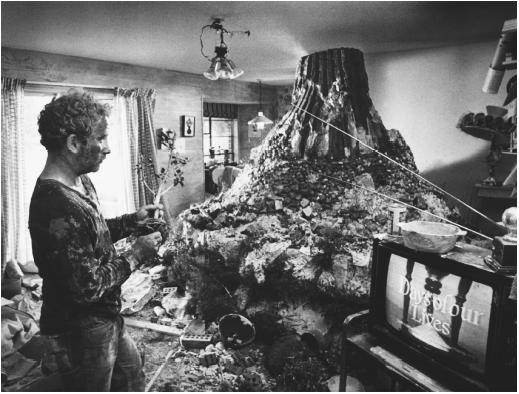
The new book is almost done. First draft, that is. I haven’t read it through since we started the thing more than a year ago. I am afraid to. I have this really bad feeling that it is a heaping, stinking, fetid, rancid pile of crap. I dream about it now, this pile of crap, almost every night, like Richard Dreyfuss in Close Encounters of the Third Kind. I wake up in a sweat over it. My only consolation is knowing that I feel this way with every book. And that I am not alone.
Years ago, during one of my bouts of self-doubt, I read an entry on Lee Goldberg’s blog in which John Connelly talked about his own demons:
There is always that fear that this book, this story, is the one that should not have been started. The idea isn’t strong enough. The plot is going nowhere. I’ve taken a wrong turn somewhere along the way and now have to try to find the right path again.
To which Lee responded:
This happens to me, too…but less often if I have a strong outline to start with (though an outline is no insurance policy against realizing 35,000 words into your book that it’s crap and you’re a complete fraud). In talking with other writers, I’ve noticed that the ones who hit the wall the most are the ones who make up their plot as they go along, preferring to be “surprised” by their characters and the turns in the story. Of course, this means the turns may lead to a creative dead end.
My night terrors are especially bad this time out for two reasons. We’re writing this book on spec with no publisher lined up. And both my sister and I have had some life intrusions lately that have knocked us off our usual book-a-year schedule, so we’re worried readers have given up on us and gone elsewhere.
Maybe there are writers out there who never have any doubts. Maybe Nora Roberts or Joyce Carol Oates never break out in a cold sweat at night. But I suspect there are hundreds, maybe thousands, of you out there who are in the same sweaty boat as I am. Because getting published is the easy part. (I know, those of you who aren’t don’t want to hear that, but it’s true.) Staying published is what’s tough. That means consistently writing good books that people want to read. And did I mention trying to always become a better writer?
Here’s Chuck Wendig on the subject of self-doubt. He’s my favorite go-to-guy when I am feeling alone and fraudulent:
You’re sitting there, chugging along, doing your little penmonkey dance with the squiggly shapes and silly stories and then, before you know it, a shadow falls over your shoulder. You turn around.
But it’s too late. There’s doubt. A gaunt and sallow thing. It’s starved itself. It’s all howling mouths and empty eyes. The only sustenance it receives is from a novelty beer hat placed upon its fragile eggshell head — except, instead of holding beer, the hat holds the blood-milked hearts of other writers, writers who have fallen to self-doubt’s enervating wails, writers who fell torpid, sung to sleep by sickening lullabies.
Suddenly Old Mister Doubt is jabbering in your ear.
You’re not good enough.
You’ll never make it, you know.
Everyone’s disappointed in you.
Where are your pants? Normal people wear pants.
You really thought you could do it, didn’t you? Silly, silly penmonkey.
And you crumple like an empty Chinese food container beneath a crushing tank tread.
There’s no easy way to cope with this. But here are some things I have found that have helped me over the decades. If you have some remedies, pass them on. We can all use the help.
- Talk to other writers. Be it through a critique group or at a writer’s conference, or just hanging out at blogs like this — make human contact with those who understand. One of the hardest lessons I learned was that, although writing is a solitary pursuit, it’s not a good idea to go it alone.
- Get away from your WIP. Which is NOT to say you should abandon writing for days or weeks because it you do that you lose momentum and risk being exiled from that special universe you are creating in your head. But it is a good idea, when you a stuck or in deep doubt, to feed your creative engine. Go for a good hike (leave early and take the dog). Read a good book or better yet some poetry. Go see some live theater or a concert. You will come back refreshed. It’s like doing a crossword puzzle: You can sit there and stare at 19-across for days and not get it, but if you put the puzzle down for awhile then pick it up, you see the pattern and can move on.
- Stay in the moment. Don’t project your fears forward or your regrets backward: What if I spend the rest of the year working on this story and it turns out to be a heaping pile of poop? What if no editor ever buys it? What if I only sell four copies on Amazon? If only I had started doing this when I was younger or before I had kids (or fill in the blank) I might be successful by now. As a therapist friend of mine once told me: If you stand with one leg in the past and the other in the future, all you’ll do is piss on your present.
- Don’t be afraid to fail. Because you will, at some time and at some level. If you spend all your energy worrying about this, you will never be a writer. Failure can often lead you in new directions. Margaret Atwood took a vacation to work on her novel but six months later, she realized the story was a tangled mess with “badly realized characters” and she abandoned it. But soon after that, she began her dystopian masterpiece The Handmaid’s Tale. As she put it:
Get back on the horse that threw you, as they used to say. They also used to say: you learn as much from failure as you learn from success.
For you penmonkeys who’ve been at this gig for years, you know what I’m talking about. For those of you just starting out, this is what awaits you: Days spent staring at your computer screen, deep in thought and doubt. You will run on cold coffee and warm faith. And you will have nights spent twisting in damp percal. What can I tell you? Yes, you will have self-doubt, so you learn to push though it and persevere. I offer the same two words of advice I give to my youthful female friends about menopause: cotton pajamas.