Fire in the hole! Fire in the hole! Fire in the hole!

by John Gilstrap

With all that holiday frivolity behind us, I’m going to continue my quest to help writers understand some of the technical aspects of weaponry so that their action scenes can be more realistic.  Today, we’re going to talk about some practical applications for high explosives.  It’s been a while since we last got into the weeds of things that go boom, so if you want a quick refresher, feel free to click here.  We’ll wait for you.

Welcome back.

When I was a kid, the whole point of playing with cherry bombs and lady fingers and M80s was to make a big bang.  Or, maybe to launch a galvanized bucket into the air.  (By the way, if you’re ever tempted to light a cherry bomb and flush it down the toilet, be sure you’re at a friend’s house, not your own.  Just sayin’.  And you’re welcome.)  As I got older and more sophisticated in my knowledge of such things, I realized that while making craters for craters’ sake was deeply satisfying, the real-life application of explosives is more nuanced.

Since TKZ is about writing thrillers and suspense fiction, I’m going to limit what follows to explosives used as weapons–to kill people and break things.  Of course, there are many more constructive uses for highly energetic materials, and while the principles are universal, the applications are very different.

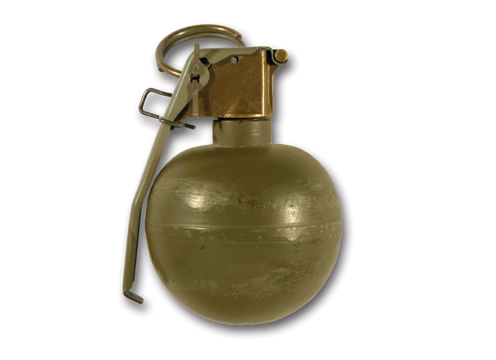
Hand grenades are simple, lethal and un-artful bits of destructive weaponry.  Containing only 6-7 ounces of explosive (usually Composition B, or “Comp B”), they are designed to wreak havoc in relatively small spaces.  The M67 grenade that is commonly used by US forces has a fatality radius of 5 meters and an injury radius of 15 meters. Within those ranges, the primary mechanisms of injury are pressure and fragmentation.

For the most part, all hand grenades work on the same principles. By pulling the safety pin and releasing the striker lever (the “spoon”), the operator releases a striker–think of it as a firing pin–that strikes a percussion cap which ignites a pyrotechnic fuse that will burn for four or five seconds before it initiates the detonator and the grenade goes bang.  It’s important to note that once that spoon flies, there’s no going back.

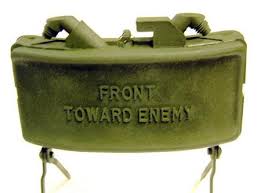
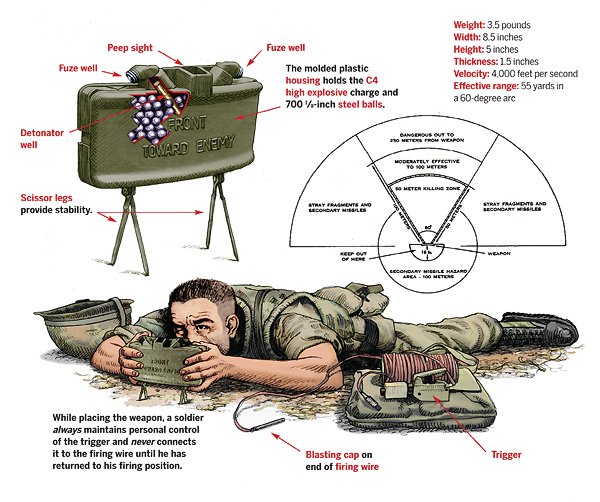
Claymore mines operate on the same tactical principle as a shotgun, in the sense that it is designed to send a massive jet of pellets downrange, to devastating effect.  Invented by a guy named Norman MacLeod, the mine is named after a Scottish sword used in Medieval times. Unlike the hand grenade, which sends its fragments out in all directions, the Claymore is directional by design.  (I’ve always been amused by the embossed letters on the front of every Claymore mine, which read, “front toward enemy.”  As Peter Venkman famously said while hunting ghosts, “Important safety tip. Thanks,Egon.”)

The guts of a Claymore consist of a 1.5-pound slab of C-4 explosive and about 700 3.2 millimeter steel balls. When the mine is detonated by remote control, those steel balls launch downrange at over 3,900 feet per second in a 60-degree pattern that is six and a half feet tall and 55 yards wide at a spot that is 50 meters down range.

The fatality range of a Claymore mine is 50 meters, and the injury range is 100 meters.  (Note that because of the directional nature of the Claymore, we’re noting ranges, whereas with the omnidirectional hand grenade, we noted radii.)

Both the hand grenade and the Claymore mine are considered to be anti-personnel weapons.  While they’ll certainly leave an ugly dent in a car and would punch through the walls of standard construction, they would do little more than scratch the paint on an armored vehicle like a tank. To kill a tank, we need to pierce that heavy armor, and to do that, we put the laws of physics to work for us.

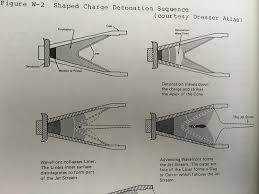
Shaped charges are designed to direct a detonation wave in a way that focuses tremendous energy on a single spot, thus piercing even heavy armor.  The principle is simple and enormously effective.

The illustration on the left shows a cutaway view of a classic shaped charge munition. You’re looking at a cross-section of a hollow cone of explosives. Imagine that you’re looking into an empty martini glass where the inside of the glass is made of cast explosive that is then covered with a thin layer of metal.  The explosive is essentially sandwiched between external and internal conical walls.  The open end of the cone is the front of the munition.

The initiator/detonator is seated at the pointy end of the cone (the rear of the munition), and when it goes off, a lot happens in the next few microseconds.  As the charge detonates, the blast waves that are directed toward the center of the cone combine and multiply while reducing that center liner into a molten jet that is propelled by enormous energy.  When that jet impacts a tank’s armor, its energy transforms the armor to molten steel which is then propelled into the confines of the vehicle, which becomes a very unpleasant place to be. The photo of the big disk with the hole in the middle bears the classic look of a hit by a shaped charge.

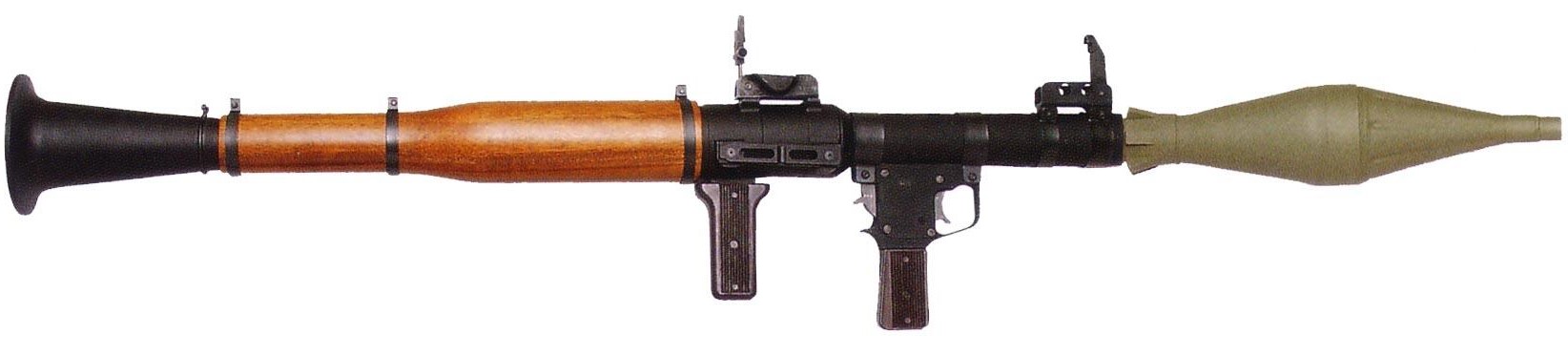
Now you understand why rocket-propelled grenades like the one in the picture have such a distinctive shape. The nose cone is there for stability in flight, and it also houses the triggering mechanisms.

The picture on the right is a single frame from a demonstration video in which somebody shot a travel trailer with an RPG.  The arrow shows the direction of the munition’s flight. There was no armor to pierce so the videographer was able to capture the raw power of that supersonic jet of energy from the shaped charge.

How to Take a Great Author Photo
Rule No. 1: Be True to Yourself

A lot of writers, especially crime writers, have an image that we think we’re trying to keep up with. You’ve got to be seen as dark and slightly dangerous. But I’ve realized that I don’t need to put that on. People will buy the books whether they see a photo of you dressed in black or not. — Ian Rankin

By PJ Parrish

I wish I had read that quote from Ian Rankin before I had my first author photograph done. It would have saved me a lot of embarrassment and the phone call I got from an old friend who I hadn’t seen in a couple years (call paraphrased here due to aging memory cells):

Him: “Are you…okay?”
Me: “Okay? What are you talking about?”
Him: “I saw your book in Barnes and Noble.”
Me: “Did you buy a copy? Tell me you bought a copy.”
Him: “I did. But it made me worried about you.”
Me: “Good lord, it’s not that bad, is it?”
Him: “I haven’t read it yet.”
Me: “But you’re worried…”
Him: “Yeah. You look so, so…angry.”
Me: “Angry? Why would I be angry? I finally got published!”
Him: “Or maybe you’re sad. I can’t really tell. What are you so depressed about? Did you get a divorce? I can give you the name of my shrink.”

That’s when it hit me. My friend had seen my author photograph on the back of my book. I knew the picture was bad. I knew it the moment the photographer sent back the contact sheet with all those mini-me’s scowling out at the world. But I was in denial and he was a pro who had taken many author photos, so I chose one and ordered the prints anyway. But I’ll let you be the judge. Here’s the photo:

It’s okay. You can say it. I look awful. I got my hair and makeup done, yes. And I wore my black leather jacket and my best frown because I was a woman writer in the hard-boiled world where the men who came before me and those who now crowded around me smoked Camels, drank scotch and wrote things like, “I won’t play the sap for you, angel.”

I wanted to look serious.  I ended up looking mean.

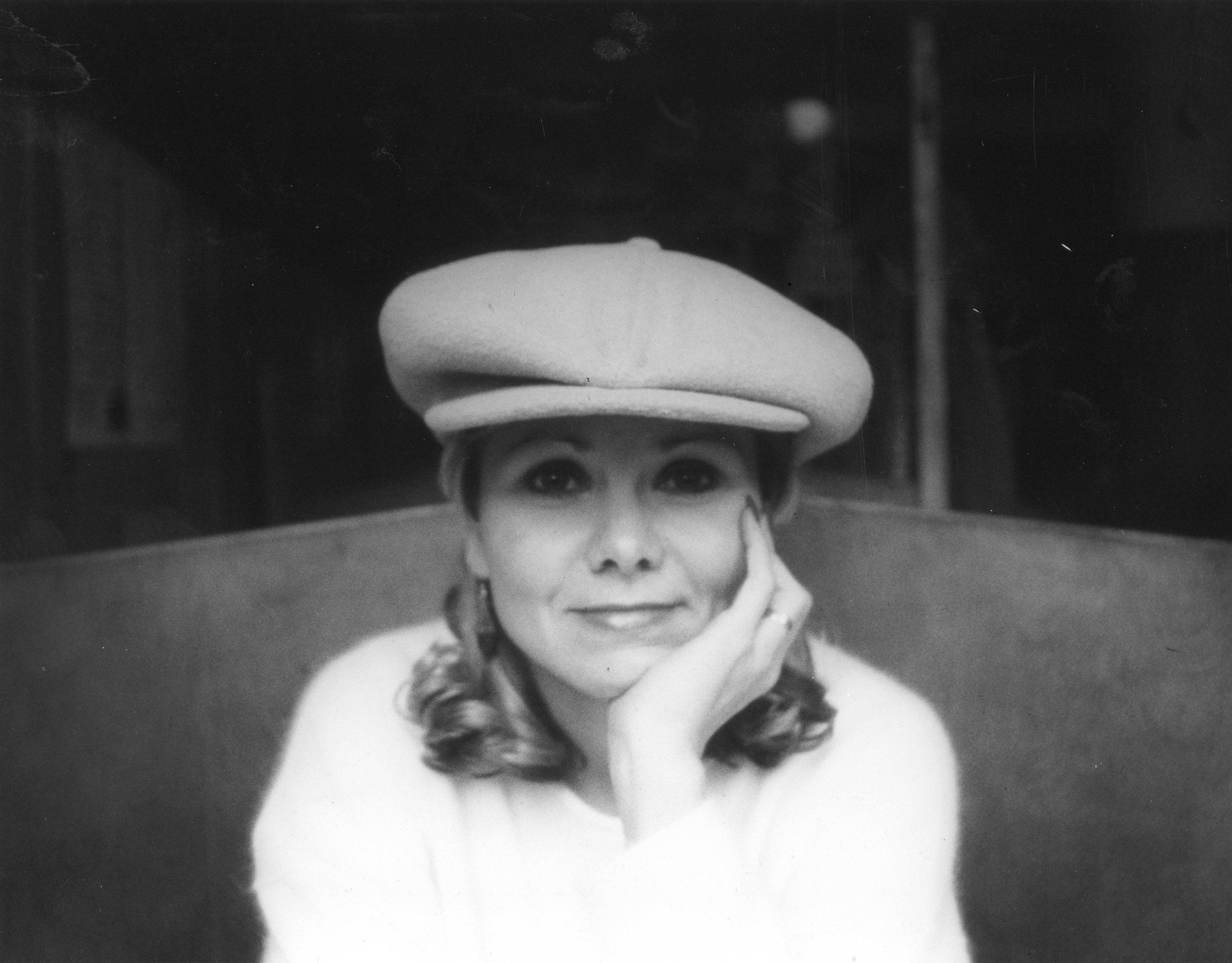
I’m not mean. Or sad or angry. Below left is my very first author, from 1984, way back when I was writing romance and family sagas. Who would you rather buy a book from? That hopeful wry writer in white at left or that crabby miscreant in black above?  What happened to me?

I’ll tell you what happened. I really thought, when I switched genres, I needed to look tough and distant, like I could chew glass. I didn’t realize that what I really needed to do was just be myself. Which is actually what I was doing when my photographer and I went out for beer and pizza at John’s in the Village and he captured this candid moment that became my official author photo.

What can you learn from my experience?  Lots, I hope. Because whether you are published or still trying to get there, this isn’t just about getting a good author photograph. It’s a lesson in being true to yourself.

If a picture is worth a thousand words, an author photo is worth oh, maybe a million? Readers buy books for myriad reasons. They heard from a friend that the book was good. They read the reviews on Amazon or Good Reads. A clerk in a bookstore recommended it. Or very often, they picked up the book, read the blurb, maybe the first page. And maybe they looked at the picture of the person who wrote the book. Now I’m not suggesting that the wrong author photo can make or break a sale.  I’m with Ian Rankin on this one, believing that if you continually produce good stories, looks don’t matter. But in this competitive market place, it’s not a bad idea to get a good author photo. Here’s why:

  • You’ll need one for publicity purposes. Unless you’re a star at a large publishing house, you probably won’t get the photo done for you. But you will be expected to provide one for publicity and promotion. If you are self-publishing, you must have a website and that means you must have a good photo of yourself on it.
  • It engages the reader in a sub-conscious way. The right photo can send a positive signal to a potential reader. First, that you are a professional. Second, that you are approachable i.e. the Consciousness behind the characters they will be spending the next couple weeks or months with.
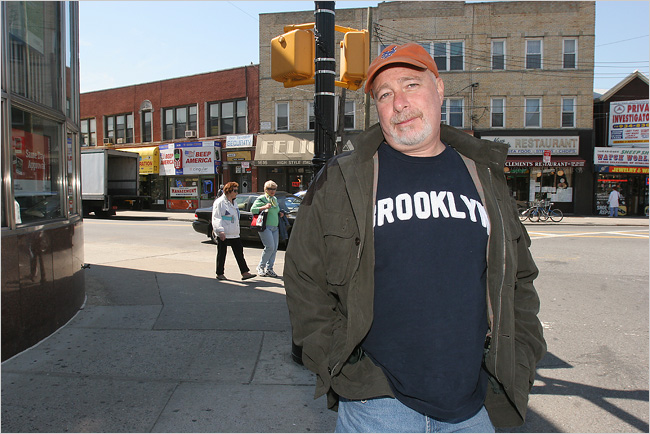
  • It establishes you as a recognizable “product.” I know this idea is repugnant to some folks, but the most successful authors make themselves sell-able with a consistent image. Think Mr. Peanut or Colonel Sanders. Think of this guy:

  • It conveys the tone of your work. This is important. We have talked often here at TKZ of the importance of tone consistency in your work. Many elements — cover art, type-faces, and of course the writing style itself — help readers grasp what kind of writer you are. Are you writing YA or adult? Are you hard-boiled or lighthearted? All of this needs to show in your own face in that author photo. But don’t make the mistake I did and put on a leather coat and a sneer, thinking that will help. It’s more subtle than that.

Here are some examples of conveying the right tone in author photos. Chris Grabenstein started out writing his adult Ceepak mysteries loosely set around a carnival theme but branched out to a children’s series. Below are his two author pics. Guess which one goes with which series:


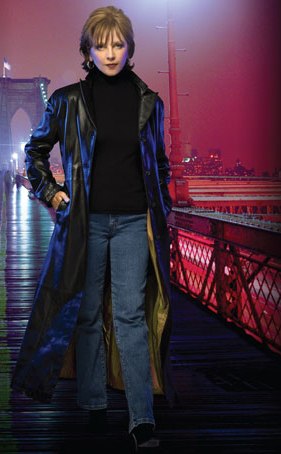
And then there’s Nora Roberts aka J.D. Robb.  Nora has written more than 200 romances. But when she puts on her thriller cloak as J.D. Robb, she has a different look. Same woman, yes, with a definite brand. But with a subtle difference in the photos that appear on the back on her books:
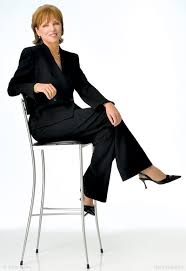
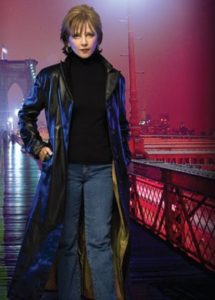
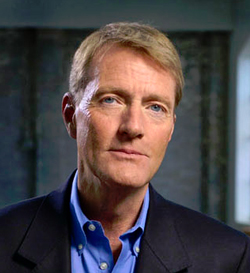
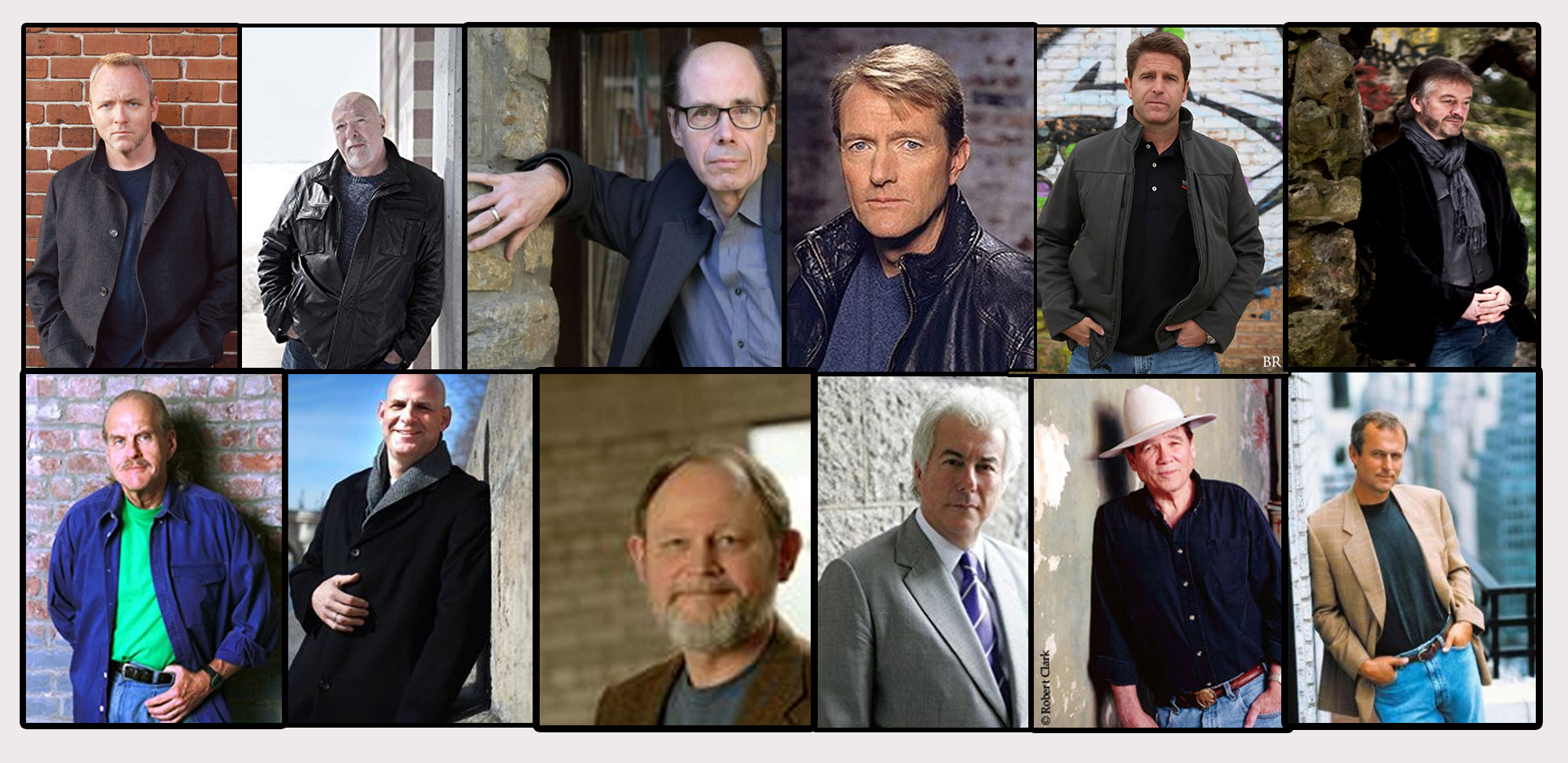
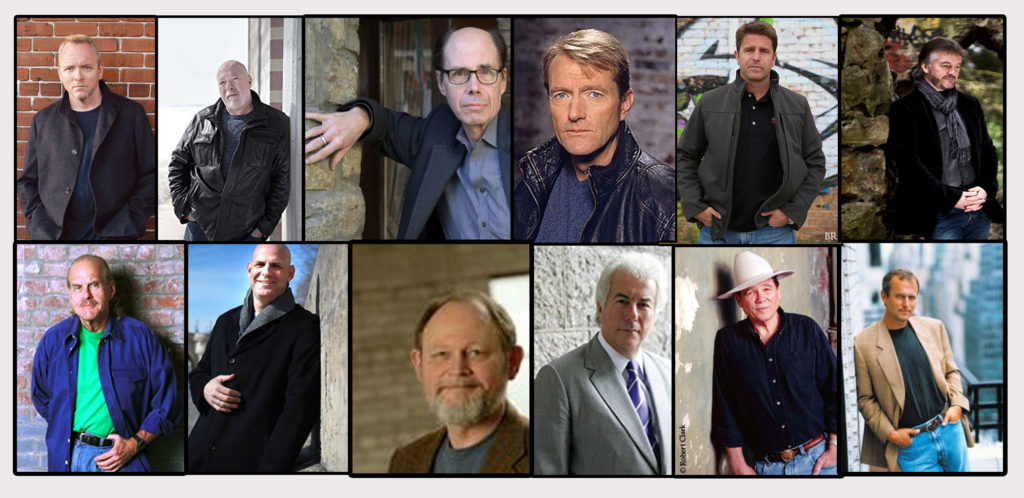
I think it might be easier for guys in crime fiction to come up with a good pic. They just have to slap on a shirt, maybe a blazer and good jeans and lean up against a brick wall. (See below).
Women who write hard-boiled or more serious crime fiction have it a little harder, what with the make-up, hair, and the expectations of the genre. Where is the sweet spot for us between serious and…mean? I think these two found it:

Regardless of gender or sub-genre, getting the right photo isn’t easy, and there are plenty of bad ones out there, even when they are done by professionals guided by publishing house promotion staffs. My favorite blogger, Chuck Wendig, just ran his Awkward Author Photo contest Click here to go see the entries and the winner, but don’t get any bright ideas, okay?

There are also some pretty bad author photo cliches:

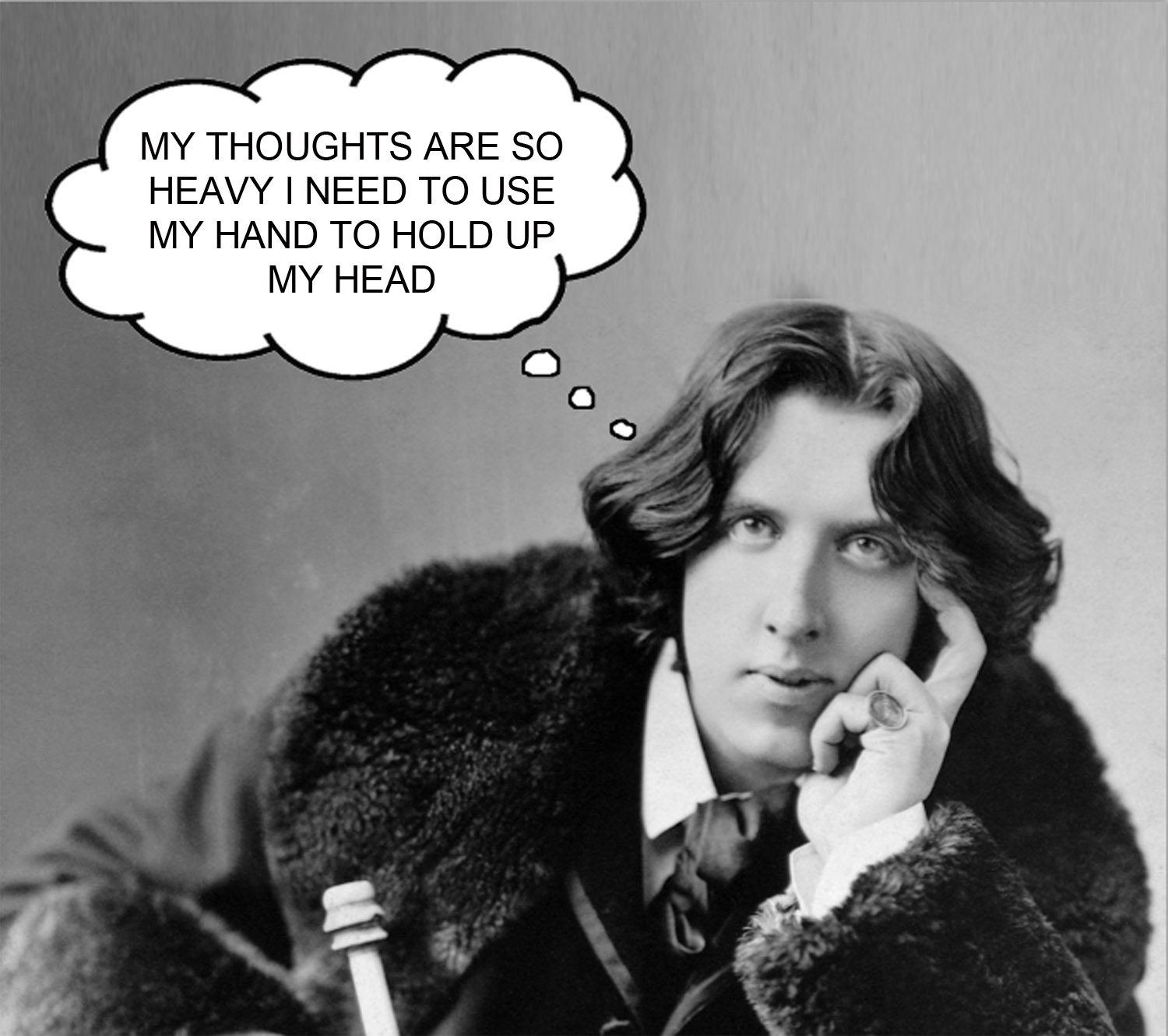
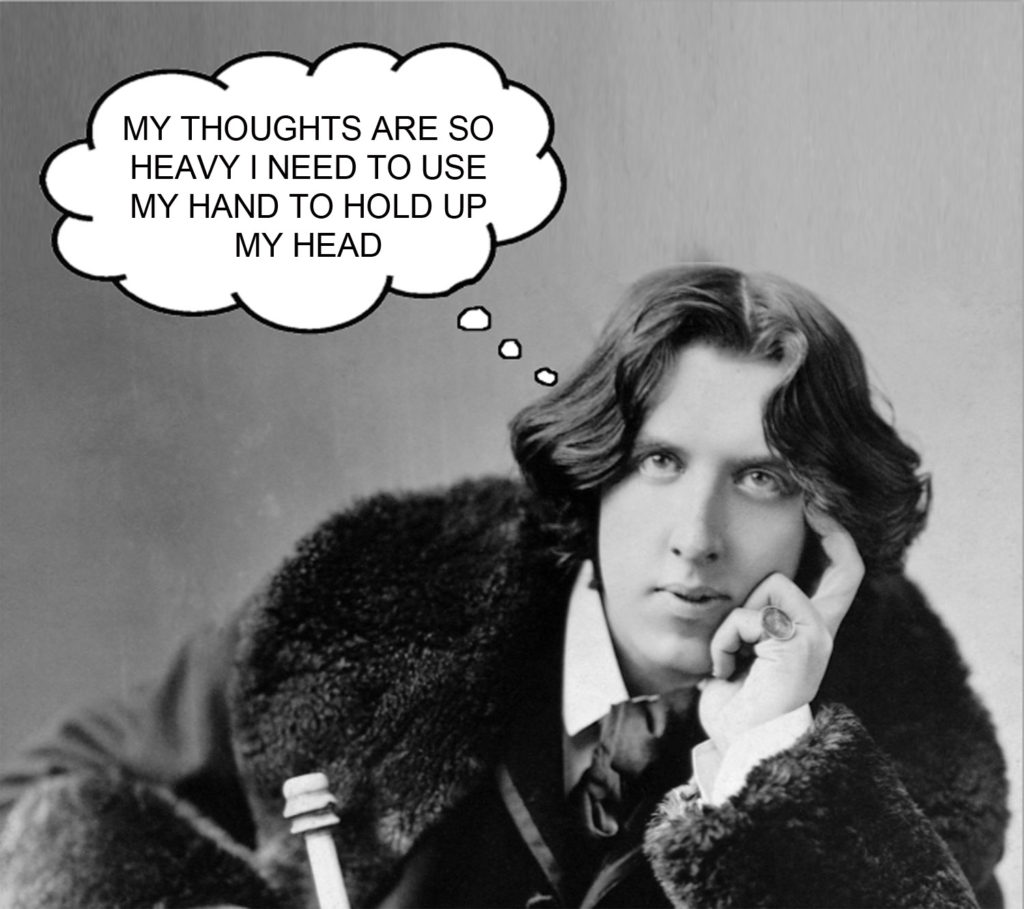
  • Hand under the chin, at side of forehead or anywhere in vicinity of face. It worked for Oscar Wilde but now looks silly.
  • Manual typewriter in the picture. Who are you kidding?
  • Big shaggy dog to soften image or distract from author.
  • Soft focus. You really want to look all Vasolined like Doris Day?
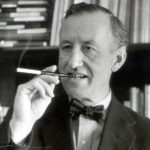
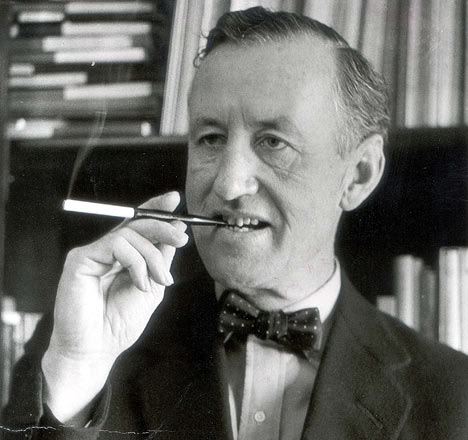
  • Cigarettes. I think Ian Fleming was the last guy to pull this one off successfully but that didn’t stop photographer Szilvia Molnar from getting a great Twitter feed off the subject “The Man, The Writer, and his Cigarette.” 
  • The vacant stare into space. Jack Kerouac did this a lot but maybe he was writing this line in his head: “I had nothing to offer anybody except my own confusion.”

Given my bad experience with author photos, I am probably the last person who should be giving you advice on what to do with your own. But I am going to give it a try, based on some research I did and some tips I got from some author friends. First off, there’s the big question: Hire a pro or do-it-yourself?

Hire a professional, if you can. Yeah, it can get expensive. And you don’t always get what you pay for (see my experience above). But you will get a basic level of quality and selection that you won’t get doing it yourself or having your brother take a pic of you with his iPhone. Ask fellow authors for recommendations. I ended up getting a photo done by my late great friend Barbara Parker, who when she wasn’t writing mysteries was a professional photog.

Take your own pic. Yes, it can be done but it’s a giant pain, and there’s a good chance the results will look amateurish. But if it’s all you can afford at first, so be it. Click here for  some good tips I found on line.

Get both black and white and color versions. Or make sure the quality is good enough that you can convert color to gray tone prints. VITAL: The original must be high-resolution. Let’s say you get a gig at a library and they need your mug. If that little image you put on your website can’t be downloaded and blown up for a flyer or poster, you’ve lost out. And if you ever meet my sister Kelly in a bar at a writer’s conference, don’t get her started on the topic of author photos. She does a lot of program books for conferences and has been sent blurry snapshots, high school portraits, and family group shots wherein she has to figure out which one is the writer. One guy just told her to photoshop out the family dog he was holding. This is how the guy appeared in the program book:

Portrait or environment? You can do a simple head and shoulders photo. But you might want to consider a second photo of you in some kind of environment that matches the tone or content of your book(s). And that don’t-do I mentioned about dogs? Well, if you write a series about a dog or maybe a cozy series that suggests a softer tone, including your pet can work for you, make you look accessible to your readers.

Here are two photos of my friend Reed Farrel Coleman. One is a portrait but the second reflects the New York setting of his books.


If you can’t afford a stylist, take along a friend who has a good eye. I am getting ready to put my condo on the market and I hired a professional photographer to come take photos for Zillow, Realtor.com and the MLS listing. He was amazing, right down to repositioning electrical cords and hiding my bath mats. Don’t do less for your own face. You don’t want a plastic plant growing out of your head, your tie askew or lipstick on your teeth. A good photographer should be helpful here but don’t count on it.

Be careful what you wear. Stay away from prints and fussy clothes. Keep your look simple so readers notice your face, not your fashion choices. I don’t care that Dan Brown has sold a zillion books. Someone should have told him dad jeans are ugly.

Don’t over-photoshop. Yes, you can retouch some because even if you look like her, you don’t want to come off like Norma Desmond. But you’re not a super-model so don’t over-do it with erasing wrinkles and taking out that double-chin. You’re trying to sell books not link up on Match.com.

Don’t wear weird jewelry or any variation on lingerie. When Anne Rice was starting out, she was often photographed looking like a cross between Stevie Nicks and Morticia. Now she has this elegant-mystery vibe going in her pics, with black tops, one great necklace, and a smart bob. And even if you write romance, keep the pink and pearls under control until you have published 722 novels like the woman pictured below did. Then, like George R.R. Martin, you can wear whatever you want.

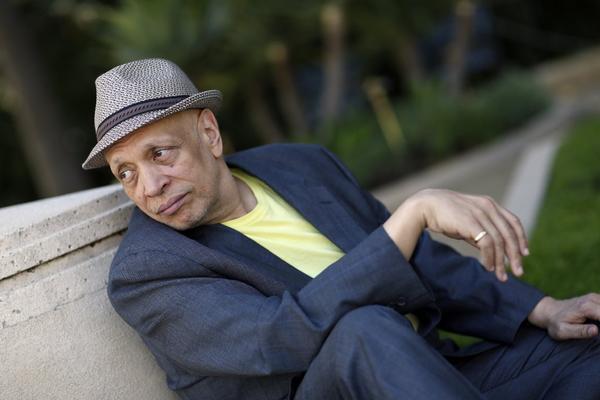
Consider getting a third horizontal format photograph that includes some negative space. Position yourself to one side and leave the rest blank. This negative space can then be used by you or a designer in your website header. You can insert type easily into the photograph. I love this photo below of Walter Mosley, not just because it conveys his personality but also for its negative space. And yes, he’s staring off into space but I don’t care.

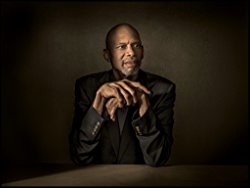
And speaking of personality…how much is good and how much is over the top? It depends on you as an author, how good your photographer is, what kind of books you write, and what mood you want to present to the world.  Sometimes, going against what is expected can work wonders. When Kareem Abdul Jabbar began writing books, he didn’t do the standard author head and shoulders VERTICAL shot. Look at this gorgeous horizontal photograph. Look at those hands.
Speaking of hands, I love this photograph below by romance writer Maya Rodale. It’s glamorous and sexy, probably like her books. But notice those wire rim glasses she’s holding…what a nice touch!

And then there is this author photo…
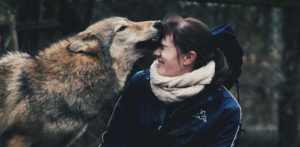
That’s YA author Maggie Steifvater who has some stunning photos on her website. Click here to see more. But oddly, she doesn’t have one photo of herself that you can download, so if someone needs a publicity picture, they have to hit the internet and search for one. Rule No. 2 about author photos: Never make someone who is selling your book work harder than they have to.

So, that’s it. I know, I know…you don’t want to think about this. You have too much on your author plate already and you don’t like having your picture taken anyway. Well, it goes with the turf. You don’t have to get a Annie Liebovitz-quality portrait when you’re just starting out. Just get a good, clear, high-resolution head shot that tells the reader what kind of person you are and what kind of books you write. The rest is gravy.

I will leave you with two final images that should give you hope.

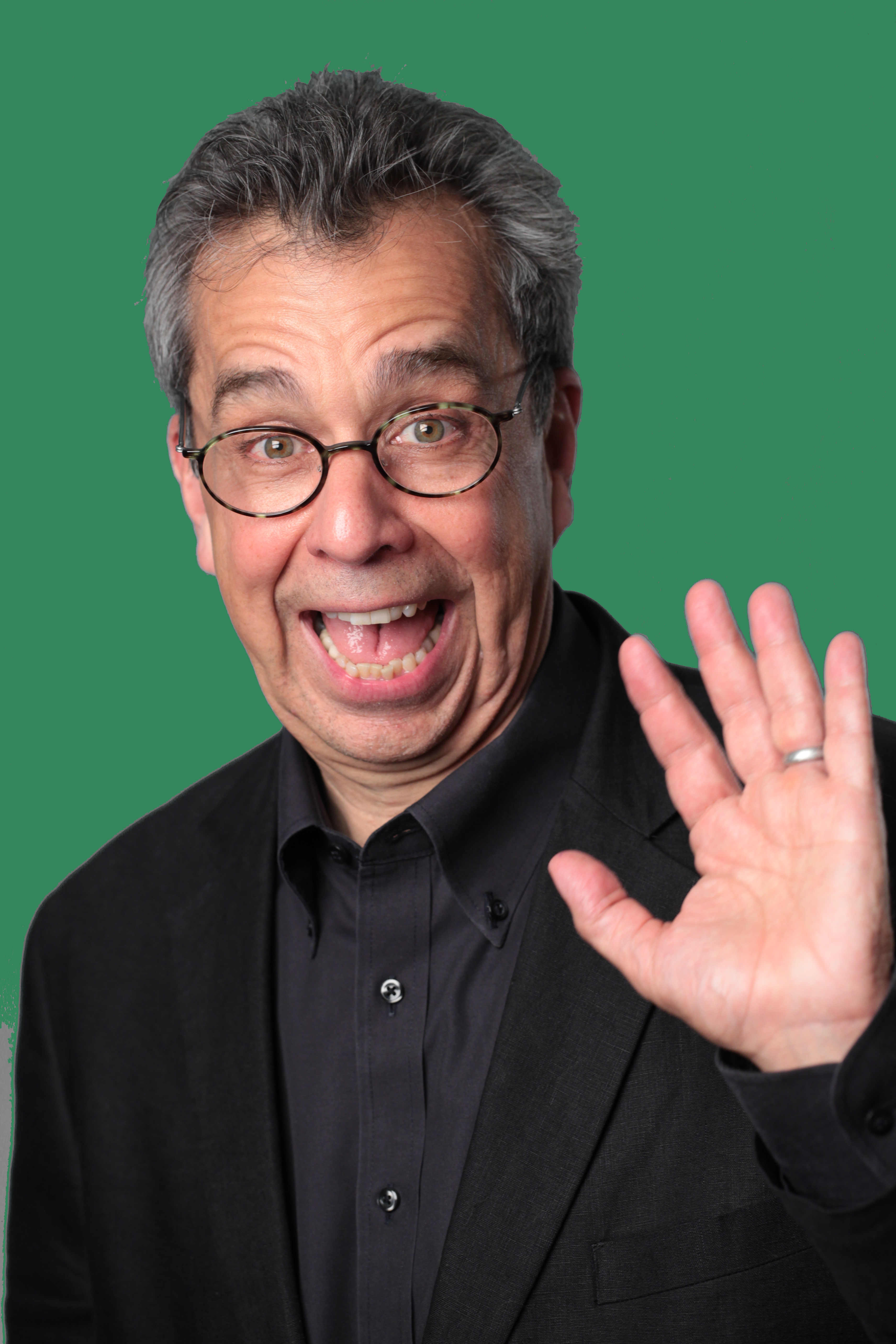
If this guy’s author photo went from this:
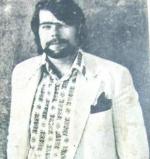
To this…

Well, maybe yours can, too.

_________________________________________

P.S. Chuck Wendig just posted the winners of his bad author photo contest. Click here to see them but don’t have a mouthful of coffee when you do.


Welcome 2017!

Welcome back TKZers!

Hope you all had a safe and happy holiday season and are ready to tackle all your writing resolutions in the year ahead. As always, I have a few resolutions after all my holiday eating, drinking and writing slackness, but in 2017 I want to focus on what I’m calling ‘deep writing’. For me, 2016 was definitely the year of ‘distracted writing’. It may have been all the politics or just the overwhelming onslaught of news, social media posts etc.,  but whatever the cause, I have now (thanks TKZ’s own James Scott Bell) purchased Cal Newport’s book ‘Deep Work, Rules for Focused Success in a Distracted World‘ and intend to fully embrace the concept of ‘writing deeply’ this year.

Rather than calling this a New Year’s resolution, I’ve decided ‘write deeply‘ will be my mantra for 2017. I will be chanting it in my sleep by the end of January and, hopefully, I will notice an improvement in focus, concentration and maybe even the quality of my writing (!) by the end of the year.

So what about you? Do you have a mantra you would like to adopt for 2017?

Also any tips on how I can ensure mine gets through the post-holiday thickness of my skull, will be gratefully received….

Happy New Year From TKZ, And See You Soon!

It’s Winter break here at Kill Zone. During our 2-week hiatus, we’ll be spending time with our families and friends, celebrating traditions and even doing some typing. See you back here on Monday, January 2. Until then, if you need some refreshers, check out our TKZ Library up on the menu bar, with writing instruction by topic.

Santa Visits A Critique Group

by James Scott Bell
@jamesscottbell

[http://www.utexas.edu/features/2010/12/06/christmas_america/ 'Santa's Portrait' byThomas Nast, published in Harper's Weekly, 1881]

Portrait of Santa Claus, by Thomas Nast, published in Harper’s Weekly, 1881

’Twas the night before Christmas, and all through the room

Was a feeling of sadness, an aura of gloom.

The entire critique group was ready to freak,

For all had rejections within the past week.

An agent told Stacey her writing was boring,

Another said Allison’s book left him snoring.

From Simon & Schuster Melissa got NO.

And betas agreed Arthur’s pacing was slow.

“Try plumbing,” a black-hearted agent told Todd,

And Richard’s own mother said he was a fraud.

So all ’round that room in a condo suburban

Sat writers––some crying, some knocking back bourbon.

When out in the hall there arose such a clatter,

That Heather jumped up to see what was the matter.

She threw the door open and stuck out her head

And saw there a fat man with white beard, who said,

“Is this the critique group that I’ve heard bemoaning?

That keeps up incessant and ill-tempered groaning?

If so, let me in, and do not look so haughty.

You don’t want your name on the list that’s marked Naughty!”

He was dressed all in red and he carried a sack.

As he pushed through the door he went on the attack:

“What the heck’s going on here? Why are you dejected?

Because you got criticized, hosed and rejected?

Well join the club! And take heart, I implore you,

And learn from the writers who suffered before you.

Like London and Chandler and Faulkner and Hammett,

Saroyan and King––they were all told to cram it.

And Grisham and Roberts, Baldacci and Steel:

They all got rejected, they all missed a deal.

But did they give up? Did they stew in their juices?

Or quit on their projects with flimsy excuses?”

“But Santa,” said Todd, with his voice upward ranging,

“You don’t understand how the industry’s changing!

There’s not enough slots! Lists are all in remission!

There’s too many writers, too much competition!

And if we self-publish that’s no guarantee

That readers will find us, or money we’ll see.

The system’s against us, it’s set up for losing!

Is it any surprise that we’re sobbing and boozing?”

“Oh no,” Santa said. “Your reaction is fitting.

So toss out your laptops and take up some knitting!

Don’t stick to the work like a Twain or a Dickens.

Move out to the country and start raising chickens!

But if you’re true writers, you’ll stop all this griping.

You’ll tamp down the doubting and ramp up the typing.

You’ll write out of love, out of dreams and desires,

From passions and joys, emotional fires!

You’ll dive into worlds, you’ll hang out with heroes.

You’ll live your lives deeply, you won’t end up zeroes!

And though you may whimper when frustration grinds you

There will come a day when an email finds you.

And it will say, Hi there, I just love suspense,

And I found you on Kindle for ninety-nine cents.

I just had to tell you, the tension kept rising

And didn’t let up till the ending surprising!

You have added a fan, and just so you know,

If you keep writing books I’ll keep shelling out dough!

So all of you cease with the angst and the sorrow,

And when you awaken to Christmas tomorrow,

Give thanks you’re a writer, for larger you live!

Now I’ve got to go, I’ve got presents to give.”

And laying a finger aside of his nose

And giving a nod, through the air vent he rose!

Outside in the courtyard he jumped on a sleigh

With eight reindeer waiting to take him away.

At the window they watched him, the writers, all seven,

As Santa and sleigh made a beeline toward Heaven.

But they heard him exclaim, ’ere he drove out of sight,

“Happy Christmas to all, and to all a good write!”

***

Yes, good writing to you, and may this season be full of joy for you and yours. We at TKZ have greatly appreciated your support and comments over the past year. We now begin our annual two-week break. See you back here on January 2, 2017!

Ring out the Old…

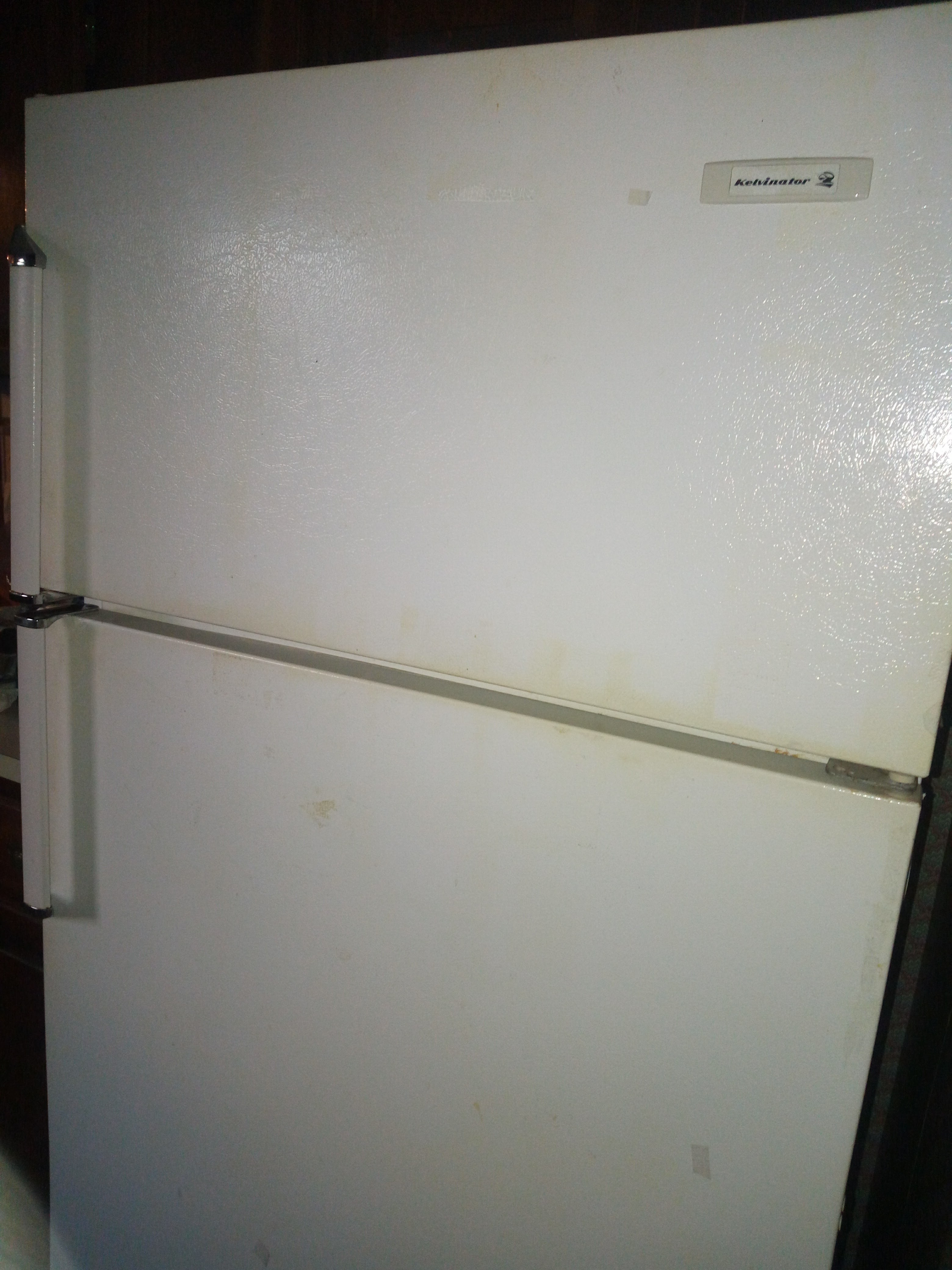
kelvinator

Sometimes I sits and thinks, and sometimes I just sits…and sometimes I write. I am doing the latter while waiting for Kelvin, our venerable refrigerator, to be hauled away. Kelvin lasted a long time, taking the blame for disappearing food (“Who ate the last pork chop?” “Kelvinator!”) for two decades and change. It is the last original major appliance in the Hartlaub House of Hoo-Ha to give up the ghost. I bought it and this house twenty-two years ago — July 1, 1994 — when I was a single dad with three children. Four days after I moved myself and my brood into this residence and started making it a home a company named “Amazon” started in Seattle, Washington, with the goal of being the world’s largest bookstore. The new refrigerator wasn’t purchased from Amazon, but it could have been.

I won’t try to list all or even a few of the things that have happened in the world since Kelvin was pressed into service. I’ll tell you a few of the things that have happened to me. They were all surprises. I remarried. I had a fourth child. I’ve had stories published, had a supporting role in a feature film (which you all may yet see in 2017), changed my field of law practice, written some book reviews for bookreporter.com (which didn’t exist in 1994 either), and acquired a whole bunch of new friends (and yes, maybe a couple of enemies too!). Kelvin was a part of a bit of all of that, and it’s going to somewhat of a somber moment when the truck pulls up to haul it away, to be replaced by what more likely than not will be my last refrigerator, particularly if the new one lasts as long as the old one did.

“Somber” for me has usually been followed by “pensive.” It would be easy as the old year ends and a new one begins to reflexively list my New Year’s resolutions, and ask you to share yours as well. Instead, I’m going to ask you: what is it that you don’t want to do in 2017? Mine is easy to state, and hard to do, particularly because it soooo easy in my case to use age an excuse to do otherwise. I’m going to try however, to follow this rule: Don’t. Screw. Up. Now let’s see yours.

Merry Christmas, Happy Hanukkah, and Happy New Year! Be safe. We’ll see you on the other side of the New Year.


Reader Friday: What is the oddest thing you’ve ever done in the name of research?

qtq80-7vCftV

Some authors attend real autopsies, spend nights in haunted houses, or travel to exotic places.

I’ve toured FBI: Quantico and CIA: Langley, shot various weapons at the FBI Academy firing range and watched a bomb squad blow up stuff at my local police department. I’ve had a flash bang grenade blown up at my feet to see what it was like, and I’ve blindfolded myself to fumble around in a dark room to see if I could sense walls.

Writers do peculiar things in the name of research. Tell us about your most memorable experiences, what you learned, and how you used it.

Put Your Setting to Work – First Page Critique – Unknown Rider

Jordan Dane

@JordanDane

iStock image purchased by Jordan Dane

iStock image purchased by Jordan Dane

My last critique for 2016. I’ve enjoyed reading the anonymous submissions this year. We have some very talented authors following our blog. Thanks to all of you who participate with your comments and for all those brave souls who have submitted your work for our feedback. We all learn from the experience.

Enjoy UNKNOWN RIDER and I’ll have my feedback on the flip side. Please provide constructive criticism in your comments. Thank you.

***

Prologue

A narrow palm-lined alley led off the main boulevard to the boat docks. A warm front had blanketed the area with a thick overcast, obliterating the faint starlight on the moonless night. At one o’clock in the morning, the few functioning streetlights created a dimly lit gloom that made it hard to distinguish between the living and the nonliving as the tropical breeze animated palm fronds and various pieces of trash on the derelict street. It was still a quarter of a mile to the docks, but even at this distance the low-tide smell of spilled diesel fuel, dead fish, and decay polluted the air.

Frank Stodd walked quickly down one side of the pavement towards the water. He looked very much out of place in his dark suit and tie, but he hadn’t planned to be here. He had a growing suspicion that he had taken a wrong turn on the way back to the hotel, but he pressed on, looking over his shoulder every few seconds for the black Escalade. Then he patted the gun through his jacket for reassurance, and felt for the small package in his inside coat pocket. He was a large man, quite overweight, and in spite of the sea breeze blowing in towards the shore, he was sweating profusely underneath the stiff white collar of his shirt.

Maybe he could see the hotel when he got to the water at the end of the alley, he told himself. It was a well-lit high rise, after all, with a big red ‘Hilton’ on the side. There was too much at stake to blow it now.

They had seen him in the van outside the bar in old San Juan. He’d sped off immediately, cursing his bad luck, but they tailed him for several blocks. Finally, he lost them somewhere near his hotel, ditched the van, and continued on foot. The shortcut he’d taken past the marina and docks should have thrown them off. Yes, he was sure now that he’d lost them.

But against the wall of a building, well hidden in the shadows to Stodd’s left, was another man. In blue jeans and a t-shirt, he looked like anyone else you might see in the city, someone who had bubbled out of the melting pot of the Caribbean. He checked the cylinder of his revolver to confirm that it was fully loaded and wondered again whether the silencer screwed into the end of the barrel might affect the gun’s accuracy. But when he got a good look at the size of his target he decided it wouldn’t matter.

He raised the gun at arm’s length.

Stodd saw a flash from his left. There was a slight whooshing sound like someone had spit, the sledgehammer impact of the bullet, then he was lying on his side, his left arm and shoulder on fire. The pavement was cool in spite of the heat of the night, his vision blurred, and the pain took a back seat. He knew only that he was tired and wanted to rest. He closed his eyes.

FEEDBACK:

OVERVIEW – There are some gems in this intro. The author has a visual style and imagery is important. Often setting is overlooked, but not with this author. I like how he or she describes through use of the senses too. I can see Frank sweating as he lumbers through a shady part of town. But there is an issue with ORDER in this scene. The idea is to introduce a conflict and tension and build upon it, not deflate it. Below are some observations:

SETTING – The first paragraph is an author’s chance at establishing a voice. In this example, the author describes weather and setting without these elements being through any character. As much as I can appreciate a good setting, without a character seeing it, I tend to skim. I don’t even know where the description is supposed to be, other than it’s coastal and has palm trees and water. By mentioning San Juan and Caribbean much later, this appears to be Puerto Rico. Why not include a tag line to establish the location right away? That would make the setting an instant recognition for the reader and even establish a time of day. It’s best not to make the reader guess or have to reread because they thought the setting was somewhere else, like Florida.

REVISED START – I would consider starting with elements of paragraph 2. I like knowing Frank is out of place and uncomfortable where he’s walking. It makes me wonder what he’s up to, but make him sweat for more than weather. The example below is a rough draft and if it were mine I’d tweak it more, but I hope you get the idea. Getting into Frank’s head and the tension he’s feeling is the place to start.

Example – Frank Stodd picked up his pace as he walked toward the docks, looking out of place dressed in his dark suit and tie. He tugged at his stiff white collar with sweat trickling through his hair. Muggy heat turned the stench of low-tide into a vile smell of spilled diesel fuel, dead fish, and decay. He must’ve taken a wrong turn on his way back from the hotel and he kept glancing over his shoulder for the black Escalade. The small package he carried in his jacket pocket weighed heavy, pressed against his gun.

PUT YOUR SETTING TO WORK – Rather than start with a long first paragraph to establish setting, the author might consider peppering the heat and the stench and other sensory descriptions to add to Frank’s discomfort and tension. Make the setting work by using it to escalate the tension or messing with Frank’s head. I’ve incorporated some of the setting descriptions into the revised intro to exacerbate Frank’s situation and add tension. He’s a heavy man and he’s sweating, not only because of weather and where he is. He’s anxious over his situation, so an author can drop in setting through action to enhance the intended emotion for the scene, without slowing the pace.

USE of PROLOGUE – I’ve never had an editor say they wouldn’t buy something because it had a Prologue, but when you get authors together and they talk about perceived rules, they usually are not in favor of using Prologues. If a Prologue is used properly, where the inciting incident of a story begins earlier (ie Batman as a boy when he witnesses his parents murdered before he dedicates his life to fighting crime), then make it clear it’s a short segment that is the foundation for what comes. Lately, I’ve simply started on Chapter 1, even if there is an older inciting incident, because I use tag lines to establish the time and place. But I wanted to point it out, as I’m sure others might comment. I’m indifferent, but a Prologue should be used in the right way.

STICK WITH THE ACTION – Once a story has started with action, it should stick to that action and not vacillate from what’s happening to drift away from it. The idea is to BUILD on tension and not deflate it. In the short paragraph that starts with “Maybe he could see the hotel…” – this deflates the tension established when the reader sees Frank is in trouble. He thinks of getting back to his hotel and even the line of “not blowing it now” is ‘telling’ and could be deleted to stick with the action of him being tailed.

ACTION OUT OF ORDER – The action in this opener is out of order. The author should resolve this to not lose any momentum in the action from start to finish.

“They had seen him in the van…” This is a 4th paragraph flashback to an earlier incident the same evening. The author could consider starting at that point where Frank is spotted by shady characters or by men in the Escalade and he tries to outrun them in his overweight condition, not dressed for the occasion. Or have Frank evading the Escalade and stick with the action to have the vehicle find him again. No need to go back. No matter which way the author decides, the action should gain momentum and tension should be mounted and not diffused.

KNOW YOUR WEAPON – Another point I would like to make with regard to action – once guns are drawn, there’s no time for checking for bullets in a revolver. Frank was nervous enough to pat down his pocket to make sure he had his gun. He should know if it’s loaded. I’m also a believer in adding details like the type of revolver. Most gun enthusiasts know what they are carrying. It looks novice if the author ignores the details. I’m also thinking guys who ride around in Escalades, aren’t carrying revolvers. I’d be thinking of ramping up the firepower to a semi-auto.

A SUPPRESSOR ON A REVOLVER? – A revolver has a short barrel. Between the cylinder (bullets) and the forcing cone is the cylinder gap where the gases, flames, and sound escape when fired. VIDEO ON THE MYTH The way this intro is written, very generically, most crime fiction readers would question a suppressor on a revolver unless the author can research a type of gun like the Nagant M1895, a Russian revolver, where these gases are contained. Here’s a VIDEO of someone shooting a suppressed Nagant. Look at how large this weapon is (with suppressor) and how difficult it would be for Frank to have it under his jacket. I don’t see how a suppressor enhances this scene and it actually stands out as a research error. Plus if other people are shooting back, without suppressors, what’s the point of Frank being stealthy? I tend to think of suppressed weapons as in the hands of assassins or killers who are the aggressors. Frank seems to have the weapon for defense purposes.

POV – In the sentence below, the author brings in a shooter, but since the guy is “well hidden,” how can Frank see him? It would appear to be an omniscient POV as was the first paragraph where the setting is described without being in Frank’s head. I would strongly suggest one POV in this scene, through Frank’s eyes.

“But against the wall of a building, well hidden in the shadows to Stodd’s left, was another man.”

FRANK SHOT – Frank seems like he’s resting rather than shot at the end. I know in the heat of the moment, often gunshot wounds aren’t felt (except as a punch) when the adrenaline is high, but I would consider shortening the sentences and making him feel more than tired, just to add tension for the reader. He seems too calm.

DISCUSSION:

1.) What do you think, TKZers? Comments anyone? What do you like? What would you suggest to improve this intro?

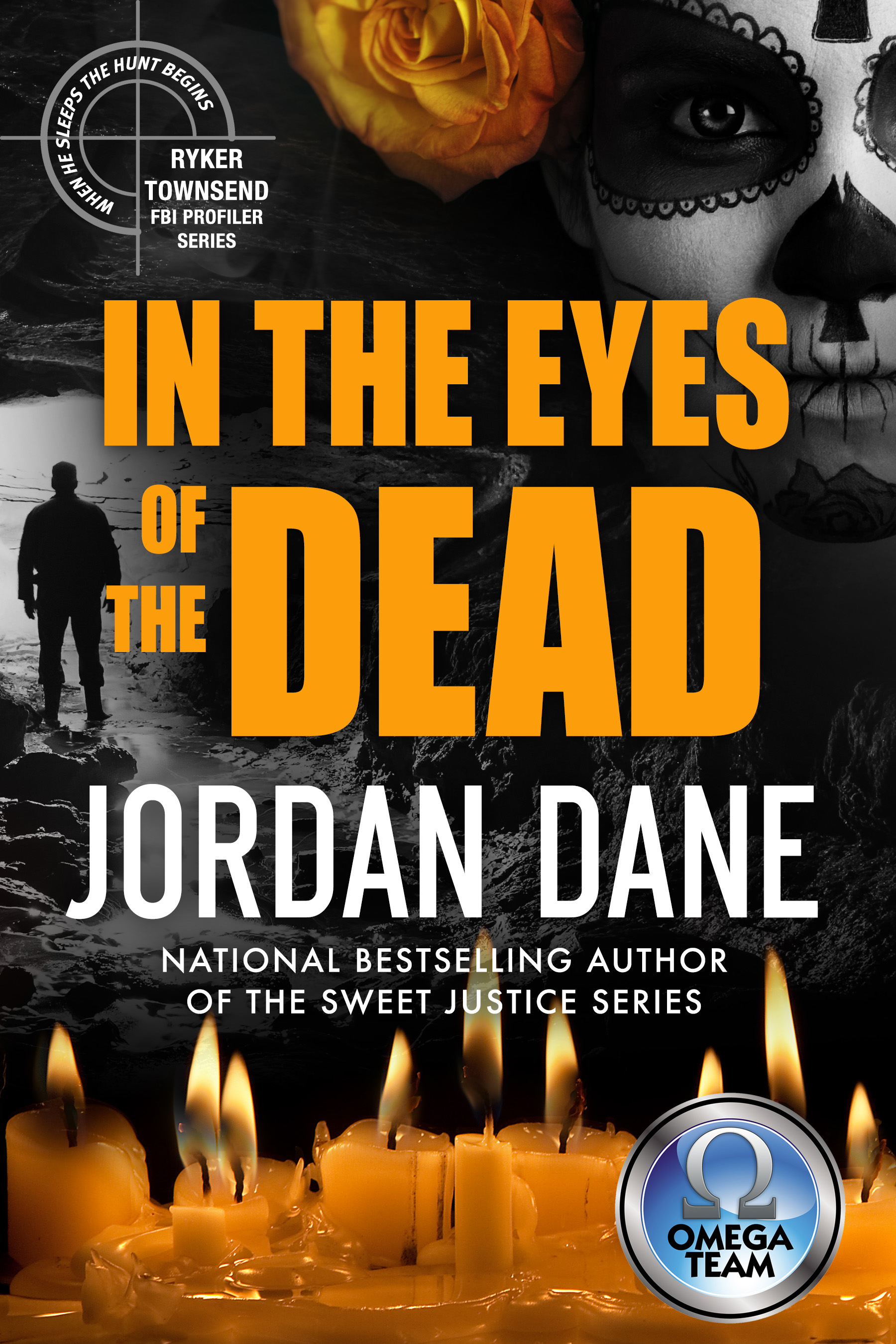
intheeyesofthedead_highres

In the Eyes of the Dead – $1.99 Ebook – Ryker Townsend FBI Profiler series

After four teens are murdered, a mysterious Santeria holy man and his devoted followers force Ryker and Athena to join forces to uncover a tragic truth.


Bad Copy: Is This the End of the World As We Know It?

You might want to stand back, or at least put earplugs in, because I’m about to have a full-on get-off-of-my-lawn-what’s-the-matter-with-kids-these-days moment.

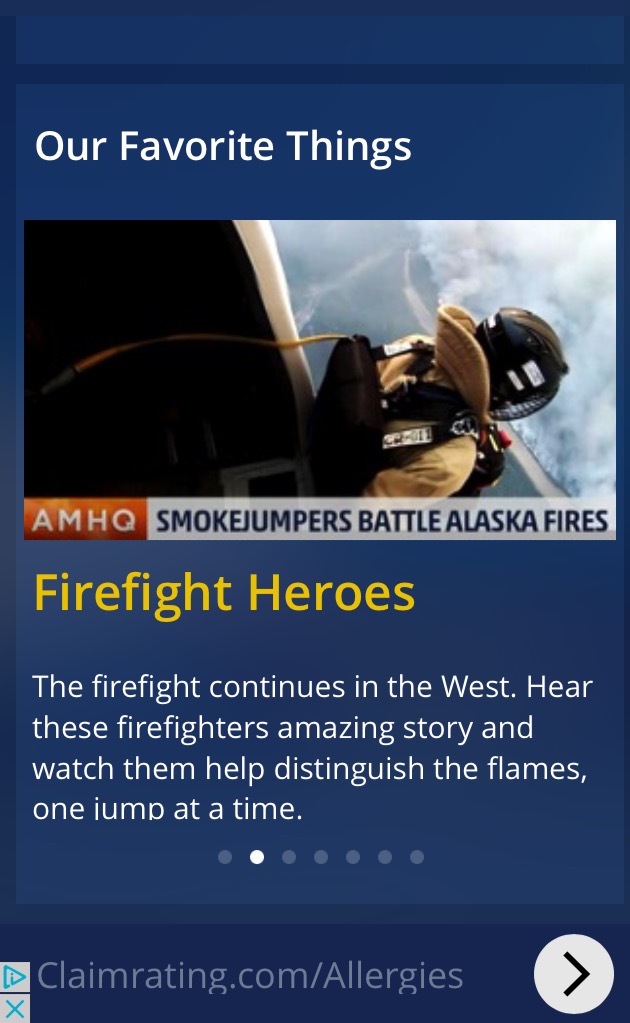
Two years ago, I came across this captioned photo in my Weather Channel phone app. In the interest of full disclosure, I have mocked this photo more than once on Twitter and Facebook, and even included The Weather Channel folks with an @. And, yet, it remains.

Notice anything?

fullsizerender-5

Two years ago! This abomination has shown up on my phone through two entire years of daily weather events: sunshine, fog, rain, clouds, sleet, hail, ice, and thunder snow (which is a also a thing, according to the app). The weather events are described with pleasantly short, declarative sentences, i.e., “Partly to mostly cloudy. High 34F. Winds NNW at 5 to 10mph.”

I won’t bother to dig deeply into what’s wrong with the grammar of this non-sentence, because we are all adults. Agreement is a problem, of course, and “distinguish the flames” makes me spew tea all over my keyboard every time I read it. When I read the hot, flaming mess that is, “Hear these firefighters amazing story,” I suspect that the single issue the writer considered for any length of time is whether or not the phrase should have an apostrophe hanging about somewhere. That he or she made the bold decision just to leave it out is characteristic, I think, of the incredible, sans-serif confidence of the whole bizarre caption.

I have so many questions about this:

Who wrote the caption?

What were they thinking?

Who okayed it for use online?

Is The Weather Channel requiring meteorologists to write app copy? (I don’t think so. My guess is that the meteorologists write the tidy forecast copy.)

Am I overreacting?

Does The Weather Channel not know/care that they are putting out copy that is, for want of a better word, illiterate? Despite the fact that millions may have seen it?

Does this make anyone else question the quality of The Weather Channel’s work in other areas, like forecasting?

Did the same person write the caption for the image below? Or was it a different person, one obsessed with Initial Caps? (See what I did there? I can play this game, too.)

fullsizerender-6

Captions like these make me worry. The grammar illiteracy I see in both print and online newspapers also makes me worry. Though our local university paper is always good for laughs when it comes to homophones and word choices that make me grit my teeth, national and international newspapers are almost as bad. While there are still plenty of writers and editors out there who do their best to be correct, the vast majority of words we read now–especially online–are not necessarily written by people who are concerned about communicating clearly. They’re more concerned with clicks than content.

As a child, I didn’t receive much of a formal education in the finer points of grammar. Studying Spanish and French helped me a lot. But I learned nearly everything I know about how language works through reading. If I needed to punctuate something like the phrase, “children’s stories,” or was confused about whether to use “lie” or “lay,” I would search through the books–usually fiction–on my own shelves. Shelves which held a few classics, but also a lot of Nancy Drew. These days, I always find myself in tussles with (often quite young) copyeditors. (See, I told you this was going to be a kids-these-days rant.)

I’m all about the growth of language. English is so dynamic and fun, absorbing new words and concepts with lightning speed. But what happens if it softens into a constant refrain of “oh, they’ll know what I mean” excuses?

Do you have any egregious, public examples of grammar misdeeds? Do you think we are headed for grammar chaos–and is that a bad thing?


Laura Benedict is the author of the Bliss House Trilogy and several other books of dark suspense. Sign up for her newsletter and get to know her better at www.laurabenedict.com.

How Many Of These Classic Books Have You Read?

img_1341We’re in an end-of-year, light-hearted mood today, so let’s take a quiz about what our accumulated reading habits “reveal” about ourselves, for better or for worse. Are you game?

This quiz is called “How Many Of These Classic American Books Have You Actually Read?”

I took the aforementioned quiz, dutifully checking off the books I read in high school or college (or at least, I checked the books that I remember reading–the tail end of the 70’s now seems long ago and far away. (To be honest, the entire late-70’s decade has become slightly fogged-over in my memory, somewhat obscured by a brume of natural herbal smaze).img_1342

My quiz result?

It was this: “You must be an English major.

Wrong. Back in college I was a Political Science major, with a strong interest in journalism (there was no Journalism major at my liberal arts school, so I spent every free moment working at the campus newspaper, and a local TV news outlet). In those days, I had very little interest in fiction. I did eventually end up taking a few English Literature courses, mainly because I saw those courses as being located somewhere within the realm of a Kingdom known as the “Land of Easy A’s”. Whatever “serious” literary books I read, I read them only as a result of the requirements of a course syllabus. My then-ambition was to become an ink stained wretch, not a literati (or literatus, per my Ghost of Latin Teacher Past).

Okay, so you know the worst about me–that I am an English major poseur, at best. What about you? Can you take the “Which Books Have You Read.” quiz, and share your results?? ?