Don’t Let It Get Away

Photo courtesy Marko Blazevic on unsplash.com

I was driving very early on Friday morning down some slightly foggy, all but deserted streets of a section of my hometown known as the Short North. I was doing someone a favor, picking them up at the ungodly hour of 0-dark-forty to transport them to the city Greyhound Bus Depot so that they could catch a 5:00AM ride that would eventually drop them to New York. As usual, I was obnoxiously early, arriving a quarter hour before the agreed time; knowing that my prospective rider would be  late by about fifteen minutes I drove around a bit in the general area around their residence so that I wouldn’t be sitting idling in front of their apartment building in a no stopping zone.

I spent as a wee lad a number of Saturdays in a building on the outskirts of that neighborhood, long before the well-gridded streets which were then called “slums” became gentrified. My father managed the local branch office of a truck leasing company and for some reason believed that a regular Saturday trip to his office would encourage me to follow his example, instead of stirring up my inner brat resentment caused by my preference for Saturday morning television.. The office in the 1950s was full of cigar smoke — one of the company’s salesmen had a penchant for stogies — and absent of television, books, comics, or magazines. There wasn’t much to do. I was too young to do a credible brake job on an eighteen wheeler (and remain so to this day!) and as a result I spent most of my time hanging out in the garage listening to the mechanics tell jokes, some of which I understood but most of which I didn’t.  While most of the commercial buildings in that area have been torn down or rehabbed into tony apartment complexes or flavor of the month taverns that change owners, names, and identities every eighteen months, the structure which housed my father’s old office building still sits there and is still used for its original purpose by a different company. I like to drive by there when I am in the area. Sometimes I can almost imagine that I see my six year old self staring wistfully out of one of the office windows onto the street, yearning for escape. The primary attraction in my adult life, however, is the reminder that I don’t have to stop there and can go wherever I want whenever I want, rather than spending five hours in the building on a Saturday trying to figure out ways not to get into trouble. I guess my inner brat still resides within me. Age is also a factor. I was told by an elderly friend, shortly before he passed, that aging is like living in reverse: people start treating you like a child, taking away privileges and objects (like car keys and credit cards) and restricting your activities. Sometimes I need a reminder of what I have now, and what may be lurking ahead. Driving past that old office building helps.

I accordingly decided to kill some time by doing just that. Nothing much had changed from my last brief visit at the beginning of summer. I drove by slowly, looking for the ghost image of my young reflection, when I saw a quick movement out of the corner of my eye. I faced forward and quickly slammed on the brakes. A large tabby cat had picked that moment to dart in front of my slowly moving car. I didn’t hit it, which was good for the cat, but bad for the reason for its haste: it had a large rat in its mouth. The rodent’s anterior and posterior parts were draped resignedly over Garfield’s right and left jaws, riding up slightly on the kitty’s lower canines. The big hunter obviously wanted to get back to base and enjoy the meal before the adrenaline dissolved. Adrenaline in a prey animal’s bloodstream is like chocolate to a predator; it makes everything better. I watched the big hunter scurry off into the darkness and wished him godspeed.

Longtime Saturday morning visitors to The Kill Zone know that I love metaphors. I’ve been thinking about that cat all day, with the cat as the writer, the rat as the story, and the hunt as the idea. You’re the cat. Chase that idea down. Don’t let it go. If you do it just might scamper away, never to return. It might even be caught and eaten by someone else. Don’t fall into the old “no one will want to read this” trap of giving up on your concept before you’ve even tried to write it. All you will see is a blank expanse of page. All you will hear is the sound of wheels spinning. Unlike six-year old Joey, you can control your destiny. Put both hands on the keyboard and go where you want to go. Oh… if you’re driving, keep your eyes on the road. And when you cross the street, look both ways first, no matter what you are carrying, or how delicious it might be.  

As always, I’m curious…what was your least favorite adult-imposed task that you remember from your childhood? If you are inclined, please tell us what, and why. It might be a good starting place for something bigger. Thank you.

LIFE IS JUST A BOWL OF CHERRIES

SIMILES, METAPHORS, AND FOOD

By Debbie Burke

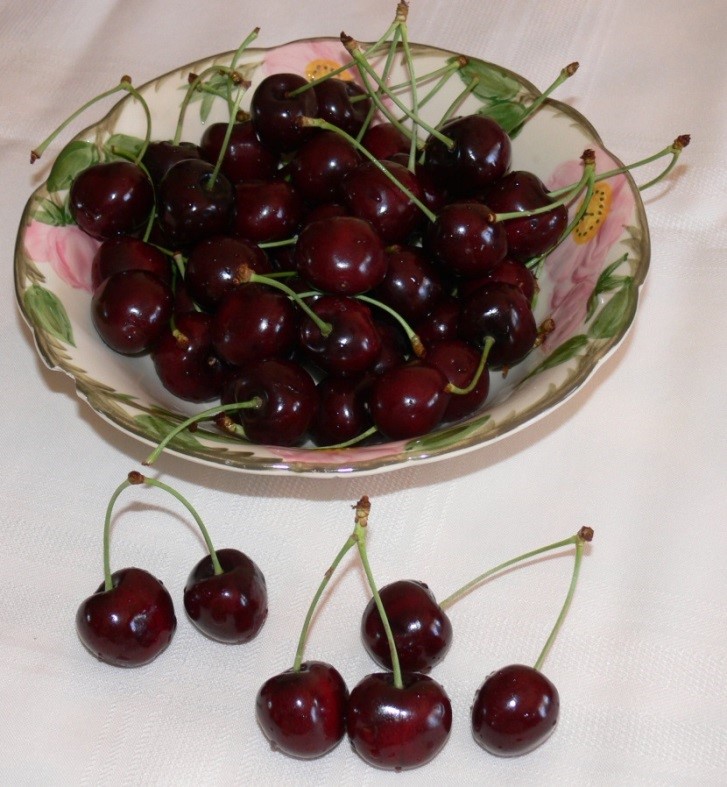
A few days ago, after a brief but welcome rain shower washed the choking wildfire smoke from the Big Skies of Montana, I visited a friend’s cherry orchard on Flathead Lake. Because a glut on the market resulted in low prices, tons of fat glossy sweet cherries remained unharvested on the trees. As I walked among the heavily laden branches bowing to the ground, a cliché popped into my head:  low-hanging fruit.

According to John Bagnell, “Low hanging fruit is often cited as an example of vacuous business-speak, typically used by marketing folk to refer to easy targets or readily-attainable objectives. It’s generally considered to have come into use in the early 1990s, quickly reaching cliché status during the middle of that decade.”

One wonders how many Madison Avenue businesspeople ever stood in an orchard, shoes stained deep red, and gathered fruit by handfuls.  If they inhaled the scent and tasted the juicy burst of sweetness when they bit into a perfect cherry that was so ripe it fell from its stem, would the connotation of the phrase be as cynical and disdainful?

Moving from business to music:

 Life is Just a Bowl of Cherries was written by Ray Henderson and Lew Brown, and performed in the Broadway musical Scandals of 1931. The song became a hit when crooner Rudy Vallee recorded it. During the height of the Great Depression, fortunes evaporated overnight and banks closed with people’s life savings never to be recovered. The philosophy expressed in the cheerful-sounding song was: why bother to work and save when everything can all be gone in an instant.

The expression later morphed into a way of saying life is great, but was often used with the ironic undertone that life is anything but great.

Cherry-pick is an idiom used across diverse professions, trades, and sports. It’s defined by Merriam Webster as an intransitive verb meaning “to select as being the best or most desirable.” It entered the lexicon in approximately 1965.

In law, cherry-picking means: “suppressing evidence, or the fallacy of incomplete evidence is the act of pointing to individual cases or data that seem to confirm a particular position, while ignoring a significant portion of related cases or data that may contradict that position.” (Wikipedia)

In basketball, soccer, and hockey, a cherry-picker is a player who hangs around the opposing team’s goal, waiting for another player to pass the ball or puck so he can make the easy shot. This opportunist capitalizes on other team members’ hard work at defense, snatching credit for the points.

In construction, Raymond Corporation, a material-handling company, defines a cherry picker as “a hydraulic crane with a railed platform at the end for raising and lowering people.” The lift is employed in building, roofing, window washing, utility pole maintenance, and other jobs requiring a worker to be raised high off the ground.

And of course . . . there’s the vulgar frat boy terminology: a cherry picker aspires to seduce virgins.

Who could forget the entreaty from our childhoods — “Pretty please, with a cherry on top!”

Even young children understand the metaphor their parents use to teach good manners: an ice cream sundae, chocolate sauce, whipped cream, nuts, and the final embellishment, a cherry on top. When kids really, really want something, they plead, wheedle, and add the cherry to emphasize their sincerity.

Sugar is sometimes substituted for the cherry, as in the 1994 film Pulp Fiction. “Cleaner” Harvey Keitel orders “hit men” John Travolta and Samuel L. Jackson to dispose of a dead body and clean up the evidence. Because Travolta wants to be treated politely and respectfully, he protests Keitel’s brusque rapid-fire orders. The scene ends with Keitel’s immortal quote, “Pretty please with sugar on top, clean the f**king car.”

Many food idioms lost their punch as western culture has moved away from an agrarian society. How many people in today’s urban environment truly understand the inspiration for the following


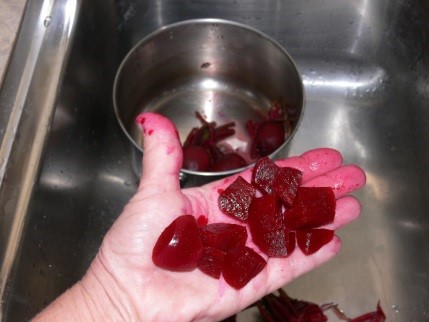
… like peas in a pod               …red as a beet                 …skinny as a string beans

What about “corny”? How did that expression get started?

According to FUNNYPHILLO: At the beginning of the 20th century, seed companies in America started sending out catalogues to the farmers to advertise their goods. To spice up the catalogues, they would sprinkle jokes and cartoons throughout the pages. The jokes on the pages were of low quality, and the catalogues started to be known as “corn catalogue jokes”, which was then shortened to “corny”, and eventually applied to all humour considered embarrassingly unsophisticated.

Now if you’ll excuse me, there’s a bowl of Flathead cherries in the refrigerator calling to me.

TKZers, what is your favorite food expression and why?  

Debbie Burke can be found munching in her garden while awaiting publication of her thriller Instrument of the Devil by Kindle Press.

School’s In Session: World Lit


–Stock photo by GoDaddy

How much fiction from other parts of the world do you read?

When I attended high school in Kentucky in the late seventies, my English class reading lists were very traditional—as in traditionally Euro/America-centric. They were replete with Shakespeare, Dickens, and Nathaniel Hawthorne, etc. But there were outliers like John Irving’s The World According to Garp, which from my sixteen-year-old point of view was delightfully scandalous. (It was the seventies, right?) Around that time I also picked up a Harold Robbins book or two from my parents’ shelves, though to be fair, that’s also where I first discovered MacBeth.

In school we also read Dostoyevsky and Chekhov (Russian), Ibsen (Norwegian), Kafka (Austrian), Plato (Greek), as well as the epic poems, Beowulf (Anglo-Saxon), and Song of Roland (French). Most everything else was either American or British. You see where I’m going here. There was no such class as World Literature. It was just English 9, 10, 11, and 12. No broader looks at non-Western cultures. It was Western Lit all the way.

College for me was a Bachelor of Science in business degree, and so my fiction reading was purely off-syllabus, featuring Jane Austen, the Brontë sisters, Michael Crichton, Ken Follett, Stephen King, Peter Straub, and…Tennessee Williams.

You can see that I didn’t have a very deep well to draw from at the beginning of my writerly education. And while there have been many great writers whose own influences were decidedly geographically and culturally limited, anyone can now overcome those limitations easily: Internet lists, free online lectures and podcasts, discussions with other writers either in person or on social media, networked libraries. I lucked out and got to meet and listen to a number of established writers when I worked at my university’s public radio station, and later took writing classes. And I can’t tell you how many of my husband’s publishing and academic colleagues gave me recommendations when I asked. I devoured books by Gariel Garcia Márquez, Isabel Allende, Umberto Eco (okay, he’s Italian, but he counts), Jun’ichirō Tanizaki, Haruki Murakami, Henning Mankell, Isak Dinesen, Salman Rushdie, Chinua Achebe, and others, others, others.

While I’ve never set my work in a country besides this one, that doesn’t mean I haven’t been influenced by those writers from other cultures. That’s one of the things that’s so attractive and important about novels and stories, isn’t it? We can immerse ourselves in the unfamiliar in ways that we can’t by watching a film or staring at photographs. The communication between a writer and a reader is intimate, and builds understanding. Understanding is something every writer needs to have buckets of.

This week I’m putting together a World Literature reading list for my son’s senior year of high school. I’ve been stunned to see that many of the high school World Lit lists online still lean very heavily on Western culture. That’s a very narrow definition of world. I want him to know just how rich in stories the whole world is.

What books would be on your World Literature list?


When the Obvious is Golden

by Larry Brooks

This morning on the way to the gym I was listening to sports radio in my car.  One of those talk shows where people on both sides of a microphone wax wise about what teams in various sports and leagues should be doing to win more often and more convincingly: who starts, who doesn’t, who to draft, trades they shouldn’t have made and should make, the evil nature of owners, the need to fire the coach, etc.

This morning’s caller wanted to know why his beloved Steelers always get their hat (helmet, in this case) handed to them by the Patriots, especially at the hand of Tom Brady. It was apparent that this was ruining his life.

The on-air sports-guy praised the caller for the question, which struck me as odd. It wasn’t a particularly good question as much as it was the voicing of frustration.  Because the answer was obvious. The Patriots own the Steelers because they are a better team led by a better quarterback. You could analyze what it is, specifically, that they do better, but it all boils down to this:

They execute the game at a higher level.

But this particular armchair quarterback sportscaster offered up this less-than-strategic take on what the real problem is, and how to remedy the situation:

The problem is the Steelers defense can’t stop the Pats, especially defending the pass. Their receivers are better than the Steelers secondary. Also, the Steelers D-line doesn’t put enough pressure on Brady in passing situations, which spreads the line of scrimmage for the running game while rendering the option a sure thing. The Steelers offense needs to be better, too. They need to show up in a bigger way.

In a word: duh.

Maybe it was a good question after all.

It isn’t just play harder. It’s play smarter.

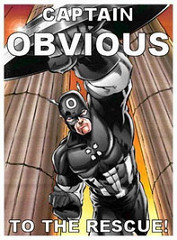
Sorry if you’re not a football fan and the lingo sounds like Greek, but this is really basic stuff. Football 101. Especially those last two lines. He should name his radio show Captain Obvious On Sports.

  This reminds me of what’s going on in the writing world, as well.

Writers are constantly asking – newbies and experienced alike – what they need to do to write a better story. A novel that publishers and readers will buy and enjoy. A screenplay that gets attention in the movie biz. Short stories that win prizes and jump-start careers.

The answer – the only answer – is much like that of this morning’s sportscaster. It’s not a secret, not remotely mysterious. It is an answer that never changes, and is germane to all genres all the time. An answer that is obvious. It goes like this:

Come up with a premise that offers something new. Or at least gives us a fresh twist on the sure things we’ve come to love (like thrillers and detectives and superheroes and vampires and love stories). Give us great characters within a compelling dramatic arc, especially a hero to root for because we relate to the problem and goal being faced, all of it driven by stakes we feel in a deep and emotionally-resonant way. And then, write it well, with a voice that doesn’t try too hard and structure that creates great pacing and compelling exposition, within scenes that are crisp and visual and vicarious.

In other words… know and practice your craft at a higher level. Virtually every answer to this eternal question is some form of, or at least a slice of, the above.

No matter what your process, there are specific skills, forms, functions, and executions that lead to a higher level of efficacy. But writers sometimes need to be more interested in the question than the real, obvious answer.

Too often their questions, and the sometimes strong opinions they get back, focus on process, to the exclusion of a functionally-effective answer.

Executing on those basics should be the 101 of writing stories. Sadly, in reality, writers seek to skip to the 202. They step over the fundamentals to focus on the periphery. Too many writers simply don’t know, or embrace, the obviousness of how to write a better story.

Of if they do, they can’t quite reach that bar. Often because they insist on sticking with that vanilla, seen-and-read-read-it-before promise, or insisting that dramatic tension (plot) doesn’t matter because it’s all about the characters. Which is something they heard from someone who meant well, but didn’t deliver the whole picture.

Indeed, a compelling, memorable story is a high bar. Just ask the Steelers back there in our opening analogy. Just play better. Because once you know those basics, you have to put them into play. And that, at a professional level, is rarer thing.

The ongoing goal of serious and commercially-ambitious authors, then, should be to pursue and practice and refine those fundamental tenets of storytelling. The 101 of writing. Once you do, the frosting on that cake tends to manifest from the evolved instinct that those basics impart not only to the story, but to the author her/himself.

Truth is, not all writers begin with the earnest pursuit of these basics of story.

And yet, the information is out there. The entire realm of writing workshops, conferences, books, blogs and writers groups exists for the express purpose of explaining what this means to writers who truly want to a deeper dive into it all. That and, in the case of blogs, commiserate about the writing journey and give some writers the chance to write about themselves.

There are plenty of resources available on the peripheral issues, as well. Which is good, especially when embraced at the right point along the learning curve. But it can actually part of the challenge, too, because the frosting is worthless if the cake tastes like cardboard.

The “How To Land Your First Agent” workshop fills up quicker than the “Story 101” workshop almost every time.

Writing may be the only profession on earth where we have legitimized starting at the end of the learning curve and leaving the foundations of it all to a seat-of-our-pants chance.

Yes, there certainly are subtleties, nuances, and subsets branching from each of those categorical craft distinctions, as presented in the italics above. Those comprise the 202 level and beyond, building on a solid 101 understanding. Without it, writers may be putting frosting on a cake that didn’t rise in the oven.

As a story coach and writing teacher, blogger and author, people send me their stories all the time for evaluation. The details of their pitch are often vivid and fabulous. But it’s the 101 – the core dramatic premise, the richness of the hero and her/his journey/quest, the stakes, the arc toward resolution – that is often left wanting… well over half the time.

The 101 is hard. The core principles, so easily named, can actually be quite complex. That’s why we need to stay focused there, to build our storytelling muscle based on those core fundamentals.

This began with a sports analogy, so allow me to conclude with one.

I’ve participated in many spring trainings as a professional baseball player, albeit long ago. Now that I’m old and can barely tie my shoes anymore without ibuprofen, I’ve witnessed hundreds of spring training practices and games while living in Arizona, where 19 teams come together every February for seven weeks of… wait for it… returning to and practicing the core fundamentals of what makes their game effective and powerful. Sure, there are photo shoots and press interviews and uniform fittings, but the core focus of everything, morning to late afternoon, is conditioning and bunting and pitchers covering first base and turning a double play and optimizing one’s swing based on the count and the presence of men on base and getting the perfect angle of spin on a slider that needs to hit the black instead of out over the plate.

The core principles of fiction may be obvious, but they are not inevitable. You’re not born with them, either. They need to be called by name, defined by function, made clear through example and practiced until refined.

Even then… well, the Steelers roster isn’t filled with a bunch of wannabes. The fundamentals of the game are the prerequisite to even getting into a uniform, much less an agent. From there, once you get into a league of professionals – certainly, this is a goal we all share as writers – then, and only then, does the peripheral frosting matter all that much.

Writing is one of the best case studies that prove the old saying to be true: the devil is in the details, because the details may tempt you prematurely, seducing you into believing you are solid at the very core of things.

But the gold… that’s always available in the obvious.

(Image by Gareth Jones; used via Creative Commons license)

How to Talk Tough

by James Scott Bell
@jamesscottbell

Mickey Spillane

Those of us who write thrillers, noir, and crime fiction know that a huge part of our craft is tough talk—dialogue from the mouths of hardboiled protagonists, street hustlers, cops, thugs, hitmen, femme fatales, homme fatales, and other denizens of the dark side.

It’s not easy to do it artfully, for it is much more than littering the page with the F-bomb and its misbegotten progeny.

I saw a movie the other day, a highly-touted crime thriller. I won’t name it because I don’t like to put down other writers, but I will say the dialogue was pretty lame. What I mean is that there were a lot of F words tossed around without any originality or élan. Characters would just spout “F you” or “F that.” (But that’s how people talk in real life! you might be thinking. Well, you’re not writing real life. You’re writing fiction, which is a stylized rendering of life for an artistic purpose. Just recreating “real life” sounds doesn’t move the needle.)

So how can you talk tough without falling into the lazy lacing of platitudinous profanities? Let me suggest a few:

  1. Be Witty

This is the toughest (!) form of tough talk, but it pays big when you can pull it off. The master of this kind of gab, of course, was Raymond Chandler. His novels featuring PI Philip Marlowe are filled with snappy banter that works because (and this is the key) it is perfectly in Marlowe’s voice. It never seems to be a strain. Like this exchange in The Long Goodbye:

“See you around,” the bodyguard told me coolly. “The name is Chick Agostino. I guess you’ll know me.”

“Like a dirty newspaper,” I said. “Remind me not to step on your face.”

Or this from The Little Sister: 

“That slut. What does she say about me?” she hissed.

“Nothing. Oh, she might have called you a Tijuana hooker in riding pants. Would you mind?”

The silvery giggle went on for a little while. “Always the wisecrack with you. Is it not so? But you see I did not then know you were a detective. That makes a very big difference.”

“Miss Gonzales, you said something about business. What kind of business, if you’re not kidding me.”

“Would you like to make a great deal of money? A very great deal of money?”

“You mean without getting shot?” I asked.

“Sí,” she said thoughtfully. “There is also that to consider. But you are so brave, so big, so—”

“I’ll be at my office at nine in the morning, Miss Gonzales. I’ll be a lot braver then.”

Take your time with exchanges like this. Don’t force the issue. Play with the language. A different word here or there can make all the difference. I like the line from Lawrence Block’s short story “Headaches and Bad Dreams.” A detective is describing a suspect who is not exactly lovely to look at. “God made him as ugly as he could and then hit him in the mouth with a shovel.”

  1. Be Crisp

Tough talk is often clipped. It gives nice white space to the page, too. This was Robert. B. Parker’s preferred method. Here’s a bit from one of his Sunny Randall novels, Melancholy Baby:

“Sarah took a lot of drugs.”

“More than grass?” I said.

“Oh, yes. Hard drugs.”

“Like what?”

“I don’t know. I don’t use drugs.”

“Good for you,” I said.

“I graduate this June, and next year I want to be in a really good MBA program. I don’t want to do anything to spoil my chances.”

“So her drug use was disruptive?”

“Yes. She’d come in at night, late sometimes, and act crazy.”

“Like?”

“Like she’d be crying and seeing things and …” Polly shook her head. “Did you ever go to college?”

“I did,” I said.

“What did you major in?”

“Art.”

“Really?”

I could tell that Polly found that puzzling.

“How did you do?”

“I was a good artist and a bad student,” I said.

Go over all your dialogue scenes and look for words to cut. Replace some verbal answers with silence or an action beat. You’ll love the results.

  1. Be Over the Top

This is the opposite of #2. It should be done sparingly. But every now and then consider having one of your characters give vent with a paragraph or two of straight tough talk.

Mickey Spillane liked to do this. He of course invented the quintessential hard-boiled PI, Mike Hammer. But he also wrote stand alones. In The Long Wait (1951) the narrator, Johnny McBride, has been dragged in by the cops for questioning. McBride insults the cops (this will get him beaten up later) and tells them to inform him of the charges or let him walk. The lead detective says:

“I don’t know what kind of an angle you think you’re playing, McBride, and I don’t give a damn. The charge is murder. It’s murder five years old and it’s the murder of the best friend a guy ever had. It’s murder you’ll swing for and when you come down through the trap I’m going to be right there in the front row so I can see every twitch you make, and there in the autopsy room when they carve the guts out of you and if nobody claims the body I’ll do it myself and feed you to the pigs at the county farm. That’s what the charge is. Now do you understand it?”

Pick a tense moment of tough talk and put yourself inside one of the characters. Write a 200 word rant. Do not pause to edit. Come back to it later and review. Even if you only end up using one line, it’ll be a good one.

  1. Be Suggestive

As I said, tough talk does not have to be laced with expletives. You’re a writer. You have a whole palette of possibilities open to you.

Writers of the 40s and 50s often simply wrote things like: He cursed and walked out of the room. You know what? That still works. Readers can fill in the blanks in their own heads.

There are other methods. In Romeo’s Way I have a character, Leeza, who is young and foul-mouthed. Mike Romeo is trying to help her. She doesn’t want any. This character would definitely unleash a curse storm. But I didn’t want to lay that on the reader. So I did it this way:

She jumped back like I was the guy from Friday the 13th.

“I don’t think you’re safe here,” I said.

“What the h—”

“No time to talk. Come with me.”

I put my hand out. She slapped it. “Get away from me.”

“I’m on your side,” I said.

She began a tirade then, peppered with words with a hard K sound. She was a symphony of K. It was so constant and crazy, it hit my brain like woodpecker woodpecker peck peck woodpecker.

“Ease up,” I said. “There’s bad people who want you. Did you forget that?”

Woodpecker woodpecker!

“Your boss, one of your bosses, Kat Hogg, is in a car over there. Come with us.”

Leeza looked across the street. Then she turned and ran.

I said something that sounded like woodpecker myself and gave chase.

Dialogue, as I’ve said many times in workshops and in books, is the fastest way to improve a manuscript. So when it comes to tough talk, don’t be lazy about it. Be crafty.

Dialogue – Ten Ways to Make it Real

Jordan Dane
@JordanDane

Recently I’ve been writing characters with unique regional accents or characters that I’ve had to invent how they speak, because they are unlike any other character I’ve ever written. When you create a character like this, you have to work doubly hard to “see” them and “hear” them in your mind.

Listen to real conversations. I especially love eavesdropping on teens, but as writers it is fun to be a snoop and hear the way people express themselves and their cadence. People often speak in fragments and laugh at one word asides. They launch into a diatribe and get interrupted by someone else. How do they react? If they come from a large family, I have a pretty good idea how they would react. But if they are an only child, do they retreat until the blustery winds of a blowhard die down?

It’s important to not only hear authenticity, but to also visualize it, without losing the fluid flow, pace, or clear plot points conveyed. Fictional dialogue must have a point, too.

1.) How well do you know your characters?
• Does it take you some writing time to get to know your characters? A good exercise is to write your character in first person to take them for a test drive, to get a feel for who they are and what matters to them.

• Live in their skin for awhile. Imagine what they look like, what they would wear. Create a photo image board from internet searches to flesh them out –in posture, eyes, attitude, swagger, dialect, education, job, sense of humor, etc.

• When you have a good feel for your main character, pair them with other fictional sidekicks or antagonists who will argue with them or cause conflicts and friction.

• Be careful to minimize slang or poorly spelled words or lots of bad grammar. Readers might have a problem with dialogue that is difficult to read throughout a book, but a smattering of regional color can be just the ticket to setting your world stage.

2.) Imagine Playing Your Character on Stage
When I “hear” voices in my head (from my characters, that is), especially if I’ve written them with accents or attitudes, it is fun to act them out. Do this by reading aloud and embellishing with your thoughts on how they sound. Reading aloud helps catch edit issues, but it can also help you create a cadence suitable for your character and give you insight into who they are.

Whenever I do readings at book signings (which I LOVE to do), I really get into the reading and become the character. I sometimes have my attendees close their eyes to focus on the story and trigger their imaginations, forgetting that they are in a bookstore. Often you can hear a pin drop when I finish and you get the real reaction from those listening when they open their eyes and return to the present from where they’ve been. Who knows? Acting out your character can help you “see” them in your mind – how they move or do hand gestures.

3.) In action scenes or tension packed scenes, make the dialogue sound real.
As an author would shorten narrative prose to give the reader the feeling of tension, suspense, and danger, it’s best to use short, concise sentences to enhance pace. Each line is like a punch in the gut to give the reader a visceral reaction to the change in pace.

Some passages may have longer lines of explanation or technical plot essentials, but keep those to a minimum if you want pace to lead the way. An expert in a dangerous situation would not suddenly turn into Mr Wizard to explain everything. They might get impatient and find a quick example or way of speaking to get their point across, while showing their frustration. How do they react under stress will show in their dialogue.

A long back and forth with punchy short sentences can let the reader sense the mounting tension, but if it goes on too long, it can get old, fast.

Excerpt: The Darkness Within Him (Amazon Kindle Worlds)
When a startling vision triggered a memory Bram Cross thought he’d buried, an icy shard carved through his body The macabre and haunting face of his mother lurched from the pitch-black of his mind—her eyes, what she did.

No, I can’t do this. Don’t make me. He fought hard to stifle his childish, irrational refusal, but he had to say something.

“You’re an asshole. We shouldn’t be here,” Bram said. “Someone’s watching us. I can feel it.”

“Shut up. You’re paranoid,” Josh spat. “You said you’d come with me. Quit your whining.”

“Something’s not right.”

Josh stopped, dead still, at the mouth of the infamous tunnel. He stood on the spot where the mutilated, half-eaten bodies of dead rabbits had been found in 1904—killed by ‘Bunny Man,’ an insane prison escapee named Douglas Grifon. The bad omen made Bram step back, but too late. By sheer stupidity and bad luck, Josh had jinxed them both.

Josh glared at Bram as he reached into a pocket of his jacket.

“I brought insurance, courtesy of dear old dad. We’ve got nothing to worry about.” He pulled out a gun and grinned as if he had all the answers.

“Are you insane? Put that away.” Bram fumed. “I’m out of here. I didn’t sign up for this.”

Bram turned to go, heading back toward the car that Josh had parked at the trailhead, but his friend grabbed his arm.

“You’re not going anywhere. I’ve got the car keys. Man up, shit for brains.”

4.) Dialogue should intrigue and draw reader in. Don’t use it to explain or the lines fall flat.
Dialogue should enhance the action and add to the emotion and pace. If you take the time to explain an action, the dialogue will sound contrived. If you explain what the characters should already know, why are you doing it? Savvy readers know when the dialogue is meant for them and when it doesn’t add to the story, but detracts from it and slows the pace.

Think of endings where the villain goes through lengthy explanations to “tell” the reader what the book has been about. Old mystery formats are like this where Sherlock Holmes expounds on how clever he is by detailing “who done it.” If a certain amount of this is necessary, make it about a mind game between the hero and villain where they have a reason to “one up” the other with reveals, but keep it to a minimum and not at the expense of good dialogue.

5.) Interruptions can be good in dialogue.
Interruptions can focus a character, keep up the pace, or show a realistic way to direct the reader where you want them to do. Have your characters ask questions of each other to liven things up.

Excerpt – The Darkness Within Him
Ryker Townsend – FBI Profiler
After the kid undid the latch and the deadbolts, he opened the door enough for me to see the injuries he’d sustained in his fight with Mr. Whitcomb. Josh stared at me for a split second before he shoved the door closed, but I jammed my foot in the opening.

“Police. We just want to talk.” I pushed through the breach and he winced. “Are you Josh Atwood?”

He didn’t answer and backed into a small living room. Reggie and Jax walked in behind me.

“Hey, aren’t you supposed to show ID?”

I eyed Reggie and the detective indulged him with a show of his badge.

“But I didn’t invite you in.”

“That only works with vampires. Consider this a welfare check, Bueller.”

6.) Add tension in Dialogue by making your characters hesitate or stall.
Is one of your characters in charge or forceful? How does that manifest in the other character in the scene? Often dialogue is like a chess game where one person tries to outwit the other or get the upper hand.

When one character stalls or shuts down, and the conflict grows, that can read as very authentic. We all have little voices in our heads, especially when we are dealing with arguments or confrontation. Effective dialogue must have nuances like a dance choreography that flows naturally and reads as effortless. When the scene starts out, one character can suddenly change course. How would you reflect that? Conflict is always interesting.

7.) Cut out the unnecessary and keep your dialogue vital. No chit chat.
I often write dialogue first, like in a script, to flesh out the framework of a scene. Later I fill in the body language, action, internal monologue, but dialogue is vital to make the scene hold up. It’s what the reader’s eye will follow on the page. When I edit, I will tighten dialogue lines, especially in action scenes, to keep the lines flowing naturally.

8.) Punch up the dialogue with action or character movement in the scene.
Give the reader something visual to imagine as they read your scene. All dialogue scenes, where two characters sit at a table, can be mind numbing and boring. Make the scene come alive by giving them something to do, especially if it puts them at odds with each other. Make that action unexpected, like adding sexual tension in the scene below (excerpt from Elmore Leonard).

Even if you MUST put them at a table, give them something to do. I especially like body language where it’s obvious the characters are hiding something and have let the reader in on that fact. Or punch up a funny line with a physical habit to accentuate humor or give distinction to a character.

9.) Minimize tag lines and give characters unique dialogue so tags aren’t as necessary.
One of my edit reviews is looking at tag lines to eliminate ‘saids.’ I often replace a said with an action that attributes which character delivered the line.

Also keep in mind, if you have a number of characters in a scene, a well-placed ‘said’ can orient the reader and ID the character in a scene where it’s easy to get lost. Gender oriented lines can help distinguish characters, or the regional dialect, or even if one character has a certain type of humor. ‘Said’ is the kind of word that disappears in a reader’s mind, but if you string too many together, it’s like sending up a flare “NOTICE ME!”

10.) Reading authors who write excellent dialogue is important.
Real pros at dialogue make it look effortless. Get schooled. If an author makes dialogue work, try to understand why it works and how you can infuse that in your own style and voice. Here are a couple of examples:


Elmore Leonard Excerpt – From Out of Sight (U S Marshal Raylan Givens) – I can imagine this very visual scene with the sexual tension.

‘You sure have a lot of shit in here. What’s all this stuff? Handcuffs, chains…What’s this can?’

‘For your breath,’ Karen said. ‘You could use it. Squirt some in your mouth.’

‘You devil, it’s Mace, huh? What’ve you got here, a billy? Use it on poor unfortunate offenders…Where’s your gun, your pistol?’

‘In my bag, in the car.’ She felt his hand slip from her arm to her hip and rest there and she said, ‘You know you don’t have a chance of making it. Guards are out here already, they’ll stop the car.’

‘They’re off in the cane by now chasing Cubans.’

His tone quiet, unhurried, and it surprised her.

‘I timed it to slip between the cracks, you might say. I was even gonna blow the whistle myself if I had to, send out the amber alert, get them running around in confusion for when I came out of the hole. Boy, it stunk in there.’

‘I believe it,’ Karen said. ‘You’ve ruined a thirty-five-hundred-dollar suit my dad gave me.’

She felt his hand move down her thigh, fingertips brushing her pantyhose, the way her skirt was pushed up.

‘I bet you look great in it, too. Tell me why in the world you ever became a federal marshal, Jesus. My experience with marshals, they’re all beefy guys, like your big-city dicks.’

‘The idea of going after guys like you,’ Karen said, ‘appealed to me.’


John Steinbeck – Of Mice & Men

‘Tried and tried,’ said Lennie, ‘but it didn’t do no good. I remember about the rabbits, George.’

‘The hell with the rabbits. That’s all you ever can remember is them rabbits. O.K.! Now you listen and this time you got to remember so we don’t get in no trouble. You remember settin’ in that gutter on Howard street and watchin’ that blackboard?’

Lennies’s face broke into a delighted smile. ‘Why sure, George, I remember that…but…what’d we do then? I remember some girls come by and you says…you say…’

‘The hell with what I says. You remember about us goin’ into Murray and Ready’s, and they give us work cards and bus tickets?’

‘Oh, sure, George, I remember that now.’ His hands went quickly into his side coat pockets. He said gently, ‘George…I ain’t got mine. I musta lost it.’ He looked down at the ground in despair.

‘You never had none, you crazy bastard. I got both of ‘em here. Think I’d let you carry your own work card?’

Lennie grinned with relief.

For Discussion:

1.) What dialogue craft skills work for you? Any tips to share?

2.) What authors do you like to read for dialogue?
Vigilante Justice – $0.99 Ebook – Published by Amazon Kindle Worlds


A Sea of Squares

by John Gilstrap

In the last few weeks, I’ve had the honor of teaching two of my six-hour classes entitled, “Adrenaline Rush: Writing Suspense Fiction.”  The first was at the always-wonderful Midwest Writers Workshop which is held every July on the campus of Ball State University, and more recently at the Smithsonian’s marvelous S. Dillon Ripley Center in Washington, DC.  It’s a fun, interactive course that includes four writing exercises that are designed to help students understand the issues of voice and characterization.

A large part of that discussion by necessity deals with point of view (POV).  I find that students inherently understand the relative strengths and weakness of first-person story telling, but when they shift gears into the third person, they have difficulty creating as intense a relationship between reader and character as they can with the first person.  I tell them that it’s largely a case of writing the same sentence and changing the pronoun (“His heart slammed in his chest as he opened the door” vs. “My heart slammed in my chest as I opened the door”), and while they get it intellectually, they have difficulty pulling it off on the page.  They tend to slip into that omniscient, reportorial space.

While teaching at MWW, I hit upon an analogy that I liked, and the students seemed to bond with.  I urged them to pretend that we were writing about a very intense chess game, along the lines of that scene in Harry Potter and the Sorcerer’s Stone, where the chess pieces are living things.  I explained how the point of view of the chess master–the guy with the strategy–is entirely different from that of the pawn.  In the case of the latter, the poor guy just stands there, oblivious, staring out at a sea of squares until some unseen thing grabs his face and moves him forward.  After a few iterations, he finds himself kitty-corner from a guy who looks just like him, but in a different color, and now he’s supposed to kill him.  Hell, he never even met the guy!

That’s the close third-person, I told them.  Now, if you add the point of view of the knight who can’t move, but is exposed to certain death at the hands of the bishop on the other side of the sea, all because the pawn stepped out of the way, you’ve got a thriller told in shifting 3rd-person POV.  And it’s potentially much more interesting than the story that would be told through the omniscient view of the chess master.

What should I add in the next class to illustrate POV choices?