by James Scott Bell
@jamesscottbell
 The plot doctor is in.
I see the waiting room today is full of pantsers. They have that lost look in their eyes that usually appears in the middle of their first drafts.
One comes up to me and says, “Doc, I was having so much fun! I was writing along, letting the characters take me wherever they wanted to go. Now I’m forty thousand words in, and I’m frozen. I don’t know what to write next! Every choice seems like a rabbit hole! Help me, Doc, please!”
“Of course,” I say. “Just have a seat and—”
“Is there any hope?”
“Who’s your plot doctor, huh? Now just wait a moment and all will be well.”
There are plotters here, too. One approaches slowly, as if fearing recognition. He whispers, “Doc, I can’t figure out what went wrong. I had the whole thing mapped out and the pieces were falling into place. But the middle is sagging. Not enough oomph. What can I do, Doc?”
“Well, let me tell you—”
“Not so loud, Doc. I don’t want these pantsers giving me the raspberry …”
I’ve treated many such cases over the years. A cursory examination of the patient usually calls for three things: a shot, a couple of pills, and preventive measures.
1. The Shot
The first step is a shot of the potent “mirror moment” drug. I’ve seen immediate improvement to the eyes (which sparkle) and the mouth (which smiles or shouts Yesss!) after an injection.
The mirror moment gives the writer a new and powerful insight into what their novel is really all about. That illumination shines both backward (to the beginning) and forward (to the ending), stimulating new scene ideas and added character depth.
2. The Pills
Now I give the writer a couple of pills, with the following instructions: take the first one and see if that clears things up. Give it a few days to work. If, however, the symptoms persist, pop the second.
The Best Move Pill
Step away from your manuscript. Go find a quiet spot or your favorite coffeehouse table, and use a pad and pen (I find this an aid to creativity).
Write down the names of every major and minor-recurring character in your novel.
Now, dedicate a page to each of these characters, answering the following question: Considering what this character wants out of the story, what is the best possible move he or she can make RIGHT NOW?
Please note that most of your characters will be “offscreen” at any given moment in your manuscript. That’s okay. They are not inert. They are in the process of planning, conspiring, sneaking, escaping, suffering … they are all doing or experiencing something. (When characters are offscreen, I call their activities “the shadow story.”)
This exercise will give you lots of plot material, scene ideas, and possible twists. See how it goes. After some time has passed if there is still significant sag, you have this:
The Guy With a Gun Pill
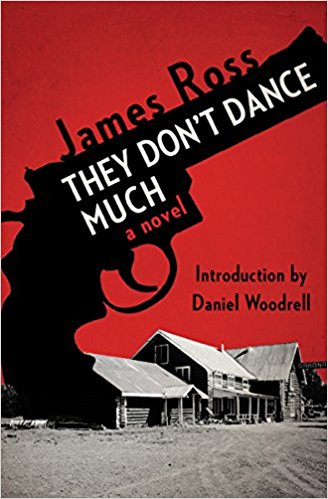
Raymond Chandler once wryly noted, “When in doubt have a man come through a door with a gun in his hand.”
Of course it does not have to be a literal man with a gun. It can be any character introduced in some surprising fashion. We’re not talking about a one-off character in a scene, but a recurring character who will add complications to the protagonist’s life.
When you place a new character in your story, you immediately inherit all of that character’s backstory, agendas, secrets, shadow story and so on. Additional scenes arise organically. As you create the new character, ponder a few questions:
- What can this character do to make life more difficult for my Lead?
- Can this character bear a secret that will upset my Lead’s applecart?
- Do they still make applecarts?
- Is there a hidden relationship this character can have with another in my cast?
- What is this character’s agenda?
- How far is this character willing to do to gain his objective?
- How can I give this character an even stronger motive?
Writers who dutifully take their medicine usually contact me in a few weeks to report being in the pink again. They have pep in their step and a twinkle in their eye, along with a few other clichés.
I am happy to hear it, but then I advise one further measure.
3. Preventive Medicine
If you want your heart to be healthy, you’ve got to eat healthier (and I never even went to med school!). Have you heard of Burger King’s new offering, the Rodeo Burger? It’s described as “two savory flame-grilled beef patties totaling more than ½ lb. of beef, topped with three half-strips of thick-cut smoked bacon, our signature crispy onion rings, tangy BBQ sauce, American cheese and creamy mayonnaise all on our sesame seed bun.”
I’m so there!
(Yeah, maybe once every three years.)
Anyway, I try to make my heart happy. It takes some discipline (e.g., steamed broccoli) and some hard work (e.g., actually eating the steamed broccoli).
Writing is no different. So if you’re a pantser, don’t be afraid of work and study. Get over the fear that any planning beforehand is stifling to your creativity. It’s not. You need to learn that surprises happen in the planning, too.
You plotters can continue to shore up your foundations with a growing knowledge of powerful story beats, which will allow you to leave a planned route for another choice. You can do that because you’ll know the next beat to write toward. You won’t be lost; you’ll be enjoying the trip!
Ah, the waiting room is clear. My work here is done. The doctor is out.
Do you often feel a sag in the middle of your manuscript? How have you solved that problem in the past?