Refurbished Words


By Elaine Viets

English is a constantly changing language, which is its delight and its difficulty. Old words are constantly being refurbished and given new uses.
One is troll, a word once associated mostly with fairy tales, as in “The evil troll lived under the bridge.”
Thanks to the internet and computers, troll has a whole new usage. As a noun, the Urban Dictionary says a troll is: “One who posts a deliberately provocative message to a newsgroup or message board with the intention of causing maximum disruption and argument.”
As a verb, to troll means to fool someone. Sasha Baron Cohen is the current Troller in Chief. He pranked sheriff Joe Arpaio into saying he’d have oral sex with Donald Trump.

Unpacked is another refurbished word. Unpack used to be something you did with a suitcase. Now it means to analyze. How many times have you heard a radio host on NPR say,
“There’s a lot to unpack here in this story on . . . ”
What refurbished words are you seeing, TKZers?

The Getting and Keeping of Ideas


Stock photo


I was thinking about the way people ask me where I get my story ideas. It’s a classic but awkward question, especially if my ideas are at a low ebb right then and I’m certain I’ll never have another idea for a story. It’s like when my son complains and complains that we never have anything interesting for dinner, and I ask him before I go to the grocery what he would like me to make. Usually he can’t think of anything right at that moment and gets frustrated. (The answer is, more often than not, tacos. Something I make frequently.)

There are times when I can’t come up with an idea to save my own life. It’s embarrassing to admit, especially because I also have to write all of my ideas down quickly or they’ll slip away and eventually find some other writer to express them.

A writer I admire once told me that if you can’t keep an idea alive in your head, then it’s not actually a good idea. While I can see a vague point to this–some ideas demand to be written immediately–I mostly disagree. People sometimes get obsessive even with bad ideas. I frequently consult my banked story ideas in both the fallow times and the flush. I find that I can pretty much make a story out of any of them. And that’s reassuring.

My usual answer to anyone who asks about where I get my ideas is:

“Oh, everywhere. I never know when I’m going to run across a crime story online or see something on the news.”

What’s going through my head:

“Dear God, do you know how much time I spend making notes on or bookmarking stories? There are crime and news websites that I stalk relentlessly.  Or I’ll be reading a book someone else has written and a character says something that catches my imagination, and I stop reading and start daydreaming. Then there’s my childhood. Someday that gorilla in the Pepto-Bismol pink bathroom I dreamed about when I was five is going to have its own kid’s book. And I was the proverbial little pitcher with big ears, soaking in the stories and gossip around the grown-ups card table. Throw in emotions, dreams, overheard personal dramas, the sociopath I went on two dates with before things got super weird and I eventually had to leave town for good. Don’t forget the divorce played out in my kid’s carpool line, and the woman with the severely bitten nails in the waiting area of the therapist’s office.”

Here’s one of my favorite character quotes. It’s from Ariadne Oliver, a writer who shows up in several Poirot stories.

“I mean, what does one say about how one writes books? You just think of an idea and force yourself to write it.”

Just think of an idea. No biggie.


Do you keep files or idea banks of ideas, or do you wing it? How do you approach the where do you get your ideas question?


Dog Days, Mad Or Otherwise

Last Friday, on the heels of discovering that my flight out of Newark had been canceled due to violent thunderstorms —and that flights the next day were also being canceled in rapid succession—I Googled the phrase “dog days of summer”.

It turns out our ancient forebears coined the phrase “dog days” to describe the stretch of days in late July when Sirius the Dog Star appears at the horizon just before sunrise. To the Greeks and Romans, dog days were associated with fever, war, and general mayhem. In ancient Egypt, the Dog Star would appear just before the commencement of the Nile’s yearly flood season. They regarded Sirius as a “watchdog” heralding of that event.

The way people interpret the notion of dog days has evolved over time. In the 1930’s Noel Coward wrote a popular cabaret song with the lyrics “Mad dogs and Englishmen go out in the midday sun”.

My adventures in Newark has convinced me that the ancients were onto something when they blamed Sirius for causing late summer mayhem. After an unscheduled overnight stay in Newark, my husband and I finally boarded a flight that took off between squall lines. We had a grand time over the next couple of days at Gene’s fiftieth high school reunion in upstate New York.

But the night before our return to LA, my phone started blowing up with messages and scrolling alerts. It was the airline—they were reaching out to issue dire warnings about thunderstorms in the city where we were supposed to change flights the next day.

I think Sirius is definitely dogging us this year. I feel like I should sacrifice something and throw him a bone.

How are you spending the dog days of late July and August? Has Sirius caused you any trouble this season?

Cover Art Angst

Of all the difficulties associated with producing a book one of the most vexatious (for me at least) is the issue of cover art. In traditional publishing, many authors typically don’t have a great deal of say in the cover of their book, and when going indie, the issue of cover art can be fraught with design as well as cost issues. Also, the impact of a book cover cannot be understated. It matters. It’s what draws a reader to pick up or click on your novel. For me, a great eye-catching cover is irresistible. I’ve picked up many a book solely because of the cover (mind you, I’ve put many of those books back down again  the first page or blurb was ho-hum).

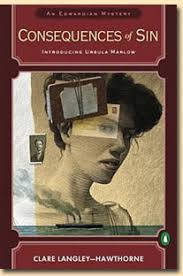
My own experience with book covers, however, has been mixed – with less-than ideal cover art for my first novel in hardback:

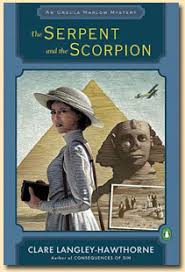
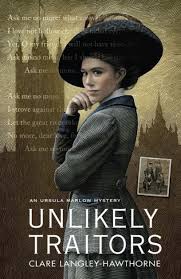
Followed by three wonderful covers for my paperbacks (all involving the same artist and model).


I think what made all the difference was that the paperback covers truly reflected the tone, mood and genre of my novels – with the right  blend of historical details, female characterization and intrigue. Now, as I contemplate the possibility of getting my rights back and possibly repackaging/re-releasing these books, I’ve started to think more about the issue of cover art and what makes a book cover great…I hesitate, though – mainly out of fear that I might chose badly. As Bookbub points out, a bad cover can have a negative impact on book sales. Hence I sometimes get that ‘deer in headlights’ look when it comes to book covers.

There are some informative blog posts providing advice when it comes to designing cover art. Jane Friedman has had some interesting guest posts on her blog on this issue (see for example 5 steps to great cover art and getting the right fit).  At the end of the day, all the advice seems to boil down to making sure the cover fits your book and attracts your target readers (something that feels easier said than done!).

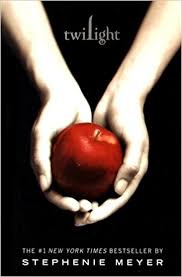
When I look at my own book shelves, a few (mainly YA) book covers stand out. There’s the original Twilight series covers which (at the time at least) stood out as unique.

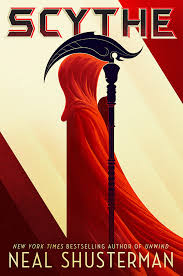
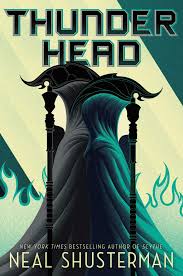
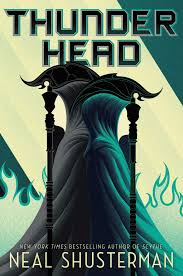
Then there’s the Scythe series by Neal Shusterman – these covers are gorgeous.

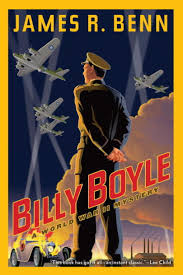
When it comes to mysteries I love the covers for James R Benn’s Billy Boyle series:

But a beautiful cover is only on element of the equation – it must also appropriately reflect the type of novel you’ve written and appeal to readers of that genre. If there’s a disconnect between the cover and the content then beauty alone won’t work. When I look at some of the list of beautiful book covers (such as Buzzfeed’s compilation for 2017, which can be found here) many of them, while certainly aesthetically appealing, wouldn’t necessarily make me want to pick up and read the book.

So what are your favorite book covers? What do you look for when seeking cover art for your own novels? What’s your experience been with cover art (either as a traditionally published or indie author) and what advice would you offer to someone thinking about repackaging their books with new cover art??


I Could Have Been Alex Trebek

by James Scott Bell
@jamesscottbell

What is the greatest gig in the history of gigs?

**cue Jeopardy music**

Did you guess being the host of Jeopardy? You should have. I mean, Alex Trebek works two days a week in an air-conditioned studio, making millions of dollars for reading some cards and saying, “No, sorry” to people.

And he’s done this since 1984! He’s a fixture of our popular culture. For many years, so was his mustache. It made national news when Trebek shaved it off back in 2001.

Alex Trebek is very good at what he does. He’s got a pleasant voice and cool demeanor. (Although I can’t think of him without hearing SNL’s parody. Will Ferrell as Alex, and Darrell Hammond as Sean Connery. Alex: “No, no, that’s The Pen is Mightier.” Sean: “Gussy it up however you want, Trebek. What matters is does it work?”)

And I, your humble scribe, could have been Alex Trebek. Or a facsimile thereof!

I take you back to JSB just after graduating college. I was living with the folks in the old homestead before setting off for New York to pursue an acting career. To make a few bucks I did close-up magic in a couple of bars and for an occasional party.

And once for a local Boy Scout troop. They were having a meeting in the auditorium of St. Mel’s Catholic School and one of the parents knew of my facility with legerdemain. (In those days I billed myself as “Jim Bell, Master of the Amazing.”)

So there I was in front of a bunch of scouts and their parents. And in the front row was a face I recognized. Most people in the 1970s would have, too. It was Larry Hovis, one of the stars of the hit comedy series Hogan’s Heroes.

I went into my act, and did the color-changing scarf trick. That’s where I stuff a red scarf into my fist and it comes out yellow. Then the yellow comes out black. Then they all disappear.

I remember vividly the approving expression on Hovis’s face. I had impressed a television star!

After the show Hovis came up to me and told me I had a very nice presence. He gave me a card for a company he was working with, Ralph Andrews Productions. That outfit was known for producing game shows, such as Celebrity Sweepstakes and It Takes Two.  

“You have what it takes to be a game show host,” Hovis said. “Call us and let’s set up a meeting.”

Harrumph, I thought. Game show host? Are you kidding? I wanted to be Brando. I wanted to be Newman. I wanted to stun them on the New York stage and be offered a leading role in a movie that made me a star. Then I could have a career like Hoffman or Pacino or Redford.

Game show host? Bah!

Needless to say, I never made the call. Who knows what might have happened if I had? But on I went to New York, then later back to Hollywood, then married an actress and decided we needed one steady income and went to law school, then joined a big Beverly Hills firm and started putting in 50-60 hours a week.

One night after a long day, I was at home zoning in front of the TV when Jeopardy came on. There was Alex (with mustache and big hair) and I said to Cindy, “I could have been him.”

When she inquired about this further, I told her the story. And we both let out wistful sighs.

Who knows what would have happened had I followed Larry Hovis’s advice? We can play that game all day long. Yes, being a host like Trebek or Sajak would have been a pretty nice deal.

But I’ve got a nice deal right now, and if TV stardom meant I wouldn’t have met my wife that one glorious night at a party among a lot of struggling actors, I would not wish to go back even for a second.

Plus, as it turns out, I’m doing what I’ve wanted to do ever since I started reading Classics Illustrated comic books as a kid—write fiction, tell stories, give readers a ride on a dream.

So I’ll take Happy and Grateful for $1,000, Alex.

Do you have a “road not taken” moment? Has it made all the difference?


Nostalgia Time – What TV Show from your Childhood Influenced You?

Jordan Dane
@JordanDane

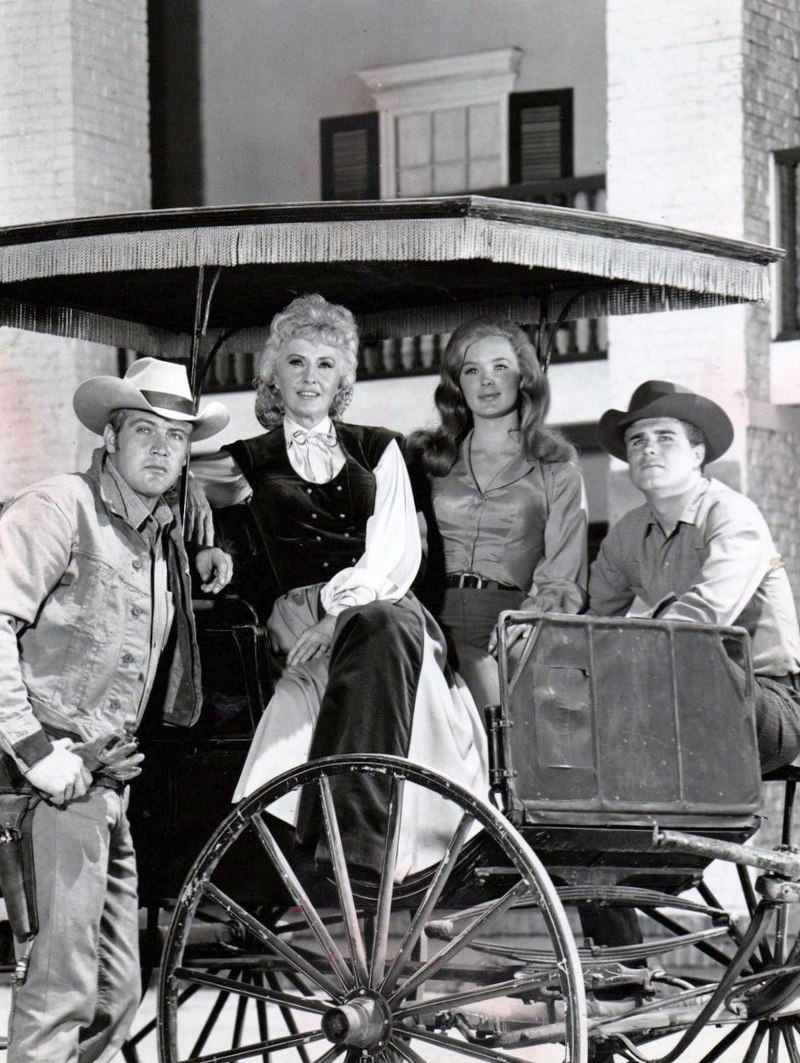
ABC Television


What show from your childhood or younger years would you bring back and why? Who would you have star in it?

Something that always influenced me–and ultimately teased me into becoming a writer–was my love for Westerns and HORSES. I read every Louis L’Amour I could get my hands on. When I was a young girl and in elementary school, I loved horses and read every book they had in my school library. Literally every book, no lie. As I became a teenager, I got a job and my parents allowed me to save toward buying a horse of my own. We ended up with five horses and it became a big thing for my family.

I shoveled a lot of horse poo and mucked stalls, but it was a great experience. As I grew older, I became enthralled with the men who rode those horses in the 1800s. They were mysterious loners, good guys who lived life on the edge of civilizations and made their own version of the law and justice. The ultimate anti-heroes for me. My first perceptions of manhood came from these TV shows and the many books I read. It definitely influenced how I write men in my books. The brooding loner type.

http://pixabay.com/en/horses-blm-wyoming-mustangs-61158/


I watched anything Western as I grew up and continued to read every book I could get my hands on. TV shows on Wild Bill Hickok, Alias Smith & Jones, Lancer, Big Valley, Bonanza, Branded, Maverick, Gunsmoke, Have Gun Will Travel, High Chaparral, Laramie, Laredo, the Lone Ranger, Lonesome Dove, The Magnificent Seven, My Friend Flicka, Ponderosa, Rawhide, Rifleman, Shane, The Virginian, Wild Wild West, and even Zorro.

My sisters and I would sneak out of our bedrooms to watch TV in our pajamas if the shows came on after our bedtime. Mom told us that she caught us many times, but didn’t say anything. She knew how much it meant to us and appreciated the making of childhood memories. Girl first crushes.

Louis L’Amour hooked me into reading, but thriller authors like Robert Ludlum kept me going (Bourne Identity series). I got into crime fiction and espionage thrillers. Ludlum made me pay attention to how to pace a book and the structure of cliffhangers. He opened my eyes to writing and my desire to write never left me.

BONUS QUESTION – So help me cast a great Western. Who would star in the TV show or movie?

For Discussion:
1.) What show from your childhood or younger years would you bring back and why?
2.) Who would you have star in it?

Rejection Proofing

By John Gilstrap

If we’ve run into each other at an event, you might have noticed that I’m not a very shy guy.  In fact, I am the classic extrovert–one who draws energy from being around other people.  I love getting to know people, listening to their stories and picking their brains.  It’s the rare person, I find, who doesn’t have an interesting story to share about their life.

What I’m not good at is asking people to do things.  I’m not a closer.  It’s difficult for me at a book signing to end a chat with a potential customer by asking how many copies they would like to buy.  Personally, I don’t think it’s a fear of rejection as much as it is a desire not to inconvenience the other party.  And as I wrote that last sentence, yes, I see that that is likely my rationalization of a fear of rejection.

This hesitation on my part will be brought into high relief soon when I live up to my offer to spearhead a fundraising drive for the RiteCare Scottish Rite Childhood Language Program.  (This is NOT a solicitation for contributions.)  I’ve never approached a wealthy friend and asked for money, even for a great cause, and I find the prospect rather daunting.

I reached out to my friend Lynda who runs the YouthQuest Foundation for some advice, and her very first bit was to buy a book called Rejection Proof: How I Beat Fear and Became Invincible Through 100 Days of Rejection by Jia Jiang.  It’s a quirky little book that might not be for everyone, but there are a few sections that I think are particularly worthwhile for writers.  For me, the central idea boiled down to some obvious themes that come as no surprise: Rejection is about the request being made, not about the person making it; and expectations often become reality.  If you expect a no, that’s likely what you’ll walk away with.

But the part of the book that got me to thinking is where it points out that in most cases, the person being approached is as nervous about the request as the requester is of rejection.  Rejection does not exist in a vacuum.  It is always one part of a two-way communication.  My challenge will be to combine my natural gregariousness with an offer to help a good cause, packaged in a way that the person on the other end of the conversation will feel great about saying yes.

So, what does this have to do with writing?  I’m glad you asked.

Last Sunday, I did a book signing at the fabulous Fountain Bookstore in Richmond, VA.  It’s a pretty small place, and there I was in a chair at a table at the front of the store, right where customers had to trip over me to get by.  I always find it interesting just how many ways customers will actively avoid the gaze of the guy sitting next to a pile of books he wants to sell.

And I get it.  They likely don’t have a clue who I am, and if they’re in the store for a children’s book, or a title by Toni Morrison, they don’t want to hear a pitch that they know they will ultimately say no to.  It makes them feel uncomfortable. Remember, this rejection equation equalizes on both sides.  Call it social algebra.

At one point, an older gentleman entered the store, and when the always-excellent sales staff approached him and told him that an author was there and he’d love to sign a book for him, the guy–who turned out to be a fellow named Willard–said, “We’ll see,” and he started wandering the shelves.

What’s the point of reading a self-help book if you’re not going to put the strategies to good use, right?  So, I threw caution to the wind.  I left my station, walked up to him and said, “Hi, I’m John Gilstrap, a visiting author. Zero pressure to buy a book, but I’d love to shake your hand.”

He beamed.  We chatted for a few minutes.  He asked me what Scorpion Strike was about.  When it came around to the fact that I’m a native Virginian, he was sold.  He bought a book from me–a guy he knew–and I inscribed to to a guy I now knew as well.

Then there was the lovely lady named Bambi, who came into the store with her ancient beagle, Max.  Bambi was on a mission.  She told the manager that she wanted the two best children’s books for kids of a very young age.  They were gifts, and she wanted them wrapped.  While they discussed kids’ books, I made friends with Max.  Bambi and I talked a little about dogs, and when she asked me if I was from Richmond, I told her no, that I was from Fairfax.  It was at that moment that it dawned on her that I was the author who’d been mentioned to her when she first arrived.

Turns out that she personally likes thrillers, but she wasn’t there with the purpose of buying a book for herself.  She was concentrating on kid-lit.  Once her focus shifted, she became interested in me and my writing, and she bought a book–likewise from a guy she now knew, without any pressure from me.  I inscribed it to Bambi and Max, and she seemed genuinely touched.

Now here’s the big lesson: As predicted in Rejection Proof, both of those transactions were actually fun for me, and I presume for the others as well.  Zero stress.  Asking for the order is not about pushing a thing, it’s about interacting with people you like and trust, even if the relationship is only a few minutes old.

So, what about you, TKZers?  Does asking for stuff make you squirm?  Do you want to share any strategies for screwing up the courage to make the effort?

.

First Page Critique: Vaulting
Foreign Language Barriers

By PJ Parrish

We’re off to faraway places with strange sounding names today with our First Page Critique submission. So we have a great chance here to talk about how to handle weird words, foreign languages, things the average reader might not know and how you, the writer, have to work hard to make them get it. I call this, when I talk about this inn workshops, writing for Ms. Peabody in Peoria. Here’s our submission. Thank you, writer!

To Catch a Thief

Air horn blasting, two young men on a Bullet bike tore through lunchtime Mumbai traffic. The one riding pillion turned to his left and hollered, “Hoy, hoy. Katak maal[1].”

Seema squeaked, barely avoiding having her foot run over. She dropped to the tarred road next to the driver’s side door of the taxi halted in front of the high-rise. “Aey, rund—[2]” Gritting her teeth, she swallowed the gaali[3]. If she could, she would’ve chased after them and shoved her elbow into his puny chest. Unfortunately, she was forced to stay put.

Head kept low, she squinted through the tinted windows of the vehicle at the group by the entrance to the building. Her bulky, black purse was on the ground, an inch from her sandal, but she maintained her firm grip on the straps.

“Arrey[4], madam, get up,” exclaimed the cabbie. “Are you crazy or what? You can’t sit on the street. Some poor fool will hit you and have his license taken away.”

And the last memory she took with her to afterlife would be that of the biker Romeos. Not to mention the heat radiating up from the asphalt and the exhaust fumes headed straight for her nostrils. Her eyes teared.

“Gimme my fifty bucks,” the cabbie continued.

“In a minute,” Seema muttered. If she paid now, the taxi would take off, leaving her exposed.

“You said that five minutes bac— That’s it. You now owe me two hundred.”

“What?”

“Waiting charge.”

Baring her teeth, Seema hissed. “Son of a—”

“Madam,” said the cabbie, shaking a finger. “Watch your language.”

Heaving in an angry breath, Seema said, “Fine. But if you’re charging me extra to wait, I’m waiting inside.”

Without delay, she tugged open the back door and scrambled in. Keeping the purse aside, she peered at the entrance to the office building. Damn. The old fellow was still there, with his entourage.

And so was the tall, leanly muscled man in the light blue shirt and red, power tie. Adhith Verma, the assistant manager at the office where she was currently assigned. Clean-cut good looks, a degree from one of the nation’s elite engineering colleges, family money. The silver-haired gentleman with him was his father, the nation’s finance minister.

When Seema returned from lunch, she hadn’t been expecting to run into the minister. She didn’t want to meet him. If Adhith introduced her as anything other than a colleague, the old man would have her investigated. The whole plan could fall apart.


[1] “Hey, hey. Hot piece of ***.”

[2] “You, son of a whore” is what she’s about to say (incomplete here)

[3] Cuss word

[4] “Hey…”

________________________________________

Okay, I’m back. First, let’s tackle the obvious here. We know from the first paragraph where we are — smack in the middle of simmering Mumbai, India. Kudos, writer, for slipping that in nicely. But we are also smack in the middle of a problem — how to convey foreign language without confusing or annoying our readers. Although there are places other like Effortless English that might be able to help non-native English speakers to learn how to speak English fluently there is still a problem that all writers face.

All writers have problems with this. I polled my fellow contributors here at TKZ and they have some solid ideas on how to handle this. More on that in a sec, but first let’s look at the sample:

In the first graph we get this phrase: Hoy, hoy. Katak maal! Then a response from the woman Seema: “Aey, rund—” The problem, of course, is that most readers won’t have a clue what this means. There is no translation, no context. I wanted to like this submission because it does start out fast and furious and I’ve been to India and the Mumbai setting has great potential to lure me in. But I couldn’t get past the foreign phrases, especially in the crucial opening moments. It stopped me cold.

The writer compounds this problem by using footnotes. If this were in book form, the reader could, it appears, look down to the bottom of each page to find out what the characters are saying. But do you really want to make them do this?

Your first job as a novelist is to parachute your reader into a conjured world. Whether this world is Mumbai or Montana is irrelevant. You want them to be swept into your story and setting. Forcing them to pause and essentially go “look up” a word jerks them right out of that imagination stream you are trying so hard to immerse them in. This is just my opinion here, but I found this off-putting. A novel isn’t a thesis. It is a seduction. Why would you want to interrupt the mood and the motion?

But, but…

Yeah, yeah, I know. Mark Haddon’s The Curious Incident of the Dog in the Night-Time. Nabokov’s Pale Fire. Coleridge’s Rime of the Ancient Mariner. And David Foster Wallace’s, Infinite Jest!. Hundreds of footnotes in Jest, in very small type, that go on for almost a hundred pages at the end of the book. One of the footnotes, which contains the complete filmography of a fictional filmmaker, goes on for more than eight pages and itself has six footnotes. Someday, I going to try to read this book…again.

Here’s the thing: These authors are juggling with chainsaws, masters of the grand experiment. Now, I’m not suggesting a “mere” mystery or thriller writer can’t push the envelope. But I think it’s good to keep in mind that novelists who use footnotes are sometimes seen as show boaters. I can’t remember who said it in reviewing Wallace, but he compared him to a writer suddenly leaping into your room through a window and dancing around waving his arms, shouting “look at me! LOOK AT ME!”

I don’t think that is what is going on with our submitting writer here. I think he or she just wasn’t quite sure how to organically fold the foreign words into the narrative. Maybe we can help.

But before I go into that in depth, I’d like to do a quick line edit for the writer. As always, these are only my suggestions for edits. I hope others will weigh in. And thank you, writer, for letting us learn.

To Catch a Thief (Hitchcock got there first. Given your colorful locale, you can find a more evocative title)

Air horn blasting, two young men on a Bullet bike tore through lunchtime Mumbai traffic. Good job telling us where we are. The one riding pillion turned to his left and hollered, “Hoy, hoy. Katak maal.”Vivid image here, but these kids aren’t important. Why give them the opening moment?

Seema You’ve shifted point of view here. Open with her, not the boys squeaked, barely avoiding having her foot run over. She dropped to the tarred road next to the driver’s side door of the taxi halted in front of the high-rise. Simplify your phrasing: She dropped to the asphalt behind the taxi door. (we safely assume it’s parked). “Aey, rund—” Gritting her teeth, she swallowed the gaali. This word is confusing, needlessly so. If she could, she would’ve chased after them and shoved her elbow into his them and his don’t agree. puny chest. Unfortunately, she was forced to stay put. Why “unfortunately?” I assume it’s because she is doing some kind of surveillance? If so, why even start out with the motor bike incident? Get right to the point — the surveillance. I know you’re trying to convey the flavor of your interesting location but there are other ways. She could be hiding behind a bazaar-like stall that line Mumbai’s streets, which are, by the way, head-ache-inducing, teeming with motor bikes, auto-rickshaws, old buses, and yes…cows. And the miasma of smells and noise is amazing. A quick vivid description of this would underline Seem’a tension.

Head kept low, she squinted through the tinted windows of the vehicle at the group by the entrance to the building. Her bulky, black purse was on the ground, an inch from her sandal, but she maintained her firm grip on the straps. You need to be clearer on your choreography here. Was she hiding behind the parked taxi? Had she been in it and got out? Why even have the exchange with the taxi driver? What does it add? Again, you can handle this in fewer words: She peered through the taxi’s windows, watching the group of men at the entrance of the office building. (we don’t care about her purse or shoes.)

Arrey, madam, get up,” exclaimed the cabbie. “Are you crazy or what? You can’t sit on the street. Some poor fool will hit you and have his license taken away.” I would lose this guy. He’s in the way of your story getting going. And you need to begin setting your plot up — who is this woman and what is she doing?

And the last memory she took with her to afterlife would be that of the biker Romeos. From what I can gather, they were verbally assaulting her, no? Mistreatment (public rape) of women in India is really a hot topic right now in news. Not to mention the heat radiating up from the asphalt and the exhaust fumes headed straight for her nostrils. Her eyes teared. This implies girly-girly reaction. Not sure this is what you want here. Or is she reacting to the smell? Unclear.

“Gimme my fifty bucks,” here, you can safely use “rupees.” He wouldn’t ask for dollars. the cabbie continued. Why is he asking for money? Was she a fare and jumped out?

“In a minute,” Seema muttered. If she paid now, the taxi would take off, leaving her exposed. It would be pretty easy to hide somewhere else on a crowded Mumbai street.

“You said that five minutes bac— That’s it. You now owe me two hundred.”

“What?”

“Waiting charge.”

Baring her teeth, Seema hissed. “Son of a—”

“Madam,” said the cabbie, shaking a finger. “Watch your language.” I would lose all of this and get into your story. It is wasted dialogue. Dialogue is precious. Use it only to advance plot or illuminate character. And unless the cabbie is important, don’t let him hog the scene.

Heaving in an angry breath, Seema said, “Fine. But if you’re charging me extra to wait, I’m waiting inside.”

Without delay, she tugged open the back door and scrambled in. Keeping the purse aside, she peered at the entrance to the office building. Damn. The old fellow was still there, with his entourage. Why didn’t she just wait in the cab to begin with?

And so was the tall, leanly muscled man in the light blue shirt and red, power tie. Adhith Verma, the assistant manager at the office where she was currently assigned. Lost opportunity here to tell me what she does. And why she is watching these men. Clean-cut good looks, a degree from one of the nation’s elite engineering colleges, Be specific when you can. It took me one Google to find out Indian Institute of Technology is Mumbai’s top school. family money. The silver-haired gentleman with him was his father, the nation’s finance minister. This belongs up where you first mentioned him.

When Seema returned from lunch, she hadn’t been expecting to run into the minister. She didn’t want to meet him. If Adhith introduced her as anything other than a colleague, the old man would have her investigated. The whole plan could fall apart. This really needs context. Without telling us what Seema does for a living, why would we care that she’s sneaking around watching this old guy? We need more meat. So my final suggestion, dear writer, is to jettison the cabbie, the biker, and use your first 400 words to get your plot moving forward, more firmly establishing Seema and setting up her conflict

So, to sum up quickly, writer: Love your location! I like Seema, what little I know of her. Yes, it is hard in only 400 words to give us a sense of your setting, protag and the conflict! Which is why I questioned spending so many words on the cabbie. Find a quicker way into your story and I think you’ll be on your way.

Now, let’s take a deep dive into the problem of incorporating foreign language…

With fiction, you almost can’t avoid the occasional use of non-English. It’s a must with world-scale thrillers. Even if you’re working domestically, our increasingly diverse populace puts our characters in constant contact with all sorts of languages and cultures. Indeed, our heroes and heroines might well be héroes or heroínas. You want to be authentic, but you don’t want to confuse your readers. So what’s the poor writer to do?

  • Put the language in as it would naturally appear in dialogue and hope the reader can figure it out via context? Creo que eso solo confundiría a los lectores. ¿No estás de acuerdo? (I’m purposely trying to annoy you here).
  • Put it the foreign words and then immediately translate them? Mais cela peut sembler si prétentieux et ça fait monter le nombre de mots. But that can seem pretentious and it makes your word count go up.
  • Or do you just tell the reader the characters aren’t speaking English, write it in English, and move on?

Every writer handles it in his or her own way. I polled our TKZ contributors and here’s their takes:

John Gilstrap just plain avoid foreign words. “Those words stop the story for the reader, I think,” he says. “In Final Target, for example, virtually all of the dialog is in Spanish, because that’s the nationality of the kids being rescued. So, I handle it like this:

“Who are all these people?” Jonathan asked in Spanish. He was fluent in the language, though aware that he had a distinctly Colombian accent, tied to the days when he was the point of Uncle Sam’s spear.

“After that, I write as I normally would. And once I’ve established the model of English-as-Spanish, it would be jarring to throw in a Spanish word.”

Makes sense, n’est-ce pas? Because, as John says, his entire plot hinges on Spanish-speaking kids, so if he toggled back and forth between two languages, it would get old fast.

But sometimes, you have to include foreign phrases to convey verisimilitude. I love this word because it really means something more than mere realism. In fiction it means creating an entire atmosphere that imitates life. Even if the story is far-fetched (fantasy), readers must be willing to suspend disbelief and think that the story could actually occur. In sci-fi, readers will tolerate the “foreign language” of complex science terminology if the writer is skillful at contextualizing it.

I think the same rule applies for foreign languages. I like to insert it in my books because, used judiciously, it helps place the readers into the conjured world. But man, you really have to careful.

Unless you’re a native speaker, get help! Jordan Dane often uses Hispanic characters because, as she says, she’s “part Hispanic, and I get friends and my father to help with get the language and the slang right, depending on the perceived education of the Spanish speaker.” She always italicizes the Spanish and tries to explain the meaning directly after the language change. But at times, she leaves it to the reader to figure things out by body language or by the flow of conversation. Here’s one of Jordan’s scenes with her series character, Ryker Townsend, an FBI profiler with psychic abilities who speaks fluent Spanish. In this scene, he is questioning a girl who was smuggled over the Mexican border and left in a sweltering truck to die of heatstroke.

“Amelia? Can you open your eyes, Miss Tejeda?” She raised her voice and leaned over the bed rail.

The Hispanic girl’s eyes fluttered as she struggled to wake up. When her dark eyes opened, she gripped the metal bed rail and pushed back from Lucinda, terrified as if she were still in the hands of her abductors. When her eyes noticed the nurse and the hospital setting, she spoke in Spanish in a fragile voice.

“Yo ne hice nada. No me aresten.”

When Amelia said she had done nothing wrong and pleaded not to be arrested, Lucinda shifted her gaze to me. She didn’t speak the language, but I did.

“¿Por qué te arrestaríamos?” I asked. “Tu no has hecho nada mal.”

Miss Tejeda fixed her pained eyes on me as if I could save her. With shaky fingers, she reached for my hand. I barely sensed her grip. She had no strength left.

“Please help me…find my friend…Fiona.” She strained for every word. “People say…she lived. Her country sent brave men to save her. Is this true? Did she live?”

“Yes. We are leaving soon to find her. How do you know Fiona Storm?”

“She saved my life. I owe her…everything.”

It made no sense that this kidnapped woman had been saved, only to find herself in a worse situation and near death. I wondered if this was the delirium the doctor warned us about.

Dime. ¿Cómo salvó Fiona tu vida?” I had to know. How could Fiona have saved her life?

This is pretty much how I handle foreign languages with my series character Louis Kincaid. I might put in the foreign phrase, but I provide some method of translation. In the Florida books, I often had him interacting with Spanish-speaking characters. Like Jordan, I would use the actual Spanish but there would always be a secondary character there to translate for him and the reader. In Island of Bones, Louis goes to a migrant camp in search of a missing Mexican girl. Her mother speaks no English and is hostile. But the father speaks enough to translate and tells him that his daughter met a boy shortly before she disappeared.

“She called him a boy, not a man?” Louis asked.

“Yes, a boy. That’s what she said.”

“Did she tell you his name?”

“I do not remember, but I know it was a good Hispanic name.”

“Did she describe him to you?” Louis asked. “Tell you anything about him?”

The man shook his head. “I think she call him…”

He looked to his wife and asked her something in Spanish.

The woman hesitated then whispered two words.

The man turned back to Louis. “She called him Papi chulo.”

“What does that mean?”

“It is something young people say. It means he was handsome, a hunk you would say.”

In my upcoming October release The Damage Done, Louis is hired onto an elite cold case squad and one of the job requirements is to become fluent in a foreign language. Louis, like me, speaks bad college French. Here’s a passage with his new boss, Capt. Steele:

“Louis has been studying to become our in-house expert on unsolved Michigan homicides,” Steele said. He paused with the barest of smiles and added, “Louis has exceptional instincts and a special feel for unsolved cases that you will all come to appreciate.”

Louis held Steele’s hard brown eyes, not happy with the description of his resume. It made his past sound sensational and his investigative skills almost paranormal. That’s the last thing he needed with this group—to be tagged as some sort of celebrity mystic who dug through dusty folders.

“Louis,” Steele said, “Bienvenue chez toi.

Welcome home? Louis was so surprised it took him a moment to answer. “It’s good to be back,” he said.

So another way to handle foreign words is to have the person who hears it translate it in his head (via italics).

This is how James Scott Bell handles it, agreeing with John’s approach for extended passages. Says Jim: “You can monkey with the diction, too, to give it a ‘formal’ sound in English, as Hemingway does in For Whom the Bell Tolls. For shorter clips, you can have the POV character “hear” the language, like this example from Elmore Leonard’s Cuba Libre:

Now Teo was speaking to Fuentes in Spanish, Tyler getting some of it. It sounded like Teo wanted to ride one of the horses.

Leonard throws in the occasional Spanish word, always putting it in italics:

“You pronounce it pretty good,” Tavalera said, “but the Guardia are not police during time of war. We’re like those people, the caballería, except we don’t stay in Havana and go sightseeing, we hunt insurrectos.

See the simple beauty of that? The word “guardia” is immediately grasped, as is “caballeria.”. Very graceful!

Or, as Jim points out, you can simply translate, if it’s a one-time exchange:

“Dónde están las armas?” Where are the weapons?

But a more artful way to do this is question and response:

“Dónde están las armas?”

“I have no idea where the weapons are.”

Sometimes, a foreign tongue is, as John Gilstrap pointed out, essential to your plot. For my stand alone The Killing Song, which is set in Paris, I had an amateur sleuth English-only protag and I wanted to stress the fish-out-of-water feeling of anxiety he felt. I had to incorporate French throughout and it had the effect of making him feel confused and frustrated. But you can’t let this go on too long. So I teamed him up with a French detective, so she was always there to help him — and the reader. Plus, the give-and-take of the language barrier became part of their friendship arc. And even though I can speak French, I ran every sentence by a Paris-born French friend, who also helped me with some spicy slang used by les flics (cops).

A couple more thoughts on odd language. I didn’t even get into American dialects with this, especially “Southern speak,” which I have become more attuned to since moving to Tallahassee, where “y’alls” and “ma’ams” rain down harder than afternoon toadstranglers. Maybe the only thing we need to say about regional American dialects is to avoid trying to duplicate them on the page. It gets old really fast. I’d advise writers to say, “he spoke with a Texan twang” or something and trust the reader to get it. For my new book, I have to acknowledge the peculiar accent of Michigan’s Upper Peninsula, as spoken by the “Yoopers.” Here is how Louis hears it:

“Reuben Nurmi. Good to meet ya,” he said in a voice that sounded like it belonged on some late-night jazz station. Except for the distinctive Yooper twang. Louis had always liked the accent , which fell somewhere between the hard nasal vowels of Detroit and the odd lilt of Canada.

Verisimilitude. Which is Latin in origin, by the way. Quae surrexit?

How To Write a Press Release That Works

By Sue Coletta

Writing a press release is something we all need to learn sooner or later. I’ve written my share of boring press releases that I’m sure no well-respected journalist ever read. Recently, however, I hunkered down and studied the finer points of how to make a book signing or new release newsworthy — and that’s the magic bullet right there. Envision the press release as an article in the newspaper, or on the radio, or, dare I say, as local news on television.
Even if you don’t feel comfortable writing a press release to announce a new release, most bookstores will ask you to write one from their perspective to announce your upcoming signing at their store. When this first happened to me, I panicked. I’m hoping this post will help erase some of the frustration for you. So, let’s discuss how to write a press release for a book signing. The same principals apply for announcing a new release.

All press releases must follow a specific format …

FOR IMMEDIATE RELEASE should be in all caps, bold, and justified (left margin).

Underneath, write the date, space, slash mark, space, the location i.e. July 30, 2018 / Annie’s Book Stop

The heading comes next and it should also be in all caps and bold. This time, centered. The most important thing to remember is we want the journalist to click our email out of the hundreds they received that day. So, it’s important that we take our time with the heading and make it newsworthy. A savvy bookstore will use it as the subject line of their email.

This is the headline I used to announce an upcoming signing for my new release, SCATHED …

SERIAL KILLERS STALK GRAFTON COUNTY, NEW HAMPSHIRE

Can you imagine a journalist not clicking that email? That’s why it worked.

Next line, still in bold but not all caps …

Meet the Author Who Has Residents Locking Their Doors

Then our sub-heading, which tells the journalist exactly what we’re announcing. This line is in lower case, centered, and in italics.

Book singing on August 18, 2018 at Annie’s Book Stop

In the first paragraph we need to get straight to the point. Journalists don’t have a lot of time to wade through fluff. Also, this paragraph should include the 5 W’s (who, what, where, why, when).

As an example, this is what I wrote for Annie’s Book Stop. Perhaps it’ll spark ideas for you. Notice just the town and state are in all caps. Which is exactly how it’ll look in the newspaper.

LACONIA, NH, August 18, 2018 — Annie’s Book Stop, a book store dedicated to serving the Lakes Region since 1983, is hosting a book-signing event with Bestselling Crime Writer Sue Coletta, author of the much-beloved Grafton County Series and award-winning Mayhem Series, on Saturday, August 18th from 10 a.m. to 12 p.m. Annie’s Book Stop is located at 1330 Union Ave. in Laconia, NH.

Include interesting information in the next paragraph or two. Our goal is to make it easy for the journalist to use the same wording in the newspaper. Here’s mine again …

Just as Stephen King reimagined Bangor, Maine, Sue Coletta toys with Alexandria, Hebron, Bridgewater, Bristol, Groton, and local treasures such as Wellington State Park and Sculptured Rocks in SCATHED, the latest psychological thriller/mystery in the Grafton County Series, which released on July 25, 2018 by Tirgearr Publishing. Even WMUR’s ULocal plays a pivotal role in the story.

Come meet Sue Coletta at Annie’s Book Stop and pick up a signed copy of SCATHED. All books in the Grafton County Series and Mayhem Series will be available.

***

(Note: I’m only including the asterisks for clarity, don’t use them in the press release)

Do you have a blurb from a celebrity? If you do, include it next. If you don’t, use a review from an author your target audience will recognize. If you don’t have either, use a line or two from a reviewer. Choose wisely. The quote should align with the focus of the press release. Since I focused on serial killers, I used a quote from a NY Times bestselling author that included the words “serial killer.” I also was lucky enough to know someone my target audience would recognize, and I included a quote from him, as well. We can’t skip this part, because this is where we show “social proof.”

The last paragraph is reserved for our bio. Don’t use a regular bio, though. Mix it up, make it personal so people can connect with you. Most importantly, it should align with the rest of the press release. Here’s what I wrote …

Sue Coletta has always been fascinated by why people kill. What pushes someone to the edge of a dark abyss? Researching crime, forensics, psychology, and psychopathy is a passion she shares with fans on her award-winning crime blog, where she delves into the minds of serial killers, explains groundbreaking forensic techniques, and writes true crime stories. Sue prides herself on striking that magical balance between realism and fiction … so much so she even locked herself inside an oil drum in order to experience her character’s terror.

Last line is short and to the point …

For more details visit Annie’s Book Stop: www.anniesbookstop.com

At the end of our press release write the word ENDS, all caps, bold, and centered.

This press release worked for me. Not only did I make the local papers, but I now have journalists who’ve reached out to me for interviews. It’s only been a couple days since the bookstore released it, so I’m excited to find out what happens next. I should also point out, it took me about 8 hours to write this one page press release. We can’t rush it; it’s too important. A good press release can skyrocket our career if the right person reads it.

Over to you, TKZers! Have you had good luck with a press release? If so, please share any tips you’ve learned. If you’ve never written a press release, will you give it a go? You’ve got nothing to lose and everything to gain. I recommend sending a press release for all new releases, even if they’re only available as ebooks.

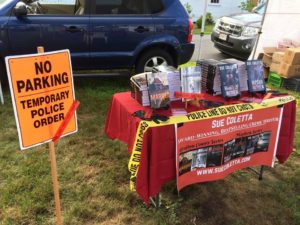
This is my table at the Hebron Fair over the weekend. The police bling worked amazingly well to draw the attention of my target audience.  Unfortunately, there wasn’t enough time for shipping to include SCATHED; it released in paperback last week. But I still sold out. Super fun day!