Heinlein’s Rules for Writers

by James Scott Bell
@jamesscottbell

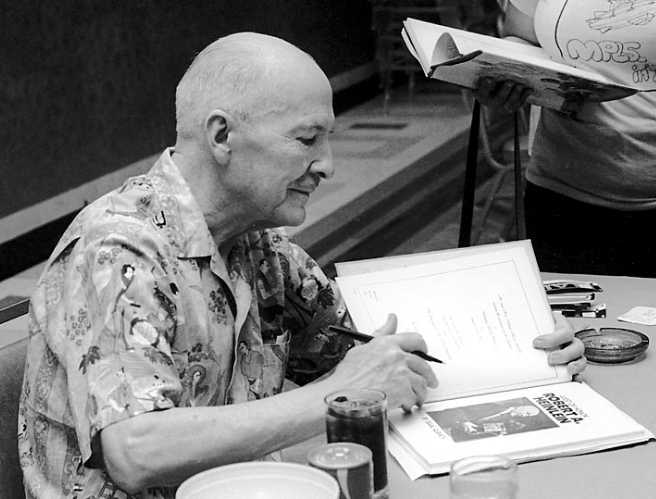
Robert A. Heinlein

Recently, in our comments, TKZ regular Harvey Stanbrough made reference to Robert A. Heinlein’s “Five Rules for Writers.” They are as follows:

Rule One: You must write.

Rule Two: You must finish what you start.

Rule Three: You must refrain from rewriting, except to editorial order.

Rule Four: You must put it on the market.

Rule Five: You must keep it on the market until it has sold.

I’d like to offer my commentary on this list.

Rule One: You must write.

Pretty self-evident. You can’t sell what you don’t produce. The writers of Heinlein’s era all had quotas. Pulp writers like W. T. Ballard and Erle Stanley Gardner wrote a million words or more a year. Fred Faust (aka Max Brand) wrote four thousand words a day, every day. They did so because they were getting a penny or two a word, and they needed to put food on the table.

I always advise writers to figure out how many words they can comfortably write in a week, considering their other obligations. Now up that number by 10% and make that the goal. Revise the number every year. Keep track of your words on a spreadsheet. I can tell you how many words I’ve written per day, per week, per year since the year 2000.

Rule Two: You must finish what you start.

I remember when I finished my first (unpublished, and it shall stay unpublished) novel. I was still trying to figure out this craft of ours and knew I had a long way to go. But I learned a whole lot just from the act of finishing. It also felt good, and motivated me to keep going.

Heinlein was primarily thinking about short stories here, so the act of finishing was an easier task. With a novel, there’s always a moment when you think it stinks. When you wonder if you should keep going for another 50k words. Fight through it and finish the dang thing. Nothing is wasted. At the very least you’ll become a stronger writer.

Should a project ever be abandoned? If you’ve done sufficient planning and have the right foundation, I’d say no. If you’re a pantser … well, the temptation to set something aside is more pronounced. But you chose to be a panster, so deal with it.

Rule Three: You must refrain from rewriting, except to editorial order.

This is a bad rule if taken at face value. Again, Heinlein was thinking about the short story market. With novel-length fiction, the old saw still applies: Writing is re-writing.

I’ve heard a certain #1 bestselling writer state that he only does one draft and that’s it. Upon closer examination, however, that writer is revising pages daily as he goes, so it comes out to the same thing—re-writing.

As for “editorial order,” Heinlein meant that once a story sold—which meant actual payment—you made the changes the editor wanted (that is, if you wanted him to send you the check!)

For all writers, a skilled editor or reliable beta readers give us an all-important extra set of eyes. Don’t skip this step. There’s always something you need to fix!

Rule Four: You must put it on the market.

Which, for Heinlein, meant sending the story out to the pulp or slick magazines. Or, in the case of a novel, to the authorities within the Forbidden City of traditional publishing.

Today, of course, we have one major advantage Heinlein did not: self-publishing. But that option does not mean you don’t need to go through the grinder of making a manuscript the best it can be.

Rule Five: You must keep it on the market until it has sold.

Again, this was about the old world of magazines. When a manuscript came back, rejected, you got another envelope and sent it out again. The pages could get pretty scuffed up that way.

Today, the big questions for the writer are: a) should I seek traditional publishing, or self-publish? b) if traditional, how many rejections should I endure before publishing on my own? and c) if going indie, how do I know my book is ready?

Sci-fi writer Robert Sawyer added a sixth rule that is crucially important:

Rule Six: Start Working on Something Else

That’s my own rule. I’ve seen too many beginning writers labor for years over a single story or novel. As soon as you’ve finished one piece, start on another. Don’t wait for the first story to come back from the editor you’ve submitted it to; get to work on your next project. (And if you find you’re experiencing writer’s block on your current project, begin writing something new — a real writer can always write something.) You must produce a body of work to count yourself as a real working pro.

So what do you think of Heinlein’s rules (and Sawyer’s addendum)? What else would you add?

MISSING

Photo by Eberhard Grossgasteiger from unsplash.com

I sit this evening perplexed by mysteries, personal puzzles that really have no point in being discussed here. Pull one thread, however, and it catches another and then another, whether they be in the material or intangible world. So it is that I occasionally obsess for a few moments about a couple of local puzzles that are commemorated to varying degrees on the anniversaries of their occurrences.

The first of these occurred — or at least manifested itself — within walking distance of my home. I live two blocks away from Hoover Reservoir, a body of water consisting of five square miles which is by turns a water source, park, and recreation area. A gentleman named Rob Mohney also lived nearby until 1996. He abruptly disappeared one evening in July, leaving the door to his home unlocked and the supper on his table untouched, a still-life, landlocked model of the Mary Celeste. He was still missing when his car was noticed at the reservoir a few days later. One of the initial theories of explanation regarding his disappearance was that he had parked at the reservoir, then walked to the pedestrian crossing over the dam, where he had done a Peter Pan for whatever sad reason into the waters crashing beneath. We are not talking Niagara Falls, however, and the waters in question quickly give up their own when there is anything to give. Mr. Mohney was never found.

Local law enforcement still pursues the case. A tip led them to a nearby rural plot of land where a backhoe failed to give up any secrets. Mohney still lives, however, in the local lore. A year after his disappearance a group of drunken seniors from one of the local high schools reported seeing his shade wandering late at night on the far banks of the reservoir, and sightings are still reported by their successors some twenty years and change later.

Thousands of people are reported missing each year. Most are found in one condition or another, either reunited with loved ones or bound over to the state of deep and seemingly unending mourning, depending upon circumstance. The truth, however, is that some people just…disappear. There is no law against it if the person missing is an adult and the absence appears voluntarily. While the occurrence often raises suspicion of what is known as “foul play,” it isn’t always. Some people tire of their lives and decide to up sticks and reinvent themselves elsewhere. Stories abound of how the quick-witted and -footed took advantage of the 9/11 terror attack in New York and left a hated job or a tired relationship behind to go on permanent vacation in the Mohave.

It is hard to classify the second and better known mysterious absence which has occurred in my area. Theories about the perplexing disappearance of Brian Shaffer abound. Shaffer, a 27-year-old medical student at the Ohio State University in Columbus, seemed after a deep personal tragedy to have the world by the tail with a downhill pull. On Saturday, April 1, 2006, as he and two friends began a bar crawl through the North High Street campus area. Shaffer needed the break. His mother had died a few weeks earlier following a long battle with cancer and his life seemed to be entering a new and better chapter. Shaffer and his girlfriend were scheduled to leave the following Monday for Miami, and he had planned to propose to her after they reached their destination. The evening was a way of properly lubricating the beginning of the much-needed spring break. The trio entered a loud and boisterous two-story establishment named “The Ugly Tuna Saloona” (a dive bar with pretensions). Shaffer became separated from his friends soon after they entered. Their calls to his cell phone went straight to his voice mail. They eventually left the bar, assuming that Shaffer had gone home to bed. Their assumption was partially right.  He was gone.

The area in question was — and is — heavily blanketed in security cameras and monitors. Columbus Police detectives assigned to investigate the case repeated reviewed hours of video from the night in question and were able to account for the exit of each person who entered the bar that night but for one, that being Shaffer. Cadaver dogs went through every inch of the building but found nothing. The Saloona has gone to that great tavern in the sky, and the empty premises have been examined again, but it still refuses to give up its secrets. Shaffer went in but apparently never came out.

A disappearance such as this leaves its own uncomfortable ripples behind. Shaffer’s father died two years later as a result of a home accident without knowing what happened to his son.  An online memorial posting following his father’s death, allegedly from Shaffer and purportedly from the Virgin Islands, was concluded to be a hoax. Elaborate tips phoned into the detectives led nowhere. Rumors continue to this day, the most persistent being that Shaffer is pursuing a different life in a suburb of Atlanta. There have been “Where’s Waldo” sightings of him literally all over the world. Each false tip is a fresh wound for Shaffer’s brother, who understandably remains haunted and perplexed by the incident. The oddest post-disappearance manifestation, however, was experienced by Shaffer’s girlfriend, who is no doubt haunted to some degree by what occurred and what might have been. She continued calling his cell phone on a nightly basis after his disappearance. Her calls went straight to voicemail, each and all but for one that she placed approximately six months after he vanished. That call rang four times. It was found that the call had “pinged” off of a cell phone tour in a suburb southwest of Columbus. It was, unfortunately, another dead end.

Where did Shaffer go? And how did he get there? I’m repeating myself, but that area of High Street is heavily covered by surveillance. He was not seen leaving the building. It is all but obvious, however, that he did. I have my own theory, one that is unkind in some ways and that I accordingly keep to myself. Someday there might be an answer. Or not. There is no rule of the universe that states that all questions will one day be answered, that all mysteries will be revealed, other for than for the divine. The lesser ones, however, will still matter.

I’ve prattled on long enough, perhaps too long. Disappearances. What is the most puzzling unsolved one near you? Please share. And thank you as always for stopping by…

…and, like Columbo…I’ve got just one more very important item: Chag Urim Sameach to all of our many friends celebrating the Festival of Lights commencing tomorrow! We join you in spirit!

Reader Friday: Holiday Treats

Every family has a holiday tradition, whether it’s a special treat or favorite dish.

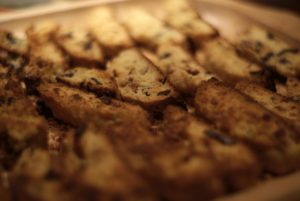
In the Coletta household, I bake dozens of almond biscotti. They’re everyone’s favorite snack. My father-in-law devours a plateful in one sitting, my grandchildren grab one after another — sometimes a biscotti in both tiny fists! — and before the family arrives I’m constantly slapping my husband’s hand away from the Tupperware container. They take me hours to make, yet they disappear in minutes.

What’s the one treat or dish that you make (or look forward to eating) every year? How long have you had this tradition? 

SEVEN AT ODDS: First Page Critique

GoDaddy stock phot

Greetings, fellow travelers! Today we venture into a fantasy land of Rwothtyll trees and First Blood Ceremonies. Doesn’t that pique your curiosity? (It did mine.)

Buckle up. Off we go to meet our Brave Author with our First Page Critiques!

SEVEN AT ODDS

At first, Vo thought the faint ululating cries were animal mating calls. But it was the wrong time of year. The Goddess had Her own ways, many of them mysteries to him and his fellow villagers, and maybe these cries were just another riddle. He leaned out over the thick limb of the Rwothyll tree and rubbed the sweat out of his eyes with his shirt sleeve, the weather unusually warm for early autumn. Studying the clusters of silver-green Rwothyll leaves that hung from the limb, he shook one branch. The lemony scent of the leaves wafted up to him. He took a firm grip on his long harvest knife and sawed easily through the branch. The cluster tumbled down toward Alek and Jilly waiting twenty feet below. Alek, shaking his shock of jet black hair, made a show of catching the leaves in his harvest basket.

A peal of laughter erupted from Jilly. “Oh, Alek, you are such a clown.”

Alek grinned and waved up at Vo. From his perch, Vo returned the gesture, smiling at the antics of his friend who was just a year older than his own tally of sixteen summers. He cut off another branch and held the leafy bundle out. A sudden shadow fell over the leaves as a cloud passed overhead. He shivered, then brightened as the sun returned. “Hey, Jilly. Your turn!”

The girl grabbed the basket and swung it gracefully beneath the harvested leaves. She threw Alek a teasing smirk. She tossed the basket back to him and looked up. “You going to be up there all day, Vo?”

Vo shook his head and groaned, wishing he had not drunk so much of the miller’s home brew at Jilly’s First Blood celebration the night before. He gripped the climbing rope, ready to slither down, when he cocked his head, listening. The same cries, this time joined by a horn blast and an eerie low thrumming sound. Not animal sounds, then. He sat up straight, peering out through the leaves at the hillside that rose above the village. Terraced fields covered its lower elevations and beyond the golden spears of grain waving lazily in the light breeze, forested heights climbed ever higher, forming ridges and shoulders that buttressed the jagged peaks of the Eastern Wall.

——————————–

I like a good fantasy story, and I’m impressed by the author’s particularly close observation of the story’s idyllic setting and the detailed interactions of the characters. This is a vivid, lush world that offers up a number of compelling curiosities that I’d like to know more about. Plus, a Goddess!

Here at the Zone, we operate at a bit of a disadvantage when we do critiques. We have little information as to intended audience. But that’s part of the fun of it!

I’m going to say that SEVEN AT ODDS is a YA fantasy novel about Vo, Alek, Jilly, and–perhaps–four other characters who are at odds with some villain or god(dess) or invader? They feel a little like young superheroes who haven’t yet discovered they’re superheroes, which wouldn’t necessarily be a bad thing.

I’ll get to edits in a moment, but I first want to say that–and maybe it’s just me–I wanted more tension, more action, a sense that something tense and important and dangerous is about to happen. As it stands, it simmers a bit too low, but can easily be pumped up. Thoughts:

At first, Vo thought the faint ululating cries were animal mating calls. But it was the wrong time of year. The Goddess had Her own ways, many of them mysteries to him and his fellow villagers, and maybe these cries were just another riddle. He leaned out over the thick limb of the Rwothyll tree and rubbed the sweat out of his eyes with his shirt sleeve, the weather unusually warm for early autumn. Studying the clusters of silver-green Rwothyll leaves that hung from the limb, he shook one branch. The lemony scent of the leaves wafted up to him. He took a firm grip on his long harvest knife and sawed easily through the branch. The cluster tumbled down toward Alek and Jilly waiting twenty feet below. Alek, shaking his shock of jet black hair, made a show of catching the leaves in his harvest basket. 

Stakes! Tension! Flow!

We have weird, spooky sounds. An unpredictable goddess. And our friend Vo doesn’t seem particularly alarmed, but goes on to harvest his lemony leaves…My curiosity was initially piqued, but I kind of lose interest when Vo does.

(Forgive me if my rewriting bits don’t track or you find repetitions–I took each paragraph and messed with it and didn’t go for a full rewrite.)

It’s not a bad idea to start with a mysterious sound. But NEVER start with a character thinking. Or wondering. *yawns” I believe this was mentioned on another recent critique. Give our hero something interesting to do, or at least have him reacting physically or psychologically. I was also bugged because I had to assume he was up a tree and didn’t get it until Alek and Jilly were positioned below.

“Animal mating calls” is a bit too general. And let us know immediately why it’s the wrong time of year.

Simplify actions and reactions. Keep dialogue natural. No need to repeat names. Please..no erupting peals. Keep it simple.

Perhaps:

High above the forest floor, Vo stilled his harvest knife in the middle of sawing a cluster of Rwothyll leaves from their branch, and turned his head to listen. Faint ululations, like animal cries, arose in the distance. He guessed they might be the mating calls of some mountain creature. Except it was autumn—a brutally hot autumn—not mating season. It was hard to know for certain what they were. They might even be some trick or riddle of the Goddess, whose ways were often a mystery to Vo and his fellow villagers. Turning back to the tree’s silver-green leaves, he finished sawing through the branch, sending the cluster tumbling down to where Alek and Jilly waited below.

Alek, shaking his shock of jet black hair out of his eyes, made a show of catching the leaves in his harvest basket. Jilly laughed and gave Alek a playful push. “You’re such a clown.”

Alek grinned and waved up at Vo. From his perch, Vo returned the gesture, smiling at the antics of his friend who was just a year older than his own tally of sixteen summers. He cut off another branch and held the leafy bundle out. A sudden shadow fell over the leaves as a cloud passed overhead. He shivered, then brightened as the sun returned. “Hey, Jilly. Your turn!”

Alek has a basket, so how is he waving? Vo returning the gesture is awkward as well. It’s all a bit too happy, happy.

Vo smiled down at his friends. But his smile faltered as a cloud suddenly dimmed the sunlight. Despite the heat, he shivered. Something’s wrong. Something’s coming, he thought. Or had he just had too much of the miller’s home brew at Jilly’s First Blood celebration the previous night? He tried to shake off the tension by cutting another cluster-filled branch. Focusing on the work. “Hey, Jilly. Your turn!”

Give Jilly and Alek more interaction. They are oblivious to what is going on with Vo.

The girl grabbed the basket and swung it gracefully to catch the falling bundle. She gave a little curtsy, and, smirking, she tossed the full basket back to Alek. “No big deal,” she said. Alek shrugged, obviously pretending to be unimpressed, and called up to Vo. “Come on down. We’ve got enough.” Jilly stuck out her tongue behind his back.

Vo shook his head and groaned, wishing he had not drunk so much of the miller’s home brew at Jilly’s First Blood celebration the night before. He gripped the climbing rope, ready to slither down, when he cocked his head, listening. The same cries, this time joined by a horn blast and an eerie low thrumming sound. Not animal sounds, then. He sat up straight, peering out through the leaves at the hillside that rose above the village. Terraced fields covered its lower elevations and beyond the golden spears of grain waving lazily in the light breeze, forested heights climbed ever higher, forming ridges and shoulders that buttressed the jagged peaks of the Eastern Wall. 

Oh, no, Vo! The head shaking and groaning is a bit much as a response to Jilly or Alek asking if he’s coming down soon. He has other more important stuff on his mind–establish earlier that he’s feeling like crap.

I love the description of the terraced hillside. But save it for a page or two because here it diminishes the occurrence of the new sounds. You’ve ramped up the tension, so keep it tense. You don’t have to deliver everything in the first page. Here’s what I would do with the last paragraph:

Vo sheathed the knife, and had just gripped the rope to shimmy down, when more haunting cries, louder now, floated down the hillside brooding over the village. This time they were accompanied by the blast of a [name a local type of horn here] horn, and what sounded like the thrumming of a thousand heartbeats. No. The cries definitely weren’t animal noises. He glanced down to see if Alek and Jilly had heard, too. They had. Their upturned faces were filled with fear.

Yes, I have had lots of opinions about this piece. But I definitely feel it was worth an edit. Good job, Brave Author. Hope this is useful.

TKZers! Thoughts?

First Page Critique – Zip & Millie: Siberian Adventure

by Debbie Burke

@burke_writer

Please welcome today’s Brave Author who’s submitted a first page entitled:

Zip&Milly: Siberian Adventure

Russian train – courtesy of Wikimedia

“Raccoon” — an inquisitive legal assistant from Ducklingburg, U.S.A., appeared in the car of a speeding Siberian commuter rail quite unexpectedly.

Appeared being the operative word. Raccoon was not exactly sure how he got there.

He did not board the rail; did not catch the rail; did not even wake up there with a start. He just . . .  appeared.

A gentle waft of extraordinarily fresh Spring-smelling air shifted and carefully inserted Raccoon’s body into a tight spot between two groups of bulkily dressed people . . . then, before he could get oriented, that same fresh-smelling waft nudged on and pushed him forward, along the swaying length of swiftly moving train, down the narrow corridor with a row of closed compartment doors on one side.

Instinctively, Raccoon steeled his gait — stance wide, head forward, chin in . . . and, finding no grounding point to balance himself, fell in into the closest compartment.

First thing he saw was Zip — or, more precisely, Spaniel Zip’s rear quarters.

“Score! There you are! Zip! Get here!” whispered Raccoon, leaning down. Losing their best client’s dog would be hard to explain back in Ducklingburg.

The Spaniel lay stiffly in the most unflattering position. Head buried deep under the train bench, black hind paws and short un-wagging tail sticking out on the floor, spread like a dead frog, and Zip’s most embarrassing part — the bright-yellow spot of fur under his tail that made him look like he — was not to careful doing business — was shining in full view.

Not like Zip at all, Raccoon plopped on the floor, sinking feeling in his stomach. Anybody who met Zip knew: Zip would rather die than let his rear side be seen in public.

Raccoon caught a glimpse of red under Zip’s hind paws . . ..

“Zippy?!” Raccoon hunted under the bench, hooked his arm around the dog’s neck and, scooping Zip, pulled gently, cajoling, “Zippy, why are you hiding — come outta — OUCH! Don’t bite!”

Zip whimpered, and scrambled, burrowing deeper under the bench, from where he growled with an unapologetic menace.

“Alive!” breathed out Raccoon, and for the first time, glanced up. Where are we?”

The train definitely looked like nothing that connected through their native Ducklingburg.

***

Let’s get to work.

This story appears to be a humorous fantasy about teleportation directed at young readers. The POV character is described as an inquisitive legal assistant named Raccoon from Ducklingburg, USA. He suddenly appears in a speeding Siberian commuter train without knowing how he got there. Kudos to the brave writer for starting with action and minimal backstory.

Animal names set a playful, lighthearted tone but also raise a question: is Raccoon the nickname of a human character or is he actually a furry, four-legged critter with a black mask across his eyes?

In all genres, pictures from the writer’s vivid imagination must translate to the page. In fantasy, that’s even more important because the world is unfamiliar.

Unfortunately, in this first page, the reader feels as lost and confused as poor Raccoon.

A scene in a fantasy world must be made clear to the reader. How does Raccoon know he’s on a Siberian commuter rail as opposed to, say, a New York subway?

The laws of physics in a fantasy world must also be clear.

How does a gentle waft of air carefully insert a person into a crowd? How does it then push him along a corridor? A waft isn’t powerful enough to move a person. Waft means “a gentle movement of air,” so adding gentle is redundant. Perhaps “force field” would be a better term to describe it.

The compartment doors are closed. How does Raccoon physically move through a closed door? Or do you mean a door is ajar and he falls through the opening? Clarify. Delete the extra word: fell in into.

There are too many modifiersquite unexpectedly; was not exactly sure; gentle waft of extraordinarily fresh Spring-smelling air; carefully inserted. Overuse of adjectives and adverbs dilutes the power of the prose.

You’ve chosen some good verbs, like nudged, hooked, scooping, but they’re used awkwardly. Suggest you simply say nudged, rather than nudged on. Also you don’t need pushed in addition to nudged.

The description of Raccoon attempting to steady himself on the swaying train confused me.

Instinctively, Raccoon steeled his gait — stance wide, head forward, chin in

He’s actually steeling his stance, not his gait, which describes movement (walking, running).

Head forward, chin in sounds inherently off-balance, which is how I felt reading this submission. Try physically acting out the movements in order to more clearly explain what’s happening.

Next, Raccoon spots Zip, a spaniel that belongs to an important client. However Raccoon’s dialogue causes confusion.

“Score! There you are! Zip! Get here!” whispered Raccoon, leaning down.

“Score!” is an odd word to use when Raccoon first sees the dog, unless it’s made clear earlier that Raccoon has been searching for him and finally finds him.

“Get here!” should read “Get over here!”

Why does Raccoon feel the need to whisper? Is there someone else in the compartment he doesn’t want to overhear him? If so, you need to show that character.

Losing their best client’s dog would be hard to explain back in Ducklingburg is a good summation of the story problem but seems misplaced. Suggest you move the sentence earlier in the page.

Was not to careful doing business should read Was not too careful doing his business.

When Raccoon sees blood, he worries Zip is dead. But the dog quickly proves he’s alive by nipping, scrambling away, burrowing under the bench, and growling. At the end of all these actions, Raccoon says, “Alive!” The timing of that exclamation is too long after the reader understands Zip isn’t dead.

Here’s one way the page could be rewritten:

Zip the spaniel was missing. Raccoon, an assistant at the Ducklingburg Law Firm, sat at his desk, wondering how to tell his boss that their best client’s dog had disappeared. He took a deep breath. From nowhere, a smell of spring flowers filled his nostrils.

Without warning, a gust of wind whisked Raccoon from his chair and set him down inside the crowded passenger car of a speeding train. The swaying movement made him stagger. He stumbled into a woman dressed in a bulky, fur-trimmed parka. She glared at him and spoke in a language that sounded like Russian. Outside the train windows, snow drifted across tundra.

Before Raccoon had time to steady himself–let alone wonder how he’d gotten there–the sweet-smelling wind shoved him into a corridor with compartments lining one side. He tried to stop the force by planting his feet but the gust tumbled him like a fallen leaf. He fell through the open door of a compartment, landing with a jolt on the floor, sprawled on his hands and knees.

Under the bench seat, he saw a dog’s hindquarters, stained with red, black rear paws spread out like a dead frog. Raccoon zeroed in on a bright yellow spot that looked as if the dog hadn’t been careful while doing his business—the embarrassing spot under his tail that Zip always tried to keep hidden.

“Zippy!” Raccoon reached under the bench to scoop him out but the spaniel sank sharp teeth into his hand. He jerked back. “Ouch! Don’t bite!” Blood seeped from the punctures. “Thank goodness you’re alive. But what are you doing here?” Dazed and dizzy, Raccoon glanced around the compartment. “What are we doing here?”

Odd punctuation was distracting. Insert spaces between Zip & Milly. The “s” in spring-smelling isn’t capitalized. Semicolons are generally not used in fiction. Try Googling punctuation rules to see when dashes, ellipses, and italics should be used. Here’s one helpful link: https://www.myenglishpages.com/site_php_files/writing-capitalization-rules.php

Be careful with your choreography. Movements have to make sense, be clear, and occur in the correct order that they happen. Action comes before reaction. Cause leads to effect.

I suggest you pretend to be on a swaying train and examine exactly how your body feels as you stagger and fall. Kneel on the floor and reach for an imaginary dog under a bench. When it nips, your arm will instinctively jerk back before you yell, “Ouch!”

By physically acting out the movements, rather than simply visualizing them in your head, you’ll have a better idea how to explain each step to the reader.

Brave Author, your humor comes through. Play up that quality. The story premise is fun. Your description of the dog’s hindquarters “spread like a dead frog” is spot on.

You’ve already taken an important step by submitting this first page. Opening yourself to feedback takes courage.

Critique can hurt as much as Zip’s bite. Read these suggestions. Feel free to jerk back in pain and yell “Ouch!” Wash the wounds and put on Band-Aids.

Then come back later and reread. Suggestions don’t hurt as much the second time around. At TKZ, we want to help you make your story as good as it can be.

Most important, please don’t be discouraged. Keep writing.


Your turn, TKZers. Any ideas to help out our Brave Author?
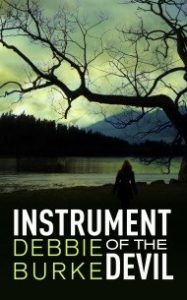


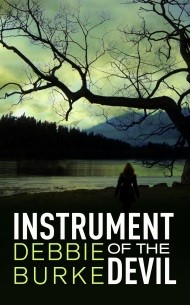
First page critiques work. Shortly after Debbie Burke submitted to TKZ‘s review, her thriller Instrument of the Devil won the Kindle Scout contest and was published.

The Value of Libraries

“A library outranks any other one thing a community can do to benefit its people. It is a never failing spring in the desert” – Andrew Carnegie

My local library is a hive of activity with a bustling cafe attached, a used book sale area, and a busy downstairs where almost every table is occupied by 10am with people working on laptops, reading newspapers, or logging on to the free wifi on the row of public computers available. Upstairs, there is wonderful children’s section with story time and other parent-children activities, and meeting rooms that hold an array of community events and speakers. I remain thankful that my local community and government values a library such as ours because in many other places, the very existence of community libraries is under threat. In the UK for example, nearly 500 libraries have closed since 2010 and many libraries are now being run by volunteers due to budgetary costs and restrictions. The results of this are heartbreaking, especially since, by many accounts library use is actually on the increase (see The Guardian’s report on library closures here).

After seeing posts on Twitter about the rise in volunteer-run libraries in England, I began to think more carefully about what libraries mean to me and my community. They are more than just a place to borrow books or DVDs or CDs – for some it’s a safe, warm, place to read or study, for others it may be a way to find social connection in their lives, and for some people it might be their only way of accessing the internet (which could be crucial in terms of a job search or education). The more I thought about libraries, the more I realized how lucky I was to have such a fantastic one in my community.

Growing up in Australia, our local library was really my only source of research (yes, this was in the dark ages before the internet) and it was a family outing to go there to borrow books or to get material needed for dreaded homework assignments. Now, although I can access much of my book research online, I still find myself drawn to my local library – and I’m frequently seen laden down with books as I struggle back to my car. Our library recently updated their online ebook lending system (the app is called Libby) which makes it easy to borrow ebooks and download them to my Kindle. So for me the library has immediate, work related value, in that it enables me to undertake research without completely draining my bank account:) For my twin boys, the library is still their ‘go to’ place for books and they have discovered many new series and authors simply by making a decision to try something new (no risk as no money was expended!).  For many others, the library provides intangible benefits too – offering a means of attaining social mobility, self-improvement and providing opportunities to reach beyond the limitations of social or economic class.

Still, I wonder in this day and age whether people still value libraries the way I do – so I was heartened to read the American Library Association’s annual report (which you can view here) that indicates that American libraries are still receiving the funding and attention they deserve (though that’s not to say there aren’t still challenges or threats to that!).

So TKZers, I’d love to know what libraries mean to you. Do you still visit your local community library on a regular basis? What do you think is the value of a library today?


What I Wish I’d Known When I Started Writing

by James Scott Bell
@jamesscottbell

Next year will be my 24th as a professional writer.

When my first book hit the shelves nobody used a cell phone (Seinfeld had that big brick handset with the antenna, remember?) O.J. Simpson had been found not guilty and Bill Cosby was still America’s most beloved dad. Microsoft released Windows 95. And a guy named Bezos launched a website that was purportedly going to sell books to consumers right over the internet! Everybody thought he was nuts.

For the seven years previous I’d been studying the craft of screenwriting and fiction, and writing every day. I devoured books on writing and gobbled up each monthly issue of Writer’s Digest. I have several shelves of my beloved writing books (and binders full of WDs), all highlighted and sticky-noted in some form or fashion. Every so often I like to pull one off the shelf to see what I highlighted, and relive some of the excitement of discovering something that worked for me.

The other day took down The Complete Guide to Writing Fiction by Barnaby Conrad, published by Writer’s Digest Books. It’s a collection of articles and interviews from the famous Santa Barbara Writers Conference, which Conrad directed for many years.

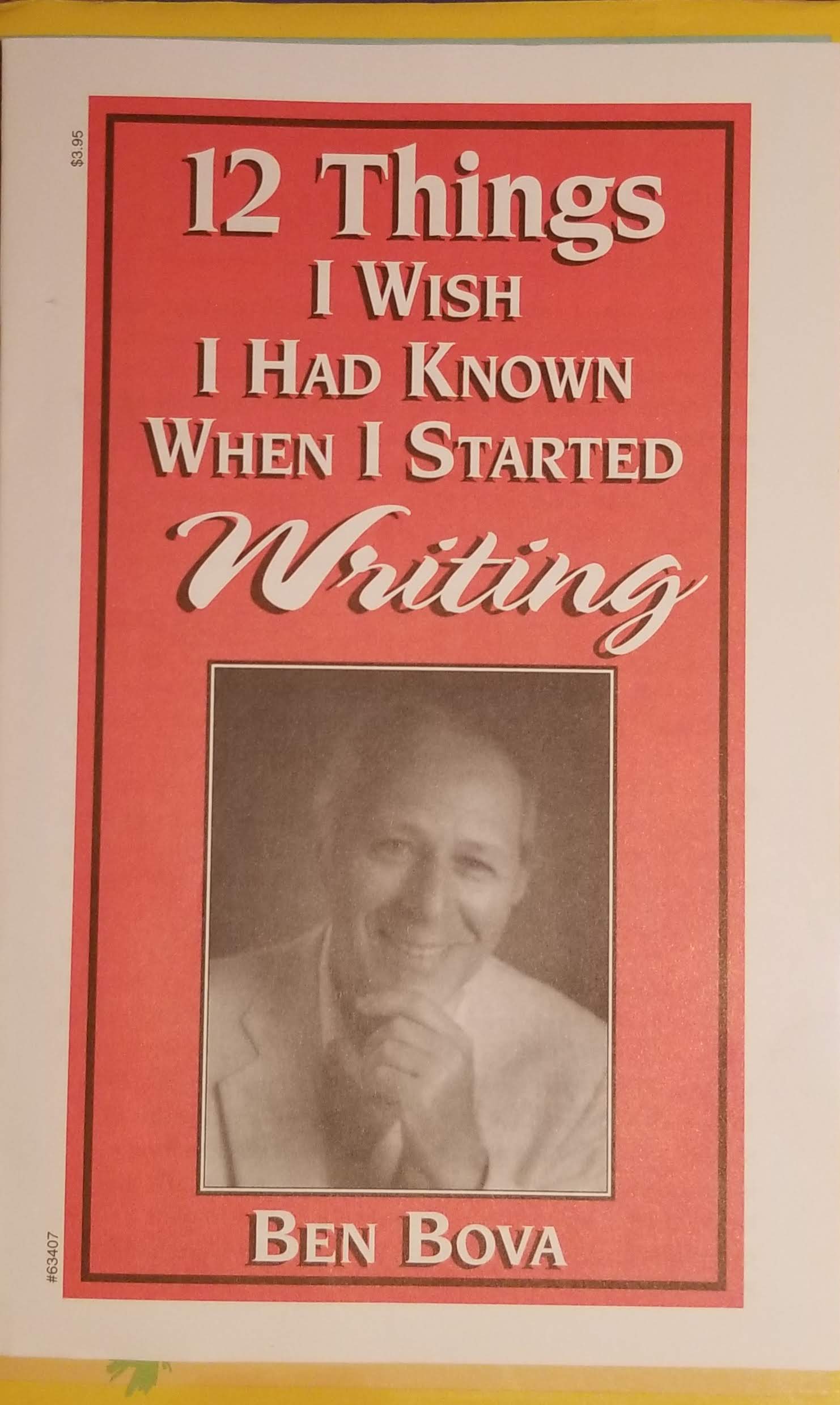
There was something tucked inside the book. It was a pamphlet titled 12 Things I Wish I Had Known When I Started Writing by Ben Bova, the science-fiction writer and editor. I think this came as a freebie with a book ordered from the Writer’s Digest Book Club, of which I was an enthusiastic member. So I had another look at Bova’s lessons and thought I’d reflect on them with you today. The first two are unsurprising:

  1. Write every day.
  2. Read widely.

All serious writing students know this, though I would edit the first one thus: write to a weekly quota. Figure out how many words you can comfortably write in a week, then up that by 10% for your goal.

  1. Write about WHO you know.

Bova stresses the importance of well-rounded characters. Basic, of course, but coming from the sci-fi genre Bova knows it’s a temptation to overemphasize world-building.

  1. Character + Problem = Story.

I would change Problem to Plot, where plot is defined as a life-or-death battle which the character meets by strength of will.

  1. No villains.

This is Bova’s most important tip. The “villain” does not see himself that way. “Every tyrant in history was convinced that he had to do the things he did, for is own good or for the good of the people around him,” Bova writes.

I always counsel writers to know the bad guy’s “closing argument.” If he were on trial, what would he say to defend himself? And mean it?

  1. Start in the middle.

My heart sang. Had Bova anticipated Write Your Novel From the Middle? Ahem. No. He was talking about the opening pages, and he echoes one of my constant refrains: act first, explain later. Bova explains:

[Start] your story in the midst of brisk, exciting action. Start in the middle! Don’t waste time telling us how your protagonist got into the pickle he’s in. Show him struggling to get free. You can always fill in the background details later.

Particularly in a novel, it’s tempting to set the scene, explain the protagonist’s background, describe how she got to where she is. Cut all that out. Or, at least, save it for later. Start in the midst of action. Hook that reader right away or you won’t hook him at all.

  1. The chain of promises.

Don’t present a problem on page one and then solve it. Pile them up. “Each problem you present to the protagonist is a promise to the reader that there will be suspense, excitement, adventure in solving that problem.”

  1. Use all five senses.

Bova rightly notes that writers tend to favor sight and sound. Add touch, taste, and smell.

  1. Point of view.

Bova makes a case for close 3d Person, so you can be intimate with a character in one scene, then cut away to another character, and so on. He does not favor First Person because he finds it too limiting. Hmm. Tell that to Raymond Chandler.

The last three tips come from another world, when hard-copy manuscripts were submitted to agents and editors. Imagine that!

  1. Make your manuscript readable.

“Typed, whether on a typewriter or a computer printer.”

Remember when that was an actual choice?

  1. Study the markets.

“Publishers think in categories. You must too.”

  1. Cover letters.

“And always remember to include the SASE.”

(For you kids out there, SASE stands for “Self-Addressed Stamped Envelope.” Ask your parents what that means.)

All this got me thinking: what is something I wish I’d known when I started out? I’ll give you a twofer:

  1. Scene Structure.

I wrote four or five screenplays that didn’t generate any interest. What finally broke me through was an epiphany while reading Jack Bickham’s Writing Novels That Sell. Specifically, his chapter on scene and sequel. More specifically, understanding the scene beats of Goal, Conflict, Disaster. No more weak or meandering scenes after that. The next script I wrote got me an agent.

  1. The Mind is as Important as the Keyboard

The initial thrill of being published eventually ran into a new set of challenges familiar to all writers who make it inside the gates of the Forbidden City. Stuff like comparison, envy, self-doubt, bad reviews. All of which interfere with the joy of writing. Faith and family were in place for me, but I also studied specific topics like gratitude, contentment, focus, and discipline. So important are these that I wrote a book to help writers prepare for and deal with the mental game of writing.

So, TKZers, if you’ve been around the block, what is something you wish you had known when you were starting out?

And if you are just starting out, what is something you want to know? Ask away, and one of our crack team of bloggers will take a flyer at an answer—for I am in travel mode today and my check-in may be sketchy.


Series, -Ogy, or Stand-Alone?

By John Gilstrap

I am often asked about the business and creative considerations of writing a thriller series as opposed to writing stand-alone thrillers.  The truthful answer is a shrug and a heartfelt “I don’t know.” But having written both over the course of my career, I guess I have some thoughts to share.

An -ogy is not a series.

A trilogy or a quintilogy is not a series.  It is a single story broken up into parts.  As I understand it, Tolkien’s Lord of the Rings trilogy was originally a single manuscript.  There being no market for a 900,000-word book, however, he broke the one story into multiple parts.  I don’t know if that story is true, but I like it because it proves my point.  In an -ogy, there’s no anticipation from the reader for a completed story at the end of any volume but the last one.

The Harry Potter saga is another example–one with which I’m more familiar because I actually read the books.  Not to be confused with Hobbitty stories, which I have not.  Book One of the septilogy (is that a word?) is dedicated mostly to establishing the wizarding world, along with establishing relationships between the kids.  The whole business of the Sorcerer’s Stone is more of a MacGuffin.  At the end of that volume, while there is a sense of continuing peril, Harry’s immediate world is stable.  Looking back on those books, I believe that Rowling wrote Sorcerer’s Stone in a way that it could have lived on as a stand-alone if the market had not embraced Harry and Hogwarts.

Beginning with Book Two, and continuing all the way through to the end, the Potter story was a continuous one.  Even though Harry resolved the immediate crisis of each book, the last pages always revealed more impending doom.  There was no real resolution.

A series is more episodic.

My Jonathan Grave thriller series is not a continuing story, but is rather a collection of stand-alone stories that involve recurring main characters.  Jonathan Grave’s character arc over the course of eleven books now is very long and slow, while the arcs of the characters he interacts with are completely developed within each book.  There are Easter eggs for readers who have read all the books in order, but I am careful to make each episode as fulfilling for a reader who picks up  Book Ten as their first exposure to the series as it is for a reader who’s been with me from the beginning.

Writers like the always-fabulous Donna Andrews write series that are driven as much by place as by characters.  The people in her fictional town of Caerphilly, Virginia, are a hoot, even though an extraordinary number of people are murdered there.

Jeffery Deaver’s Lincoln Rhyme solves a new crime by the end of every book.  While Rhyme’s medical progress as a quadriplegic is continually evolving from book to book, as is his relationship with Amelia, a new reader is well-grounded in any story, without benefit of having read the previous ones.

A stand-alone, well, stands alone.

When I finished Nathan’s Run, the story was over.  There was no place I could feasibly have taken Nathan or the other characters to tell a new story.  That was the case with each of the following three novels and, of course, with my nonfiction book.  I think the primary characteristic of a stand-alone is that “The End” means the end.  The character and story arcs have all been driven to ground.

A series takes planning.

When I was writing No Mercy, the first book in the Grave series, I knew in my heart that I had finally landed on a character who could support a series.  What I didn’t know was whether or not a publisher would buy it, and if they did, whether they’d support the idea of developing the one story into many.  Still, I made a conscious effort to plant as much fodder as I could for potential use in future stories.  For example:

  1. Jonathan is a former Delta Force operator, leaving the potential for stories dealing with his days in the Unit.
  2. His hostage rescue activities are a covert part of a legitimate private investigation firm that does work for some of the largest corporate names in the world.  This sets up potential stories set in the world of more common private investigators.
  3. Jonathan is the primary benefactor for Resurrection House, a school for the children of incarcerated parents.  When every student has parents with lots of enemies, there’s lots of potential for future stories.
  4. His home, Fisherman’s Cove, Virginia, is the town where he grew up.  This puts him in the midst of people who already know the darkest secrets of his childhood and accept him for who he is.  Or they don’t.  This sets up the potential for small  town conflicts.

There are many more such seeds, but there’s no need to highlight them all.  The point is that unlike a stand-alone, a series needs to be engineered not just for the current book, but for future books as well.

What do y’all think?  Do these resonate with you?  What have I forgotten?

And finally, tomorrow is Thanksgiving here in the United States.  For those who celebrate, I wish you a wonderful time with whatever your holiday traditions may be.  For those of you who read this from somewhere other than America, I wish you a great day with lots of high-calorie food and televised sports!