First Page Critique: Neander: A Time Travel Adventure

GoDaddy stock photo

Greetings, fellow readers! It’s time for a peek at some work from one of our brave authors. Please read my comments, then add your own.

Neander: A Time Travel Adventure

I didn’t like caves.

Fears of getting stuck had often swamped my dreams. To find myself now working in one—and fighting off the panic sweats—was certainly ironic. But that’s where the best archeological evidence tended to be. I’d learned to live with it.

After rechecking the photo equipment and my to-do list again, I headed back to the entrance. Time to breathe. And call Carolyn.

I rested against the rim of Meredith’s Cave, pulled out my phone, and took in the sight of the whole Mediterranean spread out in front of me. The late morning sun danced and sparkled on the surface of the sea that surrounded Gibraltar. Gulls squawked and wheeled overhead hoping for a handout.

I spotted the whale-watching boat in the distance and pressed Carolyn’s face icon on the phone. She picked up on the second ring.

“Hey, future Dad,” she said.

“Is it great out there?” I asked, hoping—wishing—she wasn’t too upset about my sending her off on another excursion by herself. This was supposed to be a fun, together-trip to southern Spain. She was nearing the seven-month mark of her pregnancy, and this was her last opportunity to travel for a while.

“It’s amazing. We’ve already seen two pilot whales and a pod of dolphins. And Africa’s right there. I can almost touch it!”

Good. She sounded happy.

“How’s it going in the cave?” she asked.

“Fine,” I lied. “They’ve worked down another centimeter.”

The reality was, the tension was thick. And that was apart from the claustrophobia.

My assignment was to document the excavation’s progress for Science Alive, but my pushing to get it right with the lighting and the camera angles was annoying everyone. I knew that. But what were a few more minutes of attention to detail with a Neanderthal fossil that had been in the ground for tens of thousands of years?

I reached into my pants pocket and fingered the small, velvet ring box. I would propose to my beautifully pregnant Carolyn at dinner tonight. A thought that made me both nervous and excited.

I wanted this family so much.

“You’re not being too anal with them, are you?” she asked.

“Who me?” She was one of the few who understood my need for order, for perfection.

“Oh, there’s another whale! Gotta go.” The phone beeped and the call was gone.

Till tonight, I mouthed.

_____________________

Here we go:

I didn’t like caves.

Does this excerpt make you feel uncomfortable right off the bat? The opening line sets the tone: Our narrator is facing both mental and physical danger.

Good job, Brave Author. First lines are important.

A  possible red flag I can see is the use of past tense, which is important because we already know this will be a “time travel” story. It’s apparent that the narrator survives—at least in some place and time—to tell their story about the cave. You’ve missed an opportunity to create immediate suspense in the mind of the reader.

Fears of getting stuck had often swamped my dreams. To find myself now working in one—and fighting off the panic sweats—was certainly ironic. But that’s where the best archeological evidence tended to be. I’d learned to live with it.

This is a very calm, cool, expository explanation of the narrator’s intense reaction to a situation that certainly feels dangerous and untenable. So let’s have some true immediacy. Instead, let us feel his (I assume) hand shaking as he rechecks the photographic equipment, and his short, panicked breath, as he quickly heads outside to collapse against the entrance. Then you can note the irony of the situation, and have him be grateful for the calm of the sea.

“How’s it going in the cave?” she asked.

“Fine,” I lied. “They’ve worked down another centimeter.”

The reality was, the tension was thick. And that was apart from the claustrophobia.

I spotted the whale-watching boat in the distance and pressed Carolyn’s face icon on the phone. She picked up on the second ring.

“Hey, future Dad,” she said.

Should Carolyn’s whale watching boat be conveniently in the near distance? It feels coincidental. Does Carolyn have a satellite phone? Maybe I don’t know enough about these things, but such an easy cell connection seems unlikely. And “Hey, future Dad.” is confusing, as we 1) don’t yet know she’s pregnant, and 2) the time travel idea intrudes but isn’t clear.

“Is it great out there?” I asked, hoping—wishing—she wasn’t too upset about my sending her off on another excursion by herself. This was supposed to be a fun, together-trip to southern Spain. She was nearing the seven-month mark of her pregnancy, and this was her last opportunity to travel for a while.

“It’s amazing. We’ve already seen two pilot whales and a pod of dolphins. And Africa’s right there. I can almost touch it!” 

Good. She sounded happy.

This section is a well-timed mix of exposition and current action. We get a good view of Carolyn’s compassionate personality, and her state of pregnancy. The narrator sounds slightly less stiff.

“How’s it going in the cave?” she asked.

“Fine,” I lied. “They’ve worked down another centimeter.

The reality was, the tension was thick. And that was apart from the claustrophobia. 

This works. It would be a good place to add a detail about who else is down there contributing to the claustrophobic atmosphere. And be more specific about the narrator’s physical reaction to the claustrophobia. Let him own it, and continue on about how his need for order conflicts with the physical situation.

My assignment was to document the excavation’s progress for Science Alive, but my pushing to get it right with the lighting and the camera angles was annoying everyone. I knew that. But what were a few more minutes of attention to detail with a Neanderthal fossil that had been in the ground for tens of thousands of years?

See above. Let the emphasis here be on the assignment and the surprising discovery.

I reached into my pants pocket and fingered the small, velvet ring box. I would propose to my beautifully pregnant Carolyn at dinner tonight. A thought that made me both nervous and excited. 

I wanted this family so much.

“You’re not being too anal with them, are you?” she asked.

“Who me?” She was one of the few who understood my need for order, for perfection.

“Oh, there’s another whale! Gotta go.” The phone beeped and the call was gone.

Till tonight, I mouthed.

The proposal makes a really nice contrast to the tension and claustrophobia. Make sure to highlight the change in the narrator’s mood and feelings when he thinks about the proposal.

The “Till tonight,” I mouthed, is extremely awkward. Just have him say it to the empty phone line. The mouthing mention comes off as unnecessarily ominous.

Think about some alternate titles. Perhaps some TKZers will have ideas. This one has a pulp feel that the story doesn’t reflect.

Overall the action of this selection is fine. Always strive to make the story more visceral and immediate. You’ll connect better with your readers.

TKZers! Please share your thoughts with us. And Happy Almost Thanksgiving!


Happy 100th Birthday

by Debbie Burke

@burke_writer

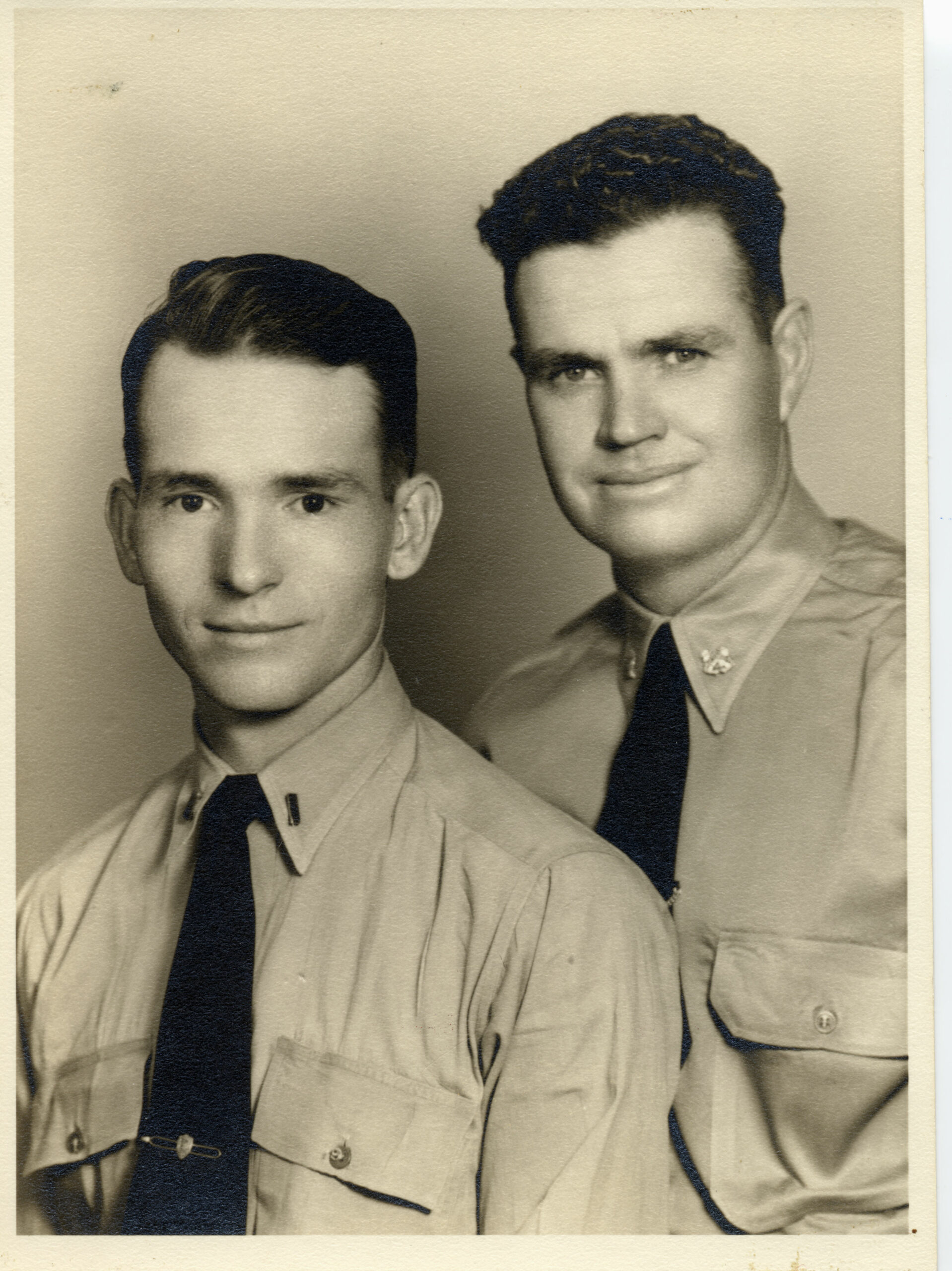
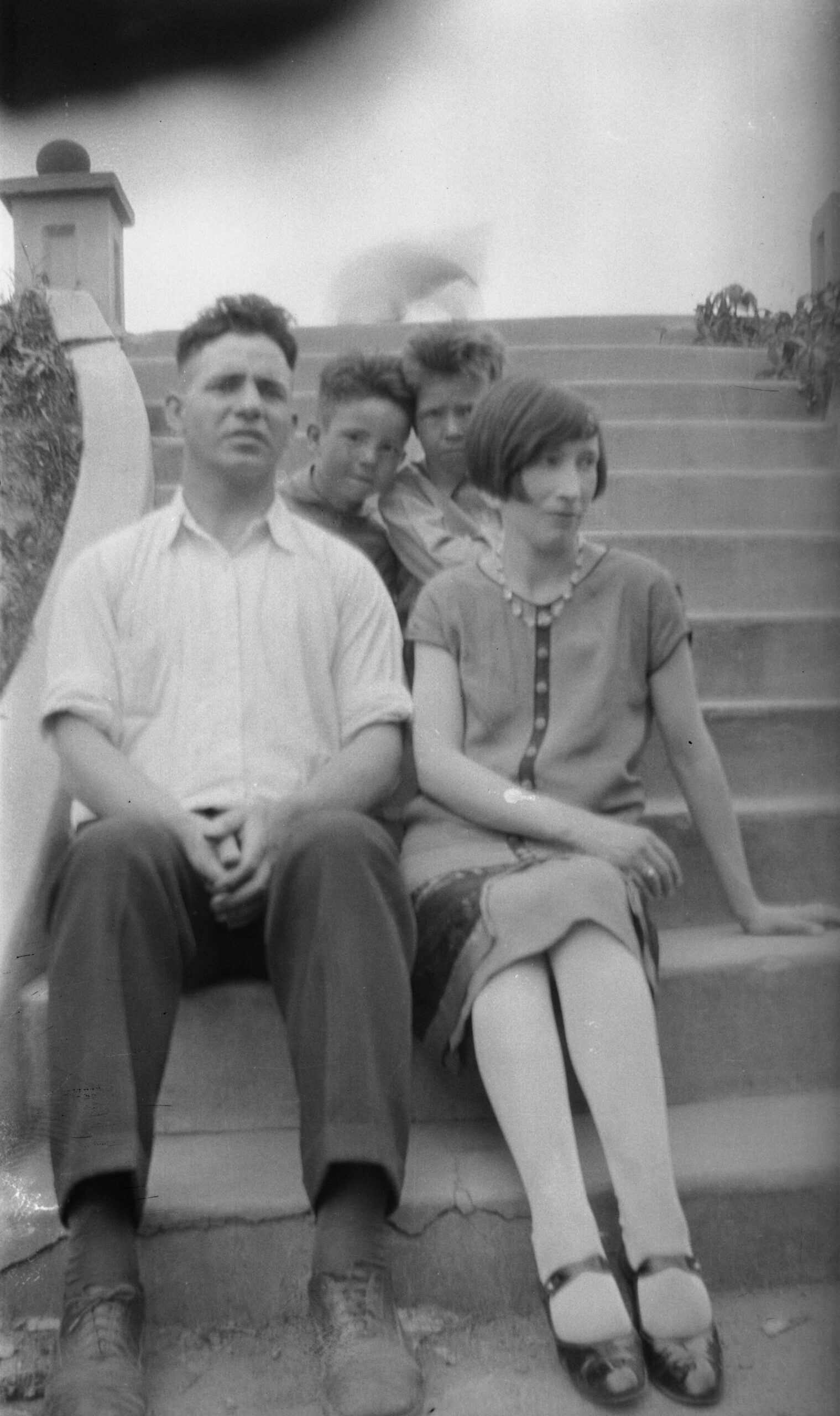
One hundred years ago today, my father-in-law, Arthur Burke, was born.

I’ve been kicking around the idea of writing historical fiction. Arthur’s life contains a wealth of dramatic raw material on which a novel could be based. My imagination itches to step back in time and write about that era.

Grinding poverty defined Arthur’s childhood. His father, Daniel, was a violent Irish drunkard. Periodically, he would abscond with Arthur and his brother, then leave them in Catholic orphanages in various states. Their mother, Naomi, had to track down and recover her two young sons.

Daniel Burke with his sons and second wife

Naomi

Naomi’s death in 1978 opened up a mystery. Among her papers, my husband and I found three different birth certificates in three different names with three different birth dates. The woman we’d known as “Naomi” had hidden lives.


Today, identities are indelibly recorded in databases. Not so in the late 1800s and early 1900s, when adopting a new name was common practice for people who wanted to leave problems behind. Reinventing one’s identity was as simple as providing a handwritten statement signed by a relative or friend. One of Naomi’s birth certificates was a sworn statement by an uncle, dated years after her supposed birth date.

On another certificate, her name was Ida Mae Dalton, listing her father as Frank Dalton, a deputy marshal related to the notorious Dalton Gang. In a sad reflection of that era, Ida Mae’s mother was not even given the respect of a name on that document but was identified only as “an Indian squaw or breed thereof.”

Who was Naomi really? Did she adopt aliases to hide from the abusive Daniel? Questions linger that can never be answered. 

Naomi worked as a waitress to support the family. They were already poor enough that they hardly noticed the Great Depression. For heat, Arthur scavenged bits of coal that fell from train cars. He told about being so hungry, he ate grass.

In 1933, his life took a turn for the better when Naomi married Leonard Bloodsworth, a Navy chief who was the Pacific Fleet heavyweight boxing champion. Daniel no longer represented a threat since Len could knock the brutal father into next week.

But growing up in San Pedro, California during the Depression was still difficult.

Stepfather Len became Arthur’s best role model and champion. He would sneak the hungry boy onto his ship for chow. Thanks to Len, Arthur saw a doctor and dentist for the first time in his life.

The gangly, red-headed, freckle-faced Arthur had a brush with Hollywood when he appeared in the pilot film for a short comedy. He played a character named Alfalfa in the Little Rascals and was paid 50 cents, a fortune to a poor Bowery kid. What a different direction his life might have taken if another boy, Carl Switzer, hadn’t wound up playing the memorable, enduring role.

~~~

In high school, Arthur showed extraordinary inventiveness when he built a radar set for a science project. The FBI confiscated the set because the U.S. would soon be involved in World War II and wanted to keep advanced experimental technology a secret from enemy powers.

Despite Arthur’s genius, college seemed an unattainable dream because of poverty.

Then came a stroke of luck.

Appointments to prestigious military academies like West Point and Annapolis were granted by members of Congress, usually as political favors to wealthy constituents. However, one honest politician opened the opportunity to competitive exam, allowing any young man in his district to apply.  

On a lark, Arthur accompanied a friend to take the exam for the Naval Academy. His friend was accepted and Arthur made the cut as an alternate. When his buddy had to withdraw, Arthur took his slot.

After a cross-country train trip, he reported for duty in Annapolis, Maryland with cardboard liners as soles for his worn-out shoes. His classmates, mostly sons of wealthy, influential families, looked down their patrician noses at the lanky, malnourished kid from the Bowery.

Nevertheless, his scientific brilliance earned him a place in the top 10% of his class.

The attack on Pearl Harbor on December 7, 1941 forced the U.S. into World War II and, only days afterward, led to early graduation for Arthur’s Class of 1942.

Arthur Burke and stepfather Leonard Bloodsworth

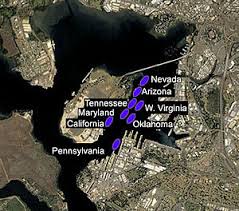
During that devastating attack, his stepfather Len was serving aboard the USS Tennessee. Eight battleships, including the Tennessee, were moored together in a group on Battleship Row in Pearl Harbor. Japanese bombs and torpedoes destroyed or disabled the most powerful ships in the U.S. fleet.

Battleship Row

As injured shipmates were pulled from fires below decks, Len threw sailors over the side of the ship into the water to save them from the onboard inferno. When the nearby Arizona exploded, searing powder and shrapnel horribly burned Len’s back. He spent a year in a hospital before returning to duty to finish out the war.

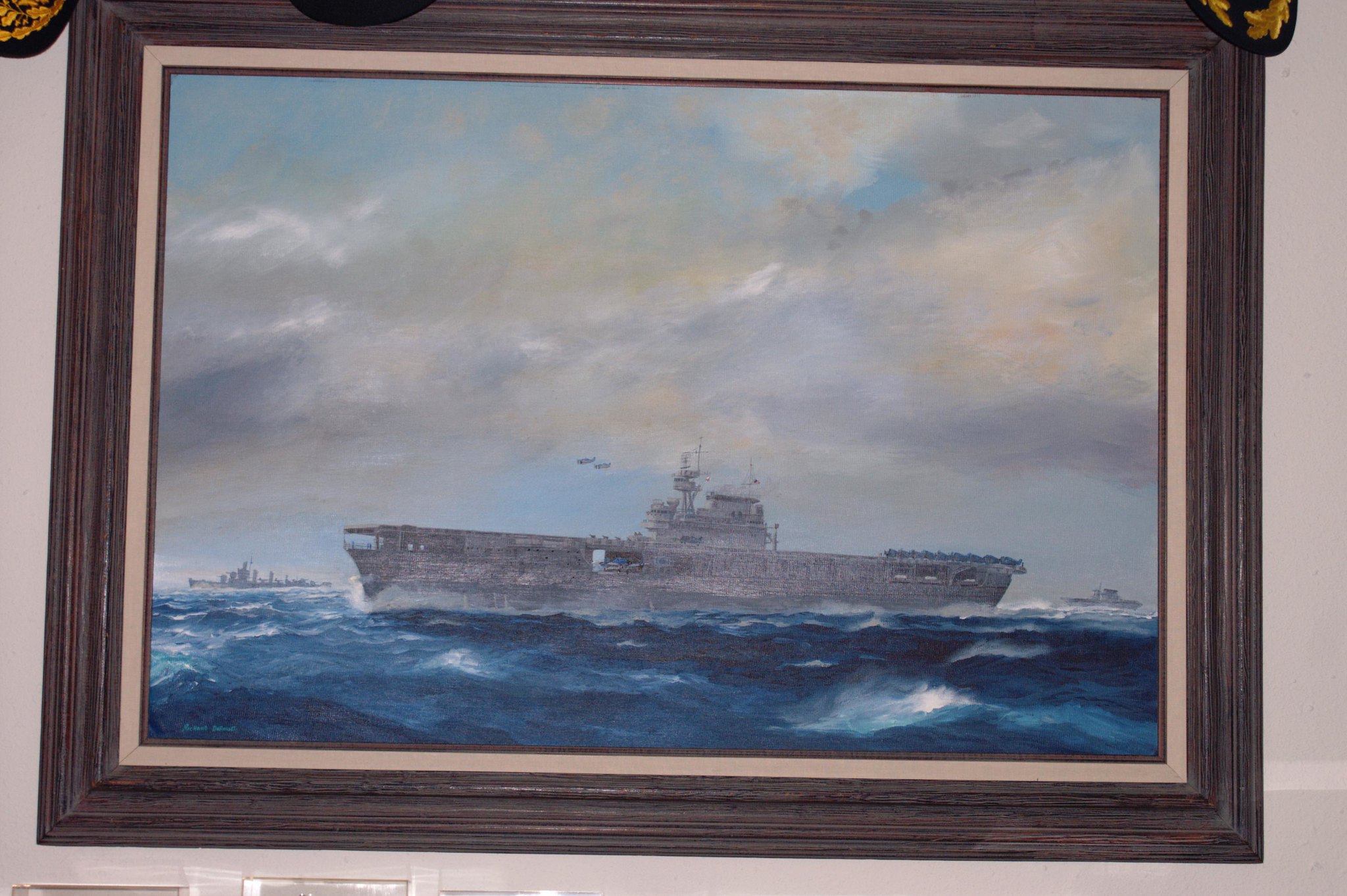
The Pearl Harbor attack left the U.S. badly outnumbered and outgunned. A battered handful of surviving ships, including the aircraft carrier USS Enterprise CV-6, represented the only defense against the advancing Japanese fleet and probable invasion of the U.S. west coast.

Arthur served on the Enterprise which became the most decorated ship of World War II.

Painting of USS Enterprise by Richard DeRosset

Painting of USS Enterprise by Richard DeRosset

He described the feeling of being totally alone, desperate, and vulnerable in the vast Pacific Ocean while being hunted by the enemy. Before radar and other detection systems were commonplace, ships operated under strict blackout rules because the tiniest light could reveal the ship’s position to a patrolling submarine or plane.

One night while on watch, Arthur had a run-in with an admiral who decided to fire up his pipe on the flag bridge, a place of high visibility on the carrier. Arthur was a lowly lieutenant junior grade but he took his responsibility seriously. He told the admiral to put out the light because it was endangering the ship. The admiral refused. Arthur stood his ground and ordered the superior officer to his quarters. Fortunately the enemy didn’t spot the light.

The petty admiral never forgot and the episode dogged the rest of Arthur’s naval career, despite his stellar scientific achievements.

Arthur survived the pivotal battles of Midway and Coral Sea. During one attack, a bomb exploded in his quarters. Because he had traded duty stations with another officer, he was not in his bunk at that time and escaped death.

But, in the confusion, he was mistakenly listed as killed in action and his footlocker was shipped home. Naomi, who supported the war effort as an air raid warden, endured many grief-stricken months before she learned her son was still alive.

Arthur rose quickly through the ranks because of his scientific ability. He developed instrumental new uses for radar that played a major role in Allied victory.

Later, he returned to Annapolis to teach—not a bad achievement for a hungry kid who arrived on the Naval Academy campus with cardboard soles in his shoes.

Will Arthur’s experiences become my first historical novel? Time will tell. 

Meanwhile, Happy 100th Birthday, Pop!

~~~

TKZers: What books based on real-life experiences had a big impact on you?

Have family stories inspired your own writing?

Are You An Audiobook Fan?

This Thanksgiving week I’m already starting to worry about Christmas presents for my family – though I’m thankful that for both my sons, books are always an awesome idea – but what about someone who wants to read more but just can’t seem to find the time? (yes, hubby, I’m talking about you!)

After chatting with members of my book group, I discovered that many, if not all, prefer audiobooks these days, as it gives them much more flexibility and allows them to fit more reading time into their busy schedules. Now, apart from listening to many an audiobook in the car on long drives, I have to admit I’ve never really been a huge audiobook fan. Although I’ve enjoyed listening to them, my preferences has always been for paper or an ebook. Once I started mulling over the audiobook gift idea, however, I soon realized just how popular they are these days.

Consumer demand for audiobooks has been steadily rising over the last few years, with estimates indicating that over half of all Americans listen to audiobooks (see Publishers Weekly report here). Not surprisingly, mystery, thriller and suspense titles are the most popular genres.  Part of the appeal to listening rather than reading a book is that audiobooks apparently stimulate our “echoic memory” or the process by which sound information is stored while we wait for the next sounds to make sense of the whole (click here for the link to the article in The Guardian)… Who knew?!  Anyway, the upshot is that I’ve obviously been a luddite for too long and I need to open my mind to the benefits of audiobooks – especially as a gift that I can also enjoy:))

So TKZers, I’d love to get your input on the pros and cons of audiobook options. First of all, are you an audiobook fan? If so, do you use Audible or another service? What would you recommend? One thing I do know is that it’s all about the voice/narration – so if you love audiobooks for mysteries and thrillers, who provides the best narration? What audiobooks are on the top of your must read/listen list?

Thanking you all ahead of time for your guidance and recommendations…

Happy Thanksgiving week – and if you live anywhere like I do, travel safe in the snow!


What One Thing is Your Novel About?

by James Scott Bell
@jamesscottbell

In my second year of law school I was part of the Hale Moot Court Honors board. Moot court is a rite of passage for most law students. It’s a mock appellate case with rounds of oral argument before panels of law professors, local attorneys, and perhaps a judge or two. At USC, at least when I was there, the final round was in front of two federal appellate judges and one Justice of the United States Supreme Court.

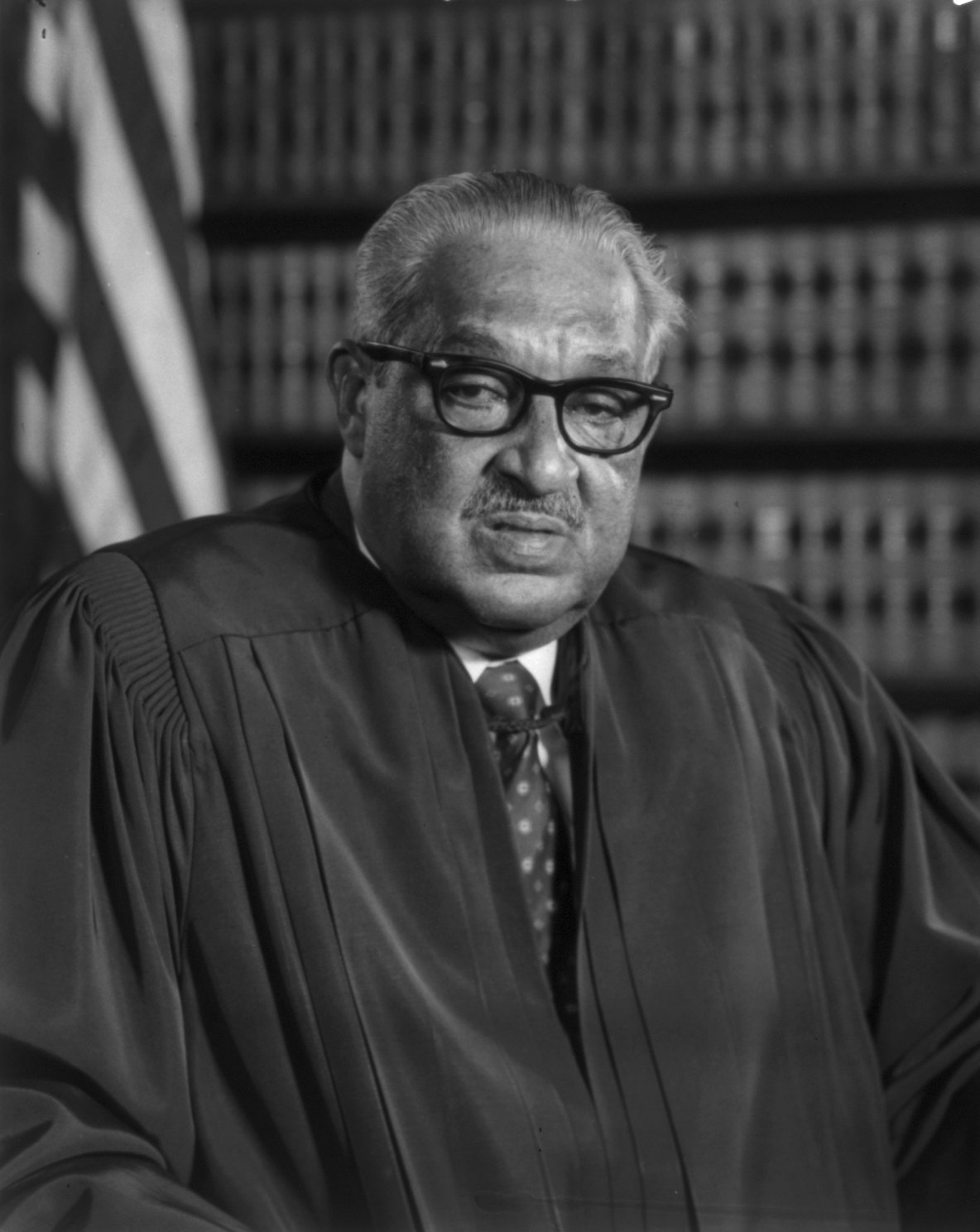
This particular year our Supreme Court Justice was Thurgood Marshall.

Justice Thurgood Marshall

Marshall was, of course, the first African American appointed to the high court. He was also famous for arguing, and winning, the landmark case of Brown v. Board of Education (1954), which overturned racial segregation in public schools. Being an enthusiastic student of trial lawyers and oral advocacy, I knew that the other side of Brown was argued by one of the most successful Supreme Court lawyers of all time, John W. Davis.

So when I asked Justice Marshall what it was like to go up against Davis, he seemed pleased that I knew about him, and said he was a formidable foe.

Oh, wait. I forgot to mention that I made sure I was selected to pick up Justice Marshall and his wife, Cecilia, at LAX and drive them across town to the campus.

That’s because I wanted to ask Thurgood Marshall a specific question.

So there I was in my green Ford Maverick, sitting as close to a Supreme Court Justice as I will ever get, answering his queries about my law studies, the moot court competition, and life in Los Angeles.

At an opportune moment I said, “Justice Marshall, you’ve delivered and heard so many arguments over the years. What would you say are the characteristics of a great oral argument?”

Without hesitation he said, “The best oral arguments have one main point, and only one.”

Which surprised me. I thought he’d say something about voice and style and performance. Instead, he explained that winning arguments have a precise legal point around which everything else revolves. The advocate’s job is to find that point and apply all his powers of persuasion toward supporting it.

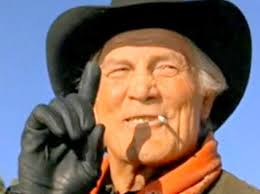
Years later, I heard a similar bit of wisdom from the philosopher Curly. Remember City Slickers? There’s a scene where Curly (Jack Palance) is riding next to Mitch (Billy Crystal) and says, “You know what the secret of life is?”

“No,” Mitch says. “What?

“This.” Curly raises his index finger.

“Your finger?”

“One thing. Just one thing.”

“That’s great. But what’s the one thing?”

“That’s what you gotta figure out.”

Okay, let’s bring all this to bear on writing. In my Story Grinder workshops I ask the students to give me one word that describes what their story is about. In my most recent workshop I got answers such as redemption, forgiveness, justice, revenge.

One student said, “Amnesia.” Which was true on a surface level. I asked him to dig deeper. “What one word describes the heart of your novel?” (He should have said, “I can’t remember,” but we won’t go there.) He thought about it and said, “Identity.”

That was it! He had pinpointed the blood pumping through the veins of his plot. Which is the point of the exercise. When find the right word, you’ll know it. You’ll feel it. And you can use that feeling every time you sit down to work on your story.

Think about your current WIP:

  • What is your main character longing for? Why?
  • What is your main character fighting for? Why? (I mean really…why?)
  • What will your main character know at the end that he doesn’t know at the beginning?
  • How will what he learns change him?
  • Imagine your character a year after the story ends, and another character asks, “Why on earth did you have to go through all that?” How would your character answer?

NOW…give us the one word that describes the heart of your WIP. Where did that come from? Is this a one-off, or do you see this word as a common thread in your other work?

***

NOTE: I have a FREE short story available today for your Kindle — My Father’s Birthday. It’s a story on the literary side and I hope you enjoy it.

Have a Happy Thanksgiving!

Reader Friday: Favorite Holiday Recipe

Photo credit: https://littleshop.fandom.com/wiki/

With the holidays in full swing, many of us have recipes somersaulting through our mind, along with a mile-long to-do list.

In the Coletta household, the first whiff of the holiday season triggers my family to drool in anticipation.

Not-so-subtle chants for almond biscotti waft through our house, similar to Audrey in Little Shop of Horrors. “Feed. Me!”

I shared this recipe in the comments last year, but some of you might’ve missed it. If you’re interested in adding a tasty treat to your holiday table, the recipe is as follows…

Ingredients

3/4 C (180 ml) Whole Almonds

3 Large Eggs

1 t. Vanilla Extract

1/2 t. Almond Extract (optional)

2 C. Flour

3/4 C. Sugar

1 t. Baking Powder

1/4 t. Salt

Directions

Preheat oven to 350 degrees.

Spread out almonds on a baking tray and bake 8-10 minutes until light brown and fragrant. Let cool a few minutes, then chop coarsely.

Reduce over to 300 degrees and line baking sheet with parchment (wax) paper.

Whisk eggs and extracts in a separate bowl, then whisk in the dry ingredients. Lastly, fold in your almond pieces and stir till you get a doughy consistency.

Flour your cutting board (or whatever surface works for you) and divide the dough into 7″ logs that are about 3″-4″ wide. Transfer logs onto baking sheet and bake for approximately 35 minutes or until firm to the touch (log will spread during baking).

Remove and let cool on a wire rack for 10-15 minutes. Transfer to cutting board and slice 1/4″-1/2″ pieces on the diagonal. Place slices of biscotti on the baking sheet and bake an additional 10-15 minutes on each side until golden. Keep in mind, the longer you bake the crunchier they’ll be, so the time depends on your preference. My family likes them somewhere between soft and crunchy.

To Triple the Recipe (which I do; makes about 60 biscotti)

2 1/4 C. Almonds

9 Eggs

4 1/2 t. Vanilla

6 C. Flour

2 1/4 C. Sugar

3 t. Baking Powder

3/4 Salt

Be sure to make more logs so they cook all the way through. Then proceed as above.

A word of a caution: once you make almond biscotti a la Coletta ;-), you may have to do it every year.

Care to share your favorite holiday recipe?

Whose Story Is it? First Page Critique: Sunny Days Ahead

Jordan Dane
@JordanDane

Wikimedia Commons

I feel for Charlie in this story opener when he makes a phone call that risked his pride and ego. Join me in reading this 400 word opening and providing constructive criticism in your comments. I’ll have my comments below.

***

Charlie examined the slip of paper and wondered if he had been set up. It could have been some random set of digits she pulled out of her head? That shit happened once before and it ended up being the number for Dial A Prayer.

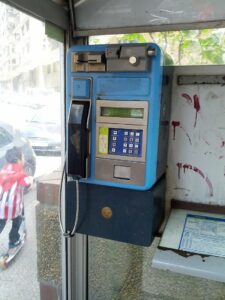
Charlie fed the payphone, and the muscles in his neck tightened as he dialed. He recalled the cute turned-up nose, dimples, and full pouty lips of the girl at the concert. He struggled to believe he’d worked up enough nerve to ask for her number and was suspicious of the ease with which she gave it to him.

Finally, the first ring sounded. He waited for someone to pick up, but took a breath when he realized no one answers on the first ring.

The second came, and his stomach rumbled.

As the third arrived, hope began to fade.

After the fourth, he relaxed, thinking either she wasn’t at home, or his suspicions were true. Then, a click, and there came the smooth, soft, voice of a sleepy angel.

“Hello.”

“Hi, this is the guy who sat behind you at the concert. I hope you remember me. Anyway, I only have a couple of minutes to impress you. So, here goes. I think you may well be the prettiest girl I’ve ever seen in my life. I got my own place. I like every kind of music there is except opera. Dogs love me, and oh, I don’t remember if I mentioned this, but I think you are, without a doubt, the prettiest girl I’ve ever seen. Okay, how am I doing so far?” It felt like a year-long silence as he waited for her response.

“Well, Dude, you are most definitely full of shit. And that’s okay. On good days so am I. Of course, I remember you. And I’ve been hoping you’d call.”

“No shit, really. Why? I mean, wow. That’s great.”

Sonny, paused. I felt your eyes on me in the concert and when I turned around everyone in the audience was scoping out what was happing on the stage. But you were looking straight at me with the sweatiest smile. That’s what made me remember you.

“And dude, If I’m the prettiest girl you’ve ever seen, you need to work on your social life.”

“Yeah, that’s sort of why I’m calling. Oh, and I’m Charlie Anderson. What’s your name?”

“It’s Sonny, Sonny Makenzie.”

FEEDBACK

All the typos were obstacles to me truly enjoying this anonymous submission. Even the last line and name of a main character is misspelled. More misspellings: happing & sweatiest. Editing 400 words for clean copy is the least an author should do to make it harder for an editor or agent from rejecting the story right away. Enough said. Let’s get to the substance.

Overall Impression – I liked the first line where Charlie hints of a set up. That got my attention. The tension was quickly diffused by the revelation that Charlie is calling a girl, so I didn’t mind that this wasn’t about a crime. I thought Charlie was charming and I could relate to the risk he took.

General Questions – Charlie is using a payphone? In a technical age, why doesn’t he have a cell? If this is a retro story line, that should be tagged at the beginning to ground the reader in another decade. Plus, is ‘Dial A Prayer’ still in existence? I queried on the Internet and only found a reference to a 2015 movie. Charlie mentions that a girl had slipped him a ‘Dial A Prayer’ number, but wouldn’t that have to be an 800# since that’s a national service? If a girl slipped him a phone number that starts with 800, that should’ve been a clue. These details kept me from getting fully engaged, beyond Charlie’s story.

Setting – Where is the setting? What is Charlie doing as he makes a call from an old payphone? World building is important. Did he slip away from his apartment to make a call from a public phone? What city or town? What can be shared about Charlie? This feels like a stripped down first draft without depth. The bones might be here, but it needs more.

To help an author realize what layers are missing, I like to ask open ended questions to trigger ideas from the author. Questions like: Where is Charlie? Can the weather add tension or mystery to the scene? Does Charlie have money? Does Sonny? Can their clothes give insight into their lives? What other open ended questions would you ask, TKZers?

Add More Tension & Build Up – The long dialogue line where Charlie tries to charm Sonny with “Hi, this is the guy who…” is long and the reader might lose interest or the build up could be better. I would suggest the author break up Charlie’s lines with how he reacts as the tension builds. When he hears nothing on the other end of the line, he keeps talking. We’ve all gone through phone calls like this. Make the reader feel his mounting doubts and the risk he finally takes to spill his guts.

Rewrite Example:

“Hi, this is the guy who sat behind you at the concert. I hope you remember me.”

The girl left him hanging and didn’t bail him out. Dead silence. Charlie decided to keep talking and go for it. He had to bring his A-game, whatever that is.

“Anyway, I only have a couple of minutes to impress you. So, here goes.” He swallowed and took a deep breath.

“I think you may well be the prettiest girl I’ve ever seen in my life.” What a tool. You sound lame, Charlie. Give her your best stuff. Go for it.

He pictured her mesmerizing blue eyes staring at him and how lights from the stage last night had played on her blond hair. Don’t sound like a stalker, asshole.

“I got my own place. I like every kind of music there is except opera. Dogs love me, and oh, I don’t remember if I mentioned this, but I think you are, without a doubt, the prettiest girl I’ve ever seen. Okay, how am I doing so far?”

It felt like a year-long silence as he waited for her response.

Point of View Shift – Before this scene ends, Sonny’s Point of View (POV) interrupts Charlie’s moment. I found this jarring and editors and agents would see this as head hopping. Sonny hints that she might have an ulterior motive to giving her number to Charlie. As a general rule of thumb, I write each scene using one POV. I tend to pick the character with the most to lose or the most emotion. To revise this intro, I like Charlie’s vulnerability for the start, but then create a scene break and shift to Sonny’s POV to draw the reader into her mystery. But when you jumble both together, you lose the impact for both.

First Person Shifts to Sonny – Another craft issue is that when the POV shifts to Sonny, the tense changed to first person. A whole book of this will confuse the reader, especially if, within scenes, Sonny starts speaking in first person in the middle of Charlie’s third person.

HERE is the POV shift to SonnySonny, paused. I felt your eyes on me in the concert and when I turned around everyone in the audience was scoping out what was happing on the stage. But you were looking straight at me with the sweatiest smile. That’s what made me remember you.

As I’ve suggested, the author might consider staying with Charlie’s third person POV as the intro, because he is relatable and vulnerable and there’s a mystery for readers to get into. End his first scene, then pick up Sonny on the other end of the line. What is she doing? What has Charlie interrupted? I often have fun with a simple outsider person calling my protagonist and they talk as if it’s a normal call, but I clue the reader in on what my protag is doing – like killing someone, or cleaning up blood.

Title – ‘Sunny Days Ahead’ needs work as a title. There’s nothing intriguing about it and no mystery.

SUMMARY – I look forward to seeing other comments and opinions on Sunny Days Ahead. For me, I might want to read the book jacket to see what this story is about. I like Charlie, but this intro needs filling out. Sonny holds promise in my mind, but nothing here tells me that. It’s my hope. Thanks for your interesting submission, anonymous. You have bones to build on here. I hope my feedback and the comments from our members will stir your imagination to fill out this story. Good luck.

DISCUSSION

Feedback comments, TKZers? Would you read on?

Copy Edits and Good News

By John Gilstrap

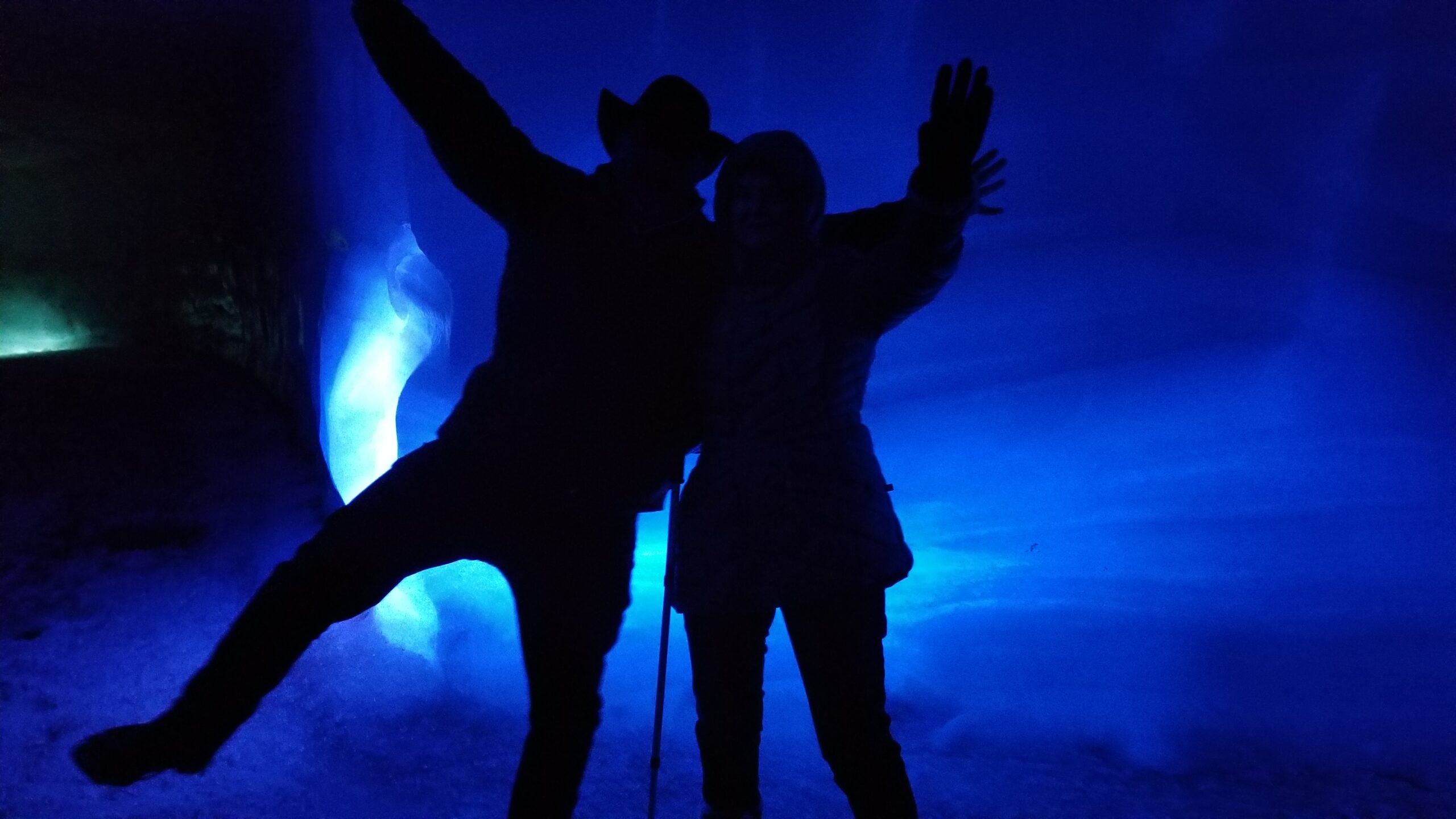
My favorite pic of my wife and myself from the Iceland trip. This is from the inside of a glacier. That’s actually a white light embedded in the ice. The blue comes from Mother Nature.

It’s been a long three weeks.  First, there was Magna Cum Murder in Indianapolis, followed the next weekend by Bouchercon in Dallas, then a week-long book tour through Texas with my buddy Reavis Wortham.  I finally got home from Texas on the nigh of November 9, only to go back to the airport for a trip to Iceland with my wife and cousins.  If you ever get a chance to visit Iceland, do yourself a favor and go. (This was our third trip, and I can’t wait to go back.)  The highlight was a walking tour through the inside of a glacier.  The deeper you go, you literally are eyewitness to the past.

Upon my return, I was greeted with the copy edits for Hellfire, the Jonathan Grave novel slated for July, 2020.  This is my 21st encounter with copy edits, and therefore my 21st reminder of how little I understand about grammar in general and the deployment of a comma in particular.  Take the previous sentence, for example.  Should it read, “. . . and, therefore, my 21st . . .”?  Should it be “. . . grammar in general, and . . .”?  Feel free to tell me, but I guarantee it will not stick in my head.  (That comma after “tell me” shouldn’t be there, should it?”)  Damn.

Appropriate use of commas seems random to me and the commas themselves complicate language.  For example, the copy editor changed this sentence to include commas that I did not: “He and his brother, Geoff, were being driven . . .”  To my eye and ear, the meaning is clear without the commas, but I let it go because they tell me they’re correct.  (That comma before but shouldn’t be there either, should it?)

Then there’s this edit: “. . . scrolled through his contacts list, and pressed a button.”  Why? What does that comma do that its absence does not?  Aargh!

Comma Splices

First of all, I didn’t know that a comma splice was even a thing.  Here’s the note, verbatim, from the copy editor:

“There are some comma splices in the book, where two complete thoughts, that is, separate sentences, are separated by commas rather than periods.  Some people accept this in dialogue but not in descriptive text.  I have highlighted those I found like this (word-comma-word highlighted) so you can see where they are and decide what to do.  In many cases, the comma splice can be fixed by adding “and” or “but” after the comma.”

Here’s an example of what he’s talking about: “Questions never changed bad news, they only slowed it down.”  For me, it’s about the rhythm of the sentence and I think the passage flows better with the comma instead of a period.  Apparently, I do this quite a lot.  In most cases, I kept the passages as I originally wrote them.

Another example: “Their mom was just arrested, their dad is dead.”  The “and” is silent and I think the sentence is better for it.

Now, don’t get me wrong.  I clearly need a good copy editor, and this one (the same as I had for Total Mayhem) is very good.  He’s just going to have to get used to me not comprehending the role of the comma.

With every set of copy edits, I also receive a “style sheet” that gets deeply into the weeds of my writing style, and that of the publisher.  The sections of the style sheet include:

Characters (in order of appearance).  With each character comes a brief description, based upon what I wrote in the book.  Here’s an example: Soren Lightwater: head of Shenandoah Station, smoker’s voice, mid-forties, built like a farmer, more attractive than her voice;

Geographic Locales (in alphabetical order).  Here again, there’s a brief description of the role the location plays in the story.  For example: “Resurrection House/Rez House, in Fisherman’s Cove, on Church Street, up the hill from Saint Kate’s Catholic Church, on the grounds of Jonathan’s childhood mansion;

Words Particular to Text.  Examples include A/V (audio-visual), ain’t, Air Force One, all-or-nothing deal, asshats . . .

Grammar/Punctuation. Given the subject matter of the post, I thought I’d paste this entire section verbatim.  Apologies for all the spacing, but I don’t know how to manipulate this platform to prevent double-spacing between lines.

Hours and minutes given in numerals (4:47), but just hours can be written out (six o’clock, he had to be there by five)

Author’s preference of comma following introductory “So” is permitted, as is comma after introductory “Or.”

Series comma

Comma before terminal “too” and “either” (Exception: me too, you too, us too, or any other one-word construction before “too”)

Comma around internal “too” and “either”

Comma before terminal “as well” and around internal “as well”

Comma before terminal “anyway”

Comma before terminal “though”

Comma after introductory and terminal and around internal “in fact”

Comma after introductory and terminal and around internal “instead”

Comma after introductory and terminal and around internal “after all”

Comma after introductory “Plus”

Temperature: eighty degrees

Numerals appear before the word “percent,” except in dialogue or when starting a sentence in narrative

Italicize sound effects, emphasis, letters as letters, words as words, internal monologue in present tense and in first-person narration, words written down, unfamiliar foreign words (especially if not found in dictionary)

Quotation marks when something (an object) is being given a sarcastic name or unexpected nickname

Small Caps: signs, displays, button functions

NOW, FINALLY, THE REALLY GOOD NEWS

Six months ago, I posted here about my impending surgery to fuse vertebrae in my cervical spine to relieve a pinched nerve that was causing severe pain in my left arm and shoulder.  Y’all were very supportive of me, and I appreciate that to this day.  As of this morning, as I write this, I heard from my surgeon that that the procedure was 100% successful.  The fusion at all levels is complete, and no complications developed.

I am, as they say, jazzed!

First Page Critique: A Storm Is
Coming Or Is It A Space Ship?

By PJ Parrish

Well, I’m not sure exactly where we are today with today’s submission, but I will say I liked reading this one.  Which is why I’m going to be kinda tough on you, brave writer. Thanks for submitting your work.

(1)The Arrival

When the sun finally came up, Billy Watson was still sitting in the rusted out car, half asleep and shaking. The wind started to pick up and small bits of sand blew through the open windows, some of it getting into his mouth and eyes. A rumble of thunder sounded in the distance behind him. He tensed and turned his head, looking to the sky for more ships but not seeing any.

Catherine Belling sat next to him in the front seat, asleep. He touched her shoulder and shook it, feeling the smoothness of her silk blouse which was now in tatters. She jumped at his touch and sat straight up and looked around. “Catherine,” he whispered. “We’ve got to get out of here. We must keep moving.”

She reached to her right side and pulled a knife out of a leather sheath. It was a medium length hunting knife with a thick blade. She squeezed it, making her knuckles white. She started to speak but had trouble. She moistened her lips and said, “We can leave anytime. Where’s Ruben?”

“Don’t you remember? He wandered off last night and hasn’t come back yet. But we can’t wait around. The sounds are getting closer. Maybe we’ll find him somewhere in the desert.” He started to turn his arms and move his body. Every muscle ached.

Catherine put her knife away and pushed on the passenger door, which was cracked open. It squeaked and resisted and she had to use her leg to push it the rest of the way open.

They both staggered to the front of the car and looked around at the sky. To the north, from where they had come, they could see dark clouds and flashes of orange light and hear booms. To the west and east the skies were blue with a few clouds. To the south there were less clouds and what looked like clear, sunny skies. That’s where they headed.

____________________

I liked this opening. We are getting into the scene in mid-action, even though the two characters are just awakening. I don’t mind that, because they have obviously, from the description, been through something bad.  I like the unanswered questions of this opening — what happened last night? Why are they in such bad shape? (his injuries, her tattered silk blouse — and the little detail that it is silk is intriguing in itself given their barren surroundings.) What happened to Ruben? Are these two good guys or bad guys? This makes me want to read on.

Here’s what the writer didn’t do that also makes this work for me:  The guy wakes up and we don’t get a bunch of thoughts, musings, rememberings and god forbid, backstory.  The writer immediately gets us into some action. I trust the writer will explain as this chapter progresses what happened and how Billy Watson feels about it.

I don’t yet know exactly where we are, but I get the feeling of desolation. I also trust the writer will soon pinpoint the location. I get the sense that we are in some sort of apocalyptic time, possibly in future, since Watson looks to the sky to see if “ships” are there. I tripped over this sentence in my first quick read, thinking what the heck are ships doing in a desert? But then I got it.  While I like the spareness of the writing, I could use a few other descriptive details to ground me in where we are and what time era. All I can see in my reader’s imagination is sand, a storm-imminent dawn sky, and a rusted car.  One or two more choice details might go a long way here to upping the tension and intrigue.  Give me some hints!

One suggestion: Right now, we are getting the point of view mainly through Billy but with a semi-drift into Catherine.  I think it might be stronger we stayed firmly with Billy. A reader wants to connect with a main character as quickly as possible, and although Catherine may turn out to be just as important, it would help you establish rapport if you began more stronger with Billy.

Let’s go to some line editing so I can show you how.  And address a few minor quibbles.

When the sun finally came up, Billy Watson was still sitting in the rusted out car, half asleep and shaking. You are in omniscient POV here. This could be stronger if you can filter this moment only through Billy’s sensibility. It’s hard to make someone awakening FEEL real but if you can do it, it can be more powerful. Ask yourself, what is the first thing Billy is aware of?  A brightness that makes him squint (the sun coming up); the stiffness of his body? A smell? Make us feel this moment. The wind started to pick up and small bits of sand blew through the open windows, some of it getting into his mouth and eyes. Same issue here. This could be stronger! A sudden rush of cold-warm-hot? air on his face and the feel of grit in his eyes and mouth. A rumble of thunder sounded in the distance behind him. He tensed and turned his head, looking to the sky for more ships.  but not seeing any. He let out a long breath. No ships. It was just thunder. Make us feel his fear and/or trepidation more. But see my comments below about my confusion over what these “sounds” and “booms” are.

Catherine Belling sat next to him in the front seat, asleep. To make this feel more in Bily’s POV, I would not give her full name here.  He wouldn’t be thinking “Catherine Belling.”  Something like: He looked over at the woman slouched in the passenger seat. He touched her shoulder and shook it, feeling the smoothness of her silk blouse which was now in tatters. He shook her gently.

New graph is good when you move to a new character. She jumped at his touch and sat straight up and looked around. Give her a quick line or reaction. Is she scared-jumpy? I might even move up the whole bit with her knife. Also, action-reaction for your characters must be logical. If she is jumpy, her first reaction after someone touches her as she comes out of a fitful sleep might be to pull her knife. And Billy can calm her and then tell her they have to get moving.  That strikes me as more human. It also gives her a more logical reason to pull the knife.  

“Catherine,” he whispered. said. No need for whispers since it’s the two of them alone in a desert. “We’ve got to get out of here. We must keep moving.”

She reached to her right side and pulled a knife out of a leather sheath on her belt?. It was a medium length hunting knife with a thick blade. She squeezed the hunting knife, her knuckles turning white. She started to speak but had trouble and ran her tongue over her cracked lips. moistened her lips and said, “We can leave anytime.More details and more visceral.

Where’s Ruben?” she said.

“Don’t you remember? He wandered off last night and hasn’t come back yet. Obviously, he’s not back yet. This is a pretty dramatic point. Might she not react? Or say something?

But We can’t wait for him around,” he said. “The sounds are getting closer.” Confusion here. Above, you have him thinking the sounds are “just thunder.” Apparently the “sounds” concern him. Why? We need this clarified. Which doesn’t mean you have to spill all the beans but maybe somewhere in this brief scene he hears another sound that he KNOWS is not just thunder and that elicits this remark. Otherwise it makes no sense. Maybe we’ll find him somewhere in the desert.”

I would have Catherine put her knife away here, not later. Make this gesture mean something. Is she discouraged? Resigned? Frightened for Ruben? Maybe Billy thinks about her having the knife. The contrast between silk blouse and hunting knife is delicious. Make it work! Make every line of dialogue and every gesture AMPLIFY and ENHANCE your plot and mood.

He started to turn his arms and move his body. Every muscle ached. What did he start to do exactly? Be specific. How about if he tries to open his door and can’t. Make it mean something to what you’re setting up here. Have it relate to their dire situation. What happened last night to make him so sore he can’t move?  And the phrase “every muscle ached” is meh writing. You can do better. Make us FEEL something of this man’s pain — physical and psychological. 

Catherine put her knife away and pushed on the passenger door, which was cracked open. It squeaked and resisted and she had to use her leg to push it the rest of the way open. I’d have her come around and yank his door open. And make it mean something. Is Billy wounded? It gives her a chance to develop some personality.  Maybe you can even have Billy think something about here, which also gives you a chance to drop in her full name.  ie:  Billy flashed back to two nights ago, at the party. When Catherine Belling walked in a room, she always got stares. But that night, dressed in that white silk blouse and red pants, even he couldn’t look away.  That’s corny, but you see where I am trying to go with it?  An effective tool in fiction is compare and contrast.  If you can drop hints at what it was like BEFORE this moment (why do you have Catherine in silk otherwise?) then it can be an effective contrast to the arid and dire position they are in now.  Don’t dwell in backstory, but a brief well-rendered thought can be powerful.  It can also hint at the relationship between these two.

They both staggered to the front of the car and looked around at the sky. To the north, from where they had come, they Billy could see dark clouds and flashes of orange light you’re a good writer so this can be better and hear booms. Again, this “booms” is meaningless. Billy probably knows exactly what this is, since he knows about “the ships.” I think you’re being a little to obtuse here. A few choice details about what they have escaped from will go along way toward heightening your tension. To the west and east the skies were blue with a few clouds. To the south the sky was a blinding blue. there were less clouds and what looked like clear, sunny skies.

That’s where they headed.  I might put this in dialogue for Billy. But see caveat below.

Your description of the sky is a metaphor. Therefore, I would stay with north and south in that reference above because it’s clean and simple and is symbolic of the past (dark clouds, orange light and booms) and the future (blue skies.)  But be aware that clouds (bad past) and blue skies (good future) is a cliche. As the old saying goes, if you’re gonna use weather, make it mean something. Remember the end of “The Terminator” when Linda Hamilton is sitting in the jeep at the desert gas station and she looks ahead to the roiling storm clouds . A kid tells her in Spanish that a storm is coming. She says, with a heavy dollop of James Cameron portention, “I know.”  The weather must stand for something.   

So, all and all, a pretty good beginning. Which is why I’m being a little tough with you, dear writer, and asking you to stretch even harder. As I said, every line of dialogue, every action, every word of description you choose, must have a reason for being there.  Make every line you write more “muscular.” Make it work harder. You can do it. The story is worth it.

Book Blurbs: The Good, The Bad, and The Hilarious

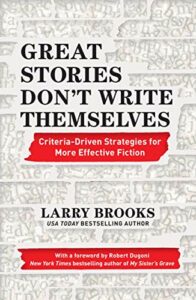
During the summer I had the distinct honor of blurbing a book. Not just any book, either. Larry Brooks’ new craft book, Great Stories Don’t Write Themselves. I love Larry’s (and Jim’s!) craft books, so I took my job seriously and did what any self-respecting writer would do… I Googled “How to Blurb a Book.” 🙂

The term “blurb” has amassed a number of meanings in the decades since it worked its way into our vocabulary, including a book description. But the true meaning of the word means a bylined endorsement from a fellow writer or celebrity that sings the praises of the book’s author.

There’s only two crucial steps to book blurbing.

Step 1: read the book.

Step 2: write whatever you liked about it.

That’s it. It’s not rocket science. The only way to screw up this assignment is to skip Step 1. Well, that’s not exactly true.

Don’t write the blurb to a fill-in-the-blank formula…

The Zero by Jess Walter

“Jess Walter’s The Zero is a tense and compulsively readable roller-coaster ride fraught with psychological thrills, unanticipated dips and lurches, and existential truths. The novel frightened and fascinated me in equal measures. Walter has written a neo-noirish masterpiece.” — Wally Lamb

This is also not the time to overwrite…

To The End Of The Land by David Grossman

“Very rarely you open a book and when you close it again nothing can ever be the same. Walls have been pulled down, barriers broken, a dimension of feeling has opened in you that was not there before. David Grossman has the ability to look inside a person and discover the essence of her humanity; his novels are about what it means to defend this essence against a world designed to extinguish it. To The End Of The Land is his most powerful, unflinching story of this defense.” — Nicole Krauss

Nor is it the time to play with adverbs…

The Time Traveler’s Wife by Audrey Niffenegger

“To those who say there are no new love stories, I heartily recommend The Time Traveler’s Wife, an enchanting novel, which is beautifully crafted and as dazzlingly imaginative as it is dizzyingly romantic.” — Scott Turow

Although, if you’re as talented and creative as Jordan Dane, you might get away with adjectives…

“Riveting and haunting! Sue Coletta’s page-turning crime fiction is deliciously nuanced with delectable horror and dark humor. Unique and compelling characters make a sumptuous and satisfying meal. Save room for a decadent dessert of plot twists.”

Let’s not forget the blurb master, Gary Shteyngart, who blurbed the world’s worst books. Here’s a small sampling…

Eating People is Wrong by Malcolm Bradbury

“If eating people is wrong, I don’t want to be right”—Gary Shteyngart

Castration: The Advantages and Disadvantages by Victor T. Cheney

“The ballsiest book of the year”—Gary Shteyngart

Alas, I wasn’t that creative. I just told the truth…

“Larry Brooks has done it again!!! In Great Stories Don’t Write Themselves, Brooks delivers a clear, concise, easily digestible roadmap to make our stories work.

“From the initial story seed to concept to a fully formed premise, he walks us through each part of a four-part structure, with unwavering clarity. It’s the perfect craft book to help aspiring writers turn their writing dreams into reality and an excellent refresher for seasoned novelists.”


If you enjoyed Story Engineering or Story Physics, you will love Great Stories Don’t Write Themselves. Did I mention Robert Dugoni wrote the foreword?

While you’re stocking the toolbox, might I recommend another fabulous craft book? The Last Fifty Pages by James Scott Bell. Like Larry’s new book, it’s a game-changer.

Too much? It felt a little heavy-handed. Sorry about that. I get so fired up over craft books. Jim and Larry’s teaching style really speaks to me. Can a writer ever have too many books on craft? Not in my world. What about yours?


Delete Naiveté From Your Writing Life

by James Scott Bell
@jamesscottbell

So you want to be a published writer, eh? There’s a group for that. It’s called Everybody.

The group is wildly diverse. It includes traditional types and indie speculators. It is a spectrum that stretches from the pie-in-the-sky hopefuls all the way to the business hardnoses. Today I wish to address the left end of the spectrum, which I call the Naïve Zone. My hope is that you will make the decision to move your caboose to the right.

These thoughts were inspired by an article (which, coincidentally, Kris slash P.J. mentioned in her post of Nov. 5) titled “How to Lose a Third of a Million Dollars Without Really Trying.” In it, author Heather Demetrios recounts what went wrong for her on her way to publishing riches. She admits up front that she didn’t understand the basics of the biz:

If just one person had sat me down when I signed my first book contract and explained how publishing works, how nothing is guaranteed, and how it often feels like playing Russian Roulette with words, I would have made much sounder financial and creative decisions. I would have set a foundation for a healthy life as an artist, laying the groundwork to thrive in uncertainty, to avoid desperation, panic, and bad decisions that would affect me for years to come.

The big mistake this author made (and which many an author over the years has also made) was to assume that a contract with a big advance translated automatically into a secure financial future.

How would my life be different if a fellow writer or someone in the industry had told me that the money I’d be receiving for my advances was absolutely no indication of what I could make on future book deals? What pain could I have avoided if they had advised me not to spend that money as though there would be more where that came from? I suspect I may have avoided a near nervous breakdown and not come so perilously close to financial ruin and creative burnout. But no one came forward.

That But no one came forward gives me pause. Authors bear the responsibility to figure out what the heck goes on—and changes—in this industry. An agent or colleague can help, but ultimately it’s on you to get educated.

So let’s talk about a few lessons to be drawn from this article.

The first is to understand this: A big advance is no guarantee of future results.

I really thought I had made it — forever, not just for a moment. Not for this one book deal. Forever. Otherwise, I reasoned, they would never have paid me such enormous sums. These publishers must be investing in me for the long run. I was one of their own.

Another lesson: Within the walls of the Forbidden City (traditional publishing) you are only “one of their own” so long as you make them money. The Forbidden City is not the family farm. It’s a big business with an unforgiving bottom line.

Next: the rules of personal financial management are not suspended when you get a contract.

After that second advance came through, I stepped into my dream life: I quit my day job to write full-time, moved to New York City, bought $15 cocktails, and learned (with astonishing speed) not worry about prices when ordering at a restaurant. I said yes to travel (often book research I wasn’t reimbursed for), concert tickets, new shoes, and finally being able to buy people the kind of presents I felt they deserved.

Here’s a tip: Do not quit your day job and do not move to New York City. Okay, that’s two tips.

Did I pay off my student loans? No, though I made a few large payments. Did I set money aside for retirement? No. My reasoning was that after the next book I sold, I’d take care of all that.

Bonus tip: Don’t go into student debt pursuing a degree in creative writing, folklore and mythology, theater, or anything with “lit” or “studies” appended to it.

Then there is the marketing part of the biz. Don’t expect your publisher to do the heavy lifting.

My publishers have never made so much as a bookmark for me (though twice they agreed to design them if I paid for the printing). If I wanted to go to a book festival or important industry conference out of town, I had to pay, unless the festival organizer covered the costs, which they rarely do. I couldn’t afford to do that, which meant I was unable to connect with librarians, booksellers, and industry professionals to amplify my books and, thus, my sales.

These days, the author has to do the lion’s share of the work on building a brand and marketing the work. You’ll need a website, an email list, some social media presence, and a whole lot of patience.

Kudos to Ms. Demetrios for opening up about her mistakes. To avoid them:

Learn the basics of a book contract. You can start here.

Learn the basics of book marketing. You can start here.

Learn the basics of managing money. You can start here.

Learn the basics of mental toughness. You can start here.

Well, we didn’t have time to go into the other option, self-publishing. Suffice to say naïveté is no excuse here, either. So before you take the plunge I suggest you read the articles posted on this page over at Joanna Penn’s site.

Speaking of plunges, and knowing that building a writing career of any sort takes years, which option is best for a writer long term? I’ll have some thoughts on that in a couple of weeks.

So what lessons have you learned, TKZers, that you can pass along to writers who enjoy wearing rose-colored glasses?