
Debbie Burke’s recent post about falling down research rabbit holes has launched a couple of ships this week. Here is mine. I fell through a research wormhole and found myself engrossed in a topic totally different from the one on which I started.
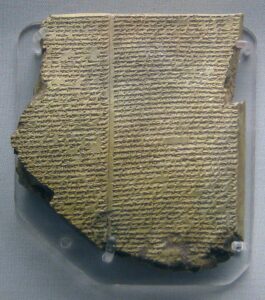
What I ended up digging into is what is (generally) regarded as the first known book and its cousin, the first known novel. It’s a fascinating topic. Folks, including myself, might reflexively answer the question as to what the first known book is with the response (index finger in the air for emphasis) as “The Gutenberg Bible!” It’s not even close. The Gutenberg Bible is the first printed book from moveable type, which a noteworthy accomplishment to be sure. The first known printed book, however, is The Diamond Sutra, which was created in China in the ninth century, using wooden blocks somewhat like you can now find in arts and crafts sections at Michael’s and similar stores (don’t forget the ink pad). That said, even The Diamond Sutra isn’t the first known book.
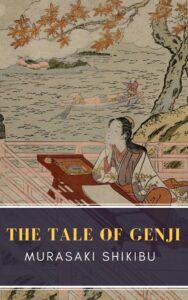
Since we are moving backward, let’s discuss for a moment what is currently regarded as the first novel. It is titled The Tale of Genji and is considered, with some dispute, to have been written almost one thousand years ago, in the eleventh century, by Lady Murasaki Shikibu. That name is believed to have been a pseudonym, but Lady Murasaki, as she is known to us, was a noblewoman who was invited to be a lady-in-waiting to the Japanese empress Soshi at the Imperial Court. The Tale of Genji is considered to be a psychological and romantic novel. What is remarkable about this is that in the world of Japanese literature at the time genre literature was held in low esteem. Time really is a flat circle, isn’t it? The Tale of Genji was so well-written and popular that it nonetheless influenced Japanese culture and mores and continues to do so in present times. Genji, a courtier, is portrayed as being passionate and gentle, which is part of the appeal of the story. The novel continues to be studied, researched, and translated. The most recent translation that I could find is approximately 1300 pages long. It looks to be somewhat rough sledding to read but it nonetheless endures.
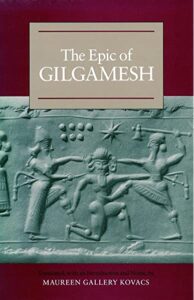
That brings us to what is acknowledged as the first known book, titled The Epic of Gilgamesh. Gilgamesh is, by amazing coincidence, an epic poem believed to have been written in installments between 2100 and 1200 B.C. (what is a millennium between friends?) and is an exaggerated and fictionalized account of the exploits of Bilgamesh, the King of Uruk. It is preserved on cuneiform tablets but you can read it on a Kindle. You should. Its exact author is unknown but whoever it is launched a thousand literary ships. Gilgamesh and Enkidu, Gilgamesh’s enemy turned BFF, cut a wide swath through the known world, drinking, fighting, and ravishing until they take things a step too far. A tragedy leaves Gilgamesh seeking the meaning of life and attempting to acquire immortality, with predictable results.
Or maybe not. Gilgamesh lives on. There is a heck of a story here. You can find traces of it in Don Quixote, Fritz Leiber’s Fafhrd and Gray Mouser stories, Robert Lee Howard’s Conan tales, and yes, the tales of Roland in Stephen King’s The Dark Tower series. Oh, and did I forget The Iliad, The Odyssey, and the Aeneid? There may be a book that is the source for The Epic of Gilgamesh, buried in spider doo-doo somewhere in the Middle East, but it hasn’t been found yet. So why isn’t it regarded as the earliest novel? It’s a poem, for one, For another, it’s only a hair or so over one hundred pages, which I guess qualifies it as a novella. It is in any event worth reading, in translation, of course.
Gilgamesh may not have physically lived forever, but he certainly has in the literary sense. I doubt the author(s) ever imagined that their epic poems would be read and revered thousands of years after being written but there you go. My best advice to you, my friends, is to dust off that trunk novel and give it another shot. Someone may be reading you at some point in the future and considering you the best of your time. Why not you?
Now, a question for you. Has there been any story/poem/novel from the time period which we have been discussing (a long one to be sure) that has influenced you, or that you still return to for inspiration, succor, or reference, for any reason, including but not limited to writing?

 “If you don’t know about Nigerian scams, then you’ve probably never used the internet. Seems like every couple weeks these West-African crooks drop me an email thinking I’m dumb enough to bite. Some people must, or the cons wouldn’t keep trying. So it was no surprise when I checked my inbox Tuesday morning and found another Nigerian grab at my wallet.

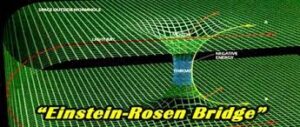 With an understanding of your agreement to confidentiality, my project involves a revised form of hyper-velocity, multi-directional transportation. The concept for analogous movement between distant portals, both historic and forthcoming, is nothing new. Space-time dilation based on the Einstein-Rosen bridge theory has been conceptualized for decades. Practical application of Faster-Than-Light (FTL) amplification was bottlenecked due to tachyon condensation which restricted Portal Entrance and Exit (PEE), but there’s now a clear and unique opportunity for a massive breakthrough.
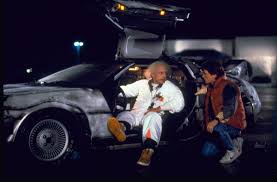 I’m sure you’re familiar with the 1985 works of Professor Emeritus Dr. Emmett Brown and his DeLorean model. Unfortunately, it’s been three decades, going on four, since Doc vanished in a timely experiment. Although I patiently await his return, progress must move forward. With this, I’ve acquired Doc’s patent rights to the Flux Capacitor (FC) – the propulsion device central to warping the Space-Time Continuum (STC). Early technology restricted FC Input/Output (I/O) to 1.21 jigawatts, however… I’ve found a method of quadrupling I/O to 4.84 jigawatts, theoretically making the trip four times faster.
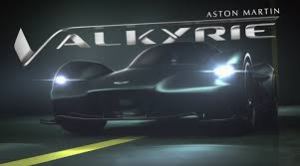 Compounding the situation is the original 1.21 jigawatt FC only required an 88 mph ERV. With a four-times capacity 4.84 jigawatt FC, it’s boosted the ERV to 352 mph. I realized… Great Scott! That’s a lot of ground speed. Fortunately, I’ve identified the new Aston Martin AM RB-001 Valkyrie as the perfect design. Now—here’s where you come in.
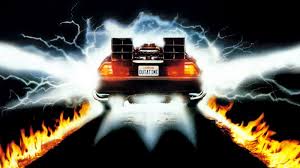 Appreciatively, I’m accepting your group’s investment of $3.12 million USD. This covers the Valkyrie purchase, shipping, and handling. Please make an immediate monetary transfer via Western Union for deposit into my account #6105-883-464-0901 at Nanaimo, British Columbia, Canada. In lieu of cash, your direct purchase of the AM RB-001 PEE Valkyrie can be delivered to my Vancouver Island R&D facility.




 By Elaine Viets






 LESS THAN. In mathematics it means smaller. Four is less than six. But the term is less than satisfactory when it strays in to everyday language. It’s wrong to make people feel “less than.” Less than what?
 NEW NORMAL. The new normal not only isn’t normal, it’s not even new. Wikipedia, for heaven’s sake, points out that every time we have a major crisis, we dig up that term and dust it off. It seems to have appeared the first time in 1918, right after World War I. Henry A. Wise Wood spelled it out for us: “How shall we pass from war to the new normal with the least jar, in the shortest time? In that respect should the new normal be shaped to differ from the old?”
 Now out! DEATH GRIP, my new Angela Richman, Death Investigator mystery. Kirkus magazine says, “Viets produces chills with a murder hunt turned on its head.” Buy it here: