Slow Down. Please.

I had a different post (almost) ready to go. It is interesting, but a bit long. I thought that many of you might still be emerging from food comas two days after Thanksgiving and accordingly would appreciate something short with a striking visual and a gentle reminder.

And here we go!


The foregoing incident, as near as I am able to determine, took place in 2017 in a multi-goods warehouse in South Africa. Videos of similar occurrences in a cheese storage facility in England in 2015 and a Russian facility in 2017 are also online. This one, however, is the one to which I keep returning. 

We can learn a number of things from this video. Most are important throughout the holidays in a variety of settings but apply throughout the year as well:

— There is a reason that patience is called a virtue.

— Life, like football, is a game of inches.

— “Maximum load capacity” is not a suggestion.

—  When given a choice between “set-up” and “clean-up” always choose “set-up” and leave before “clean-up.”

— Never turn your back on the FNG (an acronym for a term meaning “the new employee”).

I hope that you continue to enjoy your weekend. If you are feeling overwhelmed, please try to remember that this too shall pass. The same, alas, cannot be said of the poor soul who found second gear on the forklift. Once. My understanding is that he did live through this but is working in a different occupation.

Have you ever witnessed a catastrophic incident? Did it provide you with a spark or element for a story?

Enjoy and be well. And thanks for stopping by today on one of the busiest weekends of the year.

Author/physician Steve Hooley will be taking over the alternate Saturday slot commencing next week on December 5. He is a terrific guy with multiple talents and will give us plenty to think about. 


True Crime Thursday – How Not to Cook Thanksgiving Dinner

By Debbie Burke

@burke_writer

Photo credit: TheKohser CC by SA-3

Happy Thanksgiving!

In case you haven’t yet put your turkey in the oven, here are a couple of new variations on cooking poultry—one legal, one illegal.

The legal technique:

Instant pots are the current go-to appliance for many meals but I hadn’t thought about trying to cram a turkey into one. According to this blog, apparently, it is doable.

Since today is True Crime Thursday, I’m compelled to also include the illegal technique:

This case involves chickens rather than turkeys. But I suspect, if enough alcohol is involved, someone will eventually try this with the larger bird.

Last August, Eric Romriell and Eric Roberts, both of Idaho Falls, Idaho, and Dallas Roberts, of West Valley City, Utah, visited Yellowstone National Park. The three men are in their forties and fifties. Romriell is an ophthalmologist.

Photo credit: Clarence Alford-Pixabay

While there, they decided to cook dinner…by boiling two chickens in the hot springs at Shoshone Geyser Basin.

They were observed carrying cooking pots to a remote location. There, they put two whole raw chickens into a burlap sack and lowered them into the steaming water.

A park ranger responded to the location. When asked what their intention was, Eric Roberts answered, “Make dinner.”

The ranger probed further and inquired which one had come up with this idea. Roberts answered, “It was kind of joint thing.”

Hmm.

The article didn’t say but one guess is the “joint” idea was cooked up with the help of an unidentified adult beverage.

Earlier this November, the judge ordered fines of $540 and $1250 and banned the three would-be chefs from Yellowstone for two years.

No report what happened to the chicken dinner.

~~~

TKZers, what are your favorite culinary tips for Thanksgiving?

~~~

Today—and every day—I give thanks for the energetic, talented, and encouraging TKZ community. You make writing fun and I’m constantly learning.

Wishing everyone in the TKZ family a healthy and happy Thanksgiving!

That’s That

That’s That
Terry Odell

First, for those of you who celebrate Thanksgiving, this year presents special challenges. I wish all of you a safe and sensible holiday.

That's ThatAh, those overused words. Little ones. Almost invisible ones. Ones we take for granted. One of my critique partners pays her editors by the word, so getting rid of unnecessary words is high on her priority list.

One word that creeps into our prose is “that.” An obvious reason is that there are different ways it can be used (you’ll notice I used it in this sentence). That can be a pronoun, an adjective, an adverb, or a conjunction. It’s the pronoun usage that can cause problems (and there’s another that!). When I finished the first draft of one of my Mapleton novels, I found 902 instance of that. And yes, I did look at each one to see how it was used, and if it was needed. Here’s one example of a before and after:

The mayor interrupted. “I’ve assured Marianna that you will provide traffic and crowd control for any of her shooting. In return, she’s assured me that there will be as little disruption as possible to the normal, everyday routines of the citizens of our city.”

The way McKenna said city belied that Mapleton was hardly more than a small town. But one thing Gordon had learned was that regardless of the political head of the city, it was all about revenue. He imagined that some heavy-duty discussion of financial arrangements had already taken place, and that his life was about to become much more complicated.

Here’s the version after I went through zapping that:

The mayor interrupted. “I’ve assured Marianna you will provide traffic and crowd control for any of her shooting. In return, she’s assured me there will be as little disruption as possible to the normal, everyday routines of the citizens of our city.”

The way McKenna said city belied that Mapleton was hardly more than a small town. But one thing Gordon had learned was that regardless of the political head of the city, it was all about revenue. He imagined heavy-duty discussions of financial arrangements had already taken place, and his life was about to become much more complicated.

In my editing pass, I eliminated 4 of the 6 usages in those two paragraphs. Rule of thumb is to read the sentence with and without the that. Is the meaning as clear without it? Could I have deleted the remaining two? Maybe. My editor hasn’t seen this yet, and she might decide they can go as well. Or, maybe she’ll put some back. The rules here aren’t cut and dried.

Here’s another sentence where I kept the that.

We’ve found that locals are generally receptive to appearing as background characters, and property owners are well-compensated for any disruptions to their lives or livelihoods.”

When reading it without that, it’s easy to read it as finding locals, as if they were lost. When you read the rest of the sentence, you have to readjust your thinking, and you don’t want to slow a reader down.

Here’s another place where that helps clarify:

Gordon didn’t have the heart to tell Angie that Cassidy Clarke had little, if any, authority in deciding where scenes would be shot and who would be in them.

Without the that, it would read Gordon didn’t have the heart to tell Angie Cassidy, and with the names Angie and Cassidy Clark right next to each other, a reader might be confused and have to read the sentence twice.

The goal of an author is to keep the reader engaged in the story. Anything that pulls the reader away while they figure out what that sentence really means should be avoided.

But there’s another use of that I’ve seen lately that goes against everything I was taught in school, and I’ve been seeing it in books published by major publishing houses, and written by best-selling authors.

I was taught that for things and who for people. Now, admittedly, it can get tricky with nouns that don’t refer to specific people, but in my head, if that noun is made up of people, then you use who, not that. Examples: doctors, police officers, teachers, etc.

Here are a few examples from recent reads:

  • But maybe you’ve seen strange people around. You know, shady characters that might be involved.
  • I thought it was the girl’s father that was the real worry.
  • Older guys that we know.
  • Are you an author that has more than one book in a series?

And, what about this one?

I know rules can change, so I sent my editor a couple examples and asked her whether I was somehow behind the times.

Here’s what she said:

I’m not surprised that the books were published with “that” in the sentence. It’s becoming more and more common. A lot of authors don’t use “who” when they should. I think it may be partly because of today’s current English language and the way we talk today, and how authors write their stories. “That” is familiar. It’s a passive word and is overly used in most writing, so it’s a comfortable word. “Who” on the other hand is becoming a more formal choice, so it’s not used as often.

In 90% of the manuscripts I work on, “that” is used in similar examples in the original unedited version of the manuscripts. Is it the right thing to do? No, “who” is the correct choice. Unfortunately, or fortunately, depending on your perspective, I don’t think many readers notice the “that” versus “who” issues, so what happens is “that” becomes transparent within the manuscript in these types of examples whereas “who” sometimes stands out more in the sentence, making it less transparent and possibly “stopping” the reader in their read.

What’s your take? Does something like “John was a man that loved to fish” bother you? Do you even notice? Is this another gray area of grammar?


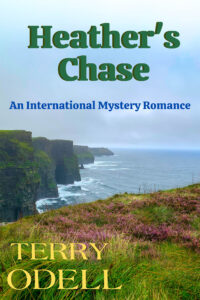
Heather's ChaseMy new Mystery Romance, Heather’s Chase, is available at most e-book channels. and and in print from Amazon.

Terry Odell is an award-winning author of Mystery and Romantic Suspense, although she prefers to think of them all as “Mysteries with Relationships.” Follow her on Facebook and Twitter.

The Perfect Word – Eight Qualities to Look For

by Debbie Burke

@burke_writer

Image purchased from Shutterstock

I can now claim credit for contributing to a TED talk about the search for life on distant planets. Sounds impressive, right? 

My contribution?

One word.

Not an important insight. Not a blinding revelation. Not a ground-breaking development.

Nope.

One word, and not a particularly important one.

But it was the right word.

Dr. Sarah Rugheimer, an astrophysicist at Oxford (whom I’m privileged to call friend) was selected to give a TED talk about her research into detecting alien life. While preparing her speech, one line she’d written bothered her. She sent it to me for suggestions.

The concept was complicated. The sentence was awkward and ambiguous with double negatives. It lacked parallel construction.

We spent the morning texting variations back and forth. We finally whittled it down to an easy-to-understand line except for one stinkin’ word—something.

Something in fact means nothing. It’s a convenient catch phrase that’s vague and can refer any number of things. We fall back on it in conversation because it’s easy and we’re too lazy to be specific.

But this talk was too important to take the lazy way out.

The discussion with Sarah made me think more deeply into how to find the perfect word. I’ve edited a lot but never really analyzed the process.

In early drafts, don’t worry about perfection. Use whatever words come to mind, even if they’re not very good. These tips are useful after you’ve completed the manuscript when you edit and fine-tune.

What qualities does a writer and/or editor search for that make up perfect word choices?

Here are eight I came up with:

  1. Specific

Take a common word like road. That doesn’t convey much to readers. To create a vivid picture in their mind, consider alternatives: lane, trail, byway, path, street, interstate, thoroughfare, boulevard, avenue, alley, artery.

All mean road but notice how each variation conjures a different type of road.

Laser focus on exactly what you want to express. She wore a sexy dress becomes The silk chemise clung to her body.

Keep narrowing your list of possible words until you hit on the word that exactly reflects what you want the reader to visualize.  

  1. Descriptive

Verbs are perhaps the most important word choices writers make because they push, shove, and elbow the characters into actions that advance the plot. To convey action vividly requires precise verbs.

Crime writers have particular vocabulary needs.

How many ways can you say kill, murder, slaughter, butcher, dispatch, smoke, stab, strangle, garrote, assassinate, terminate, rub out?

How about kidnap, abduct, snatch, capture, shanghai, victimize?

Or con, bilk, swindle, bamboozle, fool, defraud, sham, exploit, deceive?

Jim Bell recently discussed using a thesaurus. I use it often to find verbs that are vivid …as long as they’re not pretentious!

  1. Appropriate

I’m not talking about adult language or NSFW (not suitable for work), although those are important considerations for a writer.

Rather, is a particular word in keeping with the setting, character, and circumstances?

A rural farm locale has a different cadence and rhythm than a noisy, bustling street in Hong Kong.

A preschool teacher probably won’t talk the same way a construction worker does.

In the middle of the flashing strobes of a rave, the character likely isn’t meditating about the meaning of life…although the setting may prompt an existential question: What the &*$# am I doing here?

Choose words that are appropriate for each scene.

  1. Sensory

Smell, taste, and touch are often neglected yet they add great texture to storytelling.

Smell can be flowery, acrid, pungent, stinky, musky, fragrant, mouth-watering, decaying, cloying, wet-dog.

Taste can be bitter, tart, sweet, salty, peppery, sour, rotten, nauseating, rich, creamy.

Touch can be a slap, blow, swat, caress, stroke, punch, slam, hug.

  1. Evocative

What kind of mood do you want to create for different scenes in your story? If a scene is mysterious, chilling, and foreboding, word choices are far different from a cheerful, sunny, carefree picnic.

Is the character slogging through a sweltering, stifling, claustrophobic jungle?

Or hiking in crisp, bracing, autumn air?

Is the character melancholy over the loss of a loved one?

Enraged by a driver who cuts him/her off?

Quivering with anticipation for a reunion with a lover?

  1. Emotional

Saying Rose felt sad or Bill was elated is not good enough. Telling emotions rather than showing them makes flat characters and flat writing.

Readers seek a vicarious emotional experience in books. Our quest as writers is to make readers feel as if they’re inside the character’s skin.

No one wants to be pushed off a cliff in real life. But when they read about a character whose hands are torn by sharp rocks and whose feet flail to stop their free fall, they get to have that experience vicariously…without broken bones and traumatic brain injuries!

Music is an effective conveyor of emotion. Think of songs that make goosebumps rise or carry you back to a forgotten time or experience.

The goal is to find words that evoke emotional reactions as strongly as music does.

In this 2014 article from Frontiers in Psychology, authors Ai Kawakami, Kiyoshi Furakawa, and Kazuo Okunoya state:

“We consider musically evoked emotion vicarious, as we are not threatened when we experience it, in the way that we can be during the course of experiencing emotion in daily life. When we listen to sad music, we experience vicarious sadness.”

What do you want the reader to feel in any given scene? Heartened, hopeful, distressed, depressed, ecstatic, puzzled, disappointed, awed, furious, impatient, frustrated, terrified. Choose the emotion then find ways to depict that feeling through carefully selected words that show the emotion.

  1. Accurate

When using jargon, be sure to use it correctly. Readers are fussy about terminology, meaning writers have to be fussier.

Is it a gun, rifle, shotgun, carbine, pistol, revolver? If you slip up and call a magazine a clip, John Gilstrap will bust you.

Is your character going to arraignment, trial, hearing, sentencing, inquiry, tribunal, proceeding?  Is s/he being questioned, deposed, interrogated, grilled?

Is the job title a prosecutor, county attorney, state’s attorney, district attorney, solicitor?

Is the character facing jail time or prison time? One hint: jail generally indicates minor offenses for a term less than a year. Prison generally means felony offenses with sentences for more than a year.

Even if you think you know the meaning of a particular term, double check.

  1. Resonant

When you find the perfect word, it’s like hitting a high note or that special crack of a bat that sends the ball into the stands.

You know it when you find it.

And readers know because your story is on pitch and memorable.


My one-word contribution to Sarah’s TED talk?

Clue.

See, I told you it wasn’t earth-shattering. But if we’d settled for a lazy, sloppy, meaningless word like something, listeners might not notice but they would be aware that something was off.


TKZers: Please share the resources and tricks you use to find The Perfect Word.

Gratitude & Goals (and Balloons)

This Thanksgiving will be tough for a lot of people and I am grateful that all my family are safe and healthy and that I get to spend turkey day with my husband, twin teenage boys, and collie Hamish (who is the only one who seems to have enjoyed this year!). I have certainly experienced a rollercoaster of emotions and stress this year so my thoughts go out to any of you struggling during these uncertain times.

This week I will focus on the things I am thankful for (health, family, friends, economic stability…) but will also re-evaluate my original 2020 goals to see if any can be salvaged (ugh!). Actually the metaphor that comes to mind (and my apologies as it’s a pretty crap one) is a bunch of balloons. I started out the year with a handful of promising ones, only to see quite a few fly up into the sky – some are aloft and still in sight, some I fear have blown away for good. The balloons that are now left are a ragtag bunch – goals that I keep trying to cling to, but which are looking rather worse for wear. I did complete a draft YA novel that I’m still waiting for feedback on (I like to think of it as a shiny red balloon which hasn’t been deflated yet!), and I have started a new historical book (at the moment, however, this balloon is barely inflated…). My art/painting goal looks like a balloon animal – oddly shaped and kind of cool but who knows what I’m going to do with it. Finally, there are two stray balloons which I can’t remember ever grabbing: one represents a ‘couch to 5km’ running program which I started a few months ago and actually continued (which is weird because I hate running…); the other is a ‘cooking diva’ balloon which I know I never asked for but which I clung onto when faced with providing 3 meals a day plus snacks to a hungry household of boys:).

This week, when it comes to my 2020 goals, I’m staring at this weird handful of balloons and wondering what to do with them – do I pop them? Try to inflate them a little more? Try to rescue the ones that blew away? (though I guess I should be thankful to be still clinging to some goals at all!)

TKZers, how have you handled your goals this year? Are you, like me, still clinging to some of those balloons? How are you planning to use Thanksgiving this year to help achieve (or maybe re-inflate) your 2020 writing goals?

On Being Your Own Genius

by James Scott Bell
@jamesscottbell

Magnus Carlsen

Recently I watched a profile of the World Chess Champion, 29-year-old Norwegian Magnus Carlsen. He has a brain that can only be described as…singular. His is a Summit; most of us are operating with Kaypros. His noggin can run complex calculations in seconds at the same time we’re trying to remember to carry the 1 on a scratch pad. 

For example: it’s common for chess Grandmasters to play several amateurs simultaneously, going from board to board and making moves. This Carlsen kid—get this—played ten opponents this way, only he did it with his back to the boards! That means he couldn’t look at them. Someone called out the move so-and-so made on Board #1, and Carlsen then called out what his next move was. And so on down the line. 

He had to “see” ten different boards in his mind and calculate all the moves for each game. We have trouble remembering what color shirt we put on this morning. 

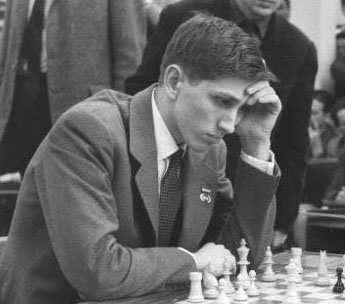
I was really into chess my first year of college. That was the summer of Bobby Fischer, who became the first—and still only—”rock star” American chess player. He was about to take on the Soviet world champ, Boris Spassky. The Soviets dominated chess. Between 1949 and 1972, every single world champion was a product of the Soviet chess system. In the USSR, gifted kids were nurtured by the state, coached and trained by chess masters for optimum performance. The best of these would go on to world tournaments, with a team of coaches who prepared them by poring over the games of opponents and working out strategies.

Bobby Fischer had none of this. He just got into chess as a kid and set aside everything (including an education) to give himself completely to the game. A full-on prodigy, Fischer attained Grandmaster status at age 15, the youngest in history (to that point). He also played, at age 13, what most experts dubbed “The Game of the Century” (with a brilliant Queen sacrifice, Fischer beat one of the strongest American players of the time, Robert Byrne.)

Bobby Fischer, 1960

Now he was poised to take on the Soviets single handed. And America jumped on board. Fischer was on the cover of Time and Life. He was profiled on 60 Minutes and interviewed on a plethora of talk shows. Fischer had one of those singular brains, too, which he used to win the World Championship. Unfortunately, that same brain became increasingly paranoid, and Fischer never again played big-time chess. 

But Fischer-mania got me into chess my Freshman year. My dad taught me the game when I was a kid and I knew the rudiments. Now I started studying books and chess magazines. I took lessons and played as many games as I could. I even won my dorm chess tournament. But once I got to playing in the upper levels, I realized, as Dirty Harry once put it, my limitations. 

What I knew was that I could study and study and play and play and give up all social relations for ten years…and I would never get close to having the gray matter of a Fischer, a Karpov, a Kasparov … let alone a Magnus Carlsen!

Did that mean I gave up chess? By no means! I continued to enjoy the game. When I was starting my acting career I was in a production of Hamlet and struck up a friendship with another cast member who also liked chess. We were at the same level, too, which makes the game much more enjoyable than playing a guy who can crush you in ten moves. I recall great pleasure that summer playing chess with Abraham at his place, with cool jazz in the background and a cold beer at the elbow. Games would take a leisurely two hours or more, which seems unheard of today in our manic-paced world.

To bring this around to writing, I know there are authors out there with more natural talent for language and storytelling than I. But should that stop me from playing the game? From studying the craft and enjoying what I do? 

When I play chess, I don’t have to be like Carlsen, because I can’t be. But I can certainly try out some opening moves I’ve studied and see where they lead. I know that doing this will make me a better player on my own terms.

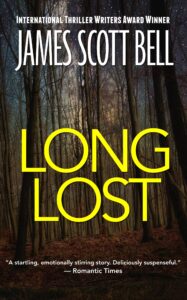
With writing, I can also try things out, strive to be better. I may not attract the attention of the Nobel Prize committee, but I can grow my readership book by book. (Which reminds me that you can still pre-order my thriller, LONG LOST, at the special ebook deal price of 99¢!)

So be your own genius. Compare yourself not to others but to you. Look at where you were and where you are. Make a plan to be better tomorrow. Then you can truly enjoy what you write, because getting better is its own reward. 

So what person of mental prowess or natural talent do you admire? 

Do you ever find that you’re comparing yourself to others? What do you do about that? 

A Space Without Answers

It has been by any standard a tough year. My cheery suggestion to folks — that any day above ground is a good day — still applies. So does the axiom that that tomorrow is the future, and yesterday is the past, but today is a gift, which is why we call it the present. Some may disagree, but everything benefits from perspective. Things can always be worse, as what I am about to write about demonstrates.

The situation that I am about to describe is still developing even as I sit at the keyboard. I may update up at some point in the future, depending upon what occurs. It has all of the elements of a classic mystery. What cannot be forgotten or denied is that it is steeped in tragedy, regardless of what, if anything, is ultimately found to have occurred. 

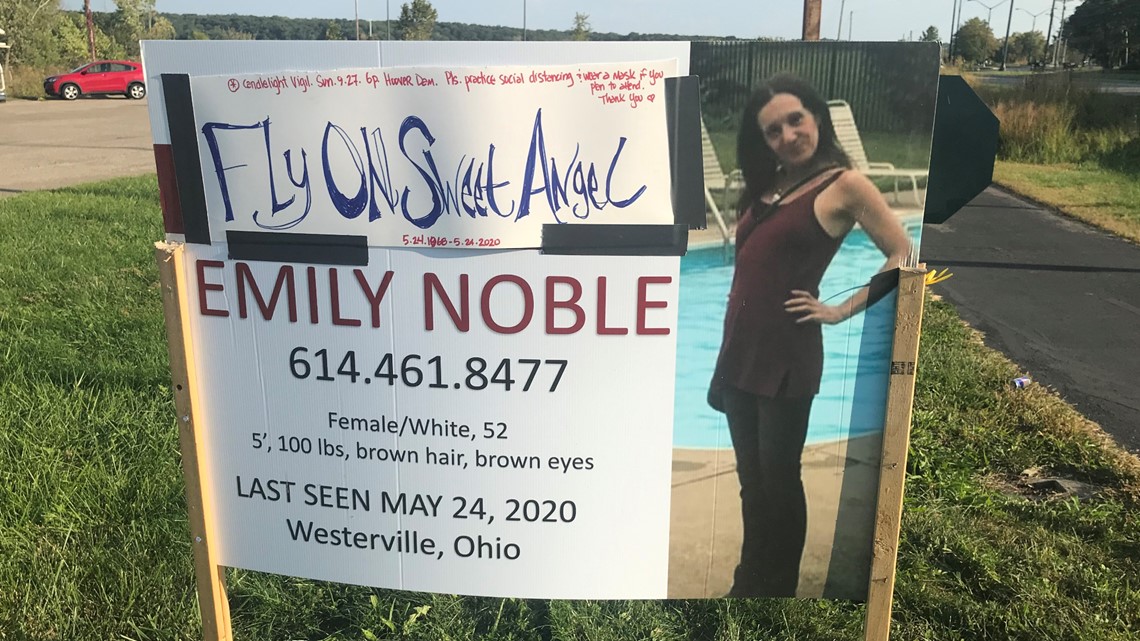
A Westerville, Ohio resident named Emily Noble was reported missing by her husband Matt Moore on the evening of May 25, 2020. Matt stated he and Emily had been out celebrating Emily’s birthday the previous night before returning home. Emily, Matt reported, was not at home when he awoke the next morning. Her possessions, including her keys, car, cell phone, and credit cards, were all that remained of her.

The matter might have ended there. It occasionally comes as a surprise to people that, all other things being equal,  there is no law prohibiting an adult from upping sticks and leaving their home either temporarily or permanently without notice. An absence of this type does not automatically lead to subsequent law enforcement investigation. Friends of Emily, however, vociferously argued that such a course of action — leaving without notice — was unlike her. Emily was gainfully employed and maintained regular contact with relatives and many of her aforementioned friends. The items which she left behind would have been things that she would have taken with her if she were undertaking a planned and/or voluntary absence. 

News of Emily’s disappearance quickly spread and led to conjecture on social media. It was argued that Emily if she were alive and able to do so, would have noted the hue and cry her disappearance generated and would have contacted someone if only to assure them that she was fine and had simply chosen to go away.  

Those circumstances initiated as thorough an investigation as has ever been conducted in this area. Westerville police searched Emily’s home but found no indication of foul play. Video footage from the area around her home was reviewed. Police searched a wooded area near Emily’s home that she was known to frequent as well as an area of several blocks where she walked.  The Ohio Bureau of Criminal Investigation, volunteers, drones, and cadaver dogs assisted. An out-of-state group with experience in disappearance matters was brought in as well. Surveillance camera footage in the area was reviewed. Emily’s friends also posted signs throughout the area offering a five-figure reward for information about her disappearance.  

All was for naught. It was as if Emily had vanished into the ether without sign or warning. Vigils were held. Friends and volunteers continued to search. Accusations on social media regarding who might be responsible for her absence were made by friends, acquaintances, and at least one of Emily’s family members. 

 Early in the evening of September 16, 2020, a body was found in the wooded area near Emily’s home. The body was in a state of decomposition such that the age, sex, and facial characteristics of the deceased individual could not be identified. Given that the wooded area is not a large one — less than half of a city block — the discovery of a body there was puzzling, particularly since the location where the corpse was found had been searched at least three times, with the first time being within a day of the report of her disappearance. 

The body was tentatively identified as Emily’s through dental records on September 22, 2020. That identification was confirmed by DNA  results on October 27, 2020. It was also noted that there had been decomposition of Emily’s body at the site. 

The investigation continues. There has been some signal chaff generated by conjecture. The majority opinion — still not confirmed at this point in time — is that Emily was murdered. Some individuals have not been shy about hazarding a guess as to the doer. There is also the possibility that Emily was the victim of a hit-and-run driver, given that the wooded area is adjacent to a moderately busy street. The problem with that theory is it presupposes that Emily’s body lay where it was, undiscovered, for almost four months despite multiple searches of the area. That is possible, but not probable. Emily also might have suffered a fatal heart attack and died suddenly as a result. There is the same problem with that theory as there is with the hit-and-run scenario.  Everyone has their guesses and opinions (as do I) but broadcasting them does not help and, at least with one scenario, has the potential to hinder any justice which might otherwise be done. 

There unfortunately remains the very real possibility that what happened may never be known. Decomposition might be such that the cause of death cannot be conclusively established. If Emily’s body lay where it was found from late May to late September she was exposed to warm, humid weather in an area teeming with insects, carnivorous wildlife, and the like. It would seem to be quite a challenge for forensic investigators to establish whether there is sufficient evidence to determine if a crime was committed. That issue is well outside of my skillset and closer to the wheelhouse of fellow TKZers Garry Rodgers and Steve Hooley. 

What is known for certain at this point is that with Emily’s absence there is going to be an empty seat — a space without answers — in one or more dining room tables going forward. What I have described makes for an interesting story, particularly for those whose reading interests include mysteries and true crime of the solved and unsolved varieties.  The emotional component occasioned by that void is far deeper and more important. 

Yes, it has in many ways been an uncertain year, but if you don’t have an empty chair at the table as you gather to celebrate the season, in whatever form that takes, you’re ahead of the game. I think so, at least. 

Happy Thanksgiving. See you next Saturday.

Reader Friday: Memorable Scents

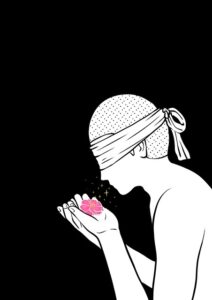
Smell is often underused in novels. Yet it can be the most powerful of all the senses for readers. Certain scents arouse memories from a special time in our lives.

On this Reader Friday, please share a smell that transports you to the past, and why.

Are You a Writing Success or an Imposter?

Success, by definition, means different things to different folks. Most writers probably see “success” as being published—repeatedly. They work hard, take risks, and accept that being exposed to failure is part of success. They’re confident souls and keep-on-writing regardless of what others think. Then, there are those who outwardly “make it” but, deep inside, see themselves as imposters.

Yesterday morning, I was reading an online article at Global News which is one of Canada’s leading media sites. The piece was occasionally interrupted with paid ads by prominent players like Ford, Ikea, Microsoft, Audible, and Formica who financially support Global so they can survive in the commercial news biz. All of a sudden I went, “Whoa! Am I really seeing this?”

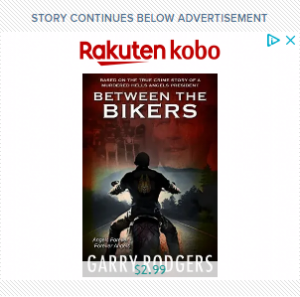
Before my eyes was an advertisement from Rakuten Kobo, and there was the cover of my newest publication. Kobo chose my book Between The Bikers as their featured promotion and exposed it before I don’t know how many critical eyes. And this Global ad was bought and paid for by Kobo—not me. I knew nothing about the promo before stumbling upon it.

I said to Rita, “Well, will you look at this…” My wife glanced, smiled, and replied, “You’re quite the success.” I had to agree, but then I immediately thought of an earlier email exchange with a highly successful UK writer friend who told me he suffers from Imposter Syndrome (IS).

Before going into what Imposter Syndrome might be, I had to click on Dictionary.com for two definitions:

Successnoun

  1. the favorable or prosperous termination of attempts or endeavors; the accomplishment of one’s goals.
  2. the attainment of wealth, position, honors, or the like.
  3. a performance or achievement that is marked by success, as by the attainment of honors: The play was an instant success.
  4. a person or thing that has had success, as measured by attainment of goals, wealth, etc.: She was a great success on the talk show.

Imposternoun

  1. a person who practices deception under an assumed character, identity, or name.

This got me thinking, What if I’m just an imposter, a bullshit clown, and this Kobo recognition hasn’t been honestly earned? I know that friends, family, and former police colleagues—as well as fellow writers—are going to see this thing, click on it, and expose me for what I might truly be. Oh, the humiliation…

I don’t know who, or how many, saw the Kobo ad. I guess upcoming stats will tell if the promo was successful, but the startling experience made me think of my UK friend and what was going on with his IS insecurity. So, I did some Googling and came up with a fascinating article and self-examination on the New York Spirit psychology-therapy site titled What Is Imposter Syndrome? It opens like this:

“Welcome to the world of the Imposter Syndrome. It is a secret world, inhabited by successful people from all walks of life who have one thing in common – they believe that they are not really good enough. They might be men or women, young or old. And imposter beliefs are not always related to work; I have met ‘imposters’ who feel they are not good enough parents, husbands, wives, friends or even not good enough human beings. These are all variations of Imposter Syndrome, especially when there is little objective evidence to support the sufferers firmly held self-beliefs that they are frauds.

The term ‘Imposter Syndrome’ or ‘Imposter Phenomenon’, was first coined in 1978 by clinical psychologists Pauline R. Clance and Suzanne A. Imes in a paper entitled ‘The Imposter Phenomenon in High Achieving Women: Dynamics and Therapeutic Intervention’.

 The condition was described as being ‘an internal experience of intellectual phonies’ that afflicted some high-achieving women. In their paper, Clance and Imes described their sample group of 150 women as follows, ‘despite their earned degrees, scholastic honors, high achievement on standardized tests, praise and professional recognition from colleagues and respected authorities… [they] do not experience an internal sense of success. They consider themselves to be “impostors”.’ They go on to explain that these women believe they have only achieved their success due to errors in selection processes, or because someone has overestimated their abilities, or that it is due to some other external source.”

Drs. Clance and Imes list three characteristics that define Imposter Syndrome:

  1. Persistently attributing your success to external factors like luck or others.
  2. Believing others have an inflated view of your skills, abilities, and talents.
  3. Fearing you’ll be found out and exposed as a fake.

The New York Spirit piece notes that Imposter Syndrome isn’t a recognized mental health condition. (I checked with the DSM-5 and it’s not.) However, through Wikipedia I found a book by researcher Valerie Young titled The Secret Thoughts of Successful Women: Why Capable People Suffer From the Impostor Syndrome and How to Thrive in Spite of It. In her book, Ms. Young identified five subgroups this syndrome falls into.

  1. The perfectionist
  2. The superwoman/man
  3. The natural genius
  4. The soloist
  5. The expert

Ms. Young states more than 70% of people experience impostor syndrome at some point in their career. That’s regardless if they’re a rocket surgeon, brain scientist, or crime/thriller/mystery writer.

Back to the New York Spirit article. I love quizzes and was most interested in taking their short self-assessment to see whether or not I had Imposter Syndrome. This is how NY Spirit described it: This quiz is based on the common symptoms outlined above and is not meant to be a diagnostic mental health tool, but rather a quick and simple way to ascertain to what degree you feel like you are an imposter. It goes like this…

How easy do you find it to accept praise?
Very hard — 1    Quite hard — 2    Quite easy — 3    Very easy — 4

When you do something well, how likely are you to dismiss it as not really much (eg it was easy, anyone could have done that, it was nothing special).
Very likely — 1    Quite likely — 2    Not very likely — 3    Not at all likely — 4

When you do something well, how likely are you to attribute your success to luck?
Very likely — 1    Quite likely — 2    Not very likely — 3    Not at all likely — 4

When you do something less well, how likely are you to attribute your failure to luck?
Not at all likely — 1    Not very likely — 2    Quite likely — 3    Very likely — 4

When you perform poorly, or fail, how likely are you to attribute your failure to your own lack of skill or not working hard enough?
Very likely — 1    Quite likely — 2    Not very likely — 3    Not at all likely — 4

When you do something well how likely are you to attribute your success to other people’s input (‘they helped me’)?
Very likely — 1    Quite likely — 2    Not very likely — 3    Not at all likely — 4

When you do something poorly how likely are you to attribute your failure to other people (‘it was their fault’)?
Not at all likely — 1    Not very likely — 2    Quite likely — 3    Very likely — 4

How important is it for you to be the best at something that matters to you?
Very important — 1    Quite important — 2    Not very important — 3    Not at all important — 4

How important is success for you?
Very important — 1    Quite important — 2    Not very important — 3    Not at all important — 4

How likely are you to focus on what you have not done well compared to what you have done well?
Very likely — 1    Quite likely — 2    Not very likely — 3    Not at all likely — 4

How important is it to you to find a ‘hero’ to befriend and impress?
Very important — 1    Quite important — 2    Not very important — 3    Not at all important — 4

How often do you feel afraid to express your views lest people discover your lack of knowledge?
Very often — 1    Quite often — 2    Not very often — 3    Not at all/rarely — 4

How often do you find yourself unable to start a project for fear of failing?
Very often — 1    Quite often — 2    Not very often — 3    Not at all/rarely — 4

How often do you find yourself unwilling to finish a project because it isn’t yet good enough?
Very often — 1    Quite often — 2    Not very often — 3    Not at all/rarely — 4

How happy are you to live with a piece of work you have done that you know isn’t perfect?
Not at all happy — 1    Not very happy — 2    Quite happy — 3    Very happy — 4

How often do you find yourself thinking that you are a fraud?
Very often — 1    Quite often — 2    Not very often — 3    Not at all/rarely — 4

How worried are you that your lack of skill/talent/ability will be discovered?
Very worried — 1    Quite worried — 2    Not very worried — 3    Not at all worried — 4

How important is validation from others to you (e.g. praise)?
Very important — 1    Quite important — 2    Not very important — 3    Not at all important — 4

How To Score

According to the piece, the lower your numeric score, the more likely it is you have Imposter Syndrome. The scoring range is from 18 to 72 and (as a rough guide) any score below 36 indicates some sort of IS element is going on in your personality. Again, this is not an accredited test and has to be looked at with a bit of “ooo-kaaay…”.

You’re probably wondering how I made out. I tried to be as honest as possible, and I scored 55. I suppose that indicates I’m relatively comfortable with my butt in the chair with my fingers on the keys. What about you? Go ahead. Take the IS quiz and share your score with your fellow Kill Zoners.

Another thing for Kill Zoners… how do you define “success”? While I was surfing the New York Spirit site, I found an article by Jessica Kitching titled How Do We Measure Success? In it, she says, “If you wake up with a passion for what you do, a purpose that excites you, and a momentum to keep going, then you are a success. I am not ashamed to label myself a writer. I am a writer. I love what I do. How many other people can say that?”

*   *   *

Garry Rodgers is a retired homicide detective with a second career as a coroner. Now, Garry has reinvented himself as a crime thriller writer who masquerades as a commercial success.

He lives on Vancouver Island at British Columbia’s southwest coast and regularly imposters as an old boat skipper. Visit DyingWords.net which is the real website and popular blog for Garry Rodgers.