Photo purchased from Shutterstock
Which of your stories or books best represents you as a writer? In other words, which work represents your Personal Best? Tell us a bit about it in the Comments.


Courtesy of Flickr
Years ago, my husband and I had a good friend named Jimmy Bogle (not to be confused with the American Ninja Warrior). Jimmy was a little person who stood about four feet six inches in cowboy boots.
Jimmy told stories about growing up in the 1920s and ’30s, during an era when little people were considered “freaks” and “abnormal.” Children born with dwarfism were often hidden away in the basement so they wouldn’t bring shame on their families. Many grew up in isolation, never knowing there were other little people like themselves. A few found homes in circus sideshows or vaudeville but career options were pretty limited.
Then came the casting call for Munchkins in The Wizard of Oz.
During the poverty of the Great Depression, parents of little people seized the chance to earn money from their children’s size.
Jimmy was a teenager at the time. He was chosen to take over the role of the Mayor of the Munchkins when the original adult actor (who receives credit on Wikipedia) couldn’t finish the film. Heavy makeup transformed Jimmy into a wrinkled old man.
More than a hundred little people came together and were cast in the movie. Many had never encountered another little person before. For the first time in their lives, they connected with others from similar sheltered backgrounds, with similar problems and feelings. They were no longer isolated but suddenly among friends with whom they had an immediate connection. In 21st century parlance, they’d found their tribe.
Let the celebration begin!
The Munchkin cast was short in stature but long on partying. They drank and danced and pulled pranks. They fell in and out of love several times a night. Full of mischievous exuberance, they trashed the hotel where they were staying.
Knowing Jimmy, we suspect he played ringleader to this merry band of cut-ups.
In 1981, Billy Barty, Chevy Chase, and Carrie Fisher starred in the film Under the Rainbow, a fictionalized account of the making of The Wizard of Oz. Jimmy scoffed at the movie, saying it didn’t do justice to his gang’s shenanigans.
What does this have to do with writing conferences? I’m glad you asked.
Although writers’ families don’t hide us away in basements (at least not usually!), we are often perceived as different from regular people.
Writers work in isolation, living inside our imaginations. Many are shy introverts and are sometimes perceived as antisocial.
That is, until we get around other writers. Then we emerge from our shells.
At my first writing conference, I was a tongue-tied beginner, ill at ease, self-conscious, surrounded by professional authors who, I was sure, wouldn’t lower themselves to talk to an unpublished nobody.
Big surprise. They were welcoming, encouraging, and, amazingly, as plagued with self-doubt as I was. Shyness melted. Friendships blossomed spontaneously from our common passion.
Like the little people who came together as Munchkins, I’d found my tribe.
I became a conference junkie and my dear husband supported my addiction. Instead of birthday gifts, he treated me to various gatherings.
Along the way, I became a volunteer at Rocky Mountain Fiction Writers (TKZ‘s own Jim Bell is their keynote speaker this year) and Pikes Peak Writers Conference. I judged contests, handled the registration table, moderated panels, etc. Working behind the scenes made me appreciate the experience even more, seeing how much time and effort went into pulling together a successful event.
Because I saw many different presenters, I became a speaker wrangler for the Flathead River Writers Conference sponsored by my local group, the Authors of the Flathead. Inviting editors and agents for a fun weekend in Montana is a far easier job than querying (begging) them to consider a manuscript.
I learned they were not cruel gods who cavalierly damned struggling writers to slush pile purgatory. They are human beings who genuinely feel bad about rejecting manuscripts. They struggle with budgets, timing, and marketing constraints. They serve as midwives who are often as ecstatic as the author when a book is born.
And they like to talk to writers. They’re glad to demystify the publication process.
Conferences provide a rare opportunity to interact face to face with editors and agents. If traditional publication is your goal, meeting the pros in person can be a big step out of the slush pile. When you’ve paid tuition, they can see you’re serious about your career.
Whether you go the traditional route or self publish, contacts at gatherings can enhance your knowledge in ways you never imagined. I once spent an afternoon in a hotel lobby listening to an FBI agent and a forensic anthropologist trade stories. My collection of business cards is a great source for experts in all kinds of fields.
While the cost of conferences can be off-putting, many organizations offer scholarships or internships. Volunteer help is always needed and may earn discounted tuition.
You can also cut expenses by splitting the gas bill and sharing lodging. I’ve roomed with three pals whom I only see at conferences. Our reunions are always a blast. Like happy Munchkins, we drink, laugh, and stay up all night, although we don’t trash the hotel…at least, not that I remember!
Conferences provide more than education and professional contacts. They take us out of our solitary world and give us a chance to connect with our tribe. I always come home energized, inspired, and eager to write.
Now for a shameless plug: if you’re looking for a friendly, intimate gathering that offers lots of useful information for a reasonable price, please check out the Flathead River Writers Conference, September 22-23, 2018 in Kalispell, Montana.
Look me up—I’d love to meet TKZers in person. We’ll celebrate like Munchkins.
When Debbie Burke is not writing suspense and thrillers, she’s on the planning committee of the Flathead River Writers Conference, now in its 28th year.
Gear up for a little gun porn, folks. It’s been a while since I’ve ranted about mistakes authors make when writing about guns, so I thought I’d stir things up a little.
Cla-shack. When I say it out loud, it is exactly the sound that a well-tuned pump-action 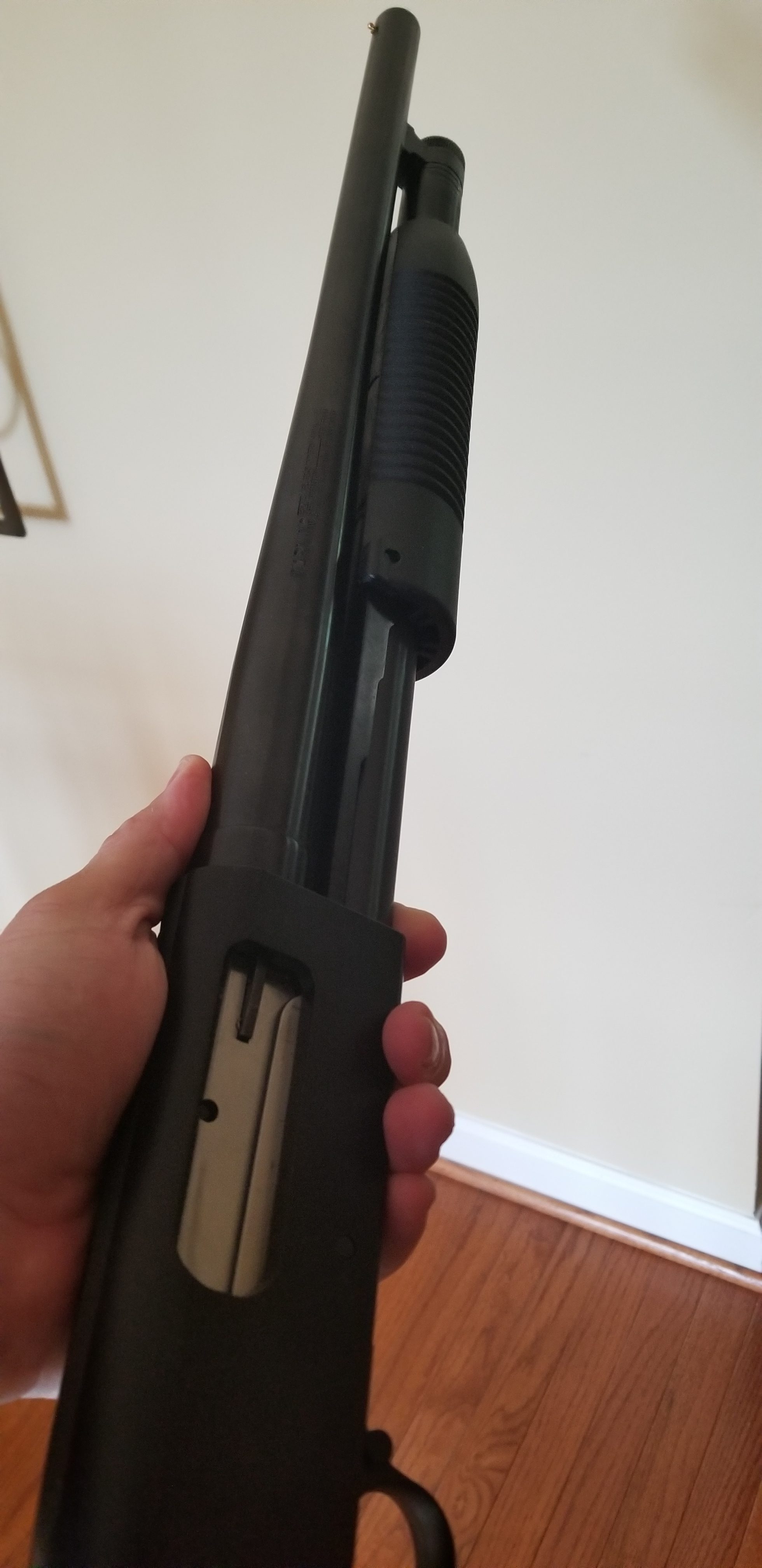 shotgun makes when you work the bolt. It’s very dramatic on the page or on the screen, and it is unmistakable in real life. How many times have we seen that moment when our good guy with a shotgun confronts the armed bad guy he’s been looking for and then, when they’re face-to-face . . . cla-shack “Freeze!”?
I watch those scenes and wonder what kind of moron searches for a bad guy without a round in the chamber, ready to fire? Why walk into a gunfight with your gun unloaded?
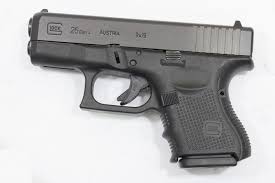
This is a Glock 26, but all Glock platforms work the same way. Note that there’s no hammer.
Remember that very dramatic scene in The Fugitive (the 1993 movie version) when Richard Kimble is making his getaway from City Hall with Marshal Sam Gerard right behind? In that chase, we see Gerard pull his Glock from its holster and he racks a round into the chamber. Then as Kimble dives through the bullet proof glass barrier doors, Kimble’s foot gets clamped between the doors and Gerard fires four or five times into the glass. Very thrilling, but why didn’t he shoot the sole of Kimble’s foot, which was still inside the glass? Okay, that last part is for a future post.
Understanding that the average gunfight lasts less than five seconds, and at a range of 7-10 feet, every cop I know carries his or her pistol in what’s called “condition one”, which means there’s a round in the chamber and the safety is on.
“But John!” someone shouts. “Everybody knows there’s no safety on a Glock!”
Not so, I reply. There are actually three safeties on a Glock. They’re internal. There’s a trigger safety, a firing pin safety and a drop safety. You can throw a chambered Glock against a concrete floor as hard as you want, and it won’t go off accidentally. Yet, if you pull the trigger intentionally, it will fire every time. And that’s the point. When someone is about to kill you, you don’t want a lot of intermediate manipulations to get in the way of returning the favor.
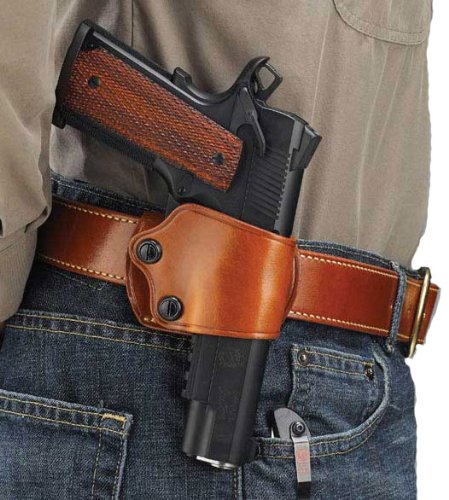
This is a “1911 platform” pistol in Condition One. Note that the hammer is cocked, and the thumb safety is engaged. This is often called “cocked & locked.”
If you’re going to include firearms in your writing, it’s important to know the peccadillos of your character’s chosen pistol (or rifle, for that matter).
My character Jonathan Grave carries a Colt 1911, always in Condition One, which also called “cocked and locked.” When confronted by a bad guy, all he has to do is draw, thumb the safety (press down on the lever next to the hammer) and shoot.
Many gun manufacturers use the 1911 platform for pistols in pretty much any caliber. Among the characteristics they all share is the fact that they are single action only (SA), meaning that unless the hammer is cocked, the weapon will not fire. Thus, when you see a character carrying a pistol that looks anything like the one in the picture, but the hammer is down, it is not ready to shoot.

Many pistols like this Beretta 92 (military M9) are double action on the first round, and single action thereafter.
On the other hand, there are many pistols with hammers, such as the Beretta M9, where carrying with the hammer down does not impede quick deployment. That’s because these pistols are both double action and single action (DA/SA). With a bullet in the chamber, and the hammer down, the first pull of the trigger pulls the hammer back and then releases it to strike the firing pin. Then, after the slide operates to eject the round, the hammer remains cocked and ready to shoot as a single action pistol. The tricky part is that that initial pull on the trigger is very hard, and then the pull is very light for the follow-up shots. As a result, for me, anyway, accuracy suffers because of the lack of a consistent trigger pull.
As I’ve written before in this space, if verisimilitude is important to you, and you’re going to write about firearms, don’t go with what you see on TV or in movies. Get thee to your local shooting range and rent your character’s gun for an hour and shoot it. If you’re not familiar with shooting, the staff will be happy to help you out.
All questions and comments are welcome.
By PJ Parrish
I’m not a big ice cream eater. Take it or usually leave it. But the thing about living up here in Traverse Ctiy, Michigan, is that you must love ice cream. Not just any old Edys or everyday Haagen-Daz. It must be Moomers.

Moomers is a family dairy farm up here that has been around since the glaciers carved out the Great Lakes. Okay, I exaggerate. But Moomers is like dairy manna up here. Maybe it’s because the Moomer cows look so happy. You can watch them grazing as you snarf down your Cherries Moobalee ice cream from the parlor up on the hill. (see left) Recently I took my 9-year-old grand-niece to the farm and she asked me “Are those cows?” (She lives in Macau so doesn’t see a lot of livestock). I couldn’t help it. I said, “Those are sacred cows.”
Cheap joke. And this is a long way to get to my point. Moo-mer, me, okay? I’m having a bad week with the galley corrections, among other book stuff, and my brain is like mush.
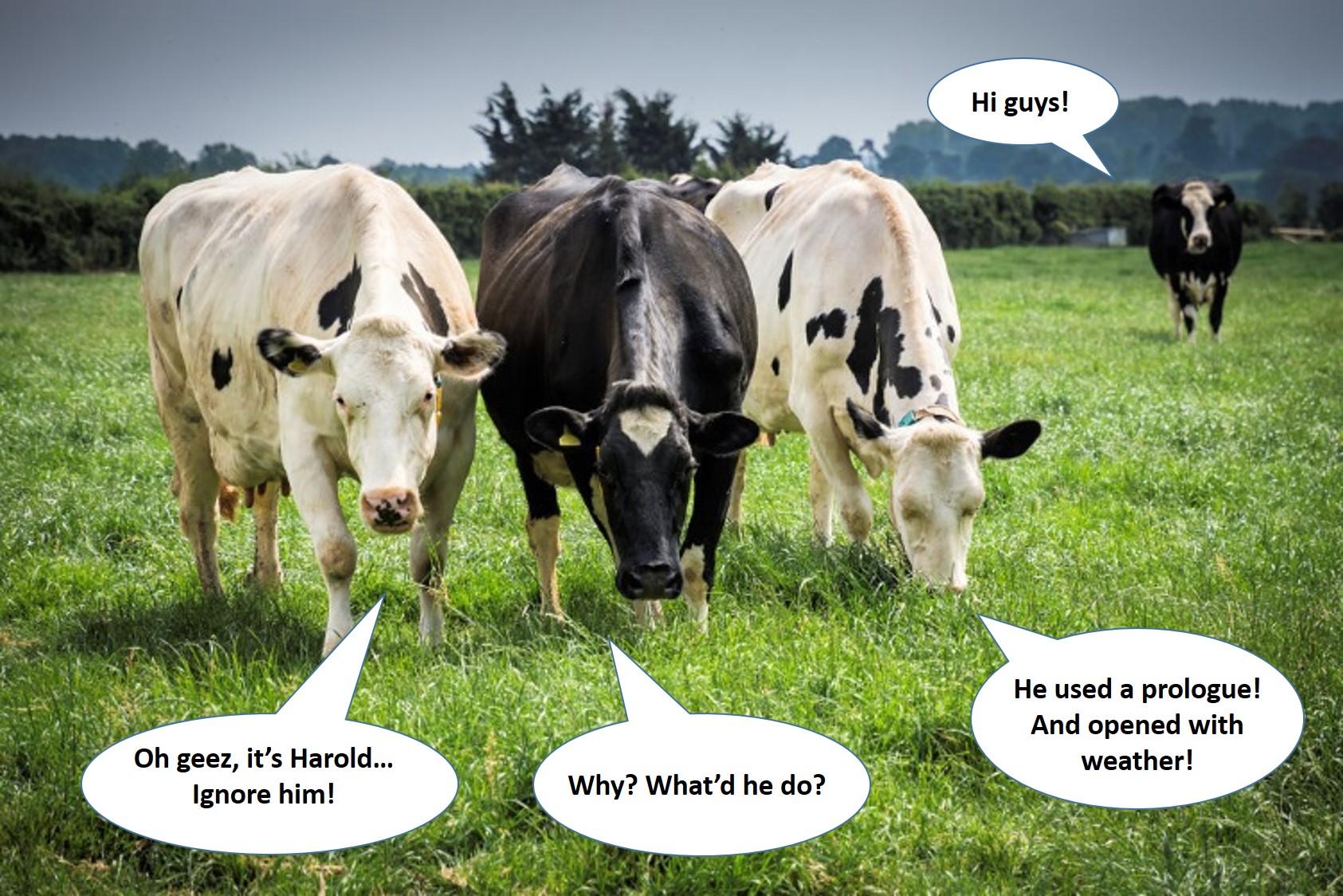
So, let’s talk about sacred cows in writing. I’d bet you can rattle off a long list of them that you’ve heard in workshops, at conferences, stuff you’ve read in how-to-write books, absorbed from Stephen King, or even seen here at TKZ. Never use adverbs! Stay away from prologues! Write what you know! Write every day or die!
I dunno. Maybe it’s time to kill off some sacred cows. I’ll start. You guys can add your own.
Never Open With the Weather
I think this one started with Elmore Leonard. I respectfully disagree. Now, if you’re just painting pretty mood pictures on your first page with sunsets or trying to tell readers “bad stuff is coming” with rainclouds, yeah, I’d say you’re edging up to the cliche cliff. But if weather figures into your plot, go for it! In the aftermath of a hurricane, a man walking through the debris on a beach finds a baby skull. That’s the opening premise of our book Island of Bones, the catalyst of the case for Louis Kincaid. But we first had to show a woman so desperate to escape her killer that she ventured out into the fury of the hurricane in a dingy. Which brings me to the next cow…
Prologues Are Bad, Bad, Bad!
I don’t like prologues. I’m on record here with that. You know why? Most prologues are tacked on, like some flabby artificial limb, because 1. The writer couldn’t figure out how to establish world-building (common problem in fantasy) 2. It’s a giant info-dump about the protag’s background. 3. Writer panicked and thought he needed a wham-bam action opener as a hook because someone told him all novels have to open fast. 4. The writer is showing off and can’t stand to cut her beautiful prose. (Been there, done that.) Okay, here’s a rule you can take to the bank: Bad prologues are bad. I’ve read some great thrillers that open with prologues from the villain’s point of view and it works because it sets up the stakes for what the hero is up against. Also, some complex stories jump around in time or space and that can give the reader brain-cramps. And a good prologue can help that. Remember the movie Terminator? It opens with a great prologue.
Los Angeles, 2029: The machines rose from the ashes of the nuclear fire. Their war to exterminate mankind had raged for decades, but the final battle would not be fought in the future. It would be fought here, in our present. Tonight…
So you might need a prologue set in WWI and then you jump to chapter 1 present day. Maybe. But proceed with caution. Take off “Prologue” and sub in “Chapter 1.” Does it still work? Then ditch the prologue tag; the reader won’t miss it. Robert Heinlein’s Stranger in a Strange Land opens by telling us about a martian named Valentine. Then it jumps ahead 25 years. He labels the sections I and II, but to my mind, the Valentine “chapter” reads like a good prologue. Here’s a good post by agent Kristen Nelson on why most prologues don’t work.
Adverbs Are For Amateurs
“The road to hell is paved with adverbs,” Stephen King said sternly. What we’re talking about is mainly adverbs that end in “ly.” Many writers, especially when first starting out, struggle to find the right words to convey that beautiful chaos in their heads. So often we get stuff like: “You’re my world, baby-child,” she said lovingly. Or “I’m going to rip your head off,” he said menacingly. The problem, of course, is the dialogue should be doing the heavy lifting, and if you need a crutch-word after said, well, take a harder look at your dialogue. But every once in a while, you might need one for simple clarity. Don’t write: “He shut the door firmly” when you can say “He slammed the door.” BUT…I can make a case for “He closed the door softly behind him” or “Louis nodded thoughtfully.” So yeah, I think you can toss the occasional adverb into the stew. But as you gain more confidence in your writer’s voice, I’ll bet you use fewer “ly” words. She said encouragingly.
Show Don’t Tell!
I’m not going to try to kill this sacred cow (I believe in it too strongly). But I might try to tip it over. Telling is one of the hardest things to rid from your story. It’s also one of the hardest things to explain to new writers. I’ve devoted whole Powerpoint workshops to it. Basically, your story (and the reader’s experience of it) will be richer if it is filtered through the actions, words and thoughts of your characters. Simply put, you need to show your character doing things rather than you, the writer, telling the reader what is going on. Fiction is drama; not statement. BUT…to tip the cow, sometimes a little judicious telling is necessary. A novel is not a movie. Sometimes we can be “told” what is going on in a character’s psyche. And sometimes, we just need the clarity and shorthand that pure exposition can supply to move the story forward faster. “By the time he got to Phoenix, he was tired.” Maybe the journey wasn’t important, so this is all you need to tell. I think our own James pointed out here once that if you “show” everything, there is no modulation, and you end up giving equal weight to all scenes and actions. (Correct me if I’m misquoting you, Jim).
Write What You Know
This cow always kills me. Because if were true, all thirteen of my novels would be about an aging white woman whose biggest dream once was to be a hairdresser and who came THISCLOSE to being a housewife in the Detroit suburbs with at least three red-haired kids. (Don’t worry, I won’t explain that any further). I get where this hoary piece of advice came from: Don’t write about cultures, people, places or the kinds of stories that you have no affinity for. This is why I don’t attempt YA or sci-fi. But it does not mean you can’t write stories about opposite genders, different races, places you can’t get to physically. You are a writer! Your job is to make things up! See, there’s this wonderful thing in the writer’s chest called the imagination tool. I picture it as an awl drilling a hole into a different dimension. Writers live in this dimension of dreams (and nightmares), where things are easier, harsher, more beautiful, more terrifying, where we can be freer, more daring, than we can ever be in real life. If you ever feel disconnected from this power, go to a playground or beach and watch some kids play. They are unbound, they are passionate, they are making it up as they go along. Yes, you should use what is unique in your life experience for your fiction. But If you cannot tap into your imagination, if you cannot step outside your own skin and unleash your empathy, you can’t be a writer. I’ve lived inside the skins of six serial killers, a coma victim, a French-Algerian cop, a classical cellist, a fallen Catholic priest, a gay Palm Beach walker and a girl who believed she was a reincarnated slave. To say nothing of living for 20 years now in the skin of a biracial man. Louis Kincaid, c’est moi.
Okay, that was the liver and broccoli. Now let’s have some ice cream. Here are some “sacred cows” I found that I think are worth keeping around to graze in your brain:
Grab ’em by the throat and never let ’em go. — Billy Wilder
Develop craftsmanship through years of wide reading. — Annie Proulx
Never use a metaphor, simile, or other figure of speech which you are used to seeing in print. — George Orwell
Never get drunk outside your own house — Jack Kerouac
Leave out the parts readers tend to skip — Elmore Leonard
Forget the books you want to write. Think only of the book you are writing.– Henry Miller
When in doubt, bury someone alive. — Edgar Allan Poe
Okay, that last one is made-up. So what? So are all my books.
by James Scott Bell
@jamesscottbell
We’ve talked before about not settling for mere competence in your writing. We’ve already got plenty of that. The “tsunami of content” available for the consumer of fiction today is made up largely of a spectrum that ranges stink bomb to okay, with the scale tilted decidedly toward the former. It has ever been so, according to Sturgeon’s Law.
So if you want word-of-mouth, and delighted readers, you’ve got to bring something extra to the page. Today I want to talk about adding snap to your style.
As an example of how to do it, I turn us back to another tsunami, the boom in mass market paperback originals from the 1950s. The public, just beginning their addiction to television, was still voracious in its reading habits. Drugstore spinner racks had to be replenished daily with new titles from such publishers as Gold Medal and Pocket Books.
As a result, noir and crime and mysteries were cranked out by scores of writers, accompanied by racy covers and taglines such as: An isolated mountain lodge—and open season on SIN! and She had the face of a madonna and a heart made of dollar bills!
Most of this fiction was serviceable. It did its job and was soon forgotten. But within this market there emerged some fine, even great writers. The ones who stood out always gave their fiction something extra, usually in the style. John D. MacDonald was one. Another was Gil Brewer.
Brewer’s life was writing and writing was his life. Unfortunately, when he wasn’t writing he was drinking. Sadly, the bottle killed him. But before his decline he wrote some of the leanest, meanest noir on the market. You can read about Brewer in this tribute by Bill Pronzini, wherein he writes:
Despite some lurid titles – Hell’s Our Destination, And the Girl Screamed, Little Tramp, The Brat, The Vengeful Virgin– Brewer’s fifties GM [Gold Medal] and Crest novels are neither sleazy nor sensationalized; they are the same sort of realistic crime-adventure stories John D. MacDonald and Charles Williams were producing for GM, and of uniformly above-average quality. Most are set in the cities, small towns, waterways, swamps, and backwaters of Florida, Brewer’s adopted home. …The protagonists are ex-soldiers, ex-cops, drifters, convicts, blue-collar workers, charterboat captains, unorthodox private detectives, even a sculptor. The plots range from searches for stolen gold and sunken treasure to savage indictments of the effects of lust, greed, and murder to chilling psychological studies of disturbed personalities.
Hard Case Crime has re-published The Vengeful Virgin. I picked it up based on Brewer’s name. And as you can see from the original cover and marketing copy, it was one of those lust-and-greed-leads-to-murder tales. But it stands out from so many others because of the snap in Brewer’s style.
The book is about Jack Ruxton, who runs a TV sales and repair shop. He makes a housecall one day to the home of Victor Spondell, an old invalid who is being cared for by his eighteen-year-old stepdaughter, Shirley Angela.
It doesn’t take long for Jack and Shirley to fall in lust. Then try to figure out a way to murder Victor so Shirley can lay claim to the three-hundred grand he’s left to her.
The book is written in First Person POV. At one point, with the plan underway, Jack is alone in his store, feeling like a caged animal. He needs to get something to eat. A competent writer might have written the following paragraph:
After awhile it was time to eat something again, so I walked down to the drugstore and had a ham sandwich and a glass of milk. It was dark outside. There was some light from the street. Cars went up and down, maybe to parties and good times, or just home to TV and the evening paper.
That’s fine. It’s competent. But Brewer is more than that. He wrote it this way:
After awhile it was time to eat something again, so I walked down to the drugstore and fooled around with a ham sandwich and a glass of milk. It was dark outside. Neon glowed in the streets. Cars hissed up and down on their way to parties, maybe, good times, or just home to the one-eyed monster, and the evening paper.
That right there is the elusive thing called voice. It’s a symbiosis of writer and character rendered with craft on the page. Look at the verbs—fooled around, hissed. And the specific nouns—Neon, one-eyed monster. That’s how Jack Ruxton would talk, pressed through the gauze of a skilled writer’s imagination.
So our lesson today is simple:
Go ahead and use a thesaurus. I wrote this sentence: I ate a hamburger. Just for laughs, I opened my Mac dictionary, entered “eat” and went to the thesaurus. There I found: devour, ingest, partake of; gobble (up/down), bolt (down), wolf (down); swallow, chew, munch, chomp; informal guzzle, nosh, put away, chow down on, tuck into, demolish, dispose of, polish off, pig out on, scarf (down).
In about ten seconds I decided on: I demolished a hamburger.
The best time to do this, in my experience, is by looking over your previous day’s pages. That’s not the time for major changes in plot or character. Just use it to put some snap in your style. Readers will notice.
What is your approach to style? Do you think about it as you write? Is there an author you’d like to emulate (not copy)?

Garden in late June
Join me today as we get down and dirty to root out a few parallels between gardening and writing.
The first few years we lived in Montana, a handful of warm, sunny April days always fooled me into thinking winter was over. Sparkling blue sky lured me outside where I chipped through ice to dig up black dirt. New life abounded—robins scouted for nest locations in the bare branches of apple, pear, and apricot trees that were just starting to bud. I couldn’t wait to get seeds in the ground.
Inevitably I planted too early—a spring blizzard usually dumped a foot of new snow the next day and the seeds never germinated. I’d have to buy more and try again weeks later when the weather finally warmed for real.
In those early days, I sent out novels that weren’t ready. In my eagerness to get published, I was blind to immature plots that needed more development and characters that didn’t ring true. Market conditions, pfft! Who needs to worry about that?
Often those submissions resulted in biting blizzards of rejection.
2. Persistence
Veteran Montana gardeners know to plant corn seeds three times in succession. The first batch rots because the soil is still too cold and wet; crows gobble the second round; with luck, the third grows and produces.
Nine earlier novels of mine didn’t make the grade. But I kept replanting to hit the right editor/agent at the right time. Gardeners and writers must be persistent and never give up.
3. Patience
Gardeners and writers must play the long game. Cherry trees don’t bear for seven years after they’re first planted. Books may require similar time from the initial seed of an idea to publication.
I’m more patient these days, willing to give my stories enough time to grow and ripen.
4. Dirty, backbreaking work
While my hands root around in the dirt, my mind stays busy digging out a more compelling plot, digging into the puzzling psyches of difficult characters, or digging out of the inadvertent rabbit hole I burrowed into.
Sometimes my mind winds up as muddy as my body.
5. Weeds, like bad habits, never die
Dandelions, black medic, and quack grass keep coming back no matter how often I pull them. Same with stubborn writing problems. Someone needs to invent Roundup for word tics, repetitions, misspellings, and excess verbiage.
6. Some crops do better in certain years than others
This July’s raspberries ripened fat, sweet, and juicy, while last summer they yielded only hard seeds. Peas that had been plentiful in the past did poorly this year, no matter how much I pampered the vines.
Sometimes I’ve written articles because the subject fascinated me yet they never found their way into print. Other stories I thought were ho-hum surprised me when editors accepted them and asked for more. Perhaps I was trying to sell peas in a market looking for raspberries.
7. Sometimes hard luck negates hard work
Rogue deer crash through the mesh fence and claim the salad bar for themselves. Aphids suck the life out of tomato plants. Grasshoppers strip plants down to mere stems. A freeze in August can destroy the harvest overnight.
Even so-called foolproof crops aren’t immune to whims of nature. One year I dug up what promised to be a bounty of potatoes to find voles had eaten the insides of every single spud, leaving only hollow shells behind.
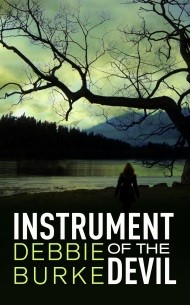
After almost three decades of novels being rejected, my thriller Instrument of the Devil was published last year. The editor expressed strong interest in the second book in the series, Stalking Midas. I’d finally made it.
Right.
Six months later, the publisher closed up shop. Voles ate the heart out right of that potato crop.
8. Seasons ebb and flow in the garden and in writing
Here’s the current ebb and flow in my career:
Although I’m back in the submissions grind, at least I have lots of practice.
The first draft of book 3 in the series is close to complete and I’m still excited about the story.
Marketing keeps me spinning my wheels in the mud.
This regular gig at TKZ is great fun. I get to write about my passion, interact with interesting authors, and learn. What’s not to like?

“The corn is as high as an elephant’s eye”
Today in my garden, “the corn is as high as an elephant’s eye,” to quote the classic Rodgers and Hammerstein musical Oklahoma. In a few weeks, I look forward to breaking cobs off the stalks, rushing inside to nuke them in the microwave while still in their husks, then slathering them with butter. In that first burst of flavor, the memory of sore muscles from stooping, bending, and digging fades into the background.
But if a September hailstorm strips the garden bare, there’s always next spring with seeds of a new novel to plant.
TKZers, where are you in your seasons of writing?
Even though Debbie Burke is searching for a new publishing home, Instrument of the Devil remains available on Amazon here.
By Clare Langley-Hawthorne
It’s no secret that the majority of my book title offerings are terrible. When I suggest them, my agent shudders and then usually takes pity on me and comes up with a better one. For my first novel, Consequences of Sin, I think my working title was something awfully bland like Dark River and my other suggestions went downhill from there. Thankfully, my agent saved me from title hell, and came up with the one that was ultimately used for the published novel. Recently, for a WIP, I told her the proposed title of the novel and she laughed and told me it sounded like porn (which it most certainly wasn’t!)…so clearly my talents as far as book titles go have not improved.
Last blog post I focused on the importance of cover art and my own personal angst over the issue. This week I want to focus on book titles – how much do they matter and, assuming they do, how does one come up with a great title for their novel?
When I think about my own reading preferences, I have to admit covers tend to trump titles. I’m usually less drawn to a book title than I am to amazing cover art – but if a book title sounds weird or off-key it can put me off. Like cover art, the title should be indicative of the level of violence, romance or horror in a novel – so if it doesn’t match the actual book it can be problematic.
There are some well-known examples of famous book titles that were almost called something else. Pride and Prejudice was almost going to be First Impressions (ugh…), Lolita was almost The Kingdom by the Sea (?…), Lord of Flies could have been Strangers from Within and 1984 was almost The Last Man in Europe. The first Harry Potter book was also, apparently, going to be called Harry Potter and the School Of Magic which definitely doesn’t have the ring of Harry Potter and the Sorcerer’s Stone (or, in the UK, the Philosopher’s Stone). Book titles for these famous books now linger in our collective memory, so it seems strange to think of them being called anything other than what we’ve come to know and love.
So if a book title can make such an impact, how do you choose one that doesn’t suck? I think the key to this is brainstorming as many titles as possible, getting lots of constructive feedback, and then letting someone else decide:)
From researching the question of formulating a decent book title, it seems there is at least consensus that a good book title should be:
For me, this all sounds much easier said than done… Of course, if you decide to go the traditional publishing route, as the author you often have to accept a new book title generated by the publisher anyway…which might be why I usually have a lengthy list of book title options which I throw into the air…and then wait for someone else to tell me which one (if any) works.
So TKZers, how do you approaching naming your books? How important do you consider the title for you book and how do you make the final decision on the title for your book?
I’ve been working diligently on getting my copyrights back from HarperCollins, HarlequinTeen, and Amazon Publishing (Kindle Worlds).
The Amazon Kindle Worlds novellas were simple. Amazon had discontinued their Kindle Worlds line and the stories reverted back to the authors in July. It left me with a number of stories where I had to tweak the covers and change the copyrights pages. Some of the host authors like Susan Stoker and Elle James started their own publishing companies and that made it easy to contract with them. Authors make great and fair partners. They are even making print formats for what were novellas only available in digital. As new publishers, they took on the traditional publishers’ roles and created the cover backs needed for print. That made everything smooth and easy for me to transition. I only had to indie pub two novellas.
When I got my YA book rights back from Harlequin Teen, that meant I had to do more. I had to create different covers and make any changes to the text and copyright page on the formatting. I’m in the middle of doing the book pages through my formatter – Kate at Wizards in Publishing. It was really fun to dive into my YAs and reread the books, but creating the covers from scratch (using only my opinion) really rocked. I got to tell the story through the art and the creative mind of my cover designer – Fiona Jayde Media.
This was my original cover from Harlequin Teen.
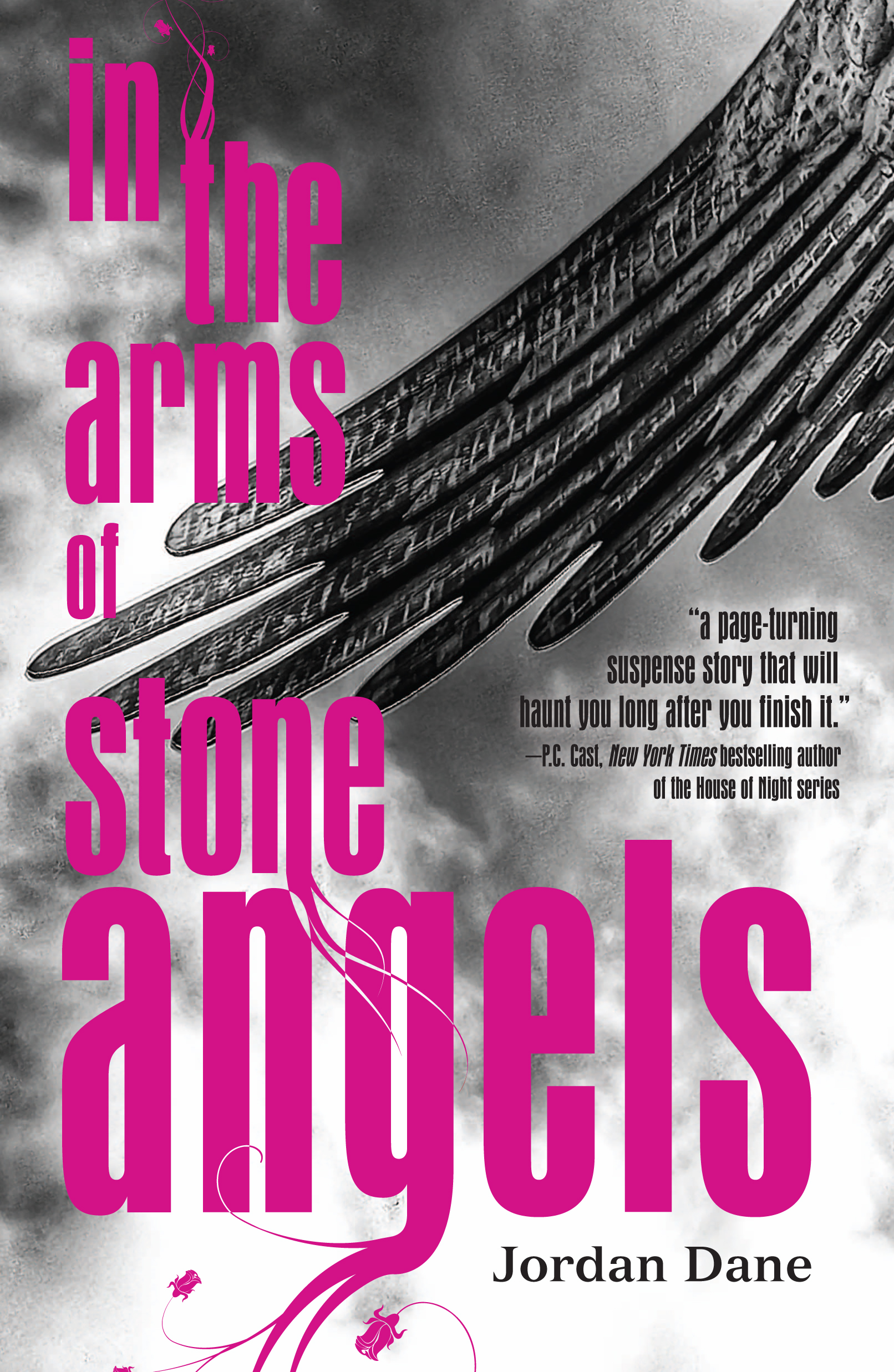
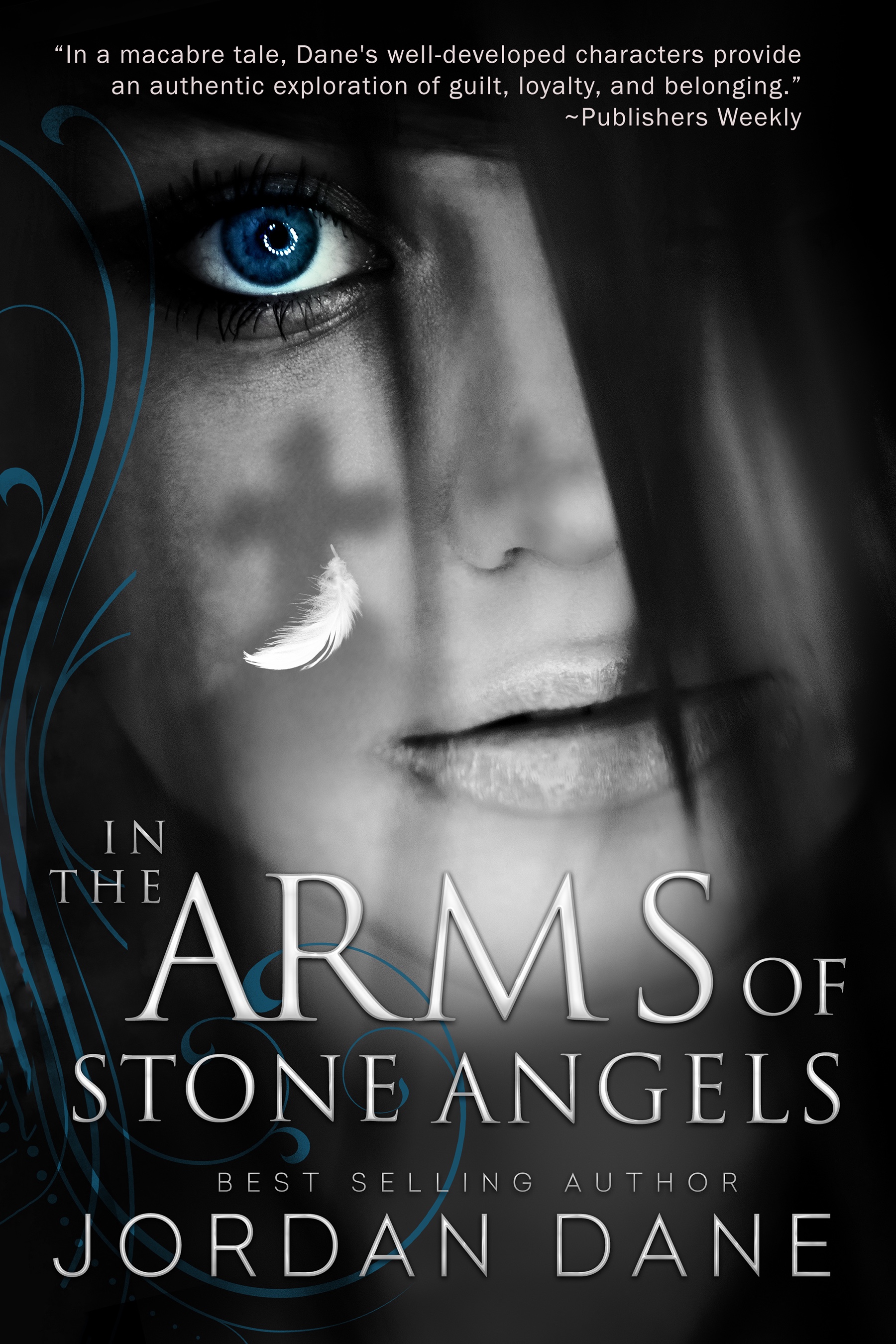
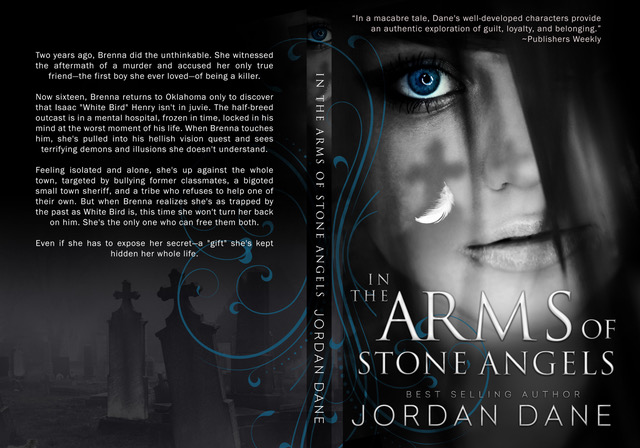
Here is the cover I created through Fiona Jayde Media for In the Arms of Stone Angels and will be issuing soon. These new covers make me want to read these books all over again. On the back cover, there is a dark cemetery with crosses on the headstones. That’s the shadow you see on her face.
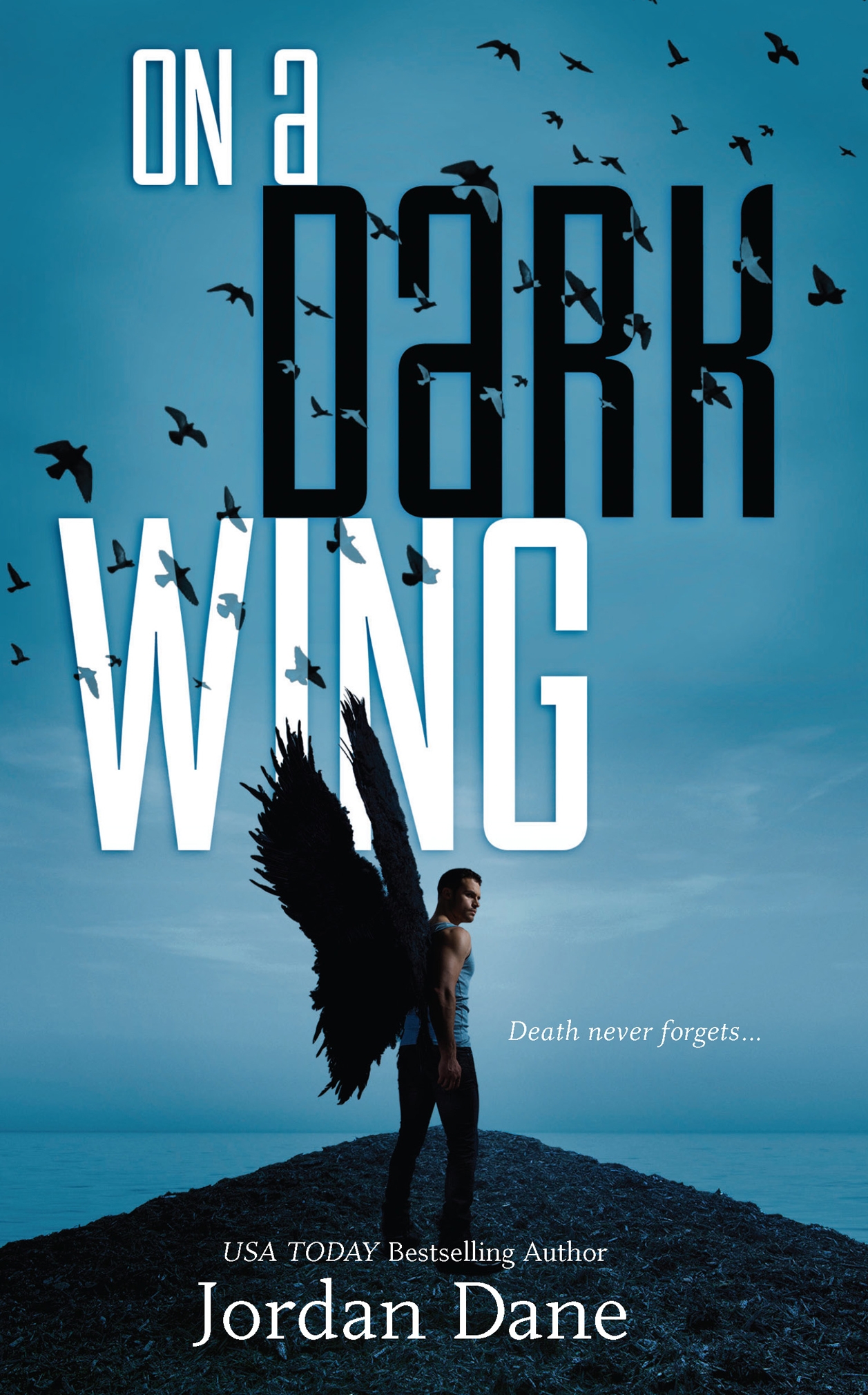
Here is my 2nd YA original cover with Harlequin Teen – On a Dark Wing. (This cover always reminded me of the Village People. I didn’t think the guy looked like a teen, but the publisher liked it.)
Here is the recreated cover that I will be reissuing soon. On the back cover is a muted monochromatic image of Mount Denali in Alaska, where some of the story takes place.
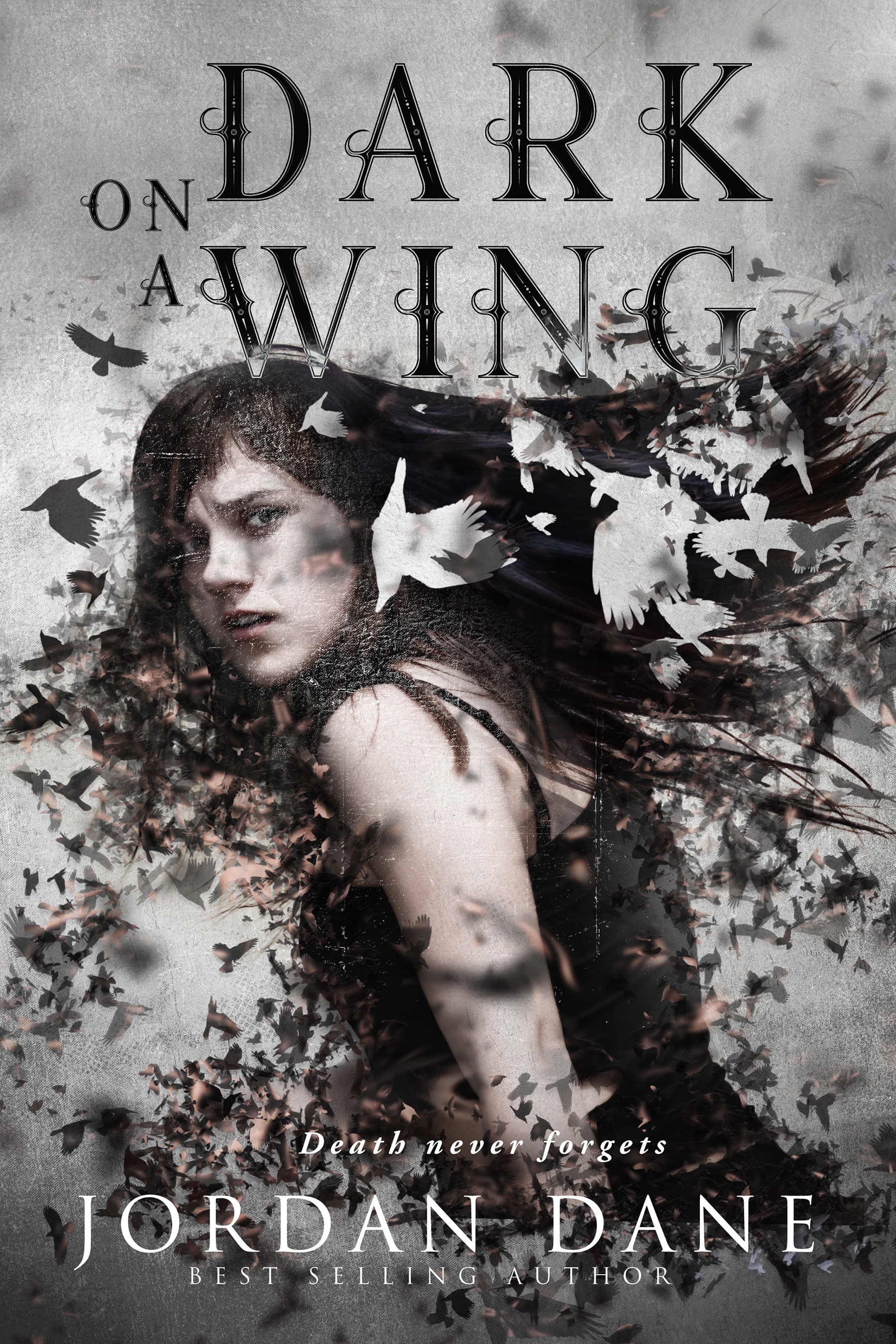

I know that my house had been influenced by covers coming out at that time. These books were released in 2009-2010, but there is a story in the revised covers that’s told on the cover through the art that makes me want to buy the books again.
I’ve got a 2-book YA series called The Hunted that my designer is working on – Indigo Awakening and Crystal Fire. I can’t wait to see what she comes up with for those. Our process has been for me to share important images I’d like her to capture on the cover. I share anything that would make a compelling story on the cover and of course, share what will be in print on the cover and back copy. I often look through iStock images and share anything that I like (since I can be a little picky…shhh).
It’s been fun reinventing covers with my designer. For HarperCollins, I will have SEVEN novels to recreate and reissue my No One series and my Sweet Justice series. This can get costly, but it’s a labor of love to have control back.
For Discussion:
1.) How many of you have reissued your novels after you had copyrights reverted? Can you share your experiences? (This is my first time getting my rights back.)
2.) What are some good ways to kick start an older novel and promote it?
3.) Any funny cover design stories you want to share?