Being There: How It Really Feels
To Be Tased…and Amazed

Editor’s note: This is Kris. I am in the weeds today proofing galleys, so my sister and co-author Kelly is taking the wheel. Besides, I had nothing interesting to say today and as you will see, she certainly does.  Enjoy.

By PJ Parrish

Have you ever been in a conversation with someone who is telling a long, convoluted anecdote and when they get to the end, the punchline hangs in the air like stale cigar smoke with the audience looking bewildered? And in that uneasy silence, the story-teller will invariably add: “Well, maybe you had to be there.”

As novelists, we want the reader to be there. We want to take him or her into that sweltering swamp, or high on a cliff over some rocky canyon. Most important, we want to reader to walk in the shoes of our protagonist. We want to make the reader feel as if he sometimes IS that character, seeing and feeling what our character does.

Easy, you say. I can write about a detective’s daily life because I am one. Or I have unlimited access to someone who will share with me the techniques and processes of crime investigation, and if I’m really lucky, that person will open up to me and share his inner feelings and insecurities.

If that’s true, you do not need to read the rest of this post.

But the vast majority of new crime writers – and even veteran ones — do not have that unlimited source of cop info in the form of someone sitting next to them in their living room watching the Packers beat the Lions. They can’t just turn and shout: “Hey, Aunt June, you worked in Miami PD. What kind of gun would my bad guy use in this situation?” Or “Hey Pop, you worked homicide. How come my detective just can’t shoot the bad guy in the leg?”

If you are a dogged researcher, you can find some of this info by scouring the web for police discussion boards. Or you can read books like Kathryn Ramsland’s The Forensic Psychology of Criminal Minds or Lee Lofland’s Police Procedure & Investigation. Another resource is binge watching reality TV shows like the First 48, which offers a unique, realistic look at the officers as their investigation unfolds. My co-author, Kris and I have done all these things. We’re also lucky to have some cop-friends, like Jim, a retired Michigan State Police captain who helped us with our upcoming release The Damage Done.

But last week, I discovered that no matter how much we think we know about someone else’s profession, there is nothing quite like “being there.”

I got to attend the Writer’s Police Academy in Green Bay, Wisconsin. It was founded ten years ago by Lee Lofland, a veteran police investigator who worked in Virginia’s prison system and later became a sheriff’s deputy, earning the highly-prized detective’s gold shield. He also writes a terrific cop-writer blog called The Graveyard Shift. 

Lee Lofland with Guest of Honor Jeffery Deaver.

Imagine how it feels to hold a real nightstick and jab at the belly of a 250-pound man who is approaching you in a menacing manner. Imagine how it feels to realize that your jabs are futile and you have to resort to using that baton in a more aggressive manner, all the while conscious of the laws and department procedures that guide your every thrust or wallop.

Imagine how it feels to drive a police cruiser and attempt what is called a Pit Maneuver by tapping the bad guy’s car on the rear and forcing him to spin out and stop. Imagine how it feels, as one of the students learned, to misread the tap angle at forty miles an hour and completely destroy the bad guy’s test car, all in front of your fellow writers and a team of seriously dedicated law enforcement officers.

Those are just two of the real life experiences we were privileged to enjoy while at the police academy. Others included a stint in the “Shoot, Don’t Shoot” simulator, where we walked through a house or business, looking for an active shooter or armed and violent spouse. We had to decide when — and if — to fire. Yes, we were working in a simulated scenario but the adrenalin rush was real.
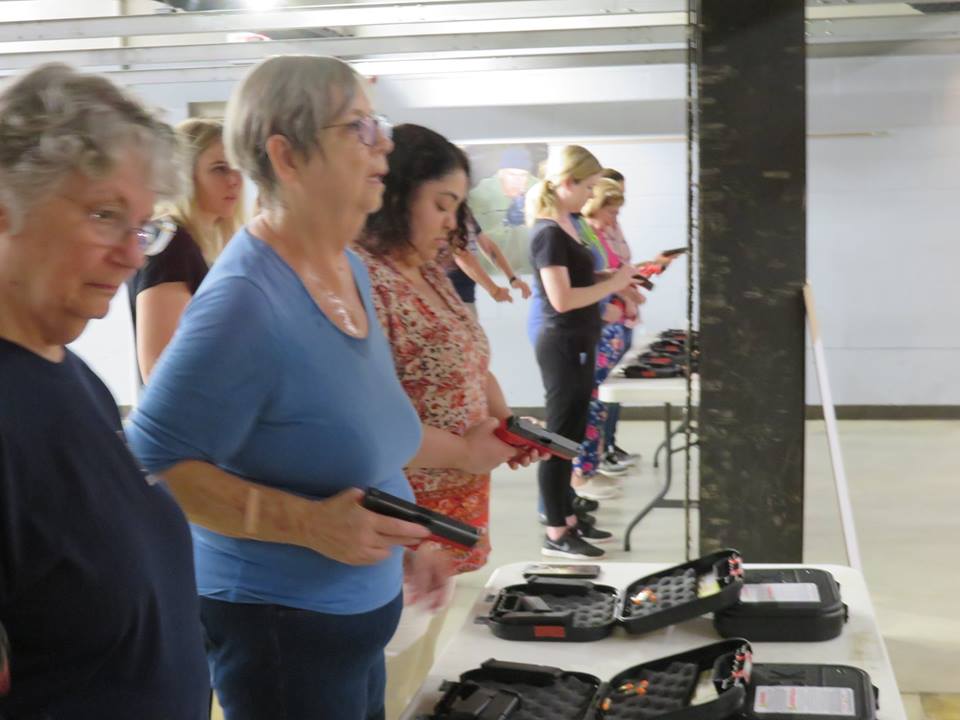
Writers at the range

The Glock I shot was heavier than I remembered from my early days of target shooting and its kick was far more intense. The vests are also heavier than I thought they’d be and I learned while they are called ‘bullet proof,” in reality they are not. One officer called them “bullet resistant.”

We learned a little about the history of the taser and how it works. And let me tell you, it is nothing like you see on TV. One of my class members, a brave young lady who really wanted a true experience, volunteered to be tased. I admire her dedication to authenticity but I was very glad I was not on the receiving end of those two little barbs. They say the current only lasts five seconds but I bet the person getting tased would say it feels much longer.

https://www.facebook.com/devin.reif.9/posts/2036100883108344

We learned about undercover work and outlaw motorcycle gangs. We made a forced entry as a SWAT team. We watched firefighters don backbreaking equipment and enter a smoke filled building. We watched as the Green Bay dive team tried to recover a body from a murky river. We all knew the body was fake but still, we all stood there on the banks of the river with bated breath, for the diver to announce he had located the child.

Being there is what is was all about. To use one of Michael Connelly’s favorite words, it gives verisimilitude to your writing. Because once you have experienced it, once you have felt that fear, smelled the smoke, or trudged under the weight of Kevlar, you cannot help but carry those emotions over to your writing.

But best, the absolute best, were the rare and unscripted moments with the officers after the training.

In today’s climate, there was no doubt these men and women teaching us at the academy had strong feelings on the hot issues. But it was never in the fore front, never presented as a stated point of view. And to me, it was brought up one once.

The moment came after traffic stop training, where we learned how to safely approach a vehicle and more important, why to approach it that way. The officer and I were in the hot sun, sweaty and tired toward the end of the day and I was thanking him for taking the time to do this for us writers, to patiently explain procedures and offer insights into their job.

This officer, who was around thirty maybe, said to me: “We do it because we want you to understand. We want you to see things from our side and we want you to know more about us.”

Then he looked me in the eye and as he wiped sweat from his brow, he added, “I work with a hundred officers in my own department and dozens more in others. I don’t know anyone who sets out in the morning looking to hurt anyone.”

If you’d like to know more about Lee Lofland’s Writers Police Academy, CLICK HERE to check out his site. I encourage any writer who wants to experience what is really like for their protagonist, to attend WPA or participate in a local Citizen’s Police Academy in their town . And yes, continue to read the books by officers on procedure and investigations. They are pretty good, too. Which brings to mind, one I read many years ago. True Blue by Randy Sutton. When a book makes you cry, you tend to remember it.

Like I said, it’s all about being there.
Dear Writer’s Mate …

By Sue Coletta

The other day I jotted down a juicy detail from my research on the corner of yellow scrap paper. Hours later, after I’d used the tidbit in a scene, I spaced throwing away the note.

You know how we get when we’re obsessed focused on our WIP.

Anyway, later that night, while hanging with the hubby in the sunroom, I went to blow the steam off my tea and the note traveled with the mug. Somehow the note had adhered itself to the base. I slid my fingers down the ceramic, but my husband — always the helper — beat me to it.

When he peeled off the paper, he read my scribbling aloud. “It’s called raccooning. The head acts as a vacuum.” Visibly forcing down a grin, he said, “Well, someone’s had an interesting day.”

I laughed so hard I could barely speak through the tears. Once I managed to regain composure, I shared all the gory details of my research into decapitation, the guillotine, and a chicken who lived 10 months with no head. After 21 years together, this conversation didn’t even faze him. He gets me. But it made me wonder what a different spouse might think if they’d found a similar note.

Let’s face it, writers can be fascinating and entertaining at times, but there must be days where a writer’s mate must shake his/her head in disbelief. It’s in this spirit that I share helpful advice for the good-natured, supportive, and understanding folks who live with a writer.

Dear writer’s mate, you may find your writer staring at the ceiling, or out the window, or even at a blank wall. And you may be tempted to think it’s okay to barge in and chat about your day. Make no mistake, there’s a lot going on behind-the-scenes that isn’t visible to the naked eye. Your writer is hard at work, creating, visualizing the story, agonizing over that one missing piece that’ll bring it all together.

Please don’t interrupt. Instead, back away from the desk — nice and slow — with no sudden movements. Trust me on this. You don’t want any part of causing your writer to lose focus. It’s not a pretty sight.

At other times, your writer may have some “unusual” documentary requests. Dear writer’s mate, just go with it. Creative decisions are not easy to explain. Your writer may not even know what s/he’s searching for; it could be anything from plot details to a twist that hasn’t yet revealed itself. Being immersed in similar story elements, situations, locations, conflicts, unsolved mysteries, or even a killer’s modus operandi may help spark ideas.

Dear writer’s mate, your writer may experience a spontaneous yet overwhelming urge to drag you to desolate swamplands, woodlands, back alleyways, or back roads that lead to nowhere. Don’t panic. Your writer is simply looking for the perfect place to dump or pose a corpse, and 99.99% of the time it’s not your dead body s/he’s envisioning. I should warn you, though. Should you ignore the advice contained herein, the latter could change. You don’t want to be amongst the unfortunate .01%, do you?

Rest easy, dear writer’s mate. Nine times out of ten the victim is the rude waitress who served you and your darling writer on Friday night. Fun fact: while you were figuring out the tip, your dinner date was plotting the waitress’ excruciating demise. Did you not notice your writer’s unflinching stare? The eyes tell the story. When the lids narrow but your writer’s gaze doesn’t seem to focus on anything in particular, it’s a telltale sign that s/he’s thinking about murder. Oh, while we’re on this subject, it’s safer for the entire family if you never — I repeat, never — peek at your writer’s search history. If panic sets in, you might be tempted to phone a friend. The next thing you know, your writer’s face is plastered on the FBI’s Most Wanted list.

Dear writer’s mate, your normal routine is subject to change without notice. You know those three-course meals you love so much? Yeah, well, at times they may be replaced with frozen dinners, crock pot dishes, and takeout menus. Leftovers will almost always make their way to the dinner table, especially if your writer is on deadline. Also, your writer could try to make it up to you by firing up the grill, but you may want to keep an eye on those steaks. They can, and will, turn to ash if your writer jumps back into the WIP.

Granted, at the time s/he slapped the meat on the grill s/he had every intention of fixing you a nice meal. But then, something within range diverted his/her attention — the disembodied call of a pileated woodpecker, an unusual tree stump with a silhouetted face embedded in the grain, a stick snapping in the yard for no apparent reason — and this propelled your writer into the office where s/he only planned to write one quick paragraph before the story enveloped him/her into its warm embrace. The time continuum is difficult to explain to a non-writer, but just think of it as your writer’s Bermuda triangle.

Dear writer’s mate, at some point you may need to save your writer by gently reminded him/her to step away from the keyboard. Please use caution. Only use this step in an emergency, like if your writer has stayed up all night, downing copious amounts of coffee or tea and resembles a strung-out raccoon. Or if your writer has skipped breakfast and lunch because the words are flowing faster than s/he can type. Or if your writer has spent a full week in his/her pajamas. Otherwise, please refer to my initial advice.

Dear writer’s mate, I realize I’m throwing a lot at you. What I haven’t mentioned is how fortunate you are to love a writer. Writers are fun, loving, dedicated, intelligent, witty, weird, nutty, unique, passionate, humble, and above all else, loyal. Consider yourself lucky to share in your writer’s imaginative world, where nothing has limits and anything is possible.

Over to TKZers. What advice would you give to a writer’s mate?

Refurbished Words


By Elaine Viets

English is a constantly changing language, which is its delight and its difficulty. Old words are constantly being refurbished and given new uses.
One is troll, a word once associated mostly with fairy tales, as in “The evil troll lived under the bridge.”
Thanks to the internet and computers, troll has a whole new usage. As a noun, the Urban Dictionary says a troll is: “One who posts a deliberately provocative message to a newsgroup or message board with the intention of causing maximum disruption and argument.”
As a verb, to troll means to fool someone. Sasha Baron Cohen is the current Troller in Chief. He pranked sheriff Joe Arpaio into saying he’d have oral sex with Donald Trump.

Unpacked is another refurbished word. Unpack used to be something you did with a suitcase. Now it means to analyze. How many times have you heard a radio host on NPR say,
“There’s a lot to unpack here in this story on . . . ”
What refurbished words are you seeing, TKZers?

The Getting and Keeping of Ideas


Stock photo


I was thinking about the way people ask me where I get my story ideas. It’s a classic but awkward question, especially if my ideas are at a low ebb right then and I’m certain I’ll never have another idea for a story. It’s like when my son complains and complains that we never have anything interesting for dinner, and I ask him before I go to the grocery what he would like me to make. Usually he can’t think of anything right at that moment and gets frustrated. (The answer is, more often than not, tacos. Something I make frequently.)

There are times when I can’t come up with an idea to save my own life. It’s embarrassing to admit, especially because I also have to write all of my ideas down quickly or they’ll slip away and eventually find some other writer to express them.

A writer I admire once told me that if you can’t keep an idea alive in your head, then it’s not actually a good idea. While I can see a vague point to this–some ideas demand to be written immediately–I mostly disagree. People sometimes get obsessive even with bad ideas. I frequently consult my banked story ideas in both the fallow times and the flush. I find that I can pretty much make a story out of any of them. And that’s reassuring.

My usual answer to anyone who asks about where I get my ideas is:

“Oh, everywhere. I never know when I’m going to run across a crime story online or see something on the news.”

What’s going through my head:

“Dear God, do you know how much time I spend making notes on or bookmarking stories? There are crime and news websites that I stalk relentlessly.  Or I’ll be reading a book someone else has written and a character says something that catches my imagination, and I stop reading and start daydreaming. Then there’s my childhood. Someday that gorilla in the Pepto-Bismol pink bathroom I dreamed about when I was five is going to have its own kid’s book. And I was the proverbial little pitcher with big ears, soaking in the stories and gossip around the grown-ups card table. Throw in emotions, dreams, overheard personal dramas, the sociopath I went on two dates with before things got super weird and I eventually had to leave town for good. Don’t forget the divorce played out in my kid’s carpool line, and the woman with the severely bitten nails in the waiting area of the therapist’s office.”

Here’s one of my favorite character quotes. It’s from Ariadne Oliver, a writer who shows up in several Poirot stories.

“I mean, what does one say about how one writes books? You just think of an idea and force yourself to write it.”

Just think of an idea. No biggie.


Do you keep files or idea banks of ideas, or do you wing it? How do you approach the where do you get your ideas question?


Dog Days, Mad Or Otherwise

Last Friday, on the heels of discovering that my flight out of Newark had been canceled due to violent thunderstorms —and that flights the next day were also being canceled in rapid succession—I Googled the phrase “dog days of summer”.

It turns out our ancient forebears coined the phrase “dog days” to describe the stretch of days in late July when Sirius the Dog Star appears at the horizon just before sunrise. To the Greeks and Romans, dog days were associated with fever, war, and general mayhem. In ancient Egypt, the Dog Star would appear just before the commencement of the Nile’s yearly flood season. They regarded Sirius as a “watchdog” heralding of that event.

The way people interpret the notion of dog days has evolved over time. In the 1930’s Noel Coward wrote a popular cabaret song with the lyrics “Mad dogs and Englishmen go out in the midday sun”.

My adventures in Newark has convinced me that the ancients were onto something when they blamed Sirius for causing late summer mayhem. After an unscheduled overnight stay in Newark, my husband and I finally boarded a flight that took off between squall lines. We had a grand time over the next couple of days at Gene’s fiftieth high school reunion in upstate New York.

But the night before our return to LA, my phone started blowing up with messages and scrolling alerts. It was the airline—they were reaching out to issue dire warnings about thunderstorms in the city where we were supposed to change flights the next day.

I think Sirius is definitely dogging us this year. I feel like I should sacrifice something and throw him a bone.

How are you spending the dog days of late July and August? Has Sirius caused you any trouble this season?

Cover Art Angst

Of all the difficulties associated with producing a book one of the most vexatious (for me at least) is the issue of cover art. In traditional publishing, many authors typically don’t have a great deal of say in the cover of their book, and when going indie, the issue of cover art can be fraught with design as well as cost issues. Also, the impact of a book cover cannot be understated. It matters. It’s what draws a reader to pick up or click on your novel. For me, a great eye-catching cover is irresistible. I’ve picked up many a book solely because of the cover (mind you, I’ve put many of those books back down again  the first page or blurb was ho-hum).

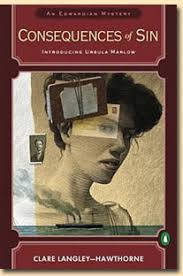
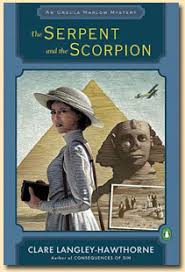
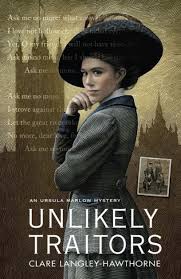
My own experience with book covers, however, has been mixed – with less-than ideal cover art for my first novel in hardback:

Followed by three wonderful covers for my paperbacks (all involving the same artist and model).


I think what made all the difference was that the paperback covers truly reflected the tone, mood and genre of my novels – with the right  blend of historical details, female characterization and intrigue. Now, as I contemplate the possibility of getting my rights back and possibly repackaging/re-releasing these books, I’ve started to think more about the issue of cover art and what makes a book cover great…I hesitate, though – mainly out of fear that I might chose badly. As Bookbub points out, a bad cover can have a negative impact on book sales. Hence I sometimes get that ‘deer in headlights’ look when it comes to book covers.

There are some informative blog posts providing advice when it comes to designing cover art. Jane Friedman has had some interesting guest posts on her blog on this issue (see for example 5 steps to great cover art and getting the right fit).  At the end of the day, all the advice seems to boil down to making sure the cover fits your book and attracts your target readers (something that feels easier said than done!).

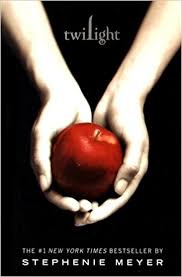
When I look at my own book shelves, a few (mainly YA) book covers stand out. There’s the original Twilight series covers which (at the time at least) stood out as unique.

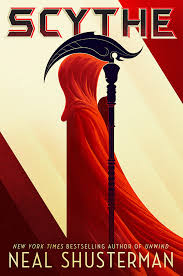
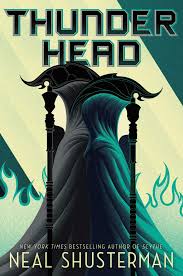
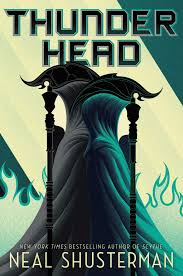
Then there’s the Scythe series by Neal Shusterman – these covers are gorgeous.

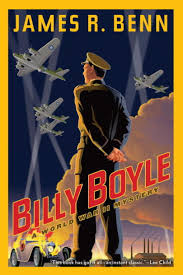
When it comes to mysteries I love the covers for James R Benn’s Billy Boyle series:

But a beautiful cover is only on element of the equation – it must also appropriately reflect the type of novel you’ve written and appeal to readers of that genre. If there’s a disconnect between the cover and the content then beauty alone won’t work. When I look at some of the list of beautiful book covers (such as Buzzfeed’s compilation for 2017, which can be found here) many of them, while certainly aesthetically appealing, wouldn’t necessarily make me want to pick up and read the book.

So what are your favorite book covers? What do you look for when seeking cover art for your own novels? What’s your experience been with cover art (either as a traditionally published or indie author) and what advice would you offer to someone thinking about repackaging their books with new cover art??


Nostalgia Time – What TV Show from your Childhood Influenced You?

Jordan Dane
@JordanDane

ABC Television


What show from your childhood or younger years would you bring back and why? Who would you have star in it?

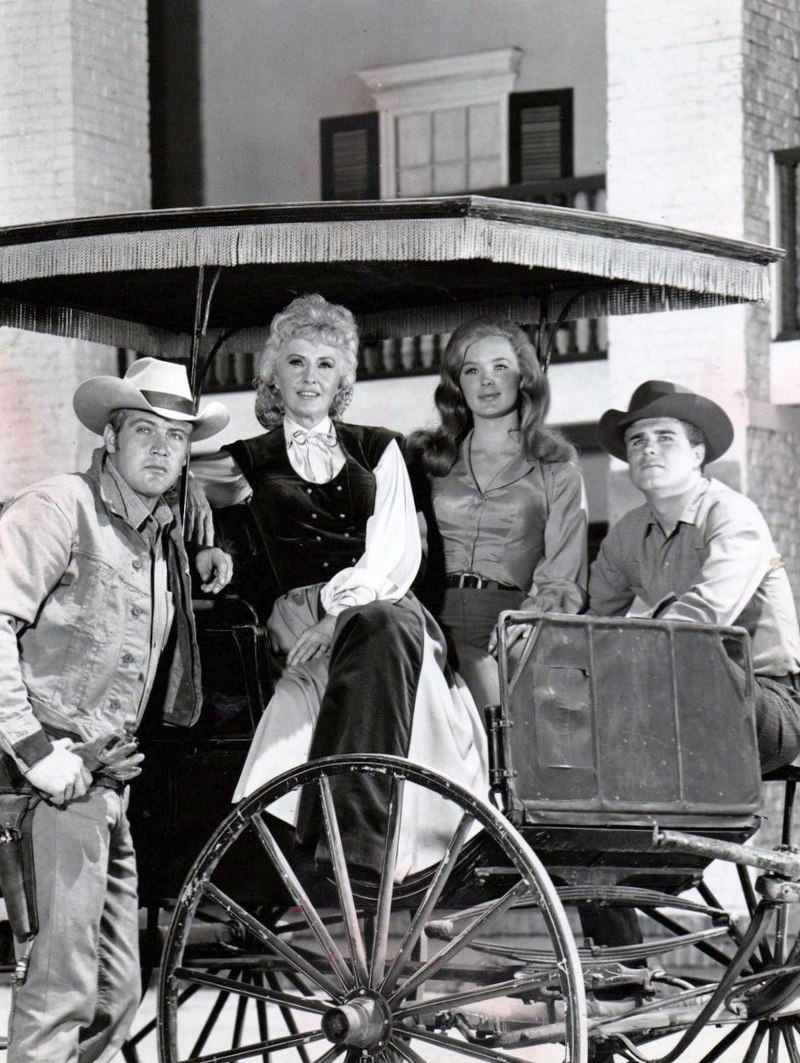
Something that always influenced me–and ultimately teased me into becoming a writer–was my love for Westerns and HORSES. I read every Louis L’Amour I could get my hands on. When I was a young girl and in elementary school, I loved horses and read every book they had in my school library. Literally every book, no lie. As I became a teenager, I got a job and my parents allowed me to save toward buying a horse of my own. We ended up with five horses and it became a big thing for my family.

I shoveled a lot of horse poo and mucked stalls, but it was a great experience. As I grew older, I became enthralled with the men who rode those horses in the 1800s. They were mysterious loners, good guys who lived life on the edge of civilizations and made their own version of the law and justice. The ultimate anti-heroes for me. My first perceptions of manhood came from these TV shows and the many books I read. It definitely influenced how I write men in my books. The brooding loner type.

http://pixabay.com/en/horses-blm-wyoming-mustangs-61158/


I watched anything Western as I grew up and continued to read every book I could get my hands on. TV shows on Wild Bill Hickok, Alias Smith & Jones, Lancer, Big Valley, Bonanza, Branded, Maverick, Gunsmoke, Have Gun Will Travel, High Chaparral, Laramie, Laredo, the Lone Ranger, Lonesome Dove, The Magnificent Seven, My Friend Flicka, Ponderosa, Rawhide, Rifleman, Shane, The Virginian, Wild Wild West, and even Zorro.

My sisters and I would sneak out of our bedrooms to watch TV in our pajamas if the shows came on after our bedtime. Mom told us that she caught us many times, but didn’t say anything. She knew how much it meant to us and appreciated the making of childhood memories. Girl first crushes.

Louis L’Amour hooked me into reading, but thriller authors like Robert Ludlum kept me going (Bourne Identity series). I got into crime fiction and espionage thrillers. Ludlum made me pay attention to how to pace a book and the structure of cliffhangers. He opened my eyes to writing and my desire to write never left me.

BONUS QUESTION – So help me cast a great Western. Who would star in the TV show or movie?

For Discussion:
1.) What show from your childhood or younger years would you bring back and why?
2.) Who would you have star in it?

Rejection Proofing

By John Gilstrap

If we’ve run into each other at an event, you might have noticed that I’m not a very shy guy.  In fact, I am the classic extrovert–one who draws energy from being around other people.  I love getting to know people, listening to their stories and picking their brains.  It’s the rare person, I find, who doesn’t have an interesting story to share about their life.

What I’m not good at is asking people to do things.  I’m not a closer.  It’s difficult for me at a book signing to end a chat with a potential customer by asking how many copies they would like to buy.  Personally, I don’t think it’s a fear of rejection as much as it is a desire not to inconvenience the other party.  And as I wrote that last sentence, yes, I see that that is likely my rationalization of a fear of rejection.

This hesitation on my part will be brought into high relief soon when I live up to my offer to spearhead a fundraising drive for the RiteCare Scottish Rite Childhood Language Program.  (This is NOT a solicitation for contributions.)  I’ve never approached a wealthy friend and asked for money, even for a great cause, and I find the prospect rather daunting.

I reached out to my friend Lynda who runs the YouthQuest Foundation for some advice, and her very first bit was to buy a book called Rejection Proof: How I Beat Fear and Became Invincible Through 100 Days of Rejection by Jia Jiang.  It’s a quirky little book that might not be for everyone, but there are a few sections that I think are particularly worthwhile for writers.  For me, the central idea boiled down to some obvious themes that come as no surprise: Rejection is about the request being made, not about the person making it; and expectations often become reality.  If you expect a no, that’s likely what you’ll walk away with.

But the part of the book that got me to thinking is where it points out that in most cases, the person being approached is as nervous about the request as the requester is of rejection.  Rejection does not exist in a vacuum.  It is always one part of a two-way communication.  My challenge will be to combine my natural gregariousness with an offer to help a good cause, packaged in a way that the person on the other end of the conversation will feel great about saying yes.

So, what does this have to do with writing?  I’m glad you asked.

Last Sunday, I did a book signing at the fabulous Fountain Bookstore in Richmond, VA.  It’s a pretty small place, and there I was in a chair at a table at the front of the store, right where customers had to trip over me to get by.  I always find it interesting just how many ways customers will actively avoid the gaze of the guy sitting next to a pile of books he wants to sell.

And I get it.  They likely don’t have a clue who I am, and if they’re in the store for a children’s book, or a title by Toni Morrison, they don’t want to hear a pitch that they know they will ultimately say no to.  It makes them feel uncomfortable. Remember, this rejection equation equalizes on both sides.  Call it social algebra.

At one point, an older gentleman entered the store, and when the always-excellent sales staff approached him and told him that an author was there and he’d love to sign a book for him, the guy–who turned out to be a fellow named Willard–said, “We’ll see,” and he started wandering the shelves.

What’s the point of reading a self-help book if you’re not going to put the strategies to good use, right?  So, I threw caution to the wind.  I left my station, walked up to him and said, “Hi, I’m John Gilstrap, a visiting author. Zero pressure to buy a book, but I’d love to shake your hand.”

He beamed.  We chatted for a few minutes.  He asked me what Scorpion Strike was about.  When it came around to the fact that I’m a native Virginian, he was sold.  He bought a book from me–a guy he knew–and I inscribed to to a guy I now knew as well.

Then there was the lovely lady named Bambi, who came into the store with her ancient beagle, Max.  Bambi was on a mission.  She told the manager that she wanted the two best children’s books for kids of a very young age.  They were gifts, and she wanted them wrapped.  While they discussed kids’ books, I made friends with Max.  Bambi and I talked a little about dogs, and when she asked me if I was from Richmond, I told her no, that I was from Fairfax.  It was at that moment that it dawned on her that I was the author who’d been mentioned to her when she first arrived.

Turns out that she personally likes thrillers, but she wasn’t there with the purpose of buying a book for herself.  She was concentrating on kid-lit.  Once her focus shifted, she became interested in me and my writing, and she bought a book–likewise from a guy she now knew, without any pressure from me.  I inscribed it to Bambi and Max, and she seemed genuinely touched.

Now here’s the big lesson: As predicted in Rejection Proof, both of those transactions were actually fun for me, and I presume for the others as well.  Zero stress.  Asking for the order is not about pushing a thing, it’s about interacting with people you like and trust, even if the relationship is only a few minutes old.

So, what about you, TKZers?  Does asking for stuff make you squirm?  Do you want to share any strategies for screwing up the courage to make the effort?

.