Good Lists Make Great Stories


On a recent drive to a workshop event, I was listening to Jodi Picoult’s novel, SMALL GREAT THINGS. Near the beginning, Ruth, a Labor and Delivery nurse, describes all the things that need to be observed during a newborn’s physical assessment. It’s a long list of  over a dozen items, including measuring the circumference of the infant’s head, its sucking reflex, the relative softness of its belly, the location of the urethra, etc.

I got very excited when I recognized the list as a list because I was planning an exercise about using lists in fiction during the workshop. (Credit for the exercise goes to my writing prof/writer husband, Pinckney, who is an amazing teacher.)

Do you create lists for yourself? I’m most prone to make lists when I’m very busy around the holidays, need to do a brain dump for all the things I need to do for a project, or I’m packing for travel. Even the least list-like people usually have mental checklists they use. Think: unlock car, get in, turn on engine, buckle up, adjust climate, charge phone, light cigarette, put car in gear. Or, make coffee, unlock door, take dog outside, get paper, lock door, feed dog, make breakfast, read paper. An airplane or helicopter pilot doesn’t fly if their checklist isn’t completed. If you write down all the things you usually do in a particular order, you’ll have a list.

Directions–whether to a particular location or describing how to put something together–are another sort of list.

The glorious thing about using lists in stories and other writing is that they are a perfect shorthand for defining characters and setting scenes.

Some famous lists from literature:

Oft-quoted packing list from Joan Didion’s The White Album

TO PACK AND WEAR:
2 skirts
2 jerseys or leotards
1 pullover sweater
2 pair shoes
stockings
bra
nightgown, robe, slippers
cigarettes
bourbon
bag with: shampoo
toothbrush and paste
Basis soap, razor
deodorant
aspirin
prescriptions
Tampax
face cream
powder
baby oil

TO CARRY:
mohair throw
typewriter
2 legal pads and pens
files
house key

“This is a list which was taped inside my closet door in Hollywood during those years when I was reporting more or less steadily. The list enabled me to pack, without thinking, for any piece I was likely to do. Notice the deliberate anonymity of costume: in a skirt, a leotard, and stockings, I could pass on either side of the culture. Notice the mohair throw for trunk-line flights (i.e. no blankets) and for the motel room in which the air conditioning could not be turned off. Notice the bourbon for the same motel room. Notice the typewriter for the airport, coming home: the idea was to turn in the Hertz car, check in, find an empty bench, and start typing the day’s notes.”

—Joan Didion, “The White Album”

So, it’s not fiction. But we get an astonishingly clear picture of Didion, the person and the writer, in a fairly small space. Bourbon, aspirin, Tampax, typewriter–though where’s the underwear? Perhaps it was too delicate a mention for her? If so, that definitely says a lot about her.


Ray Bradbury’s Fahrenheit 451

“What more easily explained and natural? With school turning out more runners, jumpers, racers, tinkerers, grabbers, snatcher, fliers, and swimmers instead of examiners, critics, knowers, and imaginative creators, the word ‘intellectual,’ of course, became the swear word it deserved to be.”

A scathing sentence, isn’t it? Two lists that condemn both practices and and entire philosophy.


Mary Oliver

“I want to think again of dangerous and noble things.
I want to be light and frolicsome.
I want to be improbable beautiful and afraid of nothing,
as though I had wings.”

― Mary Oliver, Owls and Other Fantasies: Poems and Essays

I want, I want, I want…Imagine playing with the form of your short story (it would be too long for a novel), beginning every line with a word or phrase. A list of wants, shaped into a story.

Joyce Carol Oates has a story in which each line begins with “If.” At least I think it was “If.” Anyway, it was a good story, as I recall.


Johnny Cash’s To-Do List

“THINGS TO DO TODAY!

1. Not smoke
2. Kiss June
3. Not kiss anyone else
4. Cough
5. Pee
6. Eat
7. Not eat too much
8. Worry
9. Go see Mama
10. Practice Piano

NOTES: Not write notes”

This says so much about Johnny Cash. Or another sensitive man, musician, lover.


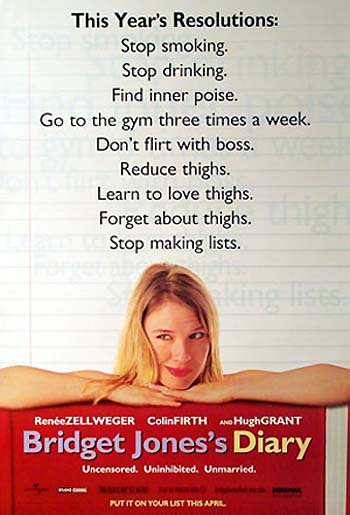
Bridget Jones’s Diary, New Year’s Resolution list

One of the most famous lists in recent literature. Find it. Read it. Even if it’s not your flavor of fiction. Utterly defines her character and is a brilliant precursor for the entire novel.

From my novel, The Stranger Inside

“There are two carefully folded summer dresses, both V-neck and in patterns she might have chosen for herself, one more tailored than the other. Beneath them is a pair of white Capri pants and two pairs of soft linen shorts. Then several linen shirts in pastel colors, one a loose button-down. As she takes the clothes from the bag, she lays them out on the bed. The tags say Nordstrom, and the linen pieces are marked as having been on sale. She smiles when she opens the two shoeboxes to find a pair of buff kitten-heel slides that go with the dresses, and a pair of flat Tory Burch sandals. It’s as though she’s been visited by a fairy, but she knows the fairy was surely Diana.

Opening the third bag, she laughs. There’s more tissue, but it’s wrapped around a clutch of panties that spill out like silky water over her hand and onto the bed. At the bottom of the bag is a diaphanous pink cotton nightgown with satin ties at the shoulders. While everything else is very close to what she’d wear, the nightgown strikes her as bridal and girlish. Still, what a surprise it all is. She realizes she hasn’t really smiled in days.”

(Don’t be fooled. This is one of the novel’s very few quiet moments. After all, there’s a stranger occupying Kimber’s house and he has possession of all her clothes.)


__________

Are those enough lists for you? Think of your own lists: grocery lists, wishlists, self-improvement lists, lists of goals, bucket lists. There are as many lists as people in the world.

Think about what kinds of lists your characters might make. If your character is a serial killer, imagine her Home Depot shopping list. Imagine the prescriptions her elderly victims take.

Every list tells a story. Go make one!

Do you have any favorite literary lists? What lists have you made that could be stories? How have you used lists in your work?
 

Rave Rejections


Recently, in offline discussion, Joe Hartlaub and I were talking about rejections. He mentioned an editor at Hard Case Crime who wrote the “best” rejections—two to three-page long letters with specific details that proved he paid close attention and had actually read the whole manuscript.

Editors and agents rarely have time to put that much effort into giving feedback to an author. Most often, it’s a quick “Thanks but not for us.”

When a professional reads more than the first five pages of the manuscript and recognizes value in it, the writer is over the moon.

Even though it’s a rejection.

Actual SASE

Back in the days when authors submitted manuscripts by snail mail, you always included an SASE (for anyone born after 1980, that’s self-addressed stamped envelope) so the editor/agent could mail rejections to you.

Occasionally, the SASE was used to mail the author a contract or check but that was rare.


There is a hierarchy of rejections–a ladder to climb:

Rung #1 – Unsigned form letter: “This does not meet our needs at this time.”

Rung #2 – Unsigned form letter: “This does not meet our needs at this time but please try us again.”

Rung #3 – Same form letter with a handwritten note (unsigned): “This is good. Do you have anything else?”

Rung #4 – Personal letter: “Good story but too similar to one we recently published. I like your writing. Send more.” Actual editor’s signature.

Rung #5 – Personal letter signed with editor’s first name. Now we’re buddies.

With today’s electronic submissions, the process is similar, just faster and cheaper without the cost of postage and printing.

But the process still requires climbing the rungs.

Finally you clamber onto an exciting but scary roof with a steep pitch. The editor/agent likes the sample chapter and asks for the whole manuscript. Get a toehold on the rain gutter.

A month or five later, the rejection says: “This is good BUT…”

Fill in the blank with:

“Characters felt inconsistent.”

“The climax didn’t live up to expectations.”

“I just didn’t love it enough.”

Etc.

Slide down the roof a bit but hang on with fingernails.

Rewrite and submit more. Inch up the shingles. 

“All the editors loved it but the marketing department doesn’t think they can sell it.”

At last, you reach the peak of the roof when you receive a long, detailed, personal letter with specific suggestions.

In December, I received the most beautiful rejection of my entire career (and I’ve received hundreds!). I couldn’t even be unhappy when I read the following:

“Several of us read it and we all enjoyed your fresh, exciting take on a thriller—particularly the way you used the genre to explore the very real issue of elder fraud. There are several striking scenes that are seared in my memory (especially that late-night rescue in the snowstorm!). We thought you developed Tawny and Moe’s relationship with great sensitivity and nuance, and this in turn made Moe’s shifts between lucidity and violence a more emotional experience for readers. Unfortunately, we had difficulty connecting as deeply to Tawny—it often felt like she was kept at a remove from us. For this reason, despite our admiration for your writing and the compelling and dynamic world you’ve created, we don’t think we’re the right publisher for your book. I’m sorry not to have better news. Thank you so much for the opportunity to read and consider STALKING MIDAS, and best wishes in finding the right home for it.”


It felt like the editor had sent me a dozen roses!

When you tell civilians (non-writers) about the wonderful rejection you received, they usually draw their chins back and look down their noses. “You got rejected and you’re happy?”

Only other writers understand the irony of a rave rejection.


What do rejections really mean?

You’re in the game.

What do rave rejections mean?

Publication is in your future.

~~~

TKZers: What is the best rejection you ever received?

Was the story eventually published?


Please check out Debbie Burke’s new thriller Stalking Midas which garnered rave rejections before publication. Here’s the link.


Labors of Love

Happy Labor Day weekend!

I hope you all are enjoying the quasi-official end of summer. For me, the approaching fall has got me thinking about how few of us have time for hobbies anymore. I think about this as my twins enter their freshmen year at high school and how crammed their schedules are with both school work as well as activities, most of which (given everyone’s focus on college and careers) cannot be mere hobbies anymore.

Sadly there doesn’t seem much time now for activities undertaken simply for pleasure. You don’t have to excel at a hobby – you don’t even have to be any good at it – you just have to enjoy It. But for my kids especially, there is a culture of excellence which means they should forgo what they’re not good at (even if they enjoy it) for sports or other activities they excel in. Sometimes, it seems like it’s all about getting into the competitive sports teams (recreational leagues being few and far between for my boys at least), or working towards varsity in your chosen activity such as marching band or debate. The focus is definitely on pursuing activities that will either look good on your college application or that might lead to scholarship or other opportunities. It’s really hard for them to find time just to enjoy something for fun!

Even for the adults around me, there’s very little time left in our busy schedules to undertake anything remotely resembling a hobby. Take gardening, for example…what was once an enjoyable hobby for my husband has now turned into a desperate scramble to keep things alive in the garden with the few minutes or hours that can be carved out over a weekend!

This fall, however, I’ve decided to buck the trend and indulge (that’s what it feels like sometimes – an indulgence) in not one but two hobbies…the first is my painting, which I love, and the second is knitting, which I’ve never succeeded at before. When it comes to my art, I’ve always felt guilty setting aside time to paint, especially as most of my life is taken up with writing (something, my husband considers a hobby anyway:)). There are always so many other chores or errands to run, that taking time to paint (especially when I’m clearly never going to make a career or money out of it) feels wantonly indulgent. Recently, however, I returned to art class and loved it so much I vowed that I had to allow myself time to  to paint. Painting unlocks a different creative process for me than writing – the only difficulty is, I still feel guilty doing it!

I decided to take up knitting for completely different reasons. When I was at school we had one compulsory craft unit in 7th grade, and I was so terrible (and I mean terrible…) at the knitting component, that the teacher had to get assurances from my parents that I would never do another craft lesson with her! As a result, I’ve been designated the ‘uncrafty’ one throughout my adult life – the one incapable of knitting or sewing, while my mother, mother-in-law, and sister proudly knit, sew clothes, embroider etc. A  few months ago I stumbled across a website ‘We are Knitters’ and decided I would finally throw off the yoke of ‘uncraftiness’ and try knitting. I’ll admit I had pretty unrealistic visions of sitting by the fire in the mountains knitting away…but I was determined to give it a try.  A month ago my mother-in-law was in town and she helped me get started – and, despite some fear-filled moments of dropped/wrong stitches, I’ve finally managed to get the hang of it. Now, I feel like knitting could actually be a real hobby of mine – if only I can find the time…I’m also totally fine with the fact that I might never be actually that good at it!

So, TKZers, what new hobbies have you tried this year? How do you find (and justify) the time? Do you find having a hobby helps or hinders your writing process?


Reader Friday: Research Rabbit Holes

Writers often veer down one research rabbit hole after another to find answers. Sometimes, it’s the topic that keeps us digging. Other times the answers we seek are buried under mountains of other stuff.

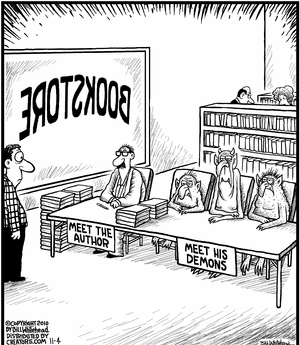

Which topic took you the most time to research? Did you have to leave the house, or did you find the answers online?

Do you have a favorite research topic?

True Crime Thursday – Artificial Intelligence

Photo credit: Laurenz Kleinheider, Unsplash

by

Debbie Burke

@burke_writer

Check out the photos of people on this website. Facial expressions change. Body movements and gestures look natural. Yet these “people” aren’t real. They were created by artificial intelligence (AI).

Previous iterations of computer-generated models had telltale signs that gave away their artificial nature.

However, a Japanese company called DataGrid, Inc., founded by three brilliant twenty-somethings, appears to have perfected the technique of creating realistic humans generated by artificial intelligence. This recent article in Forbes describes DataGrid’s process. Here’s the link.

How do they achieve this? They pit two AI systems against each other in a competition called “generative adversarial networks” or GAN. One creates an image from databases, the other critiques it, tweaking the tiniest details until the creation is indistinguishable from reality.

DataGrid plans to license this technology to the fashion industry to showcase clothing lines with created models of the desired size and shape.

But a writer’s imagination explodes with possibilities.

What real-life crimes could be spawned by AI technology? Here are a few ideas:

An innocent person is framed because their created double appears on video committing a crime.

What happens to eyewitness testimony? Whom did the witness see? An actual human or a model?

A head of state is kidnapped/killed and a double takes over, changing the course of history.

~~~

The late, great comedian Redd Foxx used to say, “Who you gonna believe? Me or your lying eyes?”

Who are we gonna believe? How will we know if our eyes are lying or not?


TKZers: Let your imaginations run wild. Share crimes you envision from the nefarious use of AI.

What do you think will be some of the unintended consequences?

~~~

Debbie Burke’s new thriller, Stalking Midas, contains no characters created by AI, only ones dreamed up by her imagination. Available in Kindle or paperback.

Violence Smells Bad

By John Gilstrap

Sue Coletta’s excellent post on Monday took us into the reality of murder.  When I finished reading it, I wished I could un-read it.  That’s no insult to Sue.  In fact, it’s quite the opposite.  Good writing makes you squirm.  (Or laugh, or cry . . .)  I read the piece to the end out of respect not just for the author, but for the victims.  It’s important for people to understand what those young ladies endured in their final moments (or, God help us, final hours).

If that same scene were included in a novel I was reading, though, written by someone I didn’t know, I’d have closed the book and banned the author from my shelf.

Having been a first responder for 15 years, I was eyewitness to the aftermath unspeakable acts of cruelty.  I’ve tucked in protruding viscera and I’ve bagged a few heads.

I’ve comforted the bereaved, but that was the part I hated the most.  I was fire and rescue, not police.  My job was to bring order to chaos–to stabilize dangerous situations–and then go home.  No one ever died on my watch or in my ambulance because back then, only a medical doctor could pronounce death.  Thus, people were either victims who were clearly dead when I arrived at the scene, or they were patients receiving life-saving care when I delivered them to the emergency room.

I was then–and am now–something of a Pollyanna.  There’s always a way to win, always a route to a positive outcome.  All I need to do is never give up.  If the first strategy doesn’t work, you throw that aside and try something else.  And then something else again.  If the positive outcome does not arrive, it won’t be because I didn’t do everything I could.  It’s a theme that drives my fiction.  There’s always a way for the good guys to win.  Or they die trying.

When I was researching my nonfiction book Six Minutes to Freedom (2006) and I finally got permission to talk to the Delta Force operators who performed Kurt Muse’s daring rescue, there was a common theme that drove every interview.  To a man, the operators I spoke with told me that come hell or high water, they were bringing Kurt home.  If he stayed, they stayed.  When Operation ACID GAMBIT was done, more than a few of those operators were shot to pieces–one of them amputated his own foot to escape his crashed rescue chopper–but they never stopped fighting.  And they delivered Kurt to his family five days before Christmas.

Victimhood makes me uncomfortable.  I have no desire to read torture porn, which is one of the reasons why I don’t like reading about fictional serial killers.  Those scenes with the suffering victims are all about hopelessness.  Yes, it happens in real life, and if I want access to real-life case files, I can gain it with a phone call.  It’s a call I’ll never make.

In reality, violence smells bad.  It’s sticky and it’s ugly.  It’s unnerving.  When I commanded a horrific auto accident or occupational injury, my standing order to my crew was, “If it’s ugly, cover it up.”  No one functions well in the presence of mangled people.  I bring some of that to my fiction, and I get occasional hate mail as a result, but that level of reality–the reality of the aftermath–doesn’t push me beyond my limits.

The irony is not lost on me that I write violent books, and that good guys occasionally die at my hand.  I can’t define where my breaking point is on how much is too much, but there’s a line there somewhere.  The knee-jerk response is to say that violence against children is the line not to be crossed, but I cross that all the time.  I don’t do it gratuitously, though.  At least I don’t think I do.  I will not write a scene with sexual violence against women.  Come to think of it, I don’t write much about sex at all.

What are your thoughts, TKZ family?  How much squirming are you willing to endure when reading books?  At what point do you send a book sailing?

How To Be Your Own Co-Author


By PJ Parrish

The most common question I get from readers is how do my sister Kelly and I manage to write books together without killing each other.  So here’s a little dramatization:

Chapter 1

The first hurricane season of 1987 season, called Alina, left the beach a mess. Ex-cop Louis Kincaid walked along the beach in front of his Captiva Island cottage, watching the shell collectors who were picking up their post-storm prizes.

KELLY: Wait a minute. You really want to open your book like that? You only have a couple pages to get readers’ attention.
ME: What’s wrong with this? It’s tight. It gives reader info. Sets the weather.
KELLY: Elmore Leonard says never open with weather.
ME: But I have to open with it. The story has to open after the hurricane because Louis is about to find something cool on the beach which gets the case going.
KELLY: I get you. But weather has to mean something. It can’t just lay there. What about the prologue you wrote where that woman dies? Can you make it relate better to that?
ME: Wait…let me try again.

Her name was Alina…

KELLY: Better. Now we think this is the dead woman.
ME: Her name was Alina. The first hurricane of the 1987 season was…
KELLY: No no…good idea but you didn’t do anything with the image. Take it another level. Treat Hurricane Alina like a human being.
{{{ME: Fingers frozen over keyboard}}}
KELLY: Don’t think. Just write.

Chapter 1

Her name was Alina. She was born during a sultry summer thunderstorm somewhere near Mali, a thing no one cared about in a place few had heard of. In Senegal, she inhaled the cool ocean breezes, and in the Cape Verde islands she found her fury. By the time she reached Hispanola, she was a killer.

The first hurricane of the 1987 season turned out to be the most deadly in decades, littering the beaches of Haiti with fishing boats and bodies. Then she slammed into the southwest coast of Florida and turned due north. Finally Alina died, drifting away as a depression somewhere over Chesapeake Bay.

And now the shell seekers were out, celebrating her wake. Louis Kincaid watched them as they walked the beach.

KELLY: Now there’s a book I’d read. It’s got a hook. It sets the tone of the book. It has atmosphere and it came from YOU.
ME: Me?
KELLY: Yeah, you. You listening to your passionate writer self but taming it with craft.

Okay, the skit is over. This is pretty much how Kelly and I work. It’s not easy having a co-author. Most writers don’t want to share their vision. Or their royalty checks. But that means you’re very alone.

How many of you feel alone? How many of you paint yourself into corners with plots? Procastinate. Lose confidence? Beat yourself up? Re-read to the point of paralysis?
My whole author persona is based on co-authorship. But something evaporates when you are going alone. You feel like your safety net is gone. You feel like you have no one you can trust to tell you the truth, the good or the bad. You alone are responsible for what is on the page. And who do you turn to when you’re at your lowest? Mother, spouse, friend? Who will push you to finish when you can’t stand looking at the Thing That Is Consuming Your Soul?

How, if you are alone, can you get beyond this? Maybe if I try to explain how it works for us, maybe you can learn to listen to your inner co-author.

It all starts with an idea. But not all ideas are created equal. How do you know when you’ve got a good idea for a book? For us, we toss around plot ideas and decide whether they work for our character Louis. Not all do. Ask your inner co-author: Is this story juicy enough? Has enough meat to carry 300 pages or is it just a short story? Is it fresh? If your hero or story is not new, is it at least a different angle? Don’t chase a trend, especially if you don’t care about it.

Inner co-author voice: Meh. I think John Sandford wrote this story ten years ago. And does the world really need another alcoholic detective with a thing for Thelonious Monk, Rooster ties and redheads in leopard leggings?  And if you even think about writing an unreliable girl book, I will never speak to you again.

Okay, so you’ve got a juicy idea and you’ve written those heavy words CHAPTER ONE. Now what? Did you start your story at a prime dramatic moment?  Or is your beginning just a lot of throat-clearing? Like, did you lard in a couple pages of your protag’s backstory? Did you open with paragraphs of scene-setting description because you didn’t really KNOW where to begin the action? And why are you wasting so much time and valuable pages on some minor character who isn’t even important to your story?

Inner co-author voice: I think you need to start over. See that little black key at the top right of your laptop — it says DEL?  Press down hard and don’t let up til your screen is clean again.  Don’t worry. It only hurts for a minute or two.  You’ll thank me in the morning.

Well now. You’re on your way. You’ve got a fresh idea and a cool protag no one has seen before. You’ve figured out the best moment to open your story. You’re ten chapters in and roaring along. Then…you hit the wall. Or the muddy middle, as I like to think of it. You’re being sucked into the sand like that poor kid in Lawrence of Arabia or sinking in a  swamp in the trunk of a ’57 Ford like Marion Crane in Psycho.  How do you make the story’s middle come alive?

Inner co-author voice: There’s a bunch of cool tricks you can use! Create a rift in the team, like the three guys in Jaws.  Give one of your main characters a big secret that when revealed, sends the story in an unexpected direction. You don’t get what I mean? Go read William Styron’s Sophie’s Choice.  Introduce a new character, but make darn sure they deserve to be on stage.  Better yet, kill someone off! Just don’t make it the dog.  OR…now don’t get mad at me because I know how much you hate this: STOP AND OUTLINE!  Stop yelling at me.  I know you’re a free spirit who goes where the muse leads you. But sometimes, you have to stop at the Texaco station and ask for directions. You don’t have to follow them. But the exercise of STOPPING AND THINKING AND WRITING THINGS DOWN might show you where the road begins again.

Ah, lookie here. You finished the manuscript! Seven months have gone by. Maybe seven years.  It’s time to take the baby out for a stroll and get all the ooohs and aaahs you’ve been waiting for.

Inner co-author voice: Are you nuts? You finished the first draft, Buckie! Now the hard work begins.  No, no…don’t even think about writing a query letter to Meg Ruly. Print out the whole messy thing and — stop it, just stop it. You have to do this. Print out the thing, take it to Starbucks or your favorite bar with a pencil and a bad attitude. Cross out all the stupid words, flabby dialogue, florrid descriptions.  Look for plot holes and fix them. Make your character’s motivations deeper.  Cut that dumb prologue. And while you’re at it, you use a passive voice too often.  Voice is like being good in bed. Think about that.

Whew.  You made it. You rewrote the book, at least three times. It’s 2,000 words shorter and you’ve shined it to within an inch of its life.  Now you have to send it out and get…probably ignored, very likely rejected, maybe even mauled. This is part of the process.

Inner co-author voice: Huh, you got another rejection letter? And you’re sitting there, sniffling and reading it for the hundredth time trying to find its hidden meaning. There is none. A rejection letter means 1. Your book wasn’t quite ready.  2. The editor recently accepted a manuscript too similar to yours. 3. You queried the wrong agent or editor for the genre you’re writing. 4. The agent has too many clients already. 5. The editor’s slate is too full.  So what? Query someone else and then more. Send out as many queries as you can stomach because it’s a huge waste of time to send out ONE query and wait to be asked to the prom.  Oh yeah, and while you’re waiting the eight weeks or more it takes to get an answer, start writing the next book. And remember: No one is rejecting YOU. They are rejecting your story, often for reasons that have little to do with its quality. Do. Not. Take. This. Personally.

One last thing about having an inner co-author. You really need to listen to them closely. Because they will tell you the truth. And they will keep you going when you feel like giving up and getting a job driving the cart at the airport.

Inner co-author: Don’t give up. We can do this. Have some faith. Work hard. Word harder. But when you do something well, when the words come together, pat yourself on the back. In the immortal words of Stuart Smalley. You’re good enough. You’re smart enough. And doggone it, people will like your books.


Perchance to Dream

Photo by Donovan Reeves courtesy unsplash.com

(This will be a short post today as I am hosting the most adorable granddaughter who ever walked the face of the earth and her friend for a sleepover. Pizza Hut stock may go up a point or two. I will still be answering comments though I may be somewhat late in doing so. Thank you.)

Regular visitors to TKZ on alternate Saturdays are probably aware that I am somewhat dream-conscious. I’ve written here and there about dreams inspiring my writing. They do more than that, however. Occasionally they scare me. Badly. 

I had an extremely frightening one this morning. The duration in dream time was extremely short. The entire dream consisted of me opening my front door to find the Angel of Death standing there. No “Hey-how-are-ya,” no “Are you making as much money as you wish you were?” or “Would you be interested in selling your home?”… no nothing. It just filled the doorway and I was swallowed up in blackness. Badda-bing-bang-boom! I woke up shouting, and, of course, couldn’t get back to sleep. I may not be answering the door for a few days. Or weeks. Maybe not until after Halloween.

The flip side of this concerns my favorite commercial of all time. It ran on MTV for a while in the late 1980s. Death played a prominent role. Even if you never watched a second of MTV or any music video you might almost certainly appreciate how clever it is/was so I have ever so thoughtfully included it here.

So…what has been the most recent dream that you have been able to recall? Do any of your dreams bother you? Have they ever come true? Have you used one or more for inspiration? Jack Kerouac made an entire book out of his. Please share if you are so inclined, and thank you as always for stopping by. 


True Crime Thursday – Elder Fraud…And a Book Giveaway

Courtesy of Pixabay

by

Debbie Burke

@burke_writer 

Today’s true crime is personal. My adopted mother, Ruth, was a victim of elder fraud.

Estimates of losses from elder fraud range from $2.9 billion to $36.5 billion per year. That’s billion with a B. Every single year. 

After doing considerable research into elder fraud, I was shocked to discover dirty, little-known secrets about indifferent banks, lack of prosecution, and impotent enforcement.

Here’s what happened to my mother:

Ruth, a widow, was fiercely independent and insisted on living alone in her own home in San Diego. After a medical crisis in 2016, Ellie (biological daughter) and I (adopted daughter) tried to convince Ruth to move in with one of us—Ellie in L.A. or me in Montana–or to have another relative live with her. Ruth flatly refused but finally consented to a visiting caregiver three times a week.

For several years, Ruth’s older sister had been taken care of by a woman named “Jane,” (not her real name for reasons that will soon become clear). The sister’s adult children vouched for Jane. The situation seemed ideal since Jane was already familiar with the family and could drive our mother to visit her sister.

Fast forward to 2017 when a catastrophic stroke left Ruth unable to speak or swallow. Ellie and I rushed to San Diego to care for her.

While we were there, Ruth’s credit card bills arrived in the mail…showing balances of more than $15,000 for items Ruth clearly not had charged.

Ellie called Jane and asked about the charges. Jane broke down and admitted she had been using Ruth’s credit cards. She had also been intercepting mail so Ellie would not find out about the bogus charges. After their distressing phone conversation, Jane sent numerous apologetic texts, promising to pay back the money.

But more evidence of fraud kept turning up, like:

Months before, Jane had changed the address for the cable TV, redirecting the service to Jane’s own home, and set up auto-pay from Ruth’s checking account to pay for it.

While we were at the hospital, a neighbor saw Jane snooping in Ruth’s mailbox, evidently trying to intercept more bills.

Jane had written checks to herself for large amounts of cash that Ruth had signed.

We notified Ruth’s local bank. They closed the checking account and turned the case over to their fraud department.

Ellie called Discover and they immediately froze Ruth’s account. They provided photocopies for the past year and we quickly identified many bogus charges Jane had made.

Now for the first dirty little secret: Your bank may not protect you from theft.

Ruth also had accounts and a VISA at a different Big-Name Bank. Ellie and I visited the branch to report the fraud. We explained Ruth was in the hospital and Ellie brought a copy of her power of attorney giving her authority on the accounts.

A bank officer told us the account could not be frozen nor would they provide copies of suspicious charges…until after Big-Name Bank’s legal department reviewed Ellie’s POA, which could take ten business days.

What???

The POA was simple and straightforward. Because of this mindless policy, the bank left the account wide open to more bogus charges. For the time being, all we could do was destroy the card and pray Jane didn’t have a duplicate.

Next, we called the police. Two detectives from the elder fraud division interviewed us. They copied the texts where Jane admitted the theft. We gave them paperwork showing the bogus charges from Discover and from the local bank where the auto-pay accounts had been compromised. They agreed the evidence was more than enough to recommend prosecution of Jane.

Two weeks after the stroke, Ruth passed away just before her 91st birthday. At the funeral, we heard the first hints of suspicion from the children of Ruth’s sister (who had died a few months earlier). The sister’s jewelry was missing and other money had mysteriously disappeared while Jane was caring for the sister.

Meanwhile, Jane had apparently fled to Arizona.

People don’t like to talk about fraud. They don’t want to accuse someone without proof. They’re embarrassed they didn’t catch on sooner. They feel foolish. Therefore, fraudsters have free rein to continue their crimes.

Ellie and I returned to Big-Name Bank where the POA was supposedly under review by their legal department. We were told that, since Ruth had died, the POA was no longer valid and they refused to help, even though Ellie was executor. Fortunately no additional charges had been made.

We then followed up with the police detective. He said he’d tried to interview Ruth but couldn’t locate her because she’d been moved from the hospital to hospice. Not that an interview would have helped—she couldn’t talk and was comatose.

Then came the biggest shock of all.

The detective said that, since Ruth had died, the case against Jane would not be prosecuted because the victim could not testify. The text messages where Jane confessed the theft plus the paper evidence of fraud were not enough.

WHAT???

Thanks to Discover and the local bank that acted quickly, Ruth didn’t suffer a significant loss. Discover reversed all charges. They were responsible about protecting their customer who’d been a crime victim. I feel bad they had to write off thousands of dollars.

However, my heart doesn’t break for the loss incurred by Big-Name Bank that refused to freeze Ruth’s VISA.

After that account was finally closed, Big-Name Bank then tried to claim Ruth’s estate owed them more than $5000, despite irrefutable proof the charges were fraudulent. The lawyer for the estate finally convinced them it would be a cold day in hell before they collected a cent.

What lessons did we learn?

First, it’s hard to prevent predators from taking advantage of vulnerable seniors. Be aware and suspicious of allowing outsiders access to a loved one, even if their references seem valid.

Second, no one is immune. Ellie works for a superior court judge whose own brother was victimized.

Third, encourage your family member to share their financial dealings with a trusted relative or friend. Understandably, many seniors resist because they fear they’ll lose control of their money. Too often, sadly, they instead lose control to a smooth-talking fraudster.

Fourth, glaring loopholes in the law allow scammers to slip through and move on to their next victim.

Fifth, there are no easy solutions.

If Ruth had consented to live with Ellie or me, would this have happened? No.

But if we had insisted on imposing our good intentions on her, we would have disrespected our mother’s proud, independent spirit. We loved her too much to do that. 

We thought we were making her life safer and easier by hiring a caregiver. Instead, we inadvertently opened the door to the henhouse for the fox.

How do you respect the rights and autonomy of loved ones while protecting them from those who would take advantage?

I don’t know. Dammit, I wish I did.

~~~

Life imitates art. More than a year before my mother’s incident, I had been writing Stalking Midas, the second book in my Tawny Lindholm Thriller series.

The theme?

Elder fraud.

After this experience, I rewrote parts of Stalking Midas to incorporate some hard lessons learned. Although the story is fiction and very different from Ruth’s, I hope readers will find truths within the book to protect themselves and their family.

Justice never caught up with Jane. Her successes with Ruth and Ruth’s sister probably emboldened her to victimize others. That makes me sick.

However, a crime fiction writer can dispense justice on the page……

And I did!

~~~

I’m happy to announce the launch of my new suspense thriller, Stalking Midas.


Charming con artist Cassandra Maza has cornered her prey, Moe Rosenbaum, an addled millionaire with nine cats, until investigator Tawny Lindholm disrupts the scam. Tawny suspects elder fraud and won’t stop digging until she finds the truth.

Cassandra can’t allow that. She’s killed before and each time it’s easier. Tawny will be next.


Stalking Midas is available in ebook and trade paperback.

Especially for TKZ readers, I’m giving away a signed copy of the paperback. The winner will be selected at random from comments on today’s post.

For discussion: Have you or a loved one been a victim of elder fraud? What lesson did you learn?