That’s All, she wrote

Frank Sinatra via Wikimedia Commons

It’s time for my final curtain, dear friends. This is my last official post for TKZ. It’s with a heavy heart that I write this, because I’ve had a blast with you the past several years.

TKZ was the first and only group blog for which I’ve written regularly, and I couldn’t have chosen a better one. I can’t think of a more experienced group of writers writing about writing on the Internet. While many other group blogs have become weighed down with self-promotion and infighting and prima donna grandstanding, TKZ has only gotten better with time.

You, dear readers, are our better halves. You’re talented and curious and smart. You make it a pleasure to show up–whether it’s to post or join in the comments. Please give yourselves a big round of applause.

It’s often a challenge for me to come up with blog topics about writing that I think will interest you. My interior life is chaotic, and writing fiction is still a mystery to me after three decades of writing. When I finish writing a book or story, the memory of how I did it dissolves with time like Kool Aid mix in water–and nearly as quickly. It’s tough to delineate a process that I can’t precisely recall. While I am a person of a certain age, it’s not that I’m going dotty. It’s just the way my ADHD brain works. I can hyperfocus on something so that it becomes a delicious experience that engages my senses so fully that I find it difficult to return to reality. It’s a dreamlike state, and, like a real dream, it dissipates and disappears. When things are going well, a dozen pages of writing is left behind. The challenge is dodging all the shiny objects that seem to throw themselves at me when I’m trying to get back to the dream again.

If it sounds like I’m telling you that writing is magic that can’t be taught, I promise I’m not. I attended writing classes and workshops during the first six or seven years I was writing. (And I have to tell you that if you pay attention to the craft and critique pages here, and you write regularly, and read, you will get a solid writing education without paying a dime. Just sayin’…) Writing is not magic. It’s a combination of art and craft.

So, I hope you’ll forgive me for all the posts I didn’t write about how to plot, or create a character, or remind you to number those pages. (Seriously, Manuscript Rule 1 is number your pages!) We all have different strengths, and different gifts.

You know I love a list. Here’s a list of a few thoughts about writing and the writing life I’d like to leave with you.

— Read indiscriminately. Read the stories that you know will please you, and read stories and writers that will challenge you. Read out of your preferred genre and your culture and your comfort zone. Good writing is everywhere. Learn from it.

— Write bravely. I won’t lie. Brave is hard. The more of yourself–your feelings, your experiences, your ideas, your imagination–you put in your work, the better it will be. It may seem that both publishers and our contemporary society are currently offering writers very narrow lanes in which to write. It’s tough to be brave when you’re feeling pressured and walled in. Be brave anyway. That’s where your best work lies: beyond the walls.

–Let yourself be envious, then let it go. Too much envy is poisonous, but it’s a totally normal feeling. If you feel it, that’s okay. Let it motivate you to write better, be better. But use it and let it go before it turns on you. The phrase love and light sounds like the stuff of an SNL skit, but it’s kind of useful. Pile coals of kindness on the heads of those who make you itch with irritation. Their journey is not your journey, so keep your eyes on your own paper and do your own work. (Did I get enough platitudes in that paragraph?)

–Don’t be a dick. If you achieve any kind of success–from being the first in your writing group to sell a story, to being the only one at a table full of established writers to have made the bestseller lists–don’t be arrogant. Retain (or cultivate) some humility, if only because you never know when you’ll get surpassed or taken down, or by whom. Otherwise, it’s just a good idea to be nice. Cheer others’ successes. It’s true that someone might forget that you offered them congratulations on their Facebook page, but they won’t ever forget if you only ever talk about yourself.

–Don’t bore your reader. If you’re writing and you find you’re getting bored, stop what you’re doing immediately and try something different. If you’re feeling bored, chances are your reader would already have wandered off.

–Publishing is a crapshoot, and there’s an element of luck involved. Raise your odds by submitting (to an agent or publisher or beta reader) your best writing, packaged as a clean manuscript, and ask for help, advice, or representation in the most polite and charming way possible. Keep in mind that there are a huge number of not-very-well-written books alongside terrific books released every week. Just because you get a rejection doesn’t mean your writing is bad.

–Write what brings you joy. Or scares your pants off. Or makes you cry in a good way. That way lies authenticity (always good) and personal fulfillment (even better).

That’s it. I’m done. In Frank’s immortal words: I did it my way. Thank you, thank you, thank you for your kind attention. Stay in touch. Write like the wind!  xx Laura

Kat Martin and Larry Martin – Marriage Between Authors

By Debbie Burke

@burke_writer

Photos courtesy of Kat and Larry Martin


Today I’m delighted to chat with bestselling authors Kat Martin and L.J. (Larry) Martin, who’ve been together for 34 years. Between them, they have written well over a hundred novels.

Kat has written more than 75 historical and romantic suspense novels that have sold many millions of copies all over the globe. Larry crosses multiple genres, with bestselling westerns, thrillers, and nonfiction. He is also a founder and former owner of Wolfpack Publishing.


Here’s the inside scoop from Kat and Larry on their successful, long-lasting relationship.

DB: For most households, one author is quirky enough. How do two authors married to each other make it work?

Kat Martin

Kat: Actually, it has some advantages. We have the same friends, travel to the same conferences, are interested in a lot of the same subjects. We also understand the frustrations of being a writer, which are difficult for a non-writer to understand.

Larry: Ditto to Kat’s answers, plus we can read each other’s work and comment. For instance one time she was reading some female dialog I’d written and then drew a little mustache in the margin…I got it, my lady sounded like a dude.

DB: You met each other while working in the real estate industry. How did you each make the huge career change from real estate to writing?

Kat: Larry had already written a historical novel when we met.  He continued to work while I wrote my first book and we ended up selling both novels within six weeks of each other.

L.J. Martin

Larry: I had a giant year in the R.E. biz and never wanted to work that hard again. We had a little financial cushion, and needed it, and Kat was enthralled with my writing and said, “Hell, I can do that.” And did, far better. We’d always been avid readers, which is the basis of great writers.

DB: You are both exceptionally prolific authors. Do you have systems or routines for keeping up high production?

Kat: I don’t have kids, which gives me a lot of free time. Larry’s boys are grown. So that gives us a real time advantage. Also, we like what we are doing so mostly we would rather be writing than anything else. Well, I do enjoy traveling, staying in nice hotels and eating in gourmet restaurants. But we manage to work that in.

Larry: It’s productive to have “in-house” competition and an example to follow. Kat’s a voracious worker. I’m distracted by yard work, garden, photography, hunting…but her dedication always pulls me back. And both of us love to write.

DB: Do you brainstorm with each other on story ideas? Can you describe the process?

Kat: Larry writes his own books, his own way. No input from me. I appreciate his help with plotting and he also reads my action scenes and gives me input. Other than that, we pretty much work separately.

Larry: Neither of us slows down enough to get much input from the other. I help her occasionally with the male aspect: fistfights, firearms, survival, but that’s about it. I’m also preoccupied with publishing nonfiction, and enjoy that part of the biz.

DB: You often combine travel with research. This may be a chicken and egg question but do you visit locations with a plot already in mind, or do story ideas spring out of new places?

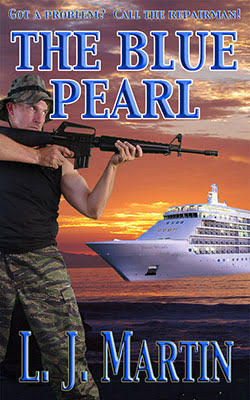
Kat: A little of both, I think. Sometimes we go places because one of us is working on a story.  Sometimes when we are traveling a new idea comes from the experience we are having at the time. Larry just finished a novel called The Blue Pearl, a high action thriller set around a cruise ship being taken over by terrorists. Our cruise was already planned. The story came to him before we left and the cruise helped with his research.

Larry: Most action books are a quest of some kind so the cruise was ideal with the addition of some really bad guys in exotic locations. I was able to interview the captain and security people and go everywhere on board other than the engine room. My prior thriller, The K Factor, was set primarily in North Korea and trust me, I didn’t go, and the cruise and great sights and wonderful restaurants in France, Spain and Portugal was more fun than researching lots of North Korean trials and tribulations…as much as I enjoy research.

DB: Describe a typical work day for Kat.

Kat: My day starts around 7 a.m. I enjoy my morning till around nine o’clock, when we either head to the gym for an hour, or I start going through email and doing some promotion. I like to be writing by 11:00, no later than noon, then write till the end of the day. After that I do some Facebook and a little more promo, then pour myself a glass of wine and relax for the evening.

DB: Describe a typical work day for Larry.

Larry: I hit the machine early, usually by six at least. When I smell the blood sometimes by four as I can’t sleep as my mind is plotting. Cup of coffee, sweatsuit, and I write until it’s time to shower and three days a week hit the gym to keep the brain blood flowing, then back to the word processor. Often in the P.M. I’m in the garage or outdoors, but I’ve already got my eight or ten in.

DB: How do you balance your individual creative idiosyncrasies in a long-term relationship?

Kat: Mostly he does his thing; I do mine. We overlap at the end of the day. He has a lot more diversified interests than I do. I’m fairly well consumed by my writing. Though currently, I’m on a remodel project for our new winter home, which has been agonizing and exhilarating.

Larry: It’s more than merely nice to have a beautiful, intelligent, woman with like interests seldom more than one story away. Most of the idiosyncrasies are left in characters in our books. We both love to cook, love a good glass of wine, love good dramas on TV or the theater, and each other’s company. What could be better?

DB: Is there anything else you’d like to share with readers of The Kill Zone?

Kat: I’ve got more Maximum Security novels coming out, including a new novella called Come Daybreak, which is one of my personal favorites. I’m hoping readers will be on the lookout for the books and that they enjoy them.

Larry: And I’m supporting Wolfpack Publishing, a company I co-founded and sold to my former partner, who still publishes my Westerns, and now that my non-compete has expired I’m into another aspect of publishing. No one does a better job with Westerns, and other fiction, than Mike Bray. Buttonwillow Books, my new effort, publishes my nonfiction and some for others. I’m currently enjoying publishing educational books by T. Michael Traser, an internationally recognized educator and a friend. If you’re a teacher, particularly one with English challenged students, check out the series ESL – Fun Games for the Classroom. Immigrant children who don’t master English are destined to be trapped in barrios and enclaves, and that’s not a good thing. And while you’re at it grab a copy of Rugged Trails, my latest western, suitable for young adults. Thanks for taking the time to chat with us.

~~~

Thank you, Kat and Larry, for opening up about your writing lives to TKZ readers.

Check out Kat’s books at katmartin.com and Larry’s books at ljmartin.com

~~~

3 Books for 3 Bucks – Special sale February 7-14, 2020. Debbie Burke’s thriller series is only $.99 each.  Click on title for “buy” link. 

Instrument of the Devil

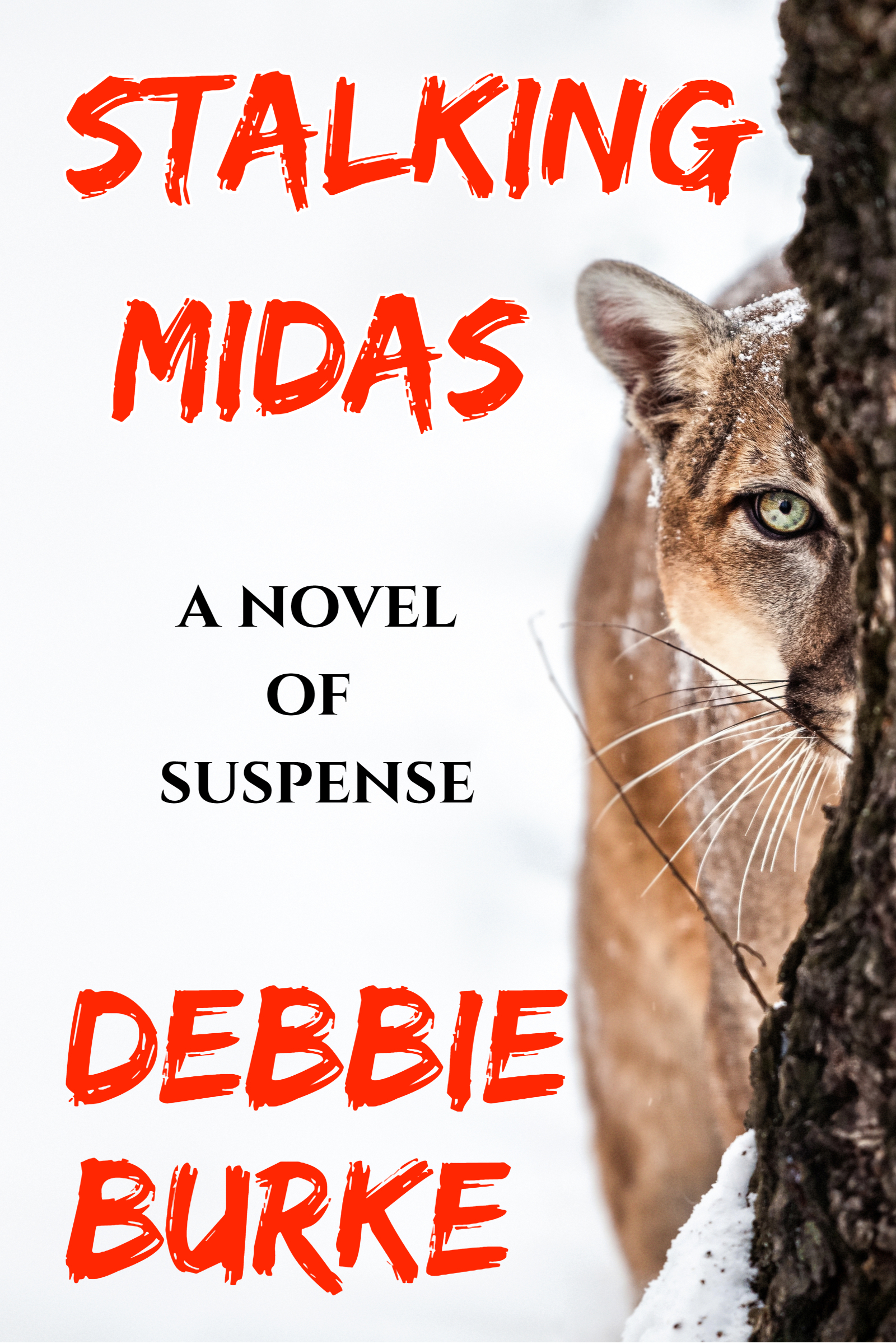
Stalking Midas

Eyes in the Sky


First Page Critique – The Wildfire Pathogen

Jordan Dane
@JordanDane

I am posting my first page critique to assist Clare who is in Australia with personal family business. My first critique in 2020, I hope you’ll enjoy THE WILDFIRE PATHOGEN. Very timely with the Coronavirus out of China. Let’s sanitize our hands and read on. My comments will be on the flip side.

The Wildfire Pathogen

Even through six inches of solid acrylic, Conrad Jurek could see the monsters moving inside the box.

They were no more than grainy mists inside individual test tubes. Those mists swirled with each jolt of the plane as it powered through pockets of turbulence. Almost as if the bumpy ride irked them.

Jurek reached into his sage-colored flight suit, pulled out a pen, and began to jot notes on his clipboard. The acrylic box was a four-by-six foot transparent crate mounted on a hardwood dolly. A locking mechanism the size and weight of a manhole cover sat on top. He’d seen the same tamper-proof device protecting the innards of nuclear warheads.

The monsters inside could do far worse than mere firecrackers.

Six tubes hung suspended below the locking device like bullets chambered in a revolver. Each finger-length container held twenty grams of orthohantavirus, a solid mass of viral matter dried into particles as white and delicate as baby powder.

Yet each cylinder of glittering borosilicate glass held enough pathogenic material to kill several million men, women, and children.

A beefy hand came down on Jurek’s shoulder. He suppressed his instincts and allowed the hand to turn him around. A man wearing a black uniform with the word SECURITY stenciled across the front scowled at him before growling two words.

“Back off.”

Jurek held up the clipboard. “I’m supposed to do a load check mid-flight.”

“No one’s supposed to come close to the package.” The guard’s eyes flicked to the name tag at the chest pocket. “If I were you, Corporal Witkowski, I’d leave. Now.”

Two more security men stepped into view on the opposite side of the box. Jurek considered them for a moment. Under his flight jacket, a 9mm Beretta Nano hung snugly in a holster. The weapon was still warm from when he’d shot Witkowski and taken the airman’s uniform off the hanger.

No, he thought to himself. Stick to the plan.

Jurek turned away and went up to the cockpit. He locked the door and took the empty co-pilot’s chair. The pilot glanced over with a raised eyebrow. His uniform’s tag also bore the name of a man murdered in the last two hours.

“I’m familiar with the outer locking mechanism,” Jurek confirmed. “We go forward as planned, Doctor Isenhoff.”

“Good,” came the reply. “Get your oxygen mask ready.”

With that, Isenhoff reached out and flicked a single switch on the flight panel.

FEEDBACK

SUMMARY – Great place to start. This time it’s not SNAKES ON A PLANE. It’s monsters in a vial. We are already in the middle of the action with plenty of mystery and intrigue to keep turning the pages. The author sticks with the action without slowing the pace with backstory. There’s time for explanation once the reader is pulled in. At the end of the 3rd paragraph, the author draws the reader in tighter in describing the tamper proof canister and compares it to the protection on a nuclear warhead. Nicely done. And it got my attention when the author described a nuke to “firecrackers” compared to the monsters on the plane.

I also liked that the author had patience to let the reader discover that Jurek committed murder to get on the plane, wearing a dead man’s uniform. At this point, we aren’t sure if Jurek is trying to stop a deadly pathogen attack by hijacking the material from villains or if he plans to steal the deadly virus to commit his own attack. Great set up with plenty of mystery to unravel.

I especially like how the author had Jurek accosted by security and he had to restrain his instincts to fight the man off. He’s got more up his sleeve (a plan) and that’s when we find out that Jurek killed to board the plane. Nice touch, author.

Then a stroke of genius to have Jurek working with the pilot – a doctor presumably familiar with the pathogen – who is also a pilot. Jurek and Dr Isenhoff are in it together. And there’s a hint that there’s a reason Jurek went to check out the dangerous cargo, to determine if he knew how to break into the canister. Something bad is about to happen that involves oxygen masks. At this point, we don’t know who the protagonist is, but we have a great start.

TITLE – I like the reference to “wildfire.” We all know what that could mean in terms of spreading fast and the word “pathogen” is timely and medical. Only the author knows if there are other titles that could establish the critical danger in a better way, but I would be happy taking this title to a publisher. It’s more than a working title, in my opinion.

NIT PICKY – At the start of paragraph 3, I spotted a pet peeve of mine. I like a strong sentence with tight wording. The words “began to” are unnecessary. It would be better to say “…and pulled out a pen to jot notes on his clipboard.”

Jurek reached into his sage-colored flight suit, pulled out a pen, and began to jot notes on his clipboard. 

Great job, anonymous author. There’s action and I’m intrigued. I would definitely keep reading. Okay TKZers, please leave your comments and provide feedback to this brave author. (Safe travels, Clare. We missed you.)

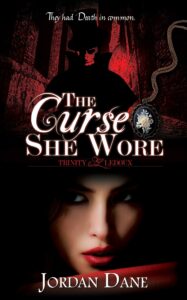
The Curse She Wore – Coming Feb 10, 2010. On presale now.

Trespassing on Fate’s turf comes with a price for two broken people–one they will never see coming.

First Page Critique ‘The False Curtain’:
Alone Again…Unnaturally

By PJ Parrish

Why is January feeling like it’s lasting forever? And I don’t even have to deal with snow.  I just wanted to get that off my chest. Now, let’s have some fun and read a First Pager.  Thank you, dear submitting writer, for giving me some diversion this week as I fill out the scary questionaire in preparation for possible grand jury duty next week. If you don’t see me for a couple months, send out the search party to the Tallahassee courthouse.

THE FALSE CURTAIN

A suspense novel

The small, windowless room felt more like a place for an interrogation than a meeting.

Although two plastic chairs sat side-by-side in the middle, I stood. Actually, I paced. It’s what I do whenever I’m uneasy. Mimi had said there was nothing to be nervous about. My appointment with Mr. Smith, the man she owed money to, should be simple and quick.

Finally I heard the doorknob turn. I watched as the door opened. It took a moment for me to realize who stood in the doorway.

I had no idea Mimi’s Mr. Smith was Davey Smith. I never would have put the two together.

I recognized Davey only because I saw him at our 25th high school reunion last year. Back in the day he’d been the quiet, studious kid who tutored math dummies, like me. Someone said he’d done well for himself and he looked it. Seeing him again—now—totally surprised me. He showed no indication of feeling the same.

He took a couple steps forward, stopping just inches away. He cupped my face with both hands and tilted it upward. I watched his face come close. His kiss was soft and persuasive.

After releasing me, he said, “Good to see you again, Lindsey. Sorry we didn’t get to talk at the reunion.”

“Davey, I—”

“I prefer my friends call me David.”

“David. I—.”

“…and my business associates call me Mr. Smith. I haven’t decided which category you’ll be in.” He smiled, just a little, then abruptly turned and walked to the door. “About that kiss. Don’t take it too seriously. You still have to do everything I say. If you don’t, you won’t like what happens to your cousin. You also won’t like what will happen to you.” With that, he left.

I stared at the closed door, stunned.

Davey was no longer the sweet boy I knew in high school.

His attitude….

His threats….

I wanted to start pacing again, but I was too scared to move.

***

After a while, I sat. I don’t know how much time passed because I didn’t have my purse or phone. A man had taken them before I was shown into the room. That was my first clue the meeting wasn’t going to be simple or quick.

My meeting with Mr. Smith was supposed to be a discussion of how I could pay back Mimi’s debt—

________________________

I’m back. Well, what do we think? I think there’s some good stuff here that, with a little tweaking, could be the beginnings of what the writer subtitles “A suspense novel.” (Which I think is superfluous, by the way. Your back copy can carry that load for a potential reader. But that’s a nit.)

What’s good here: We’re picking up the story in a good active moment — a somewhat mysterious meeting that has the protag on edge. There is just enough backstory hints to ground us but no info dumps. I like the way the writer told us who Mimi is — not through a narrative tag (“My cousin Mimi had told me…”) but letting the relationship emerge through dialogue a couple beats later. Smoothly done.  I think the dialogue itself is handled cleanly and reads as believable. David’s kiss is a big creepy surprise, especially when he backs it up with a threat. (More on that in a sec). So, all in all, not a bad opening at all. I would read on.

But…

And this is a caveat I often give. When the writing is solid, I want it to be better. Because good isn’t good enough in today’s market. When you’re as close as this submission is, you need to push yourself even harder to make your story stand out  from the madding crowd.

I try not to rethink a writer’s approach or question their style. But here’s a few suggestions, just one reader’s perspective.

The opening line isn’t bad. But it’s a good example of telling instead of showing. I think you could use a few more choice details to SHOW us this room rather than TELL us it “felt more like a place for an interrogation than a meeting.”

Windowless, small, plastic chairs is not enough, imo. Use description to enhance the MOOD, the apprehension she feels. You won’t lose your momentum by slowing down just a little. How big is this room, exactly? (Calling a room small is like calling a man handsome — It has no currency in our imaginations). What’s the lighting — glaring fluorescent with maybe one bulb giving off that annoying buzzing just before it dies? Industrial carpeting with an odd stain? What color are the walls? Does it smell? It also might not be a bad idea to hint somewhere where we are exactly. Your description is so spare we could be in anything from downtown Houston skyscraper to an anteroom in a airplane hangar meth lab. Make your description make us FEEL something.

Ditto when you get to Davey/David. I like this line: “Someone said he’d done well for himself and he looked it.” But again, that’s telling instead of showing. Does this mean he has money? Is he wearing a Brioni suit and silk tie? Again, you’re missing an opportunity to not only ground your reader in detail but to reveal something about your protagonist by filtering description through her PERCEPTIONS and BACKGROUND. You can tell us a lot about your protag (and help us bond with her) at the same time you tell us something about David. Don’t let these opportunities go by.

Because…right now Lindsey is sort of a cipher. Granted, it is hard for you the writer to give us a sense of her physically when you’re in the first person. But a simple line like “I watched his face come close” gives you a chance to add detail — a small shaving nick on his chin? The smell of clove after-shave? Are his hands, cupping her face, rough or smooth?

One thing that kind of doesn’t make sense. She seems to be surprised by his appearance (ie, the line, someone had said he had made good for himself…). But she saw him herself just a year ago at a reunion. So she would already know he was successful and/or handsome? People at reunions talk about who made it, who failed, who died, etc. You say they didn’t talk at the reunion but did she see him from afar? You say he is NOT surprised to see her. You need to reconcile this.

The kiss is interesting. But the fact she has no reaction or thought (other than saying it was “soft and persuasive”) struck me as odd. Unless these two have a romantic past, it comes across as somewhat unrealistic and weirdly submissive on her part. What is “persuasive” about it? It made me flash back to the dynamic between Christian Grey and Anastasia Steele in Fifty Shades of Ickiness. Lindsey is, given the 25th reunion time line, about 43 years old and there on some kind of financial mission (ex math dummie or not). Do you really want to paint her as so passive?

That passivity is echoed, too, in these lines after David leaves:

Davey was no longer the sweet boy I knew in high school.

His attitude….

His threats….

I wanted to start pacing again, but I was too scared to move.

The guy just planted a predatory kiss on her, threatened her and her cousin, and left the room with nothing resolved. And this is all she feels and thinks? Now, maybe this is a calculated character arc for Lindsey on your part. Mousy CPA encounters a mystery man from her past and she eventually grows and rises to some challenge? (You titled this a suspense novel, not a romance).  But Lindsey, in this opening at least, doesn’t strike me as a woman who will take her destiny into her own hands. She recalls all the tropes of a bad 1950s bodice ripper).

Which leads me to the last paragraph. (By the way, you don’t need the * * * designation. It is used only when you have a legitimate scene break, not when you don’t know how to transition from one moment in your story to another)

After a while, I sat. I don’t know how much time passed because I didn’t have my purse or phone. A man had taken them before I was shown into the room. That was my first clue the meeting wasn’t going to be simple or quick.

Why did she just sit there? Again, this is passive and not very interesting. And the fact that someone took her phone and purse when she came in should have been in the first graph — it ups the stakes immediately. But unless you set this up better, it isn’t believable. Maybe if you had described this place better in her thoughts — that when she entered the building, she went through a metal detector or given us details about the circumstances of surrendering her purse and phone, I might buy it. But again, she does this without question or even a thought — which makes her passive and almost juvenile.

So, there we are, alone in a windowless room, with a faceless protagonist. Where does Lindsey — and this story — go from here? As I said, I think this set-up has potential and the writer has a decent grasp of craft.  But it doesn’t read real and it feels unnatural, like the weird kiss and threat came out of nowhere, not organically from the situation. Also, we need some flesh on these bones. Create a mood. Give us some details to fire up our imaginations. And most important, give us good reason to want to follow Lindsey for 300 suspenseful pages.

Thank you, dear writer, for letting us see your work. I hope you find this one person’s opinion this helpful. And others here, as always, might have different takes. What say you all?

Setting Yourself Up for Success

It is happenstance that I follow the excellent question posed by James Scott Bell yesterday in this space about the concept for writers of “Failing Up” with some thoughts on success and how to achieve it. The collection of individuals known as “writers” and “authors” have any number of motives for writing. One of the ones at the top of this list hopefully would be that each and all of them want to do so. Those of us who show up every week or two at this space with a post that we have written do so because we want to do it. We seek to help others, hope to entertain, and/or wish to sound off, among other things. The big one, however, is that we want to write. 

Some authors have reached the enviable point in their careers where they are under contract and must write in order to fulfill a contractual obligation, but wanting to do it is hopefully still their primary motivation. Sitting in front of a screen trying to fill a space beats looking forward to a day where a shovel and a ditch constitute the primary scenery and the scenery never changes. Others are trying to get to the point where someone is willing to pay them to write. They are honing their work in hope of piercing the hardened heart and mind of an editor. Again, however, they have to want to. And so it goes. In each case, a writer assembles the tools, skills, and ideas at hand and gets to work. 

It sometimes helps, however, to sit back for a moment (as opposed to a week, or a month, or longer) to discern what is one’s prime motivator, regardless of what they are trying to accomplish. I was reminded of this last week as I listened to a lecture titled “Counseling Your Client to Reduce Stress & Succeed in Litigation” given by Alan S. Fanger, Esq., as part of the lawline.com legal education series. Mr. Fanger, the president of EmpowerLegal, Inc. touched upon many subjects dealing with how to prepare a client for trial.  My major takeaway from his presentation, however, was a discussion concerning how to successfully accomplish a task. Mr. Fanger put forth the proposition that it is more important to focus upon what needs to be done to perform the task successfully than upon the consequences of the failure to do so. He concluded that focusing on consequences rather than how to do the job will guarantee failure.  

Mr. Fanger used an example from the world of professional football to illustrate his point. You don’t have to be a football fan to appreciate it.  There was a cringe-inducing moment during the 2016 NFC Wild Card playoff between the Minnesota Vikings and Seattle Seahawks. A Vikings player named Blair Walsh was tasked near the end of the game with kicking a field goal which would have, all other factors being equal, won the game for Minnesota. It was a short kick (for a professional football player) of twenty-seven yards. Walsh missed it, in front of God and everybody. It wasn’t as if Walsh was pulled out of the stands to make the effort, either. The game in question was a low scoring one. Walsh had actually scored all nine of Minnesota’s points during that game by kicking field goals from longer distances. He missed that last one, however. It was indeed a bitter pill to swallow, one that some football fans remember to this day. While none of us can accurately predict what goes through anyone’s mind in the moments before making an attempt at a task, Mr. Fanger submitted that perhaps Blair Walsh was more focused on the enormity of what would happen if he failed — losing the game and thus failing to advance to the Super Bowl that year — than upon what he needed to do to succeed. 

That conclusion may or may not be true. It makes sense, however. You may have heard of something which is currently called “analysis paralysis.” It’s a term applied to overthinking, which is easy to do because in a very subtle way it delays the need to make a decision as to what to do. Let’s look at a very famous incident that required immediate decision and focused implementation. I am sure that the name Chesley “Sully” Sullenberger is familiar to all of you. Captain Sullenberger was piloting a commercial airliner when a bird strike shortly after takeoff from LaGuardia Airport disabled his aircraft’s engines. Captain Sullenberger, a veteran Air Force and commercial pilot, made some calculations and concluded that landing at an airport wasn’t an option. He made a decision and told his control tower, “We’ll be in the Hudson.” That is where he landed his plane. The conclusion of that particular incident would have been quite different if Captain Sullenberger had focused upon and overwhelmed by the consequences of failure — job loss, destruction of property, and, oh yeah, loss of life — instead of upon the best method (under the circumstances ) of landing the plane and the passengers with which he had been entrusted. He made a decision and acted on it, focusing on what he needed to do to succeed. “We’ll be in the Hudson,” Just so. 

Think about Captain Sullenberger the next time you sit down to write and find that the old bugaboo — “I gotta finish this” — gets in the way. You probably have near at hand everything you need to succeed, including writing instruments, a command of language, imagination, the will to start, and your own mind.  I had all of those within reach when I began writing today’s post. I didn’t consider what would happen if I didn’t. It was more constructive and more fun, actually, to start writing and see, to paraphrase Dorothy Sayers, where my whimsy would take me. The finished product is just a bit different than what I had envisioned it would be, but that’s okay, too. I’m happy with it. I don’t know if I kicked it between the goalposts, but I think I landed in the Hudson, and I hope I didn’t lose anyone.  

Thank you for stopping by. Enjoy your weekend.

True Crime Thursday – Snowballing Out of Control

Photo credit: Annatsach

By Debbie Burke

In the dead of winter, here’s a selection of true crime stories about snowballs.

In December, 2019, the Wisconsin town of Wausau outlawed throwing snowballs, classifying them in the same category of weapons as “arrows, stones, or other missiles or projectiles.”

~~~~

A Douglas, North Dakota man, 68, was charged with felony aggravated assault of a victim under the age of 12. The man was walking his dog in the vicinity of snowball fight among a group of children. He was hit by a stray snowball and allegedly pursued a 9-year-old boy, knocking him to the ground and kicking him.

~~~~

In a triumph of youthful activism, a 9-year-old mover-and-shaker from Severance, Colorado convinced members of the town meeting to overturn an ordinance banning snowball fights. Now that the activity is legal, young influencer Dane Best intends to throw his first snowball at an appropriate target—his little brother.

Photo credit: Visual Hunt

Next, Dane may tackle reforming other Severance ordinances–specifically a definition that currently limits “pets” to cats and dogs, which means his guinea pig is technically illegal. Go, Dane! 

TKZers: Should snowball fights be outlawed?

~~~~


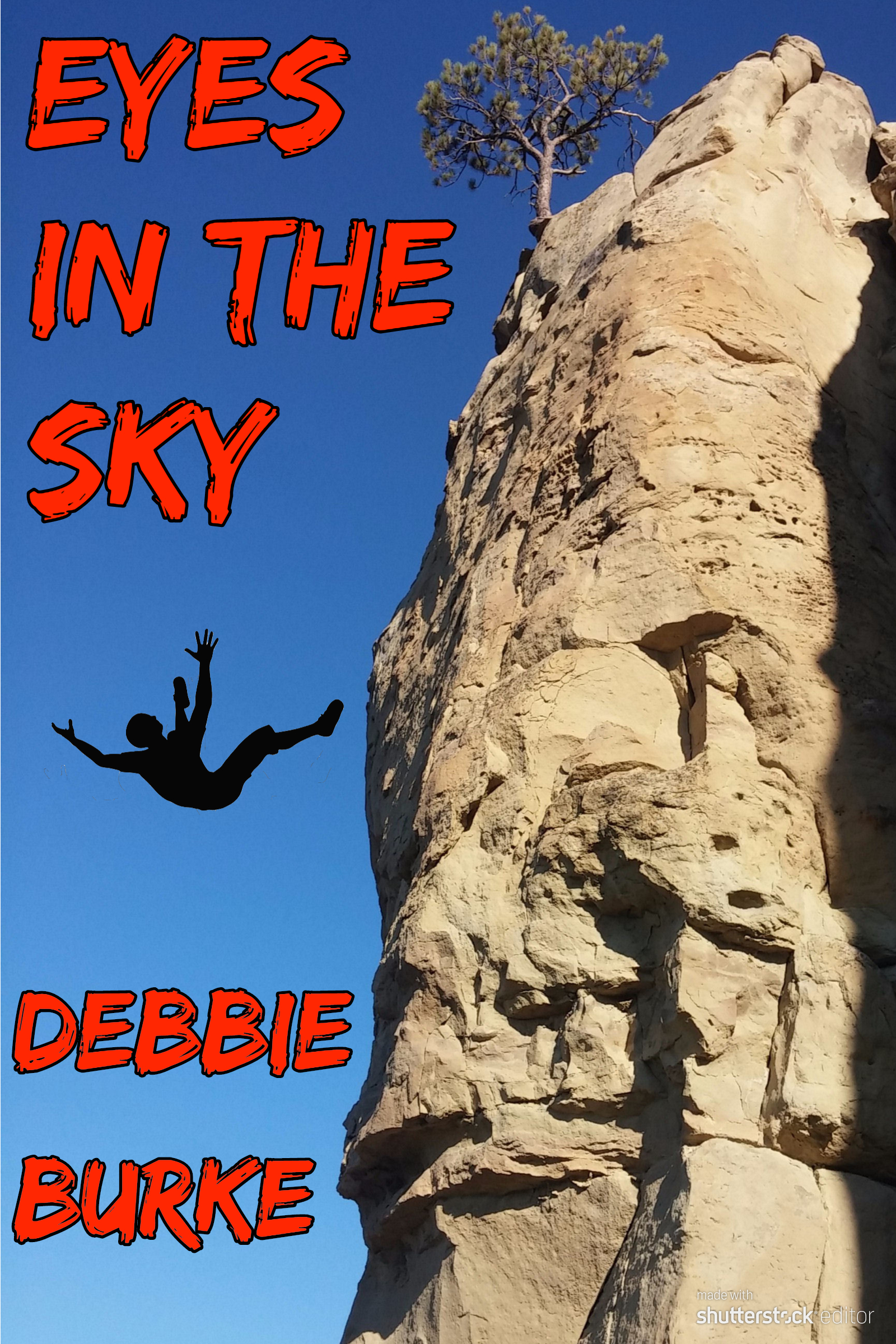
Debbie Burke’s new thriller, Eyes in the Sky, includes many crimes but no illegal snowball fights. It’s book 3 in the Tawny Lindholm series Thrillers with a Heart. Please check out the preview at this link.


Stalking Midas, book 2 in the series, is specially sale priced until January 28. Please check it out here.

Is There Such A Thing As Too Many Books?


At our house, we’re still in the midst of The Never-ending Remodel. The good news is that we finally have access to five renewed closets with actual shelves, rather than wire, shelf-like surfaces through which our belongings dangled for thirteen years. The other news is that the piles of unshelved belongings that remain are made up mostly of books. A lot of books.

Husband, also a writer, has never been sentimental about printed books. Without my, um, encouragement, we wouldn’t own more than two copies of any of his published books. (We long ago lost track of all the books in which his work is anthologized.) A frequent quote: “If I need a copy, I can get it off Ebay.” Did I say he was unsentimental? My mind is searching for another word that better expresses the gravity of his position. Maybe something in the blasphemy neighborhood. But he is also a creative writing professor who teaches his students how to tell compelling stories in arenas that didn’t exist a decade ago–from podcasting to virtual reality. And some of his third year graduate students already have (ironically enough) book deals and jobs in publishing awaiting them.

I love our books. I love the books I brought with me when we married, and the books we bought along the way. I love all the books with our writer friends’ names on their spines. I love having the books we’ve written. I love the books we read to our kids. I love the books we own that I’ve never read. I love the books I used to homeschool our kids. I love the books we received as gifts–even if they aren’t books we might have chosen. Together, that’s a lot of books.

We’ve given away many hundreds of books over the years. Mostly to libraries for book sales. Though the newer books we’ve donated from the many competitions we’ve judged often find new life on our local library’s underfunded shelves. It’s always a joy to hear when that happens.

Does the above establish me as a book lover? I hope so.

Publishing paper books is big business. In 2017, 675 million print books were sold in the U.S. alone. (I didn’t dig too deeply for this number. Your result may differ.) What about all those books that are printed by traditional publishers and never leave the warehouse? That’s a lot of books, a lot of paper.

Sometimes I feel guilty about all the paper we use for books. If you’re a person concerned with carbon footprints, this post has some interesting comparisons on the impact of ereaders vs. paper books, and even includes the surprising news that reading on a phone has considerably less environmental impact than reading on an ereader. It also mentions something I’ve long suspected: reading comprehension is notably higher with paper books than digital books. (FWIW, the post has a disturbing number of exclamation points, which, despite the piece’s footnotes, makes its conclusions seem suspect. Punctuation matters, kids.)

Book publishing creates jobs, beginning with the writer. Also: librarians, travel companies, snack food companies, coffee companies, agents, therapists, phone and data companies, office supplies, delivery companies, the postal service, bars, editors, receptionists, cover artists, layout artists, paper suppliers, printers, copy editors, publicity people, restaurants for meetings, carry-out food for exhausted writer/editor/publicity/production folks, book and warehouse-store employees…the list goes on.

You lose quite a few of these folks with ebooks–or even audiobooks.

If I see someone reading a paper book, I’m immediately interested. Doesn’t matter if it’s not my kind of book. I still feel a kind of kinship. Hey, you’re cool, reading that book there. I have a book, too. WE ARE BOTH COOL AND SPECIAL!” Mostly I see people reading on airplanes. Occasionally I’ll observe someone reading a book in a restaurant. Many, many people stare at phones, so I don’t know what they’re looking at. Could be WAR AND PEACE, could be porn. I guess it’s not my business, even though I still wonder.

No kidding that I’m sentimental about paper books. They were my closest friends when I was a kid. They never let me down, even when they weren’t great. Not only could I hide behind them–I could brandish them as weapons, or hold them out just far enough to read as I walked so that they would bump into things first. It’s easy to fetishize things that made a big difference for us as kids.


Yet sometimes, I can see Husband’s point. A story is a story no matter what format it’s in. Sometimes I’m overwhelmed by the presence of so much paper. I often feel guilty when I look at a book on the shelf that I know I’ll probably never read. That fantasy about how books might somehow disappear in the greater world, and we’ll be sitting pretty because we have enough books to last us years should we need them? Oh, yes. I’ve had that one. And also the one about how if I pass on too many of our books, and come to rely mostly on ebooks and audiobooks as Husband does (insert reminder that I listen to 4-5 audiobooks a week, myself), there will be a coincidental electronic disaster that will make all digital content disappear.

Apparently I’m not only sentimental about books, I’m superstitious.

When my first hardcover novel was finally remaindered, I bought 125 copies because I got them for $4 apiece. Do you know how many books that is? It’s 125! There are perhaps 15 or 20 left. I confess I felt a lightening with each one I gave away. 9 years of giving them away.

I’ve never been able to figure out how many of my own books I should keep. As I’m no legendary bestseller, it’s not like I’ll be leaving the to Harvard or Yale or even the University of Missouri-St. Louis for their archives. Paper rots eventually. I don’t want my legacy to my kids to be a dozen totes of decaying books with my name on them. To future generations, my career–such as it is–will only be a footnote in the family trivia trove. That idea is pretty humbling. Ashes to ashes, and all that.

In the end, we are all going to be the victims of rot. As with books, we will all get cracked and yellowed around the edges and probably smell old. Not unpleasantly, I hope. (Am reminded of the wi-fi network name OLD PEOPLE SMELL that comes up on my phone when we drive by a certain senior living community in our town.)

I won’t insist that this piece has had much of a point, except to say that I’m feeling a bit overwhelmed by the number of books we own. It still remains to be seen how many of my own books I should keep. Who said it? Books furnish a room. Will my home be soulless if I give away a dozen too many?

Tell us about your relationship with your books. Is it complicated? And if it’s simple, tell us your secret.


LinkedIn Tied to Book Piracy

By Debbie Burke

Photo credit: dolldreamer

A hot topic recently caught fire at the Author’s Guild discussion site: the embarrassing connection between social media giant LinkedIn and book piracy.

LinkedIn owns Slideshare, a knowledge-sharing site. Slideshare is also a popular venue for free downloads of books without the permission of the authors.

In other words, book piracy.

In September, 2019, Margaret Atwood’s highly-anticipated sequel, The Testaments, appeared on Slideshare for free, covered in this article.

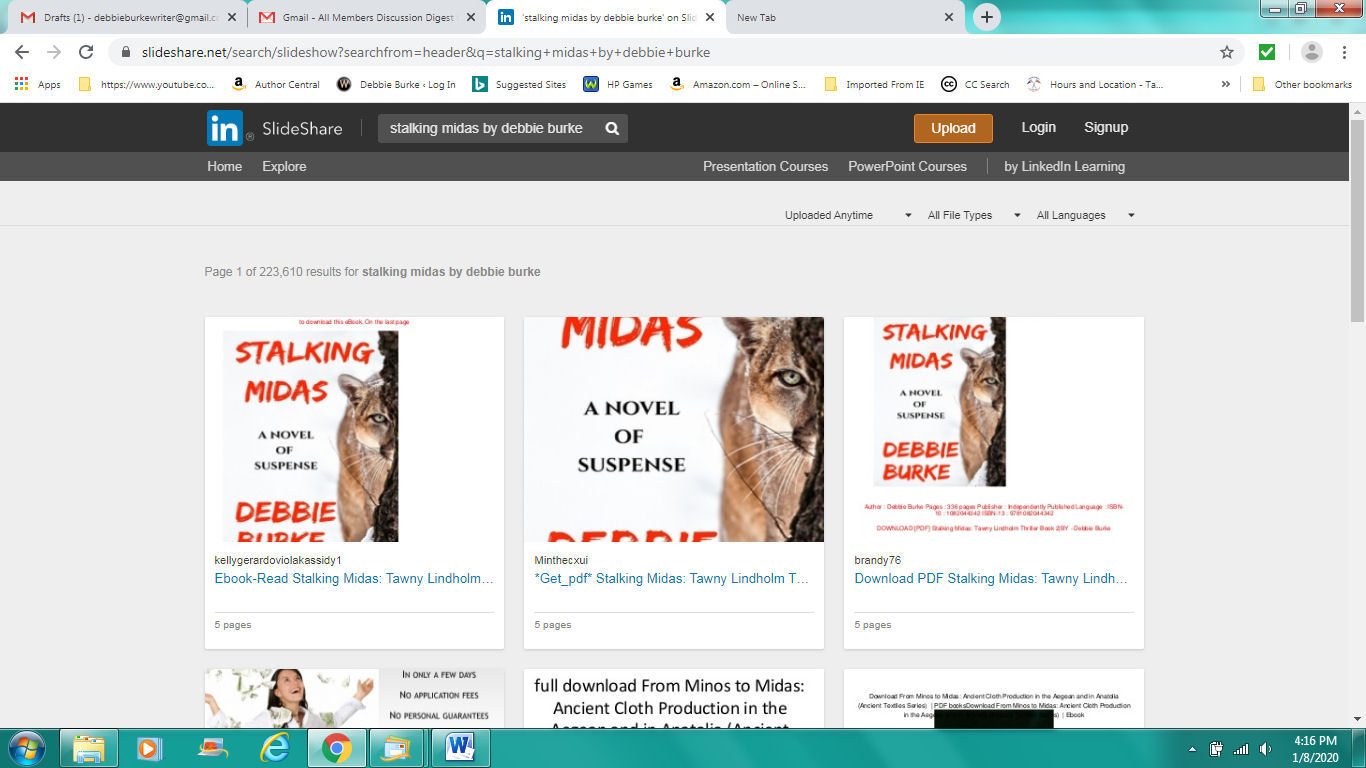
Screenshot of my book on Slideshare without my permission


Thousands of other books, from famous to obscure, show up on Slideshare without the author’s permission or approval, including my own thriller, Stalking Midas.


How, you ask, do pirates make money from free book downloads?

They don’t…directly.

If you click on those teasers, you’ll likely wind up at phishing sites that contain malware and viruses. Their purpose is to mine credit card data and personal information. You might get free books but lose your identity or worse.

The Digital Millennial Copyright Act (DMCA) made such copyright violations illegal. Authors can demand illicit copies of their work be taken down. The procedure to file complaints is described here.

Photo credit: sasatro on Visual Hunt


But pirates aren’t exactly quaking in fear of punishment for their theft.


The fastest way for authors to find if their books are listed is to search Slideshare.net, using book title and author name. 

LinkedIn, of course, is facing criticism for their tacit enabling of the crime. Here is their policy, which includes a complaint form to report copyright violations.

Although the form asks for the copyright number, that number is not necessary to register a complaint.

The form also requests URLs of the offending sites. Some books appear in hundreds of places. Tracking them all down further burdens authors, taking precious time away from writing to search for pirates.

Authors Guild members report mixed results after filing complaints with Slideshare. Some say the illicit links have been removed within a short time; others claim that, despite repeated complaints and takedown requests, the links remain up for months; still others report the links are removed but new ones pop up again.

Many authors believe LinkedIn–owned by tech giant Microsoft–should be sophisticated enough to flag repeat offenders and block pirate sites.

Romy Wyllie, author of several architecture books, was shocked to find those books as well as her memoir, Loving Andrew – A Fifty-Two-Year Story of Down Syndrome, on Slideshare. “I never thought of LinkedIn except as a professional social media site.  I am considering cancelling my membership in LinkedIn.”

Whack a Mole
Photo credit: Eric Parker, Visual Hunt

Author Chris Dickon was dismayed to find four of his books on Slideshare. “I can deal with the problem as prescribed, though others have reported it to be a game of whack a mole, but my real question was – Linked In?? which purports to exist to help us all to develop and realize our professional and creative goals, economic progress, etc. but is corporately involved in the theft of our creative product and income, Linked In!?!”

Chris didn’t simply fill out the standard complaint form—he went straight to the top and contacted the CEO and co-CEO of LinkedIn. That resulted in a long phone conversation between LI representatives and Chris: “Linked In…presents itself as a friend and supporter of our professional well being, its very raison d’etre, [but is] involved in stealing from us.”

LI personnel indicated to him that, although they were aware of the problem, they didn’t realize the level of outrage it is causing among authors. 

It really should come as no surprise to LinkedIn that authors are angry our work is being stolen via a supposedly legitimate platform. 

LI followed up with Chris and invited him to stay in touch. At this point, he is satisfied with their handling of his complaint.

Other authors are publicizing the problem through social media.

William H. Reid, MD, MPH, tweeted: “SHAME on LinkedIn & subsidiary for letting book pirate scum distribute many of my books and thousands of others with no royalties to authors or publishers. Thanks for buying A Dark Night in Aurora from Amazon, B&N, & local bookstores! #LinkedIn #authorsguild”

Mary Rasenberger, Executive Director of the Authors Guild, is in discussions with Microsoft and urges all affected authors to file complaints to put LI on notice.

At this point, LinkedIn is hiding behind the safe harbor provision in DMCA, a loophole that protects online service providers (OSP).  There are “two ways in which an OSP can be put on notice of infringing material on its system: 1) notice from the copyright owner, known as notice and take down, and 2) the existence of ‘red flags.'” 

If an OSP ignores repeat offenders, they can lose their safe harbor status. Many aggrieved authors believe LI no longer deserves that protection.

Five days after filing my complaint and takedown notice with LI, I received an auto-reply of their action. Stalking Midas has been removed…for now.

As an aside, LinkedIn proudly touts their executive who holds the position of Head of Mindfulness and Compassion. The question is: when will LI become mindful of widespread, blatant copyright violation and show compassion toward authors who are being victimized?

When supposedly legitimate corporations like LinkedIn and Microsoft enable theft, all authors suffer.

~~~~

TKZers: Do your books show up on Slideshare? If so, what action did you take? What were the results? 

~~~~


Debbie Burke will be watching to see if her new thriller, Eyes in the Sky, shows up on pirate sites. Publication date January 23, 2020, now available for pre-order here.

More than a Dream

Today as we celebrate the MLK holiday, I find that many of the issues Martin Luther King Jr. espoused seem to resonate even more deeply than they have in the past. Maybe it’s because over the past year or so I have become more involved in state politics providing both volunteer and aide support to one of the few African American senators in Colorado. Maybe it’s because in trying (and often failing) to juggle these commitments and my writing I’ve had to reevaulate my writing ‘dreams’. Or maybe it’s because I celebrated a ‘big’ birthday last year which inevitably meant taking stock of what I’ve achieved so far…whatever the reason, I find myself feeling more philosophical than usual today.

On one hand, I feel I’ve contributed (albeit in a small way) to progressing society towards some of the goals MLK held dear. On the other hand, this work (and my struggle to balance it with my writing goals) helped reinforce the truth that for me, writing really is the dream I cherish. In some ways this was an important lesson to learn – one I could only really learn when my time to write became so compromised that I realized how much I missed it! Unfortunately, since the legislative session just started in Colorado I have been sucked back into a political vortex (the new aide to my senator just resigned…and I stepped back into the breach) – so I feel a little like I’m back where I started… and I need to recommit to my dream once more and find the right work-life/dream balance.

I was mulling over the concept of ‘dream’ when I caught an excerpt from an episode of “How I Built This” on NPR. Guy Raz was asking the founder of an active wear brand how she thought she managed to make her dream a reality. Her answer was one powerful word – ‘persistence’. When you think about all the dreams we have – from the lofty and powerful ones MLK articulated to the smaller, more individualized ones we hold dear – the only way those dreams can become reality is through persistence. So I’m taking this day to try and recalibrate my expectations and recommit to the concept of persistence.

So TKZ, on this MLK holiday, what dream are you committing to? Any guidance on how to  embrace persistence, despite the challenges?


Cultivate New Readers by Donating Your Books to Worthy Causes

Jordan Dane
@JordanDane

I accumulate books and they breed on their own when the lights are out. Organizer guru, Marie Kondo, would not approve. During my last move, I downsized. Maintaining a personal library is not practical. With all the guests that come to visit on a regular basis, it is more fun to have an extra bedroom.

That got me thinking about what I could do with the good books I have already read. I have a special collection of signed books I will never donate or share (because sharing can be a one-way trip). These are books I treasure. (They are often written by author friends. Super special.)

For a number of years, before I sold and published, I collected debut books in hardback print. Those books served as inspiration for me that my dream to become a published author could happen. But no matter how much I wanted to keep all the books I’ve read, I also see good reason to donate them to other avid readers. Sharing the joy of reading is a special bond we readers share.

Off the top, there are many great places to donate books to appreciative organizations. Your kids’ school, the local library, homeless shelters, Goodwill, nursing homes (especially if you have audio books or large print reading material). My last donation was to a home for pregnant teen girls where I dropped off young adult novels, my books and other YA author friends’ stories.

Something that I’ve wanted to start in my neighborhood is a Little Free Library. I first saw these when I lived in Wisconsin many years ago, but they are a great way to develop a sense of community and support literacy. Many cities and states have these programs and the little libraries can be constructed in very clever ways. Here is a cute one in Arizona. People leave books for free, readers can take a book and leave one when they are done, for someone else to enjoy. Everything is on the honor system. I love this idea. Here is a LINK on how you can start your own Little Free Library.

Below are some book donation ideas that you might not have thought of before:

1.) Donate Books to Deployed Soldiers – An organization like OPERATION GRATITUDE offers many ways to donate books and more. They serve military families, veterans, first-responders, deployed soldiers, wounded heroes and caregivers, & recruit graduates. Help them fill care packages with your book donations.

OPERATION PAPERBACK takes book donations for troops. (Make a money donation or contribute books.) Operation Paperback started in 1999 and has shipped 2.9 million books to over 30 locations overseas. They have 19,000+ volunteers in all 50 states, who partner with a network of shippers and send 15,000+ books per month.

There might also be local groups where you live that send books to deployed military. Tampa Bay has Books for Troops.

A special program – the USO’s United Through Reading program, helps deployed soldiers read bedtime stories to their kids.

NOTE: Many of these programs have criteria for book donations and some have suggestions for genre and/or specific book titles they are requesting. Be sure to read donation guidelines before you send books.

2.) Think Dogs & Kids – This is a great & creative idea that merges rescue animals and literacy. Some animal shelters are matching up canines, kids and books in an innovative way. At the Humane Society of Missouri, the Shelter Buddies Reading Program gets kids ages 6 to 15 to read to shelter dogs, as a way of getting the dogs ready for adoption.

Another program, Reading Education Assistance Dogs (R.E.A.D) connects children who have difficulties reading with therapy dogs, under the notion that children will find reading to an animal less intimidating. In Connecticut, you can donate books to support the “Read with Me” program out of Pet Partners, a local dog therapy organization that pairs therapy dogs with struggling readers. Talk about a WIN-WIN.

3.) Local Book Lovers – Do you have a local program that needs books? In Los Angeles, for example, there’s a service called Re-Book It. This is a free service hosted by The Last Bookstore. They offer free pickup throughout Los Angeles county, and your donations could benefit libraries, schools, at-risk children, and hospitals. The Last Bookstore does all the work and your books find a new home.

If you don’t have a great organization like this in your area, you may find other groups that do similar work. For example, a book drive through a local church, library, school, or volunteer organization could be a good resource to relocate your books.

Organizations like Better World Books has drop boxes across the country. Enter your zip code into their site search to see if they have a drop box near you.

This time of year, with the tax season looming, I think about ways to make a difference and charitable donations. I hope this post gives you ideas or inspires you to start something new in your area. Happy 2020!

For Discussion:

1.) Do you have good suggestions for places to donate books?

2.) Share a story about one of your book donations. (This could be for your books or for other authors.)


The Curse She Wore by Jordan Dane – Coming Feb 10, 2020.

ON PRESALE at Amazon (in ebook and print)

They had Death in common…

Homeless on the streets of New Orleans, Trinity LeDoux has nothing to lose when she hands a cursed vintage necklace to a wealthy, yet reclusive clairvoyant.

During a rare public appearance, Hayden Quinn is unexpectedly recruited into Trinity’s perilous mission–a journey back through time to the exact moment of death for two very different victims.

Hayden and Trinity, two broken people with nothing but death in common, pursue the dangerous quest to stop a murderer from emulating the grisly works of a notorious serial killer. But trespassing on Fate’s turf comes with a price–one they never see coming.

GOODREADS GIVEAWAY for The Curse She Wore – Enter for a chance to win.