Plot Or Character? What’s
Your Starting Point?

By PJ Parrish

If you write long enough, you will eventually get this question: Where do you get your ideas?

Readers seem to be fascinated by the novel writing process, thinking it some mysterious alchemy, stories arising from the ether of the writer’s soul. (Which, of course, it is). But where the ideas come from is often quite prosaic and, well, practical.

I’ve never really given much thought to where my story ideas come from. They just do. Thank God. But I ran across a good blog at Jane Friedman’s site the other day that got me to thinking that maybe the kernels of our stories are an either-or thing.

Guest blogger Susan DeFreitas posits that, in her experience as a book coach, novelists fall into two camps: those who start with character and those who start with plot or story concept. To quote DeFreitas:

CHARACTER: Writers who start with character tend to be empathetic people—“people people,” you might say. A new story for these folks may arrive in the form of a certain voice in their head, or a line or two that seems promising. Or they might be struck at first by a type of character—for instance, a character who’s a bit like an intriguing person they happen to know, or a bit like a character in a book or movie they loved.

PLOT: Plot people, generally speaking, are idea people. A new story may arrive in the form of a concept they’re fascinated by—say, the idea that aliens might be symbiotic beings, in much the same way that lichens are—or an intriguing question: What if two twins, dissatisfied with their lives and marriages, decided to pass as each other for a year? Or they might be interested in writing a type of story. Say, a thriller that revolves around the trafficking of endangered species, or a story that combines elements of space opera and noir.

Well, my Louis Kincaid series, of course, started with my protagonist. He’s a biracial man with a rough childhood as a foster kid who gets kicks off the police force and spends most of ten books trying to reclaim his badge — and his tortured past. Which dovetails with what James wrote about Sunday: backstory as conflict catalyst. So I am character driven, right?

I always thought I was. But as I read DeFreitas’s blog, I realized I am more plot-driven when it comes to inspiration. Which was something of a revelation to me. I seem to fall head-over-heels for the big “what if…?”

Example: My sister and I were doing a book signing in Ft. Myers years back. Kelly and I had just returned from lunch at a rustic inn way out on a tiny island in Pine Island Sound. The waters around Ft. Myers are dotted with hundreds of islands, most just green tufts, but a couple privately owned and quite secretive. We were jawing about setting a book on such a remote place but getting nowhere with an actual plot. A woman came up to our table to get a book and we chatted. She said she was a psychologist who specialized in the sociopathology of extended families forced to live in close quarters.

What if…

There was a big family living out on one of the sound’s remote islands. What if they ran a run-down restaurant to make ends meet but no one knew anything about them? What if one of the women tired of the forced isolation and tried to run away by stealing a boat? What if a hurricane was coming? What if her body was found washed up in the mangroves near Ft. Myers? What if no one could identify her but she was wearing a strange ring carved from coral? What if there were, Louis discovered, a list of unsolved cases of missing teenage girls from the area that extended over thirty years?

So was born Island of Bones. It turned out to be one of our best sellers and won the International Thriller Award.

As I think back now, I realize almost all our stories were plot-hatched. Quite a revelation to this writer who prides herself on character development.

To get back to Susan DeFreitas’s blog: She makes some interesting points about the strengths and challenges for writers of plot versus character inspiration. See if any of this resonates with you:

PLOT INSPIRED

Strength: It’s inherently high-concept

Writers can describe their book in a sentence or two that will get the attention of both readers and publishing professionals, because the story concept speaks for itself.

Strength: Readers love plot

Yes, there’s a solid market for character-driven fiction—but the market for plot-driven fiction is substantially larger, encompassing genres like speculative fiction and mysteries/thrillers. Writers with an intuitive sense of plot don’t struggle to keep their readers turning the pages. In their stories, A leads to B leads to C, and D is that mind-blowing twist that keeps the reader up way past her bedtime. Such writers tend to have a lot of rabbits hidden up their sleeve, so to speak, and for the reader, there’s a real sense of delight when one after the next is revealed.

Strength: There’s no question of what happens

Writers who excel with plot are really people who excel at ideas: they know the field they want to traverse, so they pick the path that hits all the vistas they want to reveal. That’s a very different—and easier—proposition than trying to figure out what a given character or characters should do, or what should happen to them.

Challenge: Lack of character arc

The characters often start as a means to an end, the who that will discover the what. In order for the story to develop a sense of meaning and depth, these writers have to dig deeper with their characters in revision, exploring who these characters really are, what makes them tick, and the emotional journey they’ll make over the course of the story. Plot keeps the reader turning the pages…[but] it’s the characters, and the way they’ve either learned and grown over the story or, tragically, failed to. This is the part that writers who start with plot often have to figure out, and layer in, in revision.

Challenge: The incredible expanding plot problem

The thing about being good at plot is…it’s hard to know when to stop. One thing leads to the next, leads to another, leads to a fascinating subplot, and then another, and then, before you know it, you’ve got 160,000 words of something that may not in fact be publishable. Writers with this problem either have to train themselves how to outline in a way that addresses character arc or develop an eagle eye in revision for what’s really important in the story and what’s not.

Challenge: Lack of a real ending

Writers who tend to start with plot often find themselves writing a series. One pitfall of this tendency is that such writers often don’t know how to actually end their first book in a way that will be satisfying for the reader. Such writers often want to hold onto some big development until Book Two, or even Book Three. My response to that is this: Don’t hold your best cards for some imagined future story, because if you don’t end Book One in way that’s satisfying for the reader, and brings all the major threads of the story through to compelling climax and resolution—even if that resolution is just the troubled situation that will begin the next book in the series—there won’t be another book in the series, because the first one won’t get published.

CHARACTER INSPIRED

Strength: Characters make us care.

Writers who start with character don’t struggle to create characters who seem alive on the page, whose struggles touch upon universal themes, and who exhibit the sort of complexity that makes us as readers really feel what it is to be human.

Strength: There’s a solid market for character-driven fiction.

The vast majority of novels that fall into the genres known as contemporary fiction, women’s fiction, and literary fiction are character-driven. Which is to say, there’s a solid contingency of readers who read fiction for exactly what writers who start with character are generally able to deliver, on every single page: The sense of being someone else, seeing the world through their eyes, and going through a meaningful transformation or change over the course of the story. Writers who start with character generally don’t struggle to determine if there’s a market for the sort of thing they do, because that market is broad and well defined.

Strength: There’s no question whose story it is.

Other types of writers may spend some time in the planning stages of a novel wrestling with the question of who their protagonist should be. But for writers who start with character, this generally isn’t an issue (unless there are so many compelling characters in their head that it’s just hard to choose among them). These type of writers are not like directors looking for actors to play a part in their story—they’re more like directors making a biopic, with the story as a whole built around a certain character.

Challenge: Too many POVs

If you do something well as a writer, why not do more of it? That’s often the position taken by writers who start with character, whether they realize it or not, by adding many different POVs in their novels. POV comes easily to such writers, and they generally find it fun, because they don’t struggle to get inside the heads of the protagonist’s husband, for example, or her kids, or even the checkout clerk at the grocery store where she shops. These other POVs [can be] compelling and well written. But that doesn’t mean they serve the story. sometimes these other POVs are no more than game trails that lead the story off on tangents without contributing to the main story line.

Challenge: Lack of arc

Sometimes writers have so much love and sympathy for their protagonists that they have a hard time imagining a real flaw for that character, or some real issue in the way that person sees the world. But without an issue or flaw there’s no real character arc, no clear way that the story will push the protagonist to grow and change.

Challenge: Episodic or slow plot

Readers in general find deep character work compelling. But that doesn’t mean a novel can just rely on character to keep the reader turning the pages. For that to happen, there needs to be a causally linked series of events, with emotional stakes, that escalates over the course of a story to a distinct breaking point—in other words, a real plot.

So…which compels you — plot or character? And do you find yourself sometimes struggling with some of the challenges of either as outlined by Susan DeFreitas? Maybe you’re a hybrid like me. Yeah, I seem to start with plot, with some big idea. But for me, character must win out in the end.

A really great story is like juggling. You have to be able to keep all the balls in the air. And make it look like the easiest magic trick in the world.
 

Your Characters, Real or Imagined

Writing is easy for me. I don’t mope around the house, struggling with a story, and have never accepted the concept of writer’s block. The question of what to write about has never entered my mind. There are a million things to include in a manuscript, and I spend more thinking time on what not to add.

For me, writing is fun, and the creative process is always fresh and exciting. In my experience, it’s as simple as putting the characters on a mental stage, then sit back to watch a river of words flow onto the page…er…screen. I don’t outline or pre-plan what will happen. My characters take care of that, and far be it for me to interfere in their (usually) chaos-filled lives.

I hear a lot about building characters. Some folks spend days or even weeks developing a written backstory for each fictional person they create. It’s how they write, and there’s no way I’m gonna say this method is right or wrong. If that’s the way it works for you, more power to you. Writers write, and they create in their own way.

However, my characters appear as the story progresses. Some might begin as secondary characters who help move the story along. Others are around for a single chapter, to help establish a scene, or to prod a reaction from the protagonist or antagonist, and they often are there to simply add spice and provide comic relief.

They are young, old, strong, weak, craggy, funny, lanky, portly, and always with distinctive voices. Many are part of an ensemble cast that grew over the years as the Red River and Sonny Hawke books matured.

But who are they, these fictions that I construct without conscious thought or planning?

One is Retired Texas Ranger Tom Bell, old, grizzled, tough as a bootheel.

He developed over the course of a few days. Building Tom Bell (I always refer to him by both  names) was like snapping mental Lego blocks together one piece at a time until he matured on the page. He’s partly a real deputy I once knew, partly drawn from life, and wholly cobbled together from actors I’ve seen in a hundred movies.

My daughters insist Tom Bell is my alter ego. Honestly, I hope I’m as spry as he when I reach his advanced age.

Early on, many of my characters were loosely based on people I’ve known, such as The Hunting Club membership. I used several old hunting and fishing buddies as the basis of my 33-near-old newspaper column giving them nicknames at the outset, and stretching the truth about our adventures. But as the months, then years (good lord, then decades) went by, those characters took on a life of their own, and are now so far removed from the boys that only friends and family can tell the differences in the two entities.

By the way. A word of caution belongs here. I once wrote a column about the time when Hunting Club members and I went to the Texas panhandle for pheasant season. On the way, we discussed a thousand things, including an acquaintance who often told his wife he was hunting with his friends, only to spend time with a girlfriend.. We made a lot of cracks about it, and the next weekend I wove those stories and observations into a completely fictional character. The Membership’s wives read the column and immediately cornered the boys in order to find out exactly who I was talking about. They soon cornered me and explained that if I ever wrote anything so close to home again, I’d walk like John Wayne for the rest of my life.

In the Red River series, Neal Box, Floyd Cass, Oak Peterson, and Deputy John Washington were all based on real people who have since passed away, but I changed their names. It was enough in those situations, because I molded the resulting characters to fit the storyline.

But human nature requires readers to look for familiarity in an author’s characters, and though most of the time they’re completely made up, folks often think they recognize themselves or someone else.

Our house phone rang one night about eight or nine years ago and my elderly Aunt Millie (not her real name) was on the other end of the line. She’d been in an assisted living facility for years, and I was remiss in visiting her. I thought that’s what the call was about when I saw her name on the caller ID, but cousin, was I wrong.

“Hello Aunt Millie!”

“Reavis Zane, I got a bone to pick with you.”

Sigh. When the old folks who once changed your diapers use both names, you done messed up in some way.

“I know. I’m sorry I haven’t been by. How’re you doing?”

“I’m fine.” Those two words were short, clipped. “That’s not why I’m calling.”

I flipped through a rack of mental files, trying to identify some other transgression, but came up blank. Another sigh. It’s what you do when there’s a whoopin’ coming and all you can do is take it. “Well, go to pickin’. What’d I do?”

She straightened me out right quick. “You’re telling family secrets in them books you’re a-writin’.”

Maybe. In those early years, lot of what I used as the framework in the books happened in some way to myself or others, and were based loosely on tales spun by the old folks. I draped those recollections as best I could to conceal what was real, but a lot was made up from whole cloth.

In this instance, I had no idea what she was talking about. “Which secrets are those?”

“Why, you know what I’m talkin’ about.”

It was the classic Older Adult Strategy used on me by parents, teachers, and at least one high school principal. Pile on the guilt and wait for a confession. I knew better. I’d survived my larval years by either begging forgiveness, or feigning complete innocence.

Volley back into her court. “No ma’am. I don’t know what you mean. Tell me so I can remember.”

“You wrote in this last book about Maxine and T.J. getting together and runnin’ off with one another.”

Growing up, I must have heard a dozen stories about marital infidelity when the old folks forgot us kids were listening to their conversations and drifted off into juicy details. But in this instance, I made up the couple who left their spouses and started a new life.

“Really. Aunt Maxine and Uncle T.J. did that?”

“That’s right.” I heard ice tinkle in a glass and figured she was drinking iced tea, or had gone to hard liquor (where she was driving me). “I just read that part in your book where a couple run off together. You’re talking about kinfolk. You cain’t go opening doors like that. Family skeletons need to stay where they are.”

“Hummm…so Maxine and T.J. ran off together?”

A low gasp. “You didn’t know?”

“No ma’am.”

“Well, I’m not gonna talk about that!”

And she hung up.

After a little digging, I learned what happened way back in the early 1960s, but I swear to you all, they weren’t in mind when I made up those people.

So here’s a little advice. Basing characters on long dead historical figures is a common occurrence for writers. Amy Cook, Writer’s Digest legal analyst, says: “You can write about historical people because the two main legal areas you need to worry about when writing about real people—defamation of character and invasion of privacy—only apply to living people. The deceased’s heirs cannot sue under those causes of action either.”

Using living people can be legally hazardous. Apply a little common sense and don’t be defamatory if someone is still sucking air and kicking. But I dassent go any deeper into this rabbit hole right now. There are dozens of detailed and well-researched articles online about using real people.

Be careful of your own family, too. They might have a crow to pick with you.

Attitude

Attitude. It’s the one thing you have total control over. Your own mental attitude.

That’s your attitude toward your writing. Your attitude toward your writing community. Your attitude toward society at large. And your attitude toward life overall.

This post is short. Recently, I was told I write encyclopedic posts (not mentioning names, Steve) but that was meant in a positive way, just like I try to keep my attitude – positive.

I’m a life-long Napoleon Hill student. If you don’t know of Napoleon Hill and his classic self-development treasure Think and Grow Rich, go read it. The core of Napoleon Hill’s Science of Personal Achievement is “Whatever the mind can conceive and believe, it can achieve with positive mental attitude.” PMA, for short. Here’s a clip from T&GR:

“Your own mental attitude is your real boss. While your time and your labor may be subject to the demands of your employer and others, your mind is the one thing that cannot be controlled by anyone but you. The thoughts you think, your attitude toward your job, and what you are willing to give in exchange for the compensation you are paid are entirely up to you. It is up to you to determine whether you will be a slave to a negative attitude or the master of a positive one. Your attitude, your only master in life, is entirely within your control. When you control your attitude toward events, you control the eventual implication of those events.”

Attitude. You can have a negative mental attitude. Or, you can decide to have a positive mental attitude. I won’t go into all the pros and cons of good vs bad mental attitudes because I don’t want to write an encyclopedic post. So, I’ll keep this short at 382 words.

Attitude. The word is eight letters long. Our English alphabet has 26 letters, and each has a numeric value as they progress along the alphabetic table.

Attitude

A =    1
T =  20
T =  20
I =     9
T =  20
U =  21
D =    4
E =    5
      100

Kill Zoners? On a scale of 1 to 100, from negative to positive, how’s your attitude today? Mine usually runs in the 90s, and I have a safety net built into the system if it drops below 80. That’s my positive wife of 38 years, Rita, who keeps me in check and makes my life wonderful.

Another Dark and Stormy Night

Another Dark and Stormy Night
Terry Odell

Bulwer-LyttonIt’s time for a fun break. I look forward to the annual announcement of winners and dishonorable mentions of the Bulwer-Lytton Fiction Contest. For those who might be unfamiliar with it, here’s the skinny from their website.

Since 1982 the Bulwer Lytton Fiction Contest has challenged participants to write an atrocious opening sentence to the worst novel never written. The whimsical literary competition honors Sir Edward George Bulwer-Lytton, whose 1830 novel Paul Clifford begins with “It was a dark and stormy night.”

The contest receives thousands of entries each year, and every summer our Panel of Undistinguished Judges convenes to select winners and dishonorable mentions for such categories as Purpose Prose and Vile Puns.

Last year, PJ Parrish did an in-depth analysis of several entries. But, as I said, I’m posting this as a fun break. For those who want to work, feel free to look at these openings as if they were submitted for First Page Critiques here at TKZ. Do they meet the criteria? Start with action? Identify the protagonist? Establish setting? Make you want to keep reading?

The 2021 Grand Prize goes to Stu Duval of Auckland, New Zealand.

“A lecherous sunrise flaunted itself over a flatulent sea, ripping the obsidian bodice of night asunder with its rapacious fingers of gold, thus exposing her dusky bosom to the dawn’s ogling stare.”

More winners in other categories

Grand Panjandrum’s Special Award

“Victor Frankenstein admired his masterpiece stretched out on the lab slab; it was almost human, OK, no conscience or social awareness, and not too bright, but a little plastic surgery to hide the scars and bolts, maybe a spray tan and a hairdo, and this guy could run for President!”  David Hynes, Bromma, Sweden


Adventure

“When I asked our novice Safari guide Guy Pommeroy to identify what that roaring sound was he replied (and these were his last words), “It sounds to me like someone with a bad case of bronchitis; I’ll check and be right back.” Greg Homer, San Vito, Costa Rica


Crime & Detective

“The Big Joe Palooka murder wasn’t just another killing, another homicide, another manslaughter, another slaying, another hit, another whack, another rubbing-out, another bumping-off, another assassination, another liquidation, another extermination, another execution—but it was nothing new for Johnny Synonymous, Obsessive-Compulsive Crime Fighter.”  Paul Scheeler, Buffalo, NY


Dark & Stormy

“It was a dark and stormy . . . morning, Gotcha! — this is just the first of innumerable twists and turns that you, dear Reader, will struggle to keep abreast of as I unfold my tale of adventure as second plumber aboard the hapless SS Hotdog during that fateful summer of 1974.”  Louise Taylor, Paris, France


Historical Fiction

“Choking back his frustration at his parents, Marcus Licinius Junius Dextus Sextus Gnaeus Castor Ligantor Germanicus barked his name *again* at the boatman holding the list, certain that the man was toying with him, whilst in the background Mount Vesuvius rumbled like a pregnant woman with severe morning sickness.” Dave Hurt, Harrogate, England


Romance

“Their eyes had met and they’d had coffee, but now Miss latte-mocha-with-a-chai-twist bid a wistful adieu to Mr. black-cup-of-Joe-strong-enough-to-walk-over-and-beat-up-the-cheese-Danish, and they parted.”  CP Marsh, Urbana, IL


Science Fiction

“Believe it or not Ripley refrained from firing her laser at the alien creature lurking in the starship’s ceiling above the crew’s happy hour gathering, its dripping secretions burning through the titanium floor like it was made of cheap wet toilet paper, when she discovered by sheer accident that just one drop of the oozing substance reacted with the contents of her cocktail glass to produce a martini so perfect that 007 himself would have betrayed Queen and country for just one sip, as long as it was shaken and not stirred.”  Reinhold Friebertshauser, Chagrin Falls, OH


Western

“After commandeering the Black Dog Saloon for a day and a half to lay out every map, zoning ordinance, and land deed in the Territory, and after checking and rechecking their cartographic calculations, Tumbleweed Mulligan and Johnny “Trigger” McAllister were forced to admit that there might just be room in this town for the both of them.”  Ben Connor, Wilmington, Delaware


Vile Puns

“One time at the hoagie shop the actress Ms. O’Hara asked what the tiny pimiento-stuffed thing in my cheddar-bread sandwich was and I had to respond: “Wee olive in a yellow sub, Maureen.”  Fr. Jerry Kopacek, Elma, IA


Purple Prose

“She had a deep, throaty laugh, like the sound a dog makes right before it throws up.”  Janie Doohan, Walla Walla, WA


See the complete list, including the “Dishonorable Mentions.”

What say you, TKZers. Want to tackle critiquing any of these?


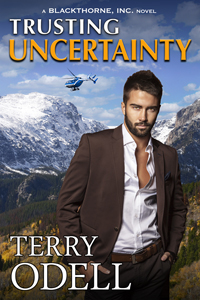
Trusting Uncertainty by Terry OdellAvailable Now Trusting Uncertainty, Book 10 in the Blackthorne, Inc. series.
You can’t go back and fix the past. Moving on means moving forward.


Terry Odell is an award-winning author of Mystery and Romantic Suspense, although she prefers to think of them all as “Mysteries with Relationships.” Follow her on Facebook and Twitter.

Bobby Fischer and the Hero’s Journey

We are pleased to have a guest blog today by one of our regular participants, KAY DIBIANCA. Please check the bottom of this post for Kay’s background and links. Thanks, Kay, for agreeing to present this article.


BOBBY FISCHER AND THE HERO’S JOURNEY

KAY DIBIANCA, AUGUST 2021

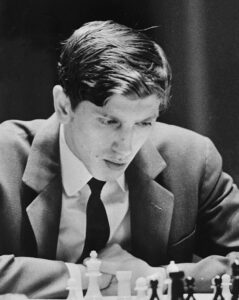
Recently I re-watched the movie Searching for Bobby Fischer. Although the story is based on the early life of a young American chess prodigy named Josh Waitzkin, the undercurrent is all about Bobby Fischer.

Fischer’s life was worthy of a Greek tragedy. Raised by a single mother, he received a chess set as a gift when he was six years old and the journey began. Fischer was amazing. Talented and obsessed with the game, he became the youngest ever U.S. Junior Chess Champion at thirteen and the youngest ever U.S. Chess Champion at fourteen. At age fifteen, he became the world’s youngest person to ever achieve the rank of international grandmaster.

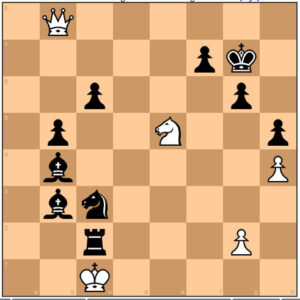
One example of his extraordinary skill was a game he played in 1956, in which he scored a remarkable victory over a leading American chess master, Donald Byrne, in what came to be known as The Game of the Century. Writing in Chess Review magazine, Hans Kmoch called it, “… a stunning masterpiece of combination play … “ Fischer was thirteen years old.

But like many great protagonists, Fischer had a personality of extremes. With an IQ measured at around 180, he had all the mental acuity of a genius – and all the charm of a horned toad. The world simply did not conform to Bobby Fischer’s standards, and he insisted on pointing it out. He railed against the Russians who had dominated the chess world for decades, accusing them of rigging the competitions by playing each other to easy draws so that they could reserve precious energy to play people from other countries. (He was right.) But his fury extended far beyond the chess board. He was rabidly antisemitic even though he was himself Jewish (through his mother), and he left a long trail of broken relationships and burned-out bridges behind him.

However, despite his many flaws, Fischer was so talented and hard-working that most people in the American chess world longed to see him compete for the world championship. As he was reaching his prime in the late 1960’s, it seemed the 1972 world championship would be perfect timing.

But the road to the 1972 World Chess Championship for an American started at the 1969 U.S. Championship. The top three finishers there would move on to the interzonal competitions, and the winner of those contests would compete for the title. However, because of disagreements with the organizing body, Fischer sat out the 1969 U.S. Championship making him ineligible for the later tournaments.

Then a miracle occurred.

In a culture not known for the humility of its participants, one of the U.S. Championship finalists, Pal Benko, stepped aside to give his hard-won spot to Bobby Fischer because he knew Fischer was the American with the best chance to beat the Russian superstar Boris Spassky.

Like Achilles returning to the field of battle, Fischer took Benko’s place and raged through the qualifying rounds, destroying all opponents. The extent of his winning streak was unprecedented, and he earned a higher rating than any player in history up to that time. More importantly, he won the right to meet Spassky in Iceland for the World Championship. The stage was set. It would be a classic cold war battle between the lone American and the Russian machine. Cue the drum roll.

But with the world eagerly awaiting The Match of the Century, Fischer balked. He wasn’t happy with the conditions in Iceland and he threatened to stay away, prompting Secretary of State Henry Kissinger to call and appeal to his sense of patriotism. Finally, after additional histrionics that rattled the chess establishment, Bobby Fischer sat down at the chessboard in Reykjavik and won the tournament by an impressive 12 ½ to 8 ½ score. He returned to the United States a conquering hero and was given a ticker tape parade in Manhattan. He was invited on television nighttime talk shows and feted by celebrities and politicians. Bobby Fischer had arrived.

But a flawed character cannot frolic in the rarified atmosphere of celebrity for long, and Bobby Fischer didn’t disappoint. He disappeared. Having lived so much of his life on sixty-four squares, he seemed unwilling or unable to move to a larger stage. Always reclusive and erratic, his behavior deteriorated and he refused to defend his title in 1975.

He did come out of hiding in 1992 and announced he would play an unofficial rematch against Spassky. But that match was to take place in Yugoslavia, a country on which the United States had imposed sanctions, and Fischer was advised by the U.S. that he would be breaking the law if he proceeded. Unsurprisingly, Fischer ignored the warnings, played the match, and won. Then the U.S. government, which had so lovingly welcomed him home twenty years before, issued a warrant for his arrest.

He never returned to America, but continued living abroad and dispensing his characteristic diatribes. In 2004 he was detained in a Japanese airport for using an illegal passport and jailed for several months. Iceland’s parliament stepped in and offered Fischer citizenship. He moved there in 2005 and died of kidney failure in Reykjavik in 2008.

If Bobby Fischer had been a polite, genteel man, he would still have been remembered as arguably the greatest chess player who ever lived. But would he have captured the imagination of the entire world if he hadn’t carried so much baggage? Would people have invested part of themselves in him if he had just quietly made his mark? I think not.

We are attracted to heroes who are complicated. They may thrill, shock, or disappoint, but they never bore us. They connect with life in a profound and mysterious way, and we’re like voyeurs, watching as they crest the ridge or wrestle the dragon.  We applaud their triumphs, weep at their failures, mourn their loss, and in the end, we acknowledge and value the impact they have had on us.

“What is chess, do you think? Those who play for fun or not at all dismiss it as a game. The ones who devote their lives to it for the most part insist that it’s a science. It’s neither. Bobby Fischer got underneath it like no one before and found at its center, art.” Ben Kingsley in the role of Bruce Pandolfini in “Searching for Bobby Fischer.”

So TKZers. What flaws does your protagonist have? Will he/she conquer them, succumb to them, or just manage to get through and live to fight another day?


***


 I am deeply grateful to Steve Hooley for inviting me to guest post, and to all the TKZ community for the information and inspiration I have found on this site over the years.

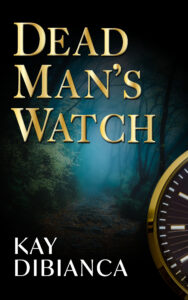
Kay DiBianca is a former software developer and IT manager who loves to create literary puzzles in the mystery genre for thoughtful readers to solve. Her debut novel, The Watch on the Fencepost, won a 2019 Illumination Award for General Fiction and a 2019 Eric Hoffer Award for Mystery. Her second novel, Dead Man’s Watch, was released in 2020.

An avid runner, Kay can often be found at a nearby track, on the treadmill, or at a large park near her home. Kay and her husband, Frank, live, run, and write in Memphis, Tennessee.

You can connect with Kay through her website at https://kaydibianca.com.

Creating and Resolving Conflict in Your Novel

Conflict is at the heart of almost every great novel. Whether it’s external or internal, conflict provides a key driving force for the narrative and is often instrumental in giving a mystery or thriller it’s page-turning momentum. I raise the issue of conflict today because of some feedback a fellow author recently received on her draft manuscript citing the failure of the manuscript to take advantage of conflict opportunities and when those did arise, resolving that conflict too quickly. Here at TKZ we often talk about the need for dramatic tension when reviewing first pages, and Jim also blogged yesterday about the ‘certain something’ that each individual writer brings to the keyboard. To this I’d like to add that each of us as writers treat conflict very differently and yet we must all make sure we fully realized the potential for conflict in our novels, and resolve all those points of conflict to a reader’s satisfaction.

The way we accomplish this often reflects our individual talents, but conflict never arises in a vacuum and we must ensure that we have also created characters and situations which ensure our readers are invested in the conflict as well as its resolution. I was acutely reminded of this as I watched the movie Beckett on Netflix last night. Not only was the conflict scattered and confused but the lack of character development meant that I was never invested in the resolution of the conflict or the solution to the so called mystery surrounding why the protagonist was being pursued. I won’t say any more about the movie to avoid spoilers, but watching it made me think more about the nature of conflict in effective story-telling. Here are some of my main take aways (from both the movie and from the feedback given to my writer friend):

  • Don’t rush to set up conflict before the reader has time to feel invested in the character. No one will care if the character’s life is in danger or is internally conflicted over something unless we understand/identify with/care about the character. In the movie Beckett, I honestly didn’t feel any connection to the characters before the main conflict/point of dramatic tension arose and thus I didn’t feel invested in the main character’s plight.
  • Always take a step back from a scene to assess whether you’ve taken advantage of the potential for conflict within it. Often a scene may be dull or boring because it doesn’t take raise the stakes or use the opportunity to explore conflict (whether internally or externally driven). In a mystery for example, if it is too easy for a character to find a clue or pursue an investigation, then the plot can lose much of its momentum. Always think about conflict in your scene and whether you can raise the stakes even higher for your character.
  • If you do raise the stakes or take advantage of an opportunity for conflict, don’t squander it by resolving it too quickly. As a reader I don’t want to be eagerly turning the pages in suspense only to find the situation is over too easily or too quickly. This is where pacing is critical because obviously conflict has to be addressed – the key is not to lose momentum by making it too easily overcome or resolved.
  • Finally, though the conflict does have to be resolved in the end (maybe not all of it – especially if there is ongoing internal or character driven conflict) but a reader can’t be left hanging. A reader also can’t be holding their breath throughout the book only to have every point of conflict resolved in one big jumbled mess at the end (again, pacing is key).

Anyway, these are just some Monday thoughts on looking at conflict in your novel. TKZers, how do you approach the issue of conflict in your writing? What tips would you add in terms of maximizing the potential opportunity for conflict as well as pacing its resolution in your work…As always, I look forward to hearing your take/thoughts on this!

Are You Ready for the Word Play Masters Invitational?

Photo credit: Joshua Hoehnee – Unsplash

By Debbie Burke

@burke_writer

Okay, who’s ready for some word play? Not just any word play but a serious world-class competition: the Word Play Masters Invitational.

Here are the rules:

  1. Take any word from the dictionary.
  2. Alter it by adding, subtracting, or changing one letter.
  3. Supply a new definition.

Drumroll for some past winning entries:

  1. Cashtration (n.): The act of buying a house, which renders the subject financially impotent for an indefinite period of time.
  2. Ignoranus: A person who’s both stupid and an asshole.
  3. Intaxicaton: Euphoria at getting a tax refund, which lasts until you realize it was your money to start with.
  4. Reintarnation: Coming back to life as a hillbilly.
  5. Bozone ( n.): The substance surrounding stupid people that stops bright ideas from penetrating. The bozone layer, unfortunately, shows little sign of breaking down in the near future.
  6. Foreploy: Any misrepresentation about yourself for the purpose of getting laid.
  7. Giraffiti: Vandalism spray-painted very, very high.
  8. Sarchasm: The gulf between the author of sarcastic wit and the person who doesn’t get it.
  9. Inoculatte: To take coffee intravenously when you are running late.
  10. Osteopornosis: A degenerate disease. (This one got extra credit.)
  11. Karmageddon: It’s like, when everybody is sending off all these really bad vibes, right? And then, like, the Earth explodes and it’s like, a serious bummer.
  12. Decafalon (n.): The grueling event of getting through the day consuming only things that are good for you.
  13. Glibido: All talk and no action.
  14. Dopeler Effect: The tendency of stupid ideas to seem smarter when they come at you rapidly.
  15. Arachnoleptic Fit (n.): The frantic dance performed just after you’ve accidentally walked through a spider web.
  16. Beelzebug (n.): Satan in the form of a mosquito, that gets into your bedroom at three in the morning and cannot be cast out.
  17. Caterpallor ( n.): The color you turn after finding half a worm in the fruit you’re eating.

~~~

There’s a variation of the contest—take a common word and redefine it. The following entries are past winners:

  1. Coffee, n. The person upon whom one coughs.
  2. Flabbergasted, adj. Appalled by discovering how much weight one has gained.
  3. Abdicate, v. To give up all hope of ever having a flat stomach.
  4. Esplanade, v. To attempt an explanation while drunk.
  5. Willy-nilly, adj. Impotent.
  6. Negligent, adj. Absentmindedly answering the door when wearing only a nightgown.
  7. Lymph, v. To walk with a lisp.
  8. Gargoyle, n. Olive-flavored mouthwash.
  9. Flatulence, n. Emergency vehicle that picks up someone who has been run over by a steamroller.
  10. Balderdash, n. A rapidly receding hairline.
  11. Testicle, n. A humorous question on an exam.
  12. Rectitude, n. The formal, dignified bearing adopted by proctologists.
  13. Pokemon, n. A Rastafarian proctologist.
  14. Oyster, n. A person who sprinkles his conversation with Yiddishisms.
  15. Frisbeetarianism, n. The belief that, after death, the soul flies uponto the roof and gets stuck there.
  16. Circumvent, n. An opening in the front of boxer shorts worn by Jewish men.

Want more? Here’s a collection of winners from the past decade.

~~~

Now that you’ve flexed your vocabulary muscles, are you itching to enter the competition yourself? Here’s the 2021 submissions page.

Photo credit: Emmanuel Ikwuegbu – Unsplash

But wait a sec…TKZ has many talented  Wordmasters and Wordmistresses. Why not host our own contest?

[Drumroll] The Inaugural Kill Zone Word Play Invitational Tournament  

Rules:

Post your entry in the comment section. Limit of three entries/person.

The games will be freestyle, meaning you can either:

Take any word from the dictionary; alter it by adding, subtracting, or changing one letter; supply a new definition.

OR:

Take a common word and redefine it.

Judging:

The winners will be determined by the number of “likes” (to vote, click on the thumbs up icon in the comment box). The entry with the most “likes” wins.

Prizes:  

A special trophy was commissioned to commemorate the winning entry.

Presenting THE ZONER

Photo credit: Johnny Briggs – Unsplash

You were expecting cash? A Caribbean cruise? A new laptop?

Uh…sorry. Maybe next year.

Thanks for playing!

First Page Critique

By Elaine Viets

Today’s Brave Author gave us an intriguing story with a touch of the supernatural. Take a look, and then I’ll make my comments:

A Delima worth Millions

The man that just walked in the bakery to buy a lotto ticket is destined to win… but die the same day. If he plays. He stood in line. Waiting his turn. Like everyone else, he wished to wake up tomorrow as the mega lotto prize winner of 25 million. On an empty table to his left, a newspaper had a headline that caught his attention: LOTTO WINNER FOUND DEAD with the victim photograph and name-Pascual Montenegro. “That’s me,” he said. The hair on his body bristled as he walked slowly to the table and grabbed the paper. It was him. Short black hair, shaved, blue eyes. “What the hell is this?” he whispered.

A slight chill quivered his chest. The published date was two days from today. He scrutinized every word. According to the article, the police found him dead without a clear cause the same day he won. No further details revealed.

“Do you mind giving me back my paper,” said a voice. Pascual lowered the newspaper. There sat an old man he never seen before, dressed in a black suit with a fedora hat. “Do you mind?” the old man asked again. Pascual slammed it against the table. “Why is my picture here?” He looked at him.

The old man remained unrattled and sneered back with his dark eyes on a stone face. “Can’t you read? That is Sunday’s headline. You play, you win millions, you somehow die and its newsworthy,” he said. Pascual shook his head and pointed his finger at the old man’s face. “I don’t know who think you are. I do not appreciate this joke, scam or whatever bullshit lie you trying to pull with here” he said.

The old man sneered again. Then he leaned forward, the chair squeaked “buy the ticket and you will find out,” he hissed. Pascual shrugged his shoulders and grabbed and crumbled the paper. “Go to hell old man” he said and dropped it in front of him. He returned to the line. The old man smiled as he unwrinkled the paper with thump sounds like a judge gavel. Louder than the cracking sound of eggs being fried in the kitchen. “Go ahead, buy the ticket, you can’t stop what’s coming” he said. Pascual grabbed his cross necklace and kissed the image of Christ, a habit since childhood whenever he shivered in distress.

ELAINE’S CRITIQUE: I saw real possibility in this first page – and an author that needs help with some awkward phrasing and spelling. My changes are in bold. The problems start with the misspelled title:

A  Dilemma Worth Millions

The man that just walked in the bakery to buy a lotto ticket is destined to win… but die the same day.

ELAINE: That opening grabbed me, but Brave Author, please use it to tell us where we are. For example: The man that just walked in the San Antonio bakery to buy a lotto ticket is destined to win… but die the same day. If he plays.

BRAVE AUTHOR: He stood in line. Waiting his turn. Like everyone else, he wished to wake up tomorrow as the mega lotto prize winner of 25 million.

ELAINE: Twenty-five million what? Dollars? Pesos? Euros?

BRAVE AUTHOR: On an empty table to his left, a newspaper had a headline that caught his attention: LOTTO WINNER FOUND DEAD. He stared at the victim’s photograph and name – Pascual Montenegro. “That’s me,” he said. The hair on his body bristled as he walked slowly to the table and grabbed the paper.
There was no mistake. It was him. Same short black hair, shaved, blue eyes.

ELAINE: That “shaved” is puzzling. Do you mean “clean-shaven”?

BRAVE AUTHOR: “What the hell is this?” he whispered.

A slight chill quivered in his chest.

ELAINE: “A slight chill”? This is a man who just read that he was dead. He’ll need more reaction than that.

BRAVE AUTHOR: The published date was two days from today. He scrutinized every word. According to the article, the police found him dead without a clear cause the same day he won. No further details were revealed.

“Do you mind giving me back my paper?” said a voice. Pascual lowered the newspaper. There sat an old man he’d never seen before, dressed in a black suit and a fedora hat. He had dark eyes set in a stone face. (This phrase is moved up from below.)

ELAINE: You don’t need that “hat.” We know what a fedora is.

BRAVE AUTHOR: “Do you mind?” the old man asked again.
Pascual slammed the paper against the table. “Why is my picture here?” he demanded. He looked at him.

ELAINE: Cut the line in italics. It adds nothing.

BRAVE AUTHOR: The old man remained unrattled and sneered back: “Can’t you read? That is Sunday’s headline. You play, you win millions, you somehow die and it’s newsworthy.” he said.

ELAINE: Yikes! The dreaded “it’s” contraction was without an apostrophe. This mistake alone will send an editor screaming into the night. Also, you don’t need that “he said.”

BRAVE AUTHOR: Pascual shook his head and pointed his finger at the old man’s face. “I don’t know who you think you are. I do not appreciate this joke, scam or whatever bullshit lie you’re trying to pull with here,” he said.

ELAINE: We don’t need the word “lie”  or “with” and the punctuation is wrong for “he said.”

BRAVE AUTHOR: The old man sneered again. Then he leaned forward, and the chair squeaked. “Buy the ticket and you will find out,” he hissed.
Pascual shrugged his shoulders, and grabbed the paper and crumpled it. “Go to hell, old man,” he said and dropped it in front of him. He returned to the ticket line.

ELAINE: Again, there are some punctuation errors and the italicized “and” can be cut.

BRAVE AUTHOR: The old man smiled as he smoothed the wrinkled paper, the sound louder than the crack of a judge’s gavel.

ELAINE: “With thump sounds like a judge gavel” is an interesting image, but it doesn’t quite work. And it should read “with a thump that sounds like a judge’s gavel.” The same goes for “louder than the cracking sound of eggs being fried in the kitchen.” And do you mean “cracking” or “crackling”?

BRAVE AUTHOR: “Go ahead, buy the ticket, you can’t stop what’s coming,” the old man said.

Pascual grabbed his crucifix necklace and kissed the image of Christ, a habit since childhood whenever he was shivered in distress.

ELAINE: Cut “shivered.

ELAINE’S CONCLUSION: I was impressed with this first page. I want to know what happens to Pascual: does he win his fortune and cheat death? Will his faith help save him? And who is this mysterious old man – the Grim Reaper in a fedora? The devil? Or a nameless charlatan?
However, this first page presents a real writing dilemma: numerous misspellings and grammatical mistakes, starting with the title. No editors worth their red pencil will read this novel, and that’s a crying shame.
A writer has to know grammar and spelling. These are the tools of our trade. If we don’t, we’re like builders who can’t use a nail gun or a circular saw.
So what can our Brave Author do?
Take an adult education course in grammar and spelling.
Have someone who understands grammar and spelling read your manuscript.
Hire an editor to correct your grammar and spelling before you send out your manuscript.
I teach English as a second language, and judging by some of these errors, I suspect our Brave Author is not a native speaker. But I believe our Brave Author is a natural storyteller. Keep writing.

This Saturday, August 14, 10 AM to noon, I’m teaching “Dead Write: Forensics for Writers” a Zoom workshop at the Florida Authors Academy.
I passed the Medicolegal Death Investigators Course for forensic professionals at St. Louis University’s School of Medicine. I’ll discuss the proper methods and pitfalls of body identification, and other tips that will give your mysteries authenticity. Handouts are included. Contact Murder on the Beach Bookstore. Registration is required. It’s $25. Call 561-279-7790 or email murdermb@gate.net.


An Insider’s View of Audio

By John Gilstrap (But not really)

A couple of weeks ago, I posted in this space my observations about writing for translation to audio books.  Well, wouldn’t you know it? Basil Sands, the voice of Jonathan Grave, my literary alter ego, paid attention and agreed to pen a guest post about an audio guy’s view of audio books.

Basil has been a frequent poster here on TKZ since the beginning, and he’s a crack author in his own right.

As you read this, I will be supervising a team of movers who will be packaging pretty much everything we own for six months’ of storage before we move to the dream house in West Virginia. My inevitable silence will have everything to do with the lack of an internet connection.

And now, ladies and gentlemen, from the great state of Alaska, I bring you Basil Sands:

===

Seanchaidhe – n. – literally “a bearer of old lore”. A Seanchaidhe is a traditional Irish storyteller/historian.

I like to imagine that somewhere in my past there is an Irish ancestor who made his living travelling from village to village telling stories to both teach and entertain. Having been a voracious reader since I was five years old, and according to my parents was a storyteller even longer, having come to the world right off screaming a tale on my first breath after being ripped from the warmth of my mother’s womb.

Okay, maybe I wasn’t acting at quite that young, but not much later I am told.

I have always loved telling stories. My stories. Other people’s stories. The stories the Leprechauns tell me around the fire at night. Factual, fictual, historical or fantastical. I love hearing stories and I love telling stories. And so I believe do you dear reader of this blog.

After John Gilstrap’s article of a couple weeks ago on the topic of writing for audiobooks he invited me to come and talk a bit more on the topic from a different aspect of the gem of storytelling. That of the narrator/producer.

I have been an avid follower of TKZ since not long after its founding. My Leprechauns and I have happily been leaving our marks in the comments below when we can. From a hidden cabin fortress built into the side of a mountain in Anchorage Alaska I have been writing thrillers and recording audiobooks since 2006. John’s books were among the first of my professional step into the world of “books on tape” and I have not looked back.

From what I have seen, creating audiobooks seems to appear relatively simple to a great deal of the population, including a surprisingly large number of writers. This is particularly true when an author balks at the cost of having a pro create one. For a ten-hour novel without tons of research heavy material this can range from $6000+ upon delivery for a ‘per finished hour’ (PFH) contract to zero out of pocket up front with a fifty/fifty split in a ‘royalty share’ (RS) contract. The latter of which can potentially entail the author sharing even more significant dinero if the books sell well. Of course, that share can also be zilch if it doesn’t, the narrator is taking 100% of the actual risk on a RS deal aka 50 hours of labor for no return.

“How hard can it be?” I’ve heard from more than one author, “You just sit in closet and read the book into the microphone. I think I will just save the money and do it myself.”

Following is an excerpt from an actual email an author sent to me when they realized just how much their book was making on a royalty share contract (it was a lot) and thought maybe they didn’t want to share 50% of that kinda money for the whole series, but they also still didn’t want to pay the standard rates for a narrator producer.

“I decided to record book 2 on my own. I’ve always had an ear for voices (or is it a tongue?) and figured I read well enough–It’s turns out I hate it. It’s very much like real work. It will be my last, guaranteed.”

And much like work it is! Very, very much!

Here is a breakdown of the process it takes to make an audiobook:

  • Book is published
    • self or traditional
  • Audiobook is contracted
    • Traditional publishers usually own the audio rights and have their own folks that do this
    • Self-pubbed authors and small-press authors choose from a variety of audiobook self-publishing companies and do the whole thing themselves
  • Narrator is selected
    • Self-pubbed and small-press authors typically pick the narrator themselves based on recorded auditions
    • Traditional audiobook production houses most often have a stable of narrators they choose from to narrate particular genres
      • authors seldom have a say in the matter
        • But might
      • Narrator receives materials and production begins
        • In trad houses the only thing the narrator does is ‘prep read’ the book and then narrate the book
          • All of the remaining production work is done by directors, producers, editors, proofers, sound engineers and marketing teams
        • In self/small-pubs the narrator is responsible for everything but the writing, artwork, and marketing bits
          • Although if it is RS the narrator has equal responsibility for marketing if they hope to get paid
        • Completed materials are proofed and edited
          • Proofing = reading the manuscript while listening and annotating all mispronunciations, missed words, extra words
          • Editing = listening through book, removing extraneous sounds, odd breaths, thumps and mouth clicks, weird noises*
            • Self-produced narrators most often hire out these two functions to a single person
          • Corrections recorded by the narrator are inserted by the editor and final files returned for mastering
        • Mastering = making the audio sound pretty, this takes an audio engineer to get really superb sound
          • Audio engineers have a really good ear and sense of space, and some pretty expensive gear
          • Often a narrator will hire an engineer to get their sound settings right for their recording space, then little if any final mastering is needed
            • Very few editor/proofers are also sound engineers
          • Final book is uploaded and eventually comes up for sale.
          • Everybody gets paid…hopefully

That is the very basic process right there. Those steps, in some form or another, all must be done for every single audiobook to brought into existence.

How long does it take to make an audiobook?

A general idea of finished length of any audiobook is typically going to be in the range of one finished hour for every 9500 words. Therefore a 60k word book will be about five hours long at the end. A 100k word book comes in at a bit more than ten hours. But those lengths are only the finished product. The time it takes to create that product is variable based upon several factors, some controllable others not. Depending on the experience level of the narrator it takes between two to five hours on mic to create one finished hour of audiobook. And that is just the narrator’s part!

Here are a few of the things that can affect the time it takes to record an audiobook:

  • The heaviness of the writing
    A typical thriller usually reads much easier than a PhD level tome titled Capturing Non-Markovian Dynamics on Near-Term Quantum Computers.
  • Language, IE how it is used
    A 600K word fantasy epic (first of 12 volumes) with entirely reconstituted laws of phonetic pronunciation and every person and place name having added ‘eth’, ‘el’ and ‘ae’ randomly to names and otherwise common words throughout is much more challenging than the vast majority of, perhaps all, cozy mysteries.
  • Character Accents and Dialects
    If your characters have regional accents, that usually takes extra prep and may also require several takes for a scene. Like the time I had Canadian, South African, Dutch, English, Australian, and New Zealand characters all together in a single high-speed conversation. That scene took me a few extra moments to get through.
  • Regional Spellings/Pronunciations
    Schuykill River in Pennsylvania. Houston Street in Manhattan. Worcester in Massachusetts. Look them up if you think you know them but aren’t from them.

Writing your novel with an audiobook version in mind

Several years ago I narrated a dozen or so titles for Sci-Fi author Piers Anthony, his whole backlist of books published before he became famous with his wildly popular Xanth series in the 80s. In his Cluster series, about a Tarzan-like interplanetary hero who takes on the form of whatever species he is sent to help, Anthony has a number of characters with names spelled like #>@<}, and ]**(#), and ^…–~ and so on. I contacted him directly and asked how those were to be pronounced.

He replied, “When I wrote those in the sixties and seventies audiobooks were not a thing. I never even imagined those being pronounced out loud. Feel free to just make something up, I trust you.”

These days audiobooks are a huge industry, and it is expected to continue to rise in popularity for the foreseeable future. Whether or not you as a writer enjoy, or can even withstand, listening to audiobooks you can bet that 30%-40% of your audience does. Many folks, myself included seldom are able to read for pleasure due to busy schedules, but have plenty of time to listen to audiobooks while doing physical tasks or familiar chores that occupy hands and eyes, but not so much the brain. For the last decade or so I only read for pay, and then seldom get to choose the materials but get assigned. I do however ingest several hours of audiobooks most days while working my big boy job.

So for writing your books with the idea of having an audiobook recorded here are a handful of suggestions that will make it not only easier for a narrator to get it right, but will ultimately bless your print readers as well.

  • Read your text out loud to yourself.
    This is one of the greatest methods of self-editing in my experience. When we read our manuscript aloud, we have to make our lips and tongues say the actual words in the order they are on the page rather than letting our minds read the words as we think they should be. If you the writer stumble saying a sentence out loud, that is likely how the reader is hearing it in their heads.
  • Use Dialogue Tags appropriately.
    That multi-national conversation above could not have turned out as well as it did had the author not put tags or action descriptors on nearly every line of dialogue to make the speaker obvious. If your conversation is a rapid fire back and forth between only two characters, you may not need as many tags, but will still need to make sure there are sufficient ones to keep the narrator aware of who is saying what.
  • Announce accents and any speech related quirks early and clearly
    There are few things as angina-inducing for a narrator as having read hundreds of pages of a particular cowboy character’s dialogue only to discover on page 369 the single mention of the aforementioned character’s posh British accent and how it was so out of place riding the range in 1870s Texas. If there is an accent mention it upon or as close as possible to the character’s first dialogue. Do not assume the reader will pick up on it based on place and setting if it is not a single location story. Even then don’t expect the reader to hear it in the same voice you heard in your head when you wrote it.
  • For the sake of your narrator’s health please keep strained sounding voices to a minimum
    I am not referring to emotional strain as that goes with the story, but actual physical strain on the vocal folds of the narrator. Gravelly, raspy, rough, harsh, etc. Attempting such a sound in the booth for extended periods can cause actual lasting damage to the voice. I once did a 6-book series of romance-thrillers that followed a group of five studly former Marines and their retired boss as private detectives. Each book focused on one of the characters, with the others all appearing in support roles in that story. The voice of the fifty-something retired Master Gunnery Sergeant “sounded like he maintained a diet of gravel washed down with tar coffee as he chain-smoked cheap cigars”. He only appeared a handful of times in each of the first five books, so I was able to sustain almost exactly the sound I thought the author imagined. It was all just fine until I got to the last book and the entire thing was Gunny’s story, including almost 50% of the dialogue. After that sexology of stories** I had to take a month off narration to let my voice heal.
  • Prepare a list of special details and potential surprises
    If you have any special pronunciations, accents or dialects, uncommon words, and so on and want your narrator to be dedicated to you for life, make a list of such things for them in advance. This not only saves the narrator time, but saves the continuity of the story by not having excessive pickups***.
  • Write Well!
    This is probably the single most important thing for any author to have success with audiobooks. The text has to have the capacity to become real in the mind of the reader both via manuscript reading and audible storytelling. This means something quite different from one genre to the next, but in all cases a well written story will literally flow off the narrator’s tongue and sound natural to the ear.

Finally, here are a couple of things related to self/small pubbed authors specifically, where the author has more control over the process.

  • Fit the right narrator to your project
    A gentle voiced kindergarten teacher narrating an alpha-male biker gang vs cop thriller probably won’t seem realistic. Likewise, don’t hire a male former Marine turned lumberjack turned actor to narrate your cupcake centric cozy mystery unless you want all of your characters, male, female and children alike, to sound like chain-smoking-gravel-eaters.
  • Do not ‘direct’ the performance
    Unless you are an actual experienced acting director managing that project in the studio looking through the booth glass, physically or virtually, unless you are that person then once you have accepted and approved the initial 15-minute sample of the recording the remainder of the narration, including voicing of characters, styles of reading, anything performance specific are up to the narrator. In most contracts by legitimate audiobook publishers, this is actually stipulated in some manner.

And lastly here is a bit for those intrepid adventurers among you who think you want to narrate your own books for sale.

  • Radio/Broadcast experience does not translate to audiobooks
    While they all use voice as the medium, audiobooks are nothing like radio, I know as I have done both. First off, “radio-voice” is not welcome, nobody wants to listen to non-stop announcer voice tell a story. The other big difference is comparable to that of a sprinter versus an extreme distance runner. Radio is 1-5 minute sound bites with commercial breaks interspersed while audiobooks are hours upon hours of uninterrupted you talking in different voices while all alone in a small dark box.
  • Audiobook Narration/Production is a Marathon
    My shortest audiobooks are a couple short stories about 30 minutes long that took a couple days to fully produce. The longest is The Bible, at just over 86 hours completed, which took well over a thousand man-hours to make ready for publication. If you have ever done public speaking, you know that even a short speech or sermon, 20 or 30 minutes, can wear you out. Imagine talking in hour long segments, five or six times a day with only a ten-minute break for water to go in and out. It can be utterly exhausting.
  • Get Coaching first
    If you are an experienced stage or film actor be advised, audiobook acting is only remotely similar. You will need coaching of some sort to ensure you are delivering the best product you can create with your voice alone. Every single part of the listener’s understanding of the story comes from the narrator’s vocal delivery. Audiobooks are 100% actor delivered, there are zero sound effects or mood setting musical scores in true audiobooks.

A Test: The Narrator’s Crucible

If you think you may want to narrate your own books, following in the footsteps of such greats as Neil Gaiman, Carrie Fisher or Oprah Winfrey before you spend your hard earned dollars on a fancy microphone, pre-amp, computer upgrades and software try this test.

  1. Pick your favorite book, eBook or paper doesn’t matter.
  2. Close yourself in a small dark room, like a walk in closet or half-bathroom, with only a single light to read by
  3. Read out loud for 1 hour, doing different voices for each character and stopping every time you make a mistake in the read and re-reading that line until you get it correct before continuing.
    1. Record yourself on your phone or laptop, etc. so you can listen back at the end
  4. Take a ten-minute break at the top of each hour
  5. Repeat for 2-3 one-hour sessions each day
  6. Do this every day for a week
  7. If you have not become disgusted by the sound of your own voice and given up by the end of the week, you might stand a chance at actually enjoying this narrating gig.
    1. Maybe.

There is a lot more detail trying to pour out of my fingertips than I could ever put into a single blog post, but this provides a 15,000 foot view, with a handful treetop skimming dives as a bonus.

If you are interested in learning more about the process, either as an author who wants your piece of the audio market or as a someone interested in becoming a narrator or producer here are some very helpful links that can get you in swimming toward the deep end fairly quickly.

Audiobook creation Exchange (https://www.acx.com/) – Audible’s division for self/small publishers, like KDP for audiobooks.  ACX is a marketplace where authors, literary agents, publishers, and other Rights Holders can connect with narrators, engineers, recording studios, and other Producers capable of producing a finished audiobook. The result: More audiobooks will be made.

Narrator’s Roadmap (https://www.narratorsroadmap.com/) – the amazing Karen Commins’ extremely informative website – If you’re new to this career, every resource on this page — articles, books, connections, and videos — answers the question “How can I become an audiobook narrator?” You’ll find invaluable advice from industry pros that you will want to read and absorb. Success leaves tracks!

Audiobook Publishers Association – https://www.audiopub.org/ – APA is a not-for-profit trade association that advocates the common, collective business interests of audio publishers. The APA consists of audio publishing companies and suppliers, distributors, and retailers of spoken word products and allied fields related to the production, distribution, and sale of audiobooks.

Being me and the way I am it seems I have probably already used more than the number of words I should put here, therefore let’s move this thing to the chat below for conversifying and questionizing!

*Weird noises – Do not fart while recording, they might miss it in editing, but the listeners certainly will not. Trust me on this.

**Sexology – that may not be the mathematically correct word for a series of six but is fairly accurate to the storylines

***Pickups – small corrections re-recorded and pasted in, hopefully matching the surrounding original sound. May be done in a bar but only if you’re desperate.

BONUS! BONUS! BONUS! BONUS! BONUS! BONUS! BONUS! BONUS!

If you made it this far in my ramblings you deserve a treat.

I have US & UK Audible coupon codes for several of the books that I have both written and narrated.

ICE HAMMER BOXED SET

APPETIZERS OF THE GODS

THE NEW TESTAMENT, DARBY TRANSLATION

Drop me an email with your title preference and whether you are a US or UK resident and I will send you a code for a free download.

All I ask in return is an honest review on Audible.

Check out more about my narration and voice work at www.sandmanstudiosak.com

First Page Critique: A High Dive
And A Hike To Somewhere

“First sentences are doors to worlds.” — Ursula K. Le Guin

By PJ Parrish

Good morning, folks. We have today a submission from a contributing writer that shows some great promise. It comes to us with the genre designated as Christian teen romance. I’ll be back in a moment.

When Love Calls You Home 

I broke the surface of the waters of Colten Springs and gasped for breath before swimming to shore. Jumping off the high-dive was the stupidest thing I’d ever done. Now I had a headache. When would I learn I couldn’t do normal things like everyone else. Not with my sinuses.

“She twirls, she sings, she swims!” Heather Gleason’s Canadian accent made her sound like a foreign news reporter on the scene. “What will she do next?” Her freckled face beamed down at me from her five-foot-eight frame as I trudged out of the lake, my brown hair clinging like cellophane to my head, shoulders, and back, my hands slinging water with every step.

“Your turn to try the high-dive,” I said, puffing as if I’d swum the English Channel. The matted hair on my cheeks felt yucky. I pushed it back and dried the droplets of water clinging to my eyelashes with the beach towel Heather threw at me.

“There’s not enough time. We’re leaving pretty soon, and you promised to show me that spring with the little waterfalls.”

“Oh, yeah. We better change clothes first. I’ll meet you at the paddle boats.”

The dressing area was uphill. Heather scrambled to the top while I followed like a little old lady. I had no zip, no zest, nothing. I wasn’t looking forward to paddling across the lake. But a promise was a promise.

Fifteen minutes later, Heather and I pulled our blue-and-white paddle boat to the bank’s edge and tied it to an old stump about three hundred yards from where the Lindell High School band buses were parked. Then we carefully climbed a grass-covered slope covered with dead leaves, spurts of grass, and dotted with native shrubbery. By the time we reached the top, I’d broken a sweat and felt weak as water, but Heather was depending on me. I kept going. Twenty paces took us inside the hundred-thousand-acre national forest that surrounded us. A weathered, wood-planked bridge with waist-high guardrails stood about five yards away.

Somehow, I made it. Leaning slightly over rails that were rough and splintery, we looked down into a gully filled with several layers of dead leaves, dried branches, and rust-colored pine straw. A gray rabbit scooted out from under the bridge, scattering a few brown leaves as he crossed the gully and leapt into the woods on the other side.

_______________________

First off, this is competently written. The writer has a good grasp of dialogue, description and basic craft. I like the interplay between the two characters. I like the contrast between the narrator’s physical reticence and the braver countenance of her friend. It reminds me a lot of the scenes about female friendship in the movie Julia. In the movie, Jane Fonda’s character “Lily” is shy, tentative and afraid of life in general. Her friend Julia, played by Vanessa Redgrave, is brash and fearless, always pushing Lily to be brave. The dynamic plays out in great flashback scenes of the two as girls, but develops into the movie’s theme when the adult Lily is asked by Julia to smuggle money out of Nazi Germany to save Jews.

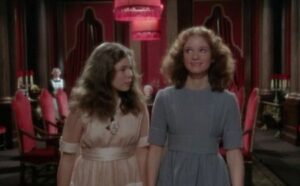
This opening page of the narrator being goaded by Heather to be physically brave reminded me of a scene from Julia where Julia coaxes the terrified Lily to ford a river via a downed log. Alas, no clips. Just this one picture of the two girls, but it shows the shy Lily and the beaming Julia.

I like stories about friendship. But what I am not getting from our submission today is what many here at TKZ call “the telling details.” I’d like to see our writer try harder to use her grasp of description and dialogue to give us more character layers. More on that in a second.

Since we are in “Christian teen romance” genre here and not mystery or suspense, some of our usual “rules” might not apply here. For example, we always suggest of suspense stories that we need to get a sense that the main character’s world has been upended somehow. Jim Bell calls this “a disturbance.”  It can be a death, a crime, or more subtly, a vague feeling of dread. But what happens when we are dealing with a romance? A romance is essentially an emotional journey, centered on your protagonist. So what elements do we need in the opening 400-500 words?

Well, it’s been four decades since I wrote romance, but I’ll try to give this a crack. Three things I think a romance (or any story needs) in the early pages:

Establish a connection with a main character.  I wish I could remember where I read this so I could credit the writer but she suggested this exercise: Read the first five or six pages of your novel then stop and write down whatever you learned about that character. Not what you the writer know in your head; just what you put on the page. If you list only one or two things, you need to revise.

In this submission we learn what about the narrator?

  1. She’s female
  2. She’s a little tentative and perhaps lacks physical stamina.
  3. She has brown hair.

That’s it, folks. We don’t know her age or her name. We get only one detail about what she looks like. Now what do we know about her friend?

  1. She’s female
  2. Her name is Heather.
  3. She’s Canadian
  4. She’s five-eight
  5. She has freckles.
  6. She’s physically brave

Do you see the issue here? Heather is far more vivid than the unnamed narrator. Now, I recognize that when you are in first person point of view, it’s hard to insert descriptions etc. of your narrator. (egad, don’t resort to having your heroine look in a mirror and tell us what she sees!) And our narrator is, by nature, not flashy like Heather. But you have to find ways to make her come alive in the readers’ imagination. You can easily slip her name into Heather’s dialogue. You can find a way, via her thoughts to tell us her age, where she lives, how long she’s known Heather, etc. Always look for ways to insert telling details in your narration.

But here’s something the writer did really well. One way to illuminate character is to contrast it with someone else’s.  By making Heather so ballsy and out-there, it allows the writer to show us (rather than tell us!) that the other girl is rather meek and cautious. The writer could have written something bad like this:

I had always been timid, afraid to do even the smallest physical thing. And I had been sickly since birth, barely able to climb a small hill.

Instead, we learn this through her actions. Good job there.

Establish tension. Something must grab the reader’s attention immediately. This can be an unusual use of language, a unique voice, great description (although not too much too early), establishment of a mood.

Or maybe one great opening line. Here’s one from the YA novel Aristotle and Dante Discover the Secrets of the Universe by Benjamin Alire Sáenz. (A young friend gave me this book and I am enjoying it. Well, as much as I can, as it transports me back to the zits and awful zeitgeist of my teenage years.

The problem with my life is that it was someone’s else’s idea.

Why does that work? Great voice, for starters. The story is about teenage first loves and self-discovery. This line feels bleak but once the story gets moving, it’s uplifting.

Although I really like the opening of this submission with the character jumping off the high drive (It’s action! It’s symbolism!) I don’t feel “grabbed” yet by this submission. As I said, the friendship interplay is interesting, but I am really hoping something is going to happen pretty soon. 

Establish your setting. I don’t know where we are in this submission. Outside of “Colten Springs” there is no clue. Remember: You’re asking the reader to enter a conjured world, so try to work in these elements:  Geographic location. I get that we are in woods/lake but is it rural South? Upstate New York? Oregon? You mention a “dressing area” — what is this exactly? Are we at a park because I had envisioned a rural swimming hole location. And is the “high dive” off a cliff or a diving board? Again, be specific in your details. Time of year (They’re swimming so I’m guessing summer? Can you slip in a telling detail to ground me?) And always SHOW this through your narrator’s senses and experience. 

Okay,  before I go to a line edit, one last thing. Living up in northern Michigan, you’d think I’d have a frim grasp of what a “Canadian accent” sounds like. But outside of a few obvious things — like saying “aboot” instead of “about,” I’m kinda clueless. So telling me your character has a Canadian accent isn’t helpful. Can you find a way to show me? I don’t mean you should resort to trying to duplicate a dialect. That gets annoying to readers fast. But find a way to suggest it via your dialogue and thoughts. Something like:

I had known Heather for a year but at times the way she talked could still make me giggle. “It’s about four.” Came out “It’s aboot four.” Until I met her, I never knew Canadians had an accent. Living all my XX years in Colton Springs, Kentucky, I had never even met a foreigner.

See what this also does? It adds character layers to your girls. You can sneak in her age, and where she lives. (Important things to reveal as early as you can in your story). If she lives in the South, you can have even more fun with the accent thing, especially if your main character has one herself or maybe has never been exposed to “foreigners.” If the accent is worth mentioning, make it mean something. Make your details work harder.  

Now some quick comments in line edits.

When Love Calls You Home I like your title. It mean several things and has emotion

I broke the surface of the waters of Colten Springs and gasped for breath before swimming to shore. Jumping off the high-dive I am a little confused. You said they were swimming in Colten Springs but is there a diving board? Clarify your setting. was the stupidest thing I’d ever done. Now I had a headache. When would I learn I couldn’t do normal things like everyone else. Not with my sinuses.

“She twirls, she sings, she swims! What will Connie Grant do next?” I’d set this dialogue off by itself. And here is where you can tell us your protag’s name. 

Heather Gleason’s Canadian accent made her sound like a foreign news reporter on the scene. See comments about/aboot accents. And what does a foreign news reporter sound like? “What will she do next?” Her freckled face beamed down at me from her five-foot-eight frame as I trudged out of the lake, my brown hair clinging like cellophane to my head, shoulders, and back, my hands slinging water with every step.

“Your turn to try the high-dive,” I said, puffing as if I’d swum the English Channel.

Heather tossed me a towel. I dried my face but my matted hair clung to my shoulders and back like wet cellophane. Open the graph with a physical motion — Heather and the towel. The matted hair on my cheeks felt yucky. I pushed it back and dried the droplets of water clinging to my eyelashes with the beach towel Heather threw at me.

“There’s not enough time,” Heather said. We’re leaving pretty soon, and you promised to show me that spring with the little waterfalls.” So we ARE in a woodsy park area somewhere? Again, here is where you could slip in details. Never let a chance go by to illuminate character. And maybe add some tension, intrigue, suspense or dollop of backstory. Something like:

The waterfall had always been my secret place. It was where I hid when mom started in on me. I wasn’t sure if I was ready to share it with anyone. Even Heather.

“Oh, yeah,” I said. We better change clothes first. I’ll meet you at the paddle boats.” So is she going to show her the waterfall? Unclear.

The dressing area was uphill. Now this suggests to me a park with a cabana changing room? Don’t be afraid to slow down just a tad and ground us better in your setting. Heather scrambled to the top while I followed like a little old lady. I had no zip, no zest, nothing. I wasn’t looking forward to paddling across the lake. But a promise was a promise.

Fifteen minutes later, If you’re going to use the paddleboats, have it mean something in the scene. Maybe you use it for a conversation that moves the plot forward. Otherwise, I would take them straight to the parking lot. Heather and I pulled our blue-and-white paddle boat to the bank’s edge and tied it to an old stump about three hundred yards from where the Lindell High School band buses were parked. Again, I am a little confused about this setting. Apparently, this is a school outing? Buses are waiting in the parking lot. But I was visualizing a more rural swimming hole locale. Then we carefully Why? Is it steep, rock-strewn? Your woods setting is good! But use it to amplify whatever is going on in your character’s head/emotions climbed a grass-covered slope covered with dead leaves, spurts of grass, and dotted with native shrubbery. Huckleberry bushes? Lady ferns? Michigan holly? Be specific! Don’t let a chance go by to use TELLING DETAILS. By the time we reached the top, I’d broken a sweat and felt weak as water, but Heather was depending on me. I kept going.

New graph needed here I think. Twenty paces took us inside the hundred-thousand-acre national forest Huron National Forest (Mich)? Sierra National Forest (Cal)? White Mountain National Forest (New Hamp)? that surrounded us. Okay, they’ve just climbed a big hill of some kind and are apparently now looking DOWN on a forest? What do they see? What is your character thinking? Why are you taking us there? Make the setting SAY SOMETHING ABOUT CHARACTER or MAKE IT RELATE TO PLOT. A weathered, wood-planked bridge with waist-high guardrails stood about five yards away.

Somehow, I made it. We went over to the bridge and I leaned on it, still trying to catch my breath. I looked down Leaning slightly over rails that were rough and splintery, we looked down into a gully filled with several layers of dead leaves, dried branches, and rust-colored pine straw. How deep? A gray rabbit scooted out from under the bridge, scattering a few brown leaves as he crossed the gully and it disappeared into the woods on the other side.

One last note. I like this submission and feel it has great potential. Because I sense that the relationship between Heather and unnamed girl is important. But I am hoping that the writer has a good reason for taking us readers on a hike up the hill into the forest and to this bridge. Something must happen soon. Or I am not sure we’re going to be willing to go any further down the trail.

Thank you, dear writer, for submitting. I hope you don’t find this discouraging. Given some well-placed details, character layers, and a more focused sense of what you are trying to accomplish in this scene, you’re on the right track.