Does Your Story Have a Solid Foundation?

By SUE COLETTA

Most writers know this business can be soul-crushing at times, even if we don’t like to talk about it. As can life. This past week, my husband and I secured a mortgage and were over-the-moon excited to close on Friday. The house we’ve been living in for almost 7 years would finally be ours. On Wednesday, we received a call that told us the house had been deemed unsellable. Briefly, 30 years ago a mobile home stood on the land. Rather than remove the old mobile in its entirety, the then-owner stripped it down to the steel beam and built a beautiful 1 ¾ story country contemporary on top of it, rendering the property unsound. Unpredictable. Unsellable, except to a cash buyer who doesn’t glance at the deed.

Because the previous owner cut corners with the foundation, it throws off the entire house. Same holds true for our stories. Without a solid foundation — key milestones, properly placed — the story won’t work, no matter how well-written. The pacing will drag. The story may sag in the middle. The ending might not even be satisfying. It all comes down to the foundation on which the story stands.

After the mountain of paperwork involved to secure a loan, that day our mortgage disappeared. The closing got cancelled. It felt like someone tossed a Molotov cocktail through our living room window, and the fireball obliterated our hopes and dreams. We’d invested a lot of time, money, and effort into this property. We built a home. To receive a call like that two days before closing likened to a gut-punch.

Once we formed Plan B, a scary but exciting venture, I envisioned a parallel to writing. Specifically, the early days when harsh critiques and rejection letters cut deep. It’s never personal, even though sometimes it may feel like it. Writers, however, need to learn this lesson on their own, in their own time. More experienced writers can try to help those who aren’t as far along in their journey — like we do on the Kill Zone — but it’s all part of the process. Writers’ skin thickens over time. The trick is to allow yourself to fail, allow yourself to feel the pain of a harsh critique, poor review, or rejection letter, and then learn from it and move forward.

There is no rewind button for life, but we can press pause.

I applied this same logic to the house situation. For about 36 hours, we didn’t tell a soul. No one. My husband and I needed time to gather facts, talk through what happened, and then re-evaluate our options. The same holds true for writing. If you receive hard-to-handle news, step away from the keyboard and give yourself permission to absorb the blow. It may take ten minutes; it may take two weeks. We bounce back at different rates. When you’re ready, return to the source and re-evaluate with clear eyes. I guarantee you’ll see things differently.

We can’t change the past, but we can change the future.

After 36 hours, we informed “The Kid” who immediately jumped online to look for properties. Kids don’t like their parents’ lives in disarray, which is why we waited to tell him once we’d processed the initial shock. Then we told our closest friends. They sprinted across the dirt road to offer encouragement. My point is, we surrounded ourselves with positivity.

Positivity begets a renewed outlook on life (and writing). Negativity brings nothing but sorrow and unnecessary turmoil.

Trash-talking about how Agent X has no idea what she’s talking about won’t change the fact that she rejected the manuscript. Nor will lashing out at the writer who critiqued your first page. Instead, find writers who will tell it like it is, writers who’ve stood where you might be standing now, writers who will help you see the forest for the trees. I love that expression. It’s visceral. It’s raw. It’s truth.

In life as well as writing, sometimes the unapologetic truth isn’t an easy thing to hear. Yet it’s exactly what we need to move forward, to grow, to find acceptance in the unacceptable. Even if my husband and I had a spare $150K kickin’ around, buying an unsellable house would be a horrible investment.

When life hands you lemons …

I truly believe we’re meant to walk a certain path. When we misstep, life has a way of nudging us back on course. So, after I came to terms with the fact that moving was inevitable, the question then became: If we weren’t meant to buy this house, then why put us here in the first place? Admittedly, the anger may have lingered a bit longer.

Now I understand why.

A little over a year ago, “The Kid” bought 3.5 acres a few house lots down from us. It’s a gorgeous parcel of land nestled under a canopy of tall pines, maple, birch, and oak trees, with a stunning mountain view and a wildlife trail that runs through the back. My husband logged out truckloads of timber, clearing a secluded but serene house lot. At the same time, “The Kid” installed a driveway and had the land surveyed and perk-tested before he and his wife decided to put the land on the market. With three children under the age of 4, it ended up being a stressor they didn’t need.

The land never sold.

When one door slams shut, open a window.

Had we never moved into this house and stayed as long as we did, we wouldn’t have the opportunity to build our dream home now … a few house lots over on land we already love. We envision relaxing on the back deck, watching black bear, moose, and deer stroll through the yard. That’s the plan, anyway. If for some reason it doesn’t pan out, we’ll readjust again.

Give yourself permission to fail, in your writing as well as IRL. Then get back to the keyboard and move forward. Only you can make your dreams come true.

Ellle James’ new press ensured Fractured Lives released in paperback before she left for vacation, which added some well-needed excitement to the week.

Three couples, the perfect Maine vacation, and a fateful night that blows everyone’s mind.

Also available in ebook.


Many, Many Hats

Jobs I’ve had, in chronological order:

Babysitter, dry cleaner counter person, pizza maker, office supply sales clerk (never, ever let someone “try out” a fountain pen because it ruins the nib–ask me how I know), pizza maker, steak house hostess (many, many roach stories), misses department sales clerk, gift wrapper, shirt inspector (another dry cleaner), telemarketer (worst ever), temporary services receptionist, candy store clerk, radio station engineer, board operator, and announcer, production coordinator for a tech services multi-media department (basically AV department for giant corporate shows and concerts), sales promotion assistant (lots of incentive programs, binders, brochures–highlights include missing a typo on half a million theme park brochures that made the park look like it was open when it was closed), manager of a retail handcrafts co-op, copywriter/sales promotion freelancer, book reviewer, writer, writing workshop leader, homeschool mom.

It’s a bit overwhelming to look at this list. Of course, it encompasses forty-four years of my life. But the overwhelming bit comes when I think about all the things I had to learn to do those jobs. None were particularly difficult in terms of technology. Early on I learned to do as I was told, watch out for the grabby hands of customers and male co-workers, alike, and spend most of my time observing people and figuring out what they were really looking for. It was at the radio station that things became technically challenging. So I spent many, many hours learning the radio station and studio engineering job, and I loved producing. Also, I was fortunate that the Giant Beer Company bought into Macs for the office soon after they came out.

I didn’t start writing fiction until after I became fascinated with copywriting and spent a lot of time fiddling with copy I had commissioned. When the Giant Beer Company warned of layoffs, I (very boldly, and perhaps insanely) whipped up sample copy for imaginary businesses and appended it to my resume. Sales and advertising copy is, after all, a blend of persuasion, fact, and fantasy. (It was not an effective gambit, but it was a great writing and humility exercise.)

So I broke down and took some post-graduate fiction writing classes, and realized that everything I’d done–professionally and personally–up to that point helped me become a writer.

It makes me wonder about those students who first come into the creative writing classroom at age 18 or 19. What have they done? What have they seen or heard? (Though, trauma is an excellent teacher, as is a dysfunctional family.)

The writing life is perfect for someone like me, who truly appreciates novelty. In the past twenty-five years (particularly the last twelve) I’ve discovered that to be a professional writer, or even a dedicated amateur, one has to become proficient at many jobs, and willing to keep learning and learning.

The latest thing I learned is how to make a .gif of the cover of my upcoming book, The Stranger Inside. Fingers crossed that it’s still giffing when you see it. If you want to make your own .gif, try it here. It’s super easy!

Here’s what this writer has learned to become:

Publisher, production co-ordinator, writer, copywriter, editor, designer, cover designer, photographer, telemarketer, baker (for goodies taken to appearances), mailroom attendant, bookkeeper, trimmer, folder, press release writer, travel agent, contest-fulfiller, social media maven, mailing list keeper, public speaker, researcher, long-haul driver, occasional shameless self-promoter, interviewer, interviewee, panelist, cheerleader, blogger, website designer…I’m sure I’ve missed plenty. Can you think of more jobs that you do as a writer?

Tell us: What in your background prepared you for being a writer? How is your life different?


A Title by Any Other Name

By Clare Langley-Hawthorne

It’s no secret that the majority of my book title offerings are terrible. When I suggest them, my agent shudders and then usually takes pity on me and comes up with a better one. For my first novel, Consequences of Sin, I think my working title was something awfully bland like Dark River and my other suggestions went downhill from there. Thankfully, my agent saved me from title hell, and came up with the one that was ultimately used for the published novel. Recently, for a WIP, I told her the proposed title of the novel and she laughed and told me it sounded like porn (which it most certainly wasn’t!)…so clearly my talents as far as book titles go have not improved.

Last blog post I focused on the importance of cover art and my own personal angst over the issue. This week I want to focus on book titles – how much do they matter and, assuming they do, how does one come up with a great title for their novel?

When I think about my own reading preferences, I have to admit covers tend to trump titles. I’m usually less drawn to a book title than I am to amazing cover art – but if a book title sounds weird or off-key it can put me off. Like cover art, the title should be indicative of the level of violence, romance or horror in a novel – so if it doesn’t match the actual book it can be problematic.

There are some well-known examples of famous book titles that were almost called something else. Pride and Prejudice was almost going to be First Impressions (ugh…), Lolita was almost The Kingdom by the Sea (?…), Lord of Flies could have been Strangers from Within and 1984 was almost The Last Man in Europe. The first Harry Potter book was also, apparently, going to be called Harry Potter and the School Of Magic which definitely doesn’t have the ring of Harry Potter and the Sorcerer’s Stone (or, in the UK, the Philosopher’s Stone).  Book titles for these famous books now linger in our collective memory, so it seems strange to think of them being called anything other than what we’ve come to know and love.

So if a book title can make such an impact, how do you choose one that doesn’t suck? I think the key to this is brainstorming as many titles as possible, getting lots of constructive feedback, and then letting someone else decide:)

From researching the question of formulating a decent book title, it seems there is at least consensus that a good book title should be:

  • Short
  • Memorable
  • Provocative or Intriguing
  • Easy to say (no tongue twisters or potentially embarrassing ways of mispronouncing it)
  • Match the heart/soul of the novel

For me, this all sounds much easier said than done… Of course, if you decide to go the traditional publishing route, as the author you often have to accept a new book title generated by the publisher anyway…which might be why I usually have a lengthy list of book title options which I throw into the air…and then wait for someone else to tell me which one (if any) works.

So TKZers, how do you approaching naming your books? How important do you consider the title for you book and how do you make the final decision on the title for your book?

Dear Writer’s Mate …

By Sue Coletta

The other day I jotted down a juicy detail from my research on the corner of yellow scrap paper. Hours later, after I’d used the tidbit in a scene, I spaced throwing away the note.

You know how we get when we’re obsessed focused on our WIP.

Anyway, later that night, while hanging with the hubby in the sunroom, I went to blow the steam off my tea and the note traveled with the mug. Somehow the note had adhered itself to the base. I slid my fingers down the ceramic, but my husband — always the helper — beat me to it.

When he peeled off the paper, he read my scribbling aloud. “It’s called raccooning. The head acts as a vacuum.” Visibly forcing down a grin, he said, “Well, someone’s had an interesting day.”

I laughed so hard I could barely speak through the tears. Once I managed to regain composure, I shared all the gory details of my research into decapitation, the guillotine, and a chicken who lived 10 months with no head. After 21 years together, this conversation didn’t even faze him. He gets me. But it made me wonder what a different spouse might think if they’d found a similar note.

Let’s face it, writers can be fascinating and entertaining at times, but there must be days where a writer’s mate must shake his/her head in disbelief. It’s in this spirit that I share helpful advice for the good-natured, supportive, and understanding folks who live with a writer.

Dear writer’s mate, you may find your writer staring at the ceiling, or out the window, or even at a blank wall. And you may be tempted to think it’s okay to barge in and chat about your day. Make no mistake, there’s a lot going on behind-the-scenes that isn’t visible to the naked eye. Your writer is hard at work, creating, visualizing the story, agonizing over that one missing piece that’ll bring it all together.

Please don’t interrupt. Instead, back away from the desk — nice and slow — with no sudden movements. Trust me on this. You don’t want any part of causing your writer to lose focus. It’s not a pretty sight.

At other times, your writer may have some “unusual” documentary requests. Dear writer’s mate, just go with it. Creative decisions are not easy to explain. Your writer may not even know what s/he’s searching for; it could be anything from plot details to a twist that hasn’t yet revealed itself. Being immersed in similar story elements, situations, locations, conflicts, unsolved mysteries, or even a killer’s modus operandi may help spark ideas.

Dear writer’s mate, your writer may experience a spontaneous yet overwhelming urge to drag you to desolate swamplands, woodlands, back alleyways, or back roads that lead to nowhere. Don’t panic. Your writer is simply looking for the perfect place to dump or pose a corpse, and 99.99% of the time it’s not your dead body s/he’s envisioning. I should warn you, though. Should you ignore the advice contained herein, the latter could change. You don’t want to be amongst the unfortunate .01%, do you?

Rest easy, dear writer’s mate. Nine times out of ten the victim is the rude waitress who served you and your darling writer on Friday night. Fun fact: while you were figuring out the tip, your dinner date was plotting the waitress’ excruciating demise. Did you not notice your writer’s unflinching stare? The eyes tell the story. When the lids narrow but your writer’s gaze doesn’t seem to focus on anything in particular, it’s a telltale sign that s/he’s thinking about murder. Oh, while we’re on this subject, it’s safer for the entire family if you never — I repeat, never — peek at your writer’s search history. If panic sets in, you might be tempted to phone a friend. The next thing you know, your writer’s face is plastered on the FBI’s Most Wanted list.

Dear writer’s mate, your normal routine is subject to change without notice. You know those three-course meals you love so much? Yeah, well, at times they may be replaced with frozen dinners, crock pot dishes, and takeout menus. Leftovers will almost always make their way to the dinner table, especially if your writer is on deadline. Also, your writer could try to make it up to you by firing up the grill, but you may want to keep an eye on those steaks. They can, and will, turn to ash if your writer jumps back into the WIP.

Granted, at the time s/he slapped the meat on the grill s/he had every intention of fixing you a nice meal. But then, something within range diverted his/her attention — the disembodied call of a pileated woodpecker, an unusual tree stump with a silhouetted face embedded in the grain, a stick snapping in the yard for no apparent reason — and this propelled your writer into the office where s/he only planned to write one quick paragraph before the story enveloped him/her into its warm embrace. The time continuum is difficult to explain to a non-writer, but just think of it as your writer’s Bermuda triangle.

Dear writer’s mate, at some point you may need to save your writer by gently reminded him/her to step away from the keyboard. Please use caution. Only use this step in an emergency, like if your writer has stayed up all night, downing copious amounts of coffee or tea and resembles a strung-out raccoon. Or if your writer has skipped breakfast and lunch because the words are flowing faster than s/he can type. Or if your writer has spent a full week in his/her pajamas. Otherwise, please refer to my initial advice.

Dear writer’s mate, I realize I’m throwing a lot at you. What I haven’t mentioned is how fortunate you are to love a writer. Writers are fun, loving, dedicated, intelligent, witty, weird, nutty, unique, passionate, humble, and above all else, loyal. Consider yourself lucky to share in your writer’s imaginative world, where nothing has limits and anything is possible.

Over to TKZers. What advice would you give to a writer’s mate?

Mail in Your Future

Photo courtesy Nate Bell on unsplash.com

I occasionally like to use this space to inform the wonderful folks who visit here on a frequent or occasional basis about new tools, grand and small, that come to my attention, whether they are writing aids or life hacks or whatever. What I have for you today is something brought to us by the United States Postal Service (USPS) called “informed delivery.”

There are times that ebooks don’t satisfy the craving for a weighty, paperbound novel that you can throw at a spider without risking seventy dollars worth of plastic and electronics. The same is true of email. While email (and texting, its illiterate cousin) is quick and convenient, there is something about receiving physical mail that remains appealing, if you are throwing ninety percent of it into the paper recycle bin. The feature which I recently discovered allows you a daily, somewhat imperfect peek into the future of what you will be getting.

I am referring to “informed delivery.” It is free (ah! Now I have your attention!). It is also easy to sign up for it. Go here, see if your zip code and address are with the program (more are added on a daily basis), and set up an account. Within a day or two, you will start receiving a daily email from the USPS which will include embedded images of the envelopes which you will (well, which you should) receive in the mail that day as well as notification of any packages which will be (um, are supposed to be) delivered. It isn’t perfect. You will only see letter-sized envelopes that are processed through automated equipment. Sometimes something slips through that isn’t pictured and other times something that is pictured doesn’t show up for a day or two. For the most part, however, it works as advertised. It is particularly convenient for those of us whose mail delivery occurs so late that we need a flashlight to navigate our way to the box. Sometimes it just isn’t worth it and informed delivery will let you give you at least a hint of a thumbs up or thumbs down.

For those of you who have never heard of this and decide to try it out, enjoy. If you have been using informed delivery, do you like it? And for everyone: have you encountered a technological life hack recently that hasn’t received a lot of notice but that has been helpful to you? If so, please share if you are so inclined.

And thank you for stopping by and letting me be a part of your day and for being a part of mine.

Cover Art Angst

Of all the difficulties associated with producing a book one of the most vexatious (for me at least) is the issue of cover art. In traditional publishing, many authors typically don’t have a great deal of say in the cover of their book, and when going indie, the issue of cover art can be fraught with design as well as cost issues. Also, the impact of a book cover cannot be understated. It matters. It’s what draws a reader to pick up or click on your novel. For me, a great eye-catching cover is irresistible. I’ve picked up many a book solely because of the cover (mind you, I’ve put many of those books back down again  the first page or blurb was ho-hum).

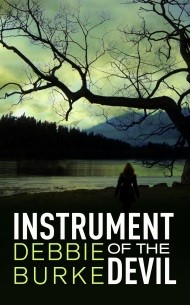
My own experience with book covers, however, has been mixed – with less-than ideal cover art for my first novel in hardback:

Followed by three wonderful covers for my paperbacks (all involving the same artist and model).


I think what made all the difference was that the paperback covers truly reflected the tone, mood and genre of my novels – with the right  blend of historical details, female characterization and intrigue. Now, as I contemplate the possibility of getting my rights back and possibly repackaging/re-releasing these books, I’ve started to think more about the issue of cover art and what makes a book cover great…I hesitate, though – mainly out of fear that I might chose badly. As Bookbub points out, a bad cover can have a negative impact on book sales. Hence I sometimes get that ‘deer in headlights’ look when it comes to book covers.

There are some informative blog posts providing advice when it comes to designing cover art. Jane Friedman has had some interesting guest posts on her blog on this issue (see for example 5 steps to great cover art and getting the right fit).  At the end of the day, all the advice seems to boil down to making sure the cover fits your book and attracts your target readers (something that feels easier said than done!).

When I look at my own book shelves, a few (mainly YA) book covers stand out. There’s the original Twilight series covers which (at the time at least) stood out as unique.

Then there’s the Scythe series by Neal Shusterman – these covers are gorgeous.

When it comes to mysteries I love the covers for James R Benn’s Billy Boyle series:

But a beautiful cover is only on element of the equation – it must also appropriately reflect the type of novel you’ve written and appeal to readers of that genre. If there’s a disconnect between the cover and the content then beauty alone won’t work. When I look at some of the list of beautiful book covers (such as Buzzfeed’s compilation for 2017, which can be found here) many of them, while certainly aesthetically appealing, wouldn’t necessarily make me want to pick up and read the book.

So what are your favorite book covers? What do you look for when seeking cover art for your own novels? What’s your experience been with cover art (either as a traditionally published or indie author) and what advice would you offer to someone thinking about repackaging their books with new cover art??


Nostalgia Time – What TV Show from your Childhood Influenced You?

Jordan Dane
@JordanDane

ABC Television


What show from your childhood or younger years would you bring back and why? Who would you have star in it?

Something that always influenced me–and ultimately teased me into becoming a writer–was my love for Westerns and HORSES. I read every Louis L’Amour I could get my hands on. When I was a young girl and in elementary school, I loved horses and read every book they had in my school library. Literally every book, no lie. As I became a teenager, I got a job and my parents allowed me to save toward buying a horse of my own. We ended up with five horses and it became a big thing for my family.

I shoveled a lot of horse poo and mucked stalls, but it was a great experience. As I grew older, I became enthralled with the men who rode those horses in the 1800s. They were mysterious loners, good guys who lived life on the edge of civilizations and made their own version of the law and justice. The ultimate anti-heroes for me. My first perceptions of manhood came from these TV shows and the many books I read. It definitely influenced how I write men in my books. The brooding loner type.

http://pixabay.com/en/horses-blm-wyoming-mustangs-61158/


I watched anything Western as I grew up and continued to read every book I could get my hands on. TV shows on Wild Bill Hickok, Alias Smith & Jones, Lancer, Big Valley, Bonanza, Branded, Maverick, Gunsmoke, Have Gun Will Travel, High Chaparral, Laramie, Laredo, the Lone Ranger, Lonesome Dove, The Magnificent Seven, My Friend Flicka, Ponderosa, Rawhide, Rifleman, Shane, The Virginian, Wild Wild West, and even Zorro.

My sisters and I would sneak out of our bedrooms to watch TV in our pajamas if the shows came on after our bedtime. Mom told us that she caught us many times, but didn’t say anything. She knew how much it meant to us and appreciated the making of childhood memories. Girl first crushes.

Louis L’Amour hooked me into reading, but thriller authors like Robert Ludlum kept me going (Bourne Identity series). I got into crime fiction and espionage thrillers. Ludlum made me pay attention to how to pace a book and the structure of cliffhangers. He opened my eyes to writing and my desire to write never left me.

BONUS QUESTION – So help me cast a great Western. Who would star in the TV show or movie?

For Discussion:
1.) What show from your childhood or younger years would you bring back and why?
2.) Who would you have star in it?

Significant Sites

When my last blog post was posted, I was on may way to Kraków in Poland – a place I didn’t know a great deal about but which I’ve always associated with the Second World War and the Holocaust (for obvious reasons). I didn’t know much about the old town or Wawel Castle (both of which I visited) but I knew my visit wouldn’t be complete without visiting the former Jewish quarter, the site of the Jewish ghetto, and Schindler’s enamel factory. As a writer of historical fiction, I find visiting significant historical places has a powerful, often visceral impact which informs not only my writing but my sense of self. On this visit, it was my trip to Auschwitz-Birkenau that left the greatest impression.

I can’t say it was an easy decision to even make the journey to Auschwitz but both my husband and I felt it was a necessary pilgrimage to make. I’ve never done extensive research on the 1930s but, as my twin boys were studying the Holocaust this last school year, I revisited Schindler’s List by Thomas Keneally and read for the first time Elie Wiesel’s memoir Night (the book my boys were required to read as part of their Holocaust unit). This helped, but it in no way truly prepared me, for what I would experience visiting Auschwitz-Birkenau. I was shocked by the immediate physical effect stepping into the camps had on me. I felt nauseated, upset, horrorified as well as, inexplicably, anxious. The initial, almost casual attitude of many of visitors angered me as did their desire to photograph everything – even the most horrific and terrifying aspects of what we saw (would you really show friends photographs of the ruins of the crematoria?) but I did notice that as the tour progressed a somber silence fell amongst even the most chatty groups of tourists. By the time we had completed our visit to Birkenau, you could sense that everyone had been profoundly affected by what they had experienced (and rightly so).

As a writer of a historical fiction, the act of visiting sites such as Auschwitz-Birkenau also gives me a renewed sense of purpose to my work. In many ways, though, I felt that my humanity demanded that I make this visit. I left feeling a renewed sense of outrage, horror, and also – after our visit to Schindler’s factory – hope.

So TKZers, have you ever visited a site that left a similarly lasting impression – one that affected you not only as a writer but as a human being?

What Character Age Do You Find Most Challenging to Write?

Jordan Dane
@JordanDane

Yes, how did she get my book title backwards? MAGIC

I’ve written a few sub-genres, but the most different or diverse ones I’ve attempted were writing mainstream thrillers and young adult novels. I’ve always loved reading crime fiction (my big umbrella), so my comfort reads were always any sub-genre of adult crime fiction novels from espionage thrillers to police procedurals to romantic suspense. Although my YA books were suspense oriented, the YA voice was a real departure for me. It took quite a bit of reading it and researching the craft, but since I had grown to love these cross-genre books as a reader, the idea of writing them hit me hard and influenced me. More on that later.

When I first started writing in 2003, my main characters were in their thirties and maybe edged into their forties when I first wrote original mystery suspense novels. The first books I sold were in my comfort reads of crime fiction, yet with a cross-genre approach because that’s the kind of stories I liked to read. With as many books as I devoured as a reader, I figured I was the market. I wanted to write the books I would read.

In 2009-2010, as I sold my first YA novels and series, writing for teens influenced even my adult writing and my characters drifted downward into their mid to late twenties. Of course, my YA books covered teen protagonists, generally 16-18+. I’ve never written New Adult (characters in their early twenties or college age). I’m not sure why that is, except to say that I can relate more to my teen formative years (my rebellious teen self) and writing my other characters to be 25-35ish years old. (It’s like the lens of my creative world had focused on an age I had fun living.)

I had many ways to research my teen voice, including eavesdropping on teens in groups and using my nieces and nephews as lab rats. My aspiring author niece worked with me on my first YA novel – In the Arms of Stone Angels – and we had a blast. But that writing definitely influenced my other suspense books and I noticed the ages of my characters had dropped. On gut instinct, I was targeting the ages I thought my readers wanted to read about so I could bridge the gap between those reading my YAs and the ones who had transitioned into my adult books. From what my readers have said, that plan worked and my YA readers transitioned into my adult books and my adult readers seemed to enjoy my crime fiction YAs. Win-win.

I wrote one novella length story from the perspective of an older woman in her late 50s. I wrote her with an honest truth and I loved being in her head, but I wasn’t sure how readers might take her so I never wrote a repeat.

I’d like to hear from you, TKZers.

For Discussion:

1.) Have you ventured out of your writing comfort zone with trepidation only to learn something new where you grew as a writer? Please share and explain.

2.) What character ages do you find the most challenging as a writer? How did you get better at it? What resources or advice can you share?

3.) Is there a main character age that you DON’T like to read about? Do you find that your reading preferences gravitate toward a certain character age?

Creative Destruction

By Elaine Viets

I’ve been hard at work on my fourth Angela Richman, death investigator mystery. Until last week I was up to schedule. Then I hit a snag at Chapter 11. An important character was being arrested for drug dealing. I thought – after writing 33 mysteries – that I knew the procedure. So I wrote the chapter. Then I got the little niggling doubt that all writers get, and decided I should check with my police procedure adviser, a former homicide detective.

Good thing I did: I not only had the procedure wrong – but the ex-detective suggested a better idea: Why not have the dealer discovered in the cop shop when a drug-sniffing canine “alerts” to the controlled substance?

Beautiful! Except I had to tear up the whole chapter and rewrite it. Now I’m a week behind.
I’m glad I did – the new scene is better.
It’s not the first time I’ve had to kill something, or even bury it. Like many novelists, I have parts of several novels, including an embarrassing serial killer mystery and a lackadaisical modern Sherlock Holmes pastiche, that I’ve buried deep in a file drawer, where I hope they’re never found.

We’re told (on the Internet) that Hindus worship Shiva as a god of contrasts who destroys as well as creates. “Shiva’s role as a destroyer is also constructive,” one source said. “This extends to all things in the world, meaning that Hindus regard Shiva as the source of all good and evil.”
“Shiva is full of passion which leads to extremes in his behaviors,” said another. “Sometimes he removes himself from the material world and abstains from pleasure, at other times he gives in to all desire. Shiva’s wife Pavarti tempers his passion and gives him balance.”
As good a description of writing – and married writers – as any.
Shiva is my new model, and I follow the art of creative destruction.
What about you?

Like forensic mysteries? My first two Angela Richman, Death Investigator mysteries are on sale for $1.99 each: https://www.amazon.com/s/ref=nb_sb_noss?url=node%3D13819722011&field-keywords=brain+storm+by+viets&rh=n%3A13819722011%2Ck%3Abrain+storm+by+viets