About Debbie Burke

Debbie writes the Tawny Lindholm series, Montana thrillers infused with psychological suspense. Her books have won the Kindle Scout contest, the Zebulon Award, and were finalists for the Eric Hoffer Book Award and BestThrillers.com. Her articles received journalism awards in international publications. She is a founding member of Authors of the Flathead and helps to plan the annual Flathead River Writers Conference in Kalispell, Montana. Her greatest joy is mentoring young writers. http://www.debbieburkewriter.com

Interview with Larry Brooks

 by

Debbie Burke

@burke_writer


Today, I’m delighted to talk with former TKZ contributor, Larry Brooks, about his new craft book, GREAT STORIES DON’T WRITE THEMSELVES, with a foreward by mega-bestseller Robert Dugoni. Larry’s book launches on October 8, 2019, published by Writer’s Digest Books. 

Welcome back to the Zone, Larry! 

DB: You’ve written three successful books on fiction craft–Story Engineering, Story Physics, and Story Fix—each with a strong emphasis on the architecture of story structure. What new ground are you digging into for this latest book?

 LB: Each of my writing books sought to bring clarity and order to what one might call the conventional wisdom of writing a novel, which is anything but clear. Within that so-called conventional wisdom there is legitimate imprecision, alongside unfortunate confusion born of contrary interpretations and polarizing preferences. Because of this, there remains a high degree of risk and a frighteningly high frequency of failure. Over 96 percent of novels submitted by agents are rejected at least once. That’s not exactly irrefutable statistical proof that the conventional wisdom serves everyone well.

That said, those who claim “there are no rules” are only adding to the noise and confusion. Frustration resides in the grey area between rules and principles, and between the separate contexts of process versus product. So much of what we hear and read about “how to write a novel” connects to process (how your favorite author does the work may or may not be a process that works for you). This leaves the realm of product – what a novel consists of, the criteria for efficacy, and how to know if you’ve come anywhere near close enough to meeting those criteria as largely untended ground. It’s as if the unspoken common courtesy suggests that you can write anything you want, any way you want, and you’ll be fine… if you “just write.”

That 96-percent failure statistic proves this to be false. My new book – “Great Stories Don’t Write Themselves: Criteria-Driven Strategies for More Effective Fiction” is process-neutral, yet it culls out and assigns specific criteria for each and every element and essence of a novel across the entire structural, dramatic and character arcs involved. No matter how you get there.

Too often writers don’t know what they don’t know, while believing they do know enough, or what they think they know is unimpeachable. My new book seeks to shrink the gap between those extremes.

DB: Sounds like an ambitious goal. Can you give us an example?

 LB: Sure. When was the last time you heard anyone at a writing conference – a speaker, teacher, agent or even another writer in an elevator, tell someone that their story idea isn’t strong enough? Never happens. And yet, as much as half of all rejection connects to story ideas that are derivative, vanilla and flat, that are lacking the raw grist of what makes a story work. Ask any agent or editor how many of the story ideas that cross their desk excite them, how often this happens, and this truth will be verified.

But it’s not just the story idea that matters. Whether it’s the core premise, the opening scene or sequence, the first plot point or the midpoint or the way the character and her/his core quest is framed… all of it becomes more accessible and effective when developed and evaluated in context to criteria that are universally applicable to that specific element.

 DB: Where did the germ of the idea for Great Stories come from?

 LB: I pondered that 96-to-4 failure rate, and decided there had to be a better way forward. After writing three books on storytelling that began exploring this sad truth, the subsequent question of “now what?” wouldn’t let me alone. How and why are those 4-percent of submissions that succeed better than the 96-percent that aren’t working as well? What are the common denominators of that?

My favorite writing tip is this: scenes work best once we understand the narrative expositional mission of the scene, in context to what came before and what comes next. This is why we rewrite and revise, to get closer and closer to that optimal form. From that epiphany, I came to realize this is true for all of the structural, thematic and aesthetic elements of a great story, at all levels. We are either searching for our best story, or we are polishing (optimizing) scenes toward that standard. That said, too many writers aren’t writing toward a standard at all, they are simply writing down what seems to be available in the moment of creation. They are just writing.

The more we understand the available criteria that will apply to a story that reaches the high bar of optimal efficacy, the sooner and more blissfully we will arrive there. That objective became the mission of my new writing book.

 DB: What’s the most important concept or lesson you hope to teach writers with your new book?

 LB: You don’t have to guess, nor do you have only your instincts to inform your choices. Your story choices can be informed by the criteria that will apply, one way or another, to the determination of what works and what doesn’t. These criteria apply within any and all writing processes, readers don’t give two hoots how the writer got it done. What does matter is the degree to which our choices align with what readers want, expect and have learned to recognize as emotionally resonant, thrilling and rewarding. That’s what talent really means: the consistent ability to land on the best possible ideas, and then make them shine on the page. When either of those outcomes happen—they are different core competencies, by the way, meaning we need to develop our craft on two levels, as storytellers and as scene writers—they are always framed by criteria that explains why they work. The book defines, explores and verifies over 70 separate criteria that apply within 18 specific facets or locations within the entirety of a novel’s narrative arc.

 DB: What’s next on Larry Brooks’ “To Do” list? Is there a new thriller simmering on the back burner?

LB: I promised my wife I’d write her a love story, and in my mind the best love story is a thriller, because so much is at stake… stakes being a key criteria in any genre. Setting it in France won’t hurt, either.

Thanks for having me back here on The Kill Zone. I can be reached through my website, www.storyfix.com, where you can learn more about this book and any of my other work, including my fiction.
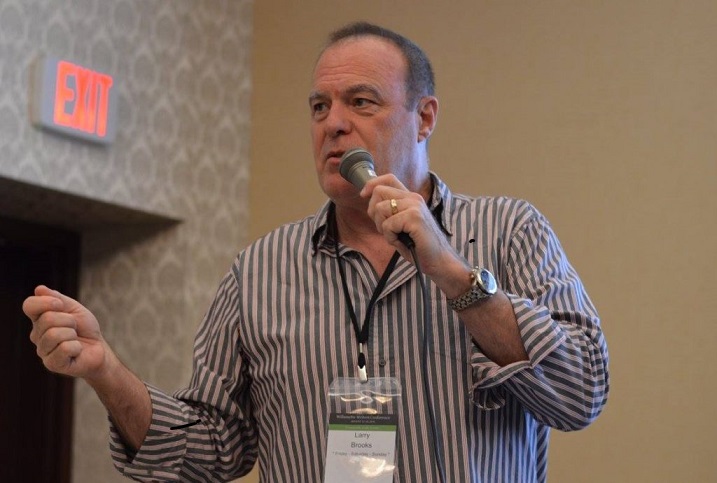
Larry Brooks

~~~~~

Thanks for sharing the inside scoop with us, Larry.

I, for one, will be looking forward to your love story thriller!

Great Stories Don’t Write Themselves is available for pre-order at:

Amazon

Barnes & Noble

~~~~~

TKZers: Do you have questions for Larry about his new book and/or story structure?
True Crime Thursday – The Burt Reynolds “Murder” Scandal

by

Debbie Burke

@burke_writer 

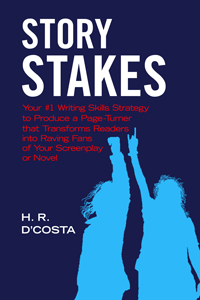
Congratulations to David F., lucky winner of the book giveaway from Tuesday’s post. H.R. D’Costa will send you a print copy of Story Stakes. David’s name was drawn randomly from everyone who commented. Thanks to all of you who provided terrific examples of story stakes.

Now for True Crime Thursday…

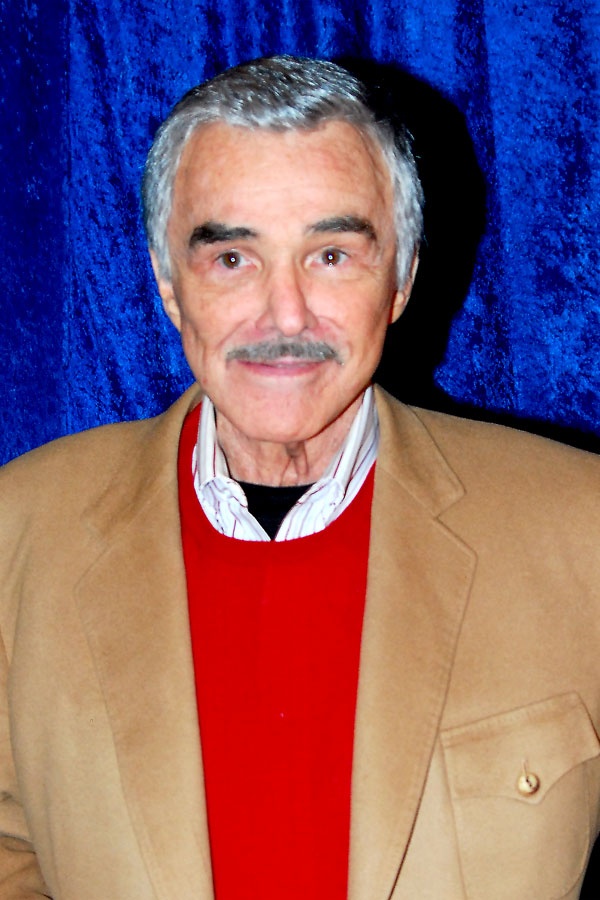
Wikimedia Commons – Photo credit Adam Bielawski

The passing of mega-star Burt Reynolds in September, 2018 resurrected tabloid rumors about a mysterious death in 1973 during the filming of The Man Who Loved Cat Dancing.

David Whiting, assistant to Reynolds’s costar Sarah Miles, was found dead in a pool of blood and pills after an altercation with Miles. An inquest determined cause of death was a drug overdose. The blood may have occurred when Whiting hit his head on a counter.

Unless you’re a tabloid reporter.

In that case, Reynolds’ hair-trigger temper and fast fists, his friendship with Miles (who was married), and his admission that he’d removed a vial from the dead man’s hand were enough to spin the tale into a full-blown scandal alleging murder.

MGM Studios likely made the situation worse by initially refusing to allow Reynolds and Miles to testify at the inquest, saying the delay would cost them $25,000 in production costs. When Whiting’s mother accused the studio of a cover-up, Reynolds and Miles ultimately were forced to testify.

Turns out Miles and Whiting were allegedly lovers (a revelation that later broke up Miles’s marriage) and apparently got into a fight because Miles had been drinking with Reynolds, inflaming Whiting’s jealousy. The fight turned physical and Miles told her son’s nanny to “Get Burt,” apparently to protect her from Whiting.

Reynolds arrived and Miles spent the rest of the night in Reynolds’s motel room. The next morning, they found Whiting’s body in Miles’s room. At that point, Reynolds removed the vial and didn’t remember what he did with it. The inquest cleared them but rumors persisted for years.

Mystery author and popular blogger Anne R. Allen adds a weird twist to the story. She had dated Whiting in college in the 1960s. In 2012, she wrote The Gatsby Game, a novel inspired by Whiting’s mysterious death. In 2014, a docu-drama about Whiting won the L.A. Film Critics award.

In this post from February, 2019, Anne explores the blurred world between real and fictional people.

Thanks to Sue Coletta for alerting me to this story.


TKZers, have you ever used a real death as the basis for a fictional murder most mysterious?

Story Stakes and Free Book Giveaway Contest

by

Debbie Burke

@burke_writer

What makes readers care about your story?

STAKES.

What are stakes? Quite simply, they are the consequences if the protagonist fails. What will s/he lose?

The world could end; the lovers may not get together; the serial killer might claim more victims, etc.

I recently read H.R. D’Costa’s craft book Story Stakes. My copy is now full of yellow highlighter markings because she makes her points clearly and concisely. Her style is straightforward, logical, and easy to follow.

Using specific examples, D’Costa lists 11 types of stakes to “increase tension and reader engagement.” Screenwriters are experts at creating high stakes, therefore many of her examples are from films. But the same principles apply to books.

With her permission, here is her list:

Stake #1: General Protection – from the fate of an entire galaxy (Star Wars) to the safety of passengers on a booby-trapped bus (Speed), general protection focuses on the lives of others who will suffer if the hero fails.

Stake #2: Demise – physical death is the consequence to the hero or someone precious to him/her.

Stake #3: Livelihood – failure by the hero means loss of a job, profession, ability to support family, etc.

Stake #4: Freedom – the hero or someone close to him/her will go to prison or otherwise lose their freedom and autonomy.

Stake #5: Reputation – if the hero’s good name is besmirched, his/her legacy is disgraced. That can lead to other stakes coming into play, like the loss of respect/love of family and friends, or loss of livelihood.

Stake #6: Sanity – the hero could lose his/her mind. Gaslight (Ingrid Bergman, Charles Boyer) and Hitchcock movies like Vertigo and Rebecca explored this stake.

Stake #7: Access – the hero could lose connection with loved ones, lose his/her home, or be shunned by his/her community.

Stake #8: Regret – The hero may have a dream but doesn’t achieve it because s/he didn’t grab an opportunity. Another variation on regret is the hero failed in the past and has been plagued by guilt ever since, such as In the Line of Fire, where a Secret Service agent (Clint Eastwood) didn’t save President Kennedy. The plot offers the agent a second chance to save another president. Failure will doom him to a life of regret but success gives him redemption and peace of mind.

Stake #9: Suffering and Sacrifice – the hero suffers and sacrifices health, wealth, love, or endures other hardships in order to achieve a goal. If s/he fails, all suffering and sacrifice are in vain.

Stake #10: Justice – If the hero fails, the villain gets away with a heinous crime and never faces punishment for evil deeds.

Stake #11: Hero Happiness – The hero pins all hopes and effort on a prize. If s/he fails, the prize is lost.

Stakes are the emotional link between the story and the reader. Through the characters, the reader vicariously faces terrible problems and must make difficult choices with dire consequences.

Stakes make the reader ask questions:

“What would I do in this situation?”

“How would I react if my family was in jeopardy?”

“What would I give up to achieve this goal?”

D’Costa makes clear that a single stake is not enough to forge a strong emotional bond between the hero and the reader. Step by step, she analyzes emotional factors that drive characters’ decisions and how readers relate to those stakes.

She goes on to illustrate how to layer stakes, one on top of another, blending them into a compelling tangle from which the hero—and the reader—cannot escape. The hero must keep pushing forward, despite increasing danger, and the reader must keep turning pages to find out what happens.

She also shows how stakes can change during the course of the plot, starting out with one set of problems that morph into different stakes. Each complication becomes more complex and perilous, leading to ever-worsening consequences.

D’Costa (aka HRD) graciously agreed to share further insight into her book and writing process in the following Q&A:

DB: What specifically prompted you to write Story Stakes?

HRD: First, let me say thanks so much for featuring Story Stakes on The Kill Zone today, Debbie! I really appreciate it.

Your question is an interesting one because I didn’t intend to write a craft guide about stakes—not initially, at least. I was actually working on a craft guide about creating the kind of dazzling climax that would turn a novelist into an “auto-buy” for readers.

In conducting research for that book, stakes came up again and again. They really define the overall quality of your story climax. Anyway, when editing the climax book, it quickly became apparent that the stakes warranted a book of their own.

So I stopped working on the climax book, and began conducting research again—this time focusing exclusively on the stakes, and how to use them to deepen readers’ emotional involvement in a story.

DB: How did you develop your 11-point stakes list?

HRD: Most of my research consisted of watching movies in a variety of genres and asking myself two main questions:

  1. What initially motivated the protagonist to pursue his goal?
  2. What techniques did the filmmakers use to make audiences even more invested in the outcome of the climax?

Looking for patterns led to the creation of a master list of 11 types of story stakes as well as a list of modulating factors (these help you elicit even more emotion from the same set of stakes) and strategies to raise the stakes.

By the way, if TKZ readers would like a printable PDF list with the 11 types of story stakes, they can find one here.

I found it really interesting that some types of story stakes can’t stand on their own (they need to be paired with another set of stakes). Even though these non-standalone stakes don’t drive the plot, they’re valuable because of how they heighten reader emotion.

For instance, throughout the middle of a story, the protagonist experiences several ordeals. If the protagonist fails to achieve his goal, he will have suffered in vain—and these stakes of suffering inject a story with extra emotional intensity.

However, ordeals emerge from conflict. In other words, if your characters are, to quote TKZ’s own James Scott Bell, “Happy People in Happy Land,” your plot won’t just be boring. Because stakes of suffering are virtually nonexistent, your plot will also lack emotional juice. It’s a good example of how one storytelling choice impacts another.

DB: Who are your favorite influences vis a vis writing craft?

HRD: Many years ago, thanks to my dad, I was able to attend Robert McKee’s famous Story seminar. McKee said that we’d learn a lot by comparing a produced version of a film to its original screenplay. I started to do that—and discovered McKee was right. It got me hooked on that style of learning, so I continued along that path. Most of what I’ve learned has come from self-study—analyzing films, screenplays, and novels to understand what works and what doesn’t. That’s why I’d consider them my greatest teachers.

That said, some wonderful craft books gave me a solid foundation to build on. One of my favorites is Blake Snyder’s Save the Cat. It provides a good overview of story structure. More important, it makes screenwriting feel accessible. After you read it, you think, Yes, I can do this. Although it was written with aspiring screenwriters in mind, many novelists have found it useful, too. (Actually, now there’s an edition just for novelists, but I haven’t read that yet.)

Another gem: Write Away by Elizabeth George. This one really impressed upon me the importance of connecting all your plot events together through cause and effect. Although writers of all genres can benefit from this craft book, it might be especially valuable to TKZ readers since George uses her mystery novels to explain her points. In addition, she shares excerpts from her writing journals. These can be quite comforting to read when you hit a rough patch because you know George went through the same thing.

Relatively recently, I discovered Al Zuckerman’s Writing the Blockbuster Novel. In one chapter, he walks you through four outlines for Ken Follett’s The Man from St. Petersburg. Experiencing how the story evolved is both fascinating and instructive. One of my favorite tips from Zuckerman’s book relates to stakes, so it’s a good one to end on. *smile* Here it is: when deciding your point-of-view character for a scene, choose “the one who has the greatest emotional involvement, the largest stake in what’s happening.”

~~~~

D’Costa’s 11 variations are not a formula. Writers can mix and match stakes that work best. Learning how to blend stakes increases the emotional impact of your story.

And that leads to satisfied readers.

Story Stakes is a reference tool I’ll be referring to often. Thanks for writing it, H.R. D’Costa!

~~~~

About H. R. D’Costa

A graduate of Brown University, H. R. D’Costa (a.k.a. HRD) is an author and writing coach who specializes in story structure and story stakes. Known for her “deep dive” instruction style, she is the author of 8 writing guides including Sizzling Story Outlines, Story Stakes, and the 4-volume Story Structure Essentials series. For practical, actionable writing tips designed to help you keep readers glued to your pages, visit her website scribemeetsworld.com, which is also home to the Ultimate Story Structure Worksheet (downloaded over 37,000 times by writers from around the world).

~~~~

TKZers – WIN A PAPERBACK COPY OF STORY STAKES

To win a paperback copy of Story Stakes, answer this question in the comments: What are some of your favorite examples of stakes in films or novels?

Debbie will randomly select a winner from the comments and announce the lucky recipient on July 25, True Crime Thursday.

Note: This giveaway is only open to residents of North America, South America, and Europe.

Good luck and happy writing!

First Page Critique – Counting Mountains

Credit: Joshua Fuller, Unsplash

Good morning, TKZers, and let’s welcome the brave Anonymous Author of Counting Mountains. Please enjoy this first page submission then we’ll open the discussion.

~~~~~

Title- Counting Mountains

My name is Tessa Stynes, and I was witness to and involved in all the horrible things you’ve heard about the Australian Massacre in London. My name used to be associated with my family, my university, my friends, and if I’m being optimistic, maybe my photography, or my smile.People used to tell me I had a nice smile.

Now, and I think for a long time to come, my name will have a very different association in thousands of people’s minds. People think of my name and they think of murder, fear, and death. This is hatefully unwanted- but not necessarily unwarranted. I didn’t touch the Ripper’s knife, but it knew me, hunted me, found me.

I can tell you how I almost died, how parts of me most certainly did.

If I want to dig at the wounds and baby scars that tear open so easily, I can tell you how I was responsible for people dying. I dig a lot, trying to figure out which parts of me are gone forever, which parts I can resurrect with time, and which wounds deserve to lay open, festering. Even though it hurts, it’s cathartic, like pulling six-foot weeds out of the ground, or trying to reconstruct a broken clock.

I’m attempting to build my story – and the Ripper’s – from the ground up, pulling strands and dark clumps out of my head that are hiding and digging themselves in; picking out the broken parts, so that I can hope to build something new and shiny out of the rot.

Someone once said to me; there are mountains in everyone’s path. They are all different shapes and sizes, but they are all mountains, and they are all difficult to breach.

Right now, I’m counting mountains. Some I conquer, and some sit in front of me, daunting and ice covered, just like that winter.

In the beginning of our story, it was cold. I remember the cold being a constant reminder of how far I was from home. We were in the winter of 2010, the coldest winter on English record and in anyone’s memory. The feeling of cold in England seemed worse than the cold I had felt in actual cold countries like Norway, Estonia, or Finland. The cold I felt that winter in England was harsh and bone deep, like a blow I wasn’t expecting.

~~~~~

Brave Author, I found a lot to like about this first page. It doesn’t start with action or in media res. It opens with the character alone thinking—a technique that we at TKZ often caution against. However, the voice is strong and the situation is compelling, making me want to know more.

In other words, even though you take a risk by ignoring conventional wisdom, your technique works. Well done.

Why does it work? I believe it’s because of the theme.

Tessa Stynes has been the victim of “the Ripper.” She also feels responsible for other deaths evidently caused by this serial killer. She survived where others didn’t. Her name is linked to horrific crimes—she is doomed to a haunted life of guilt by association.

The theme of guilt by association works because it’s a universal plight. Most people have suffered injustice where their proximity to a person, group, or incident taints their  reputation. There’s an immediate bond between the reader and a character who reminds us of the unfair shunning we’ve experienced ourselves.

Further, the Author has set high stakes. Tessa is not the victim of everyday petty injustice. The stakes of her suffering are life and death. Others have died in a “massacre.” Although this story is being told about events that already occurred, there is a suggestion Tessa herself might die in the future from repercussions of the tragedy.

James Scott Bell talks about death stakes that can be physical, professional, or psychological.

Tessa states: I can tell you how I almost died, how parts of me most certainly did.

She has faced all three forms of death that Jim describes. First, she almost died from knife wounds (physical). Second, she apparently once had a good name as a photographer that’s now tarnished (professional). Third, her musings show an ongoing emotional struggle that prevent her from living a normal life (psychological).

The Brave Author takes another chance by addressing the reader directly. In theatre or film, this is called breaking the fourth wall when a character speaks to the audience.

This technique momentarily disrupts the fictive dream the author wants to create, which can have negative results if the reader is pulled out of the story.

However, it can also promote the sense that the author is sharing an intimate secret with the reader. This character who witnessed terrible crimes is willing to reveal knowledge no one else has. The reader wants to learn the inside truth of what really happened.

For those reasons, I believe breaking the fourth wall works here. 

The setting is London in winter of 2010. Tessa is evidently a visitor to England, a stranger in a cold, forbidding land. The mood is chilling, physically as well as emotionally. Nice job of making the setting and weather reflect the plot.

Now to the aspects that tripped me up:

The Australian Massacre in London is treated like a news event that everyone’s heard about. I googled it and didn’t find a corresponding real-life occurrence. Not a problem but it momentarily sidetracked me.

By using “the Ripper,” readers have certain automatic, ingrained reactions to Jack the Ripper, who killed victims during the 1880s. That reference started me down a historical path. However, you then say the story begins in 2010, leading to other questions: Will this be a time-travel fantasy? Or is there a new Ripper in contemporary London?

These are not necessarily problems but merely things to consider as you draw readers into the story. You want to be mindful not to lead them off onto false trails.

You write strong, active sentences but the order in which you present them could be rearranged for more dramatic effect. What do you think of this:

People used to tell me I had a nice smile.

My name used to be associated with my smile, my family, my university, my friends, and my photography.

Now, and I think for a long time to come, my name will have a very different association in the minds of thousands of people. People think of my name and they think of murder, fear, and death. This is hatefully unwanted—but not necessarily unwarranted. I didn’t touch the Ripper’s knife, but it knew me, hunted me, found me.

I can tell you how I almost died, how parts of me most certainly did.

My name is Tessa Stynes, and I was witness to and involved in all the horrible things you’ve heard about the Australian Massacre in London in 2010.

If I want to dig at the wounds and baby scars that tear open so easily, I can tell you how I was responsible for people dying. I dig a lot, trying to figure out which parts of me are gone forever, which parts I can resurrect with time, and which wounds deserve to lay open, festering.

Next, you go into a mashup of similes and metaphors about pulling weeds, repairing a broken clock, strands of hair, clumps, digging, shiny objects, and mountains. Because these figures of speech are not obviously related to each other, they got distracting. Suggest you stick with the mountain motif, since that’s your title, and delete the rest of the debris.

Regarding semicolons: I fall into the camp of never in fiction. If you do use them, use them correctly.

Delete the semicolon in: Someone once said to me; there are mountains in everyone’s path.

The sentence could be rewritten in two ways:

1. Someone once said to me: there are mountains in everyone’s path.

2. Someone once said to me there are mountains in everyone’s path.

The second option (without punctuation) is my preference since it’s not a direct quote.

The following is a nice segue from Tessa’s thoughts into the story:

Right now, I’m counting mountains. Some I conquer, and some sit in front of me, daunting and ice covered, just like that winter.

In the paragraph that follows, you use a variation of cold seven times. Even if you intentionally repeated the word for effect, it wore thin.

The line like a blow I wasn’t expecting didn’t work for me because blow is a sudden, abrupt action whereas bone-deep cold creeps in more gradually, like gangrene.

There is additional repetition and overwriting in that paragraph you might condense. How about this:

The winter of 2010 was the coldest season on English record and in anyone’s memory. I remember the harsh, bone-deep chill that felt worse than the cold I’d experienced in actual frigid countries like Norway, Estonia, or Finland. The cold was a constant reminder of how far I was from home.

Brave Author, you took risks with this opener and they paid off. Your voice, theme, and premise are all compelling and make me want to read more. Good job!


How about you, TKZers?

Did this opening draw you in?

What suggestions do you have for our Brave Author?


Debbie Burke’s award-winning thriller Instrument of the Devil is on sale for 99 cents from July 7-14. Here’s the link.

True Crime Thursday – Could a Parrot Testify?

by

Debbie Burke

@burke_writer 

Hannah Dickens-Unsplash


In 1958, Erle Stanley Gardner wrote a story where a chatty parrot’s “testimony” helped solve a murder. It became an episode of the Perry Mason TV show entitled “The Case of the Perjured Parrot,” teleplay by Marian B. Cockrell.


A real-life crime in 2015 gave a starring role to another talking parrot.

An African Grey parrot named Bud might have witnessed the murder of his owner and repeated what were perhaps the last words of the dying victim.

In May, 2015, Glenna Duram shot her husband Martin five times, killing him in their Sand Lake, Michigan home. She then turned the gun on herself, causing a non-fatal head wound. She recovered and was charged with Martin’s murder.

Pet parrot Bud was apparently present during the crime. Afterwards, family members say Bud mimicked Martin’s voice and said, “Don’t f**king shoot!”

According to Martin’s mother, “That bird picks up everything and anything, and it’s got the filthiest mouth around.”

During Glenna’s trial, the prosecutor attempted to include Bud’s words in court but that request was denied. Even without the parrot’s testimony, there was enough evidence to find Glenna guilty of murder. She was sentenced to life in prison in August, 2017.

Here’s a video of Bud.

TKZers, what do you think? Is Bud a convincing witness?

DIY Massage for Writers

By Debbie Burke

@burke_writer

As authors, our “sit” muscles work overtime. No wonder they ache and cramp. 

When I start earning six figures from my novels, first thing I plan to do is hire a full-time massage therapist to undo the kinks in my body from writing.

Unfortunately…I foresee a long wait before that happens.

In the meantime, I found a helpful DIY tool to counteract “writer’s slump” caused by too much time sitting hunched over a computer.

The foam roller.

This device is inexpensive, has no moving parts, and doesn’t take up much space. By simply rolling on it, you can get a deep massage from the pressure of your body weight. Two doctors I talked to use a roller themselves.

Caution #1: consult your medical provider to be sure foam roller exercise is safe for your condition.

Caution #2: Do NOT use the roller directly on joints.

Caution #3: Using the foam roller requires getting down on the floor…then eventually getting back up again! Some of my parts are not original factory equipment, so exercises on the floor require planning.

Twice a week, I attend a foam roller class at the gym. Expert instructor Amy Lavin graciously agreed to demonstrate a few exercises.

Amy adds caution #4: Always remember to breathe.

Back Exercises: 

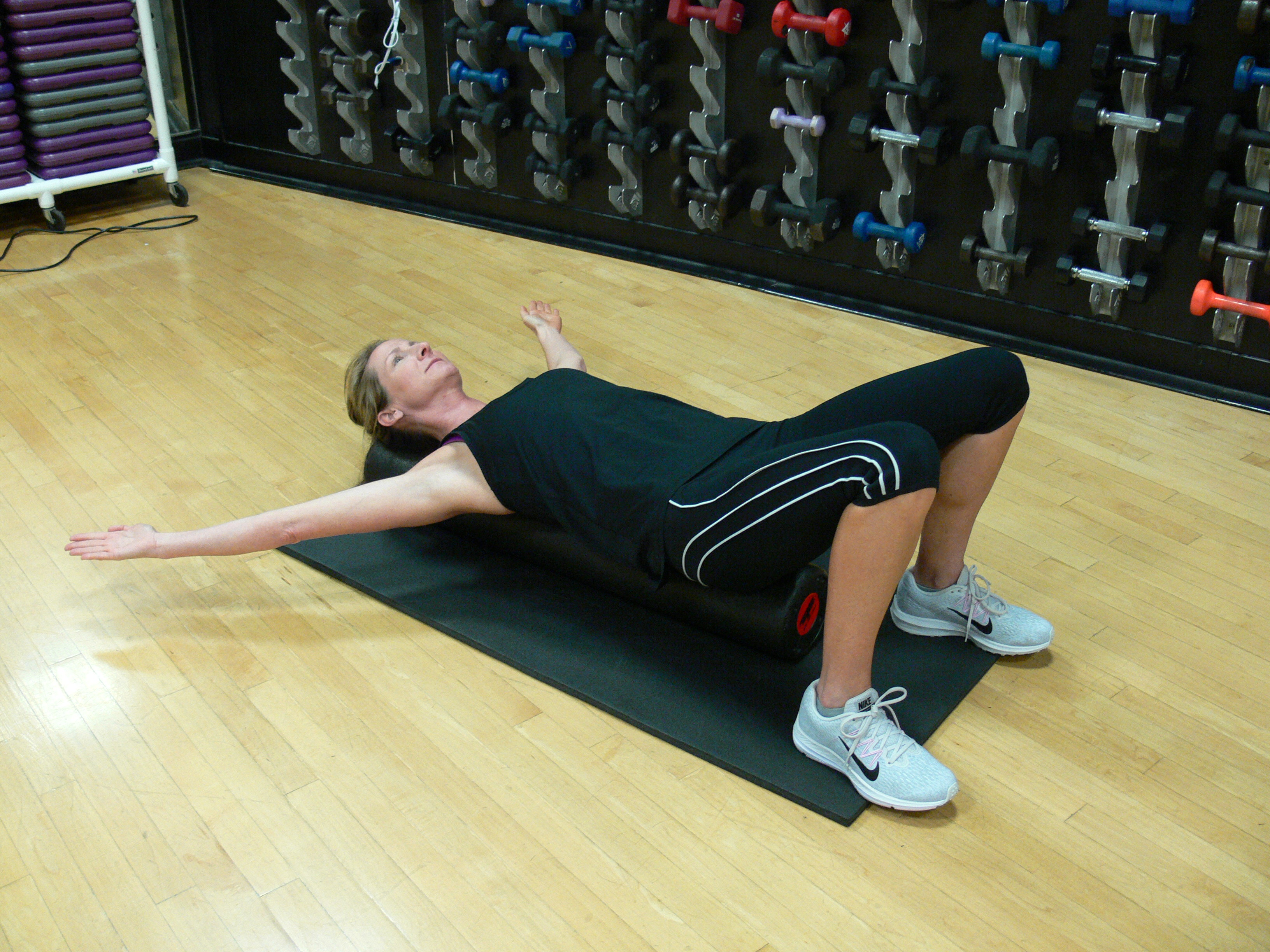
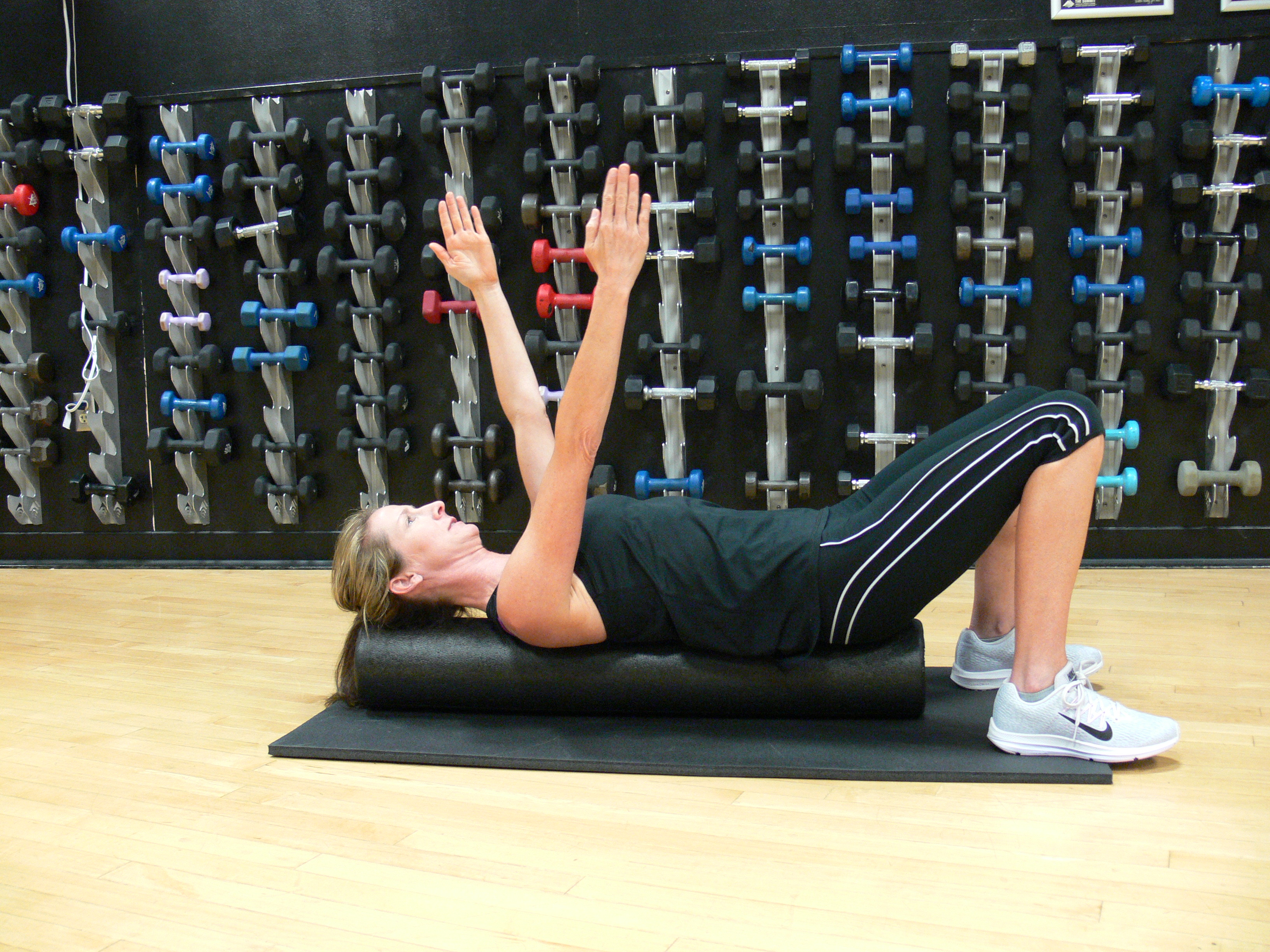
On a mat on the floor, lie lengthwise on the roller. Your head and the entire length of your spine rest on the roller. Let your arms relax at your sides. Gravity pulls your shoulders toward the floor. The stretch across your chest should feel good, not painful.

My doctor said simply lying in this position on the roller for 10 or 15 minutes every day is beneficial for the spine, even if you don’t go through the routine that follows.

  • While lying lengthwise on the roller, gently roll back and forth a couple of inches on either side of your spine. Your core muscles tighten to maintain balance and keep you from falling off. Strengthening the core also helps support your back.
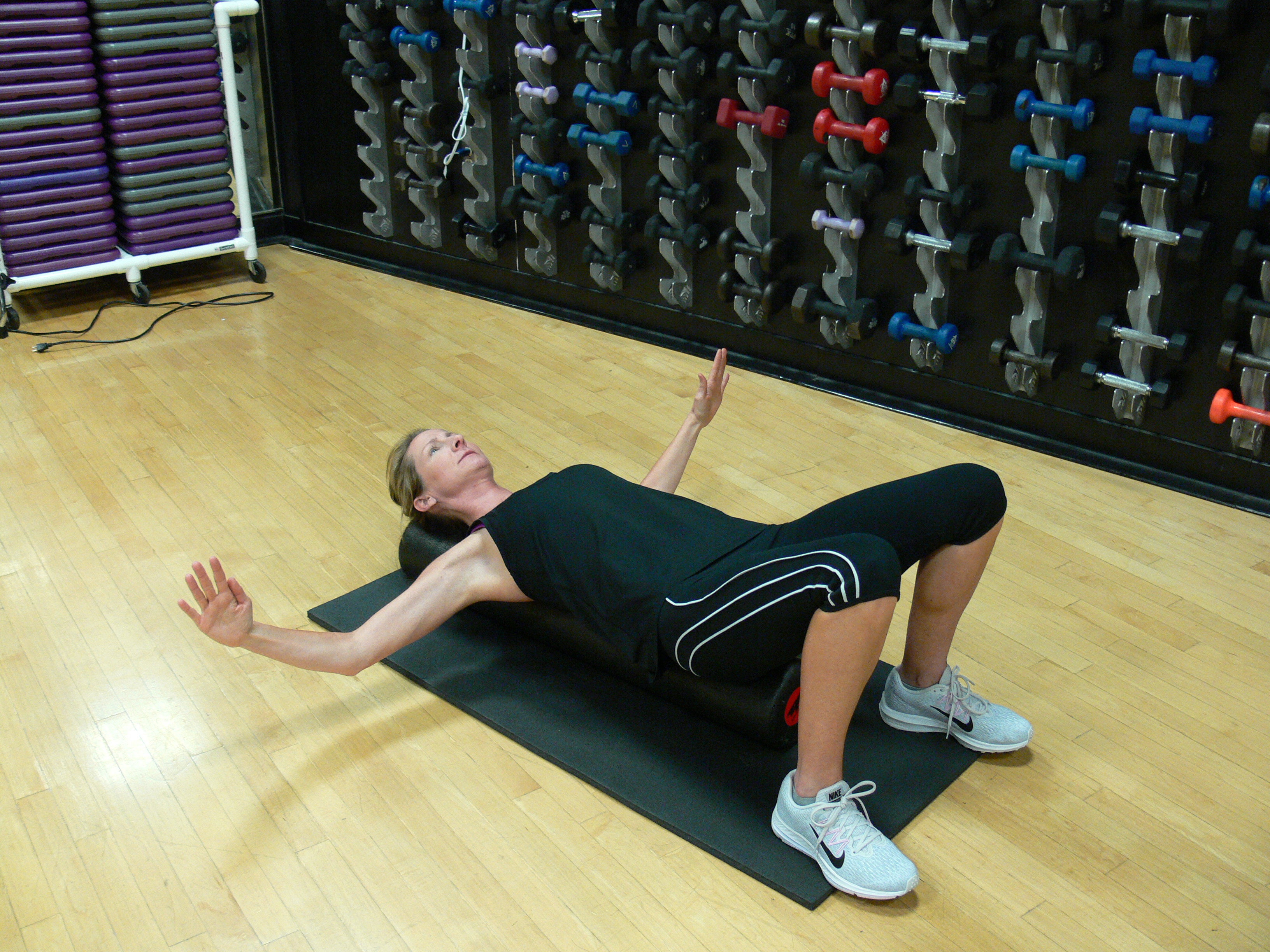
  • Still lying lengthwise on the roller, extend your arms out from your sides, palms up, forming a T. Let your shoulder blades sink toward the floor to wrap around the roller, increasing the stretch through the chest. When you begin, your elbows may not be able to touch the floor. But, after several minutes, muscles should relax and allow your elbows to rest comfortably on the floor. This position also straightens posture.
  • Raise your arms in a Y over your head. That lengthens the spine and increases the stretch for your back. Take several deep breaths.
  • Slowly move your arms as if you’re making snow angels for several repetitions. Then reverse directions for more repetitions.


  • Raise both arms straight up toward the ceiling. Move your arms back and forth in a scissors motion. One arm goes above your head, the other down to your side, then reverse. Repeat for a minute.


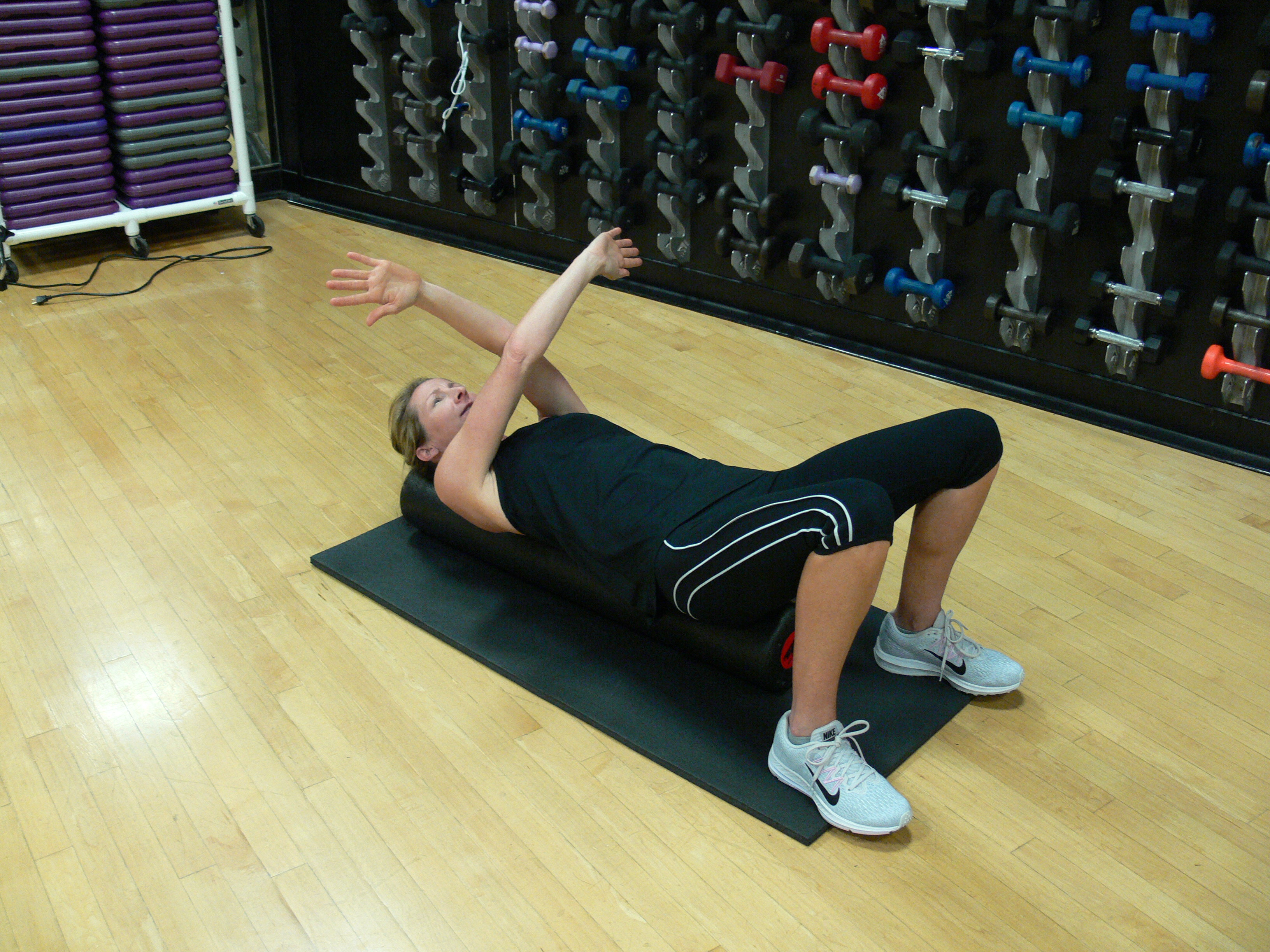
  • Raise both arms above your chest and bend the elbows. Keeping the elbows bent, slowly lower the arms to the floor, rest for several beats, then raise arms so they crisscross over your chest. Continue raising and lowering the bent arms for at least a minute. When you begin this movement, your elbows may not be able to touch the floor but, as you repeat, muscles should loosen enough that your elbows can rest on the floor.


Exercises for “sit muscles”:

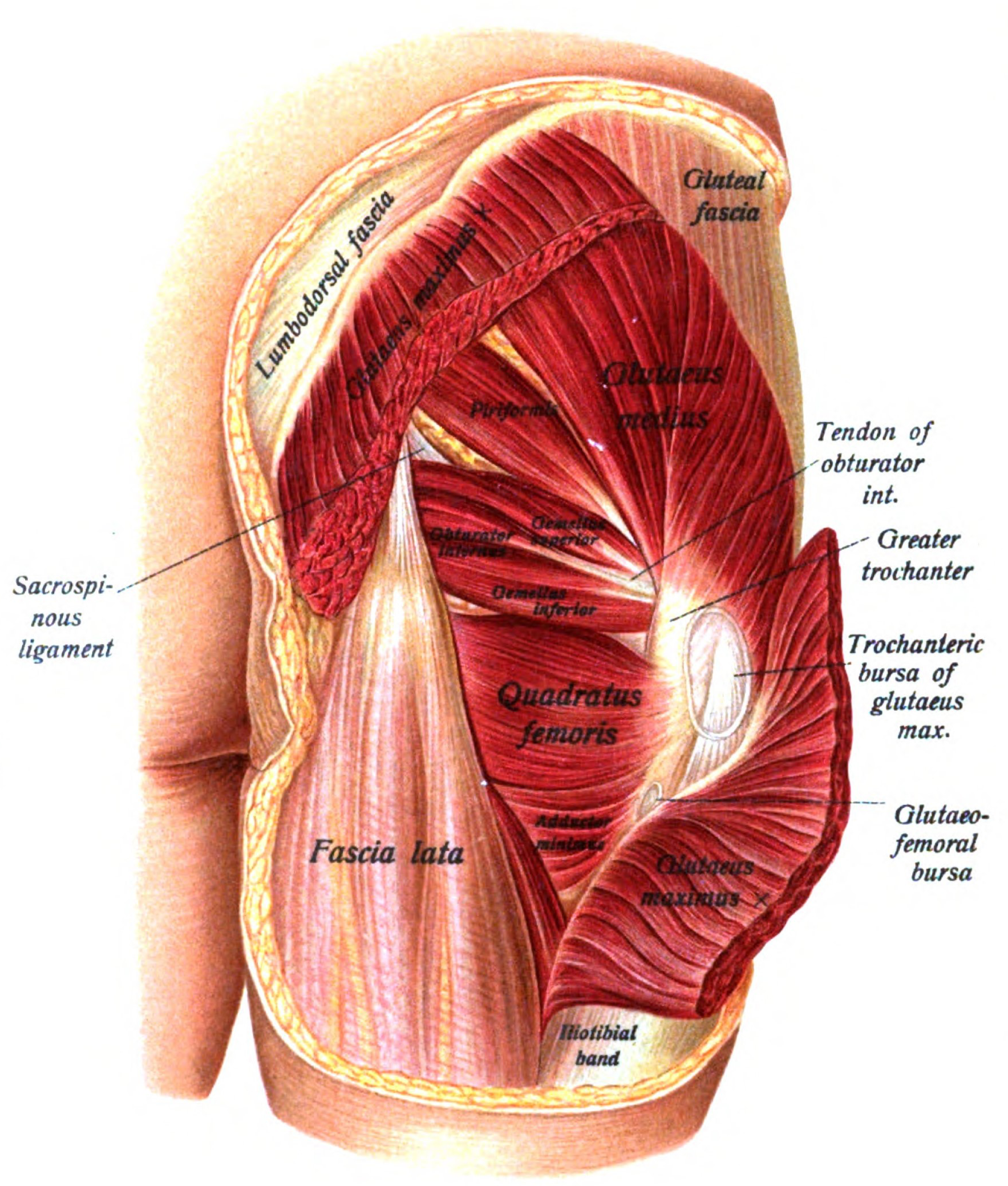
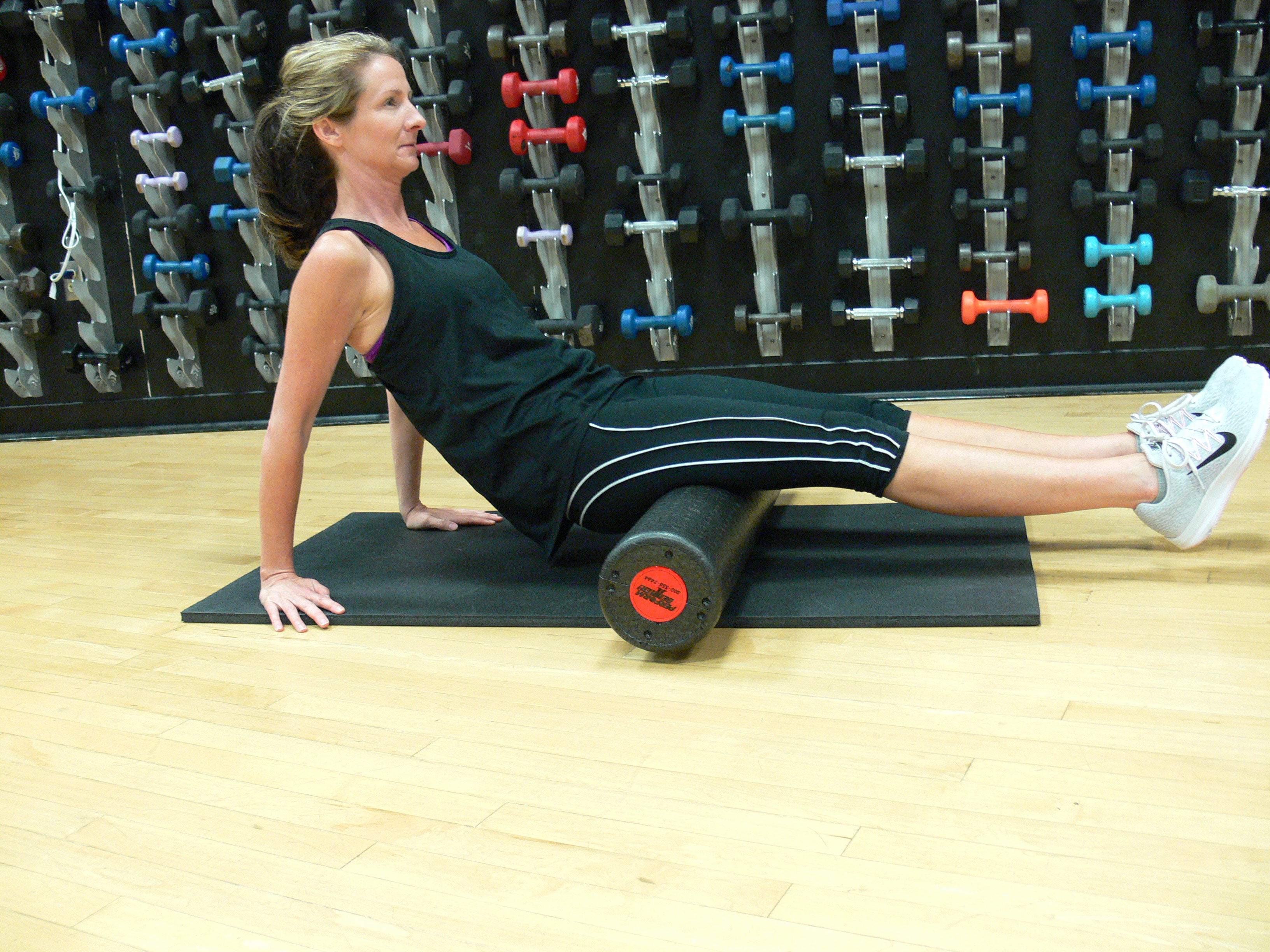
  • Glutes: Sit on the roller and roll back and forth. The weight of your body presses the roller deep into your glutes. Roll on one cheek for a minute or more. Then switch to the other cheek. I find at times there is a hard knot like a round rock in the center of each cheek. Roll over that knot several times in a circular motion. Reverse and roll in the opposite direction.


  • Hamstrings: Roll from the glutes down the backs of the thighs to the knees and back up. This massages the hamstrings. Repeat for 30 seconds to a minute.


  • The iliotibial (IT) band is a tendon that runs down the side of the leg from hip to tibia. It can flare up from too much sitting.

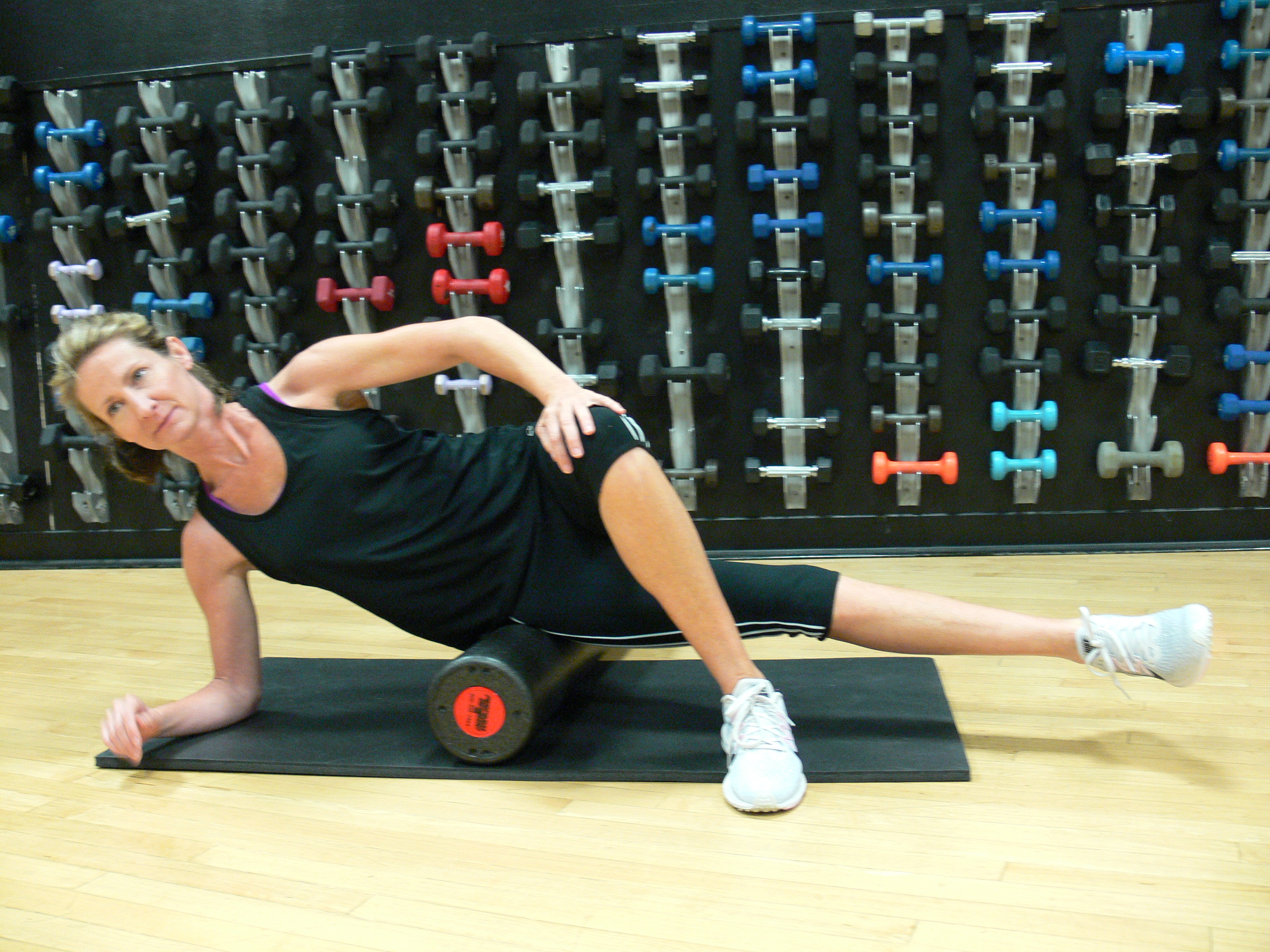
Lie on your side, propping yourself up with one elbow. Position the roller horizontally under your hip. Slowly roll from hip down almost to the knee. Stop before the knee joint and do not roll on the joint. Roll up and down the side of your thigh for several minutes. Repeat on the opposite side.

When my IT band gets grumpy (which is often), this rolling may be painful. Be careful and stop if you feel it’s too much. Relief comes later.

  • Hip flexors: Lie on your stomach with the roller positioned under your hips. Shift your weight slightly to one side so the hip flexor (the crease between your thigh and pelvis) is on the roller. Roll back and forth over the hip flexor for 30 seconds to one minute. Switch to other hip and repeat.
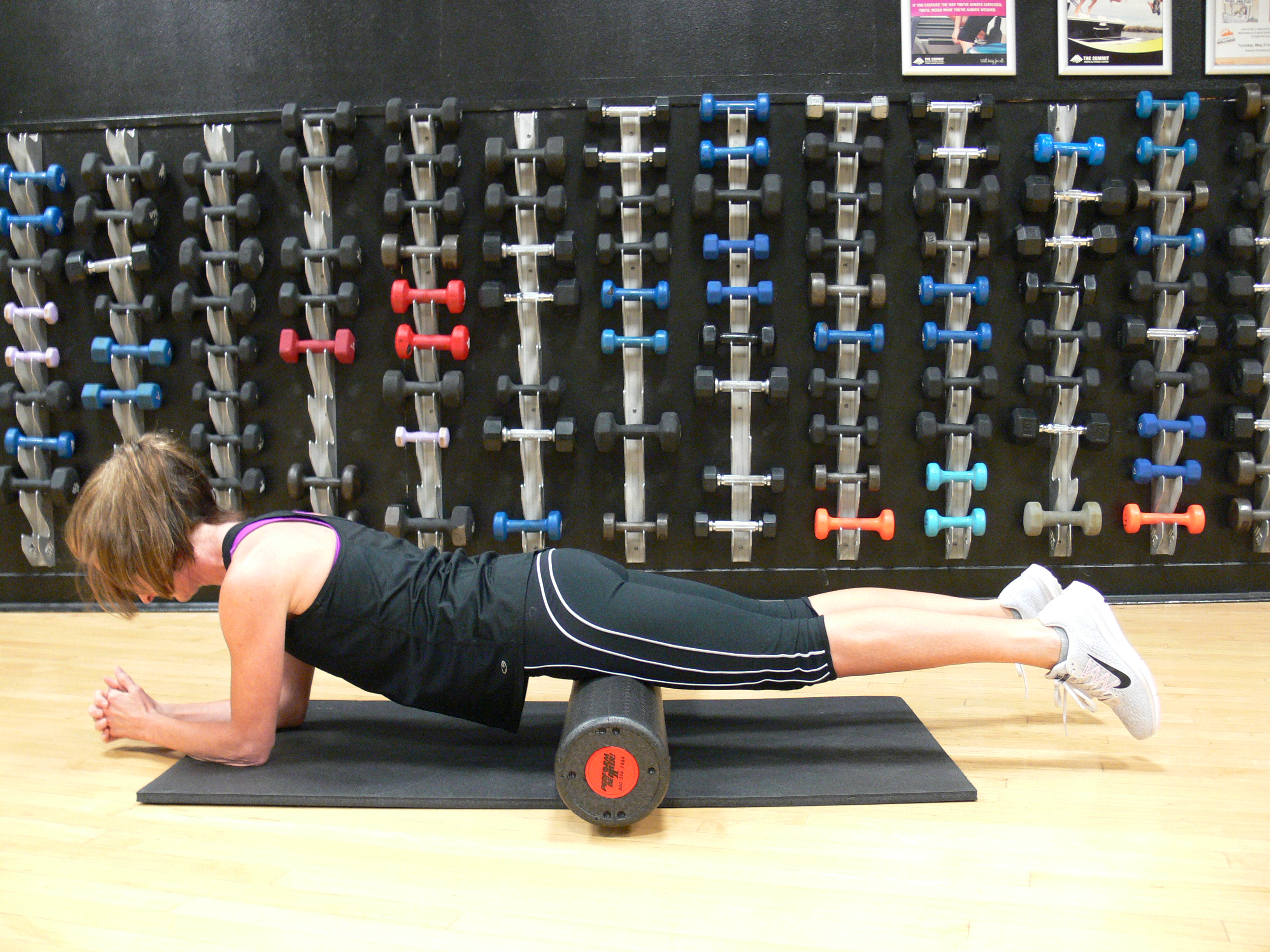
  • Quadriceps: Lie on your stomach and use your elbows to hold your chest off the mat. Position the roller horizontally under your quadriceps (fronts of your thighs). Roll up and down from top of thigh to just above the knee. Do not roll on the knee joint. Be careful—this pressure on your quads may be painful at first. As you repeat the exercise over time, the pain should lessen.

A big THANK YOU to Amy Lavin for demonstrating a DIY massage!


How about you, TKZers?

Have you tried a foam roller? Did it work for you? 

Do you have a favorite exercise to help “writer’s slump”? 


Voices Lost and Found plus Two New Writing Tricks

by

Debbie Burke

Recently, a wonderful, unexpected opportunity came my way.

My pal, Susan Purvis, was invited to be the keynote speaker at the St. Eugene Writers Conference near Cranbrook, British Columbia. She invited me to tag along and share the hotel room the organizers had graciously provided for her.

Writing workshop, free room, and a favorable exchange rate—what’s not to like?

To Honor “The Children” at St. Eugene Mission School


Surrounded by snow-tipped mountains with the St. Mary River flowing past, the St. Eugene Hotel had a once-dark history and was supposedly haunted.

Built in 1910, on a road to hell paved with good intentions, the Canadian government and the Catholic Church operated St. Eugene as an Indian boarding school. First Nations’ children were separated from their families, not allowed to speak their native tongue, nor practice cultural traditions and customs.

The boarding school system broke down traditional family structure, resulting in generations of poverty with staggering rates of alcoholism and chronic unemployment. The school was closed in 1970.

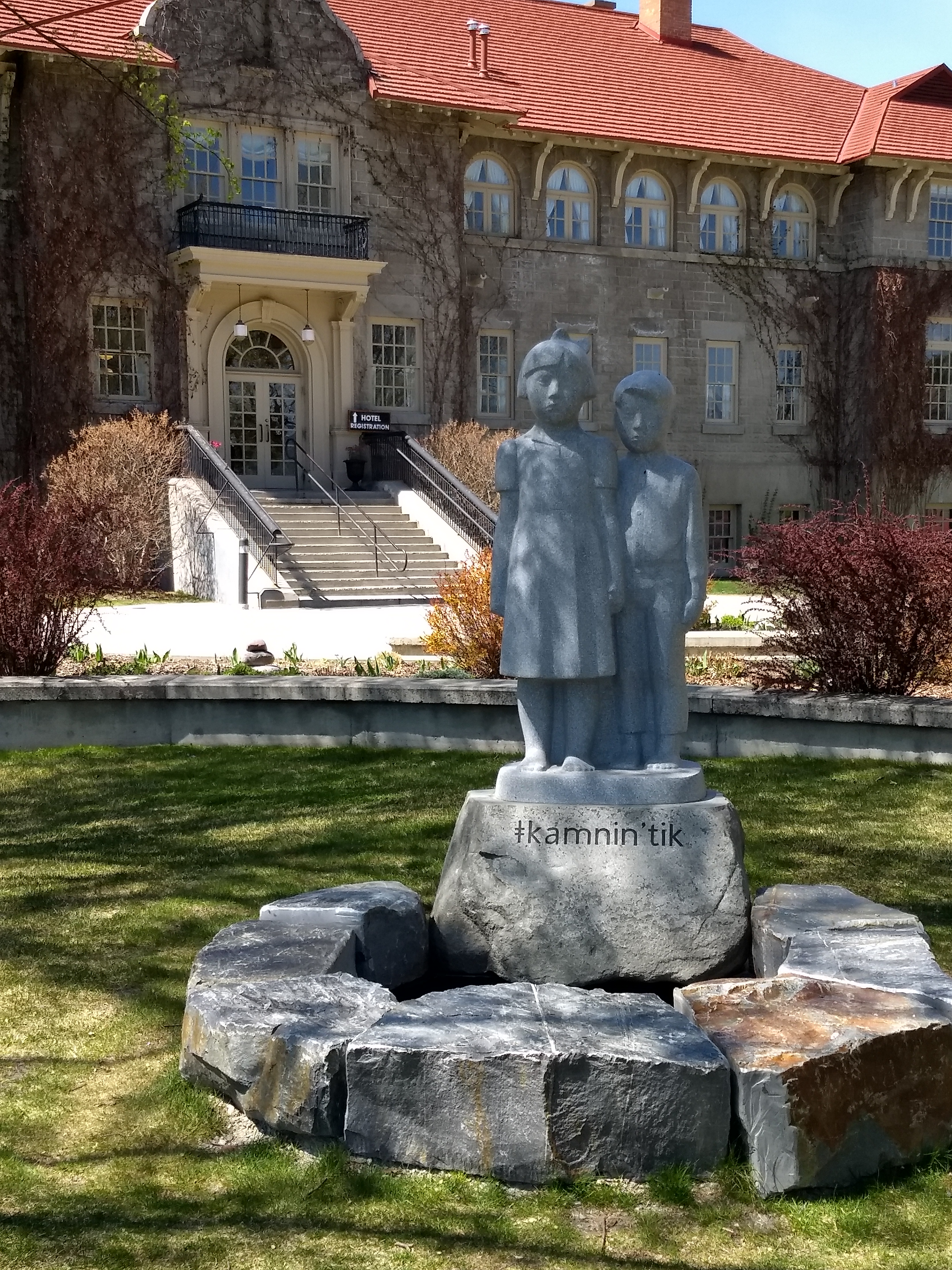
For the next few decades, the building languished in decay—deserted, vandalized, and flooded. But the spirit of the Ktunaxa people prevailed.

In 1984 Elder Mary Paul said, “Since it was within the St. Eugene Mission School that the culture of the Kootenay Indian was taken away, it should be within that building that it is returned.”

Mary Paul’s vision of rebirth was carried forth by Chief Sophie Pierre, who had herself been a student at the school. The chief spearheaded years of rehabilitation of the old building.

St. Eugene is now a world-class resort hotel, beautifully refurbished with conference rooms, restaurants, and a casino. A championship golf course and KOA campground occupy former pasture lands.

Teepees at the St. Eugene Resort campground

Today, the resort employs more than 250 people; many are descendants of former students of the boarding school.

Sophie’s son, Joe Pierre, is the current elected chief and delivered a moving blessing at the keynote dinner in both the Ktunaxa language and English.

Photos from the past decorate the hallways, including one that appears to capture a ghostly figure among the solemn faces of school children. A presence has been sensed in various rooms of the hotel.

In a location so steeped in history, how could a writer not be inspired?

~~~

Now to what I learned:

Renowned playwright/novelist Anosh Irani divides his time between Vancouver, where he teaches, and his native India. Anosh introduced two new writing terms I hadn’t heard before.

The first concept Anosh talked about was The Wound.

The wound can be literal, like a physical problem, a disease, an injury, a chronic condition that restricts and constrains the character’s ability to function. The wound can also be mental, emotional, or psychological. Unseen wounds often affect the character more deeply than physical ones.

Questions to ask while you’re writing:

Is the story driven by a deep-seated wound in the main character?

Is the story about healing that wound?

Is the character free if s/he cures the wound/achieves the goal?

The second term Anosh talked about was The Crucible, which immediately brought to mind the Arthur Miller play about the Salem witch trials.

Photo credit: skeeze at pixabay


However, crucible also means: “a ceramic or metal container in which metals or other substances may be melted or subjected to very high temperatures.”

In playwriting, the author places the main character inside a container (the stage) under extreme pressure and temperature. The character is trapped. Unless s/he wins, there is no way out of that cage.

Before this workshop, I had not been mindful of a major difference between novels and plays:

In novels, characters may roam all over the globe in search of adventure or a solution to their problems.

But in plays, actors are literally trapped within the confines of the stage and cannot escape. The setting may change but the stage remains a limited space—a crucible.

That concept resonated with me. As novelists, we can borrow that crucible technique and put it to work in our stories. The more trapped your character, the more heat and pressure they are under, the greater the story tension.

~~~

For a marketing perspective, YA novelist/editor Jeff Giles entertained us with his funny essay about how not to promote a book. “See More About Me” describes a debut novelist who wrote 326 Amazon reviews for books by other authors but, in each review, shamelessly promoted his own novel.

Also during the weekend, Anna-Marie Sewell, Poet Laureate of Edmonton (2011-2013), and Danielle Gibson, a teacher and YA author, workshopped with half a dozen talented high school students. At the group open reading, the kids performed their work with the confidence and charisma of veteran public speakers. We in the audience listened in awe and muttered to each other, “I could never have done that at that age!”

St. Eugene was once a place where children lost their voices. There’s a sweet irony that new generations now find their voices there.

Conference organizer Keith Liggett, a ski journalist and award-winning cookbook author, sets up several writing events each year at St. Eugene. Top-name speakers draw participants from across Canada and the U.S. The next gathering will be in February, 2020.

St. Mary River flows past St. Eugene Resort

St. Eugene nearly descended into ruin as a relic haunted by dark memories. In the new century, it has experienced a renaissance, emerging as a major employer in the region and a thriving recreation destination and cultural center.


Elder Mary Paul would be pleased.


TKZers – Have you attended a writers gathering in an inspirational setting? What did you take away from the experience? 

True Crime Thursday – DNA Solves Cold Cases

by

Debbie Burke

@burke_writer 

Memo to Criminals: If the statute of limitations hasn’t expired, don’t send your DNA to 23andMe.

wikimedia.org

The combined tools of genealogy and DNA databases are solving old murder cases.

Until recent years, a DNA sample from a crime scene meant little unless it matched an already existing profile in a law enforcement database. But the popularity of DIY home DNA tests adds a new wrinkle.

People seeking their ethnic roots send cheek swabbings to genetic genealogy databases like GEDmatch.com. There, DNA samples are used to build family trees reaching generations back in history.

While you may find it interesting that Mary Queen of Scots or Jesse James is a distant relative, what happens if your DNA also shows you’re related to a criminal?

Most famously, the Golden State Killer was linked to decades of murders and rapes based on DNA information from Parabon Labs.  Parabon claims to have helped solve 30 cold cases. According to their website:

“Genetic genealogy has traditionally been used to discover new relatives and build a full family tree. However, it can also be used to discover the identity of an unknown individual by using DNA to identify relatives and then using genealogy research to build family trees and deduce who the unknown individual could be. These techniques…apply equally as well to forensic applications. Genetic genealogy has been used to identify victims’ remains, as well as suspects, in a number of high-profile cases. Most recently, genetic genealogy was used to zero in on a suspect in the Golden State Killer case.”

Law enforcement can request information from consumer DNA databanks to trace suspects in unsolved crimes. But ethics concerns are on the rise after the founder of GEDmatch allowed access in an assault case in Utah without first informing its customers.

Surveys indicate most people believe consumer DNA databases should be used in cases of violent crimes. But what about offenses like credit card fraud or unpaid child support?

TKZers, have you sent your DNA to a database like 23andMe, Ancestry.com, Family Tree, My Heritage, etc.?

Are you concerned about the privacy of your genetic profile?

Where would you draw the line for law enforcement uses? Violent crimes? Non-violent felonies? Misdemeanors?

True Crime Thursday – Flying Bank Robber Thwarted by Cow

Creative Commons, public domain

by

Debbie Burke

@burke_writer 

Today’s true crime is a blast from the past, a 60-year-old saga of crime and justice.

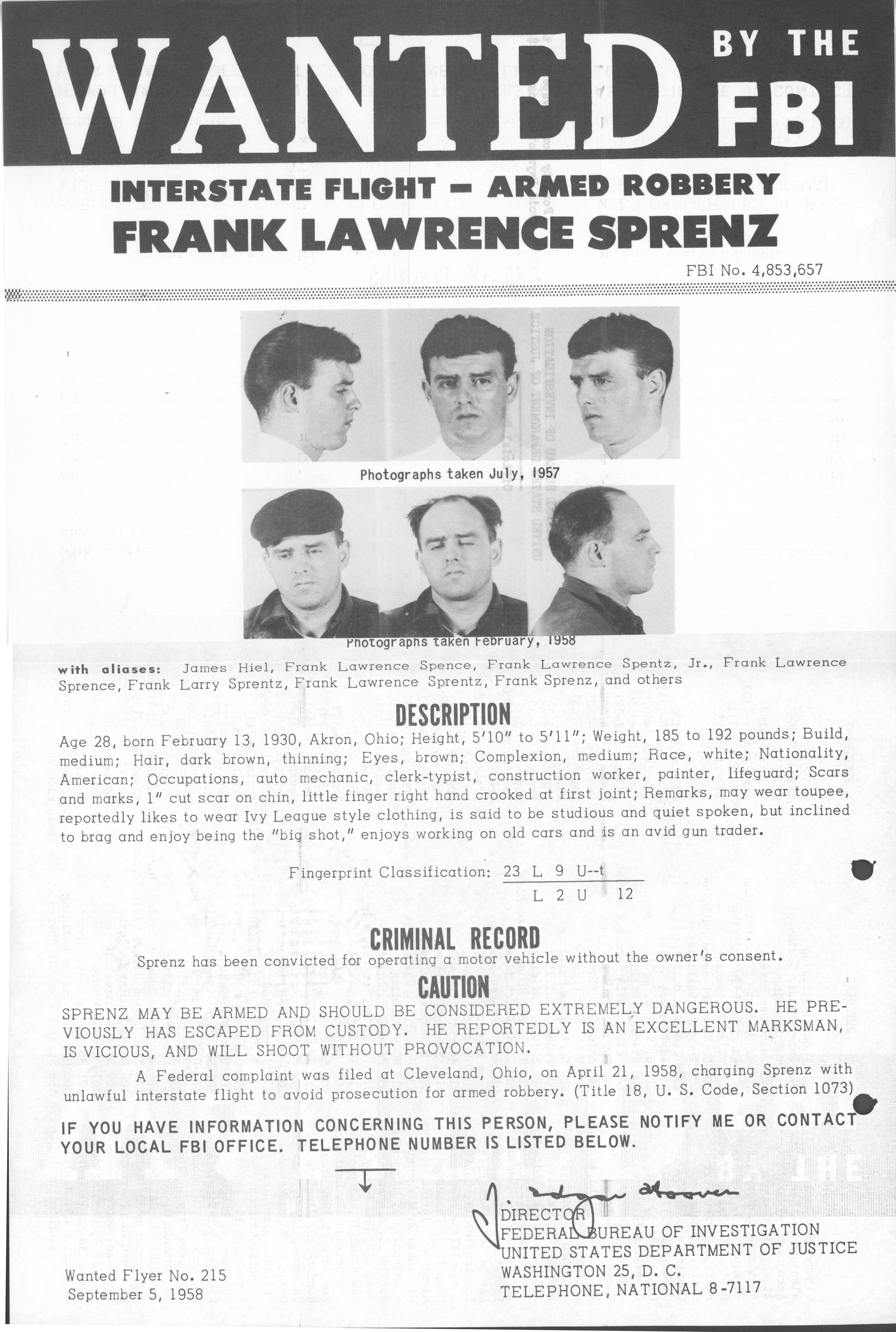
FBI Wanted Poster for Frank Sprenz

Note: click on the photo and it becomes little clearer to read.

In the late 1950s, Frank Sprenz was a bank robber so successful he made the FBI’s Ten Most Wanted list. His MO: steal a car, rob a bank, flee to another state, and repeat, crisscrossing the country.

Sprenz upped his game when he learned to fly. After robbing a bank, he would then steal a plane and escape to new territory, earning his nickname “The Flying Bank Robber.”

Then came the fateful day when he landed his plane in a Mexican field across the border from Raymondville, Texas. He refueled, intending to escape to Cuba. But on take-off, a cow meandered into his plane’s path. He swerved, hit a tree, and wrecked the plane.

On April 15, 1959, in cooperation with Mexican authorities, the FBI ended Sprenz’s high-flying career.

Here’s the full story.

Sprenz was a lifelong criminal who eventually died in prison, yet his MO showed a certain dash and daring that seems missing in today’s crimes. Or maybe it’s just my nostalgia for the past.

What do you think, TKZers? Are crimes of yesteryear more romantic than current ones?

First Page Critique – Untitled


Today’s submission is an untitled first chapter featuring a bartender in a classic hotel. Please enjoy then we’ll open the discussion.


CHAPTER 1

Under a trickle of air conditioning, Dylan swirled the bar spoon through a jumble of vermouth, bitters, Makers Mark, and ice. His shirt collar, rigid and wet, scraped against the back of his neck. Normally, he liked a penguin suit, the way it accentuated his biceps. But on the ten or so summer nights when the July heat pressed the moist cloth against his skin, he wished the owners would cough up enough cash for decent AC. Instead of cool comfort, they blew their wad preserving turn of the century crystal chandeliers, wrought iron balustrades, and red velvet wallpaper. Clayton Hotel’s clientele loved the ambience, confusing run-down with high style.

Dylan served the Manhattan to a regular at the end of the bar, a lawyer by the name of Jim whose pupils had overtaken the blue of his eyes. Must have gotten the 8-ball Dylan had stashed for him in room 414. This week, Jim wanted coke. Other weeks, ketamine or a tab of E. For the right price, Dylan could track anything down or make it himself. His meth was the purest in Portland. The graying lawyer sniffed hard and wiped his nose with a blue polka dot handkerchief for the fourth time that night. He set his half-empty martini glass on a gold napkin and waved his hand to get Dylan’s attention.

“You bruised my bourbon again.”

Dylan cleaned the mahogany bar top with a towel. “Ouch. Has it turned black and blue?”

The loose skin around Jim’s neck tightened. He was about to say something when a tall brunette in Lucite heels and a red leather bodysuit strolled past the dining room manager, a thin 40-something who looked so much like Rod Stewart in his sparkly blazers that everyone called him Rod. From deep down in his Rolodex, Rod could find the perfect escort for every man.

The brunette waved like a beauty queen. While she made her way across the dirty-blue carpet, her tits bouncing in gorgeous synchrony, everyone checked her out. She looked like a girl who came from someplace Dylan wanted to visit, like Malta or Majorca.

She took a seat next to Jim and clapped her red gloved hands against the bar top. Before Dylan could respond, she shot out, “Scarlet O’Hara.”

He walked towards her. “Scarlet? Nah. More like Rita Hayworth.”

She leaned forward, titties barely contained inside her sweetheart neckline. “Go heavy on the cran. Make it pretty and scarlet, just like Miss Morgan.”

~~~

The Brave Author does a good job of setting the scene without slowing the action to describe it. The reader is grounded right away: Clayton Hotel, a hot July night in Portland. The writing is generally clear and economical without extraneous verbiage.

The tone is noir and the scene has a 1980’s vibe, evoking the Tom Cruise film Cocktail. The dining room host-procurer character “Rod Stewart” reminded me of the tune “Some Guys Have All the Luck.”

Dylan, the POV character, quickly comes across as a disaffected bartender with a detached, snobbish, superior attitude toward his customers.

He’s vain and likes to show off his biceps, even though a tuxedo is miserably hot. Nice sensory detail of the collar chafing. One small nit: stiff collars generally cut into the throat rather than the back of the neck.

He takes pride in his skill set—“His meth was the purest in Portland.” He has no problem accommodating legal or illegal requests from his customers and feels disdain for them at the same time he profits from their cravings.

His banter is clever but insulting—“Ouch. Has it turned black and blue?” That crack nearly provokes an argument with Jim, the annoying, hopped-up lawyer whom Dylan can’t please.

Dylan is unabashedly sexist in his description of the brunette who flounces in on Lucite heels. He immediately flirts with her in front of Jim, even though Jim appears to be her john for the night. Dylan again pushes Jim’s buttons.

The potential for conflict is high. But…

Will readers want to follow a self-absorbed, egotistical, snobbish, drug-dealing, misogynistic antihero? 

The Brave Author takes a chance by leading off with an unsympathetic character. Some readers (especially women) will instantly dislike Dylan and put the book down. Others may read a little farther to see what happens next. But, unless Dylan shows more promise, they will soon grow weary of him.

Author-screenwriter Heywood Gould said about Cocktail: “…met a lot of interesting people behind the bar and very rarely was it someone who started out wanting to be a bartender. They all had ambitions, some smoldering and some completely forgotten or suppressed.”

Gould has expressed what’s missing—at least for me—in this first page.

Readers don’t necessarily have to like a character as long as there’s a quality they can relate to and identify with. How can the Brave Author add depth and humanity to this character to make him resonate with readers?

Here are a few questions that might trigger ideas:

What ambitions or longings does Dylan have? What does he want to find or achieve?

What does he struggle against? What disappointment marks him? What traps him in a job he dislikes?

I’m not suggesting a backstory info dump but rather a carefully chosen line or two that hints at the trouble that haunts him.

Another method to make an antihero work is to give him a distinct, unique voice or an unexpected worldview that fascinates the reader. A few examples of recent successful antiheroes: Dexter, Walter White in Breaking Bad, and Tony Soprano.

Literature through history is full of compelling antiheroes: Hamlet, Raskolnikov, Jay Gatsby, Michael Corleone.

~~~

I made the assumption that Dylan is the main character. But maybe he’s not.

Perhaps this first page introduces Dylan to set him up in an inciting incident. On page two, he could wind up dead in the Clayton Hotel dumpster and the story focuses on solving his murder.

Or maybe Dylan is the prey and the prostitute in the red leather bodysuit and Lucite heels is actually the undercover cop who busts him.

The story could go in dozens of different directions, which is why it’s difficult to judge from 400 words. However, in today’s competitive market, an author must grab the reader right off the bat. Often, the first page is the only shot you get and that’s why it must be pitch perfect.

~~~

A few line editing comments:

He was about to say something when a tall brunette in Lucite heels and a red leather bodysuit strolled past the dining room manager, a thin 40-something who looked so much like Rod Stewart in his sparkly blazers that everyone called him Rod.

The sentence is too long and gets confused between the brunette entering and the description of Rod. Suggest you split it up into shorter, punchy sentences and more paragraphs:

The loose skin around Jim’s neck tightened. He started to speak but movement at the entrance distracted him. 

A tall brunette in Lucite heels and a red leather bodysuit strolled across the room. She bounced in all the right places. Dylan and Jim stared, along with everyone else in the room.

Dylan winked at the dining room manager, a thin 40-something everyone called Rod because he looked like Rod Stewart in his sparkly blazers. Rod’s Rolodex guaranteed he could find the perfect match for every man. Looked like he succeeded again tonight.

The following line confused me: “Make it pretty and scarlet, just like Miss Morgan.” Is the woman introducing herself as Miss Morgan? Or is there another meaning?

I googled “Miss Morgan” to see if it was also the name of a cocktail, like Scarlett O’Hara and Rita Hayworth. I found a reference to an actress “Miss Morgan” in a TV series, “Keye Bondage Images.” Hmmm.

~~~

Brave Author, your writing is solid. You do a good job of setting the scene and describing characters while keeping the action moving forward. Well done.

If Dylan is the lead, work on developing his depth and humanity. If you make him a more compelling character, readers will want to follow him.


Over to you, TKZers. What do you think of Dylan? Do you have suggestions for our Brave Author?