Basically, how do we figure out this journey we’re all on?
And that’s what I try to do in my fiction, including Watch Your Back.
Basically, how do we figure out this journey we’re all on?
And that’s what I try to do in my fiction, including Watch Your Back.
In October while converting a porch into a room in my home, I touched my left thumb to a moving table saw blade. Don’t know how to describe the sensation except to say it was a sort of thrunk-thropping followed immediately by a realization that the anatomy of my left extremity would be forever altered to some degree. Then there was a serious infection and some necrosis of the tissue in the pad. To make a long story short, as I am typing with one finger on my right hand, I had surgery a few days ago to rebuild by flapping and grafting the disastered digit, and it’s in a huge bulbous cast so I am going to apologize for a very brief blog this week as typing is hard enough when you aren’t on painkillers. On March 3rd I’ll get to see if the surgery was successful, and hopefully I can get back to writing again. I really miss my time at the keyboard.
Has anything ever happened to interrupt your schedule for more than a few days?
One really cool perk of belonging to the Writers Guild of America (WGA) is the gift that starts giving sometime in lat October, and runs fairly steadily through the end of the year: the flood of movie screeners for awards season. Because none of the films I’ve been paid to write have ever been produced, I am not a member of the Academy, yet I do get to vote for the WGA Awards, and that in itself is pretty cool.
Some years, the flow of screeners is better than others, but 2010 brought a bumper crop. Don’t get me wrong, I still go to the theater periodically, but not nearly as often as I used to. When watching in the privacy of my own home, I’ve never once had to shoot a dirty look to a rude teenager with a cell phone. That alone greatly improves the movie-going experience. (Plus, we can pause the movie for bathroom breaks.)
With the Oscars looming this coming Sunday (my birthday!), I thought I’d make my pitch for a few of the major categories, listing which contestants I think should win, and, in some cases, who I think will win, even if I disagree.
Best Supporting Actress. This one is tough for me, as I think it’s tough for anyone who watched some of the performaces that are competing with one another. Hailee Steinfeld’s portrayal of Mattie Ross in True Grit was spellbinding. She commanded every scene she was in. I couldn’t take my eyes off of her. If she won, I would not be disappointed. But my vote goes to Helena Bonham Carter in The King’s Speech. Through facial expressions alone, she was able to project a love of her husband that tore at my heart.
Best Supporting Actor. Geoffrey Rush in The King’s Speech. ‘Nuff said. I can’t imagine the award going to anyone else this year. Much is said of Christian Bale’s performance in The Fighter, but while I thought he was terrific in the role, he engaged in a little bit too much scenery chewing for me. Geoffrey Rush, on the other hand, merely lived his character.
Best Actress. Okay, time for full disclosure here. This is the category for which I saw the least number of films. I’m going to default to Annette Bening in The Kids Are All Right. Her portrayal of a heartsick middle-aged lesbian was a memorable part of a very memorable movie. That said, all the buzz says the Oscar is going to Natalie Portman for The Black Swan. Having not seen the movie (yet), I defer to the opinions of others.
Best Actor. Another tough call. Jeff Bridges as Rooster Cogburn in True Grit was a force of nature. I loved every minute of his screen time. (Every minute of the film, for that matter.) While Jesse Eisenberg was fantastic in The Social Network, I don’t think the story was big enough to compete with some of its competition. My choice for Best Actor is Colin Firth in The King’s Speech. He was, in a word, fantastic.
Best Adapted Screenplay. Aaron Sorkin for The Social Network. Reading a Sorkin screenplay is like taking a master class in writing action and dialogue.
Best Original Screenplay. Lisa Cholodenko and Stuart Blumberg for The Kids Are All Right. Okay, that’s my pick. I don’t think it will win, though. The momentum all seems to be behind David Seidler for The King’s Speech.
Best Picture. For me, it’s a tie between True Grit and The King’s Speech. If I were to place a bet, I think the smart money is on The King’s Speech.
So, Killzoners . . . What do you think? Here’s your chance to go on the record.
I got a Droid phone for Christmas and went from practically the Stone Age into a vision of an amazing future. I can scan barcodes and shop for the best price in town, use my GPS to find the latest trendy restaurant available by voice command, and even read books off my phone using a kindle download app for free. But the reason I’m blogging about my phone and the latest book trailer I had made for my first Young Adult book – In the Arms of Stone Angels (Harlequin Teen, Apr 2011) – is a cool app that I want to share with you.
A QR code looks like a Rorschach test. It is square and you may have seen them on pages of magazines, on signs, busses, business cards, etc. It works like a barcode and can be scanned like the stores ID their inventory at cash registers, but this code can be made by ANYONE using the hyperlink I posted above. It can be scanned via smart phone, like the Droid, with the right reader app. You can insert a secret message in text, insert contact information, or it can make a connection to a wireless network or link to a web page that opens on the phone’s browser. You can make the QR image play the part of a secret code made available only to winners in a contest or the code can direct a reader to your latest book trailer. Instant gratification for our visual society and a cool app toy!

This QR Code can be downloaded into a jpeg file that can be printed onto your latest bookmarks or made into stickers, whatever floats your boat. Anyone with a smart phone and a QR Code scanner can read your message. And in one swipe off your bookmark (or any other promotional material), a reader can be looking at your trailer in an instant. How cool is that?!
My contact at “Trailer to the Stars,” Misty Taggert, gave me the heads up on this app. It’s hard to quantify if book trailers actually sell books, but I sure love making them. And using a professional company like Misty and crew really made this effortless for me. I’m on deadline and they made the collaboration easy and simple, for my part. For them, not so much. I’ve done trailers myself before. It takes time and way more skill than I possess to do a trailer like this.
It’s hard enough to encapsulate your story into a short film of a minute and a half. But add a script, voice over talent, production music and action videos that fit, and movie animation effects for mood, and the process can get very complicated. And way above my paygrade.
For Discussion:
1.) What do you think of book trailers as a promotional tool? I was particularly interested in doing a trailer for YA. My target age for this book is 13-18 years old. And since Amazon and Barnes & Noble host trailers on an author’s book page, it’s great to have the opportunity to post a trailer at the point of sale.
2.) Have a great phone app to share? If you have a new phone and a great app to share, I’d love to hear about it. Hearing about new technology really stirs the creativity in me when I think of writing new books. Imagine an app that gives you Bluetooth capability, but also sends subliminal and subversive messages to your brain. Or picture an app that protects and backs up the contacts on your phone, in case it’s lost or stolen, but all the information for loved ones and friends (addresses, photos, phone numbers) make them a target for a dangerous predator unless you do exactly as they say. No one is safe. Anything can turn into a conspiracy with the right dose of paranoia.
3.) Want someone to indulge you? Hmmmmm, Basil? If you’re like the always inventive Basil Sands, you may want someone to invent an app just for YOU. What kind of phone app would that be?
By Joe Moore
There’s a great game called Jenga. It’s comprised of lots of wooden blocks from which you build a tower. Each player in turn removes one wooden block from anywhere within the tower. The object of the game is to
not be the one to remove the block that tumbles the tower into a heap of rubble. After all, each block is connected, touches, or relies on the others. The tower must remain structurally stable and strong to keep from falling and breaking. It’s fun to play, but you know that if you pull the wrong block, you can cause a chain reaction that brings the tower down. Once it falls, the game is over.
This week, I’m deep into the editing of the galley proof for my upcoming thriller, THE PHOENIX APOSTLES (June 8). It’s one of, if not the most critical stage of the novel writing process. Up until now, it’s been all fun and games: playing “what if”, outlining, researching, writing, discussing the plot with my agent/editor, sending out portions of the manuscript to my beta readers, rewriting, changing and shifting plot and characters, panicking that I won’t meet the deadline, turning in the manuscript on the deadline day, waiting for the initial feedback from my editor, strategizing with the publisher’s publicity department, seeing the cover art for the first time, worrying, and waiting. A treat arrives in the mail in the form of an ARC (advance reader copy) that my editor snagged for me. I get to see the mockup of the book and cover, and hold it in my hands, and show family and friends that there really will be another book, and I really am a writer, and the first four books weren’t just flukes. So up until now, it’s been tons of fun.
Suddenly, I get an email from the copy editor. The galley proof (the entire text printed as it will appear in the final version) will arrive on such and such a date, and she needs my corrections back on such and such a date to meet the “to-press” date. And she includes the statement that causes all warmth to drain from my body to be replaced with bone-crunching Arctic fear: this will be my final opportunity to make changes.
I’m about to play Jenga with my book.
OK, I can handle it. After all, everyone who read the manuscript loved it. Sure, there’s going to be a few typos that even the editor and proof reader missed. Hey, we’re all human, right? I’ll just whip through this baby, catch a few minor flaws, and get it back ahead of time.
Note: one big advantage here; I have a co-writer, and she’s got her own copy of the galley proof, and she’s going through the same exercise I am. So we figure it’ll be a quick read-through and we’re done. Then we can get back to the fun stuff, right?
So far, I have 5 pages of changes, mostly small items, but a couple of plot issues that need a great deal of thought before we commit to a change. The reason is, one small change, even a word, can break stuff all over the place. Pull the wrong block and the book comes tumbling down.
“This will be your final opportunity to make changes.”
Most of the changes going back to the copy editor are small stuff. But if I stumble across something that needs to be clarified and that clarification causes something else to be changed, and that change causes a major . . .
You get the idea. Editing the galley proof is like pulling blocks in the Jenga tower without it crumbling down around me. It’s not fun, and you don’t get a second chance. Who said writing a novel wasn’t dangerous?
How does this stage of the process go for the rest of the writers out there? Do you love it or hate it? Do you play Jenga with your book?
————————————
THE PHOENIX APOSTLES, coming June 8, 2011.
”Leaves the reader breathless and wanting more.”
– James Rollins
As a full-time writer, I have the luxury of working at home. But recently I’ve seen signs that I need to get out more.
I’m not a music person, but I like to have some kind of background noise when I’m working. I used to keep the TV on, but that became too distracting. So one day when I was browsing for online streams, I stumbled across the local police channel. I could actually listen to every back-and-forth between the dispatcher, police, and emergency units.
A new distraction–make that an obsession–was born. It took me a few days to decipher the codes and garbled transmissions, but I finally got the hang of the official communications. We live a few blocks away from the fire station, and we hear sirens several times a day. I used to pay them little attention. Now I’m like a duck on a June bug, hitting that police stream to find out what’s going on in my little town.
And I have to say, it’s been a bit unnerving. It’s not reassuring to learn that your local PD is on the lookout for an armed and dangerous thug who just escaped a police perimeter in a neighboring town. Or that the gas station at the bottom of the hill was just robbed by a masked bandit who has been attacking places all over the area.
My husband, who also works at home but who has a structured, self-disciplined routine, recently gave me a strange look when I peered fearfully out the window.
“What are you doing?” he asked.
“Looking for a silver Honda, driven by 5-foot nine guy who is possibly Asian,” I reply. “He robbed the Chevron station. He has a gun, nine millimeter. “
“Oh.”
My husband has learned not to probe my odd statements too deeply. I think he attributes my eccentricities to the fact that I’m a writer.
And truthfully, I rationalize many of my quirks as being a byproduct of a creative mind. For example, I figure I have to learn how cops really talk, so that helps me justify listening to the emergency channel for hours on end.
The truth is, it’s just another one of my home-grown obsessions. I have others. I have an intense interest in volcanoes, for example. I monitor the status of volcanoes across the planet–I usually know when one’s about to blow, long before you hear about it on the news. (News editors must not share my volcano obsession.) Why? Well, for some reason I have this inner certainty that a major volcano is going to explode, a Krakatoa-level event that’ll throw us back into another mini-Ice Age. (If it actually happens, it’ll be hell on crops and the economy, but at least it’ll take care of global warming.)
The reality is, I should probably get out of the house more. When I had a day job, I didn’t indulge my obsessions nearly so much. I simply didn’t have time. Maybe I should volunteer, do something useful. But I’d probably volunteer for something related to one of my obsessions, like becoming a Neighborhood Watch captain. Do they get to talk on the police radio, do you suppose?
But enough about my obsessions. Do you have any you can share?
Just in case you tuned in earlier and saw this post appear and disappear on Friday, we had a PICNIC (Problem In Chair Not In Computer) incident where this offering was posted prematurely. Sorry about the confusion, for which I am totally responsible.
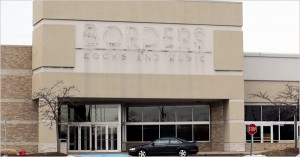
I have been watching the slow motion train wreck, otherwise known as the Borders bankruptcy, for over a year now, knowing that it was coming but hoping that it would not. It came this week and it is, not to mince words, a disaster, at least for the short term.
I am aware that the wiser among us say that other bookstores in the areas of the shuttered Borders will pick up the slack, and no doubt they will, to a greater and lesser extent. My immediate concern is for the good folks who worked at the closed stores, and who now join the ever-growing number of people looking for employment. Of longer range concern, however, is the amount of debt owed to publishers large and small, and by extension to authors.
http://www.thestreet.com/story/11014549/1/who-borders-owes-in-bankruptcy.html I have no idea whether the parent companies of the publishing houses that we deal with are large enough to absorb some of the losses I am hearing about, or even if they are inclined to do so. What I am worried about in the intermediate term, however, is the future of the printed, bound book. I thoroughly enjoy my Kindle, and I have managed to own it for almost one year without breaking it. But I haven’t given up books. I’m kind of like the guy in the (more-or-less) committed relationship who also has a friendship with privileges, and who isn’t sure who fills which need. I really don’t want to have to make the decision any time soon. But the Borders situation creates a giant bump in the road of physical commerce. There are a number of questions hanging out there. Will publishers ship new product to the remaining Borders stores? What happens to physical product in warehouses? Or to product remaining in the closed stores after this weekend’s G.O.B. sales in the stores which are closing? Someone will answer all of these questions fairly quickly, but the shift is going to be a pain in someone’s rear end. In any event, I am sure that someone in an office in midtown Manhattan has floated the idea to their underlings that if all books were e-books, no one would have to worry about all of this. The book isn’t printed and delivered until it’s ordered and paid for, so no inventory. Great, right?
Sure. In some ways. But I don’t think most of us are ready to give up books or the stores where we buy them. Which is why I am asking you to join me, and to ask others to join you, in a demonstration of faith: buy a new book, a physical book, from a brick and mortar establishment dedicated to that purpose, each month for the next twelve months. Many of us already do this, but many of us use libraries, and many of us borrow from friends. Nothing wrong with that, and bless you for reading. But I am asking you to move the budget around a bit, bite the bullet, and buy a book. At worst you’ll have several Christmas gifts to give by the time December comes. I am going to visit the wonderful and indispensable Foul Play Books in Westerville, Ohio for this month’s purchase, and maybe for all of the rest of them each month as well. If you like the bigger stores, go for it. If enough of us do this, the publishers may decide that its worth it to stay in the game, even if they have to move that god-awful inventory around. But please do it. Let’s counter that ripple effect, before someone gets a not-so-bright idea.
***
A get well soon to John Miller, whose operation on his hand is not preventing him from writing.
There are perks to writing in my little corner of the thriller genre. Three or four weeks ago, I got an email from an active-duty U.S. Navy SEAL named Steve telling me how much he liked the Jonathan Grave books, and wondering how I did my research. He said in his email that I was “spot on” the details. Wow. As compliments go, it doesn’t get a lot better than that.
This started an ongoing correspondence, and after I told him about the tour I got of the First Special Forces Operational Detatchment-Delta compound at Fort Bragg (the Delta Force compound), he offered me a tour of the SEALs compound in Virginia Beach, a mere three and a half hour drive from my front door. He learned not to make such offers lightly. I said not just yes but hell yes, and the details all came together last week.
First a few details about this amazing community of heroes. Steve is now preparing for his fourteenth deployment since 2001, having only recently returned from Afghanistan. He’s an E-9 (a master chief, the highest enlisted rank available), and he just won the Legion of Merit with Valor Device for an operation he’s not allowed to talk about. When I asked him about it, his first concern was how I knew that he had won the award. He seemed almost embarrassed. They don’t do what they do for the glory of it; they do it for the honor of serving. I know it sounds corny, but when you’re with these elite Special Foces guys for more than ten minutes, you know that they’re speaking from the heart.
Like the Unit compound at Bragg, the SEAL compound is the land of broad shoulders and no necks. It’s also where you’re far more apt to see long hair and mustaches than the high-and-tight clean-shaven look. Within minutes of checking into my hotel on Thursday afternoon, my cell phone rang. It was Steve, asking me if I was in town yet (I was), and if I wanted to go watch a training exercise (I did).
He picked me up at the front door of my hotel and we drove into the hinterlands, through a couple of security chcekpoints, until finally we were in a simulated Iraqi village. With snow on the ground–okay, there’s a limit to simulation. Within a few minutes we met George (all of these guys go by nicknames–remember Maverick and Iceman?–but I’m not sure what’s appropriate to pass on, so none of the names are real), the guy in charge of running the training scenario. George said, “Nice to meet you. For the full training experience, do you want to be an insurgent? We can get you the gear.”
“Sure,” I said.
“No, you don’t,” Steve said. That brought a big laugh. Turns out they use turbo-charged paint pellets, and it’s never pleasant. They also deploy the god-awful meanest dogs I’ve ever seen. Muzzles notwithstanding, I would have needed a change of trousers. Still, I got to watch the training, and I learned a lot–much of which will appear in future Jonathan Grave books. And I had yet to begin the real tour.
Friday began at 8:30, with a tour of the administrative areas, and then the shooting range. I got to see the squardron team room where Uday and Qusay Hussein’s gold-plated weapons are on display. There’s also a very cool picture of a SEAL team in the prison yard of Carcel Modelo in Panama City, taken within 24 hours of the events I wrote about in Six Minutes to Freedom. That was very, very cool.
But let’s be honest. The shooting range was the best of all. My firearms instructor was a former SEAL who goes by Turbo. A hero of the famed Roberts Ridge engagement in Afghanistan, he’s the nicest guy in the world, and has the coolest toys on the planet.
The attached videos show me shooting the Heckler and Koch (HK) MP-7 (4.6 mm/17 caliber) and then the HK 417 (7.62 mm/.30 caliber). I also shot the HK 416 (the 5.56 mm/.223 caliber carbine that is replacing the Colt M4, which replaced the venerated M16 as a soldier’s best friend). These are all very, very cool weapons. The coolest weapon of all was one for which I have no video. The .300 WinMag is a standard sniper rifle for the SEALs, and let me tell you it is a cannon. It fires a .30 caliber magnum round that is deadly accurate at 1500 yards. (I say with no small degree of pride that I shot the snot out of my target at 200 yards.)
Having never served in the military myself (no source of pride there, I assure you), whenever I visit those who do the nation’s bidding, I always leave inspired. Cool toys aside, my new friend Steve will be heading into harm’s way in two weeks, and he won’t be home for his family again for four months. Modern technology lets him communicate every day–with live pictures, even–but nothing substitutes for the touch and smell of the people you love.
They do what they do because it is a job for which there is no comparison. The nature of their jobs requires violence, but the violence is not something they crave. They take solace in being the best of the best, and they, more than anyone else, pray for peace.
I’m a better person for being able to call a few of these heroes my friend. I pray that they succeed in their mission, but more than that, I pray that they all come home safely.