Who Created Writers? The Man With One Black Glove

by Matt Richtel
Today Pulitzer prize winning journalist Matt Richtel join us again for a fascinating real life story…read on to find out more…
It was one of those arid summer days where you can see heat rippling from the pavement. Air conditioning in the cranky Chevrolet up full blast. Kermit and the Muppets on the stereo singing about a rainbow.
And then the black car appeared. A Mercedes, tinted windows. One curve ahead of us. My father, driving, spied it first.
“It’s him.”
Strapped into the backseat, a determined 14-year-old, I strained to look over the tall gray back of the front seat.
“It’s him, Matthew. It’s Carlos.”
The Jackal.
“No way.” I paused. “Do you think he’s on to us?”
It was the summer of 1980. We were on a family car trip; me, dad, my younger sister and mom. I tell you the beginning of this all-too-true story to address the question: do thriller writers get born, or made? Do we start seeing conspiracy everywhere, imposing over-active imaginations, like covering the world with a transparency dotted with daggers and police tape?
That summer, I was traveling with Robert Ludlum, or, rather, his book, the Bourne Identity, one of the first hardbacks I mainlined, just after dad finished it. Carlos the Jackal, terrorist and Ludlum antagonist, had crept into our zealous imaginations.
Maybe dad was escaping a little bit too, maybe we all were. Mom and dad hadn’t been getting along so great. Nothing overt. A tear in the fabric.
With the Mercedes just ahead of us, we reached our destination, a local steakhouse at the top of a small hill. Dad and I were still in the thrall of imagination – is it Carlos in the car? Headed to an assassination? One we can prevent? — when out of the black car stepped three men.
Dark jackets, short haircuts. Stern. One wore a single black glove.
“Oh my God, Matthew. It’s really him.”
Unlike some people who write for a living, I never pictured myself becoming a writer. I knew I liked being swept away, teased by the promise of some terrific answer. But even after I became a journalist, I thought the idea of writing books seemed ambitious bordering on obnoxious. Who writes 90,000 words about anything?
Then, in 2002, processing the end of a long relationship with my college girlfriend, I wrote two pages of a story that starts with an explosion at a San Francisco café, in which the protagonist is saved by a beautiful and mysterious woman. Who is this woman, I had to know. Five months, and 90,000 words, later, my first thriller, Hooked.
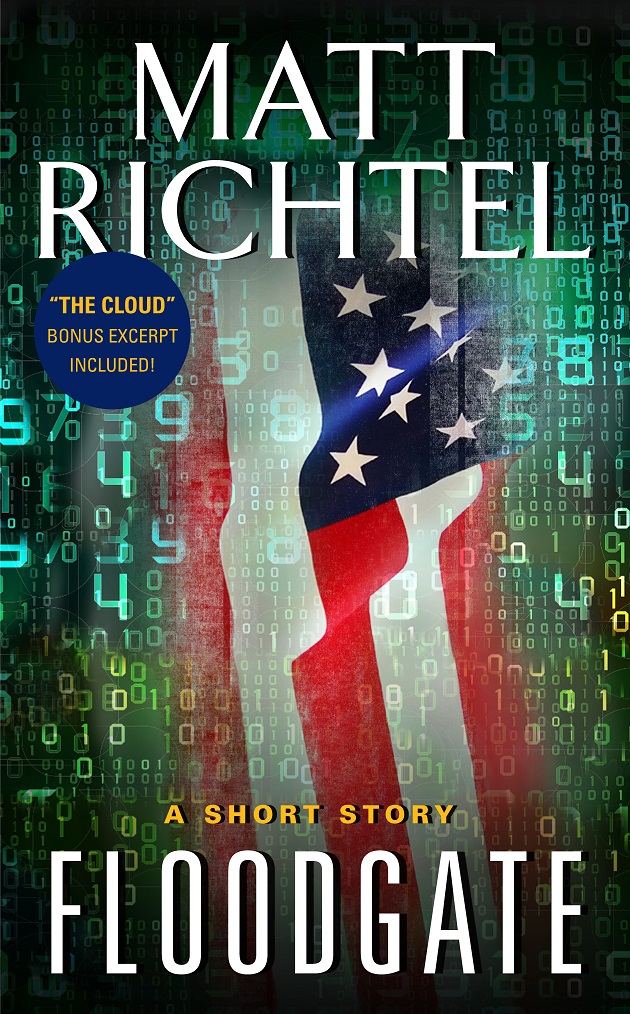
I couldn’t stop writing. My third thriller, The Cloud, comes out in January. This week marked the release of my first short-story, Floodgate. It’s had me thinking about my chronic case of the muse. I fear my publisher, Harper Collins, will find out: He’ll do it for free!  
Is there a connection between the story of the Man With One Black Glove (stay tuned for the surprise ending) and the muse that haunts me?
Almost certainly. But not for the most obvious reason: that I learned some form of escape. That retreating into a fantasy was easier than, say, thinking about parents not getting along (they eventually, amicably, divorced) or directly processing the end of my relationship with a girlfriend. That may be part of it but not the lion’s share.
The biggie, for me, is that I was given permission. Permission to fantasize, tell stories, let my mind wander. My father facilitated that through his own playfulness, through the spy novels he read, the upholding of men and women of glory. My mother did so through her own love affair with fiction, character-based stories, novels, literary and close to it.
My folks didn’t read the same books but they read and read and put spines on a pedestal.
For many years, I didn’t give myself the permission they’d gifted me. I suspect I went into journalism because it let me write, but not whimsically; I wrote about ideas, “important” things. Then, as I got more comfortable with myself, I started hearing something. A voice. It would say: what if.
What if the café exploded? What if grandma knows a secret? What if they’re watching us?
I started to mix the maturity of a seasoned journalist, someone who had learned to knit a narrative, with the whimsy of a child? I got the hell out of my own way. I am rarely more peaceful than asking:
What if?
What if the clown is packing? What if a note falls from his pocket? What if that man with one black glove is Carlos?
The story did not ending the parking lot.
That balmy night on the car trip, we walked inside the restaurant. The three men were seated at a table in the middle. We got sat two tables away. Dad and I trying not to stare, staring. Overhearing.
“They’re talking in a foreign language,” I gasped and whispered.
My dad: “It’s German.”
I am not kidding you.
Oh, by this point, things go crazy inside our brains, and also get a bit conflated. Carlos the Jackal was, we think, Spanish. But these guys were German, which is, we decided, even crazier. Nazis, on our soil! We had to slightly redo the plot; who cared, it didn’t really matter. Sometimes easy resolutions and explanations fail you. Especially in thrillers. But sometimes, if the setup is great, if you ask the right questions, it doesn’t matter. The payoff is the telling.

Fried catfish and grits

By Joe Moore

Grail_Conspiracy_coverFirst, some shameless promotion. This Friday, August 24, Amazon will feature two of my thrillers (co-written with Lynn Sholes) on their Kindle Daily Deal. For one day only, you can download THE GRAIL CONSPIRACY or THE PHOENIX APOSTLES for web-version-250only $1.99 each. Both ebooks were featured on the Daily Deal in 2011 and made it to #1 on the bestselling Kindle book list. If you didn’t take advantage of the reduced price before, be sure to do so on Friday. Enjoy!

_________________

I recently read THE LOST ONES by Ace Atkins, a terrific story about a local county sheriff dealing with gun runners in North Mississippi. In addition to being an excellent storyteller, Atkins has an enviable talent for creating a strong sense of place—a vivid setting. By the time I finished the novel, I felt like I was so familiar with the back roads of Tibbehah County that I probably should be paying property taxes. And it gave me a big hankering for fried catfish, buttermilk cornbread and grits at the local diner.

So today I want to build on Joe Hartlaub’s Saturday post on Location and offer a few tips on creating a strong setting in your book.

Setting is integral to any story. As a writer, you’ve developed a unique plot and a strong set of characters. Now you must consider the setting. You can’t split the plot and characters from the setting and expect to produce a believable piece of prose in which your readers can relate. Why? Because like real life, your characters don’t live in a vacuum. Just like all of us, your characters are constantly affected by and reacting to their surroundings. For instance, how would your night scene be different if it took place in broad daylight? Rather than the scene being hot and dry, what if it was pouring rain? Would the weather and other natural elements change the dramatic impact of a scene? How would the setting make a scene spooky or funny or dangerous or calming?

Think of some classic scenes in your favorite books or movies and imagine them in different settings. Would they be as strong? Would Indiana Jones being chased down the streets of New York City by a big truck be as powerful as being chased by a giant rolling boulder through a cobwebbed ancient tunnel deep in the jungle? Would Clarice Starling’s interviews with Dr. Lecter have worked as well if it had taken place in a bright, modern chrome and shinny white prison rather than in the bowels of a dark, dungeon-like mental hospital for the criminally insane?

Beyond what your characters say and do, you must consider how their actions and reactions contrast or blend with their surroundings. And the best way to do that is to consider your setting as another character playing a part in the story. Setting is not just walls and doors and sky and grass, it’s how their surroundings interact with your characters, and their inner and outer actions and reactions to it.

Another element of setting is how characters live within it. By that I mean how they manage the common functions of life such as eating, sleeping, and other natural human processes. Most of us are familiar with the highly successful TV series 24. Even within the twenty-four-hour premise of each season’s show, people still had to take a deep breath once in a while. While 24 was a rare exception, most novels span more than one day. So during the course of the story unfolding, writers must manage their human characters with time to eat or sleep or at least rest for a moment. If the pace is so intense that the characters never get a break, the reader will become fatigued. Thrillers and mysteries are often described as rollercoaster rides. But even the longest coaster ride has peaks and valleys. Give your reader and your characters a break now and then by using the elements of the story’s setting.

And don’t forget about the passage of time as being an element of the setting. How does time passing speed up or slow down the plot or pacing? Is your story’s passage of time realistic? Or is it too compressed or expanded to be believable. Remember, unless you’re H.G. Wells and your book is called THE TIME MACHINE, be sure to manage your story’s clock so that it doesn’t get in the way of the story and give the reader a reason to pause and question it.

Setting is more than the location in which your story takes place. It’s all the external elements that affect your characters and their goals and objectives. If you treat your setting as an additional character, chances are your story will be fully developed.

Now let’s all go out for some fried chicken and collard greens.

How about you? Do you plan your settings ahead of time? Or let them develop as the story progresses. And readers, what was the most memorable and realistic setting in your favorite book?

Will Indies put an end to the “Death Spiral”?

Note: We’re delighted to announce that writer Kristy Montee has joined the TKZ family. Kristy and her sister Kelly Nichols write as P.J. Parrish, the New York Times bestselling author of ten Louis Kincaid and Joe Frye thrillers. Their books have appeared on both the New York Times and USA Today best seller lists. The series has garnered 11 major crime-fiction awards, and an Edgar® nomination. Parrish has won two Shamus awards, one Anthony and one International Thriller competition. Kristy has her first post next Tuesday. Stay tuned!

I attended my first writer’s conference back in 2005. Armed with an almost-finished manuscript and hungry for information about the publishing business, I absorbed every panel I could squeeze into two days.  
During a panel on how to write series fiction (I didn’t have an agent yet, so I was dreaming big),  we learned about something called the “death spiral.”  A death spiral occurs when a book’s print run doesn’t sell out completely. This sales gap prompts the publisher to order a smaller print run for a writer’s next book, guaranteeing lower sales numbers the next time around. And so on. The result: the death spiral. 
I left that presentation feeling haunted by the notion of a death spiral. Death spirals help explain why new writers have traditionally felt intense pressure to promote their books in the first twelve weeks. If your book doesn’t thrive during its brief tenure on the bookstore shelves, the thinking goes, you might not get another shot. In an industry where sales numbers follow writers forever, the unfortunate victims of death spirals were sometimes advised to start the publishing process over by adopting a pseudonym.
Then along came the explosion in indie publishing. Say what you will about indies, the stigma of self-publishing is rapidly disappearing. Readers have made it clear: They don’t care who publishes a book. They just want a good read.
It occurs to me that indie publishing may finally put an end to the dreaded death spiral.  Or at least, writers now have the hope of a softer landing.  If a publisher doesn’t renew our contract, we can simply publish on our own–and possibly even make more money.
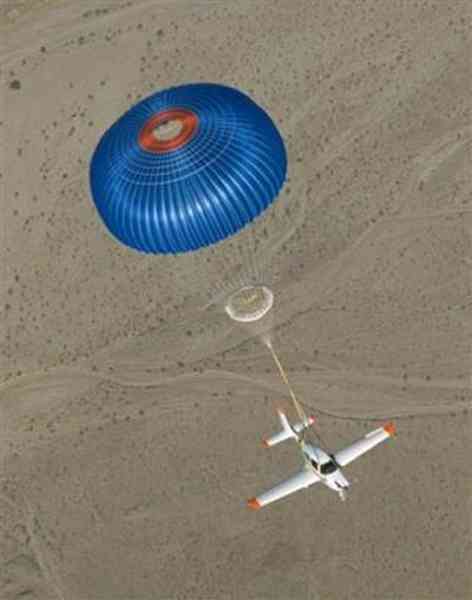
The idea of indie-publishing as a career parachute won’t be news to most TKZ’ers. But I remember how nervous I was about death spirals, just a few years ago. If I were in the same position today, I wouldn’t be quite as anxious.  

How about you? As a writer, have you ever worried about falling into a death spiral with your publisher? Has the increasing viability of indie publishing changed your outlook at all?
 

Love of Reading, Love of Writing

by Clare Langley-Hawthorne

My twin sons are avid absorbers of books and between what they can read themselves, what we listen to on audio books and my bedtime reading to them, we seem to have amassed an amazing backlist of children’s books. Now, of course comes the inevitable plea-“why can’t you write a children’s book, mum?”  (my current output gets little more than a collective shrug from these two). I have to confess I have an idea brewing which I think, maybe, possibly, might make a terrific series chapter book…but (and it’s a big but), books for children are not an endeavour I would ever enter into lightly. 

Children’s books are, in my opinion, some of the hardest to write. Not only because children are the harshest, most brutally honest of all reviewers but also because I remember the impact reading had on me as a child and I want to live up to those expectations.

In the spirit of this, I have been compiling a list of my favorite chapter books I read as a child and identifying what made these so significant and memorable to me. There are books such as those by Enid Blyton that made me wish I could have adventures on my own island, classics such as Little Women that made me cry, and books like A Wrinkle in Time and the Narnia series that made me want to create my own fantastical worlds. 

What sets all of these books apart from the dull readers we were obliged to consume at school was the same elements that make a great thriller or mystery – they created compelling characters and places, had terrific plots and pacing and were the sort of books you literally couldn’t put down.

So not much to live up to right?

As I continue my ‘research phase’ on children’s chapter books, I’d love to add some more titles to my list – ones that are the kind of books that stand the test of time.  I’d like you to cast your minds back to when you were about eight or nine, and remember the books that made all the difference to you. They might be the ones that first inspired you to write – or the ones that made you the avid reader you are today…then let me know what you think about writing for children: a terrific new adventure or potentially treacherous seas?

“I” is for Integrity: Sue Grafton and the Self-Publishing Blowback

One of those instant, internet explosions broke out this past week after the great Sue Grafton gave an interviewer some opinions on self-publishing. She said that self-publishing was a “lazy” way out. The interviewer pressed her on that, in light of indie successes like John Locke. Grafton responded:
Obviously, I’m not talking about the rare few writers who manage to break out. The indie success stories aren’t the rule. They’re the exception. The self-published books I’ve read are often amateurish. I’ve got one sitting on my desk right now and I’ve received hundreds of them over the years. Sorry about that, but it’s the truth. The hard work is taking the rejection, learning the lessons, and mastering the craft over a period of time. I see way too many writers who complete one novel and start looking for the fame and fortune they’re sure they’re entitled to. To me, it seems disrespectful…that a ‘wannabe’ assumes it’s all so easy s/he can put out a ‘published novel’ without bothering to read, study, or do the research. Learning to construct a narrative and create character, learning to balance pace, description, exposition, and dialogue takes a long time. This is not an quick do-it-yourself home project. Self-publishing is a short cut and I don’t believe in short cuts when it comes to the arts. I compare self-publishing to a student managing to conquer Five Easy Pieces on the piano and then wondering if s/he’s ready to be booked into Carnegie Hall. Don’t get me started. Oops..you already did.
Then the indie blowback began. A good example comes from Hugh Howey, author of the hugely successful Wool:
Sue Grafton thinks I’m lazy. Yeah. Hard to swallow when I look at how many hours I pour into my writing career each week (and weekend).
. . . .
Why in the world is this interviewer asking a buggy whip expert about picking out a new car? What does Sue Grafton know about publishing in today’s market and with today’s tools? Judging by this response, she knows absolutely nothing. Less than nothing, in fact. What she thinks she knows is harmful to aspiring writers.
Ms. Grafton saw the coverage, and asked the blog that originally ran her interview for a chance to respond:
The responses to that quote ranged from irate to savage to the downright nasty  Indie writers felt I was discounting their efforts and that I was tarring too many with the same brush. I wasn’t my intention to tar anyone, if the truth be known. Several writers took the time to educate me on the state of e-publishing and the nature of self-publishing as it now stands. I am uninitiated when it comes to this new format. I had no idea how wide-spread it was, nor did I see it as developing as a response to the current state of traditional publishing, which is sales driven and therefore limited in its scope. I understand that e-publishing has stepped into the gap, allowing a greater number of authors to enter the marketplace. This, I applaud.  I don’t mean to sound defensive here…though of course I do.
. . . .
My remark about self-publishing was meant as a caution, which I think some of you finally understood when we exchanged notes on the subject.
Ms. Grafton went on to say she takes “responsibility for my gaffe and I hope you will understand the spirit in which it was meant.” She added, “I am still learning and I hope to keep on learning for as long as I write.”
Good on her for this gracious response. Sue Grafton has always been on the writers’ side, and her initial comments grew out of this advocacy. Indeed, she stated at the very beginning that she wasn’t talking about the “exceptions” who break out.
Which makes her remarks largely valid. Many (not all!) who self-publish do so too soon. For many (not all!) it IS the “lazy” way, as compared to the hard work of learning the craft, getting better, being honest with yourself about your weaknesses and doing everything you can to correct them.
In that respect her view is not harmful. Indeed, it may be the very thing that saves a writer from embarrassing himself, or striking out expecting indie gold only to find canyons of wet dirt . . . and a reason to sit around Starbucks for the rest of his life grousing over his damned bad luck.
No matter how you publish, you have to earn success, and it ain’t easy. When it comes to encouraging self-published writers, I’m not going to offer pie-in-the-writing-sky. I’m going to offer clear and hard-headed advice that has proved itself over time. Advice that gives you a reasonable chance to make a buck, and maybe a living, by writing.
But a big part of that is not to short change yourself by publishing the first thing you finish. Amazon is not the place to throw up your NaNoWriMo project on December 1 every year.
And that is what Sue Grafton was getting at. She is old school, yes. But it was a school with some classic courses, and there is wisdom there to be heeded.
H/T to The Passive Voice for coverage of this controversy. 

Location, Location, Location

I fell in love with New Orleans before I ever stepped a foot into the city. James Lee Burke was the matchmaker, and all it took was THE NEON RAIN. Barbara Hambly’s Benjamin January novels, as well as Burke’s subsequent Dave Robicheaux novels (Right up to and including CREOLE BELLE) sealed the deal. I lost my heart, probably forever. I had of course been exposed to New Orleans through literature and other media well before I read those books. When I was a wee tad there was a police drama entitled Bourbon Street Beat that I watched religiously; and I studied the plays of Tennessee Williams in high school. But it was that Burke book caused me to lose my heart, probably forever.
I was thinking about this today because I started reading Linwood Barclay’s new novel, TRUST YOUR EYES. This is a very different book for Linwood, one that I would strongly recommend to both old fans of his and new readers based just on the first few chapters which I’ve read so far. One of the primary characters is a gentleman who is obsessed with maps, to the extent that he spends hours and days and weeks visiting cities through the magic of a Google Street View- type tool. When offered the opportunity to actually physically visit one of the cities that he treads in cyberspace, he declines. There are reasons for this — read the book, please — but my reason for bringing this up is that there have been any number of novels that, unlike Linwood’s character, have made me want to trace the footsteps and tire tracks of the characters, to experience the sights and smells and sounds in real time and real place. I will be in Louisiana in a month or so and plan to make a quick trip to New Iberia to do just that — Burke and Robicheaux, once again — and on the way back I’m going to try to stop in Nashville just long enough to drive past some of the haunts which J.T. Ellison features in her novels. And who could read DRIVE or DRIVEN by James Sallis and not tempted to visit — with the windows rolled up, of course — some of the dustier sides of Phoenix?
So I’m curious. Have you read novels that have affected you in the manner? Has a particular book or author motivated you to visit a particular city or place and undertake a self-guided tour, using a story as a guide? Has a fictitious character or account actually prompted you to pull up stakes and move? And if you’ve had an experience such as this was it everything that you hoped it would be? Or were you disappointed?

Reader Friday: Open Forum

It’s Friday, and this week we’re leaving the blog open for general discussion. What’s on your mind, writing-wise? We’d love to get a discussion going today based on your input. If you have any questions for our bloggers and readers, this is a good time to post in the comments.

Here are some possible topics for discussion (but feel free to add more):

What are you working on these days? How is it going? Are you having any specific stumbling blocks you’d like us to talk about?

Have you been submitting work? If so, how are you finding the marketplace? What’s working for you, what’s not?

Happy Friday, guys! And as always, thanks for being part of the TKZ community!

TEN Simple Relaxation Techniques & Stress Relievers for Writers

By Jordan Dane
@JordanDane

Recently I served on a panel at the Romance Writers of America annual conference on the topic of “Care and Feeding of the Writer’s Soul.” Below is only a fraction of the empowering presentation put on to a full house by Ellie James, Trinity Faegen, and yours truly. I had no idea how important our message would be to the attendees who found us afterwards and hugged us with tears in their eyes. So my message today is to take care of YOU.

1.) Meditation – Meditation isn’t about chanting “Ohms” and contorting your body. ANY repetitive action can be considered meditation—walking, swimming, painting, and knitting—any activity that keeps your attention calmly in the present moment. When your mind is at rest, the brain can be stimulated in a creative fashion.

2.) Visualize Being Relaxed – Imagine a relaxing setting away from your tensions, your perfect dream spot. This could be a vacation spot or a fancy luxury spot where you are pampered. Visualization could also include something you touch to trigger that feeling of calm—a silk robe, warm water, or a cashmere sweater.

3.) Breathe Deeply – Relaxed breathing is deep, not shallow. Get in a comfortable position and let out all the negativity in a deep expelled breath through pursed lips. Drop your shoulders to release the tension and imagine your core as the powerful place of your strength. Keep your mind focused deep into your power spot and consciously expel the stress with each breath. Breathe in the new and expel the negative until you are renewed. Believe it and make it so. Do this TEN TIMES and feel your body relax more with each step.

4.) Take a Look Around You – Something an author should do anyway. Keep your mind focused on one thing. No multi-tasking. Stay in the moment and focus on one thing or activity. Staying in the present can help promote relaxation, without all the clutter the mind can generate. If you are outdoors, focus on a bed of flowers or the sound of the birds. If you’re in a mall, keep your attention to one window, maybe one pair of shoes. Focus on how it was created, examine the details. Tell a story about that one object. As long as you focus on one object in the present, stress will take a backseat.

5.) Drink Hot Tea – Make a moment in your day to have a cup of tea. Go green. Coffee raises levels of the stress hormone cortisol in the body, while green tea offers health and beauty. Chamomile tea is a traditional herbal favorite for its calming influence. Any black tea is a stress reliever too.

6.) Show Love – Cuddle your pet or give an unexpected hug to a friend or family member. Giving a hug is like getting one back. Snuggling is good too. Snuggle that spouse who supports your writing. Social interaction helps your brain think better. Ever try a hug or snuggle for writer’s block? Physically showing affection—like stroking your pet—may actually lower your blood pressure. It can’t hurt.

7.) Self – Massage – If you don’t have time to visit a professional masseuse, try giving your neck a rub with both hands or use one hand to massage the other arm and alternate. The act will increase your blood circulation and be part of your newfound ritual to take care of yourself. Reward yourself with this each day when you’ve hit your word count. Make it your ritual of caring.

8.) Take a Time Out – When you sense stress happening or too much is bombarding you, take a time out. Walk away. Go to your happy place. Don’t let stress win. Find a quiet corner or room and decompress. Listen to your breathing and your heartbeat. Slow everything down. Remember that time is always on your side.

9.) Take a Musical Detour – Maybe with your afternoon tea, add music. If your mind is focused on the beauty of each note, this can also accomplish relaxation by keeping you in the present, away from your stressers.

10.) Take an Attitude Break – Believe it or not, THIRTY SECONDS is enough time to switch from stress to relaxation if you make the time. To do that, engage your mind in positive thoughts. Do this by anything that triggers a positive feeling in you—picture your child or your spouse, imagine your pet doing something cute, or picture wearing your favorite jewelry or shoes. Whatever that image is, it will slow your breathing, relax your tense muscles, and put a smile on your face. Your heart rate will slow down and a feeling of peace will follow.

Share what gets you through stress. You have any good tips?

To close, I’d like to share another secret with you: the outrageous benefits of Laugh Yoga. The technique is simple and can be done at any time, including five in the morning in Mumbai.

If you have trouble with this video, click on the link HERE.

TEN Simple Relaxation Techniques & Stress Relievers for Writers

By Jordan Dane
@JordanDane

Recently I served on a panel at the Romance Writers of America annual conference on the topic of “Care and Feeding of the Writer’s Soul.” Below is only a fraction of the empowering presentation put on to a full house by Ellie James, Trinity Faegen, and yours truly. I had no idea how important our message would be to the attendees who found us afterwards and hugged us with tears in their eyes. So my message today is to take care of YOU.

1.) Meditation – Meditation isn’t about chanting “Ohms” and contorting your body. ANY repetitive action can be considered meditation—walking, swimming, painting, and knitting—any activity that keeps your attention calmly in the present moment. When your mind is at rest, the brain can be stimulated in a creative fashion.

2.) Visualize Being Relaxed – Imagine a relaxing setting away from your tensions, your perfect dream spot. This could be a vacation spot or a fancy luxury spot where you are pampered. Visualization could also include something you touch to trigger that feeling of calm—a silk robe, warm water, or a cashmere sweater.

3.) Breathe Deeply – Relaxed breathing is deep, not shallow. Get in a comfortable position and let out all the negativity in a deep expelled breath through pursed lips. Drop your shoulders to release the tension and imagine your core as the powerful place of your strength. Keep your mind focused deep into your power spot and consciously expel the stress with each breath. Breathe in the new and expel the negative until you are renewed. Believe it and make it so. Do this TEN TIMES and feel your body relax more with each step.

4.) Take a Look Around You – Something an author should do anyway. Keep your mind focused on one thing. No multi-tasking. Stay in the moment and focus on one thing or activity. Staying in the present can help promote relaxation, without all the clutter the mind can generate. If you are outdoors, focus on a bed of flowers or the sound of the birds. If you’re in a mall, keep your attention to one window, maybe one pair of shoes. Focus on how it was created, examine the details. Tell a story about that one object. As long as you focus on one object in the present, stress will take a backseat.

5.) Drink Hot Tea – Make a moment in your day to have a cup of tea. Go green. Coffee raises levels of the stress hormone cortisol in the body, while green tea offers health and beauty. Chamomile tea is a traditional herbal favorite for its calming influence. Any black tea is a stress reliever too.

6.) Show Love – Cuddle your pet or give an unexpected hug to a friend or family member. Giving a hug is like getting one back. Snuggling is good too. Snuggle that spouse who supports your writing. Social interaction helps your brain think better. Ever try a hug or snuggle for writer’s block? Physically showing affection—like stroking your pet—may actually lower your blood pressure. It can’t hurt.

7.) Self – Massage – If you don’t have time to visit a professional masseuse, try giving your neck a rub with both hands or use one hand to massage the other arm and alternate. The act will increase your blood circulation and be part of your newfound ritual to take care of yourself. Reward yourself with this each day when you’ve hit your word count. Make it your ritual of caring.

8.) Take a Time Out – When you sense stress happening or too much is bombarding you, take a time out. Walk away. Go to your happy place. Don’t let stress win. Find a quiet corner or room and decompress. Listen to your breathing and your heartbeat. Slow everything down. Remember that time is always on your side.

9.) Take a Musical Detour – Maybe with your afternoon tea, add music. If your mind is focused on the beauty of each note, this can also accomplish relaxation by keeping you in the present, away from your stressers.

10.) Take an Attitude Break – Believe it or not, THIRTY SECONDS is enough time to switch from stress to relaxation if you make the time. To do that, engage your mind in positive thoughts. Do this by anything that triggers a positive feeling in you—picture your child or your spouse, imagine your pet doing something cute, or picture wearing your favorite jewelry or shoes. Whatever that image is, it will slow your breathing, relax your tense muscles, and put a smile on your face. Your heart rate will slow down and a feeling of peace will follow.

Share what gets you through stress. You have any good tips?

To close, I’d like to share another secret with you: the outrageous benefits of Laugh Yoga. The technique is simple and can be done at any time, including five in the morning in Mumbai.

If you have trouble with this video, click on the link HERE.

Tips For Using Facebook

I’m preparing a workshop on Social Networking that I am giving on Sept. 8 and so I thought I’d share some of my tips with you. Let me know what you think about this material, which is only part of my presentation, and if you have any more advice to add.

Here is my author page if you want to “Like” me: http://bit.ly/c3YchC

If you are starting out, sign up for a Personal Profile Page. Add a profile picture. In the About section, put your links on top so they show first and then follow with your bio. Put in only the information visible to the public that you want to be seen. Where have you worked? Type in your publishers. Add a Project: List your book titles. Be careful with your contact info. How do you want people to reach you? To make changes on your Profile page, click Update Info.

I advise against giving Facebook access to your email address books. To find friends, type in someone’s name whom you know, and then click on his friends to find mutual acquaintances.When you qualify, and I forget how many friends you need, sign up for an Author Page. Click on Create a Page. Upload a banner or photo for your heading. Keep in mind that when a visitor lands on your page, they may only see the bottom part. Also leave space for your avatar. After you have 25 friends, you can shorten one of your links here: https://www.facebook.com/username

Apps and Tabs on your Author Page: Search for “Static HTML for Pages” in FB. Click Add to my Page. Select your fan page in the pop-up window. You’re allowed 12 tabs. Here are some to include: Author App, Blog, Excerpts, Events, Likes, Newsletter (Sign-Up Form), New Releases, Photos, Videos. Click on the little pencil in upper right corner of each tab to change the image or to swap places with another tab. Author app: https://apps.facebook.com/authorapp/?ref=ts

Import your blog into your FB pages using Networked Blogs: http://www.networkedblogs.com/blog

To edit the Author Page, go to your Admin Panel. Click on Edit Page. Note you can switch users and use FB as your author persona. That’s under Edit Page also.

A word of warning: Facebook doesn’t like you to run contests on its site but you can mention a contest you’re running elsewhere.

Periodically check your privacy and account settings by clicking on the little arrow on the upper right next to the Home button.

Make a post by filling in the box that says, What’s on your Mind? or Update Status. Then click on Publish Now. Use links and include photos when appropriate.

Click on Home to see other people’s posts and to comment on them. You can also “Like” a post or “Share” it with followers on your wall.

On your Author Page, click on one of the down arrows on the Admin Panel to See Your Insights. This will give you an idea of how many people viewed your posts, if anyone shared them, etc.

Link to your FB account from your other social net sites if you wish, but be careful not to flood people’s walls with your posts.

Join Groups. Periodically check through your list to see if you’ve been added to groups without authorization. If this occurs, click on that group. Click the arrow for a choice to Leave Group. Sometimes people enter you into a “Conversation” as well, and you can Leave Conversation as an option. To view your Groups list, click on “See All Messages”, top left middle symbol after “Facebook”. Groups will be listed in the left column. Or click on “Home” on your profile page. You can see your Apps here too.

Periodically remind folks to “Like” your FB fan page and to sign up for your newsletter so you can maintain contact.

Avoid clogging your posts with sale messages about your books. Share other links, newsworthy articles, and friends’ book releases in addition to your own. Be personal. Tell what book you read or movies you’ve watched, what recipe you’ve tried, or what sites you visited on vacation—but mention it after you are home. Don’t tell people you are going away beforehand. Also be careful not to get too personal about your family life. Always be aware of safety and security.

This applies to photos, too. Be careful of posting anything you don’t want strangers or your boss to see.

Tagging: You can create photo albums and tag people in your photos. You can also tag people in your posts by using an @sign before their name.

Successful authors on Facebook hold virtual parties, have interactive promotions, and stimulate discussions. Start a debate, take a poll, get a hot topic going. This shouldn’t be all about you. It’s more about the connection readers feel to you as a person.
 
I’m sure there’s much more advice out there, but these are the main points I have to make. Does anyone out there have additional tips to offer?