Why Marketing Is Like Motherhood

@jamesscottbell


This past Mother’s Day I was reflecting upon this most honorable role and, suffused as I am with the writing life, my brain related the whole thing to marketing.
My lovely daughter-in-law is on the verge of bringing another Bell into the world. I find myself thinking back to my own first born. When Mrs. B and I were awaiting the appearance of our son, we set about to become the best parents ever. This is the pull of nature. It is as old as civilization, as robust as ocean tides.
Law student that I was at the time, I got into studying books. Today, there is a virtual mountain—nay, a mountain range of Himalayan proportions—of printed and digital advice on the art of parenting. It can seem as daunting as a view of Everest as you stare up into the clouds with only a rucksack and a walking stick.
So I remember well the day my wife and I took up the classic Baby and Child Care by Dr. Spock. Though some of it was controversial at the time (and perhaps remains so), there was a famous axiom that begins the book, one that has comforted many an anxious parent facing the world’s toughest job:
“Trust yourself. You know more than you think you do.”
It was a call to not stress about what every “expert” has to say, so much of it conflicting. In such cases you have a gut instinct that is, if motivated by love and tempered by wisdom, highly reliable.
And that’s the marketing lesson I want to mention today. There is a flood of material out there on what you must do to bring a book to the public, with so many sources asking how can you improve public relations? There are countless options, so many more than the “old days” of bookstore signings, talks at your local library, and sitting despondently next to Mary Higgins Clark at a conference.
The explosion of digital options—everything from paid ads to social media madness—can make choosing what to do seem as daunting as trying to solve the Hodge Conjecture with a hangover.
Trust yourself. You know more than you think you do.
First of all, use common sense. Don’t go into hock to market your book. The single biggest determinant of writing success is….wait for it….the writing itself. You know this. You know that you have to concentrate most on writing good stuff, getting better at it and keeping it coming, if you want a long-term career.
Second, we are starting to see that a few marketing methods are better than others. Paid placement with BookBub, for example, is always good. Other email services, like BookGorilla and eBookSoda, will make you new readers. And that’s what you need to build an email list of fans. No matter how small it might be, it’s always good to be able to communicate with people who’ve bought from you before and have shown a willingness to do so again.
As for social media, it’s easy to get the ROI (return on investment) completely bollixed. If you spend the majority of your Twitter or Facebook time begging people to buy your books, you’ve done more harm than good. If your spend more time socializing than you do producing, your calculus is all mixed up.
Here’s a suggestion: Your time on social media ought to be one-tenth the time you spend writing on an average day. If you write for two hours, you get twelve minutes on social media.
There, I said it.
I think this is all stuff you really do know, even though you might have lost that native wisdom in the clamor of Do this! and Do that!
My suggestion is to pick up the book marketing analogue of Dr. Spock: Joanna Penn’s How to Market a Book. Use it as a reference, not to try to do every single thing in it at once, but to consider the options and choose wisely.
Mothers bring babies into the world. Writers bring books. Love what you write, nurture your books, care enough about them to discipline them when they need it (that’s called editing) and then let them leave the nest.
And as they fly to market, don’t stress. Your love goes a long way. Don’t fall into the trap of thinking that if you miss doing one thing, you’ve ruined your book’s chances forever. (You know, like if you don’t get your child into that expensive pre-school he will never get into Harvard. His life is ruined, and he’s only three!)
Trust yourself. You know more than you think you do.
Keep writing the best stuff you can, choose a few marketing things to do, and it will all pretty much work out as it should. Adding stress doesn’t help a bit. To cut down on the stress of your website costs, take a look at the best free web hosting providers.

So do you get anxious about marketing? Do you realize that’s not doing you any good?
How To Pick A Title For Your Novel

Choosing a title for your novel should be fun, right? So why is it often so frustrating?

I think it’s because there are so many requirements for a good title. It has to tell the reader, in a general way, what the book is about. It also has to convey the tone of the book — a light, amusing title for a lighthearted novel, a heavy, ominous title for a dark, creepy thriller. It can’t be too similar to titles of other recently published or very well-known books. And it shouldn’t carry the baggage of unwanted associations. Above all, it has to be catchy.

One could argue that novelists shouldn’t worry so much about titles. This is an area where the publisher has the final say, because the title is so important to the marketing of the book. The author can make suggestions, but the publisher has veto power. And I’ve learned that the best titles often come out of brainstorming sessions between the author and editor after the book is finished. But I can’t start a novel without giving it at least a working title. I can’t just call it a work-in-progress. Would you call one of your kids a work-in-progress? (Although that’s what children are, really.)

I’ve written four published novels, and each had a working title that was different from its ultimate title. When I started writing the first book I called it “The Theory of Everything” because it was about a dangerous secret theory developed by Albert Einstein to explain all the forces of Nature. (Einstein himself called it Einheitliche Feldtheorie, the unified field theory.) But that wasn’t such a great title for a thriller. It seemed better suited to a literary novel. (And, in fact, there are several literary novels titled “The Theory of Everything.”) So my editor and I put our heads together and came up with “Final Theory.” That seemed more compelling and yet still true to the subject of the book, because physicists believe that if they ever do discover a theory of everything, it will also be a final theory (because they will have nothing fundamental left to discover).

My second novel was a sequel to the first, and I gave it the working title “Quantum Crash” because it was about an attempt to crash the program of the universe. Because the universe is inherently mathematical, some physicists have speculated that reality is the result of a cosmic program; the laws of physics are the operating instructions of this program, while matter and energy are the data being crunched. The problem with this title was the word “quantum.” I think the publisher was worried it would scare off some readers. My editor proposed the title “The Omega Theory,” which had the advantage of conveying that the book was a sequel to the first novel. Luckily, there is a concept in physics called the omega point, and I was able to work this into the book’s plot.

My third book was a stand-alone novel about the merger of man and machine. The working title was “Swarm” because the book’s villain employs swarms of cyborg insect drones — live houseflies with implanted radio controls and bio-weapons — to attack the heroes. But that title didn’t convey the general premise of the novel, which describes the rise of a man-machine network that seeks to exterminate the human race. So my editor and I came up with “Extinction,” which was much better.

My fourth novel (which just came out) is another stand-alone, this one about an ancient clan of witches who have steered the course of human history for centuries. I gave it the working title “Ariel” because that was the name of the heroine, but I knew it would never fly as the ultimate title because of all the “Little Mermaid” associations. In the end my editor and I settled on the title “The Furies,” which are Greek mythological witches of a sort. I changed the name of the witch clan to Fury so that the book’s title would better fit its content.

And right now I’m writing a novel about an alien invasion, and I’ve given it the working title “Interstellar.” But I’m pretty sure this won’t be the title when the book is published because there’s a movie called “Interstellar” that’s scheduled to come out by the end of the year. I just viewed the trailer for the movie and it looks pretty cool. But my novel, whatever it’s ultimately called, will be very different.

Reader Friday: Other Things That Matter

Writers think about writing all the time. Self-publishing writers have to add all the business aspects of publishing, and everybody is on social media. It’s easy to get so focused on writing stuff that other things in life get fuzzy.

So today, take off your writing hat for a moment and talk about something else that matters to you. 

Five Key Ways to Create a Character’s Distinct Voice

Jordan Dane
@JordanDane
 
Inspired by Joe Moore’s excellent post yesterday on Narrative Voice, I thought about my process for making characters distinct in the worlds I build in a novel. We are all influenced by where we grew up or where we live now, our race, social class,  jobs, friends, religious beliefs, and other factors. Any character an author creates is no different. It’s not enough to picture their outward appearance. Give them a background and sphere of influence. Sometimes it helps for me to hear their voices in my head. (Yes, that’s allowed without taking medication. Special dispensation for authors.)
 
I recently binged on Sherlock (a la Benedict Cumberbatch) and Sleepy Hollow (British star Tom Mison’s reinvented Icabod Crane). I loved the notion of Sherlock’s brilliant mind leaps and I also loved the idea of a more stilted proper speech of an educated scholarly man similar to the Oxford professor of Icabod Crane, but I wanted my character to be American with a brash punch to him when he wanted to make a point. Those rare moments of punch give him a sense of gravitas and unexpected depth of personality. Being familiar with these TV characters, it became a fun challenge to meld their distinct voices and mannerisms into my American FBI profiler haunted by visions of crime scenes when he sleeps.
 
It’s amazing fun when you can hear the character voice in your head and write with a good pace, without filtering the words you type on the page. I call this “free association” where you channel the voice of your character without having to think about it. Over the years I’ve gotten better at this, which also comes with a cautionary warning born of experience. Often if you THINK in free association without filter, you will SPEAK that way too. Not always good in a social setting. #FilteringSavesLives
 
Five Key Ways to Give Your Character a Distinct Voice
 
1.) Word Choices:

  • What is your character’s vocabulary?


  • How educated is he/she?


  • How much does race/culture play into his/her narrative?


  • Are there regional influences on his/her speech? (I feel most comfortable writing in Midwest, TX, OK, and Alaska, places I’ve lived and worked.)


  • Is slang or pop culture references a part of his/her speech patterns? (A secondary character can use slang as a way to distinguish that character’s voice from the protagonist. Fewer tag lines necessary.)


  • How old is your character? (Don’t force a more youthful influence if you aren’t comfortable, but be aware of generation gaps.)


  • Is your character from another country? (Word choices and even spellings can indicate where a character is from. I wouldn’t take any short cuts here. If your character is British, but YOU as the writer aren’t as familiar with nuances of a particular region in the UK, get help from a native speaker or build a backstory where your character has other influences that will temper their voice into more of a melting pot.)


  • What gender is your character? (Gender can play a big part in making narrative distinctive. Avoid the cliché, but men and women are fun to contrast, no matter what your vision is for unique individuals.)

 
2.) Confidence Level:

  • If your character is an assertive cop or from a military background, he or she would expressive themselves in a more direct and decisive fashion.


  • How forceful or passive is your character? (A deliberate use of the passive voice can be an indicator of a submissive character. Use of “Uh” or “Um” can indicate hesitation and lack of self-confidence.)


  • Does he or she take charge and have a no nonsense approach to dealing with conflict or do they only react and let others take over? (Even their clothes choices can indicate how confident they are.)

 
3.) Quirks/Mannerisms:

  • Does your character have distinctive habits or mannerisms? (Sometimes a facial tic can be fun to exploit at key times.)


  • Does your character have a unique hobby or interest that affects how they speak? (Someone into sailing could infuse nautical words, for example.)


  • What humor do they have, if any? (Characters can have humor play out cynically in their internal monologue, yet their dialogue lines don’t reflect humor at all. This can be great for comic relief. Also characters can have distinctive sense of humor from very dry to crass bathroom humor.)

 
4.) Internal/External Voice:

  • Your character might have a day job, but at night they come home to a family with small children or a demanding pet. How does their internal voice change when they let their guard down? Do their internal thoughts show a more tender vulnerability? This duality can bring depth and complexity to your character.

 
5.) Metaphors/Similes/Comparisons:

  • I love imagery, but let’s face it, some characters will never think in terms of elaborate metaphors. It would not make sense to force it. In the case of my educated professor type, for example, his narrative could be infused with imagery/metaphors or perhaps literary influences because that’s how his mind works. He sees reality of the world around him yet he longs for the fictional world of his favorite book. If my character is a street kid without much education, he might be more influenced by rap music lyrics or the daily hustle on the street where he fast talks to survive everyday. No matter who your character is, they would have their own frame of reference for making comparisons.

 
FOR GRINS & GIGGLES: I took a little champion New York Times Online Test of 25 questions that analyzed how I spoke to determine where I live. (Best suited for residents of the U.S.) The test came back with a result that I lived in Rockford Illinois, New Orleans, and Rochester NY. Totally wrong since I live and grew up in Texas, but my mother was a Yankee and I’ve lived all over the country, so apparently that has also influenced me.) Take the test and see what your results are. Did they get it right? Let us know.
 
For TKZ Discussion:
How do you infuse a unique voice to your character? What are your key influences? If you’ve written characters outside your comfort zone, what tricks can you share about how to make that work?

Narrative Voice

By Joe Moore
@JoeMoore_writer

A few weeks ago, I blogged about POV shifting and what’s called “head hopping”. To carry on with the topic of POV, I want to dig into a common topic discussed at workshops and critique group: narrative voice. Narrative voice determines how the narrator tells a story. Often it’s the voice of a character, less often, an unseen voice. The narrative voice is what provides background information, insight, or describes the actions and reactions taking place in a scene. Before a writer sets out to tell a story, she must choose which narrative voice to use. Here is a basic list and comparison of the different choices and why one might be more adventitious that the other in a particular project.

Although dialogue plays a critical role in fiction, having a story told completely with dialogue would be out of the ordinary if not downright creepy. No matter how many characters there are in a typical novel, there’s one that’s always there but is rarely thought of by the reader—the narrator. Like the referee at a football game, the narrator’s job is to impart necessary information and, in general, keep order. Someone has to tell us about mundane stuff like the time of day, the weather, the setting, physical descriptions, and the other things that the characters either don’t have time to tell us about or don’t know.

And just like the characters, the narrator—the author—has a voice or persona. Some authors like to be a part of the story and make themselves known through a distinct personality and attitude. Others prefer to remain distant and aloof, or completely transparent. One of the main things that determine the narrator’s voice is point of view.

Most stories are written in either first- or third-person. If it’s first-person, it’s usually subjective. Subjective POV tells the reader all the intimate details of the protagonist—her thoughts, emotions, and reactions to what’s going on around her. There’s also first-person objective. This story telling technique tells us about what everyone did and said, but without any personal commentary, mainly because the narrator doesn’t know the thoughts of the other characters, only their actions and reactions. First-person narration is all about “I”. I read the book. I took a walk. I fell in love.

In between first- and third-person is a rare POV called second-person. You don’t see this technique used much, and when you do, it’s about as pleasant as standing in line for hours at the DMV. Second-person narration is all about “you”. You read the book. You took a walk. You fell in love.

Next is third-person. There are a couple of third-person types starting with limited. As the term implies, this is a story technique told from a limited POV. It usually involves internal thoughts and feelings, and is the most popular narration style in commercial fiction.

We can also use third-person objective. The narrator tells the story with no emotional involvement or opinion. This is the transparent technique mentioned earlier. The interesting advantage of third-person objective is that the reader tends to inject more of his or her emotions into the story since the narrator does not.

Then there’s third-person omniscient. With this POV, the narrator pulls the camera back to see the bigger picture. He is god-like in his knowledge of everyone and everything. This POV works well when dealing with sweeping epic adventures that might span numerous generations or time periods. Unlike first-person subjective, which is up close and intimate, third-person omniscient is distant, impersonal, and sometimes cold. The reader has to use his imagination more when it comes to emotions because there’s no one to help him along. Third-person narration is all about “he, she and they”. He read the book. She took a walk. They fell in love.

The other key element in determining narration and voice is verb tense. Most stories use the past tense. This is what most readers are comfortable with. The opposite of this would be the incredibly annoying and almost unreadable second-person present tense. If you’re interested in experimental, artsy writing and want to use this technique, make sure you’re independently wealthy and have no interest in actually selling copies of your book.

So who does the talking in your books? Does your narrator’s voice seem warm and fuzzy, cleaver and funny, or cold and distant? Do you stick with the norm of third-person past tense or do you like to venture into uncharted territory? And what type of narration do you enjoy reading?

——————————-

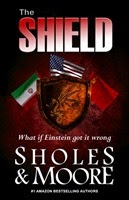
shield-cover-smallComing soon:THE SHIELD by Sholes & Moore

“THE SHIELD rocks on all cylinders.” – James Rollins, New York Times bestselling author of THE EYE OF GOD.

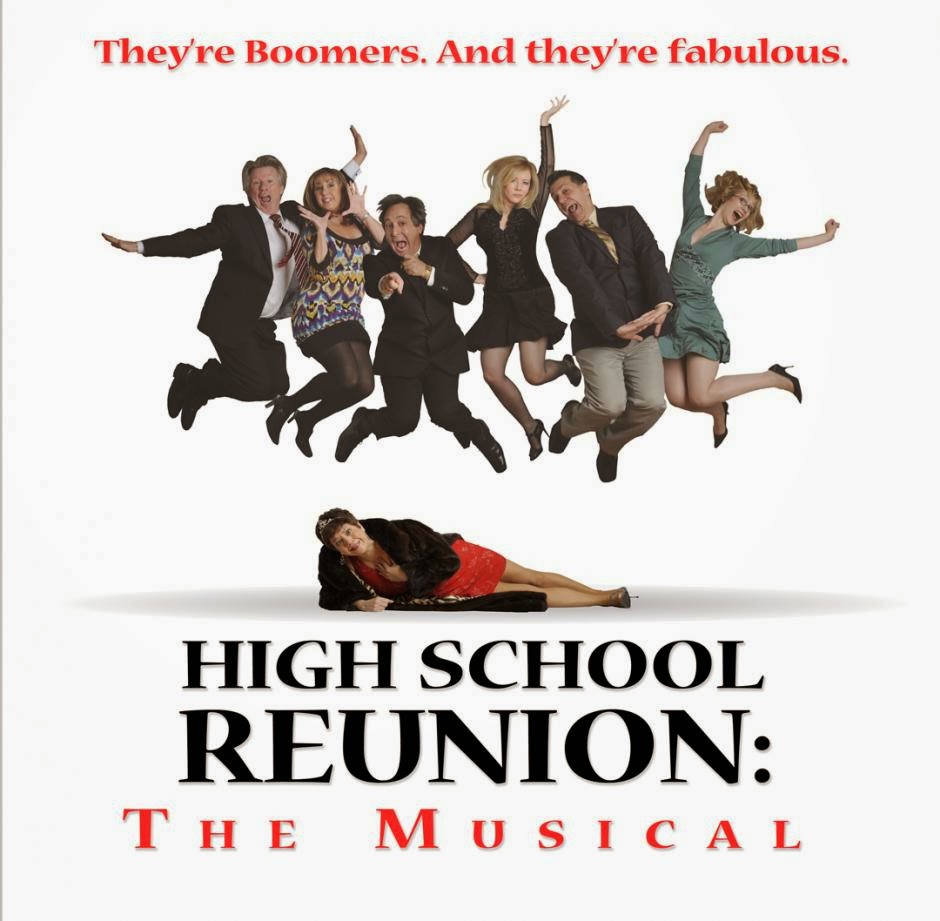
Forty years later, a first high school reunion

I went to my 40th high school reunion last weekend, and I’m so glad I did. I had a small and treasured group of friends in school, but over the years my peripatetic lifestyle had caused me to lose touch with them. When it dawned on me that our graduation digits were turning the Big 4-0, I decided to step on a plane and head from Los Angeles to Boston. 

As anyone who has attended a major reunion for the first time already knows, it felt strange at first to suddenly reconnect with people I hadn’t seen in decades. I remembered us all as kids, but now we were all older adults. I had to quickly reconcile my memories of the past with the mature present.  The gangly, shy boy I’d known is now the dapper periodontist; the former tom boy and gal pal is now the accomplished television professional.   

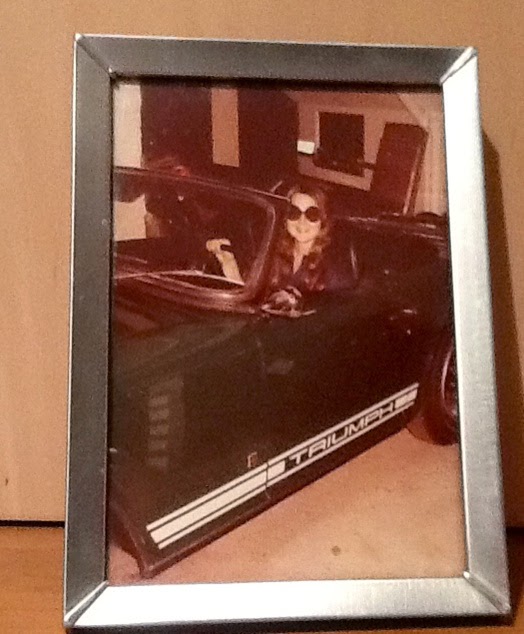
Getting my first wheels, circa ’73

I think we attend reunions to reconnect, not just with others, but with a sense of ourselves from an earlier time. As I sat at the reunion table, I tried to remember what I was like in high school, what my ambitions had been back then. I remember that I loved English class, especially creative writing assignments. But I didn’t connect my vague enjoyment of writing with any notion of a future career. I come from a family of scientists and academicians. Our clan regards writing as a tool, not an aspiration. I thought the ambition of becoming a writer was only meant for the literati and artistes.  

I wish I’d known when I was young that “real” people can become writers. It would have helped me get started earlier. So, here’s my advice to all the high school English teachers out there: invite a local novelist to speak about writing to your class. You might just be giving that quiet girl in the third row a vision of her future.

Question for you all: have you ever braved a high school reunion before? How did it go?

Update: I just added a picture of me “back in the day”–thanks to Jordan for the suggestion! 

Moving from Idea to Novel

by Clare Langley-Hawthorne

I was presenting at my sons’ school on Friday, and one of the questions I was asked was how I turned my ideas into novels. Part of my answer was that, although I have heaps of ‘ideas’ jotted down in various journals, only about a handful of these have (so far ) developed into complete stories. This is because the majority of my ideas aren’t ‘story ready’. They’re either too flimsy or under-baked at the moment or, as I tinker with the plot options for them, turn out to be incapable of sustaining an entire story. 

There are many reasons an idea fails but one question that keeps coming up is – how do you know when an idea is sufficient to carry a great story? I think the easiest way to answer this is to ask the reverse – when is it not a good idea for a story?
Like when…

  • You think it’s a good idea only because it fits in with a current publishing trend 
  • You like the idea only because someone else told you it would make a great story 
  • You like the idea only because you think it will make you lots of money

Clearly, you have to love an idea to turn it into a terrific story. You have to love it because you’re going to live with it for a very long time as part of the writing process. Merely liking an idea isn’t really enough to sustain the commitment required to complete a novel.

You also have to let go of some darlings, because sometimes, no matter how much you love an idea, the characters, story and plot line simply don’t come together to make a successful story.

I adopt the following process when converting my ‘raw’ ideas into novels.

  • Firstly, I jot down all my ideas. You never know which ones might stick with you or which ones, years later, suddenly resonate. That’s not to say I write down every half-baked idea I get in the middle of the night, but if I’m still mulling over it in the morning, it’s probably worth putting down in my journal.
  • Then I let a few of these ideas percolate, to see which ones I am most passionate about writing about, now. Some ideas I love, but still don’t feel quite ready to explore.
  • I then work through the ideas I’m most passionate about, summarising the overall premise of the story, characters, and plot overview in order to prepare a proposal (about 1-2 pages) for my agent and I to consider. Sometimes, even at this stage it’s clear I’m forcing an idea that doesn’t yet work.
  • Then, once my agent and I agree on which proposal seems to stand out as the story I should work on next, I draft the first few chapters and do a more detailed plot outline to see whether it all looks as if it’s going to hang together. 

Now I’ve had ideas fail at all these levels – either because the premise wasn’t clear enough, the plot was too unwieldy or, even after the first chapters and outline have been prepared, the idea still didn’t seem to work for a successful novel. (In this case, at least I discovered this before I finished the entire first draft!)

So what about you? How do you know when an idea is really ‘story ready’. How do you evaluate whether the idea is sufficient to sustain a novel? Do you plan it out or muddle through?


Will One Bad Book Ruin Your Career?

@jamesscottbell

I’ve never quite believed that one chance is all I get. – Anne Tyler
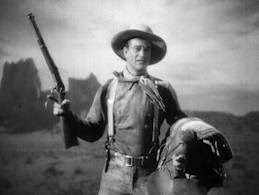
Back in the early days of sound movies, a handsome but unknown actor caught a huge break. He was cast as the lead in a sprawling Western epic under the helm of a well-known director. The studio began grooming the kid for stardom.
But The Big Trail tanked at the box office. So the studio cut the young actor loose. He was, as they say, “damaged goods.”
The only place he could go after that was “Poverty Row.” These were low-rent studios churning out B and C grade pictures, most of them real stinkers. Here the actor labored for years. In 1937 this actor made yet another B Western, Born to the West. I watched the film recently. It is, without doubt, one of the worst movies I’ve ever seen.
And the actor? A bit stiff and prone to goofy smiles. So add another floperoo to this guy’s resume. No way the actor, Marion Morrison, was ever going to be a star. Perhaps you know him better by his professional name, John Wayne.
But did these bad films ruin his career? Not when the right role and director came along. The role was the Ringo Kid in Stagecoach directed by the great John Ford in 1939. John Wayne knocked it out of the park.


I bring up the Duke as an object lesson for writers. If you go to a writing or publishing conference these days you’re likely to hear an industry insider say something like: “Self-publishing is not always the right move for a writer. Be very wary about doing it. One bad book can ruin your career.”
Indeed, this sentiment was expressed by an agent/panelist at the recent PubSmart conference. The omni-present Porter Anderson was, of course, covering it, and notes:
And in the course of the panel’s comments on self-publishing and how it can play into an author’s career, [agent Brandi] Bowles offered the opinion that if one self-publishes a book and it doesn’t do well in terms of sales, then some publishers might look askance at that disappointment if asked to consider publishing that author.
Bowles is joined by others in the more traditional corridors of the industry! the industry! in suggesting that if there’s a chance that self-publishing could make an author appear to be “damaged goods” to a publisher, then self-publication is, at least, a very serious option, a route not to be taken lightly.
This sparked outrage from at least one self-publishing attendee, who turned a mealtime with Porter into a persistent pronouncement of publishing pique.
So let’s step back and analyze.
In the “old days” (i.e., before 2007), a book’s success or failure had only one metric: physical copies sold (a rare exception would be made if there was massive critical approval in the right places). If a book tanked, those low sales numbers became a scarlet letter sewed onto the author’s jacket. Indeed, many potential long-term careers got nipped in the bud because a large advance was shelled out and dismal sales made recoupment impossible. That’s when an author could get slapped with the label “damaged goods.”
In those same old days, the only option after such failure was to go to publishing’s Poverty Row, smaller companies with fewer dollars and less distribution. Or the writer could give up the dream entirely. Getting another shot a the “big time” was usually out of the question.
I believe this is the context in which the agent made the above statement. But that context has now been significantly altered.  
First of all, the term career no longer applies only to getting published by a big, traditional company. Purely self-publishing careers are being established on an ever-increasing basis.
But let’s assume your dream is getting signed by one of the Big 5. If you self-publish a book, and it doesn’t sell a lot, you are still making readers. If the book gets good reviews, you are making a reputation. That’s all to the good.
If, on the other hand, your book gets hammered, you can always take it down. You can come back and try again. And again. Just like John Wayne.
Then, should you come up with a killer concept and you have continued to work on your writing chops, your self-publishing credits will not be a deal-breaker. Traditional publishers know (at least the ones who will survive know) that their distribution and marketing systems are different and can be exploited anew for the author who has learned his trade in the trenches.

Have you ever found yourself holding back because of fear of failure? Then listen to what the Duke might have told you: “You think you’ll have a career without taking some risks? That’ll be the day. Keep writing, Pilgrim, and give it your best shot every time out.”


How My Daughter Became an International Multi-Media Internet Superstar Overnight

We have had a bit of excitement at casa de Hartlaub since my last post. The seed of that excitement was planted several years ago — more on that in a bit — and sprouted in March of this year. Annalisa, my sixteen year old daughter, attends The Ohio State University and during the winter-spring semester took an Intro to Photography class as a bit of a respite from her biology lectures, lab courses, and her work on a pediatric oncology research team. The photography class, taught by the informative and entertaining Shane McGeehan with lectures by Aspen Mays, required the submission of a number of projects. Annalisa fulfilled one of them by photographing a series of portraits of herself representing mainstream and counterculture fashions for each of the past ten decades. She turned the project in, earned an ‘A,’ and posted the project to her Flickr account at the beginning of April.

Strange things began to happen within a couple of weeks. Annalisa’s hit numbers, after growing steadily but modestly at first, inexplicably and suddenly began to jump exponentially, day by day, from 10,000 to 20,000 to 60,000 and so on. Will Wheaton of Star Trek: The Next Generation, re-blogged her page, which was a particular thrill for Annalisa, given that she had a crush on him in those heady days when she was four years old. Hank Green, who is a major YouTube player contributor, did as well. This was exciting enough; the tipping point, however, occurred on April 2, when Annalisa got an email from Sara Roncero-Menendez of The Huffington Post, asking for permission to use the portraits in an article about Annalisa and the project. The answer of course was yes. And we waited.

We had no idea what would happen next. The articleappeared on April 29. The story was picked up by Buzzfeed, Independent Journal Review, Yahoo!, and then by news sites based in Vietnam, Italy, Mumbai, France, and England, among others. A young man in Turkey put together a music video featuring the portraits and a Pentatonix track. And it’s still expanding, even as I sit here typing. This, it has been explained to me, is what as “going viral.” It was never Annalisa’s intent to do so; she just wanted to create the best project she could, and then share it with her friends. Indeed.

So what does all of this have to do with you? Ah. The short version is “(M)y daughter did a class photography project and it went viral.” Here is the long version, tacked onto the beginning of what I have set forth above: Annalisa conceived of the project; spent hours turning her room into a portrait studio; spent days looking at old photographs; experimented with makeup, lighting, and shading; and took hundreds of shots before she got the ones she wanted. What everyone is seeing is but the tail end — and the relatively short end — of all of that work. That’s true of any work of art, be it your favorite book of the week, the new Parquet Courts CD, or TrueDetective; you’re getting the end result, not the weeks and months and yeah, in some cases years of work and failure and self-doubt that comprised the gestation period which ultimately resulted in the finished masterpiece being pushed out into the marketplace. You can read all of James Bell’s columns that you want, and follow that advice to the letter, but —and Jim would be the first to tell you this — you’re not going to squeeze out your masterpiece, best- selling or otherwise, viral or otherwise, in an hour or a few days or even a few weeks. You’re going to write and erase and edit and write some more and lay awake and forget about the butler (as Raymond Chandler so famously did) and erase it all and start all over until, as Will Wheaton’s boss was so fond of saying, you “make it so.”

The title of this piece notwithstanding, overnight success doesn’t happen overnight. It’s the end result of many nights, and days, and weeks of work. For Annalisa, it probably started when she was three years old, and for whatever reason during dinner began taking pictures of her food after each bite, as her parents watched with amusement and dinnertimes extended for two hours. It was worth every minute then, and still is.