Branding Through Cover Art
Series branding can be just as important as author branding. What’s the difference? Author branding tells who you are and what kind of stories you write. For example, my works blend elements of murder, mystery, romance, and humor. Readers know they’re in for an entertaining yet suspenseful ride with a satisfying ending. I also write stories set in Florida, and this tropical flavor adds a layer of depth to my work.
Currently, I’m working to revise and reissue my earlier mystery titles. I hired a new cover designer and liked her idea of putting a collage together of photographic images. Similar to an art sheet from a publisher, I filled her in on what might make an appropriate scene and what elements it might include. I looked at the images she subsequently sent me and picked ones that seemed perfect.
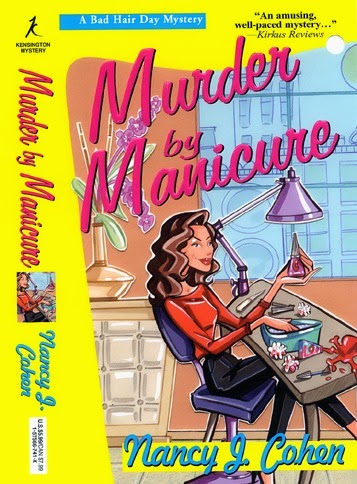
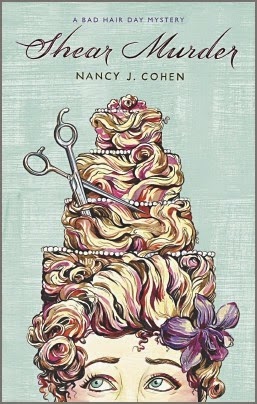
All went well until she put them together in a cover mockup. My stomach sank. It didn’t work for me. The images were fine. So were the colors and title placement. But the whole didn’t speak to me as a cozy reader. Where was the humor element? The fun factor that would make me smile and want to buy this book, like these covers below?
And so I did a search on Amazon for “cozy mysteries.” The overwhelming majority of them were illustrations, not photographs. I’d given this designer a list of covers that appealed to me, but she didn’t seem to “get” the genre. My original cover artist, who’d had to bow out for personal reasons, had sent me a mockup of a cover that I’d really liked. Looking at them side-by-side, I had a bad feeling about the photo-based imagery. It wasn’t right for the genre.
Even if I rebranded myself by having all my reissued titles have similar designs, would these more realistic covers attract cozy readers? I didn’t think so. It certainly wouldn’t appeal to me. As a cozy reader, I look for a certain style. Normally, you can identify a cozy just by looking at the cover. And so I regretfully parted ways with designer number two. I approached my original artist to see if she was available again, and to my joy she said yes. We’re back to fixing the details on the original cover, and I feel much happier about the process.
What is the lesson learned? It’s not only about your author brand. It’s also about reader expectations. Readers can tell from the cover what type of story to expect. Go for a change if you want to broaden your readership. But if you want genre appeal, stick to the tried and true. Flowers never did it for me as a romance reader. I still like the old-fashioned clinch covers. Remember the old gothics, with a woman in a gown running away from a spooky mansion? You could tell at a glimpse what genre it represented. So yes, your cozy or thriller cover at a glance might resemble others in the genre, but that’s what readers want and expect.
Whichever route you go, plan for series continuity via the same font, author name and title location, series logo, design style and color statement (i.e. pastels or bold and bright).
Does reader expectation figure into your cover art or does this aspect not concern you?
Just One More Chapter
By Joe Moore
Welcome to 2015. All of us at TKZ wish all of you the best of New Years. From a writing perspective, I hope you produce your best work yet. And from a reader’s perspective, may you discover a new author that thrills you beyond expectations.
As some of you know, I write supernatural thrillers with co-author, Lynn Sholes. We are at the midway point of THE TOMB, book 3 of a series. It is the eighth novel we’ve written together. We’re often asked how two people can write fiction. It’s pretty much a mystery, but I’ve pulled back the curtain in a previous blog post to answer the question.
What I want to reveal today are some of the secrets and tricks we use to keep our readers turning the pages to our thrillers. It’s important to remember that these are the techniques we use; they may not be right for you. They might even make you feel uncomfortable, but our job is to write the best, most exciting story we can. Here’s how we do it.
Probably the number one technique is short chapters. And when I say short, I mean SHORT. With few exceptions, we try to max out each chapter at around 1000 words. Many chapters are only 500-700. Now you’re probably thinking: What can you do with 500 to 1000 words? Answer: Only tell what’s important. Leave out the rest. What moves the story forward or develops the characters? That’s the questions we ask. Then we write it in 1000 words or less.
Number two technique is to end every chapter with a cliffhanger. Leave the reader hanging. Give them a taste of what’s to come, then stop. Here’s an example—the last paragraph from the opening chapter of THE TOMB.
I grabbed the binoculars and searched in the direction of La Pampa for Marquez and his driver. They were standing in front of the restaurant with their backs to me; the colonel talking on his phone. If I called him, he would see my caller ID and no doubt ignore me. For all I knew he was giving the command to start the assault. I thought of blowing the car horn to attract his attention, but that would also attract the attention of the two targets in the restaurant. The same problem if I got out and started yelling for the colonel’s attention. My last option was the one I chose. I pulled up the right leg of my jeans and removed the Walther PPK strapped to my calf. Slipping out of the SUV, I moved at a quick pace to the door on the side of the building. I reached for the knob, determined to follow the most wanted man on the planet.
Technique number three is to keep them hanging. The next chapter should take them someplace else, probably the continuation of the cliffhanger from two chapters ago. The reader finishes the chapter, knows it’s late and she should be in bed, but takes a peek at the next chapter and sees it’s the answer to a previous cliffhanger. And it’s only two or three pages. What does she do? She reads just one more chapter.
The fourth trick we use is to ask ourselves what the reader thinks will happen next. Then we do something different.
Writing in this fashion creates fast pacing, dynamics, and the unexpected. I love to read books like that. And I like to write them. I want to be placed in a position where I have to read just one more chapter. And I love doing the same thing to my readers.
How about you guys? Any secrets and tricks you want to share?
Gag Orders, And Other Rules To Get The Most From Critique Groups
As many here know, a good critique group can be a writer’s best friend. They give us feedback, moral support, and camaraderie. I’ve belonged to several critique groups over the years. Some groups have been extremely helpful, others less so. Over time I’ve developed a few rules, which I apply only to myself. These self-imposed rules help me extract the most benefit from any type of critique group:
1. Gag Order Rule Number One. When hearing feedback during a critique, I may not interrupt the critique with long-winded explanations of why I wrote something the way I did.
It doesn’t matter why I wrote it that way. Someone is telling me it doesn’t work. I must accept it and move on.
2. The two-thirds validity rule.
If two-thirds of the group gives the same feedback, it’s probably a valid criticism. I must pay attention to it.
3. Apply feedback, improve. Rinse, repeat.
We all know people who get the same feedback from the critique group, month after month. And yet their writing samples consistently reflect the same issues, month after month. I don’t fret about these people. I just don’t want to become one of them.
4. Expect to hear about problems, not solutions.
Critique groups are going to tell me what’s not working on my pages. They usually won’t be able to explain how to to fix a writing problem, because very few people actually know how to fix problems. Fixing things is my job, not theirs.
5. Gag Order Rule Number Two. When I disagree with the feedback, I nod solemnly, pretend to make a note, and say nothing.
So these are just my rules that I use to keep me sane and productive in any type of critique group. Do you have any you can share?
New Year, New Goals, New Look?
Welcome to 2015!
I greeted the new year in with a literal ‘bang’ as we had heating problems in our newly renovated basement and three water pipes froze and burst – so as far as I’m concerned this year can only get better:)
Here at the TKZ, we are looking forward to a wonderful, productive, challenging year ahead for all our writing. We are also constantly looking forward to ways we can improve our blog to meet our growing readership. There have been many changes in the publishing industry since our blog’s inception in 2008 and we have been thrilled to see our readership continue to climb over the years.
Given these changes, however, it is important for us to take a moment to reflect on our blog’s mission and the direction TKZ should take in the years ahead.
So we thought we would take this opportunity to ask you for feedback on our blog’s direction in 2015. We know that to keep current, relevant and useful, we need to continually assess and refine both our mission as well as our content. So we’d love your thoughts and feedback on:
- Our mission, focus and posts: We’ve noticed a shift in the blog’s direction towards focusing on the craft of writing and the issues facing aspiring as well as professional writers. Typically our blog posts focus on practical advice on writing craft as well as providing personal accounts and experiences that touch upon our writing. Would you like to see us delve more deeply into other areas or industry trends? Would you like to see more on promotion, marketing, editorial advice or ‘indie’ publishing?
- Further blog contributions/guest posts: Since we now have a professional editor (thanks Jodie!) in our midst as well as professional writers spanning many genres, we were thinking about adding other professionals into the mix. Would you be interested in hearing from other perspectives (a literary agent perhaps?) on a more regular basis? Are there any other people you’d like to see providing guest posts?
- Other TKZ offerings: It would be great to also receive feedback on the value of critiques and other participation offerings we could potentially provide. Are our first page critiques helpful? Would you like to see more or less of these kind of offerings on our blog?
- The ‘look and feel’ of the TKZ: We are tossing up alternative templates to give the blog a better ‘look and feel’ and any feedback on this would be greatly appreciated. We are definitely hoping to create a new look and feel for 2015, so keep a look out for the changes ahead!
Seasons Greetings
It’s Winter break here at the Kill Zone. During our 2-week hiatus, we’ll be spending time with our families and friends, and celebrating all the traditions that make this time of year so wonderful. We sincerely thank you for visiting our blog and commenting on our rants and raves. We wish you a truly blessed Holiday Season and a prosperous 2015. From Clare, Jodie, Kathryn, Kris, Joe M., Nancy, Jordan, Elaine, Joe H., Mark, and James to all our friends and visitors, Seasons Greeting from the Kill Zone. See you back here on Monday, January 5. Until then, check out our TKZ Resource Library partway down the sidebar, for listings of posts on The Kill Zone, categorized by topics.
Make Next Year the Best of Your Writing Life
James Scott Bell
@jamesscottbell
A Re-gifting Story
Reader Friday: Your Holiday Plans?
Key Tips for Creating a Genderless Character for Villain Options
In my critique of Cruel Sacrifices, an anonymous submission, I brought up the topic of creating scenes with a genderless character and TKZ follower Paul Duffau asked for a post on the subject. You asked, Paul. Here it is.
The technique of writing a genderless character can be effective to allow an author more options for suspects so the reader can’t easily determine the gender of a villain. One of my favorite ways to create a mystery/suspense “whodunnit” is to build a case against a slew of suspects. By the end of the book, I can flip a coin and make the final decision on who is guilty. By making a killer neutral and without gender, that expands my choices. More fun for me.
I’ve seen many books written with scenes where a villain is described as “the man” or “the killer.” As an author, that pulls me from the story, because I see the craft behind the use of the generic term. It’s obvious the author is trying to build suspense by letting the reader see a glimpse of the diabolical bad guy without fully disclosing who it is. I’m sure I’ve done this too, but in my last two thriller novels (Blood Score and The Last Victim), I challenged myself by creating a genderless character to broaden my suspect list and make it harder for readers to figure out who the guilty are.
Scenes with my genderless character were difficult to write. It’s easy to slip and add a pronoun of he or she, so edits must be thorough. And it’s hard to come up with different ways to describe this person. It’s also a challenge where to place these scenes throughout a book to add tension and mystery, but try it. It adds complexity to your writing and can make for a better “whodunnit.”
1.) Omniscient POV – In select spots during the scene, I write in omniscient Point of View (POV). I try not to carry this on for too long. I want the reader to clearly know this is my bad guy and I add a generic descriptor later to ground the reader into the head of my character, but the shock value of seeing the bodies through the eyes of the killer (the artistic elements to the brutal crime) seemed to create a more macabre effect and give insight into my serial killer.
Excerpt: The Last Victim (Jordan Dane)
Moonlight cast its slate glow onto a lifted hand, fingers gracefully posed toward the dark heavens. They would point to the worthy pinnacle of the masterpiece. The bare skin of a sculpted leg made a beautiful silhouette against the full moon, toes perfectly poised to catch the glimmer of the night. Frozen flesh glittered under the stars in the right light. The crystalline webbing of ice turned blanched skin into an intricate texture with a shine that reflected the dark sacred night.
Too bad the meat had to thaw. To rot.
2.) Generic Character Description – Without gender, I used a description of “the driver” to describe my bad guy. This type of generic description can be used for anyone, men or women.
Excerpt: The Last Victim (Jordan Dane)
Cutting a scream loose, the warmth of a blood shower, the thrill of seeing the soul leave the body and knowing God’s hand played no part in it—those were rare and powerful addictions—but none of those things matched the final moment when hope left their eyes and they accepted their fate. Sated and drunk on memories, the driver tossed sturdy work gloves aside and climbed into a truck when it was time to go, started the engine, and turned on the music.
The voice of Ray Charles sang. ‘What a Wonderful World’ brought a fitting end as the truck jostled along the gravel service road toward the busted gate few people knew about—heading through the trees into the dark sacred night.
3.) Deep POV – Focus on the action and see it through the eyes of the character. My killer is suffering from withdrawals and the need to kill is escalating. So rather than focusing on HIM or HER, I distract the reader by concentrating on the action or what he or she is obsessed with. In deep POV (in our heads), we wouldn’t define ourselves because we already know who we are. We would simply let random thoughts race through our minds, driven by what we see or think. Deep POV, coupled with omniscient view, can give the illusion to the reader that they are in the head of a killer, yet not give away the gender of a bad guy.
Excerpt: The Last Victim (Jordan Dane)
One final glance in the rear view mirror made it hard to leave, but the stunning silhouette of the Totem against the moon stirred the question that remained. Who would top the next creation? There would definitely be a next time and it had to be someone worthy. It wasn’t enough to kill perfection once.
Hitting stride, the Totem Killer had only gotten started and had cross-hairs on the next one. A name. Another perfect one. Everything had been planned with each detail thought out. Nothing would be rushed.
The driver had a pick up to make and wouldn’t go home empty handed.
4.) Unreliable Narrators – Detectives or sleuths can assume a gender based on a criminal profile or perhaps the strength it would take to perpetrate a crime or the statistically expected Modus Operandi (MO) for one gender over another. FBI profiles can project a male killer simply by MO if the crime is heinous enough NOT to indicate a female assailant, for example. So your main heroic character can be the unreliable narrator, or witnesses can lie or tell their version of the truth as they see it. A big reveal can come later to turn things around, but that’s what is so fun about peeling back the layers of an investigation.
5.) Red Herrings – A mystery craft technique, called a red herring, is used to create a clue that leads down a false path in the investigation. This can contribute to the illusion that the killer is one gender, when it can easily be discovered later that the clue was misinterpreted or someone lied to mislead the police. If you couple this method with your generic character POV, it can keep the reader guessing. And news flash: killers lie to throw cops off their scent or they plant evidence or pretend to be a victim to mislead investigators. That makes the chase more fun. A good killer is a chameleon who could conceivably get away with murder. The more diabolically clever the killer, the more brilliant your sleuth would have to be. Make your hero earn his status by giving him or her a worthy adversary.
6.) Scene Timing – If a scene is written through the eyes of the dastardly genderless villain (at a distance, for example), followed by a subsequent scene where the character walks unassumingly on the page with a name, that could influence the reader into thinking “it can’t be him/her. He/she can’t be in two places at once.” If the scene is written well enough, it can appear there is distance and the reader assumes there are two people, when the character could be one and the same.
I used all of these methods to build upon the mystery of my killer’s identity and push off “the reveal” as late as possible in the book. Leave twists in the plot, even toward the end, and make your readers sweat it out.
Has anyone else used a technique not mentioned here, to create a genderless/faceless villain? Or what books have you read where an author kept you guessing on gender? Please share.
Wishing you happy holidays, TKZers! Hope 2015 is special for all of you.