First Page Critique – Untitled Fantasy

Jordan Dane

@JordanDane

Another brave author has sent in their anonymous submission of their first 400 words. My critique follows. Please provide your constructive criticism, TKZers.

from wikipedia commons

from wikipedia commons

***EXCERPT***

“Strike faster,” Northbyr commanded, but Arthryn’s limbs felt like lead, as if he were swinging a blacksmith’s hammer rather than a sword. He grunted with the effort to keep his blade up, and struggled to land a sequence of slashes and strokes across the wooden training post. “Again,” his father ordered. Arthryn complied, forcing his arms to keep moving. He could feel the pressure of his father’s eyes, inspecting his every movement.

Not my father, Arthryn reminded himself. Not today. Today, he is my Commander, and I am his cadet.

Northbyr certainly fit his role. His tall frame shadowed Arthryn’s short, but fit, seventeen year old body. The Commander had gray eyes, and his face bore the marks of his years in combat. All that was behind him now, and he no longer fought in battles. Instead, he commanded the city guard of Brink, and served as protector to the city’s master, Vangres. Arthryn knew he was lucky to have his father’s experience to learn from, but that also meant twice as much work.

“Step left, strike three,” the commander said. Arthryn followed through. “Step right, strike one.” The cadet stepped and struck hard. “Step round, backward slash!” Arthryn stepped past the training post and twisted his hips to strike the hardwood with a powerful, back handed undercut, but his feet got twisted up and he fell to the ground.

“Snap to, son.”

Arthryn recovered and rose to his feet, readying his sword for the next move.

“Overhead strike.”

The young warrior wielded weapon over his head and aimed to bring it crashing down upon the wooden pole. The blade made his arms tremble, and his muscles protested. He gritted his teeth, and prepared to drop the sword into the target. He never got the chance.

Northbyr snatched the weapon from his hands. Arthryn stumbled to regain his balance. Without the weight of his sword in hand, he felt like a mouse without a tail. He spun towards his father.

“I had it!”

Northbyr glowered at him. “If this was battle, you’d be dead.”

Arthryn’s cheeks flared red. Especially when you take my sword! He wanted to blurt out, but kept his peace. Northbyr never accepted excuses.

Feedback:

Embedded dialogue – In paragraph 1 & 4, there is embedded dialogue that could be pulled out to accentuate it more. A reader’s eye looks for dialogue lines, especially those skimmers who speed read. Highlighting the dialogue as much as possible can focus a reader’s attention on key lines.

Backstory – In paragraph 3, the author resorts to character description and backstory in between the action of the intro scene. Although this paragraph is short, it can still slow pace and draw the reader elsewhere.

Name Confusion – The two characters in this scene have “Y” and “R” towards the end of the names. Since these names aren’t typical of present day/present world handles, readers could get confused and forget which is the father and which is the son. I found myself re-reading to remind myself of the two characters. Perhaps if the son were to call the father by his title, it might help make a better distinction.

More Setting & World Building Layering in Fantasy Genre – The Fantasy genre is known for its world building and other worldly setting descriptions. Even in the midst of a sword training scene, the author should layer in setting that will enhance this world and make it come alive for the reader. As a consequence, the writing comes across as sparse. Many readers wouldn’t notice this and might get into the story, but to make this intro come alive, the author should set their work apart with a deeper scene setting that immediately captures the senses of the reader. The use of all the senses can be effective when creating a new world.

Are there foul smelling blood flowers that emit a pungent coppery stench, flowers that only bloom when war is on the horizon? Does this world have two suns? Is water a precious commodity worth killing over? Do these people live in trees or in castles made of thatch?

How can you infuse these elements into an action sequence like this one? Add tension by the son stepping on one of the flowers and the stench makes him puke. Have him take a sip of community water, only if the father allows him to. The idea is to set up mystery elements to this world that can be explained later as the story progresses and the setting can be brought into the story without slowing the pace. Layer in world building elements that make the reader wonder more about the world they are about to embark into.

An author who writes fantasy must envision the world they want the reader to see in their mind’s eye and bring it to life. Sparse writing allows the reader to stay in their present world and not stray from it. Fantasy is all about the fantasy of escaping into someplace new.

Overview:

I liked the voice in this intro and found it an easy read. I’d keep reading. I sensed the friction between the father and son and felt the tension in the son striking the blows. More effective layering and world building could really enhance this intro and make it stand out more.

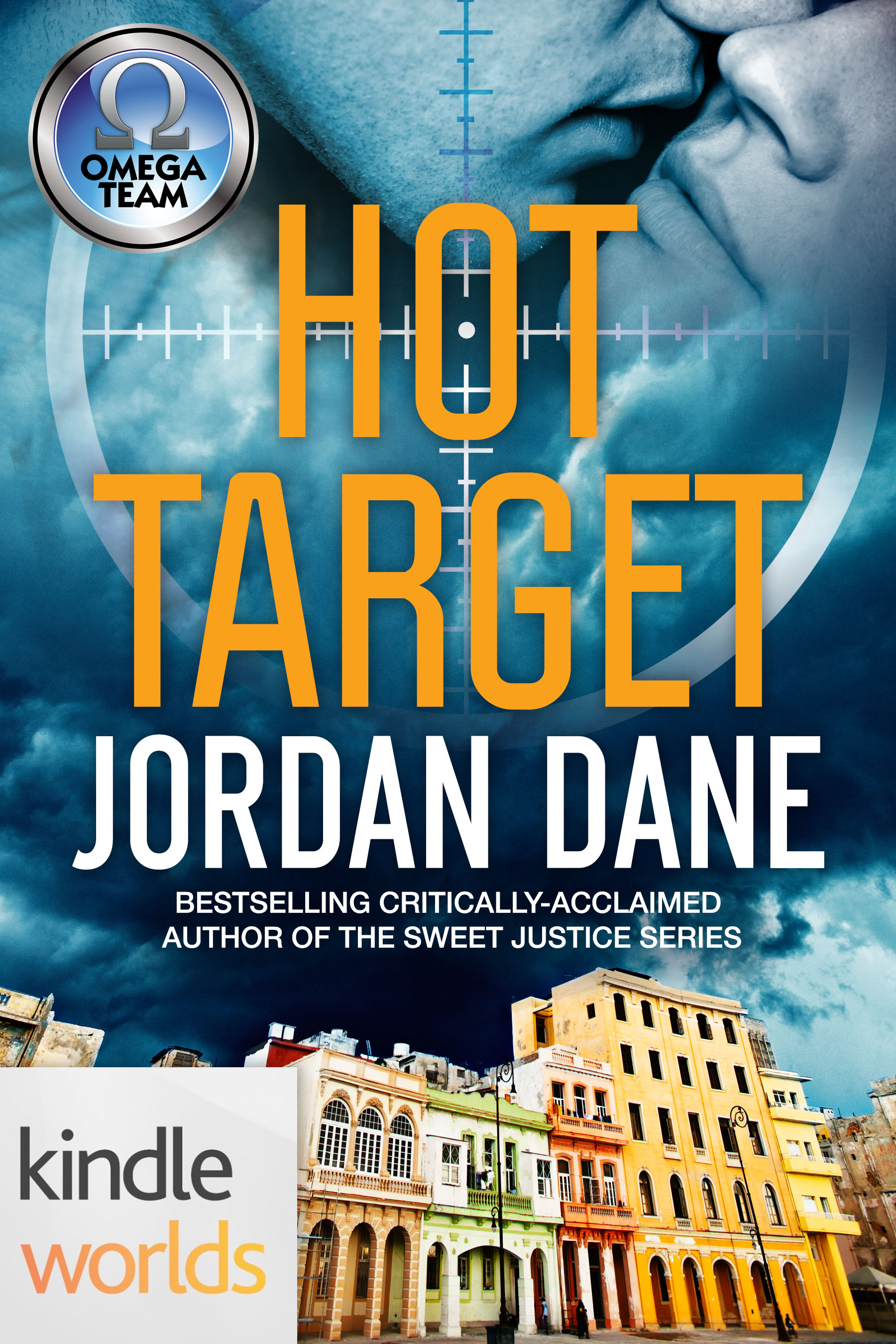
HotTarget (3)

Hot Target now available – new Omega Team series launch at Amazon Kindle Worlds. Priced at a bargain $1.99 for this 30,000 word novella. #18 Bestseller in Kindle Worlds Romance.

Rafael Madero stands in the crosshairs of a vicious drug cartel—powerless to stop his fate—and his secret could put his sister Athena and the Omega Tteam in the middle of a drug war.

Plot Elements Matter

By Joe Moore
@JoeMoore_writer

When you write a story, whether it’s short fiction or a novel-length manuscript, there are always two major components to deal with: characters and plot. Combined, they make up the “body” of the story. And of the two, the plot can be thought of as the skeleton, the structure on which the story is built. Plot can be defined as the series of events that move the story forward; the network of highways the characters follow to reach their goals.

When it comes to building your plot, nothing should be random or by accident. It may appear random to the reader but every turn of the plot should be significant and move the story to its final conclusion. Every plot element, whether it deals with a character’s inner or outer being should contribute to furthering the story.

In order to determine the significance of each plot element, always ask why. Why does he look or dress that way? Why did she say or react in that manner? Why does the action take place in this particular location as opposed to another? If you ask why, and don’t get a convincing answer, delete or change the plot element. Every word, every sentence, every detail must matter. If they don’t, and there’s a chance they could confuse the reader or get in the way of the story, change or delete.

Your plot should grow out of the obstructions placed in the character’s path. What is causing the protagonist to stand up for his beliefs? What is motivating her to fight for survival? That’s what makes up the critical points of the plot—those obstacles placed in the path of your characters.

Be careful of overreaction; a character acting or reacting beyond the belief model you’ve built in your reader’s mind. There’s nothing wrong with placing an ordinary person in an extraordinary situation—that’s what great stories are made from. But you must build your character in such a manner that his actions and reactions to each plot element are plausible. Push the character, but keep them in the realm of reality. A man who has never been in an airplane cannot be expected to fly a passenger plane. But a private pilot who has flown small planes could be able to fly a large passenger plane and possibly land it. The actions and the obstacles can be thrilling, but they must be believable.

Avoid melodrama in your plot—the actions of a character without believable motivation. Action for the sake of action is empty and two-dimensional. Each character should have a pressing agenda from which the plot unfolds. That agenda is what motivates their actions. The reader should care about the individual’s agenda, but what’s more important is that the reader believes the characters care about their own agendas. And as each character pursues his or her agenda, they should periodically face roadblocks and never quite get everything they want. The protagonist should always stand in the way of the antagonist, and vice versa.

Another plot tripwire to avoid is deus ex machina (god from the machine) whereby a previously unsolvable problem is suddenly overcome by a contrived element: the sudden introduction of a new character or device. Doing so is cheap writing and you run the risk of losing your reader. Instead, use foreshadowing to place elements into the plot that, if added up, will present a believable solution to the problem. The character may have to work hard at it, but in the end, the reader will accept it as plausible.

Always consider your plot as a series of opportunities for your character to reveal his or her true self. The plot should offer the character a chance to be better (or worse in the case of the antagonist) than they were in the beginning. The opportunities manifest themselves in the form of obstacles, roadblocks and detours. If the path were straight and level with smooth sailing, the plot would be dull and boring. Give your characters a chance to shine. Let them grow and develop by building a strong skeleton on which to flesh out their true selves.

When you begin working on a new story, do you develop your plot or characters first? Do you believe that a book can be primarily “plot driven” or “character driven”?

Liar, Liar! Pants on Fire!
Writing the Unreliable Narrator

handout1

“It’s the truth, even if it didn’t happen.” – Chief Bromden, One Flew Over the Cuckoo’s Nest.

By PJ Parrish

Liars are all the rage in publishing right now.

Whether it is that fun couple Amy and Nick Dunne in Gone Girl or that poor sot Rachel on the train, the character whose believability is compromised seems to be enjoying her day in the shadows. There seems, in fact, to be a whole sub-genre of Un-relies in YA fiction alone. (CLICK HERE).

I am just back from SleuthFest, the fabulous writers craft-con presented by the Mystery Writers of America Florida chapter, and one of my panels was on this topic. I shared the panel with my co-author sister Kelly, Debra Goldstein (Should Have Played Poker, pubbing in April) and critique group buddy Sharon Potts, whose unreliable narrator book Someone Must Die comes out this year. I have to admit, I had to do some boning up on the subject.  Unreliable narrators are, for me at least, like post-modern literary fiction — I sorta kinda almost recognize it when I see it but don’t ask me to define it.

But define it we did. Or tried. The Un-Rely is a slippery fish.

Gone Girl aside, these characters have been with us for a long time now. The unreliable narrator goes back at least as far as the murderer in Poe’s The Tell Tale Heart who tries to convince us that he’s not crazy –- he’s just an excitable boy! — even though he hears his victim’s heart beating under the floorboards.

True! Nervous — very, very nervous I had been and am! But why will you say that I am mad? The disease had sharpened my senses — not destroyed them. Above all was the sense of hearing. I heard all things in the heaven and in the earth. I heard many things in the underworld. How, then, am I mad? Observe how healthily — how calmly I can tell you the whole story.

The rogues gallery of unreliable narrators is long and illustrious. Poe begat Agatha Christie’s Dr. James Sheppard (The Murder of Roger Ackroyd) who begat Kurt Vonnegut’s Billy Pilgrim (Slaughterhouse Five) who begat Ian McEwan’s Briony Tallis (Atonement) who begat Dennis Lehane’s Teddy Daniels (Shutter Island).

So are unreliable narrators all liars or nut-balls? And is this someone you want running around ranting in your head for the next year as you write your novel?

I didn’t expect a big turnout for our panel, but we packed the room. Apparently, many writers want to explore this technique, but I got the feeling most don’t really understand what it entails. So before I throw out the PROCEED WITH CAUTION signs, maybe we first need to lay down a definition.

The term “unreliable narrator” was coined by Wayne C. Booth, a literary critic and professor who in 1961 wrote a book about narrative technique called The Rhetoric of Fiction. He wrote: “I have called a narrator reliable when he speaks for or acts in accordance with the norms of the work (which is to say the implied author’s norms), unreliable when he does not.”

Well, that really clears things up, right? Try this one:

An unreliable narrator is a character whose account of the story and his commentary on it is supposed to be taken as authoritative, but for whatever reason the telling of the story and or commentary is suspect.

What are the “reasons” for the duplicity? Ah, there are many kinds of demons in the human heart and head. Here are the types of unreliable narrators I could glean from my research:

16129297

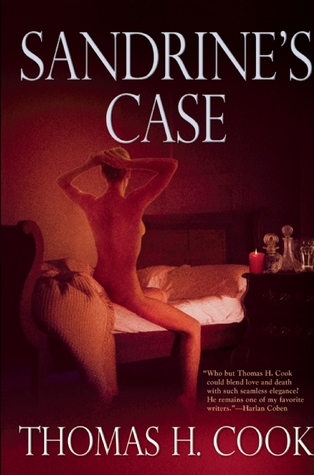
Bald-faced liars. These bad-boys take pride in playing mind games. As Holden Caulfield says, “I’m the most terrific liar you ever saw in your life. It’s awful. If I’m on my way to the store to buy a magazine, even, and somebody asks me where I’m going, I’m liable to say I’m going to the opera. It’s terrible.” Amy and Nick Dunne in Gone Girl are classic liars. One of the best liars might be Verbel Kent in the brilliant screenplay for The Usual Suspects. One of my favorite novels, Sandrine’s Case, by Thomas Cook features a really well rendered unreliable, Samuel Madison. His wife is Sandrine, who suffered from Lou Gehrig’s disease, shutting down in stages, and finally is found dead by her own hand – or was she? The novel opens with Sam’s trial for murder but is one big juicy flashback that explores his marriage and the days leading up to the trial. Cook skillfully builds suspense with Sam’s narrative, dropping “clues” that can be read in more than one way. Sam isn’t very likeable and we don’t believe him. But then the ending is turns everything on its head.

The mentally ill: In Shutter Island Teddy Daniels is a bipolar mental patient who hallucinates that he is a U.S. marshal. In the film, A Beautiful Mind, we believe John Forbes Nash is a brilliant mathematician working undercover for the government, until about halfway through we find out he is a delusional schizophrenic. In Henry James’s Turn of the Screw, it is impossible to tell if what we are reading is a ghost story or the tragic tale of a young woman undergoing a breakdown. In Ken Kesey’s One Flew Over the Cuckoo’s Nest, the first-person narrator is Chief Bromden, a schizophrenic. In the first chapter, he says, “God; you think this is too horrible to have really happened, this is too awful to be the truth! But, please. It’s hard for me to have a clear mind thinking on it. But it’s the truth even if it didn’t happen.”

The mentally altered or different: In Chuck Palahniuk’s Fight Club, the narrator has debilitating insomnia that makes his grasp of reality suspect. Amnesia figures into the veracity of narrators in SJ Watson’s thriller Before I Go to Sleep, in the cult film Memento, and in my own book She’s Not There. Post-trauma Stress Syndrome colors the reality of the Vietnam vet in the film Jacob’s Ladder and in Slaughterhouse Five, Billy Pilgrim, after the Dresden bombing, comes to believe he was abducted by a bunch of aliens. Vonnegut warns us about Billy with the book’s first line: “All this happened, more or less.”

The Naif: This narrator has limited knowledge due to a mental state or narrow world view. In Forrest Gump (Winston Groom’s novel, not the sentimentalized movie), Forrest’s 70 IQ gives him cognitive limits. We might also include here Christian, the 15-year-old autistic in Mark Haddon’s The Curious Incident of the Dog in the Night-Time. And even Huck Finn, who is only 14 after all tells us, “Everybody lies.”

Children: By virtue of their innocence, limited experience and gullibility, kids can’t really be trusted. In Extremely Loud and Incredibly Close, the narrator is a 9 year old boy looking for his dead father after 911. In Emma Donoghue’s bestseller Room, the narrator is a 5-year-old who is trapped in a small room with his mother and talks to the furniture. He doesn’t lie, but he does say, “When I was a little kid I thought like a little kid, but now I’m five I know everything.”

Dead People: Can we really trust Susie Salmon to tell us the truth about what happened to her in The Lovely Bones? Is Nicole Kidman’s seeing dead people walking around in her manor house in The Others, or is she dead herself? And has there ever been a bigger case of denial than Dr. Malcom Crowe in The Sixth Sense?

Now here’s something to chew on:  All characters we create are in a way unreliable. Unless you are using a true omniscent point of view (wherein you the writer knows all, sees all and tells all), our stories are filtered through at least one consciousness and sometimes multiple prisms. One one person can know the “truth.”

This is sometimes refers to as the Rashômon Effect. It comes from the 1950 Akira Kurosawa film Rashômon. It is a crime drama that uses multiple narrators to tell the story of the death of a samurai. Each of the witnesses describe the same basic events but differ wildly in the details, alternately claiming that the samurai died by accident, suicide, or murder. The point is that different witnesses produce contradictory accounts of the same event, though each version is equally sincerity and plausible — or suspect. I often recommend a viewing of this movie for writers struggling with multiple POVs.

So why are unreliable narrators so appealing?  I think it has something to do with our readers’ expectations within the “norms” of fiction coupled with the power of the twist. think of it this way: When a character starts to tell you a story, your natural instinct is to believe him and what he is describing, feeling or thinking. If the narrator tells you the sky is blue, you believe because he gives you no reason not to. Fans of crime fiction, in particular, tend to believe the narrator because often he or she is a person of authority (cop, investigator) who acts as a sort of guide along the way to us discovering the truth.

But sometimes, the person isn’t telling you the truth or the truth is being altered through artful lying or filtered through something like a mental illness. Or we find out that our guide is actually the murderer.  That’s the brilliant conceit in Agatha Christie’s seminal The Murder of Roger Ackroyd.  Nothing Dr. Sheppard says is technically untrue; he just hides the truth with his phrasing and omissions so we believe that he is innocent and loyal.

That’s what makes unreliables so fascinating. When the twist is revealed and we finally realize we have been lied to, the story can spin the story off into a totally new direction. But unreliable narrators are tough to pull off well. When badly handled, they can just made readers feel manipulated or confused.

So let’s talk now about some things you the writer have to keep in mind if you’re going to play this game. Here are some of take-aways from our SleuthFest panel and discussion.

Questions to Ask Yourself Before You Use Unreliable Narrators

Confess or conceal? Often, the narrator’s unreliability is made clear from the start – like Holden Caulfield telling us he’s a liar. But for more drama, some writers chose to delay the revelation until near the story’s end, thus delivering that great twist. This is common in thrillers. But here’s the problem with that – it can made readers angry. That happened with Shutter Island, I think. People either love or hate that book. Dennis Lehane is on record saying he wanted the ending to be purposely ambiguous. But a scan of Good Reads shows frustration and a lot of WTFs?

One of my favorite URs in all fiction, who tells us up front he is unreliable, is Odd Thomas in Dean Koontz’s novel of the same name. Here is the opening of Chapter One:

My name is Odd Thomas, though in this age when fame is the altar at which most people worship, I am not sure why you should care who I am or that I exist… I lead an unusual life. By this I do not mean that my life is better than yours. I’m sure that your life is filled with as much happiness, charm, wonder, and abiding fear as anyone could wish. Like me, you are human, after all, and we know what a joy and terror that is. I mean only that my life is not typical. Peculiar things happen to me that don’t happen to other people with regularity, if ever.


For example, I would never have written this memoir if I had not been commanded to do so by a four-hundred-pound man with six fingers on his left hand…When at first I proved unable to keep the tone light, Ozzie suggested that I be an unreliable narrator. “It worked for Agatha Christie in The Murder of Roger Ackroyd,” he said. In that first-person mystery novel, the nice-guy narrator turns out to be the murderer of Roger Ackroyd, a fact he conceals from the reader until the end.


Understand, I am not a murderer. I have done nothing evil that I am concealing from you. My unreliability as a narrator has to do largely with the tense of certain verbs.


Don’t worry about it. You’ll know the truth soon enough.

Can you write well in first person? All first person narrators are unreliable in their own ways because they are filtering all events through ONE CHARACTER’S biases, experiences, and beliefs. But with unreliables, that filered is complicated by extraneous influences like illness, so it’s doubly hard to pull off. Also, to pull off a satisfying unreliable narrator, you must be fully within that character’s psyche. You must know them inside and out. If you have trouble plumbing the depths of “normal” narrators, then this is not for you.

Why doesn’t it work as well in third person? Sure, there are examples of successful third-person un-relys, but I think it’s hard to writer because it can make you, the writer, seem unreliable. Readers will accept a liar telling the story. But not if that liar is you. The writer needs to be able to “hide” behind his narrator.

Can you pull off a possibly unlikeable character? Now, most of us sort of sense it when we’re being deceived, and that creates an element of mistrust. So your trick in writing an reliable narrator is to create a character who has enough empathetic characteristics that we still relate to him even though he isn’t trustworthy. You also have to create a plot that is so juicy that that readers will turn the pages even though they may not like your protagonist. I think this accounts partly for the success of Gone Girl. As gruesome as Amy and Nick Dunne were, we couldn’t look away.

Think twice about using children. Now maybe this is my personal bias showing here, but I really don’t like books narrated by little kids. Teens, yes…but anything below about 10, and I get weary. Here’s why: If you are writing an unreliable narrator, you must be in an intimate point of view. If you are in an intimate POV, your words, phrases, syntax, description – everything – must be filtered through the sensibility of a child. I gave up on The Curious Incident because I found the stream of consciousness wearing. I couldn’t get past chapter three of Room because…well, all you parents out there, tell the truth: How long can you really listen to a 6 year old? Try 352 pages then go have two stiff drinks.
Which leads me to the next question you have to ask yourself before you consider using an unreliable narrator:

Are you going for gimmick? Be honest with yourself about this. If you are writing from a child’s POV or letting a mentally unbalanced person tell your story, ask yourself: Am I doing this because of a personal feeling or am I creating a gimmick in the hopes of standing out from the crowd?

And finally…

How much stamina do you have? Being in the head of an unreliable narrator can be exhausting for you the writer. Not just because of the demands of being in an intimate POV. But because you have to constantly reassess how much – or little – information you are dribbling out to the reader. You have to be in total control of a character who often is not in control of himself. It is hard for a rational person (you the writer) to “become” an irrational person. Which is also why so many serial killer characters feel wooden.

In my case, my character Amelia Tobias, is an essentially good person. But when a head injury gives her amnesia, she loses her grasp on reality. I did a lot of research on amnesiacs and tried to understand the fragility of their reality. But to be honest, I found it easier to slip into the skin of Louis Kincaid, a biracial man, than a woman who can’t remember her past and whose grasp of her reality is constantly changing.

So did I scare you off? Does letting one of these types into your imagination sound like too much trouble? Well, it’s high risk but also high reward.  When done well, like in Thomas Cook’s Sandrine’s Case or Koontz’s Odd Thomas, you get a terrific twist that also delivers a poignant pay-off.  Or with a story like The Sixth Sense or The Murder of Roger Ackroyd, you’ll have readers rewinding or going back over your book muttering in amazement, “how did she do that?”

Unreliable narrators can create intrigue. They can be huge sources of tension. Readers can take great delight in discovering the reasons why behind it all.  If you really want to try this, just be aware of the possible pitfalls.  I got through my encounter with an unreliable and though it was a challenge, it made me stretch in new directions as a writer.

So go ahead. Give it a try. You can do this.

Would I lie to you?


What Does Bestseller Really Mean?

imagesA recent article (see link here) about the ease with which a reporter for the Observer uploaded a ‘book’ (which comprised, basically, a photograph of his foot) onto Amazon and became an instant ‘#1 bestseller’ – despite only selling three copies – got me thinking. It got me thinking, not just about the idea of scamming your way to bestsellerdom, but about the whole concept of being a ‘bestselling’ author and the kudos this  provides and implies.

Like any author, I would love to be able to claim such a title – although (perhaps not like every author) I only want to earn the title as a result of stellar book sales.  It seems, however, that through various manipulations (most often in how a book is categorized on Amazon) that the notion of being a ‘bestseller’ has become, well, let’s just say a little fuzzy. Now, this article does point out that they have always existed inherent biases within bestseller book lists and they have probably always been authors desperate enough to game the system (such as by buying their own books in bulk) in order to have the title ‘bestselling author’ bestowed upon them. However, the advent of Amazon and the plethora of ways an author can upload, market and sell their own ebooks seems to have increased the opportunities for gaming the system exponentially.

I don’t intend (in this blog post at least) to rake over all the ways and means authors manage to legitimately (or not) claim the ‘bestseller’ title but rather to consider what the word ‘bestselling’ means today (if, indeed, it means anything). As a reader, I can’t say I pay much attention to claims made to bestseller status on Amazon (especially now I now how easy it can be to claim such a title) – my eyes simply glaze over – and my decision whether to buy the book or not is far more dependent on reviews and recommendations than any ‘top selling’ status I might see on a website, book cover or author page. I do, however, take note of the bestseller lists in the NYT Book Review – to my mind this seems a better reflection of the popularity of any given book (even though I know the list probably has its own limitations). As a writer, becoming a NYT bestseller is also an obvious and much treasured goal…but, although I’d love to plop the word ‘bestselling author’ next to my name I wonder, given how many authors claim this (beyond the NYT list), how much meaning this term really has anymore.

So what about you – do you think the term ‘bestseller’ has lost a lot of its value through being bandied about so much? Do you pay any attention to Amazon’s designation of a book or author as a ‘bestseller’? As a writer, how do you view the issue? Do you think working the system is simply fair game (why not get the crown of bestseller any way you can?..) – or do you view the system as a broken one which holds little intrinsic value any more?  Which bestseller lists do you pay attention to as a writer, reader and book buyer?

The Exception That Proves the Rule About Opening With a Scene

by James Scott Bell
@jamesscottbell

school-1019989_1280

Writers and other artists are a touchy lot. We love our independence. We should all go around humming that song from Woody Allen’s Bananas, the one the guerilla leader sings:

Rebels are we!
Born to be free!
Just like the fish in the sea!

In short, we don’t like to hear the word rules. Don’t fence me in! Give me land, lots of land! Rules? We don’t need no stinking rules!

And yet, and yet … there are some things that are fundamental to storytelling and the fiction craft, so called because, guess what, THEY WORK! They help a writer weave a story that readers can actually relate to and get lost in. Imagine that!

Yeah, but So-and-so breaks the rules and writes bestsellers!

Sure, and how many So-and-sos are there? And maybe, just maybe, So-and-so compensates for the “rule breaking” by doing something absolutely astonishing somewhere else. Maybe So-and-so knows exactly what he’s doing when he breaks a rule.

In fact, I’d say good old So-and-so is actually the exception that proves the rule!

Let me show you what I mean.

I have a rule—or, if your hackles are starting to gather for a protest––a guideline or axiom: Act first, explain later. By this I mean it is much more engaging and compelling to begin your book with an actual scene in progress, with a character in motion, than it is to lard backstory and description and exposition all over the first couple of pages.

Is there an exception to this rule? Yes, one that proves it. The exception is this: a style that can enrapture you with the power of the writing alone. Almost always this is found in so-called literary fiction.

Example: here is the opening of Ken Kesey’s Sometimes a Great Notion. (Note: The ellipses are Kesey’s):

Along the western slopes of the Oregon Coastal Range … come look: the hysterical crashing of tributaries as they merge into the Wakonda Auga River …

The first little washes flashing like thick rushing winds through sheep sorrel and clover, ghost fern and nettle, sheering, cutting … forming branches. Then, through bearberry and salmonberry, blueberry and blackberry, the branches crashing into creeks, into streams. Finally, in the foothills, through tamarack and sugar pine, shittim bark and silver spruce––and the green and blue mosaic of Douglas fir––the actual river falls five hundred feet … and look: opens out upon the fields.

Metallic and first, seen from the highway down through the trees, like an aluminum rainbow, like a slice of alloy moon. Closer, becoming organic, a vast smile of water with broken and rotting pilings jagged along both gums, foam clinging to the lips. Closer still, it flattens into a river, flat as a street, cement-gray with a texture of rain. Flat as a rain-textured street even during flood season because of a channel so deep and a bed so smooth: no shallows to set up buckwater rapids, no rocks to rile the surface … nothing to indicate movement except the swirling clots of yellow foam skimming seaward with the wind, and the thrusting groves of flooded bam, bend taut and trembling by the pull of silent, dark momentum.

A river smooth and seeming calm, hiding the cruel file-edge of its current beneath a smooth and calm-seeming surface.

Kesey reaches out with his wrestler’s arms and lifts you off the mat. It works for me. It may not for others, but that’s the point. Kesey knows exactly what he’s doing here, eschewing act first, explain later. The exception that proves the rule is a dazzling literary style.

What happens when a writer doesn’t dazzle, but ignores the rule anyway? You end up with something like this:

The trip by jeep from the small village near Luena to Malanje in Angola, in southwest Africa, followed by a train ride to Luanda, the capital, had taken seven hours. The drive from Luena was long and arduous due to unexploded land mines in the area, which required extreme diligence and caution to avoid as they drove. After forty years of conflict and civil war, the country was still ravaged and in desperate need of all the help outside sources could provide, which was why Ginny Carter had been there, sent by SOS Human Rights. SOS/ HR was a private foundation based in New York that sent human rights workers around the globe. Her assignments were usually two or three months long in any given location, occasionally longer. She was sent in as part of a support team, to address whatever human rights issues were being violated or in question, typically to assist women and children, or even to address the most pressing physical needs in a trouble spot somewhere, like lack of food, water, medicine, or shelter. She frequently got involved in legal issues, visiting women in prisons, interfacing with attorneys, and trying to get the women fair trials. SOS took good care of their workers and was a responsible organization, but the work was dangerous at times. She had taken an in-depth training course before they sent her into the field initially, and had been taught about everything from digging ditches and purifying water, to extensive first aid, but nothing had prepared her for what she had seen since. She had learned a great deal about man’s cruelty to man and the plight of people in undeveloped countries and emerging nations since she’d started working for SOS/HR.

So help me, that is the first page and a half of a published novel. If it had not been written by an A-lister who could sell her parking tickets, no agent or editor would have let this through. (For the identity of the author and feedback about this passage, go here.)

I will note there are superb writers in familiar genres who sometimes begin with a literary style. Michael Connelly comes to mind (e.g., the opening of The Narrows). 

The point, gentle writer, is that no matter what you call them––rules, guidelines, fundamentals, axioms––they survive because they work every single time. That’s what I said. There is never a time when act first, explain later doesn’t work as an opening move.

But if you want to try something different, go for it. I’m all for spreading your writing wings. Just be aware of what you’re doing and why. Because if it doesn’t work out, guess what? You can always go back to the rules!

Where Do You Get Your Ideas?

by TKZ Guest Blogger Toni McGee Causey
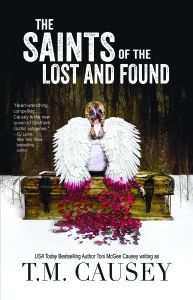
Toni - the saints of the lost and found

Note from Joe Hartlaub:  I am pleased to announce that I am relinquishing my blog post (but not my fedora) this Saturday morning to author, screenwriter, and certified wonderful person Toni McGee Causey. Toni initially grabbed the attention of the book world with her Bobbie Faye trilogy, a popular set of addictive books that defied genre classification. Her latest novel, the newly published The Saints of the Lost and Found, goes in a much darker direction, one which will please new and faithful fans alike. Toni has graciously consented to tell us two spellbinding and chilling real-world stories that describe how The Saints of the Lost and Found came to be, and to answer any comments and/or questions which you might have today as well. If you like the stories you read below, you should buy and read the book that they inspired. Please check with your local independent bookseller, and if they don’t have it, please ask them to order it.

Thank you so much, Toni, for sharing your talents with us this morning…SJ

Toni McGee Causey

One of the most dreaded questions a writer can field is the ‘Where do you get your ideas’ question, especially with regard to longer fiction. It’s the kind of query that has a million answers, and often the author has no real clue how they put this idea with that one, stowing them somewhere in the crannies of their minds where the random ideas may bump and roll around until they become so entangled, they form a completely new idea. Or mess. It can work both ways. What makes this one better than that one? What makes this one the thing you knew you would use for a book, when there were a thousand other notions that seemed just as viable shunted off to the side, where hoarders even feared to tread.

This is the one time I feel like the kid at the back of the class who finally has an answer, who raises her hand with an “oh oh oh PICK ME PICK ME, I KNOW!” squeal.

THE SAINTS OF THE LOST AND FOUND is the story of a woman, Avery Broussard, who sees lost things. Glimpses, like photo snapshots, of anything (or anyone) someone has lost bombard her as she moves through life and interacts with anyone. Lost keys, a phone, cameras, money, love. A child. Imagine having that ability to know the condition that lost thing is in, and see it, but not always be correct. She can see something lost in a wheat field, but may not know which wheat field.

Now imagine… you have that skill and you’re trying to find a lost child… before a killer can finish his task… and you fail. One of your rare failures.

Avery fails… and runs… and the story starts with just what happens when you cannot outrun your own abilities, or the vengeance someone will take for your mistakes.

So, where did that idea come from? Two odd-but-true events that took place probably fifty years apart. The first happened to my dad. The second, to me.

My dad told me his story… and he’s not one to believe in anything extra-sensory. He swears it’s true. He and my Paw Paw had been hunting. My dad’s family were very poor, and if they didn’t hunt, they didn’t eat. This was back in the days of the Great Depression, and my Paw Paw’s three hunting dogs were prized because they helped most of the hunts be successful.

On one such trip, two of the hunting dogs returned, but the best one did not. My Paw Paw and Dad searched everywhere, and couldn’t find her. Dad was about ten years old at the time, and after they’d been searching futilely for a while, Paw Paw told him to get in the truck. They drove for about an hour (once they were out of the woods), far south of the property they’d been hunting on, and my Paw Paw pulled up to a very old house where an even older black man sat on a rocker on his front porch. His eyes were milky-white, the cataracts were so thick, he could not have seen who it was who’d driven up, and he had no phone. When Paw Paw got out of the truck, Dad was surprised that the old man started talking first—and knew who they were. Without anyone having said a thing yet.

“You lost a dog a ways back,” the old man said by way of intro, and Dad said his hair stood straight up on his head.

“Yep,” Paw Paw said, but didn’t elaborate as the old man turned his head and sort of stared out into the trees. Trees he couldn’t see.

He hummed to himself for a few minutes, kinda nodded as if figuring something out, and then said to my Paw Paw, “You know that river where you were hunting?”

“Yep.”

“Well, about two miles west of where you were, the river forks. You know it?”

“Yep.”

“Take the right fork, and go on down a ways, ‘bout a mile or so, and your dog’s hung up there in the barbwire fence.”

Paw Paw thanked him, promised him some food from the hunt, and he and Dad climbed back in the truck, heading the almost hour drive back to where they’d been hunting.

My dad’s not the kind of person who believes in woo-woo stuff, especially something like this, so he indicated he thought it was all a waste of time, but they found the fork in the river, veered to the right, and about a mile from the fork, the dog was hung up in the barbwire fence.

I probably would have dismissed the entire thing as completely far-fetched, except that it was my dad telling the story, he was sincere in his disbelief-until-he-saw-the-proof aspect, and I’d had enough oddball experiences finding things that other people had lost that I knew there could potentially be more at work than someone simply telling a tall tale.

For many years, I’d get flashes of where something was that I was looking for… I’d “see” it, and then sure enough, that’s where it was. I’d never thought much about it other than assuming I had simply probably memorized its location as I walked through a room—maybe something akin to a photographic memory—but I never assumed it was anything extraordinary beyond just memory, until one day, a friend was telling me about her mother’s lost high-heeled red stiletto shoe (her telling me was for a story reason), and as she talked about it, I “saw” the shoe underneath a very specific kind of porch.

I asked, “Does she live in a house that’s raised off the ground?”

My friend was a little surprised, and said yes.

I asked, “Is it a little higher off the ground than maybe normal… it has steps in the center of the front porch that lead up to the front door, and no railings?”

My friend was getting a little weirded out, because her mother lived in Nova Scotia, and I’d just completely described her home… Even though we both knew we’d never talked about where her mother lived, and I’d never been to Nova Scotia or to her mother’s.

Then I said, “Well, I have this weird image of that red shoe. If she faces the stairs and goes to the left, behind the third pylon, there’s a depression in the dirt. The shoe is lying there. But it’s been chewed on by a dog.

My friend laughed, because her mother didn’t have a dog, but she said she’d ask her to look anyway.

She called me right back. The shoe was where I described it, exactly. In the condition I described it.

How does that even happen? I have not a single clue.

That freaked me out. Plenty.

Not long after, a different friend, Julie, who lived in Arizona (and I lived in Baton Rouge at the time), was desperately looking for another friend, K, who’d left a suicide note. Many mutual friends had gone out searching, but K couldn’t be found. When Julie called me and told me what was happening, as she talked, I could see K… she was sitting by a large tree, eyes closed, having already died. Her white car (I didn’t know she had a white car) was parked nearby. I could sense water, but not see it, which was odd and I could also see a woman with a backpack leaning over K, not yet realizing that K had died.

I told Julie all of this. She was noticeably disappointed when she sighed and said, “Unfortunately, where we live, it’s a desert. There are no trees like that, and no water.”

And I completely understood–she was hoping for that magical solution, and I honestly couldn’t give it to her. It bothered me terribly to be so wrong, but it was a long shot anyway. I told Julie, “Ignore it then, it’s just an odd image.”

She called back four hours later, devastated. They’d found our K… two hundred miles north of where she lived, sitting on the bank of a dried river bed, leaning against a giant cottonwood tree. Her white car was parked nearby. A woman with a backpack who’d been hiking with friends had found her.

She’d only died about an hour earlier (Julie believed), based on a ticket she’d paid to enter the park. Witnesses would later confirm sightings of her when she’d parked and then gone and sat by the tree.

Aside from the shock and grief for the mutual friend, the entire conversation and ensuing discovery stunned me and if it hadn’t happened to me, I wouldn’t believe it. I wouldn’t blame anyone for not believing it. What was worse, I didn’t know what to do about it. Help people? How?

Not long after, I told a couple of people, and the first thing they did was ask me about something they’d lost. It was a near-instant reaction on their part, and sometimes it was something important, but sometimes it was something that had just eluded them and they were tired of being thwarted. Every time, I ‘got’ an ‘image’ that popped in my head. And I was almost always wrong about my guesses. I think my ratio of correct “images” to questions was so low, it probably needed multiple zeroes after a decimal point.

I didn’t mind being constantly wrong. It was a relief, actually, because the hope that people have when they are asking about something lost is palpable, and dashing those hopes, or seeing their disappointment, was equally brutal.

Which lead me to wondering… What if? What if you could do this for real… But you’re human, you’re not perfect, and you make mistakes? Would you go to the police? Would you volunteer? Where do you draw the line?

What if everyone wants your help? How do you have a life? Do you hide your ability?

What if a child’s life depends on it?

What if your own life does? Or someone you love?

Years after losing K, Avery was born, and I think she’d probably been there all along, from the first time I found something… or maybe even as far back as when my dad told me that story about the hunting dog.

And those what ifs kept piling up, pressing forward, begging to be answered until I could ignore the question no longer.

THE SAINTS OF THE LOST AND FOUND is not for the faint of heart. It’s a dark book, and it may break your heart, but it may also give you hope.

For me, it’s finally given me peace.

www.ToniMcgeeCausey.com


First Page Critique – What’s At Stake?


image

Kathryn Lilley, TKZ

Today we’re reviewing the first page of a story called THE CASE OF THE MISSING YACHT, submitted anonymously for critique. As usual, my comments follow the submission. Please add  your feedback and constructive criticism in the comments. Thanks!

THE CASE OF THE MISSING YACHT

The sign on the door of my Georgetown office said “Vic Jones, Finder of Lost Items.” You might say I’m the St Anthony of DC. I was logging the details of my last case and anticipating an early start on a liquid-refreshed weekend when Mr. Double-Breasted-with-Cravat flounced in blathering about his lost yacht. Gee, I was mildly impressed; until now I didn’t know anyone who owned a yacht.

He was an odd little man, heavy around the bottom, narrow shoulders, thinning hair, and a Groucho Marx-style mustache. He talked non-stop seemingly without taking a breath.

“You’re looking for a big boat, right?” I cut off his monologue; I couldn’t stand it another second. “Who has time to play with boats? A grown man like you ought to be working the mean streets making a decent living.”

“I do make a decent living, young lady,” he went all indignant. “How do you think I can afford a yacht?”

I reached over the desk and laid a stinger across that fat face of his. I don’t care much for back-talk.

His eyes went moist as uncertainty registered followed by a flash of terror. His hand covered the enforced blush spreading over his cheek. What do you think, too forward on our first encounter? He backed way and mumbled, “Perhaps another time.”

“Take a seat.” I said, and noted his hesitancy. “What’s the matter; did I muss your hair? You were saying something about a lost yak?”

“Yacht,” he corrected me. He settled into my wide leather chair, the one that gets clients to relax and unwind. I want folks to feel at home, you know?

“It’s not big as far as yachts go,” he continued, and produced a picture of a sixty-five foot Sea Ray. He stared longingly at his newly departed love while putting up a brave front for me.

“Whatever.” I got down to business with my usual services-and-expenses spiel. He didn’t blink for a full ten seconds as he weighed my fee against the loss of his new toy. Finally he swallowed and gave me a brief nod. I smiled demurely at my new client.

“Do I call you Ms. Jones?”

“Mizz? Only if you’re tired of chewing with teeth. Vic will do nicely.”

“Mitch Goldberg. Pleased to meet you, I’m sure.” We shook hands. I could tell he was warming to me.

My Comments: 

First Things First: the Title

I’m assuming that the title, THE CASE OF THE MISSING YACHT, is simply a working title that will be changed down the road. It rings a tad old-school cozy. But kudos to our brave author for using a placeholder that is more original than UNTITLED.

Pacing and Characterization

I immediately liked the bright, breezy voice of the narrator. The scene flowed along at a lively pace. One nit: The character’s name, “Vic,” made me visualize a male narrator at the beginning of this page. I had to revise my mental image of the main character at the end, when I read the reference to “Miss.” I would suggest reworking the first few paragraphs to avoid creating potential confusion in the reader’s mind.

Avoid Throwing Readers into Full Stop

When a reader has to slow down in order to understand something, he may stop reading. Minor example: some people might not have the background to understand the reference to Saint Anthony as written here. The writer might want to consider adding a clarifying phrase to avoid leaving those readers in the dark. (Even if most of your readers know full well who Saint Anthony was, there’s always someone who doesn’t and has to figure it out from context. Like me).

Another area of potential confusion: I came to a Full Stop when I read the following sentence:

I reached over the desk and laid a stinger across that fat face of his.

I wasn’t sure what “stinger” meant (although I assume it meant a face-slap). In any case, having the character slap the visitor’s face struck me as reaching and a bit over the top.

A Note About the Dialogue 

I had a couple of issues with the flow of dialogue between the two characters in this scene. I had to backtrack when I hit the following lines, to figure out which character was speaking.

He spoke nonstop without taking a breath.

“You’re looking for a big boat, right?”

Because the dialogue is interjected after a reference to the yacht owner being a motormouth, I first assumed it was the guy who was speaking. Every time a reader has to pause to sort out confusion or wrong assumptions, there’s a risk of losing the reader’s interest in continuing reading.

For great tips about handling dialogue and other gnarly, craft-related issues, I recommend that the writer read DON’T MURDER YOUR MYSTERY by Chris Roerden.

A Bland Setup Causes Readers to Jump Ship

Overall, I wasn’t drawn in by the scenario presented on this first page, primarily because the setup wasn’t sufficiently intriguing or compelling. When Vic said “Whatever” in response to hearing about the yacht-owner’s plight, I found myself nodding in agreement. A rich bozo’s smallish yacht has disappeared: why should I care? There needs to be something more intriguing at stake to engage the reader’s interest; this first page needs to give a hint of what’s to come. Otherwise the reader, like Vic, will simply jump ship with a shrug and a “Whatever.”

Thank you to our brave writer for submitting this page. What comments can you add for the writer of THE CASE OF THE MISSING YACHT?

Is Writer’s Block Real?

As you read this, I am on the road to Left Coast Crime. I’m tagging along with my buddy Brett Battles and am not officially attending, so you’ll find me wandering around the hotel bar or lobby, probably looking a bit lost. If you’re attending and you see me, please either hand me a dollar or buy me a donut. I may even have time to chat.

So, with that said, I won’t be around to respond to today’s post, but I invite you to fill the comments with some lively conversation in my absence.

Today’s topic is writer’s block, which I’m sure has been discussed many times here at the Kill Zone. But a couple weeks ago, I offered my take on the subject on everybody’s favorite time-suck, Facebook, and this is what I said:

If you haven’t noticed, I’m extremely opinionated. Some might call it a fault. I think it simply means I have convictions. But I’m perfectly willing to change my opinion if someone can present me with compelling evidence to the contrary.

So sometimes my opinions piss people off. Today I expressed this opinion and it ruffled some feathers:

There’s no such thing as writer’s block. It’s an invention. It’s not a reason, it’s an excuse.

When challenged, I responded thusly:

“So do we have lawyer’s block or doctor’s block or mechanic’s block or accountant’s block? People in all of these professions experience bad days, they all get burned out, they all get stuck at times, but do they take the unprofessional route and stop what they’re doing? No. Unless they’ve had a complete breakdown (which is something else entirely), they keep doing their jobs.

There’s nothing special about being a writer. It’s a job. One I, and many of my friends, have been doing for more than a couple dozen years. None of us can AFFORD to get “blocked.” We write every day, seven days a week, no matter what.

Writer’s block is not a mental condition.

Stress, anxiety, etc.—real conditions that cause real problems—are good reasons for a writer, or any of the above professions, to stop working. But that’s not writer’s block, so let’s not pretend it is.

Nor is getting stuck.

Getting stuck is a natural part of the process, not a “block.” We get stuck simply because we haven’t thought our story—or our characters—through. Once we do, we get unstuck. It happens with nearly every story.

Sorry if I’m unsympathetic. But to my mind, you either do the job or you quit.

As for inspiration, if you need to wait for it in order to work, you might as well give it up.”

Now, you can imagine the response I got. Some positive, but one from a writer friend, who also happens to be a doctor, said I didn’t know what I was talking about. That writer’s block is a very real condition.

I respect this man’s opinion and value him as a friend, so I didn’t want to get too far into it with him. But my response to him was that there are certainly conditions that people suffer from—depression, anxiety, etc.—that can lead to writer’s block, but the block itself is merely a symptom of underlying problems. Unless you’re suffering from a mentally or physically debilitating disease, if you’re a writer, you should be writing. No excuses. So maybe the problem is defining what “writer’s block” is. How ever you define your writer’s block, if you truly do suffer from a lack of creative ideas and your “normal flow” seems to be ebbing you could have a look into consuming CBD products from sites such as cbdoilsuk.com as CBD in some users has been reported to increase their creativity and could help you get that “flow” back.

Since I don’t believe in it, however, I have a hard time defining it, but I can tell you what it isn’t.

If you are having problems with a story, if you’re stalled, if you’re staring at a blank page and nothing is coming that day, that’s not being blocked. That’s merely a setback. We all have them. We hit walls, we write ourselves into corners, we figure out solutions, and if we’re professionals, we press on.

And that’s true of anyone in any profession. If you want to get paid, you get to work.

Hell, I’m working right now and I’m NOT getting paid for it. And I had absolutely no idea what I’d be writing about today, but I sat down and did it anyway. As I’ve said, I can’t afford to be “blocked.”

Anyway, those are my rather inelegant and somewhat gruff—and yes, insensitive—views on the subject. Now, please, discuss amongst yourselves.

It’s quite possible it’s true what they say about me and I am crazy.

Now, does anyone have a donut?