You Wouldn’t Believe What’s Out There…

DetectivewithMagnifyingGlass-300pxcomputer

It has been stated  repeatedly that information is the new currency. Mystery and thriller authors and readers have known that for decades. What is a clue, if not a piece of information? What is new is the ability of anyone — and I mean anyone — with internet access and a bit of deductive reasoning to discover quite a bit about someone else, without paying a private investigator to do so or getting down and dirty themselves and going through someone’s garbage the night before the scheduled pickup. I’m not talking about one of those pricey subscription services, either. I’m talking about what you can get from the comfort of your home with a smartphone or a tablet. Those of us of a certain age are familiar with the gumshoe — Mike Hammer comes to mind —who had a contact at the courthouse, or the phone company, who is an inside source of inside knowledge. These days it just takes a few keystrokes.

If you are writing contemporary detective fiction your protagonist can use these sources quite easily. So can you, for that matter, for your own benevolent reasons. The following are the most widely and readily available:

Google Search: This may seem obvious, but it’s just a starting point. It doesn’t contain everything, by any means, and may also give you too much information. If I can’t find precisely what I am looking within the first two or three pages of search results I look elsewhere, such as

Facebook: It may seem trite but Facebook can be a wealth of information. I have seen couples who I know play out their domestic problems in Facebook posts. Ouch. On another occasion, I was considering an extended period service contract with a gentleman — payment up front — until I read some of his wife’s posts, in which she repeatedly described the financial problems her husband’s business was experiencing. It did not instill confidence, nor did her demonstration of her inability to operate the governor between her thoughts and her fingers. I went elsewhere.

While we are talking about Facebook: it’s a criminal’s dream (so is Twitter), particularly with respect to those folks who can’t travel more than five miles from home, eat anywhere besides McDonald’s, or use the commode without telling the Universe where they are, like, RIGHT NOW, and what they are doing. Some unsolicited advice: wait until you get home to spread the news about how interesting you are. Otherwise, you are advertising that your home is empty and waiting to be burglarized while you are busily telling the world that you are engaging in conspicuous consumption.  Ask your local police department (or better yet, your insurance agent) if you think that I am kidding. Much of what is available online is put there by government agencies, and you can’t opt out. It’s there. Keep in mind that what you voluntarily put on Facebook can be viewed by anyone, be it your spouse or significant other (or both!), and a prospective or current employer, customer, or client.

County auditor/assessor office websites: this would be the office that collects your real property tax. While I have come across a couple who charge a fee for access — particularly in California — the overwhelming majority of the ones that I have accessed are free. It is a great way to get an up-to-date address for someone. If someone owns several pieces of property in a county, check to see where the tax bill is sent. That is almost certainly where they actually live.

City, county, and probate clerk of courts websites: Do a name search on these sites to see if your person of interest is sued or being sued, has had criminal charges brought against them, has a lead foot when driving, has a history of divorce, has taken out a marriage license, or has warrants or civil judgements outstanding against them. You don’t need to be an attorney to search most of these sites, and most are free. Some jurisdictions do charge a fee and/or limit access to attorneys — again, California — and some don’t have online access at all but that number is dwindling.

Cell phone records: Not everyone is aware of it, but you can access your own cell phone records — or the records of family members who are on your family plan — online once you setup your account. This ability is not without benefits. Several years ago my younger son had his cell phone stolen by a customer from the restaurant where he was working (long story). He called and told me fifteen minutes after it happened. I logged on and discovered that the perp was already calling people. I started calling the same numbers, telling them to call their friend back and tell him that he had thirty minutes to return the phone or I would hunt him down like a dog (yes, I could have called the thief directly but doing it this way seemed more sinister). The phone was returned within a few minutes. Now, of course, one had an app for such things but not everyone loads it or knows how to do so.

As for what is NOT out there: I have yet to find a good online directory for cell phone numbers in general or reverse directories. I recently attempted to find a friend that I had been out of touch with for over forty years. He didn’t have much of an internet presence so I wound up checking the real property tax records in the county where he had lived when I knew him. He was still there. I tried to get phone numbers for him online and got four — four — all of which were outdated or no longer valid. I wound up mailing him a letter and heard back from him. Sometimes, I combination of old and new works best, as Loren Estleman demonstrates on an annual basis in his immortal Amos Walker series.

Does anyone else have other websites they know of, that detectives, fictional or otherwise, can use? And, better yet, does anyone have interesting stories resulting from their use of such websites?

First Page Critique: THE PEACEMAKER

by Joe Hartlaub

I am honored to have been asked to critique the first page of a work-in-progress titled THE PEACEMAKER by an anonymous author. My comments follow. Fellow TKZers, please feel free to offer additional constructive comments, particularly if you see something that I have missed. Thank you in advance. And thank you, Anonymous Author, for getting the job done and showing us your work.

THE PEACEMAKER  

The young woman was rounding the corner of the jogging path in Central Park. The man watched as she pulled out her cell phone. .He had been following her for years, watching, and waiting for the perfect moment to step out of the shadows and make her his own.

There had many other women, but none matched the qualities he saw in her, so when he tired of them, they simply disappeared. He and the jogger had a history and a destiny of which she was not yet aware.

The man watched as she dialed a number, not knowing she was calling her godfather, telling him she thought someone was following her and, was certain someone had been in her home when she was away.

Dan Alston told his goddaughter to go home and remain until she heard back from him; then he called his old friend, Seth Barkley.

Over fourteen hundred miles away Marshals Seth Barkley and Steve Daugherty were having problems of their own. They were at the front door of the home of wealthy day trader Jackson Callan to arrest him when three gunshots rang out.

Now, they were inside the house, swiftly and cautiously moving toward the staircase. The marshals were aware that Callan’s wife and three children might be upstairs

Looking up the stairway Barkley’s heart began to race. At the top stood a small woman crippled with fear. Behind her holding a 9mm Glock to her head was her husband.

Barkley’s first thought was, how did a mere white collar arrest go so wrong? His second, three gunshots, where are the children?

Barkley cautiously moved to the front of the stairs where he had a clear view of Callan. Daugherty moved behind Barkley to the right where he had a clear shot if Callan decided to end it all right there, taking Barkley with him.

“Is anyone else in the house?” Barkley asked

“My three children,” Callan replied eerily calm.

Barkley suddenly got a sick feeling in the pit of his stomach remembering the three gunshots that had led to this moment.

“Let your wife and kids go,” he said to the man. “They don’t play a part…”

Before Barkley could finish his sentence, a shot rang out causing Callan’s wife to fall to the floor. A split second later a shot from Steve Daugherty’s gun landed Jackson Callan next to his wife.

Feedback:

Generally, Anonymous Author needs to get ahold of the story’s reins and slow it down a bit. We’ve got one page and a few paragraphs, in which the perspective changes four  different times, from a stalker to a jogger to her godfather to a policeman. I like fast-paced stories as much as anyone but the author needs to give the reader a bit more in each scene, particularly in the opening paragraphs, before moving on to the next. Certainly the opening scene is interesting: a stalker, and a dangerous one, watching a woman who has apparently just become aware of his attention. Let’s start with that, focusing primarily on The Stalker, and proceed. I give a couple of examples of how to slow things down a bit while giving the reader more information, but certainly they are not all-inclusive.

Names: Before we go any further let’s give the stalker and the jogger a names, or a nicknames, so that we can personalize them and identify them when they come back around in the story. For our purposes, I’m going to call the stalker The Stalker (as you may have noticed) and the young woman The Jogger. Tell us a little bit about each character as they are introduced, or as soon as practicable thereafter. Let’s start with The Stalker. And give him a distinctive piece of clothing or jewelry — a keyfob that he likes to play with, something that he always wears —that the reader can use later to identify him. It’s better to do that — or to start doing that — when you first introduce a character, rather than going back and trying to back and fill later.

Show, Don’t Tell: The Stalker is a dangerous guy. We learn this in a sentence or two. Draw this out a bit. Grow the story with specific details. Rather than saying that The Stalker has been watching the woman for years indicate that he has been watching her long enough that he knows things about her that he probably shouldn’t, such as her schedule, where she works, where she shops, where she lives, and her cat’s name and what she feeds it. Little details such as this indicate that he has been snooping around the corners of her life, and maybe even going so far as getting into her apartment. As far as The Stalker’s previous women go, be vague but menacing. Talk about The Jogger’s predecessors, the ones he left behind, such as a reference to leaving women  in -x- number of states, some of whom have been found, others who have not (to use but one example).

Put the reader in the moment: The Stalker is watching the woman in Central Park as she jogs. Give us some detail. You don’t need to go overboard, but tell us what he finds to be attractive about her as he watches her run, using language such as “her tall, slender figure” or “ her long hair was secured in a ponytail that swung back and forth like a metronome as she passed him,” or what she is wearing as she jogs. You can also use a brief description of her clothing to hint at the weather conditions. Also, do a little research into the Central Park jogging trails. Just mentioning that the jogger is on the Reservoir Path, the Great Lawn, or Outer Park Drive Loop — and indicating that she lives nearby, say, on Ninth Avenue — will put the reader more into in the scene.

Slow the transition of perspective from one character to another: THE PEACEMAKER is told in the third person omniscient, where the narrator is outside of the story and telling the experiences and thoughts of each character. An author will have have a happier reader if the reader can follow the transition of the perspective from one character to another smoothly (unless, of course, you are William Faulkner or Cormac McCarthy). I felt that it was a bit choppy here. The Stalker sees The Jogger using her phone (did she stop to make the call or keep running? We don’t know) to call her godfather who then calls his friend in law enforcement who is in the middle of an offal storm. That’s all in a few paragraphs. Let’s slow things down and relay the transitions rather than throwing them. The Stalker is watching The Jogger and thinking his dark thoughts, indirectly describing her to the reader while revealing something of himself as well. The Jogger  suddenly stops jogging and pulls her phone out. Boom. A disturbance in the Force, Luke. She hasn’t done this before.  New paragraph, double-spaced. Let’s change perspective.  We’re now observing the jogger. Let’s learn a little about her, what she was thinking about when she started running on this particular day (work, a friend, joy/regrets about moving to New York, etc.), and especially how she came to notice that guy who seems to be watching her whenever she’s jogging (and at other places, too), and what made her decide to call her godfather. By now, we’re a couple of  pages into the book. If you want to introduce Dan Alston at this point, fine. Again, transition by introducing Dan Alston and describing him in his environment, placing him a couple of minutes before he receives the phone call from his goddaughter. Describe him sitting behind his desk or in his den, sipping a scotch or whatever, and getting a call from that goddaughter of his who disregarded his advice and moved to New York and who only calls when she needs something or who calls him faithfully once a week just to see how he is. And so it goes. Doug calling his friend Seth Barkley makes for a good transition point. I like how Seth is introduced here.  Seth can call Doug back a few hours after Barkley clears up that domestic situation which has totally gone FUBAR , and we can learn more about Doug, as well as Dan and The Jogger, based upon what they discuss. Then we can go back to New York and Central Park and The Stalker and The Jogger and see how things are playing out.

Proofread: I am the world’s worst proofreader so I consider this particularly important. There are a number of glaring punctuation errors here. The punctuation errors include two periods after the second sentence in the first paragraph; a comma after “watching” in the second sentence and after “and” in the third sentence of the first paragraph; and no period at all at the end of the last sentence of the sixth paragraph. These are extremely distracting for the reader, and chop up what flow you have in the narrative. After you have completed your first draft, go over your work slowly and carefully for typos and then have at least three other people do so. My own experience for what it is worth is that women are much better at this than men. Your results may differ, but have a set of eyes other than your own read your manuscript over. And be careful using Word, which occasionally causes letters and words to mysteriously drop out when cut and pasted into other formats.

Keep working on THE PEACEMAKER: By sending your first page to us — or anyone — you have gotten further than something like ninety percent of potential authors. Now is not the time to stop. Drop back and tell us how you’ve done. THE PEACEMAKER needs work, but like many houses that need rehabbing, it has good bones. As our blogger emeritus John Gilstrap says, when failure is not an option, success is guaranteed.

Thank you again, Anonymous Author, for the privilege of critiquing your work. And if you have a question, or just want to disagree with me, feel free to email me.


Customer Service

My wife is currently in Hawaii with family and I recently decided to send her some flowers for her birthday. I picked out a beautiful rose and lily bouquet from an online floral delivery service, paid my money and set the date of delivery. On her birthday she called and said they were beautiful flowers and texted me a photo of the arrangement.

One problem. The arrangement didn’t have a rose or a lily in it. In fact, it didn’t even remotely resemble the arrangement I paid for (at no small price). So I emailed customer service and complained and they apologized profusely and promised to send out the proper arrangement the following day at no cost.

My wife never got the re-delivery as promised, so I asked for a refund. Fortunately, they gave it to me. So I’d call it a bit of a wash as far a customer service goes. They failed to correct their mistake, but at least they gave me the refund.

Why do I bring this up?

We’re often told that when we’re writing we should write for ourselves and hope that the readers will follow. I’ve said this myself a number of times and believe it to be true. That if you write a story that you love, their will surely be others out that who love it just as much or even more.

Nothing wrong with that.

But I think, as professional storytellers, we do owe our readers good customer service. And by customer service I mean that we deliver what we promise. If we’re painting pictures with our first few paragraphs—the paragraphs that make readers decide to buy the book—then we had damn well make sure that the rest of the book holds up and takes the reader on an emotional thrill ride.

I’ve personally read far too many books that started out promising, then began to peter out about halfway through as if the writer either lost his or her way or simply lost interest. Then they slapped a pretty cover on their work and threw it up on Amazon, hoping they’d done enough to get some sales.

And that’s poor customer service.

Good customer service starts long before you push that button on KDP. You should never publish (or, if you’re traditionally oriented, send out) a book until you have a solid working knowledge of characterization, dialogue, narrative, voice and, maybe most important, structure.

When we first decide to write a book, many of us sit down and just start writing without understanding any of the above. And that’s fine. The best way to learn these things is to start putting words on paper and use the lessons you’ve learned from reading other authors’ work to guide you.

But just because you’ve managed to finish that first book does not mean it’s ready to be published or sent out to an agent or publishing house. Good customer service demands that you proceed carefully, thinking not just about what makes you happy, but about the reader on the other side who will not be happy if you fail to deliver on the promise that every new book offers them.

Good customer service isn’t easy. It takes time to learn what works and what doesn’t. Even in this day and age, some people still don’t understand the concept of good customer service, but at least we have companies like Custom Water who get where we are coming from. To grow any business, the customers should be your top priority. Whatever industry you are in, you’ll start to understand how important customer service experience is. So it comes as no surprise to find that some companies are deciding to implement the use of software such as PieSync, to assist with data intergration, as well as improving customer service. To learn what your customers want and give it to them.

This is why companies have invested in other ways to help improve their customer service skills and the efficiency of their business. There is always room for any business to improve, especially in the field of retail. Sites like https://toppossystem.com/grocery-store-pos-system/ will get you up to date on how businesses are making their customers their top priority. It requires patience and practice.

And, yes, you are your first customer, so it is incumbent upon you not to be easily satisfied with your work. Make sure that before you send it out to the public, they’ll have very little reason to complain.

Destination Cuba

image

By Kathryn Lilley

The summer after I graduated from college many years ago, I traveled across Europe with a friend.  It was the height of the Cold War, and I was eager to visit West Germany–in particular, I wanted to see the Berlin Wall. That was where World War III was likely to start, my thinking went, so I wanted to see the place for myself. Unfortunately, my traveling companion did not share my morbid obsession with geopolitical hot zones. So instead of making an excursion to eyeball East German guards patrolling The Wall, we spent a few extra days lounging in Parisian cafes, drinking coffee and gorging ourselves on pan au chocolat. The only foreign crisis I encountered on that trip was during a lame attempt to look cool while smoking unfiltered French cigarettes.

When The Wall was finally torn down decades later, I felt a pang of regret for having missed seeing it. So perhaps you’ll understand why I’m so excited to be headed to Cuba next month.

This is what we were upset about...

This is what we were upset about…

I have only a hazy recollection of the Cuban Missile Crisis, which took place in the early 1960’s–I seem to remember people going around collecting sand bags, and adults at the dinner table poring over bomb shelter blueprints. (For our house, the “shelter” was going to amount to little more than a lean-to reinforced with a little dirt, which’ll give you a general idea of how well we’d have survived an afternoon of Mutual Assured Destruction).

Your Correspondent in Havana

Now that the United States has finally gotten over its hissy fit about, yanno, that whole nuclear crisis thing, I’m eager to visit Cuba. In my mind, that island nation represents the last vestige of the Cold War.image I want to see it before a tsunami of American tourists  descends en masse. (Hopefully the people of Cuba won’t allow US corporations to transform their island into yet another overpriced vacation destination. But I’m not optimistic).

Meanwhile, I’m hoping to glean a few travel tips for my upcoming trip to Cuba Libre. Have you had a chance to visit Cuba? Let me know if you have any tips or suggestions for the road. (According to Duolingo, my language-learning app, I’m still only 14 per cent fluent in Spanish, despite having diligently practiced for the last four weeks. So I’ll need all the help I can get.)

Hasta luego, comrades!image

Ten Myths That Sabotage Unsuspecting Novelists

Part 1 of 2 (because this ended being a lengthy analysis; when I post Part 2 on April 4th, I will include a link to this Part 1 post for your catch-up/review).

Writing a novel is complex work. On this point the most successful among us and the most consistently frustrated among us will agree.

No other artful avocation I can think of is complicated by so many processes, theories and debated conventional wisdom as the seemingly simple intention to write a novel.

It’s just a story, how hard can it be? Professionals make it look so easy… isn’t it?

And while it’s true there are many viable ways to go about writing a novel, some more efficient than others that in the end prove to be just as effective, there are also infinite ways to screw it up.

Some of those pitfalls have less to do with how and what you write than with what one believes to be true about writing and the writing conversation in which we are all taking part.

I recently read that about 80 million folks cling to the intention of writing a novel.

Which means, to whatever extent that is even close to being true, there are 80 million prospective authors who intend to turn pro. In a world loaded with ways to occupy our spare hours – golf, bowling, macramé, even reading – nobody seems to be doing this as a hobby.

They intend to get paid. To become famous. To contribute to the collective library of human experience, and thus, live forever.

And yet, very sadly so, a significant percentage of those writers are buying into myths that will hold them back or sabotage their writing dream entirely. Some will fail because they’ve never heard otherwise, they’ve never had their limiting beliefs challenged.

It seems that 80 million of us believe we have the raw chops to write a novel at the highest level of the game, and to command a fee for it. This alone is likely to be a limiting belief. It is a myth in its own right, because it’s just not gonna happen for all 80 million of us.

Not even close.

Not because the truth isn’t available to all.

It actually is available to us all.

But rather, because the truth will be lost on many. Sometimes because of the very writing conversation to which they look for guidance. Contradiction, confusion and outright toxic untruth is out there. Everywhere, in magazines and books and at writing conferences and in keynote addresses, even from the mouths of those who would have you believe they know from whereof they speak.

Confusing the matter is the fact that shreds of truth are marbled within all the noise, just as there are voices of wisdom wandering among the crowd. Like trimming the fat from a delicious rib eye of writing energy – because really, it’s just so fun and energizing to listen to or read about what others more famous than ourselves are saying about writing – we are left to digest as best we can before our arteries clog from the sheer preponderance of partial truths.

We all have access to the truth in all its varied forms, but we are challenged to weed them out from the abundant noise. Not just the truth – because indeed, there are many that apply – but to find our own highest and best truth.

Where process is concerned, what is true for one may not be true for another.  

But where craft is concerned, the truth about what works in a novel, and by omission or weakness what doesn’t, stands unchallenged and largely non-negotiable. If you doubt this, try writing a novel without dramatic tension or stakes, for example. Those are only two of about a dozen incontrovertible essentials.

There are voices calling to you in this regard, and as you read and listen and learn you must seek to separate veracity from hubris, knowledge from ignorance, the overly-simplistic from the perfectly complex.

It is precisely because there are so many pathways to success that you must discount anything that smacks of “this is how I do it” from the mouths of the famous. Because you may not yet know what they know.

Notice how the so-called gurus – Robert McKee, Donald Maass, Randy Ingermanson, James Scott Bell, and others writing here and elsewhere, including myself – rarely if ever say “this is how how I do it, so you should do it this way, too.” Some gurus apply different vocabulary and modeling to their versions of the truth, but when you look closely you’ll see that we’re all basically singing the same tune.

The one you’ll be singing, too, once you get it right.

Rather, we write about what we believe to be true about process without suggesting what your process should be, provided it leads you to certain outcomes, and then, what is unmistakably true about stories that work regardless of that process.

The former is fluid and negotiable.  The latter is as firm and solid as the gravity holding you in your chair.

And thus the beautiful, harrowing, worthwhile dance with our fiction plays on.

If you are reading this and thinking, “well, I hear you, this is hard, but nonetheless I’m going to be one of the few who actually make it,” there is good news and intimidating news.

The good news is that this is precisely the attitude you need, and if you go about it properly – both in terms of process and reaching the qualitative bar required of making it – you must might.

The intimidating news — it’s more good news, actually — is that you might just have to give up, to completely walk away from, some of the things you believe about how it all happens, and what it looks like when it does. Some of which might have been why you came to the writing party in the first place.

A few of these might not ring fully true for you… yet.  But the longer you are at this, the more clarity you’ll find in the following list of myths about writing novels.

Myth #1: “Just write.”

These two words, when strung together in this context, can be among the most misleading and toxic pieces of writing advice you will ever hear. Especially if they aren’t paired with some notion of what and how to just write.

There awaits a place along the writing road where this becomes solid advice. But until you just write in context to a robust awareness of certain principles – requisite storytelling competencies and story forces, all of which will serve you when done well and sink you if omitted or fumbled – you will for the most part be treading water if you simply just write.

For many writers – just for grins, let’s say that this is the case for 79 out of those 80 million aspirants – suggesting that they “just write” is like telling a prospective doctor who has not yet gone to medical school to “just cut.”

The outcome of that can be fatal.

Myth #2: Listen closely and you’ll hear what you need to know.

Maybe. That’s far from a certainty. The better bet is to hear what you suspect may be truth and then seek to prove or disprove it by looking for it within the stories you read.

We have been brought up to listen to those who have gone before us and succeeded mightily. We read about them in magazines, we take notes as they deliver their acquired wisdom in a keynote address. When they tell us that their characters are speaking to them – sometimes as if they want this to be taken literally – we believe.

Because we so want what they are saying to be completely true.

And so often it isn’t.

Here’s the dangerous part, the siren melody of their message: what they say won’t be completely wrong. Because it will be real and right – spot on perfectly accurate – for them. And yet it may actually be the worst thing you can do relative to your own writing process and your understanding of what makes a novel work.

Famous Writer A says she has no clue about her story when she begins, including the ending. She just writes and writes, year after year, draft after draft, until the story coalesces and her characters take on a life of their own. It’s as if she has very little to do with it – which in the moment sounds so humble and heroic – she’s only driving the bus, which is on autopilot to a destination that always surprises her.

Famous Writer B says he won’t start writing a project until the premise haunts his every waking moment, until he knows every last twist and turn, including the ending. Especially the ending. Then he writes a 50-page single-spaced outline and lets it stew for a few weeks while trusted advisers weigh in. Only then will he embark upon an actual first draft, and when he finishes that draft it is pretty close, only a tweak and a polish away from what he submits.

They are both famous bestselling authors. So who is right?

In that moment, the one that scares you the least, and inspires you the most, the one that aligns with what you already think you know and have chosen to believe is true for whatever reasons apply… that’s the writer you believe.

None of those are the best criteria for your choice. Better criteria awaits within the vast oeuvre of craft, solidified by your own reading and witnessing within novels that inspire you. Because reading in context to what you know about craft – using the experience to test and solidify your knowledge – is the most empowering form of learning available.

Learn the craft, witness the craft, practice the craft. That’s the ticket, and it applies to any and all processes, pantser and planner and everyone in between.

Myth #3: There are no rules.

Writers hate rules. Rules are for traffic court and raising children. Rules advocate a crowd mentality, they exist for sheep to keep the sheep alive, while writing is a creative, individual pursuit that seeks to break new ground.

Until, that is, you sign up to sell your fiction as a professional. The moment your raise your hand for that, certain expectations that smell a lot like rules begin to define your path to success. The more you understand the more you’ll realize what you though were rules are actually principles, and they are there to empower you, not hold you back.

There are lines on this playing field, and if you step over them you put your game at risk.

The proposition that “there are no rules” is a misinformed hope, while the fundamental presence of a suite of powerful writing principles is an incontrovertible truth.

Empowerment comes from understanding the difference. And, once you do, to understand that to break form with the principles is advised only for those who know precisely what they are doing.

Versus, say, someone who violates a principle because they don’t recognize or understand it for what it is. Or does so in the name of art, expectations and lines be damned.

Don’t be that writer. It can cost you years of spinning your wheels on the writing road if you are.

Myth #4: Story Trumps Structure

All this means, when taken literally, is that structure is useless without a worthy story to tell. Like using a CAD program to create the blueprint for how to light a candle.  It’s a book title, not a truth or even a principle.

Good stories always have certain things in common. Like a compelling premise. A hero with something to do – the pursuit of a goal, the seeking of a solution to a problem, the avoidance of something that threatens. A plot, in other words. And where this is a plot there is structure. Always. There are stakes involved. Something stands in the way of what the hero wants or needs or seeks, threatening or blocking or otherwise causing trouble.

It isn’t a story until something goes wrong. And it won’t work if the structure is off.

That’s called dramatic tension, stemming from conflict. This is the life-blood of every genre, every time. Structure is like math – it’s not something we make up, it’s something that adds up once we understand the principles involved.

Which leads us to…

Myth #5: It’s all about your characters.

Authors love to talk about their characters. Backstory and inner landscape and how an abusive father messed up their lives. But until the writer tosses in what goes wrong, creating an unfolding path of response by the hero followed by proactive intention, all in the presence of an antagonistic force or villain, motivated by stakes… they aren’t telling you the whole story.

Plot exists to give your characters something to do.

Characters exist to engage with the plot.

It is through their decisions and actions along that path that character is best revealed. saying storytelling is all about the characters is no different than saying it is all about the plot. Rather, the sum of the two exceed the parts standing alone.

*****

Part 2 of this article will post here on April 4th.

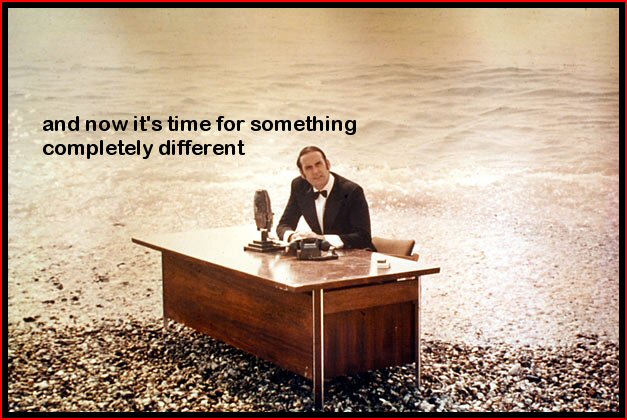
On Writing Something Completely Different

by James Scott Bell
@jamesscottbell

now

There are some writers who do very well writing one thing, and one thing only. An author named Lee Child has written only thrillers about a character named Reacher. He’s done pretty well with that, and may break into big sales soon.

There are writers who concentrate on one genre, though they may create different series characters or stand alones. Michael Connelly is like that, and so was Robert B. Parker.

Then there are writers known for one type of book who get restless and take a flyer on another kind. John Grisham wrote A Painted House (literary) after a string of hugely successful legal thrillers. Dennis Lehane, known for gritty contemporary crime, came out a few years ago with a sweeping historical, The Given Day.

Some fiction writers cross over into non-fiction. Ray Bradbury was a writer whose fertile imagination and curious mind could not be contained in fictional worlds only. He wrote numerous essays and opinion pieces, many of which have been collected into volumes, like Bradbury Speaks.

William_Saroyan

Saroyan

And then there is one of my favorite writers, William Saroyan. His name is not as widely known today as some of his contemporaries (Hemingway, Steinbeck), but in the 30s and 40s he was considered a literary lion, winner of the Pulitzer Prize (which he famously turned down), and author of short stories (e.g., My Name is Aram), novels (e.g., The Human Comedy), and plays (e.g., The Time of Your Life).

When his fiction sales tailed off in the early 50s, Saroyan turned to the quirky memoir, writing several volumes of remembrance, observation, and opinion. Examples include The Bicycle Rider in Beverly Hills and Places Where I’ve Done Time.

For Saroyan, writing was life and life was writing. And, indeed, death was the only thing that stopped him. His final words were: “Everybody has got to die, but I have always believed an exception would be made in my case. Now what?”

A few years before his death Saroyan came out with a book unlike anything I’d ever read before. Obituaries was a large collection of short pieces, each one a riff on a name from the list of movie industry people who had died in 1976 and listed in a special edition of Variety.

What’s so nuts about the book is that it contains no paragraph breaks and no indentations. Each entry is just one solid block of text that goes on until Saroyan is finished with what he has to say.

And what he says varies with where his mind takes him. He starts with the name of the deceased, whether he knew the person or not, and off he goes. Then he’ll switch mid-stream-of-consciousness and go in a completely different direction.

This crazy book was nominated for the American Book Award and named one of the best books of the year by the New York Times. I own a first edition.

Anyway, early last year I was thinking about ways to increase my writing production, and found myself reading the obituary of Anita Ekberg, the Swedish actress. Something in me clicked, like a switch, and a sluice gate opened in my brain, and all these words starting pouring out on a page. It was different and it was fun. What was coming out was part essay, a little bit of memoir, and “parts unknown.”

So I decided to keep going, and spent a goodly portion of 2015 reflecting on obituaries. Many of them are of famous people, but I also looked at local obits from small town papers, and found myself using those, too. Every life has a story if we’re willing to listen.

When I looked up on January 1, 2016, I had a full-length collection. And here it is. If you want to get a flavor of it, just click on the PREVIEW button below. You can scroll through the preview and you’ll stay right here on TKZ.

It’s a book you don’t have to read in one sitting. In fact it’s set up for when you’re waiting in line for coffee, or at the doctor’s, even in the checkout lane at the grocery store. I do, however, advise against reading it in commuter traffic.

Have you felt the pull to write something completely different? Well, what’s stopping you? Here are three tips:

  1. Write wildly

Pick a subject you love, or a topic you’re mad, sad or glad about. Write like a wildfire about that subject. Shut off your inner editor completely. Even if you never publish the entries you are at the very least stretching your writer’s mind beyond self-contained borders. That will help you in all your writing.

  1. Edit soberly

If you do decide to publish something new, go at it objectively. Make sure you edit your words so they mean what you want them to mean, and what you want other people to see. Get feedback from beta readers. Not everything that flies off your fingers is ready for prime time. Write hot, but revise cool.

  1. Publish enthusiastically

Digital self-publishing is the greatest boon to writers since Gutenberg. It’s even better than old Johannes’s regime, because there you had to own a printing press, and get paper, and ink, and binding, and distribution. Only a few big companies could do that in the modern era, and thus many more books were rejected than published.

Not anymore. While some decry the “tsunami of content” in digital, for writers who write, who love to write, who—dare I say—live to write, there is a free marketplace. If you’ve got something to say, say it. Work it, polish it and then put it out there. Let the readers decide what to do with it.

So what about you? Do you have a secret pet project you’d like to write someday? What’s holding you back?

Who is Maewyn Succat & Why Should We Care?

Jordan Dane
@JordanDane

Shamrocks

Shamrocks

Happy St. Maewyn’s Day, everybody!

DID YOU KNOW that according to Irish legend, St. Patrick’s birth name was really Maewyn Succat? Catchy, huh? Saint Patrick changed his name to Patricius after becoming a priest. If he were alive today, how many handles would he have on Twitter?

DID YOU KNOW that we should really wear BLUE on St. Patrick’s Day? His color of choice was a light shade of blue. Green didn’t become linked to the holiday until the Irish Independence day movement in the late 18th century.

DID YOU KNOW that St Patrick was British? His claim to fame came from introducing Christianity to Ireland in the year 432, but he wasn’t Irish. He was the son of Roman parents from Scotland or Wales.

WHO CELEBRATES ST PATRICK”S DAY MORE SERIOUSLY? This is harder to quantify. Of course the Irish celebrate in a huge way by making it a national holiday. New Yorkers have a HUGE parade, one of the largest parades ever since the mid 1700s, but this parade to this day does not allow floats, cars, or other modern conveyances. But Chicago won’t be denied. They dump vivid green dye into the Chicago River, since 1962, and it takes 40 tons of dye.

DID YOU KNOW St. Patty’s was strictly a religious holiday in Ireland for most of the 20th century and the nation’s pubs were closed to celebrate? The one exception for alcohol was the national dog show held on the same day. In 1970, the day was made a national holiday and the beer flowed. Yes, that day, the holiday went to the dogs.

WHAT”S UP WITH THE SHAMROCKS? According to legend, the saint used the 3-leafed clover to describe the Holy Trinity. There’s nothing like a visual.

DID YOU KNOW St. Patrick was the Pied Piper of Snakes? The Irish might be full of blarney on this one. St. Patrick gets credit for driving all snakes out of Ireland, but scientists and fossil records claim Ireland has never been a refuge for snakes. It’s too damned cold and the surrounding seas make a natural barrier. Unless snakes come in on a plane, those slithering varmints are banished.

DID YOU KNOW THERE ARE NO FEMALE LEPRECHAUNS? Whaddup with that? In traditional Irish folk tales, there are no lady wee people, or snappy dressed little guys for that matter.

DID YOU KNOW that the phrase “Erin go Bragh” is NOT the correct pronunciation? It should be “Éirinn go Brách” which means “Ireland Forever.” So get it right, people.

Up for discussion:

How do YOU celebrate St. Patty’s Day? Whether you hoist green brew these days or have a colorful story from your younger years, please share your memories of St. Patty’s Day with your TKZ family.

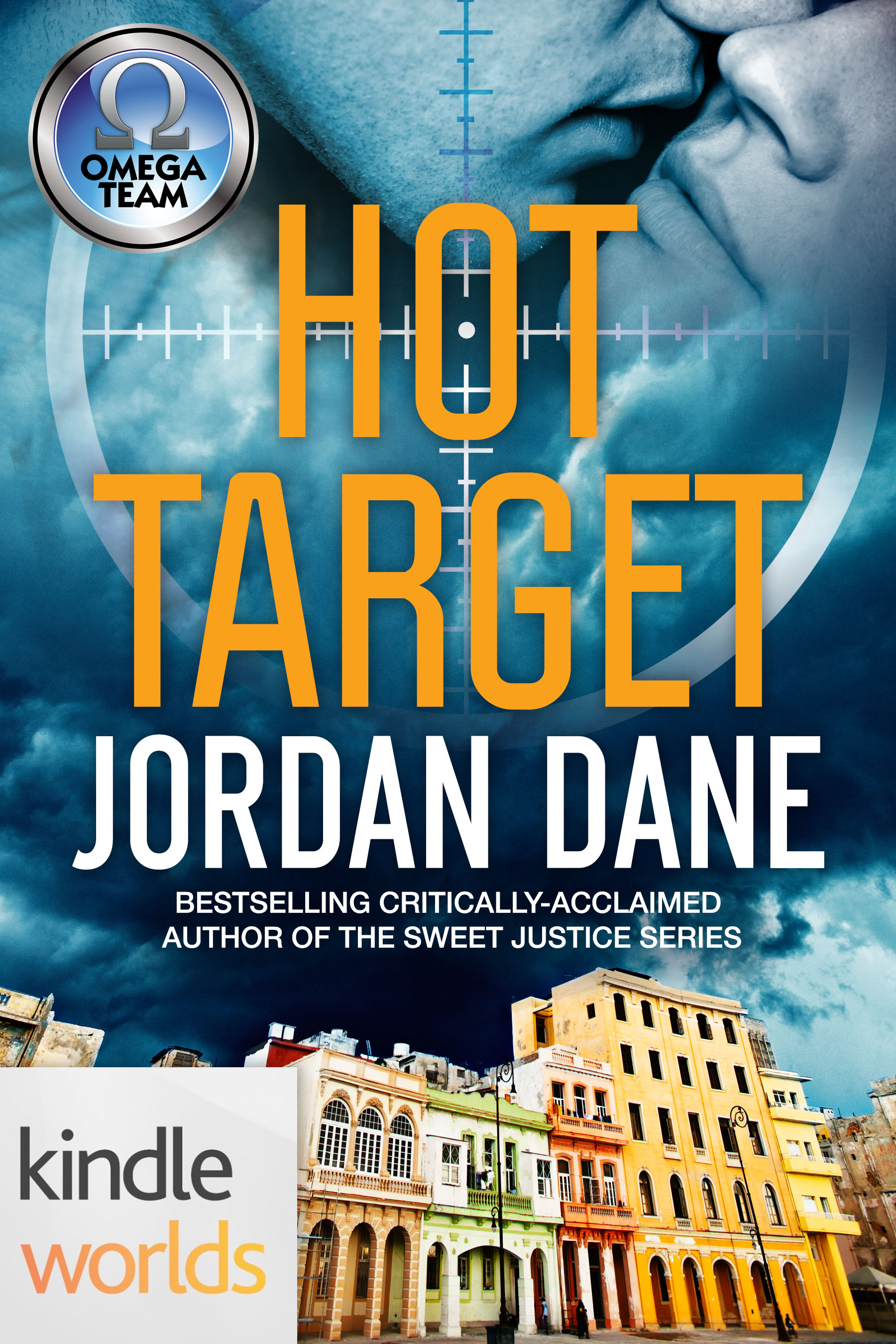
HotTarget (3)

Rafael Madero stands in the crosshairs of a vicious Cuban drug cartel—powerless to stop his fate—and his secret could put Athena and the Omega Team in the middle of a drug war.

An Amazon Kindle Worlds series – Ebook bargained priced at $1.99 at this LINK.

Action vs. Suspense

By Joe Moore
@JoeMoore_writer

BREAKING NEWS: On the 15th of March, 44 B.C., a group of Roman Senators approached Julius Caesar while he sat on his golden throne, produced daggers and assassinated the emperor by stabbing him 23 times. His death paved the way for the Roman Empire and made his name a household word. Even now, Beware the Ides of March still carries a dark warning. Hopefully, everyone made it through the Ides of March unscathed.

A similar event occurred on the Ides of March, 2016. Yesterday, Barnes & Noble put the final kibosh on the future of the NOOK by giving customers a week to salvage their purchase content. NOOK sales decreased 33% for the quarter. Digital content sales were down 23%. Device and accessory sales down 44%. Online sales declined 12.5%. Kindle is now and always was the undisputed Lord Of The E-readers. And one Amazon to rule them all.

And now this.

I’ve found that one of the mistakes beginning writers often make is confusing action with suspense; they assume a thriller must be filled with it to create suspense. They load up their stories with endless gun battles, car chases, and daredevil stunts as the heroes are being chased across continents with a relentless batch of baddies hot in pursuit. The result can begin to look like the Perils of Pauline; jumping from one fire to another. What many beginning thriller writers don’t realize is that heavy-handed action usually produces boredom, not thrills.

When there’s too much action, you can wind up with a story that lacks tension and suspense. The reader becomes bored and never really cares about who lives or who wins. If they actually finish the book, it’s probably because they’re trapped on a coast-to-coast flight or inside a vacation hotel room while it’s pouring down rain outside.

Too much action becomes even more apparent in the movies. The James Bond film “Quantum Of Solace” is an example. The story was so buried in action that by the end, I simply didn’t care. All I wanted to happen was for it to be over. Don’t get me wrong, the action sequences were visually amazing, but special effects and outlandish stunts can only thrill for a short time. They can’t take the place of strong character development, crisp dialogue and clever plotting.

As far as thrillers are concerned, I’ve found that most action scenes just get in the way of the story. What I enjoy is the anticipation of action and danger, and the threat of something that has not happened yet. When it does happen, the action scene becomes the release valve.

I believe that writing an action scene can be fairly easy. What’s difficult is writing a suspenseful story without having to rely on tons of action. Doing so takes skill. Anyone can write a chase sequence or describe a shoot-out. The trick is not to confuse action with suspense. Guns, fast cars and rollercoaster-like chase scenes are fun, but do they really get the reader’s heart pumping. Or is it the lead-up to the chase, the anticipation of the kill, the breathless suspense of knowing that danger is waiting just around the corner?

Do you like the anticipation of action more than the action itself?