Concept and Premise are two of the most common terms used to describe a story, often within a pitch or a review, less often within the lexicon of story development.
That’s a shame, too. Because understanding the difference between them, and harnessing that difference to raise the conceptual essence of a premise, is a powerful storytelling tool. One that differentiates a story within its genre, whatever the genre might be.
And perhaps even more exciting, this single thing can be the difference between a mid-shelf book and a bestseller. Or between published and unpublished. Because agents and writers are looking for home runs, and there is no quicker way around the bases than a high concept story, a story with a premise that is fueled by concept.
Here’s a quick example, with more right around the corner:
Two people fall in love in Florida. This is premise that is as flat and almost completely void of concept. The only thing about it is if you find the notion of a story set in Florida compelling. If you don’t, and you’re an agent or an editor, you are already bored.
Two people fall in love in Florida, after they find out they are brother and sister torn apart in their infancy. Ouch. A button has already been pushed from this alone. Because this is highly conceptual, it lends a more specific thematic arena to the story… even before we hear about the story itself.
Pay attention to that last line, because that is one of the criteria for a compelling premise: it doesn’t require a hero and a plot to be compelling. It stands alone as a good idea.
Too many writers begin with the vagueness of the former, too often never landing on something compelling at all, telling just another love story that doesn’t stand out.
Thrillers are inherently conceptual.
It is the unique story proposition that attracts us, unless we are talking about an established series hero (Jack Reacher, Alex Cross, James Bond, etc.), which becomes the drawing card first and foremost. Most of us don’t have that kind of brand equity, leaving a conceptual story proposition as our most powerful story enrichment too.
And yet, “conceptual” is always a matter of degree and personal taste. That’s where writing in a genre serves us, we already know the general direction of the tastes of prospective readers. With thrillers, the more conceptual the better.
Relative to story development, concept, as it relates to premise, is the contextual framework for a story. A notion that infuses the premise with compelling energy. A proposition. Any of which becomes the aforementioned contextual framework for the unfolding of a premise.
Too often editors and agents don’t really grasp or acknowledge the difference between concept and premise, with little lost to that truth. And yet, concept and premise are the first things agents and editors look for in a story, over and above characterizations and writing voice.
Which means that when we, as writers, don’t grasp that difference, we are stepping over a potential gold mine, even if a premise alone can still get the attention you seek. Better to have both story levels working for you, even if the agent never knows what hit her/him.
Not every story needs to be high concept. Unless, once again, you are writing a thriller. In our genre, the higher the better. There’s not really such a thing as a cozy thriller.
More examples of concepts… that are not yet a premise.
These coming from the real world of published novels and produced movies.
Before succinctly defining concept and premise, let’s look at some real-world examples, all taken from stories you might recognize. Notice how, in each of these, there is no hero yet, no plot… nothing other than the conceptual framework itself.
“Snakes on a plane.” (bad movie, but a great example of a concept… in this case, a proposition. Nonetheless, a deal was made for the script on this 4-word pitch alone, solely on the compelling nature of the concept)
“The world will end in three days.” (a situation)
“Two morticians fall in love.” (an arena)
“What if you could go back in time and reinvent your life?” (a proposition)
“What if the world’s largest spiritual belief system is based upon a lie, one that its church has been protecting for 2000 years?” (a speculative proposition)
“What if a child is sent to earth from another planet, is raised by human parents and grows up with extraordinary super powers?” (a proposition)
“What if a jealous lover returned from the dead to prevent his surviving lover from moving on with her life?” (a situation)
“What if a paranormally gifted child is sent to a secret school for children just like him?” (a paranormal proposition)
“A story set in Germany as the wall falls.” (a historical landscape)
“A story set in the deep South in the sixties focusing on racial tensions and norms.” (a cultural arena)
As we move into definitions and criteria, remember: concept is not premise. Rather, it is the reason why your premise will compel readers. Because it is compelling. Fascinating. Intellectually engaging. Emotionally rich. Imbued with dramatic potential. It infuses the premise with something contextually rich, even before you add characters and a plot.
The Definition of Concept
Go back and apply these facets of definition to the examples provided, this will help solidify your understanding of the difference between concept and premise.
Concept is the presence of something conceptual at the heart of the story’s essence.
A concept is a central idea or notion that creates context for a story – often for a number of stories, not just your story – built from it. Take Superman, for example. Ten films, four television series, hundreds of graphic novels. All inspired by one concept. Each film, each episode and each edition all delivering different and unique premises.
A concept becomes a contextual framework for a story, without defining the story itself. The notion of Superman, for example, becomes the framework within which each of those unique premises is built. Same for any series story, each installment is driven by the same concept. Ask Harry Potter where he came from… it is always the same origin framework.
It is an arena, a landscape, a stage upon which a story will unfold. Every medical and legal thriller comes an example of this, the concept is the arena, a place dripping with inherent drama and theme.
It can be a proposition, a notion, a situation or a condition. The Davinci Code is the poster child of a proposition… one that sold 82 million hardcovers and counting.
It can be a time or place, or a culture or a speculative imagining. Historical fiction, anyone? Science fiction? Time travel? Ghosts, vampires, spies, serial killers… all of these are speculations within a conceptual framework.
And none of them have stories yet. Which means the premise is not yet on the page.
The Criteria for Concept
It is inherently, before character or plot, interesting, fascinating, provocative, challenging, engaging, even terrifying.
High concepts depart from the norm, they exist at the extreme edge of imagination and possibility.
Concepts promise a vicarious ride for the reader. Taking them somewhere, or placing them into situations, that are not possible, realistic or even something they would choose in real life.
A concept can define the story world itself, create its rules and boundaries and physics, thus becoming a story landscape. (Example: a story set on the moon… that’s conceptual in it’s own right.)
In short, a concept is simply the compelling contextual heart of the story built from it. It imbues the story atmosphere with a given presence.
It does not include a hero… unless the hero is, by definition, a conceptual creation (like Superman; Clark Kent is not a concept, he is a character). A story is built around the conceptual nature of its hero is leveraging the the compelling energy of that conceptual proposition.
When we read that agents and editors are looking for something fresh and new, concept is what they mean. When a concept is familiar and proven – which is the case in romance and mystery genres especially – then fresh and new becomes the job of premise and character, as well as voice and narrative strategy.
Concept is often genre-driven.
Literary fiction and some romance and mysteries aren’t necessarily driven by concept, yet they are totally dependent on a premise that gives their hero’s something to do. Which can and should be conceptual in nature.
However, the sub-genres of romance – paranormal, historical, time travel, erotica, etc. – are totally concept-dependent. Other genres, such as fantasy and science fiction and historical, are almost totally driven by and dependent upon concept.
If your concept is weak or too familiar within these genres, you have substantially handicapped your story already.
The Definition of Premise
Premise is NOT concept. But it can be fueled by whatever is conceptual about the story (stated separately within a pitch as the story’s concept). Premise is the summarized description of a story. And when that story is considered fresh and powerful, premise emerges from a conceptual landscape.
Concept is to premise as size, strength, speed and agility are to an athlete. Without it, the story remains undistinguished, relying almost solely on its narrative to win or lose the day.
Premise is:
A protagonist/hero whose life is interrupted, disrupted or leads toward… a specific problem, need or opportunity… launching a quest with a mission and a desired outcome, beginning with a response to the need or problem… for reasons (stakes) that compel the character to respond, then resolve the issue… in the face of opposition from an antagonistic force or person(s) with opposing goals and their own motivations… calling for higher and stronger responses and course of action… leading toward brilliant and courageous resolution resulting from the Hero’s decisions and actions… leading toward a specific outcome, returning the hero to a life that is contextually different than where the story began.
A great story almost always has both concept and premise going for it. Armed with this higher understanding, our emerging ideas and story visions are empowered to reach for a higher bar.
Ask any agent or editor, or reader, for that matter. Outside of literary fiction and cozy mysteries, the more conceptual our stories, which arise from our premises, the better.

 when we discovered Kew Palace (which hitherto I hadn’t visited). Inside I discovered a little Georgian gem which unexpectedly fed into my current middle grade WIP. There was a hidden staircase for the servants to enter and leave rooms without bothering their occupants, mourning heraldry to be displayed in the event of a death in the family and a meal laid out representing one of the last meals George III ate (I always love learning more about food!). There was also a wonderful physic garden with some interesting medicinal herbs that I will be able to incorporate into the book as well.
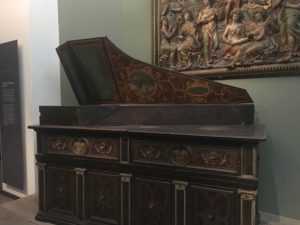
 erb I was using in another WIP of mine (references to which are found in Greek mythology). I then also discovered an instrument called a claviorgan decorated with the story of Orpheus – an instrument that could slip in nicely to a chapter in this same WIP. I was probably way too excited about these two finds that any normal tourist would be!
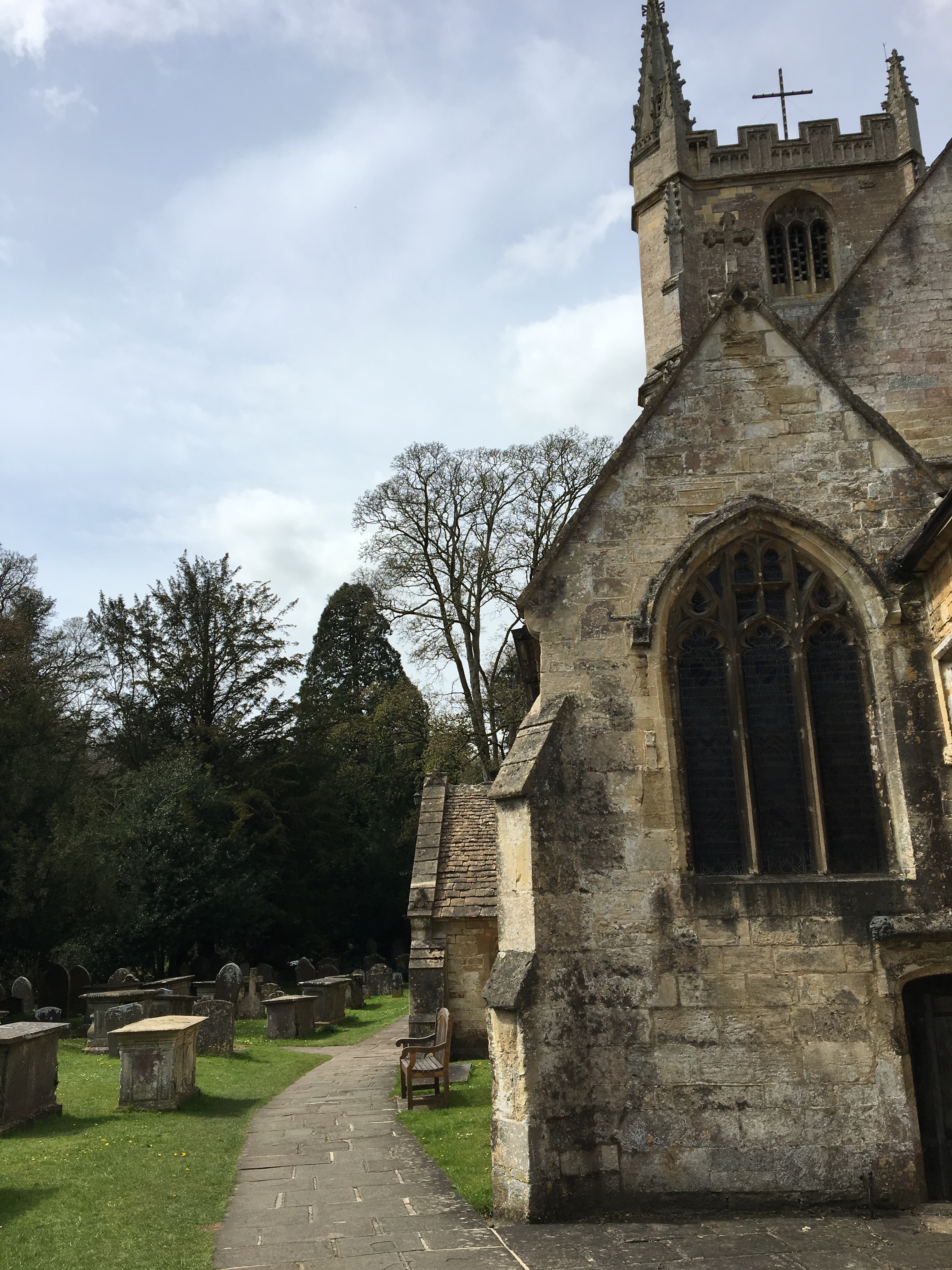
 By the time we travelled to Bath I was ready for the next few gems, including a reference to a potential character in the Bath abbey and a visit to a charming town in the Cotswolds that had a small medieval church and graveyard that could totally be used in a future book.