Inspired by Tragedy

It is an unfortunate truth that the most interesting tales are mid-wived by tragedy.  No one is interested in a book or a story about the hundred of airplane flights that take off and land safely each day, or of the thousands — millions — of honest transactions and interactions which occur among our fellow human beings in any given hour. It is, rather, the stories that have an element of the poignant, the violent, and the sorrowful that pique our interest. One could cite many reasons for this and from several sources, be they psychological or religious. When we hear of a child gone missing or an acquaintance’s loved one passing, we may feel sorrow but we also feel, to be honest, a kind of shame of relief that the tragedy is not our own, even as it haunts us. Winston Churchill is credited with saying “Nothing is so exhilarating as to be shot at without result.” Just so.

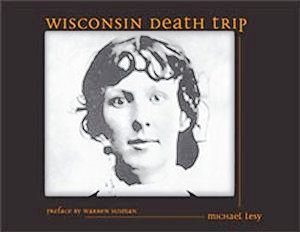
I believe that this is particularly true of those of us who read and write fiction in the mystery, thriller, and horror genres. Ironically, my favorite book of this type is a work of nonfiction entitled WISCONSIN DEATH TRIP by Michael Lesy. WISCONSIN DEATH TRIP is not a narrative. Lesy compiled photographs taken by Charles Van Schaick in and around rural Jackson County, Wisconsin in the late nineteenth century, and interspersed them among hundreds of transcribed newspaper clippings from the same area to create WISCONSIN DEATH TRIP. The result is a disturbing and unsettling collection of bizarre events which appear unconnected but which taken together seem to document a rural hive madness. To name but a few: the elderly mother of an imprisoned man commits suicide in a particularly dramatic fashion; a respected family man with a reputation as a hard worker dies of an overdose of morphine, leaving only a cryptic note; and a man seeking cheap transportation finds his trip unexpectedly ending in a gory tableau.

The dark beauty of the book for a reader or a writer is that one can open it and random and be enthralled, horrified, and inspired. With regard to the latter, that isn’t just me talking and/or opining. WISCONSIN DEATH TRIP has inspired everyone from Stephen King (he cites the book as the inspiration for his story “1922”) to musicians (Static-X named an album after the book) to late night cartoons (the cult classic series The Heart She Holler). The transcribed newspaper accounts are quite short; if you’re seeking inspiration and in a writer’s group, you could pick an account at random and throw it into the group just to see what each person creates from the spark. I’d be willing to bet the breadth of Jackson County and all that is on it that the stories would be wildly divergent.

WISCONSIN DEATH TRIP has gone out of print a couple of times, but it’s currently readily available for sale off- and online thanks to the fine folks at the University of New Mexico Press. Whether you need a prod creatively, desire inspiration to appreciate your current circumstances, or just want to be quietly horrified, you should check this book out. Oh, and there’s a movie too, which is quite good as well. But we prefer books, don’t we?

My question for you: have you experienced — either first or second hand — a tragedy which has had a long-term influence or affect upon your writing and/or your life? That haunts you, inappropriately and without warning? Be as general or as detailed as you wish. I don’t want to go into detail about mine, but it involves running with a stick. I didn’t let my poor kids run or walk with anything sharper than a limp noodle in their hands as a result.

Crime Writer Lives Character’s Torture…On Purpose

Jordan Dane

@JordanDane

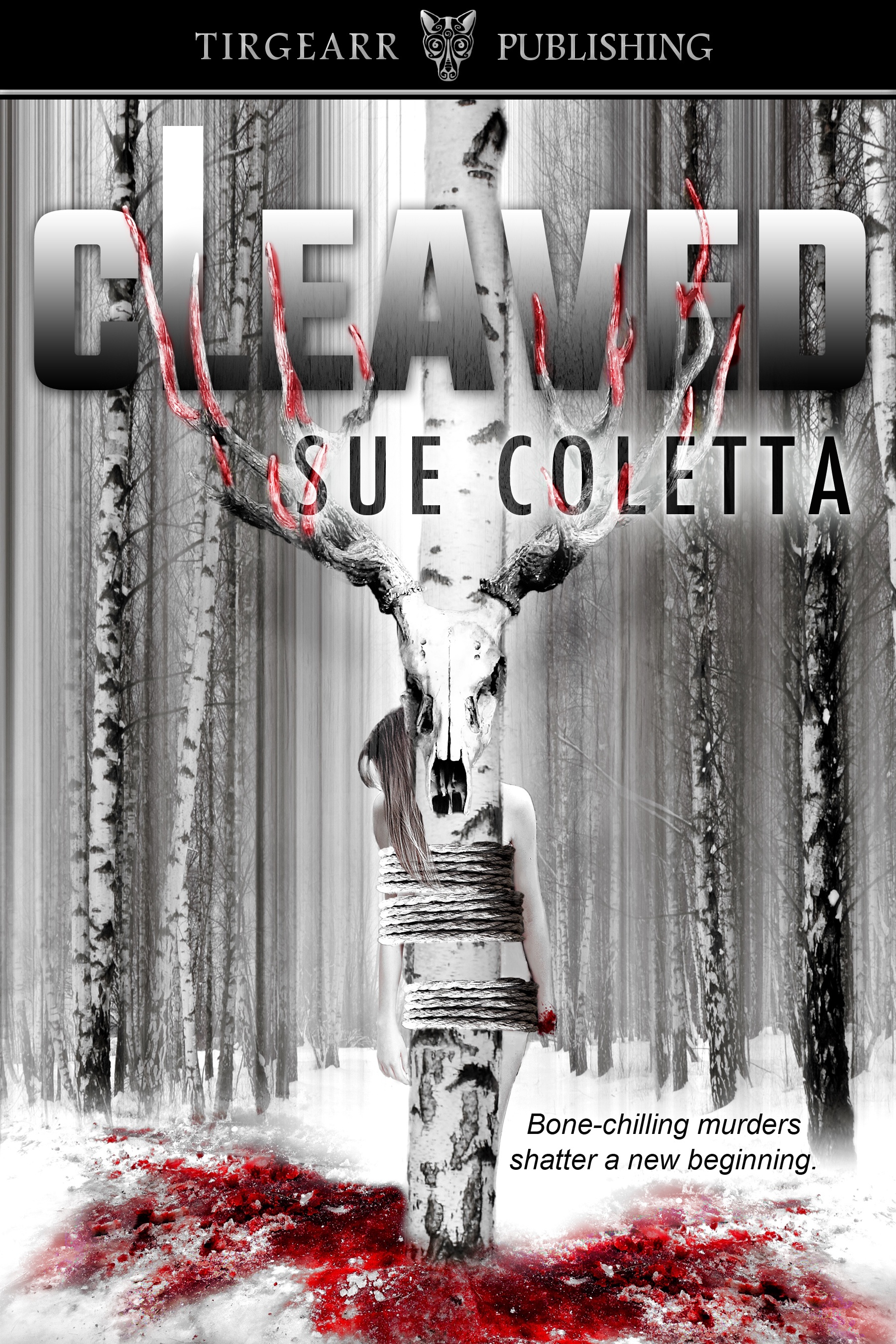
Today I have the pleasure of hosting a long time and active member of TKZ – Sue Coletta – and featuring her May 3rd release, CLEAVED, published by Tirgearr Publishing. I pre-ordered her book at the great price of $0.99 ebook and can’t wait to read it. By the time you read this, her book will be officially OUT!

Sue is a talented crime fiction author of memorable characters, who writes in an evocative style tinged with horror. She’s here to talk about torturing characters and how far an author might go…on purpose. Yes, Sue would scare most normal people, but we’re writers. We can take it.

Take it away, Sue.

Being a crime writer tends to spill into everyday life. Not only do I go out of my way to drive by secluded swamps, woodlands, or bogs for potential body dump locations, but I’m also keenly alert and aware of the people around me. The shady guy who takes a few minutes too long while pretending to read magazines in the convenient store he intends to rob. The dude with white knee socks and sandals who sits alone at the lake, his gaze roaming the shoreline from behind the morning newspaper. He doesn’t fool me for a second. Obviously he’s scouting for his next victim. Then there’s the poor woman who’s clueless to her surroundings. In a few days, a breaking news report will confirm she’s Sandal Guy’s latest victim.

Do we really need to discuss driving by a wood chipper? I mean, c’mon! How many of you haven’t thought about stuffing a body in the chute?

*crickets*

Yeah, that’s what I thought.

When crime writing burrows into our DNA, the world morphs into a place of perverse secrets, malevolent acts, and sinful deeds. We can’t help but see the signs. Okay, so maybe “normal” people don’t envision quite as much danger as we do, but I think it makes us far more interesting. Our spouses get caught up in our warped realities, too. My husband’s been known to point out perfect murder sites. Or he’ll hear about a desolate locale and ask if I want to take a ride, knowing I can’t resist.

“You mean that, honey?” I skip out the door, and my excitement bubbles over. “Woohoo! Road trip!”

Research is another matter entirely. When we have no real-life experience to pull from, we’re left with two choices: research until it feels like we’ve lived the scene, or put ourselves in the same position as our character. For me, the latter is much more fun.

My new psychological thriller CLEAVED opens with a woman trapped inside an oil drum. I’ve never been ensnared in any confined space, so I found it difficult to tap into the emotions of the scene. My solution? Lock myself inside an oil drum and hang out a while.

The conversation with my husband Bob went something like this…

Me: Hey, do we have any oil drums?
Bob: Yeah. Why?
Me: Are they empty?
Bob: Yeah. Why?
Me: What size are they?
Bob: 30 and 50 gallon. Why?
Me: If I climb inside, will you close the lid for me?
Bob: Umm…
Me: Awesome. Let’s do this!

Dumbfounded, he followed me out the door. Turned out, he’d loaned the 50 gallon drum to our neighbor, so I started with the 30. The first problem I encountered was this. I couldn’t just step inside and squat. It’s way too narrow. Instead, hung on to the sides, hiked my knees to my chest, and then lowered myself to the bottom. Once crammed inside, I gave my husband the signal to lower the lid, but not secure the hasp. No need to get crazy, or give him any ideas he might regret later. 

Pure blackness struck me hard. Also, my ankles and neck bent at odd angles. Pain seared bone-deep. My knees pinned my chest, laboring my breath. No matter how hard I tried I could not slow the adrenaline coursing through my mind, body, and spirit. The oxygen thinned with every patter, patter, patter of my heart, my mind spinning with scenarios of dying this way.

What an awful death—trapped, alone, unable to move more than my arms.

Every few minutes Bob asked if I was okay, which really ruined the ambiance. In order to concentrate, I sent him back inside. Later, he told me he watched from the window. Though as far as I knew at the time, I was alone. No one around to save me. Perfect.

Closing my eyes, I envisioned the scene. The darkness of night. Tree frogs chirping in the canopies of leaves around the marsh. A far off screech owl’s predatory cry pierced the frigid air. The subtle swish of water lapped against my unforgiving grave, rocking me from side to side.

Next, I concentrated on how my body responded. The pressure on my lungs was like being caught under a steel girder, squeezing each pocket of air dry. No longer did I control my breathing, my chest heaving much faster than I could regulate. Thoughts of death consumed me. My remains could stay undiscovered for days, weeks, months, even years. The psychological torture alone could be enough to destroy someone. My only chance of survival was to break free.

But how?

That question lingered. Numerous “What if’s” flitted through my mind. I won’t ruin the scene by telling you how, or even if, my character escapes. Since it’s the opening chapter you can find out by reading the “Look Inside” feature HERE.

After about 20 minutes or so, I emerged from the barrel. Next, I sent Bob to ask the neighbor if the 50 gallon was also empty. I needed to experience the difference because the character is entrapped in a 50 gallon drum, not a 30. After the “incident” of begging Bob to bury me in the backyard (story for another time!), the neighbors are all too familiar with my research stunts, so this request didn’t surprise him in the least. In fact, he was oddly excited to participate. I let him duct tape the lid close. This was really more for his benefit than mine since duct tape doesn’t stick well to steel.

Compared to the 30 gallon, my new digs felt like Club Med. Much more spacious, but the body position remained unchanged, ankles and neck seared with pain, knees compressing my lungs. All in all, my time spent inside the two oil drums turned out to be very educational and I wrote a much better scene. Win win!

Some may call crime writers unique or even weird, but no one can say we’re boring.

FOR DISCUSSION:

What’s the strangest thing you’ve ever done in the name of research?

Website

Twitter

Facebook

CLEAVED Available NOW/$0.99 Ebook

Author Sage Quintano writes about crime. Her husband Niko investigates it. Together they make an unstoppable team. But no one counted on a twisted serial killer, who stalks their sleepy community, uproots their happy home, and splits the threads that bonds their family unit.

Darkness swallows the Quintanos whole–ensnared by a ruthless killer out for blood. Why he focused on Sage remains a mystery, but he won’t stop till she dies like the others.

Women impaled by deer antlers, bodies encased in oil drums, nursery rhymes, and the Suicide King. What connects these cryptic clues? For Sage and Niko, the truth may be more terrifying than they ever imagined.

Writers’ Camp, Anyone?

I’m curious: what do you think about writing workshops–specifically workshops that are a few days to a week long?

I met my husband at the Appalachian Writers’ Workshop, in Hindman, Kentucky. He was teaching fiction and I was a newbie writer. (It’s okay. You can smirk. Lots of people have over the years!) I’d never workshopped stories outside the classroom. I’d also never slept in a cabin dormitory, 4 sleepers to a cubby, or washed dishes in a camp kitchen, so the whole week was full of new experiences.

Workshops are intimate. (No, not that kind of intimate, though sometimes there’s, um, activity between consenting adults that can be awkward for everyone. Think of summer camp, or high school. But it doesn’t have to be that way.) Participants work with the same teacher, and the same group of writers, for several days in a row. You get to know each other, and group dynamics emerge quickly. If the instructor is good at their job, it becomes a space where people feel comfortable sharing their work, and receiving and giving thoughtful criticism.

It’s nice spending time with like-minded writers in real life, as opposed to hanging out online. In a well-run workshop, the writer must listen to everyone’s critique before they speak about their own work. Because a writer needs to learn that they can’t be on the shoulder of every reader to explain what they meant if something isn’t clear or understandable to that reader. The work has to speak for itself. BUT the good news is that most workshops schedule plenty of downtime. Often the real learning happens over dinner, around a campfire, or over a glass of wine or two. It’s good to share the journey. And don’t forget the networking thing. It’s important. At a workshop, you can meet professionals (often agents and editors), and form friendships with other writers that can last for a lifetime.

Am I trying to sell you on workshops, or a particular workshop? No. While I encourage you to give one a try, they’re not for everyone. I was scheduled to teach at a workshop in June, but money is tight all around, and my class didn’t fill. It’s disappointing, but I look forward to staying home and writing. Maybe next year.

There are many more glamorous spots for writers’ conferences than Eastern Kentucky–I went there because the mountains were home to my grandfather, and because it was economical. If you want to get exotic, you could go to the workshops at Positano. But you must take me with you.

Tell us your thoughts on writing workshops. Are there any you would recommend to other writers?

Do Women Authors Need To Be “Nice”?

Have to say, I’m a bit baffled by an article I just read, “…Women In Publishing Don’t Have The Luxury Of Being Unlikable“. This article has been making the rounds in publishing circles, evidently. Basically, the writer is arguing that women authors have to be “nice” in order to succeed in publishing, while men do not.

I’m surprised by the opinions expressed in this article for several reasons. First of all, every author I’ve ever met has been what I’d call “nice.” Whenever I go to writer’s conferences, I feel as though I’ve just passed through the gates into The Village of Extremely Nice, Middle Aged People. As Nicole Kidman’s character said in Big Little Lies, authors tend to pound people to death with “nice”, if only because everyone’s trying to sell their books. Have I been missing some Crabby Appletons lurking in the shadows?

I was also puzzled by the example the writer cited of a woman author who was apparently “not nice”. The description conveyed someone who might have felt  a tad reserved or shy in groups, perhaps, but nothing particularly “not nice”.

I’d be interested in knowing how other people react to the arguments being made in this article, because I may not be an objective judge. I’ve been accused by some who know me well of having an oversupply of self-confidence (this assessment is never delivered as a compliment, of course). So I may be insensitive to something that is going on in the general publishing environment. As I read the article, I thought it reflected more about the writer’s own issues with self confidence, rather than anything meaningful about the environment for women authors in today’s publishing community.

So if I’m wrong, set me straight. Do women authors have to be particularly “nice” to get ahead?

Craft 101: Theme… as a Storytelling Intention

by Larry Brooks

As deep thinking, well-intentioned storytellers, we tend to want to make theme — one of the essential core competencies of successful storytelling — something mysterious and complex. And therefore, challenging.

It certainly can be. But it doesn’t have to be.

The good news is that the latter is as much the stuff of bestsellers as the former. The bad news is… sometimes we try too hard on this front and turn our story into something awkward or diversionary, and therefore problematic, to the dramatic arc itself.

A story about love, for example… that’s inherently thematic yet, as stated, pretty pedestrian and therefore only a start that’s nowhere near the finish line. Most readers would want to know more. A professional author would certainly realize they need more. It is how the author responds to that need where this thematic nuance comes into play.

Some writers begin writing a draft with no more specificity than that: a story about love.

If you’re in the romance genre, that may be enough to elicit a second question. Either way, though, “a story about love among White House staffers…” is more specific (not to mention compelling), because it combines theme and arena in a way that creates a sum in excess of either part.

That’s the key: understanding that a story is the sum of many parts. Only one of which is thematic.

Ultimately, whether you’re targeting agents, editors or readers, you’ll need to be specific relative to the story’s intentions at some point in the process. Theme alone never stands alone at the end of the day, even in an elevator pitch.

Writers, especially newer ones, benefit from an informed, functional definition of theme.  

They want to know (because many are confused on this count) the difference between theme and concept (the difference is huge; like, apples vs. apple pie kind of huge), or simply seek to understand how to make their themes more powerful.

It’s a great goal. But it’s one that is as easily over-thought as it is misunderstood.

Theme is simply this: the authentic life-experience and associated feeling a story calls forth within its fictional construct… what it may mean (to the characters, and/or the reader)… how it makes you feel (you being the reader, beginning with you as the author)… and why. How it relates to being a human being. Theme touches and challenges our humanity (because the characters are being challenged, as well) in a way that reflects our own experiences, fears, hopes, beliefs and values.

Effective thematic writing doesn’t seek to sell the reader on anything in the thematic realm, as opposed to selling them on the fictional conceit of the entire proposition. Rather, it seeks to make the reader think and feel, in whatever manner or direction the reading experience calls to them.

Dan Brown’s The Davinci Code is one of the more thematically provocative novels in decades. And yet, as many people are moved to anger and outrage as they are challenged to question their own beliefs, while others are simply entertained… or not.

Either way, you can’t argue that the same murder set in a local library instead of The Louve in Paris, with messages left from a retired janitor versus Leonardo himself, would renderr the same level of dramatic power. The difference there isn’t history as much as it is theme itself.

Theme isn’t something you actually get to control. Rather, you control the nature of the arrow that points to it without your story. Within that analogy, you are free to make the tip of that arrow as sharp or a blunt as you choose.

One approach: stop trying to be overly thematic.

Theme is often the outcome of setting: geographical, chronological, or sociologic.

By selecting certain story settings, you are by definition already being thematic, and chances are you’ll imbue the story with sufficient theme simply by going there. Kathryn Stockett’s The Help, for example, is set in 1962 Jackson, Mississippi, which means you cannot escape the social and cultural thematic contexts of the story regardless of the dramatic arc… which when culled apart from the setting is about writing an expose and baking a memorable pie.

In most cases, plot works because of its inherent themes.

Then again, not all stories have rich settings. In such cases theme needs to emerge from the relationship between character action/decision and consequences, as shown through the arc (both dramatic and character) of your players. The ending of Nelson Demille’s Night Shift (the novel that knocked The Davini Code out of the #1 spot on the bestseller lists) is an example of selling you a speculative proposition, rather than a belief system.

It is also the most glaring deus ex machina violation of any novel in recent memory… but that’s another post for another day.

Separate your plot from your theme.

Don’t try to make them the same thing. Yes, it’s good if when they connect, or at least don’t get in each other’s way. But in terms of story development just worry about your conceptually-driven plot for a moment.

The Girl on The Train is about solving a murder when you are less than credible, possibly involved and are struggling with your own grasp on reality. The story doesn’t work until it does a deep dive into things that are highly thematic… or at least become just that when read by people with both a brain and a heart. Making such a story work is challenging on the dramatic, structural plot levels, with the theme sort of taking care of itself once the pieces begin to fit together.

Actually, it worked at the moment of story selection. The plot and the theme were there all along within the genius of that idea.

Some writers begin with a theme in mind.

Sometimes that all they care about; theme is the reason they are writing the story in the first place. In that case, the risk is over-playing the thematic and thus rendering the story an off-putting proselytization.

Just as often stories are hatched based solely on a dramatic proposition, completely without a targeted theme or thematic context. Murder mysteries are usually dramatic in nature, though when theme emerges you may have a Michael Connelly event on your hands. Sometimes that works… but when it does, it’s because theme tends to emerge from stories about life under the pressure of drama.

But that’s a risky bet. Always better to ask yourself if there are ways you can invite theme into your story via setting or imbuing someone in the story with thematically-challenging issues, and then allow that to become a story catalyst, rather than a pulpit.

The closer that union of two sparks occurs relative to defining the intended story itself, the better everything that follows with work.

It all goes back to story selection. Writers who keep showing up on bestseller lists have discovered the magic of weighing the dramatic and thematic equally, regardless of which one lit the fuse of the story.

Keep playing with this notion.

If your targeted theme — the issue you want to write about — is, say, police corruption… consider a plot that isn’t about police corruption. Rather, concoct one that takes place against a backdrop — the surrounding culture and setting of the story — rife with police corruption. A love story in the inner city. A redemption story among mob informants. A revenge story set in a police locker room.

No matter what it is… if it’s set in a world in which police corruption touches the lives of your characters, then you’re already exploring this theme in a way that in organic and driven by dramatic sensibilities.

That’s always the safest bet: explore a theme, rather than selling a theme that creates a polarized reading experience.

In many cases, you may not have a thematic challenge at all, simply by virtue of the kind of plot you are unspooling.

How I Developed My Series Hero

by James Scott Bell
@jamesscottbell

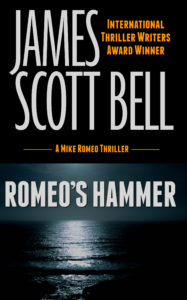
I’m happy to announce the release of my new Mike Romeo thriller, Romeo’s Hammer. It begins on a posh beach at Malibu, and ends just up the coast at Paradise Cove. In between a lot of stuff happens. (This is called a plot summary).

Today, I thought I’d say a little bit about how I came up with Romeo as my series hero.

I’d long wanted to write about a lone-wolf, hard-boiled seeker of justice. I’ve always loved this famous Raymond Chandler quote about the classic PI:

Down these mean streets a man must go who is not himself mean, who is neither tarnished nor afraid. He is the hero; he is everything. He must be a complete man and a common man and yet an unusual man. He must be, to use a rather weathered phrase, a man of honor—by instinct, by inevitability, without thought of it, and certainly without saying it. He must be the best man in his world and a good enough man for any world.

He will take no man’s money dishonestly and no man’s insolence without a due and dispassionate revenge. He is a lonely man and his pride is that you will treat him as a proud man or be very sorry you ever saw him.

The story is this man’s adventure in search of a hidden truth, and it would be no adventure if it did not happen to a man fit for adventure. If there were enough like him, the world would be a very safe place to live in, without becoming too dull to be worth living in.

But I did not want to do another PI character. I love ’em, but we have enough of them. So I conceived a backstory that would cause a man to be on the run and off the grid. With a changed name. And who spent a number of years as a cage fighter.

What else could I add to make him more interesting for me? I decided to include my love of philosophy. I was nearly a philosophy major in college. But freshman year I was in a big philosophy class, with the smaller classroom discussions taught by a TA. This guy wore sandals and smoked Camels (you could smoke in the classrooms back then). He would take out a fresh cig as he spoke, hold it between two fingers, then strike a match, all while talking. He’d get a faraway look in his eyes as he went off on a metaphysical tangent. We students would watch the match burn down, waiting until it hit his fingers, which it inevitably did, and he’d shake the match vigorously to put it out—still talking! He’d drop the dead match on the floor and begin the process all over again. It always took him 2 – 4 matches to light up.

And I thought, if that’s what I might become as a philosophy major, maybe I ought to try something else.

But I digress. I’ve always loved philosophy and theology and thinking about deep things, especially in times of crisis. Give me Epictetus when things aren’t going my way, or Pascal when reflecting on ultimate truth. I wanted my series hero to be like that. So I made him a genius, a kid who was accepted to Yale at age fourteen. But then bad things happened … and we begin with Mike Romeo in Romeo’s Rules, in the present, with a tattoo on his forearm: Vincit Omnia Veritas. Truth Conquers All Things.

Plus, he likes flowers.

Most of all, though, he has that code Chandler wrote about. And at some point it struck me that I had a model for him in the back of my mind all along.

I was a mere pup when the TV series Have Gun, Will Travel was popular. But the character, Paladin (played by Richard Boone) was cool. (A paladin was a knight known for heroic deeds and the code of chivalry).

Paladin lived in the luxurious Carleton Hotel in San Francisco. There he ate the finest foods, sipped the finest brandy, and escorted the finest women to the opera. He could speak on virtually any subject.

But he was also a gun for hire. He’d go out on jobs, donning his all-black duds and six guns. His holster had a chess knight on it. Ditto his card.

The great thing about this western, unlike, say, Gunsmoke, was that Paladin very rarely shot anyone! Instead, he used his wits to outfox bad guys, or get good guys to do the right thing.

Most of all he lived by his code. One part of that code, which Mike Romeo shares, is that if someone is being bullied, justice demands the paladin step in and stop it. Here’s a clip from an episode of Have Gun, Will Travel. Paladin has just arrived in a town to meet his employer for the first time.

That’s Paladin. And that’s the sort of hero I had in mind when I conceived Mike Romeo.

Which makes writing the series fun for me. Maybe that’s the biggest key of all. You can put your hero through all sorts of tests. You can have him suffer the slings and arrows of outrageous fortune. But if he’s not someone you’d like to hang out with, the series can turn into a slog.

Fortunately, Mike Romeo is bringing me joy.

The Romeo’s Hammer is available here:

AMAZON

AMAZON INTERNATIONAL STORES

So….let’s talk series characters. Do you have one? How did you come up with him or her?

OR

Who is your favorite series hero, and why?


Kindle Scout – Amazon’s Kindle Scout program will cease as of 4/3/18

By Debbie Burke

Kindle Scout has been called American Idol for authors or a Slush Pile Popularity Contest. Amazon defines it as “reader-powered publishing.” Scout has now been around for a couple of years, with nearly 250 books published so far, making it a good time to review its performance.

How Scout works:

Authors submit a 50,000+ word book to Scout, with cover copy, logline, bio, etc. Submissions can be made year round, but only one book at a time per author. Amazon posts an excerpt online for 30 days for readers to peruse and, if they like it, they nominate it for publication. During that time, authors drum up votes through social media, email, and personal contacts, urging their book toward the coveted “Hot and Trending” classification.

When Scout accepts a book, the author receives a $1500 advance, 50% eBook royalties, and a 5-year renewable contract with Kindle Press. While the quantity of nominations carries weight, the number of votes is not the only determining factor. Scout’s editorial board makes the final decision to publish or not and they ain’t talkin’ about why they choose one book over another.

Comparison between Scout Kindle Press and Kindle Direct Publishing (KDP):

Since I’m researching which route to go for my suspense novel Instrument of the Devil, I ran a quick and dirty comparison between Scout and KDP. This by no means covers all differences between the programs. Of course, authors should carefully read both contracts before making a decision.

An interesting aside: when I printed out the contracts, Scout’s came in at four pages, while KDP’s was 21 pages (albeit in a slightly larger font).

SCOUT

  • $1500 advance
  • 50% royalties on eBooks
  • Amazon marketing
  • Amazon sets pricing
  • Rights exclusive to Amazon
  • 5 year renewable contract*

KDP 

  • No advance
  • 70% royalty on eBooks $2.99+
  • Do it yourself marketing
  • You set pricing
  • After 90 days Amazon exclusive, you may sell in other venues
  • No time limit

*If your book doesn’t earn out $25,000 during the 5 year period, you may request reversion of your rights.

The time from submission to acceptance/rejection is about 45 days under Scout, lightning speed compared to traditional publishing, but slower than KDP where your book can be available for sale as fast as you can upload. The book launch time varies, but according to several sources, runs about four months. Scout is experiencing growing pains, a victim of its own success. A number of authors mentioned understaffing and slow response times to questions. Still, in comparison with trad pubbing, it’s a relatively quick process. If you require faster publication, go KDP.

Who Uses Scout?

When I looked into winning Scout entries, I found surprisingly few first-time authors. Many winners already had multiple books in print, both self-published and traditional. The added promotion by Amazon for a Scout winner should result in significant bumps in sales of backlists.

What Authors Think of Scout:

I reached out to several winning authors who graciously shared their experiences.

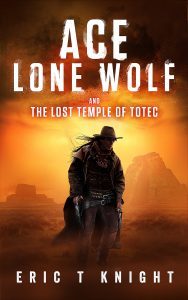
Eric T. Knight, author of Ace Lone Wolf and the Lost Temple of Totec, already has multiple books published through KDP and chose Scout “more or less on a whim.” Overall, he grades the experience a B or B+. “The contact person I’ve worked with has been helpful and friendly. It didn’t feel like I was dealing with a machine. I also thought the feedback from the editor was good.”

On the downside, Eric misses the control he has with his other books in KDP. “I wish I could choose when to run promos instead of waiting for them. I’m used to tweaking my blurb pretty regularly and with Scout you have to go through them. You don’t have access to sales figures as they happen, the way you do with KDP.”

V.B. Marlowe, author of Forever Snowhas self-published an impressive 30 books in the past four years. “Marketing isn’t my strong point. I figured having a book published by Kindle Press would give me the privilege of having Amazon’s super marketing powers behind my book.”

She is pleased with the responsiveness of Scout’s staff, but “I only wish I had been given a heads up about when my book would be available. It was kind of a guessing game. Books selected after me were being set up for preorder while my book was still in production status, so I was a little worried. They do send you a letter once your book is already on preorder, but not before.”

With the launch date of April 25, V.B. doesn’t yet have firsthand experience with Scout’s marketing, but other  authors she’s communicated with say Kindle Press runs special promotions 90 days after publication. “I do know that KP regularly submits our books to Bookbub. Just this month they had a special anniversary sale and promoted all KP books.”

She adds, “I think the best way to increase sales is to publish regularly so I already have Book Two of this series ready to go.”

Max Eastern is a New York attorney and The Gods Who Walk Among Us is his first published novel. His impression: “What few problems there have been were very minor,

and I’m actually quite happy with the Kindle Scout program as an alternative to traditional publishing.” He adds, “It’s fun voting for a book. Human nature being what it is, readers are more apt to like your work if they see that someone else has already liked it before them.”

Currently Kindle Press only offers eBooks and audio. Max would like to see coordination between them and CreateSpace to make print versions available. Amazon, are you listening?

Kindle subcontracts editing to Kirkus and, according to Max, “it was strictly a one way street,” unlike the give and take in the trad pub editing process. “I was given a document…with his editorial suggestions, and allowed to accept or reject them. I had no means of communicating with him.”

Max raised an interesting question: if your first book is published through Kindle Press, what about future books? “Your readers are going to assume that, once published the first time, you will be published a second time automatically, and they might think there has been some failure on your part if they have to go through the process of voting for you again on Kindle Scout.”

The marketing advantage of a Scout win to authors with backlists is obvious. But how does that work for a first book with more books to follow? Has anyone in the TKZ blogosphere had experience with subsequent releases after a Scout win? Please chime in and let us know how you handle it.

What if You Don’t Win?

Even if you don’t secure a contract, there’s a nice consolation prize.

When you submit, Amazon has you write a thank-you note to readers who nominated your book. If your book is chosen, everyone who nominated it receives your thank-you note, along with a free eBook, immediately building your fan base

If your book isn’t chosen, you can still take the KDP route. Amazon still sends the thank-you note to everyone who nominated it, giving you the opportunity to sell your book to readers who already liked your excerpt—an instant leg up in readership.

Scout – Go or No Go?

Scout is another of Amazon’s many fresh, imaginative innovations. Yes, there are growing pains, but from my research, most participating authors range from satisfied to delighted with the program.

As both Eric Knight and V.B. Marlowe say, “It’s worth a shot.”

The Secret to Effective Research Is . . .

By John Gilstrap

Last Friday, I spent the better part of seven hours hanging out with the FBI’s Hostage Rescue Team at their headquarters in Quantico, Virginia.  In addition to getting a tour of the facilities, I got a peek into their tactics, and, most importantly, into the new technology that has evolved for breaching all kinds of doors, from residential to ship-board to prisons.  Given the focus of my Jonathan Grave series, it’s hard to conceive of a day better spent.

Which brings me to the question, how did I stumble into this opportunity?  Which, in turn, triggers the question, how does a writer access research information that will make his books believable?

Okay, here it is, the secret to worthwhile research: Listen and ask questions.

Here’s how the HRT gig originated.  I was on a flight coming home from the SHOT Show in Las Vegas, and the guy in the seat next to me was reading a book by a friend of mine.  I asked him to hold up the book and smile so I could take a picture of him with the book and send it to my friend.  The guys seemed a little put off by my request, but when I explained the circumstance, he agreed to pose, and then shared with me that he was friends with the author’s brother.

Let’s call the guy with the book Mike.

It didn’t take long for the conversation with Mike to morph into my own line of work as a writer, and yada, yada, a connection was made.  Mike has a certain tactical look about him.  Forty years old, give or take five years, he’s got the physique of an operator and sports a battle beard.  I presumed that he, too, was returning from the SHOT Show, but he told me that he was not.  He was in Vegas for other business, but had dropped into the show for an hour or two.  I’m hearing code at this point: He’s spooky, but doesn’t want to talk about it.  Okay, that’s cool.

More conversation revealed that he lives fairly near me, and that he works at Quantico.  There are only two “industries” in Quantico, Virginia.  One is the United States Marine Corps and the other is the FBI.  When I asked Mike when the Marine Corps started allowing beards, he smiled.

Bingo.

We talked about books and about the writing process, and when I told him what I wrote, he lit up.  He is a fan of Six Minutes to Freedom, my nonfiction book about the rescue of Kurt Muse.  More conversation.  It wasn’t till we traded contact information at the end of the flight that I found out that Mike was with HRT.  Our parting conversation was about coming down to Quantico for a tour, and now, several months later, that’s what we did.

Two weeks previous to my exploits with HRT, I was in Austin, Texas with a former SEAL friend–also met at the SHOT Show, but several years ago–who taught me the ins and outs of modern night vision technology.  On that flight home, I sat next to a guy whose specialty was defending against explosive and chemical weapons threats posed by standard commercial aerial drones.  I hadn’t given that a lot of thought, but wow.  I learned about jamming technologies, about what was legal in the continental US and what was not.  In that case, once he learned that I was a writer, he clammed up.  But that was okay.  I had germs of thought that intrigued me.

One of the most common questions I receive from fans and readers deals with how I learn what I know.  These two anecdotes are merely examples of dozens of others over the years.  People love to talk about what they do and how they do it.  Since I’m not a reporter with a notebook, most speak freely because I have assured them that I wish only enough information on a topic to not embarrass myself in front of knowledgeable readers.  I am genuinely interested in what they tell me, and that interest tends to trigger more detail.

If you want to know how doctors talk and behave in clinical settings, volunteer to work at your local hospital and get to know people.  Talk to them.  Ditto cops, firefighters, or any number of other professionals whose careers are interesting (yet nowhere near as interesting in real life as we imagine them to be).  Go where they are and hang out.  Listen.  When an opportunity arises, ask an honest question from an honest place.  Don’t take notes.  Chat them up.

I think you’ll be pleased with the response.